







Connect with us
DAPA Banner

Business

Bitcoin holds near $84,000 as markets react to Kevin Warsh’s Fed chair nomination

Published

on

Bitcoin holds near $84,000 as markets react to Kevin Warsh’s Fed chair nomination
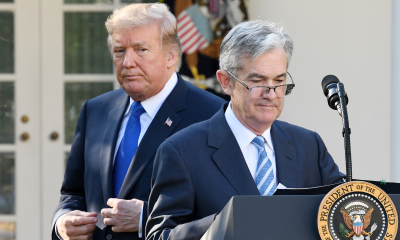
Bitcoin is hovering near $84,000, up from its two-month low level of $82,000 seen on Friday, as markets reacted to President Donald Trump nominating Kevin Warsh as the next US Federal Reserve Chair.

In the past 24 hours, Bitcoin rose by 1.63%, while Ethereum fell by 0.86% to trade at the $2,687 level. In the same period, among major altcoins, BNB, Solana, Tron, Dogecoin and Hyperliquid rose by over 7%, while XRP and Cardano declined by 0.69% and 3.03%, respectively.

Also Read | Budget 2026: Mutual fund industry seeks debt indexation return, ELSS relief and MF pension schemesThe global crypto market capitalisation rose 0.89% to $2.83 trillion, according to CoinMarketCap.Nischal Shetty, Founder, WazirX, said markets reacted to uncertainty around upcoming interest rate decisions and the independence of the Fed. As a result, the US dollar strengthened slightly, while risk assets came under mild pressure.After a strong run-up this month, the crypto market is taking time to consolidate as the impact of macro developments settles at a calibrated pace, Shetty added.


Over the past week, Bitcoin and Ethereum declined by 6.59% and 9.13%, respectively. Among major altcoins, BNB, XRP, Solana, Tron, Dogecoin and Cardano fell by over 13%, while Hyperliquid rose by 34.73%.
Also Read | INR Check: What history reveals about gold, silver and market crashes

Riya Sehgal, Research Analyst, Delta Exchange, said over $2.7 billion has exited US spot Bitcoin ETFs since mid-January, raising concerns about weakening institutional demand. Gold’s recent rally and pullback diverted liquidity from digital assets, adding to risk-off pressure. Bitcoin options show the highest fear levels in a year, with a 17% delta skew as traders hedge downside risk.
Overall, the crypto market reflects caution after heavy liquidations, but reduced leverage and oversold positioning could support a short-term rebound if conditions stabilise, Sehgal added.

Continue Reading
Click to comment

You must be logged in to post a comment Login

Leave a Reply

Business

Healthcare Stocks Are Trading at a Deep Discount. Eli Lilly and Others Are Worth a Look.

Published

on

Healthcare Stocks Are Trading at a Deep Discount. Eli Lilly and Others Are Worth a Look.

Healthcare Stocks Are Trading at a Deep Discount. Eli Lilly and Others Are Worth a Look.

Continue Reading

Business

Invesco AMT-Free Municipal Income Fund Q4 2025 Commentary (OPTAX)

Published

on

Invesco AMT-Free Municipal Income Fund Q4 2025 Commentary (OPTAX)

Invesco is an independent investment management firm dedicated to delivering an investment experience that helps people get more out of life.Be the first to know! Sign up for Invesco US Blog and get expert investment views as they post.Disclosure for all Invesco US articles: Before investing, carefully read the prospectus and/or summary prospectus and carefully consider the investment objectives, risks, charges and expenses. The information provided is for educational purposes only and does not constitute a recommendation of the suitability of any investment strategy for a particular investor. Invesco does not provide tax advice. The tax information contained herein is general and is not exhaustive by nature. Federal and state tax laws are complex and constantly changing. Investors should always consult their own legal or tax professional for information concerning their individual situation. The opinions expressed are those of the authors, are based on current market conditions and are subject to change without notice. These opinions may differ from those of other Invesco investment professionals. NOT FDIC INSURED MAY LOSE VALUE NO BANK GUARANTEE All data provided by Invesco unless otherwise noted. Invesco Distributors, Inc. is the US distributor for Invesco Ltd.’s retail products and collective trust funds. Invesco Advisers, Inc. and other affiliated investment advisers mentioned provide investment advisory services and do not sell securities. Invesco Unit Investment Trusts are distributed by the sponsor, Invesco Capital Markets, Inc., and broker-dealers including Invesco Distributors, Inc. PowerShares® is a registered trademark of Invesco PowerShares Capital Management LLC (Invesco PowerShares). Each entity is an indirect, wholly owned subsidiary of Invesco Ltd. ©2015 Invesco Ltd. All rights reserved.

Continue Reading

Business

greg mcnally, managing partner of vita

Published

on

greg mcnally, managing partner of vita

Stepping away from a long and successful career in Big Four and national accountancy firms is no small decision, yet that is exactly what Greg McNally did when he founded VITA.

Today, he leads one of the UK’s largest independent VAT and indirect tax advisory businesses, built on a simple but powerful principle: understanding clients first, then delivering real value. With more than two decades of experience, McNally has seen the profession evolve dramatically, and set out to challenge the status quo with a consultancy that prioritises relationships, authenticity, and commercially focused advice in an increasingly complex tax landscape.

McNally is Managing Partner and founder of VITA, a Glasgow-headquartered specialist firm of VAT and indirect tax advisors. With a combined 85+ years of experience across the team, VITA is now the largest independent VAT and indirect tax consultancy in Scotland and one of the largest in the UK.

Rather than focusing purely on compliance, VITA specialises in high-value advisory work, helping businesses navigate complex tax strategy, transactions, and commercial decision-making. The firm works closely with clients at the earliest possible stage of projects, ensuring tax is considered proactively rather than retrospectively.

That said, the team is equally adept at stepping in when challenges arise, whether that’s limited options late in a deal cycle or managing HMRC enquiries. Known for its pragmatic, commercially minded approach, VITA combines deep technical expertise with a problem-solving mindset to deliver clarity, confidence, and value.

Advertisement

What was the inspiration behind VITA?

I founded VITA in 2019 after a 20-year career with Big Four and a national accountancy firm, where I reached partner level.

Over that time, I saw the profession change significantly. Accountancy services have increasingly become commoditised, and in many cases, the depth of client relationships has diminished. Earlier in my career, accountants were often trusted advisers, people who genuinely understood their clients’ businesses and were part of their wider journey.

VITA was created in response to that shift. The goal was to build a firm that prioritises understanding—understanding our clients’ motivations, challenges, and ambitions—and then adding value through insight, not just process. That ethos still underpins everything we do today.

Who do you admire?

The clients I’ve worked with over the past 25 years.

Advertisement

Particularly those who’ve built something from nothin, who identified a gap in the market, challenged convention, and had the belief to bring their vision to life. I’ve always found their origin stories fascinating. There’s something incredibly powerful about that combination of resilience, creativity, and determination.

Looking back, is there anything you would have done differently?

No. Every mistake is a learning point, and I wouldn’t wish any of them away.

Life is a process of joining the dots, you can always look back and understand how you got to where you are. Looking forward is a different story. Plans rarely unfold exactly as expected, so the real skill lies in being agile, adapting quickly, and responding to what’s in front of you.

Advertisement

What defines your way of doing business?

Traditional values in a modern, fast-paced environment.

At its core, business is quite simple: listen to your clients, understand what they actually need, not what you want to sell them—and then deliver exactly what you promised, on time and on budget.

The challenge lies in scoping work properly and communicating clearly throughout the process. Don’t overpromise. Don’t overcommit. Be honest, be authentic, and do the right thing.

At VITA, we live by two mantras:
“Say what you do and do what you say” and “Do the right thing.”

Advertisement

What advice would you give to someone starting out?

You can’t learn experience—you have to live through it.

Early in my career, I focused heavily on learning—building knowledge, developing skills, and growing my network. That phase takes time, and there are no shortcuts. But the rewards come later.

Put the work in early, stay curious, and be patient. The return on that investment will follow.


Amy Ingham

Amy is a newly qualified journalist specialising in business journalism at Business Matters with responsibility for news content for what is now the UK’s largest print and online source of current business news.

Advertisement

Continue Reading

Business

Trustpilot profits jump as AI search drives traffic and shares surge 28%

Published

on

Trustpilot profits jump as AI search drives traffic and shares surge 28%

Trustpilot has emerged as an early beneficiary of the shift towards artificial intelligence-led search, reporting a sharp rise in profits and a surge in its share price after a year of strong growth driven by increased exposure through large language models.

Shares in the consumer review platform jumped as much as 28 per cent following results that beat market expectations, as investors responded positively to signs that the business is successfully adapting to the changing dynamics of online discovery. The company posted pre-tax profits of $14.1 million for the year to December, up significantly from $5.2 million the previous year, underpinned by stronger customer retention and a shift towards higher-value contracts.

Revenue rose 24 per cent year-on-year, with growth recorded across the UK, Europe and the United States. Trustpilot also reported a 16 per cent increase in average annual contract value, reflecting its success in moving upmarket and monetising its platform more effectively.

Central to that performance has been the company’s growing visibility within AI-powered search environments. Trustpilot said click-throughs from AI-driven platforms increased more than fifteenfold over the past year, highlighting how rapidly consumer behaviour is shifting away from traditional search engines towards conversational interfaces powered by large language models.

The company has actively opened its data to these platforms, allowing its reviews to be surfaced within AI-generated answers. According to Promptwatch data, Trustpilot ranked as the fifth most cited domain globally on ChatGPT in January, a position that has significantly enhanced its reach and relevance.

Advertisement

Chief executive Adrian Blair described artificial intelligence as a “major tailwind” for the business, noting that visibility within AI search has become a key selling point when engaging with clients. As businesses increasingly focus on how they appear within AI-generated responses, Trustpilot’s repository of verified consumer feedback has become a valuable asset in the emerging search ecosystem.

Analysts suggested the results offer an early indication that the transition from traditional search to AI-led discovery could create new winners, particularly for platforms built around user-generated content. Investec analysts noted that Trustpilot’s performance demonstrates how this shift could benefit businesses whose data is highly relevant to AI-driven queries.

Alongside its earnings growth, Trustpilot announced a £30 million share buyback programme, including £7.5 million allocated to its employee benefit trust, signalling confidence in its financial position and long-term prospects. The company also upgraded its medium-term profitability targets, forecasting that its adjusted EBITDA margin will rise from 15.6 per cent in 2025 to 25 per cent by 2028 and 30 per cent by 2030.

The strong results mark a rebound after a turbulent period for the company’s share price. In December, Trustpilot faced scrutiny following claims by short-seller Grizzly Research alleging questionable practices in its dealings with non-paying customers. The company strongly denied the allegations and issued a detailed rebuttal, helping to stabilise investor sentiment after an initial sell-off.

Advertisement

The stock was also caught in a broader downturn affecting software companies earlier this year, but the latest results suggest Trustpilot may be structurally better positioned than many peers in an AI-driven market.

Blair emphasised that the company’s core proposition remains fundamentally distinct from other technology businesses. While AI can aggregate and present information, he argued, it cannot replicate the real-world customer experiences that underpin Trustpilot’s platform.

As artificial intelligence continues to reshape how consumers search, discover and evaluate brands, Trustpilot’s ability to embed itself within that ecosystem appears to be driving both immediate performance gains and longer-term strategic value.


Jamie Young

Jamie Young

Jamie is Senior Reporter at Business Matters, bringing over a decade of experience in UK SME business reporting.
Jamie holds a degree in Business Administration and regularly participates in industry conferences and workshops.

When not reporting on the latest business developments, Jamie is passionate about mentoring up-and-coming journalists and entrepreneurs to inspire the next generation of business leaders.

Advertisement

Continue Reading

Business

Computer says no. Are AI interviews making it harder to get a job?

Published

on

Computer says no. Are AI interviews making it harder to get a job?

Bhuvana Chilukuri has sent more than 100 job applications and is convinced very few have been seen by a human.

Continue Reading

Business

Cornwall wins government backing for independent devolution as Devon merger ruled out

Published

on

Business Live

It means the Duchy will remain separate from Devon in its devolution journey

Sunshine at Newquay harbour

Sunshine at Newquay harbour(Image: Western Morning News)

Cornwall has taken another significant stride in its devolution ambitions with a decision that “firms up” the county’s position against merging with Devon as a cross-border local authority. Cornwall Council’s Liberal Democrat/Independent cabinet today (Wednesday, March 18) voted to accept, in principle, the Secretary of State for Housing, Communities and Local Government’s proposal to explore designating the authority as a Single Foundation Strategic Authority.

Advertisement

In what represents a prime example of local government terminology, cabinet members backed the initiative which would be “consistent with the request for a Cornwall-only Spatial Development Strategy footprint to ensure coterminosity between the two”.

Put simply, subject to satisfaction with the broader details, Cornwall Council will avoid amalgamation with any other South West authority and will persist in pursuing greater devolution from Westminster, with a long-term goal of administering its own affairs akin to fellow Celtic nations, Wales and Scotland.

Today’s decision follows correspondence last November from the Secretary of State for Housing, Communities and Local Government, Steve Reed, which set out his proposals regarding enhanced devolution to Cornwall.

He said: “We also recognise the strong enthusiasm in Cornwall for devolution and the benefits it provides. In recognition of Cornwall’s distinct local identity and history of programme delivery across the Cornwall footprint, the Government is minded, on an exceptional basis, to work with you to explore designating the council as a Single Foundation Strategic Authority.”

Advertisement

Cornwall Council leader Cllr Leigh Frost said: “I don’t want anyone to think ‘oh devolution, it’s the end of the journey now’. This is absolutely the start for us to really take that fight to the next level, but we have to operate within the frameworks that the Government says we have to operate in.

Cllr Leigh Frost pictured in the chamber after being elected as the new leader of Cornwall Council  (Pic: Lee Trewhela / LDRS)

Cllr Leigh Frost pictured in the chamber(Image: Local Democracy Reporting Service)

“The long-term aim is a devolution arrangement that sits similarly to Wales and Scotland, but we aren’t going to get there tomorrow and we have to use the opportunities that we’ve got in front of us now to get there.

“The key thing is to protect the Cornwall footprint, make sure we get extended powers for Cornwall and then we can make a stronger case as we go forward to continue making those arguments of why we should be a distinct and separate nation in the United Kingdom.”

Cllr Tim Dwelly, cabinet member for economic regeneration and investment, added: “It’s really quite an amazing result for us; for those of us who were opposed to a Mayor of Cornwall being imposed against the will of the people and for the idea of combining with Devon.

Advertisement

“For anyone who is aware of the change of political control of this authority, this is probably one of the biggest changes that we have absolutely firmed up – the idea that Cornwall is not going to combine with Devon and Government has recognised that.

“I don’t think it’s a small thing. I think it took a lot of tough politics.”

Cllr Dick Cole, leader of Mebyon Kernow, acknowledged there remained considerable ground to cover before realising his aspiration of comprehensive and substantive devolution as an independent Cornish nation.

“This is just a stepping stone. From my perspective, we’re still so far back from where we should be, it’s off the scale. If we were talking about which step we were on, I’d say we’re still only two steps up Bedruthan Steps.

Advertisement

“We’re talking about greater recognition for the Cornish nation but we’re doing it in a local government context. We’ve made progress but we have to up the ante even further.”


Continue Reading

Business

Italy stocks lower at close of trade; Investing.com Italy 40 down 0.36%

Published

on


Italy stocks lower at close of trade; Investing.com Italy 40 down 0.36%

Continue Reading

Business

Oriole Resources directors complete bed and ISA share transfers

Published

on


Oriole Resources directors complete bed and ISA share transfers

Continue Reading

Business

MPs warn Treasury reforms could undermine Financial Ombudsman independence

Published

on

MPs warn Treasury reforms could undermine Financial Ombudsman independence

The Treasury’s proposed overhaul of the Financial Ombudsman Service (FOS) has come under scrutiny from senior MPs, who have warned that the reforms risk undermining the independence of a body tasked with resolving disputes between consumers and financial firms.

In a letter to City minister Lucy Rigby, Dame Meg Hillier, chair of the Treasury Select Committee, raised concerns that key elements of the government’s proposals could fundamentally alter the role and perceived neutrality of the ombudsman. The reforms, unveiled earlier this week, are intended to address criticism that the FOS has evolved into a “quasi-regulator” rather than a complaints resolution body. However, MPs argue that the changes could have unintended constitutional consequences.

At the centre of the criticism is a proposal that would see the chair of the FOS appointed directly by government. Hillier warned that such a move risks eroding both the actual and perceived independence of the institution, which plays a critical role in adjudicating disputes across the UK’s financial services sector.

Writing on behalf of the committee, she emphasised that the ombudsman “must be and must be seen to be an independent mechanism” for resolving complaints, highlighting that public trust in the system depends on its ability to operate free from political influence.

The committee has called for additional safeguards, including the introduction of a statutory “lock” that would give Parliament, specifically the Treasury Select Committee, the authority to approve or veto the appointment and dismissal of the FOS chair. Such mechanisms are already in place for other oversight bodies, including fiscal and audit watchdogs, and are designed to reinforce institutional independence.

Advertisement

Hillier also questioned why the proposal for government appointment was not included in earlier consultation processes, seeking clarity on what prompted the shift in approach. The intervention reflects broader unease within Westminster about the balance between reforming regulatory bodies and preserving their autonomy.

The debate comes at a sensitive time for the Financial Ombudsman Service, which has faced significant internal upheaval over the past year. Former chief executive Abby Thomas departed abruptly in February following what was described in a Treasury Committee report as a “mutual collapse in confidence” between her and the board over strategic direction. Shortly afterwards, chair Baroness Zahida Manzoor announced she would step down at the end of her term, leaving the organisation’s senior leadership largely in interim positions.

MPs have now sought assurances on whether the proposed reforms would apply to forthcoming permanent appointments, raising concerns about governance stability during a period of transition.

Alongside the governance changes, the Treasury’s reform package includes a series of structural adjustments aimed at reshaping how the FOS operates. These include the introduction of a 10-year time limit for bringing complaints, with the Financial Conduct Authority (FCA) retaining discretion to make exceptions in certain cases.

Advertisement

The government has also begun implementing changes to the cost structure of the ombudsman system. Since April, professional representatives such as claims management companies and law firms have faced a £250 fee for each case submitted beyond an initial allowance, while financial institutions are exempt from fees on their first three complaints each year before incurring a £650 charge per case thereafter.

Ministers argue that these measures are designed to improve efficiency, reduce speculative claims and refocus the FOS on its core function. However, critics warn that the cumulative effect of the reforms — particularly changes to governance — could reshape the institution in ways that weaken its independence and credibility.

The Treasury Select Committee has made clear that it expects a detailed response from the government, particularly on how it intends to safeguard the ombudsman’s impartiality while pursuing its wider reform agenda.


Jamie Young

Jamie Young

Jamie is Senior Reporter at Business Matters, bringing over a decade of experience in UK SME business reporting.
Jamie holds a degree in Business Administration and regularly participates in industry conferences and workshops.

When not reporting on the latest business developments, Jamie is passionate about mentoring up-and-coming journalists and entrepreneurs to inspire the next generation of business leaders.

Advertisement

Continue Reading

Business

Frozen food retailer Heron Foods cuts jobs at Humber head office

Published

on

Business Live

The changes are said to impact fewer than 1% of the more than 5,500-strong workforce

Heron Foods started life as a butchers in Hull.

Heron Foods’ Store Support Centre in Melton.(Image: Google Streetview)

Several jobs have been axed at the East Yorkshire headquarters of frozen foods supermarket Heron, with management stating they are part of alterations to the business. The Melton-based retailer – which operates a network of over 340 locations nationwide – confirmed a “small number” of employees at its head office had been affected.

The modifications are reported to impact less than 1% of the more than 5,500-strong workforce at the discount food company’s base. It stated efforts were underway to offer impacted employees alternative roles within the firm.

Last year, Heron slashed as many as 250 staff across the country, throughout its stores and warehouses as it grappled with declining sales and profits. However, the budget chain had pinpointed areas for growth – and is aiming for 10 new store launches in its current financial year.

Despite escalating costs, including from a rise in the National Minimum Wage, Heron said it was intensifying efforts to refurbish existing shops and relocate others, where opportunities arose to enhance customer experience and attract more consumers.

Advertisement

In January, the firm’s owner – discount titan BandM – issued a profit warning citing Heron’s weak financial performance. BandM executives said they were reassessing the company’s offering to customers, and chief executive Tjeerd Jegen spoke of a “back to BandM basics” strategy for the group, reports Hull Live.

A spokesperson for Heron Foods stated: “Unfortunately, a small number of roles at our Store Support Centre in Melton, East Yorkshire are impacted as part of changes within the business. Wherever possible, we have worked to transition affected colleagues into alternative roles within the business.

“These changes impact less than 1% of our workforce and are necessary as we continue to adapt to an evolving retail landscape. Our focus remains unchanged: providing customers with top-quality products at the lowest possible prices, every day in every store.”

Heron Foods originated as Grindells Butchers on Hull’s Holderness Road in the late 1970s. It has since expanded significantly and is now owned by the B&M group.

Advertisement

In the year ending 29 March 2025, the retailer launched 14 new and relocated outlets. This represented eight net additions following the closure of older and underperforming locations that had reached the end of their lease agreements.

Last year, the chain’s Cottingham outlet was relaunched following a refurbishment which introduced new-style freezers and its food-to-go meal deal selection. The Spring Bank West branch in Hull also underwent a makeover.

Continue Reading

Trending

Copyright © 2025