
Connect with us

Tech

After a Long Frozen Winter of Gray, Audioengine’s Limoncello Yellow Is the First Sign of Spring for 2026

Published

on

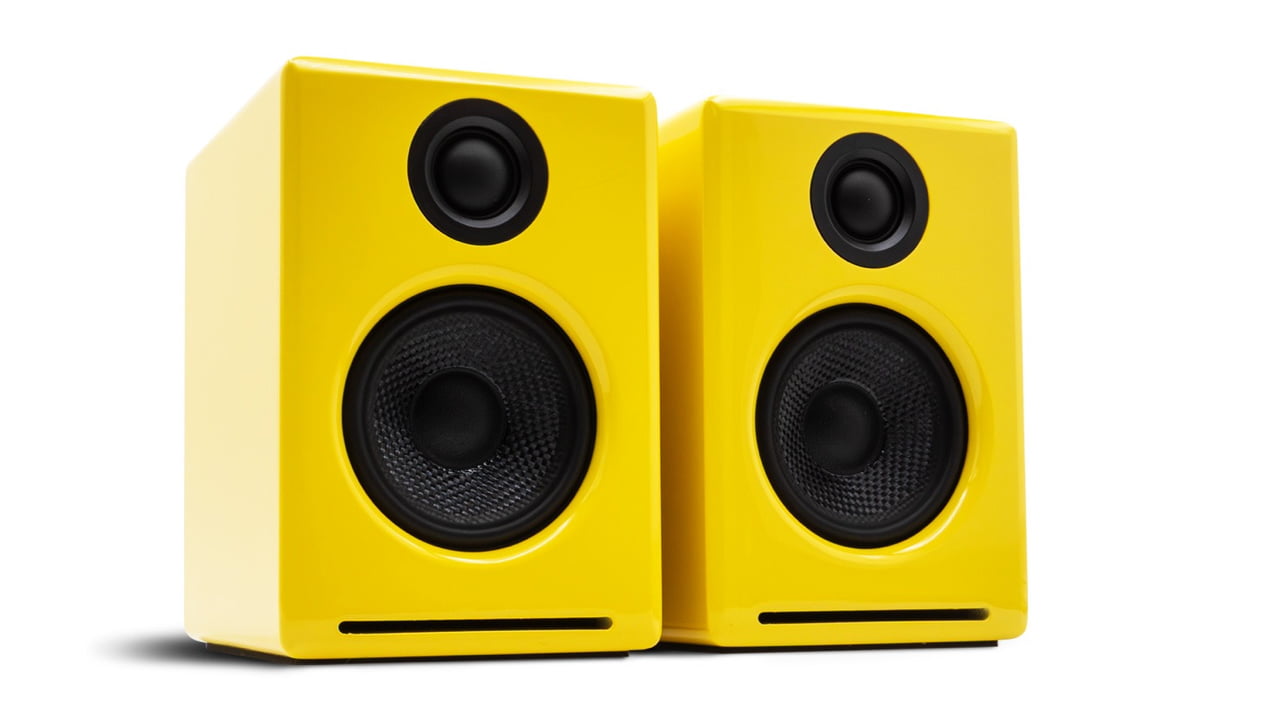
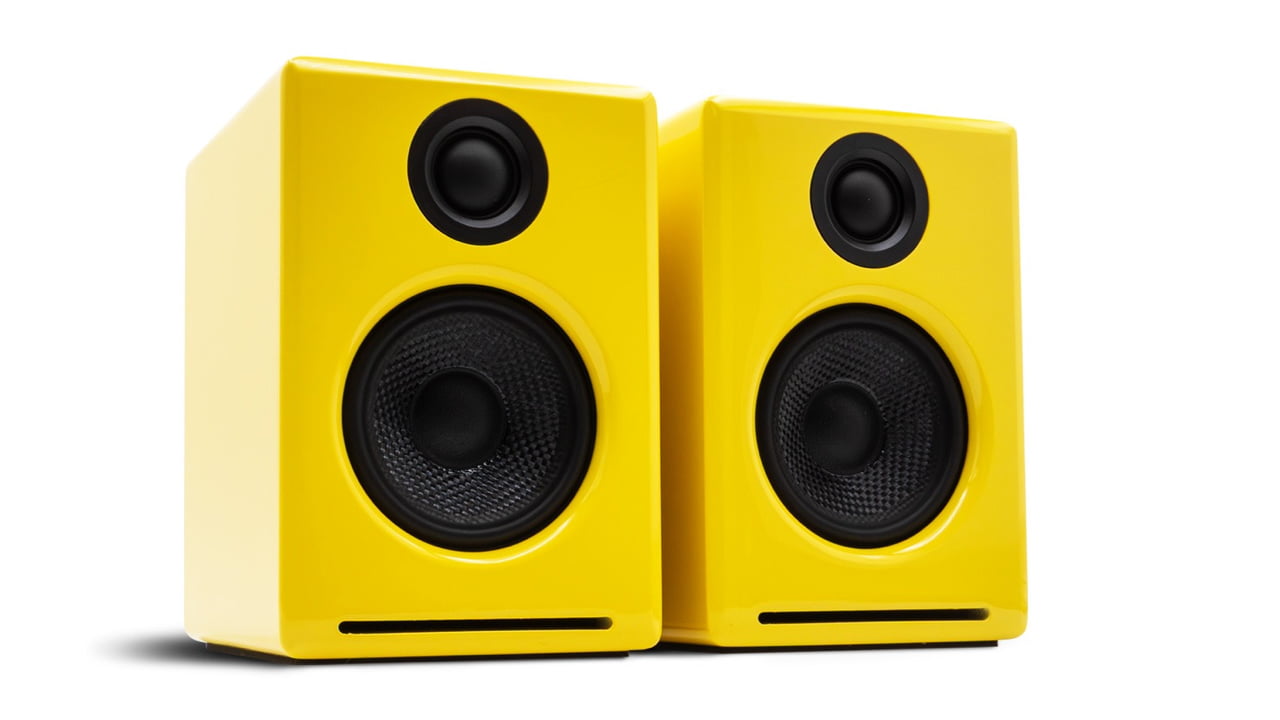
After a winter that still refuses to end with record-breaking cold, snow stacked on top of more snow, and the uncomfortable realization that even escaping to the Florida Keys in late-January didn’t feel like enough distance, Audioengine has decided to change the mood. The company just announced its 2026 Color of the Year: Limoncello Yellow, a limited-edition high-gloss finish rolled out across a complete, coordinated listening system created with Crosley.

Call it seasonal defiance. After an industry-wide 2025 where color quietly became the most obvious form of innovation, Audioengine is leaning hard into the idea that design matters when your gear lives in the open and not buried in a rack.

Instead of slapping a fresh coat of paint on one product and calling it a launch, Audioengine went all in. Limoncello Yellow spans the A2+ Home Music System, S6 Subwoofer, DS1M speaker stands, and the Crosley C6 turntable, all finished to match. The result looks intentional rather than improvised; bright without being gimmicky, and perfectly timed for anyone who has seen enough gray skies to last a lifetime. Spring can’t get here fast enough.

audioengine-a2-plus-gen3-yellow-pair
Audioengine A2+ in Limoncello Yellow

And while we’re at it, would it be too much to ask for someone to pass the Limoncello? Not the sad, sugary stuff they sell at the Venice airport, but the real kind that actually takes the edge off while you’re staring across a stone courtyard at Nicole Grimaudo and briefly forgetting that winter still has you in a headlock.

If Audioengine can’t fix the weather, at least they can fix the mood. And honestly, that’s progress.

Advertisement

Each Audioengine product in the collection uses real wood cabinets finished through a 13-step, piano-grade painting process. That means sealing, layered color application, curing, hand polishing, and final inspection done the slow way, because shortcuts show. The same high-gloss finish is applied across the A2+ Home Music System, S6 Subwoofer, and DS1M speaker stands, so the color actually matches instead of playing “close enough” under different lighting.

The Back Story

Audioengine A2+ Desktop Speakers on DS1 Stands in Black

When Audioengine first introduced the A2 Powered Speaker System, it was conceived as a true desktop audio solution; compact enough to sit comfortably beside a computer monitor, measuring only slightly taller than a modern iPhone, yet capable of delivering sound that felt far larger than its footprint suggested.

Back in 2007, that idea wasn’t obvious or common. Dedicated desktop speaker systems barely existed, and most compact speakers were designed to be accessories for larger hi-fi rigs, not standalone solutions. If you wanted better sound at a desk, you usually gave up space, added boxes, or both. The A2 flipped that logic, proving that a small, self-contained system could be practical, intentional, and good enough to live on a desktop without apology.

The goal of Audioengine was to design a desktop audio speaker solution that would provide more than what was expected. As a result of their efforts, the A2 and A2+ have enjoyed the success that inspired Audioengine to provide additional high-performance compact speaker systems such as the A5+HD3HD4HD5HD6A1-MR, and more. 

Audioengine A2+ Home Music System

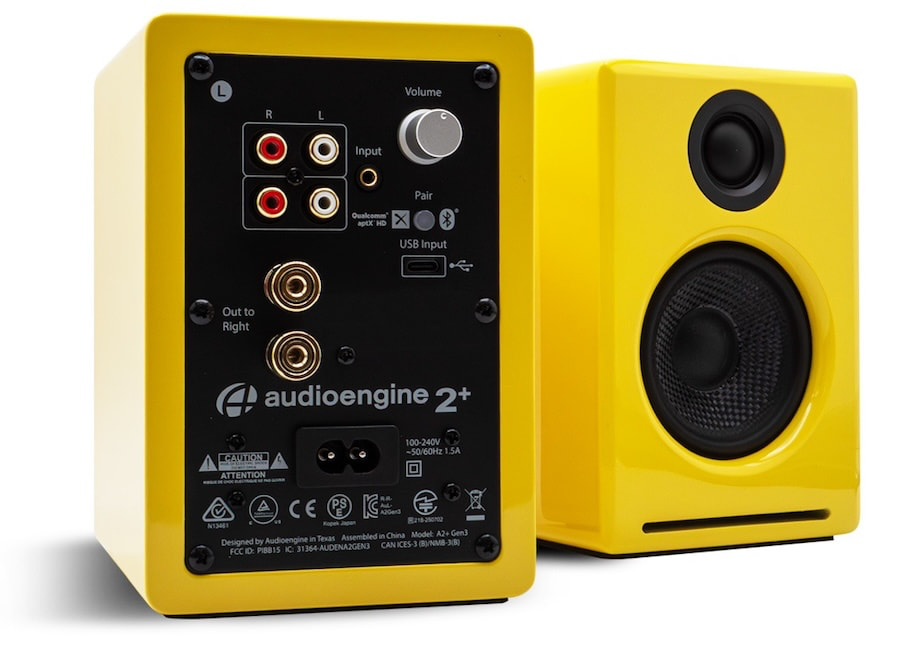
audioengine-a2-plus-gen3-yellow-back

The Audioengine A2+ Home Music System ($279 at Amazon) is a compact, powered speaker system designed for desks, shelves, and smaller rooms where space is tight but expectations aren’t. Each speaker delivers 20 watts RMS per channel into 4 ohms, with 30 watts peak, for a total of 60 watts peak output. That’s more than enough for nearfield listening, apartments, or office setups without pretending it’s trying to replace a full-size system.

Connectivity is straightforward and flexible. Bluetooth 5.3 is on board with support for aptX Adaptive, aptX HD, standard aptX, AAC, and SBC, so wireless playback works well whether you’re on Android, iOS, or a laptop. Wireless range stretches to about 100 feet (30 meters) under good conditions, which is genuinely useful unless you’re trying to stream through walls. For wired sources, you get USB-C digital audio supporting up to 24-bit/96kHz, plus RCA and 3.5mm analog inputs, making it easy to connect computers, streamers, turntables with built-in phono stages, or just about anything else with an output.

Advertisement
Advertisement. Scroll to continue reading.

Digital conversion is handled by a PCM5100A DAC, chosen for reliability and clean performance. Noise and distortion stay well under control, with a signal-to-noise ratio greater than 95 dB and THD+N below 0.05 percent at all power levels. Frequency response runs from 65 Hz to 22 kHz, which is realistic for a speaker this size and pairs naturally with a subwoofer like Audioengine’s S6 if you want more low-end weight.

Driver duties are handled by 2.75-inch aramid fiber woofers and 0.75-inch silk dome tweeters with neodymium magnets, tuned for clarity and balance rather than artificial hype. Protection circuits cover output current, thermal limits, and power on or off transients, so the system behaves itself even when pushed.

Physically, each speaker measures 6 x 4 x 5.25 inches (H x W x D), which explains why the A2+ works so well on desks without turning into visual clutter. In the Limoncello Yellow edition, those real wood cabinets go through Audioengine’s 13-step, piano-grade finishing process, resulting in a deep, high-gloss surface that actually holds up over time.

Advertisement

Audioengine S6 Compact Subwoofer

audioengine-s6-subwoofer-yellow

The Audioengine S6 Compact Subwoofer ($299 at Amazon) is designed for small spaces and compact systems, and yes—it actually works on a desk. Measuring 10 x 8.7 x 10 inches and weighing just over 15 pounds, it fits under or beside a desk without getting in the way, something we’ve done ourselves without regret.

A front-firing 6-inch driver in a sealed cabinet is powered by a Class D amplifier rated at 140 watts RMS (210 watts peak), delivering controlled bass down to 33 Hz. Adjustable volume, crossover (40-130 Hz), and phase (0-180 degrees) controls make it easy to integrate with small powered speakers or compact systems from Audioengine and other brands.

Connectivity is straightforward with RCA/LFE and 3.5 mm inputs, and while the S6 isn’t wireless by default, it can be made wireless using Audioengine’s W3 transmitter/receiver kit ($149). Power consumption drops below 1 watt at idle thanks to auto-sensing standby, and the 15 mm MDF cabinet keeps things solid without adding bulk. It’s a practical subwoofer for desks, apartments, and small rooms where space matters as much as sound.

Crosley C6 Turntable

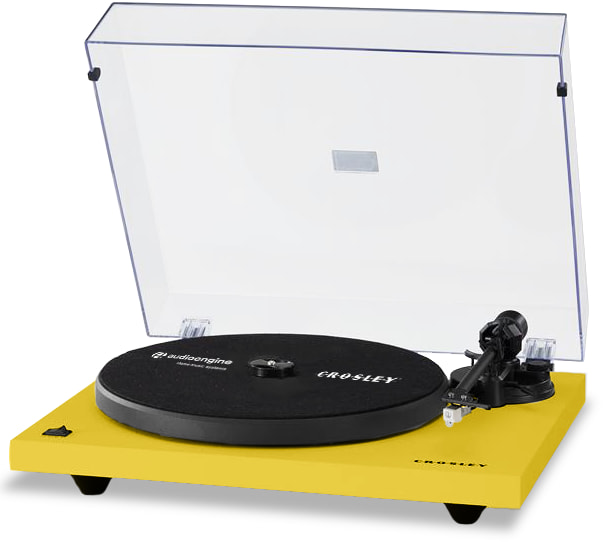
crosley-c6-turntable-yellow

The Crosley C6 Turntable is a manual, two-speed record player built around a straightforward analog design. It uses an audio-grade MDF plinth paired with a heavy steel platter to provide a stable platform for vinyl playback. A belt-driven, low-vibration motor sits beneath the platter and supports 33-1/3 and 45 RPM records, keeping operation simple and consistent without automation getting in the way.

Setup is hands-on but not complicated. The tonearm features an adjustable counterweight and anti-skate, and the table comes with a pre-mounted Audio-Technica cartridge, so you’re not starting from scratch. Connectivity is flexible, with a built-in, switchable phono preamp for direct connection to powered speakers or integrated amplifiers, along with RCA outputs for systems that already have a phono stage. Bluetooth is also built in for wireless playback when convenience matters more than cabling.

The C6 isn’t trying to be clever or overdesigned. It’s a clean, manual turntable that fits neatly into compact systems, especially paired with powered speakers, and does its job without demanding constant attention. In the Limoncello Yellow finish, it adds visual cohesion to the setup while keeping the focus where it belongs—on playing records.

Advertisement
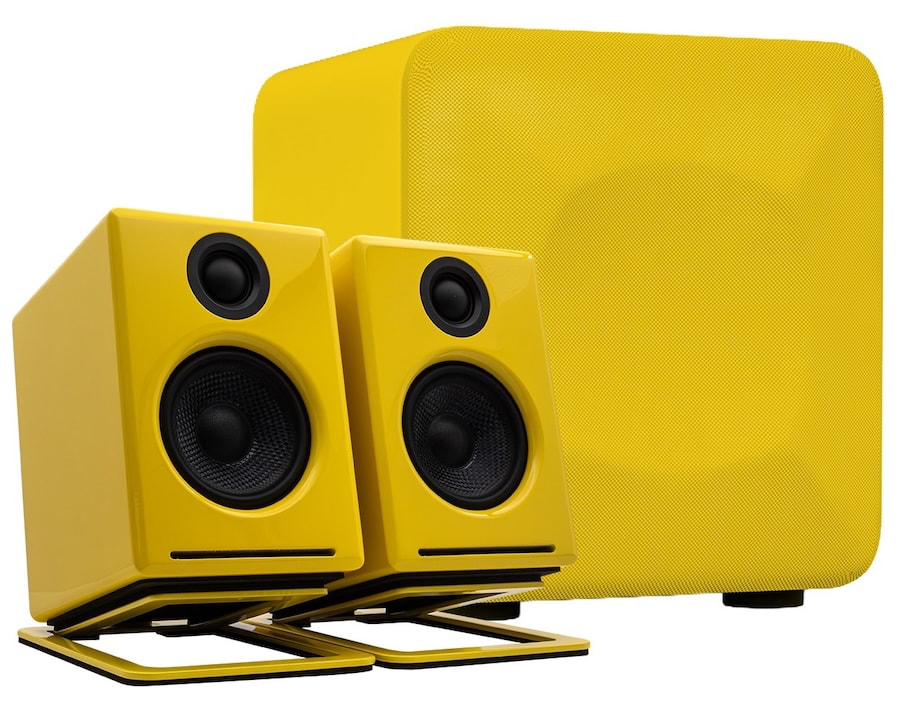
audioengine-a2-plus-gen3-yellow-with-subwoofer
Audioengine A2+ speakers on DS1M stands with S6 subwoofer

The Bottom Line

What you’re buying here is a cohesive compact system that handles both analog and digital sources without setup issues. The Audioengine A2+ speakers are a time-tested design that many audiophiles and more than a few hi-fi editors still rely on for desktops and secondary systems because they’re consistent, balanced, and easy to live with. They’re only “underrated” by people who haven’t lived with them.

This setup is for listeners who want vinyl, streaming, and computer audio in one small footprint for desks, offices, apartments, or second systems where space matters but sound still counts. Add the S6 for low-end support and the Crosley C6 for analog playback, and you get a system that covers real-world listening needs without excess, complexity, or pretending to be a full-scale hi-fi rig.

Where to buy:

Advertisement. Scroll to continue reading.
Advertisement

Source link

Continue Reading
Click to comment

Leave a Reply

Your email address will not be published. Required fields are marked *

Tech

ESA Phi-Lab at Mullingar’s IMR reflects Ireland’s growing space-tech ambitions

Published

on

We take a look back at the official launch last week of Ireland’s first European Space Agency ‘Phi-Lab’ – a big step in Ireland’s ambitions in space-tech development.

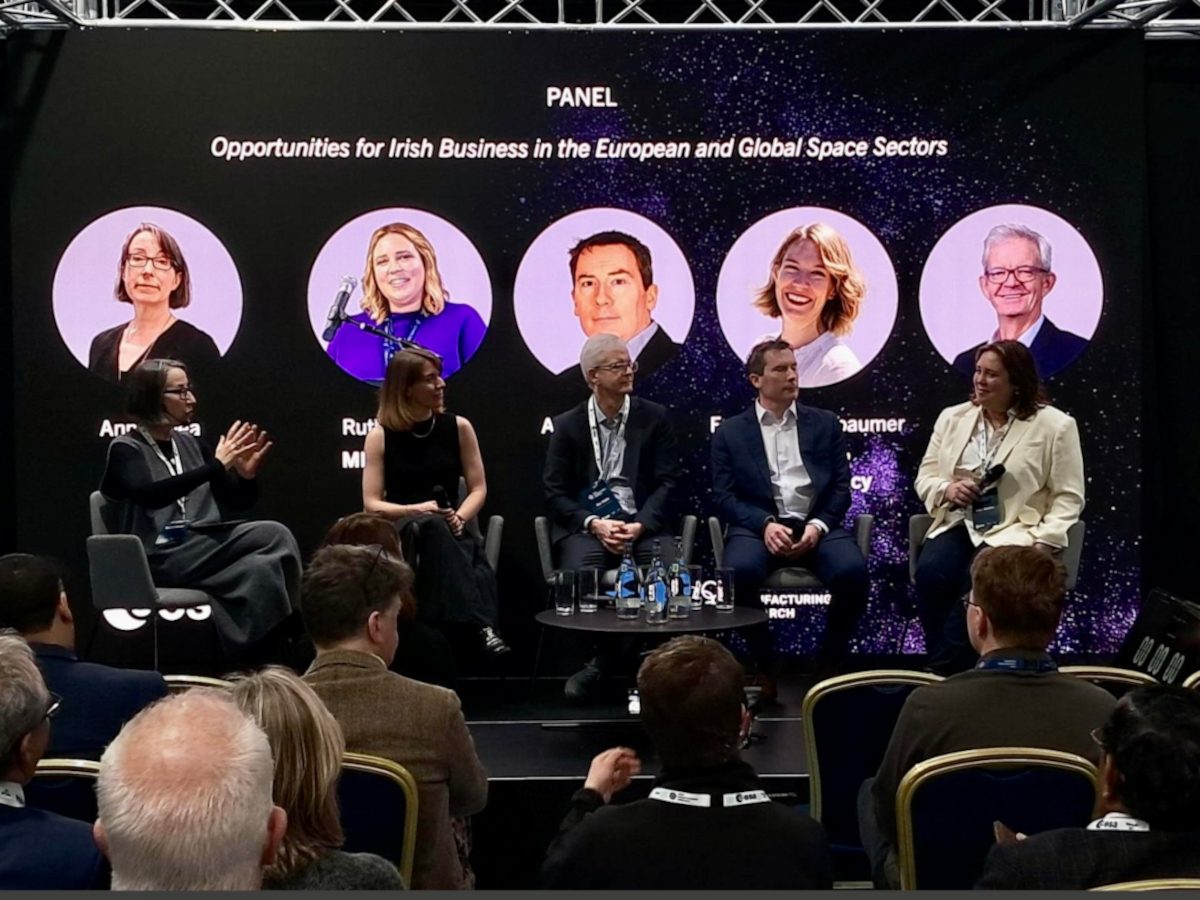
There was a remarkable buzz at the oversubscribed official launch last Friday (13 February) of Ireland’s first European Space Agency (ESA) Phi-Lab headquartered at Irish Manufacturing Research (IMR) in Mullingar, run in collaboration with the AMBER Centre at Trinity College Dublin.

One of 10 European Phi-Labs, it is designed to be Ireland’s national platform for space technology development, and to anchor the country’s ambitions within Europe and the world’s rapidly-expanding space economy.

Advertisement

Philip Thomas, head of the ScaleUp programme division at ESA, was one of several senior agency representatives that travelled to Mullingar for the launch and he was excited about the particular focus of Ireland’s Phi-Lab on additive manufacturing.

“This is a really important Phi-Lab because it actually helps develop technologies and translate them quite quickly into commercial solutions, in an increasingly competitive space market globally, which is why it’s quite critical that we take these activities forward,” said Thomas.

“We’ve seen real success in Irish companies winning contracts with the European Space Agency, and over the last nine or 10 years, we’ve had 50 start-ups come through there,” said Joe Healy, head of research and innovation at Enterprise Ireland. “And what’s great about that is they’re already employing over 200 people and have raised almost €50m.

“So we would be optimistic that we can build on the success to date. The competition is very, very strong internationally, but we have very good, innovative companies these days.”

Advertisement

Healy also strongly advised companies in this space to diversify and ensure they find wider applications for their technologies, and to also look beyond Europe.

“Today marks a major milestone in our journey on the Phi Lab Ireland programme,” said Ken Horan, who leads the Ireland Phi-Lab in Mullingar. “For IMR, this is a major step into the space ecosystem where we are trying to advance Ireland’s position within the space innovation ecosystem and ultimately make Ireland leaders within this emerging market.”

A lively panel discussion included the co-founders of the two Irish companies selected from a highly-competitive first ‘Open Call’ last year – Ubotica Technologies and Mbryonics.

“We’re really delighted to be pioneering through this first call in Phi-Labs to bring additive manufacturing to what we’re doing,” said Ruth Mackey, CSO and co-founder of Mbryonics. “And that’s being enabled through the Phi-Labs programme here at the IMR. Bringing that space sector manufacturing is a key enabler, we think, for the next generation of jobs in Ireland.”

Advertisement

“We don’t necessarily have access to this capability and this expertise in-house,” said Aubrey Dunne, CTO and co-founder of Ubotica Technologies. “And so through the Phi-Lab project, we are partnering with the IMR, who have these skills in abundance. And they’re going to help us to design effectively solutions that are thermally well managed.”

Minister for Enterprise, Tourism and Employment Peter Burke, TD officially launched the new lab last Friday, and said the Irish Government was determined to support innovation and innovative companies in the space sector, pointing to the excellence of the two successful first call companies.

“I know that the next competitive call will take place during the first half of this year,” he said. “And I’m sure listening to our two successful applicants here today, that will spark plenty of interest for the future in this regard.”

“This facility positions Ireland at the forefront of European space-enabled innovation, where advanced manufacturing, AI and data-driven technologies can be developed, tested and commercialised for global impact,” said Barry Kennedy, CEO of IMR. “Ultimately, this is about translating world-class research into real economic and societal value.”

Advertisement

The launch forms part of a wider national commitment to the ESA, with the Department of Enterprise, Tourism and Employment committing €170m in investment to ESA over the next five years. The establishment of ESA Phi-Lab Ireland in Mullingar is a flagship element of that investment.

All the speakers agreed that Ireland’s space and space-enabled innovation sector is on the rise. Since the publication of Ireland’s ‘National Space Strategy for Enterprise’ in 2019, there are now 120 space-active companies working with ESA in Ireland in one way or another, and many Irish companies are today providing technologies and solutions to the commercial space sector globally.

Don’t miss out on the knowledge you need to succeed. Sign up for the Daily Brief, Silicon Republic’s digest of need-to-know sci-tech news.

Advertisement

Source link

Continue Reading

Tech

If You’ve Ever Ruined Sweaters in the Wash, Whirlpool’s New Machine Has a Fix

Published

on

If you’ve ever pulled a sweater from the washing machine to find a tangled collection of yarn, you wouldn’t be the first. Whirlpool’s new washing machine has a feature that aims to solve the issue without requiring hand-washing or running a dedicated delicates cycle.

The new Whirlpool top-load washer includes a built-in delicate basket that sits inside the drum, shielding sweaters and other fragile items from the agitation of a regular wash cycle. The basket also corrals socks in one place, making it easier to match and fold them when laundry time is done.

Advertisement
delicates basket sitting on top of washing machine

Serial sock losers will appreciate Whirlpool’s industry-first delicates basket. 

David Watsky/CNET

While LG’s sidekick pedestal washer makes a similar claim, that version features a separate wash bin under the main drum. Whirlpool’s is a simple plastic basket, large enough for a sweater and plenty of socks, that sits right on top of the machine’s impeller inside the drum. 

washer shot from above with delicates basket in the center

The basket can be removed to retrieve your delicates or left out for a wash that doesn’t require it. 

Advertisement

David Watsky/CNET

I saw the soon-to-be-released machine at KBIS in Orlando. Just weeks before, I’d ruined one of my favorite sweaters by machine-washing it, so the feature won me over. The idea is so simple and smart, yet this seems to be the only modern washing machine to incorporate it. 

washer shot from above with delicates basket in the center

Whirlpool debuted a delicates basket for soft sweaters and socks at KBIS 2026.

David Watsky/CNET

While we weren’t able to see the machine in action yet (it was only on display), a Whirlpool representative told me that clothes placed in the center basket remain there through the cycle, thanks to the distinct water flow patterns. 

Advertisement

The basket is easily removed with a gentle squeeze of the handles, so you can extract your delicates and socks. You can also leave the basket out if it’s not needed for a particular wash cycle. 

Pricing was not available but the washing machine is set to launch at national retailers in September. 

Source link

Advertisement
Continue Reading

Tech

PayPal discloses data breach that exposed user info for 6 months

Published

on

PayPal

PayPal is notifying customers of a data breach after a software error in a loan application exposed their sensitive personal information, including Social Security numbers, for nearly 6 months last year.

The incident affected the PayPal Working Capital (PPWC) loan app, which provides small businesses with quick access to financing.

PayPal discovered the breach on December 12, 2025, and determined that customers’ names, email addresses, phone numbers, business addresses, Social Security numbers, and dates of birth had been exposed since July 1, 2025.

Wiz

The financial technology company said it has reversed the code change that caused the incident, blocking attackers’ access to the data one day after discovering the breach.

“On December 12, 2025, PayPal identified that due to an error in its PayPal Working Capital (“PPWC”) loan application, the PII of a small number of customers was exposed to unauthorized individuals during the timeframe of July 1, 2025 to December 13, 2025,” PayPal said in breach notification letters sent to affected users.

Advertisement

“PayPal has since rolled back the code change responsible for this error, which potentially exposed the PII. We have not delayed this notification as a result of any law enforcement investigation.”

PayPal also detected unauthorized transactions on the accounts of a small number of customers as a direct result of the incident and has issued refunds to those affected.

The company now offers affected users two years of free three-bureau credit monitoring and identity restoration services through Equifax, which require enrollment by June 30, 2026.

Affected customers are also advised to monitor their credit reports and their account activity for suspicious transactions. PayPal reminded users that it never requests account passwords, one-time codes, or other authentication credentials via phone, text, or email, a common tactic used in phishing attacks that often follow data breach disclosures.

Advertisement

While PayPal has yet to disclose how many customers were affected, it has reset passwords for all impacted accounts and said that users will be prompted to create new credentials upon their next login if they have not already done so.

BleepingComputer reached out to a PayPal spokesperson with questions about the incident, but a response was not immediately available.

In January 2023, PayPal notified customers of another data breach after a large-scale credential stuffing attack compromised 35,000 accounts between December 6 and December 8, 2022.

Two years later, in January 2025, New York State announced a $2,000,000 settlement with PayPal over charges that it failed to comply with the state’s cybersecurity regulations, leading to the 2022 data breach.

Advertisement

Modern IT infrastructure moves faster than manual workflows can handle.

In this new Tines guide, learn how your team can reduce hidden manual delays, improve reliability through automated response, and build and scale intelligent workflows on top of tools you already use.

Source link

Continue Reading

Tech

Why investors are going gaga over solid-state transformers

Published

on

It’s no secret that the electrical grid is aging, but one part stands out from the rest. Transformers haven’t changed much since Thomas Edison made his first light bulb. 

Now, a string of startups are working to modernize the transformer, replacing it with modern power electronics that promise to give grid operators more control over how and where electricity flows. 

“It becomes a very powerful device, equivalent to your internet router,” Subhashish Bhattacharya, co-founder and CTO of DG Matrix, told TechCrunch.

Three startups recently raised sizable rounds to scale up production of their solid-state transformer technologies. This week, DG Matrix raised a $60 million Series A and Heron Power raised $140 million in a Series B round. In November, Amperesand raised $80 million to chase after the burgeoning data center market.

Advertisement

Existing transformers are reliable and efficient, but that’s about it. They’re relatively crude instruments, made largely of copper and iron. They react passively to changes on the grid and are capable of tackling only one task per device.

“An old-school steel, copper, and oil transformer doesn’t have any monitoring, doesn’t have any control,” Drew Baglino, founder and CEO of Heron Power, told TechCrunch. In instances where electricity surges or a power plant trips offline, that can be a liability.

The devices can incorporate power from a range of difference sources — including traditional power plants, renewables, and batteries — and transform that electricity into either alternating current (AC) or direct current (DC) at a number of different voltages, allowing them to replace several devices.

Techcrunch event

Advertisement

Boston, MA
|
June 9, 2026

For data centers, solid-state transformers offer an appealing alternative, allowing them to shrink the footprint of their power systems while giving them finer control over where and how electricity is directed.

Advertisement

Solid-state transformers poised to arrive at a time when existing transformers are aging and demand for new ones is surging — a classic tech supercycle. Most transformers on the grid today are several decades old, according to the National Laboratory of the Rockies. As demand from data centers, EV chargers, and other parts of the grid rises, the NLR expects the amount of power flowing through transformers to double by 2050.

While data centers are the the first market those companies are chasing, they also have their sights set on the electrical grid, which in the U.S. alone hosts as many as 80 million transformers

“All of the distribution transformers are ultimately going to need to be replaced. Over 50% of them are 35 years old. There’s a big need for an upgrade,” Baglino said.

Because they’re are made from silicon-based materials, they’re flexible, controllable, and software-updatable. They’re also immune from price fluctuations that rock the copper market.

Advertisement

“Power semiconductors keep getting cheaper. Steel, copper, and oil, unfortunately, is not in that situation,” Baglino said. “Commodity prices can move all over the place, and they generally move up.” 

In an old-style transformer, power flows into the transformer through copper wires wound around one side of an O-shaped iron core. As the electricity flows, it induces a magnetic field in the core. On the other side of the core, the magnetic field induces electricity in another set of copper windings. If the wires wrap around the core more times on the input side than the output side, the voltage decreases on the output side. If the ratio inverts, the output voltage increases.

Solid-state transformers eschew the copper windings in favor of semiconductors, using materials like silicon carbide or gallium nitride to handle frequency conversion. They can come in a range of configurations, with the most comprehensive setup consisting of three basic parts: a rectifier that converts alternating current to direct current, a converter that changes the voltage of the direct current, and an inverter that changes the direct current back into alternating current.

Unlike iron-core transformers, solid-state transformers can handle power that flows in both directions, making them useful in places that need backup power, like data centers. 

Advertisement

In a data center, a solid-state transformer can replace several different pieces of equipment, not just the transformer that steps voltage down from the grid. Every data center uses backup power, which requires a string of devices to bring power into the facility. Solid-state transformers can handle all of those duties in one box.

The technology also allows data centers to more easily integrate so-called behind-the-meter power, where generating capacity is connected directly to the data center, not the grid. Those typically require another set of transformers.

And when coupled with grid-scale batteries, solid-state transformers can eliminate uninterruptible power supplies (UPS), too, freeing up space inside the data center for more racks.

“If you add up the cost of everything we’ve taken out, we’re 60% to 70% of that cost,” Haroon Inam, co-founder and CEO of DG Matrix, told TechCrunch.

Advertisement

DG Matrix has been focusing on its Interport technology, which can route power from multiple sources to multiple loads of differing voltages, a setup the company holds multiple patents on.

Heron Power, meanwhile, is working to transforming medium-voltage power in data centers, solar farms, and grid-scale battery installations. In a data center, it’s Heron Link transformers can provide racks with 30 seconds of power while backup sources come online. Altogether, Heron Link occupy 70% less space than existing parts. At a solar farm, Heron Power’s transformers can perform the duties of an inverter and a transformer for the same price.

In a head-to-head comparison, solid state transformers still command a cost premium over iron-core transformers. For that reason, they’re unlikely to replace the giant humming boxes at grid substations in the very near future. 

But in data centers and at EV charging hubs, where solid-state transformers take the place of several pieces of equipment, they’ll start making inroads. 

Advertisement

When they finally hit the grid in bigger numbers, they have the potential to cut down on transmission and distribution costs, one of the biggest contributors to utility bill inflation.

Because today’s transformers are passive, unable to react to fluctuations, distribution networks have been built with a significant amount of spare capacity, Baglino said. Solid-state transformers, though, and can respond to changing conditions, allowing grid operators to send more power through the same lines.

“You can actually make the infrastructure more affordable because you’re putting more kilowatt-hours through the same poles and wires,” he said. “That’s where intelligence, in place of passive mechanical objects that were designed 100 years ago, can make a big difference.”

Source link

Advertisement
Continue Reading

Tech

The OpenAI mafia: 18 startups founded by alumni

Published

on

Move over, PayPal mafia: There’s a new tech mafia in Silicon Valley. As the startup behind ChatGPT, OpenAI is arguably the biggest AI player in town. The company is reportedly now in talks to finalize a $100 billion deal, valuing the company at more than $850 billion.  

Many employees have come and gone since the company first launched a decade ago, and some have launched startups of their own. Among these, some have become top rivals (like Anthropic), while others, just on investor interest alone, have managed to raise billions without even launching a product (see, Thinking Machine Labs).  

In January, Aliisa Rosenthal, OpenAI’s first sales leader, spoke a little bit about this growing network. She, like the other OpenAI alums who did not become founders, decided to become an investor and said she was going to tap into the ex-OpenAI founder network to look for deal flow. We know Peter Deng, OpenAI’s former head of consumer products (and now general partner at Felicis) already has.  

Below is a roundup of the major startups founded by OpenAI alumni, in alphabetical order. And we are certain this list will grow over time. 

Advertisement

David Luan — Adept AI Labs 

David Luan was OpenAI’s engineering VP until he left in 2020. After a stint at Google, in 2021 he co-founded Adept AI Labs, a startup that builds AI tools for employees. The startup last raised $350 million at a valuation north of $1 billion in 2023, but Luan left in late 2024 to oversee Amazon’s AI agents lab after Amazon hired Adept’s founders.

Dario Amodei, Daniela Amodei, and John Schulman — Anthropic

Siblings Dario and Daniela Amodei left OpenAI in 2021 to form their own startup, San Francisco-based Anthropic, that has long touted a focus on AI safety. OpenAI co-founder John Schulman joined Anthropic in 2024, pledging to build a “safe AGI.” The company has since become OpenAI’s biggest rival and just raised a $30 billion Series G, nabbing a $380 billion valuation in the process. IPO rumors are also swirling, as the company reportedly prepares for a public listing that could come sometime this year. (OpenAI is also allegedly preparing for an IPO this year and is maybe even trying to beat Anthropic to the public market.) 

Rhythm Garg, Linden Li, and Yash Patil — Applied Compute  

Three ex-OpenAI staffers (Rhythm Garg, Linden Li, and Yash Patil) have reportedly raised $20 million for a startup called Applied Compute, as reported by Upstart Media. All three of them worked as technical staff at OpenAI for more than a year before leaving last May to launch the startup, per their LinkedIns. The startup helps enterprises train and deploy custom AI agents. Benchmark led the round, valuing the 10-month-old company at $100 million, Upstart Media reported. 

Techcrunch event

Advertisement

Boston, MA
|
June 9, 2026

Pieter Abbeel, Peter Chen, and Rocky Duan — Covariant

The trio all worked at OpenAI in 2016 and 2017 as research scientists before founding Covariant, a Berkeley, California-based startup that builds foundation AI models for robots. In 2024, Amazon hired all three of the Covariant founders and about a quarter of its staff. The quasi-acquisition was viewed by some as part of a broader trend of Big Tech attempting to avoid antitrust scrutiny. 

Advertisement

Tim Shi — Cresta 

Tim Shi was an early member of OpenAI’s team, where he focused on building safe artificial general intelligence (AGI), according to his LinkedIn profile. He worked at OpenAI for a year in 2017 but left to found Cresta, a San Francisco-based AI contact center startup that has raised over $270 million from VCs like Sequoia Capital, Andreessen Horowitz, and others, according to a press release.

Jonas Schneider — Daedalus

Jonas Schneider led OpenAI’s software engineering for robotics team but left in 2019 to co-found Daedalus, which builds advanced factories for precision components. The San Francisco-based startup raised a $21 million Series A last year with backing from Khosla Ventures, among others.

Andrej Karpathy — Eureka Labs

Computer vision expert Andrej Karpathy was a founding member and research scientist at OpenAI, leaving the startup to join Tesla in 2017 to lead its autopilot program. Karpathy is also well-known for his YouTube videos explaining core AI concepts. He left Tesla in 2024 to found his own education technology startup, Eureka Labs, a San Francisco-based startup that is building AI teaching assistants.

Margaret Jennings — Kindo

Margaret Jennings worked at OpenAI in 2022 and 2023 until she left to co-found Kindo, which markets itself as an AI chatbot for enterprises. Kindo has raised over $27 million in funding, last raising a $20.6 million Series A in 2024. Jennings left Kindo in 2024 to head product and research at French AI startup Mistral, according to her LinkedIn profile.

Advertisement

Maddie Hall — Living Carbon

Maddie Hall worked on “special projects” at OpenAI but left in 2019 to co-found Living Carbon, a San Francisco-based startup that aims to create engineered plants that can suck more carbon out of the sky to fight climate change. Living Carbon raised a $21 million Series A round in 2023, bringing its total funding until then to $36 million, according to a press release.

Liam Fedus — Periodic Labs  

Liam Fedus, OpenAI’s VP of post-training research, left the company in March 2025 to team up with his former Google Brain colleague, Ekin Dogus Cubuk, and launch Periodic Labs. The startup seeks to use AI scientists to find new materials, particularly new superconducting materials. It came out of stealth mode in September 2025, armed with a massive $300 million in seed-round funding with backers that included Jezz Bezos, Eric Schmidt, Felicis and Andreessen Horowitz. 

Aravind Srinivas — Perplexity

Aravind Srinivas worked as a research scientist at OpenAI for a year until 2022, when he left the company to co-found AI search engine Perplexity. His startup has attracted a string of high-profile investors like Jeff Bezos and Nvidia, although it’s also caused controversy over alleged unethical web scraping. Perplexity, which is based in San Francisco, last reported a raise of $200 million at a $20 billion valuation. 

Jeff Arnold — Pilot

Jeff Arnold worked as OpenAI’s head of operations for five months in 2016 before co-founding San Francisco-based accounting startup Pilot in 2017. Pilot, which focused initially on doing accounting for startups, last raised a $100 million Series C in 2021 at a $1.2 billion valuation and has attracted investors like Jeff Bezos. Arnold worked as Pilot’s COO until leaving in 2024 to launch a VC fund.

Advertisement

Shariq Hashme — Prosper Robotics

Shariq Hashme worked for OpenAI for 9 months in 2017 on a bot that could play the popular video game Dota, per his LinkedIn profile. After a few years at data-labeling startup Scale AI, he co-founded London-based Prosper Robotics in 2021. The startup says it’s working on a robot butler for people’s homes, a hot trend in robotics that other players like Norway’s 1X and Texas-based Apptronik are also working on.

Ilya Sutskever — Safe Superintelligence 

OpenAI co-founder and chief scientist Ilya Sutskever left OpenAI in May 2024 after he was reportedly part of a failed effort to replace CEO Sam Altman. Shortly afterward, he co-founded Safe Superintelligence, or SSI, with “one goal and one product: a safe superintelligence,” he says. Details about what exactly the startup is up to are scant: It has no product and no revenue yet. But investors are clamoring for a piece anyway, and it’s been able to raise $2 billion, with its latest valuation reportedly rising to $32 billion this month. SSI is based in Palo Alto, California, and Tel Aviv, Israel.

Emmett Shear — Stem AI

Emmett Shear is the former CEO of Twitch who was OpenAI’s interim CEO in November 2023 for a few days before Sam Altman rejoined the company. Shear launched an AI company, StemAI, in 2024 (though it seems to have since rebranded as Softmax). The company, which appears to be a research company, has attracted funding from Andreessen Horowitz.

Mira Murati — Thinking Machines Lab 

Mira Murati, OpenAI’s CTO, left OpenAI to found her own company, Thinking Machines Lab, which emerged from stealth in February 2025. It said at the time (rather vaguely) that it will build AI that’s more “customizable” and “capable.” The San Francisco AI startup, now valued at $12 billion, announced its first product late last year: an API that fine-tunes language models. It recently made headlines when two of its co-founders announced earlier this year that they would return to OpenAI. 

Advertisement

Kyle Kosic — xAI

Kyle Kosic left OpenAI in 2023 to become a co-founder and infrastructure lead of xAI, Elon Musk’s AI startup that offers a rival chatbot, Grok. In 2024, however, he hopped back to OpenAI, where he remains. Meanwhile, xAI (which acquired Musk’s social media site X) was purchased by Musk’s SpaceX, giving the coalesce company a valuation of $1.25 trillion. It is looking to go public sometime in June for what could be a historic listing. 

Angela Jiang — Worktrace AI

Angela Jiang left OpenAI in 2024, after working as a product manager and on the public policy team. In April 2025, she quietly launched Worktrace, which uses AI to help enterprises make business operations more efficient. It observes employee work patterns and automates workflow, according to the company’s website. The business is backed by Mura Murati, OpenAI’s former CTO, who went on to launch Thinking Labs. It is also backed by OpenAI’s startup fund, in addition to a slew of other OpenAI names, like its chief strategy officer, Jason Kwon. 

Stealth Startups

In addition to these startups, a number of other former OpenAI employees have founded startups that are still in stealth mode, according to various updates TechCrunch found on LinkedIn. For instance, it seems that former OpenAI researcher Danilo Hellermark has been working on a generative AI stealth startup for the past few years. He officially left OpenAI at the beginning of 2023. There’s also one apparently in the works from Lucas Negritto, who worked on OpenAI’s technical team and left the company in 2023 after three years. Since then, he’s founded one startup and has been working on another since August 2025, according to his LinkedIn. 

Source link

Advertisement
Continue Reading

Tech

OpenAI says 18 to 24-year-olds account for nearly 50% of ChatGPT usage in India

Published

on

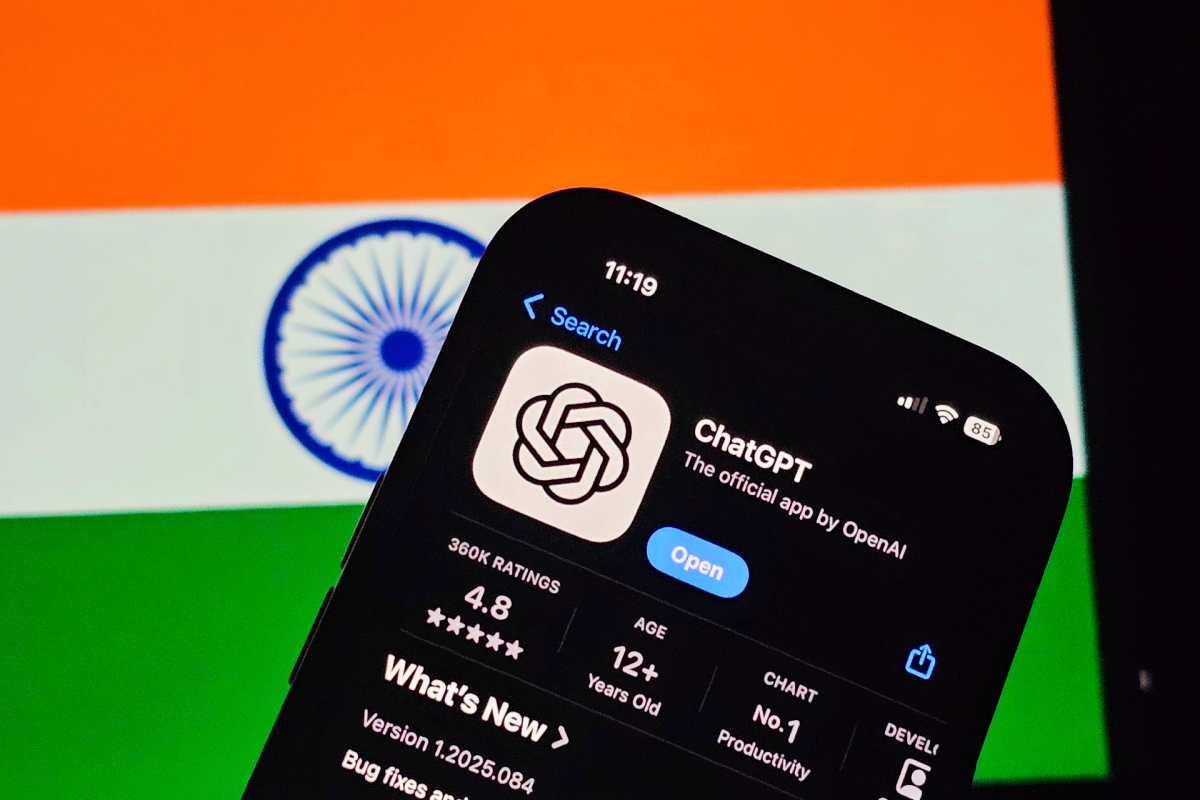
OpenAI seems to have found product-market fit with young Indians. The company said on Friday that users between 18 and 24 years of age accounted for nearly 50% of messages sent to ChatGPT in the country, and users under 30 accounted for 80%.

The AI lab said Indians use ChatGPT mostly for work, with 35% of all messages relating to professional tasks, compared to 30% globally.

In particular, the company’s coding assistant, Codex, is seeing strong traction: OpenAI said Indians use Codex three times more than the global median, and weekly usage has increased by four times since the tool got a Mac app two weeks ago. Users in India are also asking three times as many coding-related questions as the median.

This is in line with findings from Antropic, which earlier this week said 45.2% of Claude’s tasks map to software-related use cases in India.

Advertisement

OpenAI said outside of work tasks, 35% of messages to ChatGPT from Indians requested guidance, 20% concerned questions about general information, and 20% were requests for the bot to produce or help with writing.

India is OpenAI’s second-largest market with more than 100 million weekly users, and the company has been actively trying to court Indians for its AI tools and services. The company offers a sub-$5 subscription tier in the country, and last year even ran promotional campaigns to spur adoption.

“AI adoption is moving faster than our ability to measure it – and that’s a challenge for anyone trying to make smart decisions. Signals is our way of putting real-world evidence on the table, so India’s AI debate can be grounded in facts, not hype,” OpenAI’s chief economist Ronnie Chatterji said in a statement.

Techcrunch event

Advertisement

Boston, MA
|
June 9, 2026

OpenAI has had a busy few days in India, which is hosting a major AI Impact Summit in New Delhi this week. The company is opening new offices in Mumbai and Bengaluru this year, and has signed a major partnership with conglomerate Tata Group to secure 100 megawatts worth of AI compute capacity and distribute ChatGPT Enterprise within Tata’s IT services subsidiary, TCS.

Advertisement

The AI lab has signed agreements with fintech Pine Labs, travel platforms Ixigo and Makemytrip, and food and grocery delivery company Eternal. It has also partnered with educational institutes to distribute its tools to more than 100,000 students over the next six years.

Source link

Continue Reading

Tech

Astronomers identify a galaxy made almost entirely of dark matter

Published

on


A team of astronomers led by David Li has recently confirmed the discovery of ten potential “dark galaxies,” where starlight is so faint that it’s extremely difficult to detect anything with traditional observatories. The new list also includes Candidate Dark Galaxy-2 (CDG-2), a celestial structure that might be composed of…
Read Entire Article
Source link

Continue Reading

Tech

Tesla says its US-based robotaxi support is better than Waymo's Philippines team

Published

on


Waymo’s chief safety officer, Mauricio Peña, recently noted that while some of the company’s remote-assistance (RA) contractors work in the US, many operate from other countries, such as the Philippines.
Read Entire Article
Source link

Continue Reading

Tech

Instagram on trial and the RAMaggedon rages on

Published

on

This week, Meta CEO Mark Zuckerberg testified in a landmark social media trial, claiming the company only wanted to make Instagram “useful” and not addictive. In this episode, we chat about Zuck’s testimony and the potential implications of this trial for social media companies. Also, we dive into the latest effects of the RAMaggedon RAM shortage, including a potential PlayStation 6 delay and a dire future for practically every consumer electronics company.

Subscribe!

Topics

  • Mark Zuckerberg testifies that Instagram was meant to be “useful,” not addictive in social media addiction trial – 1:27

  • Meta reportedly plans to launch a smartwatch later this year – 13:23

  • The RAMageddon will likely kill some small consumer electronics companies – 15:54

  • Apple could unveil a MacBook, new M5 Pro chip, and iPhone 17e at March 4th event – 26:26

  • Google’s Pixel 10a arrives on March 5 – 32:17

  • Email leaked to 404 media suggests Ring had plans to use its Search Party function for wider surveillance – 34:48

  • Pop culture picks – 49:04

Credits

Host: Devindra Hardawar
Producer: Ben Ellman
Music: Dale North and Terrence O’Brien

Source link

Advertisement
Continue Reading

Tech

Copilot is coming to your Windows taskbar and File Explorer

Published

on

Microsoft is bringing Copilot to the Windows 11 taskbar and File Explorer. The update turns the plain old search box into something that actually understands how you ask questions. Type “When is my performance review due?” and the system pulls the answer from your calendar, emails, and local files. No more digging through folders.

The taskbar becomes a kind of mission control for AI. The search field now connects your local PC with your Microsoft 365 data. It knows who you work with and what documents you touch most.

The taskbar is now a command center for AI agents

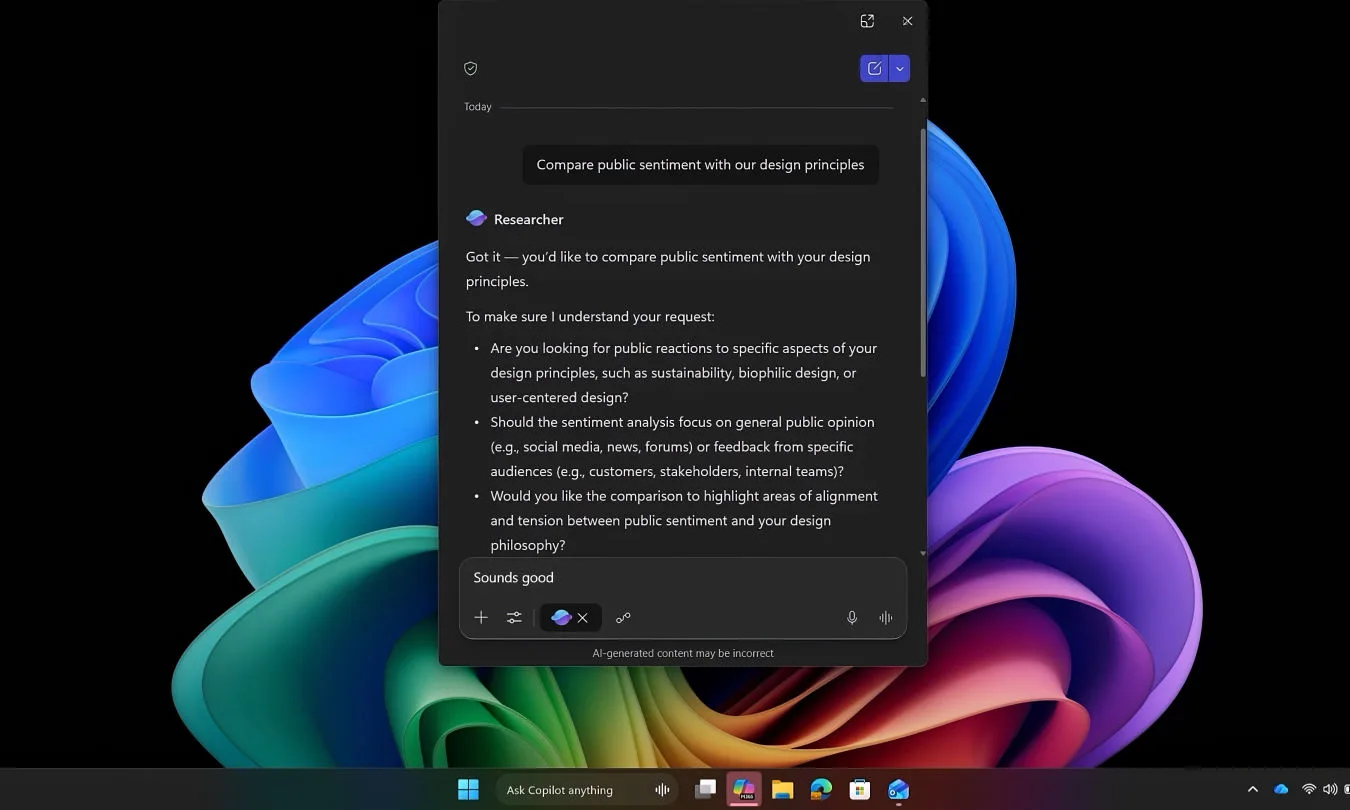
Hit the @ symbol in the taskbar search and you get a menu of AI agents that run in the background. These aren’t the kind that disappear into browser tabs. They sit on your taskbar so you can see their progress while you do other stuff. A researcher agent might spend 10 minutes comparing public sentiment against internal design guides. You watch its status on the taskbar icon like a download bar. Green checkmark means it’s done. Hover for a summary. Click for the full report with sources.

Voice works too. Hold the Copilot key or hit Windows key + C. Tell it “Find the file Robin shared” and it checks your emails and meetings to figure out which Robin you mean.

File Explorer gets Copilot Control for instant document insights

File Explorer now shows your SharePoint and OneDrive files right alongside local ones. Recent docs, shared stuff, favorites, all in one view. But the Copilot Control is the real trick. You can ask questions about a file without opening it.

Advertisement

Need a stat buried deep in a design doc? Ask for it. Copilot pulls out something like “over 70% of employees prefer sustainable materials” and shows you the context immediately. You never leave the File Explorer window.

Over on Android, Google is doing something similar with its Files app. Gemini now automatically offers to analyze PDFs when you open them, letting you ask questions about a document without importing it into a separate AI tool.

What this means for your workflow

The updates are rolling out now. Which ones you get depends on your hardware. Standard Windows 11 machines handle the cloud stuff. Copilot+ PCs with NPUs unlock the offline tools like Fluid Dictation and Click to Do.

Bottom line? You search less and find more. The taskbar starts acting like a coworker who remembers where everything lives. File Explorer becomes a window into your documents, not just a list of folders. Keep an eye out for the Copilot icons in the coming weeks.

Advertisement

Source link

Continue Reading

Trending

Copyright © 2025