

Connect with us

Tech

OpenAI says 18 to 24-year-olds account for nearly 50% of ChatGPT usage in India

Published

on

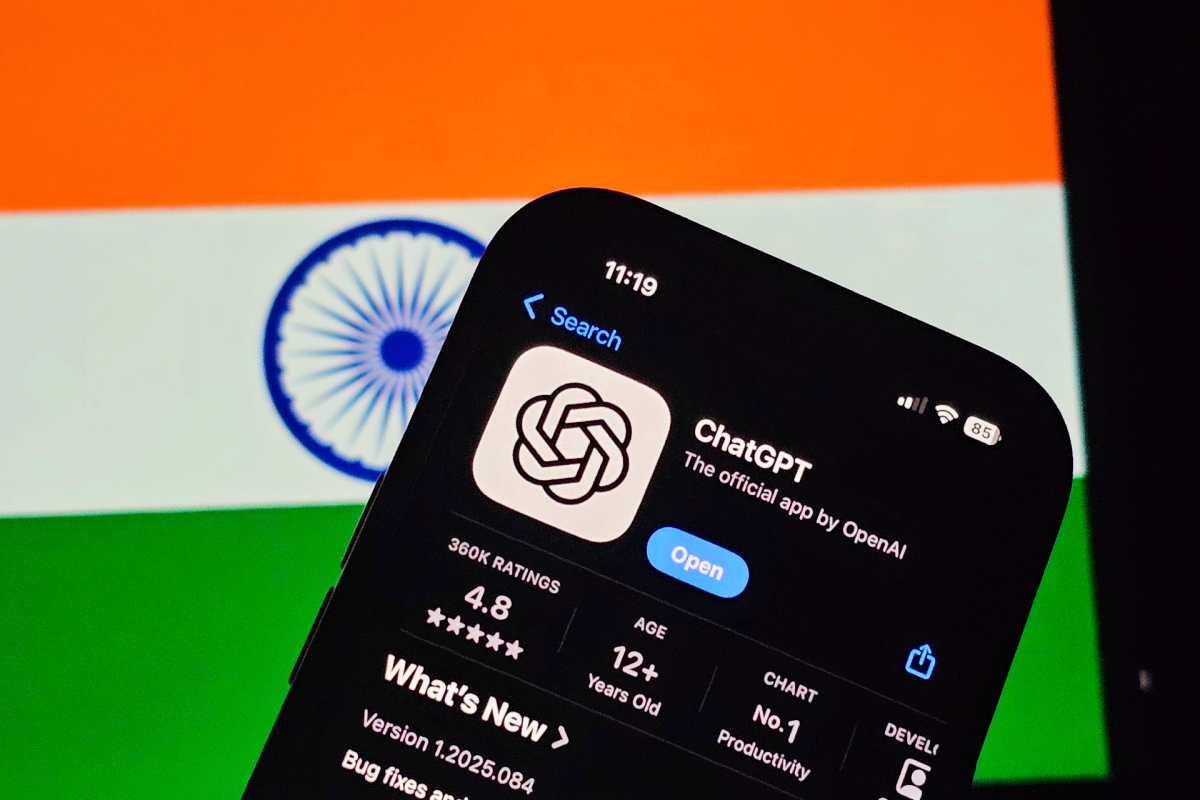
OpenAI seems to have found product-market fit with young Indians. The company said on Friday that users between 18 and 24 years of age accounted for nearly 50% of messages sent to ChatGPT in the country, and users under 30 accounted for 80%.

The AI lab said Indians use ChatGPT mostly for work, with 35% of all messages relating to professional tasks, compared to 30% globally.

In particular, the company’s coding assistant, Codex, is seeing strong traction: OpenAI said Indians use Codex three times more than the global median, and weekly usage has increased by four times since the tool got a Mac app two weeks ago. Users in India are also asking three times as many coding-related questions as the median.

This is in line with findings from Antropic, which earlier this week said 45.2% of Claude’s tasks map to software-related use cases in India.

Advertisement

OpenAI said outside of work tasks, 35% of messages to ChatGPT from Indians requested guidance, 20% concerned questions about general information, and 20% were requests for the bot to produce or help with writing.

India is OpenAI’s second-largest market with more than 100 million weekly users, and the company has been actively trying to court Indians for its AI tools and services. The company offers a sub-$5 subscription tier in the country, and last year even ran promotional campaigns to spur adoption.

“AI adoption is moving faster than our ability to measure it – and that’s a challenge for anyone trying to make smart decisions. Signals is our way of putting real-world evidence on the table, so India’s AI debate can be grounded in facts, not hype,” OpenAI’s chief economist Ronnie Chatterji said in a statement.

Techcrunch event

Advertisement

Boston, MA
|
June 9, 2026

OpenAI has had a busy few days in India, which is hosting a major AI Impact Summit in New Delhi this week. The company is opening new offices in Mumbai and Bengaluru this year, and has signed a major partnership with conglomerate Tata Group to secure 100 megawatts worth of AI compute capacity and distribute ChatGPT Enterprise within Tata’s IT services subsidiary, TCS.

Advertisement

The AI lab has signed agreements with fintech Pine Labs, travel platforms Ixigo and Makemytrip, and food and grocery delivery company Eternal. It has also partnered with educational institutes to distribute its tools to more than 100,000 students over the next six years.

Source link

Continue Reading
Click to comment

Leave a Reply

Your email address will not be published. Required fields are marked *

Tech

Google launches Gemini 3.1 Pro, retaking AI crown with 2X+ reasoning performance boost

Published

on

Late last year, Google briefly took the crown for most powerful AI model in the world with the launch of Gemini 3 Pro — only to be surpassed within weeks by OpenAI and Anthropic releasing new models, s is common in the fiercely competitive AI race.

Now Google is back to retake the throne with an updated version of that flagship model: Gemini 3.1 Pro, positioned as a smarter baseline for tasks where a simple response is insufficient—targeting science, research, and engineering workflows that demand deep planning and synthesis.

Already, evaluations by third-party firm Artificial Analysis show that Google’s Gemini 3.1 Pro has leapt to the front of the pack and is once more the most powerful and performant AI model in the world.

A big leap in core reasoning

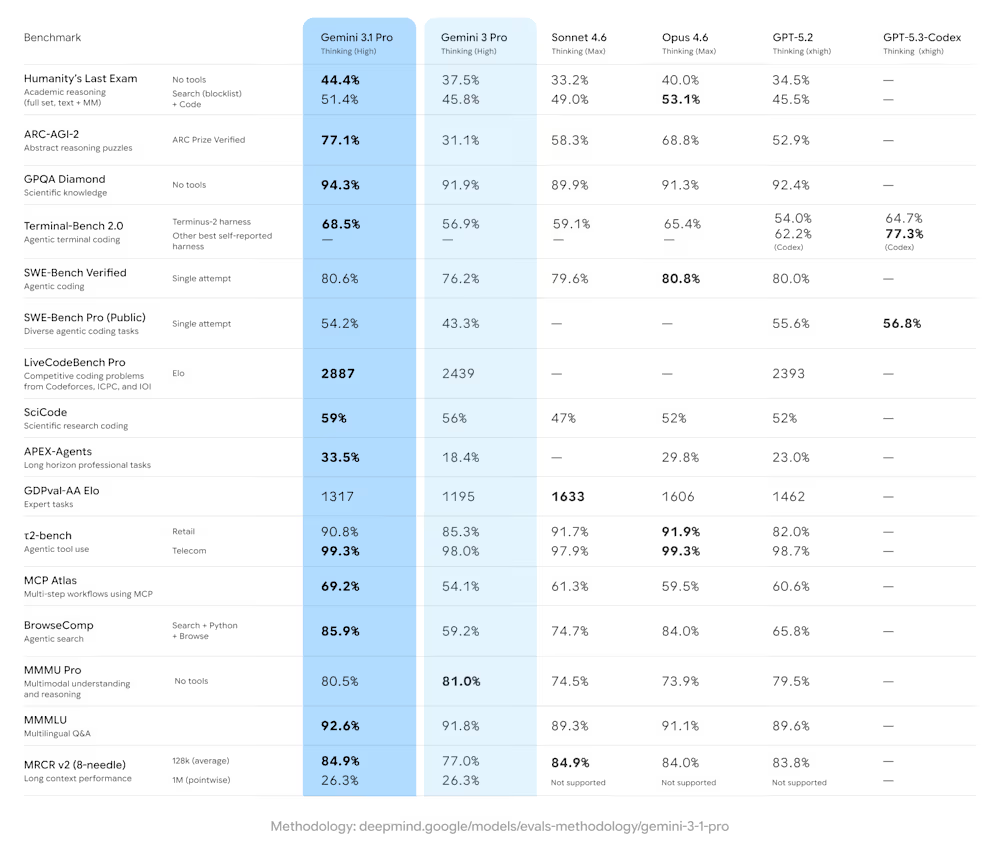
The most significant advancement in Gemini 3.1 Pro lies in its performance on rigorous logic benchmarks. Most notably, the model achieved a verified score of 77.1% on ARC-AGI-2.

Advertisement

This specific benchmark is designed to evaluate a model’s ability to solve entirely new logic patterns it has not encountered during training.

This result represents more than double the reasoning performance of the previous Gemini 3 Pro model.

Google Gemini 3.1 Pro benchmark chart

Google Gemini 3.1 Pro benchmark chart. Credit: Google

Beyond abstract logic, internal benchmarks indicate that 3.1 Pro is highly competitive across specialized domains:

Advertisement
  • Scientific Knowledge: It scored 94.3% on GPQA Diamond.

  • Coding: It reached an Elo of 2887 on LiveCodeBench Pro and scored 80.6% on SWE-Bench Verified.

  • Multimodal Understanding: It achieved 92.6% on MMMLU.

These technical gains are not just incremental; they represent a refinement in how the model handles “thinking” tokens and long-horizon tasks, providing a more reliable foundation for developers building autonomous agents.

Improved vibe coding and 3D synthesis

Google is demonstrating the model’s utility through “intelligence applied”—shifting the focus from chat interfaces to functional outputs.

One of the most prominent features is the model’s ability to generate “vibe-coded” animated SVGs directly from text prompts. Because these are code-based rather than pixel-based, they remain scalable and maintain tiny file sizes compared to traditional video, boasting far more detailed, presentable and professional visuals for websites and presentations and other enterprise applications.

Other showcased applications include:

Advertisement
  • Complex System Synthesis: The model successfully configured a public telemetry stream to build a live aerospace dashboard visualizing the International Space Station’s orbit.

  • Interactive Design: In one demo, 3.1 Pro coded a complex 3D starling murmuration that users can manipulate via hand-tracking, accompanied by a generative audio score.

  • Creative Coding: The model translated the atmospheric themes of Emily Brontë’s Wuthering Heights into a functional, modern web design, demonstrating an ability to reason through tone and style rather than just literal text.

Business impact and community reactions

Enterprise partners have already begun integrating the preview version of 3.1 Pro, reporting noticeable improvements in reliability and efficiency.

Vladislav Tankov, Director of AI at JetBrains, noted a 15% quality improvement over previous versions, stating the model is “stronger, faster… and more efficient, requiring fewer output tokens”. Other industry reactions include:

  • Databricks: CTO Hanlin Tang reported that the model achieved “best-in-class results” on OfficeQA, a benchmark for grounded reasoning across tabular and unstructured data.

  • Cartwheel: Co-founder Andrew Carr highlighted the model’s “substantially improved understanding of 3D transformations,” noting it resolved long-standing rotation order bugs in 3D animation pipelines.

  • Hostinger Horizons: Head of Product Dainius Kavoliunas observed that the model understands the “vibe” behind a prompt, translating intent into style-accurate code for non-developers.

Pricing, licensing, and availability

For developers, the most striking aspect of the 3.1 Pro release is the “reasoning-to-dollar” ratio. When Gemini 3 Pro launched, it was positioned in the mid-high price range at $2.00 per million input tokens for standard prompts. Gemini 3.1 Pro maintains this exact pricing structure, effectively offering a massive performance upgrade at no additional cost to API users.

  • Input Price: $2.00 per 1M tokens for prompts up to 200k; $4.00 per 1M tokens for prompts over 200k.

  • Output Price: $12.00 per 1M tokens for prompts up to 200k; $18.00 per 1M tokens for prompts over 200k.

  • Context Caching: Billed at $0.20 to $0.40 per 1M tokens depending on prompt size, plus a storage fee of $4.50 per 1M tokens per hour.

  • Search Grounding: 5,000 prompts per month are free, followed by a charge of $14 per 1,000 search queries.

For consumers, the model is rolling out in the Gemini app and NotebookLM with higher limits for Google AI Pro and Ultra subscribers.

Advertisement

Licensing implications

As a proprietary model offered through Vertex Studio in Google Cloud and the Gemini API, 3.1 Pro follows a standard commercial SaaS (Software as a Service) model rather than an open-source license.

For enterprise users, this provides “grounded reasoning” within the security perimeter of Vertex AI, allowing businesses to operate on their own data with confidence.

The “Preview” status allows Google to refine the model’s safety and performance before general availability, a common practice in high-stakes AI deployment.

By doubling down on core reasoning and specialized benchmarks like ARC-AGI-2, Google is signaling that the next phase of the AI race will be won by models that can think through a problem, not just predict the next word.

Advertisement

Source link

Continue Reading

Tech

Apple Set To Launch New Low-Cost MacBook & iPhone 17e At the March 4th Event

Published

on

Apple has scheduled its first product-focused event of 2026 for March 4, titled “Apple Experience.” The company has not shared any launch details yet, but speculation suggests updates to the Mac and iPad lineups, along with a potential debut of the iPhone 17e. The colourful logo in the invite is also being linked to a rumoured budget-friendly MacBook.

This time, Apple is not organising a large keynote-style launch. Instead, the company is hosting smaller, in-person media gatherings in New York, London, and Shanghai. Selected journalists and creators have been invited to attend these sessions. So far, Apple has not mentioned anything about a public livestream. This suggests announcements could be shared through press releases, with early impressions coming directly from those attending the sessions.

What Does “Apple Experience” Mean?

An Apple Experience is usually smaller than a big Apple keynote event. Instead of a long stage presentation, the company invites media and creators to try out new products in person. Announcements are often shared through press releases rather than a livestream. Apple has followed this format before in cities like Mumbai and London, so this time too, we may see updates shared online rather than on YouTube.

Colourful Invite Hints at a Low-Cost MacBook

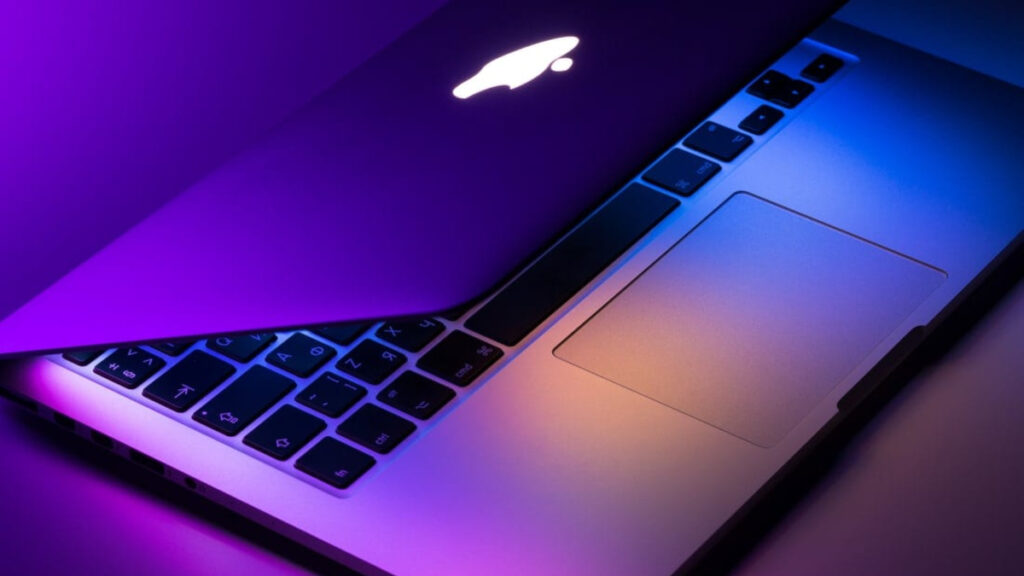
Macbook photo
Image: Unsplash

The Apple Experience invite has caught attention because of its unusual design. It features a white background with a 3D Apple logo in yellow, green, and blue shades. These colours are significant because reports earlier suggested Apple was testing similar bright finishes for a rumoured lower-cost MacBook. The match between the invite artwork and those prototype colours has strengthened speculation.

The expected MacBook may feature an A-series chip to reduce costs and offer a lower starting price than the MacBook Air. With the Air currently priced at Rs 99,990 in India, a more affordable option could appeal strongly to students and budget-conscious buyers.

Advertisement

iPhone 17e Could Also Debut

Image: fpt.

Apart from Macs and iPads, Apple may also introduce the iPhone 17e at the Apple Experience. The device was earlier expected to launch separately this week, but recent reports suggest Apple may introduce it alongside new Macs instead. Expected upgrades include:

  • MagSafe support
  • A19 chip
  • C1X modem for faster 5G connectivity
  • N1 chip for Wi-Fi 7

Furthermore, reports indicate that Apple may bring performance upgrades to its Mac lineup with new M5-based machines. A MacBook Air with the standard M5 chip could debut, while the MacBook Pro may receive more powerful M5 Pro and M5 Max versions.

iPad Upgrades and Other Product Rumours

Apple could use this event to strengthen its iPad lineup. The iPad Air (8th generation) may get the M4 chip, improving speed and efficiency for work and entertainment. The entry-level iPad is likely to adopt the A18 chip, which would keep it competitive in the budget tablet segment. These upgrades suggest Apple wants to enhance performance without pushing prices too high.

In addition to the iPad updates, rumours point to other hardware launches. A refreshed Studio Display, a new Apple TV, and an upgraded HomePod mini are said to be in development. Some reports also mention a possible Apple home hub, though it remains uncertain if these devices will debut at this smaller gathering.

Source link

Advertisement
Continue Reading

Tech

Department Of Education Forced To Back Off Illegal Plan To Be Racist, Sexist Assholes

Published

on

from the illegal-and-ignorant dept

One recurring theme of this era: folks who actually choose to stand up to this bumbling kakistocracy of hateful failsons usually tend to win if they stick together. Those that prematurely bend the knee in abject cowardice (like say, CBS, countless law firms, or numerous university administrators) will hopefully be remembered for it.

It happened again this week, when the Department of Education (DOE) was forced to back off of their illegal effort to permanently enshrine intolerance and ignorance across U.S. education standards.

More specifically, the DEO was forced to suspend their “Dear Colleague” directive that sought to restrict diversity, equity, and inclusion (DEI) efforts in schools and higher education. That directive, initially implemented in February of 2025, threatened to cut funding for institutions practicing “DEI,” (falsely) claiming it violated the Supreme Court’s 2023 ruling on affirmative action.

One of its core claims, as we’ve seen at other agencies like the FCC, is that even acknowledging well documented systemic racism and sexism is somehow unfair to white men. It’s just the dumbest, lamest bullshit, from some of the shittiest human beings to ever govern (and if you’re well-versed in American history, that’s really saying something).

Advertisement

The American Federation of Teachers filed suit against the administration shortly thereafter, alongside an ACLU FOIA lawsuit forcing disclosure of documents highlighting the Education Department’s flimsy legal reasoning. Numerous court rulings subsequently found the Trump administration ignored the Administrative Procedure Act (APA) and tried to rewrite federal civil rights policy illegally.

While the Trump administration realized they’d been beaten and had given up the fight late last month, the U.S. District Court for the District of Maryland put the final nail in the coffin this week. As a result the DOE has been forced to formally shut down the initiative, a significant victory for Americans who aren’t ignorant assholes:

“Upon the U.S.’s concession that the directive and subsequent certification requirement are vacated – meaning they are formally nullified – the district court issued a final ruling today, permanently invalidating the directive and preventing the government from enforcing, relying on, or reviving it. As a result, the challenged guidance is no longer in effect and cannot be enforced against anyone, anywhere nationwide.”

It’s worth reiterating that a lot of University administrators were abject cowards (or avid supporters of intolerance) and immediately threw minority and marginalized populations under the bus at the first indication of a stiff breeze, causing no manner of disruption to grants and scholarships. I’m not sure it’s even possible to functionally calculate the read harm caused to people.

It’s something you’d like to think they might be held actually accountable for by their colleagues:

Advertisement

Despite the win, much of the harm is likely permanent. And there are certainly other avenues where the administration has done very similar things and hasn’t yet been held to account; such as Trump’s illegal dismantling of the Digital Equity Act — which stifled all manner of rural broadband investment to marginalized neighborhoods and Trump voters alike because the word “equity” gave a few idiots a sad.

Any way you slice it, the sheer hubris of believing you can permanently eliminate equality, kindness, and diversity through illegal mandate by a dim, half-insane king remains historically stupid and deserves bottomless historic ridicule and derision.

But as we keep seeing, if people want to organize and meaningfully challenge this pathetic and increasingly unpopular administration, they usually win. As Trump’s health and influence fades, hopefully we’ll see a corresponding jump in courage.

Filed Under: colleges, dei, department of education, racism, school, universities

Companies: aclu, american federation of teachers

Advertisement

Source link

Continue Reading

Tech

Razer’s new limited-edition Huntsman keyboard offers you a premium build at an equally premium price

Published

on

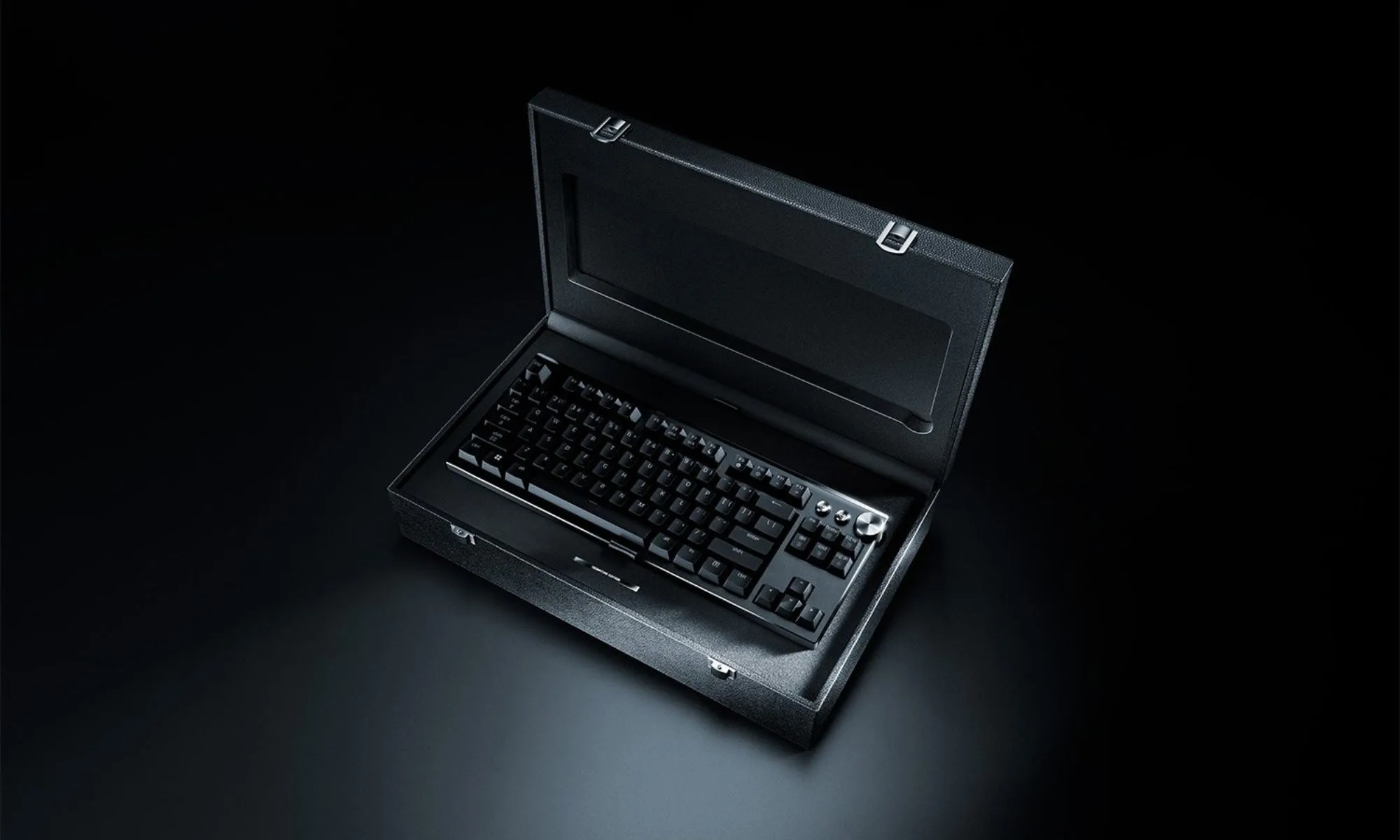
After launching the resurrected Boomslang mouse earlier this month, Razer is back with another limited-edition release. The company has unveiled the Huntsman Signature Edition, a premium tenkeyless mechanical keyboard that sits at the top of its Huntsman lineup. While not as outrageously priced as the Boomslang mouse, it still carries a hefty $499.99 price tag and will be sold in a limited run of just 1,337 units directly through Razer.

What sets the Huntsman Signature Edition apart is its build. Instead of featuring a plastic chassis like other Huntsman models, Razer has crafted this keyboard from CNC-milled anodized aluminum, giving it a more solid, premium feel. A mirror-finished back and a metallic snake keycap enhance the aesthetic, while foam and rubber dampening materials on the inside deliver a more satisfying, rounded typing sound and improved key feel.

Performance-wise, the keyboard is not entirely different from the Huntsman V3 Pro, featuring Razer’s second-gen analog optical key switches, a Rapid Trigger Mode, and an ultra-high 8,000Hz polling rate for near-instant input. Key actuation is adjustable from 0.1mm to 4mm, letting users fine-tune the feel for gaming or typing. The keyboard also includes full RGB lighting, on-the-fly macro recording, and supports both Mac and PC with a physical toggle to switch between the two systems.

The Huntsman Signature Edition only offers wired connectivity over USB-C and will go on sale through Razer’s website at 8 AM PT on February 22. In the box, you’ll get a vegan leather signature box, a vegan leather sound-dampening mat, a cleaning cloth, a keycap puller, additional keycaps, and a USB-A to USB-C Speedflex cable. Given how quickly the Boomslang pre-order sold out, you’ll need to act fast to get your hands on this premium mechanical keyboard.

Source link

Advertisement
Continue Reading

Tech

Apple’s upcoming smart glasses could get dual cameras and a touch of luxury

Published

on

Apple is accelerating work on its long-rumored smart glasses, and new reporting suggests the device is shaping up to be one of the company’s most ambitious entries in the personal AI era. Early prototypes point toward a premium, fashion-oriented wearable that blends compact hardware, advanced imaging capabilities and Apple’s upcoming generation of AI features.

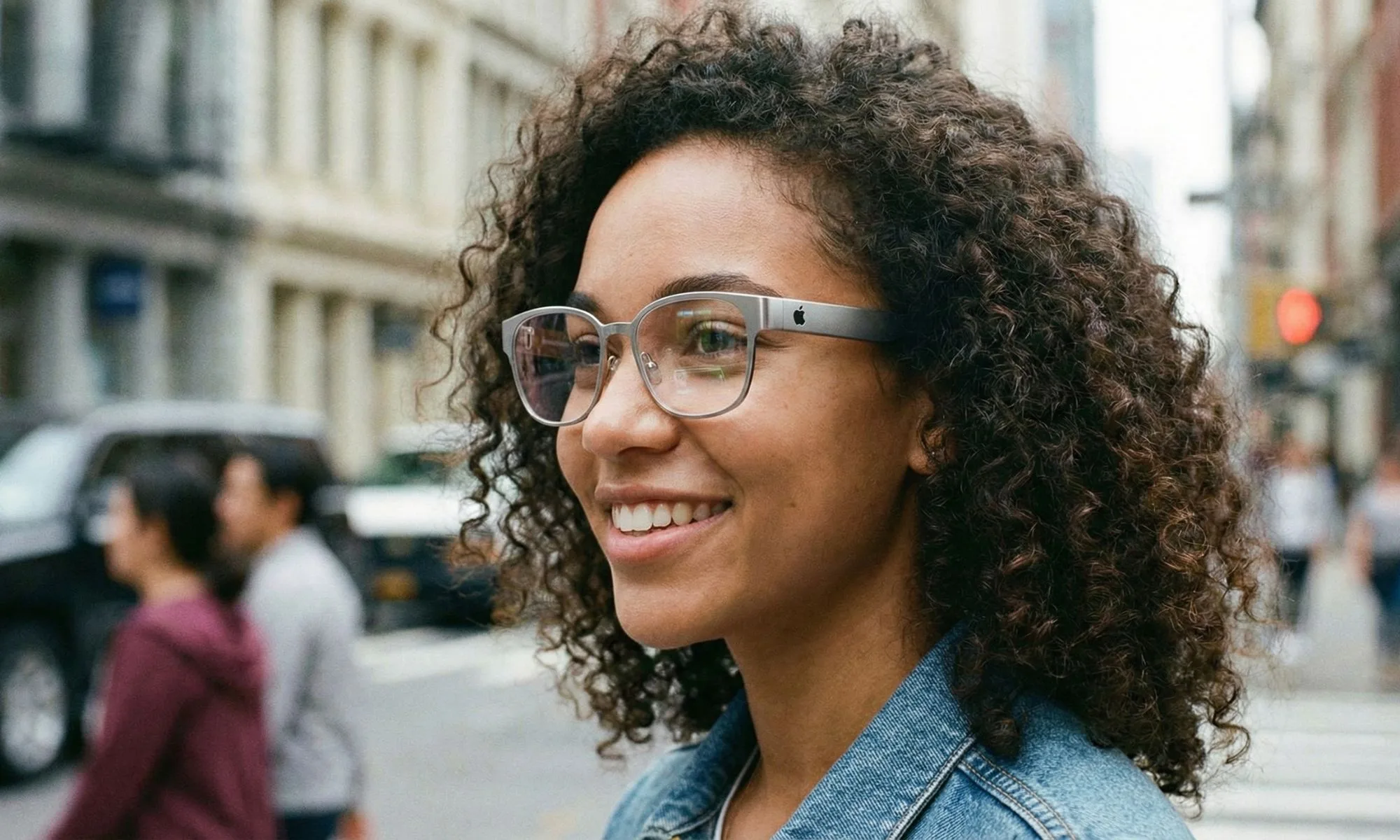
Apple tests dual-camera smart glasses with a luxury-forward design

According to details shared with Bloomberg, Apple’s smart glasses are now in an advanced prototyping phase. The most striking development is the inclusion of dual cameras, a feature rarely seen in consumer eyewear. These cameras are expected to support depth perception, environmental scanning and real-world understanding – crucial for Apple’s next wave of AI-driven features that rely heavily on visual context.

The design itself leans toward a luxury eyewear aesthetic rather than a tech-heavy headset. Apple is reportedly testing multiple frame styles, including metal and glass combinations, with finishes that echo the premium sensibilities of its high-end Apple Watch models. Rather than positioning the glasses as an alternative to the Vision Pro, Apple sees them as a lightweight, all-day wearable that brings AI into everyday life without the bulk of mixed reality gear.

Apple’s strategy reflects a broader shift toward building an ecosystem of ambient, AI-enabled devices. The glasses would serve as a more discreet complement to Vision Pro, offering situational intelligence through the wearer’s natural perspective. This aligns with the company’s parallel development of camera-equipped AirPods and a pendant-style wearable, which together form a network of sensors designed to interpret the environment and enhance Siri’s contextual awareness.

The move signals Apple’s intention to make personal AI a seamless, constant presence – much like the transition smartphones once made from occasional tools to everyday companions.

Advertisement

Why the glasses matter for future Apple users

The appeal for users goes far beyond novelty. A glasses-based form factor has the potential to revolutionise Apple’s AI experience by allowing the system to actually see what the user sees. That unlocks capabilities like real-time translation, object recognition, hands-free note-taking, navigation cues and accessibility enhancements, all delivered without lifting a phone or speaking a command into thin air.

This is also a pivotal moment for Apple’s product roadmap. With smartphone growth slowing and wearables becoming a bigger revenue pillar, smart glasses offer a pathway into the next major computing platform. The device could appeal to users who want the advantages of AI-enhanced vision without adopting the fully immersive, and often socially awkward, experience of a headset.

What’s next as Apple refines its wearable AI ecosystem

Apple has not finalised a release window, and as with all of its long-term hardware projects, the glasses may still undergo substantial changes before entering production. The company is also evaluating battery placement, weight and optical comfort, which have historically been challenges for smart eyewear.

What’s clear is that Apple is steadily assembling the pieces of a multi-device wearable AI ecosystem – one that includes smart glasses, camera AirPods and sensors that work together to understand the world around you. As the company prepares major updates to iOS and its AI architecture later this year, these glasses could become one of Apple’s most influential steps toward a future where personal computing lives quietly on your face rather than in your pocket.

Advertisement

Source link

Continue Reading

Tech

ESA Phi-Lab at Mullingar’s IMR reflects Ireland’s growing space-tech ambitions

Published

on

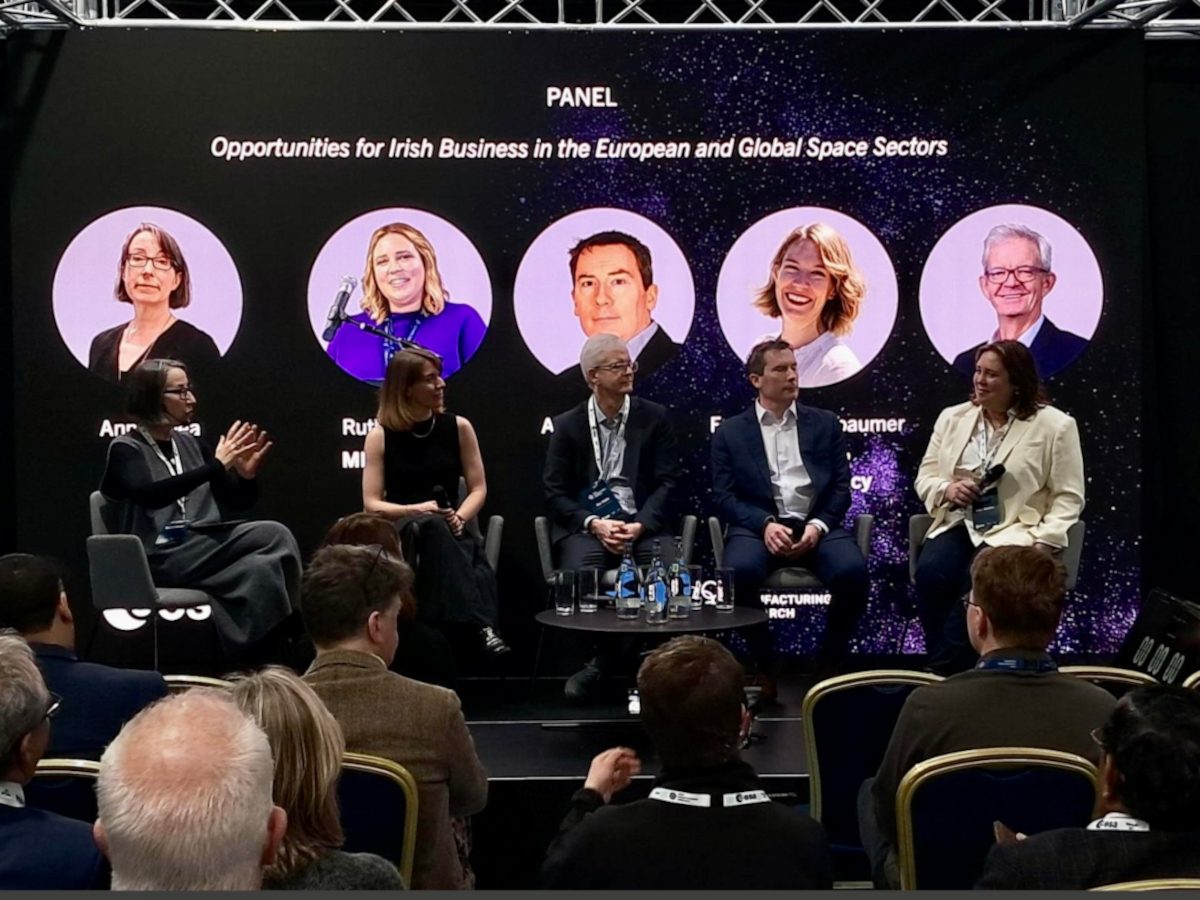
We take a look back at the official launch last week of Ireland’s first European Space Agency ‘Phi-Lab’ – a big step in Ireland’s ambitions in space-tech development.

There was a remarkable buzz at the oversubscribed official launch last Friday (13 February) of Ireland’s first European Space Agency (ESA) Phi-Lab headquartered at Irish Manufacturing Research (IMR) in Mullingar, run in collaboration with the AMBER Centre at Trinity College Dublin.

One of 10 European Phi-Labs, it is designed to be Ireland’s national platform for space technology development, and to anchor the country’s ambitions within Europe and the world’s rapidly-expanding space economy.

Advertisement

Philip Thomas, head of the ScaleUp programme division at ESA, was one of several senior agency representatives that travelled to Mullingar for the launch and he was excited about the particular focus of Ireland’s Phi-Lab on additive manufacturing.

“This is a really important Phi-Lab because it actually helps develop technologies and translate them quite quickly into commercial solutions, in an increasingly competitive space market globally, which is why it’s quite critical that we take these activities forward,” said Thomas.

“We’ve seen real success in Irish companies winning contracts with the European Space Agency, and over the last nine or 10 years, we’ve had 50 start-ups come through there,” said Joe Healy, head of research and innovation at Enterprise Ireland. “And what’s great about that is they’re already employing over 200 people and have raised almost €50m.

“So we would be optimistic that we can build on the success to date. The competition is very, very strong internationally, but we have very good, innovative companies these days.”

Advertisement

Healy also strongly advised companies in this space to diversify and ensure they find wider applications for their technologies, and to also look beyond Europe.

“Today marks a major milestone in our journey on the Phi Lab Ireland programme,” said Ken Horan, who leads the Ireland Phi-Lab in Mullingar. “For IMR, this is a major step into the space ecosystem where we are trying to advance Ireland’s position within the space innovation ecosystem and ultimately make Ireland leaders within this emerging market.”

A lively panel discussion included the co-founders of the two Irish companies selected from a highly-competitive first ‘Open Call’ last year – Ubotica Technologies and Mbryonics.

“We’re really delighted to be pioneering through this first call in Phi-Labs to bring additive manufacturing to what we’re doing,” said Ruth Mackey, CSO and co-founder of Mbryonics. “And that’s being enabled through the Phi-Labs programme here at the IMR. Bringing that space sector manufacturing is a key enabler, we think, for the next generation of jobs in Ireland.”

Advertisement

“We don’t necessarily have access to this capability and this expertise in-house,” said Aubrey Dunne, CTO and co-founder of Ubotica Technologies. “And so through the Phi-Lab project, we are partnering with the IMR, who have these skills in abundance. And they’re going to help us to design effectively solutions that are thermally well managed.”

Minister for Enterprise, Tourism and Employment Peter Burke, TD officially launched the new lab last Friday, and said the Irish Government was determined to support innovation and innovative companies in the space sector, pointing to the excellence of the two successful first call companies.

“I know that the next competitive call will take place during the first half of this year,” he said. “And I’m sure listening to our two successful applicants here today, that will spark plenty of interest for the future in this regard.”

“This facility positions Ireland at the forefront of European space-enabled innovation, where advanced manufacturing, AI and data-driven technologies can be developed, tested and commercialised for global impact,” said Barry Kennedy, CEO of IMR. “Ultimately, this is about translating world-class research into real economic and societal value.”

Advertisement

The launch forms part of a wider national commitment to the ESA, with the Department of Enterprise, Tourism and Employment committing €170m in investment to ESA over the next five years. The establishment of ESA Phi-Lab Ireland in Mullingar is a flagship element of that investment.

All the speakers agreed that Ireland’s space and space-enabled innovation sector is on the rise. Since the publication of Ireland’s ‘National Space Strategy for Enterprise’ in 2019, there are now 120 space-active companies working with ESA in Ireland in one way or another, and many Irish companies are today providing technologies and solutions to the commercial space sector globally.

Don’t miss out on the knowledge you need to succeed. Sign up for the Daily Brief, Silicon Republic’s digest of need-to-know sci-tech news.

Advertisement

Source link

Continue Reading

Tech

If You’ve Ever Ruined Sweaters in the Wash, Whirlpool’s New Machine Has a Fix

Published

on

If you’ve ever pulled a sweater from the washing machine to find a tangled collection of yarn, you wouldn’t be the first. Whirlpool’s new washing machine has a feature that aims to solve the issue without requiring hand-washing or running a dedicated delicates cycle.

The new Whirlpool top-load washer includes a built-in delicate basket that sits inside the drum, shielding sweaters and other fragile items from the agitation of a regular wash cycle. The basket also corrals socks in one place, making it easier to match and fold them when laundry time is done.

Advertisement
delicates basket sitting on top of washing machine

Serial sock losers will appreciate Whirlpool’s industry-first delicates basket. 

David Watsky/CNET

While LG’s sidekick pedestal washer makes a similar claim, that version features a separate wash bin under the main drum. Whirlpool’s is a simple plastic basket, large enough for a sweater and plenty of socks, that sits right on top of the machine’s impeller inside the drum. 

washer shot from above with delicates basket in the center

The basket can be removed to retrieve your delicates or left out for a wash that doesn’t require it. 

Advertisement

David Watsky/CNET

I saw the soon-to-be-released machine at KBIS in Orlando. Just weeks before, I’d ruined one of my favorite sweaters by machine-washing it, so the feature won me over. The idea is so simple and smart, yet this seems to be the only modern washing machine to incorporate it. 

washer shot from above with delicates basket in the center

Whirlpool debuted a delicates basket for soft sweaters and socks at KBIS 2026.

David Watsky/CNET

While we weren’t able to see the machine in action yet (it was only on display), a Whirlpool representative told me that clothes placed in the center basket remain there through the cycle, thanks to the distinct water flow patterns. 

Advertisement

The basket is easily removed with a gentle squeeze of the handles, so you can extract your delicates and socks. You can also leave the basket out if it’s not needed for a particular wash cycle. 

Pricing was not available but the washing machine is set to launch at national retailers in September. 

Source link

Advertisement
Continue Reading

Tech

PayPal discloses data breach that exposed user info for 6 months

Published

on

PayPal

PayPal is notifying customers of a data breach after a software error in a loan application exposed their sensitive personal information, including Social Security numbers, for nearly 6 months last year.

The incident affected the PayPal Working Capital (PPWC) loan app, which provides small businesses with quick access to financing.

PayPal discovered the breach on December 12, 2025, and determined that customers’ names, email addresses, phone numbers, business addresses, Social Security numbers, and dates of birth had been exposed since July 1, 2025.

Wiz

The financial technology company said it has reversed the code change that caused the incident, blocking attackers’ access to the data one day after discovering the breach.

“On December 12, 2025, PayPal identified that due to an error in its PayPal Working Capital (“PPWC”) loan application, the PII of a small number of customers was exposed to unauthorized individuals during the timeframe of July 1, 2025 to December 13, 2025,” PayPal said in breach notification letters sent to affected users.

Advertisement

“PayPal has since rolled back the code change responsible for this error, which potentially exposed the PII. We have not delayed this notification as a result of any law enforcement investigation.”

PayPal also detected unauthorized transactions on the accounts of a small number of customers as a direct result of the incident and has issued refunds to those affected.

The company now offers affected users two years of free three-bureau credit monitoring and identity restoration services through Equifax, which require enrollment by June 30, 2026.

Affected customers are also advised to monitor their credit reports and their account activity for suspicious transactions. PayPal reminded users that it never requests account passwords, one-time codes, or other authentication credentials via phone, text, or email, a common tactic used in phishing attacks that often follow data breach disclosures.

Advertisement

While PayPal has yet to disclose how many customers were affected, it has reset passwords for all impacted accounts and said that users will be prompted to create new credentials upon their next login if they have not already done so.

BleepingComputer reached out to a PayPal spokesperson with questions about the incident, but a response was not immediately available.

In January 2023, PayPal notified customers of another data breach after a large-scale credential stuffing attack compromised 35,000 accounts between December 6 and December 8, 2022.

Two years later, in January 2025, New York State announced a $2,000,000 settlement with PayPal over charges that it failed to comply with the state’s cybersecurity regulations, leading to the 2022 data breach.

Advertisement

Modern IT infrastructure moves faster than manual workflows can handle.

In this new Tines guide, learn how your team can reduce hidden manual delays, improve reliability through automated response, and build and scale intelligent workflows on top of tools you already use.

Source link

Continue Reading

Tech

Why investors are going gaga over solid-state transformers

Published

on

It’s no secret that the electrical grid is aging, but one part stands out from the rest. Transformers haven’t changed much since Thomas Edison made his first light bulb. 

Now, a string of startups are working to modernize the transformer, replacing it with modern power electronics that promise to give grid operators more control over how and where electricity flows. 

“It becomes a very powerful device, equivalent to your internet router,” Subhashish Bhattacharya, co-founder and CTO of DG Matrix, told TechCrunch.

Three startups recently raised sizable rounds to scale up production of their solid-state transformer technologies. This week, DG Matrix raised a $60 million Series A and Heron Power raised $140 million in a Series B round. In November, Amperesand raised $80 million to chase after the burgeoning data center market.

Advertisement

Existing transformers are reliable and efficient, but that’s about it. They’re relatively crude instruments, made largely of copper and iron. They react passively to changes on the grid and are capable of tackling only one task per device.

“An old-school steel, copper, and oil transformer doesn’t have any monitoring, doesn’t have any control,” Drew Baglino, founder and CEO of Heron Power, told TechCrunch. In instances where electricity surges or a power plant trips offline, that can be a liability.

The devices can incorporate power from a range of difference sources — including traditional power plants, renewables, and batteries — and transform that electricity into either alternating current (AC) or direct current (DC) at a number of different voltages, allowing them to replace several devices.

Techcrunch event

Advertisement

Boston, MA
|
June 9, 2026

For data centers, solid-state transformers offer an appealing alternative, allowing them to shrink the footprint of their power systems while giving them finer control over where and how electricity is directed.

Advertisement

Solid-state transformers poised to arrive at a time when existing transformers are aging and demand for new ones is surging — a classic tech supercycle. Most transformers on the grid today are several decades old, according to the National Laboratory of the Rockies. As demand from data centers, EV chargers, and other parts of the grid rises, the NLR expects the amount of power flowing through transformers to double by 2050.

While data centers are the the first market those companies are chasing, they also have their sights set on the electrical grid, which in the U.S. alone hosts as many as 80 million transformers

“All of the distribution transformers are ultimately going to need to be replaced. Over 50% of them are 35 years old. There’s a big need for an upgrade,” Baglino said.

Because they’re are made from silicon-based materials, they’re flexible, controllable, and software-updatable. They’re also immune from price fluctuations that rock the copper market.

Advertisement

“Power semiconductors keep getting cheaper. Steel, copper, and oil, unfortunately, is not in that situation,” Baglino said. “Commodity prices can move all over the place, and they generally move up.” 

In an old-style transformer, power flows into the transformer through copper wires wound around one side of an O-shaped iron core. As the electricity flows, it induces a magnetic field in the core. On the other side of the core, the magnetic field induces electricity in another set of copper windings. If the wires wrap around the core more times on the input side than the output side, the voltage decreases on the output side. If the ratio inverts, the output voltage increases.

Solid-state transformers eschew the copper windings in favor of semiconductors, using materials like silicon carbide or gallium nitride to handle frequency conversion. They can come in a range of configurations, with the most comprehensive setup consisting of three basic parts: a rectifier that converts alternating current to direct current, a converter that changes the voltage of the direct current, and an inverter that changes the direct current back into alternating current.

Unlike iron-core transformers, solid-state transformers can handle power that flows in both directions, making them useful in places that need backup power, like data centers. 

Advertisement

In a data center, a solid-state transformer can replace several different pieces of equipment, not just the transformer that steps voltage down from the grid. Every data center uses backup power, which requires a string of devices to bring power into the facility. Solid-state transformers can handle all of those duties in one box.

The technology also allows data centers to more easily integrate so-called behind-the-meter power, where generating capacity is connected directly to the data center, not the grid. Those typically require another set of transformers.

And when coupled with grid-scale batteries, solid-state transformers can eliminate uninterruptible power supplies (UPS), too, freeing up space inside the data center for more racks.

“If you add up the cost of everything we’ve taken out, we’re 60% to 70% of that cost,” Haroon Inam, co-founder and CEO of DG Matrix, told TechCrunch.

Advertisement

DG Matrix has been focusing on its Interport technology, which can route power from multiple sources to multiple loads of differing voltages, a setup the company holds multiple patents on.

Heron Power, meanwhile, is working to transforming medium-voltage power in data centers, solar farms, and grid-scale battery installations. In a data center, it’s Heron Link transformers can provide racks with 30 seconds of power while backup sources come online. Altogether, Heron Link occupy 70% less space than existing parts. At a solar farm, Heron Power’s transformers can perform the duties of an inverter and a transformer for the same price.

In a head-to-head comparison, solid state transformers still command a cost premium over iron-core transformers. For that reason, they’re unlikely to replace the giant humming boxes at grid substations in the very near future. 

But in data centers and at EV charging hubs, where solid-state transformers take the place of several pieces of equipment, they’ll start making inroads. 

Advertisement

When they finally hit the grid in bigger numbers, they have the potential to cut down on transmission and distribution costs, one of the biggest contributors to utility bill inflation.

Because today’s transformers are passive, unable to react to fluctuations, distribution networks have been built with a significant amount of spare capacity, Baglino said. Solid-state transformers, though, and can respond to changing conditions, allowing grid operators to send more power through the same lines.

“You can actually make the infrastructure more affordable because you’re putting more kilowatt-hours through the same poles and wires,” he said. “That’s where intelligence, in place of passive mechanical objects that were designed 100 years ago, can make a big difference.”

Source link

Advertisement
Continue Reading

Tech

The OpenAI mafia: 18 startups founded by alumni

Published

on

Move over, PayPal mafia: There’s a new tech mafia in Silicon Valley. As the startup behind ChatGPT, OpenAI is arguably the biggest AI player in town. The company is reportedly now in talks to finalize a $100 billion deal, valuing the company at more than $850 billion.  

Many employees have come and gone since the company first launched a decade ago, and some have launched startups of their own. Among these, some have become top rivals (like Anthropic), while others, just on investor interest alone, have managed to raise billions without even launching a product (see, Thinking Machine Labs).  

In January, Aliisa Rosenthal, OpenAI’s first sales leader, spoke a little bit about this growing network. She, like the other OpenAI alums who did not become founders, decided to become an investor and said she was going to tap into the ex-OpenAI founder network to look for deal flow. We know Peter Deng, OpenAI’s former head of consumer products (and now general partner at Felicis) already has.  

Below is a roundup of the major startups founded by OpenAI alumni, in alphabetical order. And we are certain this list will grow over time. 

Advertisement

David Luan — Adept AI Labs 

David Luan was OpenAI’s engineering VP until he left in 2020. After a stint at Google, in 2021 he co-founded Adept AI Labs, a startup that builds AI tools for employees. The startup last raised $350 million at a valuation north of $1 billion in 2023, but Luan left in late 2024 to oversee Amazon’s AI agents lab after Amazon hired Adept’s founders.

Dario Amodei, Daniela Amodei, and John Schulman — Anthropic

Siblings Dario and Daniela Amodei left OpenAI in 2021 to form their own startup, San Francisco-based Anthropic, that has long touted a focus on AI safety. OpenAI co-founder John Schulman joined Anthropic in 2024, pledging to build a “safe AGI.” The company has since become OpenAI’s biggest rival and just raised a $30 billion Series G, nabbing a $380 billion valuation in the process. IPO rumors are also swirling, as the company reportedly prepares for a public listing that could come sometime this year. (OpenAI is also allegedly preparing for an IPO this year and is maybe even trying to beat Anthropic to the public market.) 

Rhythm Garg, Linden Li, and Yash Patil — Applied Compute  

Three ex-OpenAI staffers (Rhythm Garg, Linden Li, and Yash Patil) have reportedly raised $20 million for a startup called Applied Compute, as reported by Upstart Media. All three of them worked as technical staff at OpenAI for more than a year before leaving last May to launch the startup, per their LinkedIns. The startup helps enterprises train and deploy custom AI agents. Benchmark led the round, valuing the 10-month-old company at $100 million, Upstart Media reported. 

Techcrunch event

Advertisement

Boston, MA
|
June 9, 2026

Pieter Abbeel, Peter Chen, and Rocky Duan — Covariant

The trio all worked at OpenAI in 2016 and 2017 as research scientists before founding Covariant, a Berkeley, California-based startup that builds foundation AI models for robots. In 2024, Amazon hired all three of the Covariant founders and about a quarter of its staff. The quasi-acquisition was viewed by some as part of a broader trend of Big Tech attempting to avoid antitrust scrutiny. 

Advertisement

Tim Shi — Cresta 

Tim Shi was an early member of OpenAI’s team, where he focused on building safe artificial general intelligence (AGI), according to his LinkedIn profile. He worked at OpenAI for a year in 2017 but left to found Cresta, a San Francisco-based AI contact center startup that has raised over $270 million from VCs like Sequoia Capital, Andreessen Horowitz, and others, according to a press release.

Jonas Schneider — Daedalus

Jonas Schneider led OpenAI’s software engineering for robotics team but left in 2019 to co-found Daedalus, which builds advanced factories for precision components. The San Francisco-based startup raised a $21 million Series A last year with backing from Khosla Ventures, among others.

Andrej Karpathy — Eureka Labs

Computer vision expert Andrej Karpathy was a founding member and research scientist at OpenAI, leaving the startup to join Tesla in 2017 to lead its autopilot program. Karpathy is also well-known for his YouTube videos explaining core AI concepts. He left Tesla in 2024 to found his own education technology startup, Eureka Labs, a San Francisco-based startup that is building AI teaching assistants.

Margaret Jennings — Kindo

Margaret Jennings worked at OpenAI in 2022 and 2023 until she left to co-found Kindo, which markets itself as an AI chatbot for enterprises. Kindo has raised over $27 million in funding, last raising a $20.6 million Series A in 2024. Jennings left Kindo in 2024 to head product and research at French AI startup Mistral, according to her LinkedIn profile.

Advertisement

Maddie Hall — Living Carbon

Maddie Hall worked on “special projects” at OpenAI but left in 2019 to co-found Living Carbon, a San Francisco-based startup that aims to create engineered plants that can suck more carbon out of the sky to fight climate change. Living Carbon raised a $21 million Series A round in 2023, bringing its total funding until then to $36 million, according to a press release.

Liam Fedus — Periodic Labs  

Liam Fedus, OpenAI’s VP of post-training research, left the company in March 2025 to team up with his former Google Brain colleague, Ekin Dogus Cubuk, and launch Periodic Labs. The startup seeks to use AI scientists to find new materials, particularly new superconducting materials. It came out of stealth mode in September 2025, armed with a massive $300 million in seed-round funding with backers that included Jezz Bezos, Eric Schmidt, Felicis and Andreessen Horowitz. 

Aravind Srinivas — Perplexity

Aravind Srinivas worked as a research scientist at OpenAI for a year until 2022, when he left the company to co-found AI search engine Perplexity. His startup has attracted a string of high-profile investors like Jeff Bezos and Nvidia, although it’s also caused controversy over alleged unethical web scraping. Perplexity, which is based in San Francisco, last reported a raise of $200 million at a $20 billion valuation. 

Jeff Arnold — Pilot

Jeff Arnold worked as OpenAI’s head of operations for five months in 2016 before co-founding San Francisco-based accounting startup Pilot in 2017. Pilot, which focused initially on doing accounting for startups, last raised a $100 million Series C in 2021 at a $1.2 billion valuation and has attracted investors like Jeff Bezos. Arnold worked as Pilot’s COO until leaving in 2024 to launch a VC fund.

Advertisement

Shariq Hashme — Prosper Robotics

Shariq Hashme worked for OpenAI for 9 months in 2017 on a bot that could play the popular video game Dota, per his LinkedIn profile. After a few years at data-labeling startup Scale AI, he co-founded London-based Prosper Robotics in 2021. The startup says it’s working on a robot butler for people’s homes, a hot trend in robotics that other players like Norway’s 1X and Texas-based Apptronik are also working on.

Ilya Sutskever — Safe Superintelligence 

OpenAI co-founder and chief scientist Ilya Sutskever left OpenAI in May 2024 after he was reportedly part of a failed effort to replace CEO Sam Altman. Shortly afterward, he co-founded Safe Superintelligence, or SSI, with “one goal and one product: a safe superintelligence,” he says. Details about what exactly the startup is up to are scant: It has no product and no revenue yet. But investors are clamoring for a piece anyway, and it’s been able to raise $2 billion, with its latest valuation reportedly rising to $32 billion this month. SSI is based in Palo Alto, California, and Tel Aviv, Israel.

Emmett Shear — Stem AI

Emmett Shear is the former CEO of Twitch who was OpenAI’s interim CEO in November 2023 for a few days before Sam Altman rejoined the company. Shear launched an AI company, StemAI, in 2024 (though it seems to have since rebranded as Softmax). The company, which appears to be a research company, has attracted funding from Andreessen Horowitz.

Mira Murati — Thinking Machines Lab 

Mira Murati, OpenAI’s CTO, left OpenAI to found her own company, Thinking Machines Lab, which emerged from stealth in February 2025. It said at the time (rather vaguely) that it will build AI that’s more “customizable” and “capable.” The San Francisco AI startup, now valued at $12 billion, announced its first product late last year: an API that fine-tunes language models. It recently made headlines when two of its co-founders announced earlier this year that they would return to OpenAI. 

Advertisement

Kyle Kosic — xAI

Kyle Kosic left OpenAI in 2023 to become a co-founder and infrastructure lead of xAI, Elon Musk’s AI startup that offers a rival chatbot, Grok. In 2024, however, he hopped back to OpenAI, where he remains. Meanwhile, xAI (which acquired Musk’s social media site X) was purchased by Musk’s SpaceX, giving the coalesce company a valuation of $1.25 trillion. It is looking to go public sometime in June for what could be a historic listing. 

Angela Jiang — Worktrace AI

Angela Jiang left OpenAI in 2024, after working as a product manager and on the public policy team. In April 2025, she quietly launched Worktrace, which uses AI to help enterprises make business operations more efficient. It observes employee work patterns and automates workflow, according to the company’s website. The business is backed by Mura Murati, OpenAI’s former CTO, who went on to launch Thinking Labs. It is also backed by OpenAI’s startup fund, in addition to a slew of other OpenAI names, like its chief strategy officer, Jason Kwon. 

Stealth Startups

In addition to these startups, a number of other former OpenAI employees have founded startups that are still in stealth mode, according to various updates TechCrunch found on LinkedIn. For instance, it seems that former OpenAI researcher Danilo Hellermark has been working on a generative AI stealth startup for the past few years. He officially left OpenAI at the beginning of 2023. There’s also one apparently in the works from Lucas Negritto, who worked on OpenAI’s technical team and left the company in 2023 after three years. Since then, he’s founded one startup and has been working on another since August 2025, according to his LinkedIn. 

Source link

Advertisement
Continue Reading

Trending

Copyright © 2025