Spoiler Alert: This list contains spoilers for The Night Agent Season 3.The Night Agent Season 3 ended with a neat and tidy resolution to Peter’s (Gabriel Basso) latest case. But his work doesn’t stop here. While the hit Netflix series hasn’t officially been renewed for a fourth season,there has been talks of a shift in production location thatsuggests one will be in the works. Considering The Night Agent remains one of the streamer’s most-watched series, and Season 3 is arguably the best one yet, it’s almost a given that it will continue.
That leads us to where the plot will go from here. While it’s obvious Peter will pick up another case while working as a night agent for the secret Night Action branch of the FBI and government, there are other questions that need answers beyond just what the case will be and what actors will be joining and returning to the cast.
Advertisement
1
Who is Peter’s Potential New Partner?
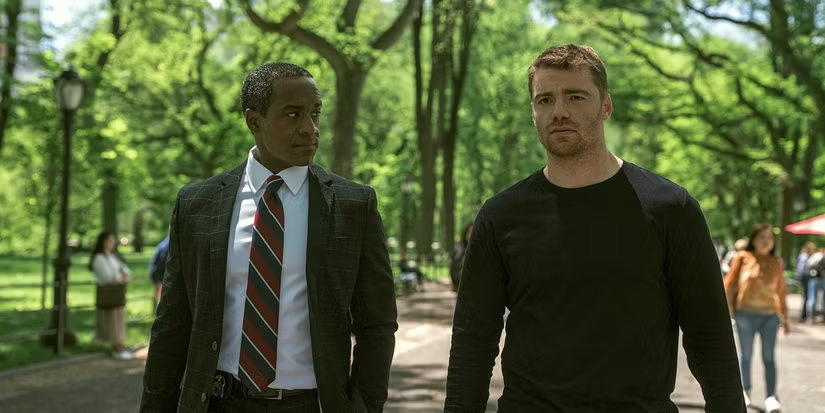
Aidan looking at Peter as they walk together down the street in The Night Agent.Image via Netflix
At the end of Season 3 of one of the most anticipated Netflix shows of 2026, FBI Deputy Director Aidan (Albert Jones) urges Peter to take some time off. He hasn’t taken a break for over a year, arguably longer. Since getting that phone from Jacob Monroe (Louis Herthum), he had been biding his time, taking on case after case while waiting for the fateful call to help take the billionaire broker down. Now that the case is over and Jacob is dead, Peter can finally relax. And Aidan wants him to do just that.
But he also tells Aidan that once he does return, likely very soon, he has put in a request for a partner. Aidan mentions that he has someone in mind for him, so the big question is who this person will be. Will it be a character we already know or a new cast member? This is probably the biggest question for Season 4 as this person will likely be a big part of the story.
Advertisement
2
Does Peter Ever Reunite With Rose?
Rose Larkin (Luciane Buchanan) in The Night AgentImage via Netflix
We knew after Season 2 of the action thriller, one of the best spy and secret agent shows on Netflix, that Luciane Buchanan would not be returning to the show. In the plot, she and Peter decide that it’s best they stay away from one another, as much as they want to be together. When she is around, people use her importance to Peter to get to him, and he ends up making dangerous decisions to protect her. It’s best that they separate so others can’t use her against him, and he doesn’t feel like he’s putting her in danger. His job requires him to travel the world anyway, going to places to work on jobs he can’t reveal. So, a relationship simply wouldn’t work.
That said, a reunion of sorts would be nice. In Season 3, Peter visits the human resources department to ask about leaving his benefits in the event of his death to someone, and he names Rose. But he’s told that he can only leave them to family, a stark reminder that Peter has no living relatives or even close friends. Rose is all he has, so it would be nice to see her in his life in some capacity, even if not romantically.
Advertisement
3
What Will the Next Big Case Be?
Louis Herthum as Jacob Monroe in The Night Agent Season 3Image via Netflix
Of course, the big question about Season 4 of one of the best spy shows of the 2020s, is what the next case will be and who will be the bad guy or gal Peter is chasing down. It could be something local since it has been confirmed that the show will be moving from New York to Los Angeles to qualify for a tax credit, according to Deadline. Assuming fans still have an appetite for the series, and it gets an official renewal, the show may either see Peter working a case in Los Angeles or using sets in Hollywood to recreate other locations around the world.
Peter has traveled all over throughout the show, including to countries like Turkey in Season 3 and Thailand in Season 2. So, we can expect a case with international intrigue for Season 4. So far, he has fought off political corruption, a war criminal plotting a chemical attack, and a billionaire broker making money by selling intelligence. A story and script has reportedly already been devised for a fourth season, but we’ll have to wait and see what it will be about.
Advertisement
4
Do Peter and Adam Ever Cross Paths Again?
David Lyons as Adam in The Night AgentImage via Netflix
Adam (David Lyons) was a compelling character addition in Season 3, a new partner for Peter who, as it turns out, is close personal friends with the President. While Peter is initially hesitant about Adam, the two hit it off and become something close to friends. However, Peter quickly learns that Adam is on assignment of the president and will do whatever is asked of him without question, including trying to kill Chelsea (Fola Evans-Akingbola).
By the end, however, Peter gets through to Adam, who is inherently a good person. He lets the man know that President Richard Hagan (Ward Horton) is not the same man he once knew. He has changed and has done, and continues to do, heinous things. This has fans wondering if maybe Adam might be the person Aidan has in mind to be Peter’s new partner, or if he will have moved on and won’t cross paths with Peter again.
Advertisement
5
Will We See Chelsea’s Wedding?
Chelsea and her fiancé posing for a photo in The Night Agent.Image via Netflix
The season had us back and forth about Chelsea’s husband and whether he was a good guy or not. It turns out any hints that he might have been working against her were false, and he is indeed a good man. By the end, they were planning their wedding, and it was a joyful moment to see this character who has always been surrounded by death and destruction. Fans wonder if her wedding will be part of the plot of Season 4 or at least shown as a happy occasion where Peter can finally let his guard down and enjoy a night out in a suit and tie.
Season 3 started to dive more into Peter’s personal life, notably his relationship with his mother, who he lost when he was young to cancer. With Chelsea arguably Peter’s only friend and the only person he trusts implicitly (aside from Aidan and Rose), seeing their friendship grow would be nice. Chelsea’s wedding would be a welcome reprieve from the constant intense action.
Advertisement
6
Will Peter Start To Focus on a Personal Life?
Peter walking alone, hands in his pocket, looking relaxed in The Night Agent.Image via Netflix
Not since Rose has Peter had a romantic interest. While it’s understandable that he steers clear of that because of his job, maybe it’s time for him to let someone in. Is it possible his new partner is a woman with whom he begins a romantic relationship? This could complicate things, and fans likely don’t want to see Peter tied down and distracted from his work. But he also needs a personal life, too, and seeing him flourish in this respect is one of the reasons you should be watching The Night Agent.
Even if it’s to go out and have drinks with friends, like Adam, Chelsea and her soon-to-be-husband, even Isabel (Genesis Rodriguez) once she returns to the U.S. or Jay (Suraj Sharma), since they seemed to get along well, it would be nice to see Peter relax a little and focus on himself outside of work. At the very least, he needs to have more open and vulnerable conversations like he did with Chelsea in the car. Recalling the memories of being at the beach with his mother helps further humanize the character, making him even more likable to fans.
Advertisement
7
Will The Father Be Back?
The Father looking at papers in a hotel room as the son stands on the bed in The Night Agent.Image via Netflix
One of the best new characters in the season is the assassin known only as The Father (Stephen Moyer), a man hired by the bad guys to take out anyone who gets in their way. At one point in time, he’s tasked with killing Peter. He’s such a complex character, a man who, after killing two targets, realized they had a baby and took the little boy in as his own. Raising him ever since in hotels and random places, he has clearly done a good job homeschooling the child and turning him into a strong, smart, independent young boy.
In the end, The Father decides to take Peter’s advice and end his cycle of kills, targeting his final victim before heading off into the sunset with the boy. But what is next for him? There could be a whole spin-off about this character! Does he take a basic job and live in the suburbs as a single dad, leaving his assassin past behind him? Has he accrued enough money to run away to another country and live comfortably for the rest of his days? Or does he fall back into his old ways? Inquiring minds need to know! That can’t be the end of his story.
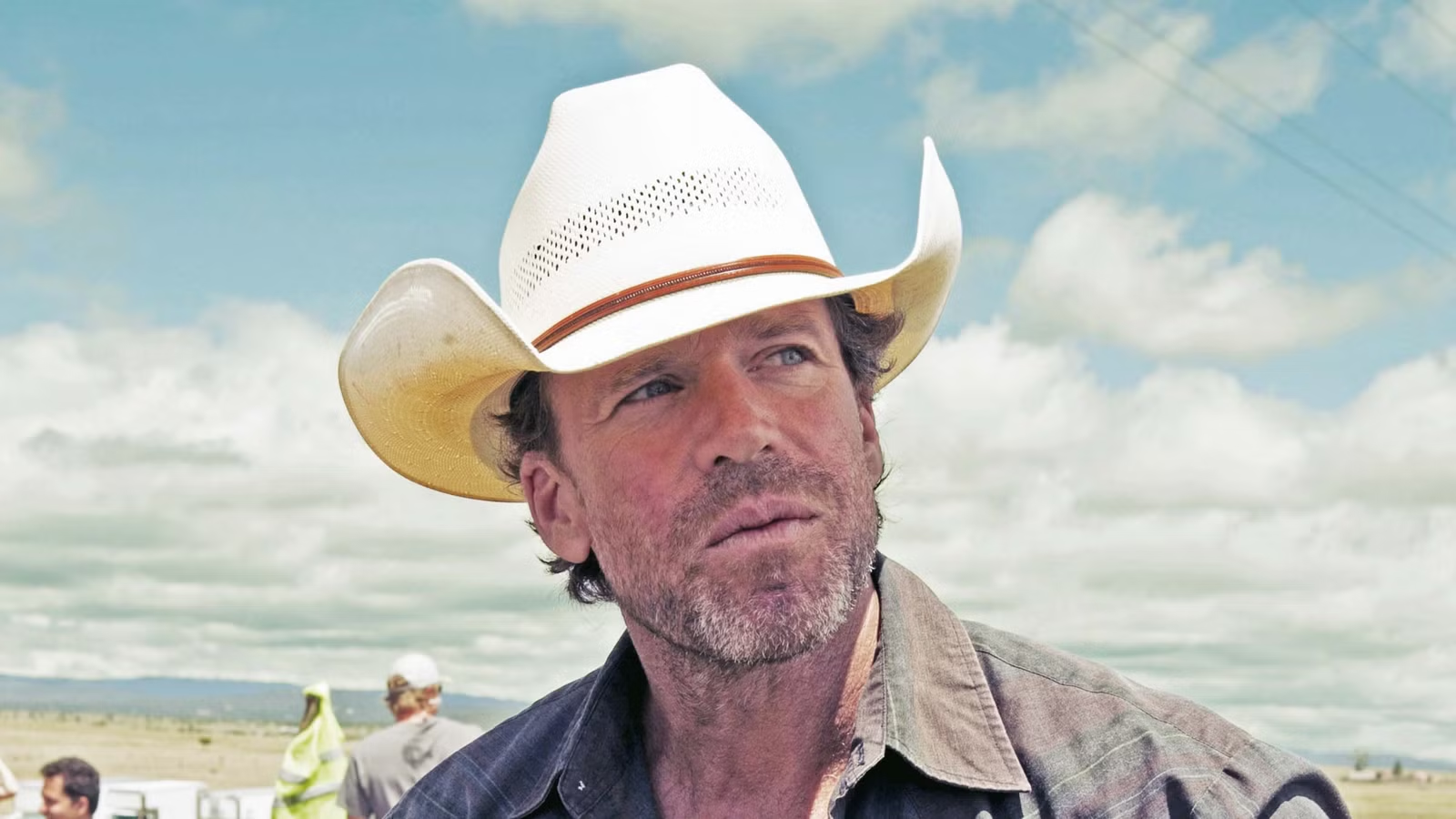
Taylor Sheridan is an acclaimed scribe who has mastered the art of the neo-Western. He made his feature writing debut in 2015 on Sicario, a film that would be the peak of many writers’ filmography. While some of his other projects, like the 2018 sequel to Sicario, didn’t quite live up to Sheridan’s high standards, they still found an audience in theaters and continue to do so on streaming. Sheridan entered the TY portal in 2018 with the release of the first season of Yellowstone, the hit contemporary Western show starring Kevin Costner. It ran for five successful seasons and has aired two spin-offs with more on the way. Two years before the first season of Yellowstone, though, Sheridan wrote another neo-Western that may just be his magnum opus.
In 2016, Sheridan recruited Chris Pine and Jeff Bridges to star in Hell or High Water, the contemporary Western/police procedural following a divorced father who is trying to make a better life for himself. When his ex-con brother comes back into his life, and they plan a series of heists together, they find themselves on the radar of a local lawman who becomes obsessed with taking them down. The film earned scores of 97% from critics and 89% from audiences on the aggregate site Rotten Tomatoes, and it grossed $37 million at the box office against a modest $12 million budget. In America, Hell or High Water is streaming exclusively on Netflix, but globally, the film has become one of the most popular purchases on Apple TV in several countries. Sheridan wrote the script for the film, but David Mackenzie stepped behind the camera to direct.
Advertisement
Taylor Sheridan Is Leaving Paramount
Taylor Sheridan has been working with Paramount for years now, and the only one of his shows that’s not streaming on Paramount is Yellowstone. This is due to a deal struck between the two conglomerates a few years back that allowed all episodes of Yellowstone to move to a new streaming home. Late last year, news broke that Sheridan is officially leaving Paramount for NBCUniversal, so by the time it’s all said and done, fans can expect more of his shows on Peacock. This deal won’t go into effect until the end of 2028, though, so there’s still plenty of time to enjoy his content on Paramount+.
Be sure to watch Hell or High Water on Netflix before it’s removed from the platform and stay tuned to Collider for more streaming updates.
Advertisement
Advertisement
Release Date
August 11, 2016
Runtime
Advertisement
102 minutes
Director
David Mackenzie
Advertisement
Producers
Carla Hacken, Julie Yorn, Peter Berg, Sidney Kimmel
With human experiences being so subjective, it’s easy to overhype a movie. Whatever things happened to you in the lead-up to seeing that movie could influence how you feel about it, and if someone tells you that something is the best thing ever, it could set your expectations too high and leave you disappointed. That being said, I still think Rutger Hauer’s climactic speech in Ridley Scott’s Blade Runneris one of the best things ever depicted in a movie.
Blade Runner is generally regarded as a sci-fi masterpiece, even separated from Hauer’s speech, and it has an 89 percent rating on Rotten Tomatoes (which is too low). It also says a lot that Harrison Ford’s starring role as futuristic cop Rick Deckard is just one step or so below Han Solo and Indiana Jones in terms of iconic movie characters. In addition to him and Hauer, the movie stars Sean Young, Edward James Olmos, and Daryl Hannah.
Advertisement
What Is the Great ‘Blade Runner’ Quote?
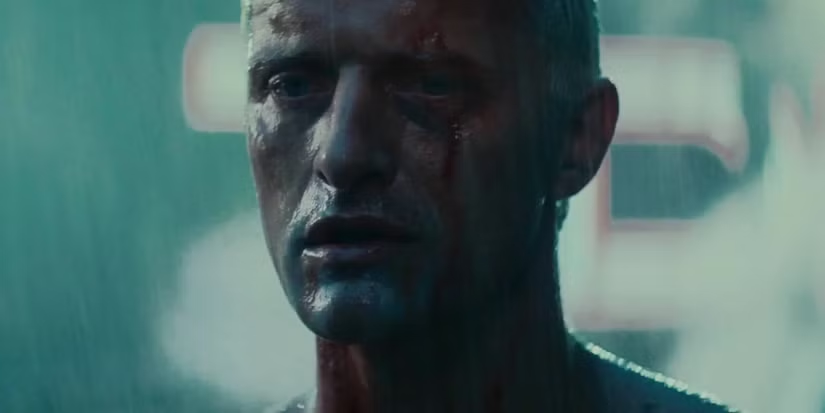
With a streak of blood dripping down his face, Roy Batty (Rutger Hauer) sits in the rain delivering his “tears in rain” monologue as he nears his death in ‘Blade Runner’ (1982).Image via Warner Bros.
The plot of Blade Runner concerns Rick Deckard’s mission to “retire” (meaning kill) a group of rogue replicants — essentially advanced robots that are practically indistinguishable from humans but often have superior strength and intelligence. Replicants have predetermined lifespans, and the rogue ones in the movie are mostly just trying to find a way to prolong their brief lives. Eventually, Deckard tracks them all down and kills them except for one, Hauer’s Roy Batty, who was designed for military combat.
Batty and Deckard fight, with Batty easily winning just as his lifespan is about to end. Given a chance to let Deckard die, Batty saves his life instead and laments the fact that his own life is over:
I’ve seen things you people wouldn’t believe. Attack ships on fire off the shoulder of Orion. I watched C-beams glitter in the dark near the Tannhäuser Gate. All those moments will be lost in time, like tears in rain. Time to die.
And then he dies, releasing a dove that he had grabbed and letting it fly up into the sky.
Advertisement
Why Is the ‘Blade Runner’ Speech So Incredible?
Harrison Ford as Rick Deckard pointing a gun in Blade RunnerImage via Warner Bros.
There are a lot of reasons why this is so good: First, Hauer’s delivery is both chilling and heartbreaking, and every word seems carefully considered — the way he says “people,” as if he’s spitting out venom, is particularly brilliant. There’s also the fact, which may not be clear to people who aren’t big Blade Runner fans, that he’s not referring to things that are ever acknowledged in the movie. We don’t know what it means for C-beams to glitter near the Tannhäuser Gate, because we don’t know what any of those things are. It underlines the fact that Batty has had life experiences beyond what anyone else can comprehend, and, when he dies, they’ll just be gone.
Even better: Hauer largely came up with the speech himself, with the “tears in rain” bit being his own improvisation. Different versions of the speech had been written in the script, but Hauer thought they were all a little much and cut out most of it without telling anyone because he wanted to preserve what he thought Batty’s thought process would be at the moment of his death. Ridley Scott evidently approved, because it’s in the movie, and it has helped make Blade Runner an unforgettable sci-fi classic.
Advertisement
Advertisement
Release Date
June 25, 1982
Advertisement
Runtime
118 minutes
Writers
Advertisement
David Webb Peoples, Hampton Fancher, Philip K. Dick
On Thursday, February 19, while Yaya Mayweather and Mellow Rackz were lighting the internet up with their heated exchange, NBA YoungBoy took to X, formerly known as Twitter. This, to share a brief statement, seemingly signaling that he was unaware of their back-and-forth, or perhaps unbothered.
X user @myneiidadonn_ wrote, “Hey, get them b*****s in check.”
While X user @sexyni101 added, “and yo messy ass probably sitting back reading the tweets laughing smh”
X user @@mariahcarr42311 wrote, “BRUH GET YAYA N MELLOW”
While X user @@ybgoonette added, “tell them h**s stfu we tired of em”
Advertisement
X user @@kentrelllovesme wrote, “slap yaya , mellow & star”
While X user @@IDKADH_ added, “Mane get mellow and yaya 5ive”
X user @@kindywindyy wrote, “go give yaya her lil weekend, she a lil grumpy rn”
While X user @@xcourianx added, “younnn see allis s**t happening bc of a fcking ring????”
Advertisement
X user @@bookieboot wrote, “Your h**s are cutting up!!… They been pressed since Jaz ring made it to the internet!!”
While X user @@NasiaDaP27 added, “U see the drama ?
X user @@davsdgaf wrote, “I’m ngl get your lap dogs”
While X user @@kenotonin added, “F**k that, get yaya ass to stfu”
Advertisement
More On Yaya Mayweather & Mellow Rackz’ Back-And-Forth
As The Shade Room previously reported, earlier this week, a new blog was shared on Jazlyn Mychelle’s YouTube channel, and a clip showed her giving a pregnancy update. However, fans couldn’t help but notice a huge rock on Mychelle’s finger. Subsequently, Pristin Jewelers confirmed that NBA YoungBoy upgraded her ring.
Subsequently, Yaya Mayweather shared footage of her dream engagement ring. This, while seemingly throwing shade at Mychelle’s new rock, calling it a lab diamond.
Subsequently, Mellow shaded Mayweather, saying the ring was certified and she should “cry about it.” In turn, Mayweather accused Mellow of being friendly to someone with whom she’s sleeping with their husband. From there, their beef was ignited, and they went back and forth about luxury items, alleged Ls.
At some point, a separate woman called out Mellow for flossing pictures from an apparent photoshoot in her closet. Mayweather jumped in there, too.
Advertisement
Ultimately, things between Mellow and Mayweather subsided, with Mayweather returning to X to share that she’s thinking about streaming.
This year’s Academy Awards nominations had no shortage of surprises, including Kate Hudson’s nomination for Best Actress, Jurassic World Rebirth’s recognition for Best Visual Effects, and the complete absence of Wicked: For Good. However, the biggest head-scratcher of the Oscar nominations was the nomination for the documentary Viva Verdi! in the Best Original Song category for the single “Sweet Dreams of Joy.” Viva Verdi!’s nomination seemingly came at the expense of “Dream as One” from Avatar: Fire and Ash, “Highest 2 Lowest” from Highest 2 Lowest, “Drive” from F1, and both songs from Wicked: For Good, but what was most surprising is that most awards prognosticators didn’t seem to even have the film on their radar. Viva Verdi! had only debuted in select theaters to qualify, and wasn’t selected for the shortlist for Best Documentary, or any other categories for that matter.
Even if the Best Original Song category has been subjected to criticism (specifically due to its unyielding support for Diane Warren), the nomination for Viva Verdi!sheds a spotlight on a film that wouldn’t have received the recognition otherwise. The 80-minute documentary explores the lives of retired opera singers and other musicians who have taken up residence in Casa Verdi, a retirement community in Milan that was named for its founder, Giuseppe Verdi. The Italian composer was a famed opera composer, and the community built on his name serves as a place in which former masters of the craft can continue to cultivate their skills and connect with a younger generation of aspiring artists. Although its recognition may have been met with annoyance by those who depend on the Oscars to be predictable, Viva Verdi! is the type of kind-hearted, earnest work of independent filmmaking that is nice to see every awards season.
Advertisement
‘Viva Verdi!’ Is a Charming, Small-Scale Documentary
This year’s nominees in the Best Documentary category include important titles with strong political intentions, but Viva Verdi!is an observational film that was crafted through strong interviews and footage of Casa Verdi’s residents in action. Although early segments of the film spend time recounting Verdi’s achievements as a musician, which explain why he had the reputation to build such an ambitious establishment, it’s primarily composed of interviews with the current residents who speak to their experiences getting back to their roots. The lack of a clear focus, as the documentary does not have a single figure that it focuses on, is a benefit that makes its goals feel more unencumbered. Even for those with little interest in opera, Viva Verdi! has an empowering message about the ability to keep following a passion later in life; the film refers to this as the “third act” for these artists.
It would be hard for a film like Viva Verdi! to be considered for any substantial prizes, as its production values and footage quality are far outmatched by its competitors; as charming as it is, Viva Verdi! doesn’t need to be compared to documentaries like The Alabama Solution or Mr. Nobody Against Putin, both of which involved their subjects risking their lives. However, “Sweet Dreams of Joy” is a worthwhile entry in the Best Original Song race because it marks an appearance by a classical form of music that isn’t always recognized in the category. It’s also nice to see a Best Original Song nominee that is actually incorporated into the structure of the film itself, as many past winners and nominees in the category are only included within the ending credits scene.
‘Viva Verdi!’ Shows That the Oscars Can Still Be Surprising
While nominations for films like One Battle After Another and F1 help to confirm the success that they already have, Viva Verdi!’s recognition at the Oscars might actually grant it a larger audience. The film debuted at the Woodstock Film Festival and later screened at the Santa Barbara International Film Festival before having a limited run at Laemmle’s Theaters’ Monica Film Center in order to satisfy awards qualifications. Although there has yet to be a confirmation of where it may play next, or if a digital release is in the cards, it’s hard to imagine that a film nominated for an Academy Award will remain obscure for too long. Beyond the fact that director Yvonne Russo and the song’s composer, Nicholas Pike, are bound to receive more opportunities as a result, Viva Verdi! might actually inspire studios to take a closer look at documentaries that make their way around the festival circuit. If nothing else, Viva Verdi! would seem to suggest that award-worthy titles can come in the most unexpected places.
It is within the best interest of the Oscars to nominate a variety of films within the below-the-line categories, rather than giving a majority of the recognition to a handful of titles. Many of the most exciting nominations were from films that weren’t considered heavy contenders and didn’t receive attention anywhere else, such as The Ugly Stepsister in Best Makeup & Hairstyling, The Smashing Machine in the same category, The Lost Bus in Best Visual Effects, or Cutting Through Rocks in Best Documentary. Award season often becomes a bitter time of year in which pundits and critics grow vindictive when criticizing competitors; Viva Verdi!’s nomination isn’t just a nice accolade for a beautiful song, but a reminder that this period of the calendar year should be about celebrating cinema.
Advertisement
Viva Verdi! is available to stream on Jolt in the U.S.
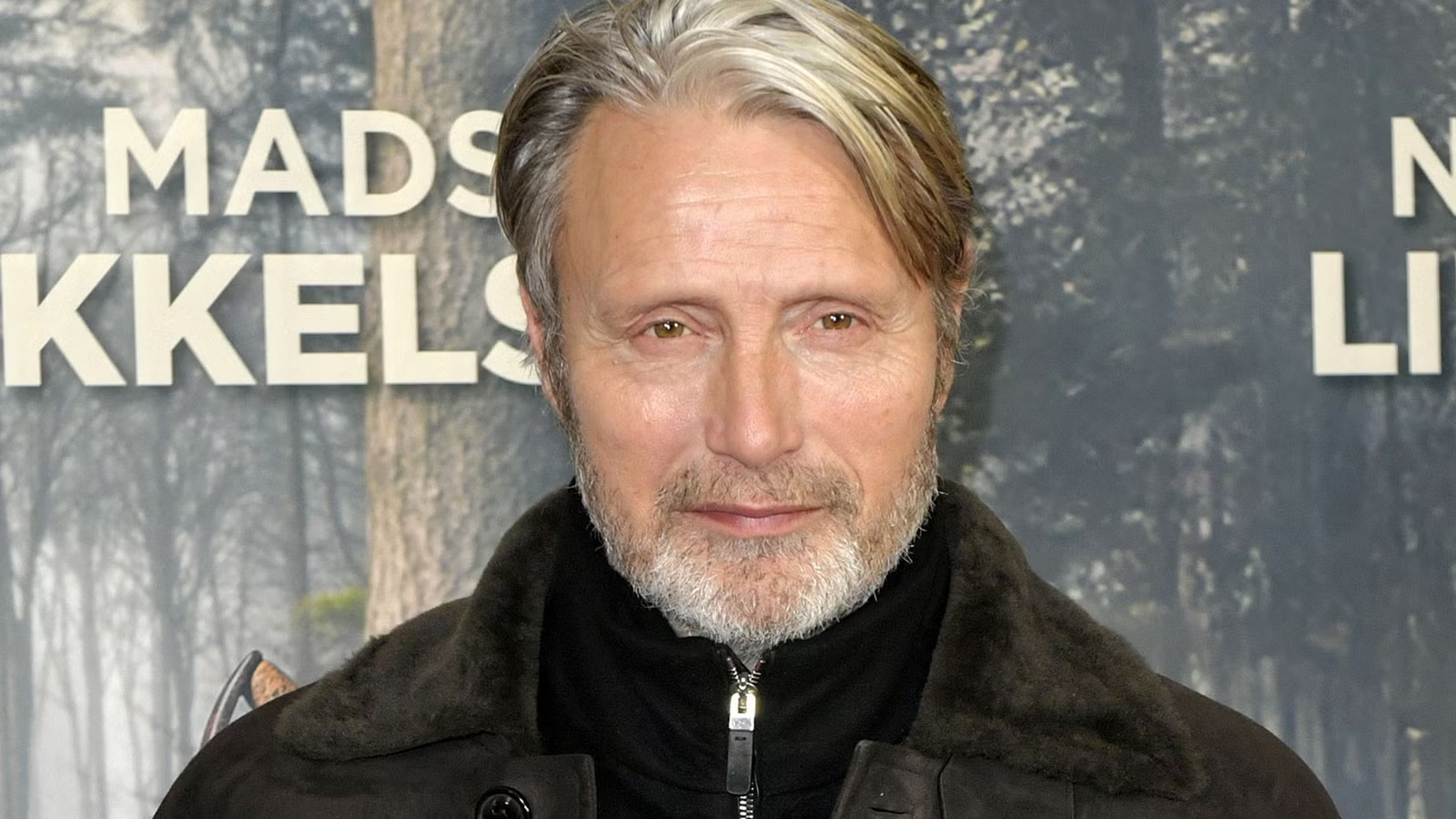
Mads Mikkelsen on the red carpetImage via Manfred Behrens/Future Image/Cover Images
Mads Mikkelsen may not be one of the first names to come to mind when someone asks for a list of the biggest movie stars, but he consistently turns in the strongest performances of any actor working today, year after year. Mikkelsen first blossomed into a star 20 years ago with his work opposite Daniel Craig and his first James Bond movie, Casino Royale, and he has since taken on other villainous roles in major franchises like Indiana Jones. He started opposite Harrison Ford in his final performance as the globetrotting adventurer in Indiana Jones and the Dial of Destiny. Mikkelsen is also famous for playing Dr. Hannibal Lecter in the TV show that ran from 2013 to 2015, and around the same time, he briefly joined the MCU, where he starred opposite Benedict Cumberbatch in Doctor Strange.
Just a few years ago, Mikkelsen starred as Gellert Grindelwald in the 2022 fantasy epic Fantastic Beasts: The Secrets of Dumbledore. The Harry Potter prequel story also stars Jude Law as a young Albus Dumbledore, and Eddie Redman is Newt Scamander. David Yates directed the film with a script from Steve Kloves, and it’s inspired by the works of Harry Potter author J.K. Rowling. Fantastic Beasts: The Secrets of Dumbledore is streaming on HBO Max in America and around the world, where the film is in the top 10 in several countries. It’s also one of the most popular rentals and purchases on Apple TV in a few territories. Warner Bros. spent around $200 million on making Fantastic Beasts: The Secrets of Dumbledore, but the film just managed to scrape past its break-even point, grossing $407 million at the global box office.
Advertisement
What Else Is Streaming on HBO Max Right Now?
HBO Max has plenty of big movies floating in and out of its top 10 every day, but the platform is firing on all cylinders when it comes to TV shows right now. The most popular show on HBO Max at the time of writing is A Knight of the Seven Kingdoms, the Game of Thrones spin-off inspired by George R.R. Martin’s series of Dunk and Egg novels. The Pitt, the critically acclaimed medical drama starring ER veteran Noah Wyle, is also one of the most popular shows on HBO Max right now. When the new Harry Potter TV series arrives on HBO Max next year, it’s expected to be one of the biggest streaming premieres in history.
Be sure to watch Fantastic Beasts: The Secrets of Dumbledore on HBO Max in America, and stay tuned to Collider for more streaming updates.
Happy New Music Friday! The weekend is here, which means more streaming, new playlists and the best that music has to offer — and ET has you covered for everything in between.
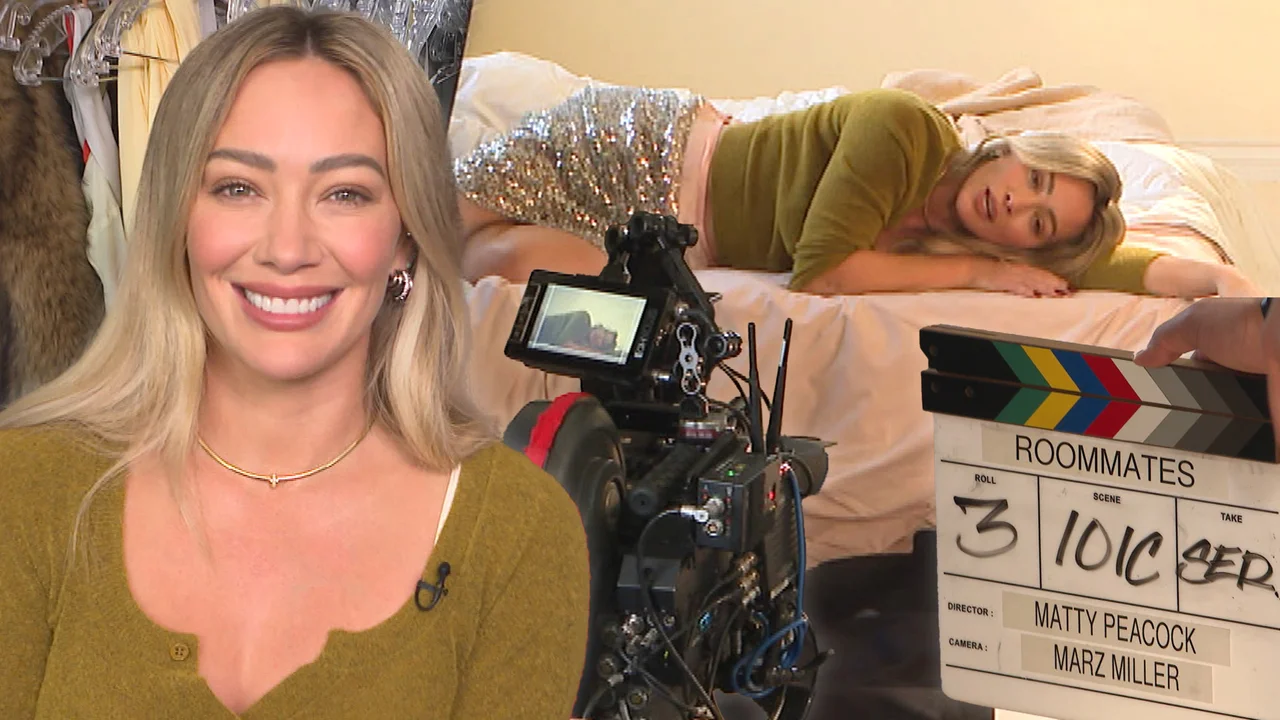
Hilary Duff has released her highly anticipated sixth studio album, luck…or something. Last weekend, she celebrated her release with sold out, limited engagement performances at the Voltaire at The Venetian Resort Las Vegas. During her February 13 show, Hilary invited two fans onstage to perform the “With Love” dance who then surprised the crowd with a romantic onstage proposal. Hilary will also start the lucky me tour on June 22 and added second shows in four cities due to incredible fan demand.
Jennifer Lopez and David Guetta announced their new single “Save Me Tonight” will be out March 6. This is the first time they have worked in the studio together. Jennifer will also return to Vegas on March 6 for her residency, Jennifer Lopez: Up All Night Live in Las Vegas, at The Colosseum at Caesars Palace.
Backstreet Boys have announced six new summer dates for their Into the Millennium residency at Sphere in Las Vegas. Produced by Live Nation, the newly added shows will take place July 16-25. Since launching the residency last July as the first pop act to headline Sphere, the group has performed to over 575,000 fans across 35 sold out dates.
Advertisement
Marc Anthony launched his debut at Fontainebleau Las Vegas last weekend for his VEGAS… MY WAY residency inside the BleauLive Theater. Marc and his 14-piece band performed a mix of his English and Spanish language hits such as “Valió la Pena” and “I Need To Know,” and closed the show with a first-ever performance of “My Way” in both Spanish and English, ending the night with the celebratory anthem “Vivir Mi Vida.” Marc will continue his show this week and will be back for more shows in July.
Last week, Cardi B kicked off her Little Miss Drama Tour, her first tour in six years. She celebrated her tour with the Official Little Miss Drama After Party at Hakkasan Nightclub in Las Vegas on February 13. Cardi arrived after her concert and made her way to the DJ booth, saying hello to fans and dancing along the way. She jumped on stage to surprise the crowd by singing a few of her hits and ended with “Bodak Yellow” before announcing to the crowd that she was done performing for the night and was ready to party.
Plus, new music from U2, Lana Del Rey, Ty Dolla $ign, Leon Thomas, Luke Bryan, Megan Moroney, WILLOW and more.
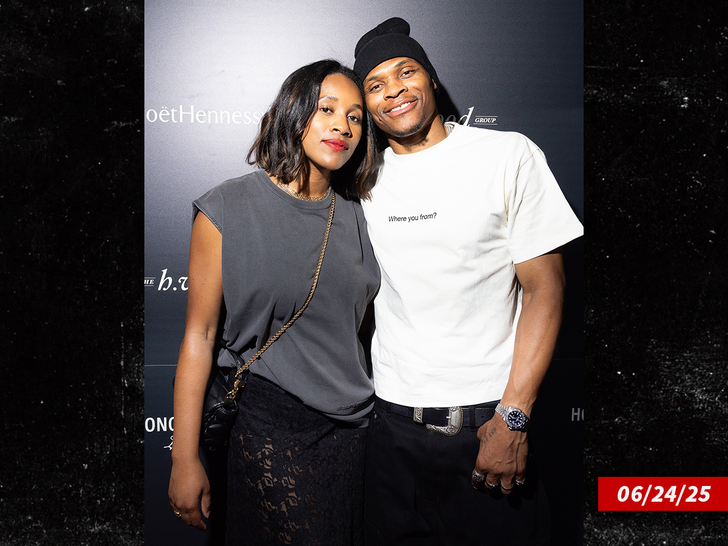
Russell Westbrook‘s wife, Nina, received a shocking email from an irate “fan” furious over her husband’s performance on the court, calling her a “dumb b*tch” and writing that they wish they “both die in a car crash.”
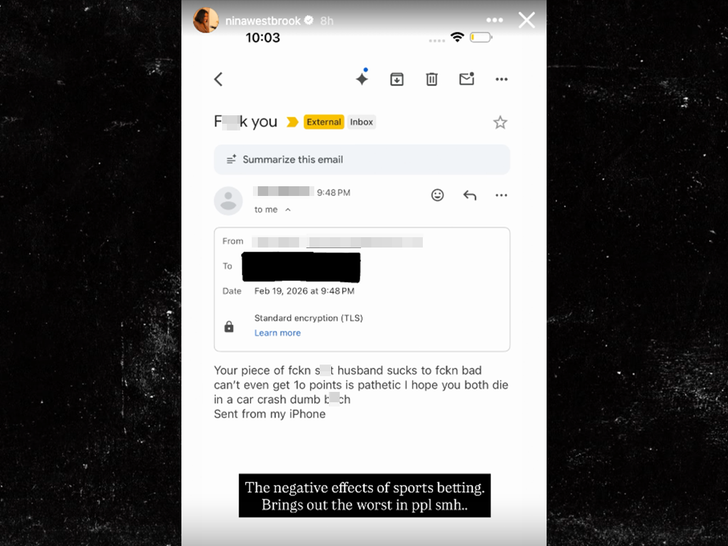
Nina — who married Westbrook in 2015 — shared the disturbing message on her Instagram story on Thursday night. The note appears to have been sent following Russ’ 5-point outing in the Kings-Magic game.
Advertisement
The email titled “F*** You” reads: “Your piece of f***in sh*t husband sucks to f***n bad can’t even get 1o points is pathetic.”
“I hope you both die in a car crash dumb b*tch.”
Advertisement
Nina — a former college basketball player and licensed marriage and family therapist — responded in her IG story, blaming sports gambling as the root of the cause.
“The negative effects of sports betting,” Westbrook said, “Brings out the worst in ppl smh.”
Westbrook — who signed with the Kings in October 2025 — is unfortunately no stranger to unruly fan behavior. The former NBA MVP has been in multiple verbal altercations with fans at games, including an up-close video of him confronting a Suns supporter.
Westbrook — who has three kids with Nina — has addressed his heated exchanges with fans, saying he won’t tolerate disrespect … especially when it involves his family.
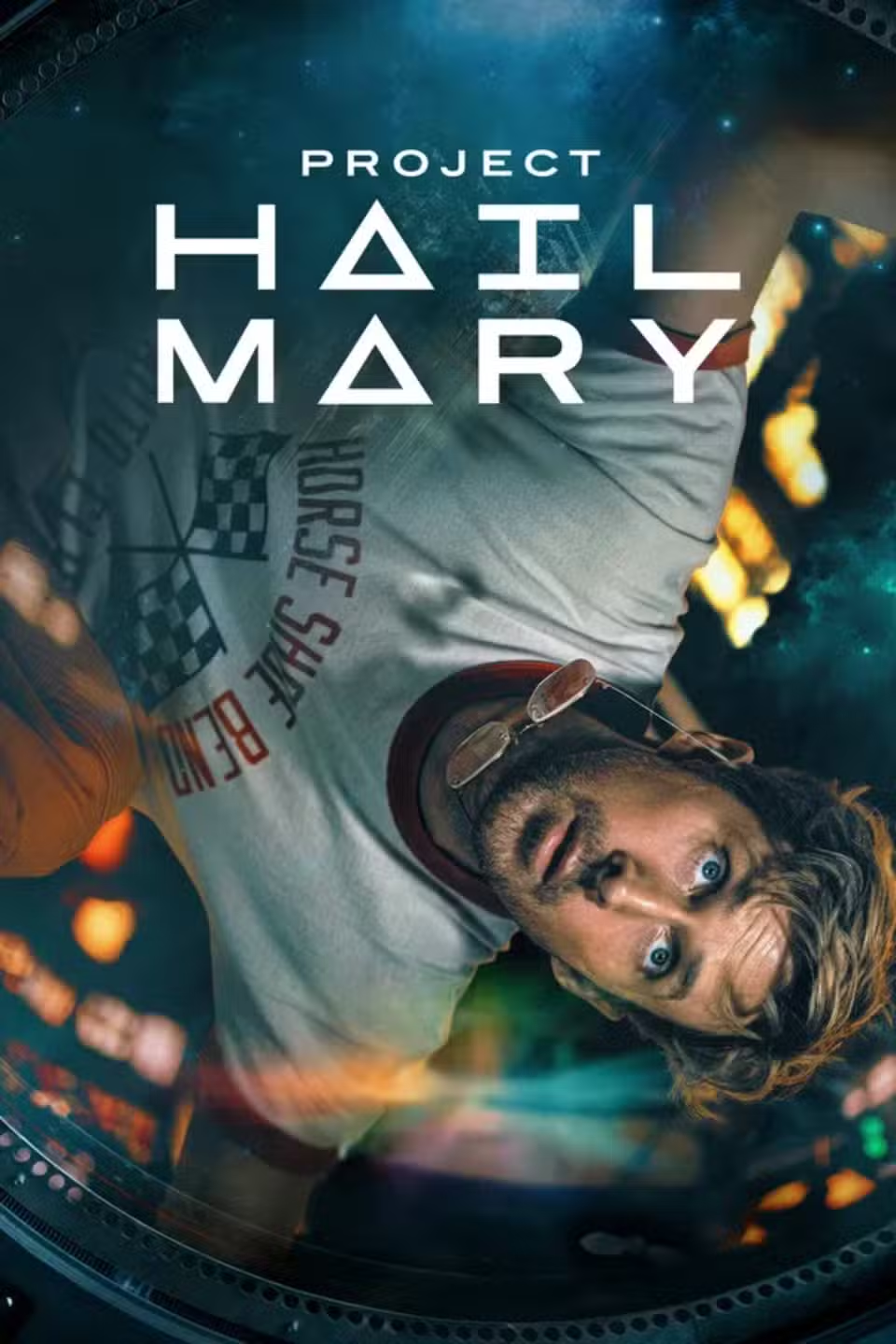
Houston, we have liftoff on the sale of tickets for Project Hail Mary. After one final, breathtaking trailer released during the Super Bowl, only one month remains until the launch of the Ryan Gosling-led adaptation of Andy Weir‘s acclaimed sci-fi novel. As one of the most anticipated films of the year that’s been over half a decade in the making, it’s deserving of a special theatrical experience for viewers to immerse themselves in the space-faring adventure of school-teacher-turned-astronaut Ryland Grace. As such, Alamo Drafthouse has prepared an entire collection in support of the film, and Collider is excited to once again partner with the dine and drink theater chain to showcase everything they have in store.
In addition to standard screenings, tickets are available now for Alamo’s Early Access 70 mm screenings and their Book Club screenings. The former offers viewers the chance to strap in for Grace’s seemingly impossible mission a full week early and experience it with the brightest colors and sharpest picture possible, though tickets are very limited. The latter, meanwhile, is made for readers who fell in love with Weir’s original novel and are curious to see how it translates to the big screen. Anyone attending a Book Club screening will also receive a special bookmark passport with a Project Hail Mary sticker proving that they came to Alamo to see the film. Attending other Book Club screenings of literature adaptations will come with more stickers to add to the collection, or, if you came on board with a previous film, like the recent Wuthering Heights, you can tack on Hail Mary to your existing assemblage. After the film, certain Alamo locations will also offer a pop-up Book Fair in the bar in collaboration with local booksellers, including draft beers and cocktails to sip on while browsing the titles on offer.
Like with past films, Alamo has also prepared a themed menu for partaking in during viewings of Project Hail Mary. Leading the charge is A Drink With Grace, a special cocktail named for Gosling’s spacefarer, as well as the sweet Astrophage Shake. In terms of meals, the menu leans into Grace’s time as a science teacher with Ryland’s School Lunch, alongside Tau Ceti Solar Flare Pizza. Completing the collection are two limited edition keepsakes to take on the return trip from the theater. Alamo will be selling 130-ounce popcorn buckets shaped like Grace’s red space helmet, complete with a top that flips open for easy consumption, as well as 16-ounce pint glasses complete with exclusive art of Grace floating through space from Chris Bilheimer. The glass can be added to the cost of a ticket, while the bucket can either be bought on location or at the online Alamo Mart, though both will only be available while supplies last.
Advertisement
What Is ‘Project Hail Mary’ About?
Published in 2021, Project Hail Mary was the fourth original novel penned by Weir, following 2017’s Artemis and 2011’s The Martian, which inspired the Oscar-nominated Ridley Scott hit starring Matt Damon. The film will hew close to the original story, following Grace as he awakens from a coma alone on a space station with little recollection of who he is or how or why he got there. With bursts of memory flooding back to him, he slowly remembers his mission, a last-ditch “Hail Mary” operation to save all of Earth from a mysterious parasite killing the sun. As the sole survivor on the station, sent to the Tau Ceti solar system light-years away from his home, he’s left to piece together the details of his mission and use his scientific ingenuity to save humanity from the early stages of an Ice Age. Fortunately, he finds out that he may not be as alone in this endeavor as he feared.
Gosling anchors the film, but it also features the talents of The Zone of Interest and Anatomy of a Fall star Sandra Hüller, alongside Lionel Boyce, Ken Leung, and Milana Vayntrub. It’s directed by Spider-Verse duo Christopher Miller and Phil Lord, with a screenplay by Drew Goddard.
Tickets are on sale now for Project Hail Mary, which premieres in theaters on March 20. Check out a preview of the new Alamo Drafthouse pint glasses and popcorn bucket in the gallery above, and visit the theater chain’s official website for more information on how to snag tickets for the Early Access and Book Club screenings.
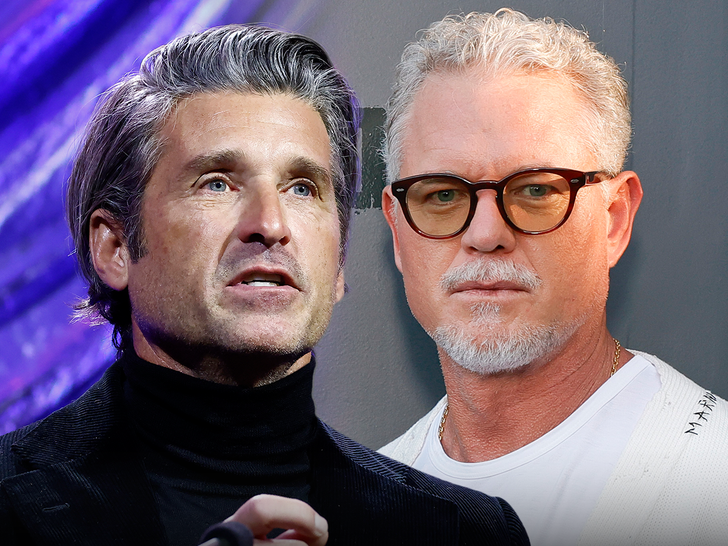
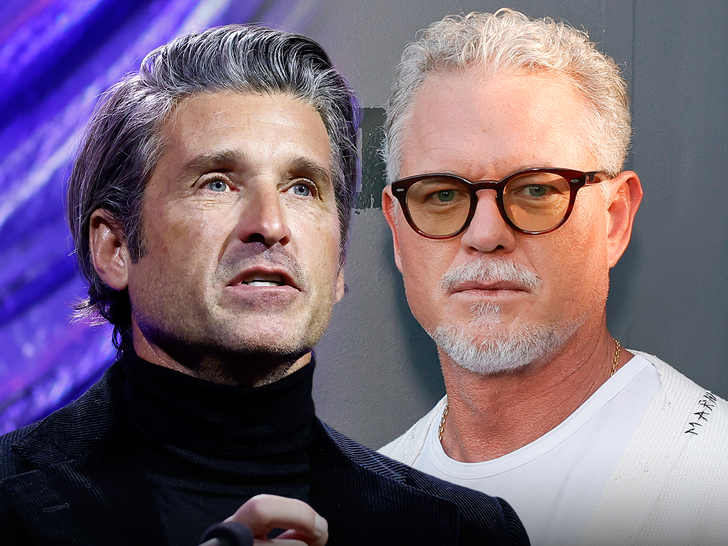
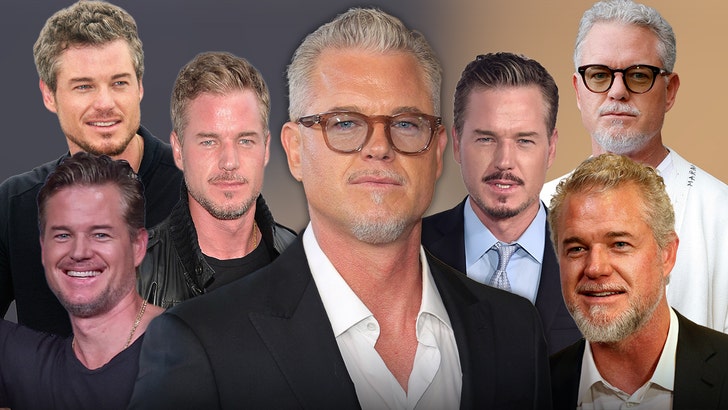
Patrick Dempsey is heartbroken over Eric Dane’s death … revealing he’d spoken to his “Grey’s Anatomy” costar just a week before he passed — and the decline was devastating.
Speaking Friday on “The Chris Evans Breakfast Show,” Patrick said Eric’s condition had worsened dramatically … he was bedridden, struggling to swallow, and losing his ability to speak when friends visited.
Advertisement
Patrick said his heart especially aches for Eric’s kids … while remembering Eric as the funniest guy on the “Grey’s” set, the one who brought the fun no matter what was going on.
And while fans were obsessed with the McDreamy vs. McSteamy rivalry, Patrick made it clear there was zero competition off-screen … just real friendship and mutual respect from day one.
Advertisement
TMZ.com
He also praised Eric for bravely shining a light on ALS — the cruel nervous system disease he was diagnosed with last April and never hid from.
Advertisement
Eric died at age 53 Thursday after a grueling battle he documented himself … revealing in recent months he’d lost almost all strength, down to just one functioning arm as the disease took over.













:max_bytes(150000):strip_icc():format(jpeg)/sara-jo-pender-89-02182026-396a66df86ee460f9922ffe65471ce64.jpg)