

Connect with us

NewsBeat

Tesco is clamping down on customers who commit ‘despicable’ act outside stores

Published

on

Tesco is clamping down on customers who commit 'despicable' act outside stores
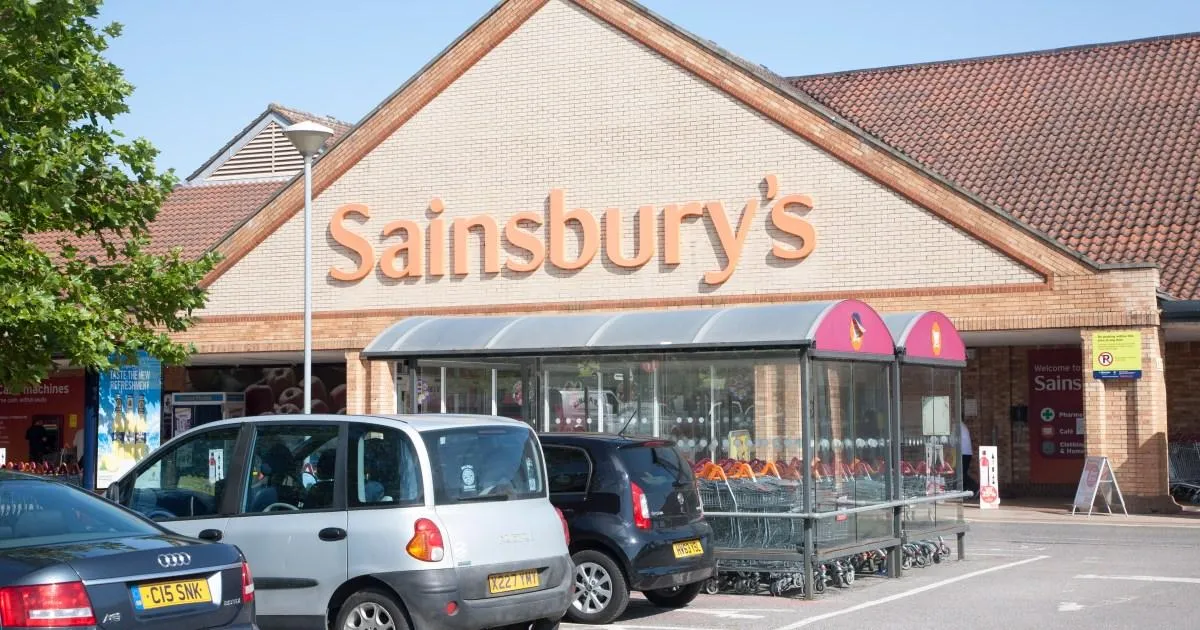
Tesco is trialling a new signage system to avoid customers parking in the wrong place (Picture: Getty Images)

Parking up at Tesco to do her weekly shop, Nat stops for a second to snap a picture. She realises that the space she’s parked next to has a new sign in tow – and it’s designed to punish people who park incorrectly.

‘Parent and child only,’ the red sign reads, prompting a ‘well done’ from Nat in her TikTok video.

‘Misuse of these bays may result in a parking charge.’

While the supermarket has long been fining people who misuse parking bays, the increased signage is part of a new trial.

Advertisement

It’s intended to remind people of the rules, which ask people to show their valid Blue Badge when using disabled bays, and to make sure that parent-and-child bays are only used when a child is in the car, too.

Tesco doesn’t outline exactly how high the fine is for parking in a space the driver isn’t eligible for, but the current charge for overstaying is £100.

Nat isn’t the only one with strong opinions about people who use and abuse spaces intended for parents and children.

‘I’ve just committed a crime,’ a mum named Chloe Clayton admitted to her TikTok followers earlier this year. Her offence? Parking in a parent and child spot outside B&M when shopping without her kids. 

Advertisement

‘It’s a crime against all mothers and I am quite frankly ashamed of myself,’ she stated, adding that her actions were ‘despicable’ and ‘disgusting’ and she’s ‘mortified’ – especially as two other mums had given her dirty looks as she returned to her car. 

Fellow mums and dads have shared that they’ve been getting revenge on those who have been doing so at the supermarket and leisure centres.

A user named @twokidsnosleep shared her ‘petty’ response to a shopper outside Tesco, showing how she had placed a trolley directly behind the car in question and left it there for them to either deal with or reverse into.

While @thebabyfostersharer revealed they had snitched on a man who was hogging the parent parking spaces at a gym.

Advertisement

In a comment on the video sharing app, they wrote: ‘I went inside the gym, gave them the registration and asked them to call him ASAP as he left a child unattended – he went quiet explaining he didn’t have a child with him. The manager told him he was now on strike/warning as their T&Cs are clear on this.’

Others admitted to ‘confronting’ strangers over the issue in car parks, with some ‘yelling’ at the drivers about their lack of children, while a few also said they had started reported the number plates to store security.

@twokidsnosleep

Might not be the bigger person but I am the pettiest. EDIT: to save anymore pointless comments about blue badge holders or pregnant women. No it wasn’t a blue badge holder who parked there because all the disabled bays were full. All those empty spaces to the left are disabled spaces. No HE wasn’t a heavily pregnant woman. Not sure how this became disabled vs parents with small children. I’m aware those with a blue badge can park there IF all the disabled ones are taken but that’s not the case here so can everyone chill out and stop bringing it up coz it’s boring now reading the same comment over and over again 🤣 I’m just going to delete anymore comments about ‘what if it was a disabled person’ because it wasn’t. I’d never do it so someone who physically needed extra space to get out. Could have a passenger with a broken leg and no blue badge and I’d happily give up the space and park further away. It’s about being able to open the doors fully not because we’re ’lazy entitled mothers’ And yes I’m sure there was no child. Stop assuming I made assumptions because of no car seat or whatever. He was alone. I stand by putting the trolley there and I’ll continue to live my petty life because by the sound of it in these comments it is just people wanting their car not to be damaged or lazy people wanting to be closer. Thanks for the views tho. Stay bothered 🤣✌️ #petty #pettyaf #parentandchild #mumsoftiktok #mumlife

♬ Montagem Rave Eterno – Dj Samir & Fyex

Why are the spaces so important for parents?

The RAC explains that parent and child parking spots are bigger than standard parking bays.

Advertisement

Their website says: ‘The typical car parking space measures around 2.4 metres wide and 4.8 metres long, however, these dimensions were first introduced around 50 years ago – when vehicle sizes were considerably smaller.

‘Since then, there has also been a rise in the use of larger vehicles, such as SUVs, estate cars, vans, and even traditionally smaller models are now larger than previous editions.

Disabled and parent/child parking spaces are wider and longer to accommodate wheelchair and pushchair access. They are also located closer to the front door of shops or certain destinations.’

The additional space allows parents room to get their children out of the car safely and into pushchairs or to manoeuvre car seats. And the proximity to the stores also allows parents a safer and more accessible route as they are often near ramps and wider paths.

Advertisement

Metro asked parents to share why having designated parking spots was so important to them and why it was so frustrating when people without children parked there.

Laura Guckian, a mum-of-three and the founder of Mind Mommy Coaching said: ‘I wish there was more awareness that those “parent and child” spaces aren’t just for people with small babies. They’re also for parents of children of older children who may have additional needs but not eligible for a disabled parking permit.

‘My children are 4, 5 and 9 and I need to be closer to the shop to make it safer and easier to get in and out with them so I always park in the mother and baby spaces when they are with me.

‘Being out and about with kids can be really tricky and overwhelming. Those spaces aren’t a luxury. They can be the difference between being able to manage a quick shop or not.

Advertisement

‘I just wish, as a society, it was an unwritten rule that these spaces were respected and reserved for mothers, fathers, guardians and children without judgement or entitlement.

‘Why can’t we just have one thing that’s ours? One small thing that makes it a little bit easier.’

Family parking space in a car park
The parent and child spaces are slightly bigger than standard parking bags (Picture: Getty Images)

Why do people without children park in these spaces?

For some it’s a matter of convenience, as the spaces are right near the shop entrance, meaning it’s an ideal place to park when you want to dash in and out of a store.

A few people with health conditions pointed out their need to be closer to the shop too, as @emarich50 said: ‘I have Crohn’s Disease and if I need the toilet in a hurry I am parking in a parent and child space.’

It’s also becoming increasingly common for those with larger cars to nab the bigger spaces, as their cars take up so much room. TikToker @travelling.up.close confessed: ‘I do it all the time because I’ve got a big car and I can’t get out of it in a normal space.’

Advertisement

Some people also just don’t see an issue with doing it as it’s ‘not illegal’ to park in the parent spaces.

@alecallen1 shared: ‘I deliberately park in these spots because of you entitled parents.’

What should you do if you see someone misusing one of these spaces?

Experts at RAC have shared advice for how to handle the frustrating situation and they recommend speaking to a member of staff or the store manager, instead of confronting drivers.

RAC head of policy Simon Williams told Metro: ‘While it isn’t illegal to park in a parent and child bay without children in tow, drivers could be issued with a Parking Charge Notice.

Advertisement

‘These wider spaces are intended to make it easier for parents to get their children in and out of cars. 

‘In the event you spot someone misusing a parent and child bay, it’s best to report it to a store manager or member of staff.’

This article was first published on October 10, 2025.

Do you have a story to share?

Advertisement

Get in touch by emailing MetroLifestyleTeam@Metro.co.uk.

Advertisement
Advertisement

Source link

Continue Reading
Click to comment

Leave a Reply

Your email address will not be published. Required fields are marked *

NewsBeat

Can losing weight improve psoriasis? What the evidence shows

Published

on

Can losing weight improve psoriasis? What the evidence shows

For many people living with psoriasis, the red, scaly skin patches are only part of the story. Another challenge is the uncertainty about whether there is anything they can do themselves to help manage their skin.

Treatments have improved greatly in recent years. Creams, tablets and injectable medicines can all help control symptoms. Even so, many people still ask a straightforward question in clinic: is there anything I can do alongside my medication that might make a difference? Weight often comes up in that discussion. Psoriasis is more common in people who are overweight or living with obesity.

Research now shows that, for people who are overweight, losing weight can improve both the severity of psoriasis and overall quality of life.

Doctors have long suspected that weight loss could help, but earlier research was inconsistent. Many studies were small, short term and did not always measure how people felt in everyday life. As newer weight loss treatments have become more widely available, it has been important to take another look at the evidence.

Advertisement

Body weight and psoriasis severity

To provide a clearer picture, my colleagues and I reviewed the highest quality studies available on weight loss support for people with psoriasis. In these studies, participants were randomly assigned to one of two groups. One group received structured support to help with weight management alongside their usual psoriasis care. The other group continued with usual care alone. Random assignment helps ensure that any differences seen are likely to be due to the support itself, rather than other factors.

The programmes varied. Some focused on reduced calorie diets. Others combined diet with exercise or behavioural support, such as coaching and goal setting to help people stick with changes. A small number included weight loss medicines. In all cases, researchers carefully measured both weight change and changes in the skin.

Some weight loss programmes included exercise as well as reduced calorie diets.
NinaKulagina/Shutterstock

Across the studies, people who received weight management support lost about seven kilograms more on average than those who did not. Their psoriasis improved more as well. Doctors’ assessments of skin severity showed greater improvement, and participants were more likely to experience a substantial reduction in their plaques, which are the thick, inflamed patches of skin typical of psoriasis. They also reported better day to day wellbeing, suggesting the changes were noticeable in everyday life, not only in clinical measurements.

Two patterns stood out. Greater weight loss was generally linked with greater improvement in psoriasis. People who started with more severe psoriasis often saw larger benefits.

Advertisement

This does not mean weight is the sole cause of psoriasis. Psoriasis is a complex condition involving the immune system, which is the body’s defence against infection, and it is influenced by both genetics and environmental factors. However, body fat is biologically active. It produces chemicals that promote inflammation, which is the body’s response to injury or illness. These chemicals circulate in the bloodstream and can affect many organs, including the skin. Reducing excess weight may lower this background inflammation and help calm the overactive immune response seen in psoriasis.

No single diet emerged as clearly superior. The studies used different approaches, yet the common factor linked with skin improvement was weight loss itself. This suggests there is no single diet that everyone must follow. Instead, supported and sustainable weight loss appears to be the key factor.
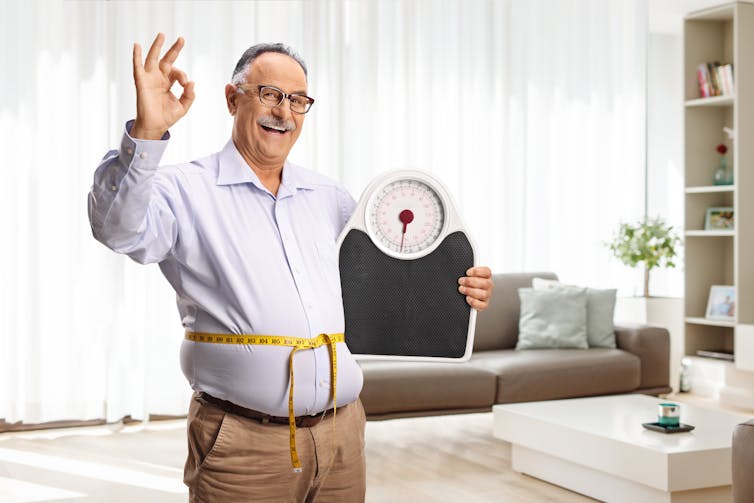
Happy mature man with a weight scale and a measuring tape
The common factor linked with skin improvement was weight loss.
Ljupco Smokovski/Shutterstock

For patients, this is important. People with psoriasis were involved in shaping how we interpreted the findings. Some said they had wondered whether changing their diet or losing weight might help, but were unsure whether there was solid evidence. Others said they would feel more motivated knowing that weight management could benefit both their general health and their skin.


À lire aussi :
Five things I wish everyone knew about weight loss – by an expert in nutrition


For clinicians, clearer evidence also helps. Conversations about weight can be sensitive. Without strong data, it can be difficult to raise the topic in a confident and constructive way. Bringing together the available trial evidence provides a stronger basis for these discussions when they are relevant to the person.

Advertisement

Another treatment tool

There are still limits to what we know. Most of the studies lasted only a few months. Psoriasis is a long term condition, and maintaining weight loss over time can be difficult. We cannot yet say with certainty how long the skin improvements last over several years.

Weight management is also shaped by many factors, including access to affordable healthy food, safe places to exercise, mental health and other medical conditions. Support needs to be practical, realistic and free from judgement.


À lire aussi :
Obesity care: why “eat less, move more” advice is failing


Even with these limits, a consistent picture emerges when the trials are considered together. Adding structured weight management support to usual psoriasis treatment is likely to improve skin severity and quality of life for many people who are overweight.

Advertisement

This does not replace medical treatment. It also does not mean that everyone with psoriasis needs to focus on weight. But for those who are interested, there is now clearer evidence that weight loss can form part of overall care.

For someone living with psoriasis, that knowledge can change how much control they feel they have. Alongside prescribed treatments, there may be another tool available that benefits both the skin and overall health.

Source link

Advertisement
Continue Reading

NewsBeat

The furore over Grok’s sexualised images has begun an AI reckoning

Published

on

The furore over Grok’s sexualised images has begun an AI reckoning

Controversy over the chatbot Grok escalated rapidly through the early weeks of 2026. The cause was revelations about its alleged ability to generate sexualised images of women and children in response to requests from users on the social media platform X.

This prompted the UK media regulator Ofcom and, subsequently, the European Commission, to launch formal investigations. These developments come at a pivotal moment for digital regulation in the UK and the EU. Governments are moving from aspirational regulatory frameworks to a new phase of active enforcement, particularly with legislation such as the UK’s Online Safety Act.

The central question here is not whether individual failures by social media companies occur, but whether voluntary safeguards – those devised by the social media companies rather than enforced by a regulator – remain sufficient where the risks are foreseeable. These safeguards can include such measures as blocking certain keywords in the user prompts to AI chatbots, for example.

Grok is a test case because of the integration of the AI produced within the X social media platform. X (formerly Twitter) has had longstanding challenges around content moderation, political polarisation and harassment.

Advertisement

Unlike standalone AI tools, Grok operates inside a high velocity social media environment. Controversial responses to user requests can be instantly amplified, stripped of context and repurposed for mass circulation.

In response to the concerns about Grok, X issued a statement saying the company would “continue to have zero tolerance for any forms of child sexual exploitation, non-consensual nudity, and unwanted sexual content”.

The statement added that image creation and the ability to edit images would now only be available to paid subscribers globally. Furthermore, X said it was “working round the clock” to apply additional safeguards and take down problematic and illegal content.

This last assurance – of building in additional safeguards – echoes earlier platform responses to extremist content, sexual abuse material and misinformation. That framing, however, is increasingly being rejected by regulators.

Advertisement

Under the UK’s Online Safety Act (OSA), the EU’s AI Act and codes of practice and the EU Digital Services Act (DSA), platforms are legally required to identify, assess and mitigate foreseeable risks arising from the design and operation of their services.

These obligations extend beyond illegal content. They include harms associated with political polarisation, radicalisation, misinformation and sexualised abuse.

Step by step

Research on online radicalisation and persuasive technologies has long emphasised that harm often emerges cumulatively, through repeated validation, normalisation and adaptive engagement rather than through isolated exposure. It is possible that AI systems like Grok could intensify this dynamic.

In the general sense, there is potential for conversational systems to legitimise false premises, reinforce grievances and adapt responses to users’ ideological or emotional cues.

Advertisement

The risk is not simply that misinformation exists, but that AI systems may materially increase its credibility, durability or reach. Regulators must therefore assess not only individual results from AI, but whether the AI system itself enables escalation, reinforcement or the persistence of harmful interactions over time.

Safeguards used on social media with regard to AI-generated content can include the screening of user prompts, blocking certain keywords and moderating posts. Such measures used alone may be insufficient if the overall social media platform continues to amplify false or polarising narratives indirectly.

Women are disproportionately targeted by sexualised content and the harms are enduring.
Kateryna Ivaskevych

Generative AI alters the enforcement landscape in important ways. Unlike static feeds, conversational AI systems may engage users privately and repeatedly. This makes harm less visible, harder to find evidence for and more difficult to audit using tools designed for posts, shares or recommendations. This poses new challenges for regulators aiming to measure exposure, reinforcement or escalation over time.

These challenges are compounded by practical enforcement constraints, including limited regulator access to interaction logs.

Advertisement

Grok operates in an environment where AI tools can generate sexualised content and deepfakes without consent. In general, women are disproportionately targeted in terms of sexualised content, and the resulting harms are severe and enduring.

These harms frequently intersect with misogyny, extremist narratives and
coordinated misinformation, illustrating the limits of siloed risk assessments that
separate sexual abuse from radicalisation and information integrity.

Ofcom and the European Commission now have the authority not only to impose fines, but to mandate operational changes and restrict services under the OSA, DSA and AI Act.

Grok has become an early test of whether these powers will be used to address
large-scale risks, rather than simply failures to remove content. narrow content takedown failures.

Advertisement

Enforcement, however, cannot stop at national borders. Platforms such as Grok operate globally, while regulatory standards and oversight mechanisms remain fragmented. OECD guidance has already underscored the need for common approaches, particularly for AI systems with significant societal impact.

Some convergence is now beginning to emerge through industry-led safety frameworks such as the one initiated by Open AI, and Anthropic’s articulated risk tiers for advanced models. It is also emerging through the EU AI Act’s classification of high-risk systems and development of voluntary codes of practice.

Grok is not merely a technical glitch, nor just another chatbot controversy. It raises a fundamental question about whether platforms can credibly self-govern where the risks are foreseeable. It also questions whether governments can meaningfully enforce laws designed to protect users, democratic processes and the integrity of information in a fragmented, cross-border digital ecosystem.

The outcome will indicate whether generative AI will be subject to real accountability in practice, or whether it will repeat the cycle of harm, denial and delayed enforcement that we have seen from other social media platforms.

Advertisement

Source link

Continue Reading

NewsBeat

Police appeal to find family of Bolton woman who died

Published

on

Bolton man arrested in fraud investigation by Yorkshire police

Jacqueline Lesley Ormes, aged 72, sadly passed away at home at Lyngate Private Rest Home on Wigan Road, Bolton.

Her death, which occurred on February 12, is not being treated as suspicious.

A Greater Manchester Police spokesperson said: “We are appealing for the public’s help to trace family of a woman from Bolton.

Advertisement

“Jacqueline Lesley Ormes, 72, sadly passed away at home at Lyngate Private Rest Home on Wigan Road, Bolton on 12/02/2026.

“There are believed to be no suspicious circumstances surrounding her death.

“Any info? Contact the Police Coroner’s Office in Bolton on 0161 856 4687.”

Police have not been able to identify any next of kin and are appealing to the public for information.

Advertisement

Anyone who may be able to help is asked to contact the Police Coroner’s Office in Bolton on 0161 856 4687.

Source link

Advertisement
Continue Reading

NewsBeat

What happens next for Andrew Mountbatten-Windsor?

Published

on

What happens next for Andrew Mountbatten-Windsor?

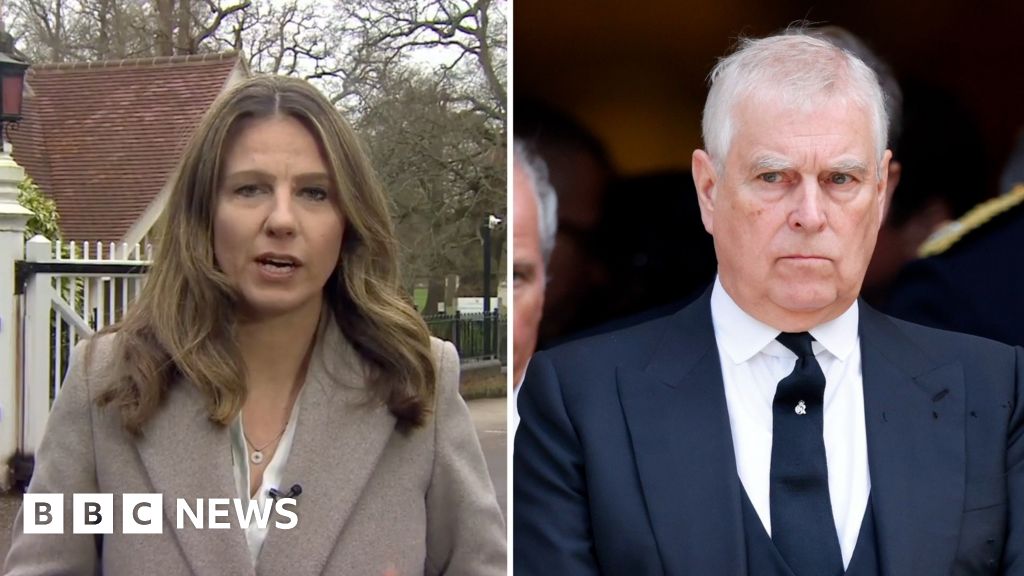
Police searches at Andrew Mountbatten-Windsor’s former home of Royal Lodge, in Windsor, are continuing, after he was released by police under investigation on Thursday evening.

His arrest came after police said they were assessing a complaint over the alleged sharing of confidential material by the former prince with late sex offender Jeffrey Epstein.

Mountbatten-Windsor has consistently and strenuously denied any wrongdoing.

The BBC’s Helena Wilkinson has been reporting on the arrest from outside the former prince’s home, asking the question of what’s next for the King’s brother?

Advertisement

Source link

Continue Reading

NewsBeat

expert-tested picks for a good night’s sleep in 2026

Published

on

expert-tested picks for a good night’s sleep in 2026

According to Dr Himender Makker, a consultant physician in respiratory, chest and sleep medicine at Circle Health Group: “A pillow needs to support the head, which weighs approximately 3kg. It must be firm to stop the head from sinking in too far and affecting neck curvature.”

“We all have different heads, necks and shoulders, so there cannot be one perfect pillow to meet the demands of diverse human bodies,” Dr Makker continues. “What we do know is that there is an approximate distance of six inches between the side of the neck and the tip of the shoulder. This is what should determine the height of your pillow.”

One of the most important factors when choosing a pillow is sleep position. Dr Makker says: “Most people sleep on their side (left or right), some on their back and few on their front. Any sleep position can work so long as you wake up feeling refreshed. The right pillow should help you to sleep comfortably with your neck and spine straight or slightly bent backwards (extended).”

Advertisement

Source link

Continue Reading

NewsBeat

Charli XCX gets hat trick of number ones as Sam Fender scores first chart topper

Published

on

Charli XCX gets hat trick of number ones as Sam Fender scores first chart topper

The singer, whose real name is Charlotte Aitchison, has had now eight top 40 albums in total, with 2015’s Sucker (15), 2017’s Number 1 Angel (37), 2019’s Charli (14), 2020’s How I’m Feeling Now (33), and 2025 remix record Brat And It’s Completely Different But Also Still Brat (40).

Source link

Continue Reading

NewsBeat

‘I don’t need your money, I’ll sort you out’: Thug ‘could have killed’ man in horror attack in Piccadilly Gardens

Published

on

Manchester Evening News

A judge described the injury Said Sadat inflicted as ‘graphic and horrendous’

Advertisement

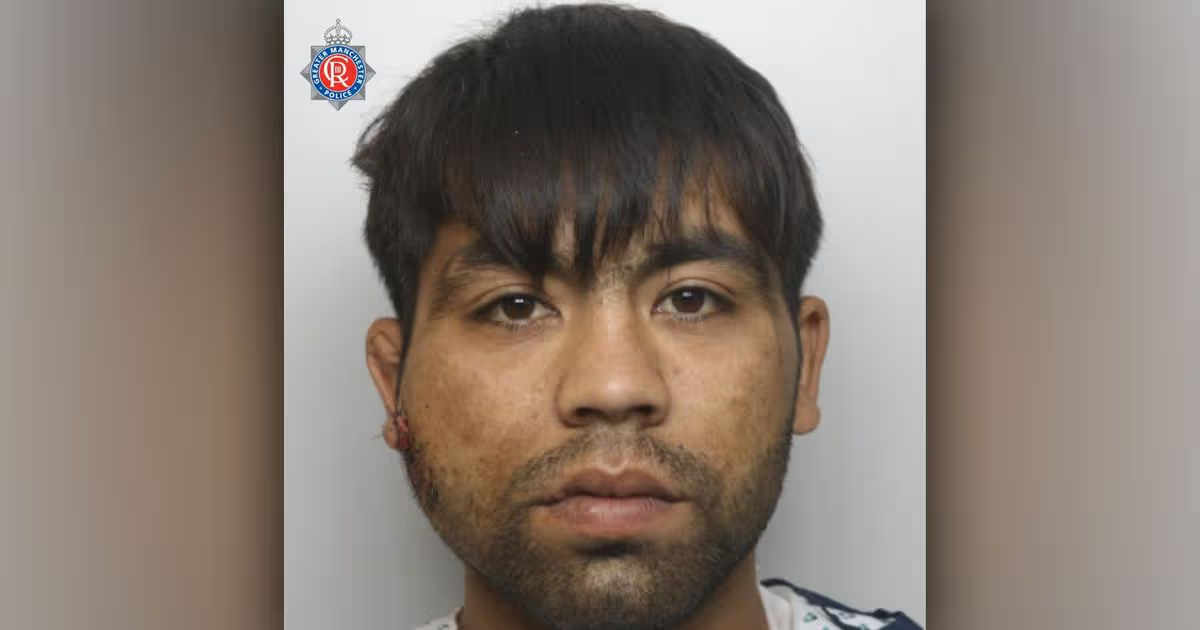
This is the mug shot of a thug who stabbed a stranger in the neck with a broken bottle in Piccadilly Gardens. Said Sadat was jailed for more than three years this week following the violent attack on July 27 last year.

The 19-year-old was approached by his would-be victim over payment of a debt. He told Sadat he was settling on his cousin’s behalf and handed him a £20 note.

Sadat ripped the note up and hissed: “I don’t need your money, I will sort you out.”

Click here to prioritise Manchester news in Google from the MEN

Advertisement

Manchester Crown Court heard he left, but returned armed with a broken bottle. He slashed at the man, leaving him with a large wound to his neck.

Sadat was arrested as the victim was rushed to hospital, where he received emergency surgery for a 12cm wound to his neck. He was also treated for lacerations to his upper left arm and right hand.

Sadat pleaded guilty to section 20 wounding on a basis that he did not have a knife and instead used a broken bottle, prosecutor Hayley Parkes said.

The court heard Sadat was on bail at the time having been arrested for another attack in the city centre, along with two others who had chased down two pals on a night out in Manchester city centre on June 15, 2024.

Advertisement

Huw Edwards, defending, said he Sadat a difficult upbringing in Afghanistan before moving to the UK when he was 17. He said he was a ‘young man’ and had limited previous convictions.

Jailing him, Recorder Ciaran Rankin said: “I have seen the graphic and horrendous neck injury. It’s only by good luck, not good fortune, you are not facing a more serious offence. You could have killed that man.”

Sadat, of Block Lane, Chadderton, Oldham, was jailed for three years and nine months for theft; assault occasioning actual bodily harm and section 20 wounding. The charges covered both incidents.

Detective Constable Peter Viney of GMP’s City of Manchester CID, who led the investigation, said: “This was a violent and unprovoked attack in one of the busiest areas of the city centre. I would like to commend the quick actions of officers and the bravery of members of the public at the scene who helped the victim who had been severely injured.

Advertisement

“Sadat’s sentencing today reflects the gravity of his actions and our ongoing commitment to tackling knife crime and violence in Manchester.”

Source link

Continue Reading

NewsBeat

‘Repetitive and bland’ homes blocked from being built on edge of small village

Published

on

Cambridgeshire Live

A developer has been told they can’t build 27 new affordable homes on the edge of Little Thetford.

Plans to build 27 new homes on the edge of a small village have been blocked after being branded “repetitive and bland”. East Cambridgeshire District Council criticised the design of the proposed development in Little Thetford and the impact it could have on the countryside.

Advertisement

The new homes had been proposed for a field off The Wytches, next to the A10 junction. The developer, Cambridge Housing Society, had proposed to make all of the new homes available as affordable housing, with 23 offered at affordable rent, and four as shared ownership.

The homes were proposed to be a mix of flats, bungalows and houses, ranging in size from one-bedroom flats and bungalows, up to four-bedroom houses. The developer said the plans offered the opportunity to create “high-quality” affordable homes for the area.

They said: “The site represents a sustainable, logical extension to the settlement, providing a sensitive interface between village and countryside while contributing to local housing need.”

The plans faced backlash from people living in the village, with 48 formal objections lodged with the district council against the plans. Several raised concerns about the impact the development could have on congestion and road safety, particularly due to how close the development’s access road would be to the A10 junction.

Advertisement

One objector said: “As a one-way in and one-way out village, adding more housing right next to the village entrance, a known busy area for traffic, is asking for fatal accidents to happen. I’ve lived in the village all my life and I would like to continue to do so, without this increased risk.

“Not only would there be a high chance of collisions, the road is the main pedestrian route that leads to the village bus stop, frequently used by visitors, residents and school children. The additional traffic will result in increased queuing at peak times, backing into the village. Not only increasing the level of fumes for school children, but increasing the risk of queuing motorists taking risks to exit the village.”

Another objector highlighted that Little Thetford had “limited amenities and an intermittent bus service”, which they said would make people more reliant on cars and “placing further pressure on an already unsafe junction”.

Concerns were also raised about the size of the proposed development, with one person arguing that it would be “disproportionate to a village of approximately 320 dwellings”.

Advertisement

Questions were also raised about whether this amount of affordable housing is needed in the village, with one objector highlighting that a separate development of affordable homes was already underway.

Council argues development will ‘harm the countryside’

The district council refused to grant planning permission for the development, citing as one of its reasons that the affordable housing need in the village had already been assessed and met through a separate development.

The authority also highlighted the lack of services and facilities in Little Thetford, which it said would lead to people having to leave the village for the majority of their daily needs.

The district council added that the proposed development would cause “harm to the character and setting of the settlement and surrounding countryside”.

Advertisement

The decision notice said: “The proposal results introduce a large quantum of development projecting beyond the existing build line of the settlement in a very prominent location that would be highly visible on approach from both directions. The proposed layout results in the apartment block introducing an urban feature into the rural edge of the development.

“The design of the dwellings is repetitive and bland, projecting poor quality design into the countryside in a visually prominent location and the apartment blocks would be out of keeping with the existing houses.”

For more planning notices in your area visit publicnoticeportal.uk .

Source link

Advertisement
Continue Reading

NewsBeat

10 best mattresses for better sleep, according to Telegraph experts and readers

Published

on

10 best mattresses for better sleep, according to Telegraph experts and readers

As soon as you start to wake up with discomfort, it’s time to consider whether you need a new mattress. Even the best mattress needs to be replaced around the seven-year mark, so that’s why we’ve tested 45 from major brands, including Simba, Emma and Dreams to help you choose the right one.

“People often believe their mattress is adequate since they spent a lot of money on it,” says Dr. Lindsay Browning, founder of Trouble Sleeping . “But often it transpires that it’s at least 15 to 20 years old. In these cases, it’s unlikely that the mattress is providing the same level of support.”

According to Dr. Browning: “An ideal mattress should support your back and spine, allowing the spine to remain in a neutral position during the night”. Our guide to choosing a mattress runs through this in detail, but here’s what to consider:

Advertisement

Side sleepers need pressure relief to cushion their shoulders and hips. A hybrid mattress, with its combination of memory foam and springs, should offer the right balance.

Back sleepers need to prevent their torso from sinking too far into the mattress. Medium-to-firm pocket sprung mattresses are best, because each spring works individually, tailoring its cushioning to different body parts.

Front sleepers (or stomach sleepers) should opt for medium-firm or firm mattresses – whether that’s memory foam, pocket sprung or hybrid – to ensure even distribution of weight.

Below, you’ll find a comprehensive guide to mattresses, plus FAQs with advice from our sleep experts.

Advertisement

Telegraph readers have given us their verdict too, helping us to whittle down the 45 tested to our 10 best mattress recommendations.

The best mattress: At a glance

In a hurry? These are our top recommendations for each category:


Source link

Advertisement
Continue Reading

NewsBeat

Winter Olympics 2026: Four men, one aim – to end 102-year wait for curling gold

Published

on

Grant Hardie, Hammy McMillan, Bobby Lammie and Bruce Mouat

It’s a Thursday night in November. A pub in Glasgow’s Merchant City. Four men, all about the age of 30, are squeezed around a small table, eating and talking about what the next few months might bring. Nobody recognises them.

That same pub three months later. Screens showing a Celtic game are changed so the patrons can watch the curling. Almost everyone is anxiously staring at the TVs, willing those same four men to reach a Winter Olympic final.

Chances are they will be doing the same on Saturday (18:05 GMT), when Team GB’s Bruce Mouat, Grant Hardie, Hammy McMillan and Bobby Lammie take on Canada with a gold medal at stake.

“Our gold medal,” as Mouat referred to it after the epic semi-final win over Switzerland in northern Italy on Thursday – a contest which drew 3.4million viewers to the BBC at its peak.

Advertisement

And fulfilling what they believe to be their destiny – by upgrading their silver medal from Beijing four years ago – is what these four Scots have travelled to Cortina to do.

Since that 2022 near miss, Team Mouat have come to dominate men’s curling, winning two World Championships and adding another couple of European crowns, as well as a record 12 Grand Slam titles.

At times, they have been unbeatable.

That cloak of invincibility slipped during the round-robin stages here – leaving qualification out of their hands – but that fright has now been forgotten, replaced with the return of a clear-eyed focus on the task in hand.

Advertisement

But who are these four young men who have now caught the country’s attention? And what makes them more than the sum of their parts?

Source link

Continue Reading

Trending

Copyright © 2025