Connect with us

Tech

Sam Altman claims ChatGPT’s adult mode will ‘be able to safely relax the restrictions’ of the chatbot, but firing a critic of the plan is a reason to be wary

Published

on

OpenAI is about to give ChatGPT an adults-only option. At almost the same moment, the company has parted ways in disputed fashion with one of the executives responsible for deciding how far the system should be allowed to go, as first reported by The Wall Street Journal. OpenAI CEO Sam Altman’s promise of a responsible, safe adult mode for ChatGPT is now at risk of looking hollow.

Ryan Beiermeister led product policy at OpenAI, shaping the rules and enforcement mechanisms governing ChatGPT’s behavior, at least until last month. The timing is notable as WSJ says it happened soon after she raised concerns about the adult mode plans.

Advertisement

Source link

Continue Reading
Click to comment

Leave a Reply

Your email address will not be published. Required fields are marked *

Tech

Trump fights back, replaces struck-down reciprocal tariffs with 10% global import tax

Published

on

Hours after the Supreme Court struck down broad “reciprocal” tariffs as unlawful, President Donald Trump lashed out at justices, and said he will impose a 10% global tariff under a different trade law with more restrictions and a timetable.

Four suited men sit at a conference table; the central man with blond hair and red tie has eyes closed, appearing contemplative, while others look forward in a formal meeting setting
President Trump introduces a global import tax. Image credit: Chip Somodevilla/Getty Images

The announcement follows a 6-3 ruling that the earlier tariffs, imposed under the International Emergency Economic Powers Act, exceeded presidential authority and required congressional approval. The now-invalidated tariffs have cost Apple about $2 billion.
Section 122 provides a narrower legal pathway, but it doesn’t soften the economic impact. The statute permits temporary tariffs of up to 15% total for 150 days unless Congress votes to extend them.
Continue Reading on AppleInsider | Discuss on our Forums

Source link

Continue Reading

Tech

Final expands its gaming headphones line with the A2000 and VR3000

Published

on

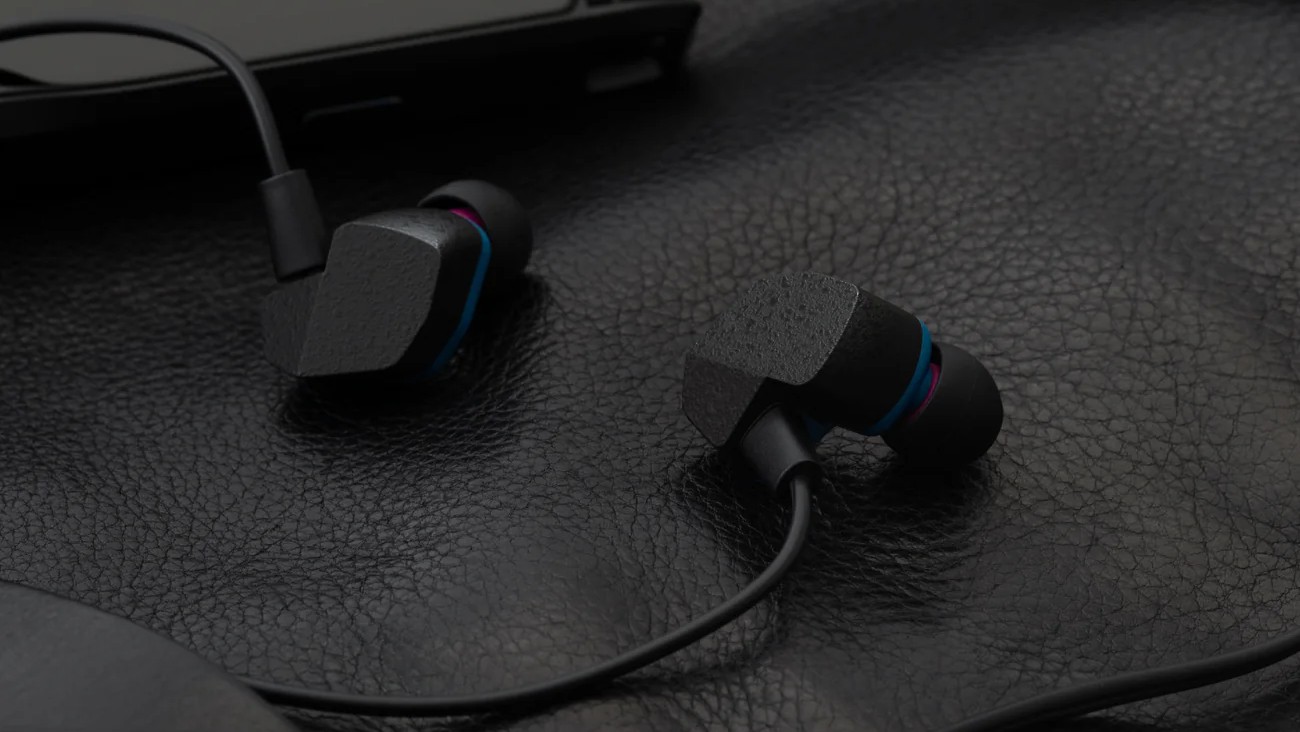
Final has introduced a new wired in-ear monitor, the A2000, expanding its headphone line-up with a focus on affordable performance.

At the core of the A2000 is Final’s in-house 6mm “f-Core DU” dynamic driver, developed entirely by the company — from diaphragm and voice coil to magnet assembly.

Final says the result is a sound signature built around “exceptional clarity” paired with tight, energetic bass. Sensitivity is rated at 99 dB/mW, with 19Ω impedance. This makes it relatively easy to drive from everyday devices.

The A2000 is also the first model in its class to benefit from Final’s revised sound evaluation process, originally developed for its flagship A10000.

Advertisement

Instead of relying purely on lab-based sound pressure testing, the company evaluated performance across real-world listening scenarios. This included varied volumes and recording quality. The goal, according to Final, is more natural and controlled playback in everyday use.

Advertisement

Build details are equally considered. A brass front housing is used to reduce magnetic interference, while an ultra-fine 30μm CCAW voice coil is designed to improve transient response. Each diaphragm is pressed in small batches to ensure consistent performance and lower distortion.

Comfort remains a priority. Borrowing from the brand’s B Series design philosophy, the A2000 uses a three-point support fit across the ear pocket, eartip and tragus to reduce pressure while maintaining stability. The housing features a two-tone black-and-blue finish with Final’s textured “shibo” coating to resist fingerprints.

Advertisement

The earphones connect via a 0.78mm 2-pin connector, paired with a 1.2m black OFC cable designed to minimise microphonics. Five sizes of dual-hardness silicone eartips (SS to LL) are included to help achieve a secure seal.

While the A2000 leads this latest expansion, Final continues to offer models like the VR3000, aimed specifically at gamers seeking accurate positional audio.

Priced at $79.99 / £79.99 / €74.99, the A2000 is available to buy globally right now. It aims to deliver high-end tuning without the flagship price tag and, just as importantly, without straying from its audiophile roots.

Advertisement

Advertisement

Source link

Continue Reading

Tech

Porting Super Mario 64 To The Original Nintendo DS

Published

on

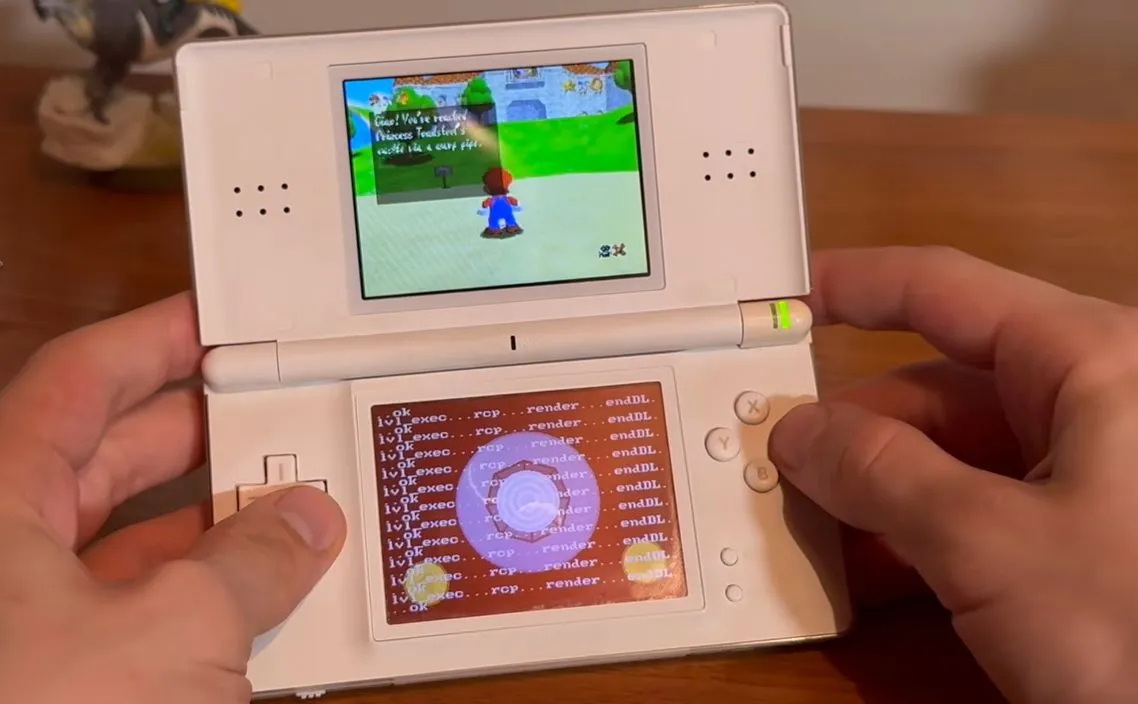
Considering that the Nintendo DS already has its own remake of Super Mario 64, one might be tempted to think that porting the original Nintendo 64 version would be a snap. Why you’d want to do this is left as an exercise to the reader, but whether due to nostalgia or out of sheer spite, the question of how easy this would be remains. Correspondingly, [Tobi] figured that he’d give it a shake, with interesting results.

Of note that is someone else already ported SM64 to the DSi, which is a later version of the DS with more processing power, more RAM and other changes. The reason why the 16 MB of RAM of the DSi is required, is because it needs to load the entire game into RAM, rather than do on-demand reads from the cartridge. This is why the N64 made do with just 4 MB of RAM, which is as much RAM as the ND has. Ergo it can be made to work.

The key here is NitroFS, which allows you to implement a similar kind of segmented loading as the N64 uses. Using this the [Hydr8gon] DSi port could be taken as the basis and crammed into NitroFS, enabling the game to mostly run smoothly on the original DS.

Advertisement

There are still some ongoing issues before the project will be released, mostly related to sound support and general stability. If you have a flash cartridge for the DS this means that soon you too should be able to play the original SM64 on real hardware as though it’s a quaint portable N64.

Advertisement

Source link

Continue Reading

Tech

Metadata Exposes Authors of ICE’s ‘Mega’ Detention Center Plans

Published

on

A PDF that Department of Homeland Security officials provided to New Hampshire governor Kelly Ayotte’s office about a new effort to build “mega” detention and processing centers across the United States contains embedded comments and metadata identifying the people who worked on it.

The seemingly accidental exposure of the identities of DHS personnel who crafted Immigration and Customs Enforcement’s mega detention center plan lands amid widespread public pushback against the expansion of ICE detention centers and the department’s brutal immigration enforcement tactics.

Metadata in the document, which concerns ICE’s “Detention Reengineering Initiative” (DRI), lists as its author Jonathan Florentino, the director of ICE’s Newark, New Jersey, Field Office of Enforcement and Removal Operations.

In a note embedded on top of an FAQ question, “What is the average length of stay for the aliens?” Tim Kaiser, the deputy chief of staff for US Citizenship and Immigration Services, asked David Venturella, a former GEO Group executive whom The Washington Post described as an adviser overseeing an ICE division that manages detention center contracts, to “Please confirm” that the average stay for the new mega detention centers would be 60 days.

Advertisement

Venturella replied in a note that remained visible on the published document, “Ideally, I’d like to see a 30-day average for the Mega Center but 60 is fine.”

DHS did not respond to a request for comment about what the three men’s role in the DRI project is, nor did it answer questions about whether Florentino had access to a PDF processor subscription that might have enabled him to scrub metadata and comments from the PDF before sending it to the New Hampshire governor. (The so-called Department of Government Efficiency spent last year slashing the number of software licenses across the federal government.)

The document itself says that ICE intends to update a new detention model by the end of September of this year. ICE says it will create “an efficient detention network by reducing the total number of contracted detention facilities in use while increasing total bed capacity, enhancing custody management, and streamlining removal operations.”

“ICE’s surge hiring effort has resulted in the addition of 12,000 new law enforcement officers,” the DHS document says. “For ICE to sustain the anticipated increase in enforcement operations and arrests in 2026, an increase in detention capacity will be a necessary downstream requirement.”

Advertisement

ICE plans on having two types of facilities: regional processing centers that will hold between 1,000 to 1,500 detainees for an average stay of three to seven days, and the mega detention facilities, which will hold an average of 7,000 to 10,000 people for an average of 60 days. It’s been referred to as a “hub and spoke model,” where the smaller facilities will feed into the mega ones.

“ICE plans to activate all facilities by November 30, 2026, ensuring the timely expansion of detention capacity,” the document says.

Beyond detention centers, ICE plans to buy or lease offices and other facilities in more than 150 locations, in nearly every state in the US, according to documents first reported by WIRED.

The errant comment in the PDF sent to New Hampshire’s governor is not the only issue the set of documents apparently had; according to the New Hampshire Bulletin, a previous version of an accompanying document, an economic impact analysis of a processing site in Merrimack, New Hampshire, referenced “the Oklahoma economy” in the opening lines. The errant document remains on the governor’s website, as of publication.

Advertisement

Across the country, ICE’s mega detention center projects have sparked controversy. ICE’s purchase of a warehouse in Surprise, Arizona, spurred hundreds to attend a city council meeting on the topic, according to KJZZ in Phoenix. In Social Circle, Georgia, city officials have pushed back against DHS’s proposal to build a mega center there, because officials say the city’s water and sewage treatment infrastructure would not be able to handle the influx of people.

Source link

Continue Reading

Tech

BeyondTrust RCE flaw now exploited in ransomware attacks

Published

on

CISA: BeyondTrust RCE flaw now exploited in ransomware attacks

Hackers are actively exploiting the CVE-2026-1731 vulnerability in the BeyondTrust Remote Support product, the U.S. Cybersecurity and Infrastructure Security Agency (CISA) warns.

The security issue affects BeyondTrust’s Remote Support 25.3.1 or earlier and Privileged Remote Access 24.3.4 or earlier, and can be exploited for remote code execution.

CISA added it to the Known Exploited Vulnerabilities (KEV) catalog on February 13 and gave federal agencies just three days to apply the patch or stop using the product.

Wiz

BeyondTrust initially disclosed CVE-2026-1731 on February 6. The security advisory classified it as a pre-authentication remote code execution vulnerability caused by an OS command injection weakness, exploitable via specially crafted client requests sent to vulnerable endpoints.

Proof-of-concept (PoC) exploits for CVE-2026-1731 became available shortly after, and in-the-wild exploitation started almost immediately.

Advertisement

On February 13, BeyondTrust updated the bulletin  to say that exploitation had been detected on January 31, making CVE-2026-1731 a zero-day vulnerability for at least a week.

BeyondTrust states that the report from researcher Harsh Jaiswal and the Hacktron AI team confirmed the anomalous activity that they detected on a single Remote Support appliance at the time.

CISA has now activated the ‘Known To Be Used in Ransomware Campaigns?’ indicator in the KEV catalog.

For customers of the cloud-based application (SaaS), the vendor states the patch was applied automatically on February 2, so no manual intervention is needed.

Advertisement

Customers of the self-hosted instances need to either enable automatic updates and verify that the patch was applied via the ‘/appliance’ interface or manually install it.

For Remote Support, the recommendation is to install version 25.3.2. Privileged Remote Access users should switch to version 25.1.1 or newer.

Those still at RS v21.3 and PRA v22.1 are recommended to upgrade to a newer version before applying the patch.

Modern IT infrastructure moves faster than manual workflows can handle.

In this new Tines guide, learn how your team can reduce hidden manual delays, improve reliability through automated response, and build and scale intelligent workflows on top of tools you already use.

Advertisement

Source link

Continue Reading

Tech

Videos: Humanoid Robot Martial Arts, Perseverance, More

Published

on

Video Friday is your weekly selection of awesome robotics videos, collected by your friends at IEEE Spectrum robotics. We also post a weekly calendar of upcoming robotics events for the next few months. Please send us your events for inclusion.

ICRA 2026: 1–5 June 2026, VIENNA

Enjoy today’s videos!

So, humanoid robots are nearing peak human performance. I would point out, though, that this is likely very far from peak robot performance, which has yet to be effectively exploited, because it requires more than just copying humans.

Advertisement

[ Unitree ]

“The Street Dance of China” Turning lightness into gravity, and rhythm into impact.This is a head-on collision between metal and beats. This Chinese New Year, watch PNDbotics Adam bring the heat with a difference.

[ PNDbotics ]

You had me at robot pandas.

Advertisement

[ MagicLab ]

NASA’s Perseverance rover can now precisely determine its own location on Mars without waiting for human help from Earth. This is possible thanks to a new technology called Mars Global Localization. This technology rapidly compares panoramic images from the rover’s navigation cameras with onboard orbital terrain maps. It’s done with an algorithm that runs on the rover’s Helicopter Base Station processor, which was originally used to communicate with the Ingenuity Mars Helicopter. In a few minutes, the algorithm can pinpoint Perseverance’s position to within about 10 inches (25 centimeters). The technology will help the rover drive farther autonomously and keep exploring.

[ NASA Jet Propulsion Laboratory ]

Advertisement

Legs? Where we’re going, we don’t need legs!

[ Paper ]

This is a bit of a tangent to robotics, but it gets a pass because of the cute jumping spider footage.

Advertisement

[ Berkeley Lab ]

Corvus One for Cold Chain is engineered to live and operate in freezer environments permanently, down to -20°F, while maintaining full flight and barcode scanning performance.

I am sure there is an excellent reason for putting a cold storage facility in the Mojave desert.

Advertisement

[ Corvus Robotics ]

The video documents the current progress made in the picking rate of the Shiva robot when picking strawberries. It first shows the previous status, then the further development, and finally the field test.

[ DFKI ]

Data powers an organization’s digital transformation, and ST Engineering MRAS is leveraging Spot to get a full view of critical equipment and facility. Working autonomously, Spot collects information about machine health – and now, thanks to an integration of the Leica BLK ARC for reality capture, detailed and accurate point cloud data for their digital twin.

Advertisement

[ Boston Dynamics ]

The title of this video is “Get out and have fun!” Is that mostly what humanoid robots are good for right now, pretty much…?

[ Engine AI ]

Advertisement

ASTORINO is a modern 6-axis robot based on 3D printing technology. Programmable in AS-language, it facilitates the preparation of classes with ready-made teaching materials, is easy both to use and to repair, and gives the opportunity to learn and make mistakes without fear of breaking it.

[ Kawasaki ]

Can I get this in my living room?

Advertisement

[ Yaskawa ]

What does it mean to build a humanoid robot in seven months, and the next one in just five? This documentary takes you behind the scenes at Humanoid, a UK-based AI and robotics company building reliable, safe, and helpful humanoid robots. You’ll hear directly from our engineering, hardware, product, and other teams as they share their perspectives on the journey of turning physical AI into reality.

[ Humanoid ]

This IROS 2025 keynote is from Tim Chung who is now at Microsoft, on “Catalyzing the Future of Human, Robot, and AI Agent Teams in the Physical World.”

Advertisement

The convergence of technologies—from foundation AI models to diverse sensors and actuators to ubiquitous connectivity—is transforming the nature of interactions in the physical and digital world. People have accelerated their collaborative connections and productivity through digital and immersive technologies, no longer limited by geography or language or access. Humans have also leveraged and interacted with AI in many different forms, with the advent of hyperscale AI models (i.e., large language models) forever changing (and at an ever-astonishing pace) the nature of human-AI teams, realized in this era of the AI “copilot.” Similarly, robotics and automation technologies now afford greater opportunities to work with and/or near humans, allowing for increasingly collaborative physical robots to dramatically impact real-world activities. It is the compounding effect of enabling all three capabilities, each complementary to one another in valuable ways, and we envision the triad formed by human-robot-AI teams as revolutionizing the future of society, the economy, and of technology.

[ IROS 2025 ]

This GRASP SFI talk is by Chris Paxton at Agility Robotics, on “How Close Are We To Generalist Humanoid Robots?”

Advertisement

With billions of dollars of funding pouring into robotics, general-purpose humanoid robots seem closer than ever. And certainly it feels like the pace of robotics is faster than ever, with multiple companies beginning large-scale deployments of humanoid robots. In this talk, I’ll go over the challenges still facing scaling robot learning, looking at insights from a year of discussions with researchers all over the world.

[ University of Pennsylvania GRASP Laboratory ]

This week’s CMU RI Seminar is from Jitendra Malik at UC Berkeley, on “Robot Learning, With Inspiration From Child Development.”

For intelligent robots to become ubiquitous, we need to “solve” locomotion, navigation and manipulation at sufficient reliability in widely varying environments. In locomotion, we now have demonstrations of humanoid walking in a variety of challenging environments. In navigation, we pursued the task of “Go to Any Thing” – a robot, on entering a newly rented Airbnb, should be able to find objects such as TV sets or potted plants. RL in simulation and sim-to-real have been workhorse technologies for us, assisted by a few technical innovations. I will sketch promising directions for future work.

[ Carnegie Mellon University Robotics Institute ]

Advertisement

From Your Site Articles

Related Articles Around the Web

Source link

Advertisement
Continue Reading

Tech

How Streaming Became Cable TV’s Unlikely Life Raft

Published

on

Cable TV providers have spent the past decade losing tens of millions of households to streaming services, but companies like Charter Communications are now slowing that exodus by bundling the very apps that once threatened to replace them.

Charter added 44,000 net video subscribers in the fourth quarter of 2025, its first growth in that count since 2020, after integrating Disney+, Hulu, and ESPN+ directly into Spectrum cable packages — a deal that grew out of a contentious 2023 contract dispute with Disney. Comcast and Optimum still lost subscribers in the quarter, though both saw those losses narrow.

Charter’s Q4 numbers also got a lift from a 15-day Disney channel blackout on YouTube TV during football season, which drove more than 14,000 subscribers to Spectrum. Charter has been discounting aggressively — video revenue fell 10% year over year despite the subscriber gains. Cox Communications launched its first streaming-inclusive cable bundles last month, and Dish Network has yet to integrate streaming apps into its packages at all.

Source link

Advertisement
Continue Reading

Tech

Japanese tech giant Advantest hit by ransomware attack

Published

on

Japanese tech giant Advantest hit by ransomware attack

Advantest Corporation disclosed that its corporate network has been targeted in a ransomware attack that may have affected customer or employee data.

Preliminary investigation results revealed that an intruder gained access to certain parts of the company’s network on February 15.

Tokyo-based Advantest is a global leader in testing equipment for semiconductors, measuring instruments, digital consumer products, and wireless communications equipment.

Wiz

The company employs 7,600 people, has an annual revenue of more than $5 billion, and a market capitalization of $120 billion.

On February 15, the firm detected unusual activity in its IT environment, prompting a response in accordance with incident response protocols, including the isolation of affected systems.

Advertisement

As part of its response, the company contracted third-party cybersecurity specialists to help isolate the threat and investigate its impact.

“Preliminary findings appear to indicate that an unauthorized third party may have gained access to portions of the company’s network and deployed ransomware,” Advantest states.

“If our investigation determines that customer or employee data was affected, we will notify impacted persons directly and provide guidance on protective measures.”

Currently, no data theft has been confirmed, but Advantest noted that this may change as more information emerges from the ongoing investigation.

Advertisement

Should customers or staff be determined to be impacted, Advantest will notify them directly and provide instructions on mitigating the associated risks.

At the time of writing, no ransomware groups have claimed the attack on the Japanese tech giant.

BleepingComputer has contacted Advantest directly to request more details about the attack, but we have not heard back by publishing time.

Multiple Japanese companies have been the target of cyberattacks recently, as several high-profile entities suffered data breaches and operational disruptions. Notable examples include Washington Hotel, Nissan, Muji, Asahi, and NTT.

Advertisement

Advantest says that the investigation continues and that it will provide updates on the incident when new details emerge.

Modern IT infrastructure moves faster than manual workflows can handle.

In this new Tines guide, learn how your team can reduce hidden manual delays, improve reliability through automated response, and build and scale intelligent workflows on top of tools you already use.

Source link

Advertisement
Continue Reading

Tech

Top Android AI photo and video editor exposes nearly two million user images and videos

Published

on


  • Cybernews found misconfigured database in “Video AI Art Generator & Maker” app
  • Leak exposed 8.27m media files, including 2m private user photos and videos
  • Developers secured database after disclosure; similar flaws seen in another Codeway app

Yet another misconfigured database leaking sensitive user data was found, but this one is even more worrying since the data being leaked is – user-uploaded photos and videos.

Researchers from Cybernews recently discovered an Android app called “Video AI Art Generator & Maker” contained a misconfigured Google Cloud storage bucket which was accessible to anyone who knew where to look.

Source link

Advertisement
Continue Reading

Tech

The Best Chairs and Desks from Branch Are on Sale (We’ve Tested Them All)

Published

on

We’ve been rigorously testing work-from-home gear for years—even prior to the Covid-19 remote work boom—and that includes dozens of office chairs and desks. Branch furniture has made standouts that are highlighted in our guides over and over again. Its Presidents’ Day deals have been extended, bringing some of the better discounts we’ve seen on essentials we’ve tested like chairs and desks.

Check out our other deals coverage for additional discounts on gear we’ve tried and would recommend to a friend.

Branch Ergonomic Chair Pro for $449 ($50 off)

  • Photograph: Julian Chokkattu

  • Photograph: Julian Chokkattu

  • Photograph: Julian Chokkattu

Branch

Ergonomic Chair Pro

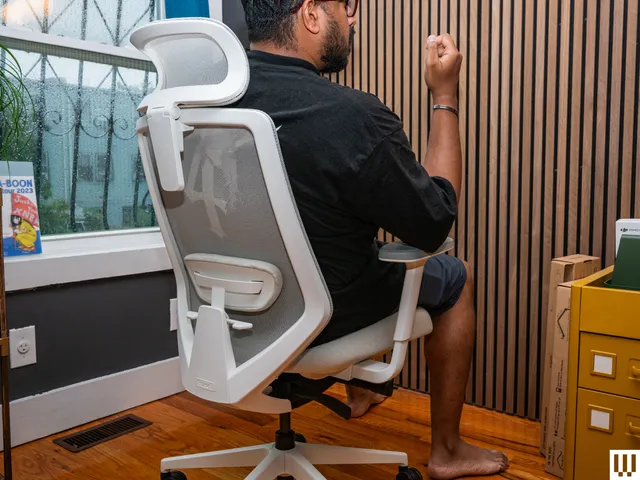
This price matches the best we usually see for our very favorite office chair. Out of the dozens we’ve tried, this chair strikes the best balance of features for the price. It’s comfortable, adjustable, and easy to dial in so you can get your perfect ergonomic fit. It also has a solid warranty and isn’t too terribly expensive compared to similar chairs. There are different fabric finishes and colors to choose from, all of which are on sale right now.

Advertisement

Branch Ergonomic Chair for $323 ($36 off)

An orange and aluminum modern designed chair

The best budget office chair is even more affordable right now thanks to this deal. It’s easy to assemble, it has some adjustable elements, it’s comfortable and breathable, and it looks nice with or without the optional headrest. The upholstery is available in several colors, though the fabric does pill and attract pet hair. We still think this is a chair worth checking out if you’re on a tight budget.

Branch Four Leg Standing Desk for $854 ($95 off)

Front view of Branch Four Leg Standing Desk with computer monitors, keyboard, microphone and other work items on top

Photograph: Julian Chokkattu

Branch

Four Leg Standing Desk

This is editor Julian Chokkattu’s favorite desk he’s tried. At first glance, it looks like a standard desk, but it’s actually a standing desk that can be raised or lowered with the little control panel. Assembly was easy, the controls are simple, and the shape is elegant. If you want a desk that looks great no matter how tall it is, this is worth checking out, especially at this price.

Branch Duo Standing Desk for $494 ($55 off)

Branch Duo Standing Desk with light brown top and white legs that has a small cabinet, black cutting mat, and lamp on the top

Photograph: Julian Chokkattu

We like this compact, affordable standing desk, which gets you a lot of value for how little you’ll pay. It’s compatible with a lot of add-ons, and the paddle controls are easy to use. There’s even a preset mode so you can press the paddle twice to raise it to your preset height. This desk is compact, but if you don’t need a ton of room for your working setup, it’s a good option even at full-price. (Luckily, right now, you can snag it for less.)

Advertisement

Power up with unlimited access to WIRED. Get best-in-class reporting and exclusive subscriber content that’s too important to ignore. Subscribe Today.

Source link

Continue Reading

Trending

Copyright © 2025