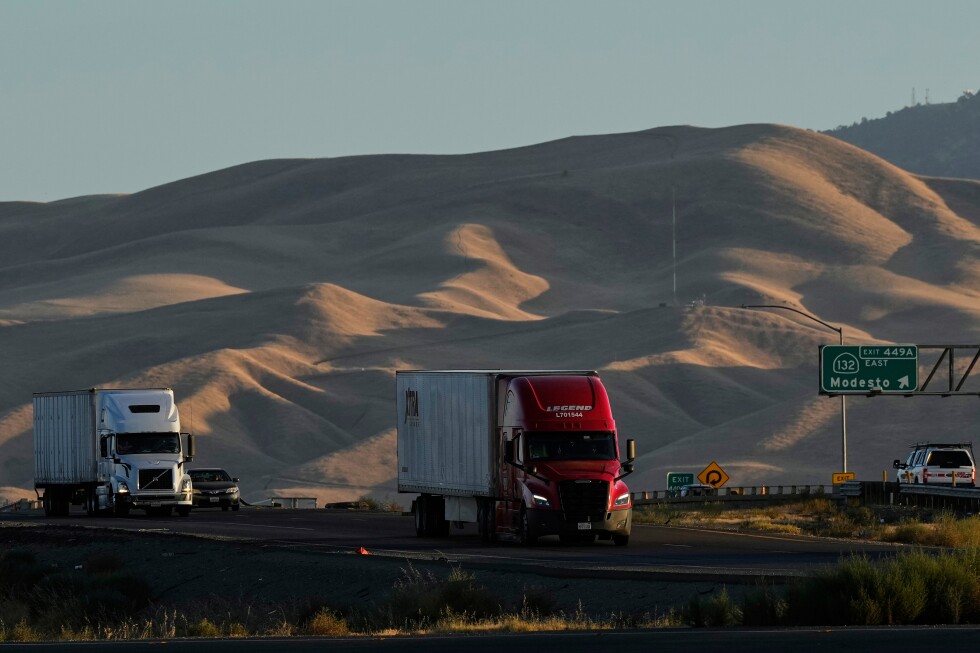
All truckers and pass drivers will have to take their commercial driver’s license tests in English as the Trump administration expands its aggressive campaign to improve safety in the industry and get unqualified drivers off the road.
Transportation Secretary Sean Duffy announced the latest effort Friday to ensure that drivers understand English well enough to read road signs and communicate with law enforcement officers. Florida already started administering its tests in English.
Currently, many states allow drivers to take their license tests in other languages even though they are required to demonstrate English proficiency. California offered tests in 20 other languages. And Duffy said that a number of states have hired other companies to administer commercial driver’s licenses tests, and those companies aren’t enforcing the standards that drivers are supposed to meet.
“And the third party tester is participating in the scam because they are not adequately testing the people who went through a sham school,” Duffy said.
Advertisement
He said every American wants drivers who get behind the wheel of a big rig to be well-qualified to handle those vehicles.
The campaign will also now expand to go prevent fraudulent trucking companies from getting into the business while continuing to go after questionable schools and ensure states are complying with all the regulations for handing out commercial licenses.
Earlier this week, the Transportation Department said 557 driving schools should close because they failed to meet basic safety standards. And the department has been aggressively going after states that handed out commercial driver’s licenses to immigrants who shouldn’t have qualified for them ever since a fatal crash in August.
A truck driver who Duffy says wasn’t authorized to be in the U.S. made an illegal U-turn and caused a crash in Florida that killed three people. Other fatal crashes since then, including one in Indiana that killed four earlier this month, have only heightened concerns.
Advertisement
Duffy said that the registration system and requirements for trucking companies will be strengthened while Federal Motor Carrier Safety Administration inspectors conduct more spot checks of trucks and commercial driver’s license schools.
Currently, companies only have to pay a few hundred dollars and show proof of insurance to get registered to operate, and then they might not be audited until a year or more later.
That has made it easy for fraudulent companies that are known in the industry as chameleon carriers to register multiple times under different names and then simply switch names and registration numbers to avoid any consequences after crashes or other violations.
Officials are also trying to make sure that the electronic logging devices drivers use are accurate, and that states are following all the regulations to ensure drivers are qualified to get commercial licenses.
Advertisement
After that Indiana crash, the Federal Motor Carrier Safety Administration knocked the company that employed the driver out of service and pulled the DOT numbers assigned to two other companies that were linked to AJ Partners. Tutash Express and Sam Express in the Chicago area were also disqualified, and the Aydana driving school that the trucker involved in the crash attended lost its certification.
Immigration authorities arrested that driver, Bekzhan Beishekeev from Kyrgystan because the 30-year old entered the country illegally. Authorities say he pulled out and tried to go around a truck that had slowed in front of him and his truck slammed into an oncoming van.
Duffy said the companies involved in that Indiana crash were all registered at the same apartment. In other cases there might be hundreds of companies registered at a single address.
One taxpayer said they had overpaid by ‘thousands’
HMRC has issued guidance on how to reclaim tax if you have paid too much on your pension payments. The authority outlined the rules after a pensioner contacted them, having overpaid a large amount of tax. The person reached out to the department on social media to ask for help.
Advertisement
Writing on February 17, they explained their pension provider had “overpaid tax on my private pensions by several thousand pounds in the last year”. They said they were eager to recover some of the money promptly “rather than have to wait to do my next tax return”. They questioned the tax authority: “What’s the best way to get it back?” HMRC replied to suggest that, considering the time of year, it would be advisable to wait for the moment.
HMRC informed the taxpayer: “As you’ve raised this with less than seven weeks before the end of the tax year, you will be best waiting until 6th April 2026 to complete your self assessment return for 25/26 and claim the refund through Self Assessment.” The tax year ends on April 5 each year, with the new financial year beginning on April 6.
State Pensioners to face major tax change
Should you need to submit a tax return for the current 2025/2026 tax year, this must be lodged by October 31, 2026, if you want to file a paper return. The more common choice is to submit your tax return digitally, in which case you’ll need to get this completed by January 31, 2027.
Several big tax changes are being introduced from April 2026. The Making Tax Digital scheme is coming into force meaning some people must register and begin submitting regular returns to HMRC.
Advertisement
Tax changes from April 2026
From 6 April, self-employed workers and landlords earning above £50,000 will be required to join the programme. The scheme requires you to submit digital quarterly returns to HMRC regarding your tax position.
Tax on dividend income is also rising by two percentage points. This will push the ordinary rate up from 8.75 per cent to 10.75 per cent, while the upper rate will climb from 33.75 per cent to 35.75 per cent.
The additional rate will remain at the current 39.35 per cent. Pensioners looking over their finances may also want to factor in the state pension increase. Payments will rise 4.8 per cent under the triple lock mechanism.
This policy guarantees payments increase each April in line with whichever is highest: 2.5 percent, the inflation rate or the growth in average earnings. The full new state pension will increase from £230.25 weekly to £241.30 weekly, or £12,547.60 annually.
Advertisement
You can claim the state pension when you reach 66, while you can begin withdrawing from your pensions at 55. The state pension age is rising gradually from April 2026, moving up in phases to reach 67 by April 2028. The age you can access your private pensions is also increasing fairly soon, moving to 57 from April 2028.
Ensure our latest headlines always appear at the top of your Google Search by making us a Preferred Source. Click here to activate or add us as your Preferred Source in your Google search settings.
The USA’s ice hockey team dominated Slovakia and are now set to have Donald Trump in attendance for their gold medal match against Canada on Sunday in Italy
22:40, 20 Feb 2026Updated 22:46, 20 Feb 2026
Donald Trump is set to attend the Winter Olympics in Italy after the USA ice hockey team dominated Slovakia to earn a place in the final. The US will meet Canada to fight for a gold medal after sweeping their opponents aside 6-2.
Trump’s presence is set to see local police ramp up security measures for the president attending one of the most anticipated events of the Games, according to Corriere Della Dea. Trump’s journey to Italy was said to be contingent on the US making the final, which takes place on Sunday.
It is said to be a whistlestop tour, however. It has been suggested that Trump will go straight from Air Force One to the Milano Santagiulia Ice Hockey Arena. he will appear at the closing ceremony later that day before immediately departing Italy.
Advertisement
The IOC has not confirmed the rumours, with spokesman Mark Adams referring the matter to the White House. He said: “You wouldn’t expect me to comment on the movements of heads of state, and I’m not going to disappoint you.
“If you have a question on that one, I think you probably have to pose it to the White House. But certainly at this stage, we won’t comment on the movements of any head of state.”
Protests took place in Milan when it was confirmed that staff from ICE, the US Immigration and Customs Enforcement department, were involved in American security planning before the Games.
Amid some outspoken comments from US athletes about current events in their nation, Vance hit back. He said: “Yes, you’re going to have some Olympic athletes who pop off about politics.
Ensure our latest sport headlines always appear at the top of your Google Search by making us a Preferred Source. Click here to activateor add us as Preferred Source in your Google search settings
Advertisement
“I feel like that happens every Olympics. My advice to them would be to try to bring the country together, and when you’re representing the country, you’re representing Democrats and Republicans.
“You’re there to play a sport, and you’re there to represent your country and hopefully win a medal. You’re not there to pop off about politics.”
Trump, meanwhile, is no stranger to being booed at sporting events. He picked up a negative reception when attending the men’s final at the US Open in New York last year. The match was delayed by half an hour to accommodate heightened security checks.
The US president also received jeers at a Washington Commanders NFL game and heard boos in an appearance at last year’s Club World Cup.
Advertisement
Watch Winter Olympics 2026 live on discovery+
This article contains affiliate links, we will receive a commission on any sales we generate from it. Learn more
The Milano Cortina 2026 Winter Olympic Games is running from February 6-22 and fans can enjoy more than 850 hours of action live on discovery+ via Prime Video.
Throughout the games, the £3.99 discovery+ Entertainment subscription will provide access to TNT Sports 2, the home of 24/7 Olympic coverage.
The tourist’s irresponsible actions have drawn criticism (Picture: Newsflash)
Holidaymakers were left speechless when a tourist lifted a baby over the safety barrier at the Iguazu Falls in Argentina.
Tourists at the ‘Devil’s Throat’ viewpoint could not believe their eyes when aman appeared to put a baby’s life at risk for a photo op.
The incident happened at the Garganta del Diablo platform overlooking the 260-foot Iguazu Falls on the Argentinian side on Tuesday, February 17.
In images taken by other tourists, a man can be seen lifting a tiny baby over the barrier.
Advertisement
The male tourist disregarded multiple warning signs telling people not to lean or climb over the metal safety railing at the ‘Devil’s Throat’ viewing platform (Picture: Newsflash)
Meanwhile, a woman appears to be taking pictures of the baby.
The drop from that point was reportedly around 262 feet, roughly equivalent to the height of St Paul’s Cathedral dome.
The eyewitness who saw the risky manoeuvre unfold told Diario Epoca: ‘Sending your child to the bottom of the Devil’s Throat for a photo.’
The images were criticised on social media, and it sparked the company responsible for the viewing platform to weigh in too.
Advertisement
They said that while the safety measures are in place to prevent dangerous situations, visitor safety also depends on individuals and their responsibility.
The walkway is lined with a safety railing, and there are reportedly multiple signs warning visitors not to lean outside it.
Tourists flouting the rules could face penalties and being banned from the area.
If the man, whose identity was concealed in the images, was identified, he could be barred from visiting other national parks in Argentina, it is understood.
Advertisement
Last month, a daredevil tourist climbed over the railing at the same spot to rescue a hat.
He was seen walking along the edge of the drop before he clambered back to safety.
Visitor attractions around the world have seen tragedies as tourists have fallen to their deaths.
MILAN (AP) — Falling behind for a second consecutive game at the Olympics, after never trailing throughout group play, Canada dug itself an even deeper hole in the semifinals against Finland.
Down two goals against an opponent also full of NHL players, the tournament favorite did not look the slightest bit shook.
“There wasn’t really any panic,” center Nick Suzuki said. “We were going to get our chances eventually.”
Then, the most talented roster in Milan buried those chances. Sam Reinhart deflected Cale Makar’s shot in to start the comeback, Shea Theodore tied it on a blast through traffic and Nathan MacKinnon scored the go-ahead goal with 35.2 seconds left to advance to the gold medal game with a 3-2 victory Friday night.
Advertisement
“You could definitely feel the sense of calm, having been through that before,” McDavid said. “We understood we were in a tough spot, and we had to find a way to get out of it. And we did.”
Makar thought he and his teammates were more comfortable down 2-0 against Finland than when they fell behind against Czechia twice in the quarterfinals, including with seven minutes left.
It showed. After Erik Haula scored shorthanded to make it a two-goal deficit early in the second period, Canada outshot Finland 31-8 the rest of the way.
Juuse Saros was terrific in net for Finland, and Canada coach Jon Cooper was worried only about getting shut out by a hot goaltender. Reinhart’s goal with 4:40 left in the second cut some of the tension, and it was clear the game was turning.
Advertisement
“We definitely felt the momentum shift a little bit,” forward Sam Bennett said. “We thought our pressure was good. It was just a relentless pressure that we knew eventually we’d be able to crack them.”
Cooper was also glad his players didn’t want until three minutes left to tie it like in the quarterfinals. Theodore’s goal came with 9:26 left in regulation after Brad Marchand was on top of Saros following a shove from Haula.
“Brad’s being Brad, and I like to have Brad,” Cooper said of Marchand, who got pushed but didn’t do much to stop falling into the opposing goalie.
Nathan MacKinnon took over late, looking like a man on a mission and drawing a second high-sticking penalty on Niko Mikkola. On the ensuing power play, McDavid sent a perfect cross-ice saucer pass over penalty killer Roope Hintz’s stick to MacKinnon, who sneaked the puck short side through a miniscule hole with Macklin Celebrini setting a screen by jumping.
Advertisement
It held up on video review after Finland challenged that the play was offside.
“It was a five-man effort,” MacKinnon said. “Connor made an amazing play, Cale was doing his thing, Reino same thing. Obviously happy one squeaked in. Yeah, great pass.”
Canada came back again without injured captain Sidney Crosby, who left the quarterfinal game Wednesday night with an apparent right knee injury. McDavid wore the “C” in Crosby’s absence and had two assists to break the record for the most points by an NHL player at a single Olympics with 13.
“We’re a deep team with leaders all up and down the lineup,” McDavid said. “It doesn’t matter who’s wearing the ‘C,’ who’s in the lineup, who’s out of the lineup. Everybody can play a big role and lead, and you saw that again.”
Advertisement
Cooper said there’s still time to decide if Crosby can play in the final on Sunday.
Canada’s stacked lineup, even missing Crosby, eventually broke through the Finnish trap that slows players down and intercepts the puck before an opponent can go deep into the offensive zone. Instead of getting frustrated, some of the best players on the roster led the way, with Celebrini shooting just about every chance he had.
Celebrini, Canada’s youngest player at 19, put eight pucks on net himself. That’s almost as many shots on goal Finland had as a team in the second and third periods combined, with nine.
“I’ve seen him play enough for a while,” winger Mitch Marner said. “He’s got a lot of skill and a lot of confidence. He’s not afraid of the big moments.”
Advertisement
The comeback kept alive the possibility of an all-North America gold-medal game a year after Canada and the U.S. met in the final of the 4 Nations Face-Off following their epic matchup earlier in that NHL and NHLPA-run tournament.
The U.S. still has to hold up its end of the bargain to make that happen. The unbeaten Americans faced Slovakia in the second semifinal on Friday night.
“She is described as a white female, approximately 5ft, slim build wearing a black coat, black crop top, black jogging bottoms with white and black trainers.
Advertisement
“If anyone has any information about her whereabouts please contact us quoting reference number CC2026022001181..”
Want to see more of the stories you love from Belfast Live?Making us your preferred source on Googlemeans you’ll get more of our exclusives, top stories and must-read content straight away. To add Belfast Live as a preferred source, simplyclick here
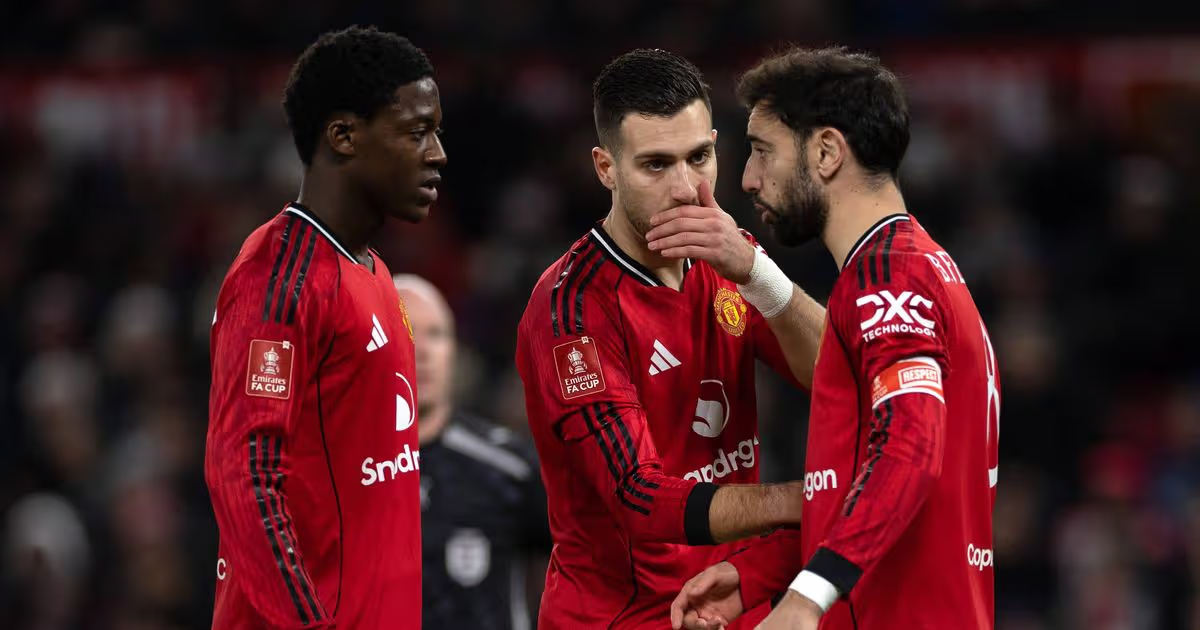
Kobbie Mainoo struggled for game time at Manchester United under Ruben Amorim, but Diogo Dalot has told the England midfielder the experience will make him stronger
Diogo Dalot has told Kobbie Mainoo that being sidelined at Manchester United will ultimately make him better footballer. Mainoo came within touching distance of leaving United in a loan spell with Napoli during last month’s transfer window.
Advertisement
The England midfielder had grown increasingly frustrated with how former manager Ruben Amorim had handled him. Amorim consistently overlooked Mainoo for months, leaving him stranded on the sidelines and giving him plenty of time to contemplate his future.
He said: “That just shows that in football, no matter the manager that you have, you have to work the same way. For Kobbie, he could have gone the other way.
“Because it’s really hard for you, when you’re 20 years old, you played almost 80 games for the Manchester United first team, you played for England’s national team. You’ve been there at the top, and all of a sudden you don’t play.
Advertisement
“How can you explain to a 20-year-old guy that you need to go back to what you did before – train hard, be humble, just wait for your opportunity? I don’t think that’s bad for him to pass through this experience.
“You might say he should have played a little bit more, or not, that might be your opinion, or not. But for him to go through that experience, I think it will benefit him for the future.
Content cannot be displayed without consent
“And I think he feels that now, because he enjoys (football) more now. He will not take for granted playing week in, week out. If you ask me about that situation, I think you will benefit a lot from going through that in his career.”
Advertisement
While Mainoo was deemed surplus to requirements by Amorim, Dalot demanded a constant presence in the head coach’s plans, despite often being on the receiving end of criticism from fans. And the full-back has admitted that such scrutiny has been increasingly tough to overlook.
He added: “I think it became a little bit more difficult because of, obviously, what is happening online nowadays. Everybody can say whatever they want.
“And unless you live in a cave, you’re going to be aware of what is being said or what is happening. But to be honest, because my football career, professional career, was all the time here, so I had to learn how to balance that. I had to deal with it.”
Ensure our latest sport headlines always appear at the top of your Google Search by making us a Preferred Source. Click here to activateor add us as Preferred Source in your Google search settings.
Advertisement
Sky Sports discounted Premier League and EFL package
This article contains affiliate links, we will receive a commission on any sales we generate from it. Learn more
Sky has slashed the price of its Essential TV and Sky Sports bundle for the 2025/26 season, saving members £336 and offering more than 1,400 live matches across the Premier League, EFL and more.
Advertisement
Sky will show at least 215 live Premier League games this season, an increase of up to 100 more.
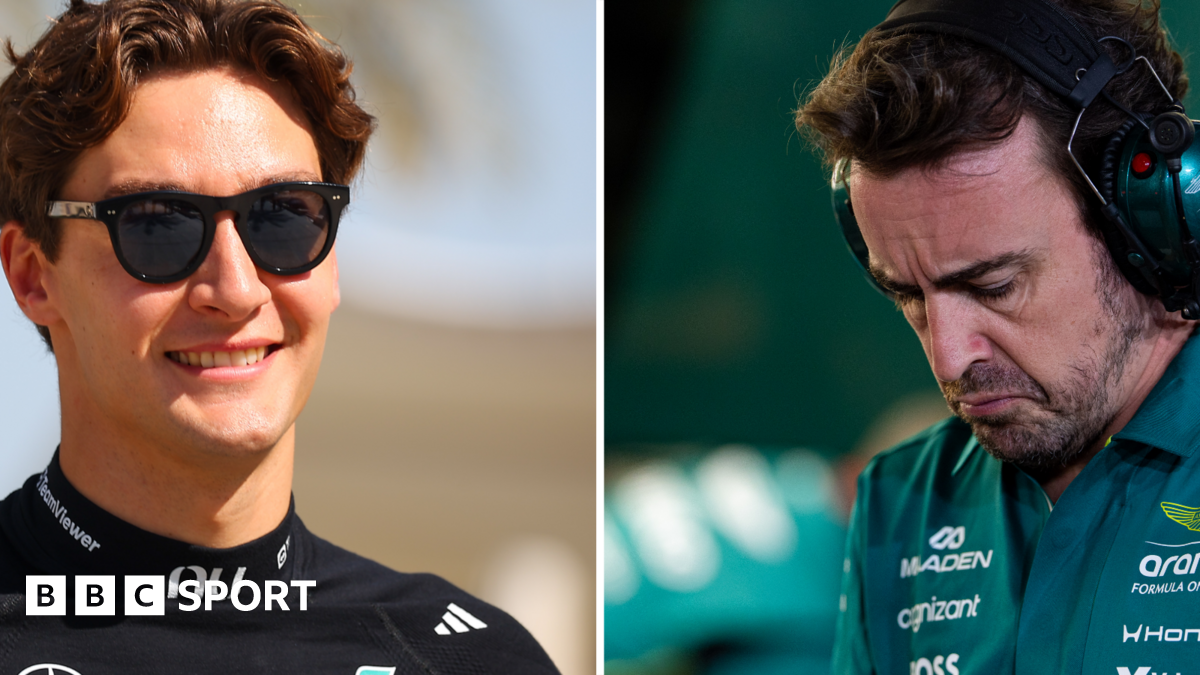
Ferrari’s Charles Leclerc ended the test with the single fastest lap time in an emphatic way – 0.811 seconds quicker than the next best time, set by Mercedes’ Kimi Antonelli.
Headline times in testing are usually not the place to look to gauge the competitive order, but this did reflect the picture in one important way – Mercedes and Ferrari look like they are going into the new season in the best shape.
Andrea Stella, team principal of world champions McLaren, said on Friday evening: “This test has confirmed that Ferrari and Mercedes look like the teams to beat. McLaren and Red Bull [are] probably very similar, Ferrari and Mercedes a step ahead.”
This picture, an impression reflected by many other senior figures up and down the pit lane, comes less from the headline lap times – even if they did show the teams in the order Ferrari, Mercedes, McLaren, Red Bull – than the so-called race-simulation runs.
Advertisement
Because the teams fill up their cars with fuel and run a grand prix distance, these have far fewer variables to muddy the picture than single laps.
On Friday evening, Leclerc did the best race simulation of the week, slightly quicker than Red Bull’s Max Verstappen and McLaren’s Oscar Piastri the day before, when they set more or less exactly the same time.
Mercedes did not do any race simulations in the second week, only in the first, when track conditions were up to a second slower.
Antonelli set comfortably the fastest race simulation of the first week – a lot faster than Piastri, who was running at the same time.
Advertisement
And his team-mate George Russell – the bookies’ pre-season championship favourite – was also impressively quick when running in the hotter, slower conditions earlier in the day.
This is not an exact science, but the cumulation of data is what led to the conclusion reached by Stella and many others.
A complication was that McLaren were not running the latest specification of Mercedes power-unit, which Mercedes were proving out, so can expect an uplift when they switch in Australia to the latest spec.
Another is Red Bull’s new engine is said by Russell to have the best deployment of energy, which is such an important facet this season.
Advertisement
Mercedes’ biggest concern is reliability. This hit Antonelli much more than Russell, but it’s probably fair to say that Mercedes suffered more problems than their major rivals, although Red Bull’s new recruit Isack Hadjar did lose a fair bit of his running to issues of one kind or another.
Satellite images analysed by Sky News’ Data and Forensics team show Iran has fortified its nuclear and defence facilities, alongside conducting live drills with Russian forces amid rising tensions with the US military.
What we know about activity at Iran’s nuclear facilities
Iran appears to be fortifying defences at its nuclear plants and military facilities since strikes by Israel and the US in June 2025 damaged infrastructure at three key sites. Core enrichment activity remains constrained and under close international scrutiny.
The main sites affected by last year’s strikes were Fordow Fuel Enrichment Plant, Natanz enrichment facility and Isfahan Nuclear Fuel Complex. They are key to Iran’s core nuclear infrastructure.
Advertisement
Image: Iran’s nuclear and military bases
The Isfahan Complex is in central Iran, 135 miles south of Tehran, near the city of Natanz. It is central to the nuclear fuel cycle, converting uranium into forms suitable for enrichment.
Isfahan includes an underground area where diplomats say much of Iran’s enriched uranium has been stored. Iran’s authorities have always said they are not trying to develop nuclear weapons.
Satellite images from 6 December 2025 to 24 January 2026 show structural repair and new efforts to bury tunnel entrances to the site.
Satellite images show “efforts to prepare for an attack” from the US, said David Albright, founder and president of the Institute for Science and International Security (ISIS) nonprofit.
He told Sky News: “At nuclear weaponisation sites, we see cleaning up and then, in some cases, rebuilding the facilities.”
Advertisement
He added: “You have this clear preparation in anticipation for attack, trying to minimise potential weak points.”
The ISIS institute reported on February 9 that “backfilling the tunnel entrances would help dampen any potential airstrike and also make ground access in a special force raid to seize or destroy any highly enriched uranium that may be housed inside difficult”.
At the Natanz nuclear facility, a site built for uranium enrichment, satellite images appear to indicate signs of construction at the Pilot Fuel Enrichment Plant, which was damaged by both US and Israeli air strikes in June.
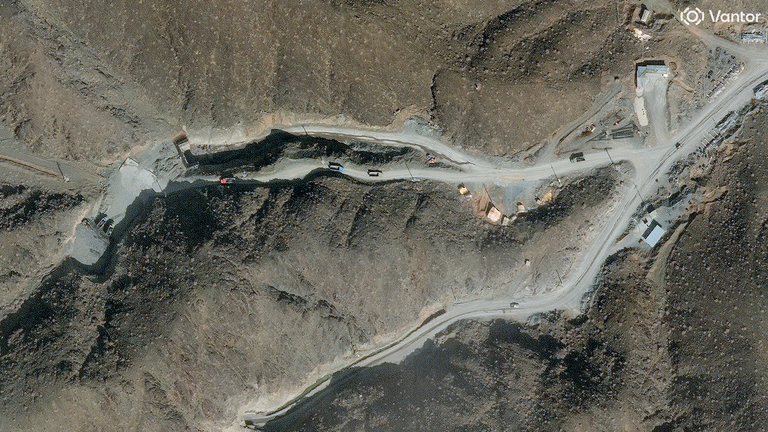
Just over a mile from Natanz, there is a new site, Pickaxe Mountain, also known as Kolang Gaz La. Images show the construction and hardening of tunnel shafts.
Advertisement
Image: Closeup of construction and hardening of eastern tunnel entrance at Pickaxe Mountain, 10 February 2026. Credit: Vantor
Albright told Sky News: “At Pickaxe now, we can clearly see that they’ve taken steps to strengthen the tunnel entrances, which are a major vulnerability of these underground facilities.”
Deep inside a mountain near the city of Qom, around 90 miles south of Tehran, the Fordow fuel enrichment plant was also largely destroyed by the US, said Albright, with the entrance sealed up shortly after the 2025 strikes.
There has been “very little activity” there since, he said.
“From our point of view, some of these protection measures, particularly at Isfahan, indicates there’s something valuable still inside,” said Albright. “Whether it’s recoverable or not we don’t know.”
Other key military sites
Advertisement
Satellite imagery also shows Tehran repairing and fortifying other complexes essential to Iran’s operations.
Parchin military complex is one of Iran’s most sensitive military sites. It has been covered in concrete, as shown by satellite images from 24 January.
Reports suggest that 20 years ago, Tehran conducted tests linked to nuclear bomb detonation methods at the site. Tehran has consistently rejected this. Israel reportedly struck Parchin in October 2024.
On 22 January, an analysis by the Institute for Science and International Security (ISIS) pointed to progress in the construction of a “concrete sarcophagus” around a newly built facility at Parchin.
Advertisement
ISIS reported in November that imagery showed “ongoing construction and the presence of what appears to resemble a long, cylindrical chamber, maybe a high-explosives containment vessel, likely measuring approximately 36 meters long and 12 meters in diameter, placed inside a building”. It added that high-explosive containment vessels are critical for nuclear weapons.
It is not the only roof. Iran also built a roof over a destroyed facility at the Pilot plant to cover it and “hide activities”, said Albright.
Another site being repaired is Tabriz Missile Base in northwest Iran. The site is one of Iran’s principal missile launch and storage bases. Satellite images show buildings at the base have been fully repaired since the Israeli strikes in June 2025.
Iran’s military activity
On 19 January, Russian and Iranian forces conducted joint live drills in the Gulf of Oman and the Indian Ocean. Iran’s state-run IRNA news agency said the goal was “upgrading operational coordination as well as exchange of military experiences”.
Advertisement
Sky News has confirmed these drills were launched from Larak Island and Shahid Bahonar Port, both key strategic locations that control the Strait of Hormuz and Iran’s main naval hub. This highlights both Iran’s military readiness and influence over vital shipping routes.
Rear Admiral Hassan Maghsoodloo of the Iranian Navy told Iran International the drills were aimed at promoting security and sustainable maritime cooperation.
Mark Cancian, Senior Adviser from the Center for Strategic and International Studies (CSIS), suggested “Russia is trying to help its partner, but its capabilities are extremely limited because it is totally consumed with the war in Ukraine”.
The drills mirrored recent Iranian exercises on 16 and 17 February; theIslamic Revolutionary Guard Corps carried out naval and live-fire operations, including missile launches, across key shipping lanes such as the Strait of Hormuz.
They occurred amid renewed negotiations between the United States and the Islamic Republic of Iran over Iran’s disputed nuclear program.
As talks opened, Iranian state media reported live missile fire toward the Strait, prompting its closure for several hours.
Iran often carries out military drills in the Strait of Hormuz, but the announced closure went a step further. Cancian said: “Closing the straits is hard, even impossible, without a lot more military capability. Iran could harass shipping with missiles and mines, though that would bring a response from many nations.”
Among all of this, Iran’s Supreme Leader Ayatollah Ali Khamenei posted a statement on X.
Advertisement
X
This content is provided by X, which may be using cookies and other technologies.
To show you this content, we need your permission to use cookies.
You can use the buttons below to amend your preferences to enable X cookies or to allow those cookies just once.
You can change your settings at any time via the Privacy Options.
Unfortunately we have been unable to verify if you have consented to X cookies.
To view this content you can use the button below to allow X cookies for this session only.
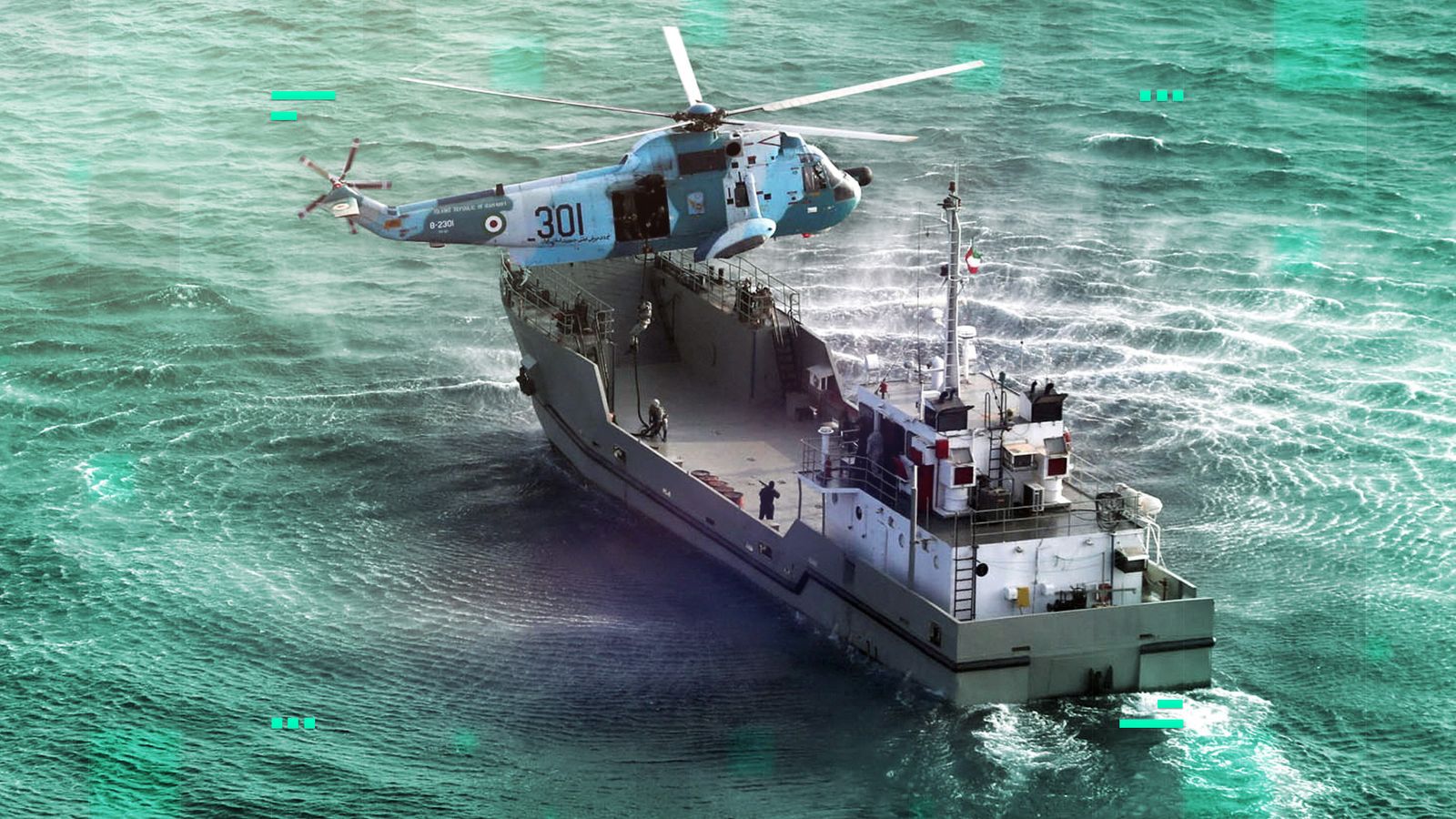
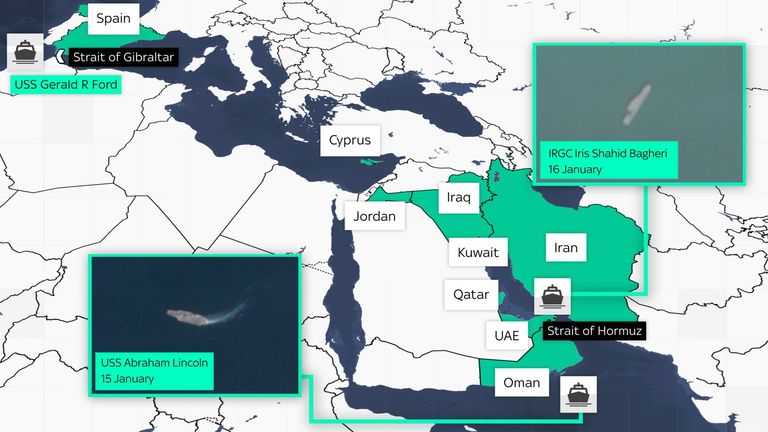
Sky News, using data from TankerTrackers, tracked several Iranian Navy vessels off the coast of Bandar Abbas on 16 January, including the drone carrier IRIS Shahid Bagheri, confirmed by satellite imagery about 10 km from shore. Frequently seen in this part of the Strait of Hormuz, the ship can deploy around 60 drones in addition to helicopters.
Advertisement
Image: Ship tracking of the USS Abraham Lincoln and the IRIS Shahid Bagheri. Credit – EU Sentinel, Copernicus
Mark Cancian, senior advisor at CSIS, stated that Shahid Bagheri was a “clever innovation” and the drone carrier is “part of that threat against the strait”.
Adding that Iran has been threatening the US by aiming the drone carrier directly at the USS Abraham Lincoln, a Nimitz-class aircraft carrier in the US Navy, capable of carrying dozens of aircraft, launching precision strikes, defending itself with advanced weapons, and coordinating naval and joint operations worldwide.
Image: Iran’s drone aircraft carrier Shahid Bagheri at sea in the Persian Gulf. Credit: Sepah News
When asked if Iran’s naval assets were positioned to warn off the US, Cancian said: “Yes, the Iranian government is being aggressive rhetorically, and the naval movements, along with the joint exercise with the Russians, are meant to reinforce that.”
The Data x Forensics team is a multi-skilled unit dedicated to providing transparent journalism from Sky News. We gather, analyse and visualise data to tell data-driven stories. We combine traditional reporting skills with advanced analysis of satellite images, social media and other open source information. Through multimedia storytelling we aim to better explain the world while also showing how our journalism is done.
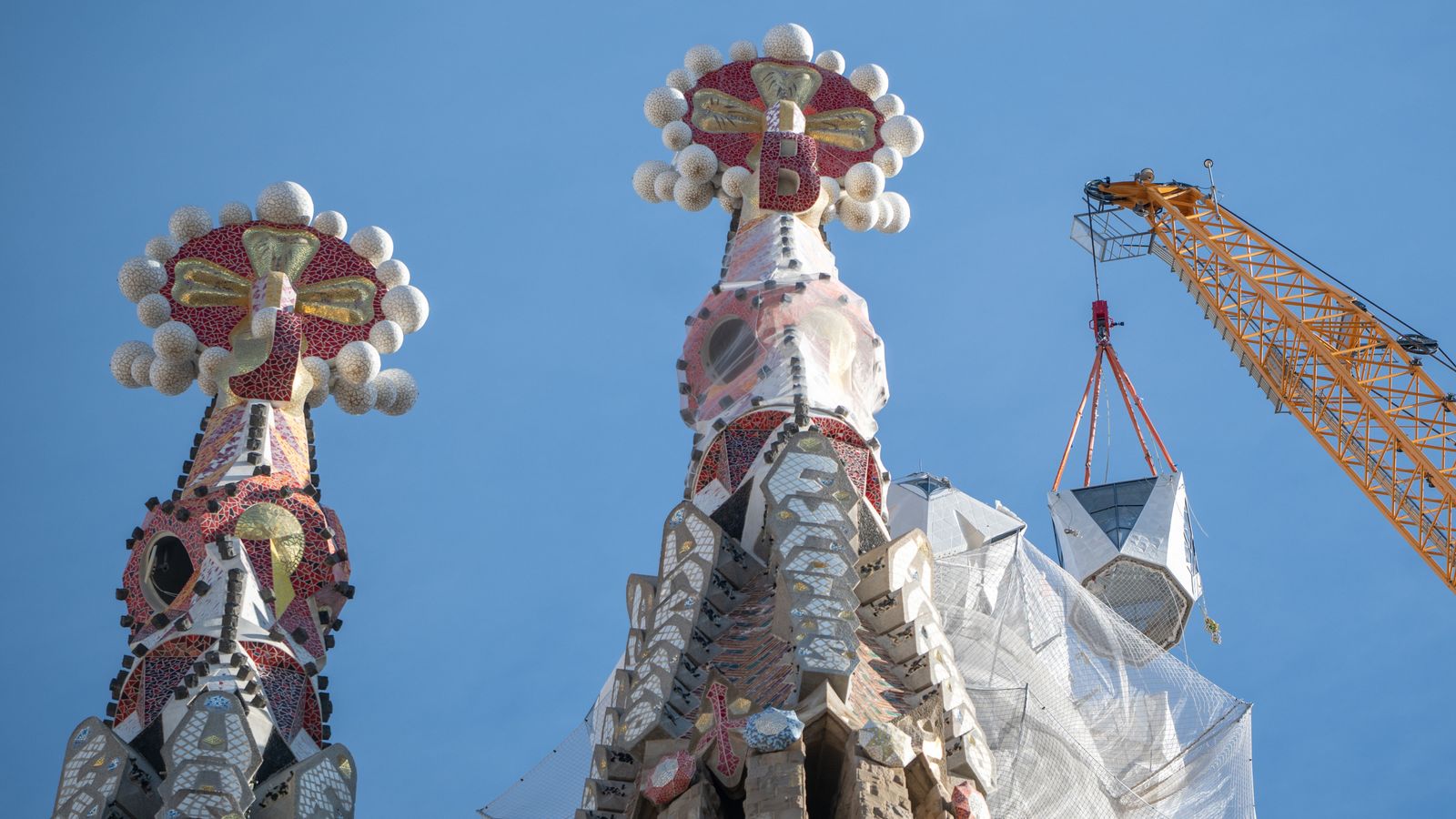
Barcelona’s soaring Sagrada Familia basilica reached its maximum height on Friday, as a crane placed the upper arm of a cross atop the Tower of Jesus Christ.
The unfinished monument is already the world’s tallest church, though Catalan architect Antoni Gaudi’s magnum opus remains years away from completion.
The church’s central piece now towers 566ft above the city, the church said.
Topping the central tower has been a priority ahead of celebrations this June, marking the centenary of Gaudi’s death.
Advertisement
The scaffolding surrounding the central tower is expected to be removed by June, in time for the inauguration of the Tower of Jesus Christ, the church said.
Image: The church’s central piece now towers 566ft above the city, the church said. Pic: AP
The first stone of the Sagrada Familia was placed in 1882, but Gaudi never expected it to be finished in his lifetime.
Only one of its multiple towers was completed when he died in 1926 at the age of 73, after being struck by a tram.
In recent decades, more work was carried out on the basilica as it became a major international tourist attraction.
Advertisement
The inside of the Tower of Jesus Christ is still being worked on, and its exterior is flanked by scaffolding and construction cranes.
In line with Gaudi’s plans, the cross has four arms so its shape can be recognised from any direction, said Sagrada Familia’s rector, the Rev Josep Turull.
If Barcelona’s city government allow it, the original plan also includes a light beam shining from each of the cross’s arms, signifying the church’s role as a spiritual lighthouse, he added.
Advertisement
Millions of tourists visit the Sagrada Familia every year, enthralled by Gaudi’s radical aesthetic, combining Catholic symbolism and organic forms, with entrance fees largely funding the ongoing construction.
This year, the Sagrada Familia will hold several events to celebrate the Catalan Modernist’s legacy, which includes other beautiful buildings in Barcelona and elsewhere in Spain.
The Sagrada Familia became the world’s tallest church last October, when it rose above the spire of Germany’s Ulmer Munster, a Gothic Lutheran church built over 500 years starting in 1377, which stands at 530ft.
A prayer verse from the Gloria that Catholics recite at mass is at the base of the cross installed on Friday at Sagrada Familia, the church’s rector said.
Advertisement
It reads: “You alone are the Holy One, you alone are the Lord, you alone are the Most High.”
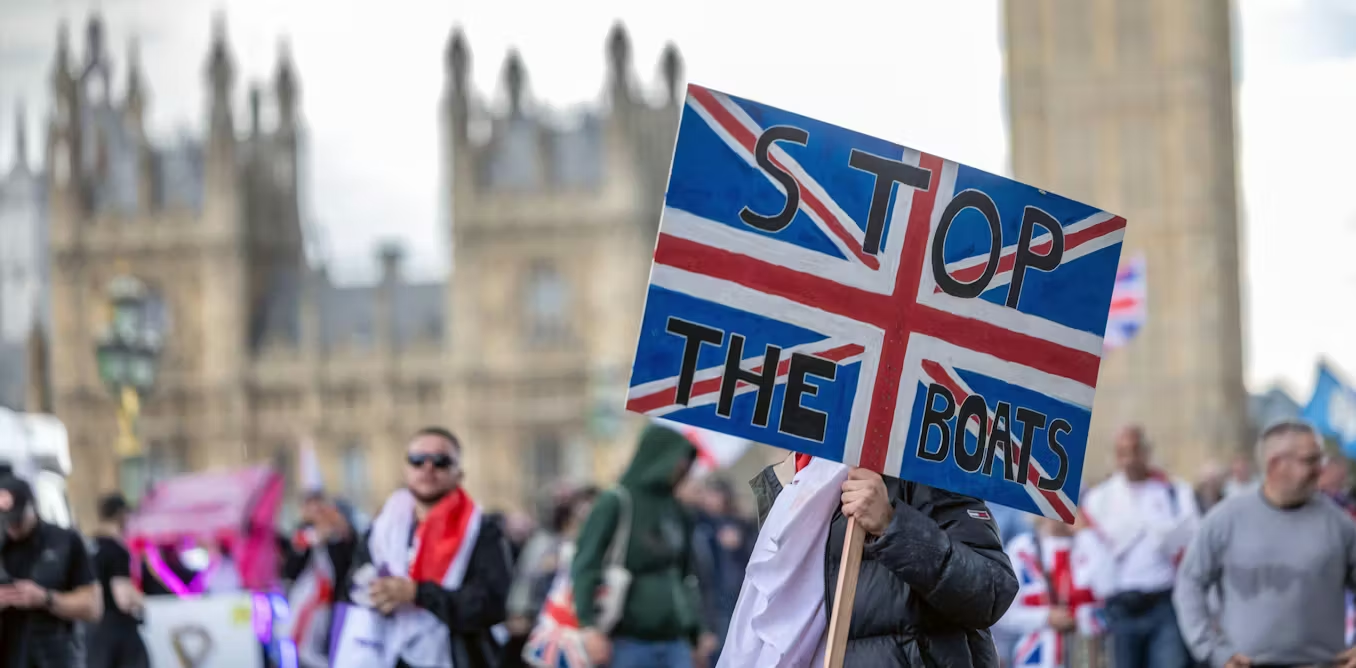
Discussions of migration in Britain often portray immigrants as “invaders”. This is evident in from the narrative around migrants arriving on small boats, to recent comments by Jim Ratcliffe, the billionaire co-owner of Manchester United.
Ratcliffe, who relocated to the tax haven of Monaco in 2020, blamed immigrants for the country’s economic challenges and claimed the UK had been “colonised”. After a public backlash, he apologised “that his choice of language has offended some people”.
A look at the history of immigration policy and rhetoric shows how this narrative came to play such a big role – and why it is so harmful.
Britain’s history is intertwined with empire and colonialism. The UK was forged as a nation-state alongside, and partly to facilitate, the growth of a global empire sustained through violence, brutality and war. It also led to immigration from Britain’s current and former colonies.
Advertisement
Although empire-related immigration began hundreds of years earlier, it accelerated after the second world war. Thousands of workers were recruited from the Caribbean and south Asia, as well as from Ireland and continental Europe, to relieve labour shortages and help staff the newly-formed National Health Service.
The 1948 British Nationality Act essentially allowed the entry of all subjects of the British empire. However, this did not reflect widespread acceptance of mass immigration. Rather, it was an attempt to maintain control over Britain’s colonial territories by formalising a specifically imperial identity for them.
Groups such as those onboard the ship Empire Windrush arrived under these conditions. However, increased immigration fuelled local anxieties, and controls were gradually tightened. Britain’s colonial and Commonwealth citizens were now recast as “immigrants”. This did not stop people from wanting to move to the UK, drawn by family or cultural ties – forged by a history of empire.
Themes of invasion
Immigration in the following decades was greater in scale and different than previous migration movements. Alongside this, a rhetoric of invasion began to solidify, one that is still politically influential today.
Advertisement
This narrative developed off the back of national myths that emerged during the second world war. The war was seen as a “people’s war” for Britain – a small, isolated island overcoming foreign enemies. Historians like Paul Ward argue that such national myths shaped ideas of a socially and ethnically homogenous British national identity, one that apparently needed “defending against foreign invasion”.
The Windrush generation of Caribbean migrants helped rebuild postwar Britain. Alamy
We can see this theme in key historical moments, such as Enoch Powell’s 1968 “Rivers of Blood”, one of modern Britain’s most notorious speeches. Powell recounted supposed conversations with white Britons fearful of being ruled by immigrants and their descendants.
A similar message was created in response to the so-called Kenyan Asian crisis (1968) and Uganda Asian crisis (1972).
These newly-independent countries were attempting to remove Britain’s imperial influences, including by expelling people of Asian descent whose families had been brought there by colonial governments.
The panic in Britain of a possible “invasion” of African Asian immigrants led to the 1968 Commonwealth Immigrants Act passing in just three days. This act restricted the rights of Commonwealth citizens to migrate to the UK.
Advertisement
The mood around immigration was hardening. Shortly before becoming prime minister, Margaret Thatcher appeared on television in 1978 sympathising with voters afraid of being “rather swamped by people with a different culture”. Immediately afterwards, Thatcher’s Conservatives gained a 11-point poll lead over Labour.
Thatcher’s governments overhauled the UK immigration system. The 1981 British Nationality Act removed citizenship for Commonwealth citizens, formally ending the link between British nationality and a shared history of empire.
Views today
In the last two decades, immigration from within and outside of the European Union has been a key response to the economic and demographic challenges of Britain’s ageing population. Workers from overseas have been recruited to fill gaps in areas such as hospitality, health and social care.
Similarly, Britain’s involvement in conflict zones, such as Afghanistan, Iraq and Libya led to increased applications from people seeking asylum in the UK. In response, anti-immigration sentiment has only grown. Ukip’s infamous “breaking point” poster portrayed refugees fleeing the Syrian conflict as a mass of people headed towards British shores, setting the tone for a debate that ultimately led to Brexit.
Advertisement
Such attitudes have continued as immigration from non-EU countries has grown since Brexit. Many contemporary anxieties around immigration stem from beliefs that a traditional British way of life is under threat. But these views are often based on information that is inaccurate or distorts general demographic change.
The suggestion that immigration is acting like a form of colonisation risks legitimising the “great replacement” far-right conspiracy theory. A recent study found that nearly a third of people in the UK believe this view, which contends that white populations are being deliberately replaced by people of colour.
Immigrants, meanwhile, have experienced not the privileges of colonisers, but discrimination. Immigration benefits Britain in various ways. Most migrants to the UK make a net positive contribution to the economy over their lifetime, paying more in taxes than they consume in public services. Yet they have faced increasing levels of hostility, policies designed to make their life in the UK harder, violence and other systemic disadvantages.
Recent years have seen the consequences of these views, in the form of more overt racism, and violent protests. The “invasion” or “coloniser” narrative is not just rhetoric – it can have harmful, physical consequences.