

Crypto World
Crypto Markets Tick Up Following Supreme Court Tariff Ruling

Bitcoin holds near $67,700 while investors assess Trump’s new 10% global tariff plan.
Crypto markets traded slightly higher on Friday, Feb. 20, as traders reacted to the U.S. Supreme Court ruling that struck down President Donald Trump’s emergency tariffs.
Bitcoin (BTC) is trading at $67,728, up 1.2% over the past 24 hours, while Ethereum (ETH) is at $1,970, up 1.5%. Other large-cap tokens were also mostly higher, with XRP up 1.5% to $1.43, BNB rising 3.2% to $625, and Solana (SOL) gaining 4% to $85.
Meanwhile, the total cryptocurrency market capitalization is hovering near $2.4 trillion, up 1.3% on the day. Daily trading volume stood at around $114.5 billion, according to CoinGecko.
Among top gainers, Morpho (MORPHO) climbed 11%, Ethereum Classic (ETC) rose 5.3%, and Official Trump (TRUMP) added about 5%. On the downside, Aave (AAVE) fell roughly 4.6%, Pi Network (PI) dropped about 3%, and Rain (RAIN) slipped around 2%.
Liquidations and ETF Flows
About $180 million in leveraged crypto positions were liquidated in the past 24 hours, according to CoinGlass. Long liquidations accounted for roughly $71.9 million, while shorts made up about $108 million.
Bitcoin led liquidations with $67.9 million, followed by Ethereum at around $38.3 million. More than 78,600 traders were liquidated during the period.
In the ETF space, Bitcoin spot ETFs recorded $165.76 million in outflows, while Ethereum spot ETFs experienced $130 million in outflows. In contrast, XRP spot ETFs recorded around $4 million in inflows, while Solana spot ETFs posted $5.94 million in inflows, per SoSoValue data.
Supreme Court Strikes Down Tariffs
The market uptick came amid intensifying macroeconomic uncertainty after President Donald Trump announced plans to impose a 10% global tariff. Trump’s announcement immediately followed a Supreme Court ruling that deemed his emergency tariffs illegal.
Notably, President Trump’s new tariffs could only take effect for up to 150 days unless Congress approves an extension, CNN reported.
Investors also reacted to increased geopolitical tensions after Trump said he is considering a limited military strike on Iran if nuclear negotiations do not progress soon.
In traditional markets, safe-haven assets have continued to hold steady. Gold traded at $5,092, up 1.46%, while silver climbed 6% to $84.
Meanwhile, Paul Howard, Senior Director, Wincent, said in comments shared with The Defiant that there has been a “mix of developments” over the past two days impacting price action independently of larger macro trends.
“These include speculation around the U.S. stablecoin bill, the launch of a SUI ETF on Nasdaq, and several DATs marking down their books,” Howard said. “Given the noticeable thinning of liquidity over the past month, volatility risk is currently elevated relative to levels observed over the past 12 months.”


TLDR:
- Treasury T-bill issuance holds a +0.80 correlation with Bitcoin price over the last four years of data.
- M2 money supply has decoupled from Bitcoin, making it an unreliable indicator for forecasting price direction.
- The Fed balance sheet scores a near-zero correlation of -0.07 with Bitcoin, removing it as a credible signal.
- T-bill issuance peaked in late 2024, and Bitcoin has shown renewed weakness as early 2026 issuance declines.
T-bill issuance is gaining recognition as Bitcoin’s most reliable macro indicator, pushing aside long-favored metrics like M2 money supply.
A crypto analyst recently shared data pointing to a +0.80 correlation between Treasury T-bill issuance and Bitcoin over four years.
That figure towers above what M2 and the Federal Reserve balance sheet have managed to produce. With Bitcoin last trading around $67,721, the conversation around macro signals is shifting in a clear direction.
Why M2 and the Fed Balance Sheet No Longer Tell the Full Story
T-bill issuance is stepping into the spotlight as M2 money supply loses its grip as a Bitcoin forecasting tool. Crypto analyst Axel Bitblaze posted on X that Bitcoin has already decoupled from M2 in observable stretches.
During those periods, M2 stayed flat or moved higher, yet Bitcoin did not respond accordingly.
The Federal Reserve balance sheet has also struggled to track Bitcoin’s price behavior with any consistency. Bitblaze recorded the correlation between the Fed balance sheet and Bitcoin at just -0.07. That number effectively removes it from serious consideration as a directional signal.
T-bill issuance, however, has held a +0.80 correlation with Bitcoin across the same four-year period. For a notoriously volatile asset like Bitcoin, that reading carries real weight.
Analysts are now paying closer attention to how Treasury market activity channels liquidity into broader risk appetite.
The Four-Year Timeline That Makes T-Bill Issuance Hard to Ignore
The case for T-bill issuance as a Bitcoin signal is built on a timeline that stretches back to late 2021. Bitblaze noted that issuance peaked around that time, and Bitcoin soon followed with its own cycle top.
When issuance began falling through 2022, Bitcoin crashed in the months that came after.
The connection held again in mid-2023, when T-bill issuance bottomed out alongside Bitcoin’s price floor. From that low point, both began climbing in tandem, with Bitcoin trailing the issuance trend by a visible lag.
Through 2024 and into 2025, rising issuance continued to pull Bitcoin higher with that same delayed rhythm.
Then in late 2024, T-bill issuance peaked once more. As early 2026 arrived, issuance started declining, and Bitcoin’s price weakened in step.
Bitblaze summed it up directly: “When the blue line goes up, BTC follows with a delay. When it rolls over, BTC struggles.” The four-year record now has traders watching Treasury issuance schedules as closely as any on-chain metric.


The event hosted at Mar-a-Lago blended politics and digital assets, signaling deeper ties between industry and power brokers.
Former Binance CEO Changpeng Zhao (CZ) returned to the United States this week for the first time since his release from a California federal prison in 2024.
The visit took place at Mar-a-Lago in Palm Beach, Florida, where Zhao attended a 500-person convention hosted by the Trump family-backed World Liberty Financial.
CZ Makes Appearance at Crypto Event
A Wall Street Journal (WSJ) report revealed that the gathering brought together prominent figures from finance, technology, and entertainment.
Guests included Goldman Sachs CEO David Solomon, New York Stock Exchange president Lynn Martin, “Shark Tank” personality Kevin O’Leary, and Coinbase founder Brian Armstrong, who had also attended a smaller VIP dinner on Tuesday evening alongside Trump’s sons and CZ. Rapper Nicki Minaj, who has publicly supported the Trump administration, also held a “fireside chat” on that day.
Posting on X during the occasion, Zhao shared a photo of himself listening to a top federal crypto regulator, writing, “Learned a lot.”
CZ, whose crypto exchange has been barred from operating in the U.S. since 2023 for violating anti-money-laundering rules, pleaded guilty to a related charge that same year. He was then sentenced in April 2024 to four months in prison and officially released in late September after serving his term.
Later in October 2025, the crypto entrepreneur received a presidential pardon from President Donald Trump. During a recent interview on the “All-In” podcast, Zhao said he “didn’t do anything” to secure the clemency but noted that it could help the exchange resume its efforts to return to the American market.
You may also like:
World Liberty Unveils Ambitious Crypto Vision
World Liberty’s leadership used the occasion to lay out its vision for the cryptocurrency industry. CEO Zach Witkoff described the company’s goal as creating a “new digital Bretton Woods system,” referencing the 1944 conference that established a post-war economic order.
His co-founders, the Trump sons, talked about the scale of the event, with Donald Trump Jr. joking about how much it would have been unimaginable a year ago. Meanwhile, Eric Trump compared it to the World Economic Forum in Davos, Switzerland, saying it offered “better hospitality, better food, better weather, better group of people, less wokeness.”
The firm also promoted its stablecoin, USD1, and outlined plans to sell digital tokens that would give accredited investors a share of loan revenues from a Trump resort under development in the Maldives.
The president’s sons also addressed questions about foreign investment in World Liberty, including a $500 million deal with a senior Abu Dhabi royal, stressing that such moves are standard in global finance and unrelated to government agreements.
Several other Trump administration officials were also in attendance, including Commodity Futures Trading Commission (CFTC) Chairman Michael Selig and Under Secretary of State for Economic Affairs Jacob Helberg.
SECRET PARTNERSHIP BONUS for CryptoPotato readers: Use this link to register and unlock $1,500 in exclusive BingX Exchange rewards (limited time offer).
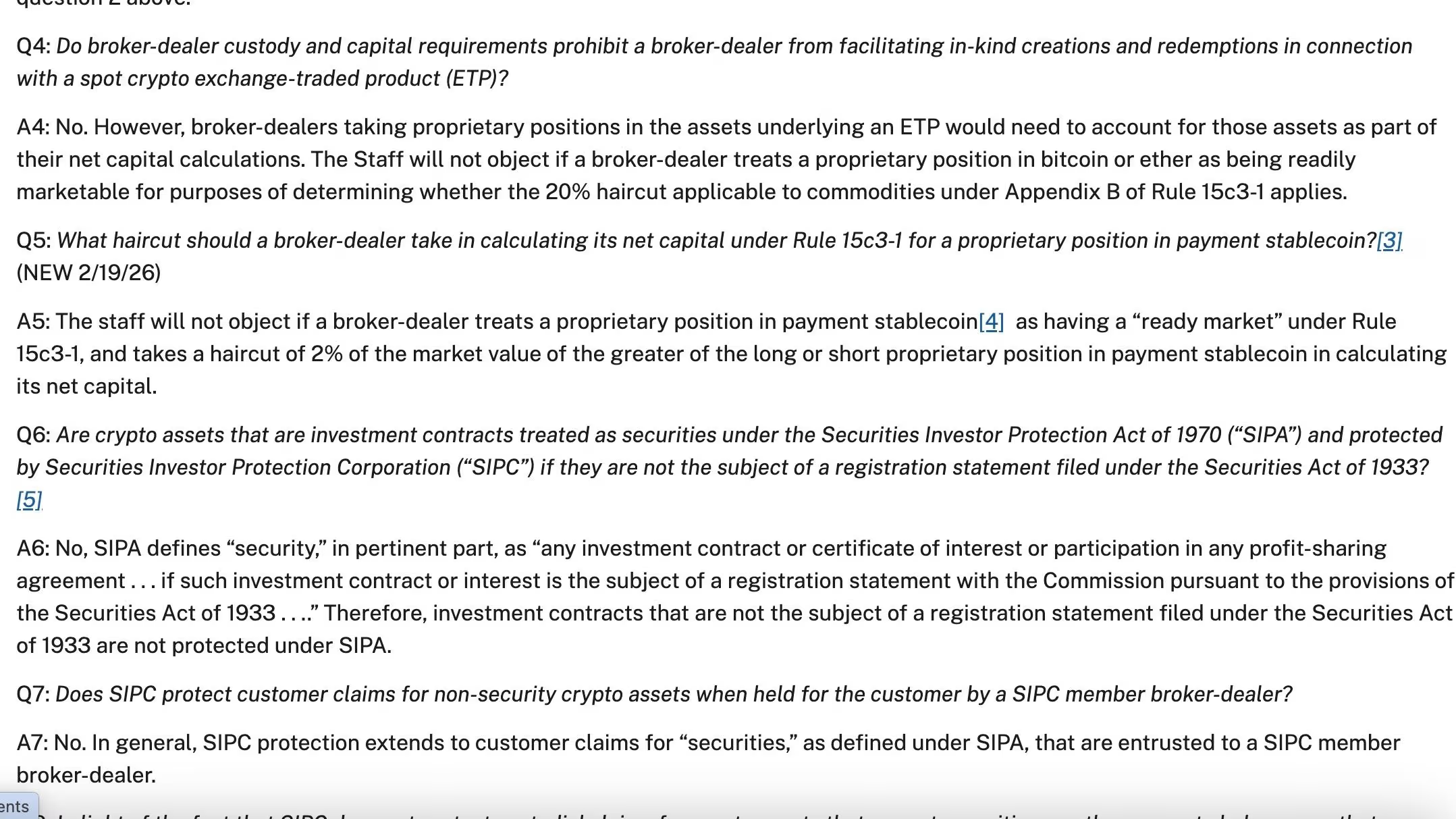
Broker-dealers regulated by the U.S. Securities and Exchange Commission (SEC) can treat their stablecoin holdings as regulatory capital, according to a tweak this week to a frequently-asked-questions document maintained by the agency.
That’s a seismic shift offered in the form of a minor addition to the SEC’s “Broker Dealer Financial Responsibilities” FAQ. It’s on-brand for a regulator that has made a steady series of changes to its crypto approach through informal guidance, industry correspondence and staff statements ever since its Crypto Task Force began work during the administration of President Donald Trump.
In this case, a new question No. 5 was added about what kind of “haircut” a firm should take on its holdings of stablecoins — the dollar-tied tokens such as Circle’s USDC and Tether’s USDT. The answer was 2%, meaning that instead of the previous understanding that such assets were not considered measurable against a broker-dealer’s capital tally (100% haircut), the firms will be able to count 98% of those holdings.

“While this guidance does not create new rules, it helps reduce uncertainty for firms seeking to operate compliantly under current securities laws,” said Cody Carbone, CEO of the Digital Chamber.
This puts stablecoins on the same footing as other financial products.
“That means stablecoins are now treated like money market funds on a firm’s balance sheet,” Tonya Evans, a former professor who now runs a crypto education business and is on the board of directors at Digital Currency Group, wrote in a post on social media site X. “Until today, some broker-dealers were zeroing out stablecoin holdings in their capital calculations. Holding them was a financial penalty. That’s over.”
Before, the more stringent SEC limits meant those companies — firms registered with the SEC to handle customers’ securities transactions and also trade in securities on their own behalf — weren’t easily able to custody tokenized securities or act as a go-between for trading. Now the firms that follow this steer from the agency will be able to more easily provide liquidity, aid settlement and advance tokenized finance.
“Everywhere from Robinhood to Goldman Sachs run on these calculations,” Larry Florio, deputy general counsel at Ethena Labs, wrote in an explainer posted on LinkedIn. Stablecoins are now working capital, he said.
SEC Commissioner Hester Peirce runs the agency’s task force and issued a statement on the change, contending that using stablecoins “will make it feasible for broker-dealers to engage in a broader range of business activities relating to tokenized securities and other crypto assets.” And she said she wants to consider how the existing SEC rules “could be amended to account for payment stablecoins.”
That’s the drawback of informal staff policies — they’re as easy to reverse as they were to issue, and they don’t carry the weight (and legal protections) of a rule.
The SEC has been working on some crypto rules in recent months, but they haven’t yet been produced, and the process usually takes several months — sometimes years. Even a formal rule can still be reversed by a new leadership at the agency, which is why crypto advocates are pushing for more legislation from Congress that would set the government’s digital assets approach into law, such as last year’s Guiding and Establishing National Innovation for U.S. Stablecoins (GENIUS) Act.
UPDATE (February 20, 2026, 22:23 UTC): Adds comment from Digital Chamber CEO.


A macaque monkey called Punch that’s emotionally attached to his IKEA plushie has spurred on a memecoin run reminiscent of Moo Deng’s fame after he was bullied by the rest of its housemates at a Japanese zoo.
The Punch token (PUNCH) was launched on February 6 as memes and stories around the monkey began to circulate.
Punch was born at the Ichikawa City Zoo, where he was rejected by his mother during a heat wave and raised by the zoo staff. He was reintroduced to his group of monkeys but has struggled to become accepted ever since.
The little guy has been chased and harassed by the other monkeys, but what’s caught everyone’s attention is the comfort he’s found with an IKEA monkey plushie.
This virality has led to PUNCH’s trading volume rising to $46 million and the price of the token shooting up 12,777% across the week to $0.031.
A lot of memecoin traders have felt that there hasn’t been a good “runner” in some time. This is a type of token that gains significant attention and increases in price.
Read more: Paul brothers business partner claims ‘0% rug pull risk’ with new memecoin
When a penguin from Werner Herzog’s 2007 documentary “Encounters at the End of the World” became viral earlier this year, a token themed around that penguin attracted $500 million in trading volume and hit a market cap high of $153 million.
Another successful runner similar to Punch was the launch of the Moo Deng token back in 2024, a token based on a viral baby hippo that was filmed biting its carers. The Moo Deng token reached a market cap of over $600 million.
Both tokens, however, are down over 90% since their all-time highs, like most memecoins.
PUNCH token shows signs of market manipulation
Popular crypto trader The White Whale issued a warning about the Punch token, suggesting that it’s showing signs of “market manipulation” and that the sheer volume of liquidity the token attracted suggests that it’s not organic.
They said, “The project and project dev is most likely not behind the things I’m warning about here. The project may or may not be a good project. But this is cabal action. Plain and simple.”
It’s not just crypto traders who have jumped on the monetary potential of a viral monkey, as users have already suggested buying up the plushie monkey from their local IKEAs and selling them on at an inflated price.
Read more: What are TikTok coins?
Scalpers or not, IKEA has recorded an increase in sales of the plushie thanks to Punch’s fame.
The zoo itself is also experiencing a surge of visitors who have come just to see Punch the monkey.
Punch has even caught the eyes of Justin Sun, the billionaire founder of Tron, who donated $100,000 to the zoo housing Punch via his exchange HTX.
Got a tip? Send us an email securely via Protos Leaks. For more informed news and investigations, follow us on X, Bluesky, and Google News, or subscribe to our YouTube channel.


LINK slips ~1% in 24h as ETFs absorb 1.16% supply on steady $630k inflows.
Summary
- LINK ETFs now hold 1.16% of circulating supply after ~$630k net inflows, signaling institutional accumulation and reduced exchange‑available liquidity.
- LINK trades near $19.1, up ~0.8% on the day but down ~5% week‑on‑week, with ~$627.6M in 24h volume as price consolidates below nearby resistance.
- On‑chain and ETF data show no weekly outflows, while DeFi oracle demand and CCIP integrations continue to expand Chainlink’s role in infrastructure.
Chainlink exchange-traded funds have accumulated holdings equivalent to 1.16% of the cryptocurrency’s total circulating supply, according to market data reported this week.
The ETFs registered net inflows of $630,000, bringing institutional holdings to the 1.16% threshold. The accumulation represents a shift toward long-term custody positions among institutional investors, according to market observers.
Chainlink’s price has remained in a relatively narrow trading range during the period, according to exchange data. The token’s consolidation occurs as the broader decentralized finance sector’s total value locked surpasses key milestones, according to industry tracking platforms.
Technical indicators including the Moving Average Convergence Divergence (MACD) and Relative Strength Index (RSI) show signs of momentum improvement, according to market analysis. The token faces potential resistance levels that could be tested in February if buying pressure increases, analysts stated.
The ETF products provide institutional investors with regulated exposure to Chainlink without direct exchange purchases, according to investment analysts. By holding tokens in custody rather than on exchanges, the funds reduce available supply for trading, creating potential scarcity effects, market participants noted.
Chainlink operates as a decentralized oracle network that provides external data to blockchain smart contracts. The project’s Cross-Chain Interoperability Protocol (CCIP) enables asset transfers between different blockchain networks, a feature that has attracted institutional attention, according to industry reports.
The DeFi sector’s expansion has increased demand for oracle services, as smart contracts require reliable external data feeds to function, according to blockchain analysts. Each new protocol integration expands the utility of oracle networks, industry observers stated.
The 1.16% supply threshold marks a notable milestone for institutional accumulation in the Chainlink ecosystem, according to market commentators. Continued weekly inflows could support price stability by reducing exchange-available supply, analysts noted.
Pension funds and other institutional investors have shown interest in cryptocurrency ETF products that offer liquidity and regulatory structure, according to investment industry sources. The products appeal to large investors seeking low-slippage entry points into digital assets, market participants stated.
Crypto World
Dubai Real Estate Tokenization Enters Secondary Market Phase With 7.8 Million Tokens Now Up for Trading
TLDR:
- Dubai’s real estate tokenization enters Phase Two, putting 7.8 million tokens up for regulated secondary market trading.
- Ctrl Alt and DLD built a controlled trading framework to test market efficiency while protecting investor interests and governance.
- ARVA management tokens and ownership tokens work together on-chain to create one immutable record of property ownership.
- All Phase Two transactions settle on the XRP Ledger, secured by Ripple Custody within Dubai’s regulated digital asset framework.
Real estate tokenization in Dubai has reached a new milestone. Ctrl Alt and the Dubai Land Department (DLD) have launched Phase Two of their Real Estate Tokenization Project Pilot.
This phase introduces controlled secondary market trading for tokenized property assets. The move follows a successful pilot that tokenized ten properties worth over $5 million.
Around 7.8 million tokens issued during the first phase are now eligible for resale within a regulated trading environment.
Secondary Market Trading Opens Under Regulated Framework
Phase Two creates a structured environment for investors to trade tokenized real estate assets. Trading takes place on the project’s distribution platform, keeping transactions aligned with existing land registry processes. All on-chain activity continues to run on the XRP Ledger and is secured by Ripple Custody.
The Dubai Land Department and Ctrl Alt designed the secondary market to test market efficiency and operational readiness.
Governance structures and investor protections remain central to the framework’s design. This approach ensures trading activity stays within regulatory boundaries set by VARA.
Ctrl Alt serves as the tokenization infrastructure partner for the project. The firm minted and issued the original title deed ownership tokens during Phase One. Now, it is deploying the secondary market functionality for Phase Two operations.
Robert Farquhar, CEO, MENA at Ctrl Alt, spoke about what the phase represents for Dubai’s digital asset landscape:
“We’re proud to work with the Dubai Land Department and VARA on Phase Two of the project, demonstrating what is possible when governments and institutional-grade innovation come together to build market-leading digital rails. Secondary market trading is essential to that outcome.”
Dual Token Framework Supports Smooth Fractional Ownership
For Phase Two, Ctrl Alt will issue Asset-Referenced Virtual Asset (ARVA) management tokens. These tokens facilitate regulated secondary-market transfers alongside the original ownership tokens. Both token types are recorded on-chain, creating one immutable ownership record.
Ctrl Alt engineered a technical framework to support the dual operation of ARVA management tokens and ownership tokens on-chain. This structure handles the complexity behind the scenes.
Distribution platforms like PRYPCO can then deliver fractional real estate experiences without building their own tokenization infrastructure.
Matt Acheson, CPO at Ctrl Alt, described the engineering approach behind the system:
“Our goal was to build a secondary market infrastructure that is efficient for the entire ecosystem while maintaining the controls and governance required by the DLD and VARA. We manage the underlying complexity of this tokenization technology so that distribution platforms can deliver smooth, fractional real estate experiences to their end users.”
Ctrl Alt holds a licensed Virtual Asset Service Provider status and was the first firm to receive an Issuer license from VARA.
The company additionally holds a Broker-Dealer license, strengthening its position to support regulated token transfers.
These credentials allow Ctrl Alt to operate within Dubai’s formal digital asset framework while supporting government-led real estate innovation.
TON pivots Web3 toward mainstream, using Telegram wallet, social NFTs, and compliance‑ready infrastructure.
Summary
- TON embeds its wallet in Telegram, enabling payments, gifts, and asset transfers without traditional crypto UX, targeting over 1B users.
- CEO Max Crown says TON is “built to serve everyday users,” focusing on distribution, onboarding, and UX rather than just technical specs.
- Telegram gifts and NFT stickers have driven nine‑figure NFT volume, over 500k wallets, and rapid Toncoin (TON) account growth, signaling rising institutional and retail interest.
The TON Foundation is utilizing Telegram’s billion-user platform to advance mainstream Web3 adoption through consumer-focused design, integrated wallets, and social NFTs aimed at simplifying user onboarding, according to statements from company leadership.
TON (TON) CEO Max Crown stated the blockchain was designed for large-scale usage from its inception, with priority given to speed, low latency, and mobile-like applications. The TON wallet is embedded within Telegram, enabling users to interact with payments, digital gifts, and assets without traditional cryptocurrency workflows, Crown said.
TON uses Telegram wallet and social NFTs
Crown stated that NFTs on the TON blockchain serve cultural and social purposes primarily, with financialization positioned as a secondary function—a shift designed to improve mainstream engagement.
Institutional interest has grown alongside user adoption, with substantial Toncoin purchases reported this year, according to Crown. Network stability, compliance infrastructure, and Telegram’s embedded distribution model make TON appealing to investors while maintaining a user-focused approach, Crown said. Regulatory navigation in the United States remains a priority for the foundation.
Crown distinguished between the decentralized protocol and application-level compliance, noting the foundation works with blockchain intelligence firms for transaction monitoring and sanctions screening.
Recent leadership consolidation at TON aims to align strategy with operational execution as the ecosystem scales, according to the foundation.
TON positions itself against competing Layer-1 blockchains by emphasizing distribution through Telegram rather than technical features alone, aiming to provide developers with rapid access to millions of mainstream users. The foundation plans to introduce improved developer tooling and plug-and-play primitives to further ease adoption.
The US Supreme Court recently blocked President Donald Trump from using emergency powers to impose broad global tariffs.
However, Trump quickly responded by announcing new tariffs under a different legal authority. This has created confusion about whether tariffs are actually being reduced—or increased. Here’s what is really happening.
What the Supreme Court Actually Banned
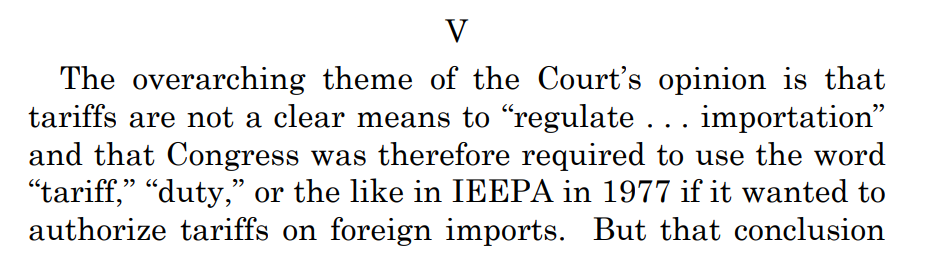
The Supreme Court did not ban tariffs entirely. Instead, it ruled that Trump cannot use the International Emergency Economic Powers Act (IEEPA) to impose tariffs.
IEEPA is a law designed for emergencies. It allows presidents to freeze assets, block transactions, or restrict trade. But the Court said it does not allow tariffs, which are considered a form of tax. Only Congress has clear constitutional authority to impose taxes.
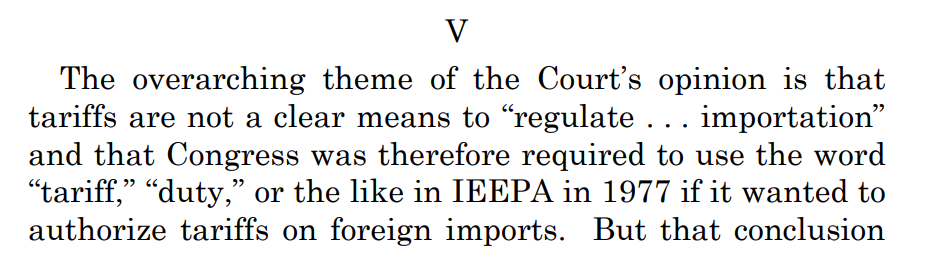
This means the specific tariffs Trump imposed using emergency powers must stop.
However, the ruling did not remove other tariff powers.
Trump’s Reaction: Using Other Laws to Continue Tariffs
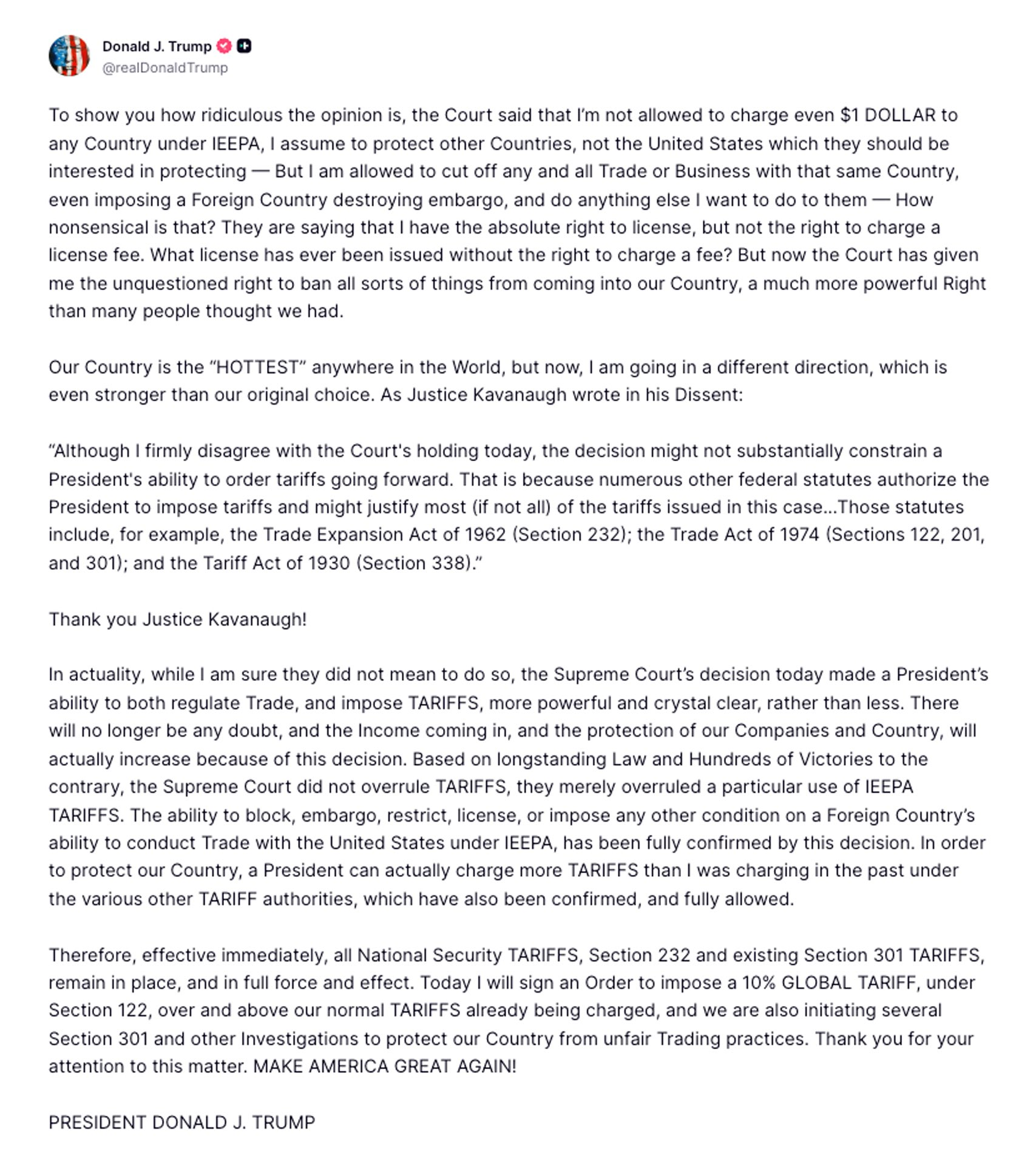
In response, Trump said existing tariffs under Section 232 and Section 301 will remain in place. These tariffs target imports based on national security risks or unfair trade practices. The Supreme Court did not block these laws.
More importantly, Trump announced a new 10% global tariff under Section 122 of the Trade Act of 1974. This is a separate law that allows the president to impose temporary tariffs to address trade imbalances.
In simple terms, Trump is replacing the banned tariffs with new ones using different legal authority.
He is also launching investigations that could lead to even more tariffs in the future.
Why Trump Says His Power Is Still Strong
Trump argues that the ruling actually clarified his authority rather than weakening it. The Court limited one tool, but confirmed that other tariff powers remain valid.
This means the president can still impose tariffs legally—as long as he uses the correct laws passed by Congress.
The key change is not whether tariffs exist, but how they are imposed.
How Markets Could Be Affected
Markets reacted positively at first because the ruling reduced uncertainty. Investors prefer clear legal rules over unpredictable emergency actions.
Stocks and crypto initially rose because the decision lowered fears of sudden trade disruptions. Bitcoin, which is sensitive to global liquidity and risk sentiment, also showed signs of recovery.
However, Trump’s new tariff announcement could still create inflation pressure and trade tensions. Tariffs increase costs for businesses, which can slow economic growth and reduce investor confidence.
Commodities like gold and silver may benefit if tariffs increase economic uncertainty. These assets often rise during periods of global tension.
For now, tariffs are not disappearing. Instead, they are shifting to a new legal framework—meaning trade tensions and market volatility could continue.
The partnership pairs Bitcoin settlement with FedNow plumbing.
Lightspark, a Bitcoin Lightning Network startup founded by former Meta executive David Marcus, who oversaw the development of Meta’s Libra token, is pushing the idea of using BTC for everyday payments rather than long-term holding.
In a Wednesday announcement, Feb. 18, Lightspark said it had teamed up with Cross River Bank, a crypto-friendly, FDIC-insured bank, to support 24/7 settlement of Bitcoin network transactions through the U.S. banking system.
Cross River has become a key banking partner for crypto firms in the U.S., providing banking services to companies such as Circle, Coinbase and others, particularly across cards and stablecoin-linked programs.
Under the arrangement, Lightspark processes transactions on the Lightning Network, while Cross River settles the fiat legs via faster payment systems such as FedNow. The announcement says the collaboration targets B2B, cross-border and retail flows where immediate settlement materially changes cash management.
Usage Outpaces TVL
Lightning Network has had a strong but uneven run so far. Total network capacity climbed to new highs in late 2025 before easing slightly in mid-February of this year, while data from DefiLlama shows that total value locked stands near $338 million, a figure likely influenced by Bitcoin’s recent price pullback.

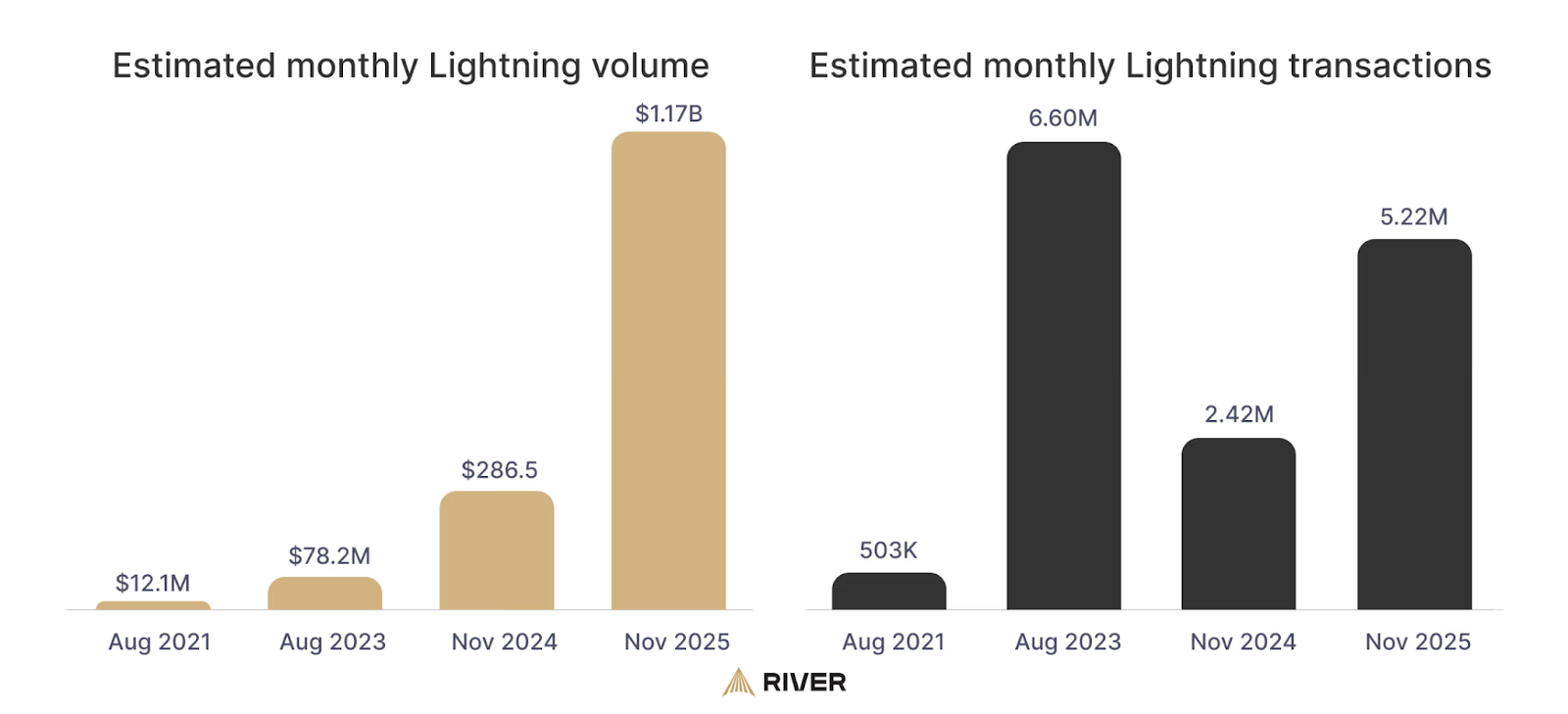
Despite the relatively low TVL compared to Ethereum Layer 2s, data cited by Sam Wouters, director of marketing at Bitcoin infrastructure firm River, shows the network processed an estimated $1.17 billion in volume in November 2025 alone across more than 5.2 million transactions, with the average Lightning transfer being around $223.
Still, Wouters noted that today the “most common use case for Lightning transactions is sending funds from and to exchanges,” highlighting how far the network still has to go as a retail payments rail.

At the same time, data from Mempoolspace shows growing infrastructure concentration, with more than 40% of Lightning nodes hosted on just two providers, Amazon and Google Cloud, with Amazon alone accounting for over a quarter of the network’s node power.
Bitcoin’s mining difficulty has climbed to 144.40 trillion (T) at block 937,524, marking one of the sharpest accelerations in network competition since the 2021 bull cycle.
Summary
- Bitcoin’s mining difficulty has climbed to 144.40 trillion at block 937,524, marking one of the fastest accelerations in network competition since the 2021 bull market.
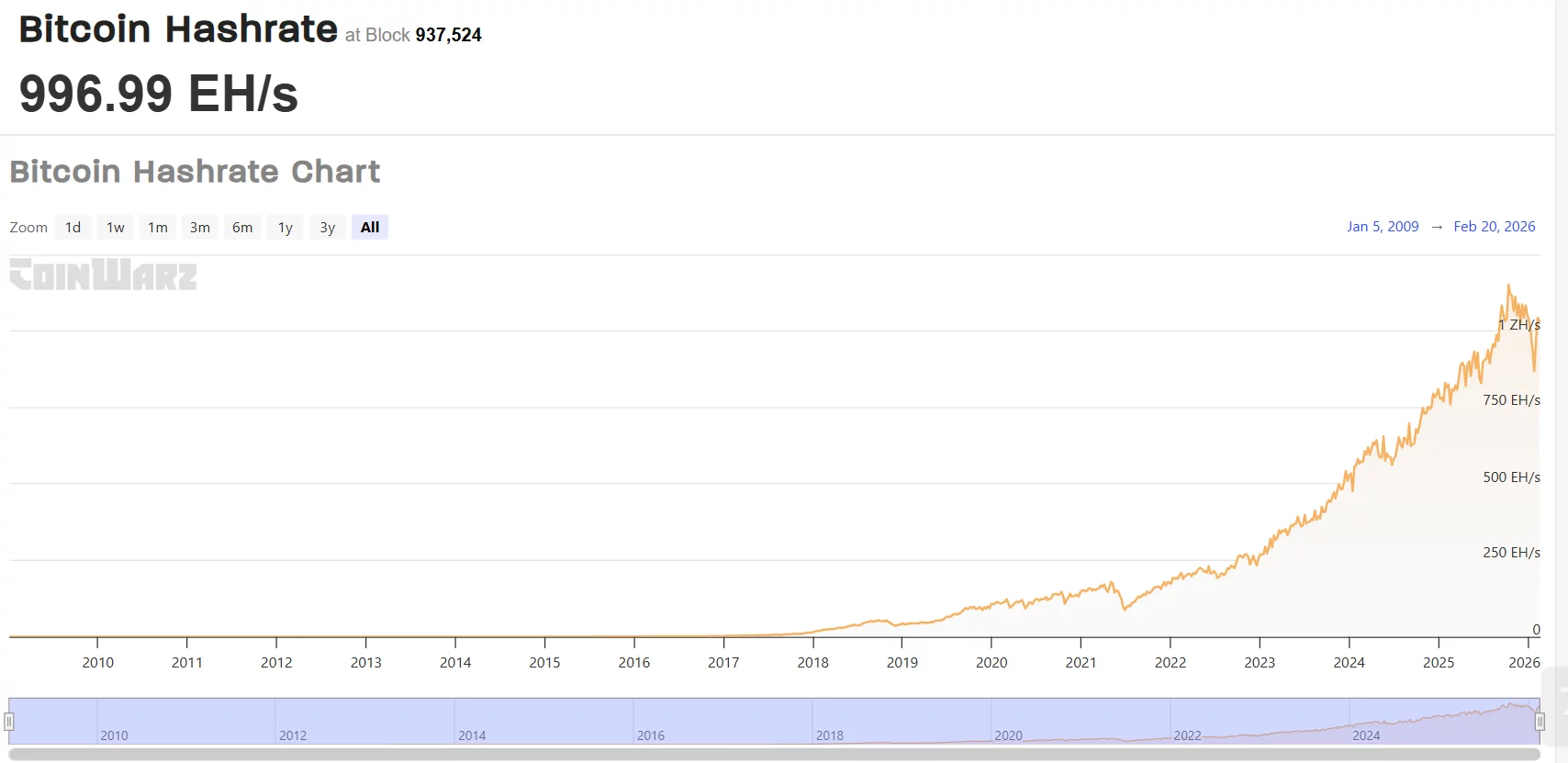
- Total hashrate has jumped to 996.99 EH/s, just shy of the 1 zettahash per second (ZH/s) threshold, reflecting a sharp expansion in mining power through 2024 and 2025.
- While rising hashrate and difficulty strengthen network security and signal miner confidence, rapid growth could squeeze margins for smaller operators if Bitcoin’s price fails to keep pace.
At the same time, Bitcoin’s (BTC) total hashrate has surged to 996.99 EH/s, hovering just below the symbolic 1 zettahash per second (ZH/s) milestone.
For context, Bitcoin difficulty is an adjustment mechanism that ensures blocks are mined roughly every 10 minutes. When more computing power joins the network and hashrate rises, the protocol automatically increases difficulty to maintain that steady issuance schedule.
Bitcoin hashrate refers to the total computing power being used by miners to process transactions and secure the network. A higher hashrate means more machines are competing to validate blocks, making the network stronger and more resistant to attacks.
The two metrics are tightly linked, and together they help explain why the network is seeing its fastest pace of growth in years.
Bitcoin hashrate near 1 ZH/s
The hashrate chart shows a steep climb through 2024 and 2025, with computational power accelerating sharply in recent months. After dipping during prior market downturns, the network has staged a powerful recovery, pushing toward 1,000 EH/s or nearly 1 ZH/s a historic threshold for Bitcoin.
When hashrate rises rapidly, it signals that miners are deploying more machines and bringing new facilities online. This expansion is typically driven by improved profitability, access to capital, and infrastructure scaling.
The current pace mirrors the aggressive buildout last seen during the 2021 rally.
Bitcoin difficulty follows higher
Bitcoin’s difficulty adjusts roughly every two weeks to ensure blocks are mined every 10 minutes. As hashrate rises, the protocol increases difficulty to maintain balance.
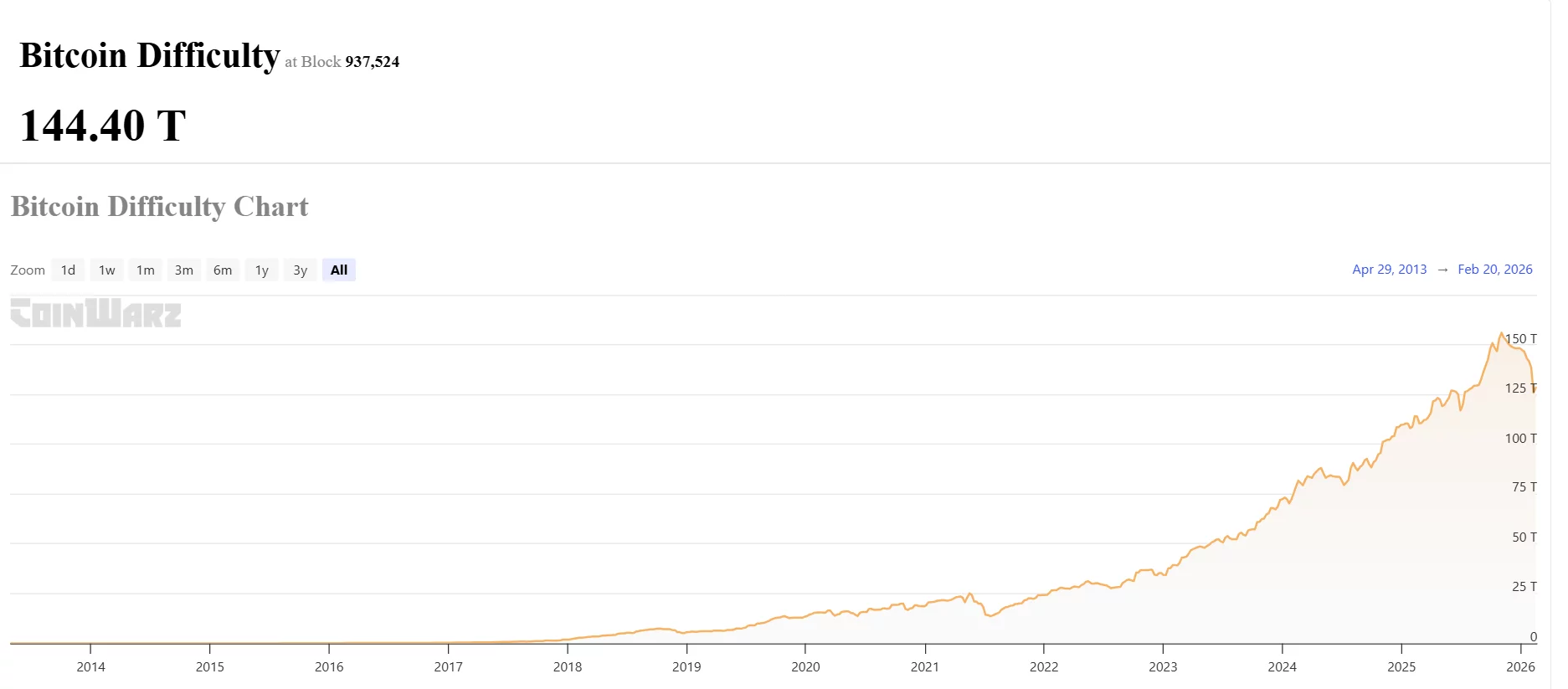
The difficulty chart reflects that dynamic. After a brief pullback from a recent peak near the 150T level, difficulty remains elevated at 144.40T, a level that represents a dramatic increase from just a few years ago. The slope of the curve over the past year is among the steepest on record.
This sharp upward trend signals intense competition among miners, with more computational power chasing a fixed block reward.
Historically, sustained increases in hashrate and difficulty are seen as long-term bullish indicators. They reflect miner confidence and make the network more secure and resilient.
However, rapid difficulty growth can compress margins, particularly for smaller or higher-cost operators. If Bitcoin’s price does not keep pace with rising competition, weaker miners may face pressure, potentially leading to consolidation.

the older adults redefining what ageing looks like

Square Enix Announces ‘The Art of Final Fantasy Tactics’ Book for November 2026 Release Amid Remaster Success

Move Over M2: Data Shows Treasury T-Bill Issuance Drives Bitcoin Price Cycles


-

 Video4 days ago
Bitcoin: We’re Entering The Most Dangerous Phase
-

 Tech6 days ago
Luxman Enters Its Second Century with the D-100 SACD Player and L-100 Integrated Amplifier
-

 Crypto World4 days ago
Can XRP Price Successfully Register a 33% Breakout Past $2?
-

 Sports4 days ago
GB's semi-final hopes hang by thread after loss to Switzerland
-

 Video22 hours ago
XRP News: XRP Just Entered a New Phase (Almost Nobody Noticed)
-
 Tech4 days ago
The Music Industry Enters Its Less-Is-More Era
-

 Fashion5 hours ago
Weekend Open Thread: Boden – Corporette.com
-

 Business3 days ago
Infosys Limited (INFY) Discusses Tech Transitions and the Unique Aspects of the AI Era Transcript
-

 Entertainment2 days ago
Kunal Nayyar’s Secret Acts Of Kindness Sparks Online Discussion
-

 Video4 days ago
Financial Statement Analysis | Complete Chapter Revision in 10 Minutes | Class 12 Board exam 2026
-

 Tech3 days ago
Retro Rover: LT6502 Laptop Packs 8-Bit Power On The Go
-

 Crypto World7 days ago
Bhutan’s Bitcoin sales enter third straight week with $6.7M BTC offload
-
 Sports2 days ago
Clearing the boundary, crossing into history: J&K end 67-year wait, enter maiden Ranji Trophy final | Cricket News
-

 Entertainment2 days ago
Dolores Catania Blasts Rob Rausch For Turning On ‘Housewives’ On ‘Traitors’
-

 Business3 days ago
Tesla avoids California suspension after ending ‘autopilot’ marketing
-
 NewsBeat5 days ago
The strange Cambridgeshire cemetery that forbade church rectors from entering
-

 Crypto World2 days ago
WLFI Crypto Surges Toward $0.12 as Whale Buys $2.75M Before Trump-Linked Forum
-
 NewsBeat5 days ago
Man dies after entering floodwater during police pursuit
-

 Politics4 days ago
Eurovision Announces UK Act For 2026 Song Contest
-
 Crypto World1 day ago
83% of Altcoins Enter Bear Trend as Liquidity Crunch Tightens Grip on Crypto Market