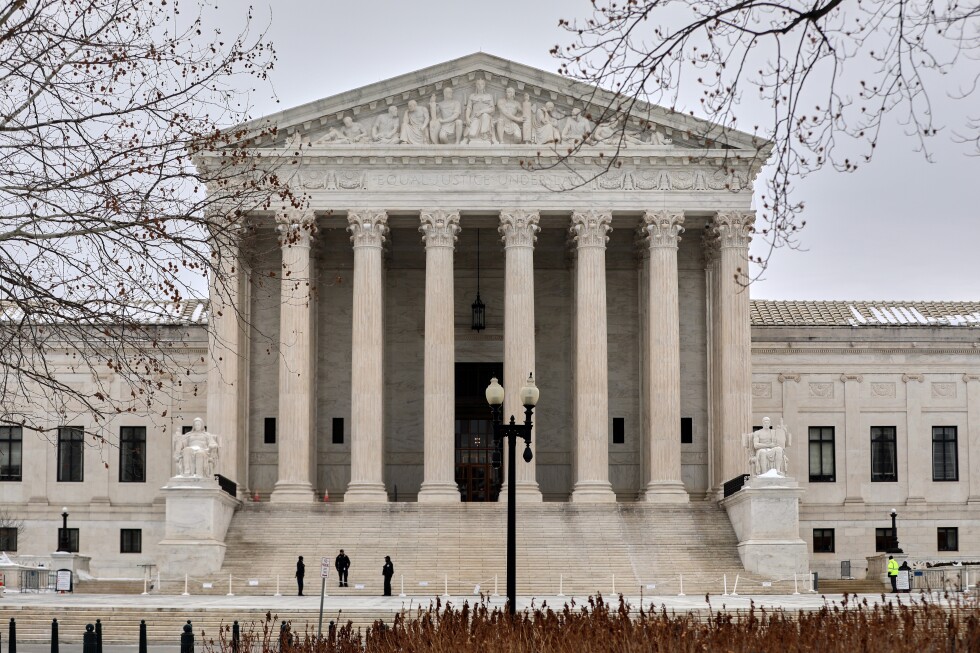
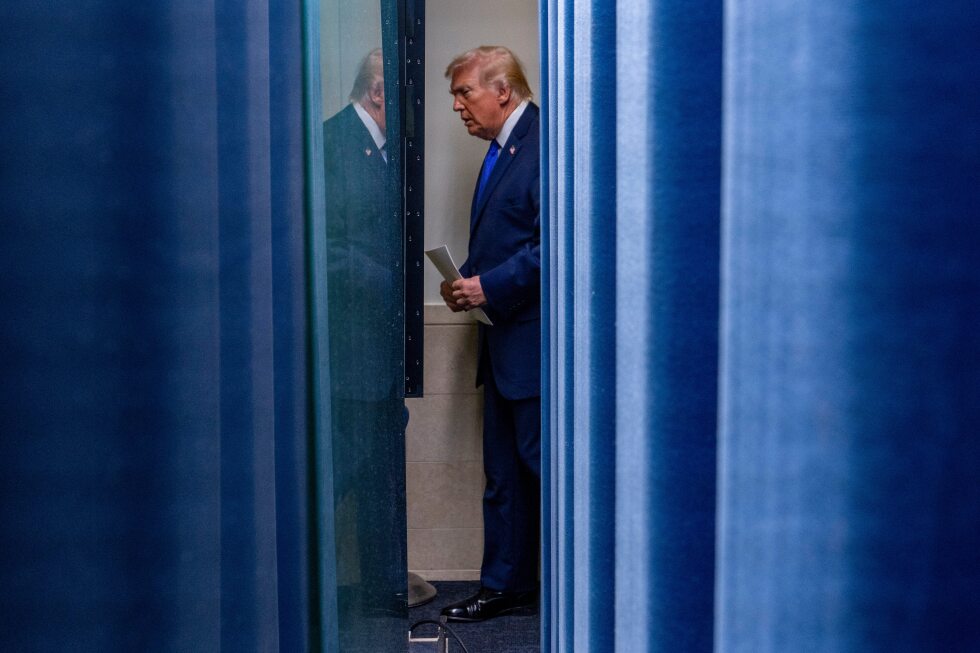
In the 6–3 opinion released on Friday morning, the justices ruled that Trump’s tariffs were not authorized under the International Emergency Economic Powers Act, which permits the president to regulate trade in “unusual and extraordinary” circumstances when a national emergency is declared.
In a Friday evening Truth Social post, Trump wrote: “What happened today with the two United States Supreme Court Justices that I appointed against great opposition, Neil Gorsuch and Amy Coney Barrett, whether people like it or not, never seems to happen with Democrats.”
“The new TARIFFS, totally tested and accepted as Law, are on their way,” he added.
Advertisement
The post came an hour after Trump announced that he signed off on a temporary 10 percent global tariff, which will “be effective almost immediately.”
Meanwhile, Illinois Governor JB Pritzker has demanded that Trump issue an $8.6 billion refund to the state’s residents after his tariffs “wreaked havoc on farmers, enraged our allies, and sent grocery prices through the roof.”
When asked about Pritzker’s letter, White House spokesperson Kush Desai told The Independent: “The immense weight of Illinois’s sky-high taxes and regulations is matched only by JB Pritzker’s own personal bloat.”
“If this slob really cared about delivering economic relief for Illinois, he’d start with his own state government instead of chasing another stupid headline,” he added.
Advertisement
ICYMI: Here’s what Trump said in his press conference about the Supreme Court’s tariff ruling
During a White House press conference on Friday, Trump lashed out at the Supreme Court over its landmark 6-3 decision to strike down his sweeping tariffs.
Here are some of the key moments:
Trump said he is “ashamed” of the six justices who ruled against him, a group that includes Chief Justice John Roberts and Justices Neil Gorsuch and Amy Coney Barrett. He went on to call the justices a “disgrace to our nation” and “fools and lapdogs.”
In contrast, he praised the three conservative members of the court who dissented, singling out Justice Brett Kavanaugh for his “great ability.”
He also took issue with the court’s timing. “They could have made this decision a long time ago,” he said.
Trump listed three acts that he says justify his sweeping levies: the Trade Expansion of Act 1962, the Trade Act of 1974 and the Tariff Act of 1930.
When asked if the justices who ruled against him would still be invited to the State of the Union, Trump said they would just “barely” be invited.
Afterward, Trump signed an executive order imposing a global 10 percent tariff, he announced Friday evening.
Brendan Rascius20 February 2026 19:34
Advertisement
White House shares ‘Keep Calm and Tariff On’ image
The White House shared an image that reads, “Keep Calm and Tariff On,” just hours after the Supreme Court struck down President Donald Trump’s sweeping tariffs.
Katie Hawkinson21 February 2026 02:10
Trump lashes out at Supreme Court justices who ruled against him
President Donald Trump lashed out at Supreme Court Justices Neil Gorsuch and Amy Coney Barrett after they ruled against his sweeping tariffs.
Advertisement
Trump appointed both justices during his first term.
“What happened today with the two United States Supreme Court Justices that I appointed against great opposition, Neil Gorsuch and Amy Coney Barrett, whether people like it or not, never seems to happen with Democrats,” he wrote on Truth Social.
“They vote against the Republicans, and never against themselves, almost every single time, no matter how good a case we have. At least I didn’t appoint Roberts, who led the effort to allow Foreign Countries that have been ripping us off for years to continue to do so — But we won’t let it happen,” he added.
In a separate post, Trump said the Supreme Court justices who ruled against his tariffs “should be ashamed of themselves.”
Advertisement
Katie Hawkinson21 February 2026 01:56
Analysis: Trump learns that plenty of conservatives don’t like his tariffs
President Donald Trump suffered one of the biggest blows to his domestic agenda on Friday when the Supreme Court struck down his power to levy tariffs. It was a massive body blow given how much Trump regularly talks about how tariffs are “my favorite word.”
Eric Garcia21 February 2026 01:40
Advertisement
Senate majority leader says lawmakers will ‘continue working’ with Trump administration
Senate Majority Leader John Thune said Friday Republican lawmakers will “continue working” with the Trump administration following the Supreme Court’s ruling.”
“Tariffs can be an important and effective tool to address unfair trade practices and help level the playing field with foreign competitors,” Thune wrote on X.
“Senate Republicans will continue working with the administration and our colleagues in the House to advance our shared goal to strengthen rural America, including South Dakota’s farm and ranch communities, and the broader U.S. economy,” he added.
Advertisement
Katie Hawkinson21 February 2026 01:20
Analysis: Trump just lost his global tariff sword. Will his boasts of being the ‘world’s greatest dealmaker’ now be put to the test?
The Supreme Court’s decision to gut President Donald Trump’s ability to impose unlimited tariffs on imports from any country will force him to revert to a traditional set of diplomatic tools that he has largely ignored since returning to power.
Andrew Feinberg21 February 2026 01:00
Advertisement
The Supreme Court struck down Trump’s tariffs – here’s what it means for your wallet
The Supreme Court ruled that President Donald Trump was not authorized to impose global tariffs, challenging what has been a cornerstone policy in the president’s economic agenda.
Now, with the court’s decision, the average consumer might wonder what’s ahead for their wallets. Will tariffs end, and would it lead to lower prices on consumer goods and services?
Here’s what we know so far:
Advertisement
J.R. Duren21 February 2026 00:40
Trump signs off on global 10% tariff
President Donald Trump signed off on a 10 percent global tariff, he announced Friday evening.
“It is my Great Honor to have just signed, from the Oval Office, a Global 10% Tariff on all Countries, which will be effective almost immediately,” Trump wrote on Truth Social.
Advertisement
Earlier Friday, the Supreme Court struck down his sweeping tariffs in a 6-3 decision. Soon afterward, Trump vowed to implement the new 10 percent global tariff, authorized by a law that restricts it to 150 days.
Katie Hawkinson21 February 2026 00:03
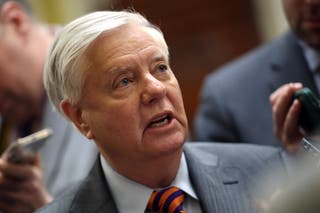
Lindsey Graham says Trump has ‘many options’ to keep existing tariffs
Republican Senator Lindsey Graham said in a lengthy statement on X that he believes President Donald Trump has “many options” to keep his existing tariffs despite the Supreme Court’s ruling.
Advertisement
“While I accept the Court’s ruling, I believe that @POTUS does have many options regarding keeping existing tariffs in place under authorities beyond the International Emergency Economic Powers Act (IEEPA),” Graham wrote.
“I support President Trump’s decision to fight refunds. I did not think they are necessary or appropriate, and I’m sure that they will be subject to much litigation,” he added.
Republican Senator Lindsey Graham voiced support for President Donald Trump’ tariffs (Getty Images)
Katie Hawkinson20 February 2026 23:40
Chuck Schumer responds to treasury secretary
Senate Minority Leader Chuck Schumer has responded to Treasury Secretary Scott Bessent, who commented Friday on potential tariff refunds following the Supreme Court’s ruling.
Advertisement
When asked about potential refunds at an Economic Club of Dallas event on Friday, Bessent said he has “a feeling the American people won’t see it,” according to Bloomberg.
Schumer responded: “Trump illegally taxed American families and small businesses, and he’s not giving them their money back. Even his Treasury Secretary admits it.”
Senate Minority Leader Chuck Schumer said President Donald Trump has ‘illegally taxed American families and small businesses, and he’s not giving them their money back’ (Getty Images)
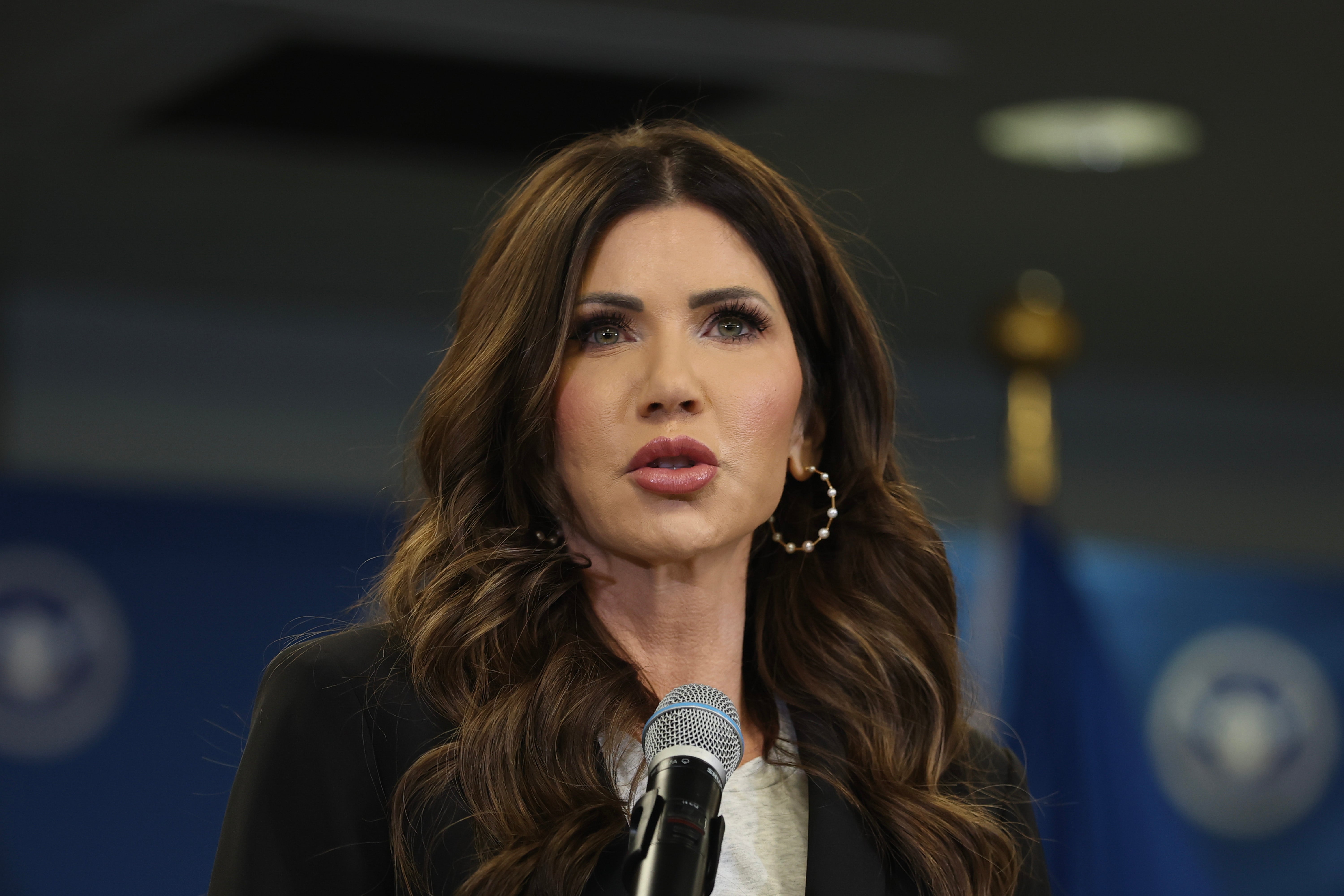
Secret Service members will get tailored suits at the expense of taxpayers after Homeland Security Secretary Kristi Noem disliked how a protective detail was dressed, according to a new report.
Graduates from protective detail training will get two navy blue suits with their name embroidered on the inside of the jacket, according to a public contract solicitation from the Department of Homeland Security, as first reported by CNN. The suits must be entirely made in the United States, the solicitation published last week states.
Two people familiar with the matter told CNN Noem didn’t like the suits a protective detail had bought for themselves, prompting the new suit solicitation.
The cost of the contract is yet to be determined and it will cover a five-year ordering period.
Advertisement
Secret Service members will get tailored suits at the expense of taxpayers after Homeland Security Secretary Kristi Noem disliked how a protective detail was dressed, according to a new report (Chip Somodevilla/Getty Images)
A CNN source said the Secret Service found funding inside its current budget. It’s unclear whether the partial government shutdown will affect the solicitation, as Democrats withhold funding from DHS in a battle to reform its immigration enforcement arm.
DHS spokesperson Tricia McLaughlin told CNN about the new suits, “This does not have to do with optics.”
McLaughlin said that agents in the Secret Service’s Uniformed Division don’t have to pay for their on-duty clothes, but agents in protective details do. Uniformed Division officers wear protective vests and dark clothing.
Advertisement
Two people familiar with the matter told CNN Noem didn’t like the suits a protective detail had bought for themselves, prompting the new suit solicitation (Joe Raedle/Getty Images)
“This is to fix the inequity that non-uniformed [officers] have to pay for their uniform,” she said.
The Independent has reached out to DHS and the White House for comment.
Former Illinois Congressman Adam Kinzinger, a Republican critic of the Trump administration, mocked the new initiative.
Advertisement
Former Illinois Congressman Adam Kinzinger mocked the new initiative, saying the suits ‘will look nice on the plush new jet too,’ referring to the $70 million luxury jet Immigration and Customs Enforcement is reportedly trying to buy (Chip Somodevilla/Getty Images)
“DHS has so much money (thank GOP) that now new secret service detail agents get two new tailored suits each!” he wrote on X.
Kinzinger said the suits “will look nice on the plush new jet too,” referring to the $70 million luxury jet Immigration and Customs Enforcement is reportedly trying to buy.
Frozen chips are a convenient side dish, but they can take up to 30 minutes in the oven. One simple trick before baking cuts cooking time to just 10 minutes and makes them extra crispy
It’s remarkable how something so simple – slicing spuds and dunking them in hot oil – can produce such an irresistible snack. Chips are the perfect accompaniment to everything from battered fish to a succulent steak or homemade burgers, but there’s nothing worse than when they emerge as soggy, limp disappointments.
Advertisement
Whilst freshly made chips are undoubtedly superior, there’s no denying the appeal of chucking a bag of frozen ones from the supermarket into your trolley. The problem is, despite being marketed as a quick fix, they actually demand quite a lengthy cooking time.
Bung frozen chips in the oven and you’re looking at nearly half an hour before they’re ready to scoff. By the time they’ve defrosted enough to be edible, you’ve already burnt through 20 minutes, and waiting even longer for that coveted crunch feels like an eternity.
That’s why I swear by a clever little hack for getting the speediest, crispiest frozen chips possible. I give the frozen chips a quick blast in the microwave before transferring them to the oven. This slashes the cooking time from 30 minutes down to a mere 10 minutes.
On this occasion, I grabbed Aldi’s French Fries, though any style works brilliantly – whether that’s crinkle-cut, straight-cut, waffle, or curly varieties.
First, I cranked my oven up to the temperature specified on the packet – 200 degrees.
I scattered a few handfuls of frozen chips onto a plate and zapped them in the microwave for 1.5 minutes. This gets them partially thawed out.
I then shifted the chips onto a ready baking tray lined with greaseproof paper. Alternatively, you could give the tray a quick spritz with cooking spray or brush it with oil. This will stop the chips from sticking and make them a doddle to lift off once they’re done.
Advertisement
Another handy hint is to avoid cramming too many chips onto the baking sheet, as this can cause them to clump together. By spreading them out in a single layer, you allow air to circulate each chip, ensuring even cooking and preventing any stickiness.
I slid the chips into the preheated oven and baked them for 10 minutes. Keep a close eye on them until they turn a lovely golden brown colour, if they’re not quite there after 10 minutes.
Once the chips were beautifully crispy, I tossed them into a bowl and seasoned them simply with salt.
Dr Thomas O’Neill, 37, preyed on the child, who he met through his work, between November 2019 and May 2020.
A paediatric doctor has been struck off after he was convicted of sending indecent images to a child he met through work.
Advertisement
Dr Thomas O’Neill, 37, has been stripped of his license to practice after he was found guilty of indecent communications with a 15-year-old boy at Edinburgh Sheriff Court in February last year.
O’Neill, who worked in the A&E department at Edinburgh Sick Kids Hospital, preyed on the child between November 2019 and May 2020.
Court papers state O’Neill, who was 31-years-old at the time, coerced the boy into looking at images of his penis. He repeatedly contacted the child on Whatsapp, Snapchat, and over the phone for the purposes of sexual gratification.
Depraved O’Neill avoided a custodial sentence was slapped with a community payback order with 18 months supervision when sentenced in March 2025. He was also made subject to sex offender notification requirements.
Advertisement
O’Neill, of Edinburgh, was hauled before the Medical Practitioners Tribunal Service (MPTS) earlier this week. Disturbing details of his predatory actions were laid bare during the hearing, which was held on Thursday.
It heard how the doctor met the child when he was just 14 via a colleague. While driving a car in November 2019, with the child as a passenger, predatory O’Neill asked the boy about his masturbation habits.
Months later, he began messaging the child inappropriately on WhatsApp before going on to send the him pictures of his penis on Snapchat. The tribunal heard that O’Neill then told the child he was buying sex toys.
Advertisement
Thereafter, he turned up at his house to give the minor a silicone device. The boy blocked O’Neill, however, he attempted contact again by repeatedly approaching him on other platforms using both male and female usernames.
The pervert masked himself under another male name and messaged the victim, asking if he was gay. The creep then sent the minor a picture of a penis and asked the young boy if he recognised his genitals.
The watchdog hearing ruled that in light of his offences, the doctor’s fitness to practise is impaired. O’Neill was struck off the medical register and banned from working in the profession indefinitely.
Advertisement
Giving his conclusion, MPTS tribunal chair Lee Davies said: “Dr O’Neill’s actions of sending explicit images and messages to a child undermines patients’ and the public’s trust and confidence in the medical profession and inevitably brings the profession as a whole into disrepute.
“His actions fall far short of proper professional standards and conduct for medical practitioners and his lack of insight into the seriousness of his behaviour and the potential impact this could have had on patients, colleagues and the wider profession, coupled with his failure to remediate were all matters the tribunal weighed in the balance when making its decision.
“The Tribunal concluded that the interests of Dr O’Neill are outweighed by the need to protect the public, including the need to maintain the reputation of the profession as a whole. The Tribunal therefore determined that Dr O’Neill’s name be erased from the medical register.”
O’Neill graduated from the University of Brighton and the University of Sussex in 2013.
He joined the General Medical Council registry the following year. As well as his role at Edinburgh Sick Kids Hospital, O’Neill was employed as a research fellow at Edinburgh University.
In videos shared on YouTube, he was seen providing support to LGBT staff. Edinburgh University removed all clips associated with O’Neill from its platforms after being approached by the Record.
The university declined to comment. The Record understands O’Neill is no longer employed by NHS Lothian.
Advertisement
Tom Power, Director of People and Culture, NHS Lothian, said: “While we do not comment on individual members of staff or former staff, we expect all our staff to uphold the highest standards of professionalism, integrity, and patient care, and take necessary and appropriate steps where this is not the case.”
Get more Daily Record exclusives by signing up for free to Google’s preferred sources. Click HERE.
In the western reaches of Wales lies a small village with a population of approximately 2,000 people. Aside from being enveloped by stunning natural beauty on every side, it seems at first glance to be fairly unremarkable and similar to countless other villages across the country.
But what sets this village apart from nearly all others is that this isn’t its original location. In fact, it was relocated here in its entirety from a site slightly to the east around a century ago.
The remnants of its original location, including cottages and even a villa, remain visible, and one explorer has gone so far as to describe the site as a “Welsh Angkor Wat”.
The displacement of entire communities in Wales to create reservoirs for supplying England’s urban centres with water continues to provoke an emotional, even visceral, response to this day. Perhaps the most well-known of these is the village of Capel Celyn, which was cleared of its inhabitants then submerged to create a reservoir to supply water to Liverpool.
Advertisement
However, water wasn’t the sole cause for village relocations or their complete erasing. The swift expansion of the slate industry during the 19th century also impacted entire communities, each possessing their own unique identity and culture.
One such community was Talysarn, which found itself inconveniently located as slate mining spread throughout Eryri. Gradually, a collection of small quarries in the Dyffryn Nantlle valley were absorbed into larger operations like the formidable Dorothea quarry, so significant that it’s now recognised as a World Heritage Site.
Whether the more recent recognition of its global importance would offer any solace to the villagers who were compelled to leave their homes and relocate a kilometre west is debatable. However, they established new roots and the village continues to be a stronghold of the Welsh language, just as it was in the early 20th century. In 1927, the village road was also moved southward, though remnants of what is locally known as Yr Hen Lon (Welsh for “the old road”) can still be seen.
Some of the original village buildings continued to be utilised by the quarry and their ruins are still visible today. These included Plas Talysarn, an 18th-century country house that was later extended into a Victorian villa.
The remarkable site draws visitors from across the country and beyond. Among them is photographer Tony Harnett, who operates the Gems of Snowdonia website showcasing the “hidden treasures” of the national park. Tony provided his photographs to North Wales Live and revealed he was astonished by his discoveries at Dorothea.
“I’d seen photos of Plas Talysarn and knew it was an interesting place,” he said. “But I thought that’s all there was. When I went there, I did not expect to find so many other old buildings in the area. Some I just stumbled across, others I could see in the distance but didn’t have time to visit. I arrived late in the day, for the golden hour for photography, so I only had two hours there. But I could easily have stayed for the whole day, there’s so much to explore.”
Photographer and author of Wild Guide Wales, Daniel Start, has likened what survives today of the ruins to a “Welsh Angkor Wat”.
Advertisement
“Only the baboons are missing,” he writes. “It’s a vast, wild site with many fascinating, overgrown ruins, including a Cornish beam engine and the overgrown remains of the chapel at Plas Talysarn.”
In its prime, the grand residence of Plas Talysarn was truly remarkable. It boasted a fountain, constructed as a 21st birthday gift for the daughter of the Robinson family who owned the property and travelled by stagecoach. An old track behind the house, formerly the Nantlle horse tramway (which continued to utilise horses until the early 1960s), now leads to a bridge that seemingly goes nowhere, ending at more walled enclosures.
Close by stood a sizeable lodge house along with an assortment of other buildings. The remnants of one structure are believed to have once been a gothic chapel or folly.
Today, all these structures lie in the damp woodland, covered in moss and entwined with vines, their graffiti-covered walls adding to the feeling of desolation.
Plas Talysarn remained in the possession of the Robinson family until 1905 when it was sold to a quarry company. Local residents remember that it was last inhabited in 1946, ultimately being deserted when a landslip brought Dorothea uncomfortably close.
Nearby lies the entrance to what used to be a stable block and kennels, later converted into a shower block for the quarry workers. A former boiler house, now largely roofless, still houses two dilapidated Lancashire boilers.
Advertisement
Other neighbouring buildings are cloaked in moss and tree roots. Like many other quarry pits, production declined significantly after the outbreak of the Second World War.
The quarry eventually closed in 1970. Dorothea Quarry has long since flooded, with the lake exceeding 100m deep in places.
The site now forms part of the Slate Landscape of Northwest Wales World Heritage Site, which was announced by Unesco in July 2021.
How Talysarn came to be abandoned
This story dates back 500 million years to the formation of an extensive belt of Cambrian slate between two valleys in north Wales. Some of the largest and most productive slate quarries in the world were located along this belt and the region was said to have “roofed the 19th century world”.
Advertisement
There were numerous small and separate quarries in the area owned by various landowners. Amalgamations and takeovers over time created larger quarries like Dorothea, which opened in 1820 and remained operational until 1970.
By the 1840s, the major production levels at Dorothea looked promising for the future but it was facing serious flooding problems and in 1884 several men were drowned when the pit was engulfed.
As the quarries of the Nantlle Valley continued to expand it was decided that the village of Talysarn would be relocated to the west where it remains today and is home to just under 2,000 people.
The village phone box at the centre of a spy plot
In January 1982, a couple residing near Talysarn observed unusual activity in the red telephone box opposite their home.
At that time, detectives and other agencies were on the hunt for those behind the arson attacks on holiday homes in Wales.
Eifionwen and Moses Edwards became intrigued when they spotted two unfamiliar individuals in a white car appearing three times near their home, which overlooked the phone box, on 6th January 1982. They noticed the two men placing something inside the phone box.
After the strangers had left, the couple decided to investigate. Speaking to reporters at the time, Moses Edwards revealed that he discovered an object resembling a walkie talkie in the box: “Something like a policeman would use,” he described.
Advertisement
However, as he was returning to his house, the car sped back down the country lane.
“One of the men got out and said ‘I’ll take it back. I’m working for the GPO’,” he recounted. During that period, the GPO (General Post Office) was in charge of telephone services in Britain.
But Mr Edwards wasn’t convinced, and when local police officers attempted to trace the car’s registration number, they were obstructed by the Home Office. Lord Dafydd Wigley, who was the local MP at the time, has previously reminisced about the incident, stating that the men “claimed to be telephone engineers” but were actually “secret agents W.H.O. were not associated with the local constabulary [and were] acting without authority”.
Manchester United manager Michael Carrick has spoken about his future at Old Trafford
Manchester United will have the luxury of watching their Premier League rivals in action this weekend. Michael Carrick’s side are set to play Everton on Monday night.
Advertisement
The absence of a weekend game means that United will know what is required to stay in the top four when they take on David Moyes’ team at the Hill Dickinson Stadium. Carrick has made an impressive start as interim boss, winning four of his five games in charge, and will be eager to maintain momentum as the club aim to return to the Champions League.
The new United boss is so far making a compelling case to be given the job permanently. While the club hierarchy mull over their next managerial decision, Carrick’s immediate focus will be on earning a victory over Everton.
Away from Old Trafford, United loanee Marcus Rashford has shared an update about his time at Barcelona. Here, Mirror Football takes a look at some of the biggest headlines surrounding the club.
MAKE THE MIRROR YOUR FIRST CHOICE!Click here to activateor add us as Preferred Source in your Google search settings
Advertisement
Marcus Rashford update
Marcus Rashford has given an update on his recovery from a knee injury after being sidelined for Barcelona in recent weeks. The England international has scored 10 and provided 13 assists in 34 games but has been absent for his parent club’s last two games.
A Barcelona club statement on Thursday confirmed that Rashford had returned to training. The 28-year-old followed up by posting an update showing pictures of himself back among the squad on Instagram alongside the caption: “Back on the grass after a few weeks out.”
The transfer agreement between United and Barcelona includes a £26million buyout clause. Rashford has been vocal about his desire to stay at the Camp Nou, despite claims that United’s change of manager could lead him to remain with his boyhood club.
Advertisement
Barcelona have struggled during the United forward’s brief spell out injured, losing to Atletico Madrid and Girona. Rashford will hope to be fit enough to reclaim his place in the team for their home game against Levante on Sunday.
It remains to be seen whether Michael Carrick will have a role to play in helping to decide Rashford’s future in the summer transfer window. However, the interim boss has made it clear he is already planning for the long-term during his time in the United dugout.
Advertisement
In an interview with BBC Sport, Carrick said: “It’s not a stock answer – for me, it’s the ultimate role. I’m really enjoying it, I love what I’m doing. I’m fortunate. I feel privileged to be in the position I am, but it’s not the fact that I believe I can do it and I’m here to do it.
“I said it when I came in – there’s the sentimental side of that, of understanding the role and coming through the club and being here and loving the club and being a supporter and all that side of it is one thing. But, actually, I’m here to do a job now and to make a good team and be successful.
“I don’t decide how long that’s going to be but I love being here and and while I’m here, I’ll give everything I can. And I always plan for the long-term future for the benefit of the football club. That’s how I believe it should be.”
Join our new MAN UTD WhatsApp communityand receive your daily dose of Manchester United content from Mirror Football. We also treat our community members to special offers, promotions, and adverts from us and our partners. If you don’t like our community, you can check out any time you like. If you’re curious, you can read ourPrivacy Notice.
Advertisement
Sky Sports discounted Premier League and EFL package
This article contains affiliate links, we will receive a commission on any sales we generate from it. Learn more
Sky has slashed the price of its Essential TV and Sky Sports bundle ahead of the 2025/26 season, saving members £192 and offering more than 1,400 live matches across the Premier League, EFL and more.
Advertisement
Sky will show at least 215 live Premier League games next season, an increase of up to 100 more.
WASHINGTON (AP) — President Donald Trump still has options to keep taxing imports aggressively even after the Supreme Court struck down the tariffs he imposed last year on nearly every country on earth.
The Justices didn’t buy the president’s sweeping claims of authority to impose tariffs as he sees fit. But Trump can re-use tariff powers he deployed in his first term and can reach for others, including one that dates back to the Great Depression.
“Their decision is incorrect,” Trump said Friday, calling the Supreme Court justices who ruled against his tariffs “fools and lapdogs” during a press conference. “But it doesn’t matter because we have very powerful alternatives.”
Indeed, the president has already said he will impose a 10% global tariff under a trade law that allows such duties for 150 days. After that, they can only be extended by Congress.
Advertisement
Trump also said he would use a range of other laws and regulations to impose new tariffs, though most of those statutes would require a legal process before duties could be imposed. And he pointed to his ability to use licenses to restrain imports, but offered few details.
Trump had claimed nearly boundless authority to impose tariffs under 1977 International Emergency Economic Powers Act (IEEPA). But opponents argued before the Supreme Court that that power wasn’t necessary because Congress delegated tariff power to the White House in several other statutes — though it carefully limited the ways the president could use the authority.
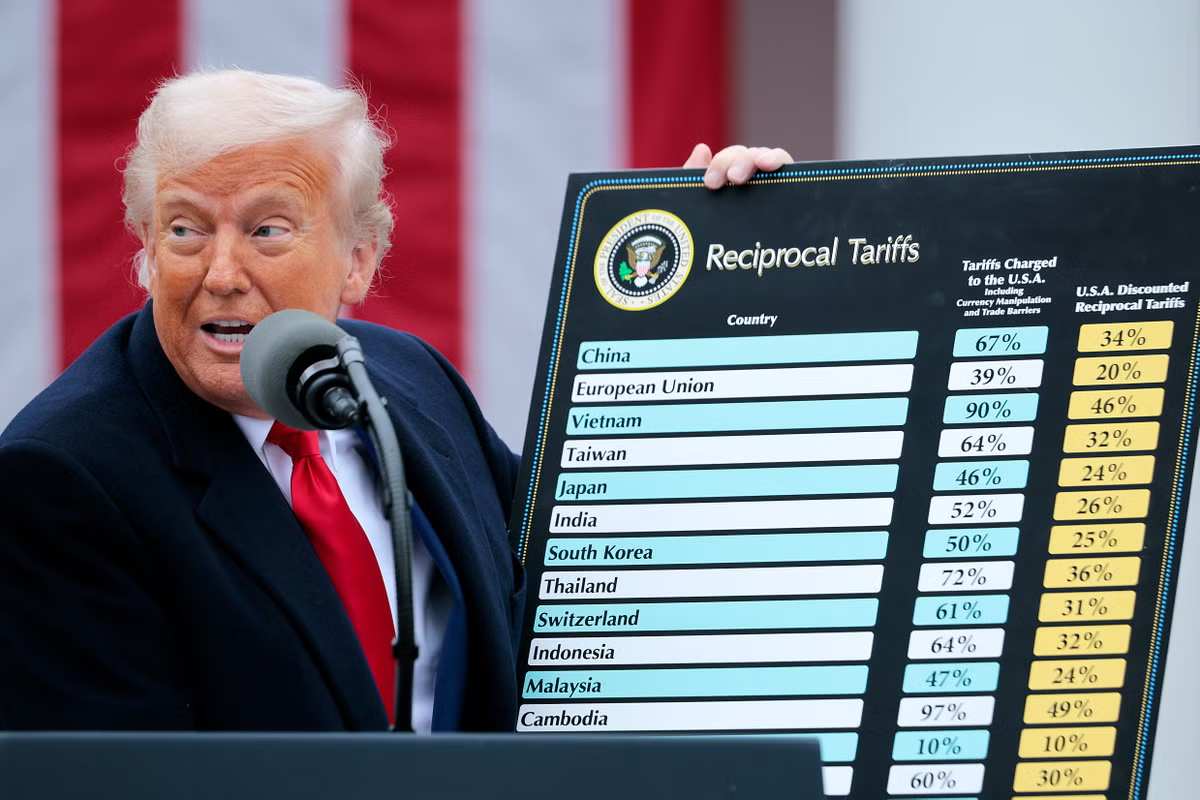
Tariffs have been a cornerstone of Trump’s foreign and economic policy in his second term, with double-digit “reciprocal” tariffs imposed on most countries, which he has justified by declaring America’s longstanding trade deficits a national emergency.
The average U.S. tariff has gone from 2.5% when Trump returned to the White House in January to nearly 17% a year later, the highest since 1934, according to calculations by Yale University’s Budget Lab.
“The Good News is that there are methods, practices, Statutes, and other Authorities, as recognized by the entire Court and Congress, that are even stronger than the IEEPA TARIFFS, available to me as President of the United States of America,” Trump posted on his social media site.
Countering unfair trade practices
The United States has long had a handy cudgel to wallop countries it accuses of engaging in “unjustifiable,” “unreasonable” or “discriminatory” trade practices. That is Section 301 of the Trade Act of 1974.
And Trump has made aggressive use of it himself — especially against China. In his first term, he cited Section 301 to impose sweeping tariffs on Chinese imports in a dispute over the sharp-elbowed tactics that Beijing was using to challenge America’s technological dominance. The U.S. is also using 301 powers to counter what it calls unfair Chinese practices in the shipbuilding industry.
Advertisement
There are no limits on the size of Section 301 tariffs. They expire after four years but can be extended.
But the administration’s trade representative must conduct an investigation and typically hold a public hearing before imposing 301 tariffs. On Friday, Trump also said the administration would initiate several more Section 301 investigations.
Experts have said Section 301 is useful in taking on China. But it has drawbacks when it comes to dealing with the smaller countries that Trump has hammered with reciprocal tariffs.
“Undertaking dozens and dozens of 301 investigations of all of those countries is a laborious process,” Veroneau said.
Advertisement
Targeting trade deficits
In striking down Trump’s reciprocal tariffs in May, the U.S. Court of International Trade ruled that the president couldn’t use emergency powers to combat trade deficits.
That is partly because Congress had specifically given the White House limited authority to address the problem in another statute: Section 122, also of the Trade Act of 1974. That allows the president to impose tariffs of up to 15% for up to 150 days in response to unbalanced trade. The administration doesn’t even have to conduct an investigation beforehand.
But Section 122 authority has never been used to apply tariffs, and there is some uncertainty about how it would work.
Protecting national security
In both of his terms, Trump has made aggressive use of his power — under Section 232 of Trade Expansion Act of 1962 — to impose tariffs on imports that he deems a threat to national security.
Advertisement
In 2018, he slapped tariffs on foreign steel and aluminum, levies he’s expanded since returning to the White House. He also plastered Section 232 tariffs on autos, auto parts, copper, lumber.
In September, the president even levied Section 232 tariffs on kitchen cabinets, bathroom vanities and upholstered furniture.
Section 232 tariffs are not limited by law but do require an investigation by the U.S. Commerce Department. It’s the administration itself that does the investigating – also true for Section 301 cases — “so they have a lot of control over the outcome,” Veroneau said.
Reviving Depression-era tariffs
Nearly a century ago, with the U.S. and world economies in collapse, Congress passed the Tariff Act of 1930, imposing hefty taxes on imports. Known as the Smoot-Hawley tariffs (for their congressional sponsors), these levies have been widely condemned by economists and historians for limiting world commerce and making the Great Depression worse. They also got a memorable pop culture shoutout in the 1986 movie “Ferris Bueller’s Day Off.”
Advertisement
Section 338 of the law authorizes the president to impose tariffs of up to 50% on imports from countries that have discriminated against U.S. businesses. No investigation is required, and there’s no limit on how long the tariffs can stay in place.
Those tariffs have never been imposed — U.S. trade negotiators traditionally have favored Section 301 sanctions instead — though the United States used the threat of them as a bargaining chip in trade talks in the 1930s.
In September, Treasury Secretary Scott Bessent told Reuters that the administration was considering Section 338 as a Plan B if the Supreme Court ruled against Trump’s use of emergency powers tariffs.
____
Advertisement
Associated Press Staff Writer Lindsay Whitehurst contributed to this story.
According to the Centers for Disease Control and Prevention, ALS is rare. In 2022, there were nearly 33,000 estimated cases, say researchers, who project that cases will rise to more than 36,000 by 2030.
The disease is slightly more common in men than in women and tends to strike in midlife, between the ages of 40 and 60.
Advertisement
Here’s what to know.
What is ALS?
It affects nerve cells in the brain and spinal cord, causing loss of muscle control and getting worse over time.
ALS causes nerve cells in the upper and lower parts of the body to stop working and die. Nerves no longer trigger specific muscles, eventually leading to paralysis. People with ALS may develop problems with mobility, speaking, swallowing and breathing.
The exact cause of the disease is unknown, and Mayo Clinic experts said a small number of cases are inherited.
Advertisement
It’s called Lou Gehrig’s disease after the Hall of Fame New York Yankees player. Gehrig was diagnosed with ALS in 1939 on his 36th birthday, died in 1941 and was the face of ALS for decades.
What are some signs of ALS?
Experts say the first symptoms are often subtle. The disease may begin with muscle twitching and weakness in an arm or leg.
Over time, muscles stop acting and reacting correctly, said experts at University of California San Francisco Health. People may lose strength and coordination in their arms and legs; feet and ankles may become weak; and muscles in the arms, shoulders and tongue may cramp or twitch. Swallowing and speaking may become difficult and fatigue may set in.
The ability to think, see, hear, smell, taste and touch are usually not affected, UCSF experts said.
Advertisement
Eventually, muscles used for breathing may become paralyzed. Patients may be unable to swallow and inhale food or saliva. Most people with ALS die of respiratory failure.
How is ALS diagnosed and treated?
The disease is difficult to diagnose because there’s no test or procedure to confirm it. Generally, doctors will perform a physical exam, lab tests and imaging of the brain and spinal cord.
A doctor may interpret certain things as signs of ALS, including an unusual flexing of the toes, diminished fine motor coordination, painful muscle cramps, twitching and spasticity, a type of stiffness causing jerky movements.
There’s no known cure for ALS, but the drug riluzole has been approved for treatment. According to the Mayo Clinic, it may extend survival in the early stages of the disease or extend the time until a breathing tube is needed.
Advertisement
Another much-debated drug, Relyvrio, was pulled from the U.S. market by Amylyx Pharmaceuticals in 2024. Its development had been financed, in part, by the ALS Association, the major beneficiary of the 2014 “ ice bucket challenge ” viral phenomenon.
Other medications are sometimes prescribed to help control symptoms.
Choking is common as ALS progresses, so patients may need feeding tubes. People may also use braces, wheelchairs, speech synthesizers or computer-based communication systems.
After the onset of the disease, experts say patients may survive from two years to a decade. Most people live from two to five years after symptoms develop, and about a fifth live more than five years after they are diagnosed.
Advertisement
___
The Associated Press Health and Science Department receives support from the Howard Hughes Medical Institute’s Department of Science Education and the Robert Wood Johnson Foundation. The AP is solely responsible for all content.
WASHINGTON (AP) — There’s little that Donald Trump has cherished more in his second term than tariffs, a symbol of his imperious approach to the presidency. He has raised and lowered them at will, rewriting the rules of global commerce and daring anyone to stop him.
Now that may be over, the victim of a stunning rebuke from the Supreme Court on Friday. After more than a year of expanding his power, Trump had run into a rare limit.
It was a loss that Trump couldn’t quite accept, and the president claimed he would use other laws to impose alternative tariffs. He even said that the end of this particular legal battle would bring “great certainty” to the economy.
But if anything, Friday opened a new chapter in Trump’s ongoing tariffs drama and raised urgent questions about his ability to make good on his promises of an economic revival. The ruling will most likely prolong chaos over international trade through the midterm elections, with much unknown about Trump’s next steps and whether roughly $175 billion in import taxes that the Supreme Court struck down will be refunded.
Advertisement
The president chose, as he often does, to scorn the patriotism of those who disagree with him.
He said the ruling was “deeply disappointing” and “ridiculous,” adding that he was “absolutely ashamed” of the six Supreme Court justices who ruled against him “for not having the courage to do what’s right for our country.”
Trump described the justices as “fools and lapdogs” who are “very unpatriotic and disloyal to our Constitution.”
The president said on social media Friday night that he had signed an executive order enabling him to bypass Congress and impose a 10% tax on imports from around the world. The government would begin national security investigations in order to charge new tariffs on specific products as well. The 10% tariffs are legally capped at 150 days, but Trump brushed off a question about the limit by saying “we have a right to do pretty much what we want to do.”
Advertisement
All of that means Trump’s tariff timelines are likely to collide with the midterm elections for control of the House and Senate.
Tariffs have been politically unpopular
Trump learned of the Supreme Court’s decision during a private meeting with governors in the morning when he was handed a note, according to two people with knowledge of the president’s reaction who spoke on the condition of anonymity. They said he called it “a disgrace.”
Another person, who was briefed on the conversation, disclosed that Trump said he has “to do something about these courts.”
The meeting with the governors ended shortly thereafter.
Advertisement
Looming over Trump’s legal debacle has been voters’ frustration with the tariffs, which have been linked to higher prices and a slowdown in hiring.
The president has consistently misrepresented his tariffs, claiming despite evidence to the contrary that foreign governments would pay them and that the revenues would be sufficient to pay down the national debt and give taxpayers a dividend check.
After Trump announced worldwide tariffs last April, an AP-NORC poll found that 76% of Americans said the policies would increase the cost of consumer goods — a worrisome sign for a president elected on the promise of addressing years of inflation.
Another poll, conducted in January, said about 6 in 10 Americans said Trump had gone too far in imposing new tariffs on other countries.
Advertisement
Trump used tariffs to reshape Republican trade agenda
Trump’s aggressive use of tariffs had left many Republican lawmakers uneasy, publicly and privately, forcing them to defend what were essentially tax increases on the American public and businesses.
At various points during Trump’s second term, at least seven senators from the president’s party have voiced their concerns. Earlier this month, six House Republicans joined with Democrats to vote for a resolution against Trump’s tariffs on Canada.
Indeed, free trade had long been a central plank of the Republican Party before Trump’s rise to power.
Kentucky Sen. Mitch McConnell described Trump’s assertion that he can bypass Congress to implement tariffs as “illegal” in a statement praising the Supreme Court’s decision.
Advertisement
“Congress’ role in trade policy, as I have warned repeatedly, is not an inconvenience to avoid,” the former top Senate Republican said. “If the executive would like to enact trade policies that impact American producers and consumers, its path forward is crystal clear: convince their representatives under Article 1” of the Constitution.
Former Vice President Mike Pence, who served during Trump’s first term, cheered the ruling.
“American families and American businesses pay American tariffs — not foreign countries,” Pence wrote on social media. “With this decision, American families and businesses can breathe a sigh of relief.”
Democrats were quick to seize on the Supreme Court ruling to say Trump broke the law and middle-class families suffered as a result.
Advertisement
Rep. Suzan DelBene, D-Wash., said Trump “is not a king” and his “tariffs were always illegal.”
“Republicans in Congress could have easily ended this economic crisis by standing up for their communities,” said DelBene, chair of the Democratic Congressional Campaign Committee. “Instead, they chose to bend the knee to Trump while families, small businesses and farmers suffered from higher prices.”
Tariffs were central to Trump’s economic pitch
Trump has claimed that his tariffs were the difference between national prosperity and deep poverty, a pitch he made Thursday to voters in the swing state of Georgia.
The president used the word “tariff” 28 times in his speech at a Georgia steel company, Coosa Steel, which credited the import taxes as making its products more competitive with goods from China.
Advertisement
“Without tariffs, this country would be in such trouble right now,” Trump insisted.
Trump also complained that he had to justify his use of tariffs to the Supreme Court.
“I have to wait for this decision. I’ve been waiting forever, forever, and the language is clear that I have the right to do it as president,” he said. “I have the right to put tariffs on for national security purposes, countries that have been ripping us off for years.”
By a 6-3 vote, the high court said no.
Advertisement
___
Associated Press writer Steven Sloan contributed to this report.
Regarding fruit and vegetables, Sainsbury’s generally stocks good-quality produce at a fair price.
Advertisement
However, after purchasing multiple packs of one essential fruit from Sainsbury’s and Lidl, the latter proved tastier and even stayed fresh several days beyond the best-before date. The fruit in question is pomegranate seeds, the pre-packaged variety.
Fruit plays a vital role in my weekly grocery shopping, and it’s essential to select good-quality fruit, as it can deteriorate quite rapidly.
Whilst there are numerous different storage tips to help keep fruit fresh for an extended period, you’re better off purchasing it as fresh as possible.
Advertisement
I didn’t anticipate such excellent quality from budget supermarket Lidl, as previously I’ve discovered fruits like blackberries and raspberries have been mouldy in the store.
The packaged pomegranate seeds from Lidl are sweet, juicy and full of flavour, more so than Sainsbury’s.
Ensure our latest lifestyle and travel stories always appear at the top of your Google Search by making us a Preferred Source. Click here to activate or add us as your Preferred Source in your Google search settings.
I also find that the pomegranate from Lidl tastes good a couple of days after the best-before date stated on the packaging.
As well as the quality and taste, pomegranate seeds are more affordable at Lidl than they are at Sainsbury’s. At Sainsbury’s, they retail for £1.50 for an 80g pot and £2.65 for a 240g pot.
Lidl only stock a 200g pot of pomegranate seeds, and they retail for just £1.39.
As a regular Sainsbury’s shopper, I switched to Lidl for one simple item that’s sweeter, juicier and better value for money.
Whilst Sainsbury’s is my usual port of call for the weekly shop, there are certain food items I make a beeline for elsewhere. For chicken breasts, Caesar dressing and salad, it’s got to be Marks and Spencer.
Advertisement
When it comes to fruit and veg, Sainsbury’s generally offers decent quality at a fair price.
However, after comparing packs of one particular fruit from both Sainsbury’s and Lidl, the latter came out on top for taste and freshness, even several days past its best-before date.
The fruit in question? Pre-packaged pomegranate seeds. Fruit is a staple of my weekly grocery haul, and it’s crucial to choose high-quality produce as it can go off rather quickly.
There are plenty of tricks for prolonging the life of your fruit, but you’re always better off buying as fresh as possible.
I was pleasantly surprised by the quality on offer at budget supermarket Lidl, especially given previous experiences with mouldy blackberries and raspberries on their shelves.
The pre-packaged pomegranate seeds from Lidl are sweet, juicy and packed with flavour, far surpassing those from Sainsbury’s.
Ensure our latest stories always appear at the top of your Google Search by making us a Preferred Source. Click here to activate or add us as your Preferred Source in your Google search settings.
Advertisement
What’s more, I’ve found that Lidl’s pomegranate still tastes great a couple of days beyond the best-before date printed on the pack.
Not only do they win on quality and taste, but Lidl’s pomegranate seeds also come in cheaper than Sainsbury’s. Whilst Sainsbury’s charges £1.50 for an 80g pot and £2.65 for a 240g pot.
Lidl sells a 200g pot of pomegranate seeds for just £1.39.