

Politics
Gordon Ramsay Makes Surprising Admission About His New Netflix Documentary


However, one person who won’t be tuning in is the TV himself.
While promoting the doc earlier this week, he told Hits Radio: “I’ll be honest, I haven’t seen it.”
As for why he hasn’t checked out his own show, Gordon then admitted that he never watches himself on TV, claiming: “I never want to be that sort of little delicate, dainty soul that wants to obsess on how he looks or how he comes across.”
Being Gordon Ramsay follows the Kitchen Nightmares star, his wife Tana and their two daughters, Tilly and Holly, through the highs and lows of launching his new £20 million restaurant venture in one of London’s tallest buildings.
An official Netflix synopsis teases: “Being Gordon Ramsay is a new documentary series following one of the world’s most famous chefs in the lead-up to his biggest restaurant ventures to date: the opening of five culinary experiences in one of London’s tallest buildings, 22 Bishopsgate.
“This is Gordon as we have never seen him before as he opens the doors to his home and businesses. Over a six-month window, the expansion of his restaurant empire begins to take shape and, with the official launch fast approaching, we see Gordon balance the challenges that come with it with his life as a husband to Tana, and father to their six children.”
Being Gordon Ramsay is now streaming on Netflix.


In case you missed it, UK health secretary Wes Streeting has just had a brainwave. If you’re a millennial, and this thing called ‘life’ is your problem, then apparently talking therapy on the NHS is the solution. Never fear about the dearth of semi-decent job opportunities, the lack of affordable housing, the sky-high energy and food bills, or the rest of it – what you need is a space to speak your truth. Let the NHS sort that out for you, and you’ll be back at the coalface in no time.
There are now 4.4million working-age people on sickness or incapacity benefits in England and Wales – a figure that has grown by a whopping 1.2million since 2019. Nearly 50 per cent of new claims are made on mental-health grounds, while one in four young people has a diagnosable mental-health condition. It’s painfully obvious that Labour must tackle the rise in both mental-health problems and worklessness – but a few weeks of talking therapy, as is being offered, is barely a sticking-plaster solution.
Last year, Streeting warned that mental-health problems are being overdiagnosed and there is a danger of pathologising normal feelings. Yet only a few weeks later, he backtracked. He apologised for his ‘divisive’ comments in the Guardian and launched an independent inquiry into why mental-health diagnoses have been on the rise, especially among younger people.
Now, despite still not having the answers (the inquiry is due to report back in the summer), Streeting has this week pledged to offer talking-therapy sessions to nine million people, costing an estimated £69million, in a bid to get millennials off benefits and back into work.
Firstly, if the government itself has admitted it doesn’t yet know the causes of our growing mental-health crisis, why is it pledging all of this costly assistance now? Why not wait for the results of the independent inquiry Streeting himself commissioned? And while free therapy might sound useful, we’re only actually talking about a month of that under the current provision – that’s five or so appointments. As anyone who has ever done therapy (as I have, for many years) will tell you, most private therapists recommend at least a course of six months of sessions. If you’ve got anything from PTSD to bipolar disorder, or have an ongoing serious mental-mealth condition that requires regular close monitoring, five sessions isn’t going to even touch the sides, let alone lead you to thriving in paid work.
Even more pressingly, while all this help is being pledged for a range of mental-health conditions currently affecting worklessness, people with the most severe problems are frequently slipping through the cracks, especially those suffering with personality disorders or psychotic delusions.
Make no mistake – I am a believer in the power of therapy. It has saved my life at least once, no exaggeration. But there are some serious caveats to that. Firstly, the therapy that saved me when on the brink of a serious psychotic episode last summer was the private kind I had to pay a clinical psychologist for. That clinical psychologist was the only professional support I had when a junior NHS psychiatrist took me off my long-term anti-psychotic meds, ‘as an experiment’ (her words), despite the fact I had been sectioned for a psychotic break in the past.
Secondly, talking therapy works best over a prolonged stretch of time. Streeting’s proposed month of help is enough to stir up all sorts of deeper issues, but not enough to actually deal with them. ‘When you change the things you look at, the things you look at change’, therapists are fond of saying. But while this might make for a natty wall hanging, it doesn’t actually alter the fundamental realities of your life.
Thirdly, talking about stuff that is troubling you is valuable, but it can only ever be a precursor to taking action. Yes, of course, many people benefit from feeling heard and identifying what about their life is distressing them. But if the source of your worries happens to be the paltry wage you’re getting for a non-job that barely covers the essentials – or maybe even having no job at all – therapy isn’t the solution.
As fantastic as the right therapy can be, it can’t wave a magic wand over structural, societal issues. It is meant to work alongside other vital tools, such as basic healthy living (exercise, nutritious food, decent sleep), sometimes medication, social connection and, critically, a solid support network. Good therapy can teach resilience, sure, so that when life isn’t going well, you have some inner resources to draw on to keep going. But therapy without opportunities is just more neoliberal, individualist blather, the kind that Labour tells us it abhors.
Labour may be making a serious mistake here with millennial voters. If thousands of them sign up for talking therapy, only to realise their lives suck for structural and economic reasons, rather than their own ‘traumatic’ experiences, the Labour government won’t just lose workers, it will also lose critical voters come the next election. Joblessness, low pay and poor working conditions are the real epidemics it needs to tackle.
Nichi Hodgson is the author of The Curious History of Dating: From Jane Austen to Tinder and Bound to You. Follow her Substack here.
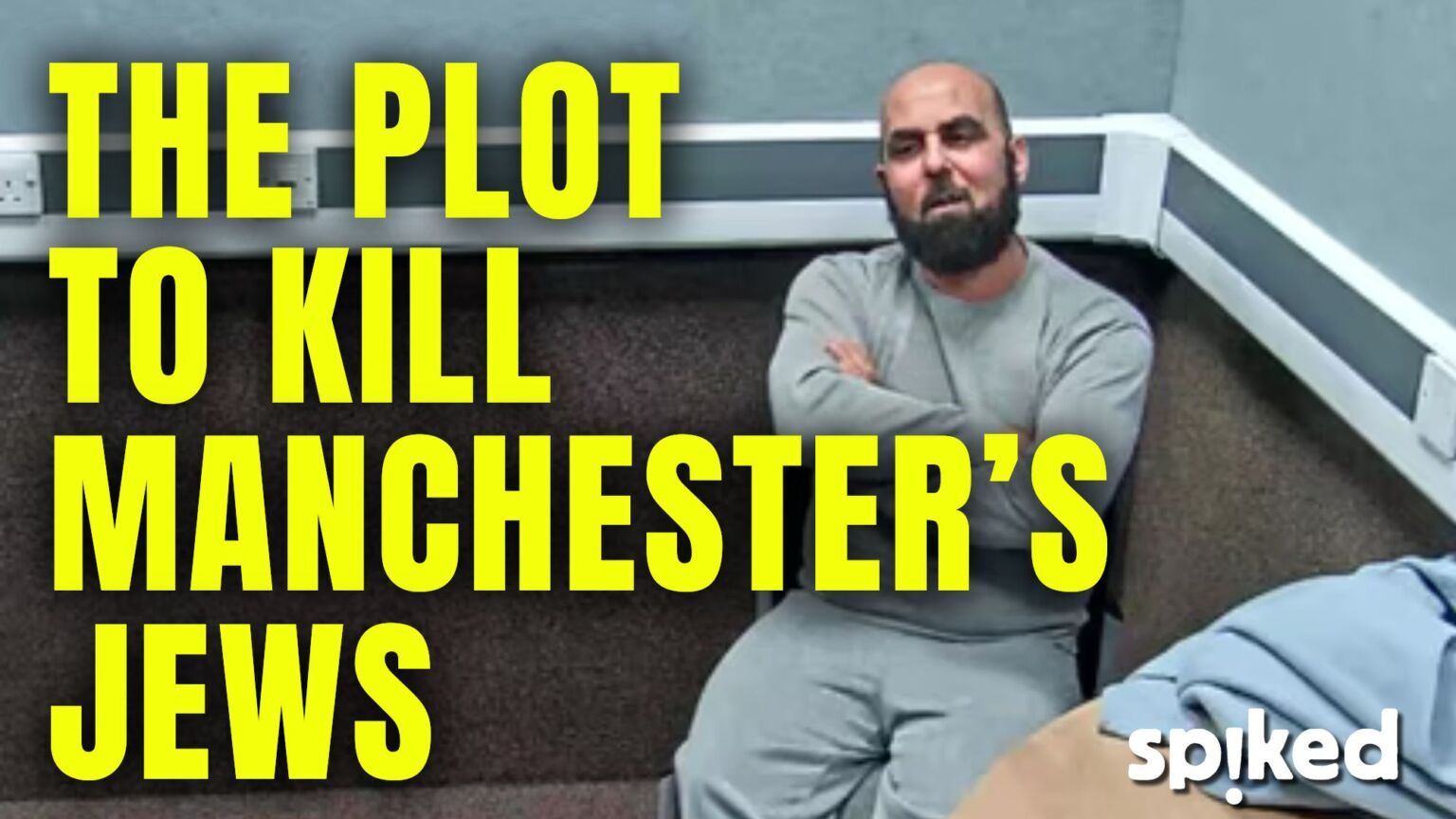
The post The plot to kill Manchester’s Jews appeared first on spiked.
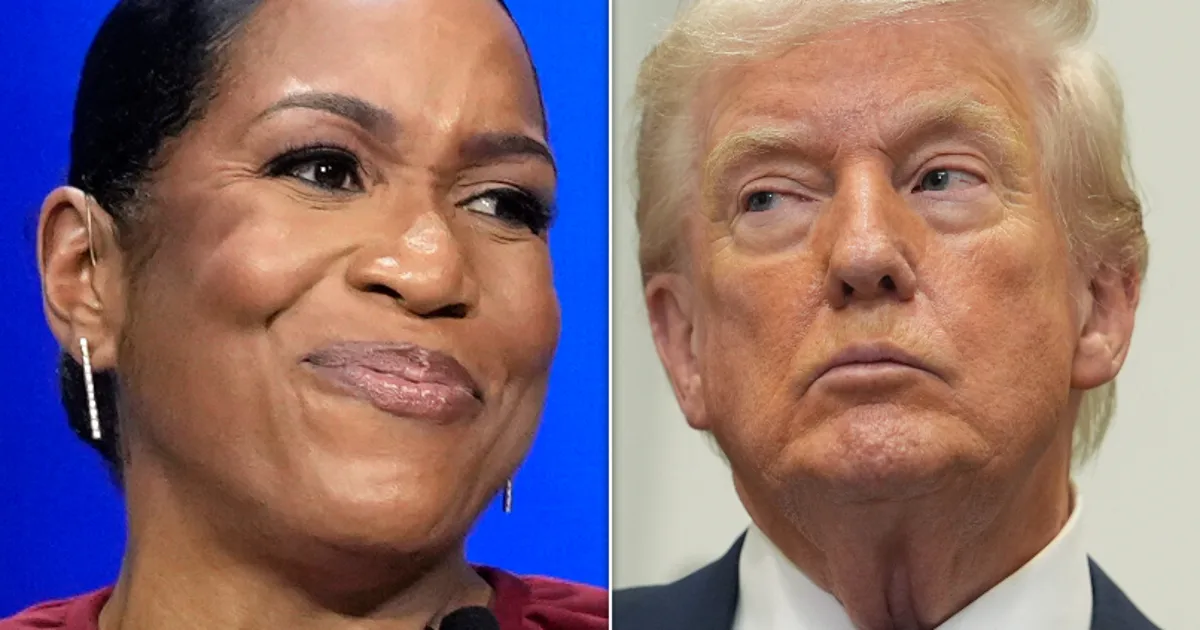
US Senate hopeful Juliana Stratton is letting the expletives fly in a new campaign ad spelling out what she – and her supporters – really think about President Donald Trump.
“Fuck Trump, vote Juliana,” three people say at the start of the Illinois Lt. Gov.’s campaign video released on Thursday.
“They said it, not me,” Stratton responds.
She then adds: “I’m Juliana Stratton and I’m proud to have lived my whole life on the South Side of Chicago. I’m not scared of a wannabe dictator. I’m running for Senate to stand up to Donald Trump. I’ll abolish ICE and hold Trump accountable for the crimes he’s committed. Just like they said…”
Two more supporters then repeat the phrase, “Fuck Trump.”
Sen. Tammy Duckworth (D-Ill.) delivers the same line on camera.
And Illinois Gov. JB Pritzker (D), a potential Democratic 2028 presidential candidate who hasn’t been shy about attacking Trump, then appears alongside Stratton at the end of the ad, saying simply, “Vote Juliana,” omitting the profanity.
Stratton is currently trailing Rep. Raja Krishnamoorthi (D-Ill.) in early polling in the race to replace retiring Sen. Dick Durbin (D-Ill.). The Illinois primary is scheduled for Mar. 7.

JD Vance attempted to make a joke at Representative Alexandria Ocasio-Cortez’s expense at Thursday’s Board of Peace meeting, but she ended up getting the last laugh when his jab was met with deafening silence.
The vice president addressed officials from nearly 50 countries shortly after President Donald Trump used his own speech to attack the New York lawmaker’s appearance at the Munich Security Conference, when she struggled to answer a sensitive question about whether the United States should send troops to Taiwan.
Like his boss, Vance tried to mock the Democrat on Thursday when he began his remarks. But he may not have been happy at how his joke landed.
“I knew exactly what I wanted to say, but then after the president said that I was so smart, and that I didn’t want to repeat our congresswoman, who froze for 20 seconds over in Munich,” he began.
“Now I’m tempted, sir, just to freeze, for 20 seconds, and just stare at the cameras,” he continued. “And maybe they’ll say nice things about me like they do about Congresswoman Cortez.”
Vance seemed to be expecting a laugh from the crowd, but none came.
Ocasio-Cortez later poked fun at Vance for the response to his “joke.”
“The only thing longer than my pause to think was their silence to his joke 💀” she wrote on X.

There’s a common experience when you start dating someone new and have “the talk” about previous relationships. Maybe later you look up their ex on Instagram and scroll a little.
You take in the old homecoming photos, beach vacations, the anniversary captions from years before you were in the picture. Maybe you feel a small pang – a flicker of comparison or curiosity – and then you move on.
But for some people, that fleeting discomfort doesn’t fade. It lingers, loops and starts to feel less like curiosity and more like a threat. That emotional experience can quickly cross into more extreme territory: retroactive jealousy.
Below, relationship experts break down what retroactive jealousy really is, what it might reveal about you and how to keep it from undermining your relationship in the present.
What is retroactive jealousy?
“Retroactive jealousy is when someone experiences strong feelings of anxiety and jealousy around their partner’s past romantic history or even experiences that happened before you existed in their life,” said Priya Tahim, a licensed professional counsellor. “It’s not curiosity but what feels like an active threat in your present relationship.”
People experiencing retroactive jealousy become strongly fixated on their significant other’s previous relationships and any romantic encounters that occurred before they even met.
“In relationships, this often shows up as obsessing over a partner’s exes or past hookups, replaying details you wish you never heard or feeling way more upset than the situation calls for when the past comes up,” said Julie Nguyen, a dating coach with the dating app Hily. “You might ask a lot of questions, compare yourself to people you’ve never met, scroll through old photos or feel a rush of anxiety when a name or memory gets mentioned.”
Retroactive jealousy can lead you to focus on how your attractiveness, career success and other attributes compare to their ex’s.
“In relationships, it often manifests as intrusive thoughts, where you are constantly making mental comparisons to idealised past partners, or repeated questioning about exes and the perceived ways in which they are ‘better,’” said clinical psychologist Sabrina Romanoff.
She added that you might replay imagined scenarios or feel emotionally dysregulated when learning about trips your partner took with their ex or certain milestones they reached.
“Retroactive jealousy can manifest as repeatedly seeking details, spiraling after reminders, stalking exes online or needing reassurance that never quite sticks,” Tahim added.
What experiencing retroactive jealousy might say about you – and your relationship
“Most of the time, retroactive jealousy has less to do with your partner’s past and more to do with what’s coming up inside you,” Nguyen said. “It’s common in people with anxiety or an anxious attachment style, especially if there’s an underlying fear of not being enough.”
Even in a relationship that is otherwise solid, someone experiencing retroactive jealousy might have a nervous system that’s on high alert, scanning for any sign that they could be left or replaced.
“Most people don’t love thinking about their partner’s romantic or sexual history,” said Sarah Barukh, a therapist with Kindman & Co.
“For some, that discomfort taps into a deeper question of whether or not they are ‘enough’ for their partner. With retroactive jealousy, that question can get really loud and start to sound like, ‘Does my partner actually want me, or am I just the person they ended up with? Would they choose someone else if circumstances were different?’”
Retroactive jealousy tends to reflect underlying insecurities, fear of uncertainty, trust issues, an inferiority complex and/or a lack of self-confidence. There might even have been a past betrayal, such as cheating.

ArtistGNDphotography via Getty Images
“Although most problems in relationships are co-constructed, retroactive jealousy is often rooted in problems in early attachment and deep-rooted fears of abandonment and co-dependency,” Romanoff said. “It’s often less about their partner making them feel insecure, and more about their difficulty with ever feeling ‘chosen’ enough so they can feel safe.”
So retroactive jealousy typically doesn’t say much about the quality of your relationship, though it can certainly affect it.
“People with retroactive jealousy may also struggle with relationship OCD, as they attempt to soothe the lack of inner safety through external fixation – which unfortunately can only truly be resolved from within,” Romanoff said.
How can it affect your current relationship?
“Retroactive jealousy can show up as a constant need for reassurance, lack of trust and create emotional unsafe spaces within yourself or the relationship,” Tahim said. “If unaddressed, it can strain relationships by creating resentment by letting the past take up space where the present should be.”
Taking focus away from the current relationship can lead to anxiety and emotional distance. Compounded over time, retroactive jealousy takes a toll on relationships.
“Partners may start to feel frustrated, interrogated or punished for a past they can’t change,” Nguyen said. “Trust can slowly erode, not because of betrayal, but because the past keeps getting pulled into the present.”
A little jealousy is understandable, but retroactive jealousy can feel all-consuming, pushing people away.
“The partner on the receiving end may feel frustrated or helpless, especially if they are loyal and committed but feel like nothing they say fully reassures the other person,” Barukh said.
Even the most patient partner can become inflamed or worn down by the strain of unceasing irritability and assurance-seeking. That’s why it’s crucial for the person feeling retroactive jealousy to address it.
“Without the introspection and accountability of understanding how they’re contributing to the turmoil, their romantic relationships often end,” Romanoff said.
There are ways to work through retroactive jealousy without letting it ruin your relationship
“Everyone has a past, and you don’t have to be completely healed before entering a relationship – but self-awareness and a willingness to address what’s underneath the jealousy matter,” Tahim said.
“By focusing on the root fears, limiting comparison, grounding yourself in the present and choosing growth, you can work through retroactive jealousy without letting it define the relationship. It’s not an easy hurdle to climb, but it’s not impossible.”
Awareness and acceptance are crucial in this process.
“The most important insight is to understand you can be feeling high levels of anxiety and distress, and also know your distress doesn’t mean your partner committed an infraction against you,” Romanoff noted. “Your emotions are valid and need to be addressed, but the way you are acting on them, as if they are fact, is hurting you and your ability to have healthy relationships.”
The goal is to cut off the cycle of gathering more information and seeking reassurance, which soothes anxiety in the short term but is unhealthy in the long run.
“The first step is being honest about it, with yourself and with your partner,” Nguyen said. “It’s about letting them know this is something you’re struggling with so the fears don’t continue to dominate the relationship. It’s also important to understand that digging for more details rarely helps. No amount of information or reassurance can make the past feel safer.”
Instead, focus on finding a sense of emotional safety in the present.
“This could mean actively practicing self-soothing skills when you’re feeling particularly activated – for example, grounding exercises, breathing exercises, getting regular physical activity and going for more walks,” Romanoff said.
You can develop a mindfulness practice to help you stay grounded in moments when harmful thoughts start to spiral.
“In some cases, discomfort about a partner’s past can be connected to things that haven’t been fully talked about or resolved,” Barukh said. “Sometimes a partner hasn’t shared much about their past because it feels awkward or vulnerable. In other cases, there may be unresolved feelings that haven’t been addressed. Those situations do deserve honest conversations.”
In addition to talking to your partner, consider working with a therapist to unpack the underlying fears and issues driving your retroactive jealousy.
“It can be really important to gently turn the focus inward and ask why it feels so hard to accept that someone you respect, or love, sees you as worthy of being with them,” Barukh said. “People who struggle with retroactive jealousy are often pretty hard on themselves. Self-compassion really matters here, and it helps to remember that a lot of people experience some version of this.
Politics
The House | An End To The Resident Doctors’ Dispute Could Cause New Problems For Government


11 min read
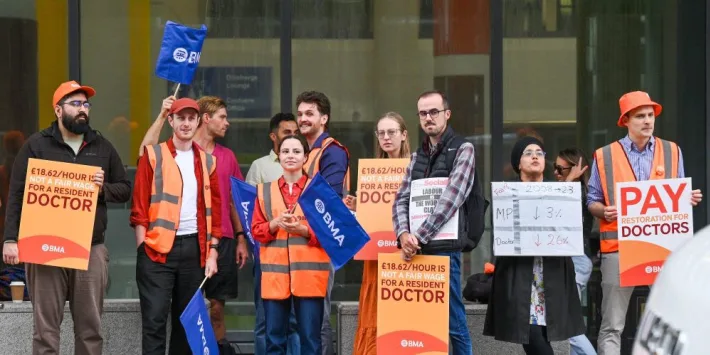
The long-running resident doctors’ dispute that has dogged successive governments may finally be nearing resolution. But, as Noah Vickers reports, there are formidable hurdles ahead before Wes Streeting can declare ‘mission accomplished’
Wes Streeting, less than a month into his new job as Health Secretary, declared that a strike that had “caused untold misery to patients and staff” was all but over.
He had, after all, just handed a 22.3 per cent pay rise to resident (formerly known as junior) doctors after 11 rounds of industrial action, in the weeks after Labour’s election victory in July 2024. Settling the strikes had been his “priority from day one”, he said, jubilant that the British Medical Association (BMA) had accepted the award.
Except that – as we now know – the huge settlement did not end the strikes. Within 11 months, the BMA was back on the picket line to Streeting’s extreme displeasure. To his critics, a hubristic Streeting has been taught a painful and expensive lesson in power dynamics. His allies insist that his approach is slowly working.
There are indeed signs that – despite winning a fresh mandate for yet more strikes – a new leadership at the BMA is looking for a way out. But the finishing line is still some way off and the obstacles forbidding. A deal to reduce competition for specialist posts from foreign graduates could cause problems elsewhere. And other health staff with pay claims of their own are watching like hawks.
First, tempers need to cool a little – on both sides – for any settlement. “We gave them a big pay increase because we recognised their value, and I think there was a feeling that we’d get them on our side. That clearly hasn’t happened,” says one Labour MP.
The BMA argues that resident doctors’ pay remains 20.8 per cent lower in real terms than it was in 2008, which they say is when their pay cuts began. Critics point out that they use the RPI rather than CPI measure of inflation to reach that percentage, and that most resident doctors had not even started their medical degrees in 2008.
The most recent round of strikes, held just before Christmas, saw tempers run high. Streeting accused resident doctors of taking a “self-indulgent, irresponsible and dangerous” decision by choosing to strike during a flu season, “at a risk of serious harm to patients”. Dr Jack Fletcher, chair of the BMA’s resident doctors committee (RDC), said politicians were “scaremongering” by suggesting that the number of flu cases was more severe than in reality.
Since the new year, however, the tone on both sides has become more conciliatory. Earlier this month, the BMA’s resident doctor membership voted by 93 per cent in favour of extending their mandate for strike action for another six months – but crucially, this was on a reduced turnout of only 53 per cent, suggesting that enthusiasm for the cause has ebbed somewhat.
“I don’t think the doctors have an appetite for years of rolling strikes, like they’ve had for the last three years,” says one Labour MP. “If you mandated all the doctors to vote, my guess is that the actual appetite for striking among all the doctors is not there. This is not the miners’ strike. The sort of people that get involved in BMA politics are a self-selecting group.”
For its part, the BMA claims it does not plan to use its new mandate.
“There is no intention to go on strike,” RDC deputy chair Dr Arjan Singh told the BBC’s Today programme. “[It is] a negotiating tool, but we’ve got no intention of actually using it. I would say that our relationship with government over the last few months has become increasingly positive.”
The BMA declined to make Fletcher, Singh or any of their RDC colleagues available for an interview with The House. MPs who have met Fletcher, however, say he is a “serious” and “co-operative” figure who “wants to see a solution”. They also point out he is a Labour member who “wants the government to work”.
One MP adds: “He has a committee who I think are not always on the same page as him, because they’re a little bit more militant.”
Before Fletcher was elected last year, the committee’s four previous co-chairs belonged to a hardline faction called DoctorsVote. It was this group which had pushed hardest for strike action and for “full pay restoration” to 2008 levels. DoctorsVote no longer holds any officer positions on the RDC committee, but full pay restoration “by 2027/28” remains BMA policy. Fletcher is said to regard this aim as “not realistic”.
The BMA says the dispute is not only about pay but also about addressing the “bottleneck” that resident doctors face when applying for specialty training posts. The ‘competition ratio’ for those jobs has got tighter over recent years, largely due to an increase in applications from international medical graduates (IMGs) – which leaves many UK-trained doctors unable to progress in their careers.
To address that issue, the government is passing emergency legislation – the Medical Training (Prioritisation) Bill – which will ensure UK-trained graduates are prioritised for foundation and speciality training posts. Streeting claims that for speciality posts, the bill “effectively reduces the competition for places from 4-1 to 2-1”.
The legislation was given its First Reading on 13 January, and the government aims for it to receive Royal Assent by 5 March. Passing the bill by that deadline should mean its effects are felt by this year’s round of applicants, whose jobs would start in August.
Yet there are concerns that the rushed-through bill could have damaging impacts on the government’s ambitions elsewhere in the health service.
Lucina Rolewicz, a fellow at the Nuffield Trust, warns that the NHS has “previously relied” on IMGs “to fill a big proportion of general practice training places, so if this bill deters them from applying for jobs that are less popular with UK graduates, it could torpedo efforts to expand general practice, especially in poorer areas”.
She tells The House: “Competition and interest in different specialities are not equal. This is especially the case in general practice and for core psychiatry training as well…
“The bill won’t stop internationally trained doctors from applying to those routes, but it could discourage them from putting applications forward in the first place.”

Stuart Hoddinott, associate director at the Institute for Government, points out: “Almost the entire increase in the GP trainee workforce, since 2019, has come through IMGs… They now make up more than 50 per cent of GP trainees. This is a very important route for general practice.”
More deprived areas, including many of the rural and coastal areas now turning to Reform UK, could be especially badly hit by any downturn in international applications, as UK-trained doctors disproportionately tend to apply for GP posts in urban areas close to the teaching hospitals where they studied.
When it comes to settling the dispute, however, there is a quiet optimism in Parliament that once the bill has been passed in March, a deal could potentially be reached with the BMA in the weeks that follow, without any further strikes having been called.
“That’s the intention of the Secretary of State,” says a Labour MP. “In the early spring, hopefully there’ll be a relatively harmonious deal, and they can move forward.”
But anyone watching the dispute agrees that the BMA is serious about needing to also see some form of improved pay offer – and one may be on the way.
“It sounds like there will be a pay-off of some sort which might be attractive,” says an MP, who adds: “What’s needed is a multi-year settlement which is just a little bit over inflation – that would solve the [pay] problem.
“I would give them a three-year rolling pay settlement, and I’d give it at a percentage or two above inflation for two years, and then a bit more in the third year. You’re not going to take it back to some mythical date of 2008, because it’s not affordable.”
But even a deal of that nature would risk further problems for Streeting, as other unions representing healthcare workers would take immediate notice of it.
“I don’t envy Wes Streeting in his job at the moment, because he’s got to balance all these things out,” says one backbencher. “He wants the doctors back. That might involve a more-than-inflationary pay increase, which then might bring all of the other professions into play.
“The main cost for the NHS is people. If you lose control of the pay aspect, then the costs will go up enormously.”
Unions representing NHS staff tell The House they are monitoring the resident doctors’ dispute and do not rule out balloting their own members for strike action if a generous deal is agreed.
“All NHS staff are deserving of above-inflation pay rises,” says Richard Munn, national officer for health at Unite, which represents almost 100,000 healthcare workers.
“Unlike resident doctors, the lower-paid NHS staff do not have the opportunity to progress to be consultants, GPs or surgeons as their careers develop.
“We hope that the government will see the unfairness of treating doctors more favourably than other NHS staff and will look to offer all staff above-inflation pay offers.”
A spokesman for the Society of Radiographers says their union is watching the resident doctors’ dispute “with interest”, adding that “balloting for strike action would depend on what follows for other NHS staff and how this is received by our members”.
The Royal College of Nursing, meanwhile, says it was “an insult” for the government to offer a 3.3 per cent pay uplift to their members and has pledged to “look at whether this is fair treatment compared to other professions and sectors”.
Hoddinott says: “The resident doctors are actually a relatively cheap staff group to pay. If you want to pay them a lot more money, you can actually do so relatively easily.
“An extra percentage point increase in their salary is worth roughly £51m, which sounds like a lot, but in NHS terms is not that much.
“More worrying is the contagion effect to other staff groups – if you get ‘Agenda for Change’ staff, which is all non-medical staff in the NHS, walking out.
“If you give them a percentage point increase that matches the resident doctors, that is suddenly something like £730m. That starts to get very expensive, very quickly.”
For Streeting, there will also be a personal incentive to resolving the dispute. The Health Secretary has been touted as a challenger to Keir Starmer’s leadership, and preventing further strikes – by reaching a deal which the public believes to be fair – will be a key test for him.
“It’s damaging for any secretary of state to have this hanging over their head,” says Hoddinott. “It gives the impression of dysfunction, and it does hurt your ability to demonstrate progress towards your ambitions.”
A DHSC spokesperson said: “Resident doctors have already had a 28.9 per cent pay rise over the last three years – we’ve gone as far as we can on pay this year.
“We’re working constructively with doctors on the long-standing issues they face in their careers and we’ve already made progress, including fast‑tracking legislation so UK medical graduates get priority for specialty training places. Our focus remains firmly on continuing this work and preventing strike action, which has already caused too much disruption for both patients and NHS staff.”
In a written statement, Fletcher told The House: “This is not a problem the government can wait out.
“From the very start of my engagement with government, I have made clear I am serious about getting to a deal. Strikes could have been avoided from the get-go if government had simply engaged with us on those terms.
“Sadly, we had to go through strike action before they would talk seriously. We hope that the talks we are now in will result in an offer that means there need be no further strikes.”
Regarding pay erosion since 2008, he added: “Our job is not 21 per cent less difficult, so it should not be paid 21 per cent less. The choice to cut this pay was a political on,e and the choice to restore it must be a political choice too.”
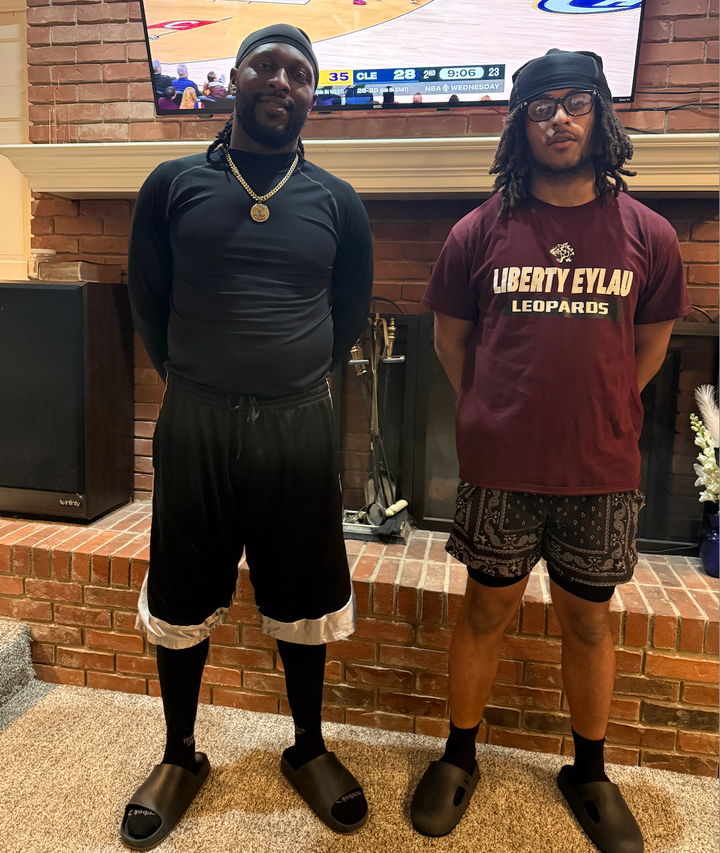
“Dad, you’re so embarrassing!” If I had a dollar for every time one of my sons has commented on my clothing, I’d be a millionaire. A billionaire if eye-rolls and an overdramatic shake of the head were included.
Last year, when I bought a new pair of bright blue Air Jordans, I was told I was too old for them. Wearing my old NBA jersey (Tim Duncan, Spurs) is considered a mortal sin to them.
Any T-shirt or sweater I buy them ends up in the back of their closet and eventually at Goodwill. While I’ve learned to stop buying them clothes, I’ll never give up my fashion choices.
Turns out I’m not the only father forced to defend his outfits. Some are stubborn, some do it for laughs, and some think they’ve earned the right in middle age to wear what they want.
Ken Anthony knows his Nike Air Monarchs are ugly. His family knows it, too. There’s even a group chat where they discuss his questionable decisions.
When his partner asked him to change shoes before going out, he had a simple answer: “I asked her if she really cared, and she didn’t. I told her my basketball bunion doesn’t either.”
Ken isn’t some guy who’s given up on style. He owns Jordan 3s and 5s. (A fellow shoe enthusiast!) He has other sneakers in his closet he should donate, but can’t bring himself to part with.
But somewhere along the way, Ken’s priorities changed. “The difference now is I put my comfort over my perception,” he told HuffPost. “It’s not that I don’t care what people think, I just care more about how I feel at the end of the day.”
When friends or family make jokes, he owns it. “They’re ugly, I know, but my feet feel amazing.” His philosophy is simple: “Be yourself; everyone else is taken.”

Courtesy of Scottie Smith
For Scottie Smith, it’s not about comfort. It’s about what he learned growing up. “
I grew up in a time when shorts went below the knee,” Scottie explained. “If your underwear showed underneath, an adult was going to correct that immediately.” He can’t shake that training. His long shorts are “comfortable, familiar, and a quiet protest against trends that would have gotten us in trouble growing up”.
Scottie’s shorts end six inches below the knee. His 15-year-old son’s end six inches above it – they actually measured it. His son isn’t the only one who hates them. At school events and tournaments, Scottie gets looks, groans and jokes.
His boys have started calling him Uncle Drew, the ancient basketball player from Kyrie Irving’s viral sketch. On the very rare occasion Scottie wears shorts above the knee, it becomes “a whole thing and everyone in the family talks about it”.
He’s not changing. “At this point, the longer the shorts, the clearer the message. I’m an ‘old head.’ I’ve earned the right to keep my knees covered, and I’m not trying to relive my youth.”
For some dads, it’s not about comfort or principle. It’s about childhood memories. Steve DiMatteo still wears a tank top from eighth grade. It’s the only shirt that has survived from that era of his life.

Courtesy of Stevie DiMatteo
“Other shirts just methodically bit the dust,” he said. “And I realised that this one just kept making the cut, and eventually that became a sacred thing, to be the last shirt standing from an old era.” He has a photo of himself in seventh or eighth grade wearing it. Over time, it became sentimental.
His kids point out the ridiculous holes, but Steve isn’t worried. “They’re young enough that I can shape them to be appreciative of this achievement.”
But there’s more to it than nostalgia. It’s become a challenge. “There’s something magical about it now,” Steve said. “I feel like I need to keep testing the limits of the very definition of a shirt at this point. It seems like this will end with me getting kicked out of a public place.”
His favourite reaction came from an old elementary school buddy who also keeps ancient shirts. “You should have seen his eyes light up in appreciation upon learning of this shirt.”
Best friends Mike Lee and Chris Mule have taken it to another level. They wear matching outfits on every vacation. Hot dog prints. Floral patterns. Hugh Hefner-style velvet smoking jackets with satin pyjama pants.

Courtesy of Mike Lee and Chris Mule
The tradition started on a Virgin Voyages cruise with theme nights. Chris brought matching pyjamas for himself and Mike. It escalated and now they bring matching outfits on every trip.
People have mistaken them for a couple. A bartender once told them a customer said, “What a cute couple! I love that they dress alike for date night.” Another time, a man approached Chris and asked if Mike was his partner.
Mike’s 18-year-old daughter, Jaylen, has a standard response when she sees them getting dressed. “Where are you going dressed like that?”
Mike and Chris ignore her. They love their loud fashion and refuse to conform for anyone else. As far as they’re concerned, their matching sets are fun and stylish. The louder the pattern, the better.
Nick Caccavo takes a different approach to mortifying his daughters. He shows up to elementary school pickup in a wetsuit. Regularly.
As a small-business owner in the windsports industry, he needs to get on the water for dawn sessions. The water is cold. Sometimes the sessions run long, and the wetsuit takes five minutes to put on and take off. When that happens, he has a choice: see his daughters before school or waste time changing.

His younger daughter asks, “Why are you wearing your wetsuit, Daddy?” His older daughter delivers the full treatment. “Daddy! You’re sooo embarrassing!” Complete with eye-rolling.
Other parents don’t say anything to Nick. But they deploy what Nick describes as the “awkward quick look and then pretend I didn’t see that and look elsewhere” strategy.
Asked whether wearing the wetsuit to school is time management or deliberate embarrassment, he said, “Both. Equally. On the mortifying side, it’s pure joy for me.”
Every single one of these guys could change. Ken could wear the Jordans. Scottie could buy shorter shorts. Steve could throw out the tank top. Nick could change out of the wetsuit. Mike and Chris could dress like adults.
My line? Bright blue Air Jordans and a Tim Duncan jersey, which my sons think should have been retired along with Tim himself.
Sorry, boys. The jersey stays. Be grateful it isn’t a hot dog outfit.
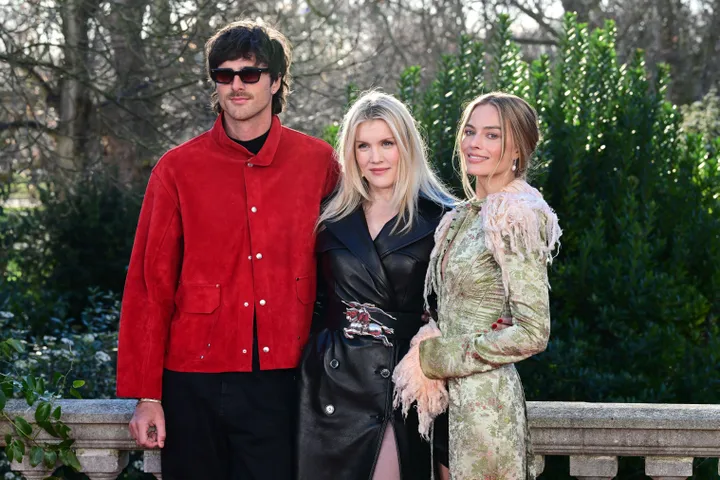
Whether it’s people swooning over Margot Robbie and Jacob Elordi’s on-screen romance or critics furiously speaking out against the changes made from the original book, Wuthering Heights is the film the whole world is talking about right now.
Based on Emily Brontë’s iconic gothic novel, Emerald Fennell’s new movie follows the story of Cathy and Heathcliff, two childhood friends who become star-crossed lovers, only for their toxic bond to lead to their downfall.
Divisive though the film may be, Wuthering Heights has all the hallmarks of Emerald Fennell’s past work, from the elaborate costumes to the meticulous detail of the sets.
For those who’ve already seen it, we’ve pulled together some surprising facts on how this latest take on Wuthering Heights made its way to the big screen…
Emerald Fennell chose to adapt Wuthering Heights because she was obsessed with the novel as a teenager – though that also came with its own issues.
Speaking at the Brontë Women’s Writing festival in September 2025, Emerald recounted how the iconic gothic novel had “cracked [her] open” when she first read it at the age of 14.
However, her reverence for the source material also made adapting it for the big screen all the more difficult.

Anthony Harvey/Shutterstock
“[It is] an act of extreme masochism to try and make a film of something that means this much to you,” she shared. “There’s an enormous amount of sado-masochism in this book. There’s a reason people were deeply shocked by it.”
During a subsequent appearance on the Penguin podcast, Emerald revealed she had re-read the book almost yearly since first discovering it as a teen, and was still impressed at how timeless the story was.
“The thing that strikes you [is] how humane and how timeless something is, and how much you feel that people have always sort of been the same,” she told interviewer Rhianna Dhillon.
Part of the appeal of the book for the filmmaker was the lack of consensus on whether it’s a toxic love story or a transcendental romance.
“Wuthering Heights is the ultimate book club book,” she told W Magazine, “because everyone can argue about it till the cows come home. And so I’m always just like, ‘You tell me’.”
The film is actually called “Wuthering Heights” – with added quotation marks – because director Emerald Fennell penned her script from memory
Much has been said about the changes the Oscar-winning filmmaker has made to the beloved source material, with some critics even branding the movie a “mockery of a classic”.
Alongside chopping the entire second half of the novel, one of the biggest changes Emerald made to the book is removing several minor characters, so the film focuses entirely on Cathy and Heathcliff.
Emerald admitted this came about when she started writing the script for Wuthering Heights from memory, as she wanted her film to be a “response and interpretation to that book and to the feeling of it” rather than a faithful adaptation.
“I think the things that I remembered were both real and not real,” she told Entertainment Weekly. “So there was a certain amount of wish fulfillment in there, and there were whole characters that I’d sort of forgotten or consolidated.”
During her chat on the Penguin podcast, Emerald admitted she loved adaptations that “exist as a response,” rather than a straight-up adaptation.
“For me, it was always about saying, ‘this is a sister or a cousin to the original text’,” she remarked. “It can’t be a twin.”
When the poster dropped, fans wanted to know why the film was called “Wuthering Heights” with quotation marks, which she explained was because the film is so different from the “untouchable” source material.
“I wanted to say early on […] I can’t make a perfect thing out of this because it’s too difficult, but I can hopefully make some people feel the same way that I felt when I read it,” she told Penguin Penguin.
One very significant Wuthering Heights character is missing from the film
While numerous characters from the book are missing in Emerald’s movie, the absence that has drawn the most criticism is that of Hindley Earnshaw.
Emerald has explained that Cathy’s brother, Hindley, was not featured in her film so the narrative could focus more on the central romance. Hindley’s antagonist role within the story is instead replaced by Martin Clunes’ Mr. Earnshaw, whose character is tweaked considerably in this adaptation.

“Hindley still exists, I believe, but in the form of Earnshaw,” Emerald told Entertainment Weekly.
“It’s such a complicated structure, the novel, that really it would have been very, very difficult to turn that into a coherent movie because it would just be much more time.”
Emerald Fennell wanted to make the story’s ending more dramatic, so she made some big structural changes to Wuthering Heights
Of all the changes Emerald made to the source material, one of the biggest is undoubtedly the ending. While in the film, Cathy dies of sepsis before she ever has the chance to see Heathcliff again, in the book, she does get to see her lover one last time.
Emerald explained to Entertainment Weekly that this edit was “partly structural” – but there was something else behind the decision.
“We talk a lot about Romeo & Juliet,” she pointed out. “And, obviously, when we meet Isabella, she’s talking about that kind of story and about that missed thing, and I feel so much that Cathy and Heathcliff’s [romance] was about missing each other.”

Emerald Fennell had Jacob Elordi in mind to play Heathcliff from day one – for one very specific reason
Jacob Elordi’s casting as Heathcliff caused significant backlash, with many declaring it to be a case of “whitewashing” a character many believe was written as a person of colour in the novel.
Opening up about the controversial decision to cast Jacob in the role last year, Emerald claimed she first had the idea to cast Jacob while they were still working together on Saltburn, after noticing that he “looked exactly like the illustration of Heathcliff on the first [copy of Wuthering Heights] that I read”.
“It was so awful because I so wanted to scream,” she told the BBC. “[That would not have been] the professional thing to do, obviously.”
She added: “I had been thinking about making [a film version of Wuthering Heights], and it seemed to me he had the thing… he’s a very surprising actor.”
Reacting more directly to the “whitewashing” accusations in January 2026, the Promising Young Woman director defended her choice, telling The Hollywood Reporter: “Everyone who loves this book has such a personal connection to it, and so, you can only ever kind of make the movie that you sort of imagined yourself when you read it.”

While Jacob has not yet addressed the controversy, he did tell Vogue Australia that playing Heathcliff caused him to doubt himself.
More recently, Jacob defended the changes Emerald made to the novel more generally, describing the film as “her vision”, and echoing her past claim that it was based on “the images that came to her head” when she read the book as a teen.
“Someone else’s interpretation of a great piece of art is what I am interested in,” he said.
Margot Robbie suggested herself for the role of Cathy in Wuthering Heights
Margot and Emerald Fennell’s professional relationship began when the Once Upon A Time In Hollywood actor’s production company, LuckyChap Entertainment, became an early backer of the director, producing her films Promising Young Woman and Saltburn.
Jacob had already been cast in Wuthering Heights by the time Emerald’s script landed on Margot’s desk, and the Barbie star was instantly captivated and felt connected to Cathy.
“I both understood her and didn’t, in a way that drew me to her. It’s this puzzle you have to work out,” she told Vogue.
So, Margot threw her hat in the ring to play the role, although she didn’t “want Emerald to feel like she had to say yes”.
“I’ve always wanted to be one of Emerald’s actors and fortunately, she felt the same way. It worked out wonderfully,” she mentioned on The Graham Norton show.
Emerald seemingly didn’t need too much convincing, instantly casting the Oscar-nominated actor.
“Margot comes with big dick energy. That’s what Cathy needs,” the British director told Vogue.
Wuthering Heights star Alison Oliver was offered the role of Isabella by text
Wuthering Heights has been divisive among critics and audiences, but one thing that has been near-unanimously praised is Alison Oliver’s portrayal of Isabella.
The Irish actor previously worked with Emerald Fennell in Saltburn, where she played the spoilt-but-complicated sister of Jacob Elordi’s Felix.
Emerald was so impressed with Alison’s work in her previous film that she offered her the role of Isabella via text, to which Alison immediately replied with a “yes”.
“I just love her so much that I would do anything she was doing,” Alison told Elle.

Charli XCX was sent the script after only meeting Emerald Fennell once
Alison Oliver wasn’t the only person involved in Wuthering Heights to be asked to participate over text.
Charli XCX, who soundtracked the gothic romance, got a message out of the blue from Emerald Fennell, despite only meeting the director once.
“I had heard through the grapevine that she was making an adaptation of Wuthering Heights, and so when she sent me the script to read, I devoured it instantly,” Charli wrote on her Substack in November 2025. “I was in London at the time, it was freezing and miserable and getting dark at around 4pm, which felt fitting.”
The Grammy winner recalled: “I began to sink into this reimagined world of Wuthering Heights and I suddenly began to feel… inspired.”
While it was Emerald’s idea for Charli to contribute a song to the soundtrack, it was the singer who suggested a whole companion album could work, too.
“I wanted to dive into persona, into a world that felt undeniably raw, wild, sexual, gothic, British, tortured and full of actual real sentences, punctuation and grammar,” the Brat star explained.

Jacob Elordi’s beard had to be tested to make sure it could handle the Yorkshire weather
When audiences first see Jacob Elordi in character as Heathcliff, he has long scruffy hair and a beard.
Although Jacob was able to grow his own beard, Wuthering Heights was filmed out of order, meaning the makeup team had to recreate his real facial hair in some scenes by laying on every individual hair by hand. And because much of the film takes place on the wet, windy moors, the team had to test-run the fake beard to ensure it could handle the conditions.
“It was a very kind of nail-biting [experience],” hair and makeup department head, Sian Miller, told Variety. “And Emerald, outside the studio at Elstree, got the effects guys to hose him with, I likened it to a water cannon with a Rolls-Royce engine.”
Later, when Heathcliff returns in the film, he has had a glow-up, appearing clean-shaven with a new sleek haircut, prompting the nickname “Darcy Elordi” behind the scenes, in a nod to Pride & Prejudice.
“[Jacob] has great hair to work with and the sideburns. We just knew it was going to suit him, and he would look amazing,” Miller revealed to Variety.

Jacob Elordi used poetry to help him master that Northern accent
Australian actor Jacob Elordi had already been praised for his accent work in both Saltburn and Frankenstein, but his impressive Yorkshire accent in Wuthering Heights still came as a surprise to many viewers.
Around the film’s release, he told the BBC how he religiously practiced the very specific Northern English accent in the bath.
“I like the ‘meks’ and the ‘teks’, instead of ‘take’. I like the ‘M-E-K’, ‘T-E-K’,” he explained of the Yorkshire dialect.
The former Euphoria actor teamed up with dialect coach William Conacher – who worked on Oppenheimer and Nosferatu – and listened to Ted Hughes’ poem Lovesong to help him work on the accent.
“You don’t want the dialogue from the script to become dull by repetition, so you try to avoid getting too much into it,” Conacher told The Observer. “We went through the poem a lot, and there are patterns that you work out and there are rules.
“It’s easy to fall into the trap of doing a general wash of northernness… I think I pushed it in a direction that was stronger than Jacob was originally intending.”
Historical accuracy came second to emotion when it came to Wuthering Heights’ costumes
While some critics have called out Wuthering Heights’ costumes for not being accurate to its 1800s setting, Emerald has insisted that silhouette and overall vibe were more important factors to her than achieving realism.
She pointed out to the V&A: “We’re not making a realistic costume. We’re referencing it as a costume. It’s only a period drama, to a point. The suspension of disbelief is why it’s so fun.”
The team behind Cathy’s elaborate costumes for Wuthering Heights say they made 45 to 50 looks for Margot to wear in the film, which were more inspired by 1950s melodrama, fairytales and paperback book covers than Brontë’s source novel.
“Our references ranged from Elizabethan through to Georgian and Victorian, and from paintings and historical dress to contemporary fashion and representations of period costume in 20th-century films,” Oscar-winning costume designer Jacqueline Durran told Vogue.
“The challenge was to distill that into looks that told the story that Emerald wanted to tell.”
Emerald Fennell had an unusual inspiration for a certain period-inappropriate dress in Wuthering Heights
One look that has especially been called out for being anachronistic to the period is the so-called “cellophane dress”.

Made from beautiful, iridescent fabric, it was criticised by many for being more Barbie than Cathy Earnshaw.
Emerald had a very specific vision in mind when speaking to Jacqueline Durran about creating the garment, which was worn on Cathy’s wedding night.
The gown was inspired by a 1950s photo Emerald had of a woman wrapped up in cellophane with a bow around the middle, with Durran telling Vogue: “It’s about Cathy being a gift on her wedding night, making herself a gift.”
Cathy’s hair mimics the different stages of her life over the course of Wuthering Heights
Margot wore more than 35 styles of hair throughout Wuthering Heights, which help tell the story as much as the script and the performances.
“It’s really about trying to show as many emotions and as many stages of the story arc as possible, and hair really sings out, and says so much about people and where they’re at and what’s going on,” Miller explained to Variety.
At dinner, after she first marries Edgar, Cathy has a unique halo braid – but behind the scenes it had a much more colourful nickname.
“I’d seen something reminiscent of this style in my search – this plait at the back of the head. I thought, ‘If I make it smaller and we dress the hair around it.’ We just called it a ‘Vagina plait’,” Miller revealed.
“That’s what’s great about working with Emerald, you show her things, ‘Oh, vagina plait. Yes, I love that.’ And we gave the hairstyles names. We really spur each other on.”

Another style Cathy wore in the film – which people are already recreating all over TikTok – is a braided look with a red ribbon entwined through the hair.
This look was softer and more subtle than the style Cathy wore previously, indicating she had grown up.
“There are ribbons in there, and they match the ribbons on the rose dress,” Davies added.
Wuthering Heights’ opening scene was originally thought to be much more graphic
Wuthering Heights begins with a gallows scene, in which a young Cathy and Nelly watch a man being hanged. The unidentified man kicks his legs as he dies, with his thin robe failing to hide his erection.
It’s a pretty unusual way to start a period romance, but the director has made it clear she wanted to create a specific atmosphere early on in the film.
“With the first moments of a film, you need to set the tone and say what it is,” Emerald told USA Today. “This is a deeply felt romance. But I also wanted people to understand that it would be surprising and darkly funny and perhaps stranger than they would expect.”
This opening sequence was allegedly much more shocking in the version shown at early test screenings, with one report claiming it included a shot of a nun masturbating and fondling the hanged man’s erection.
According to The Telegraph, this scene prompted some viewers to walk out in disgust. Emerald Fennell has not addressed these rumours about her opening scene, so it’s unclear whether she edited the final cut in light of these test screenings, or if these early reports were inaccurate or exaggerated.

Emerald Fennell’s Wuthering Heights was filmed on the actual Yorkshire moors
Anyone who has read Brontë’s novel knows that the Yorkshire moors are almost as important to the story as Cathy and Heathcliff’s love. While the Wuthering Heights property is not a real location, the film was actually shot in Yorkshire.
Multiple scenes – including the opening, in which a horse-drawn carriage trundles through a narrow valley – were filmed at the remains of Yorkshire’s early 19th-century lead mining industry, known as Old Gang Smelt Mill.
Other parts of the movie were also filmed in Bouldershaw Lane, Booze Moore and Melbecks Moor in Swaledale. You can see these locations in the external shots, where Cathy paces the fields in billowing gowns, surrounded by fog.

The rock where Cathy waits for Heathcliff is Healaugh Crag, a jutting formation found on the Reeth Estate in North Yorkshire.
However, there were some scenes not filmed in Yorkshire.
The hanging scene, for example, was filmed at Knole House in Kent, with the 500-year-old National Trust property appearing at the start of the adaptation and later doubling as Gretna Green when Heathcliff and Isabella elope.
Some interior shots – as well as select moments just outside Wuthering Heights – were filmed at Leavesden Studios and Sky Studios Elstree in Hertfordshire, home of projects like Harry Potter and Barbie.
Wuthering Heights’ infamous ‘skin room’ is based on Margot Robbie’s actual complexion
One of the most memorable sets in this new adaptation is the “skin room” at Thurshcross Grange, where the walls and floor mimic Cathy’s complexion (veins, moles, and all). In fact, this design is based on Margot Robbie’s own skin.
“For that, we took photocopies of Margot’s arm, printed that onto stretchy fabric, padded it and laid latex over the top,” production designer Suzie Davies told Vogue.

In an interview with the V&A, Emerald said she saw the Lintons’ home as a body more than a building, where the walls could glisten, bulge and even host leeches.
She claimed: “If you look a bit closer, there are hairs growing out of the moles. That’s what the Gothic is to me, and that’s what interests me – pulling a hair out of a mole in a wall.”
In a Variety interview, Davies added: “We had a go at doing her belly button as well, above the fireplace, but that looked a little bit too weird, believe it or not.”
In the closing scene of the film, there’s an overhead shot of Cathy lying on the bed, where you can see veins running across the entire room.
“We printed her veins and everything into the carpet as well, just for that top shot,” Davies explained.
Jacob Elordi improvised one of the film’s most low-key romantic moments
During one romantic scene in which Heathcliff and Cathy get caught in the rain, he covers her face so they can speak without her getting water in her eyes. This scene was actually improvised by Jacob Elordi during rehearsals.

In a recent interview with Screen Rant, Margot revealed that her co-star instinctively moved to cover her face from the spray of the rain machine, and the director loved the gesture so much that she asked him to do it in the film.
Margot described the moment as “one of the most romantic things I’ve ever experienced”, although Jacob admitted he didn’t see why the women were swooning over his actions – as he thought it was actually a “rude” gesture.
Emerald Fennell took inspiration from reality TV when making Wuthering Heights
When making an epic Gothic romance like Wuthering Heights, Emerald Fennell found inspiration in an unusual place.
Alongside citing cinematic pioneers Powell and Pressburger, the legendary artist and filmmaker Peter Greenaway, and Baz Luhrmann’s Romeo + Juliet, she name-checked one popular reality TV show as a major influence on her script.
“What I’m always reminded of when I watch shows like First Dates is how transparent we all are,” she said during the V&A panel.
“No matter how in our minds we think we’re really clever, – and not showing that we love someone, or that we’re angry – people aren’t good actors.”
Margot Robbie recreated Kate Bush’s iconic Wuthering Heights choreography behind the scenes – in full costume
If you’ve had Kate Bush’s 1978 song, Wuthering Heights, stuck in your head since seeing the new film, you’re clearly not the only one.
In a clip shared by dialect coach William Conache, Margot recreated Kate’s iconic music video choreography, in full costume, in the Yorkshire moors.
“Cathy may not have a great time in the movie but we had a lovely time making it,” Conache wrote his social media caption. “Here is the joyous Margot on our last day of shooting.”
Wuthering Heights is in cinemas now.
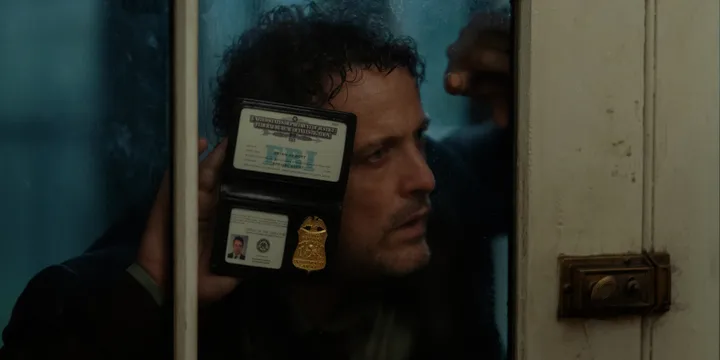
Season three promises new thrills, breathtaking stunts and shocking secrets, as Peter is called to track down a treasury agent leaking government intel.
The actor leads a cast that also includes the returning faces of Fola Evans-Akingbola’s special agent Chelsea, Amanda Warren as Peter’s handler and Louis Herthum’s intelligence broker Jacob, alongside some intriguing new additions.
And if you’re wondering where you’ve seen these new cast members before, here’s a quick guide to where you might know them from…
David Lyons

Chris Saunders/Netflix © 2024
David Lyons plays Adam, a new partner whom Peter must decide whether or not to trust.
The Australian actor is best known for playing Dr Simon Brenner in seasons 14 and 15 of ER, but more recently, he played FBI Agent Brian Abbott in another Netflix thriller, The Beast In Me, alongside Claire Danes and Matthew Rhys.
David also appeared in the post-apocalyptic drama Revolution and as a detective in Apple TV+’s crime drama Truth Be Told.
On the big screen, he had a minor role opposite Julia Roberts in Eat Pray Love, starred as a police detective in Safe Haven and played another detective in the Taron Egerton family drama She Rides Shotgun.
Jennifer Morrison

ABC Studios/Kobal/Shutterstock
Jennifer Morrison appears in the new series of The Night Agent as First Lady Jenny Hagan.
Audiences will likely recognise her for playing Dr. Allison Cameron in the medical-drama House, or Emma Swan in the family fantasy series Once Upon a Time.
She has also had recurring roles in How I Met Your Mother as Ted’s love interest Zoe, former soldier Cassidy Sharp in This Is Us and, last year, she had a guest role as Willow in the critically-panned All’s Fair.
Stephen Moyer

The British actor Stephen Moyer plays the mysterious and mercurial “The Father” in the third series of The Night Agent.
Before landing the role of the contract assassin in the Netflix drama, he played a killer of a different type – starring as Bill in True Blood alongside his now-wife, Anna Paquin.
In 2017, he played the lead in The Gifted, the well-liked but oft-forgotten X-Men spinoff, and has appeared in the TV adaptation of Sexy Beast and portrayed DI Mick Palmer in British crime drama Art Detectives.
You may also have seen him in the romance films After We Fell and its two sequels, where he played publishing company owner Christian Vance.
Genesis Rodriguez

CHRISTOS KALOHORIDIS/NETFLIX
Genesis Rodriguez joins the cast of the Netflix drama as the tenacious journalist Isabel.
She first found fame playing Sarah in Entourage, before joining the third series of The Umbrella Academy as Sloane.
On film, she made her big-screen debut in Man On A Ledge and went on to appear in Identity Thief as the criminal Marisol and as Agent Ellen Richards in The Last Stand.
Genesis also voices Honey Lemon in the Disney movie Big Hero 6 and its TV spinoff, and lends her vocals to Perfuma in She-Ra And The Princesses of Power.
In her most recent TV role, Genesis starred as Captain Josephina Carrillo in Lioness, sharing the screen with Nicole Kidman.
Callum Vinson

David Holloway/PEACOCK via Getty
Child actor Callum Vinson plays “The Son” to Stephen Moyer’s “The Father” in the latest instalments of The Night Agent.
He broke out as one of the young leads in the horror series Chucky, in which he starred as Henry Collins, and also had a role in Long Bright River, playing Amanda Seyfried’s on-screen son.
Callum will soon be joining another iconic horror franchise, playing a young Jason Voorhees in the upcoming Crystal Lake TV show, which will serve as a prequel to the classic Friday The 13th movies.
Suraj Sharma

Dune/Ingenious Media/Haishang/Kobal/Shutterstock
Suraj Sharma has a recurring role in the new series of The Night Agent as financial analyst Jay Batra.
The Indian actor is best known for his debut film role as Pi Patel in Life Of Pi, before going on to appear in seven episodes of Homeland, the Apple TV+ anthology show Little America and How I Met Your Father, starring as one of the lead characters, Sid.
The Night Agent season three is streaming now on Netflix.

“I just wished I helped her or she listened to me to not get into the car,” one of the witnesses said tearfully in court as she relived the hours leading up to Zahwa Mukhtar’s death.
Zahwa Mukhtar murder trial continues
The 27-year-old financial assistant suffered fatal injuries after being pushed from a parked silver Mercedes and assaulted by Duane Owusu, 36, in the early hours of 16 August last year.
She died from a single punch to the neck. The backwards fall led to a fractured skull and brain injury.
“He took it too far,” Paige Allen told the court on Thursday from behind a screen, adding that Zahwa “didn’t deserve to be thrown out the car”.
Describing Owusu’s demeanour, she said: “He just seemed so angry. He looked like a monster.”
“I offered to help her and he screamed at me to get in the car.”
On two occasions the panicked Mercedes driver turned back towards Zahwa, who lay motionless in Chadwell Heath Lane, Romford, while the group shouted at the defendant, known as “Nasty”, that she needed help.
“No one wanted to leave her,” Paige said, but the emergency services weren’t called.
When quizzed on why by prosecutor Henrietta Paget KC, she replied: “We wanted to, but at the same time, we [Paige and another female] were both petrified…He was screaming at us. It was just chaos.”
She added: “I remember Nasty just shouting, ‘Fucking leave her. No one cares about her,’ and then the car drove back off and we were stopped up the road by the police.”
Another opportunity to help Zahwa was missed when police carried out a stop and search of the group nearby. Paige was “scared” of Owusu, so didn’t alert police, fearing she could also be harmed, she told jurors.
“When I said, don’t get in the car, I just wished she listened”
Zahwa had travelled in the vehicle after encountering the group for the first time in Hackney.
It’s not known why Zahwa decided to get into the car, but it’s claimed her behaviour was “erratic” and she was “saying stuff that was out of the ordinary”. Paige said Zahwa had also been taking “laughing gas” that was being passed around.
Tearfully, she told jurors: “I think she was just there because the boys had laughing gas and she was chasing them for a high or something. I don’t think she knew what she was doing.”
However, it was a frustrating car journey. Paige said Zahwa had racially insulted her, repeatedly grabbed her hair and was poking her amongst other things.
“I was looking out the window just to avoid confrontation with her. I didn’t like the attitude from this girl. When I said, don’t get in the car, I just wished she listened.”
The tensions spilled outside of the car at least twice on route towards Dagenham, the court heard. The first time when Paige told the driver to pull into a petrol station and a second occasion in a residential street.
CCTV showed Zahwa shouting at Paige from the middle of the road with the defendant close by and Paige walking towards her before being led away by another male.
“We just wanted to go”
During cross examination, Paige denied being threatening towards Zahwa. “I wasn’t going towards her, I went to go towards her to tell her to stop, but she was shouting. She wouldn’t stop shouting. I had enough.”
She added: “We just wanted to go. We didn’t want to be with her. It was just one thing after another. I didn’t know where she thought she was going…There wasn’t one person in the car that wanted her in the car. Everyone at this point had had enough.”
However, the defendant and Zahwa went back into the Mercedes.
Events turned for the worse when Owusu saw Zahwa take out her phone to begin filming. A seconds-long clip recovered from her phone, in which nobody’s faces could be seen, was played in court.
Owusu demanded the driver to “Stop the fucking car,” according to Paige.
She said: “He was just saying, ‘You dumb bitch’ and he threw her phone and it was like he ejected her from the car. I remember her holding on to him and pleading with him to stop.
“She was on the floor on her bum. He just flung her out the car.
“He aimed two kicks at her, and this is when she tried to get herself back up again, and this is when he swung his arm and hit her. Like a punching motion with his fist.
“I was still in the car, but I tried to get out.”
Owusu, of Althorne Way, Dagenham, denies murder and manslaughter.
“I just wanted to go home” said witness in Zahwa Mukhtar trial
Paige and her “best friend” were on a night out when they came across the defendant and his group at a house rave in Hackney. They knew the men from Dagenham and she had known the defendant for just a few months.
“Because we knew them, we did linger with them,” she said, as she continued to describe how everyone was “partying” and “consuming drugs and alcohol”. She told jurors she had cocaine and ecstasy pills that were being “handed out amongst the boys”.
Paige left the venue feeling unwell from the drugs.
“I just wanted to go home,” she began. “I remember everyone was just going back to Dagenham. My phone was on 1%. I had no data. [My friend’s] phone was dead, I believed, so we had no way to get home. They said they were going back, so we said alright, we’ll go back with them, it’s just easier.”
When the driver received a call about another party, the plans changed, which prompted the journey to where they’d later meet Zahwa.
The Old Bailey trial continues.
Featured image via the Canary

Floyd Mayweather coming out of retirement again after Mike Tyson exhibition

Self-Reloading Magnet Dispenser Never Runs Dry

Northumberland Park station set to open this weekend


-

 Video5 days ago
Bitcoin: We’re Entering The Most Dangerous Phase
-

 Tech6 days ago
Luxman Enters Its Second Century with the D-100 SACD Player and L-100 Integrated Amplifier
-

 Crypto World4 days ago
Can XRP Price Successfully Register a 33% Breakout Past $2?
-

 Sports4 days ago
GB's semi-final hopes hang by thread after loss to Switzerland
-

 Fashion14 hours ago
Weekend Open Thread: Boden – Corporette.com
-

 Video1 day ago
XRP News: XRP Just Entered a New Phase (Almost Nobody Noticed)
-
 Tech4 days ago
The Music Industry Enters Its Less-Is-More Era
-

 Business3 days ago
Infosys Limited (INFY) Discusses Tech Transitions and the Unique Aspects of the AI Era Transcript
-

 Entertainment3 days ago
Kunal Nayyar’s Secret Acts Of Kindness Sparks Online Discussion
-

 Video4 days ago
Financial Statement Analysis | Complete Chapter Revision in 10 Minutes | Class 12 Board exam 2026
-

 Tech3 days ago
Retro Rover: LT6502 Laptop Packs 8-Bit Power On The Go
-
 Sports2 days ago
Clearing the boundary, crossing into history: J&K end 67-year wait, enter maiden Ranji Trophy final | Cricket News
-

 Entertainment2 days ago
Dolores Catania Blasts Rob Rausch For Turning On ‘Housewives’ On ‘Traitors’
-

 Business3 days ago
Tesla avoids California suspension after ending ‘autopilot’ marketing
-
 NewsBeat6 days ago
The strange Cambridgeshire cemetery that forbade church rectors from entering
-

 Crypto World3 days ago
WLFI Crypto Surges Toward $0.12 as Whale Buys $2.75M Before Trump-Linked Forum
-

 Politics4 days ago
Eurovision Announces UK Act For 2026 Song Contest
-
 NewsBeat6 days ago
Man dies after entering floodwater during police pursuit
-

 Crypto World1 day ago
83% of Altcoins Enter Bear Trend as Liquidity Crunch Tightens Grip on Crypto Market
-

 NewsBeat7 days ago
UK construction company enters administration, records show