

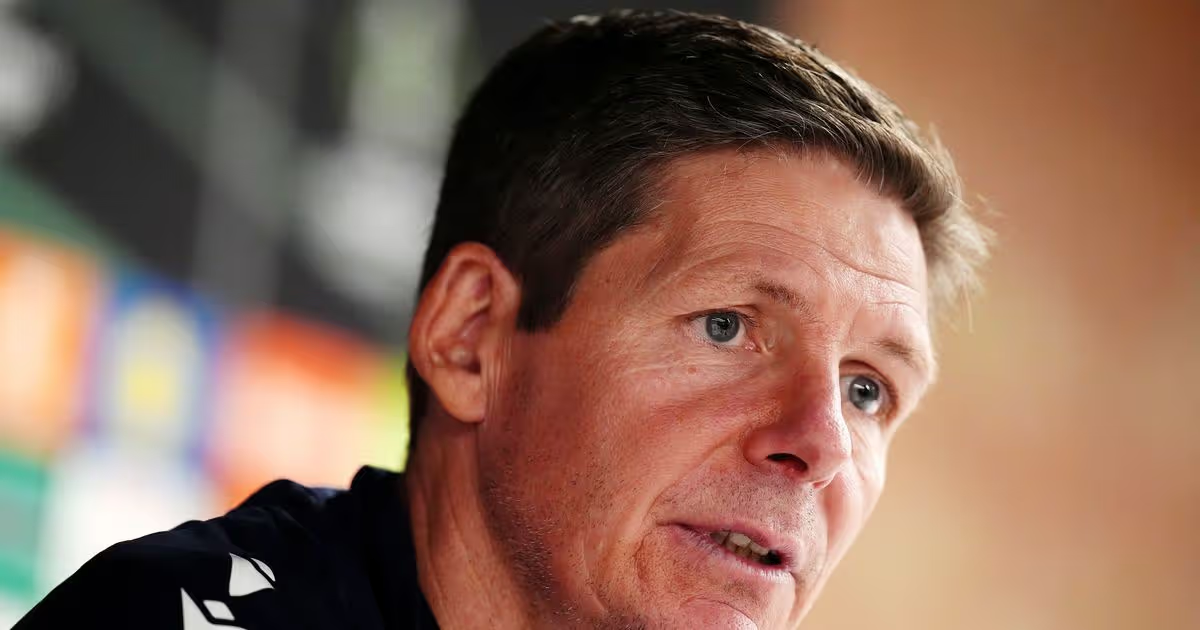
Oliver Glasner guided Crystal Palace to their first ever major honour by winning the FA Cup last season, but has lost a lot of credit with supporters in the months following their Wembley triumph
Oliver Glasner’s broken relationship with Crystal Palace fans has taken another hit with the departing boss warning them to stay humble.
The Austrian was the toast of Selhurst Park last year, after he guided the club to their first ever major honour by winning the FA Cup. He followed that up by winning the Community Shield in a magical spell for the Eagles.
But in the months following, he has grown increasingly frustrated after seeing the likes of Eberechi Eze and Marc Guehi leave the club.
Glasner has already confirmed he will be leaving at the end of the season, but his departure still may come before that. Palace fans chanted for Glasner to be sacked following the 1-1 draw with Zrinjski Mostar in the Conference League on Thursday night.
It then emerged that Palace could accelerate the 51-year-old’s exit, although it is now understood he will remain in place for a crucial run of fixtures. Palace sit just eight points ahead of the drop zone after a run which has seen them win once in the Premier League since the turn of the year.
READ MORE: West Ham have belief in Premier League relegation battle as Spurs and Forest push panic buttonREAD MORE: Furious Oliver Glasner responds to Crystal Palace sack calls as fans make feelings heard
MAKE THE MIRROR YOUR FIRST CHOICE! Click here to activate or add us as Preferred Source in your Google search settings
And Glasner remains unhappy with the Palace faithful calling for his head, suggesting certain supporters need to remember where they came from.
He said: “They can say and sing whatever they want. I know what I am doing. I would say the most important thing is stay humble. I think it’s the same for the fans.
“Stay humble. Never forget where you’re coming from. I think a few who are so critical in this situation are not humble anymore.
“Forget where you are coming from and usually in life you are punished for this. It would have been quite easy for me to step back earlier, [I had] many opportunities to be honest. I didn’t do it. I felt responsible for the team – especially for the players.”
Pressed on whether he will remain until the conclusion of the current campaign, he added: “Let’s see. What the future brings, we never know.”
In a prickly press conference before the home game with Wolves, Glasner also suggested that he wasn’t good enough to overcome the losses of some of their key players.
He continued: “I think Crystal Palace have had the best time in their history and I’ve played maybe a small part in these best 18-20 months.
JOIN US ON FACEBOOK! Latest news, analysis and much more on Mirror Football’s Facebook page
“We are not in the best moment right now. I understand and take responsibility for everything because I am responsible for the whole team.
“I am just not good enough to replace the players we sold. I am just not good enough to integrate the new players in a way that we can play the same way as we did. I am not good enough that we can cope with the schedule.”
Join our new WhatsApp community and receive your daily dose of Mirror Football content. We also treat our community members to special offers, promotions, and adverts from us and our partners. If you don’t like our community, you can check out any time you like. If you’re curious, you can read our Privacy Notice.
Sky Sports discounted Premier League and EFL package

Sky has slashed the price of its Essential TV and Sky Sports bundle ahead of the 2025/26 season, saving members £192 and offering more than 1,400 live matches across the Premier League, EFL and more.
Sky will show at least 215 live Premier League games next season, an increase of up to 100 more.