

Business
As Sentiment Softens, OneSpan's Cash Flow And Dividends Stand Out




The stud continues but a visitor centre and cafe closes as the rare-breed centre takes stock.
Business
Bitcoin Trades Near $68,000 on February 21, 2026, Amid Market Consolidation and Mixed Sentiment

Bitcoin hovered around $68,000 on Saturday, February 21, 2026, showing modest gains in early trading as the cryptocurrency attempted to stabilize after a volatile start to the year that saw it log its weakest first 50 days on record.

The leading digital asset traded at approximately $68,100 to $68,200 in the latest 24-hour period, according to aggregated data from major exchanges and trackers like Yahoo Finance, CoinMarketCap and Investing.com. It opened the day near $67,996, reached a high of about $68,212 and dipped to a low of $67,596 before settling in the mid-$68,000 range. This represented a slight uptick of roughly 0.3% to 1% from the previous close, with trading volume moderate at around $43-47 billion over the prior day.
The price action comes as Bitcoin continues to consolidate in a symmetrical triangle pattern, with key resistance near $68,500 and support around $65,500 to $66,000. A breakout above the upper boundary could signal renewed bullish momentum, while a drop below support might trigger further downside toward $60,000 or lower, analysts warn.
The cryptocurrency has faced significant headwinds in 2026 so far. Through the first 50 days of the year, Bitcoin declined about 23%, marking its poorest start to a calendar year ever recorded, per Checkonchain data. January saw a roughly 10% drop, followed by an additional 15% slide in February — a rare back-to-back monthly decline for the asset. From its October 2025 all-time high near $126,000, Bitcoin has shed nearly 50%, reflecting broader market deleveraging and waning confidence in high-risk assets.
Several factors contributed to the weakness. Institutional outflows from U.S. spot Bitcoin ETFs totaled billions in recent weeks, with heavy net redemptions pressuring prices. On-chain metrics from Santiment showed small retail wallets increasing holdings by 2.5% since the October peak, while large “whale” holders trimmed positions by 0.8%. This divergence suggests retail buyers stepping in amid fear, but a sustained rally may require bigger players to re-engage.
Extreme sentiment readings added to the caution. The Fear & Greed Index hit single-digit levels around 8 in mid-February, signaling “extreme fear” among participants. Retail traders remained heavily long at 66.8%, creating a contrarian bearish signal. Leverage in the futures market rose, heightening risks of liquidations if volatility spikes.
Geopolitical tensions, macroeconomic uncertainty and a loss of momentum in related narratives like AI-driven growth also weighed on sentiment. Bitwise CIO Matt Hougan noted in a recent podcast that the February 5 drop to the mid-$60,000s was “shocking” but not necessarily the “final cathartic bottom,” suggesting more shakeouts ahead before a recovery.
Despite the challenges, some positive undercurrents emerged. Institutional accumulation persisted in certain metrics, with coins moving off exchanges — a sign of long-term holding. Bitcoin Cash, a fork of Bitcoin, set transaction volume records in February amid the broader fear, highlighting niche resilience in the ecosystem.
Prediction markets reflected uncertainty. On platforms like Polymarket and Kalshi, contracts for Bitcoin’s price on February 21 clustered around $66,000-$68,000 ranges, with probabilities favoring consolidation in that band. Broader forecasts for the quarter pointed to potential recovery toward $70,000-$79,000 by end-Q1, though downside risks to $56,000 lingered if support breaks.
Market observers remain divided. Some see the current dip as a healthy correction in a longer bull cycle, driven by orderly deleveraging rather than capitulation. Others warn of structural weaknesses, including high leverage and weak institutional inflows, that could prolong the downturn.
Bitcoin’s market capitalization stood around $1.35 trillion to $1.36 trillion, maintaining its dominance in the crypto space. The asset’s volatility persisted, with daily swings underscoring the need for caution among traders and investors.
As February progresses, all eyes remain on key levels, ETF flows and macroeconomic developments. Whether Bitcoin can reclaim higher ground or faces further tests will likely depend on renewed buying interest from institutions and a shift in broader risk sentiment.
For now, the cryptocurrency trades in a tight range, offering little clarity on its next major move in what has been a challenging 2026 so far.
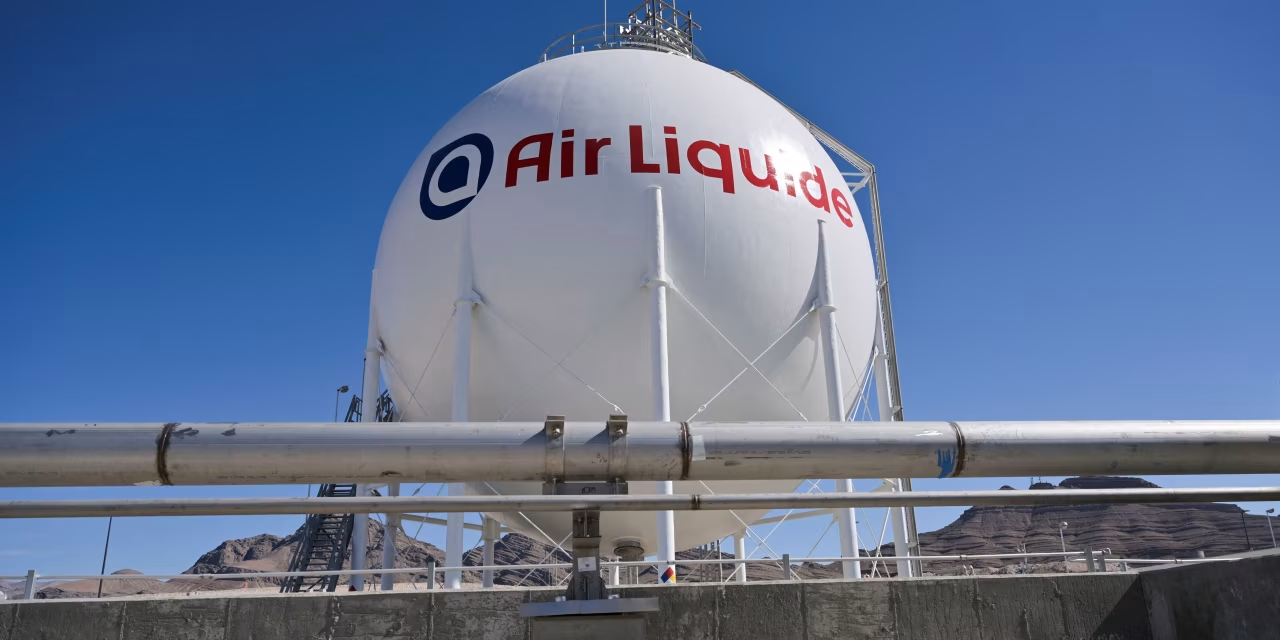
Air Liquide AI 4.80%increase; green up pointing triangle posted a rise in full-year net profit, supported by strong momentum and higher revenue in its gas and services businesses.
The French industrial-gases company said Friday that net profit for 2025 rose by 6.4% on a reported basis to 3.52 billion euros ($4.14 billion), while revenue increased by 2% on a comparable basis to 26.94 billion euros.
Copyright ©2026 Dow Jones & Company, Inc. All Rights Reserved. 87990cbe856818d5eddac44c7b1cdeb8

Australian fashion continues to captivate global audiences in 2026, blending laid-back coastal elegance, innovative sustainability and sophisticated tailoring. With strong showings at Australian Fashion Week Resort collections and growing international presence on platforms like Net-a-Porter and Ssense, homegrown labels are leading trends in effortless luxury, minimalist staples and bold occasion wear.

Vogue Australia, Broadsheet and RUSSH have highlighted standout brands in recent roundups, reflecting a mix of established powerhouses and rising talents. Here’s a look at the 10 best Australian fashion brands making waves this year:
1. **Zimmermann**
The Sydney-based label remains a benchmark for romantic, feminine dressing. Known for intricate lace, floral prints and flowing silhouettes, Zimmermann’s Resort 2026 offerings emphasized ethereal gowns and beach-ready separates. Celebrities like Margot Robbie and Zendaya continue to champion the brand, driving its status as Australia’s most internationally recognized export.
2. **Christopher Esber**
Praised for architectural tailoring and sensual draping, Esber secured top spots in Vogue and RUSSH lists. His collections feature bold cuts, asymmetric details and a modern edge that appeals to fashion-forward buyers. The label’s international acclaim, including awards and stockists in Paris and New York, cements its position as a leader in contemporary Australian design.
3. **Aje**
A favorite for event dressing and everyday chic, Aje blends dramatic silhouettes with wearable elegance. Balloon hems, impressionist-inspired prints and watery palettes dominated its recent shows. Frequently cited in Broadsheet and Marie Claire for occasion wear, Aje offers accessible luxury that resonates with a broad audience.
4. **Camilla and Marc**
The sibling duo delivers bohemian luxury with effortless Australian flair. Flowing dresses, relaxed tailoring and premium fabrics make it a go-to for versatile wardrobes. Vogue Australia named it among the top for 2026, highlighting its consistent appeal in workwear and casual sophistication.
5. **Sir.**
Known for bold prints, structured pieces and confident femininity, Sir. excels in statement-making occasion wear. Its collections feature vibrant colors and modern cuts, earning praise from Broadsheet and Vogue for event-ready designs that stand out without overwhelming.
6. **Alemais**
This label shines with whimsical prints, romantic details and sustainable practices. Alemais frequently appears in Broadsheet and Elle roundups for its occasion pieces and everyday elegance, blending artistry with wearability in a distinctly Australian way.
7. **Matteau**
Specializing in swim and resort wear, Matteau has expanded into ready-to-wear with minimalist, high-quality essentials. Its clean lines and premium fabrics position it as a favorite for coastal luxury, appearing in Vogue’s 2026 best-of lists for its timeless appeal.
8. **Anna Quan**
Focused on elevated basics and sophisticated tailoring, Anna Quan offers polished pieces ideal for work and beyond. Broadsheet and Vogue highlighted its refined aesthetic, with clean silhouettes and quality fabrics that embody understated Australian style.
9. **St. Agni**
The Byron Bay-born brand champions minimalist, ethical design with neutral palettes, luxurious textures and versatile staples. Praised across Marie Claire and Broadsheet for everyday essentials like tailored trousers and elegant dresses, St. Agni emphasizes sustainability and longevity.
10. **Macgraw**
Emerging as a standout for tactile, handcrafted pieces, Macgraw incorporates feathering, unique textures and artistic details. Featured in Vogue and Resort 2026 reports, the label brings a fresh, artisanal perspective to Australian fashion, appealing to those seeking distinctive, elevated designs.
These brands reflect broader 2026 trends: a shift toward color pops (bright reds, yellows), tactility and sustainability amid global influences. Australian Fashion Week Resort showcased collaborations and innovation, with labels like Carla Zampatti and Lee Mathews celebrating heritage while pushing boundaries.
The industry’s strength lies in its diversity — from affordable everyday options to high-end couture — supporting local economies and global wardrobes. As international buyers flock to Sydney shows, these 10 brands lead the charge, proving Australian fashion’s enduring appeal lies in effortless style, quality craftsmanship and a uniquely sunny spirit.

The dollar was trading steady against a basket of currencies ahead of U.S. data that could prompt markets to adjust interest-rate cut expectations.
PCE inflation data, the Federal Reserve preferred measure of inflation, and advance fourth-quarter economic growth data are both due at 8:30 a.m. Eastern time. The flash S&P purchasing managers’ survey will also be released at 9:45 a.m.
Markets are closely monitoring data as the outlook for the rate path remains unclear with the Fed’s latest meeting minutes highlighting policymakers remain divided.

NYSE Holdings UK Ltd streamlines market access with new platform launch
Slow Growers: Stability in Volatile Times
Slow growers are mature companies with modest earnings expansion and steady dividends, and they continue to play a stabilising role in portfolios when markets turn choppy. With inflation still influencing real returns, investors are becoming more selective, favouring businesses with strong balance sheets and predictable cash flows rather than chasing yield blindly. While these stocks may not deliver outsized gains, they can help cushion downside during corrections.
Also read: US Supreme Court ruling overturning Trump tariffs could spook bond vigilantes
Stalwarts: Quality at the Core
Stalwarts — large, high-quality companies with consistent growth — remain the backbone for many investors navigating uncertain conditions. As global cues swing sentiment quickly, capital often rotates into such names because of their resilience and earnings visibility. Accumulating these businesses during dips can provide steady compounding over time, especially as investors prioritise quality over speculation.
Fast Growers: Searching for the Next Multibagger

Fast growers continue to attract attention as investors hunt for high-growth opportunities in themes like digital transformation, manufacturing expansion, and emerging technologies. However, elevated valuations mean growth must be backed by real earnings delivery rather than narratives alone. Careful stock selection and patience are crucial in this segment.
Cyclicals: Riding Economic Waves
Cyclical stocks — including sectors linked to economic activity such as commodities, capital goods, and autos — are experiencing sharper swings amid shifting global growth expectations. These businesses can generate strong returns when conditions improve, but timing and an understanding of industry cycles are essential because profits can reverse quickly if macro trends weaken.
Turnarounds: Opportunity with Caution
Turnaround stories are emerging as companies restructure, reduce debt, or benefit from improving industry conditions. While such opportunities can offer meaningful upside, they require careful analysis because not all recovery stories succeed. Investors are focusing on clear catalysts like improving cash flows, management changes, or supportive policy environments.
Asset Plays: Unlocking Hidden Value
Asset plays — companies whose underlying assets or investments may be undervalued — are gaining attention as themes like value unlocking, demergers, and strategic listings gather momentum. These opportunities often require patience, as the gap between intrinsic value and market price can take time to close, but they can reward investors willing to wait.
Also read: AI sore big tech cos’ artificial splurge eats into stock buybacks
A Timeless Framework for Modern Investors
Applying Lynch’s approach in current market conditions encourages investors to look beyond short-term headlines and instead focus on what kind of stock they own, what returns to expect, and what risks could challenge the investment thesis. In a market shaped by rapid change yet recurring cycles, this disciplined framework can help investors stay grounded and make more informed decisions.
(Disclaimer: Recommendations, suggestions, views, and opinions given by experts are their own. These do not represent the views of the Economic Times)

We, as consumers, see the shiny end product. We see a chatbot answering questions, an app recommending movies, or a stock exchange or bank detecting fraud in milliseconds. What we don’t see is the immense work behind the curtain.
AI infrastructure spans multiple areas-land and buildings; massive electricity generation capacity and distribution grids; cooling facilities; chips (with continuous upgrades, because yesterday’s chip is already a fossil); memory and storage devices; fibre and spectrum to build networks; software and its upgrades; data centres; physical and cyber security; the availability of skilled talent; and finally, the oxygen of it all-capital.
While we usually think AI infrastructure means “data centre,” the reality is much broader. Power plants must generate electricity. Transmission lines must carry it. Distribution grids must ensure an uninterrupted supply. Fibre must carry data at lightning speed. Spectrum must ensure connectivity. Cooling systems must prevent servers from behaving like overworked pressure cookers in May. Every piece is part of the AI infrastructure ecosystem, often loosely referred to as “data centres.”
While a number of estimates and projections are being discussed, the fast pace of evolution is constantly reshaping them. However, let’s still look at some numbers. India generates roughly 20% of the world’s data but has only about 2% of global data storage and processing capacity. That mismatch is not just a statistic; it is an opportunity knocking loudly.
Going forward, global data centre capacity requirements are estimated at around 250 GW by 2030, of which about 120 GW already exists, and 130 GW of new capacity will be required. If India were to match its 20% share of global data generation, we would need approximately 50 GW of capacity over the next few years.
A rule of thumb suggests that the all-in cost of related infrastructure, both direct and indirect, could be in the region of US$40 billion per GW. Multiply that by 50 GW, and we are staring at an investment requirement of roughly US$2 trillion.For perspective, we still remember the famous infrastructure estimates highlighted in the mid-1990s by Dr Rakesh Mohan, when the required investment numbers seemed astronomical. In 2019, the BJP election manifesto spoke of investing ₹100 lakh crore in infrastructure. At the time, those figures sounded bold. Today, we are discussing almost US$2 trillion (approximately ₹200 lakh crore) for one sector alone-AI infrastructure.
Most of this investment is likely to be driven by the private sector, either independently or in partnership with foreign investors. This could well become the single largest focused private-sector investment theme in India’s history. The key question then is: are we equipped to finance it?
Let’s analyse the nature of the financing requirement. Unlike venture capital bets on apps that may or may not survive the next funding winter, AI infrastructure is largely backed by long-term contracted revenues. A data centre, for instance, is typically leased to a large domestic or global technology service provider under long-term agreements, often spanning 20 to 25 years. This is not very different from a Power Purchase Agreement in the electricity sector, a toll road concession, or a long-term commercial lease. In other words, these are stable, predictable, annuity-like cash flow assets. Pension funds love them. Insurance companies adore them. Sovereign wealth funds feel comfortable investing in them.
Encouragingly, Indian capital markets have matured significantly over the last decade. We now have long-term corporate bond markets steadily deepening. We have REITs and InvITs that allow infrastructure assets to be monetised and refinanced through capital markets. We have seen renewable energy platforms raise billions through public and private markets. The creation of Infrastructure Debt Funds (IDFs) to facilitate take-out financing has also strengthened the ecosystem.
In fact, India is now financing a significant part of private infrastructure spending through capital markets-a structural shift from the earlier era of bank-dominated financing. This diversification is critical when facing multi-trillion-dollar opportunities.
Will everything be smooth? Of course not. Regulatory tweaks will be required. Power distribution reforms must continue. Land acquisition processes must become more efficient. Spectrum policy must remain stable. Tax structures should encourage long-term capital. Cybersecurity frameworks must be robust. Talent development must accelerate. But structurally, the ingredients are falling into place.
There is also a strategic angle. AI infrastructure is not just a commercial opportunity; it is a national competitiveness issue. Countries that host data, control compute power, and build digital capacity will shape the next economic cycle. If India generates 20% of the world’s data but stores only 2%, we are effectively exporting digital raw material and importing digital finished goods. That equation must change.
The good news is that we have done this before. Telecom looked impossible in the 1990s. Renewable energy looked aspirational in the 2000s. Highways seemed ambitious in the early 2000s. Each time, capital markets adapted, innovated, and scaled. AI infrastructure is the next chapter.
Also read: AI sore big tech cos’ artificial splurge eats into stock buybacks
So, is India’s capital market geared up to support the financing needs of AI infrastructure? In my view, yes-with the right policy nudges, regulatory fine-tuning, and institutional participation. Our AI revolution may be coded in silicon, but it will be financed in rupees, increasingly through our capital markets. And if we get this right, the servers may hum quietly in the background, but the economic growth will make a very loud noise indeed.
(Disclaimer: Recommendations, suggestions, views, and opinions given by experts are their own. These do not represent the views of the Economic Times)
Business
Macron says US Supreme Court tariff ruling shows it is good to have counterweights to power in democracies
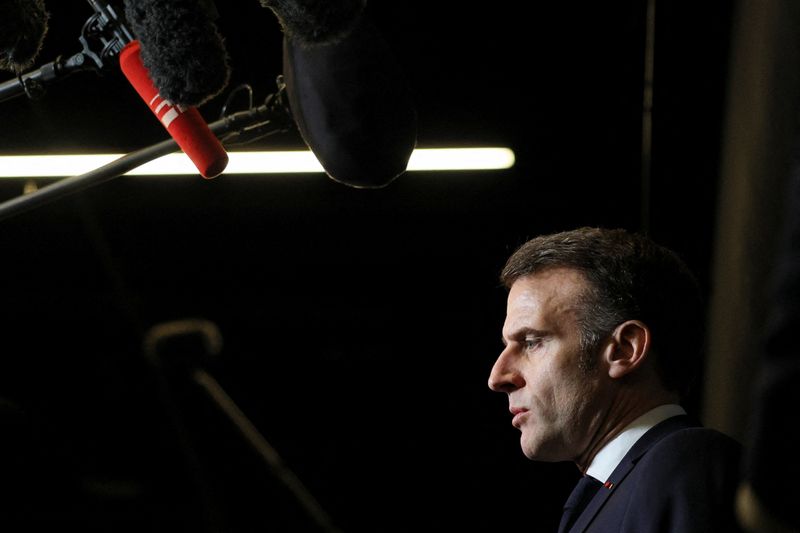

Macron says US Supreme Court tariff ruling shows it is good to have counterweights to power in democracies

chief executive said the gold producer is focused on developing its own growth options after a failed bid for Predictive Discovery and has no current plans to sell its stake in the Africa-focused explorer.
Australia-listed Perseus in December offered to buy Predictive Discovery in a deal valuing the explorer at more than US$1.3 billion. The proposal was later overtaken by a merger deal with Canada’s Robex Resources.
Copyright ©2026 Dow Jones & Company, Inc. All Rights Reserved. 87990cbe856818d5eddac44c7b1cdeb8

Gamecocks HC Dawn Staley gives Joni Taylor the biggest “bouquet of flowers” after Texas A&M HC receives a valuable honor

How to watch England vs Ireland: Free Streams, TV Info
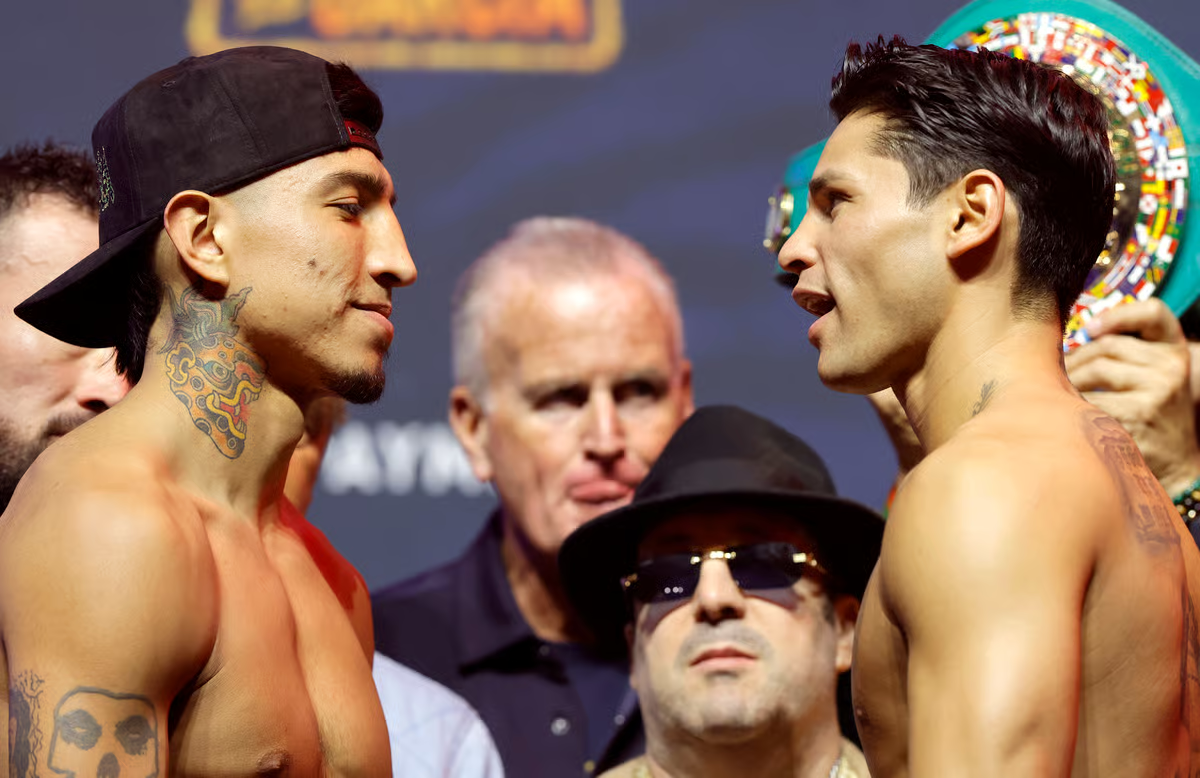
Barrios vs Garcia: Fight time, undercard, latest odds, prediction, ring walks tonight


-

 Video5 days ago
Bitcoin: We’re Entering The Most Dangerous Phase
-

 Tech6 days ago
Luxman Enters Its Second Century with the D-100 SACD Player and L-100 Integrated Amplifier
-

 Crypto World4 days ago
Can XRP Price Successfully Register a 33% Breakout Past $2?
-

 Sports4 days ago
GB's semi-final hopes hang by thread after loss to Switzerland
-

 Fashion15 hours ago
Weekend Open Thread: Boden – Corporette.com
-

 Video1 day ago
XRP News: XRP Just Entered a New Phase (Almost Nobody Noticed)
-
 Tech4 days ago
The Music Industry Enters Its Less-Is-More Era
-

 Business3 days ago
Infosys Limited (INFY) Discusses Tech Transitions and the Unique Aspects of the AI Era Transcript
-

 Entertainment3 days ago
Kunal Nayyar’s Secret Acts Of Kindness Sparks Online Discussion
-

 Video4 days ago
Financial Statement Analysis | Complete Chapter Revision in 10 Minutes | Class 12 Board exam 2026
-

 Tech3 days ago
Retro Rover: LT6502 Laptop Packs 8-Bit Power On The Go
-
 Sports2 days ago
Clearing the boundary, crossing into history: J&K end 67-year wait, enter maiden Ranji Trophy final | Cricket News
-

 Entertainment3 days ago
Dolores Catania Blasts Rob Rausch For Turning On ‘Housewives’ On ‘Traitors’
-

 Business3 days ago
Tesla avoids California suspension after ending ‘autopilot’ marketing
-
 NewsBeat6 days ago
The strange Cambridgeshire cemetery that forbade church rectors from entering
-

 Crypto World3 days ago
WLFI Crypto Surges Toward $0.12 as Whale Buys $2.75M Before Trump-Linked Forum
-

 Politics4 days ago
Eurovision Announces UK Act For 2026 Song Contest
-
 NewsBeat6 days ago
Man dies after entering floodwater during police pursuit
-

 Crypto World2 days ago
83% of Altcoins Enter Bear Trend as Liquidity Crunch Tightens Grip on Crypto Market
-

 NewsBeat7 days ago
UK construction company enters administration, records show