Connect with us

Tech

Gartner $110M sale of Digital Markets division in latest SEC filing

Published

on

When Gartner first disclosed that it had agreed to part with its Digital Markets ( business unit that included its major software review, specifically Capterra, GetApp, and Software Advice) business in early 2026, the announcement was forward-looking and economical with detail: it named the buyer and the assets involved, but it left out any financial terms. 

That lack of financial detail naturally made people wonder exactly how much the transaction was worth.

It was only later, in the company’s audited annual report on Form 10-K, filed on February 12, 2026, that a clearer picture of how the transaction was treated in the company’s regulatory filings became visible. That document, which is public, notes that the sale was completed on February 5, 2026, placing the divestiture within the broader contours of Gartner’s financial disclosures. 

This most recent filing, accession number 0000749251-26-000112, stands in stark contrast with Gartner’s prior 10-K, covering the year ended December 31, 2024, and filed on February 13, 2025, under accession 0000749251-25-000008

Advertisement

In that earlier report, there is no reference to this transaction or to any figure associated with it, consistent with the fact that the deal was not agreed or closed until 2026. 

The January 29, 2026 announcement publicly identified G2 as the buyer, and specified the assets involved: Capterra, Software Advice, and GetApp, but it did not disclose any financial terms, a detail that was equally absent from contemporaneous coverage. 

In Gartner’s 10-K, the recorded consideration is described as being “before customary purchase price adjustments,” a phrase that signals the number reported in the filing is an initial headline value that may change once post-closing reconciliations tied to balance sheet items are completed.

These adjustments are common in sales agreements and are meant to align the agreed price with the business’s actual financial situation at closing. 

A related 8-K filed on February 3, 2026, which included an earnings release, did not include any price details about the sale.

Advertisement

When we looked for the earliest relevant documents, we found that an earlier annual report,  Form 10-K filed on February 13, 2025 (accession 0000749251-25-000008), covers Gartner’s results through the end of 2024 and makes no reference to Digital Markets or the brands that were later sold. 

That absence simply reflects the timing: the deal was agreed and completed in 2026, so it could not have been reported in a document covering the prior year.

Thus, the first SEC filing in which the transaction clearly appears is Gartner’s 10-K for the year ended December 31, 2025, filed on February 12, 2026, under accession 0000749251-26-000112.

It is in this later annual report that Gartner formally records the sale of the business and constitutes the first document in the public record to show how the company accounted for the transaction in its audited disclosures. 

Advertisement

Reading the February 12, 2026, 10-K, the Digital Markets sale shows up in several sections. Early in the document, in the business overview, Gartner notes that the sale was completed on February 5, 2026, alongside the headline figure that appears in the record. 

Later in the same report, in a section discussing recent developments, the company lays out the context around the divestiture, reporting that Digital Markets was classified as “held for sale” as of December 31, 2025, and listing the related assets and liabilities on the balance sheet.

The same description of the sale is repeated once more in a note on subsequent events, which walks through the timeline from signing to closing. 

Notably, none of these references in the annual report names the buyer. Within the text of the 10-K, a search reveals that “G2” and the individual brands that were part of the business being sold do not appear, underscoring that Gartner’s disclosure is focused on the transaction as a financial event rather than on the identity of the counterparty. 

Advertisement

When a company states that a sale price is described as being “before customary purchase price adjustments,” it means the number reported is only a starting point.

In most deals, the buyer and seller agree on an initial figure but include mechanisms in the contract that can revise that figure after closing to reflect the business’s actual financial position at transfer of control. 

These post-closing adjustments are designed to ensure a fair final amount based on what the business truly delivered at closing, rather than on estimates made when the agreement was signed. 

The most common of these adjustments is tied to working capital, the cash and short-term assets a business needs to operate. Parties negotiate a target level; if the actual working capital at closing is higher than expected, the seller may receive more. If it’s lower, the buyer may pay less. 

Advertisement

Other adjustments can relate to net cash or debt, where the purchase price is recalculated based on the actual cash and debt assumed by the buyer, and to mechanisms such as escrows or deferred payments that hold portions of the sale price until certain conditions are resolved. 

Because Gartner’s public filing does not include the underlying sale agreement or a detailed reconciliation of these adjustment mechanisms, the exact formulas or thresholds that could change the final amount are not visible in the public record. 

What the 10-K does make clear is that the figure reported is a headline number, subject to later review and revision once the closing accounts are finalized. 

In many deals, the headline price is agreed on a “cash-free, debt-free” basis, meaning that after closing, the buyer and seller adjust the purchase price to reflect the target business’s actual cash and debt position. 

Advertisement

If the business ends up with more debt or less cash than expected, the effective price the seller receives can be reduced. Conversely, if it has more cash or less debt than anticipated, it can increase the amount paid. 

In Gartner’s public disclosures, there is no way to tell from the 10-K whether the Digital Markets sale was structured this way or how any such adjustment would be calculated because the underlying agreement and detailed terms are not part of the filings. 

What the 10-K does show is the initial figure; whether and how it changes through these common adjustment mechanisms remains outside the public record. 

Gartner’s most recent Form 10-K, filed on February 12, 2026, shows that the company completed the sale of its Digital Markets business on February 5, 2026, using language that describes the consideration as “approximately $110.0 million, before customary purchase price adjustments.” This is the only financial figure tied to the deal that appears in the public filings. 

Advertisement

The earlier public announcement from January 29, in which G2 said it had agreed to buy Capterra, Software Advice, and GetApp from Gartner, did not include any financial terms, and subsequent media coverage similarly reported that price details were not disclosed at the time.

In filings, the phrase “purchase price adjustments” refers to standard mechanisms in sale agreements, often tied to working capital and other balance-sheet items, that can increase or decrease the final amount paid after closing. 

Gartner’s 10-K does not name the buyer in the sale disclosure, but it confirms the closing date and the approximate consideration while noting that the figure could change through those adjustments. 

Taken together, Gartner’s own regulatory filings tell a more complete story of the Digital Markets sale than the initial announcement did. The only financial detail available in the public record comes from the company’s 10-K, which notes the closing date and describes the consideration in broad terms, but it leaves several questions unanswered. 

Advertisement

We also reached out to both sides for further comment and clarification ahead of publication, seeking confirmation of the figures, insight into the structure of the deal, and any context that might illuminate how the transaction was negotiated and reported. 

By the time of publication, neither party had responded.

Source link

Advertisement
Continue Reading
Click to comment

Leave a Reply

Your email address will not be published. Required fields are marked *
Tech

Low-noise microwave amplifiers bring quantum computers closer to scale

Published

on


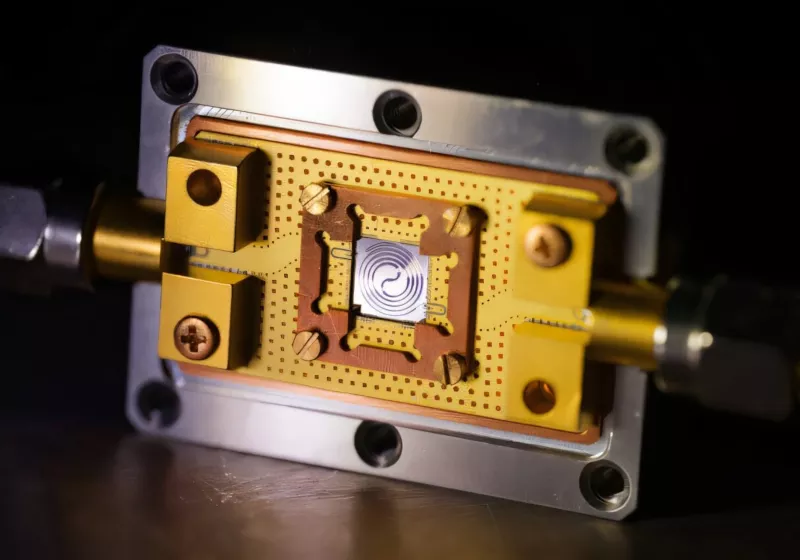
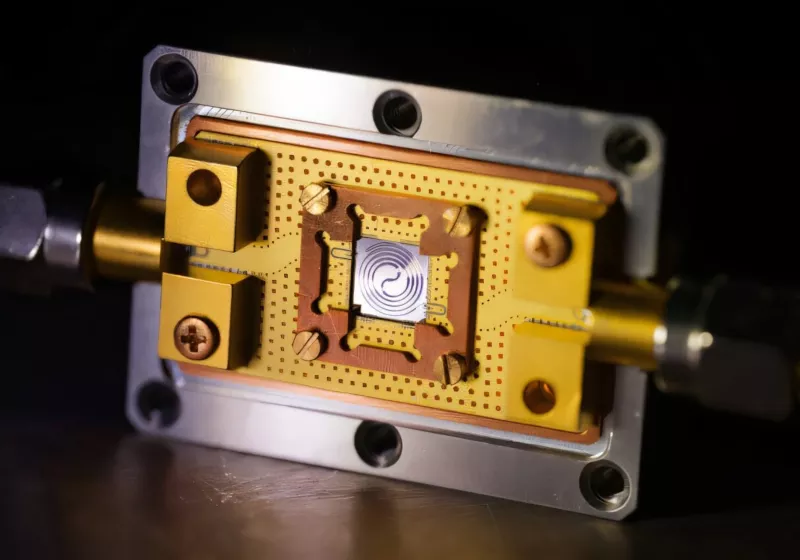
It is a crucial component in superconducting quantum architectures, where even minimal noise can overwhelm a qubit’s delicate state. In conventional designs, energy losses in dielectric materials have been a primary source of excess noise, adding more than a photon’s worth during amplification and blurring qubit measurement results.
Read Entire Article
Source link

Continue Reading

Tech

Pro-Ject Debut Reference 10 Arrives at Bristol 2026 While New U.S. Distribution Signals Strategic Shift

Published

on

Big moves are unfolding for Pro-Ject Audio Systems on both sides of the Atlantic this weekend. At the Bristol Hi-Fi Show 2026, the Austrian analog specialist is set to unveil the Debut Reference 10, a new flagship for its long-running Debut turntable range. At the same time, the company has confirmed a major shift in its U.S. strategy with the appointment of a new exclusive distributor, effective March 1, 2026.

The Debut Reference 10 moves the series further upmarket with a 10-inch tonearm built from a carbon-fibre and aluminium sandwich construction, positioning it as the most technically ambitious model yet within the Debut lineup. It signals that Pro-Ject is not content to let its entry-level reputation define the brand’s ceiling; the original Debut PRO was awarded our Editors’ Choice Award twice in the turntable category and was replaced by the Debut PRO B in 2024.

Equally significant is the U.S. announcement. Pro-Ject Audio Systems, part of the Vienna-based Audio Tuning Group, has named Stereo Distribution LLC as its new exclusive American distributor. The move formalizes a new structure for the U.S. market and confirms that the previous Pro-Ject alignment within the McIntosh Group ecosystem, alongside brands such as McIntosh, Sumiko, and Sonus faber under the Bose Luxury Group umbrella is no longer in place.

Debut Reference 10 Specifications

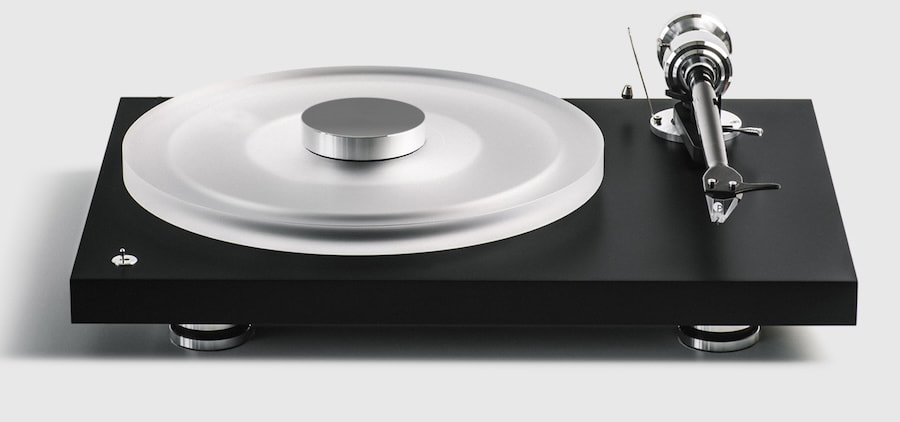
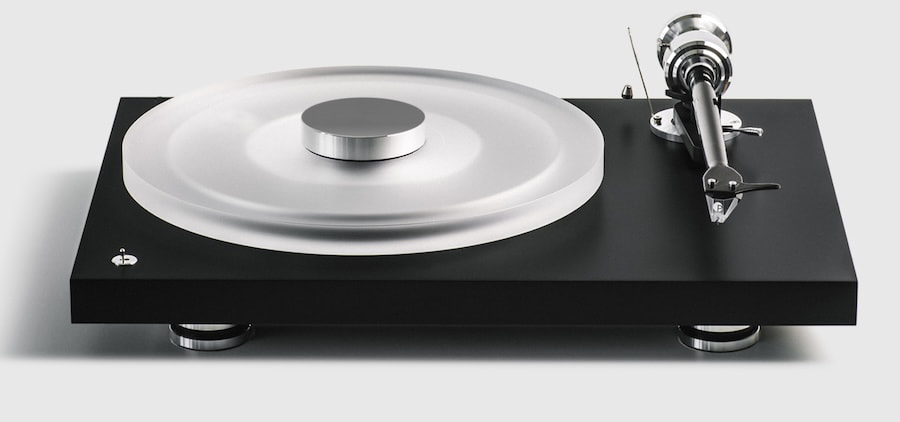
Pro-Ject Debut Reference 10 Turntable Front
Pro-Ject Debut Reference 10 Turntable

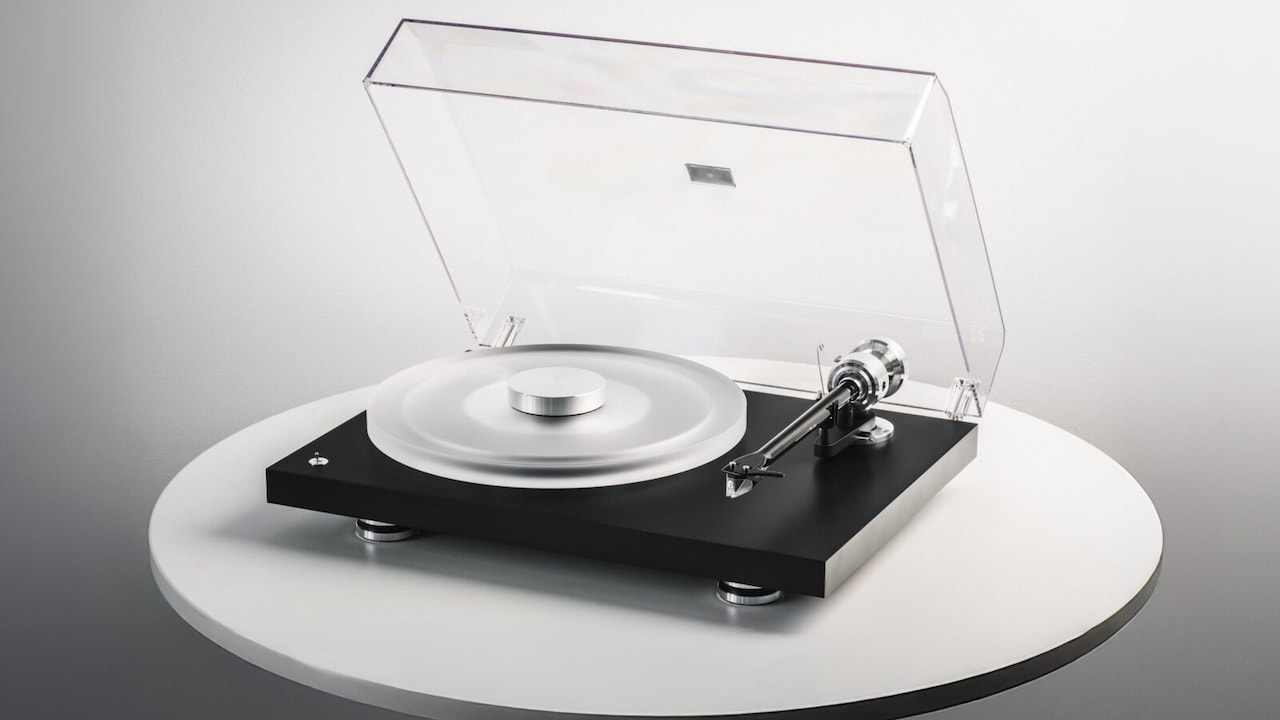
Pro-Ject Audio Systems positions the Debut Reference 10 as the most advanced model in its long-running Debut lineup, and the engineering choices reflect that step up.

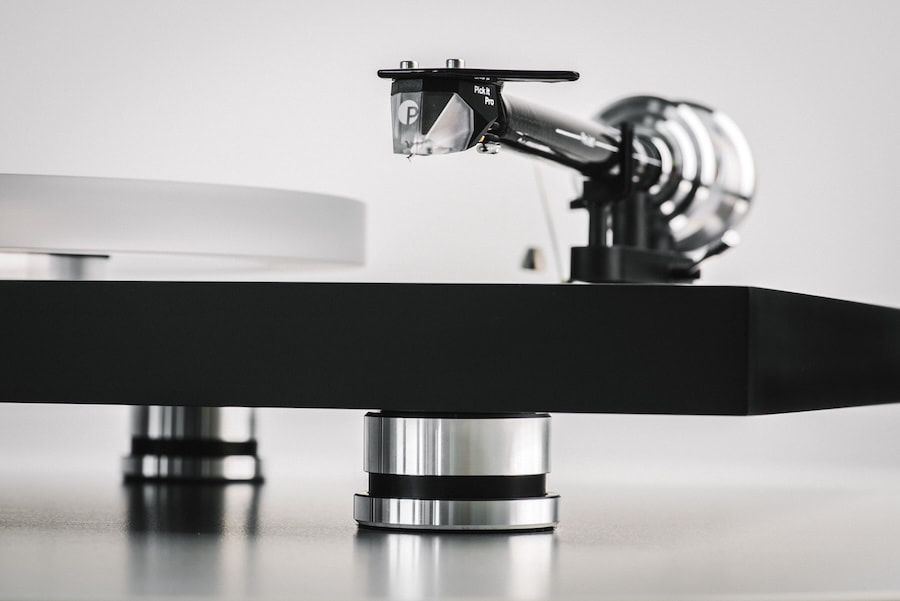
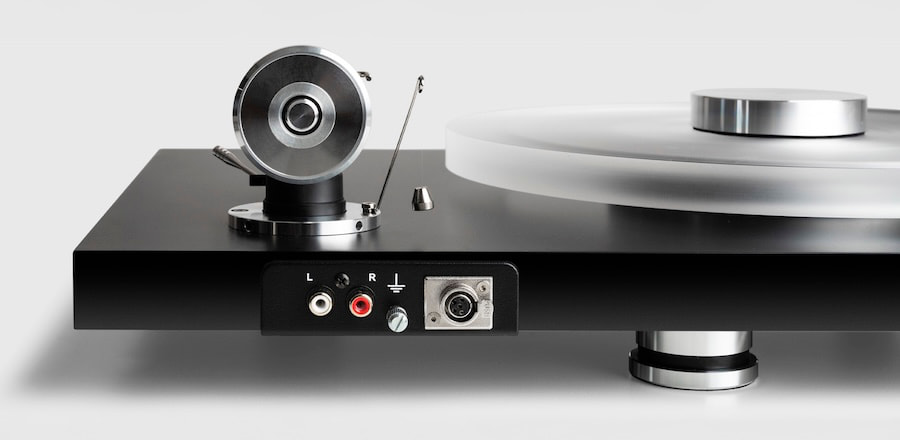
At its core, the turntable is fitted with Pro-Ject’s Pick it Pro Balanced cartridge and includes a Mini XLR balanced output. That combination allows for a true balanced signal path from cartridge to phono stage, which can reduce noise and improve signal integrity over longer cable runs. However, it does require a compatible balanced phono preamp to take advantage of the connection. Without one, you will not unlock the full benefit of the balanced design.

Advertisement

The Debut Reference 10 uses a 300 mm acrylic platter, chosen for its inherent resonance resistance. This sits atop a diamond cut aluminum sub platter, adding mass and rotational stability. The platter bearing consists of a high precision stainless steel axle seated in a bronze bushing, designed to maintain smooth rotation and long term durability.

pro-ject-debut-reference-10-turntable-corner

The chassis is constructed from hand painted MDF and supported by three height adjustable, damped aluminum feet. These feet are designed to provide stable leveling while helping to reduce the risk of acoustic feedback, particularly in environments where speakers share the same surface or room structure.

This is a belt driven turntable with the motor fully decoupled and suspended within the base to minimize vibration transfer into the platter and tonearm assembly. Electronic speed control allows convenient switching between 33 and 45 RPM, while manually moving the included round belt enables playback of 78 RPM records.

A Puck E record weight is included in the box, designed to help secure records more firmly to the platter surface for improved contact and stability during playback.

Advertisement
pro-ject-debut-reference-10-tonearm

The 10 inch one piece carbon aluminum tonearm measures 254 mm in effective length and has an effective mass of 16.6 g. It supports both adjustable azimuth and vertical tracking angle (VTA). By loosening two grub screws, users can continuously adjust tonearm height to accommodate cartridges of varying body heights or different platter mat thicknesses. This level of adjustability is not always standard in this price category and allows for more precise cartridge alignment.

Performance specifications are competitive for the class. Wow and flutter is rated at ±0.16 percent at 33 RPM and ±0.14 percent at 45 RPM. Speed drift is specified at ±0.4 percent at 33 RPM and ±0.5 percent at 45 RPM. Signal to noise ratio is listed at 68 dB.

Advertisement. Scroll to continue reading.

Physically, the Debut Reference 10 is not some oversized statement deck. It measures 462 x 145 x 345 mm, which translates to roughly 18.2 x 5.7 x 13.6 inches (W x H x D), and tips the scale at 6 kg, or about 13.2 pounds net. Manageable, solid, and realistic for the kind of racks and consoles most people actually own. In the box, you get the essentials: a dust cover, a dedicated 78 RPM belt, and a 7-inch single adapter.

Advertisement
pro-ject-debut-reference-10-turntable-adjust
pro-ject-debut-reference-10-turntable-rear

The Bottom Line

Now here’s where it gets interesting.

The U.S. Supreme Court issued a ruling this morning related to tariffs that could have a meaningful impact on imported audio products. Could that work in favor of American buyers when this table finally lands? Possibly. But it’s far too early to know how that decision will ripple through distribution, freight, and final retail pricing. Anyone pretending they have clarity right now is guessing. It’s basically a mess.

And all of this unfolds against the backdrop of a bigger shift.

So while the Debut Reference 10 is the headline product, the more consequential story may be the business side. New flagship table. New U.S. distributor. Potential tariff recalibration. That is a lot of moving parts for one weekend and it suggests that the next chapter for Pro-Ject in the U.S. will look different than the last.

Advertisement

A new U.S. price list is expected shortly, and dealers are reportedly receiving updated pricing ahead of the March 1, 2026 transition. From what we understand, most existing Pro-Ject retailers should not see negative disruption as the new distribution structure takes effect. That said, whenever a brand shifts logistics, and billing systems, there is always the potential for short-term hiccups. It comes with the territory.

The current U.S. website, www.pro-jectusa.com, will be discontinued after March 1, 2026. Moving forward, product information will live on the global site at www.project-audio.com, aligning the U.S. more closely with the brand’s international presence.

Heinz Lichtenegger, CEO of Audio Tuning and the driving force behind Pro-Ject Audio Systems, has built the company over decades into one of the most dominant analog brands in Europe. With that kind of track record and with the U.S. market representing significant growth potential, there is little incentive to let this transition stumble. There is simply too much at stake, both commercially and reputationally.

Pro-Ject Debut Reference 10 Turntable Lid Open

Price & Availability

The finish is satin black, understated and safe. UK pricing is set at £999, with Australia confirmed at AU$2349. U.S. customers will have to wait a bit longer, and pricing is still to be announced.

Advertisement

For more information: project-audio.com

Source link

Continue Reading

Tech

OpenAI’s First ChatGPT Gadget Could Be a Smart Speaker With a Camera

Published

on

OpenAI is reportedly developing its first consumer hardware product: a $200-$300 smart speaker with a built-in camera capable of recognizing “items on a nearby table or conversations people are having in the vicinity.” It’s also said to feature Face ID-style authentication for purchases. The Verge reports: In addition to the smart speaker, OpenAI is “possibly” working on smart glasses and a smart lamp, The Information reports. (Apple may also be working on a smart lamp.) But OpenAI’s glasses might not hit mass production until 2028, and while OpenAI has made prototypes of gadgets like the smart lamp, The Information says it’s “unclear” if they’ll be released and that OpenAI’s devices plans are in early stages.

Source link

Continue Reading

Tech

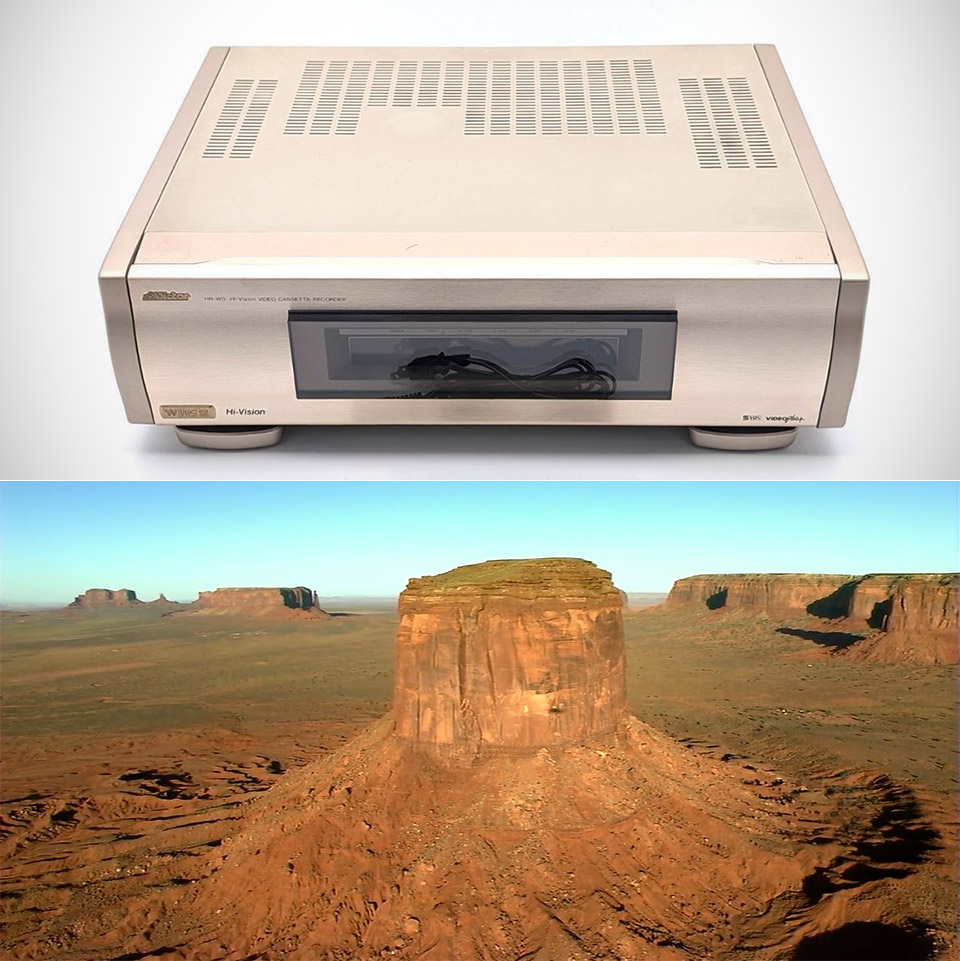
JVC’s W-VHS Player Introduced Us to the Strange World of Analog HD

Published

on

JVC W-VHS Player Analog HD
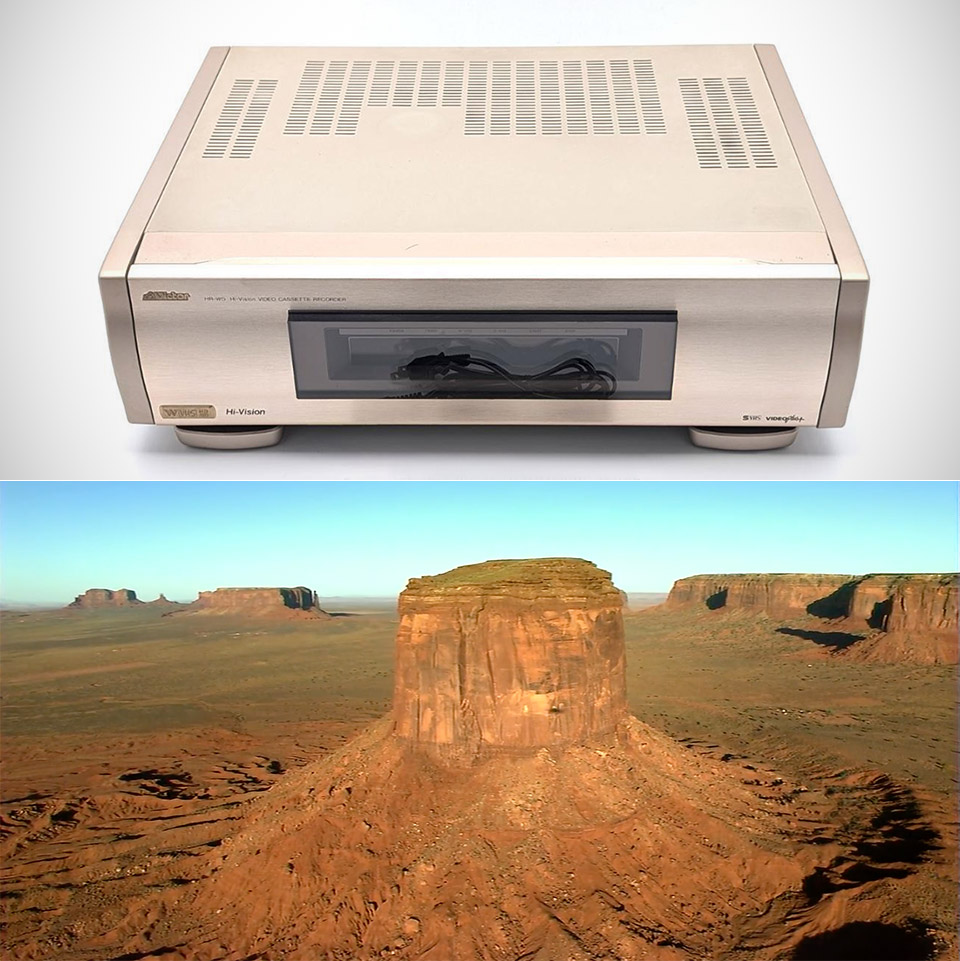
JVC’s W-VHS VCR made a splash in the analog tape world when it debuted in 1993, and with good cause. Engineers at the business decided to go all out on the tried-and-true VHS cassette casing, upgrading the tape and devising some ingenious ways to load high definition video onto it a few years before digital formats truly took hold. From the outside, the product appeared to be any ordinary VCR, but, surprise, under the hood, it is managing signals far beyond the capabilities of a standard VHS.


MUSE, the Japanese Hi-Vision broadcast system, required a mechanism to record its high-definition images at home, thus JVC developed W-VHS (short for Wide-VHS). Their first machine, the Victor HR-W1, was released on December 28, 1993. It receives the 1125-line interlaced signal from Hi-Vision tuners via analog component connections (separate channels for luminance and color difference), and when playback time arrives, it produces sharp, wide-screen images that dwarf anything you’d normally see on a television at the time.

Sale


MNN Portable Monitor 15.6inch FHD 1080P USB C HDMI Gaming Ultra-Slim IPS Display w/Smart Cover…
  • Full HD Portable Monitor – MNN 15.6inch portable laptop monitor with 1920*1080 resolution, advanced IPS matte screen support 178° full viewing angle…
  • Double Type-C Port -For Plug & Play, the MNN monitor provides 2 Full Feature Type-C ports. Only One USB Type-C Cable is required to connect to the…
  • Lightweight Ultra Slim for Travel – As a portable external monitor,MNN portable laptop monitor easily accommodate to every suitcase and backpack and…

Standard VHS used to try to jam color and brightness onto the same tape, resulting in reduced detail and distortion. W-VHS turned the entire methodology on its head. It records in component form, keeping those two items distinct so they don’t interfere with one another. It then lays down two parallel tracks for each video field using a dual-track system, which can have up to 12 heads on the drum in some models.Luminance spans both tracks, whereas the two color signals are delivered in compressed bursts on either track. This ‘time-compression integration’ approach doubles data throughput without stretching the tape channel to its limit or speeding up the reels to breakneck speeds.

Advertisement


Bandwidth ended up being quite outstanding for a tape-based system, with luminance reaching roughly 12 MHz in high-definition mode, a far cry from the 3 MHz seen on consumer VHS. Horizontal detail reaches around 960 pixels equivalent per line, while vertical resolution approaches 1035 active lines per frame when the interlaced structure is taken into account. The chroma resolution suffers slightly as a result of the sequential recording, but the overall image remains clear and detailed. Then there’s the audio, which is presented as digital PCM files, providing a level of clarity that matches the video enhancement.

The best part is that W-VHS decks maintain a high level of compatibility with ordinary VHS and S-VHS cassettes, allowing you to play or record them without any issues. So, aside from capturing regular broadcasts or even two standard-def signals at once to help kickstart early 3D experiments, you’re looking at around 2+ hours on tape in high-def mode on the right cassettes, which use that higher-density metal particle coating inside the familiar shell.


Of course, the primary barrier that prevented W-VHS from catching on was the cost of the devices. They were pricey and were primarily purchased in Japan by Hi-Vision enthusiasts, with a few appearing worldwide for medical imaging purposes. By the time digital formats such as DVD appeared, analog high-definition tape seemed like a dead end. Production virtually ceased, and today, all these years later, a small group of ardent collectors and W-VHS machines appear on occasion, despite the fact that they have been largely forgotten.
[Source]

Advertisement

Source link

Continue Reading

Tech

There’s a simple way to watch the Super Eights at the T20 World Cup for *FREE*

Published

on

The Men’s T20 World Cup moves into its next phase this week as the Super Eights get under way. The original 20-team field has been reduced to eight contenders, featuring many of the tournament’s heavyweights — though notably without Australia, who were knocked out by Zimbabwe.

Source link

Advertisement
Continue Reading

Tech

How to watch England vs Ireland: Free Streams, TV Info

Published

on

A wounded England and a galvanized Ireland face off at Twickenham this Saturday in what looks like a second-place decider – possibly more if France slip up somewhere down the line. Andy Farrell’s men had entered the Six Nations as title hopefuls, a tag that latched onto Steve Borthwick’s group when Ireland were annihilated in their opener… only for England to be shredded by an out-of-sorts Scotland.

Source link

Advertisement
Continue Reading

Tech

Fei-Fei Li’s World Labs raises $1bn to advance spatial intelligence

Published

on

The round was backed by big names including Nvidia, AMD and Autodesk.

Fei-Fei Li’s AI start-up World Labs has raised $1bn to advance spatial intelligence – effectively, generative AI “world models” capable of interacting with complex virtual worlds.

Last November, World Labs launched its first commercial product called Marble that generates 3D virtual worlds from image or text prompts.

With this new funding, the start-up wants to continue building AI models to “revolutionise storytelling, creativity, robotics [and] scientific discovery”.

Advertisement

The round was backed by big name investors including Nvidia; AMD; Fidelity Management and Research Company; Autodesk; Emerson Collective; and Sea.

The start-up did not disclose its post-funding valuation, however, reports from last month estimated it to end up at $5bn. Autodesk has invested $200m in World Labs as part of the round, and with the funding, has also taken an advisory role in the start-up.

“Autodesk has long helped people think spatially and solve real-world problems and, together, we share a clear purpose – building physical AI that augments human creativity and puts more powerful tools in the hands of designers, builders and creators,” Li said.

Li is often referred to as the ‘godmother of AI’, thanks to her groundbreaking work on ImageNet. Her start-up World Labs came out of stealth in 2024, and was valued at around $1bn after a $230m investment round that included Andreessen Horowitz, Nvidia’s venture arm and Radical Ventures, where she is herself a scientific partner.

Advertisement

World Labs describes itself as a “spatial intelligence company, building frontier models that can perceive, generate, reason and interact with the 3D world”. It describes its AI products as “large world models”.

Li called AI a “civilisational technology” in an interview with Bloomberg late last year. “I believe spatial intelligence is as critical [as] – and complementary to – language intelligence,” she said.

The World Labs co-founder is a professor at the computer science department at Stanford University and has served as director of the university’s AI Lab. She is currently the co-director of the Stanford Human-Centered AI Institute and has previously served as the chief scientist at Google Cloud.

Don’t miss out on the knowledge you need to succeed. Sign up for the Daily Brief, Silicon Republic’s digest of need-to-know sci-tech news.

Advertisement

Fei-Fei Li, 2024. Image: © Steve Jurvetson via Flickr (CC BY 2.0)

Source link

Advertisement
Continue Reading

Tech

Gamer Turns a Zelda Game & Watch Handheld into a Retro Gaming Beast

Published

on

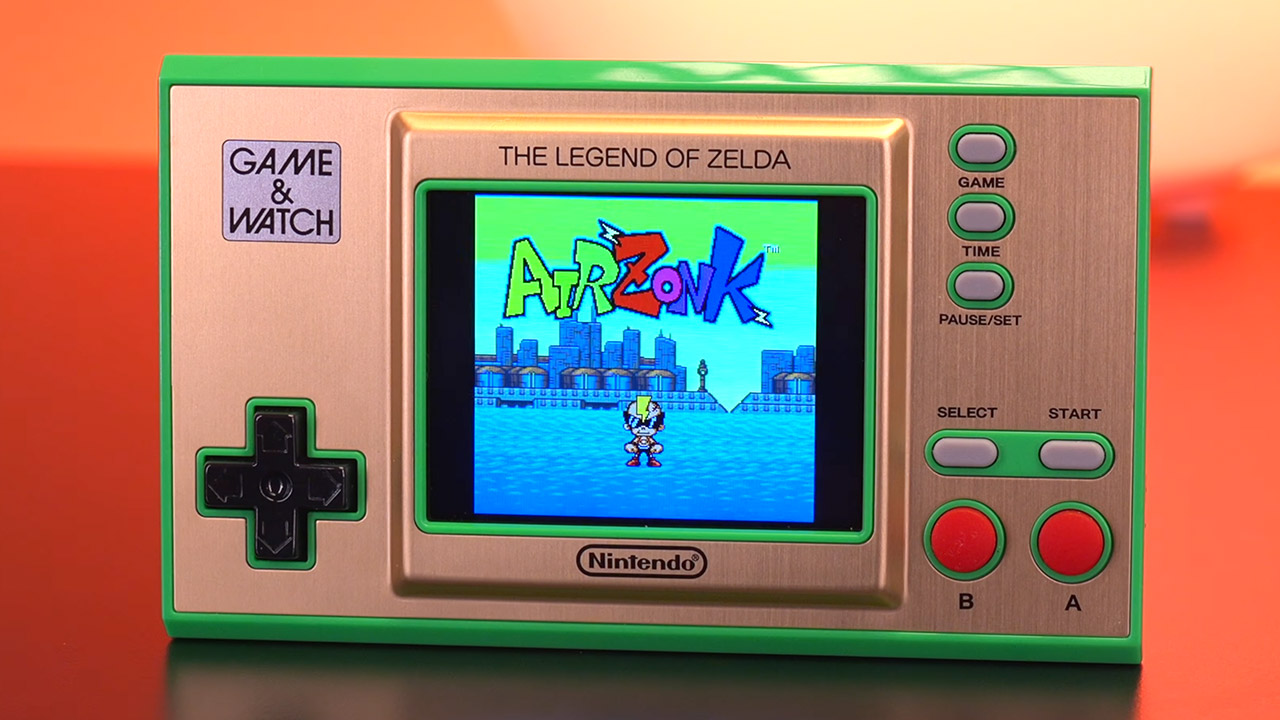
Zelda Game and Watch Handheld Retro Gaming Mod
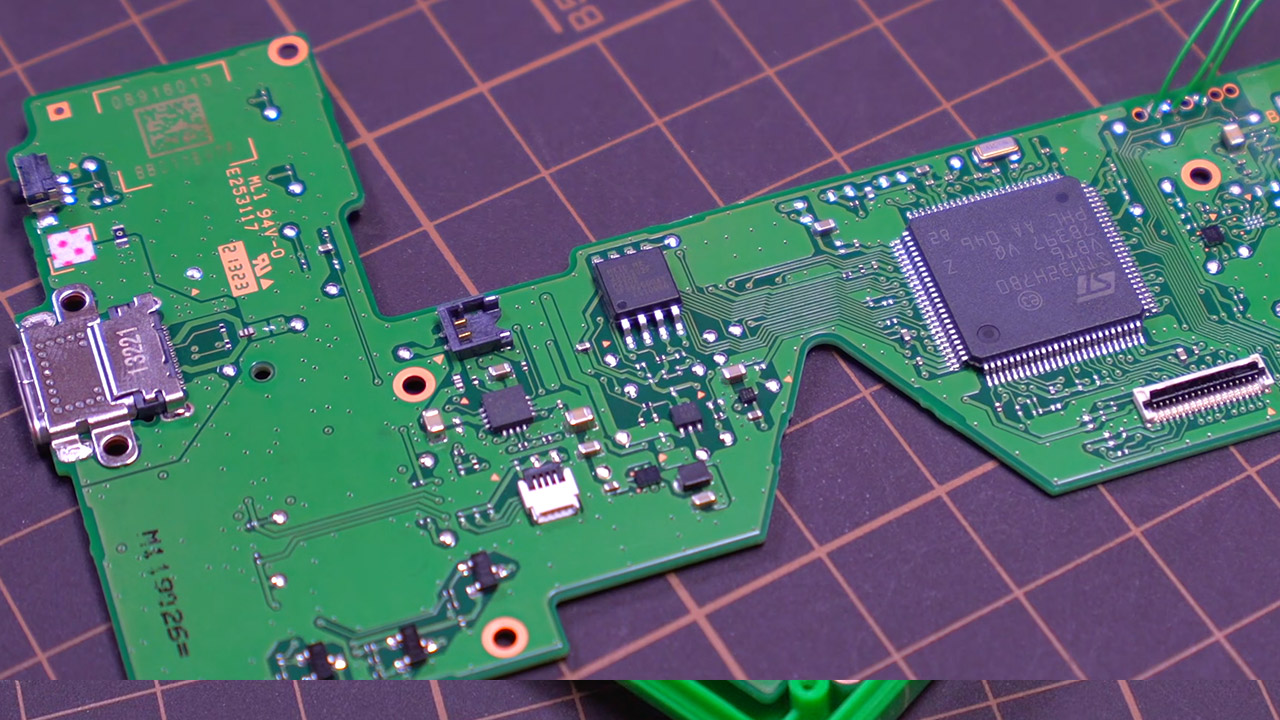
Tito of Macho Nacho Productions takes out his trusty screwdriver and goes to work on a limited edition Zelda Game & Watch from Nintendo that he received in 2020. This portable includes three iconic games: the original Legend of Zelda, Zelda II: The Adventure of Link, and Link’s Awakening from the Game Boy. It comes with a great collection of features out of the box, including a crisp LCD screen, a nice D-pad, and separate start and select buttons. The battery life is adequate, and it even has a USB-C charging connection, but Tito wants to take this device to the next level.


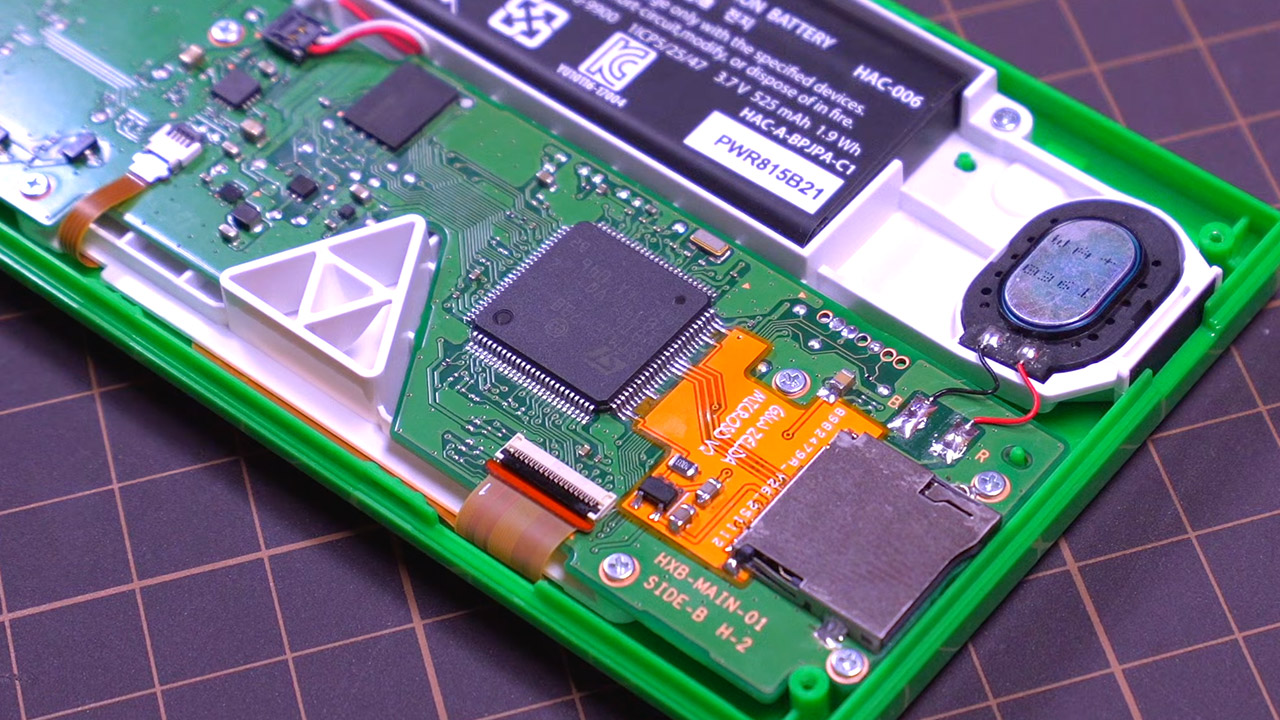
First, he removes four screws from the back plate, disconnects the battery, and then pulls out the two ribbon cables that link to the LCD. The speaker desolders, giving him some freedom to operate with. The motherboard is then released by removing ten additional screws. Tito connects an ST-Link programmer to the SWDIO, ground, and SWCLK pads as he boots up his PC and launches PowerShell as an administrator. He utilizes Chocolatey to install Python, Pipix, OpenOCD, and G&W Manager from GitHub. The unlock command is executed, and the device displays a blue screen. Everything appears to be in order.


Nintendo Game & Watch: The Legend of Zelda – Not Machine Specific
  • With a retro look, legendary flourishes, and the power to save Hyrule, the Game & Watch: The Legend of Zelda system is a tribute to 35 years of the…
  • Included are three Full Legend of Zelda games; The Legend of Zelda, Zelda II: The adventure of Link, and the Legend of Zelda: Link’s Awakening.
  • There’s also a version of the Game & Watch classic, Vermin, starring Link, and a playable clock and timer.

Zelda Game & Watch Handheld Retro Gaming Mod
Tito removes the original 16MB flash chip, which is a bit of a bottleneck, and heats it with a hot air station before applying flux to the pads. Tin foil and Kapton tape protect the area to prevent the neighbors from becoming too hot, and then it comes off clean. He cleans the pads, inserts a new 64MB chip, and reconnects the cables. G&W Manager flashes some custom firmware onto the device, which actually works for a second before halting at step 13. A retry resolves the issue, and Tito resumes business.

Zelda Game & Watch Handheld Retro Gaming Mod
The next step is to create a custom ribbon cable by soldering a couple of capacitors, a resistor, and an LDO regulator on. He inserts a microSD card slot and reduces the alignment posts flat. He aligns the ribbon pins with the CPU pads, connects a wire to a capacitor, and then uses a rotary tool to scrape off the soldermask and reveal the ground plane. With a little wire and some work, the microSD slot is fully operational. Tito next tackles the rear shell mods, removing the D-pad posts, drilling four holes with 3D-printed jigs, and smoothing out the edges with a file to ensure everything is nice and flush.

Zelda Game & Watch Handheld Retro Gaming Mod
With all of the mod completed, it’s time to launch his own firmware. He downloads the firmware update binary from RetroGo SD on GitHub, places it on a FAT32 microSD card, and turns the device on to install it. Once completed, he restarts it and enters RetroGo – from there, it’s as simple as adding some ROMs for the Game Boy, NES, SEGA Genesis, TurboGrafx-16, and other systems. Super Mario World works well, and Zelda: A Link to the Past is as crisp as ever.

Source link

Advertisement
Continue Reading

Tech

Ubisoft says more Assassin’s Creed and Far Cry are coming

Published

on

Ubisoft has had a turbulent few years, but its biggest franchises are clearly not going anywhere. In an interview with Variety, CEO Yves Guillemot confirmed that multiple Assassin’s Creed titles and two new Far Cry games are currently in development, signaling a renewed focus on the company’s most reliable blockbuster series.

The update arrives during what Ubisoft has described as a major reset. The company has undergone layoffs, canceled projects, and reorganized studios as it tries to stabilize after several difficult years. Against that backdrop, Guillemot’s message was simple. Ubisoft plans to lean heavily on the franchises that consistently attract massive audiences. For Assassin’s Creed, Guillemot said “several titles” are in development, spanning both single-player and multiplayer experiences. The goal is to keep growing a community that already surpassed 30 million players last year. On the Far Cry side, Ubisoft confirmed two promising projects, widely expected to include the next mainline entry and a long-rumored multiplayer spin-off.

A future built around blockbuster franchises

This renewed emphasis ties directly into Ubisoft’s broader restructuring strategy. The company has created new “creative houses” designed to give major franchises more autonomy while improving accountability and production efficiency. One of those units, Vantage Studios, is responsible for Ubisoft’s biggest brands, including Assassin’s Creed, Far Cry, and Rainbow Six. The idea is to treat these series as long-term ecosystems rather than standalone releases, helping Ubisoft deliver a steadier pipeline of games and content over time.

The shift also reflects lessons learned from the pandemic era. Ubisoft admitted it had launched too many projects and is now scaling back to focus on fewer, bigger bets. For players, that likely means a more predictable future. Instead of scattered experiments, Ubisoft’s roadmap looks increasingly centered on expanding the worlds fans already know.

While Ubisoft did not share release windows or gameplay details, the confirmation alone matters right now. After months of layoffs and uncertainty, fans finally have reassurance that Assassin’s Creed and Far Cry remain core pillars of Ubisoft’s future. Whether that excites or worries players will depend on how Ubisoft balances quantity with quality.

Source link

Advertisement
Continue Reading

Tech

Will 2026 be the year facial recognition becomes boring, and why does it matter?

Published

on

For the past century, facial recognition technology (FRT) has existed largely in the realm of science fiction. From dystopian literature and film to speculative headlines and industry conjecture, FRT has long been portrayed as futuristic, invasive or experimental.

Yet behind the scenes, facial recognition has been quietly maturing, particularly over the past two decades.

Tony Kounnis

CEO of Face-Int UK and Europe.

Source link

Advertisement
Continue Reading

Trending

Copyright © 2025