

Politics
Reform councillor threatened to hunt wife ‘like prey’


A court has sentenced Reform Kent councillor Daniel Taylor to 12 months in prison. As reported by the BBC, he admitted to “behaving in a controlling or coercive way towards his wife”.
Taylor won his council seat in May 2025. The party suspended Taylor shortly after, with the councillor sitting as an independent since then.
In response to the conviction, Labour MP Polly Billington and others have questioned the far-right party’s vetting:
#Reform Councillor David Taylor JAILED.
“nasty and violent”.
“told his wife he would hunt her like prey and kill her, and that he would “put her in the boot and set fire to the car”.And STILL he was ‘vetted’ & ‘approved’ by #Reform as a candidate while this was all going on. pic.twitter.com/WhMox3ope4
— John O’Connell (@jdpoc) February 20, 2026
Reform — ‘Prey’
The court heard Taylor had shown controlling behaviour since 2014 and according to friends he was constantly putting his wife down and accusing her of cheating.
He demanded to look though her phone, isolated her from her friends and told her she was mentally unwell because she accused him of being controlling, the court was told.
The prosecution said Taylor had told his wife he would hunt her like prey and kill her, and that he would “put you in the boot and set fire to the car”.
Labour MP Billington said that the conviction:
points to the fact that Reform UK do not take vetting of their candidates seriously
As reported by the Canary, the far-right party have had to suspend multiple politicians following their election. This has included:
Reform Party UK Exposed have listed further suspensions (click ‘show more’ below for the full list):
Reform UK Review 2025:
Reform UK councillors that have been suspended, resigned or defected this year alone. This includes a Council Leader, Ian Cooper, white supremacist.
➡️ Kicked Out
Brian Black
Oliver Bradshaw
Paul Thomas
Bob Ford
Bill Barratt
Ed Hill
James Regan
Mark… pic.twitter.com/yH8NoLsg9q— Reform Party UK Exposed 🇬🇧 (@reformexposed) December 26, 2025
A spokesperson for Reform UK said that there is:
no place in Reform for those who perpetrate violence against women and girls
Currently, Reform is losing councillors to ‘Restore’, which is the further-right party established by Rupert Lowe. Lowe himself was a member of Reform, but was forced out of the party.
Featured image via BBC


Mike Huckabee is the US ambassador to Israel. Huckabee has always been a controversial figure, and yet he’s never had a run like the last few days:
Reparations! https://t.co/xbFCOwIAmL
— Ryan Grim (@ryangrim) February 20, 2026
Don’t heart Huckabee
Al Jazeera reported the following on who Huckabee is:
The devout 69-year-old evangelical Christian was born in the southern US state of Arkansas.
He served as governor of his home state between 1996 and 2007 before launching unsuccessful bids to be the Republican presidential candidate during the 2008 and 2016 primary seasons.
They added:
Huckabee is a staunch supporter of Israel.
After his appointment, Trump released a statement in which he said Huckabee “loves Israel, and the people of Israel, and likewise, the people of Israel love him. Mike will work tirelessly to bring about Peace in the Middle East!”
His appointment demonstrates a “very hawkish, very pro-right-wing Israel” approach by the Trump administration, Yossi Mekelberg, an expert on Israel at the Chatham House think tank, told Al Jazeera.
Many American evangelicals support Israel, but not because they like Israelis. In actuality, they think the creation of Israel is a signifier that the end times are approaching, and that Israel will trigger the Rapture.
If you’re unfamiliar with the term, the ‘Rapture’ is the time when God calls his faithful back to heaven. Said ‘faithful’ will not include the Jewish men and women who live in Israel, even if they do play an instrumental role in jump starting the Armageddon.
Israel — ‘Reparations!’
In the clip above, Huckabee was asked:
Should Israel be expected to even pay one penny to rebuild Gaza at this point?
The first point to make here is that even if Israel was asked, they wouldn’t be the ones paying; it would be the countries which keep this rogue nation financially solvent (i.e. the US and its lackey states like Britain). Secondly, of course they should be asked; they literally levelled the place.
This is how Huckabee responded:
Absolutely not. Absolutely not. And I’ll tell you, if anything, there ought to be reparations to Israel for the extraordinary fight that they have had to conduct to get their hostages back, 252 including many Americans.
To quote Drop Site’s Ryan Grim once again:
Reparations!
This really highlights the cry-bully mindset of the Zionists.
They don’t just want to commit genocide; they want the world to perceive them as the victims of their own atrocities.
Anti-democracy
Huckabee has also attracted criticism for comments he made in conversation with Tucker Carlson:
I am not a fan of Tucker Carlson. I disagree a lot with Carlson. But as an interviewer, Carlson actually, brilliantly, asks follow-up questions, and keeps going, in a way that pretty much no US TV interviewer has done with pro-Israel guests since Oct 7.
And Huckabee falls apart. https://t.co/NmzemGAWRU— Mehdi Hasan (@mehdirhasan) February 21, 2026
TUCKER: “How much does it matter what Americans think?”
AMB. HUCKABEE: “It matters every bit.”
TUCKER: “80% oppose war with Iran.”
AMB. HUCKABEE: “We don’t live in a world where polls dictate policy.”
TUCKER: “Oh, I thought you said it matters what Americans think.” pic.twitter.com/MkDDkqfyCP
— The Tennessee Holler (@TheTNHoller) February 21, 2026
mike huckabee cares more about the greater israel project than he does about americans. he cares more about israel than the majority of american jews. totally insane person. https://t.co/BjbooXPuXI
— hasanabi (@hasanthehun) February 21, 2026
Tucker Carlson brutally corners Mike Huckabee on the fact that the Israeli government provides a safe haven for accused child molesters fleeing American justice. Huckabee is completely humiliated and tries to feign ignorance, but Tucker exposes the undeniable truth Israel… pic.twitter.com/SltptVD56w
— Furkan Gözükara (@FurkanGozukara) February 20, 2026
There is literally no bottom with these people.
They will always find a way to sink further, and they will always be furious when you confront them with the reality of their own depravity.
Featured image via OPB
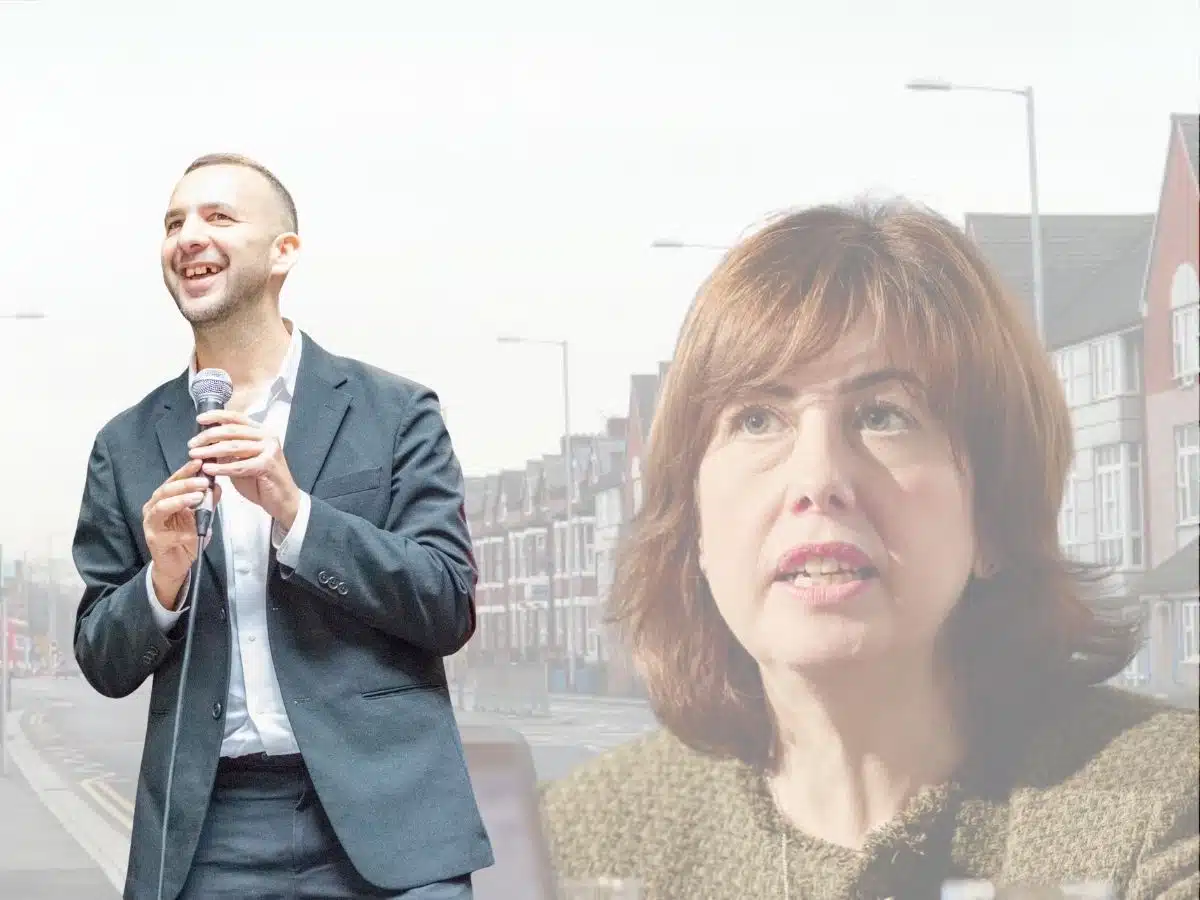
According to a new poll, Labour are on track to come third in the Gorton & Denton by-election. While you can never put too much stock in one poll, it’s far from the only sign that Labour are doing badly. Green Party leader Zack Polanski has now drawn attention to the Labour Party’s “panic”:
You can smell the Labour Governments panic.
They’re trying their hardest to discredit the new poll because it tells everyone that the alternative has well and truly arrived.
Gorton & Denton is the Green Party Vs Reform. pic.twitter.com/tcM1RjSb6g
— Zack Polanski (@ZackPolanski) February 20, 2026
Zack Polanski’s Greens are favourites
The poll in question is this one from Omnisis:
🚨 POLL | Greens LEAD in Gorton and Denton
** Labour drop to distant 3rd **🟢 Grn: 33% (+19)
➡️ Ref: 29% (+15)
🔴 Lab: 26% (-25)
🔵 Con: 5% (-4)
🟠 Lib: 2% (-1)Source: Omnisis, 13-19 Feb (+/- vs GE2024) pic.twitter.com/Ji5muXiRbk
— Stats for Lefties 🍉🏳️⚧️ (@LeftieStats) February 20, 2026
Source for data: https://t.co/GBbfcacQrA
Figures exclude undecided voters, as is common (indeed, universal) practice with voting intention polls.
— Stats for Lefties 🍉🏳️⚧️ (@LeftieStats) February 20, 2026
There are important things to consider about the poll. The first is that the sample size was only 452 people, which is less than half of what’s considered to be ideal (1,000 people). As noted above, the results also leave out undecided voters, with the New Statesman’s Megan Kenyon noting:
Should note 27 per cent say they are still undecided. Polls open next Thursday, 26 Feb.
— megan kenyon (@meganekenyon) February 20, 2026
Zack Polanski has taken the poll very well, anyway, which is obviously how any good politician should respond to positive news:
This is huge – and proves exactly what we’re saying.
We cannot have a moment of complacency – only the Green Party can stop Reform.
Vote Hannah Spencer and the Green Party on Thursday in Gorton and Denton. 💚 https://t.co/DQNjUJoxyA
— Zack Polanski (@ZackPolanski) February 20, 2026
Labour’s Lucy Powell, meanwhile, said this:
No-one should take this poll seriously:
-funded by a Green donor
-incredibly small sample and half unlikely to vote
-over-indexes green/Lab wardsI’ve been door-knocking most days. We’ve spoken to over 50 TIMES more voters.
V clear it’s between us and Reform https://t.co/tR5MhaMXGw
— Lucy Powell MP (@LucyMPowell) February 20, 2026
There are a few problems for Labour, of course.
The first is that bookies have not looked favourably at Labour’s chances.
The second is doorstep polling from Reform and the Greens has put Labour in third place.
The third is that it’s just very difficult to believe Labour are doing well right now, because the party is embroiled in a never ending stream of paedophile and sex pest scandals, including:
It’s also the case that Powell literally begged the Greens to stand down in an open letter, which is never a sign that things are going well.
It’s not looking good
Of course, Starmer’s lack of popularity is no guarantee Labour will lose. Britain didn’t particularly care for the Tories, yet people kept voting them back in, because they felt like it was in their best interests.
What we’ve seen in recent years, however, is that voters no longer feel like the only options are ‘Labour’ or ‘Conservative’. And if either the Greens or Reform take Gorton & Denton, that will be more true than ever.
Featured image via Barold

Unpacking during your holiday in your new hotel room? Before you toss your suitcase on the bed or start hanging up clothes, doctors say there’s one crucial thing you need to do first.
“When I first enter a hotel room, I typically leave my luggage at the entryway while I do a quick check for bed bugs,” said Dr. Brianna Olamiju, a dermatologist at Spring Street Dermatology.
That’s right: those tiny, crawly critters could be lurking underneath the crisp white sheets of your bed.
“When you enter a hotel room, make sure you immediately place luggage in the bathtub or on a tiled surface upon entry, then thoroughly inspect the mattress seams, headboard and furniture using a flashlight for bugs or dark stains,” said Dr. Kefah Al-Ramahi, an internal medicine physician at Hartford HealthCare.
“Bed bugs and their evidence can be visible to the naked eye – adult bugs are about apple-seed sized – but you’re often spotting clues like tiny black ‘ink-like’ faecal dots, shed skins or small blood spots on sheets,” said Dr. Tiffany Libby, the Director of Mohs Micrographic and Dermatologic Surgery at Brown Dermatology in Rhode Island.
These stains are located mainly along the seams, piping, tufts and corners of mattresses and box springs. Bed bugs could also hide in electrical outlets, under loose wallpaper, or at the corner of the wall and ceiling.
Unfortunately, bed bugs may be difficult to spot during the day, as they only appear at night. If you check once during the daytime upon check-in to the hotel, do a second inspection around nighttime as well, as that is usually the best time to visualise bed bugs, according to Olamiju.
“If you find evidence of bed bugs, I’d request a different room far away, not adjacent, above or below, or consider changing hotels depending on the situation and response,” Libby said.

What to do if you encounter bed bugs
If you are experiencing bed bug bites or recently were exposed to bed bugs, first shower, and change your clothes immediately.
“Seal luggage, wash and dry clothing on high heat as soon as possible, and consider heat-treating items that can tolerate it,” Libby said. The dryer is key as washing clothes alone may not kill bugs or eggs, she added.
As you travel out of the hotel, make sure to keep your luggage sealed in a plastic bag. Once you get home, try to keep them in a garage or shed until they can be cleaned.
To clean your luggage, vacuum the suitcase or bag thoroughly, specifically focusing on zippers, seams and pockets. Make sure to wipe surfaces with alcohol to kill all bed bugs and eggs.
Bed bug bites may still occur without seeing or feeling the bed bugs. “Usually they tend to feed during the night once or twice a week,” Al-Ramahi said. Most commonly, bite marks tend to present as 2-5 millimetre red bumps, he said.
If you suspect that you have been bitten by bed bugs, check for the “breakfast, lunch and dinner” pattern. This corresponds to a linear pattern of three or more small, itchy bite marks, Al-Ramahi explained. Other co-occurring symptoms of bed bug bites include itchiness, rash, burning sensation, fluid filled blisters, and mild pain and discomfort.
To reduce discomfort, place a cool, damp cloth over areas of irritation. “From a skin standpoint, treat bites with topical corticosteroids and oral antihistamines if itchy. Avoid scratching to reduce the risk of secondary infection or scarring,” Olamiju said.
Additionally, bed bug bites may not appear immediately. They may appear one to three days after exposure. This is not to be confused with mosquito bites, which are more randomly scattered and often improve within a day or two, Olamiju said.
Some people may experience an allergic reaction to bed bug bites with more severe itching, hives or even anaphylaxis.
“Hypersensitivity reactions may develop in some who become sensitized to bed bug saliva,” Al-Ramahi said.
If you develop a secondary infection or if your bedbug bites don’t heal within a couple of weeks, visit your medical provider for further guidance.
Jeremy Bowen, the BBC’s international editor, recently gave an interview to the Financial Times, giving him the chance to polish his halo. With the weary gravitas of a man who believes his own press cuttings, Bowen insisted he is ‘impartial’ – an objective observer, standing above the fray, untainted by the messy reality of bias.
The problem for Bowen – and for the licence-fee payers forced to fund his sermons – is that his narrative collides with the facts. Mounting evidence suggests that Bowen’s version of impartiality is a hollow façade hiding a systemic and longstanding prejudice against the state of Israel.
If you want to see what ‘impartiality’ looks like in Bowen’s world, look at the numbers. The Asserson Report, a landmark 2024 analysis of the BBC’s coverage of Gaza, identified more than 1,500 breaches of the corporation’s own editorial guidelines, including on impartiality and accuracy, during the first four months alone of the Israel-Hamas war. The report found a persistent institutional pattern of anti-Israel bias, devoting 16 pages specifically to Bowen’s repeated inaccuracy and prejudice. Analysis of the BBC podcast, The Conflict: Israel-Gaza, co-hosted by Bowen and the Lyse Doucet, the BBC’s chief international correspondent, revealed that 90 per cent of the content displayed an anti-Israel or pro-Palestinian bias.
Most damningly, the report highlighted Bowen’s tendency to offer personal opinions that downplay Israeli security concerns, presenting Palestinians as peace-seeking and Israelis as war-hungry. In one notorious broadcast, Bowen dismissed the discovery of Kalashnikov rifles in a Gaza hospital, suggesting that they were just a security precaution. ‘Wherever you go in the Middle East, you see an awful lot of Kalashnikovs’, he said. In Bowen’s bid to preserve the pro-Palestine narrative, even a literal smoking gun showing terrorists present in a hospital can be explained away as a harmless quirk of the region.
It will be of little surprise that Bowen has consistently misrepresented, downplayed or even tried to excuse, Hamas’s use of Palestinian civilians as human shields. Against Israel, Hamas has little choice but ‘to leverage the things that they can leverage in terms of trying to get an edge’, Bowen said in a 2023 podcast episode. In 2014, he claimed to have seen ‘no evidence during my week in Gaza of Israel’s accusation that Hamas uses Palestinians as human shields’. This is despite extensively documented evidence to the contrary, showing that Hamas launches rockets from civilian areas and commandeers civilian infrastructure for military ends, including hospitals and schools.
In fact, you can find examples of Bowen’s bias as far back as 2009, when the BBC Trust found him in breach of impartiality guidelines for a 2007 BBC News article on the 40th anniversary of the Arab-Israeli Six-Day War.
According to monitoring by the Committee for Accuracy in Middle East Reporting and Analysis (CAMERA), Bowen has spent decades perfecting a narrative of Israeli aggression while airbrushing the extent of the threats Israel faces. He has repeatedly platformed voices that dehumanise Israelis while failing to challenge the anti-Semitic ideology that drives Hamas. That isn’t journalism: it’s a curated perspective that treats Jewish security concerns with a shrug of indifference.
The BBC is the most popular news source in the UK, reaching a staggering 94 per cent of adults. When its most senior editors trade in skewed narratives, they shape political discourse, social attitudes and the temperature of national debate. And the price of this is borne by British Jews.
Since 7 October 2023, the UK has endured record levels of anti-Semitic incidents. This has included a lethal terror attack and several foiled terror plots. When coverage of serious conflicts consistently falls short, it exacerbates real-world harms for a minority community already under pressure. The BBC’s tendency to amplify unverified Hamas claims – such as wrongly blaming the infamous al-Ahli hospital blast on Israel without evidence, or quoting Hamas casualty figures without qualification – has fuelled hostility towards Jewish communities.
Perhaps most breathtaking is the arrogance with which Bowen continues to showcase his bias with total impunity. The BBC’s internal accountability mechanisms are essentially a closed loop. The broadcaster is, quite literally, marking its own homework. Apologies and corrections are only issued long after the damage has been done and without significant consequences for repeated breaches.
This brings us to the government’s BBC Charter Review, which is exploring the BBC’s governance, public obligations and funding before a new 10-year charter is granted. The way the BBC works now, where senior figures like Bowen are immune to external scrutiny, is a betrayal of public trust. We need a fundamental reset of the BBC’s culture, including tying the renewal of the charter to demonstrable improvements in impartiality and accuracy.
We ought to remember that the BBC belongs to the public – not to the egos of its editors and correspondents.
Limor Simhony Philpott is a writer, policy adviser and researcher.

In case you missed it, UK health secretary Wes Streeting has just had a brainwave. If you’re a millennial, and this thing called ‘life’ is your problem, then apparently talking therapy on the NHS is the solution. Never fear about the dearth of semi-decent job opportunities, the lack of affordable housing, the sky-high energy and food bills, or the rest of it – what you need is a space to speak your truth. Let the NHS sort that out for you, and you’ll be back at the coalface in no time.
There are now 4.4million working-age people on sickness or incapacity benefits in England and Wales – a figure that has grown by a whopping 1.2million since 2019. Nearly 50 per cent of new claims are made on mental-health grounds, while one in four young people has a diagnosable mental-health condition. It’s painfully obvious that Labour must tackle the rise in both mental-health problems and worklessness – but a few weeks of talking therapy, as is being offered, is barely a sticking-plaster solution.
Last year, Streeting warned that mental-health problems are being overdiagnosed and there is a danger of pathologising normal feelings. Yet only a few weeks later, he backtracked. He apologised for his ‘divisive’ comments in the Guardian and launched an independent inquiry into why mental-health diagnoses have been on the rise, especially among younger people.
Now, despite still not having the answers (the inquiry is due to report back in the summer), Streeting has this week pledged to offer talking-therapy sessions to nine million people, costing an estimated £69million, in a bid to get millennials off benefits and back into work.
Firstly, if the government itself has admitted it doesn’t yet know the causes of our growing mental-health crisis, why is it pledging all of this costly assistance now? Why not wait for the results of the independent inquiry Streeting himself commissioned? And while free therapy might sound useful, we’re only actually talking about a month of that under the current provision – that’s five or so appointments. As anyone who has ever done therapy (as I have, for many years) will tell you, most private therapists recommend at least a course of six months of sessions. If you’ve got anything from PTSD to bipolar disorder, or have an ongoing serious mental-mealth condition that requires regular close monitoring, five sessions isn’t going to even touch the sides, let alone lead you to thriving in paid work.
Even more pressingly, while all this help is being pledged for a range of mental-health conditions currently affecting worklessness, people with the most severe problems are frequently slipping through the cracks, especially those suffering with personality disorders or psychotic delusions.
Make no mistake – I am a believer in the power of therapy. It has saved my life at least once, no exaggeration. But there are some serious caveats to that. Firstly, the therapy that saved me when on the brink of a serious psychotic episode last summer was the private kind I had to pay a clinical psychologist for. That clinical psychologist was the only professional support I had when a junior NHS psychiatrist took me off my long-term anti-psychotic meds, ‘as an experiment’ (her words), despite the fact I had been sectioned for a psychotic break in the past.
Secondly, talking therapy works best over a prolonged stretch of time. Streeting’s proposed month of help is enough to stir up all sorts of deeper issues, but not enough to actually deal with them. ‘When you change the things you look at, the things you look at change’, therapists are fond of saying. But while this might make for a natty wall hanging, it doesn’t actually alter the fundamental realities of your life.
Thirdly, talking about stuff that is troubling you is valuable, but it can only ever be a precursor to taking action. Yes, of course, many people benefit from feeling heard and identifying what about their life is distressing them. But if the source of your worries happens to be the paltry wage you’re getting for a non-job that barely covers the essentials – or maybe even having no job at all – therapy isn’t the solution.
As fantastic as the right therapy can be, it can’t wave a magic wand over structural, societal issues. It is meant to work alongside other vital tools, such as basic healthy living (exercise, nutritious food, decent sleep), sometimes medication, social connection and, critically, a solid support network. Good therapy can teach resilience, sure, so that when life isn’t going well, you have some inner resources to draw on to keep going. But therapy without opportunities is just more neoliberal, individualist blather, the kind that Labour tells us it abhors.
Labour may be making a serious mistake here with millennial voters. If thousands of them sign up for talking therapy, only to realise their lives suck for structural and economic reasons, rather than their own ‘traumatic’ experiences, the Labour government won’t just lose workers, it will also lose critical voters come the next election. Joblessness, low pay and poor working conditions are the real epidemics it needs to tackle.
Nichi Hodgson is the author of The Curious History of Dating: From Jane Austen to Tinder and Bound to You. Follow her Substack here.
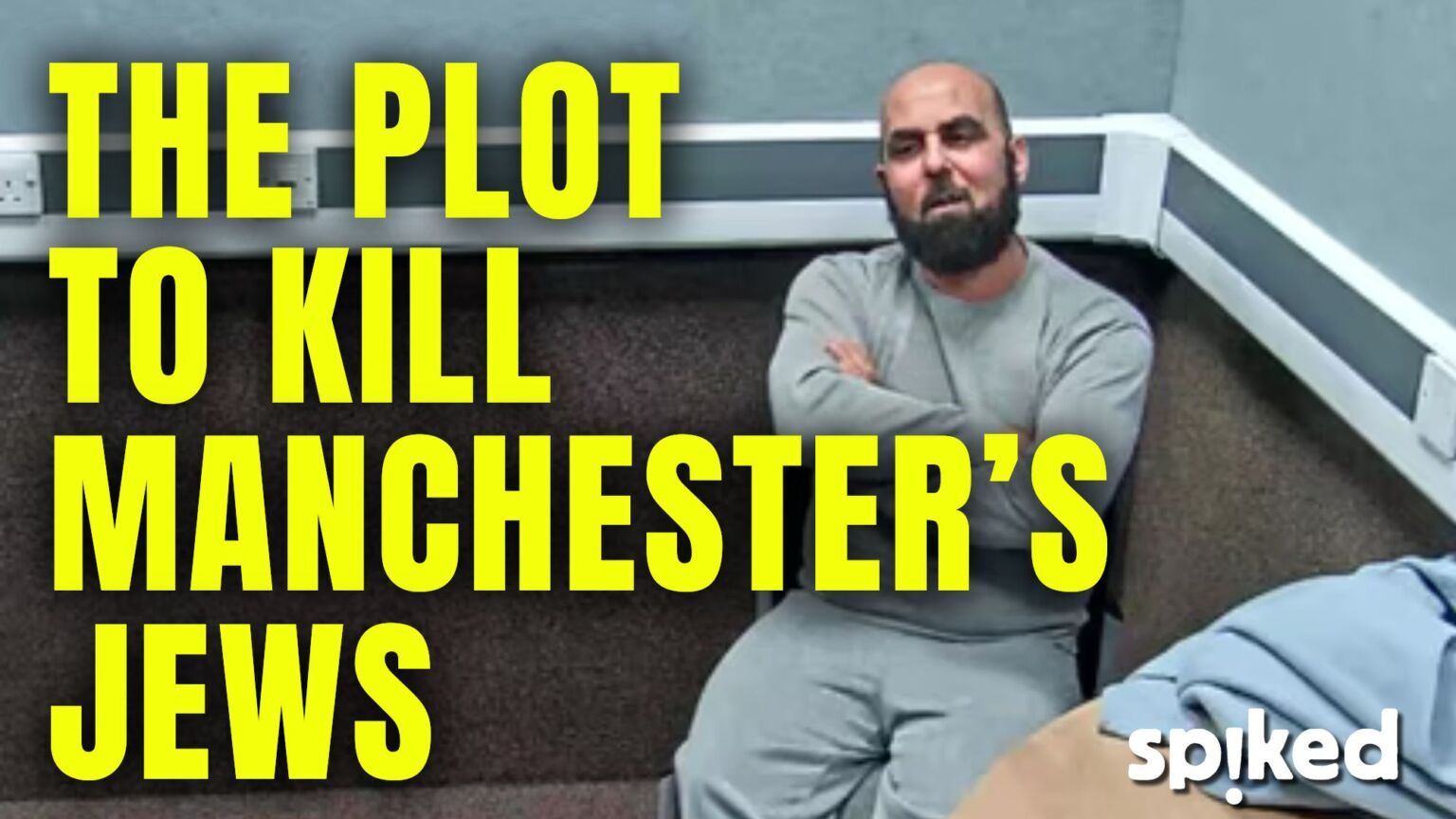
The post The plot to kill Manchester’s Jews appeared first on spiked.
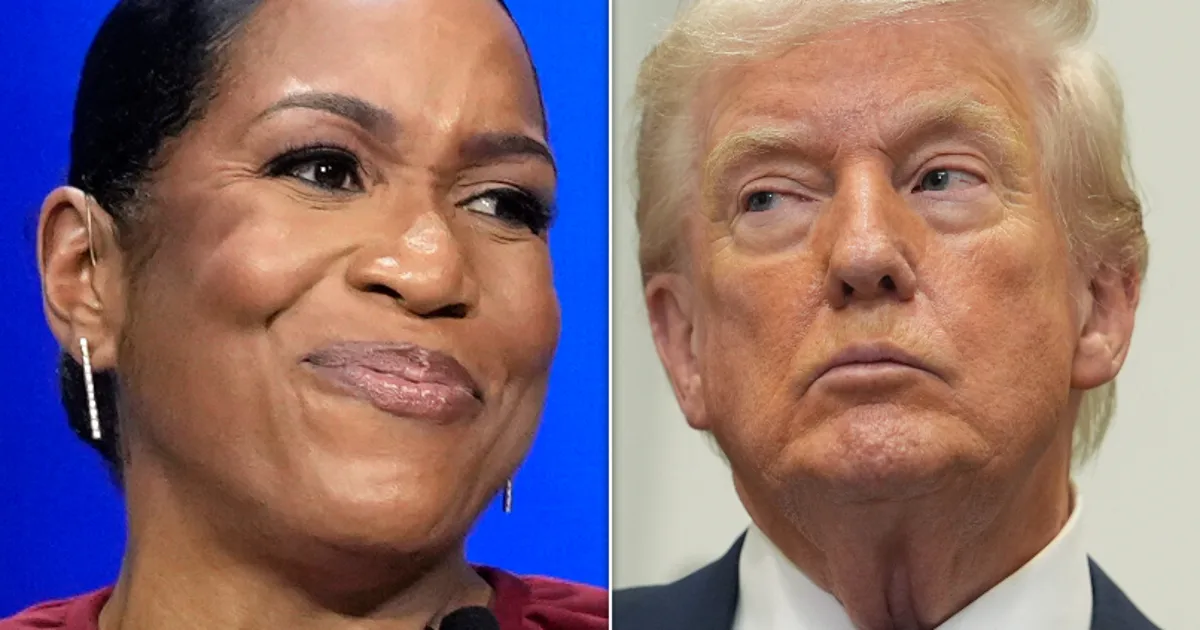
US Senate hopeful Juliana Stratton is letting the expletives fly in a new campaign ad spelling out what she – and her supporters – really think about President Donald Trump.
“Fuck Trump, vote Juliana,” three people say at the start of the Illinois Lt. Gov.’s campaign video released on Thursday.
“They said it, not me,” Stratton responds.
She then adds: “I’m Juliana Stratton and I’m proud to have lived my whole life on the South Side of Chicago. I’m not scared of a wannabe dictator. I’m running for Senate to stand up to Donald Trump. I’ll abolish ICE and hold Trump accountable for the crimes he’s committed. Just like they said…”
Two more supporters then repeat the phrase, “Fuck Trump.”
Sen. Tammy Duckworth (D-Ill.) delivers the same line on camera.
And Illinois Gov. JB Pritzker (D), a potential Democratic 2028 presidential candidate who hasn’t been shy about attacking Trump, then appears alongside Stratton at the end of the ad, saying simply, “Vote Juliana,” omitting the profanity.
Stratton is currently trailing Rep. Raja Krishnamoorthi (D-Ill.) in early polling in the race to replace retiring Sen. Dick Durbin (D-Ill.). The Illinois primary is scheduled for Mar. 7.

JD Vance attempted to make a joke at Representative Alexandria Ocasio-Cortez’s expense at Thursday’s Board of Peace meeting, but she ended up getting the last laugh when his jab was met with deafening silence.
The vice president addressed officials from nearly 50 countries shortly after President Donald Trump used his own speech to attack the New York lawmaker’s appearance at the Munich Security Conference, when she struggled to answer a sensitive question about whether the United States should send troops to Taiwan.
Like his boss, Vance tried to mock the Democrat on Thursday when he began his remarks. But he may not have been happy at how his joke landed.
“I knew exactly what I wanted to say, but then after the president said that I was so smart, and that I didn’t want to repeat our congresswoman, who froze for 20 seconds over in Munich,” he began.
“Now I’m tempted, sir, just to freeze, for 20 seconds, and just stare at the cameras,” he continued. “And maybe they’ll say nice things about me like they do about Congresswoman Cortez.”
Vance seemed to be expecting a laugh from the crowd, but none came.
Ocasio-Cortez later poked fun at Vance for the response to his “joke.”
“The only thing longer than my pause to think was their silence to his joke 💀” she wrote on X.

There’s a common experience when you start dating someone new and have “the talk” about previous relationships. Maybe later you look up their ex on Instagram and scroll a little.
You take in the old homecoming photos, beach vacations, the anniversary captions from years before you were in the picture. Maybe you feel a small pang – a flicker of comparison or curiosity – and then you move on.
But for some people, that fleeting discomfort doesn’t fade. It lingers, loops and starts to feel less like curiosity and more like a threat. That emotional experience can quickly cross into more extreme territory: retroactive jealousy.
Below, relationship experts break down what retroactive jealousy really is, what it might reveal about you and how to keep it from undermining your relationship in the present.
What is retroactive jealousy?
“Retroactive jealousy is when someone experiences strong feelings of anxiety and jealousy around their partner’s past romantic history or even experiences that happened before you existed in their life,” said Priya Tahim, a licensed professional counsellor. “It’s not curiosity but what feels like an active threat in your present relationship.”
People experiencing retroactive jealousy become strongly fixated on their significant other’s previous relationships and any romantic encounters that occurred before they even met.
“In relationships, this often shows up as obsessing over a partner’s exes or past hookups, replaying details you wish you never heard or feeling way more upset than the situation calls for when the past comes up,” said Julie Nguyen, a dating coach with the dating app Hily. “You might ask a lot of questions, compare yourself to people you’ve never met, scroll through old photos or feel a rush of anxiety when a name or memory gets mentioned.”
Retroactive jealousy can lead you to focus on how your attractiveness, career success and other attributes compare to their ex’s.
“In relationships, it often manifests as intrusive thoughts, where you are constantly making mental comparisons to idealised past partners, or repeated questioning about exes and the perceived ways in which they are ‘better,’” said clinical psychologist Sabrina Romanoff.
She added that you might replay imagined scenarios or feel emotionally dysregulated when learning about trips your partner took with their ex or certain milestones they reached.
“Retroactive jealousy can manifest as repeatedly seeking details, spiraling after reminders, stalking exes online or needing reassurance that never quite sticks,” Tahim added.
What experiencing retroactive jealousy might say about you – and your relationship
“Most of the time, retroactive jealousy has less to do with your partner’s past and more to do with what’s coming up inside you,” Nguyen said. “It’s common in people with anxiety or an anxious attachment style, especially if there’s an underlying fear of not being enough.”
Even in a relationship that is otherwise solid, someone experiencing retroactive jealousy might have a nervous system that’s on high alert, scanning for any sign that they could be left or replaced.
“Most people don’t love thinking about their partner’s romantic or sexual history,” said Sarah Barukh, a therapist with Kindman & Co.
“For some, that discomfort taps into a deeper question of whether or not they are ‘enough’ for their partner. With retroactive jealousy, that question can get really loud and start to sound like, ‘Does my partner actually want me, or am I just the person they ended up with? Would they choose someone else if circumstances were different?’”
Retroactive jealousy tends to reflect underlying insecurities, fear of uncertainty, trust issues, an inferiority complex and/or a lack of self-confidence. There might even have been a past betrayal, such as cheating.

ArtistGNDphotography via Getty Images
“Although most problems in relationships are co-constructed, retroactive jealousy is often rooted in problems in early attachment and deep-rooted fears of abandonment and co-dependency,” Romanoff said. “It’s often less about their partner making them feel insecure, and more about their difficulty with ever feeling ‘chosen’ enough so they can feel safe.”
So retroactive jealousy typically doesn’t say much about the quality of your relationship, though it can certainly affect it.
“People with retroactive jealousy may also struggle with relationship OCD, as they attempt to soothe the lack of inner safety through external fixation – which unfortunately can only truly be resolved from within,” Romanoff said.
How can it affect your current relationship?
“Retroactive jealousy can show up as a constant need for reassurance, lack of trust and create emotional unsafe spaces within yourself or the relationship,” Tahim said. “If unaddressed, it can strain relationships by creating resentment by letting the past take up space where the present should be.”
Taking focus away from the current relationship can lead to anxiety and emotional distance. Compounded over time, retroactive jealousy takes a toll on relationships.
“Partners may start to feel frustrated, interrogated or punished for a past they can’t change,” Nguyen said. “Trust can slowly erode, not because of betrayal, but because the past keeps getting pulled into the present.”
A little jealousy is understandable, but retroactive jealousy can feel all-consuming, pushing people away.
“The partner on the receiving end may feel frustrated or helpless, especially if they are loyal and committed but feel like nothing they say fully reassures the other person,” Barukh said.
Even the most patient partner can become inflamed or worn down by the strain of unceasing irritability and assurance-seeking. That’s why it’s crucial for the person feeling retroactive jealousy to address it.
“Without the introspection and accountability of understanding how they’re contributing to the turmoil, their romantic relationships often end,” Romanoff said.
There are ways to work through retroactive jealousy without letting it ruin your relationship
“Everyone has a past, and you don’t have to be completely healed before entering a relationship – but self-awareness and a willingness to address what’s underneath the jealousy matter,” Tahim said.
“By focusing on the root fears, limiting comparison, grounding yourself in the present and choosing growth, you can work through retroactive jealousy without letting it define the relationship. It’s not an easy hurdle to climb, but it’s not impossible.”
Awareness and acceptance are crucial in this process.
“The most important insight is to understand you can be feeling high levels of anxiety and distress, and also know your distress doesn’t mean your partner committed an infraction against you,” Romanoff noted. “Your emotions are valid and need to be addressed, but the way you are acting on them, as if they are fact, is hurting you and your ability to have healthy relationships.”
The goal is to cut off the cycle of gathering more information and seeking reassurance, which soothes anxiety in the short term but is unhealthy in the long run.
“The first step is being honest about it, with yourself and with your partner,” Nguyen said. “It’s about letting them know this is something you’re struggling with so the fears don’t continue to dominate the relationship. It’s also important to understand that digging for more details rarely helps. No amount of information or reassurance can make the past feel safer.”
Instead, focus on finding a sense of emotional safety in the present.
“This could mean actively practicing self-soothing skills when you’re feeling particularly activated – for example, grounding exercises, breathing exercises, getting regular physical activity and going for more walks,” Romanoff said.
You can develop a mindfulness practice to help you stay grounded in moments when harmful thoughts start to spiral.
“In some cases, discomfort about a partner’s past can be connected to things that haven’t been fully talked about or resolved,” Barukh said. “Sometimes a partner hasn’t shared much about their past because it feels awkward or vulnerable. In other cases, there may be unresolved feelings that haven’t been addressed. Those situations do deserve honest conversations.”
In addition to talking to your partner, consider working with a therapist to unpack the underlying fears and issues driving your retroactive jealousy.
“It can be really important to gently turn the focus inward and ask why it feels so hard to accept that someone you respect, or love, sees you as worthy of being with them,” Barukh said. “People who struggle with retroactive jealousy are often pretty hard on themselves. Self-compassion really matters here, and it helps to remember that a lot of people experience some version of this.
Politics
The House | An End To The Resident Doctors’ Dispute Could Cause New Problems For Government


11 min read
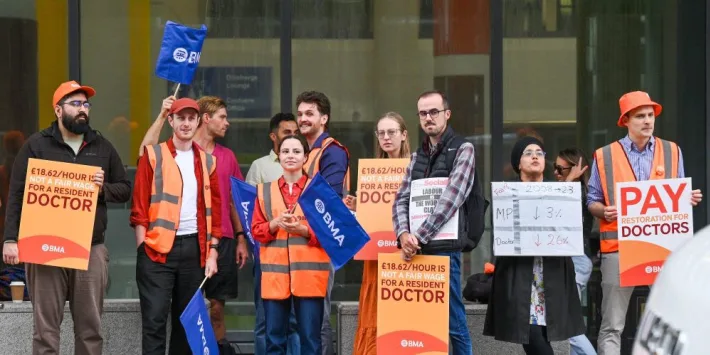
The long-running resident doctors’ dispute that has dogged successive governments may finally be nearing resolution. But, as Noah Vickers reports, there are formidable hurdles ahead before Wes Streeting can declare ‘mission accomplished’
Wes Streeting, less than a month into his new job as Health Secretary, declared that a strike that had “caused untold misery to patients and staff” was all but over.
He had, after all, just handed a 22.3 per cent pay rise to resident (formerly known as junior) doctors after 11 rounds of industrial action, in the weeks after Labour’s election victory in July 2024. Settling the strikes had been his “priority from day one”, he said, jubilant that the British Medical Association (BMA) had accepted the award.
Except that – as we now know – the huge settlement did not end the strikes. Within 11 months, the BMA was back on the picket line to Streeting’s extreme displeasure. To his critics, a hubristic Streeting has been taught a painful and expensive lesson in power dynamics. His allies insist that his approach is slowly working.
There are indeed signs that – despite winning a fresh mandate for yet more strikes – a new leadership at the BMA is looking for a way out. But the finishing line is still some way off and the obstacles forbidding. A deal to reduce competition for specialist posts from foreign graduates could cause problems elsewhere. And other health staff with pay claims of their own are watching like hawks.
First, tempers need to cool a little – on both sides – for any settlement. “We gave them a big pay increase because we recognised their value, and I think there was a feeling that we’d get them on our side. That clearly hasn’t happened,” says one Labour MP.
The BMA argues that resident doctors’ pay remains 20.8 per cent lower in real terms than it was in 2008, which they say is when their pay cuts began. Critics point out that they use the RPI rather than CPI measure of inflation to reach that percentage, and that most resident doctors had not even started their medical degrees in 2008.
The most recent round of strikes, held just before Christmas, saw tempers run high. Streeting accused resident doctors of taking a “self-indulgent, irresponsible and dangerous” decision by choosing to strike during a flu season, “at a risk of serious harm to patients”. Dr Jack Fletcher, chair of the BMA’s resident doctors committee (RDC), said politicians were “scaremongering” by suggesting that the number of flu cases was more severe than in reality.
Since the new year, however, the tone on both sides has become more conciliatory. Earlier this month, the BMA’s resident doctor membership voted by 93 per cent in favour of extending their mandate for strike action for another six months – but crucially, this was on a reduced turnout of only 53 per cent, suggesting that enthusiasm for the cause has ebbed somewhat.
“I don’t think the doctors have an appetite for years of rolling strikes, like they’ve had for the last three years,” says one Labour MP. “If you mandated all the doctors to vote, my guess is that the actual appetite for striking among all the doctors is not there. This is not the miners’ strike. The sort of people that get involved in BMA politics are a self-selecting group.”
For its part, the BMA claims it does not plan to use its new mandate.
“There is no intention to go on strike,” RDC deputy chair Dr Arjan Singh told the BBC’s Today programme. “[It is] a negotiating tool, but we’ve got no intention of actually using it. I would say that our relationship with government over the last few months has become increasingly positive.”
The BMA declined to make Fletcher, Singh or any of their RDC colleagues available for an interview with The House. MPs who have met Fletcher, however, say he is a “serious” and “co-operative” figure who “wants to see a solution”. They also point out he is a Labour member who “wants the government to work”.
One MP adds: “He has a committee who I think are not always on the same page as him, because they’re a little bit more militant.”
Before Fletcher was elected last year, the committee’s four previous co-chairs belonged to a hardline faction called DoctorsVote. It was this group which had pushed hardest for strike action and for “full pay restoration” to 2008 levels. DoctorsVote no longer holds any officer positions on the RDC committee, but full pay restoration “by 2027/28” remains BMA policy. Fletcher is said to regard this aim as “not realistic”.
The BMA says the dispute is not only about pay but also about addressing the “bottleneck” that resident doctors face when applying for specialty training posts. The ‘competition ratio’ for those jobs has got tighter over recent years, largely due to an increase in applications from international medical graduates (IMGs) – which leaves many UK-trained doctors unable to progress in their careers.
To address that issue, the government is passing emergency legislation – the Medical Training (Prioritisation) Bill – which will ensure UK-trained graduates are prioritised for foundation and speciality training posts. Streeting claims that for speciality posts, the bill “effectively reduces the competition for places from 4-1 to 2-1”.
The legislation was given its First Reading on 13 January, and the government aims for it to receive Royal Assent by 5 March. Passing the bill by that deadline should mean its effects are felt by this year’s round of applicants, whose jobs would start in August.
Yet there are concerns that the rushed-through bill could have damaging impacts on the government’s ambitions elsewhere in the health service.
Lucina Rolewicz, a fellow at the Nuffield Trust, warns that the NHS has “previously relied” on IMGs “to fill a big proportion of general practice training places, so if this bill deters them from applying for jobs that are less popular with UK graduates, it could torpedo efforts to expand general practice, especially in poorer areas”.
She tells The House: “Competition and interest in different specialities are not equal. This is especially the case in general practice and for core psychiatry training as well…
“The bill won’t stop internationally trained doctors from applying to those routes, but it could discourage them from putting applications forward in the first place.”

Stuart Hoddinott, associate director at the Institute for Government, points out: “Almost the entire increase in the GP trainee workforce, since 2019, has come through IMGs… They now make up more than 50 per cent of GP trainees. This is a very important route for general practice.”
More deprived areas, including many of the rural and coastal areas now turning to Reform UK, could be especially badly hit by any downturn in international applications, as UK-trained doctors disproportionately tend to apply for GP posts in urban areas close to the teaching hospitals where they studied.
When it comes to settling the dispute, however, there is a quiet optimism in Parliament that once the bill has been passed in March, a deal could potentially be reached with the BMA in the weeks that follow, without any further strikes having been called.
“That’s the intention of the Secretary of State,” says a Labour MP. “In the early spring, hopefully there’ll be a relatively harmonious deal, and they can move forward.”
But anyone watching the dispute agrees that the BMA is serious about needing to also see some form of improved pay offer – and one may be on the way.
“It sounds like there will be a pay-off of some sort which might be attractive,” says an MP, who adds: “What’s needed is a multi-year settlement which is just a little bit over inflation – that would solve the [pay] problem.
“I would give them a three-year rolling pay settlement, and I’d give it at a percentage or two above inflation for two years, and then a bit more in the third year. You’re not going to take it back to some mythical date of 2008, because it’s not affordable.”
But even a deal of that nature would risk further problems for Streeting, as other unions representing healthcare workers would take immediate notice of it.
“I don’t envy Wes Streeting in his job at the moment, because he’s got to balance all these things out,” says one backbencher. “He wants the doctors back. That might involve a more-than-inflationary pay increase, which then might bring all of the other professions into play.
“The main cost for the NHS is people. If you lose control of the pay aspect, then the costs will go up enormously.”
Unions representing NHS staff tell The House they are monitoring the resident doctors’ dispute and do not rule out balloting their own members for strike action if a generous deal is agreed.
“All NHS staff are deserving of above-inflation pay rises,” says Richard Munn, national officer for health at Unite, which represents almost 100,000 healthcare workers.
“Unlike resident doctors, the lower-paid NHS staff do not have the opportunity to progress to be consultants, GPs or surgeons as their careers develop.
“We hope that the government will see the unfairness of treating doctors more favourably than other NHS staff and will look to offer all staff above-inflation pay offers.”
A spokesman for the Society of Radiographers says their union is watching the resident doctors’ dispute “with interest”, adding that “balloting for strike action would depend on what follows for other NHS staff and how this is received by our members”.
The Royal College of Nursing, meanwhile, says it was “an insult” for the government to offer a 3.3 per cent pay uplift to their members and has pledged to “look at whether this is fair treatment compared to other professions and sectors”.
Hoddinott says: “The resident doctors are actually a relatively cheap staff group to pay. If you want to pay them a lot more money, you can actually do so relatively easily.
“An extra percentage point increase in their salary is worth roughly £51m, which sounds like a lot, but in NHS terms is not that much.
“More worrying is the contagion effect to other staff groups – if you get ‘Agenda for Change’ staff, which is all non-medical staff in the NHS, walking out.
“If you give them a percentage point increase that matches the resident doctors, that is suddenly something like £730m. That starts to get very expensive, very quickly.”
For Streeting, there will also be a personal incentive to resolving the dispute. The Health Secretary has been touted as a challenger to Keir Starmer’s leadership, and preventing further strikes – by reaching a deal which the public believes to be fair – will be a key test for him.
“It’s damaging for any secretary of state to have this hanging over their head,” says Hoddinott. “It gives the impression of dysfunction, and it does hurt your ability to demonstrate progress towards your ambitions.”
A DHSC spokesperson said: “Resident doctors have already had a 28.9 per cent pay rise over the last three years – we’ve gone as far as we can on pay this year.
“We’re working constructively with doctors on the long-standing issues they face in their careers and we’ve already made progress, including fast‑tracking legislation so UK medical graduates get priority for specialty training places. Our focus remains firmly on continuing this work and preventing strike action, which has already caused too much disruption for both patients and NHS staff.”
In a written statement, Fletcher told The House: “This is not a problem the government can wait out.
“From the very start of my engagement with government, I have made clear I am serious about getting to a deal. Strikes could have been avoided from the get-go if government had simply engaged with us on those terms.
“Sadly, we had to go through strike action before they would talk seriously. We hope that the talks we are now in will result in an offer that means there need be no further strikes.”
Regarding pay erosion since 2008, he added: “Our job is not 21 per cent less difficult, so it should not be paid 21 per cent less. The choice to cut this pay was a political on,e and the choice to restore it must be a political choice too.”

How infostealers turn stolen credentials into real identities

Counter protestors hit back as Britain First rally descends on Manchester city centre

Moncler Stock Jumps as Strong Results Lift Luxury Retail Sector


-

 Video5 days ago
Bitcoin: We’re Entering The Most Dangerous Phase
-

 Tech6 days ago
Luxman Enters Its Second Century with the D-100 SACD Player and L-100 Integrated Amplifier
-

 Crypto World4 days ago
Can XRP Price Successfully Register a 33% Breakout Past $2?
-

 Sports4 days ago
GB's semi-final hopes hang by thread after loss to Switzerland
-

 Fashion18 hours ago
Weekend Open Thread: Boden – Corporette.com
-

 Video1 day ago
XRP News: XRP Just Entered a New Phase (Almost Nobody Noticed)
-
 Tech4 days ago
The Music Industry Enters Its Less-Is-More Era
-

 Business4 days ago
Infosys Limited (INFY) Discusses Tech Transitions and the Unique Aspects of the AI Era Transcript
-

 Entertainment3 days ago
Kunal Nayyar’s Secret Acts Of Kindness Sparks Online Discussion
-

 Video4 days ago
Financial Statement Analysis | Complete Chapter Revision in 10 Minutes | Class 12 Board exam 2026
-

 Tech3 days ago
Retro Rover: LT6502 Laptop Packs 8-Bit Power On The Go
-
 Sports2 days ago
Clearing the boundary, crossing into history: J&K end 67-year wait, enter maiden Ranji Trophy final | Cricket News
-

 Entertainment3 days ago
Dolores Catania Blasts Rob Rausch For Turning On ‘Housewives’ On ‘Traitors’
-

 Business3 days ago
Tesla avoids California suspension after ending ‘autopilot’ marketing
-
 NewsBeat6 days ago
The strange Cambridgeshire cemetery that forbade church rectors from entering
-

 Crypto World3 days ago
WLFI Crypto Surges Toward $0.12 as Whale Buys $2.75M Before Trump-Linked Forum
-

 Politics4 days ago
Eurovision Announces UK Act For 2026 Song Contest
-
 NewsBeat6 days ago
Man dies after entering floodwater during police pursuit
-

 Crypto World2 days ago
83% of Altcoins Enter Bear Trend as Liquidity Crunch Tightens Grip on Crypto Market
-

 NewsBeat7 days ago
UK construction company enters administration, records show