





Connect with us

Tech

Creek Audio Signals Major 2026 Reset With CYMATICS Speakers and New Amplifier Strategy

Published

on

After nearly 45 years of doing things the hard way and usually the right way, Creek Audio is stepping back into the spotlight with something to prove. At the 2026 Bristol Hi-Fi Show, the British brand will outline its next chapter, previewing the new CYMATICS speaker platform and signaling a fresh amplifier direction that looks forward without pretending the past didn’t matter.

Creek’s story has always been about defying expectations: starting with a £99 integrated amp that raised eyebrows in the early 1980s, surviving ownership changes, and steadily building a loyal following by prioritizing sound quality, sensible engineering, and price discipline over flash. That DNA still matters, but this announcement suggests Creek isn’t interested in living off nostalgia or legacy goodwill.

The CYMATICS platform and amplifier reset point to a company that understands where hi-fi is heading, and is ready to remind long-time fans and introduce new ones, why Creek earned its reputation in the first place.

CYMATICS

cymatics-example

On the loudspeaker side, Creek Audio will introduce the CYMATICS 6, the first model in a new three-speaker lineup that will expand with the planned CYMATICS 3 and CYMATICS 9. Together, the range outlines Creek’s long-term loudspeaker strategy rather than a one-off design exercise.

Cymatics refers to the study of visible sound—how frequency organizes matter into repeatable patterns. For Creek, the concept is applied practically, informing decisions around drive-unit selection, crossover topology, cabinet behavior, and dispersion control. The goal is not visual spectacle, but predictable acoustic behavior: controlled resonance, coherent phase response, and even energy distribution within real listening spaces.

Advertisement

The CYMATICS speaker platform is built around scale and system hierarchy. Each model is designed to serve a clearly defined acoustic role while sharing a common engineering foundation, allowing performance to scale logically across the range. This approach is intended to strengthen Creek’s position in the performance-driven segment of the British hi-fi market, where system matching and room compatibility matter as much as raw specifications.

In short, the CYMATICS name reflects Creek’s focus on how sound behaves in the real world—prioritizing controlled dispersion, phase coherence, and balanced low-frequency integration over abstract theory or headline-grabbing design claims.

CYMATICS 6

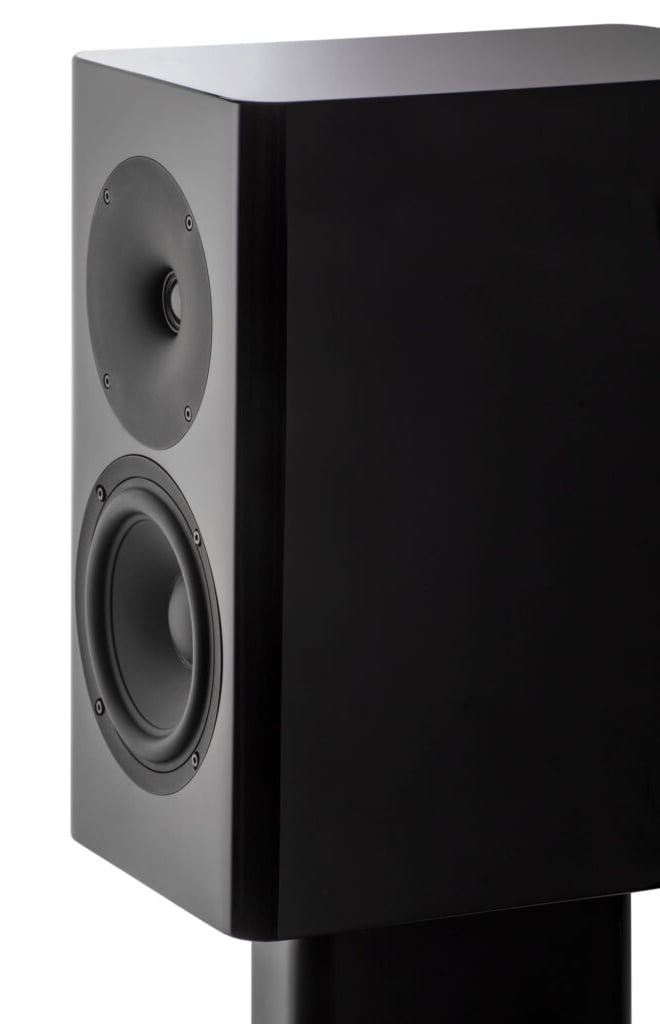
creek-audio-cymatics-6-stand-mount-speaker

The CYMATICS 6 has been developed as the reference model within the CYMATICS series. Its cabinet architecture, crossover topology, and driver integration are engineered to deliver controlled low-frequency extension and precise spatial imaging, while maintaining stable, realistic amplifier loading characteristics.

Tweeter Design Focused on Controlled Dispersion and High-Frequency Energy

In the CYMATICS 6, a 25 mm aluminum dome tweeter is paired with an aluminum waveguide. The waveguide improves off-axis response, manages acoustic loading, and enhances integration through the crossover region, resulting in stable imaging and consistent tonal balance across the listening area.

Mid-Bass Design Delivering Scale from a Compact Enclosure

The CYMATICS 6 uses a 171 mm custom fiber mid-bass driver, selected for controlled excursion, low distortion, and neutral, natural tonality.

Advertisement

Crossover Architecture for Coherent System Integration

Creek Audio considers the crossover the defining element of a loudspeaker, and the CYMATICS 6 reflects that philosophy. The crossover network is engineered for component neutrality and electrical stability, with driver integration taking priority over chasing specifications for their own sake. Phase behavior is carefully managed to maintain image solidity and tonal continuity, contributing to a measured frequency response of 44 Hz to 26 kHz (±3 dB) and a sensitivity of 88 dB SPL (2.83 Vrms, 1 m).

Advertisement. Scroll to continue reading.
creek-audio-cymatics-6-speaker-front-angle

Cabinet Design Focused on Resonance Control

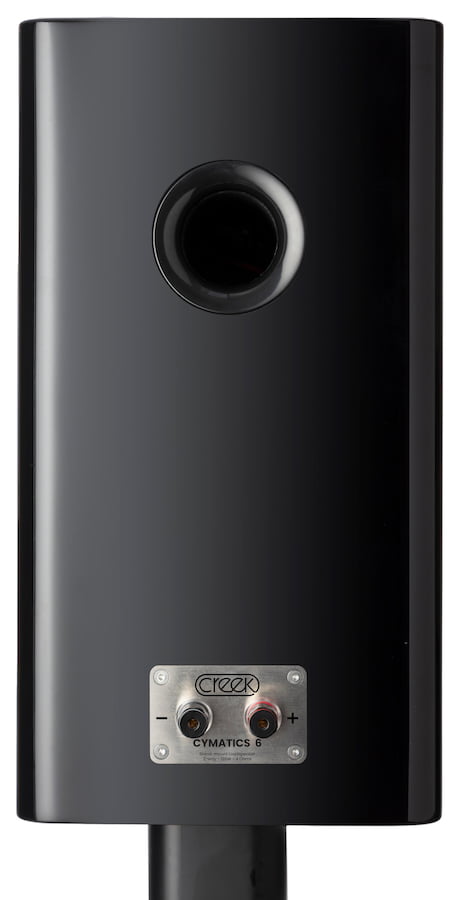
Both the tweeter and mid-bass driver are housed in a heavily braced MDF cabinet with a tuned rear vent, allowing the system to achieve meaningful low-frequency extension without sacrificing speed or articulation. Resonance is not eliminated, but deliberately controlled.

The CYMATICS 6 enclosure uses high-mass 25 mm MDF panels combined with strategic internal bracing to shift structural behavior outside the critical midband region. This approach reduces cabinet contribution and preserves dynamic integrity across the operating range.

Specifications

  • Speaker Type: 2-way rear vented (Bass Reflex)
  • Cabinet: Highly Braced, 25mm MDF construction
  • Drive Units:
  • 25mm Aluminium Dome tweeter
  • 171mm Custom Fibre mid-bass
  • Impedance: 4 Ohms
  • Sensitivity: 88dB spl (2.83Vrms, 1m)
  • Frequency Response (+/- 3dB): 44Hz – 26kHz 
  • Power Handling: 120W
  • Grilles: Magnetically attached
  • Finish: Gloss Black, Wood
  • Dimensions (HxWxD): 410 x 225 x 340mm  (26.1 x 8.86 x 13.5.inches)
  • Weight: 15 kg / 33 lbs  each
  • Price: TBD – Creek Audio products can be purchased through Authorized Dealers.
creek-audio-cymatics-6-speaker-rear

New Amplifiers?

In parallel with the CYMATICS loudspeaker program, Creek Audio is developing a new generation of integrated amplifiers built around its established MOSFET Class A/B architecture. While specific details have not yet been disclosed, the new direction is intended to preserve Creek’s core engineering principles while adapting them to the demands of modern systems and listening habits.

Bottom Line

After years of focusing our coverage on their integrated amplifiersCreek Audio is clearly signaling a broader reset for 2026, but much of the picture remains unresolved. On the amplifier side, the return to development, with multiple MOSFET Class A/B prototypes expected to appear at the Bristol Hi Fi Show, plays directly to Creek’s historical strengths. This is familiar ground, and Mike Creek’s long record as a disciplined designer earns the brand real credibility.

Advertisement

The more uncertain move is the decision to enter the loudspeaker market. The CYMATICS 6, a passive two way stand-mount design, places Creek squarely in one of the most competitive segments of British hi-fi. Choosing a passive approach rather than an active or streaming based design suggests a deliberate philosophical position, but it also raises practical questions. Why passive in 2026, when much of the market momentum is shifting toward active, DSP driven, or networked systems?

Will the new integrated amplifiers incorporate streaming or broader system integration to complement that choice? And where will pricing land in a category already crowded with established loudspeaker brands such as KEF, Q Acoustics, ProAc, Spendor, Harbeth, Wharfedale, Tannoy, Fyne, and NEAT?

What remains to be seen is what truly differentiates CYMATICS beyond sound engineering fundamentals. Controlled dispersion, phase coherence, and amplifier friendly loading are sensible goals, but they are not unique in this category. If Creek can translate its amplifier focused design DNA into a speaker that delivers genuine system synergy, predictable room behavior, and a clearly defined sonic character, it could become a serious contender.

For now, CYMATICS reads as an opening statement rather than a finished conclusion. The interest is real, and expectations are high, but until pricing, final specifications, and extended listening impressions emerge, Creek’s loudspeaker ambitions remain a compelling work in progress rather than a settled result. 

Advertisement

For more information: creekaudio.com

Source link

Advertisement
Continue Reading
Click to comment

Leave a Reply

Your email address will not be published. Required fields are marked *

Tech

Court Orders Slavery Exhibit At George Washington’s House Restored After Trump Admin Pulled It Down

Published

on

from the history-in-the-unmaking dept

The Trump administration’s project for erasing the parts of American history they find inconvenient continues unabated. But that doesn’t mean it doesn’t hit the occasional roadblock.

In January, the administration removed portions of an exhibit at the former Philadelphia home of George Washington that made reference to 9 slaves he owned that spent time at the house. That Washington owned slaves is not a matter of opinion. He did. That he also rotated those slaves in and out of the home, moving them elsewhere for short periods of time, all to get around laws in Pennsylvania that slaves within its borders for a certain period of continuous time would be automatically freed, is also uncontroversial to state. He did that. One of our founding fathers that brought “freedom” to America was also a slave owner. He wasn’t alone.

The Trump administration doesn’t like being reminded of that history. It also prefers that younger generations never learn of that history. I’d call it jingoism, but that doesn’t feel sufficient. This rings as something far more dastardly, fit for the musings of George Orwell.

Well, the city sued to have the exhibit restored and it appears the Judge in the case, a George W. Bush appointee, agrees with my assessment. You can read as much in her blistering opening in her ruling, in which she also orders the government to restore the exhibit to its previous state.

Advertisement

As if the Ministry of Truth in George Orwell’s 1984 now existed, with its motto ‘Ignorance is Strength,’ this Court is now asked to determine whether the federal government has the power it claims — to dissemble and disassemble historical truths when it has some domain over historical facts. It does not.

The ruling, which you can read embedded below, is actually quite technical. It turns out that the agreements, under which these specific sites operate, are shared between the city and federal governments, and they are both old and complicate the government’s efforts.

The layman’s version of this is that several historical sites in Philadelphia were created by an act of Congress in the 1940s. Ownership of the site is retained by the city, while curation of the exhibits are maintained only under the agreement of both the federal government and city government. Adding to the complication is that a 2006 updated agreement between both parties had a short term attached to it, but there is also a survivabilty clause, which states that the expiration of the term of the agreement doesn’t mean that the city loses its rights to agreement on the curation of the exhibits.

Although the 2006 Agreement, as updated by the Third Amendment, ceased as of May 1, 2010,94 the terms in its Project Development Plan remained effective under the Third Amendment Survival Clause. The Survival Clause states that “provisions which, by themselves or their nature are reasonably expected to be performed after the expiration or termination of this Third Amendment shall survive.”95 Because the President’s House project was not contemplated to be completed by the expiration of the Third Amendment, it was reasonably expected that terms relating to the Project Development Plan would remain in effect to ensure that the commemorative exhibit was realized in accordance with the parties’ initial plan. While the Third Amendment granted NPS the right to interpret the exhibit after it was completed, it is the Project Development Plan that established the interpretive framework that NPS would employ. Profound alterations to that framework, seen here in the effort to remove all references to slavery, AfricanAmerican Philadelphia, and the move to freedom for the enslaved, would, under the Project Development Plan, require the written approval of both the City and NPS.

Whoops.

Now, this doesn’t mean that this judge spared words of disgust at the general plan that the federal government is attempting to carry out.

Advertisement

Defendants have completely ignored their legislatively imposed duties. They have disregarded statutory authority, compelled by Congress, by taking unilateral action without seeking agreement from the City of Philadelphia. An agency, part of the Executive branch, is not entitled to act solely as it wishes. Rather, it is the Legislative branch which authorizes agency action, and the Executive branch must comply with that direction.

There’s a lot more in there, but it’s largely legally technical in nature. What is obvious from the analysis in the ruling is that, at least in this one case, the federal government acted outside of its authority due to agreements struck as a result of legislation from Congress that are in good standing. I fully expect the Trump administration to waste time and resources by appealing this decision, but this is fairly straightforward stuff.

Trump, no matter how hard he pretends, is not a king. He does not have as much power as he desires. He cannot change history. In far too many places, he is hiding that history, but he can’t change it.

And, at least in this case, at this moment, he has found the limits to his power.

Advertisement

Filed Under: donald trump, george washington, history, orwell, philadelphia, slavery, trump admin

Source link

Advertisement
Continue Reading

Tech

Keeping the human touch in tech: what over-automation gets wrong

Published

on

Automation has become an unquestioned priority for IT and service-led organizations. AI sits in the center of service desks, sales workflows, security operations, and modern cloud environments. Leaders are under pressure to move faster, cut costs, and boost output through every tool available.

Yet the rapid shift has created an unexpected consequence: many teams are realizing that efficiency alone doesn’t build trust.

Justin Sharrocks

General Manager for EMEA, at TrustedTech.

Source link

Advertisement
Continue Reading

Tech

Best Budget Monitors: I Found 3 Impressive Screens Under $200 (2026)

Published

on

I’ll be honest. Testing out the latest OLED gaming monitor or eye-popping 6K monitor is a lot more fun than the cheap stuff. But I’m not delusional. I know that when it comes to computer monitors, most people just want something affordable that gets the job done. Not miserable to look at or use. But also not expensive.

The truth is, I don’t come across as many affordable monitors as I’d like. They’re not the hottest and most exciting thing that monitor manufacturers want to talk about. So I had to do a bit of hunting to find cheap monitors that are actually good.

The Best Monitors Under $200

When you’re shopping in the “budget” tier for monitors, you’re looking at anything under $200. And in today’s landscape, monitors under $100 will still always be 1920 x 1080 resolution. These are usually 23.8-inch or 27-inch size options, while even the cheapest 32-inch monitors will cost you over $100. (For more information, check out our How to Choose a Monitor guide.)

I will get to this lower price point in a second, but I think most people should aim to start slightly higher. Here’s where you find lots of different options that give you flexibility to trade higher resolution for a USB-C hub or higher refresh rate or better adjustability. Here are a few options in $100-$200 range that I was really impressed by.

Advertisement

I have to start with the Dell 27 Plus (S2725HSM). I had a feeling I would like this monitor, as I’m a big fan of the 4K model, which remains at the top of my list for best overall monitor. This cheaper version has everything I liked about that model, including the highly adjustable stand, the sleek white design, and the really solid image quality.

For $175 (or sometimes on sale as low as $140), it has really solid color performance and hits 300 nits of brightness. The most important feature the Dell 27 Plus has is its stand. You can adjust the height and swivel, with a built-in VESA mount, which would make it a very practical addition to your current workstation. The biggest thing it’s missing is ports. It only has two HDMI ports, so you’ll need to plug accessories directly into your laptops or into a USB hub. Still, when it comes to full-featured 1080p monitors, the Dell 27 Plus ranks among the best for the price.

The one monitor that compares to the Dell 27 Plus, only with a built-in USB hub, is the Samsung Essential Monitor S4. I haven’t seen it in person yet, but it’s also 1080p and has height adjustability at the same price. It has a lower claimed brightness as the Dell 27 Plus, though, at only 250 nits.

But like I said, if you’re shopping between $150 and $200, you’re not necessarily stuck with 1080p. I tested out the MSI Pro 27 (MP273QW E14), which has a 2560 x 1440 resolution and sells for $190. Not only does this MSI monitor offer more pixels per inch, it also has really fantastic image quality, almost so good it could be used for content creators and photographers. For a monitor of this price, that’s pretty incredible. It’s also brighter than any other monitor I’ve tested in this range, reaching all the way up to 427 nits.

Advertisement

The main drawback is the adjustability and ports. No built-in USB ports for connecting peripherals and no ability to adjust the height or swivel. The built-in stand is in a static position, so if the height isn’t perfectly suited for your desk, chair, and body, you’ll need a monitor stand. And while it technically supports VESA to connect it to a monitor arm, it doesn’t come with an included mount.

The Best Cheap Gaming Monitor

Another monitor I came across in my journey through cheap displays was the Lenovo Legion R27fc-30. This would my pick for the best budget gaming monitor and really surprised me with its image quality. I’m used to having to complain about the janky screens on cheap gaming laptops, but this far exceeded my expectations. Brightness is over 300 nits, and color performance is just as good as the MSI Pro 27.

Source link

Advertisement
Continue Reading

Tech

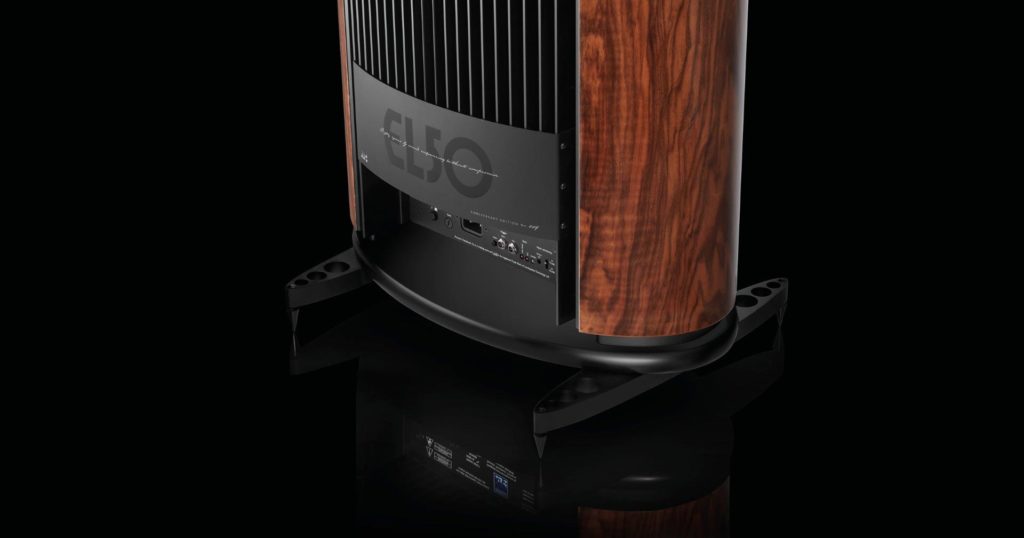
ATC unveils EL50 anniversary loudspeaker at Bristol Hi-Fi Show

Published

on

ATC has unveiled the Statement EL50 Anniversary, a limited-run active three-way floorstander that evolves the company’s long-running 50-series blueprint.

Built around a newly developed discrete tri-amp platform and housed in a sculpted elliptical cabinet, the EL50 Anniversary is aimed squarely at audiophiles. It targets those seeking reference-level performance with statement design.

At its core is an all-new proprietary three-channel active “Amp-Pack”, delivering 200W to the bass driver, 100W to the mid-range and 50W to the tweeter. The design uses balanced inputs, fourth-order active crossovers and newly developed discrete gain blocks to lower noise and distortion.

Moreover, ATC has also redesigned the power supply. Each amplifier channel now has its own toroidal transformer, plus a separate transformer for low-voltage stages. This layout is intended to improve headroom and reduce intermodulation between drivers under heavy load.

Advertisement

The drive units are built entirely in-house. High frequencies are handled by ATC’s SH25-76S ‘S-Spec’ tweeter, using a neodymium motor and dual-suspension design for low distortion and extended response beyond 25kHz.

Advertisement

The mid-band is covered by the SM75-150S ‘Superdome’. It spans frequencies from 380Hz to 3.5kHz with a large 75mm voice coil and under-hung motor system for consistent control. Low-end duties fall to the SB75-234SL 9-inch bass driver. This driver features ATC’s Super Linear motor technology to reduce harmonic distortion and improve integration with the mid-range.

Furthermore, the cabinet reflects ATC’s heritage, drawing inspiration from the elliptical EL150 design introduced in 2006. The curved front baffle is engineered to reduce edge diffraction and smooth off-axis response.

Advertisement

Additionally, internal construction has been updated for greater stiffness and damping. Each cabinet is finished in hand-selected European walnut veneer with ebony rear inlays, polished polyester lacquer, and black napa leather detailing around the mid and high-frequency drivers.

Only 50 pairs will be produced in this initial run, each supplied with a hardbound handbook celebrating ATC’s journey since 1974. After the anniversary edition sells through, the model will enter continued production.

The EL50 Anniversary will debut globally at The Bristol Hi-Fi Show in February 2026 and goes on sale in March 2026, priced at £49,500 per pair (inc. VAT).

Advertisement

Advertisement

Source link

Continue Reading

Tech

Two new Apple Studio Displays could gatecrash March MacBook announcements

Published

on

References to two new Apple Studio Display models have been found in macOS 26.3 code, stacking up more potential product announcements before the May 4 Apple “Experience.”

Colorful desktop computer setup with a large monitor showing abstract art, slim keyboard and trackpad on a white desk, headphones on a stand, and brick wall background.
Apple could be set to announce not one, but two new displays.

Apple has confirmed that it will hold a special event on March 4, with rumors suggesting it could follow a week of announcements. A low-cost MacBook is expected to be the star of the show.
Now, references to codenames J427 and J527 have been found in the macOS 26.3 update. Those codenames match a report from September 2025 that pegged both products as being Apple Studio Displays.
Continue Reading on AppleInsider | Discuss on our Forums

Source link

Continue Reading

Tech

Apple apparently has two new Studio Display models lined up for launch

Published

on

A couple of days ago, I compiled a detailed roundup of all the products we’re expecting from Apple at the upcoming media “experience” on March 4, 2026. In the story, we discussed new devices like new MacBooks, iPhone 17e, and a couple of other Apple devices, including the proposed Studio Display 2.

Now, folks over at Macworld have discovered something very interesting about Apple’s external display (or displays). Per the outlet, the public version of macOS 26.3 contains kernel extensions for not one but two new Studio Display models.

macOS 26.3 hints at two Studio Display 2 models

In total, the new software build contains alphanumeric codenames for three devices. The first, “J700,” is the internal name for the affordable 12.9-inch MacBook that is rumored to launch alongside the new M5 MacBook Air and the M5 Pro and M5 Pro Mac Pro versions.

However, the other two — J427 and J527 — are believed to be references to two different models of the Studio Display 2. Although there’s no information about the differences between the two models, Apple could use either size or features to differentiate them.

Currently, Apple’s first-generation Studio Display is available with a 27-inch 5K panel. So, there’s a chance that we see a 27-inch Studio Display 2, along with another model with either a smaller or a bigger screen.

Advertisement

Size or features: How Apple might differentiate between the models

The second (and the more likely) way is that the company could reserve some features for one model, which would be the more expensive of the two, and another, cheaper model (either retains the current set of specifications or gets only minor upgrades).

From what I know, at least one of the two rumored models could get a bump in refresh rate (up to 120Hz), a mini-LED backlighting panel for enhanced brightness and contrast, and a more capable A19 chip (also found on the iPhone 17).

Source link

Advertisement
Continue Reading

Tech

6 Best Phones With Headphone Jacks (2026), Tested and Reviewed

Published

on

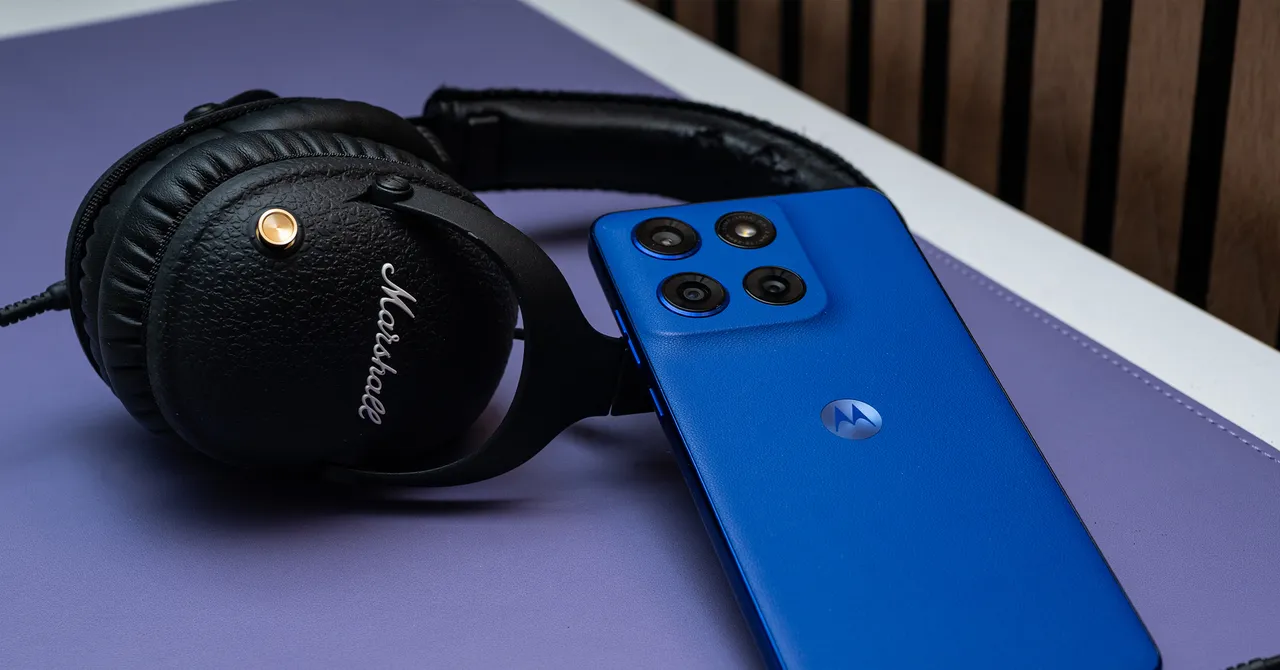
If a headphone jack is a must-have on your next phone, Motorola’s Moto G Stylus 5G 2025 strikes the best balance of performance, aesthetics, features, and price. Not only does it have the jack, but it also stores a stylus inside, an embarrassment for any other company that cited space-saving reasons to nix the port. The gorgeous blue vegan leather finish on the back truly makes this phone stand out, putting the Blue Man Group to shame. The performance, powered by Qualcomm’s Snapdragon 6 Gen 3 chipset, is nice and smooth, and you get a 120-Hz 6.7-inch OLED screen to boot. It’s slim, despite the 5,000-mAh battery, which lasts a full day and then some with average use. And the 50-megapixel main camera is reliable day or night as long as you keep still when tapping the shutter button.

Motorola goes above and beyond, stuffing this phone with twice the amount of typical storage at 256 GB; there’s also a microSD card slot to expand space, wireless charging, and an IP68 rating, so it will survive an accidental drop in the pool. For the first time, Motorola’s also offering two Android OS upgrades on its Moto G phones, meaning you can hold onto it a little longer before it won’t get new features. (You’ll still get 3 years of security updates.) Just remember that mobile phones are heavily discounted during big sale events, so I recommend waiting for a sale.

Motorola has already started launching its 2026 slate of Moto G devices, but the Moto G Stylus 2026 seems to be last on the list. Expect its arrival in the next month or two, which means you may want to wait for the latest and greatest.

Source link

Advertisement
Continue Reading

Tech

Razer unveils $500 Huntsman Signature keyboard with CNC aluminum and mirror finish

Published

on


Razer’s new keyboard is essentially an upgraded Huntsman V3 Pro, which itself is an excellent device that carries a $250 MSRP. The first production run will be limited to 1,337 individually numbered units.
Read Entire Article
Source link

Continue Reading

Tech

How infostealers turn stolen credentials into real identities

Published

on

Specops infostealers

Modern infostealers have expanded credential theft far beyond usernames and passwords. Over the past year, campaigns have accelerated, targeting users with little distinction between corporate employees and individuals on personal devices.

These infections routinely harvest credentials alongside broader session data and user activity. The resulting datasets are aggregated and sold by initial access brokers, then reused across attacks targeting both personal and enterprise environments.

To better understand the scope and implications of this activity, Specops researchers analyzed more than 90,000 leaked infostealer dumps, comprising over 800 million rows of data collected during active infections.

The datasets included credentials, browser cookies, browsing history, and system-level files stored locally on compromised machines.

Advertisement

What emerges is a clear picture of how infostealer dumps allow attackers to associate technical data with real users, organizations, and behavioral patterns, making a single infection valuable long after the initial compromise.

When stolen credentials become identity data

The biggest risk is how easily infostealer data ties multiple accounts and behaviors back to one real person. These dumps routinely expose reused account names across services, Windows usernames, files stored in user directories, active session data, and detailed records of activity across environments.

Combined, these signals let attackers move from a single compromised credential to identifying an individual, their employer, and potentially their role within an organization.

This convergence collapses the boundary between personal and professional identity that many security models still assume exists. What may start as a compromise on a personal device can quickly escalate into enterprise-level risk.

Advertisement

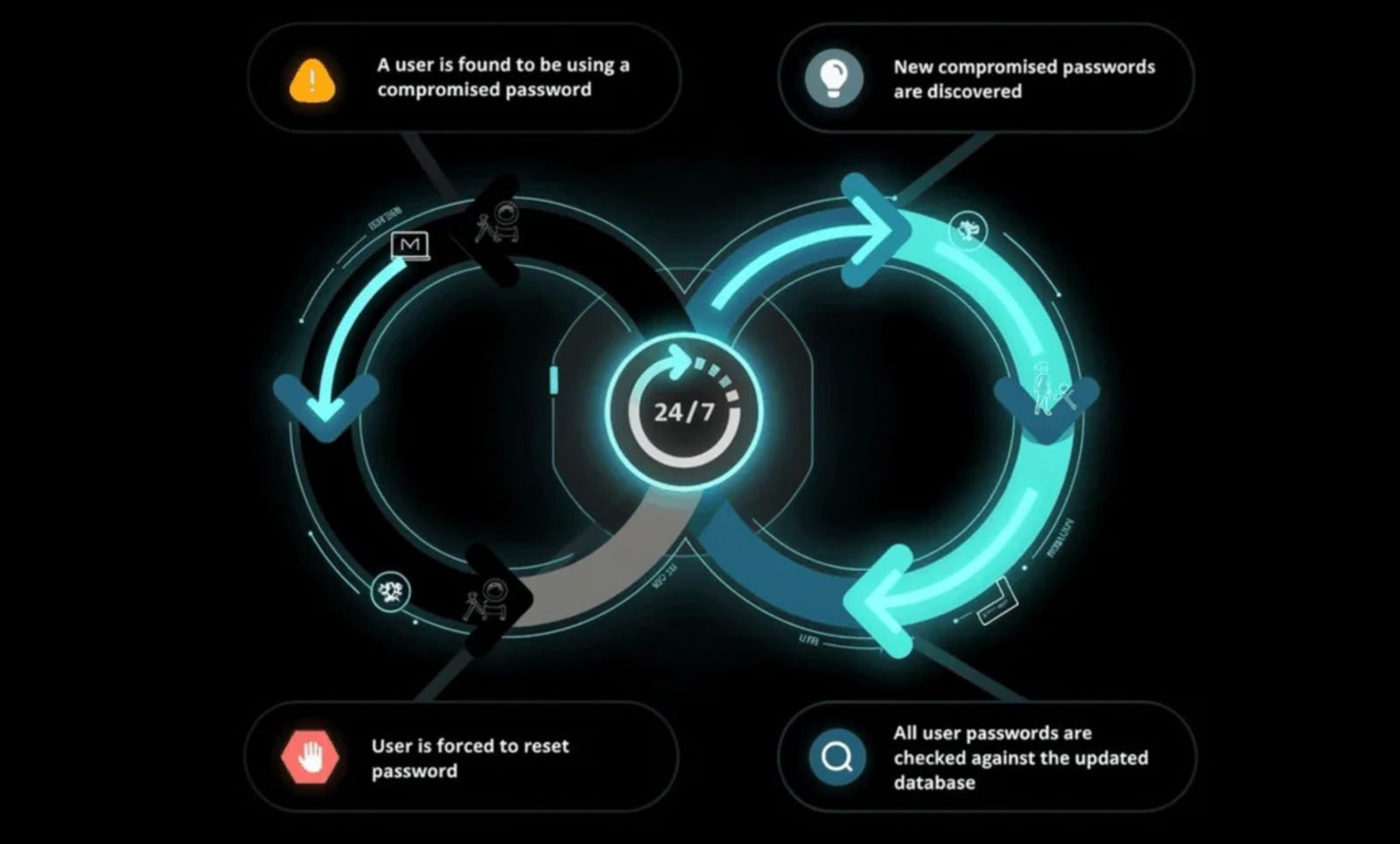
Specops Password Policy helps organizations break this link by continuously scanning Active Directory against a database of more than 5.4 billion known-compromised credentials, rather than only checking passwords at creation or reset.

Continuous scanning with Specops Password Policy

Credentials that have already been exposed are blocked from being set or reused, even if they technically comply with policy, reducing the risk of compromised passwords being reused across personal and corporate accounts.

Verizon’s Data Breach Investigation Report found stolen credentials are involved in 44.7% of breaches. 


Effortlessly secure Active Directory with compliant password policies, blocking 4+ billion compromised passwords, boosting security, and slashing support hassles!

Try it for free

Where infostealers get your data and how they abuse it

The dataset contained credentials and session data associated with a wide range of services, illustrating how infostealer data exposes both identity and access.

Professional and enterprise-linked services

LinkedIn, GitHub, Microsoft Teams, Outlook, and corporate domains appeared frequently in the dataset. LinkedIn alone accounted for nearly 900,000 records, providing a direct path from stolen data to real names, job titles, and organizational affiliations.

Advertisement

For threat actors, this information enables targeted phishing, social engineering, and prioritization of access that may lead deeper into enterprise environments, especially where password reuse exists.

Personal identity and social platforms

YouTube, Facebook, and similar social media platforms also made high-volume appearances. These services often contain real names, photos, and social connections, making it easier to validate the identity of a compromised user and link them to other accounts.

This correlation makes targeted exploitation far easier.

Sensitive and high-risk services

The dataset also included credentials and cookies associated with sensitive services, including government and tax-related domains such as the IRS and the Canada Revenue Agency, as well as adult content platforms. Access to these services introduces risks beyond traditional account takeover.

Advertisement

In previous incidents, threat actors have used data from adult platforms as leverage for extortion and blackmail. When that activity can be linked back to an individual’s real identity and employer, the potential impact escalates quickly.

Security-aware yet still exposed

Domains such as Shodan and even mil.gov appeared within the dataset, reinforcing an uncomfortable reality: technical awareness does not equal immunity.

Secure practices followed in corporate environments do not always extend to personal systems, yet exposure on those systems can still create enterprise risk.

Why infostealers remain so effective

Infostealer exposure isn’t driven by a single failure, but by a combination of common behaviors repeated at scale. Users install applications from illicit sources, reuse passwords across personal and corporate accounts, and rely on browser-based credential storage for convenience.

Advertisement

Browser-stored credentials and payment data are especially valuable to attackers.

When an infostealer compromises a system, these stores provide attackers with immediate access to high-value information, significantly increasing the impact of a single infection.

Reducing impact after credential theft

Once infostealer data has been collected and circulated, prevention is no longer the only challenge. The real question is how quickly defenders can neutralize it before it’s reused for lateral movement, account takeover, or ransomware deployment.

Because infostealer dumps often circulate for weeks or months before detection, effective mitigation must assume that some credentials are already exposed.

Advertisement

Password reuse remains one of the most reliable ways attackers operationalize infostealer data. Credentials harvested from personal devices are routinely tested against corporate environments, cloud services, and remote access systems, often with success even when those passwords meet standard complexity requirements.

Disrupting reuse directly reduces the operational value of infostealer datasets and shortens their window of exploitation.

Combined with stronger password policies that support longer passphrases and continuous enforcement, these controls shift password security from a static configuration exercise to an active containment measure.

Identity exposure increasingly begins outside the corporate perimeter, so reducing the reuse and downstream impact of stolen credentials remains one of the most effective ways to break infostealer-driven attack chains.

Advertisement
Specops Password Policy

To see how Specops Password Policy helps block compromised passwords and reduce credential reuse in Active Directory, request a live demo from a Specops expert.

Sponsored and written by Specops Software.

Source link

Advertisement
Continue Reading

Tech

iPhone 17e: Everything we know so far

Published

on

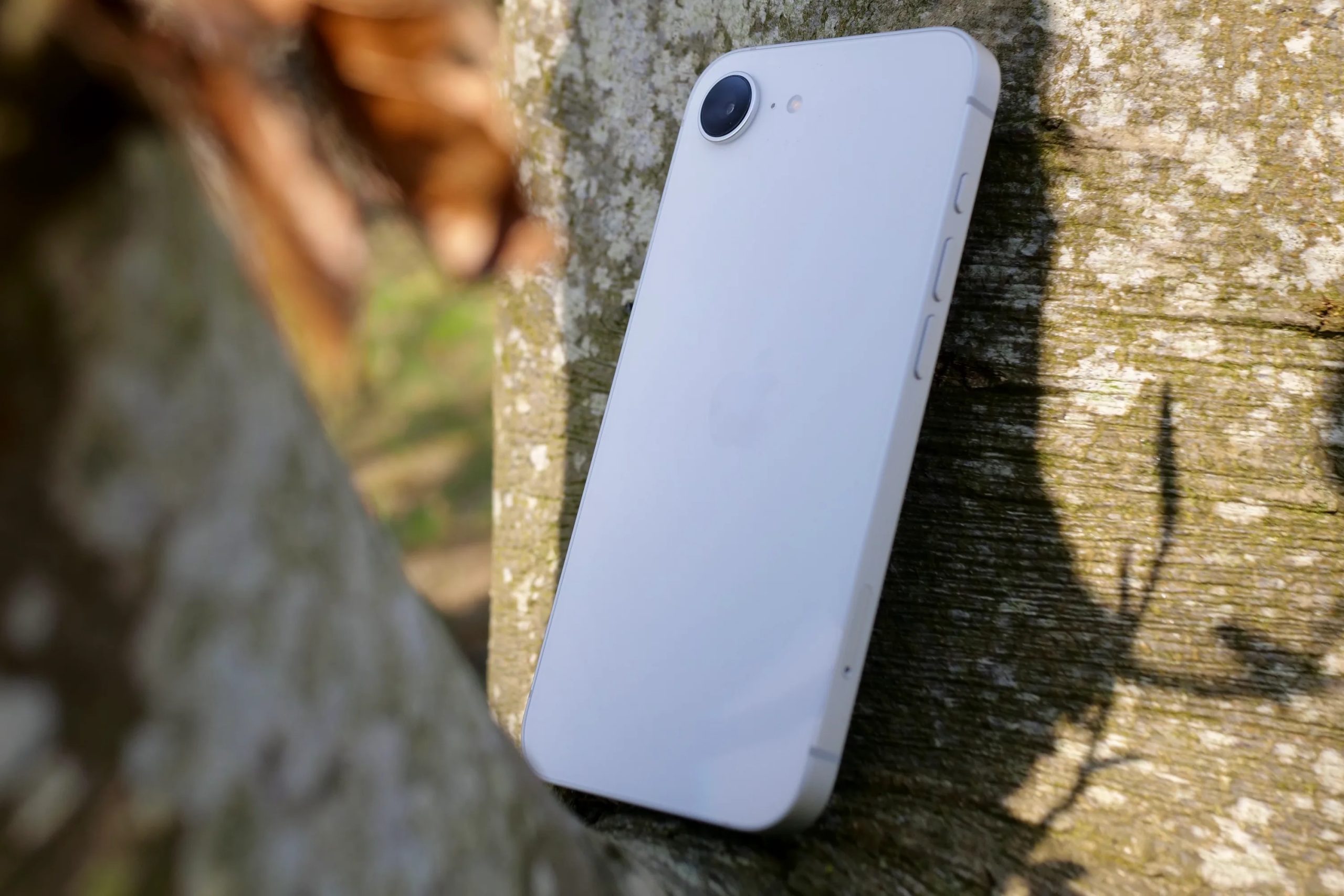
With the iPhone 16e, Apple tried to revive the affordable iPhone segment by offering a familiar form factor and capable hardware. But despite that, 2025’s cheapest iPhone release wasn’t as hot and popular as the other ones. Well, that could change with the arrival of the iPhone 17e.

With detailed rumors pouring in for over six months now, the iPhone 17e is among the most-anticipated Apple product launches in the first half of the year, and so far, the rumor mill has only been kind to the device. So, without any further ado, here’s everything we know about the iPhone 17e.  

Release date and price rumors

While some rumors suggested a February 19 launch date for the iPhone 17e, that didn’t happen. Instead, the phone should break cover at the “special Apple experience” media briefing sessions on March 4, 2026.

Apple is holding press briefings in three cities around the world — New York, London, and Shanghai — which sounds like the perfect time to introduce the world to the new, better, and, most importantly, cheaper iPhone.

Pre-orders for the iPhone could begin either as the event ends or the next day, with general availability from around the second week of March.

But exactly how cheap could the iPhone be? Bloomberg’s Mark Gurman suggests that the iPhone 17e (128GB) could retain the iPhone 16e’s launch price of $599. Despite rumored hardware upgrades, the company might freeze the smartphone’s launch price for another year.

Advertisement

Despite all the reports about the ongoing memory crisis, Apple’s long-term partnership with its suppliers and the scale of its operations give it a unique advantage over other brands, even as other smartphone makers (including global giants like Samsung) struggle to control smartphone prices.

Design and display

Apple’s iPhone 16e is often criticized for its outdated design (it’s the gigantic notch at the top of the screen that bothers some buyers). Well, that could go away with the iPhone 17e, as it’s rumored to replace the ugly notch with the Dynamic Island (as seen on the recent iPhones).

I strongly believe that the iPhone 17e could borrow its screen from the baseline iPhone 15, facilitating the Dynamic Island and thinner bezels. The choice of materials — an aluminum frame sandwiched between two layers of glass — should remain the same as well.  

Apart from the classic black and white finishes, the iPhone 17e should be available in a new purple or lavender finish, appealing to younger buyers and helping the handset compete with the variety of colors the Pixel 10a is available in.

Coming to the screen, the iPhone 17e is rumored to ship with a 6.1-inch OLED screen (smaller than the 6.3-inch screen on the regular iPhone 17) that supports a 60Hz refresh rate and 2,000 nits of peak brightness, making it, well, usable.

No ProMotion display, no dramatic upgrades in brightness, just the regular, Apple-fashioned refinement. In terms of design, the iPhone 17e will likely mirror the iPhone 15 from the front and the iPhone 16e from the back.

Advertisement

Performance and software

Under its familiar hood, the iPhone 17e should feature Apple’s A19 (3nm) chip, perhaps a binned version with one fewer GPU core (five instead of six). I’ve been using the iPhone 17, powered by the A19 chip, as a daily driver, and the chip has more computational power than I can use on most days.

Further, the chipset could be paired with Apple’s in-house C1X modem (similar to the iPhone Air), which should offer faster 5G speeds and up to 30% better energy efficiency than the C1 modem. If that happens, the ‘e’ series iPhone might also get the N1 wireless chip.

Like the iPhone 16e, the iPhone 17e could also feature 8GB of RAM, which is the bare minimum to support Apple Intelligence (both current and upcoming features).

The handset might get a storage upgrade to 256GB on the base variant, but I’ll not be surprised if Apple continues with 128GB base storage (since it is expected to retain the $599 price). The top variant, like last year, should get 512GB of storage.

Out of the box, the iPhone 17e should run iOS 26 (perhaps iOS 26.3 or iOS 26.4), with all Apple Intelligence features (including Writing Tools, Gemoji, Clean Up, and more).

And no, the revamped version of Siri might not be available on the iPhone 17e, as it’s delayed to iOS 26.5 or iOS 27. Like other iPhones, the cheapest iPhone should also get new iOS versions for around five to six years before Apple drops support.

Advertisement

Cameras and battery

The only back camera on the iPhone 17e should feature a 48MP Fusion camera sensor, which allows capturing images at 24MP or 48MP resolution, along with optical-quality 2x in-sensor zoom, and Dolby Vision HDR video recording (up to 4K at 60 fps).

What I’m curious to see is whether Apple goes with the same 1/2.55-inch sensor on the iPhone 16e or upgrades the camera with the 1/1.56-inch sensor found on the iPhone 16 or iPhone 17.

If you’ve heard about and envied the Center Stage camera on the iPhone 17, the iPhone 17e could be your chance to unlock the marvellous selfie experience for yourself and your friends. Rumors indicate that the latest ‘e’ series iteration could ship with the 18MP square-sensor front camera we’ve seen on the iPhone 17 series.

Beyond the cameras, the purported entrant to the latest iPhone lineup could come with a 4,005 mAh battery, which is larger than that on the iPhone 17. If that happens, the iPhone 17e could offer around 30 hours of video playback (up from 26 hours), making battery life a major selling point for buyers.

If that’s not enough, Apple is also considering adding MagSafe charging to the handset, and the faster one (up to 25W), no less. Apart from unlocking convenient wireless charging, MagSafe also unlocks support for plethora of accessories.

So, whether it’s the design, display, performance, optics, or battery life, the iPhone 17e should get upgrades across the board, which would make it one of the easiest recommendations for prospective iPhone buyers on a budget, but with known compromises like a single-camera setup and the lack of ProMotion (120Hz) display.

Advertisement

Source link

Continue Reading

Trending

Copyright © 2025