

Crypto World
What’s Next for Crypto in EU After Lagarde Leaves?

European Central Bank (ECB) president Christine Lagarde is stepping down sometime before the French presidential election next year.
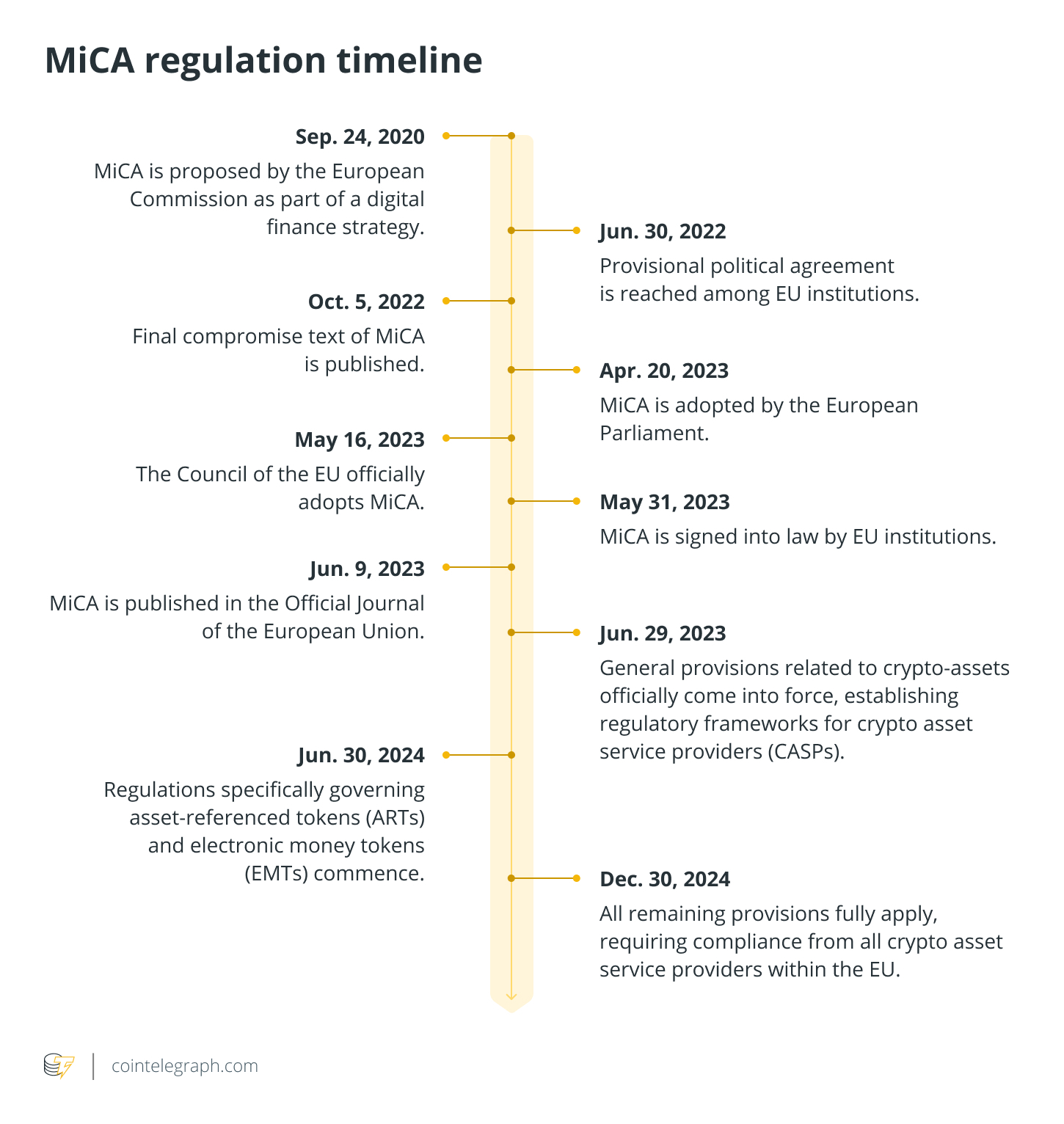
Under her leadership, the ECB has consulted on the Markets in Crypto Assets (MiCA) legislation that defined the crypto landscape in the European Union. The preeminent European bank also began work on the digital euro — the next iteration of the Eurozone’s currency.
But there is still work to be done on crypto policy in Europe. MiCA does not, in its current form, regulate decentralized finance (DeFi), and policymakers at the ECB are still deliberating over the digital euro’s final details.
While the exact timing of Lagarde’s departure has not yet been determined, observers are already speculating about who will take her place and how it will affect crypto policy in Europe.
Lagarde was a crypto-skeptic, critical of stablecoins
Like many central bankers, Lagarde has been cautious at best when it comes to cryptocurrencies. In 2022, she said regarding crypto, “My very humble assessment is that it is worth nothing.”
“It is based on nothing … There is no underlying asset to act as an anchor of safety.”
She said that crypto should be regulated, citing concern that investors did not understand the risks associated with crypto investing and would “lose it all.”
This set the tone for the ECB consultations on MiCA that would follow. The ECB itself does not create laws, but throughout the legislative process, the ECB advised, observed and offered comments, particularly over areas related to monetary policy and payments regulations.

Even after MiCA was passed, Lagarde advocated for tight regulations on stablecoins and aligning international standards. In September 2025, she called on lawmakers in Europe to provide safeguards for stablecoins and equivalence for foreign stablecoin issuers to prevent the risk of stablecoin runs.
“European legislation should ensure that such schemes cannot operate in the EU unless supported by robust equivalence regimes in other jurisdictions and safeguards relating to the transfer of assets between the EU and non-EU entities,” she said.
“This also highlights why international cooperation is indispensable. Without a level global playing field, risks will always seek the path of least resistance.”
She further stated that stablecoins are a threat to national sovereignty and turn money from a public good into a privately controlled enterprise.
“When stablecoins are left unchecked, we risk creating a system in which money is controlled by the private sector. That is not the mandate we were appointed to serve as public servants.”
Demand for digital cash and the euro
While a noted crypto skeptic, Lagarde acknowledged the demand for digital currencies back in 2021. In an interview that year at the World Economic Forum, Lagarde said, “If customers prefer to use digital currencies rather than have banknotes and cash available, it should be available.”
“We should respond to that demand and have a solution that is European based, that is secure, that is available, and friendly terms that can be used as a means of payment.” At the ECB level, this response took the form of the digital euro.
But the wheels of Brussels do not turn quickly. The investigation phase for a digital euro began all the way back in October 2021. In October 2025, the ECB completed the preparation phase when its governing council decided to start preparing for issuance.

The digital euro has faced harsh criticism, namely that it will give central banks yet another tool to monitor consumer behavior, control spending and eradicate anonymous transactions. There have also been concerns over offline operability and overreliance on digital systems.
The ECB claims that the digital euro will have strict privacy standards and that it will bring all the same benefits of cash to the digital monetary space. In October 2025, Lagarde said that the ECB wants to make the euro “fit for the future, redesigning and modernising our banknotes and preparing for the issuance of digital cash.”
Her colleague, ECB executive board member Piero Cipollone, iterated that the digital euro “will ensure that people enjoy the benefits of cash also in the digital era. In doing so, it will enhance the resilience of Europe’s payment landscape, lower costs for merchants, and create a platform for private companies to innovate, scale up and compete.”
New ECB frontrunners unlikely to depart from cautious stance
Lagarde’s decision to step down comes at a politically fraught time. Leaving before the next French presidential election will allow President Emmanuel Macron to participate in picking her replacement.
France is the second-largest economy in the EU, and according to Reuters, no ECB president has been picked without a nod from Paris.
The right-wing National Rally has been ascendant in the polls recently, while Macron has failed to offer stable governance, with seven different prime ministers serving under his tenure. National Rally president Jordan Bardella claims that, in choosing a new ECB president, Macron would be able to exercise influence beyond the end of his official term.
According to the Financial Times, the current frontrunners to replace Lagarde are former Spanish central bank governor Pablo Hernández de Cos and former Dutch central bank governor Klaas Knot.
In 2022, Hernández de Cos said at a Bank of International Settlements (BIS) conference that crypto can “pose highly significant risks that are hard to understand and measure, even for the most experienced agents.”
He called for a robust regulatory framework to transition crypto from “that hyperbolic ‘Wild West’ myth to a more desirable orderly ‘railroad of civilisation.’”
Knot has been similarly cautious. Speaking before the BIS in 2024, he acknowledged the possible benefits of certain aspects of blockchain technology.
Related: How euro stablecoins could address EU’s dollar concerns
“Creating a digital representation of an asset and placing it on a distributed ledger could bring benefits to the financial system. This includes efficiency gains and potentially increased liquidity of certain assets. Of course, there may also be risks for financial stability.”
Still, he stressed the regulators were assessing the implications these technologies would have on broader financial stability, stating that, “We cannot presume that this innovation, and potentially more decentralization, will bring significant benefits to the global financial system.”
In June 2025, he addressed stablecoins specifically. Knot said that whether the next form of money comes via stablecoins or already established payment networks “should be something we are agnostic on.”
While neutral on the manner of technology supporting financial innovation, he said that “fostering innovation must not come at the expense of stability.”
While often criticized for the glacial pace of progress, the EU managed to pass a comprehensive crypto framework earlier than the far more crypto-friendly United States. This framework included guidance and input from a crypto-cautious central bank, with a skeptic at the helm.
Magazine: Bitcoin may take 7 years to upgrade to post-quantum: BIP-360 co-author
Cointelegraph Features and Cointelegraph Magazine publish long-form journalism, analysis and narrative reporting produced by Cointelegraph’s in-house editorial team and selected external contributors with subject-matter expertise. All articles are edited and reviewed by Cointelegraph editors in line with our editorial standards. Contributions from external writers are commissioned for their experience, research or perspective and do not reflect the views of Cointelegraph as a company unless explicitly stated. Content published in Features and Magazine does not constitute financial, legal or investment advice. Readers should conduct their own research and consult qualified professionals where appropriate. Cointelegraph maintains full editorial independence. The selection, commissioning and publication of Features and Magazine content are not influenced by advertisers, partners or commercial relationships.

Ethereum price continued its strong downward trend on Friday as geopolitical risks rose and demand for cryptocurrencies waned.
Summary
- Ethereum price may continue the downward trend this year.
- Technical analysis shows that it has invalidated the inverted head-and-shoulders pattern.
- The upcoming Donald Trump attack on Iran may push prices lower.
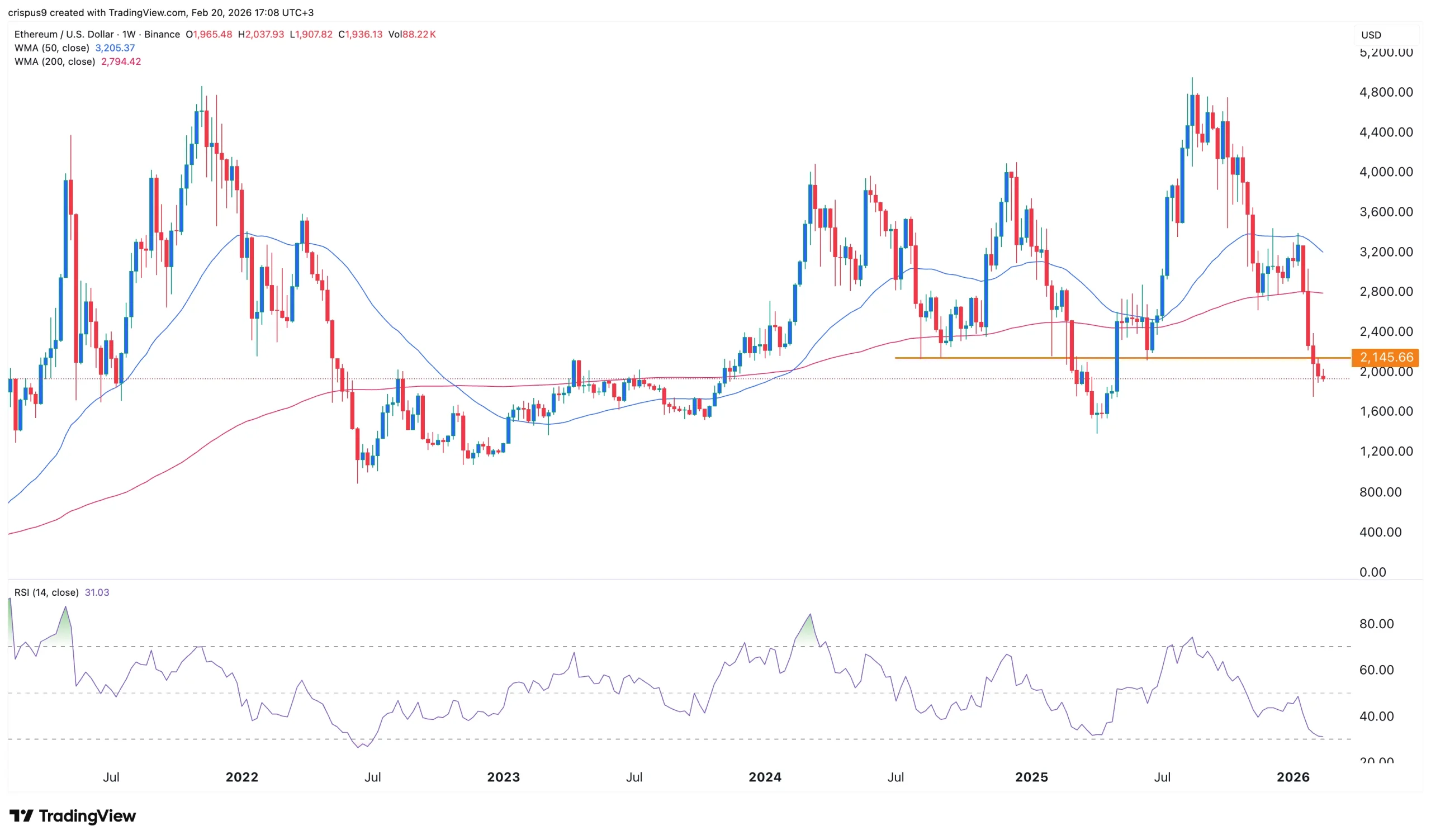
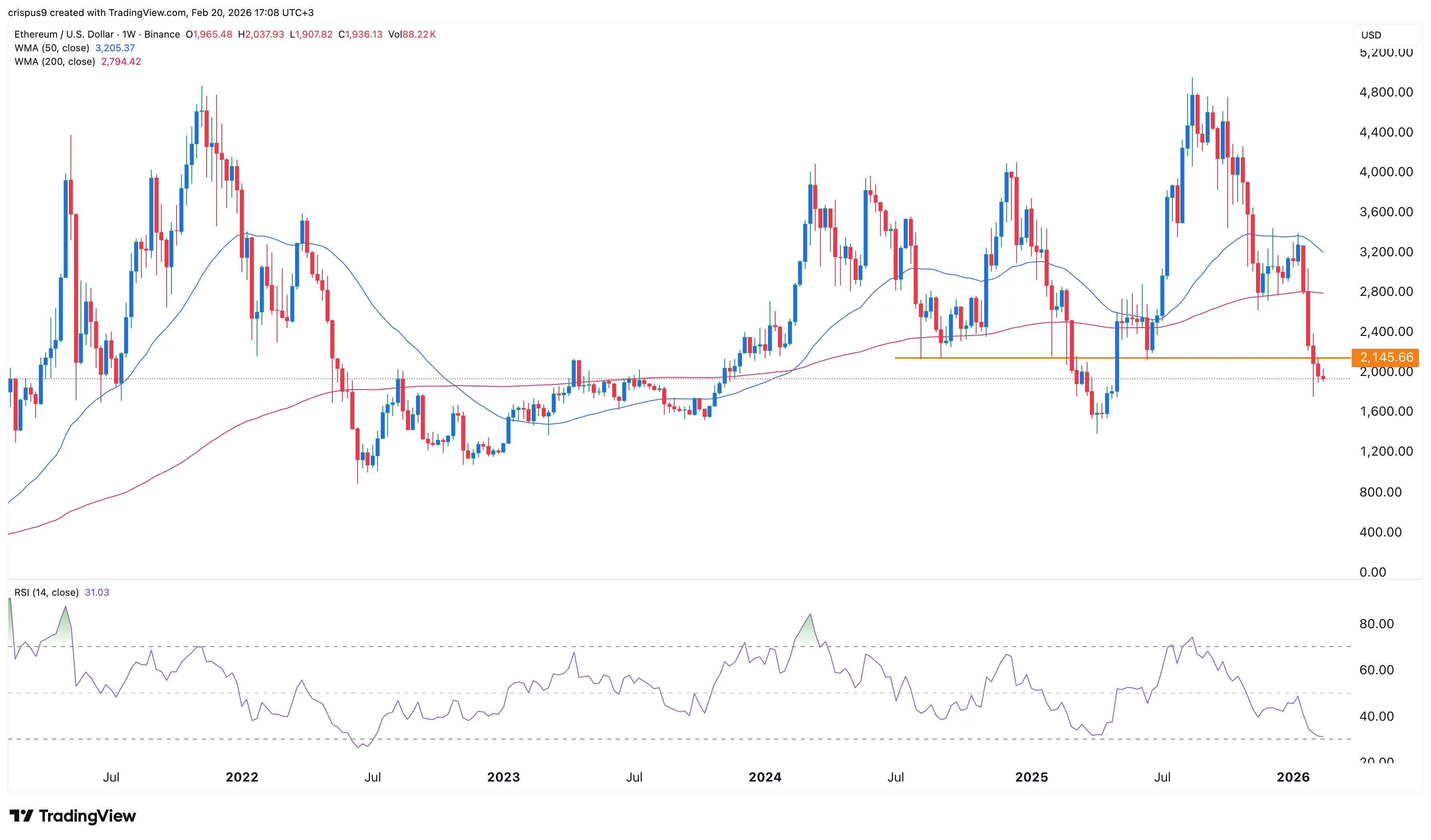
Ethereum (ETH) token dropped to $1,937, down sharply from the all-time high of $4,943, and key factors suggest that it has more downside, potentially to the key support level at $1,500.
Ethereum price technical points to more downside
The weekly timeframe chart shows that the ETH price has remained under pressure in the past few months. It has dropped in the last five consecutive weeks, and is hovering near its lowest level since May last year.
The coin has dropped below the key support level at $2,145, invalidating the inverted head-and-shoulders pattern, a common bullish reversal sign in technical analysis.
Ethereum has dropped below the 50-week and 200-week Weighted Moving Averages. It has also moved below the Supertrend indicator, a sign that bears remain in control.
The Relative Strength Index has moved to the oversold level of 30. Therefore, the most likely scenario is where it continues falling so that the RSI can become extremely oversold, which will then lead to a rebound.
Ethereum institutional demand is waning
The other main bearish catalyst for Ethereum is that demand from institutional investors has waned in the past few months.
One sign for this is the fact that demand for spot Ethereum ETFs has waned. These funds shed over $130 million in assets on Thursday, bringing the monthly outflow to over $450 million. They have suffered outflows in the last four consecutive months.
Another sign of waning demand is that the futures open interest has continued falling in the past few months and now stands at $23 billion, down from the year-to-date high of $41 billion.
Donald Trump is locked and loaded on an Iran attack
Geopolitics may also contribute to the Ethereum price crash as cryptocurrencies are no longer safe-haven assets.
All indications are that Donald Trump will attack Iran, as the US has accumulated a large armada in the region. In a statement on Thursday, he warned Iran of an attack that may happen in the next 10 to 15 days.
An Iranian attack would have a major impact on financial assets. For example, it would lead to higher crude oil prices, which may lead to higher inflation. This is important as this week’s Federal Reserve minutes showed that some Fed officials are considering rate hikes if inflation remains at an elevated level.
Still, on the positive side, Ethereum has some potential bullish catalysts, including soaring transactions, active addresses, and fees. Also, key metrics in its ecosystem, like the DeFi total value locked has jumped to a record high in ETH terms. Also, its staking queue continues rising, while its market share in the real-world asset tokenization industry is soaring.

Editor’s note: AI in security operations is rapidly changing how organizations detect and respond to threats. A global Kaspersky study indicates near-universal intent to integrate AI into SOCs, yet organizations still confront data quality issues, talent shortages and mounting costs. In the UAE, 70% of firms say they will probably adopt AI-driven SOCs, while concerns about data, skills and integration underscore the gap between ambition and execution. This editorial offers context on what to watch as AI becomes a core SOC capability and how to approach implementation responsibly.
Key points
- 99% of respondents plan to incorporate AI into their security operations.
- In the UAE, 70% say they will probably adopt AI in SOCs, with 30% stating they will definitely do so.
- Top use cases: automated analysis for threat detection (58%), and automated incident response (46%).
- Major challenges include data quality, shortage of AI experts, new AI-related threats, and high costs.
Why this matters
AI adoption in security operations is advancing, but the move from experimentation to real SOC impact remains challenging. Talent shortages and evolving AI threats complicate deployment. As providers roll out AI-powered features, organizations should couple technology with data governance and skilled teams to unlock meaningful improvements in threat detection and response.
What to watch next
- Progress on data quality and availability for AI training and deployment.
- Adoption of AI-powered features across SOC tools and platforms.
- Investment in AI talent and integration of SOC processes with AI capabilities.
- Updates to Kaspersky’s AI-powered offerings and threat intelligence capabilities.
Disclosure: The content below is a press release provided by the company/PR representative. It is published for informational purposes.
Kaspersky study: 70% of UAE Firms Plan AI-Driven SOCs—But Talent and Data Gaps Stall Progress
February 20, 2026
Almost all companies planning to establish a Security Operations Center (SOC) regard artificial intelligence (AI) as a must-have component. However, despite high expectations, organizations face significant challenges in deploying and operationalizing AI effectively. These include a lack of high-quality training data, a shortage of AI-skilled personnel, substantial integration costs and emerging AI-related threats.
To explore how companies build and maintain processes in SOCs, Kaspersky conducted a comprehensive global study which highlights, among other things, priorities, expectations and challenges associated with leveraging AI to elevate SOC performance[1]. The findings reveal that an overwhelming 99% of respondents plan to incorporate AI into their security operations. Among them, nearly three quarters (70%) in the UAE say they will probably do so and nearly a third (30%) state they will definitely do so. This underscores the widespread perception of AI as a vital driver for enhancing threat detection, accelerating investigation processes and boosting overall SOC efficiency.
When it comes to practical use cases, organizations in the UAE primarily expect AI to strengthen threat detection capabilities through automated analysis of data to identify anomalies and suspicious activities (58%) and to facilitate response automation, enabling rapid execution of predefined incident response scenarios (46%). These expectations align closely with the top motivations driving AI adoption in SOCs: improving overall threat detection effectiveness (46%), automating routine tasks (39%) and increasing accuracy while reducing false positives (52%). Large enterprises consistently report broader and more ambitious plans for applying AI across multiple SOC functions.
However, a clear execution gap appears when it comes to AI implementation, characterized by several critical and widespread challenges. Foremost is the lack of high-quality training data, a barrier cited by 32% of organizations in the UAE as a fundamental obstacle that hampers the accuracy and relevance of AI models. This issue is further compounded by other critical concerns: a shortage of qualified AI experts within internal team (43%), the emergence of new threats and vulnerabilities related to AI usage (27%) and the high costs associated with developing and maintaining AI-driven solutions (32%). Together, these factors create a barrier that prevents organizations from turning their AI strategy into operational success, underscoring the necessity for a structured and well-supported approach.
“Organizations clearly recognize the value AI can bring to SOCs but the transition from experimentation to real SOC impact still remains challenging. Given the cybersecurity talent shortages—and AI talent being scarce as well—introducing in-house AI capabilities in a SOC remains a coveted but hard-to-achieve goal. This is why cybersecurity companies are investing in AI-powered features across their leading products. Over the past year, Kaspersky has introduced a comprehensive suite of AI-powered tools across its B2B portfolio to meet the rising demand for timely detection of more advanced threats, while also making our solutions more efficient and user-friendly,” says Anton Ivanov, Chief Technology Officer at Kaspersky.
To build and operate a successful and reliable SOC, Kaspersky recommends the following:
- Engage with Kaspersky SOC Consulting during the initial setup or when enhancing your existing security operations. Our comprehensive consulting services are designed to help companies build a robust SOC and streamline its processes.
- Boost your security performance with Kaspersky SIEM, powered by advanced AI capabilities. This solution aggregates, analyzes and stores log data across your entire IT infrastructure, providing contextual enrichment and actionable threat intelligence insights. Recently, this solution was empowered by AI capability to identify signs of dynamic link library (DLL) hijacking.
- Protect your company against a wide range of threats with solutions from the Kaspersky Next product line that provide real-time protection, threat visibility and AI-driven investigation and response capabilities of EDR and XDR for organizations of any size and industry.
- Equip your cybersecurity team with in-depth visibility into cyber threats targeting your organization. The latest Kaspersky Threat Intelligence delivers rich, contextual insights throughout the entire incident management cycle, enabling timely identification of cyber risks. Recently, it was strengthened by AI-enhanced open-source intelligence search, enhancing your team’s ability to uncover and respond to emerging threats with greater precision.
To explore more of Kaspersky’s solutions and services for building and enhancing your SOC, please follow this link.
About Kaspersky
Kaspersky is a global cybersecurity and digital privacy company founded in 1997. With over a billion devices protected to date from emerging cyberthreats and targeted attacks, Kaspersky’s deep threat intelligence and security expertise is constantly transforming into innovative solutions and services to protect individuals, businesses, critical infrastructure and governments around the globe. The company’s comprehensive security portfolio includes leading digital life protection for personal devices, specialized security products and services for companies, as well as Cyber Immune solutions to fight sophisticated and evolving digital threats. We help millions of individuals and nearly 200,000 corporate clients protect what matters most to them. Learn more at www.kaspersky.com.
- The survey was conducted by Kaspersky’s internal market research center and involved senior IT security professionals, managers, and directors from organizations with 500 or more employees, and focused on companies that do not yet have a Security Operations Center (SOC) but plan to establish one in the near future. The respondents in this study come from 16 countries, including Germany, Spain, Italy, Brazil, Mexico, Colombia, Singapore, Vietnam, China, India, Indonesia, Saudi Arabia, Turkey, Egypt, the United Arab Emirates, and Russia.
Crypto World
Making cloud mining the preferred channel for ordinary people to steadily enjoy crypto dividends


Disclosure: This article does not represent investment advice. The content and materials featured on this page are for educational purposes only.
As 2026 nears, FT Mining’s zero-threshold cloud model is reshaping global crypto participation trends.
Summary
- FT Mining introduces zero-cost, flexible cloud mining, widening global crypto access.
- As 2026 volatility looms, FT Mining’s compliant cloud model offers steady, low-barrier digital income.
- With “after-sleep income” rising, FT Mining redefines mining through accessible computing power allocation.
As a new round of transformation in the cryptocurrency market approaches in 2026, a “lightweight” participation method is quietly emerging worldwide. Cloud mining platform FT Mining, with its disruptive “zero equipment, zero threshold” model, is rapidly becoming a convenient new channel for ordinary people to share in crypto dividends.
With its stable profit model, the platform has even been praised by French media as a “mining dark horse earning $2,000 per day.” This article will deeply analyze the wealth logic behind this phenomenon.
Why FT Mining is becoming the first cloud mining choice
Founded in 2021 and headquartered in the United Kingdom, FT Mining has, after five years of development, rapidly risen to become a leader in the global cloud mining industry. FT Mining currently has more than 5 million registered users, operates over 100 large-scale mining farms worldwide, and contributes more than 3% of the total computing power of the global Bitcoin network.
Core platform highlights
Green Intelligent Mining:
All data centers are powered by clean energy and introduce AI algorithms to optimize the energy consumption-to-output ratio, taking into account both profitability and sustainability.
Top-Tier Hardware Guarantee:
Fully equipped with the latest cutting-edge mining machines to ensure industry-leading computing power output.
Compliant and Legal Operations:
Strictly complies with UK and EU regulations, possessing complete business registration and compliance qualifications, which can be traced and verified by users worldwide.
24/7 Customer Support:
A 7×24-hour online customer service team responds in real time to any questions users encounter during the mining process.
Flexible Multi-Currency Deposits and Withdrawals:
The platform supports LTC, BTC, ETC, DOGE, USDT, USDC, SOL, XRP, and other mainstream and stable cryptocurrencies, making asset management more convenient.
Extremely Beginner-Friendly:
A simple and intuitive operating interface allows users with no technical background to complete the entire process from registration to earning within three minutes.
Daily Earnings Credited:
Mining output is automatically settled every 24 hours, and earnings are credited directly to users’ accounts, with support for withdrawal or reinvestment at any time.
Dual Referral Rewards:
Successfully inviting friends to register and invest allows users to enjoy a permanent 5% investment rebate; they can also participate in the affiliate program, with up to $10,000 in additional rewards.
Start the FT Mining wealth journey in three steps
Registration Bonus:
Create an account and immediately receive a $15–$100 registration reward. At the same time, the platform will activate a free computing power contract to help someone steadily earn $1 per day and verify the mining process at zero cost.
Flexible Contract Selection:
FT Mining provides multiple computing power packages with different durations, ranging from short-term experiences to long-term compound interest, meeting the needs of investors with different capital scales.
Enjoy Daily Passive Income:
After the contract takes effect, the platform’s professional technical team will fully handle the operation and maintenance of mining machines. Log in to the account daily to view and withdraw continuously growing mining earnings.
Selected computing power contracts
Beginner Entry [Basic Contract]:
Investment: 100 USDT | Term: 2 days | Daily Earnings: 4 USDT | Total Return: 108 USDT
Steady Progress [Classic Contract]:
Investment: 1,080 USDT | Term: 10 days | Daily Earnings: 15.66 USDT | Total Return: 1,236.6 USDT
Advanced Option [Classic Contract]:
Investment: 4,800 USDT | Term: 20 days | Daily Earnings: 76.8 USDT | Total Return: 6,336 USDT
High Return [Premium Contract]:
Investment: 28,000 USDT | Term: 32 days | Daily Earnings: 490 USDT | Total Return: 43,680 USDT
Flagship Exclusive [Super Contract]:
Investment: 130,000 USDT | Term: 42 days | Daily Earnings: 3,250 USDT | Total Return: 266,500 USDT
(For more details, please visit the official website.)
Security and compliance: The cornerstone of building user trust
In the field of crypto assets, security is the prerequisite for earnings. FT Mining always places compliance and risk control in the first position:
Global Regulatory Endorsement:
The platform holds a license issued by the UK Financial Conduct Authority (FCA) and U.S. MSB compliance certification. User funds are placed under institutional-level custody by HSBC, and asset security is protected by the laws of multiple countries.
Cold Wallet Asset Isolation:
95% of user funds are stored in offline cold wallets and protected by Fireblocks bank-level encryption technology, maintaining a “zero security incident” record for two consecutive years.
Multi-Currency Hedging Strategy:
Users can independently choose to settle earnings into stablecoins such as USDT to lock in profits or obtain long-term compound returns through XRP staking services, effectively hedging against the market volatility risk of a single cryptocurrency.
Conclusion
FT Mining is reshaping the rules of cryptocurrency mining with the new concept of “zero-cost participation, high flexibility, and strong compliance protection,” opening up an accessible and stable wealth channel for ordinary investors worldwide.
As 2026 approaches and short-term market fluctuations become difficult to predict, choose to let assets sleep in a wallet, or embrace the “after-sleep income” revolution brought by cloud mining? The answer may lie in how someone wants to allocate their first portion of computing power.
Visit the official website www.ftmining.com or download the official App to claim a $15–$100 registration reward and begin thejourney of steady daily income growth.
Disclosure: This content is provided by a third party. Neither crypto.news nor the author of this article endorses any product mentioned on this page. Users should conduct their own research before taking any action related to the company.
Zcash price has crashed this year, erasing most of the gains made last year as profit-taking continued and as competition fears rise.
Summary
- Zcash price has slumped by 66% from its highest level in November last year.
- Ethereum plans to launch stealth addresses, while Cardano is working on Midnight.
- ZEC has moved to the distribution phase of the Wyckoff Theory.
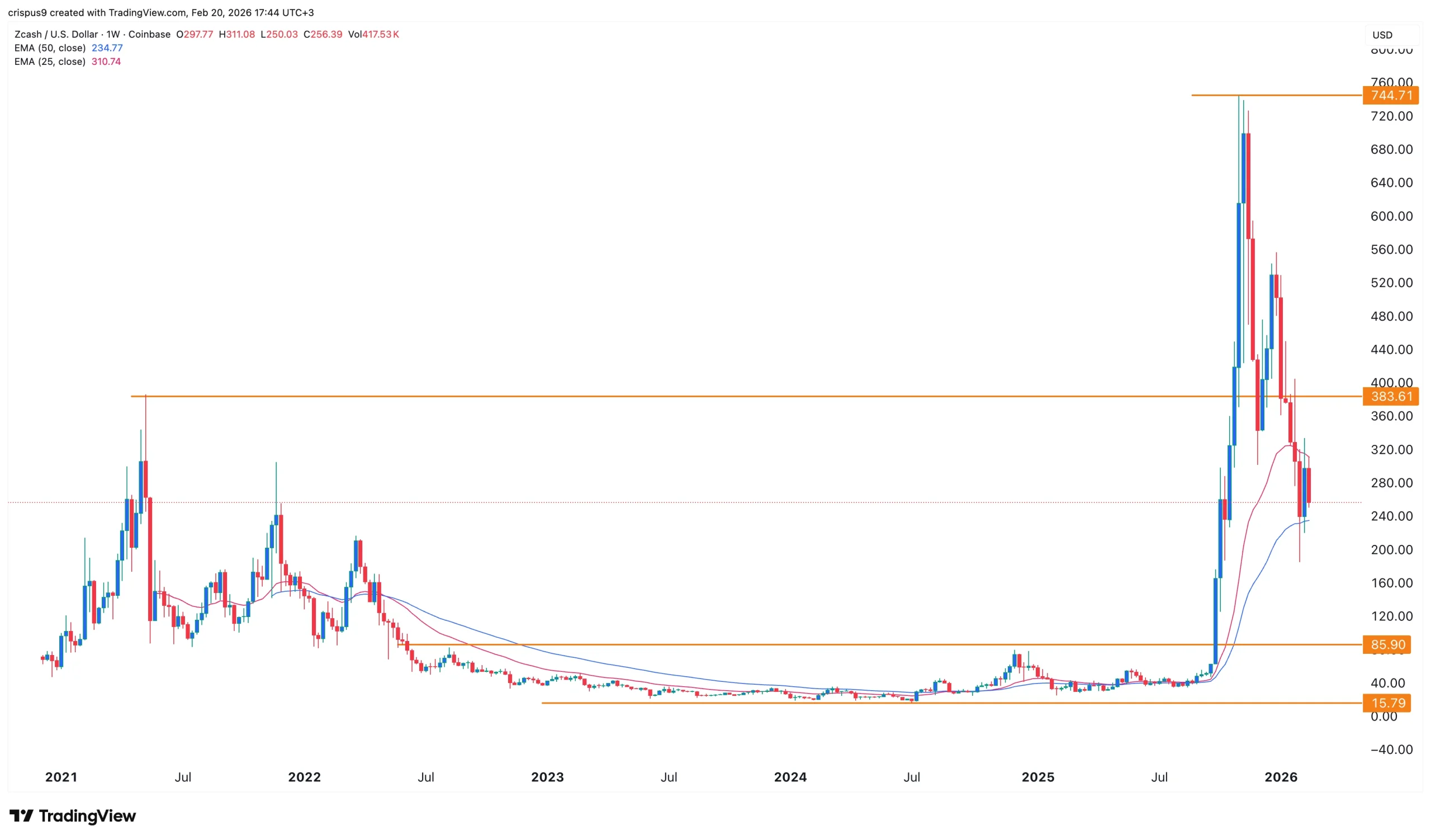
Zcash (ZEC) token dropped to a low of $250 on Friday, down by 66% from its highest level in November last year. This crash has brought its market capitalization from nearly $12 billion to the current $4.21 billion.
The ongoing Zcash price crash aligns with the broader crypto market plunge that has affected Bitcoin and other top altcoins like Ethereum and Cardano.
At the same time, there are concerns that competition is rising in the privacy industry. The biggest competition will come from Ethereum, which plans to launch stealth addresses as part of the ERC-5565.
Stealth addresses aim to solve a key challenge that has existed for many years, where Ethereum transactions are public. As a result, sender and receiver data will now become private, a strategy that emulates Zcash’s shielded addresses.
Ethereum is also working on a strategy to implement zero-knowledge proofs in the layer-1 network, which will improve its privacy features
Cardano, on the other hand, is working on Midnight, a zero-knowledge proof-based sidechain that will have advanced features. The mainnet launch will happen in March this year.
Meanwhile, data compiled by CoinGlass shows that Zcash’s futures open interest has dropped in the past few months, a sign that its demand has waned. It has dropped to $377 million from last year’s high of over $1.38 billion.
Zcash price technical analysis
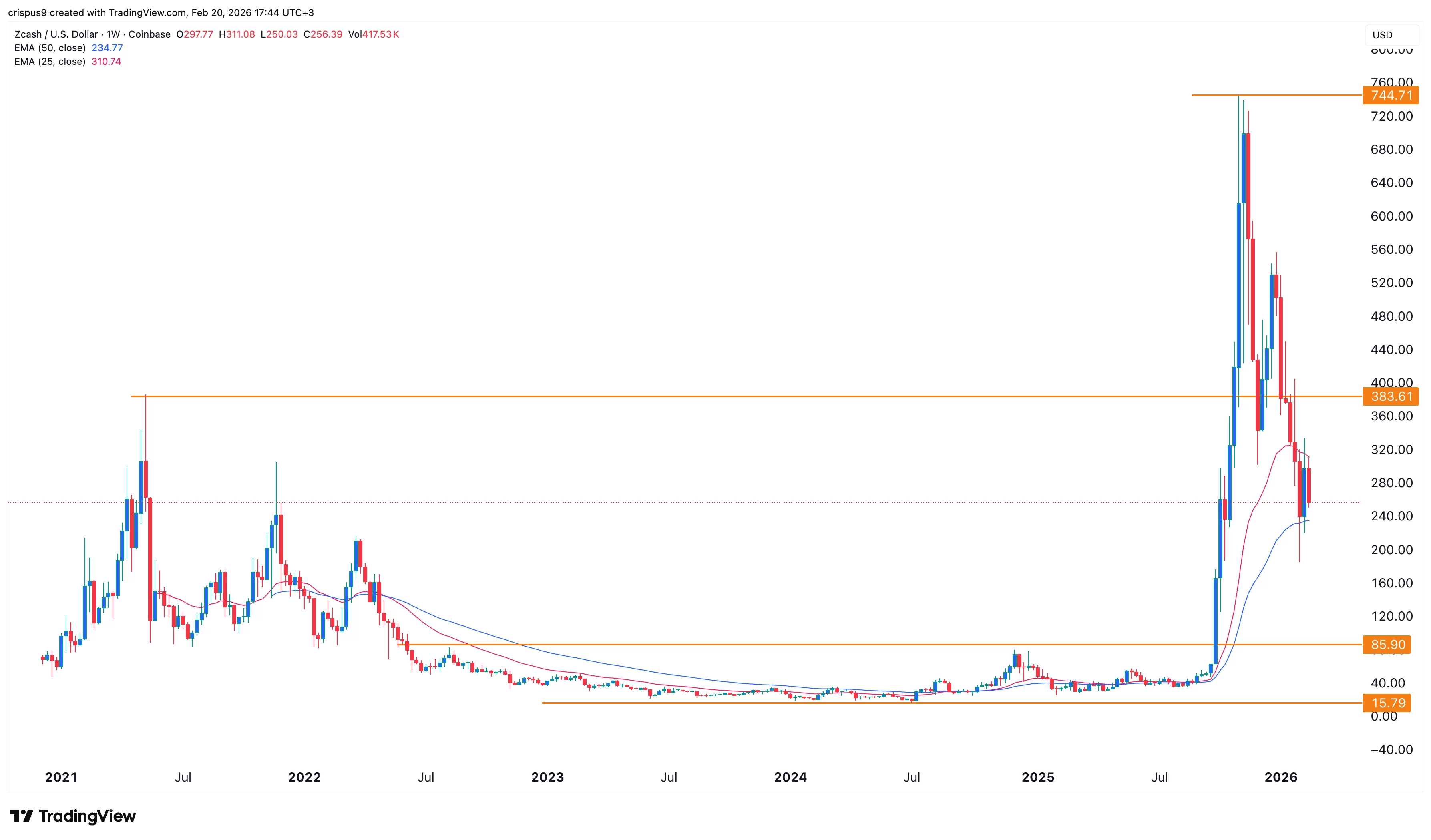
The weekly chart shows that the Zcash price remained in a narrow range between the key support and resistance levels at $15 and $85, respectively. This consolidation was part of the accumulation phase of the Wyckoff Theory.
It then surged and moved to a high of $745 as part of the mark-up phase. Therefore, the ongoing retreat is part of the markdown and distribution of the Wyckoff Theory.
It has now moved below the key support level at $385, its highest level in May 2021. Also, it has moved below the 50-week and 100-week Exponential Moving Averages.
ZEC price is also forming a bearish pennant pattern, a popular continuation sign in technical analysis. Therefore, the most likely scenario is where it continues falling, potentially to the next key support level at $200.
Crypto World
How AI is helping retail traders exploit prediction market ‘glitches’ to make easy money


A fully automated trading bot executed 8,894 trades on short-term crypto prediction contracts and reportedly generated nearly $150,000 without human intervention.
The strategy, described in a recent post circulating on X, exploited brief moments when the combined price of “Yes” and “No” contracts on five-minute bitcoin and ether markets dipped below $1. In theory, those two outcomes should always add up to $1. If they don’t, say they trade at a combined $0.97, a trader can buy both sides and lock in a three-cent profit when the market settles.
That works out to roughly $16.80 in profit per trade — thin enough to be invisible on any single execution, but meaningful at scale. If the bot was deploying around $1,000 per round-trip and clipping a 1.5-to-3% edge each time, it becomes the kind of return profile that looks boring on a per-trade basis but impressive in aggregate. Machines don’t need excitement. They need repeatability.
It sounds like free money. In practice, such gaps tend to be fleeting, often lasting milliseconds. But the episode highlights something bigger than a single glitch: crypto’s prediction markets are increasingly becoming arenas for automated, algorithmic trading strategies, and an emerging AI-driven arms race.
As such, typical five-minute bitcoin prediction contracts on Polymarket carry order-book depth of roughly $5,000 to $15,000 per side during active sessions, data shows. That’s several orders of magnitude thinner than a BTC perpetual swap book on major exchanges such as Binance or Bybit.
A desk trying to deploy even $100,000 per trade would blow through available liquidity and wipe out whatever edge existed in the spread. The game, for now, belongs to traders comfortable sizing in the low four figures.
When $1 isn’t $1
Prediction markets like Polymarket allow users to trade contracts tied to real-world outcomes, from election results to the price of bitcoin in the next five minutes. Each contract typically settles at either $1 (if the event happens) or $0 (if it doesn’t).
In a perfectly efficient market, the price of “Yes” plus the price of “No” should equal exactly $1 at all times. If “Yes” trades at 48 cents, “No” should trade at 52 cents.
But markets are rarely perfect. Thin liquidity, fast-moving prices in the underlying asset and order-book imbalances can create temporary dislocations. Market makers may pull quotes during volatility. Retail traders may aggressively hit one side of the book. For a split second, the combined price might fall below $1.
For a sufficiently fast system, that’s enough.
These kinds of micro-inefficiencies are not new. Similar short-duration “up/down” contracts were popular on derivatives exchange BitMEX in the late 2010s, before the venue eventually pulled some of them after traders found ways to systematically extract small edges. What’s changed is the tooling.
Early on, retail traders treated these BitMEX contracts as directional punts. But a small cohort of quantitative traders quickly realized the contracts were systematically mispriced relative to the options market — and began extracting edge with automated strategies that the venue’s infrastructure wasn’t built to defend against.
BitMEX eventually delisted several of the products. The official reasoning was low demand, but traders at the time widely attributed it to the contracts becoming uneconomical for the house once the arb crowd moved in.
Today, much of that activity can be automated and increasingly optimized by AI systems.
Beyond glitches: Extracting probability
The sub-$1 arbitrage is the simplest example. More sophisticated strategies go further, comparing pricing across different markets to identify inconsistencies.
Options markets, for instance, effectively encode traders’ collective expectations about where an asset might trade in the future. The prices of call and put options at various strike prices can be used to derive an implied probability distribution, a market-based estimate of the likelihood of different outcomes.
In simple terms, options markets act as giant probability machines.
If options pricing implies, say, a 62% probability that bitcoin will close above a certain level over a short time window, but a prediction market contract tied to the same outcome suggests only a 55% probability, a discrepancy emerges. One of the markets may be underpricing risk.
Automated traders can monitor both venues simultaneously, compare implied probabilities and buy whichever side appears mispriced.
Such gaps are rarely dramatic. They may amount to a few percentage points, sometimes less. But for algorithmic traders operating at high frequency, small edges can compound over thousands of trades.
The process doesn’t require human intuition once it’s built. Systems can continuously ingest price feeds, recalculate implied probabilities and adjust positions in real time.
Enter the AI agents
What distinguishes today’s trading environment from prior crypto cycles is the growing accessibility of AI tools.
Traders no longer need to hand-code every rule or manually refine parameters. Machine learning systems can be tasked with testing variations of strategies, optimizing thresholds and adjusting to changing volatility regimes. Some setups involve multiple agents that monitor different markets, rebalance exposure and shut down automatically if performance deteriorates.
In theory, a trader might allocate $10,000 to an automated strategy, allowing AI-driven systems to scan exchanges, compare prediction market prices with derivatives data, and execute trades when statistical discrepancies exceed a predefined threshold.
In practice, profitability depends heavily on market conditions and on speed.
Once an inefficiency becomes widely known, competition intensifies. More bots chase the same edge. Spreads tighten. Latency becomes decisive. Eventually, the opportunity shrinks or disappears.
The larger question isn’t whether bots can make money on prediction markets. They clearly can, at least until competition erodes the edge. But what happens to the markets themselves is the point.
If a growing share of volume comes from systems that don’t hold a view on the outcome — that are simply arbitraging one venue against another — prediction markets risk becoming mirrors of the derivatives market rather than independent signals.
Why big firms aren’t swarming
If prediction markets contain exploitable inefficiencies, why aren’t major trading firms dominating them?
Liquidity is one constraint. Many short-duration prediction contracts remain relatively shallow compared with large crypto derivatives venues. Attempting to deploy significant capital can move prices against the trader, eroding theoretical profits through slippage.
There is also operational complexity. Prediction markets often run on blockchain infrastructure, introducing transaction costs and settlement mechanisms that differ from those of centralized exchanges. For high-frequency strategies, even small frictions matter.
As a result, some of the activity appears concentrated among smaller, nimble traders who can deploy modest size, perhaps $10,000 per trade, without materially moving the market.
That dynamic may not last. If liquidity deepens and venues mature, larger firms could become more active. For now, prediction markets occupy an in-between state: sophisticated enough to attract quant-style strategies, but thin enough to prevent large-scale deployment.
A structural shift
At their core, prediction markets are designed to aggregate beliefs to produce crowd-sourced probabilities about future events.
But as automation increases, a growing share of trading volume may be driven less by human conviction and more by cross-market arbitrage and statistical models.
That doesn’t necessarily undermine their usefulness. Arbitrageurs can improve pricing efficiency by closing gaps and aligning odds across venues. Yet it does change the market’s character.
What begins as a venue for expressing views on an election or a price move can evolve into a battleground for latency and microstructure advantages.
In crypto, such evolution tends to be rapid. Inefficiencies are discovered, exploited and competed away. Edges that once yielded consistent returns fade as faster systems emerge.
The reported $150,000 bot haul may represent a clever exploitation of a temporary pricing flaw. It may also signal something broader: prediction markets are no longer just digital betting parlors. They are becoming another frontier for algorithmic finance.
And in an environment where milliseconds matter, the fastest machine usually wins.


Such searches about BTC’s demise reached their highest levels in a while.
“The news about my death is greatly exaggerated.” Guess what, bitcoin is dead – again. At least according to people who search for that on Google and, of course, those who proclaim its demise.
Such instances in the past, though, have been followed by intense rallies as BTC typically tends to move in the opposite direction of what the crowd expects from it.
GOOGLE SEARCHES FOR “BITCOIN IS DEAD” JUST HIT ATHs.
This is the HIGHEST level since the FTX crash.
The generational rally is starting now. pic.twitter.com/EMkkC4scEq
— Rekt Fencer (@rektfencer) February 20, 2026
Bitcoin Is Dead Searches on the Rise
It’s worth noting that when we tried to recreate the same search for “Bitcoin Is Dead” on Google Trends, the results were somewhat different from what Rekt Fencer reported. The analyst said these queries on the world’s largest search engine had just hit ATHs, but our graph showed that the peak was in December 2025.
The levels are still quite high now, and have risen in the past few weeks, especially since BTC’s price tumbled from $90,000 to $60,000 by February 6. The retail crowd, which is usually Google Trends’ user base, has increased the searches for bitcoin’s untimely death.
Interestingly, the number of queries now is a lot higher than what happened after the FTX crash in late 2022. At the time, the uncertainty levels were through the roof, with many questioning the overall state of the market since one of its giants had just collapsed in days. Shortly after, bitcoin crumbled to $16,000 in what was a full-on bear market.
BTC’s crash at the time was for more than 75%, while this time, it retraced by a more modest 52% from top to bottom. Yet the crowd’s sentiment seems much more fragile now. However, most comments below Rekt Fencer’s post agreed that such negative feelings typically lead to immediate and impressive price reversals.
You may also like:
Dead 477 Times
Bitcoin used to be proclaimed dead so many times in the past, especially in its early and more volatile days, that websites had to be created to track all those obituaries. Two of the most popular ones – the obituaries page at 99bitcoins and bitcoindeaths – show close numbers. According to the former, BTC has been called dead 467 times, while the latter shows 477 such occasions.
The last such examples were from February when one Deutsche Bank strategist said BTC must no longer be considered ‘digital gold,’ or a Financial Times columnist argued that even at $69,000, BTC’s price is still too high.
Well, bitcoin didn’t die after each of those 467/477 death proclamations. Just the opposite; it returned stronger than ever, attracting new sorts of investors, reaching new price peaks, growing its network usage, and so on. Why should we believe things should be any different now?
SECRET PARTNERSHIP BONUS for CryptoPotato readers: Use this link to register and unlock $1,500 in exclusive BingX Exchange rewards (limited time offer).
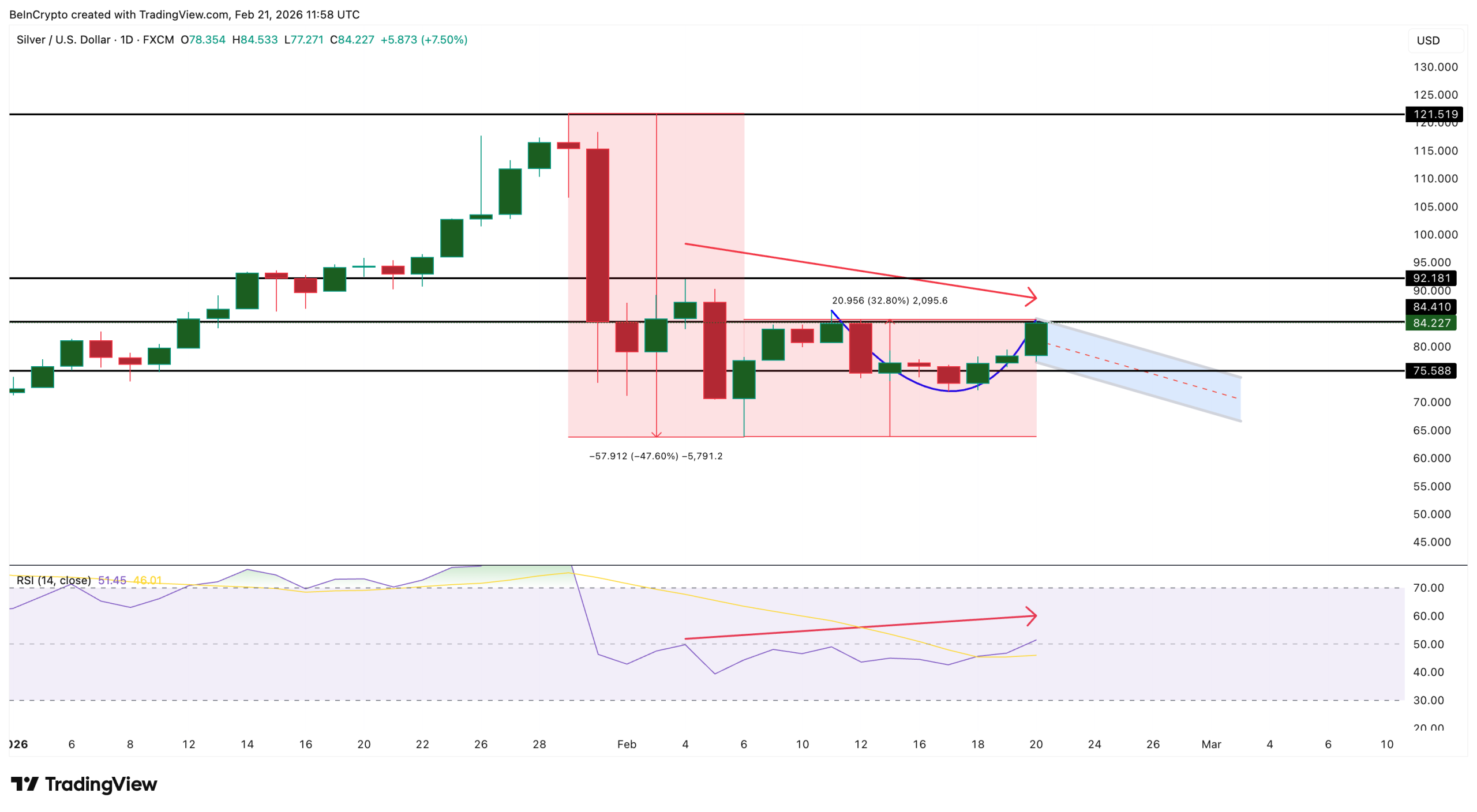
Silver price has had a brutal yet fascinating start to 2026. After surging to an all-time high near $121 on January 29, the metal crashed nearly 47% by February 6. But since then, silver has staged a relentless 32% recovery to trade near $84 on February 20.
With markets closed on the 21st and 22nd, the question heading into March is clear: is this recovery the real deal, or does more pain lie ahead? The technicals and positioning data paint a nuanced picture. A consolidation is likely before the next decisive move, but the weight of evidence leans bullish.
Cup Formation, Hidden Bearish Divergence, And Signs Of Consolidation
The XAG/USD daily chart reveals a developing cup pattern, with the impulse wave originating from November 21, 2025, peaking at $121 on January 29, and pulling back to $63.85 on February 6. The recent recovery toward $84 is now approaching the neckline of this formation.
Between February 4 and February 20, silver is printing a lower high setup. But the relative strength index (RSI), a momentum indicator, during the same period is forming a higher high: a hidden bearish RSI divergence.
This signals that, despite apparent RSI strength, the price trend favors consolidation before a decisive move. This pattern holds as long as the next candle remains below $92 (the previous high) and the RSI continues to climb.
Smart money betting is betting on consolidation as well.
If the current consolidation develops into a handle, it must still hold above $75 to keep the bullish structure intact.
The cup-and-handle pattern gains validity on a clean daily close above $84. However, some consolidation is expected first — and the supporting indicators explain why a pause here is healthy rather than concerning.
Miners Lead, Silver Futures Lag: The Physical-Paper Divergence
The Global X Silver Miners ETF (SIL), trading above $107, adds early validation to the bullish case. SIL peaked at $119 on January 26 — three days before silver spot topped on January 29. Miners leading on the way up and holding relatively firm on the recovery is a classic bullish leading indicator.
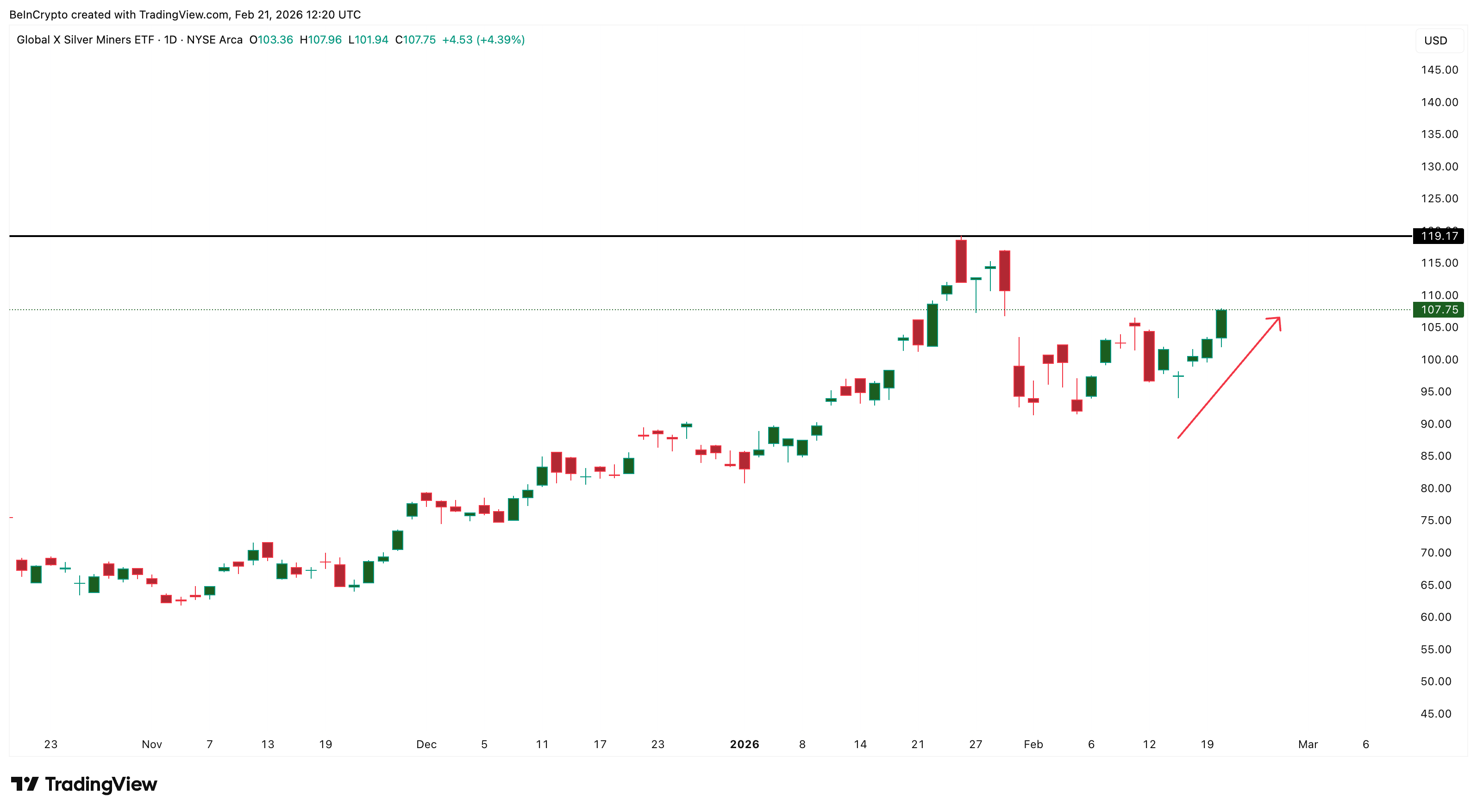
Mining companies have direct visibility into industrial order books and production demand, and their resilience suggests the fundamental picture remains intact despite the January liquidation. When miners hold while the metal consolidates, it typically signals that the next move is higher, not lower.
The disconnect between this physical market’s strength and the futures market’s hesitancy defines the current silver landscape.
COMEX silver futures (SI1!) are trading around $82 — below the spot price of $84. This backwardation (futures below spot) is rare and significant. It means buyers are willing to pay a premium for physical silver now rather than wait for future delivery.
The market is pricing urgency into spot, signaling physical tightness in the supply chain.
However, open interest on SI1! has been steadily declining since February 6, even as the Silver price rose from $63 to $82. A rising price amid falling open interest is the signature of a short-covering rally — traders who were short after the crash are buying back their positions, pushing the price higher.
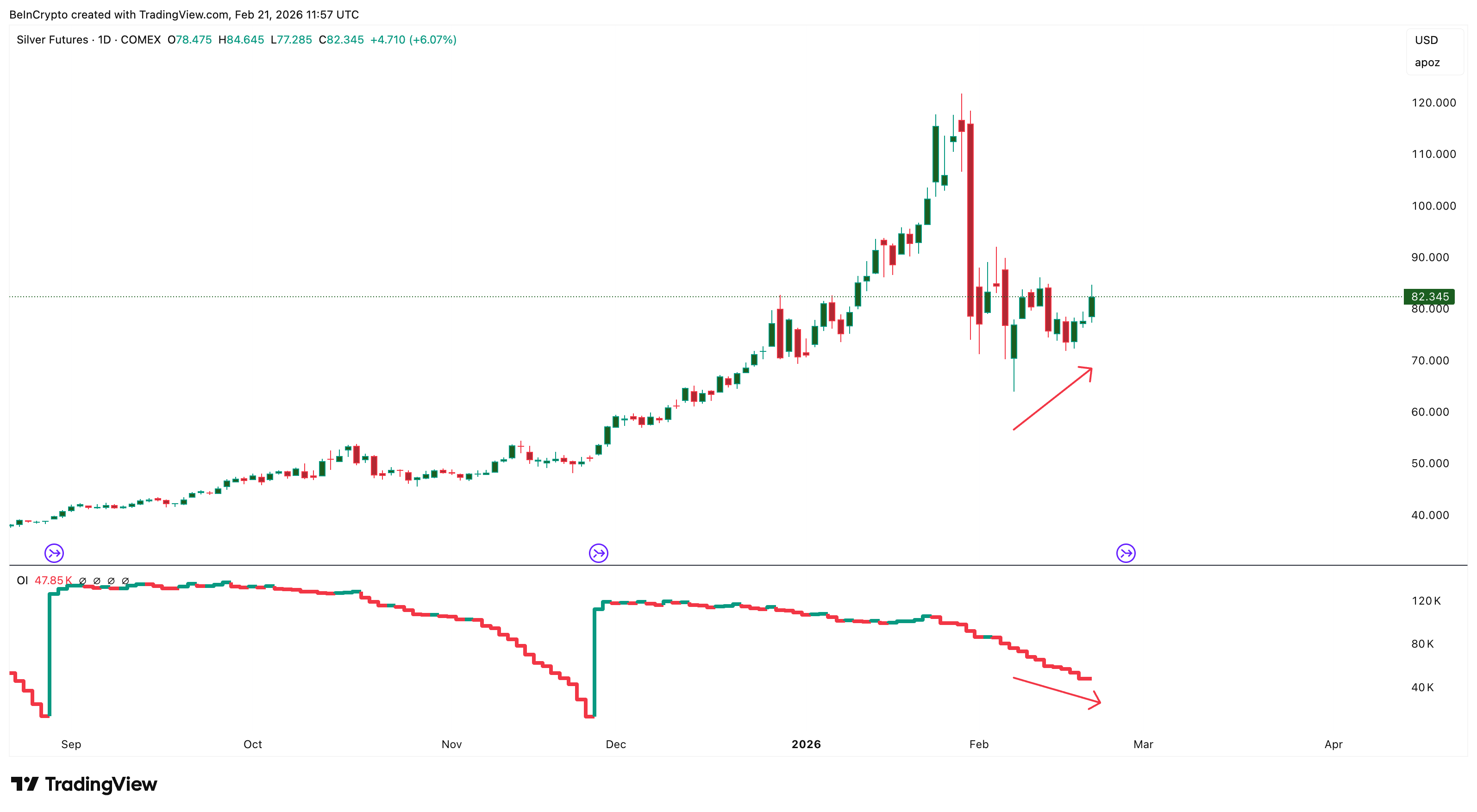
This is not fresh money entering yet. It is the aftermath of the January wipeout clearing out. Short covering rallies have a natural ceiling, and once covering is exhausted, the price needs new buyers to sustain momentum.
This is where the transition to consolidation becomes the most probable near-term path — the short-covering fuel is running low, but the next wave of buying hasn’t arrived yet, as explained later.
Dollar Divergence, Gold Ratio Risks, And Hedge Funds On The Sidelines
The macro and positioning layers explain why consolidation is healthy rather than dangerous.
The US Dollar Index (DXY) sits above 97, having risen steadily since February 11. But since February 17, silver decoupled and started rising alongside the dollar. This is one of the strongest signals in the current setup. When silver rises despite dollar headwinds, it means underlying demand. Buyers want silver now, regardless of what the dollar is doing.
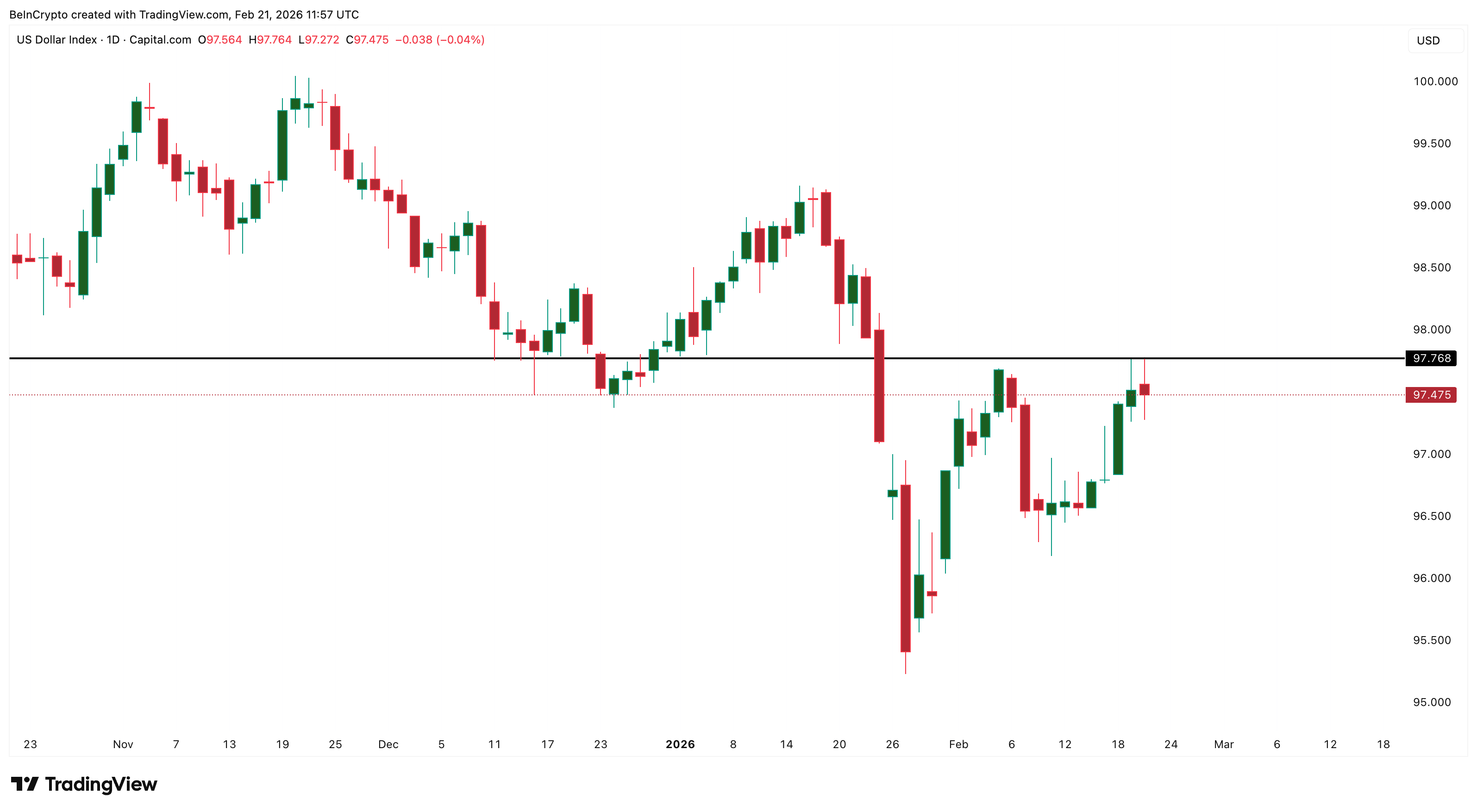
The Gold-Silver Ratio (XAUXAG) adds a layer of caution. Currently at 60, the ratio has been declining since February 17, meaning silver has been outperforming gold.
However, the ratio is consolidating inside a bullish flag pattern. A breakout above the upper trendline could push it toward 70 or higher.
If that happens, gold would reclaim dominance over silver — the market rotating back from silver’s risk-on appeal toward gold’s safe-haven purity.
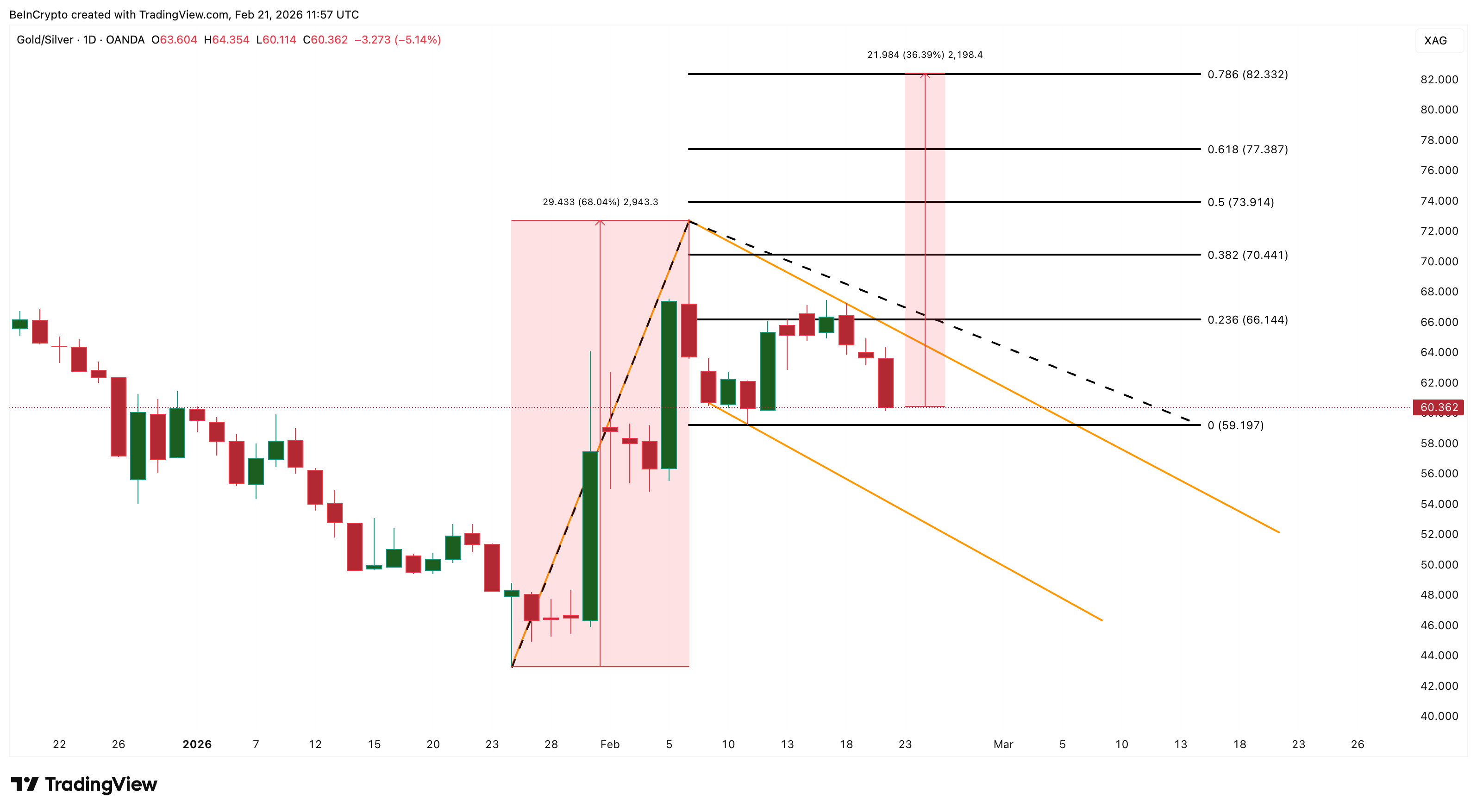
This would cap silver’s upside momentum or trigger a pullback. As long as the flag holds without breaking upward, silver’s outperformance can continue, but this is a risk to watch in March.
The tiebreaker comes from the COT (Commitment of Traders) report dated February 17. Managed Money — hedge funds and Commodity Trading Advisors — holds a net long position of just 5,472 contracts. During the rally to $121, hedge funds were positioned at multiples of this level.
A reading this low means the speculative heavyweights are still on the sidelines, waiting for a confirmed base before committing capital.
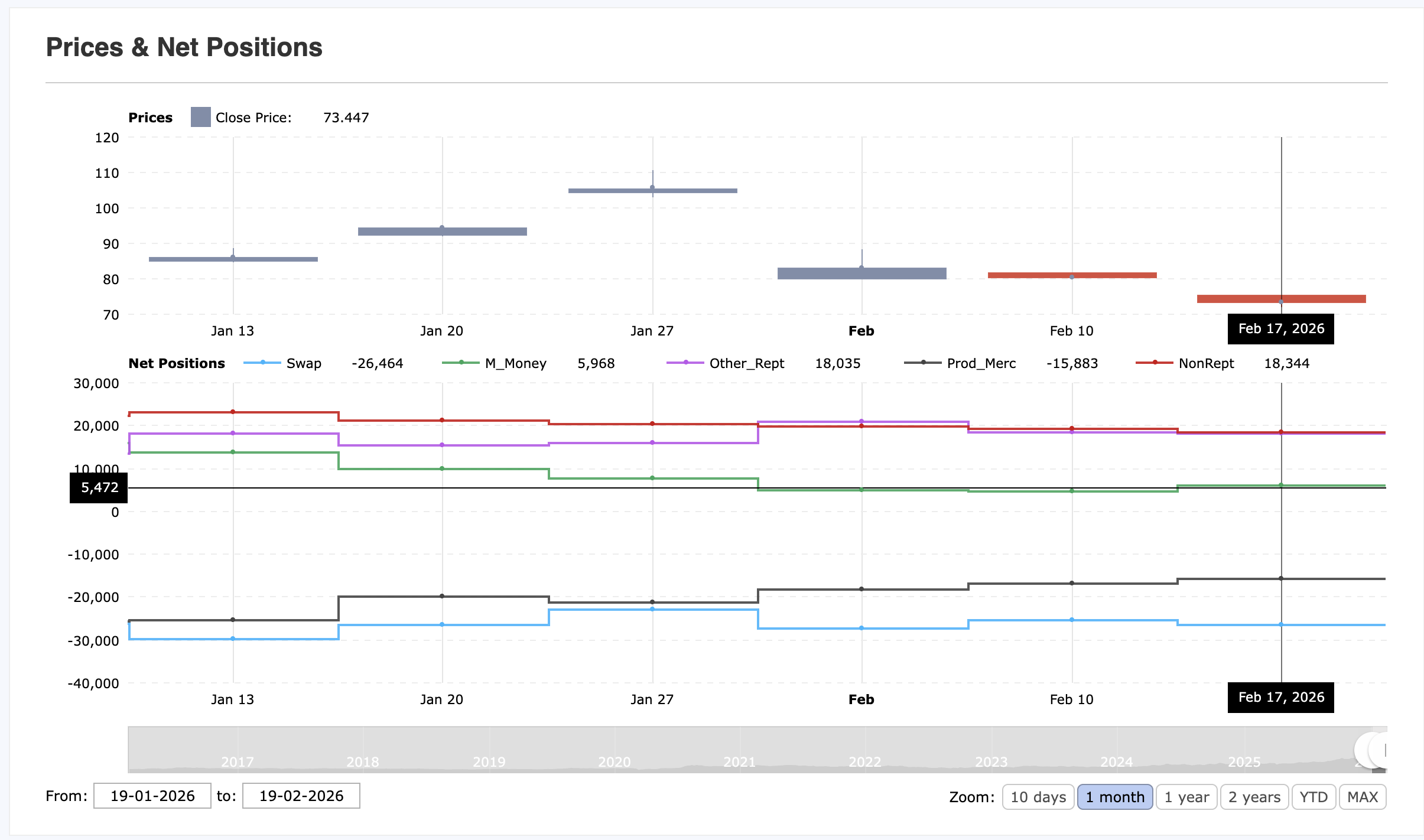
This is simultaneously the most bullish medium-term signal and the clearest explanation for near-term consolidation. There is massive room for fresh institutional buying when hedge funds re-enter. But they need to see a stable base and a clear breakout — likely above $92 — before stepping in.
March 2026 Outlook: Silver Price Levels To Watch
Four of seven key indicators lean bullish. These include Miners leading via SIL strength, backwardation confirming physical demand urgency, dollar-silver divergence showing genuine underlying buying pressure, and hedge funds barely positioned with massive room to re-enter.
Plus, three indicators urge caution. These include declining COMEX open interest, hidden bearish divergence, and the gold-silver ratio’s bullish flag threatening to rotate momentum back toward gold.
The most probable path for March: silver consolidates between $75 and $92 as the market builds a base that gives Managed Money the confidence to re-enter.
A daily close above $84 confirms the cup-and-handle neckline. A push above $91–$92 validates the full breakout and opens the door to $100 — a psychologically significant level likely achievable by mid-March.
Extended targets of $121 (a retest of the all-time high) and $136 (the full Fibonacci extension) become realistic if the rally sustains through March with rising open interest confirming fresh institutional participation.
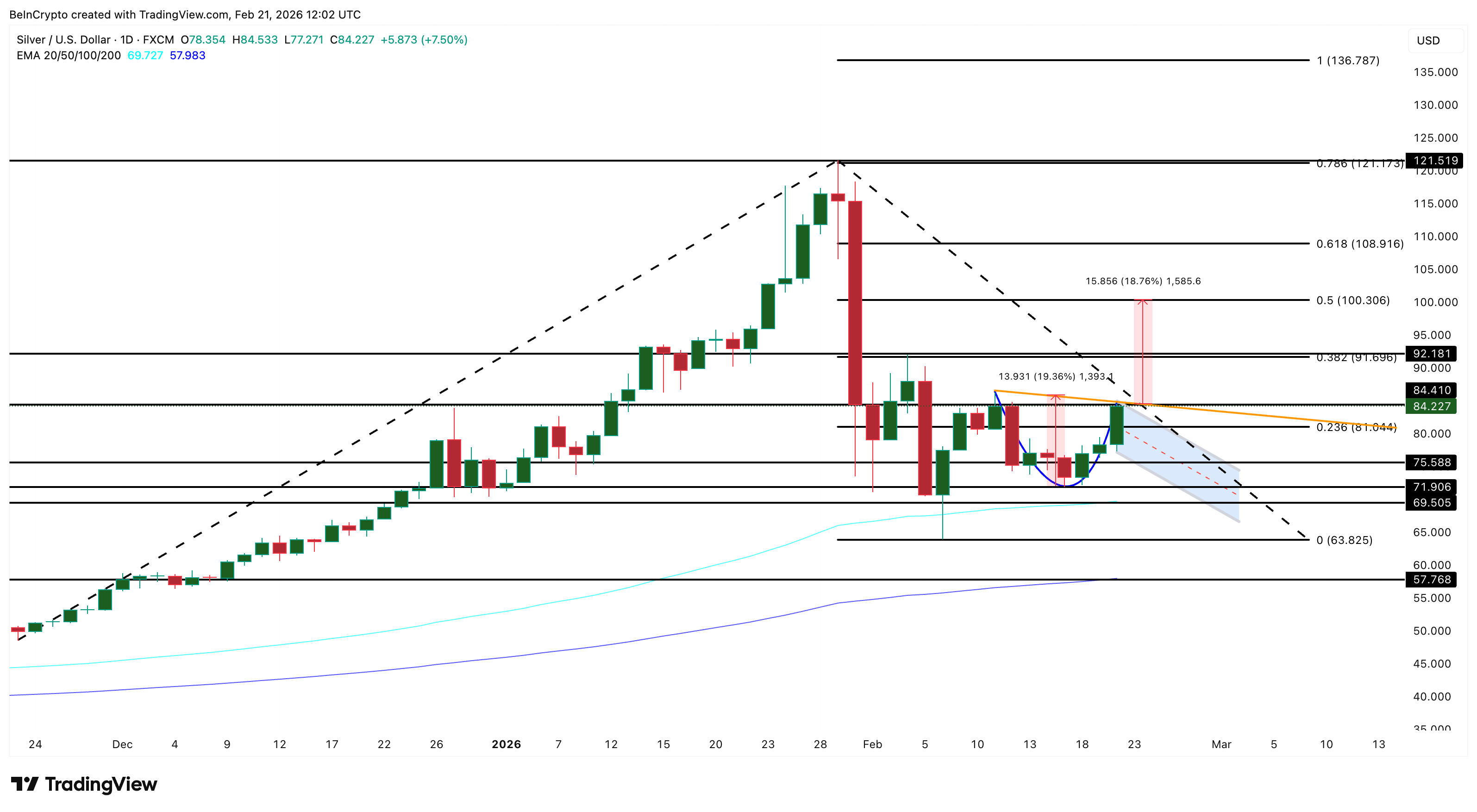
On the downside, $75 is the line in the sand. A daily close below $75 cracks the cup structure and invites a retest of $71. Losing $71 invalidates the cup formation entirely, exposing the 100-day moving average at $69.
Below that, the 200-day moving average at $57 represents one of the strongest structural support levels on the chart.
The bearish scenario gains traction if DXY surges above 100. Or the gold-silver ratio decisively breaks out of its bullish flag. Or if upcoming US economic data reinforces a higher-for-longer Fed stance, crushing rate-cut expectations.

IoTeX, a decentralized identity protocol, is examining unusual activity tied to one of its token safes after on-chain analysts flagged a potential security incident. In a Saturday post on X, the team said it was fully engaged, working around the clock to assess and contain the situation, with early estimates suggesting losses may be lower than circulating rumors. IoTeX said it has coordinated with major exchanges and security partners to trace and freeze funds tied to the attacker, and that monitoring would continue while updates are issued to the community. The event coincided with a sharp move in its native token, IOTX, which declined more than 8% in the past 24 hours to about $0.0049, per CoinMarketCap data.
Key takeaways
- Estimated losses from the incident are around $4.3 million, according to on-chain researchers.
- A private key tied to the compromised wallet is suspected to have been exposed, enabling unauthorized withdrawals.
- The wallet reportedly held USDC (CRYPTO: USDC), USDT (CRYPTO: USDT), IoTeX’s own token (CRYPTO: IOTX), and wrapped Bitcoin (CRYPTO: WBTC).
- Stolen assets were swapped into Ether (CRYPTO: ETH) and approximately 45 ETH were bridged to Bitcoin (CRYPTO: BTC).
- IoTeX’s IOTX price moved lower, signaling a market reaction to the breach.
- Industry observers note that many projects struggle to recover from hacks due to mismanaged responses and reputational damage.
Tickers mentioned: $BTC, $ETH, $WBTC, $USDC, $USDT, $IOTX
Sentiment: Bearish
Price impact: Negative. The breach and preliminary loss estimates contributed to a material drop in IOTX, which fell about 8% over 24 hours to around $0.0049.
Market context: The IoTeX incident underscores ongoing security risks in the crypto ecosystem, where fast-moving on-chain investigations, exchange cooperation, and cross-chain tracing are increasingly central to containment and potential recovery efforts.
Why it matters
The IoTeX event highlights the fragility of hot wallets and the speed at which attackers can move funds across chains. When a private key tied to a token safe is compromised, the window for containment narrows rapidly as attackers liquidate holdings through decentralized exchanges and bridge assets across networks. The loss of roughly $4.3 million, or a substantial portion of it, can ripple through a project’s liquidity and user trust, especially for a platform focused on identity and privacy where user confidence is paramount.
Initial disclosures stress that IoTeX has engaged with major crypto exchanges and security partners to trace and potentially freeze the stolen funds. That level of collaboration is critical, given the cross-chain nature of the theft—assets were moved from a compromised wallet into other assets and then shifted across protocols. The fact that the attacker converted a portion of the stolen holdings into Ether and bridged a segment of that value to Bitcoin illustrates the classic pattern of attempting to launder proceeds while attempting to complicate recovery efforts for investigators and custodians alike.
Beyond the immediate financial impact, the incident feeds into a broader debate about resilience in crypto projects. Historically, a large share of projects impacted by hacks struggle to recover, not solely due to direct losses but as a result of damaged user trust and liquidity withdrawal. Industry observers emphasize that premature or unclear communications during the initial hours can exacerbate losses and erode confidence, even when technical fixes are ultimately deployed. The broader Web3 security community has long argued that robust incident response plans, transparent updates, and proactive fund-tracing strategies can improve outcomes, but they require organizational readiness that many teams still lack.
Analysts also point to the reputational toll. Even after funds are recovered or secured, projects can face protracted liquidity challenges and user flight. In parallel, regulators and auditors are increasingly scrutinizing protocols’ security postures, making timely disclosures and rigorous post-incident governance essential to long-term viability. These dynamics weigh on investor sentiment as the market recalibrates risk premiums for teams with evolving security practices and incident histories.
What to watch next
- IoTeX updates on the investigation, including any identified wallet addresses and the status of the compromised safe.
- Any formal announcements from involved exchanges about frozen funds or cooperation with investigators.
- On-chain tracing progress revealing whether additional assets remain at risk or have been isolated.
- Future security disclosures from IoTeX, including steps to strengthen custody and reduce exposure to private-key compromises.
- Industry commentary on lessons learned and potential shifts in cross-chain handling and wallet security practices.
Sources & verification
- IoTeX’s official X post describing the investigation and ongoing containment efforts.
- Specter Analyst’s on-chain findings outlining the suspected keys compromise, asset mix, and the $4.3 million loss.
- CoinMarketCap data showing IOTX price movement to around $0.0049 in the 24-hour window following the incident.
- Commentary from immunefi and Kerberus executives referenced in related security coverage about breach response, recovery rates, and reputational impact.
IoTeX security incident: investigators race to trace $4.3 million in losses
IoTeX’s response began with a transparent acknowledgment that an anomalous activity tied to one of its token safes warranted a full review. The company emphasized that it is “fully engaged, working around the clock to assess and contain the situation,” and it noted cooperation with major exchanges and security partners to trace and freeze funds linked to the attacker. While early estimates suggested that losses could lie below the most vocal rumors, the evolving on-chain picture pointed to a more substantial weakness in the wallet’s protection than initially anticipated.
On-chain researcher Specter outlined a sequence of events that raised alarm bells. A private key associated with the affected wallet appeared compromised, enabling the theft and rapid movement of assets. The wallet’s holdings encompassed multiple tokens, including USDC (CRYPTO: USDC), USDT (CRYPTO: USDT), IoTeX’s own token (CRYPTO: IOTX), and wrapped Bitcoin (CRYPTO: WBTC). The total value of confiscated funds was estimated at roughly $4.3 million. After extraction, the attackers reportedly swapped a portion of the loot for Ether (CRYPTO: ETH) and bridged approximately 45 ETH to BTC (CRYPTO: BTC). The credible linkage of several addresses and transaction patterns suggested an effort to obfuscate trail and cross-chain activity as funds moved through liquidity venues and bridge layers.
The public timeline included references to addresses associated with the suspected attacker and rapid interchanges across decentralized exchanges. The pattern—swift token swaps and cross-chain hops—aligns with common strategies employed by attackers seeking to minimize traceability and maximize speed to liquidity. While the exact provenance of the breach remains under investigation, the broader takeaway is clear: a private-key exposure in a single wallet can trigger a cascade of consequences across multiple assets and chains.
In parallel with the security-focused updates, market data reflected a knee-jerk reaction. IoTeX’s native token (IOTX) experienced a material price drop in the wake of the incident, underscoring how security events can translate into short-term liquidity stress and a shift in investor sentiment. The incident also placed renewed emphasis on the role of custodianship and incident-response readiness in the crypto ecosystem, particularly for projects that operate in the decentralized identity and privacy sphere where user trust is foundational.
Looking ahead, the industry will be watching how IoTeX negotiates recovery, if any, for affected users and whether the incident triggers any governance or security enhancements. The data points from this event—private-key exposure, rapid asset exfiltration, cross-chain movement, and the subsequent market reaction—will likely shape risk assessments for similar protocols and influence best practices for hot-wallet security testing and incident management in the months ahead.


CME Group, the derivatives exchange giant favored by Wall Street, said it will begin offering 24/7 trading for its cryptocurrency futures and options on May 29, a major milestone in how traditional institutions access crypto markets.
The move, the exchange said, aims to meet growing demand from professional investors who want to manage risk continuously even during weekends, when crypto volatility often spikes as institutional venues are closed.
The decision to open around the clock was driven by growth, said Tim McCourt, CME’s global head of equities and FX, adding that crypto derivatives across CME venues hit a record $3 trillion in notional volume last year.
“Client demand for risk management in the digital asset market is at an all-time high,” he said.
‘Violent price swings’
However, this move will have an even greater impact on how crypto trades on weekends.
While crypto markets have always been live around the clock, CME’s derivatives — widely traded by hedge funds and institutions for their strict regulatory oversight — usually shut down on Friday evening and reopen on Sunday, while the spot market stays open 24/7.
That discrepancy contribute to the well-known “CME gaps,” the empty price area between Friday’s close and Sunday’s open, leaving institutions exposed to weekend price swings without the ability to hedge.
Experts say CME’s shift to always-on trading could reshape liquidity and trading dynamics across both institutional and retail crypto markets, especially around the weekends.
“The most violent price swings happen precisely when institutional venues are dark,” said Bobby Ong, co-founder of CoinGecko. “CME’s move is a structural acknowledgment of what CoinGecko data has shown for years.”
He said liquidation cascades during the weekend were a “predictable consequence” of thin, fragmented liquidity, noting that “CME [is] finally closing that gap.”
Less dramatic moves
What this will essentially do is make trading more seamless between weekdays and weekends.
Adam Haeems, head of asset management at Tesseract Group, said the change “closes one of the last structural gaps between crypto-native markets and regulated derivatives infrastructure.”
Institutional flows that pause on Friday and restart on Sunday will continue uninterrupted, reducing the risk and cost of holding positions through weekends. He added that weekend volatility has been “a direct consequence of this structural mismatch,” and continuous trading should help compress those price swings and narrow spreads.
However, this doesn’t guarantee a total reduction of massive swings; rather, price action will likely be more gradual.
Haeems cautioned that simply keeping the venue open doesn’t guarantee deep liquidity. “Institutional desks may not staff weekend risk-taking at the same intensity as weekdays,” he said. “The improvement will be real but gradual.”
For retail traders, the change may mean less dramatic Monday price action.
“Tighter pricing and fewer of those jarring Monday-morning gap moves,” said Haeems. “The CME gap has historically filled more than 90% of the time — retail traders who track futures structure will notice that signal fading.”
Bitcoin as a macro risk proxy
Maxime Seiler, CEO of trading firm STS Digital, echoed that the change offers clear benefits to institutions, especially those wary of the forced liquidation mechanisms on crypto-native platforms.
“The ability to trade futures and options on CME without the risk of auto-deleveraging is a huge selling point,” he said.
He also pointed to a shift in how bitcoin may be used over weekends as a professional tool to hedge global risk events when other assets are not available to trade.
“With other markets closed, bitcoin could increasingly function as a proxy for broader macro risk, pricing in global events in real time.”
Blue Owl Capital’s (OWL) announcement this week that it would sell $1.4 billion in loans to raise liquidity for investors in a retail-focused private credit fund has triggered alarm bells across financial markets, with more than one prominent analyst drawing direct parallels to two Bear Stearns hedge fund collapses that foreshadowed the 2008 financial crisis — and for bitcoin investors, the implications could be profound.
While there was no damage across the major stock market averages, Blue Owl shares fell about 14% for the week and are now lower by more than 50% year-over-year. Other major private-equity players, including Blackstone (BX), Apollo Global (APO), and Ares Management (ARES), also suffered sizable declines.
It stirred some painful memories for those who suffered through the 2008 global financial crisis (GFC).
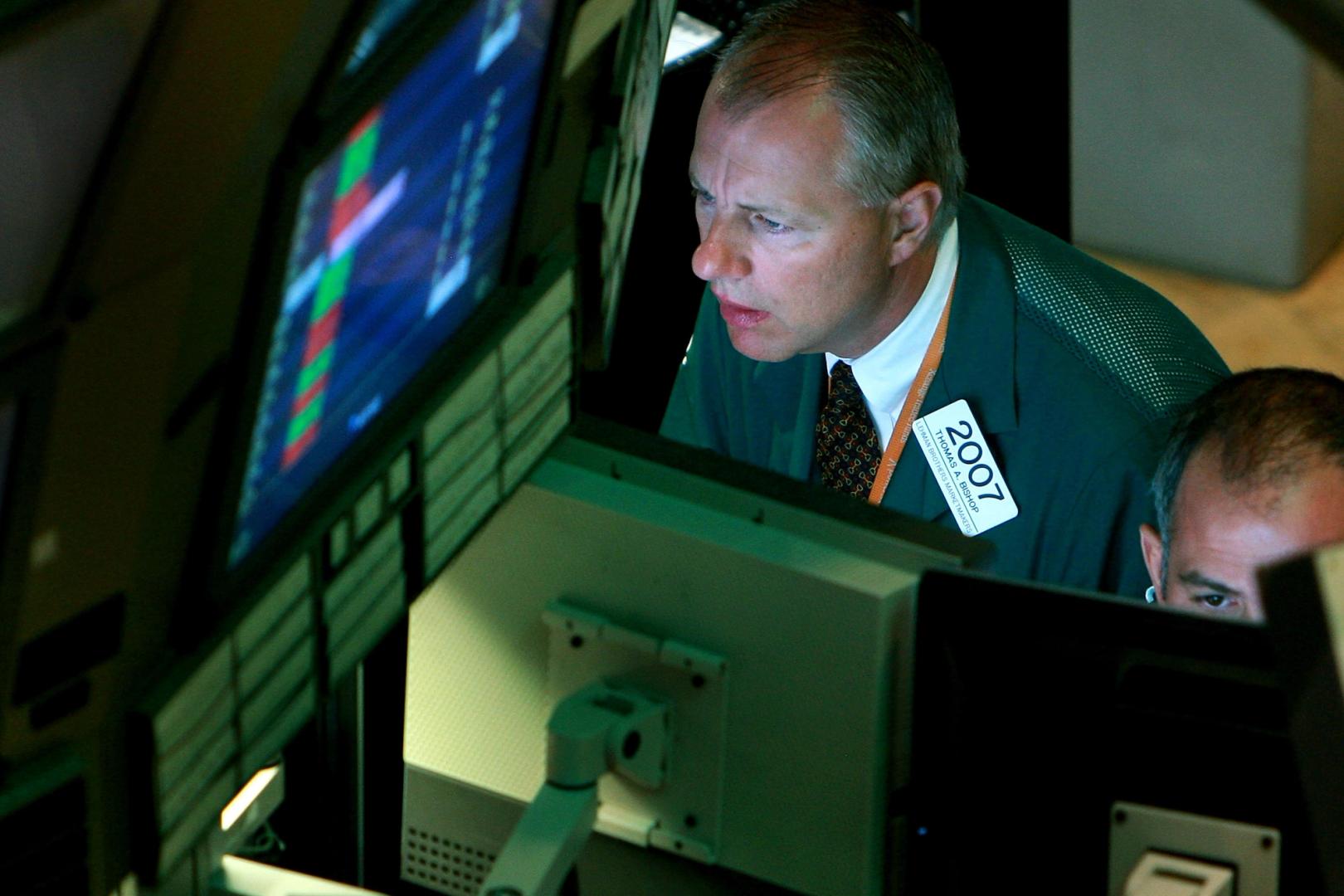
In August 2007, two Bear Stearns hedge funds collapsed after suffering heavy losses on subprime mortgage-backed securities, while BNP Paribas froze withdrawals in three funds, citing an inability to value U.S. mortgage assets. Credit markets seized up, liquidity evaporated, and what seemed like an isolated incident spiraled into the global financial crisis.
“Is this a ‘canary-in-the-coalmine’ moment, similar to August 2007,” asked former Pimco head Mohamed El-Erian. “There’s plenty to think about here, starting with the risks of an investing phenomenon in [artificial intelligence] markets that has gone too far,” he continued. El-Erian was quick to point out that while the risks could be systemic, they don’t appear to be anywhere near the magnitude of the 2008 crisis.
Blue Owl’s issue may or may not be another Bear Stearns moment, but if it is, what might that mean for bitcoin?
First, private credit stress doesn’t automatically mean bitcoin rallies. In fact, in the short term, tighter credit conditions can hurt risk assets, bitcoin and the broader crypto market among them. While bitcoin wasn’t around during the 2008 meltdown (more on that later), the price action as the Covid crisis was unfolding — about a 70% decline from mid-February 2020 to mid-March — is illuminating.
The U.S. government’s Federal Reserve’s eventual response, though, could be powerfully bullish for bitcoin. In 2020, trillions of dollars were injected into the economy, helping send BTC from a low of below $4,000 to more than $65,000 about a year later.
The 2007-2008 playbook followed a similar trajectory: initial credit market stress, equity market denial, banking sector contagion, then massive central bank intervention. If Blue Owl represents the “first domino” — as former Peter Lynch associate George Noble suggested — the sequence could repeat with private credit replacing subprime mortgages as the trigger.
“Chancellor on brink of second bailout for banks”
One of the major outcomes of the 2008 event was the creation of Bitcoin.
The world’s original cryptocurrency was born during the global financial crisis, in part because its mysterious creator (or creators), Satoshi Nakamoto, was disillusioned with governments and central banks conjuring up hundreds of billions, if not trillions, of dollars with little more than a few keystrokes on a computer.
Another major part of the world’s largest digital asset was to create a parallel digital currency that would allow direct peer-to-peer online payments without the need for a financial institution or any government intervention. Essentially, hope was to create a direct alternative to a legacy banking system that had just proved fragile enough to bring down the global financial order through the meddling of centralized entities.
In fact, Bitcoin’s first-ever block, the so-called Genesis Block on Jan. 3, 2009, was embedded by Satoshi with “Chancellor on brink of second bailout for banks.” That was the headline in The Times of London that day as the U.K. government and the Bank of England engineered a response to the ongoing troubles in that country’s financial sector.
Worth essentially zero on that day and unknown to all but a small handful of “cypherpunks,” bitcoin, 17 years later, has a market cap topping $1 trillion and has the largest asset managers on the planet calling it a near-essential asset to own for most portfolios.
Bitcoin, as we now know it, of course, is different from the original cryptocurrency in 2009. Today, the notion of “store of value” and “digital gold” has come and gone. What was supposed to be anti-establishment has become part of the larger financial system. Large holders are hoarding massive amounts of bitcoin on their balance sheets, financial giants are offering bitcoin to the masses via exchange-traded funds, and even some government entities are buying for their strategic reserves.
So does the Blue Owl failure mean another resurgence of Bitcoin’s original thesis and, in turn, another bull run? Time will tell, but if this event turns out to be El-Erian’s “canary,” signalling another sizable crisis, the global financial system might be in for a rude awakening, and Bitcoin might just become the solution, whatever form it’s taken 17 years later.

Raoul Pal: Don’t SELL Before These EXACT Dates (New 2026 Bitcoin & Ethereum Prediction)

Cops identify man with Scottish tattoo fighting for life after ‘E-bike dropped on neck’

15-40-48-58-63, Mega Ball 2; No Jackpot Winner

Smart energy pays enters the US market, targeting scalable financial infrastructure

Why Israel is blocking foreign journalists from entering

Software stocks enter bear market on AI disruption fear with ServiceNow plunging 10%
Raoul Pal: Don’t SELL Before These EXACT Dates (New 2026 Bitcoin & Ethereum Prediction)

‘Stablecoins Kill XRP’ FED Member Kashkari Just Gave XRP The Biggest Endorsement!!!!!!!!!!!!!!!!!!!

Failed OF Model In Debt For Taylor Swift | Financial Audit
-

 Video5 days ago
Bitcoin: We’re Entering The Most Dangerous Phase
-

 Tech7 days ago
Luxman Enters Its Second Century with the D-100 SACD Player and L-100 Integrated Amplifier
-

 Crypto World4 days ago
Can XRP Price Successfully Register a 33% Breakout Past $2?
-

 Sports5 days ago
GB's semi-final hopes hang by thread after loss to Switzerland
-

 Fashion21 hours ago
Weekend Open Thread: Boden – Corporette.com
-

 Video2 days ago
XRP News: XRP Just Entered a New Phase (Almost Nobody Noticed)
-
 Tech4 days ago
The Music Industry Enters Its Less-Is-More Era
-

 Business4 days ago
Infosys Limited (INFY) Discusses Tech Transitions and the Unique Aspects of the AI Era Transcript
-

 Entertainment3 days ago
Kunal Nayyar’s Secret Acts Of Kindness Sparks Online Discussion
-

 Video4 days ago
Financial Statement Analysis | Complete Chapter Revision in 10 Minutes | Class 12 Board exam 2026
-

 Tech3 days ago
Retro Rover: LT6502 Laptop Packs 8-Bit Power On The Go
-
 Sports2 days ago
Clearing the boundary, crossing into history: J&K end 67-year wait, enter maiden Ranji Trophy final | Cricket News
-

 Entertainment3 days ago
Dolores Catania Blasts Rob Rausch For Turning On ‘Housewives’ On ‘Traitors’
-

 Business3 days ago
Tesla avoids California suspension after ending ‘autopilot’ marketing
-
 NewsBeat6 days ago
The strange Cambridgeshire cemetery that forbade church rectors from entering
-

 Politics4 days ago
Eurovision Announces UK Act For 2026 Song Contest
-

 Crypto World3 days ago
WLFI Crypto Surges Toward $0.12 as Whale Buys $2.75M Before Trump-Linked Forum
-
 NewsBeat6 days ago
Man dies after entering floodwater during police pursuit
-

 Crypto World2 days ago
83% of Altcoins Enter Bear Trend as Liquidity Crunch Tightens Grip on Crypto Market
-
 NewsBeat1 day ago
Andrew Mountbatten-Windsor latest: Police search of Royal Lodge enters second day after Andrew released from custody