

Business
10 Essential Facts About the Pirates Legend and 1960 World Series Hero


Bill Mazeroski, the Hall of Fame second baseman whose ninth-inning walk-off home run in Game 7 of the 1960 World Series remains one of baseball’s most iconic moments, died Friday, February 20, 2026, at age 89. The Pittsburgh Pirates announced his passing early Saturday, with no cause disclosed.

Mazeroski’s dramatic blast off New York Yankees reliever Ralph Terry on October 13, 1960, ended the Series with a 10-9 Pirates victory — the only Game 7 walk-off homer to decide a World Series. The moment, etched in Pittsburgh lore, capped an improbable upset over the powerhouse Yankees and defined Mazeroski’s legacy.
Here are 10 essential facts about Bill Mazeroski that every baseball fan should know:
- Born and Raised Near Pittsburgh William Stanley Mazeroski was born September 5, 1936, in Wheeling, West Virginia, just across the Ohio River from Pittsburgh. He grew up in nearby Ohio County and starred in baseball, basketball and football at Warren Consolidated High School. The Pirates signed him at 17 in 1954, and he never played for another major-league team.
- Defensive Wizardry Earned Eight Gold Gloves Mazeroski won eight consecutive Gold Glove Awards at second base from 1961 to 1967, plus another in 1969 — a record for second basemen at the time. He led the National League in assists nine times, double plays eight times and fielding percentage three times. His career .983 fielding percentage ranks among the all-time elite, and he holds MLB records for most double plays turned by a second baseman (1,706) and most seasons leading the league in double plays.
- The 1960 World Series Walk-Off Home Run In Game 7 at Forbes Field, Mazeroski hit a leadoff home run in the bottom of the ninth to give the Pirates a 10-9 victory and their first World Series title since 1925. The Pirates, heavy underdogs, overcame a 7-0 deficit earlier in the game. Mazeroski’s blast remains the only Game 7 walk-off homer to end a World Series, and he circled the bases in disbelief as fans stormed the field.
- Entire 17-Year Career with the Pirates Mazeroski debuted in 1956 at age 19 and retired after the 1972 season, spending all 17 years with Pittsburgh. He appeared in 2,163 games — all at second base — collecting 2,016 hits, 138 home runs and 853 RBIs with a .260/.299/.367 slash line. He made seven All-Star teams (1958-62, 1967, 1971) and helped the Pirates win another World Series in 1971.
- Inducted into the Hall of Fame in 2001 The Veterans Committee elected Mazeroski to the Baseball Hall of Fame in 2001, recognizing his unparalleled defensive skill despite modest offensive numbers. His .299 on-base percentage is the lowest of any non-pitcher in Cooperstown, sparking debate over criteria, but supporters highlighted his glove work as revolutionary. He was inducted alongside Kirby Puckett and Dave Winfield.
- Pirates Retired His No. 9 in 1987 The Pirates retired Mazeroski’s No. 9 on August 7, 1987, during a ceremony at Three Rivers Stadium. A statue commemorating his 1960 home run stands outside PNC Park’s right-field gate, capturing him rounding the bases. He remains one of only six Pirates with retired numbers.
- Member of the Inaugural Pirates Hall of Fame Class In 2022, the Pirates launched their Hall of Fame and named Mazeroski to the inaugural class alongside Roberto Clemente, Willie Stargell, Honus Wagner, Pie Traynor and Ralph Kiner. He attended the ceremony, receiving a standing ovation from fans.
- Quiet, Humble Personality Known for humility and grace, Mazeroski avoided the spotlight after retirement. He lived in the Pittsburgh area, attended occasional Pirates events and rarely granted interviews. Teammates and fans described him as approachable and unassuming, qualities that endeared him to generations.
- Influence on Defensive Standards Mazeroski’s quick release, range and double-play execution set benchmarks for second basemen. He mentored later Pirates infielders and remained a reference point for defensive excellence. Analysts often cite his glove work as justification for Hall inclusion despite offensive limitations.
- Enduring Legacy in Pittsburgh Mazeroski’s 1960 home run symbolizes Pittsburgh sports triumph, replayed annually during World Series coverage. The city named a street “Mazeroski Way” near the old Forbes Field site, and his statue draws visitors to PNC Park. His death prompted tributes from MLB Commissioner Rob Manfred, the Hall of Fame and former teammates, who praised his character and contributions.
Mazeroski is survived by his wife Milinda, sons Darren and David, and grandchildren. Funeral arrangements were pending as of Saturday, February 21, 2026.
His passing marks the end of an era for Pirates fans, but his name and that unforgettable swing remain forever tied to one of baseball’s greatest moments.



Merz rules out loosening Germany’s debt limits again in current term


Blizzard warnings issued for New York area as storm heads to East Coast


Germany’s ruling party backs social media curbs for children


Germany’s Merz expects lower tariff burden after US court verdict on Trump tariffs

Ukraine strikes ballistic missile producer deep inside Russia, Kyiv says


Trump says he will raise global tariff rate from 10% to 15%
Business
NASA may take moon mission Artemis II rocket back to assembly site, affecting March launch window


NASA may take moon mission Artemis II rocket back to assembly site, affecting March launch window
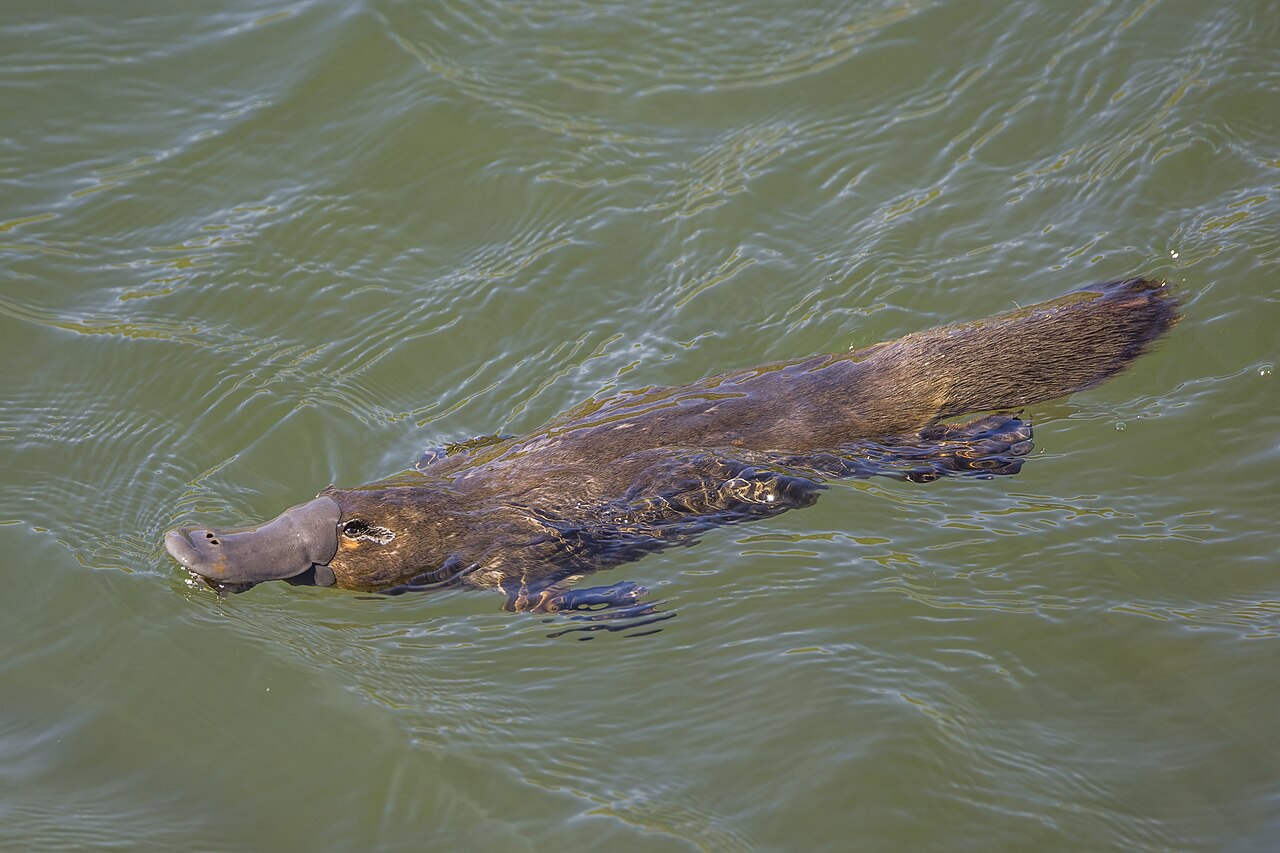
Australia’s extraordinary isolation over millions of years has produced one of the planet’s most distinctive wildlife collections, with more than 80% of its mammals, reptiles and frogs endemic — meaning they exist nowhere else naturally. In 2026, amid ongoing conservation efforts and renewed interest in eco-tourism following recent wildlife documentaries and park reopenings, these unique creatures continue to captivate visitors and researchers alike.
From cuddly marsupials to bizarre monotremes, here are 10 standout animals that are truly Australian exclusives, highlighting the continent’s biological marvels:
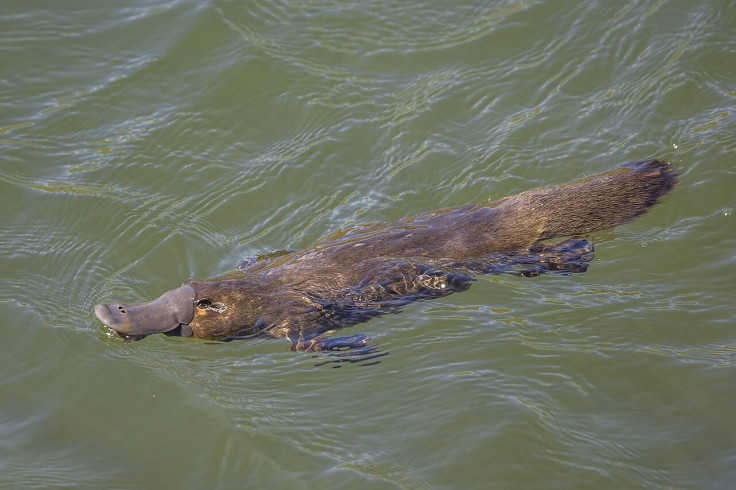
- Platypus The platypus (Ornithorhynchus anatinus) remains one of nature’s strangest creations: a semi-aquatic, egg-laying mammal with a duck-like bill, beaver tail, otter-like body and venomous spurs on males’ hind legs. Found in eastern Australia’s freshwater rivers and streams, it hunts using electroreception to detect prey in murky water. Conservation status is near threatened due to habitat loss and climate impacts, but sightings remain possible in places like the Atherton Tablelands and Tasmania.
- Koala The koala (Phascolarctos cinereus), often mistakenly called a bear, is an arboreal marsupial specialized for eucalyptus forests in eastern and southeastern Australia. These leaf-eaters sleep up to 20 hours daily to conserve energy from their low-nutrient diet. Vulnerable to habitat fragmentation, bushfires and disease, koalas symbolize Australian wildlife, with populations monitored closely in 2026 recovery programs.
- Kangaroo (Red and Eastern Grey species) Several kangaroo species, including the red kangaroo (Osphranter rufus) — the world’s largest marsupial — and eastern grey kangaroo (Macropus giganteus), are found only in Australia. Reds roam arid interiors while greys inhabit eastern woodlands. Their powerful hind legs enable bounds up to 8 meters and speeds of 56 km/h. As national emblems, they thrive in open country but face threats from drought and vehicle strikes.
- Quokka Often called the “world’s happiest animal” for its perpetual smile-like expression, the quokka (Setonix brachyurus) is a small wallaby restricted to Rottnest Island near Perth and limited mainland pockets in Western Australia. Herbivorous and curious, they approach visitors fearlessly on Rottnest, boosting tourism. Vulnerable due to habitat loss and predators, their population remains stable on the island.
- Wombat Three wombat species — common, northern hairy-nosed and southern hairy-nosed — are exclusive to Australia. These burrowing marsupials feature backward-facing pouches to prevent dirt entry while digging. Common wombats (Vombatus ursinus) inhabit forests and grasslands across the southeast, while hairy-nosed varieties live in drier regions. Known for cube-shaped scat and resilience, they dig extensive warrens.
- Tasmanian Devil The Tasmanian devil (Sarcophilus harrisii), now confined to Tasmania after mainland extinction around 3,000 years ago, is the world’s largest surviving carnivorous marsupial. Famous for powerful jaws and ferocious feeding, devils play a key ecological role controlling pests. Threatened by devil facial tumor disease, conservation breeding programs in 2026 continue to bolster wild populations.
- Short-beaked Echidna One of only five living monotreme species, the short-beaked echidna (Tachyglossus aculeatus) is widespread across Australia, including Tasmania. This spiny, ant-eating mammal lays eggs and nurses young with milk secreted through skin pores. Least concern status reflects its adaptability, though roadkill and habitat changes pose risks.
- Southern Cassowary The southern cassowary (Casuarius casuarius), a large flightless bird with a helmet-like casque and powerful legs, inhabits tropical rainforests in northern Queensland. As seed dispersers, they are vital to rainforest regeneration. Vulnerable due to habitat loss and vehicle collisions, sightings in Daintree and Cape Tribulation remain highlights for eco-tourists.
- Numbat The numbat (Myrmecobius fasciatus), a small, striped marsupial anteater, survives in fragmented southwestern woodlands after near-extinction from introduced predators. Diurnal and termite-dependent, it lacks a pouch, carrying young on its belly. Endangered but supported by reintroduction efforts, numbats represent successful conservation stories.
- Thorny Devil The thorny devil (Moloch horridus), a spiky lizard adapted to arid deserts, drinks through capillary action in its skin grooves. Found only in Australia’s dry interior, it feeds exclusively on ants and blends into sandy environments. Least concern, its bizarre appearance makes it a favorite for wildlife photographers.
These species underscore Australia’s megadiverse status and the importance of protecting unique ecosystems. Conservation challenges persist — feral predators, climate change, habitat loss and disease — but initiatives like fenced reserves, breeding programs and community monitoring offer hope. In 2026, eco-tourism and citizen science continue to raise awareness, ensuring these one-of-a-kind animals endure.
Visitors can ethically observe many in national parks, wildlife sanctuaries or guided tours, contributing to their protection while experiencing Australia’s unparalleled biodiversity firsthand.

The president will increase import taxes to 15% on most products coming into the US from Tuesday.

The S&P 500 rose on Friday, after the Supreme Court ruled that President Donald Trump’s IEEPA tariffs were illegal.
That was probably the right reaction, according to one Wall Street research firm.
“We believe that Friday’s Supreme Court decision was a risk-clearing event that will ultimately be viewed by investors as disinflationary,” wrote Fundstrat Head of Research Tom Lee on Friday evening. “Thus, we view the decision as positive for stocks.”

Ultra Rare 1996 Nissan NISMO 400R Could Be Yours for the Right Price

London Bridge attack hero police officer sacked for gross misconduct for using ‘p*key’ slur

Merz rules out loosening Germany’s debt limits again in current term


-

 Video5 days ago
Bitcoin: We’re Entering The Most Dangerous Phase
-

 Tech7 days ago
Luxman Enters Its Second Century with the D-100 SACD Player and L-100 Integrated Amplifier
-

 Crypto World4 days ago
Can XRP Price Successfully Register a 33% Breakout Past $2?
-

 Sports5 days ago
GB's semi-final hopes hang by thread after loss to Switzerland
-

 Fashion23 hours ago
Weekend Open Thread: Boden – Corporette.com
-

 Video2 days ago
XRP News: XRP Just Entered a New Phase (Almost Nobody Noticed)
-
 Tech5 days ago
The Music Industry Enters Its Less-Is-More Era
-

 Business4 days ago
Infosys Limited (INFY) Discusses Tech Transitions and the Unique Aspects of the AI Era Transcript
-

 Entertainment3 days ago
Kunal Nayyar’s Secret Acts Of Kindness Sparks Online Discussion
-

 Video4 days ago
Financial Statement Analysis | Complete Chapter Revision in 10 Minutes | Class 12 Board exam 2026
-

 Tech3 days ago
Retro Rover: LT6502 Laptop Packs 8-Bit Power On The Go
-
 Sports3 days ago
Clearing the boundary, crossing into history: J&K end 67-year wait, enter maiden Ranji Trophy final | Cricket News
-

 Entertainment3 days ago
Dolores Catania Blasts Rob Rausch For Turning On ‘Housewives’ On ‘Traitors’
-

 Business3 days ago
Tesla avoids California suspension after ending ‘autopilot’ marketing
-
 NewsBeat6 days ago
The strange Cambridgeshire cemetery that forbade church rectors from entering
-

 Politics4 days ago
Eurovision Announces UK Act For 2026 Song Contest
-

 Crypto World3 days ago
WLFI Crypto Surges Toward $0.12 as Whale Buys $2.75M Before Trump-Linked Forum
-
 NewsBeat6 days ago
Man dies after entering floodwater during police pursuit
-

 Crypto World2 days ago
83% of Altcoins Enter Bear Trend as Liquidity Crunch Tightens Grip on Crypto Market
-
 NewsBeat1 day ago
Andrew Mountbatten-Windsor latest: Police search of Royal Lodge enters second day after Andrew released from custody