Amazon is warning that a Russian-speaking hacker used multiple generative AI services as part of a campaign that breached more than 600 FortiGate firewalls across 55 countries in five weeks.
A new report by CJ Moses, CISO of Amazon Integrated Security, says that the hacking campaign occurred between January 11 and February 18, 2026, and did not rely on any exploits to breach Fortinet firewalls.
Instead, the threat actor targeted exposed management interfaces and weak credentials that lacked MFA protection, then used AI to help automate access to other devices on the breached network.
Moses says the compromised firewalls were observed across South Asia, Latin America, the Caribbean, West Africa, Northern Europe, and Southeast Asia, among other regions.
An AI-powered hacking campaign
Amazon says it learned about the campaign after finding a server hosting malicious tools used to target Fortinet FortiGate firewalls.
Advertisement
As part of the campaign, the threat actor targeted FortiGate management interfaces exposed to the internet by scanning for services running on ports 443, 8443, 10443, and 4443. The targeting was reportedly opportunistic rather than against any specific industries.
Rather than exploiting zero-days, as we commonly see targeting FortiGate devices, the actor used brute-force attacks with common passwords to gain access to devices.
Once breached, the threat actor extracted the device’s configuration settings, which include:
SSL-VPN user credentials with recoverable passwords
Administrative credentials
Firewall policies and internal network architecture
IPsec VPN configurations
Network topology and routing information
These configuration files were then parsed and decrypted using what appears to be AI-assisted Python and Go tools.
“Following VPN access to victim networks, the threat actor deploys a custom reconnaissance tool, with different versions written in both Go and Python,” explained Amazon.
Advertisement
“Analysis of the source code reveals clear indicators of AI-assisted development: redundant comments that merely restate function names, simplistic architecture with disproportionate investment in formatting over functionality, naive JSON parsing via string matching rather than proper deserialization, and compatibility shims for language built-ins with empty documentation stubs.”
“While functional for the threat actor’s specific use case, the tooling lacks robustness and fails under edge cases—characteristics typical of AI-generated code used without significant refinement.”
These tools were used to automate reconnaissance on the breached networks by analyzing routing tables, classifying networks by size, running port scans using the open-source gogo scanner, identifying SMB hosts and domain controllers, and using Nuclei to look for HTTP services.
The researchers say that while the tools were functional, they commonly failed in more hardened environments.
Advertisement
Operational documentation written in Russian detailed how to use Meterpreter and mimikatz to conduct DCSync attacks against Windows domain controllers and extract NTLM password hashes from the Active Directory database.
The campaign also specifically targeted Veeam Backup & Replication servers using custom PowerShell scripts, compiled credential-extraction tools, and attempted to exploit Veeam vulnerabilities.
On one of the servers found by Amazon (212[.]11.64.250), the threat actor hosted a PowerShell script named “DecryptVeeamPasswords.ps1” that was used to target the backup application.
As Amazon explains, threat actors often target backup infrastructure before deploying ransomware to prevent the restoration of encrypted files from backups.
Advertisement
The threat actors’ “operational notes” also contained multiple references to trying to exploit various vulnerabilities, including CVE-2019-7192 (QNAP RCE), CVE-2023-27532 (Veeam information disclosure), and CVE-2024-40711 (Veeam RCE).
The report says that the attacker repeatedly failed when attempting to breach patched or locked-down systems, but instead of continuing to try to gain access, they moved on to easier targets.
While Amazon believes the threat actor has a low-to-medium skill set, that skill set was greatly amplified through the use of AI.
The researchers say the threat actor utilized at least two large language model providers throughout the campaign to:
Advertisement
Generate step-by-step attack methodologies
Develop custom scripts in multiple programming languages
Create reconnaissance frameworks
Plan lateral movement strategies
Draft operational documentation
In one instance, the actor reportedly submitted a full internal victim network topology, including IP addresses, hostnames, credentials, and known services, to an AI service and asked for help spreading further into the network.
Amazon says the campaign demonstrates how commercial AI services are lowering the barrier to entry for threat actors, enabling them to carry out attacks that would normally be outside their skill set.
The company recommends that FortiGate admins not expose management interfaces to the internet, ensure MFA is enabled, ensure VPN passwords are not the same as those for Active Directory accounts, and harden backup infrastructure.
Google recently reported that threat actors are abusing Gemini AI across all stages of cyberattacks, mirroring what Amazon observed in this campaign.
Modern IT infrastructure moves faster than manual workflows can handle.
In this new Tines guide, learn how your team can reduce hidden manual delays, improve reliability through automated response, and build and scale intelligent workflows on top of tools you already use.
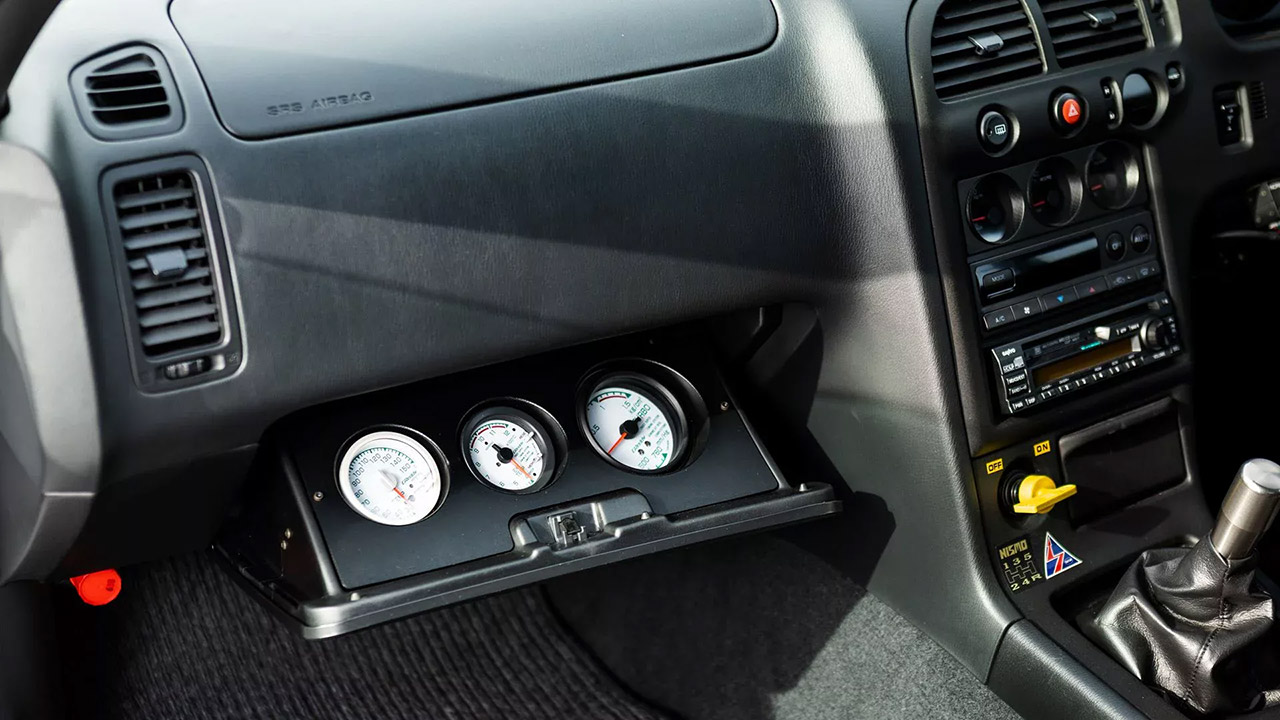
The 1996 Nissan NISMO 400R is one of those rare, ultra exclusive performance cars that came out of Japan in the 1990s and currently up for auction. To be honest, NISMO built this model mostly as a tribute to their work on the Le Mans GT-R LM. Engineers took the R33 Skyline GT-R V-Spec base and made it into something far more capable than a production car.
The engine, a twin-turbo inline-six, was bored from 2.6 to 2.8 liters, resulting in the RBX-GT2 engine built by REINIK. This resulted in it generating an impressive 400 horsepower and 346 pound-feet of torque, well above the unofficial Japanese limit of 276 horsepower. The acceleration from zero to 60 mph takes around four seconds, and the top speed is 186 mph.
BUILD AN ICONIC CAR – Adults can relive their favorite movie moments with the LEGO Technic 2 Fast 2 Furious Nissan Skyline GT-R (R34), a detailed…
CAR MODEL KIT FOR ADULTS – Fans of model car kits and building blocks will enjoy discovering details as they build, like functioning steering, a…
GROUNDBREAKING DRIFT FUNCTION – The first-ever LEGO Technic drift mechanism raises the car so builders can recreate the movie’s most impressive…
They tackled the challenge with a twin-plate clutch and a six-speed manual transmission to handle the power coming from that behemoth. The suspension was also updated with NISMO springs and Bilstein dampers, which reduced the ride height by nearly two inches in order to make the car drive more sharply. The brakes on the V-Spec base were fine, but NISMO chose to enhance them with their own pads. The styling has also been updated, with bigger fenders, new bumpers to increase airflow, side skirts, a carbon fiber hood, and a large rear spoiler. Then they slapped on some three-piece Rays LM-GT1 wheels.
Prior to the R33 shutdown, just 44 units were built, compared to the original plan of 100 units. Because of its rarity, the 400R has become the ultimate collector’s item. The majority of them were held in Japan for many years.
This specific car carries the chassis number 008, indicating that it is the eighth car ever manufactured. It’s a true show stopper, with QM1 White exterior and a black interior with plenty of red stitching. There are just 16,313 kilometers (10,136 miles) on the odometer and was initially registered in July 1996. It remained in Japan for more than 30 years until being shipped to Canada in 2023 and, finally, to the United States in 2024. Last year, this car won the Hagerty Car Culture Award at the Amelia Concours.
Broad Arrow Auctions will offer this 400R at The Amelia Auction on March 7, 2026, in conjunction with the Amelia Concours. They estimate the price between $900,000 and $1,100,000, demonstrating the increasing value of low-mileage and documented cases. A similar vehicle sold for $995,000 at the RM Sotheby’s Monterey auction in 2025. [Source]
Tesla is still on the hook for $243 million after a US judge rejected the EV maker’s bid to overturn a jury verdict from last year. On Friday, US District Judge Beth Bloom upheld the jury’s decision to hold Tesla partially responsible for a deadly crash that happened in 2019 and involved the self-driving Autopilot feature.
The judge added that there was enough evidence to support the jury’s verdict, which was delivered in August 2025 and ordered Tesla to pay millions in compensatory and punitive damages to the two victims in the case. Judge Bloom added that Tesla didn’t present any new arguments to dispute the decision.
While the case has been moving along recently, the incident dates back to several years ago when the driver of a Model S, George McGee, was using Tesla’s Autopilot feature while bending down to retrieve a dropped phone. The Model S then crashed into an SUV that was parked on a shoulder, where Naibel Benavides Leon and Dillon Angulo were standing aside. Benavides was killed in the crash, while Angulo was severely injured.
Tesla hasn’t publicly commented on Judge Bloom’s decision yet, but it won’t be a surprise to see the company appeal the latest ruling with a higher court. Tesla’s lawyers previously tried to pin the blame on the driver, claiming that the Model S and Autopilot weren’t defective. As this major case plays out, Tesla is also facing several investigations from the National Highway Traffic Safety Administration for both its Autopilot and Full-Self Driving features.
Ryobi is a Japanese manufacturer of everything from cars to printers and, of course, power tools. The company got its start in the 1940s, making die-cast products in a modified soy sauce factory. It wasn’t until the 1960s that the company started making the power tools it’s known for today.
In the United States, Ryobi power tools and related products are manufactured and distributed by Techtronic Industries (TTI), under an agreement with Ryobi, beginning in 2000. TTI also owns Milwaukee, Hoover, Dirt Devil, and other popular brands. Ryobi holds a decent chunk of the power tools market share, nipping at the heels of other brands like Craftsman and DeWalt.
Sometimes, when you’re window shopping for new tools, toys, or anything else, it’s worth considering the wisdom of the crowd. If consumer choice is any indicator, Ryobi tools are a safe choice for your everyday power tool needs. If you’re not even sure what you need, or if you need anything at all, the crowd can help with that, too. These are the 10 most popular Ryobi products (at least right now), according to the company’s own ratings. The top 10 products can and will change as new products are released and consumer preferences evolve, but this is what Ryobi consumers are buying in February 2026.
Advertisement
USB Lithium 3-Port Charger and Power Source
If you’re lucky, you’ll get through the entire day without your phone, tools, and other electronic devices dying on you. For everyone else, a portable power source can make a huge difference. Ryobi’s most popular tool is the USB Lithium 3-Port Charger and Power Source.
Advertisement
It’s a portable two-in-one power source that can recharge your phone and tools at the same time. You can use a cable to charge your mobile phone and other small electronic devices, and to charge up to three rechargeable USB lithium batteries. It’s compatible with a belt clip (sold separately), has a carabiner, and features a battery indicator light to let you know when the power source needs to be recharged.
It’s designed for use with Ryobi’s USB lithium batteries, which can power any of the tools and gadgets in Ryobi’s USB Lithium System. Each 3Ah battery can power handheld drivers, work lights, powered pruning shears, glue guns, misting fans, and more. The batteries can be charged individually using a USB-C cable, but this power source can charge up to three of them at the same time, giving you up to 9Ah of portable power. User reviews call it a “game changer,” saying it’s an excellent portable power solution, and “super useful” for anyone who has at least a couple of Ryobi’s lithium devices.
Advertisement
18V ONE+ HP Brushless Hybrid Forced Air Propane Heater
Cold fingers lose dexterity and become less responsive, so staying warm in a drafty garage or cold worksite can make a big difference in productivity, especially during the winter. Maybe that’s why Ryobi’s 18-Volt ONE+ HP Brushless Hybrid Forced Air Propane Heater is so popular.
A forced air heater works by heating air with gas or electricity (in this case, it’s propane gas) and then distributing that air with a blower fan. It’s essentially the same technology in your home’s furnace, except this blows warm air out into the environment instead of through your ductwork. It comes with a 15-foot hose and regulator to connect the heater to a propane tank and has an attached carrying handle for easier transportation.
It can run either on a ONE+ battery or plugged in with an extension cord. A temperature control dial on the outside lets you set the heater output between 75,000 and 125,000 BTUs (British Thermal Unit, the amount of energy needed to raise the temperature of a pound of water by one degree), so you can heat an area up to 3,125 square feet. You can keep the heater running for nearly three hours with a 4Ah battery and over eight hours with a 12Ah battery, provided you’ve got enough propane.
Advertisement
40V Battery Topper Light
It’s difficult to get anything done if you can’t see, but construction jobs, home renovations, and other hands-on projects often require working in poor lighting. That’s where work lights come in. This 40-Volt Battery Topper Light is powered by Ryobi’s 40-volt batteries. It clicks right on top of the battery and provides between 100 and 1,000 lumens of light.
Advertisement
Using a fully charged 40-volt 12Ah battery, this light can run for up to 11 days in ultra-low mode (100 lumens). With the same battery, it can operate on low (300 lumens) for roughly 5.6 days, on medium (600 lumens) for 2.9 days, and on high (1,000 lumens) for 1.9 days. If you’re using a battery with a smaller capacity, your runtime will be affected.
The light has a customizable head that can be oriented in nearly any direction, pivoting up and down 120 degrees and rotating 300 degrees side to side. It has an attached metal hook so you can hang the light onto wooden studs and other anchor points and it has a USB-C port for charging your phone and other small electronics. It basically turns your Ryobi 40-volt battery into a portable battery bank with an attached spotlight.
Advertisement
18V ONE+ 3-Tool Light Combo
Keeping the lights on is an important part of keeping any project or worksite running smoothly. The Ryobi 18-Volt ONE+ 3-Tool Light Combo is an all-in-one lighting solution powered by Ryobi’s 18-volt ONE+ batteries. The lighting combo includes one 18-volt ONE+ Hybrid LED Panel Light, one 18-volt ONE+ LED Spotlight, and one 18-volt ONE+ Flexible LED Clamp Light.
The panel light is compatible with a tripod and has three LED panels. The middle panel pivots 150 degrees, and the side panels rotate 360 degrees so you can direct light exactly where you need it. There are low, medium, and high settings and it’s capable of delivering up to 3,000 lumens. The panel light is also capable of getting power from an extension cord if you need a more permanent lighting solution.
The spotlight has low, medium, and high settings and puts out 3,000 lumens in a 650-yard beam. It also has a hanging loop for hands-free lighting. Lastly, the clamp light emits up to 400 lumens, can be set to high or low, and it can be oriented in pretty much any direction thanks to its 16-inch flexible neck. The light also rotates at the base and features a clamp that can grip objects up to 1.75 inches thick.
Advertisement
80V 1000W Power Source
Between power tools, mobile phones, tablets, and other portable electronic devices, sometimes you need a way to take power with you on the go. A pocket-sized portable battery bank is good for phones and other small devices, but if you need to charge your power tools and other heavy-duty devices you’ll need a more robust power source.
Advertisement
The 80-Volt, 1,000-Watt Power Source connects to Ryobi’s 80-volt batteries, transforming them into a mobile power solution. It delivers 1,800 watts of starting power and 1,000 watts of running power, enough to power large devices like televisions and refrigerators. The power station has two 120-volt AC outlets, two USB-A ports, and one USB-C port so you can plug in your large devices and power your smartphone and other small devices at the same time.
It serves as a portable power source but can also be used as emergency power during a power outage. Using a 10Ah battery, this power station can charge your phone more than 60 times or power your refrigerator for 12 hours. The power station can also connect to the Ryobi 80-volt Riding Lawn Tractor and utilize the power from all three of its 80V batteries, tripling your runtime.
It’s a string trimmer much like your conventional gas-powered weed eaters, except it’s powered by Ryobi’s 40-volt batteries. You can get about an hour of runtime from a 40-volt 4Ah battery and if you have a bigger yard, you can get longer runtime out of a battery with greater capacity. It features a variable speed trigger and a quick-change coupler so you can attach and detach the string trimmer from the power head with ease.
The string trimmer comes in a kit with a 40-volt power head, a straight shaft trimmer attachment, one 40-volt 4Ah battery, and a 40-volt battery charger. The handle is compatible with Ryobi’s Expand-It line of products. You can detach the string trimmer and replace it with an eight-inch cultivator, eight-inch edger, sweeper, pole saw, snow thrower, and more.
Advertisement
18V ONE+ 3/8 Inch Drill Kit
A power drill is a common part of your basic tool collection. Once you’ve selected a hammer, a tape measure, and a collection of drivers and wrenches, a drill is usually the first power tool most people add to their collection. There are low-power drills for everyday at-home use and more robust power drills capable of drilling hundreds of holes into concrete with relative ease.
Advertisement
The Ryobi 18V ONE+ ⅜ Inch Drill is on the lower end of the power drill spectrum. It’s an affordable option with relatively low power. It’s probably not the drill professionals are likely to reach for before heading to the construction site, but it’s a popular choice for day-to-day drilling at home.
It’s a fairly basic drill with a ⅜ inch keyless chuck. It gets up to 600 RPMs, which isn’t the most powerful, but is enough to drill through drywall and wooden studs to hang a picture or mount a TV. It’s lightweight at just 2.8 pounds, so you can hold it overhead without fatigue. It has a built-in LED light for illuminating your workspace and a variable speed trigger. It comes in a kit with one 18-volt ONE+ 1.5Ah lithium battery and an 18-volt ONE+ battery charger.
Advertisement
40V 550 CFM Blower Kit
Ideally, a power tool should take a difficult or tedious manual job and turn it into an easier and faster task through the introduction of mechanical help. The leaf blower is a perfect example of this relationship. When autumn comes and the leaves change colors and fall, people often need a way to clear their yard of leaves and debris. You could do it the old fashioned way with a rake and a little elbow grease or you can do it with a battery powered blower.
Ryobi’s 40-Volt 550 CFM Blower moves as much as 550 cubic feet of air per minute and can generate wind speeds of up to 120 miles per hour. It’s more powerful than a 25cc gas powered leaf blower, according to Ryobi. On high, you’ll get about 15 minutes of runtime with a 4Ah battery and 31 minutes with 8Ah battery. On low, that same 8Ah battery could last you up to 158 minutes. The smaller 4Ah battery more commonly paired with the blower can still get 75 minutes on low, more than enough time to clean up your average yard.
The blower comes in a kit with a 4Ah battery and a 40-Volt battery charger. Users describe it as a good value for the money and say it has plenty of power to handle regular yard cleanup.
Advertisement
18V ONE+ 1800-Watt Power Station Kit
Ryobi customers love a portable power station, and the 18-Volt ONE+ 1800-Watt Power Station is no exception. It’s built on the foundation of Ryobi’s 18-volt ONE+ battery platform, so it’s broadly compatible with your other Ryobi tools.
Advertisement
This power station uses Ryobi’s 18-Volt ONE+ batteries to deliver enough power to keep your refrigerator, televisions, and other electronics, both large and small, running for hours. You can also pull individual batteries to power your tools while you’re out in the field. It comes in a kit with four 18V ONE+ 6Ah lithium high-performance batteries and a charging adapter.
It only comes with four batteries but it’s capable of holding up to eight 18-volt ONE+ batteries at a time and the higher their capacity, the more you’ll be able to power. The station delivers 3,000 starting watts and 1,800 running watts, enough energy to power energy-hungry devices. With the four included 6Ah batteries you could charge your phone more than 45 times or run a refrigerator for up to four hours. With eight 12Ah batteries, you could power a refrigerator for up to 28 hours. You can monitor the power station with the Ryobi GenControl app, and when you get home for the day, you can recharge your 18V ONE+ batteries with the included charging adapter.
Advertisement
Tripower Tripod LED Light
If you’re serious about lighting, this is arguably the best option that Ryobi has to offer. The TriPower Tripod LED Light delivers 3,800 lumens, making it the brightest Ryobi light to date, according to the company. The TriPower part of the name refers to the light’s ability to be powered in three different ways. It’s compatible with any 18-volt ONE+ battery, and Ryobi 40-volt battery, or an extension cord and a wall outlet.
It has four brightness modes (high, medium, low, and single-panel) and you can get over 25 hours of lighting on single-panel mode using a 40V 6Ah battery. The light is mounted to a telescoping tripod stand, which extends up to seven feet into the air. The light can also be disconnected and placed wherever you look using the attached metal hook.
Using a 40V 12Ah battery you can get 13.5 hours on high. By contrast, an 18-volt 12Ah battery will run for about 7.5 hours on high with a full charge. The light’s head pivots 135 degrees, and the adjustable panels let you shine light in 360 degrees. The stand is compatible with other Ryobi ONE+ products like fans or speakers and it collapses down into a compact package for transportation and storage when not in use.
Gather ‘round, it’s time to catch up on the latest batch of Engadget reviews. Whether you missed our in-depth testing of Sony’s latest flagship earbuds or a truly unique ASUS laptop, I’ve compiled our recent reviews so you can get up to speed quickly. Read on for the list that also includes a love letter to a tiny camera and another VPN option that worth considering.
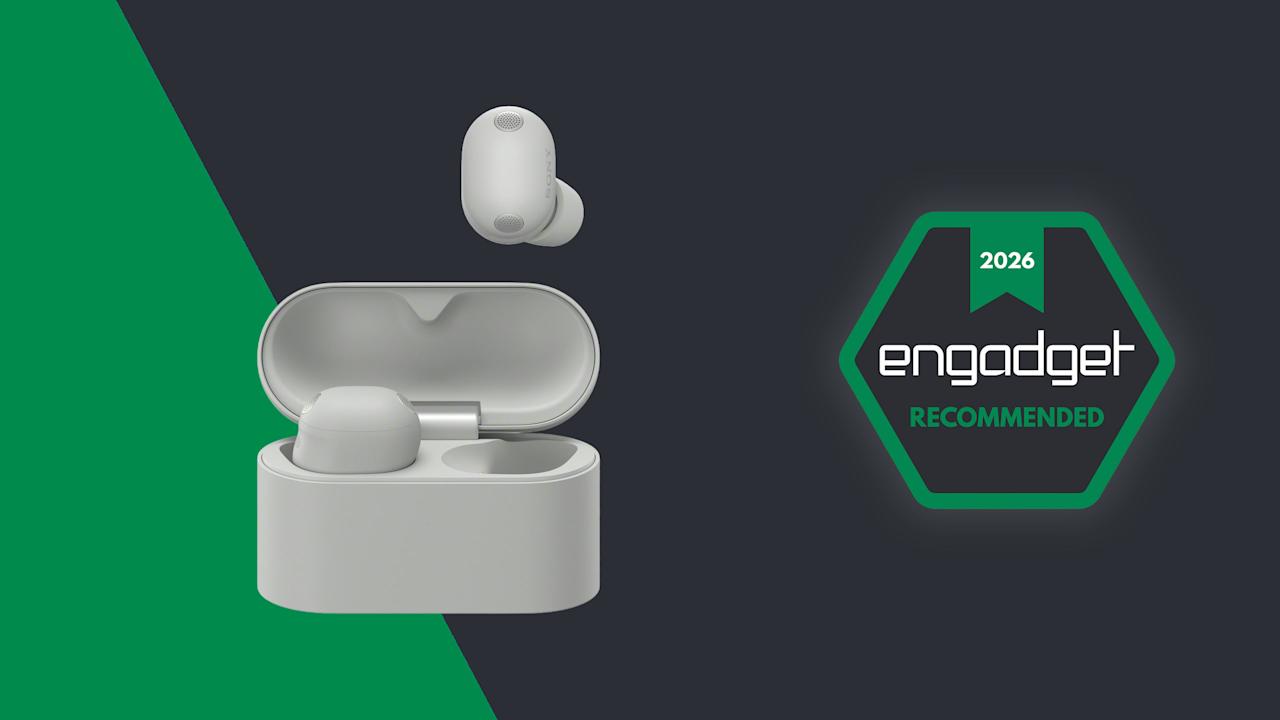
Sony WF-1000XM6
Sony/Engadget
Sony’s flagship earbuds are still near the top of the heap, but the competition has caught up.
Pros
Advertisement
Full, detailed sound
Tons of features
Responsive touch controls
Cons
Price went up (again)
ANC performance lags behind the competition
Fit can be an issue
Subpar call quality
Sony’s 1000X earbuds have always been the top pick in our best wireless earbuds guide. With the M6 though, the company doesn’t do enough to clearly separate itself from the competition like it has in the past. “The two most obvious places the company is lagging behind the competition is ANC performance and overall voice quality, not to mention my continued dissatisfaction with the fit that Sony’s foam tips provide,” I wrote.
ASUS Zenbook Duo (2026)
ASUS / Engadget
While it’s a bit pricey, the added convenience and productivity of the Zenbook Duo’s dual-screen design is more than worth the premium.
Pros
Two gorgeous OLED displays
More compact design than the original
Surprisingly good battery
Unique form factor
Cons
A bit pricey
No SD card slot
If you’re looking for something unique in your next laptop, the ASUS Zenbook Duo is worth considering. Dual screens? Yep. Detachable keyboard? Sure. Good battery life? It does that too. “I’m a believer that one day people will eventually embrace typing on screens with laptops just like they have for smartphones,” senior reporter Sam Rutherford explained. “However, even if you’re not willing to make that jump just yet, the Zenbook Duo still has all of its bases covered.”
Kodak Charmera
It’s so cute (Cheyenne MacDonald for Engadget)
A tiny $30 camera was too cute for our editors to resist. Despite the subpar images it captures, they’re still smitten with the thing. “I’ve been pleasantly surprised by how much I’m enjoying the Charmera experience,” weekend editor Its crunchy photos are just good enough to feel like they’re successfully preserving a moment in time. And being so tiny, it’s really convenient to bring everywhere.”
Advertisement
Mullvad VPN
Senior writer Sam Champman’s latest VPN review is Mullvad, which he says is often regarded as one of the best in terms of overall privacy. “It’s not trying to be an everything app — it does privacy and does it well,” he noted. “Of course, it has its own compromises. It’s solidly in the middle of the speed pack and occasionally trips up when unblocking streaming sites. The lack of any protocols other than WireGuard grates on me a bit, since it reduces the user’s options for troubleshooting.”
Fears about possible drug cartel drone activity over Texas sparked a recent airspace shutdown in New Mexico and El Paso, Texas, but the episode ultimately underscored the challenges of safely deploying anti-drone weapons near cities. A database left accessible to anyone online contained billions of records, including passwords and Social Security numbers. The situation is far from unique, but it underscores ongoing potential identity-theft risk since it appeared that some of the data has not yet been exploited by criminals.
If you’re looking to make $10,000, the Fulu Foundation—a nonprofit that pays out bounties for removing user-hostile features—is on the hunt for a way to use Ring cameras while preventing them from sending data to Amazon. And the Mexican city of Guadalupe, which will host portions of the 2026 World Cup, will deploy four new robot dogs to help provide security during matches at BBVA Stadium.
Advertisement
But wait, there’s more! Each week, we round up the security and privacy news we didn’t cover in depth ourselves. Click the headlines to read the full stories. And stay safe out there.
We at WIRED have recommended password managers for years. They are, arguably, the only practical and convenient system for creating and implementing unique, sufficiently strong passwords across every online account in your life. But the risk—at least when using cloud-based password managers that back up your credentials and make them accessible across devices—is that the password manager company itself becomes a point of vulnerability. If one of these companies is breached or suffers a data leak, those flaws could expose an untold number of secret credentials.
Password manager companies have responded to those fears with promises of “zero knowledge” systems in which they claim credentials are encrypted so that even they can’t access them in an unencrypted state. But a new study from security researchers at ETH Zurich and USI Lugano shows how frequently those claims are showing cracks—or failing altogether if a malicious insider or hacker is sufficiently skilled at exploiting cryptographic flaws.
The researchers specifically analyzed password managers from Bitwarden, Dashlane, and LastPass—though they warn their findings likely apply to others, too—and found that they could often gain access to users’ credentials. In some cases, they could access users’ entire “vault” of passwords or even gain the ability to write to those vaults at will. The cryptographic vulnerabilities they found varied between password managers and existed only when certain features were enabled, such as the key escrow systems that allow the backup and recovery of passwords. But they also say many of the flaws they found were relatively simple and show the lack of scrutiny around password managers’ “zero knowledge” claims. Read the full research paper here.
Advertisement
Virtually no part of American society, it increasingly seems, has escaped mention in the newly released emails of the late convicted pedophile and sex trafficker Jeffrey Epstein—including the cybersecurity and technology community represented at the Defcon hacker conference. Defcon this week officially banned three people whose ties to Epstein had come to light in the Justice Department’s incomplete and highly redacted release of documents related to Epstein: cybersecurity entrepreneur Vincent Iozzo—who had already been removed from review board on the website of Black Hat, Defcon’s more corporate sister conference—as well as former MIT Media Lab director Joichi Ito and tech investor Pablos Holman. (A spokesperson for Iozzo said the ban was “performative” and not based on any “wrongdoing,” in a statement to TechCrunch, while Holman and Ito didn’t respond to its requests for comment.) All three men had extensive interactions with Epstein, including long after he was exposed as a sex offender and trafficker both in court and in extensive media reporting.
More than two decades ago, the government domain “freedom.gov” was used for news and “victory” information about the war in Iraq. Since the domain was reregistered on January 12, after years being offline, it has been part of a State Department effort to create an anti-censorship “online portal,” according to a Reuters report this week.
The report says the portal may have been created to “enable people in Europe and elsewhere” to see content banned by their governments, citing hate speech- and terrorism-related content as examples. The website may incorporate VPN technology to get around geolocation blocks. The development of the site, which could help to further fracture differing internet freedom regimes and political tensions between the US and Europe, comes at a time when many US government-funded internet freedom programs have been shut down.
As the 2026Winter Olympics come to a close, a whole new game is afoot: the mad dash to make money on exclusive memorabilia. When the Games are over, most of the event’s coolest collectibles will become very hard to find, plundered by scalpers and bargain hunters and only available through online marketplaces like eBay and Vinted. And if the eye-popping prices already placed on the gear are any indication, they’re going to be quite valuable.
Of all the Milano Cortina Olympics memorabilia that’s hit the internet so far, the plushies of mascots Milo and Tina and the Swatch watches given to volunteers have proven to be standouts. Pins are also proving popular, particularly Snoop Dogg’s special edition and the ones dedicated to the torchbearers.
Originally, the Milo and Tina stuffed animals ranged in price from €15 to €50 (about $18 to $60), depending on size. Now the smallest stoat plushies are going for as much as three times their original price, and the bigger ones are four times as expensive as they originally were. (Some can still be ordered on the Olympics shop at their original prices. But there is one drawback: As of this writing, some of them may not be delivered until June.)
The Swatch watches, meanwhile, were only given to volunteers and not available for sale. Never-worn Swatches still in the box are already showing up for sale for anywhere from €200 to €500 ($235 to $590).
Advertisement
At least one of the Samsung Galaxy Z Flip 7 smartphones give to athletes has shown up on eBay with a Buy It Now price of $1,680.
As of this writing, you can still get Olympics souvenir pins on the Games’ official online shop. Prices there start at around €15, but resellers are putting them up for twice as much. Limited-edition pins from sponsors like Samsung go for around €100 ($118). WIRED Italia spotted pins given to Olympic torchbearers online for around €600 ($707). Also available? Replicas of Olympic medals, which start at around €50 for a single medal and €150 to €200 ($177 to $236) for a complete set.
The latest episode of The Leaders’ Room podcast season four features Rathnait Long, distinguished fellow of technology at Macom Technology Solutions. This series is created in partnership with IDA Ireland.
Once again in season four of The Leaders’ Room podcast, we get to know the leaders of some of the most influential multinationals in tech, life sciences and innovation, as well as getting insights into their leadership styles and the high-tech trends they see coming down the line.
In this latest episode, we speak to Rathnait Long, distinguished fellow of technology at Macom Technology Solutions, about her distinguished career in engineering, and now in leadership at the Lowell, Massachusetts-based semiconductor company with operations in Cork, Ireland. It’s a fascinating and wide-ranging chat about the transition from academia to industry, the imperfect but developing tool that is AI, and the future of technology.
Advertisement
Macom designs and manufactures semiconductors for a wide range of different sectors – including telecommunications, data centres, industrial and defence – so Rathnait has a bird’s eye perspective on how technology companies keep innovating amid rapid technological shifts.
Macom has an important hub in Cork, which has a strong focus on design, but is also core to other aspects of Macom’s international operations, so we discuss how Ireland fits into the larger multinational story for Macom.
Long shared her quandary at various stages of her career, whether to stick with academia or get out into industry – she clearly thrived in both. She tells us how she ultimately felt that draw to be involved in the application of the research in an industry setting.
She clearly gained enormously from the opportunity she had to spend her postdoc years in Stanford, and it struck me listening to her that many of today’s engineering students may not feel as welcomed to the US in the current climate, which is unfortunate.
Advertisement
It is also a reminder of how vital it is that Ireland is building even more superb postdoc opportunities and experiences here at home and in Europe. Having spoken recently to Minister James Lawless, TD and the new head of Research Ireland Diarmuid O’Brien on this subject, that is certainly Ireland’s ambition.
Long’s identity as an engineer is clearly central to everything she does. She is focused on problem-solving, and seeing her ideas and research translated into real-world applications. What is clear throughout the discussion is how neatly that translates into her pragmatic approach to leadership.
We’re grateful to all our interviewees again this season, for taking the time out of busy schedules to come into the studio and share their insights and their intelligence with us. And a big thanks as ever to our partners IDA Ireland who make this series possible.
The Leaders’ Room podcast is released fortnightly and can be found by searching for ‘The Leaders’ Room’ wherever you get your podcasts. For those who prefer their audio with visuals, filmed versions of the podcast interviews are all available here on SiliconRepublic.com.
Advertisement
Check out The Leaders’ Room podcast for in-depth insights from some of Ireland’s top leaders. Listen now on Spotify, on Apple or wherever you get your podcasts.
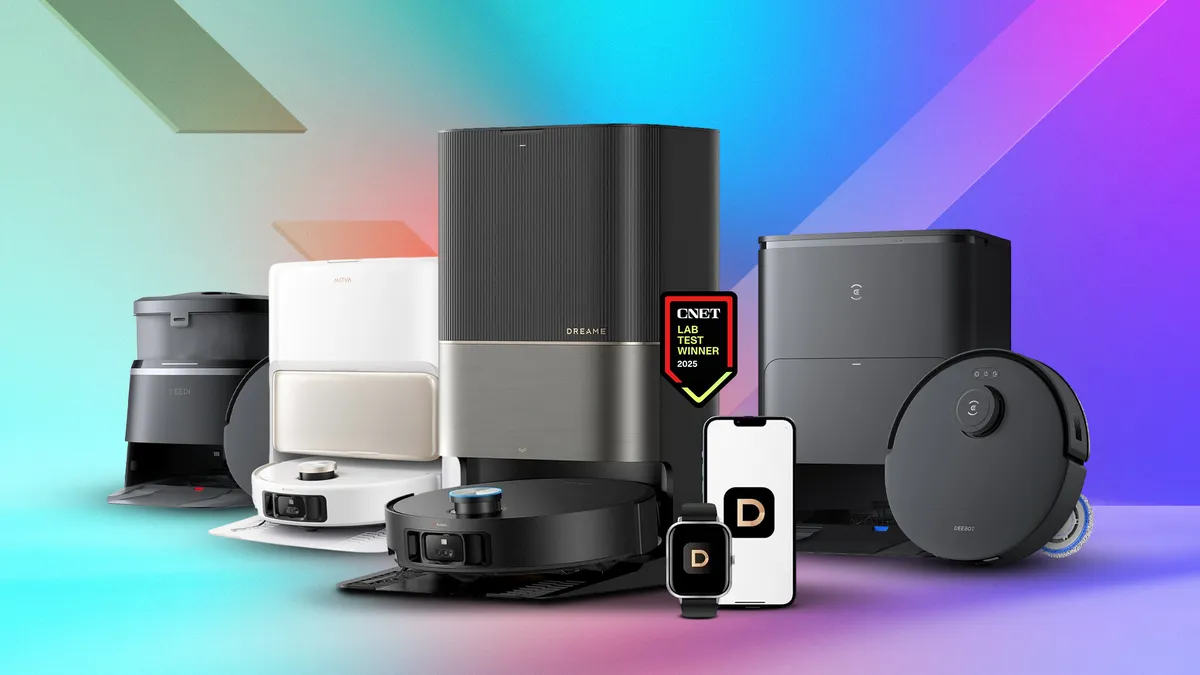
These robot vacuums are ones that tested well, scoring at least a 7 overall rating, or that might be the right fit for a specific situation.
Yeedi S16 Plus
The S16 Plus has great pet hair pickup, but not-so-good avoidance of pet waste.
Amazon/Zooey Liao/CNET
Yeedi S16 Plus: The Yeedi S16 Plus distinguishes itself with the best pet hair pickup we’ve tested, completely clearing our hardwood test area. It also has one of the most user-friendly app interfaces available. However, it falls short of our main list due to significant failures in obstacle avoidance and inconsistent cleaning power on specific surfaces. In our navigation tests, it avoided only two of six objects, running over a sock and two types of simulated pet waste, which makes it a risky choice for homes where messes might occur.
Advertisement
While its overall sand pickup average is a decent 51.51%, its specific performance lags behind top-tier competitors. It achieved a mediocre 86.13% pickup rate on hardwood and struggled significantly on midpile carpet, with only a 17.39% success rate. Consequently, despite its sleek design and effective self-rinsing Ozmo mop, we recommend models like the Eufy E28 for people who need reliable obstacle avoidance.
Yeedi M14 Plus
The M14 Plus has impressive obstacle avoidance capabilities, but has poor midpile carpet pickup.
Amazon/Zooey Liao/CNET
Yeedi M14 Plus: The Yeedi M14 Plus is a standout choice for smart navigation, tying for the best obstacle avoidance score in our testing by successfully evading five out of six common hazards, including pet waste and socks. It pairs these smarts with excellent hardwood performance, removing 92.7% of sand in our lab tests, and has what our testers rated as the most intuitive and comprehensive app interface available. With a base station that offers self-emptying and hot water mop washing, it’s a highly capable automated cleaner for homes with hard floors.
Advertisement
However, the M14 Plus falls short of our main list due to its abysmal performance on soft surfaces; it managed a dismal 8.7% pickup rate on midpile carpet, making it unsuitable for homes with rugs. Its navigation coverage was also below average at 71.18%, leaving more missed spots than top-tier competitors like the Mova V50 or Dreame X50. While often available at a deep discount, its high retail price of $1,199 makes the iRobot Roomba 205 DustCompactor a stronger value proposition for most buyers.
Roborock Qrevo Curv
The Qrevo Curv is an older and distinctive-looking robot vacuum.
Roborock/CNET
Robock Qrevo Curv: The Roborock Qrevo Curv is easily recognizable by its distinctive egg-shaped base station and has an AdaptiLift chassis that helps it cross high thresholds. In our lab tests, it proved to be a specialist for homes with plush rugs, achieving a 35.65% sand pickup rate on midpile carpet. This was the highest score recorded in its specific test batch and the second-highest midpile score we’ve seen to date, trailing only the Mova V50.
Advertisement
However, the Qrevo Curv misses our main list due to its underwhelming performance on hard floors and poor hazard detection. It removed only 75.91% of sand from hardwood, a mediocre result compared to top-tier competitors, which consistently score above 90%. Additionally, its navigation systems failed to identify common clutter. It avoided only one out of six obstacles in our avoidance test. Our lab experts also noted that its cleaning path was inefficient, with heat maps showing it focused heavily on the room’s edges while neglecting the center.
Eufy E25
The Eufy E25 is a capable robot vacuum for obstacle avoidance, but it doesn’t offer quite as much value as the E28.
Eufy/CNET
Eufy E25: The Eufy E25 stands out as one of the better obstacle-avoidance systems for robot vacuums. It successfully evaded five out of six hazards, including simulated pet waste and cords — a feat matched only by its sibling, the E28, and the Yeedi M14 Plus. While setup was a breeze, thanks to an app that instantly recognized the device, its cleaning power didn’t quite match its brains. It managed a respectable 85.4% sand pickup on hardwood but struggled significantly on soft surfaces, recording the lowest low-pile carpet score in its batch at just 31.88%.
Advertisement
We ultimately excluded the E25 from our main list because it offers less utility than the Eufy E28 for a similar or higher price. “I would recommend the Eufy E28 over this unit because it offers the carpet-cleaning functionality with similar cleaning abilities,” noted lab technician Schylar Breitenstein. With a price tag hovering around $1,300 without sales and a midpile carpet pickup rate of only 12.17%, it is hard to justify the E25 when the E28 provides the same elite obstacle avoidance plus a unique portable carpet cleaner for better value.
iRobot Roomba 705 Max
The Roomba 705 Max had the best cleaning coverage we’ve tested and it’s a capable cleaner on hardwood.
CNET
iRobot Roomba 705 Max: The iRobot Roomba 705 Max distinguishes itself with room coverage, with an impressive 86.36% score. It is a thorough cleaner on hard floors, picking up 92.7% of sand, and it has a compact, stylish base station that auto-empties the dustbin without dominating your floor plan. If you have a tidy home with predominantly hard floors and want a vacuum that won’t miss a spot, the 705 Max offers the thorough cleaning pattern iRobot is known for.
Advertisement
However, we excluded it from our main list because its obstacle-avoidance technology is virtually nonexistent compared to modern standards. In our lab tests, it failed to avoid a single object, running over everything from socks to simulated pet waste — an odd flaw for a robot touting its AI vision. Additionally, it lacks the mopping capabilities standard on most robots in this price class. Our lab team critiqued the app as “underdeveloped,” noting that the expensive warranty add-ons feel “like an unnecessary paywall.” For a smarter robot that can actually dodge trouble, we recommend the Eufy E28.
3i S10 Ultra
The 3i S10 Ultra is a unique water-recycling robot vacuum.
3i/CNET
3i S10 Ultra: We haven’t reviewed many robot vacuums from 3i, but the company has some unique offerings, including the S10 Ultra, which it says is the first water recycling robot vacuum in the world. What that means is that it’s capable of purifying and distilling its own wastewater extracted from the robot, as well as using water vapor and condensation from the air to refill the robot’s water tank with clean water. It’s a fascinating implementation that can help cut down on water wasted on mopping.
Advertisement
In terms of performance, the S10 Ultra is a capable robot vacuum, removing 93.45% of sand from hardwood floor, which is the third highest score on our list. However, carpet performance wasn’t as good, at 37.68% low-pile and 17.68% midpile, resulting in a 49.6% average. That said, it has all the key features you’d expect from a higher-end robot vacuum, including advanced lidar navigation, dirt and liquid detection, a self-cleaning spinning roller mop and AI obstacle avoidance. Our lab technician, Schylar Breitenstein, noted that the app wasn’t very user-friendly and that she had issues with connectivity to Wi-Fi. Obstacle avoidance was also a disappointment, with a complete failure for all six obstacles. The bulky and heavy base station weighs 50 pounds and takes up significant space. All this keeps it off our best list.
Ecovacs Deebot X9 Pro Omni
The X9 Pro Omni is a capable newer robot vacuum from Ecovacs, but we like its predecessor a bit better.
Ecovacs/CNET
Ecovacs Deebot X9 Pro Omni: The Ecovacs Deebot X9 Pro Omni distinguishes itself with reliable carpet detection that correctly ramps up suction when transitioning from hard floors to rugs, a feature our lab noted isn’t always consistent in this category. In terms of raw cleaning power, it performed decently, removing 88.32% of sand from hardwood floors and securing the third-highest midpile carpet pickup score in its test batch at 20.87%. Our testers also appreciated its navigation around furniture, noting that it “navigates well around chair legs” and easily cleared our 4-inch threshold tests.
Advertisement
However, the X9 Pro Omni misses our main list because its performance doesn’t justify its premium price tag. Despite claims of AI avoidance, it only successfully dodged two out of six obstacles in our hazard gauntlet. Furthermore, its room coverage was a middling 76.42%, with lab technicians observing that it “seems to clean in one direction” without the cross-hatch pattern that ensures a deeper clean. With a total average pickup score of 51.47%, it is a capable cleaner, but lacks the elite efficiency of top contenders such as the Mova V50.
Monsaga MS1 Max
Monsaga MS1 Max: The Monsaga MS1 Max caught our eye as a potentially affordable option that doesn’t skimp on features, offering lidar navigation and a self-emptying base station for a midrange price. In our lab testing, it actually punched above its weight class on hardwood floors, removing an impressive 92.7% of sand — a score that rivals some of our top picks, including the Yeedi M14 Plus. Our testers also appreciated the petite, lightweight base station, noting it was “easily transportable” compared to the bulky docks typical of this category.
However, the MS1 Max falls short of a recommendation due to what our lab team described as “atrocious” pet hair performance; hair became hopelessly tangled around the main brush and was scattered around the room rather than collected. It also struggled significantly on softer surfaces, managing only 44.06% pickup on low-pile carpet and a dismal 4.35% on midpile. Furthermore, its navigation smarts didn’t hold up in our hazard tests; the robot failed to avoid a single object in our six-item gauntlet, running over everything from cords to simulated pet waste.
Data centers for AI are turning the world of power generation on its head. There isn’t enough power capacity on the grid to even come close to how much energy is needed for the number being built. And traditional transmission and distribution networks aren’t efficient enough to take full advantage of all the power available. According to the U.S. Energy Information Administration (EIA), annual transmission and distribution losses average about 5 percent. The rate is much higher in some other parts of the world. Hence, hyperscalers such as Amazon Web Services, Google Cloud and MicrosoftAzure are investigating every avenue to gain more power and raise efficiency.
Microsoft, for example, is extolling the potential virtues of high-temperature superconductors (HTS) as a replacement for copper wiring. According to the company, HTS can improve energy efficiency by reducing transmission losses, increasing the resiliency of electrical grids, and limiting the impact of data centers on communities by reducing the amount of space required to move power.
“Because superconductors take up less space to move large amounts of power, they could help us build cleaner, more compact systems,” Alastair Speirs, the general manager of global infrastructure at Microsoft wrote in a blog post.
Copper is a good conductor, but current encounters resistance as it moves along the line. This generates heat, lowers efficiency, and restricts how much current can be moved. HTS largely eliminates this resistance factor, as it’s made of superconducting materials that are cooled to cryogenic temperatures. (Despite the name, high-temperature superconductors still rely on frigid temperatures—albeit significantly warmer than those required by traditional superconductors.)
Advertisement
The resulting cables are smaller and lighter than copper wiring, don’t lower voltage as they transmit current, and don’t produce heat. This fits nicely into the needs of AI data centers that are trying to cram massive electrical loads into a tiny footprint. Fewer substations would also be needed. According to Speirs, next-gen superconducting transmission lines deliver capacity that is an order of magnitude higher than conventional lines at the same voltage level.
Microsoft is working with partners on the advancement of this technology including an investment of US $75 million into Veir, a superconducting power technology developer. Veir’s conductors use HTS tape, most commonly based on a class of materials known as rare-earth barium copper oxide (REBCO). REBCO is a ceramic superconducting layer deposited as a thin film on a metal substrate, then engineered into a rugged conductor that can be assembled into power cables.
“The key distinction from copper or aluminum is that, at operating temperature, the superconducting layer carries current with almost no electrical resistance, enabling very high current density in a much more compact form factor,” says Tim Heidel, Veir’s CEO and co-founder.
Liquid Nitrogen Cooling in Data Centers
Ruslan Nagimov, the principal infrastructure engineer for Cloud Operations and Innovation at Microsoft, stands near the world’s first HTS-powered rack prototype.Microsoft
HTS cables still operate at cryogenic temperatures, so cooling must be integrated into the power delivery system design. Veir maintains a low operating temperature using a closed-loop liquid nitrogen system: The nitrogen circulates through the length of the cable, exits at the far end, is re-cooled, and then recirculated back to the start.
Advertisement
“Liquid nitrogen is a plentiful, low cost, safe material used in numerous critical commercial and industrial applications at enormous scale,” says Heidel. “We are leveraging the experience and standards for working with liquid nitrogen proven in other industries to design stable, data center solutions designed for continuous operation, with monitoring and controls that fit critical infrastructure expectations rather than lab conditions.”
HTS cable cooling can either be done within the data center or externally. Heidel favors the latter as that minimizes footprint and operational complexity indoors. Liquid nitrogen lines are fed into the facility to serve the superconductors. They deliver power to where it’s needed and the cooling system is managed like other facility subsystem.
Rare earth materials, cooling loops, cryogenic temperatures—all of this adds considerably to costs. Thus, HTS isn’t going to replace copper in the vast majority of applications. Heidel says the economics are most compelling where power delivery is constrained by space, weight, voltage drop, and heat.
“In those cases, the value shows up at the system level: smaller footprints, reduced resistive losses, and more flexibility in how you route power,” says Heidel. “As the technology scales, costs should improve through higher-volume HTS tape manufacturing and better yields, and also through standardization of the surrounding system hardware, installation practices, and operating playbooks that reduce design complexity and deployment risk.”
Advertisement
AI data centers are becoming the perfect proving ground for this approach. Hyperscalers are willing to spend to develop higher-efficiency systems. They can balance spending on development against the revenue they might make by delivering AI services broadly.
“HTS manufacturing has matured—particularly on the tape side—which improves cost and supply availability,” says Husam Alissa, Microsoft’s director of systems technology. “Our focus currently is on validating and derisking this technology with our partners with focus on systems design and integration.”
The new law aims to protect a victim from having to individually flag each platform-specific instance of abusive content to the platform in question.
The UK government is proposing a new law which would force tech platforms to remove intimate content within 48 hours of it being flagged as non-consensually shared or abusive.
Platforms that don’t act in time “could face fines of up to 10pc of their qualifying worldwide revenue or having their services blocked in the UK”, the government said.
The measure also intends that such images would only need to be reported once in order for action to be taken to remove them from all platforms where they appear, and to ensure blocking or deletion of any future uploads.
Advertisement
This aims to protect a user or victim from having to individually flag each platform-specific instance of abusive content to the platform in question.
UK prime minister Keir Starmer said: “The online world is the frontline of the 21st century battle against violence against women and girls. That’s why my government is taking urgent action against chatbots and ‘nudification’ tools.
“Today we are going further, putting companies on notice so that any non-consensual image is taken down in under 48 hours.”
The measure is a proposed amendment to the UK’s Crime and Policing Bill, and would also extend powers to internet service providers to block access to “rogue websites” that might fall outside legislative authority yet still be hosting such content.
Advertisement
The government’s technology secretary Liz Kendall said: “The days of tech firms having a free pass are over. Because of the action we are taking, platforms must now find and remove intimate images shared without consent within a maximum of 48 hours. No woman should have to chase platform after platform, waiting days for an image to come down.”
The UK’s media regulator Ofcom will be involved in handling the enforcement of the new measures, which intend to classify intimate image abuse in line with terrorist or child abuse material as per the country’s Online Safety Act.
French lawmakers have initiated a ban on social media for under-15s, while the country’s prosecutors recently raided X’s Paris offices as part of a multi-layered investigation into the company which is partially focused on deepfake content generated by its Grok chatbot.
Advertisement
Don’t miss out on the knowledge you need to succeed. Sign up for the Daily Brief, Silicon Republic’s digest of need-to-know sci-tech news.

























 Ruslan Nagimov, the principal infrastructure engineer for Cloud Operations and Innovation at Microsoft, stands near the world’s first HTS-powered rack prototype.Microsoft