
Politics
Politics Home | Welsh Labour MPs Hesitate About Regime Change Despite Risk of Senedd Wipeout


5 min read
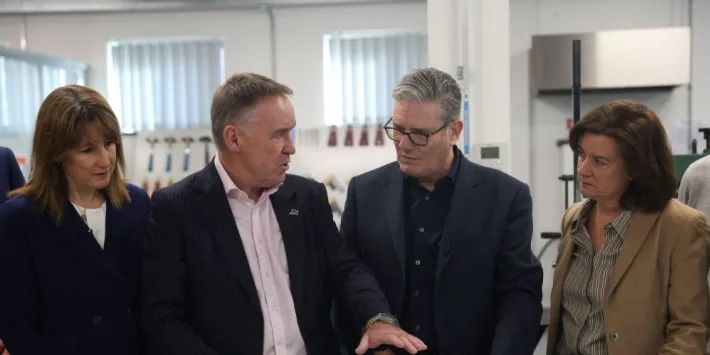
Labour faces seismic losses in Wales on 7 May, with some insiders fearing that First Minister Eluned Morgan could lose her Senedd seat. Despite the scale of the potential defeat, the party’s Welsh cohort in Westminster is not on the brink of mutiny — at least not yet.
Earlier this month, Welsh Labour MPs were briefed by Joe Lock, General Secretary of Welsh Labour, on the party’s position in Wales with the May elections on the horizon.
Attendees reported leaving in despair, warned that the Labour vote was being eaten from both sides: Plaid Cymru and the Greens on the left, and Reform UK on the right. Some Labour figures in Wales have already accepted their electoral fate, and are preparing attack lines to use against a Plaid-led administration.
The collapse in Labour’s support in Wales was set out in a recent YouGov survey. The Senedd voting intention poll published two weeks ago put the party joint fourth with the Conservatives on 10 per cent. Plaid, whose leader Rhun ap Iowerth is currently on course to lead a government in Cardiff, was far ahead on 37 per cent. Labour was also behind Reform (23 per cent) and the Greens (13 per cent).
Until now, Labour has dominated politics in Wales, controlling the Senedd since the devolved parliament was set up at the turn of the century, and winning most votes and seats in Wales in every UK-wide general election.
Yet, unlike the party’s restless Scottish MPs, who are largely in agreement that Labour’s best route to recovery is putting Health Secretary Wes Streeting in Downing Street, the Welsh cohort has not reached this sort of conclusion.
“The problem with the Welsh PLP [Parliamentary Labour Party] is they’re very loyal to him [Starmer],” said one long-serving Welsh Labour MP. “They have good agents in the party. Plus, we have no alternative JFK character.”
They added that there is no obvious candidate to replace Starmer in the minds of Welsh Labour MPs, likening the role to “the Manchester United job”.
One of the factors working in the Prime Minister’s favour when it comes to his troubles in Wales is that, as things stand, a significant number of Welsh Labour MPs are loyal to him.
Carolyn Harris, for example, the deputy leader of Welsh Labour, is a Starmer ally who regularly meets the PM. Alex Barros-Curtis, the chair of the Welsh PLP, worked on Starmer’s 2020 leadership campaign and is also friends with his chief of staff, Morgan McSweeney.
Of the 32 parliamentary seats in Wales, Labour currently controls 27, and 12 of those MPs are on the government payroll. They include Welsh secretary Jo Stevens, care minister Stephen Kinnock (son of former Labour leader, Neil), Paymaster General Nick Thomas-Symonds, Treasury minister Torsten Bell, and culture minister Chris Bryant. Catherine Fookes, Labour MP for Monmouthshire, is one of the Prime Minister’s private parliamentary secretaries.
That’s not to say Wales sends no rebel Labour MPs to Westminster. Henry Tufnell and Steve Witherden, the Labour MPs for Mid & South Pembrokeshire and Montgomeryshire & Glyndŵr, respectively, were both part of the backbench rebellion that forced the government to abandon welfare reforms last year.
Morgan has sought to distance herself from Starmer and her Westminster colleagues as she tries to shore up her party’s position.
In an interview with the Today programme on Wednesday morning, the Welsh First Minister refused to describe Starmer as a good prime minister when repeatedly invited to do so, instead stressing that it is she, not him, who will be on the ballot paper for Labour in Wales.
“I’m absolutely clear that who is on the ballot paper in May is not Keir Starmer…
“This is not an opportunity for a free hit against the UK government. This is not a time for protest votes,” she said.
Speaking at an event hosted by the Institute for Government earlier this month, she said she will “stand firm” on her Labour values regardless of what the UK government does.
“I was firm when it came to talking about the threat to the winter fuel allowance. I knew that would have a disproportionate effect in Wales; we have an older population, a sicker population, our housing is older.
“My job is to stand up and say, ‘that’s not where we’re at in Wales’,” she told the think tank.
“The Welsh PLP is just totally disenfranchised,” a senior Labour MP told PoliticsHome.
“We’ve been told to butt out [by Welsh Labour], that we know better than you, and to stay away. They are angry. There has been a big split.”
Starmer, who is facing bruising results across the country when voters go to the polls in May, is not expected to feature prominently in the Labour campaign in Wales.
There is a belief that this might benefit the Prime Minister in the long run, as it could put him in a stronger position to criticise a Plaid-led government, which could end up being propped up by the Greens.
Some Welsh Labour figures complain that the party’s strategy is focussed to much on the threat of Nigel Farage and not enough on combating Plaid. At the Caerphilly Senedd by-election in October, the left-wing nationalist party cruised to victory on a message that they, not Labour, were best placed to stop Reform. In a recent interview with The House, ap Iorwerth likened Plaid to New York’s left-wing mayor Zohran Mamdani.
“It’s too late for Labour to be panicking now after taking Wales for granted for decades,” a Plaid source told PoliticsHome. “We will not make the same mistake – we will fight for every vote and ensure people feel the benefits of new leadership.”
One senior Labour Welsh MP told PoliticsHome that if the wider PLP decides to replace Starmer, they hope his successor is chosen behind closed doors, swiftly, without the involvement of rank-and-file members, in what they called an “Australian-style” approach.
For now, though, despite what potentially awaits Labour in Wales in May, there is no real appetite for a change in leadership among the party’s representatives in Westminster. Whether that remains the case as the dust settles on 8 May remains to be seen.


US president Donald Trump is mulling pulling troops out of Europe. Which is really sad, we’re sure everyone will miss being a military colony of a fading, erratic imperial power which can’t even open a tiny little Strait of Hormuz. Reuters reported on 10 April that Trump was really very upset that few states has really backed wild designs on Iran.
The outlet said:
The internal deliberations come after Trump expressed his discontent with what he sees as NATO allies’ lack of action to help secure the Strait of Hormuz, as well as the failure of his plans to acquire Greenland from NATO member Denmark.
How sad.
Reuters said there were nearly 70 thousand US troops permanently stationed in Europe across 31 bases. This does not include troops on shorter rotational deployments. Reuters also estimated that Germany, Italy and the UK had the highest number of troops.
The Center for Arms Control and Non-Proliferation estimated in 2021 that there are:
100 U.S.-owned nuclear weapons stored in five NATO member states across six bases: Kleine Brogel in Belgium, Büchel Air Base in Germany, Aviano and Ghedi Air Bases in Italy, Volkel Air Base in the Netherlands, and Incirlik in Turkey.
The report came hours after socialist academic Jason Hickel captured something of the current anti-American zeitgeist with this post:
For people in Europe, one of the most important objectives for political mobilisation now is to remove the US military bases. They are a menace to humanity, they are a threat to popular sovereignty, and every one of them must be closed.
— Jason Hickel (@jasonhickel) April 10, 2026
Yanks out
The illegal US-Israeli war against Iran has provoked deep discontent with US basing arrangements (i.e., military colonialism) in the UK.
YouGov found on 5 March that Keir Starmer’s decision to allow the US to bomb Iran via British bases:
flies in the face of UK public opinion – our survey in late February had found 58% opposed to allowing the US to launch strikes from RAF bases, and subsequent poll on 2 March, and again on 11-12 March, and found that figure still stood at 49-50% when the ‘missile sites only’ caveat was included.
But even before the war began on 28 February new political parties were arguing for the removal of US forces. Green Party leader Zack Polanski said the UK’s security should not be subject to Trump’s erratic moods on 20 January 2026:
I think it’s pretty worrying that we’ve allowed ourselves to become so reliant on American interests, and that a lot of this depends on if Donald Trump is in a good mood or not.
He called for a full review into US military presence on UK soil:
We should be reviewing US bases on UK soil, and actually looking at a genuine strategic defence review.
And on 4 March, after the war began, Your Party leader Jeremy Corbyn tabled a bill in parliament for oversight of US bases.
Your Party MP Zarah Sultana preferred the Spanish approach – a complete block on US use of any airbases:
CC: @Keir_Starmer
Look, it is possible to not be Donald Trump’s poodle. https://t.co/cC3L1vtqN4
— Zarah Sultana MP (@zarahsultana) March 2, 2026
Trump’s NATO meltdown
NATO general-secretary Mark Rutte visited the White House on 9 April in a bid to:
defuse a crisis after Trump said he was considering withdrawing from the 32-member transatlantic alliance, arguing that European allies have relied on U.S. security guarantees while providing inadequate support for the U.S.-Israeli bombing campaign in Iran.
Unnamed diplomats told reporters Rutte has conveyed Trump’s wishes to other NATO countries. One said:
We note the frustration in Washington, but they did not consult allies either before or after starting this war.
NATO as such would not play a role in the war against Iran, but allies want to be helpful in seeking longer-term solutions for Hormuz. With negotiations ongoing with Iran, this could be helpful.
Trump said on 28 March:
I think that NATO made a terrible mistake when they wouldn’t send a small amount of military armament, when they wouldn’t… just even acknowledge what we were doing for the world… taking on Iran.
NATO was not obliged to do so:
It’s true NATO countries didn’t provide their full support for the US and Israel’s unprovoked war on Iran. The illegality of the action meant NATO countries had no obligation to support the US, and yet many supported Trump anyway by allowing him to use their bases (the UK included).
Trump pulling the US out of Europe — and even NATO — maybe be a fearful thing if you belong to the European elites. For others it would mean sovereignty and independence wrested back from the hands of a declining empire, led by a jaded emperor who looks more detached from realities of global politics by the day. And public opinion may be shifting against US domination in Europe.
Featured image via the Canary

After the farce of the Starmer government’s fake and short-lived ‘ban’ on arms sales to Israel, illegal weapons destined for Israel have fallen foul of an NGO’s efforts. A disguised cargo of weapons and military spare parts en route from the UK has been seized at Liège airport in Belgium. An operation by an NGO identified the shipment after concerns were raised about the accuracy of its cargo manifest, which did not disclose the real contents.
The consignment was scheduled to fly on Challenge Airlines, a firm that regularly flies to the genocidal colony.
In total, 33 crates of undeclared military equipment were opened and seized. The contents included laser sights, fire control systems and spare parts for fighter jets involved in the bombing of civilians in Gaza, Lebanon and Iran. The items would have needed specific declaration, followed by authorisation from the Belgian government, to transit legally — an unlikely outcome given decisions in 2025 in Belgium’s top courts and the policies of federal and regional government.
Belgian authorities have opened an investigation to identify those responsible for the attempted smuggling.
Featured image via the Canary

From time to time, people question why a person would put their neck on the line for Donald Trump. The answer to that is obvious (at least when he’s the president); it’s because he can literally pardon people of their crimes:
BREAKING WSJ:
Trump has repeatedly promised his top administration officials pardons before he leaves office, according to people who have heard his comments.
“I’ll pardon everyone who has come within 200 feet of the Oval,” Trump said in a recent meeting.…
— Kyle Griffin (@kylegriffin1) April 10, 2026
Trump’s criminal enterprise
According to the Wall Street Journal (WSJ), Trump is promising to pardon anyone who’s had anything to do with his second administration:
“I’ll pardon everyone who has come within 200 feet of the Oval,” Trump said in a recent meeting to laughs, according to people with knowledge of the comments. That radius appears to be expanding as the president repeats the line. Another person who met with Trump earlier this year said the president quipped about pardoning anyone who had come within 10 feet.
In one conversation with advisers in the dining room next to the Oval Office last year, Trump said he would host a news conference and announce mass pardons before he left office, some of the people said. The people said they weren’t aware of specific pardons being offered to specific people for specific acts.
As we all know, Trump is prone to just saying things – many of which never come to pass. At the same, Trump is also prone to pardoning people.
In December 2024, the BBC reported that the US President had granted “237 acts of clemency” in his first term (143 pardons and 94 commutations). In that same article, they noted that Trump was kicking off his second term by pardoning/commuting 1,600 individuals who were linked to the botched insurrection of 2021. Trump has continued to grant clemency since then, and there’s little reason to suspect he’ll stop.
Oh, and talking of the botched insurrectionists who got pardoned; it’s notable that several have been re-arrested since. As CREW reported in December 2025:
At least 33 January 6th insurrectionists pardoned by President Trump have been rearrested, charged or sentenced for other crimes since January 6, 2021, according to new analysis by CREW. Four pardoned insurrectionists have allegedly reoffended since receiving their pardons. Several have argued that the pardon should cover unrelated criminal convictions, and in one case last month, Trump explicitly re-pardoned one insurrectionist for his unrelated weapons charges.
Six of the pardoned January 6th insurrectionists are charged with committing child sex crimes, ranging from sexual assault to possession of child pornography. At least five were charged with illegal possession of weapons, including at least two who had a previous domestic violence conviction. Five were arrested or charged with driving while impaired or under the influence. In two of these cases, the defendant’s reckless driving resulted in a fatality. Two were charged with rape.
Absolute power
This is how Trump’s press secretary Karoline Leavitt responded to the WSJ story:
The Wall Street Journal should learn to take a joke, however, the President’s pardon power is absolute
It’s almost like the Yanks didn’t think this pardon power thing through, isn’t it?
That or successive politicians simply pushed things more and more in their own favour to the point where we now have an American king (what you’d call a ‘burger king’ if not for potential trademark infringement).
Featured image the Canary

Brain ageing is a complicated process, unlikely to have a single cause. But scientists think they may have found a key piece in the puzzle: protein FTL1.
A study published in Nature Ageing looked at how the brains of mice changed as they aged. They wanted to see what might drive the processes that can slow down our mental activity and impair our memory over the years.
They found that the protein seemed to be the only consistent difference between younger and older mice minds – and they think they know how to counter it.
What does FLT1 do?
In older mice, FLT1 levels were higher. They had fewer connections in a part of the brain called the hippocampus (which is responsible for learning and memory), and their cognitive abilities weren’t as high as those of the younger mice.
To investigate whether the protein itself was causing that change, the scientists gave younger mice more of the protein than their bodies naturally made. When they did that, the younger mice had “synaptic changes and cognitive impairments indicative of hippocampal ageing”.
In other words, their brain and behaviours began to mimic those of older mice.
But when they did the inverse – reduced the amount of FLT1 in the brains of older mice – the opposite happened.
They had more connections between nerve cells and performed better on cognitive tests: they seemed, in short, “younger”.
FLT1 slowed metabolism in the hippocampus of older mice. But by giving them a treatment to speed their metabolism up, the scientists were able to prevent that from happening.
They’re hopeful that this might lead to ways to block the effects of the protein in the brain.
What might this mean?
In mice, changing FTL1 levels made a bigger difference than just managing the effects of ageing.
Speaking to the University of California, San Francisco, the paper’s senior author, Dr Saul Villeda, said: “It is truly a reversal of impairments. It’s much more than merely delaying or preventing symptoms.”
Though more research is needed to get even close to something like this for humans, Dr Villeda added, “We’re seeing more opportunities to alleviate the worst consequences of old age. It’s a hopeful time to be working on the biology of ageing.”
Labour keeps telling voters some variation of the following:
Only we can beat Reform!
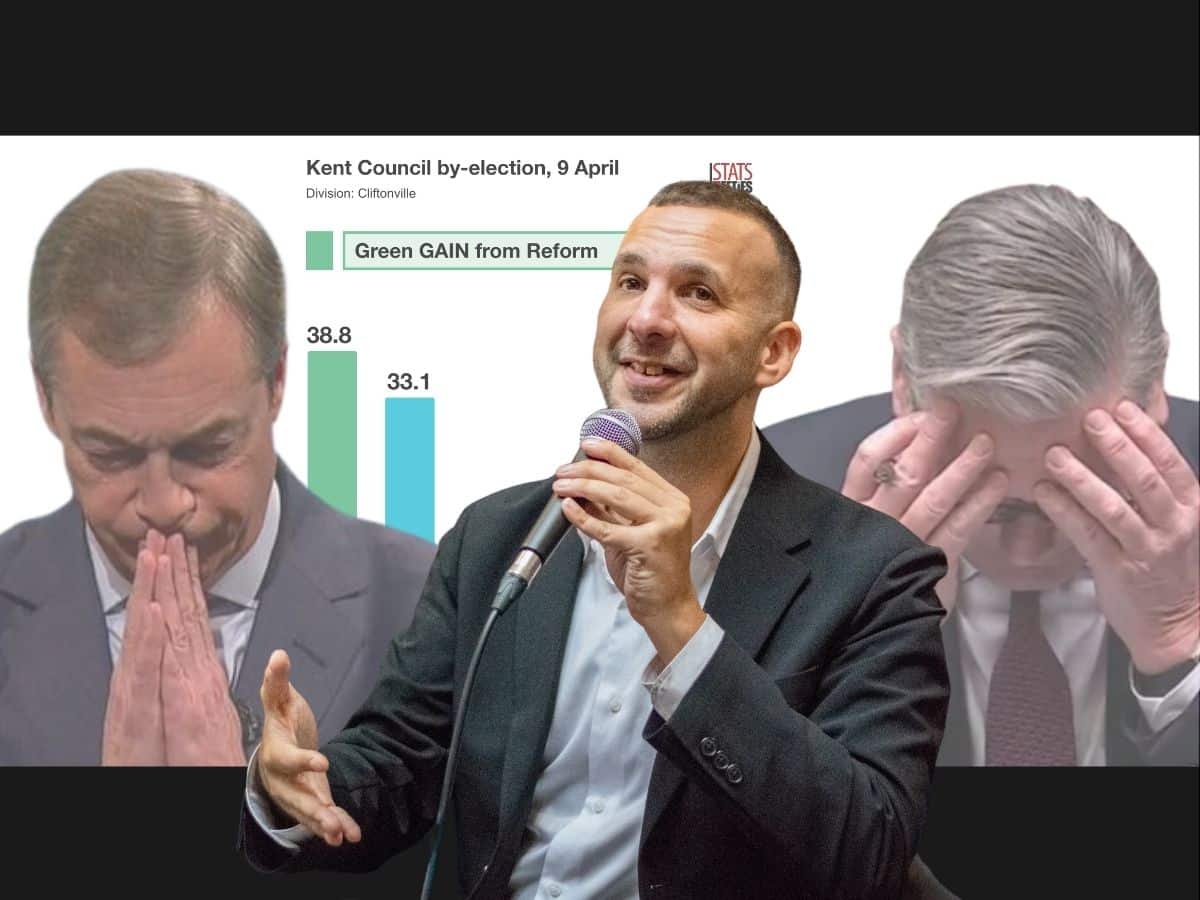
The problem is they keep proving themselves wrong — most recently in a Kent County Council by-election:
These people are genuinely addicted to lying.
Labour have deployed this “only Labour can beat Reform” line in 3 legislative by-elections, and…
➡️ Reform won Runcorn + Helsby
🏴 Plaid Cymru won Caerphilly
🟢 Greens won Gorton + DentonIt does not work! Why keep saying it?? pic.twitter.com/az7IKNun54
— Stats for Lefties 🍉🏳️⚧️ (@LeftieStats) April 10, 2026
Greens keep winning
The Greens secured an impressive victory over Reform in Kent — an area which had come to be seen as a Reform stronghold:
‼️Greens GAIN Kent council seat from Reform
🟢 Grn: 39% (+27)
➡️ Ref: 33% (-7)
🔵 Con: 15% (-4)
🔴 Lab: 10% (-12)
⚪️ Ind: 1% (-2)
🟠 Lib: 1% (-2)Ward: Cliftonville (+/- vs 2025 election) pic.twitter.com/JyzM7Gg3AB
— Stats for Lefties 🍉🏳️⚧️ (@LeftieStats) April 10, 2026
As it’s only been in Reform hands since May 2025, we guess it’s less of a ‘stronghold’ and more of a ‘limp-grip’ given that they’re already vacating their seats for the Greens.
In March this year, Labour List published the following:
Dame Emily Thornberry said the lesson from last time was that only Labour was in with a chance of beating Reform in Cliftonville.
She said:
“I’ve campaigned against Reform UK councils across the country, but this one in Kent is among the worst I’ve seen. They are hiking council tax when they said they wouldn’t, slashing vital services in Thanet, and the council leader was even caught screaming and swearing at her own colleagues.
“Labour came second here last time, so Cliftonville voters have a real chance to send Reform a message that Thanet won’t tolerate their public service cuts and shameless lies.”
In the end, Labour won fewer than half the votes that the Greens did. And if you look at how much vote share the Greens gained compared to how much everyone else lost, it looks like Zack Polanski’s party may be picking up votes from all of the other parties at this point.
In other words, if anyone should be arguing ‘only we can beat Reform‘, it’s the Greens. Except they shouldn’t say that; they should say ‘only the Greens are beating Reform‘, because that’s the reality we’re living in.
As Stats for Lefties added:
The problem with claiming “only Labour can beat Reform” over and over and over is voters have eyes. And whenever Labour goes up against Reform, they watch Labour eat shit. All they do is prove that they CAN’T beat Reform.
So voters think – maybe someone else can.
— Stats for Lefties 🍉🏳️⚧️ (@LeftieStats) April 10, 2026
People reacted to the victory as follows:
The Greens have won a Kent County Council by-election, called after Reform councillor Daniel Taylor was given a 12-month prison sentence after admitting to controlling or coercive behaviour towards his wife.
Green candidate Rob Yates won with nearly 39% of the vote.
— Mukhtar (@I_amMukhtar) April 10, 2026
Managed to say which party won but curiously left out which party the jailed councillor was from. https://t.co/rNdst2AlAf
— cez (@cezthesocialist) April 10, 2026
Reform’s disgrace
The Kent by-election occurred because an ex-Reform councillor was jailed for abusing his wife:
#Reform Councillor David Taylor JAILED.
“nasty and violent”.
“told his wife he would hunt her like prey and kill her, and that he would “put her in the boot and set fire to the car”.And STILL he was ‘vetted’ & ‘approved’ by #Reform as a candidate while this was all going on. pic.twitter.com/WhMox3ope4
— John O’Connell (@jdpoc) February 20, 2026
Kent is one of Reform’s key councils; it’s also the party’s most chaotic.
Infamously, Kent had to suspend four Reform councillors after a “chaotic meeting was leaked”. As Joe Glenton wrote for the Canary:
A spokesperson for the far-right party said they’d brought Reform UK into disrepute.
Which is quite a gallant argument given Reform UK didn’t have much repute to start with. Anyway, here’s a group of dysregulated middle-aged toddlers having an incredibly puerile row:
Kent Council also drew criticism for telling a local parish they couldn’t put Christmas lights up because they had Union Jacks on them (flags which went up as part of the flag mania which sweeped the UK in 2025).
Labour — Changes
Gone are the days when only Labour and the Tories were viewed as serious political entities. Now, voters don’t want to hear ‘only we can win‘; they want to know why a political party winning will benefit them.
Labour have no good answers on that front, which is why they can now only come third (at best!).
Featured image via Barold

Many people’s vitamin D levels do not fall within a healthy range, which can cause muscle weakness, fatigue, depression, bone pain and lower immune function. In fact, an estimated 60% of the world is vitamin D deficient and needs a supplement, Dr. Michael Holick, a professor of medicine, pharmacology, physiology & biophysics and molecular medicine at Boston University Chobanian & Avedisian School of Medicine, previously told HuffPost.
But if that alone isn’t enough to convince you to prioritise getting vitamin D, which you can do through foods like salmon, tuna, and milk, new research published in the journal Neurology this month may do the trick. The study suggests that people with high vitamin D levels in their 30s and 40s have lower dementia risk factors later in life.
The study investigates the potential impact of vitamin D levels in early midlife by examining the prevalence of tau protein and amyloid protein in the brain, “which are key hallmarks of Alzheimer’s disease,” Dr. Thomas M. Holland, physician-scientist and assistant professor at the Rush Institute for Healthy Aging at Rush University Medical Center in Chicago, told HuffPost via email. Holland is not affiliated with the study.
Researchers followed 793 people in their 30s and 40s with an average age of 39 over 16 years. Vitamin D levels were tested at the beginning of the study; those with levels below 30 nanograms per milliliter (ng/mL) were categorised as having low vitamin D; anything above was considered high.
After a follow-up at the end of the study, it was determined that participants in the high-vitamin D group were more likely to have lower tau levels in their brains.
“Researchers looked at two different types of scans of the brain called PET scans,” said Dr. David Gill, chief of the division of cognitive and behavioural neurology at the University of Rochester in New York. Gill is not affiliated with the study. “One looks at the amyloid protein [prevalence], and one looked at the tau protein [prevalence].”
Even though tau protein levels were lower in participants with high vitamin D, researchers found that those elevated levels did not impact levels of amyloid in the brain. This indicates someone with high vitamin D could still have elevated levels of amyloid protein, which, as mentioned above, is a characteristic of Alzheimer’s disease.
This study does have a “major limitation,” Dr. Jagan Pillai, a Cleveland Clinic neurologist and director of the Cleveland Alzheimer’s Disease Research Center, told HuffPost via email. Vitamin D levels were measured once at the beginning of the study “and after that PET scans were completed 15 or more years later,” said Pillai, who was not associated with the study..
“So, we don’t have any information in between,” Pillai added. It’s unknown if participants took supplements or followed a healthy lifestyle that helped them maintain healthy vitamin D levels, he noted. Because vitamin D levels were only measured once, it’s also unclear if someone shifted from having healthy levels to unhealthy levels (or the opposite) during the study’s time period.
While this study has solid data, it does not prove that vitamin D levels directly affect dementia risk, according to Gill. There are many studies on this topic, and they’re conflicting.
“Specifically, there’s been some studies to show that giving vitamin D might help improve memory a little bit, but those are also conflicting. There’s been all of this information out there without a firm understanding of whether there’s a real connection between low vitamin D and Alzheimer’s disease,” Gill said. “I don’t know this [study] answers that question, but it helps move us forward.”
So, does this mean having healthy vitamin D levels in your 30s and 40s will protect you from dementia? Not necessarily. But having healthy vitamin D levels can bolster many systems in your body, including the brain. And as research emerges about vitamin D and dementia risk, there are other changes you can make to take care of your cognition.

Anastasiia Voloshko via Getty Images
To lower your risk of dementia, there are certain rules you should follow in midlife and throughout your life.
Holland said the amyloid and tau brain proteins associated with dementia begin accumulating “15 to 20 years before the clinical symptoms of dementia or cognitive decline are detected.”
Anything we can do in midlife to support cognitive function and reduce the risk of dementia will “benefit us later in life,” Holland added. “We know that low vitamin D levels and other nutrient deficiencies are associated with neuroinflammation and potentially oxidative stress.” All of that can take a toll on your brain.
Throughout your life, you should work with your doctor to correct any vitamin deficiencies, whether that’s vitamin D, vitamin B12 or something else, according to Pillai.
Eating a nutrient-dense diet is also protective for the brain.
″For vitamin D specifically, adding in healthy protein sources, particularly fatty fish such as tuna, salmon, sardines and mackerel, can be beneficial,” Holland said.
“For overall brain health, incorporating foods such as dark leafy greens (i.e., kale, romaine lettuce, and spinach), berries (such as blueberries, strawberries, and blackberries), whole grains (like oatmeal, brown rice, and quinoa) and extra virgin olive oil is helpful, as these foods provide beneficial fatty acids and a wide range of supportive nutrients,” Holland continued.
Additionally, “we should be as physically active as possible,” Gill said.
This doesn’t mean signing up for a marathon, but can instead mean going for frequent walks in your neighbourhood.
“We should be doing things that challenge us mentally to keep ourselves mentally active,” Gill added.
For older folks, staying challenged can be tough — working is one of the easiest ways to stay mentally active, Gill said. For those who no longer work, taking a class, playing cards with friends, volunteering or joining a book club are all good options.
“Really, anything that you enjoy that engages your brain can be a good thing,” Gill said.
Socialising is also important.
“Being social is important for a number of reasons. We know the opposite, being lonely, is bad for our memory over time. And so being social is good for us because it keeps our brain active, but also avoids loneliness,” Gill said.
Finally, you should address any issues you have that could lead to dementia down the line.
“We should treat the medical problems that can increase the risk of Alzheimer’s disease,” said Gill, noting that “the things that increase the risk of heart disease tend to increase the risk of Alzheimer’s disease.” Diabetes, high blood pressure, smoking and high cholesterol are all issues that you should work with your doctor to treat, Gill said.

What happens when you put a half-soaked (allegedly) TV presenter in charge of the military? Well, Trump’s ‘secretary of war’ Pete Hegseth is doing his best to show us.
His latest nugget? Encouraging shipping companies to keep sailing through Iran’s Strait of Hormuz despite its re-closure because the US and Israel won’t stop slaughtering innocents. Because, y’know, Hormuz is safe. The only risk is getting hit by an Iranian missile.
You couldn’t make it up. Tragically for the world, you don’t need to:
Featured image via the Canary
On 9 April, Reform UK announced the winner of their ‘Free Energy Bill’ prize draw. As we noted at the time, it seemed to be an excuse for Reform to make life a little easier for a family who appeared to have it quite easy already:
Giving old wealthy people assistance while the rest of the UK suffers.
Classic Reform. https://t.co/GbbeelYWEb
— Canary (@TheCanaryUK) April 9, 2026
Since then, eagle-eyed investigators have noticed that this particular family have a history with Farage. Oh, and the police are looking into the raffle too. So all in all, things haven’t gone quite as well as they might have done.
Farage loyalists
Firstly, the prize-winning couple do seem to have a documented history of being around Farage. As political commentator Don McGowan noted (with help from the Yorkshire Lass account and Reform Party UK Exposed):
🗼WELL I NEVER🗼
Would you believe that Ray and June, who won the Reform UK energy bills prize, go back all the way to the Brexit Party with Farage?
Here they are with Farage, Widdecombe and Bull [a truly awful supernatural detective thriller].
What a coincidence [increasingly unlikely]
The point McGowan and others are making is that this longstanding history with Farage and his various political vehicles suggests these winners were likely hand picked by the party. In the same post, McGowan showed the following images which picture Ray, June, and Farage at the same event:
🗼WELL I NEVER🗼
Would you believe that Ray and June, who won the Reform UK energy bills prize, go back all the way to the Brexit Party with Farage?
Here they are with Farage, Widdecombe and Bull [a truly awful supernatural detective thriller].
What a coincidence [increasingly… pic.twitter.com/9VgIdB4wjP
— Don McGowan (@donmcgowan) April 10, 2026
McGowan also provided the following timeline:
<-> Ray and June Dibble are photographed at a Brexit Party rally in 2019 with Nigel Farage, Anne Widdecombe and David Bull.
<-> Ray and June nominate local councillor, Lee Moffitt as branch chair for Reform UK, Wigan.
<-> Ray and June win Nigel Farage’s energy bills competition.
<-> Additional info — Farage and Jenrick turn up at Ray and June’s house with a cheque for a VERY SPECIFIC amount of £1,758.
It’s almost as though the entire thing was orchestrated from the beginning.
What a surprise! The staunch Wigan branch members won.
It was pitched as a competition open to the general public in national press.
Reform will FIX it. pic.twitter.com/tXInAVkVes
— Reform Party UK Exposed 🇬🇧 (@reformexposed) April 10, 2026
Look, we’re going to be completely fair here. It seems reasonable to think that the sort of person who enters a Reform giveaway is almost certainly going to be the sort of person who likes and follows Farage. As such, the fact that the couple have been hanging around Nigel for years isn’t a smoking gun, as Reform themselves have argued:
Reform source says many of the party’s 270,000 members entered the competition.
“Is it a shock a member won? No.” https://t.co/ZNOJjihueC
— Kevin Schofield (@KevinASchofield) April 10, 2026
Back to being less nice, Reform have certainly given no reason to believe that they didn’t fix it.
And really, it didn’t take a genius to foresee that the draw would end up looking like a fix, even if they didn’t purposefully orchestrate one.
Of course your members would enter the competition, Nigel.
Of course people would call foul when one of them won.
Of course the inevitable outcry would overshadow any benefits from this little gimmick.
Some called the “competition” a cynical PR stunt.
Others said it was deflection from Farage’s Iran war flip-flop.
A few spotted the data harvesting.
Turns out it was far simpler: just a giveaway to their own Reform party members.
June from Wigan, congrats on ‘winning’!! https://t.co/FKvvpCOqHW pic.twitter.com/XDhCg04Uzl
— Luke Charters MP (@lukejcr) April 10, 2026
And as Mr Ethical noted, the way things have shaken out could in fact be criminal:
Since it would appear that Reform knew the winners of their energy scam, they have almost certainly committed a criminal offence. I don’t suppose anything will happen though. pic.twitter.com/xspFLWXuJj
— Mr Ethical 🚩 (@nw_nicholas) April 10, 2026
This is why political parties don’t usually do giveaways.
That and because they’re not daytime TV game shows.
It’s not surprising that Reform would ape light television, anyway, given that they’ve already stolen Jimmy Saville’s catchphrase.
GMP’s Reform investigation
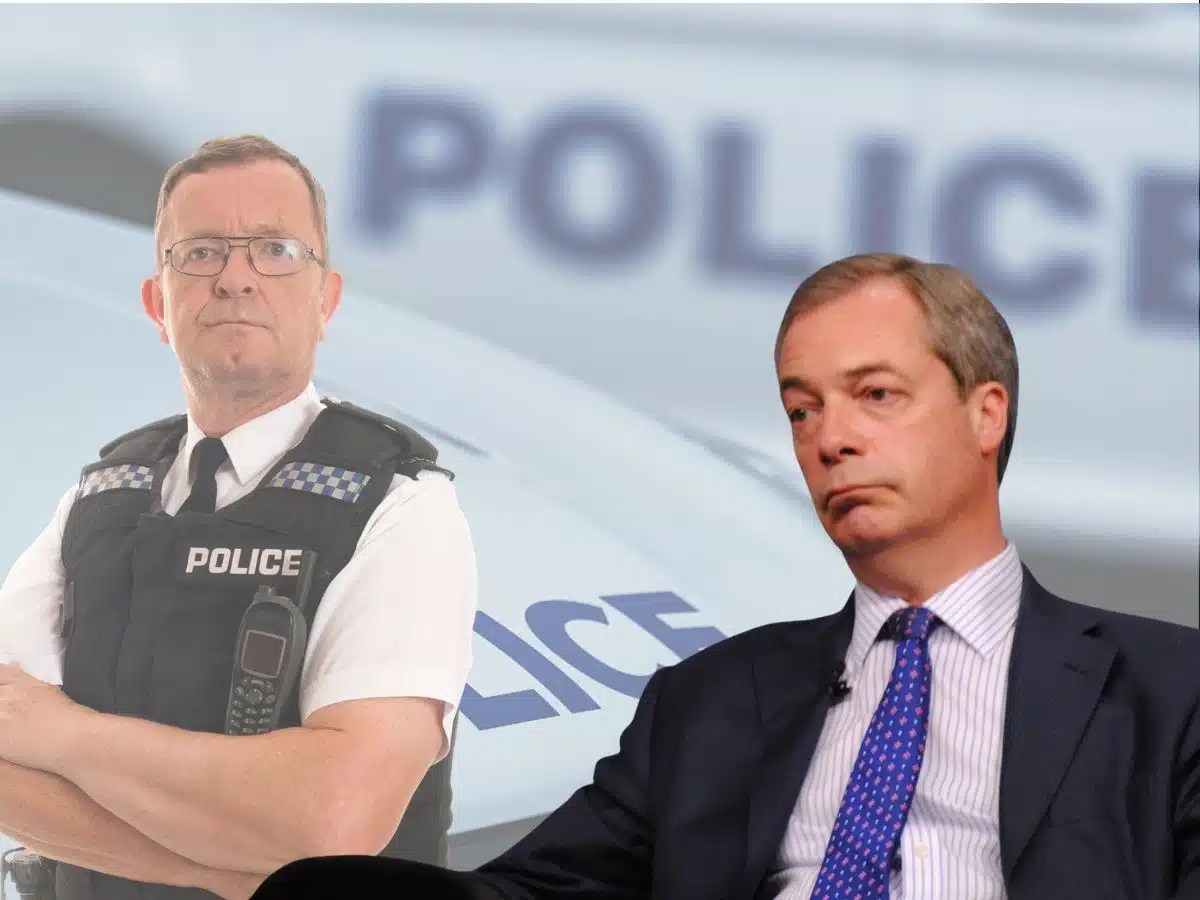
As reported by the Telegraph, the police are now looking into the raffle. Greater Manchester Police have said:
We have received a report and are currently reviewing the matter.
It’s currently unclear what potential offences the police are looking into. Reform, meanwhile, have said they’re not worried, having previously solicited legal advice.
In all likelihood, nothing will come of the above, because UK electoral law is a joke. Clearly, however, political parties giving out cash prizes is not a sign of functioning democracy.
Featured image via Chatham House (Flickr)

Yet another right-wing, friends-of-Israel paedophile has been convicted — the latest in the seemingly endless production line of Zionist Labour child rapists and abusers. Former Dudley councillor — and “attack dog” for arch-Zionist Luke Akehurst’s ‘Labour First’ pressure group — Adrian Hughes has pleaded guilty to three charges of grooming children for sex.
Hughes, who now lives in Preston, admitted communicating with a 13-year-old girl about meeting her to touch her and “teach her about sex” in May 2025. Also in the same month, he admitted trying to persuade a 13-year-old girl to have sex. Finally, he confessed to sending a picture of himself nude to an even younger girl and asking her to meet and have sex.
During his time as a Dudley councillor, Hughes sat on the council’s Children’s Services Select Committee, the Children and Young Person’s Scrutiny Committee and the Children’s Corporate Parenting Board.
Hughes has locked his X account, but traces of his own support for Israel are still identifiable. In 2023, he described comments from Keir Starmer supporting Israel’s ‘right to defend itself’ by killing Palestinians as “reassuring”.
Broxtowe Alliance councillors and former Labour national executive member Mish Rahman pointed out financial support Hughes received from right-wing, pro-Israel MPs:
Labour Right MPs funded his campaign 👇https://t.co/z1Y8wNuP7A
— Broxtowe Alliance Councillors (@broxtoweindys) April 10, 2026
Spot the Labour First MPs who supported this cretin and used him as an attack dog – I can see three of themhttps://t.co/VCgCVsVaGy
— Mish Rahman (@mish_rahman) April 10, 2026
Two MPs with definite links to Labour First among Hughes’s donors include Gurinder Singh Josan, Akehurst’s right-hand man in Labour First and Russia hawk and “Labour First candidate” Phil Brickell. Also featuring is Josh Newbury, whose Cannock Chase seat is in Labour First’s West Midlands heartland.
The prevalence of paedophiles among the Labour right was not lost on respondents:
this way above the numbers of paedos you’d expect in a random cross section of people
— Diogenes 🇵🇸 (@Northern_cynic2) April 10, 2026
Hughes will be sentenced on 24 April.
Zionist Labour paedos — a long and growing list
Some commenters wondered whether paedophilia is an entry requirement for the pro-Israel Labour right. Not without reason.
Former Hackney councillor and Labour First organiser Thomas Dewey received 150 hours of ‘community service’ for possession of sadistic child rape images. Sam Gould, a former aide to Starmer’s health secretary Wes Streeting, received a suspended sentence for flashing a child and also an adult woman.
Israel fanatic and former Labour councillor Liron Velleman was convicted of sex offences with what he thought was a 13-year-old girl but turned out to be a police officer conducting a paedophile sting. Like many of his child-predator faction, he escaped jail. Some alleged Zionist paedophiles seem to escape consequences altogether. Former government minister Ivor Caplin is no longer even on bail after being caught — on camera — turning up to meet what he thought was a child for sex.
Some are accused but still awaiting trial. Starmeroid MP Dan Norris has been arrested — twice — for sex offences including rape and child-sex offences, including abduction. Former councillor Conor McGrath has been charged with possessing child-rape images after a ten-month police operation.
And the perversion is rife in the genocidal colony they all support, too. Israel is sheltering thousands of paedophiles and refusing extradition requests from their home countries’ police.
Extradition requests
Israeli cyber-spy boss Tom Alexandrovich was allowed to escape to Israel after meetings with US federal agencies. He had been caught in a paedophile sting. Israeli minister Orit Strook, her husband and son were accused by Strook’s daughter Shoshana of repeatedly raping her as a child and filming it. Shoshana Strook was found dead — ‘suicide’ — weeks after warning her followers that if she was found dead it would not be suicide — and days after hiring lawyers. Reports say that Israeli police are not pursuing the case against the family.
Featured image via the Canary
Taking place on Thursday 7 May, the 2026 local elections are fast approaching. If you’re an outsider party looking to do well, this is the moment when you want the maximum momentum. As such, it’s good news for the Green Party that they just hit a brand new milestone:
Victory rally in Margate this evening *and* an announcement!@TheGreenParty now has 225,000 members!
That’s an extra 25,000 since Hannah Spencer won last month and 2000 new members in the last 10 days.
Join the movement!https://t.co/0qbagSvIYp pic.twitter.com/naMXs1NysP
— Zack Polanski (@ZackPolanski) April 10, 2026
Reform, meanwhile, are embroiling themselves in an endless stream of scandals while sliding down the polls.
Mass membership
The Green Party’s membership has skyrocketed since Zack Polanski took over. As James Wright reported for us in October 2025:
Green Party membership has skyrocketed to 115,000 – a jump of 50,000 members since their recent leadership election. Meanwhile, the latest figures show Labour is losing a member around every ten minutes. In other words, they’ve been dropping 152 members a day. With that direction, it’s no wonder Labour is not releasing updated membership figures.
At that point, the party membership had nearly doubled. Since then, it’s almost doubled again. It would be a massive upset if it doubled once more from here, but we can’t rule anything out at this point.
Reform have also built a substantial membership, as the BBC reported in December 2025:
Reform UK claims it is now the largest political party in Britain, following reports Labour has lost more members.
According to the Times newspaper, external, internal figures show Labour’s membership has fallen below 250,000.
Reform said it had more than 268,000 paid-up members, which would mean it has overtaken Labour to become the biggest party by membership in the UK.
Labour refused to comment on the accuracy of the membership figures in the Times, with a spokesperson saying they would be published in the party’s annual report.
If the above figures remain accurate, the Greens could potentially become the largest party in the UK this year. This is especially true if they do well in the local elections, and they subsequently enjoy a post-ballot bounce like what they saw after Hannah Spencer became the MP for Gorton & Denton.
Green Party — On the up
As we reported, the Greens have pulled ahead of Reform in some polls:
‼️BREAKING | Greens surge into LEAD (1st!!)
🟢 Grn: 21.4% (+2.1)
➡️ Ref: 20.9% (-1.4)
🔵 Con: 20.5% (+0.2)
🔴 Lab: 17.0% (-0.4)
🟠 Lib: 9.2% (-1.9)Poll: @LordAPolls, 26-30 Mar (+/- vs 19-23 Feb) pic.twitter.com/oDVw4cDaFC
— Stats for Lefties 🍉🏳️⚧️ (@LeftieStats) April 5, 2026
Lord Ashcroft is far from the most well-respected pollster, but other polls are showing that the Greens have overtaken Labour and the Tories while Reform stagnate:
‼️POLL | Reform lead by 5%
➡️ Ref: 25% (-1)
🟢 Grn: 20% (=)
🔵 Con: 17% (-1)
🔴 Lab: 16% (+1)
🟠 Lib: 11% (+1)— Seats —
➡️ Ref: 331
🟢 Grn: 115
🟠 Lib: 78
🟡 SNP: 48
🔵 Con: 37
🔴 Lab: 11Poll: @findoutnowUK, 8 April (+/- vs 1 April) pic.twitter.com/Ir8NcrnNwM
— Stats for Lefties 🍉🏳️⚧️ (@LeftieStats) April 9, 2026
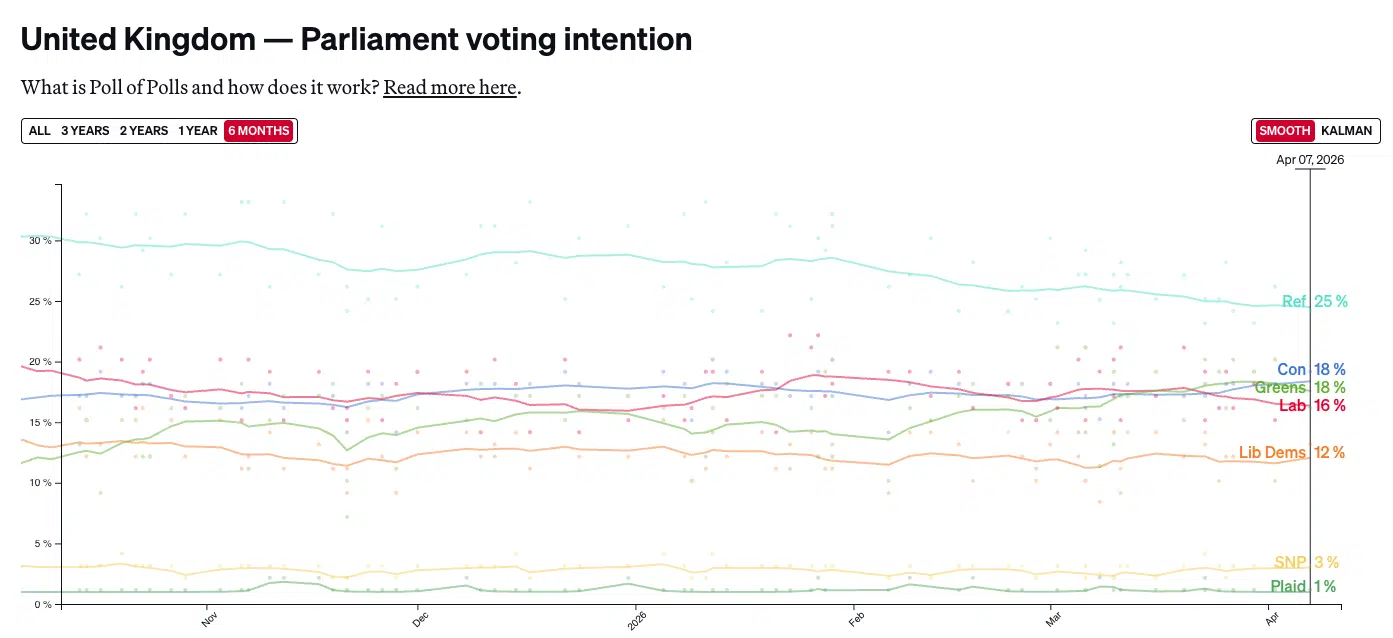
Individual polls might not tell us much, but looking at all the polls over time gives an idea of which way the wind is blowing. On the topic of momentum, Politico’s poll of polls shows that the Greens are on up the up while Reform have squandered their lead (the sort of lead which could have won them a majority):

Results
Regardless of momentum, Reform could still outperform the other parties in the local elections — Green Party included. This is what Elections Etc predicted in March:
‼️NEW | Projected seat change in local elections:
➡️ Ref +2,260
🟢 Grn +450
🟠 Lib +200
🔵 Con -1,010
🔴 Lab -1,900(Source: Stephen Fisher / @ElectionsEtc) pic.twitter.com/pkPixJ3Ont
— Stats for Lefties 🍉🏳️⚧️ (@LeftieStats) March 30, 2026
We do know that polling has often failed to reflect Green support — most notably in the Gorton & Denton by-election, where the party outperformed all expectations (encouraging another 25,000 people to become members).
We could see similar in the local elections, but even if we don’t, the more councils Reform run, the more the endless scandals will increase, because these people are terrible at being in power. This is dreadful for the areas that will suffer, of course, which is why we should all do what we can now to keep Reform out of power.
Featured image via Barold

Maple Leafs’ Anthony Stolarz, Brandon Carlo, Dakota Joshua done for season

Reform plan to move Bolton back into Lancashire sparks row

Opera: AI-Driven Advertising Prospects – Upside Potential And Rich Dividend Yields


-

 Business6 days ago
Three Gulf funds agree to back Paramount’s $81 billion takeover of Warner, WSJ reports
-

 Sports7 days ago
India men’s 4x400m and mixed 4x100m relay teams register big progress | Other Sports News
-

 Politics22 hours ago
US brings back mandatory military draft registration
-

 Fashion22 hours ago
Weekend Open Thread: Veronica Beard
-

 Tech4 days ago
How Long Can You Drive With Expired Registration? What Florida Law Says
-

 Business6 days ago
No Jackpot Winner, Prize to Climb to $231 Million
-

 Fashion5 days ago
Massimo Dutti Offers Inspiration for Your Summer Mood Board
-
 Sports23 hours ago
Man United discover Nico Schlotterbeck transfer fee as defender reaches Dortmund agreement
-

 Fashion4 days ago
Let’s Discuss: DEI in 2026
-

 Crypto World3 days ago
Bitcoin recovers as US and Iran Agree a Ceasefire Deal
-

 Crypto World2 days ago
Canary Capital Files SEC Registration for PEPE ETF
-

 Business7 days ago
Akebia Therapeutics, Inc. (AKBA) Discusses Pipeline Progress and Strategic Focus on Kidney Disease Treatments at R&D Day – Slideshow
-

 Business19 hours ago
Tesla Model Y Tops China Auto Sales in March 2026 With 39,827 Registrations, Beating Cheaper EVs and Gas Cars
-

 Business1 day ago
OpenAI Halts Stargate UK Data Centre Project Over Energy Costs and Copyright Row
-

 Tech5 days ago
Haier is betting big that your next TV purchase will be one of these
-

 Tech5 days ago
Gamer Restores the Original PlayStation Portal From Two Decades Ago
-

 Politics1 day ago
Malcolm In The Middle OG Turned Down ‘Buckets Of Money’ To Appear In Reboot
-

 Tech5 days ago
The Xiaomi 17 Ultra has some impressive add-ons that make snapping photos really fun
-

 Tech5 days ago
Samsung just gave up on its own Messages app
-

 Tech5 days ago
Save $130 on the Samsung Galaxy Watch 8 Classic: rotating bezel, sleep coaching, and running coach for $369
You must be logged in to post a comment Login