
Sports
How they train: Patrick Dever

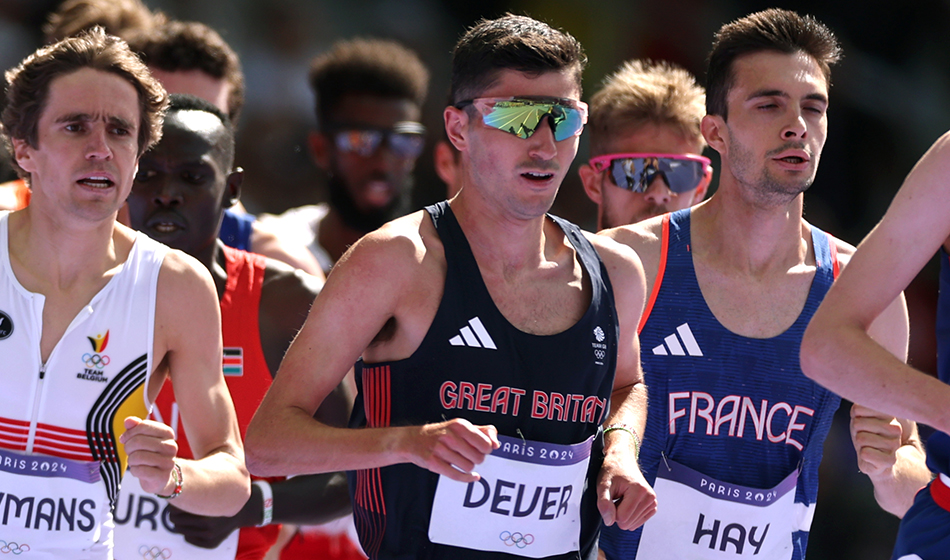
We speak to the Olympian who took some hugely encouraging first steps in his marathon career with fourth place in New York.
Age: 29; Coaches: Alistair and Amy Cragg
Patrick Dever made a conscious effort to prioritise consistency over perfection in 2025 and it paid off with a fourth-place finish at the New York City Marathon, his time of 2:08:58 good enough for 10th on the UK all-time list.
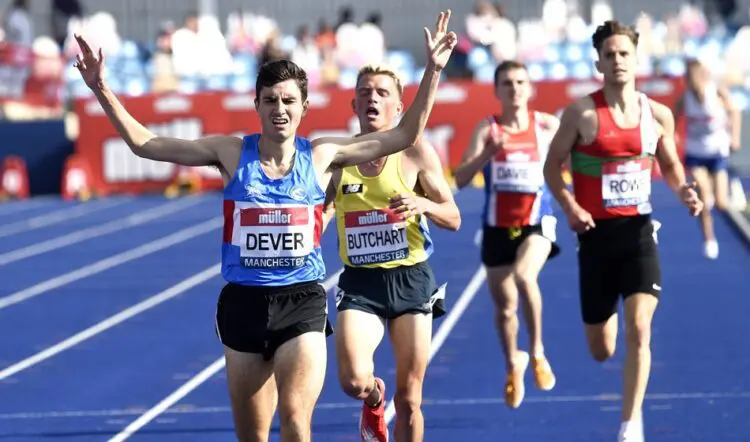
An experienced international athlete – in 2022 he competed for Great Britain and Northern Ireland at the World Championships (10,000m) and European Championships (5000m), as well as England at the Commonwealth Games (5000m), while in 2024 he donned the British vest again at the European Championships (10,000m) and Olympic Games (5000m) – he was frustrated that he hadn’t delivered against his own high expectations at such high profile events.
“One of the biggest lessons I learned [in 2024] was not to get too high or low after a particular race or workout,” said the Preston Harrier at the time. “I think just trying to keep a bit more level-headed is going to allow me to really peak when it matters and not be burned out emotionally.”
As it happened, marathon training – when the decision eventually came to step up in distance – lent itself perfectly to such a rational approach.
While Dever modestly claims his build-up was “pretty good”, the main thing, he says, was that he didn’t have to miss anything. “I think that was why I did so well in New York,” he says. “It probably didn’t all go as well as it could have done, but it’s looking at the body of work over a longer time period. I’d definitely trained as well as I ever had done in the nine to 10 months prior to that, so it’s not just the sessions that you do close to the race, it’s consistency over a longer period.”
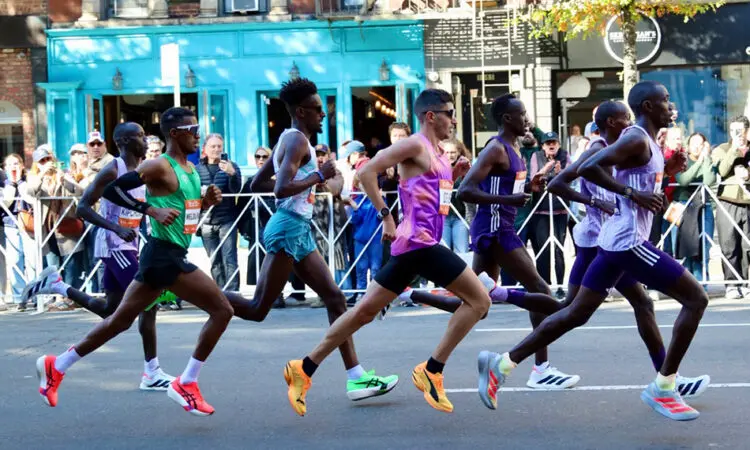
Dever, a member of the PUMA Elite Running Team coached by Alistair and Amy Cragg in North Carolina, USA, had obvious marathon potential; he ran 60:11 at Houston Half Marathon in January (fourth on the UK all-time list), then 60:19 at the New York City Half Marathon in March. Once marathon training was underway, his consistency continued with a 60:17 at the Copenhagen Half Marathon in September.
By the time he took on pacing duties at the Chicago Marathon in October – he went through halfway in 60:16, using the opportunity to practice running at pace while grabbing drinks – he knew he was ready.
“Alistair had been wanting me to do a marathon for quite a while,” says the 29-year-old who admits that opting to debut in New York, a notoriously tough course, removed his potentially destructive fixation with time. “I guess the way we looked at it was that if it [the marathon] was a possibility for the ’28 Olympics it would be better to do it sooner rather than later, because I couldn’t expect to come in and run an Olympic qualifying time on the first go. I really wanted to respect the event and make sure that I gave myself enough time to prepare.
“The race itself was pretty incredible. Growing up in the sport, I’d always thought that being in a stadium on a track was the biggest stage – and I guess it still is, in a way – but when you’re around a major marathon it’s such a spectacle in the city. I can remember the number of spectators out on the course…at some points the noise was deafening. I definitely knew it would be big but, when I was in it, it was pretty cool.”
A typical training week (at altitude in Park City, Utah, October 2025)
Dever’s New York City Marathon build was over 12 weeks.
Easy runs were to feel rather than pace (with evening runs usually at a slower pace than those in the morning), while the Friday session – described as a “turnover session” with the aim of cleaning out the legs – was introduced during the second half of the build and was rarely run quicker than 5km pace.
Gym workouts were done three times per week after the morning run on non-session days (including one optional session during the marathon block). “We did a lot of body weight stuff, general conditioning and mobility,” he says; “although once we were into the thick of marathon training it was more about getting done what we needed to do and getting back home as quickly as possible to focus on recovery.”
- Monday: (am) 75min; (pm) 35min
- Tuesday: (am) 75min; (pm) 35min
- Wednesday: (am) track session – for example, 5 x (2km-3min recovery-1km-2min recovery); (pm) 35min
- Thursday: (am) 75min
- Friday: (am) turnover session such as 16x400m off 60sec on the track or 2x(8x300m) on a Park City bike path (alternating downhill/uphill); (pm) 35min
- Saturday: (am) 60min
- Sunday: (am) this would be either a long run for time (“The max we did was 2:30,” says Dever. “It didn’t matter about pace, although we’d naturally get quicker towards the end.”) or a long run workout such as 2-2.5-mile warm-up – 3-mile tempo – 10 miles (alternating between marathon pace and 45sec slower than marathon pace) – 3-mile tempo (standing recovery of about 3min between) – 2-mile (max) cool down, or 2.5 miles warm-up – 5 x 4 miles at marathon pace off 3min – 2 miles cool down. (“I actually did 4 x 4 miles then 2 miles of the fifth set that day, so that was an example of where things didn’t go exactly go to plan!”)
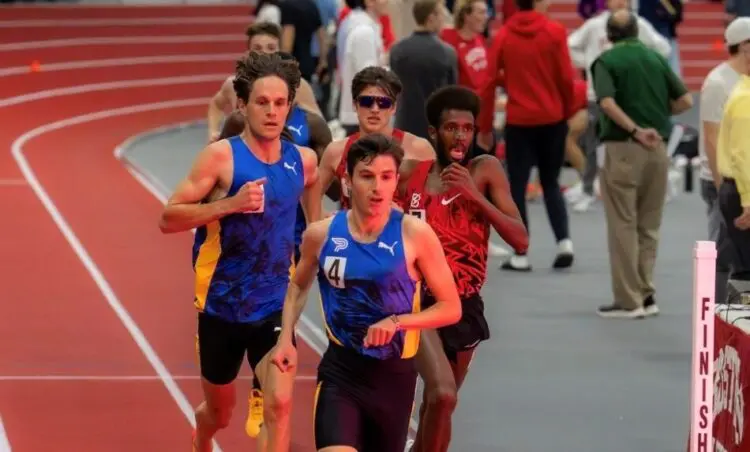
Favourite session: “Probably the turnover day. Because I’m not that far removed from the track it’s still nice to feel somewhat quick, and I definitely think as a marathon runner it’s still important to train that stuff. The way some of the Kenyan guys were racing in New York, it was a little bit fartlek-y – at some points we were running 65 seconds 400m pace for a short period of time – so it’s definitely good to do that track stuff.”
Least favourite session: “The long run for time. Even in the marathon you’re finished in a bit over two hours…so having to keep going to 2:30, it was just getting used to running for such a long period of time.”



