“A number of cordons are in place at the junctions with Culnady Road and Well Lane.
Advertisement
“Please avoid the area.”
Want to see more of the stories you love from Belfast Live?Making us your preferred source on Googlemeans you’ll get more of our exclusives, top stories and must-read content straight away. To add Belfast Live as a preferred source, simplyclick here
Angel Brow and Beauty, on Front Street in St Cuthbert’s Walk shopping centre, was broken into on Thursday (February 19) around 5.35pm.
Owner Pam Caur, 45, from Gateshead, opened the salon nearly eight years ago in July 2018, and the business specialises in brow threading, lashes, waxing and other beauty treatments.
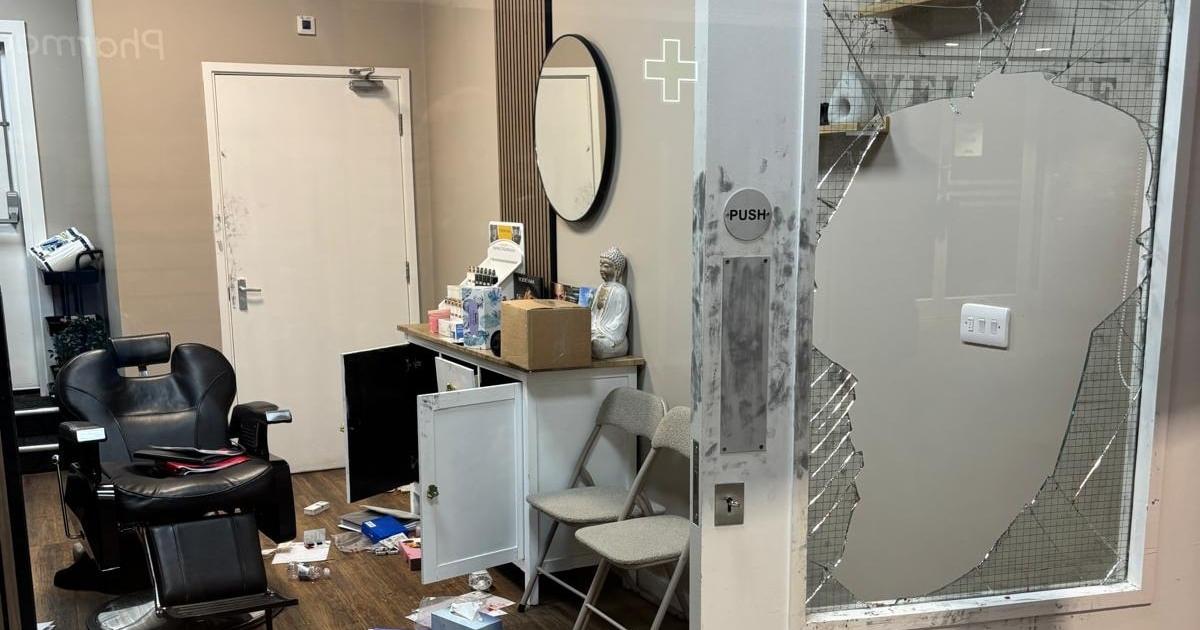
The thieves stole £600 worth of stock as well as causing what could be thousands in damage (Image: ANGEL BROW & BEAUTY)
On Thursday, Pam had closed the shop at 4.30pm to pick her daughter up from school when she received a call around 5.30pm telling her she needed to return because the salon had been broken into.
The sky was still light, and people were nearby when the break-in happened, and the police arrived shortly afterwards.
Advertisement
According to Pam, the thieves smashed the door window to gain entry, stole around £600 worth of perfume and caused further damage inside the shop, something the business owner estimates could cost thousands of pounds.
They also left blood at the scene, believed to have come from a cut sustained during the break-in, and the CCTV footage has been handed to police.
Police came to the scene and took CCTV footage as well as forensics (Image: ANGEL BROW & BEAUTY)
Pam said: “It is a shock because it was in broad daylight with people around you, just never expect it. You just think… why?
“We don’t leave any money on sight because we do card, but it is the stock about £600 worth of perfume and the cost of replacing the door and glass, which is going to cost us. They also made a right mess and damaged some other things inside too.
Advertisement
“We are a small independent business and could really do without it.
“Thursday night, when we were let back in at 11pm after police did their thing, my husband and I stayed all night to clear it all up, and I just cried all night. I was so upset and devastated.
“On Friday morning, I then got up and decided I would go in because if I didn’t go, then I don’t think I would have gone back because it is really scary knowing people did that to your business.
“People have offered to send money, but I don’t want that. I just need their support, love and kindness to help get us through.
Advertisement
Angel Brow and Beauty was broken into this week in Chester-le-Street (Image: ANGEL BROW & BEAUTY)
Angel Brow and Beauty was broken into this week in Chester-le-Street (Image: ANGEL BROW & BEAUTY)
“We have been here nearly eight years now, and customers are like my family, and all the messages of support and love have really helped because it has been really tough and just really, really hard.”
Pam said the cost of replacing the smashed door and glass will add to the financial blow for the small independent business in what is a hard time for businesses anyway.
The Northern Echo has contacted Durham Constabulary for a statement on the incident.
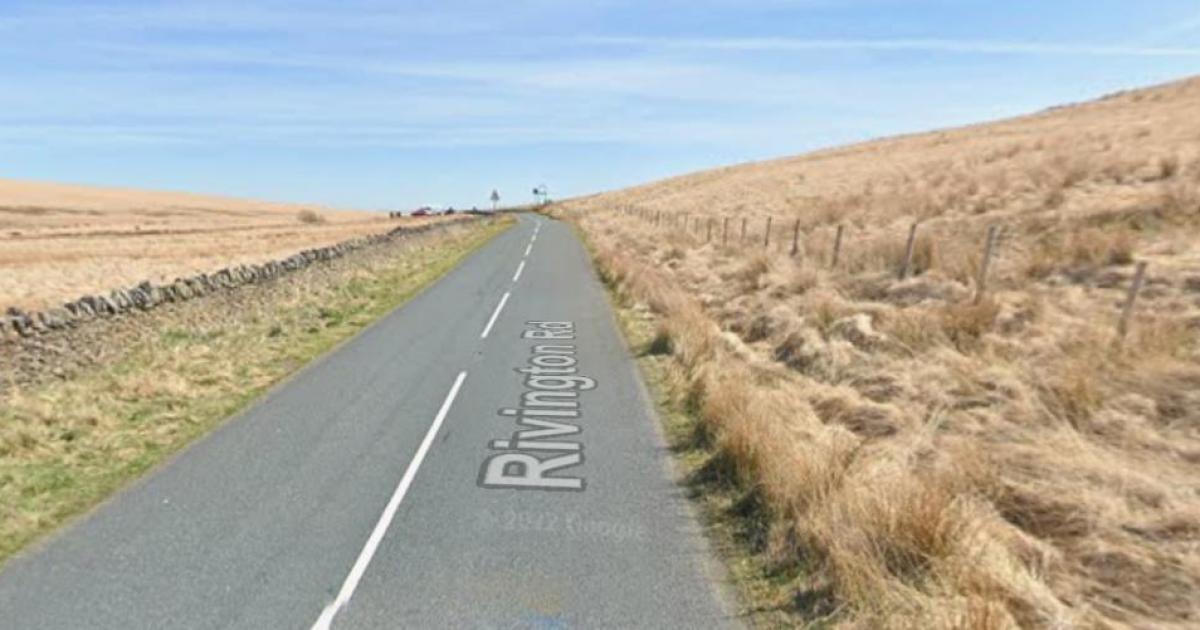
Rivington Road in Belmont was shut on Saturday, February 14, due to icy conditions and is still considered unsafe for drivers.
The road reopened on Friday, February 20, at around 8am.
Blackburn with Darwen Roads said it will remain closed “until further notice” due to “water running onto the road from the moors and freezing regularly”. It was deemed “unsafe for drivers”.
Advertisement
A spokesperson for Blackburn with Darwen Roads said: “Earlier this week, we told you Rivington Road in Belmont was closed due to ice.
“From Friday, February 20, at 8am, the road will reopen.
“Please share with those who use the route. Thank you for your patience.”
So Trump and tariffs – what’s going on? Let’s start with the latest development and work backwards.
The president has announced a tariff of 15% globally.
Now you might be thinking “didn’t he set it at 10% on Friday?” Yes he did. But now he’s raised it to 15%.
The latest pronouncement came – on Truth Social, of course – just before lunchtime on Saturday.
Advertisement
Here’s the full post and we’ve highlighted the key bits:
What does all this mean? It’s a good question and one which governments globally are asking themselves, not for the first time.
The president is using a new statute – a new avenue effectively – to levy duties on foreign goods temporarily, because the old statute, which he’d been using since Liberation Day last April, was deemed illegal.
That happened on Friday when the Supreme Court (the highest court in the land) ruled by a majority of six to three that the president’s methods to impose tariffs were unconstitutional.
Advertisement
Six of the justices ruled the tariffs exceed the powers given tothe presidentby Congress under a 1977 law providing him the authority to regulate commerce during national emergencies created by foreign threats.
Image: The Supreme Court ruled the president’s methods to impose tariffs were unconstitutional. Pic: AP
So the president and his team are looking for new ways – new statutes – to recoup some of his losses (should he have to repay the tariffs – the Supreme Court, unhelpfully, did not pass judgment on this) and to replace his tariff system.
Remember this vital point: so much of Trump’s policies, his power, his ability to call the world to heel has been based on his ability to strike any country he wants with crippling tariffs.
So, his immediate response to the Supreme Court decision was to use a different mechanism – Section 122 of the Trade Act of 1974 to be precise – to impose 10% global tariffs.
He had the option to impose 15%, not 10%, and on Saturday, just a day after setting it at 10, he raised it to 15.
That can only last 150 days. That’s why he says in his social media post that he will look for new ways of levying duties.
As ever with all this, nothing is clear-cut. There are exemptions, including on agricultural products, steel and cars, but there is confusion over this as governments seek clarity.
Advertisement
It’s a whole world of mess and uncertainty, again, for the whole world.
John Buckley recently told a congregation at Galway Cathedral he wrote to Alexander Pacteau after a conversation with prison bosses.
22:13, 21 Feb 2026Updated 22:49, 21 Feb 2026
The dad of nurse Karen Buckley has forgiven the evil killer who murdered his daughter. John Buckley, 72, reached out to murderer Alexander Pacteau in jail over the Christmas period and sent him a letter, with a prayer card and crucifix.
Pacteau was sentenced to at least 23 years in prison for the murder after he encountered Karen, 24, outside the Sanctuary nightclub in Glasgow before attacking her with a spanner and strangling her to death in his car in April 2015. The Irish student’s body was discovered in a plastic barrel soaked in highly corrosive chemical at High Craigton farm in East Dunbartonshire.
Speaking at Galway Cathedral earlier this month, her dad revealed the pain his family endured after his daughter’s tragic death but said they took enormous strength from their Catholic faith. The Galway Advertiser reports Mr Buckley told the congregation how in the past he has included the killer in his prayers and even asked for a Mass to be said for him.
Advertisement
The dad reached out to the Scottish Prison Service and was encouraged to write a letter to Pacteau. He said: “I told him I forgive him and that if we turn back to Jesus, no matter how bad or what harm we’ve done, or what sins we’ve committed, if we turn back to Jesus and we’re sorry, he will forgive us.
“I gave him a little pamphlet of the Divine Mercy [prayer] and a little cross from Medugorje.” Mr Buckley has not had a response from the killer but hopes it will help him find God.
He said: “I know what it’s like being in a very dark place. I also know what it’s like for Jesus to lead me out of it. There must be many, many people out there in a very dark place but maybe not have been given the help and support that our family had been given.”
Following his conviction for the murder, the cop who led the police investigation said Pacteau appeared measured and calm and even as evidence mounted up he continued to lie to police. Detective Superintendent Jim Kerr said: “He’s a well-educated individual. He was intelligent and measured in his response to us from the word go.
“He enjoyed the game if you like, in my opinion. He was a witness, he was being interviewed and he gave an account of himself. He didn’t tell us where Karen Buckley was. Although he could have.”
Detectives were eventually led to Karen’s body on High Craigton farm near Milngavie, Dunbartonshire, after a tip-off Det Supt Kerr continued: “He eventually started to tell us after consulting with his solicitor a different version of events.
“But by that time we had already recovered Karen’s body and identified the farm. If he wanted to, he could’ve told us earlier than that. His demeanour, for me, just remained the same. He was collected, measured in his responses.
“I think at the end of the day, he decided he would have try and come up with a different version of events to try and cover himself. But the amount of evidence that was obtained during the course of that inquiry could only have meant one outcome for him.”
Get more Daily Record exclusives by signing up for free to Google’s preferred sources. Click HERE.
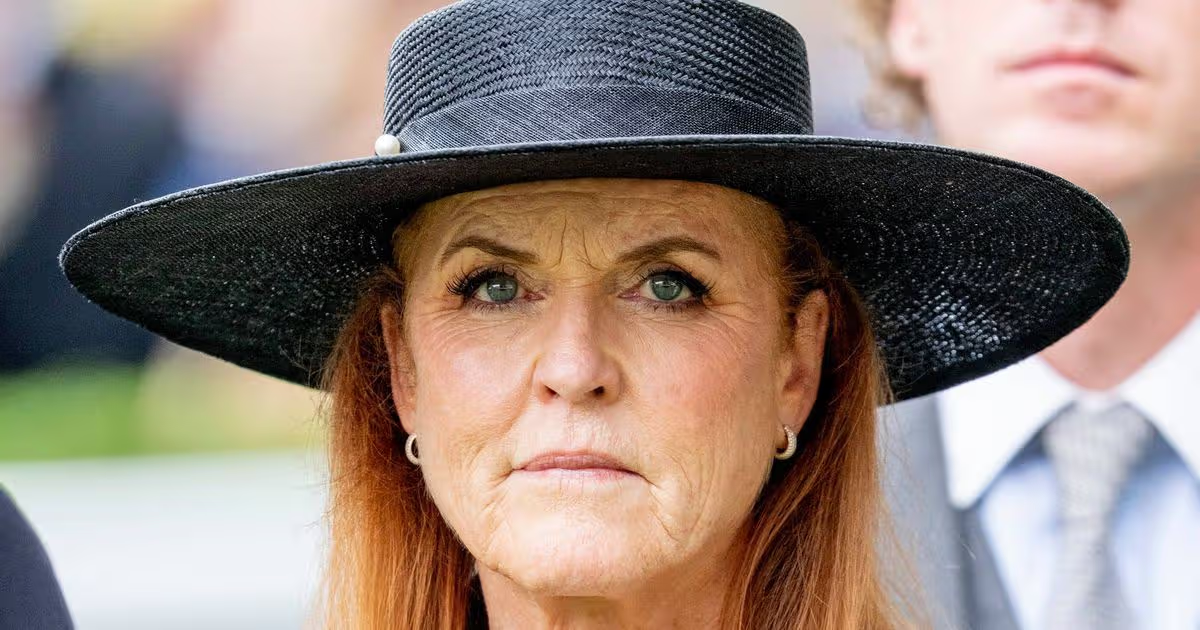
Sarah Ferguson has reportedly resurfaced after quite some time out of the public eye, as she keeps her distance from the growing scandal surrounding her former husband.
Sarah Ferguson has reportedly resurfaced after months of being absent from the public eye, as turmoil continues to surround her former husband.
Advertisement
The 66-year-old has not been seen publicly for weeks following the release of fresh Department of Justice files containing correspondence with convicted paedophile and sex trafficker Jeffrey Epstein. Although inclusion in the files does not indicate wrongdoing, the revelations have caused renewed embarrassment for the Royal Family.
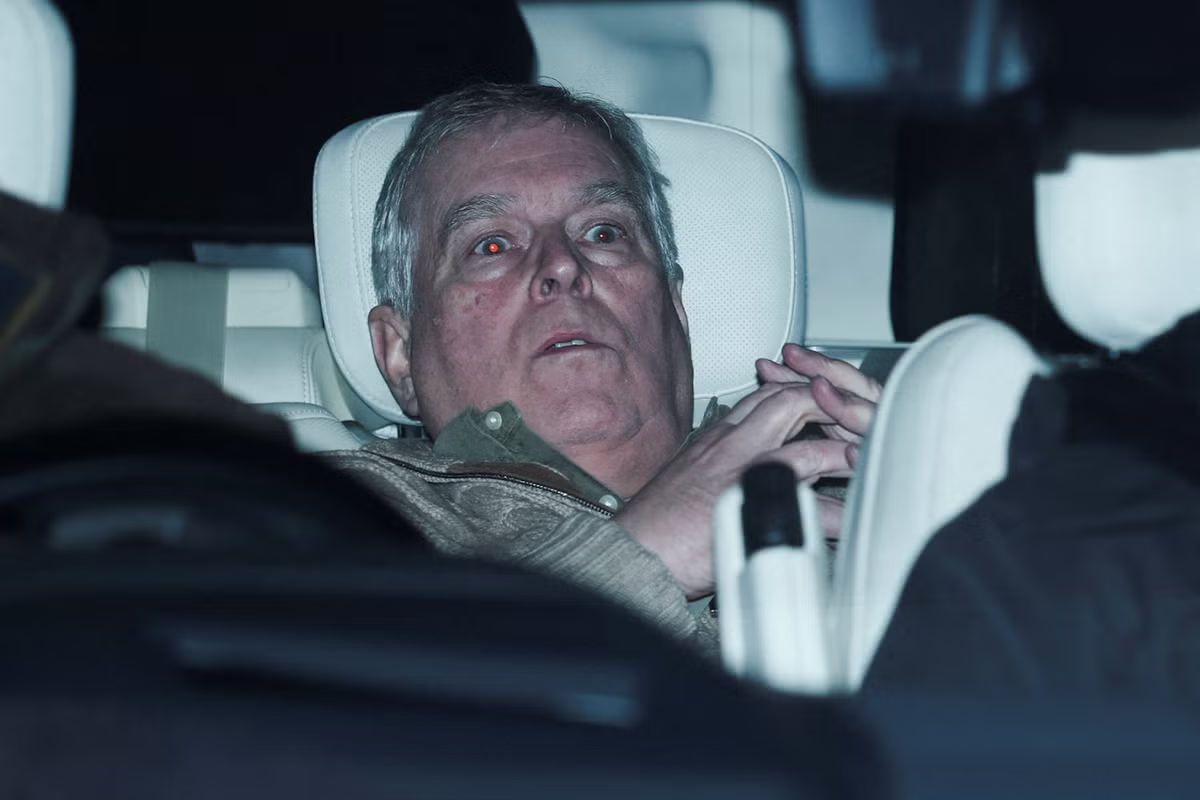
The situation has escalated further following the arrest of the former prince on suspicion of misconduct in public office.
Ensure our latest headlines always appear at the top of your Google Search by making us a Preferred Source. Click here to activate or add us as Preferred Source.
Ms Ferguson is now said to have been seen for the first time outside the UK, keeping her distance from the growing scandal surrounding Andrew, with whom she had lived until recently.
Advertisement
It has been reported she left the country as her ex-husband became further entangled in the controversy. She had not appeared publicly since the Christening of her granddaughter Athena Mapelli Mozzi and is said to have been staying in Zurich, Switzerland.
Ms Ferguson’s absence comes as documents revealed correspondence with Epstein in multiple documents releases from the US Department of Justice, showing that she had spoken with the paedophile on friendly terms while he served time for heinous crimes.
Among the revelations involving the royal was that she had repeatedly emailed with Epstein while he was serving a sentence for child sex offences. Epstein was released from prison on July 22, 2009, having served 13 months of an 18-month sentence for soliciting an underage girl for sex.
Advertisement
In an email included in the files dated to June 14, 2009, just under a week before his release, a contact identified as “Sarah” emails him about one of the then Duchess of York’s business initiatives.
The contact asks: “I need to ask you how I start The Mothers Army company so it can be commercial, how do I do that? Can you help me?” In a follow-up on June 26, she signs off an email with “love you”, writing: “I am alive… yes I did go to the first lady and she loved the Mothers Army. I am going to call you later Love you”.
Her association culminated in the closure of her charitable foundation, Sarah’s Trust, which was “dedicated to supporting frontline, grassroots work to address the humanitarian and environmental crisis, the hunger crisis and issues perpetuating cycles of extreme poverty”.
Advertisement
It was shuttered “for the foreseeable future”, a spokesperson announced, just days after new details of her relationship with Epstein emerged. The spokesperson said the decision had followed “some months” of discussion.
They said it had also followed agreement between Ms Ferguson and her board of trustees, saying: “Our chair Sarah Ferguson and the board of trustees have agreed that with regret the charity will shortly close for the foreseeable future,” a spokesman said on Monday evening. This has been under discussion and in train for some months.”
When Manchester City won at Anfield, Pep Guardiola declared that all his side could do was breathe down the neck of Arsenal. And if the Premier League leaders are feeling ever more uncomfortable, it is because they can sense their pursuers are ever closer.
The margin is two points now, giving Arsenal all the more reason to rue the two they dropped at Molineux, all the more pressure in Sunday’s North London derby. City are acquiring the momentum Arsenal seem to have mislaid.
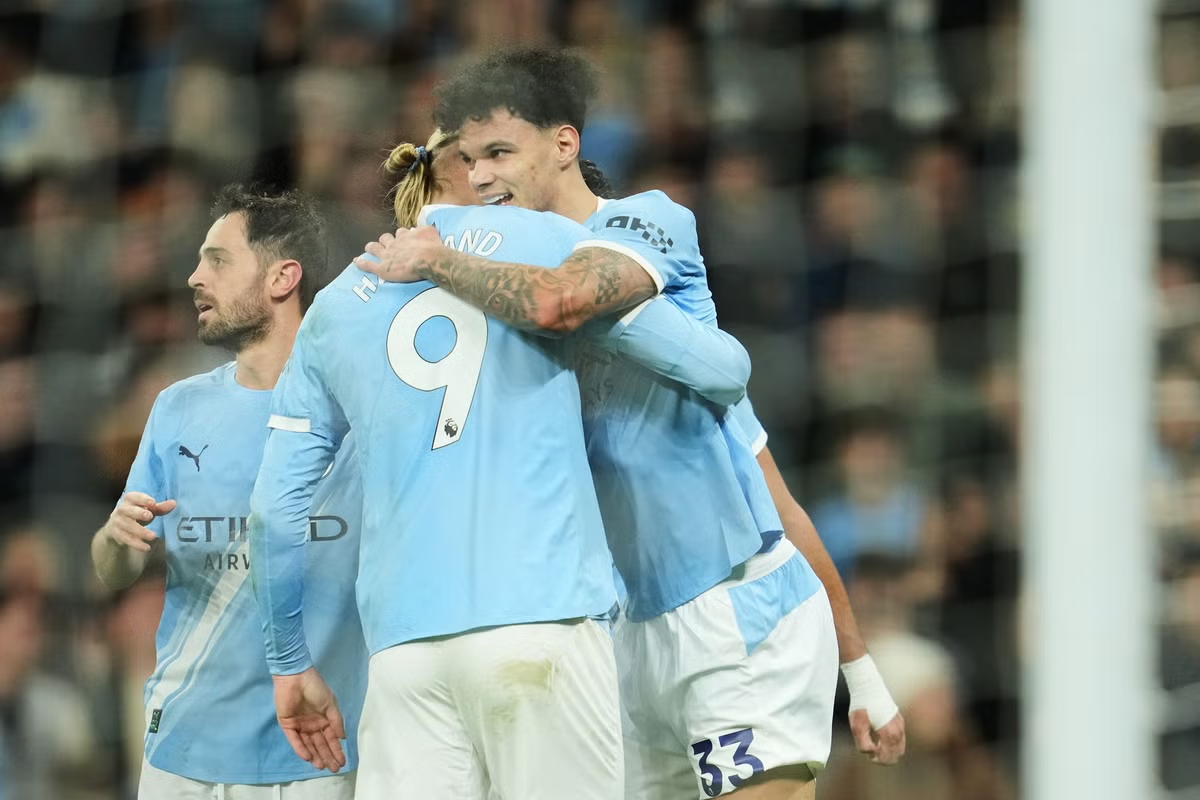
And, after Arsenal capitulated at Wolves, City had a player who grasped the opportunity. They have spent around £430m in the last three transfer windows but their catalyst cost nothing. Three midfielders Guardiola has signed in the last 14 months began on the bench, in Nico Gonzalez, Tijjani Reijnders and Rayan Cherki, while the homegrown Nico O’Reilly started and delivered his first Premier League brace. Strange as it sounds, he is level for goals in 2026 with Erling Haaland. This was the sort of display that, if City become champions, may be bracketed with some of Yaya Toure’s goalscoring displays in past glories.
The life of O’Reilly may yet involve a trip to the World Cup. The life of Guardiola can involve reinventing and reimagining footballers. O’Reilly, a No 10 in his younger days, became a talismanic makeshift left-back. Now he has been recast as a marauding midfielder. “He played full-back, holding midfielder, he can play now in his position,” reflected Guardiola. “What a player. He makes an incredible step. Nico give us in the middle that physicality that we need.”
Advertisement
Meanwhile, Haaland and Omar Marmoush, the split strikers and supposed scorers, became O’Reilly’s suppliers, each registering an assist. The Mancunian’s double showed different sides to his game; for the first, he arrowed in a shot from 18 yards after powering forward to meet Marmoush’s pass; the Egyptian may have been selected as a specialist for such a fixture, given his record of scoring against Newcastle, but instead helped make a goal.
O’Reilly’s second felt the kind Haaland should be scoring. Instead, the Norwegian lofted the cross to the far post and the local lad met it with a towering header. “The assist from Erling was unbelievable,” added Guardiola. Haaland will almost certainly end the season with his third Premier League Golden Boot but now only Bruno Fernandes has more assists in the current campaign.
Nico O’Reilly scored the opening goal of the game for Man City (PA)
Antoine Semenyo and Marmoush might have got a third for City while Nick Pope made a 91st-minute double save from Haaland and Phil Foden. None struck, which meant Gianluigi Donnarumma’s terrific 94th-minute stop was needed to deny Harvey Barnes and secure the points.
Advertisement
Yet, amid the tension, there was a predictability to the outcome. City’s fifth straight win in all competitions was a third over Newcastle in 2026. There may be a fourth when they meet in the FA Cup in two weeks. As Newcastle’s last point at the Etihad came in 2006, an extraordinarily unsuccessful run was extended. Nevertheless, they threatened to end it.
At least a 17th straight reverse brought a first top-flight goal here since 2018 and in Eddie Howe’s reign. Lewis Hall squeezed a shot through a crowded box, aided by a deflection off Rodri. It was a landmark goal for the left-back, too; his first in 21 months.
Lewis Hall equalised in the 22nd minute for Newcastle (Action Images via Reuters)
When Newcastle pulled level, City restored their lead inside five minutes. That was an immediate riposte and City’s swift start had suggested they were intent on making a point. They played at a blistering pace. Newcastle struggled in the first half and rallied thereafter. “You have to take into account the game in midweek and the travel,” said Howe, who fielded 10 of the side who started against Qarabag in Azerbaijan three days earlier. “It was a good effort by the lads physically.”
Advertisement
Howe rued the defensive errors for the two goals. Newcastle might have scored two of their own. Dan Burn headed in Sandro Tonali’s free kick and had begun celebrating before he was flagged. It seemed he was pushed into an offside position by Ruben Dias, though Howe did not complain.
Newcastle had another threat, even when under the cosh: Anthony Gordon’s pace on the break rendered him a menace. He drew a fine save from Donnarumma after motoring past Marc Guehi. When he was accelerating beyond Dias, the defender tugged him back, at a cost of a caution. He went off at half-time, the faster Abdukodir Khusanov replacing him. Gordon was less of a threat thereafter. Guardiola’s change worked.
O’Reilly restored the lead five minutes later (AP)
So City left the field to cheers. They entered it to a guard of honour from their 1976 League Cup winners, who beat Newcastle in the final and secured the club’s last major trophy for 35 years. It felt as if it should have been the other way around, the current players forming the guard for their predecessors.
Advertisement
This new-look City side have not won much together. “Seventy per cent of the players have never been in that situation,” noted Guardiola. But perhaps they appear better equipped to cope with it than Arsenal.
These two teams are getting to know each other quite well. The money-bags pair – both rich thanks to Gulf trillions – meet for the fourth time this season, with an FA Cup encounter on the horizon to boot. Both sides need the points – Man City to keep the pressure on jittery Arsenal at the top of the table, Newcastle as they go in search of European football, although a top-four finish is highly unlikely.
So far City have enjoyed the familiarity more than the North-East club, winning both of the recent Carabao Cup semi-final legs. But fresh off the back of their 6-1 Champions League thrashing of Qarabag this week, Eddie Howe wants his players to take that attacking intent into this match at the Etihad – especially four-goal hero Anthony Gordon.
“There were really big positives to take from that incident. Moments like that get blown out of all proportion, it was a very minor issue,” the Newcastle manager said.
Advertisement
“It was great from Anthony that he’s got that strong enough resolve that he wants to score in every moment and you’d want that from any player – so I’ve got no issue with him.
“I’ve got no issue with Kieran [Trippier] also, trying to think of the team and trying to lead in his way and be the aspiring leader that he is in every moment. I actually thought it was a real positive on all sides.
Newcastle sit down in 10th place and have lost on their past 12 visits to the Etihad but Pep Guardiola is expecting a stern test based on what he saw in midweek.
“I saw the last game against Qarabag in the Champions League and it was exceptional,” the City manager said.
Advertisement
“It was 5-0 at half-time, it could have been nine. The rhythm and the intensity and the pace they are playing is the Newcastle I remember when they started this project. Every team can drop points to everyone. It happened to all the teams.”
Stay here for all the team news, pre-match build-up and action, with kick-off set for 8pm.
Surprise package: Arijit Singh, one of India’s biggest playback singers,was the second most popular musician of the year on YouTube in London. Singh, who released a duet with Ed Sheeran last year, racked up more than 40 million views in the capital, where he headlined a show at Tottenham Hotspur stadium in September.
He added: “Really, what do William and Kate do? What do their generation do with the crown, with all its soft power, its affairs of state, it’s beginning to feel a little bit like a European monarchy.”The pressure on William to communicate what the royal family is going to be over the next 50 years falls squarely on his shoulders.
Tributes have been paid to a Belfast bar owner who passed away peacefully surrounded by his family.
Advertisement
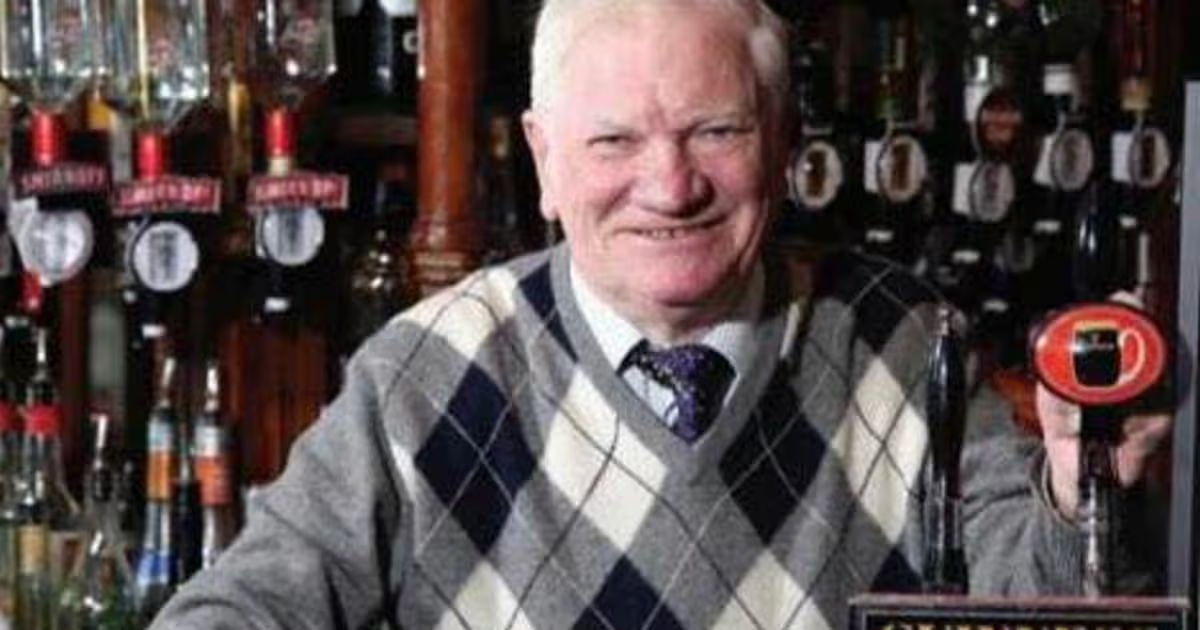
Kevin Cassidy owned The Hatfield House in South Belfast and spent over four decades working behind the bar in the popular pub.
According to The Hatfield’s website, Kevin came to Belfast from his native Draperstown when he was 18 years old and went on to work and manage many of the city’s bars before buying the pub in 1976.
His death notice remembers him as a “much-loved dad”, “loving Granda” and “beloved husband”.
Advertisement
The Hatfield House took to social media to share the news with their customers. The pub is now run by his son’s Kieran, Stephen and John – with Kieran starting to work when he was just 12 so he could spend as much time as possible with his father.
The tribute reads: “Heroes Come and Go, But Legends are Forever.
“We are beyond Heartbroken that our dad and leader Kevin passed away peacefully surrounded by his loving family on the 20th of February 2026.
“Team Hat forever”.
Advertisement
Many took to the comments to share their stories of Kevin, with one describing him as “a fixture of Belfast”.
It said: “A true legend of the bar game across many eras.
“Mr Cassidy carried himself as a gentleman and always set an example to those around. Absolutely respected and loved.
Advertisement
“To the family I am utterly sorry for your loss. A large hole is left with Kevin’s passing. But carry on as he would’ve wanted. Rest well Kevin there will never be another.”
Another read: “It is with the heaviest of hearts and the deepest pride that we say goodbye to one of our own.
“From the green hills of Cavanreagh, Sixtowns, Ballinascreen, to the bustling heart of Belfast, Kevin Cassidy carried the spirit of our community with him everywhere he went.
“We watched with immense pride as the young man from our parish took a chance 49 years ago, a chance that would build a legendary home from home for so many.
Advertisement
“The Hatfield House wasn’t just a pub in the city; it was a little piece of us, a place where the craic was always mighty and the welcome was always warm.
“We remember Kevin not just as the legendary Boss, but as the boy from Cavanreagh. We shared the same country roads, and were shaped by the same strong community. In his smile, we saw the familiar face of home. In his success, we celebrated our own.
“While the city of Belfast and the wider world mourn a legend, here in the Sixtowns, we mourn a native son. Our hills seem a little quieter today knowing he’s no longer with us.”