

Video
Bitcoin Bear Market Resistance Band


In January, we outlined a late-cycle restrictive regime and leaned cautious on risk. Since then, BTC has declined materially and leadership has narrowed. The February Macro Risk Memo expands the framework beyond crypto into broader macro.
Now live: https://www.benjamincowen.com/reports/macro-risk-memo-feb-2026
Into The Cryptoverse Premium (Use code ITC50 for 50% off your first month!)
For inquiries:
https://www.benjamincowen.com/
Into The Cryptoverse Newsletter:
https://newsletter.intothecryptoverse.com/
LIFETIME OPTION:
Alternative Option:
https://www.patreon.com/intothecryptoverse
Merch:
https://store.intothecryptoverse.com/
Disclaimer: The information presented within this video is NOT financial advice.
Telegram: https://t.me/intocryptoverse
Twitter: https://twitter.com/intocryptoverse
TikTok: tiktok.com/@benjamincowencrypto
Instagram: https://www.instagram.com/bjcowen/
Discord: https://discord.gg/UGwc6eR
Facebook: https://www.facebook.com/groups/intothecryptoverse
Reddit: https://www.reddit.com/r/intothecryptoverse/
Website: https://intothecryptoverse.com/
source

The unemployment rate remained steady at 4.1 per cent as 17,800 new jobs were created in January, putting more pressure on the RBA to raise rates.
The ASX rallied to just shy of a record close, supported by a batch of strong results and energy producers being boosted by a spike in oil prices, driven by renewed tensions in the Middle East.
Daniel Ziffer explains.
Subscribe: http://ab.co/1svxLVE
Read more here: https://www.abc.net.au/news/2026-02-19/asx-markets-business-news-live-updates/106361544
ABC NEWS provides around the clock coverage of news events as they break in Australia and abroad. It’s news when you want it, from Australia’s most trusted news organisation.
For more from ABC NEWS, click here: https://ab.co/2kxYCZY
Watch more ABC NEWS content ad-free on ABC iview: https://ab.co/2OB7Mk1
Go deeper on our ABC NEWS In-depth channel: https://ab.co/2lNeBn2
Like ABC NEWS on Facebook: http://facebook.com/abcnews.au
Follow ABC NEWS on Instagram: http://instagram.com/abcnews_au
Note: In most cases, our captions are auto-generated.
#ABCNEWS #ABCNEWSAustralia
source
The tentacles of Epstein’s billionaire paedophile ring crossed continents, age, political persuasion and profession. That much is all clear from the files. But what we are still piecing together is how Epstein made his millions in the first place. Was it endowed? Stolen? Invested? Or blackmail?
This Friday, Jon and Emily speak to American journalist, Anand Giridharadas, about the ‘Epstein class’ and how it was allowed to flourish. And ask whether it still exists?
#epsteinfiles #epsteinclub #epsteinclass #uspolitics #ukpolitics #princeandrew #andrewmountbattenwindsor #jeffreyepstein #donaldtrump #Podcast #UKPodcast #PoliticsPodcast #News #Politics #NewsAgents #EmilyMaitlis #JonSopel #LewisGoodall
Download The News Agents with Emily Maitlis, Jon Sopel and Lewis Goodall from 5PM every weekday on Global Player: https://www.globalplayer.com/podcasts/42KuVj/
Subscribe here: https://www.youtube.com/@thenewsagents
The News Agents website: https://www.thenewsagents.co.uk/
The News Agents is a Global Player Original podcast.
————————————————————————————-
Connect with us on the Socials!
Bluesky: https://bsky.app/profile/newsagents.bsky.social
Instagram: https://www.instagram.com/thenewsagents/
TikTok: https://www.tiktok.com/@thenewsagents
Facebook: https://www.facebook.com/thenewsagentsofficial
Twitter: https://x.com/TheNewsAgents
Shop our merch: https://store.global.com/collections/the-news-agents?utm_source=YouTube&utm_medium=TNA
source

I travelled to cologne with a friend saw a unique way of making money!
#travel #lifeingermany #studyabroad #educationingermany #indianvlogger #foryou
source

Stop leaving yourself vulnerable to data breaches and brokers. Go to my sponsor https://aura.com/hammer to get a 14-day free trial and see if any of your data has been exposed
My partner Aura just launched their new “Are you smarter than a scammer?” quiz. Take the quiz and see if you’re as savvy as you think: https://bit.ly/aurasts
▶ Only the PRO gooners know what’s going on in my dating life tea, and I spill all the beans in todays post show: https://www.youtube.com/channel/UCLe_q9axMaeTbjN0hy1Z9xA/join
▶ ▶ Download my budgeting app today: https://calebhammer.com/app – don’t overcomplicate this crap! All you need is an automated and SIMPLE budget. This comes with live CFP sessions, weekly classes, an online community, automatic account connections, my budget-friendly cookbooks, and exclusive discounts on my products Check it out 🙂
Download the CFO’s guide to AI and Machine Learning for FREE at https://netsuite.com/HAMMER
Unlock better refinancing options with Money.com! Click https://money.com/caleb-mortgage-purchase to see if you’re eligible for lower payments, shorting your term, or getting cash out of your mortgage.
Paid endorsement. This message is sponsored by Money.com, which receives compensation from its marketing partners for some of the products and services featured. Eligibility requirements apply and offers may be subject to change without notice. Learn more about how Money.com makes money.
▶▶▶ Download my budgeting app today: https://calebhammer.com/app
▶ Watch this episode’s *POST* *SHOW* + get *MORE* Financial Audit here: https://www.youtube.com/channel/UCLe_q9axMaeTbjN0hy1Z9xA/join
▶Come to my live show in Austin on Feb 22nd: https://www.calebhammer.com/live
▶EDUCATION:
1) Bundle my budgeting, debt + investing program for *15%* *off* : https://calebhammer.com/classpack/
2) The best budgeting program online: https://calebhammer.com/budget
3) Get my investing class and I’ll give you a $100 moomoo cash reward: https://calebhammer.com/investing
4) Win with GOOD debt and get out of BAD debt correctly, learn in my debt program: https://calebhammer.com/formula
5) Get your own free Hammer Financial Score: https://www.calebhammer.com
_______________________
▶RESOURCES
1) Webull description content
*I’VE MOVED MY INVESTMENTS TO WEBULL* do the same and transfer to my investing app of choice here: https://www.webull.com/k/Caleb and you get: *Cash bonus of $200 – $30,000* depending on initial funding amount, up to 8.1% APY, and up to 3.5% IRA Match.
20 Checking & Savings: Get up to 3.75% APY, pay no account fees, and get your paycheck early when you sign up and set up direct deposits. Terms apply: https://clickurl.ca/caleb-chime
3) Get $20 from Acorns for free: sign up to get your bonus https://acorns.com/caleb
4) CourseCareers: Land a high-paying job with no experience or degree by going through an affordable online course: https://coursecareers.com/a/calebhammer
5) The credit building debit card: First 100,000 people to sign up for Fizz with code: HAMMER10 get $10: https://www.joinfizz.com/caleb (paid ad)
6) Advising: Book your free strategy session https://dmnmny.co/caleb to work with Adrianna or any of the other CFPs at Domain Money today!
7) Helium Mobile: save a ton on your phone bill, sign up and get 30 days of FREE trial when using promo code CALEB https://hellohelium.com/
8) Online security: Protect your online privacy and security NOW and for free by following my link Aura: https://aura.com/hammer
9) Therapy: Make SonderMind your mental health home in 2025. Sign up at: https://pages.sondermind.com/caleb/
10) Build you own stan store: https://www.stan.store/?ref=CalebHammer
_______________________
▶OTHER CHANNELS:
1) Your Week In Money: https://www.youtube.com/@CalebHammerLive
2) Financial Audit Follow-Ups: https://www.youtube.com/@calebhammerclips
_______________________
Chapters:
00:00 Intro
00:49 Jobs & Income
05:58 cash flow lol
12:33 its always the seperated finances..
17:49 stick to woodcutting buddy
24:31 NOTHINGS CHANGED
33:45 she had no idea
45:35 why was this so complicated
54:54 theyre doubling down..
01:01:35 KACHING BABY
01:08:52 lol
01:21:54 budget time!
01:25:27 Hammer Financial Score
_______________________
▶EXTRA
1) My website: https://calebhammer.com
2) My socials: https://stan.store/calebhammer
3) Want to be a guest on Financial Audit? We film weekdays in our studio in Austin, Texas (in person only)! To apply, visit: http://calebhammer.com/apply
Any questions? Email casting@calebhammer.com
_______________________
▶Sponsorship and business inquiries: business@calebhammer.com
source

🎯 Make Free Predictions on Crypto, Sports, Politics & More on *ClashPicks* ► https://www.clashpicks.com/
🐤 Follow ClashPicks’ X ► https://x.com/ClashPicks
**Exchange Partners**
🟩Bitunix Exchange ► *$100,000 Deposit Bonus* ► https://bit.ly/3Tmp1Hq
🟦BTCC Exchange ► *10% Deposit Bonus* ► https://bit.ly/4kk20Qa
**Crypto Pulse**
🟧CryptoPulse Trading Discord ► https://discord.com/invite/georgeplaysclash
🐤Follow CryptoPulse’s X For Trade Setups ► https://x.com/CryptoPulse_CRU
**Clash**
🖥️Check Out *Clash’s Website* ► https://georgeplaysclashroyale.com/
💜Join *Clash Discord* ► https://discord.com/invite/georgeplaysclash
🕹️Join *Clash’s Weekly Tournaments* ► https://georgeplaysclashroyale.com/tournament
📱GeorgePlaysClashRoyale YouTube ► https://www.youtube.com/@Georgeplaysclashroyale
📱GeorgePlaysClashRoyale TikTok ► http://tiktok.com/@georgeplaysclashroyale
🐤GeorgePlaysClashRoyale (For Clash) ► https://x.com/GeorgePlayClash
✅Buy $Clash Here ► https://georgeplaysclashroyale.com/buy
✅Clash CA: 6nR8wBnfsmXfcdDr1hovJKjvFQxNSidN6XFyfAFZpump
0:00 Intro
0:45 Market Overview
2:10 Economic Data
2:55 Kevin Warsh
4:05 Iran
5:10 Crypto Market Bill
7:40 JD Vance
9:45 Strategy
11:45 El Salvador
13:50 Coinbase Premium
15:20 BTC Buying Opportunity
17:30 EMA 200
19:40 Tom Lee
22:50 Q&A
🔴Full Disclaimer: This video and its contents are for informational purposes only and do not constitute an offer to sell or trade, a solicitation to buy, or recommendation for any security, cryptocurrency, or related product, nor does it constitute an offer to provide investment advice or other related services by CryptosRUs. CryptosRus may have a financial investment with the cryptocurrencies discussed in this video. In preparing this video, no individual financial or investment needs of the viewer have been taken into account nor is any financial or investment advice being offered. Any views expressed in this video were prepared based upon the information available at the time such views were written. Changed or additional information could cause such views to change.
source
Video
4 SPIRITS THAT STOP YOUR FINANCIAL BLESSING #hindichristian #drarvindephraim #financialbreakthrough

4 Spiritual Forces Blocking Your Financial Growth
1. Why Is Money Always Tight? (Biblical Truth)
2. 4 Spiritual Reasons You’re Not Growing Financially
3. The Hidden Financial Block in Believers
4. Why Some Christians Stay Broke
5. Fear, Laziness, Greed — Which One Is Blocking You?
6. Money Problem or Spiritual Pattern?
7. Financial Delay Has a Root
8. Seek First — Or Stay Stuck
• Financial struggle is not always economic — sometimes it’s spiritual alignment.
• Fear, laziness, greed, and dishonor quietly block growth.
• Matthew 6:33 is a financial principle.
• Prosperity follows order.
• Fix the root — and the flow changes.
financial breakthrough bible
why is my money blocked
christian teaching on finances
matthew 6:33 financial meaning
malachi 3:8 explanation
2 timothy 1:7 fear and money
hindi christian finance sermon
dr arvind ephraim finance
#FinancialBreakthrough
#KingdomFinance
#Matthew633
#ChristianIndia
#FaithAndFinance
#BibleTeaching
#SpiritualGrowth
#DrArvindEphraim
• Comment: “God is my Source.”
• Which one is affecting you — fear, laziness, greed, or dishonor?
• Share this with someone struggling financially.
• Subscribe if you want biblical financial wisdom weekly.
• WHAT IS BLOCKING YOU?
• 4 FINANCIAL SPIRITS
• MONEY DELAY?
• CHECK YOUR ROOT
• SEEK FIRST
Minimal words. Bold contrast. High emotion.
4 आत्मिक कारण जो आपकी आर्थिक उन्नति रोक सकते हैं
1. पैसे की कमी का असली कारण क्या है?
2. आपकी आर्थिक उन्नति क्यों रुक गई है?
3. क्या आत्मिक कारण आपकी कमाई रोक रहे हैं?
4. 4 कारण जो आपको आगे बढ़ने नहीं दे रहे
5. डर, आलस्य या लालच — कौन जिम्मेदार?
6. मत्ती 6:33 का आर्थिक सिद्धांत
7. आशीष क्यों रुक जाती है?
8. क्या आपका जीवन सही क्रम में है?
• आर्थिक समस्या से पहले आत्मिक जाँच करें।
• डर निर्णयों को तोड़ देता है।
• आलस्य अवसरों को मार देता है।
• लालच संतोष छीन लेता है।
• पहले राज्य — फिर व्यवस्था।
आर्थिक उन्नति कैसे पाएँ
बाइबल में धन का सिद्धांत
मत्ती 6:33 अर्थ
मलाकी 3:8 व्याख्या
हिंदी मसीही वित्त शिक्षा
डॉ अरविन्द इफ्रैम संदेश
#आर्थिकआशीष
#मत्ती633
#मसीहीजीवन
#बाइबलसत्य
#FaithAndFinance
#ChristianIndia
#आत्मिकविकास
• कमेंट करें: “स्रोत परमेश्वर है।”
• कौन-सा कारण आपके जीवन में है?
• क्या आप पहले राज्य खोज रहे हैं?
1. Paisa Kyun Nahi Badh Raha?
2. 4 Spiritual Blocks in Finances
3. Fear, Laziness, Greed — Check Yourself
4. Money Delay Ka Real Reason
5. Seek First or Stay Stuck
6. Kingdom Order = Financial Flow
7. God First, Money Next
8. Root Fix Karo, Result Badlega
• Financial struggle sirf economy ka issue nahi hota.
• Fear decision tod deta hai.
• Laziness growth rok deta hai.
• Greed peace chheen leta hai.
• Matthew 6:33 ek financial principle hai.
finance sermon hindi
money problem christian
matthew 6:33 hindi
financial breakthrough prayer
dr arvind ephraim live
#FaithAndFinance
#HindiChristian
#KingdomPrinciple
#FinancialGrowth
#ChristianIndia
#DrArvindEphraim
#BibleWisdom
1️⃣ Use curiosity titles (question-based).
2️⃣ Keep thumbnails with 3–5 bold words only.
3️⃣ Ask one strong comment question.
4️⃣ Pin a comment asking viewers to subscribe for “weekly biblical financial wisdom.”
5️⃣ Post Shorts version within 12 hours.
6️⃣ Reply to first 50 comments quickly (boosts algorithm).
source

Welcome back to another `gta v online` video! Today, we’re diving into the best solo methods to earn `gta money` this week. We’ll show you `how to make money` efficiently in `gta 5` and maximize your earnings with `how to make money in gta 5 online`. This `grand theft auto` guide covers everything you need to know to get rich!
Street Dealer Locations: https://gtaweb.eu/gtao-map/ls/-/street-dealers
source
Video
I Found A SOLO Gta 5 Online Money Glitch TO DO ONLY ONCE! (Gta 5 Online Money Glitch) *Unlimited*

In This Video This GTA 5 MONEY GLITCH or GTA 5 Online MONEY GLITCH Will Show You How To Make Money FAST & EASY In GTA 5 Online! Do This NEW EASY How To Get Everything For Free Money Glitch To Get Rich! (Gta 5 Money Glitch) #skyclouds
▬▬▬▬▬▬▬▬▬▬▬▬▬▬▬▬▬▬▬▬
Second Channel: @Thuck
I am trying my best to provide the best content like if you read!
MAKE SURE TO SUBSCRIBE
▬▬▬▬▬▬▬▬▬▬▬▬▬▬▬▬▬▬▬▬
Important Links:
If you read this I just want to say this I am trying my best to fight rockstar and help you guys if you can drop a like and comment “I saw this” I will be happy. take care
MAKE SURE TO SUBSCRIBE
▬▬▬▬▬▬▬▬▬▬▬▬▬▬▬▬▬▬▬▬
Make Sure You Subscribe And Like The Video For Back with some Grand Theft Auto 5 – Do This NEW EASY How To Get Everything For Free Money Glitch To Get Rich Gta 5 Money Glitch. This Video Is On How To Do This NEW EASY How To Get Everything For Free Money Glitch To Get Rich Gta 5 Money Glitch To Make Sure To LIKE AND SUB.
-I LOVE YOU SKYCLOUDS-
source
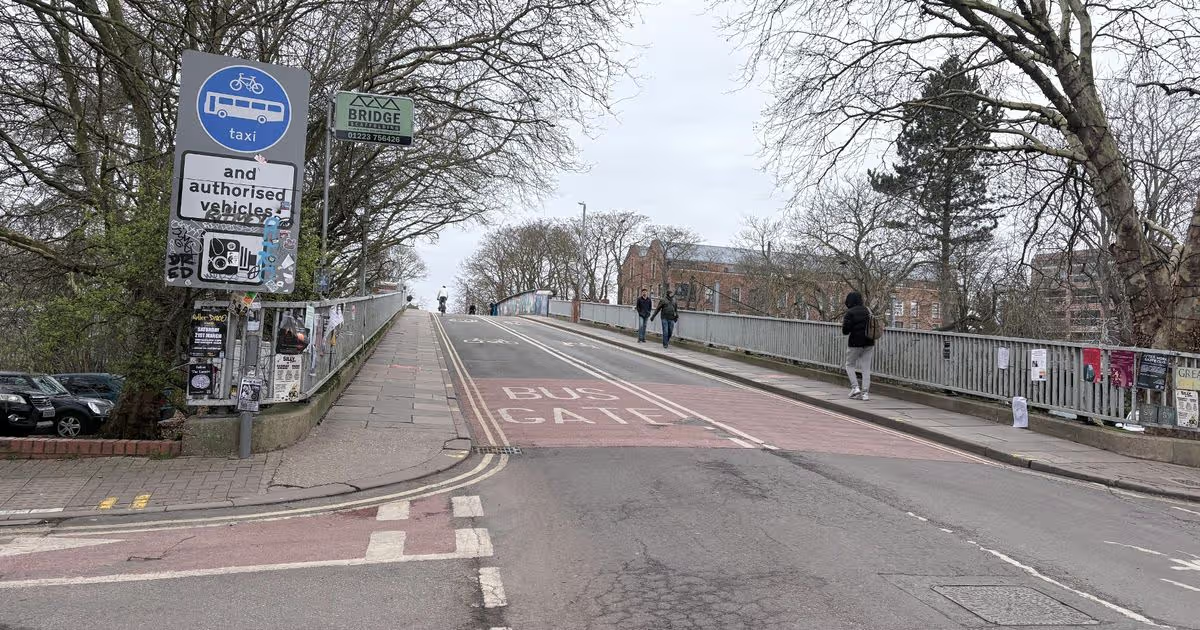
Locals still divided over Mill Road bus gate after nearly a year in operation

Kallie Humphries, Jasmine Jones earn bobsled Olympic bronze for Team USA

NYT Connections hints and answers for Sunday, February 22 (game #987)


-

 Video5 days ago
Bitcoin: We’re Entering The Most Dangerous Phase
-

 Crypto World5 days ago
Can XRP Price Successfully Register a 33% Breakout Past $2?
-

 Fashion1 day ago
Weekend Open Thread: Boden – Corporette.com
-

 Sports5 days ago
GB's semi-final hopes hang by thread after loss to Switzerland
-

 Video2 days ago
XRP News: XRP Just Entered a New Phase (Almost Nobody Noticed)
-
 Tech5 days ago
The Music Industry Enters Its Less-Is-More Era
-

 Business4 days ago
Infosys Limited (INFY) Discusses Tech Transitions and the Unique Aspects of the AI Era Transcript
-

 Entertainment4 days ago
Kunal Nayyar’s Secret Acts Of Kindness Sparks Online Discussion
-

 Video5 days ago
Financial Statement Analysis | Complete Chapter Revision in 10 Minutes | Class 12 Board exam 2026
-

 Tech4 days ago
Retro Rover: LT6502 Laptop Packs 8-Bit Power On The Go
-
 Sports3 days ago
Clearing the boundary, crossing into history: J&K end 67-year wait, enter maiden Ranji Trophy final | Cricket News
-

 Entertainment3 days ago
Dolores Catania Blasts Rob Rausch For Turning On ‘Housewives’ On ‘Traitors’
-

 Business4 days ago
Tesla avoids California suspension after ending ‘autopilot’ marketing
-
 NewsBeat6 days ago
The strange Cambridgeshire cemetery that forbade church rectors from entering
-

 Politics5 days ago
Eurovision Announces UK Act For 2026 Song Contest
-

 Crypto World3 days ago
WLFI Crypto Surges Toward $0.12 as Whale Buys $2.75M Before Trump-Linked Forum
-
 NewsBeat7 days ago
Man dies after entering floodwater during police pursuit
-

 Crypto World2 days ago
83% of Altcoins Enter Bear Trend as Liquidity Crunch Tightens Grip on Crypto Market
-
 NewsBeat2 days ago
Andrew Mountbatten-Windsor latest: Police search of Royal Lodge enters second day after Andrew released from custody
-
 Business4 days ago
School's 'cost of living cupboard' helps families