Connect with us

Tech

The US will send Tech Corps members to foreign countries in its latest push for AI dominance

Published

on

The government agency that sends its corps members abroad to volunteer in foreign countries launched its latest initiative called Tech Corps. The Peace Corps’ latest proposal will recruit STEM graduates or those with professional experience in the artificial intelligence sector and send them to participating host countries.

According to the press release, volunteers will be placed in Peace Corps countries that are part of the American AI Exports Program, which was created last year from an executive order from President Trump as a way to bolster the US’ grip on the AI market abroad. Tech Corps members will be tasked with using AI to resolve issues related to agriculture, education, health and economic development. The program will offer its members 12- to 27-month in-person assignments or virtual placements, which will include housing, healthcare, a living stipend and a volunteer service award if the corps member is placed overseas.

Richard E. Swarttz, the acting director of the Peace Corps, said in a press release that Tech Corps volunteers will be “building technical capacity, supporting AI adoption across critical use cases and addressing barriers to last-mile AI implementation.” While the Tech Corps program is framed at benefiting host countries, it would also help to secure the US’ position in the rapidly expanding global AI market that includes growing competition from China.

Source link

Advertisement
Continue Reading
Click to comment

Leave a Reply

Your email address will not be published. Required fields are marked *

Tech

Tunic publisher claims TikTok ran ‘racist, sexist’ AI ads for one of its games without its knowledge

Published

on

Indie publisher and developer Finji has accused TikTok of using generative AI to alter the ads for its games on the platform without its knowledge or permission. Finji, which published indie darlings like  and , said it only became aware of the seemingly modified ads after being alerted to them by followers of its official TikTok account.

As reported by , Finji alleges that one ad that went out on the platform was modified so it displayed a “racist, sexualized” representation of a character from one of its games. While it does advertise on TikTok, it told IGN that it has AI “turned all the way off,” but after CEO and co-founder Rebekah Saltsman received screenshots of the ads in question from fans, she approached TikTok to investigate.

A number of Finji ads have appeared on TikTok, some that include montages of the company’s games, and others that are game-specific like one for Usual June. According to IGN, the offending AI-modified ads (which are still posted as if they’re coming directly from Finji) appeared as slideshows. Some images don’t appear to be that different from the source, but one possibly AI-generated example seen by IGN depicts Usual June’s titular protagonist with “a bikini bottom, impossibly large hips and thighs, and boots that rise up over her knees.” Needless to say (and obvious from the official screenshot used as the lead image for this article), this is not how the character appears in the game.

As for TikTok’s response, IGN printed a number of the platform’s replies to Finji’s complaints, in which it initially said, in part, that it could find no evidence that “AI-generated assets or slideshow formats are being used.” This was despite Finji sending the customer support page a screenshot of the clearly edited image mentioned above. In a subsequent exchange, TikTok appeared to acknowledge the evidence and assured the publisher it was “no longer disputing whether this occurred.” It added that it has escalated the issue internally and was investigating it thoroughly.

Advertisement

TikTok does have a “Smart Creative” option on its ad platform, which essentially uses generative AI to modify user-created ads so that multiple versions are pushed out, with the ones its audience responds more positively to used more often. Another option is the features, which use AI to automatically optimize things like music, audio effects and general visual “quality” to “enhance the user’s viewing experience.” Saltsman showed IGN evidence that Finji has both of these options turned off, which was also confirmed by a TikTok agent for the ad in question.

After a number of increasingly frustrated exchanges in which TikTok eventually admitted to Saltsman that the ad “raises significant issues, including the unauthorized use of AI, the sexualization and misrepresentation of your characters, and the resulting commercial and reputational harm to your studio,” the Finji co-founder was offered something of an explanation.

TikTok said that Finji’s campaign used a “catalog ads format” designed to “demonstrate the performance benefits of combining carousel and video assets in Sales campaigns.” It said that this “initiative” helped advertisers “achieve better results with less effort,” but did not address the harmful content directly. Finji seemingly also opted into this ad format without knowing it had done so. TikTok declined to comment on the matter when approached by IGN.

Saltsman was told the issue could not be escalated any higher, with communication not resolved at the time of IGN publishing its report. In a statement to the outlet, Saltsman said she was “a bit shocked by TikTok’s complete lack of appropriate response to the mess they made.” She went on to say that she expected both an apology and clear reassurance of how a similar issue would not reoccur, but was “obviously not holding my breath for any of the above.”

Advertisement

Source link

Continue Reading

Tech

Irish employers prioritising skill over scale, finds report

Published

on

Morgan McKinley’s report explores how the Irish talent market in 2025 might impact trends and patterns in 2026.

Irish-owned global professional services company Morgan McKinley has published the findings of the 2026 Morgan McKinley Irish Salary Guide, which it says is Ireland’s most comprehensive analysis of pay across a wide range of professional disciplines.

It found that while the labour market remains active, it is far more disciplined. Irish employers continue to hire but are doing so with tighter controls regarding headcount and are reserving salary premiums only for skills that are believed to be critical to delivery or risk management.

The report stated: “Hiring has become more selective. Employers are sharpening expectations around both technical capability and soft skills, and many have increased on-site requirements. This shift has particularly affected talent outside the Dublin commuter belt.”

Advertisement

Take, for example, hiring in the life sciences and engineering sectors, which the report found to be stable throughout 2025, despite some organisations adopting a cautious approach to permanent headcount due to internal restructures. Notably, activity remained strong, particularly in sectors where skills shortages were persistent. 

Candidates with biopharmaceutical experience were in short supply, resulting in intense competition for talent, lengthy recruitment processes and a high incidence of counter-offers. Research also found that as a result of extended hiring processes in this space, candidates often exited due to competing offers, thereby reinforcing the ongoing talent shortage.

The contract market in life sciences and engineering was found by Morgan McKinley to have remained robust, supported by large-scale capital investment projects across biopharma and medtech. The report explained that organisations rely heavily on contractors to deliver specialist, project-based expertise and maintain flexibility.

Similar to the more permanent positions in this space, contract roles have become more skills- and project-focused, also resulting in longer interview processes as employers take more time to ensure that the candidates meet the specific and technical criteria.

Advertisement

In the technology ecosystem, the most in-demand roles were found to be positions in data engineering, cybersecurity analytics and risk specialisation, machine learning engineering and data science, AI auditing and AI ethics, automation and dev-ops. 

Hiring continues to evolve rapidly and while the overall demand has stabilised following global restructuring conducted by several large tech firms, acute shortages persist in AI, machine learning, data engineering and cybersecurity. 

New roles for AI auditors and ethicists have emerged as a response to regulatory frameworks, while candidates increasingly value flexibility and autonomy over headline salary growth.

Commenting on the results of the report, Trayc Keevans, global FDI director at Morgan McKinley, said: “Employers are not in hiring retreat, but they are being far more intentional. Demand remains strong where skills directly enable transformation, regulatory compliance or operational continuity, but organisations are no longer responding by expanding teams or lifting salaries across the board. 

Advertisement

“Instead, we are seeing entirely new, more narrowly defined roles enter the market, including AI auditors, ESG data governance leads, cyber and operational resilience specialists, and regulatory transformation programme managers, as employers target very specific capability gaps that did not exist at scale even two years ago.”

Don’t miss out on the knowledge you need to succeed. Sign up for the Daily Brief, Silicon Republic’s digest of need-to-know sci-tech news.

Source link

Advertisement
Continue Reading

Tech

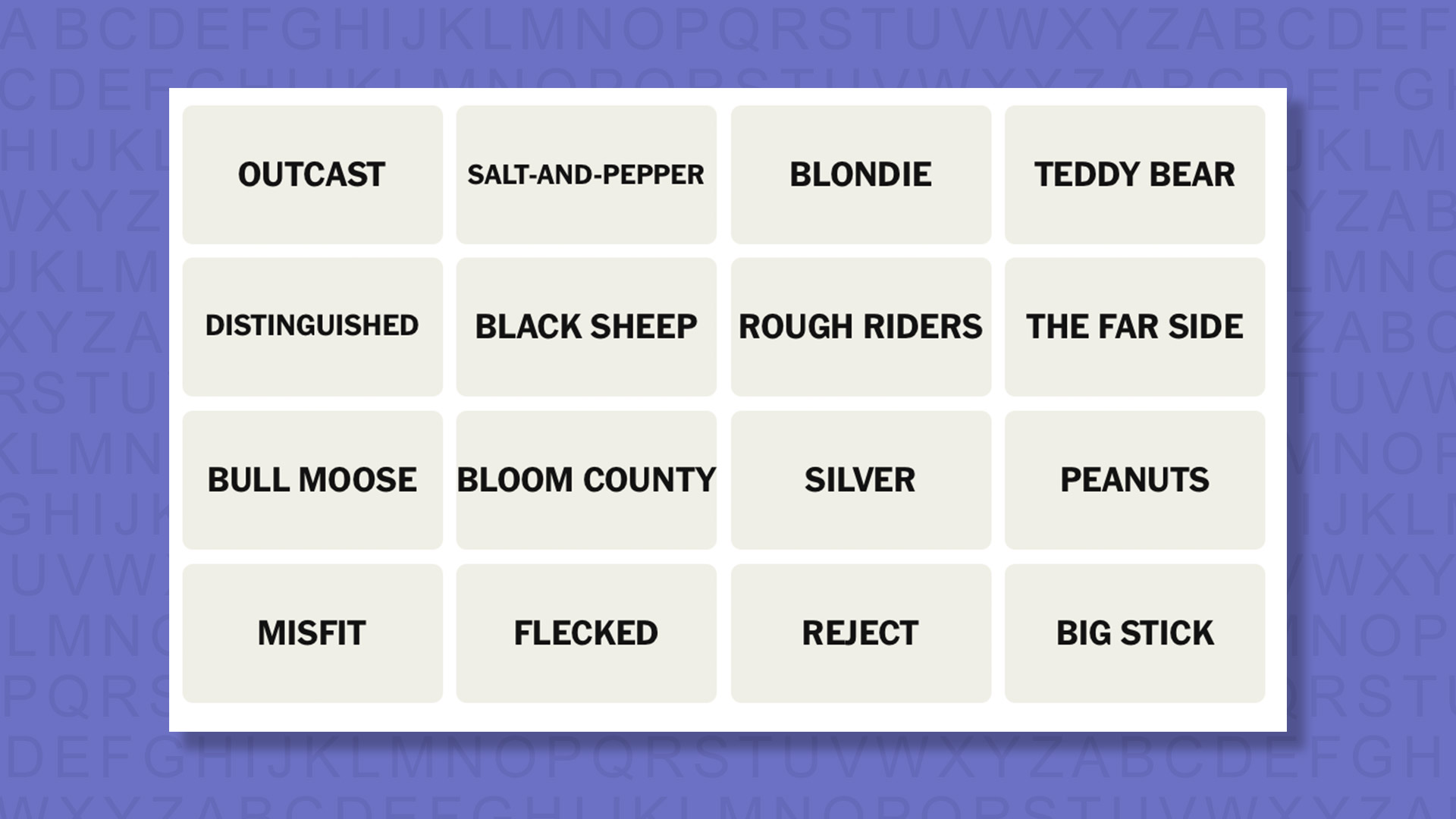
NYT Connections hints and answers for Sunday, February 22 (game #987)

Published

on

Good morning! Let’s play Connections, the NYT’s clever word game that challenges you to group answers in various categories. It can be tough, so read on if you need Connections hints.

Source link

Advertisement
Continue Reading

Tech

The Galaxy S26 and other devices that might launch on February 25

Published

on

Samsung’s 2025 was filled with new foldables, an ultra-thin new form factor and the launch of Google’s XR platform. After making some announcements at CES 2026, the company has announced its first Galaxy Unpacked of the year will take place on February 25, where it is expected to introduce the Galaxy S26 lineup. Official invites have been shared, but actual information on what devices are arriving then is still not completely confirmed. But as usual, we know a lot about what’s expected at Unpacked.

Engadget will be covering Galaxy Unpacked live from San Francisco next week, and we’ll most likely have hands-on coverage of Samsung’s new smartphones soon after they’re announced. While we wait for the full details, here’s everything we expect Samsung will introduce at the first Galaxy Unpacked event of 2026.

When is Unpacked 2026 taking place?

According to the official invite that Samsung shared on February 10, Unpacked will happen on February 25, 2026 in San Francisco. The keynote will start at 10AM PT (1PM ET) and be livestreamed on Samsung.com, as well as the company’s newsroom and YouTube channel. The announcement on February 10 also said this launch will mark “a new phase in the era of AI as intelligence becomes truly personal and adaptive.” It’s not a lot to go on, since we’ve heard a version of this from various companies over the last few years, but at least we won’t be shocked when we hear more about AI in just about two weeks.

Galaxy S26, S26+ and S26 Ultra

Samsung Galaxy S25 Ultra hands-on photo

Samsung Galaxy S25 Ultra hands-on photo (Photo by Sam Rutherford/Engadget)

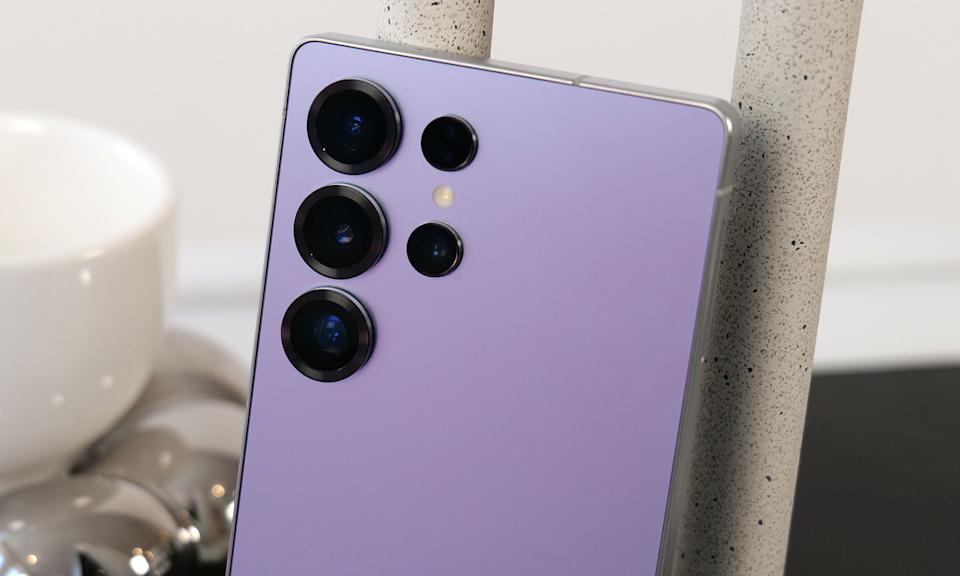
Samsung’s restrained approach to updating its phones will likely continue with the Galaxy S26. Based on leaked images of the new lineup, the company is not expected to radically reinvent the look of the Galaxy S26, Galaxy S26+ or Galaxy S26 Ultra, and instead will stick with a similar design to what it used on the Galaxy S25. The phones will have a flat front screen and frame, with rounded corners and cameras housed in a vertical pill-shaped plateau on the back. Unlike Apple’s move from the iPhone 16 Pro to the iPhone 17 Pro, the biggest difference here will likely be internal components like the screens, chips and camera sensors Samsung uses.

Advertisement

Qualcomm’s new Snapdragon 8 Elite Gen 5 chip is expected to be in all Samsung Galaxy S26 phones, though Korean news site Yonhap News reports Samsung’s relatively new Exynos 2600 chip could be used in some phones in the lineup depending on the region, a strategy Samsung has deployed in the past. Either way the new phones should be more performant than the previous generation, and in the case of the models with the Snapdragon 8 Elite Gen 5, particularly good at on-device AI processing.

One notable difference between the Galaxy S26 and the Galaxy S25 could be the phone’s screen. The new phone will reportedly feature a 6.3-inch FHD+ display according to specs shared by leaker Ice Universe, which makes it ever so slightly larger than the 6.2-inch display used on the Galaxy S25. The S26 will also allegedly come with 12GB of RAM, either 256GB or 512GB of storage and a slightly larger 4,300mAh battery. Samsung isn’t changing the cameras on the entry-level phone, though: leaks suggest it’ll feature the same 50-megapixel main camera, 12-megapixel ultrawide, 10-megapixel 3x telephoto and 12-megapixel selfie camera as the previous generation. Changes appear to be even more minor on the Galaxy S26+. Other than the new Snapdragon chip, the phone will reportedly feature the same 6.7-inch FHD+ screen, 4,900mAh battery, 12GB of RAM and the same camera array used on the base Galaxy S26.

The difference between the Galaxy S26 Ultra and Galaxy S25 Ultra is reportedly a bit clearer. According to Android Headlines, the new phone’s cameras will be slightly more raised, and stand out thanks to a new metallic finish. Samsung may also switch back to using an aluminum frame on the Galaxy S26 Ultra, after using titanium frames on both the Galaxy S24 and S25 Ultras. Most importantly, to make the phone actually support Qi2 rather than only technically work with the standard when a case is attached, rumors suggest Samsung will remove the S Pen digitizer layer in the phone and adopt a new method for accepting stylus input. It’s not clear what that new method will actually be, but it could let the Galaxy S26 Ultra more easily work with Qi2 accessories without losing its stylus.

Android Headlines also recently shared what appear to be full image renders of the S26 series, and they generally line up with what has already been rumored, leaked and reported so far. If these pictures are accurate, they give us a clearer look at the camera bump and two color variants of the S26 Ultra.

Advertisement

Fans of magnets may continue to be disappointed by Samsung if the latest rumors are accurate. Despite the launch of the Qi 2 wireless charging standard adding support for convenient magnetic alignment years ago, Samsung has yet to bring that feature to its phones. Though the S-series have the higher speed charging rates that the spec enables, Nieuwemobiel.nl is reporting that, due to images it received of cases with magnetic rings, the S26 series likely won’t have built-in magnets. Samsung has made these cases to add the magnetic capability to its S-series in the past, and the existence of the images of these accessories lends weight to the idea that the company will continue this approach.

Galaxy Buds 4

Galaxy Buds 3 Pro in case.

Galaxy Buds 3 Pro in case. (Engadget)

Samsung released the Galaxy Buds 3 and 3 Pro in 2024, with a major redesign that brought them much more in line with Apple’s AirPods. The Galaxy Buds 4 and Buds 4 Pro Samsung is rumored to be announcing soon won’t necessarily change that, though they will feature a more compact case and less angular stems, according to leaked images from the Samsung Tips app.

Support for head gestures to accept and decline calls, a feature Apple includes on the AirPods Pro 3 and AirPods 4, is also rumored to work on both versions of the new Galaxy Buds. SamMobile reports the Galaxy Buds 4 and 4 Pro may also ship with a new Ultra Wideband chip that will make them easier to find with Google’s Find Hub network.

Galaxy Z Trifold

Yes, the TriFold has a crease, two in fact. But they still don't ruin the experience.

Yes, the TriFold has a crease, two in fact. But they still don’t ruin the experience. (Sam Rutherford for Engadget)

Samsung announced the Galaxy Z TriFold in late 2025 without firm details of when the new smartphone-that-folds-into-a-tablet would be available in North America. That info came on January 27, when the company announced the TriFold would be available in the US on January 30, for a whopping $2,900. Considering we’ve already seen the device in person at CES 2026 and people are most likely to have had a chance to look at, if not buy the foldable for themselves by the time Unpacked rolls around, we don’t expect Samsung to spend too much time dwelling on it, if at all.

Advertisement

Galaxy S26 Edge

At just 5.8mm thick, the Samsung Galaxy S25 Edge is one of the thinnest smartphones ever made.

At just 5.8mm thick, the Samsung Galaxy S25 Edge is one of the thinnest smartphones ever made. (Sam Rutherford for Engadget)

When the Galaxy S25 Edge was announced in 2025, it seemed possible that Samsung could replace its “Plus” smartphone with a unique form factor, just like Apple has opted to do with the iPhone Air. There have been conflicting reports on the matter, but it seems like Samsung will not be doing that with the Galaxy S26 Edge.

Instead, the smartphone will reportedly remain another option, much like foldables are for customers not swayed by Samsung’s traditional smartphones. The Galaxy S26 Edge is rumored to feature a slightly different design than last year’s model, according to Android Headlines, with a large rectangular camera plateau that’s reminiscent of Google’s Pixel phones, and the raised oval Apple used on the iPhone Air. Beyond that, the phone is also expected to be ever so slightly thinner at 5.5mm than the 5.8mm Galaxy S25 Edge.

Bixby and other AI features

undefined

Samsung already acts as a first place Google can show off new AI features for Android, but the company is reportedly exploring other AI partnerships, too. In June 2025, Bloomberg reported that Samsung was nearing a deal with Perplexity to integrate its AI-powered search engine across OneUI and its homegrown mobile browser. Perplexity already has a deal with Motorola on its Razr phones, so the only thing that would make a deal with Samsung unusual is the close relationship the company already has with Google.

The company also accidentally announced a new version of its Bixby AI assistant, which will likely also be integrated with Perplexity and could serve as an alternative to Google Gemini. Both a new Bixby and a deeper integration with Perplexity seem like natural new software features to show off at Galaxy Unpacked.

On February 17, Samsung teased some mobile AI photography features ahead of Unpacked. These expand the S-series’ existing image-editing tools by bringing the ability “to turn a photo from day to night in seconds, restore missing parts of objects in images, capture detailed photos in low light, and seamlessly merge multiple photos into a single, cohesive result.” A lot of these things are already possible in other photo-editing apps or even in the Google Photos app, but we’ll have to wait to see them in action on the S26 phones for more details on whether they’re different or more effective.

Advertisement

Update, January 27 2026, 11:55AM ET: This story has been updated to reflect the latest news around the Galaxy Z TriFold’s price and availability in the US.

Update, January 30 2026, 12:45PM ET: This story has been updated to include the latest leaks on the possible dates for Unpacked 2026.

Update, February 02 2026, 11:30AM ET: This story has been updated to include the latest leaks with full image renders of the S26 trio of devices.

Update, February 03 2026, 11:00AM ET: This story has been updated to include the latest leaks about the possible lack of magnetic support on the S26 series.

Advertisement

Update, February 10 2026, 7:15PM ET: This story has been updated to include the official date of Galaxy Unpacked as Samsung announced it today. The intro was also edited to reflect that detail.

Update, February 17 2026, 4:55PM ET: This story has been updated to add Samsung’s teaser about its upcoming mobile AI photography tools. The intro was also edited for timeliness.

Source link

Advertisement
Continue Reading

Tech

Inside macOS 26 Preview – how to get the most out of an unexpectely powerful free tool

Published

on

Preview can do more than just show you a file in macOS, as it is especially handy for annotating images and editing PDFs. Here’s everything you need to know about Preview in macOS 26 Tahoe.

A cartoon cat with yellow eyes peeks through wooden planks, surrounded by document windows and a magnifying glass icon on a blue background.
Preview in macOS 26 Tahoe

Preview is one of the long-standing apps on macOS, having been included with the operating system for decades. In 2025, Preview finally moved over to iOS 26 and iPadOS 26, with a version tailored for mobile devices.
It is also a severely underrated app, as it is chiefly used as a way to view images and PDFs on the Mac. It’s a lightweight viewer that saves you from needing to open other heavier applications, like Photoshop or Adobe Acrobat.
Continue Reading on AppleInsider | Discuss on our Forums

Source link

Continue Reading

Tech

What is the release date for Bridgerton season 4 part 1 on Netflix?

Published

on

I can’t lie, guys… the end of Bridgerton season 4 part 1 infuriated me. In its final episode, Benedict (Luke Thomspon) goes to find Sophie (Yerin Ha) in the servant’s quarters.

Things get steamy, but then comes the line that will make you want to punch the second-eldest Bridgerton son in the face.

Source link

Advertisement
Continue Reading

Tech

What to Expect at Samsung Galaxy Unpacked 2026: S26 Release Date and Price

Published

on

Here’s is an animation that was part of the Galaxy Unpacked event invite.

Samsung

We’re just days away from the likely reveal of the Galaxy S26 lineup. Samsung is hosting a Galaxy Unpacked event on Feb. 25, 2026, at 10 a.m. PT (1 p.m. ET) in San Francisco. We expect to see the Galaxy S26, S26 Plus, and S26 Ultra announced, which will replace the Galaxy S25, S25 Plus and S25 Ultra.

Samsung has already made a splash this year, releasing the Galaxy Z TriFold for $2,899 in the US at the end of January, the first twin-hinge foldable that immediately sold out after going on sale. The company hasn’t indicated which products will be shown off at Samsung Unpacked in San Francisco, though we expect to see the Galaxy S26 and possibly other devices.

Advertisement

Samsung’s event comes just a week before the year’s biggest smartphone show, Mobile World Congress, kicks off in Barcelona. It may be late for Samsung, but it’s early enough in 2026 to set the stage for other premium Android phones this year.

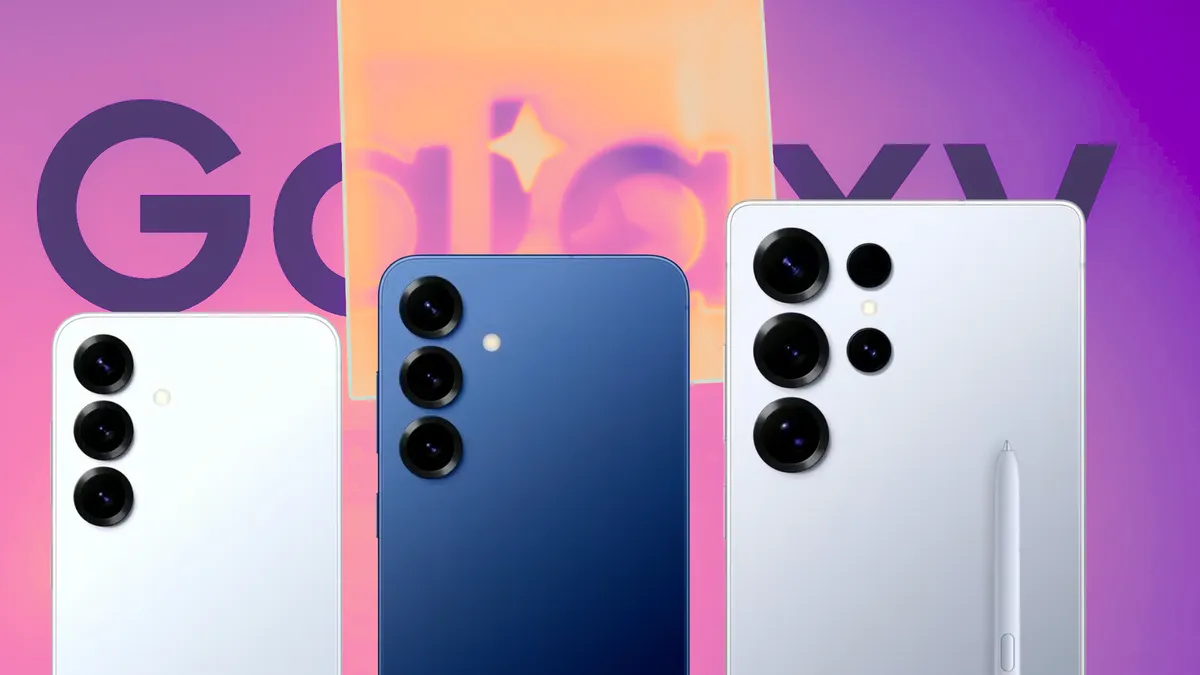
Three phones in front of the word Galaxy

Samsung’s Galaxy Unpacked event is on February 25 and the company will likely reveal the Galaxy S26 series.

Tharon Green/CNET

The stakes are high for the S26 phones. People want the absolute top of the line if they’re paying top dollar for premium phones, especially under today’s financial strains. Samsung is under pressure to introduce enough new features to keep its highest-end phones at the top of the charts, especially after the iPhone 17 series debuted several perks that raised the bar. 

Advertisement

When it comes to generative AI, which is prevalent across other gadget categories, Samsung is tasked with finding new, exclusive uses to keep differentiating its phones amid fierce competition at the premium level. 

We expect the Galaxy S26 lineup to match that of prior years: a standard S26, a larger S26 Plus and a top-of-the-line Galaxy S26 Ultra. While rumors don’t suggest any drastic redesigns, there will probably be some external tweaks and upgrades to the hardware, including the processor and cameras. 

Let’s dive into the specifics of everything we know about the Galaxy S26 series launch.

Galaxy S26 lineup overview

Advertisement
Samsung Galaxy S25

The Samsung Galaxy S25.

James Martin/CNET

Galaxy S26

Despite early rumors from Android Authority suggesting Samsung might ditch its baseline phone for a pricier, higher-specced Pro model, the latest leaks suggest Samsung will keep its standard Galaxy S26 model. We don’t expect too many changes to the model’s design, though it could see a return of a raised camera bump after the Galaxy S25 kept them flush with the rear cover.

What rumors tell us:

  • Screen: 6.3-inch display (the Galaxy S25 has a 6.2-inch display)
  • Cameras: Ultrawide camera could get an upgraded 50-megapixel sensor
  • Processor and RAM: Snapdragon 8 Gen 5 chip in the US and China and 12GB of RAM
  • Battery: 4,300-mAh battery
Galaxy S25, S25 Plus and S25 Edge

The Galaxy S25 (left), next to the S25 Plus (middle) and S25 Edge (right).

Advertisement

Jesse Orrall/CNET

Galaxy S26 Plus and S26 Edge

Samsung was also said to be debating whether to outright replace its larger S26 Plus with the super-slim S26 Edge, but reportedly poorer sales of last year’s Galaxy S25 Edge suggest the pendulum could swing the other way: We may just get an S26 Plus this year, as 9to5Google suggests. 

What rumors tell us:

  • Screen: 6.7-inch display
  • Cameras: Ultrawide camera could get an upgraded 50-megapixel sensor
  • Processor and RAM: Snapdragon 8 Gen 5 chip in the US and China and 12GB of RAM
  • Design: It will be 7.35mm thick
samsung-s25ultra-review-01

Samsung Galaxy S25 Ultra.

Jeffrey Hazelwood/CNET

Galaxy S26 Ultra

Like other S26 models, the Galaxy S26 Ultra is expected to feature the new Snapdragon 8 Elite Gen 5 in the US and China. A rumor from PhoneArena suggests the phone will revert to an aluminum frame from its titanium predecessors, much like Apple did with the iPhone 17 Pro and Pro Max.

Advertisement

What rumors tell us:

  • Storage: Up to 1TB
  • Charging: Support for 60-watt wired and 25-watt wireless charging
  • Processor and RAM: Snapdragon 8 Gen 5 chip in the US and China and 16GB of RAM
  • Battery: 5,000-mAh battery
samsung-galaxy-buds-3-pro-in-case-1

The Samsung Galaxy Buds 3.

David Carnoy/CNET

New Galaxy Buds 4

Rumors suggest Samsung will release new Galaxy Buds 4 and Buds 4 Pro models alongside its phones. Product images published by Android Authority show redesigns for both models, which are each getting what look like burnished metal strips on the outside of the stems, which should make them look a bit less like Apple AirPods than the Galaxy Buds 3. As in prior generations, the regular Buds 4 look to be entirely plastic, while the Pro models will have silicone eartips.

New AI features and Bixby updates

The latest Galaxy phones typically arrive with new AI features, and rumors suggest the Galaxy S26 series will be no exception. Samsung itself alluded to a new privacy shield coming in future phones (presumably the S26 series) that will block parts of the display when viewed at an angle, shielding notifications or even entire apps from onlooker view. 

Advertisement

Leaks suggest AI is doing the heavy lifting, selectively rendering images only for those looking straight at the phone. Presumably, this will come to all S26 models, and leaks haven’t suggested otherwise. 

The S26 phones may be able to use generative AI to render images faster than before. Samsung’s partnership with Nota AI was announced in November, which aims to optimize on-device genAI. This means bringing its EdgeFusion (a version of Stable Diffusion) to speed up text-to-image generation by running it purely on Galaxy S26 handsets (rather than partially or wholly through the cloud), PhoneArena suggested, integrating Nota AI’s tech at the processor level. 

Source link

Advertisement
Continue Reading

Tech

March 4's Apple Experience, color MacBooks, and iOS 26.4 on the AppleInsider Podcast

Published

on

It’s been a week of finding out just how much there is in the new iOS 26.4 beta, for learning about Apple’s video podcast plans, and also for so many rumors of a new low-cost MacBook coming at a March unveiling, all on the AppleInsider Podcast.

Neon Apple logo and colorful atomic symbol on black background, with pink music app icon in the center and the letters ai above, suggesting artificial intelligence and music integration
Apple’s March 4 experience (left) may introduce new features, but iOS 26.4 already has

We didn’t get an updated Siri in the developer beta of iOS 26.4, but it turned out that there is a lot else in there. From improvements to Stolen Device Protection and a whole new Apple Intelligence-based twist on Apple Music, there is much to explore in iOS 26.4.
Just don’t explore it until it’s been officially released. Neither of your hosts recommend installing any beta software, neither of them intended to install iOS 26.4, and only one of them did accidentally.
Continue Reading on AppleInsider | Discuss on our Forums

Source link

Continue Reading

Tech

Newsmax Didn’t Like Its NewsGuard Rating, So The FTC Attacked NewsGuard, And Now NewsGuard Is Suing

Published

on

from the found-the-censorship-industrial-complex dept

We’ve written a few times now about how the GOP’s “free speech warriors” have been waging an absolutely absurd campaign against NewsGuard, a company whose entire business model is… expressing opinions about the reliability of news sources. You know, speech. The kind of thing that’s supposed to be protected by that First Amendment thing the GOP pretends to care so much about.

As we noted back in 2024, the entire complaint about NewsGuard boils down to: some conservative news sites got poor ratings, and that made people who relied on those ratings less likely to advertise on those sites. It’s funny how MAGA seems to get so upset about the “marketplace of ideas” when their own ideas get rejected. NewsGuard says “we think this source is unreliable,” advertisers say “okay, we’d rather not be associated with unreliable sources,” and the rated sites get mad about it.

But now the Trump administration’s FTC, led by Chairman Andrew Ferguson, has decided to transform that complaint into an actual government censorship campaign. And NewsGuard, represented by FIRE’s lawyers, is suing to stop it, as first reported in the Washington Post.

The complaint lays out a fairly astonishing abuse of government power. Let’s start with the Civil Investigative Demand (fancy term for a subpoena) the FTC sent to NewsGuard last May. It’s basically a demand for every document the company has ever created or received since its founding in 2018:

Advertisement

The CID requires production of “all documents relating to NewsGuard’s News Reliability Ratings and any other rating[s];” identification of all NewsGuard customers; and essentially all communications from or to NewsGuard.

And it gets worse:

The Specifications go further, demanding all materials about NewsGuard’s work product and methodology, including data sets; all documents about websites and news sources rated; all ratings and reviews issued; all communications regarding ratings; any and all analyses of the effects of NewsGuard’s ratings on advertisers and publishers; and any studies relating to social media or digital advertising

Among its all-inclusive document demands, the CID also requires production of information, materials, and communications relating to NewsGuard’s journalism and reporting, including reporters’ notes and sources.

The FTC is demanding reporters’ notes. From a journalism organization. Because it doesn’t like the opinions that organization expresses. That should be a First Amendment five-alarm fire. I mean, imagine the years of screaming we’d all be subjected to if the Biden admin had demanded reporters’ notes from Fox News.

Oh, and what was the stated basis for this investigation? According to NewsGuard’s complaint, the FTC wouldn’t even tell them, despite it being required by law.

Advertisement

Under the FTC Act, the agency was required to state the specific conduct constituting an alleged violation that is the subject of investigation and the provision of law applicable to such violation. 15 U.S.C. § 57b-1(c)(2). The FTC did not do that in the NewsGuard CID, leaving the company to guess about what the agency alleged was at issue or how it could have anything to do with legitimate enforcement of antitrust or competition laws.

In other words: “we’re investigating you, but we won’t tell you why or what law you allegedly violated.”

Right about here I’ll remind you that when FTC chair Andrew Ferguson applied for the job he promised to “protect freedom of speech” and “end… politically motivated investigations.” Of course, the full quote was “end Lina Khan’s politically motivated investigations”—leaving his own politically motivated investigations as fair game.

NewsGuard tried to work with the FTC for seven months, participating in ten meet-and-confer discussions and producing over 40,000 pages of documents. And what did the FTC do? Kept demanding more, including those customer lists and communications, while refusing to explain what any of this had to do with antitrust law.

Remember, NewsGuard’s share of the “brand safety” market is, according to the complaint, less than 0.1%. The idea that this tiny company is somehow engaged in anticompetitive behavior that requires the FTC to demand every document it’s ever created is absurd on its face.

Advertisement

Then, while NewsGuard was trying to cooperate with the investigation, the FTC was also using its merger review authority to create what amounts to a government blacklist of NewsGuard.

When advertising giants Omnicom and IPG wanted to merge, the FTC conditioned approval on the companies agreeing not to use any service that “reflects viewpoints as to the veracity of news reporting and adherence to journalistic standards or ethics.”

That’s not particularly subtle. That’s a condition specifically designed to prevent Omnicom from doing business with NewsGuard. The complaint notes that the original draft order didn’t quite capture NewsGuard, so Newsmax—yes, the same Newsmax that’s been mad about its poor NewsGuard rating—filed comments urging the FTC to expand the language. And the FTC did exactly that.

Newsmax was not subtle about its aim. Its fourteen-page letter mentioned NewsGuard more than a dozen times. Newsmax echoed Chairman Ferguson’s repeated statements that NewsGuard’s reviews and ratings of news sources based on journalistic standards were “biased” because some conservativeleaning websites and publications scored poorly.

Not content to rely on the official FTC comment process, Newsmax took to the internet to lobby Chairman Ferguson, members of Congress, and the President. In posts on X directed to Chairman Ferguson, Newsmax asserted the FTC’s proposed order was inadequate because it “makes no mention of ‘censorship’ or ‘targeting conservatives’ and ‘[f]ully allows Omnicom to use left-wing NewsGuard.” Newsmax admitted its comments and advocacy to the FTC were specifically targeted at NewsGuard.

Advertisement

[….]

The FTC subsequently issued a revised order removing terms about using third-party services with “political or ideological bias.” Instead, the FTC revised the Consent Order to prohibit the merged Omnicom entity or its ad agencies from using third-party services that evaluate “viewpoints as to the veracity of news reporting” and “adherence to journalistic standards or ethics.”

In its press release announcing the final Consent Order, the FTC stated that it revised the order “in response to public comments.” But the only public comments advocating such censure came from Newsmax and groups it funds…

The complaint notes, somewhat dryly, that First Amendment scholars and free speech organizations had also submitted comments pointing out how the proposed order was unconstitutional. But somehow, Ferguson and the FTC ignored those. The only change they made seemed to be the one Newsmax and friends demanded: the punishment of NewsGuard for its First Amendment-protected speech.

Advertisement

So let’s be clear about what happened here: A news organization that gives ratings to other news organizations gave a bad rating to Newsmax based on its own criteria. (Shocking, I know, given Newsmax’s sterling commitment to journalistic standards.) Newsmax complained to the government. The government then used its regulatory power to (1) launch a burdensome fishing expedition designed to bleed NewsGuard financially, and (2) literally prohibit a major potential customer from doing business with NewsGuard.

This is textbook First Amendment retaliation. The government is using its regulatory power to punish a private company for expressing opinions it disagrees with.

And Chairman Ferguson hasn’t exactly been coy about his intentions. Even before becoming FTC chair, he was publicly stating that the FTC should use its “tremendous array of investigative tools” and “coercive power” to get companies to “Do what we say.” As the complaint notes:

In an April 2025 interview, Chairman Ferguson explained how the FTC could use its “tremendous array of investigative tools” and “coercive power—formal and informal” to demand compliance to its views about supposed online “censorship.” Ferguson laid out a roadmap of the tactics his FTC would ultimately use against NewsGuard: “The regulators can show up, they can audit, they can investigate, they can cost you a lot of money, and the path of least resistance is: ‘Do what we say’.”

And:

Advertisement

Ferguson’s comments are similar to not-so-veiled threats by FCC Chairman Carr about Jimmy Kimmel’s late-night comedy monologue mentioning Charlie Kirk, which the administration found objectionable. Carr stated that ABC and its affiliates had to “find ways to change conduct and take action … on Kimmel or there’s going to be additional work for the FCC ahead,” and “we can do this the easy way or the hard way.”

This is the “free speech” party. This is what they mean by free speech: the freedom to agree with them, or face the consequences, brought to you mob-style.

The legal case here seems pretty straightforward. The DC Circuit already ruled last year, in the somewhat similar Media Matters case, that the FTC’s similar investigation of that organization was “a government campaign of retaliation” that was “infringing exercise of their First Amendment rights.” The district court in DC has already granted a preliminary injunction halting the FTC’s investigation of Media Matters.

NewsGuard’s case involves basically the same playbook. Government officials publicly expressed hostility to NewsGuard’s speech. Then they launched an investigation with demands far beyond any legitimate regulatory purpose. Then they used their merger review authority to directly prohibit companies from doing business with NewsGuard.

The Supreme Court was unanimous in the Vullo case in 2024 that government officials can’t “coerce a private party to punish or suppress disfavored speech on her behalf.” Using merger conditions to blacklist a company because you don’t like its journalism is exactly that.

Advertisement

It’s genuinely good to see NewsGuard fight back here. I’ve been somewhat critical of NewsGuard’s methodology in the past, but their right to express their opinions about news sources is protected speech, full stop. The government doesn’t get to punish them because some of those opinions hurt the feelings of conservative media outlets. (Also, as I always point out, NewsGuard was founded by the former publisher of the Wall Street Journal, the idea that he’s some “woke leftist” trying to suppress “conservative” news orgs is silly on its face).

And, honestly, this case reveals just how absurd the whole “censorship industrial complex” narrative has always been. The actual censorship happening here isn’t NewsGuard expressing opinions about news quality. It’s the government using its regulatory power to punish NewsGuard for expressing those opinions.

As the complaint aptly notes:

By accusing NewsGuard of providing “biased” evaluations of news sites, Chairman Ferguson has inverted the relationship between the government and the First Amendment. NewsGuard is a private business that offers assessments of the quality of news sites based on disclosed journalistic criteria. As a matter of law, NewsGuard cannot be a censor. But by asserting FTC control over the market for NewsGuard’s services, Chairman Ferguson has embraced the censor’s role

That’s exactly right. The government using its power to punish private companies for expressing opinions is censorship. Private companies expressing opinions is not.

Advertisement

Filed Under: 1st amendment, andrew ferguson, antitrust, censorship, ftc, investigation, news ratings, opinions

Companies: newsguard, newsmax, omnicom

Source link

Advertisement
Continue Reading

Tech

How to know if an AirTag is tracking you

Published

on

Apple’s AirTag is designed to help people keep track of personal belongings like keys, bags and luggage. But because AirTags and other Bluetooth trackers are small and discreet, concerns about unwanted tracking are understandable. Apple has spent years building safeguards into the AirTag and the Find My network to reduce the risk of misuse and to alert people if a tracker they don’t own appears to be moving with them.

If you’re worried about whether an AirTag or similar tracker might be following you, here’s how Apple’s unwanted tracking alerts work, what notifications to look for and what you can do on both iPhone and Android.

How AirTag tracking alerts work

AirTags, compatible Find My network accessories and certain AirPods models use Apple’s Find My network, which relies on Bluetooth signals and nearby devices to update their location. To prevent misuse, Apple designed these products with features that are meant to alert someone if a tracker that isn’t linked to their Apple Account appears to be traveling with them.

If an AirTag or another compatible tracker is separated from its owner and detected near you over time, your device may display a notification or the tracker itself may emit a sound. These alerts are intended to discourage someone from secretly tracking another person without their knowledge. Apple has also worked with Google on a cross-platform industry standard, so alerts can appear on both iOS and Android devices, not just iPhones.

Advertisement

How to make sure tracking alerts are enabled on your iPhone

If you use an iPhone or iPad, tracking notifications are on by default, but it’s worth confirming your settings.

To receive unwanted tracking alerts, make sure that:

  • Your device is running iOS 17.5 or later (or iPadOS 17.5 or later). Earlier versions back to iOS 14.5 support basic AirTag alerts, but newer versions add broader compatibility with other trackers.

  • Location Services are enabled.

  • Notifications for Tracking Alerts are allowed.

  • Airplane Mode is turned off.

You can check these by opening Settings, then navigating to Privacy & Security, Location Services and Notifications. Apple also recommends turning on Significant Locations in the System Services menu, which helps your device determine when an unknown tracker has traveled with you to places like your home.

  1. Go to Settings, tap Privacy & Security, then select Location Services.

  2. Toggle Location Services on.

  3. Scroll down and tap System Services, then toggle Significant Locations on.

If these settings are disabled, your iPhone may not be able to alert you when an AirTag or similar device is nearby.

Advertisement

What tracking alerts look like

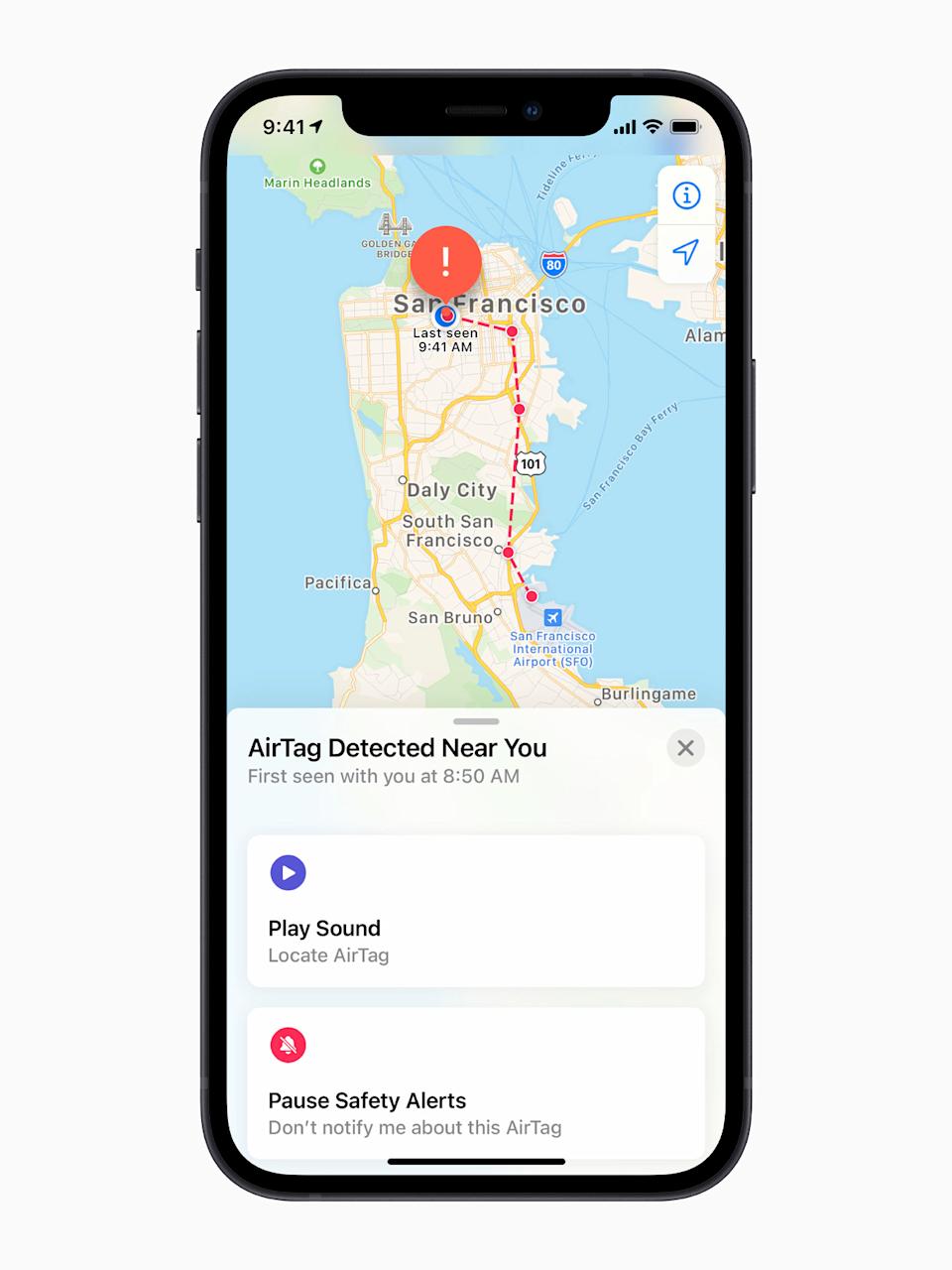
If your iPhone detects a tracker that doesn’t belong to you moving with you, you may see a notification such as:

  • AirTag Found Moving With You

  • “Product Name” Found Moving With You

  • Unknown Accessory Detected

Tapping the alert opens the Find My app, which shows a map of where the item was detected near you. The map uses dots to indicate locations where your device noticed the tracker nearby. This doesn’t mean the owner was actively watching your location at those times, only that the tracker was detected in close proximity.

In some cases, the alert may have an innocent explanation. For example, you might be borrowing someone else’s keys, bag or AirPods. If the item belongs to someone in your Family Sharing group, you can temporarily pause alerts for that item by tapping the notification and opting to turn off alerts for that item either for one day or indefinitely.

What to do if you hear an AirTag making a sound

If an AirTag or compatible tracker has been separated from its owner for a period of time and is moved, it may emit a sound on its own. This is another built-in safety feature meant to draw attention to the device.

Advertisement

If you hear an unfamiliar chirping or beeping sound, especially from a bag, jacket pocket or vehicle, it’s worth checking your belongings to see if there’s an AirTag or similar tracker inside.

How to find an unknown AirTag or tracker

If you receive an alert and believe the tracker is still with you, the Find My app offers tools to help locate it.

From the alert, you can choose to play a sound on the device to help pinpoint where it’s hidden.

  1. Tap Continue and then tap Play Sound.

  2. Listen for the sound or play it again to give yourself more time to find the item.

If the tracker is an AirTag and you have a compatible iPhone with ultra wideband connectivity, you may also see a Find Nearby option, which uses Precision Finding to guide you toward it with distance and direction indicators.

Advertisement
  1. Tap Continue and then tap Find Nearby.

  2. Follow the onscreen instructions. You may need to move around the space until your iPhone connects to the unknown AirTag.

Your iPhone will display the distance and direction of the unknown AirTag, so you can use that information to identify where the unknown AirTag is. When the AirTag is within Bluetooth range of your iPhone, you can tap the Play Sound button to listen for it. You can also tap the Turn Flashlight On button to provide more light if it’s needed.

If neither option is available, or if the tracker can’t be located electronically, manually check your belongings. Look through bags, pockets, jackets and vehicles. If you feel unsafe and can’t find the device, Apple recommends going to a safe public place and contacting local law enforcement.

The new Apple AirTag that works with Find My app.

The new Apple AirTag that works with Find My app. (Apple)

How to get information about an AirTag

If you find an unknown AirTag, you can learn more about it without needing to unlock it or log in.

  1. Hold the top of your iPhone, or any NFC-capable smartphone, near the white side of the AirTag. A notification should appear.

  2. Tap the notification to open a webpage with details about the AirTag. This page includes the serial number and the last four digits of the phone number associated with the owner’s Apple Account.

If the AirTag was marked as lost, the page may also include a message from the owner explaining how to contact them. This can help determine whether the situation is accidental or intentional.

Advertisement

How to disable an AirTag that isn’t yours

If you confirm that an AirTag is tracking you and it doesn’t belong to you, you can disable it so it stops sharing its location.

From the Find My alert or information page, select Instructions to Disable and follow the steps provided. For an AirTag, this usually involves removing the battery, which immediately stops location updates. Disabling Bluetooth or turning off Location Services on your phone does not stop the AirTag from reporting its location. The device itself must be disabled.

If you believe the tracker was used for malicious purposes, keep the AirTag and document its details before contacting law enforcement. Apple states that it can provide information to authorities when legally required.

What Android users should know

Android devices running Android 6.0 or later can also receive alerts if a compatible Bluetooth tracker, including an AirTag, appears to be moving with you. These alerts are enabled automatically on supported versions of Android.

Advertisement

Android users can also manually scan for unknown trackers at any time. Additionally, Apple offers a free Tracker Detect app on the Google Play Store. The app allows Android users to scan for AirTags and Find My network accessories within Bluetooth range that are separated from their owner. If Tracker Detect finds a nearby AirTag that’s been with you for at least 10 minutes, you can play a sound to help locate it.

Wrap-up

While no system is perfect, Apple has built multiple layers of protection into AirTag and the Find My network to reduce the risk of unwanted tracking. With alerts, audible warnings and cross-platform detection on both iOS and Android, most people will be notified if a tracker they don’t own is moving with them. Knowing what these alerts look like and how to respond can help you stay informed, avoid unnecessary panic and take appropriate action if something feels off.

Source link

Advertisement
Continue Reading

Trending

Copyright © 2025