Sarah Ferguson has reportedly resurfaced after quite some time out of the public eye, as she keeps her distance from the growing scandal surrounding her former husband.
Sarah Ferguson has reportedly resurfaced after months of being absent from the public eye, as turmoil continues to surround her former husband.
Advertisement
The 66-year-old has not been seen publicly for weeks following the release of fresh Department of Justice files containing correspondence with convicted paedophile and sex trafficker Jeffrey Epstein. Although inclusion in the files does not indicate wrongdoing, the revelations have caused renewed embarrassment for the Royal Family.
The situation has escalated further following the arrest of the former prince on suspicion of misconduct in public office.
Ensure our latest headlines always appear at the top of your Google Search by making us a Preferred Source. Click here to activate or add us as Preferred Source.
Ms Ferguson is now said to have been seen for the first time outside the UK, keeping her distance from the growing scandal surrounding Andrew, with whom she had lived until recently.
Advertisement
It has been reported she left the country as her ex-husband became further entangled in the controversy. She had not appeared publicly since the Christening of her granddaughter Athena Mapelli Mozzi and is said to have been staying in Zurich, Switzerland.
Ms Ferguson’s absence comes as documents revealed correspondence with Epstein in multiple documents releases from the US Department of Justice, showing that she had spoken with the paedophile on friendly terms while he served time for heinous crimes.
Among the revelations involving the royal was that she had repeatedly emailed with Epstein while he was serving a sentence for child sex offences. Epstein was released from prison on July 22, 2009, having served 13 months of an 18-month sentence for soliciting an underage girl for sex.
Advertisement
In an email included in the files dated to June 14, 2009, just under a week before his release, a contact identified as “Sarah” emails him about one of the then Duchess of York’s business initiatives.
The contact asks: “I need to ask you how I start The Mothers Army company so it can be commercial, how do I do that? Can you help me?” In a follow-up on June 26, she signs off an email with “love you”, writing: “I am alive… yes I did go to the first lady and she loved the Mothers Army. I am going to call you later Love you”.
Her association culminated in the closure of her charitable foundation, Sarah’s Trust, which was “dedicated to supporting frontline, grassroots work to address the humanitarian and environmental crisis, the hunger crisis and issues perpetuating cycles of extreme poverty”.
Advertisement
It was shuttered “for the foreseeable future”, a spokesperson announced, just days after new details of her relationship with Epstein emerged. The spokesperson said the decision had followed “some months” of discussion.
They said it had also followed agreement between Ms Ferguson and her board of trustees, saying: “Our chair Sarah Ferguson and the board of trustees have agreed that with regret the charity will shortly close for the foreseeable future,” a spokesman said on Monday evening. This has been under discussion and in train for some months.”
Research suggests that this spice may assist in reducing cholesterol levels and blood pressure
A tasty spice costing just 6p a serving might help reduce your chances of developing certain severe health conditions. Research suggests that coriander seeds may assist in reducing cholesterol levels and blood pressure.
A study, featured in the Journal of Environmental Biology in 2008, involved giving coriander seeds to laboratory rats. The findings revealed that rodents consuming the seeds showed reduced levels of “bad” cholesterol, termed low-density lipoprotein, whilst displaying elevated levels of “good” cholesterol – high-density lipoprotein.
The research noted: “The level of low density lipoprotein (LDL) and very low density lipoprotein (VLDL) cholesterol decreased while that of high density lipoprotein (HDL) cholesterol increased in the experimental group compared to the control group.”
Advertisement
Additionally, research published in the Journal of Ethnopharmacology in 2009 found that the seeds – or fruit – of the herb could effectively reduce blood pressure – or hypertension.
The study states: “These results indicate that coriander fruit exhibits gut stimulatory, inhibitory and hypotensive effects mediating possibly through cholinergic, Ca(2+) antagonist and the combination of these mechanisms respectively.
“Diuretic activity adds value to its use in hypertension.” Generally speaking, a normal total cholesterol reading in the blood should be five or less millimoles per litre (mmol/l). More precisely, a normal high-density lipoprotein level should be one or more mmol/l.
Advertisement
Meanwhile, your low-density lipoprotein should measure four or less mmol/l. To determine whether your cholesterol levels are elevated, your GP will need to carry out a blood test.
If you have concerns about your blood pressure, you should monitor it using a home testing kit or request that a pharmacist or doctor takes your reading.
Coriander seeds can be used in cooking whole or you can buy them ground as a powder form. The plant of the coriander is also popularly used as a herb.
At the time of reporting, you could buy 36g of ground coriander from Sainsbury’s and Tesco for £1.10, working out as just 6p per 6g serving.
When Russia’s full-scale invasion of Ukraine surpassed 1,418 days last month, it officially exceeded a historic milestone — the same span of time it took Moscow to defeat Nazi Germany in World War II.
And unlike the Red Army that pushed all the way to Berlin eight decades ago in what it called the Great Patriotic War, Russia‘s 4-year-old, all-out invasion of its neighbor is still struggling to fully capture Ukraine’s eastern industrial heartland.
After Moscow failed to seize the capital of Kyiv and install a puppet government in February 2022, the conflict turned into trench warfare with tremendous cost. By some estimates, nearly 2 million soldiers are dead, wounded or missing on both sides in Europe’s most devastating conflict since World War II.
Russia has occupied about 20% of Ukrainian territory since illegally annexing Crimea in 2014, but its gains after the Feb. 24, 2022, invasion have been slow. NATO Secretary-General Mark Rutte this month likened Moscow’s advance to “the speed of a garden snail.”
Advertisement
Russian troops have moved only about 50 kilometers (about 30 miles) into the Donetsk region of eastern Ukraine in the past two years in a grinding battle for control of a few strongholds.
Despite the slow pace and high cost, President Vladimir Putin has maintained his maximalist demands in U.S.-mediated peace talks, saying Kyiv must pull its forces from the four Ukrainian regions that Moscow illegally annexed but never fully captured. He has repeatedly brandished his nuclear arsenal to prevent the West from boosting military support for Kyiv.
A war of attrition
Initially involving quick movements of large numbers of troops and tanks in Russia’s opening blitz and Ukraine’s counteroffensive in fall 2022, the fighting morphed into bloody positional warfare along the 1,200-kilometer (750-mile) front line.
Advertisement
The Washington-based Center for Strategic and International Studies estimated Russian military casualties at 1.2 million, including 325,000 killed. It put Ukrainian troop casualties at up to 600,000, including up to 140,000 killed.
“Russia has suffered the highest casualty rate of any major power in any war since World War II, and its military has performed poorly, with historically slow rates of advance and little new territory to show for its efforts over the last two years,” it said, noting Russian troops were advancing an average of 70 meters (76 1/2 yards) a day in two years to capture the transport hub of Pokrovsk.
For the first time in military history, drones are playing a decisive role, making it effectively impossible for either side to covertly mass significant numbers of troops.
Since early in the conflict, Ukraine has relied on drones to offset Moscow’s edge in firepower and stem its advances, but Russia has drastically expanded drone operations and introduced longer-range optical fiber-tethered drones to avoid electronic jamming. They widened the kill zone to 50 kilometers (about 30 miles) from the front, leaving the terrain tangled in strands of filament.
Advertisement
The mixture of high-tech drones and World War I-style trench fighting has seen small groups of infantry — often just two or three soldiers — try to infiltrate enemy positions into towns flattened by Russian heavy artillery and glide bombs. Ferrying supplies and evacuating the wounded is a major challenge as drones target supply routes.
Long-range attacks
Ukrainian officials described this winter as the most challenging of the war. Russia exponentially increased its strikes on the country’s energy system, causing blackouts in Kyiv where power supplies to many were cut to a few hours a day amid bitter cold.
Russia also has increasingly targeted power lines aiming to halt energy transfers and split Ukraine’s power grid into isolated islands, increasing pressure on the grid.
Advertisement
Ukraine retaliated with long-range drone attacks on oil refineries and other energy facilities deep inside Russia, aiming to drain Moscow’s export revenues.
Its drones and missiles sank several Russian warships in the Black Sea, forcing Moscow to redeploy its fleet from Russia-occupied Crimea to Novorossiysk. And in an audacious attack code-named “Spiderweb,” Ukraine used drones from trucks to hit several air bases hosting long-range bombers across Russia in June, a humiliating blow to the Kremlin.
US pressure, conflicting demands
U.S. President Donald Trump, who once promised to end the war in a day, has pushed to end the fighting, but mediation efforts have run into sharply conflicting demands.
Advertisement
Putin wants Ukraine to pull its troops from the part of the Donetsk region it still controls, abandon its bid to join NATO, curb its military and grant official status to the Russian language, among other demands Ukraine has rejected.
Russia left the door open to Kyiv’s prospective European Union membership, but it firmly ruled out any European peacekeepers deployed to Ukraine as part of a settlement.
Ukrainian President Volodymyr Zelenskyy wants a ceasefire along the existing line of contact, but Putin rules out a truce, demanding a comprehensive peace agreement.
“The territorial issue is important to the Kremlin, but the war has a more ambitious goal: to create a Ukraine that would be entirely within Russia’s sphere of influence and not perceived by Moscow as ‘anti-Russia,’” observed Tatiana Stanovaya of Carnegie Russia Eurasia Center.
Advertisement
Ukraine and its allies accuse Putin of dragging out talks while he seizes more territory. The Kremlin accuses Kyiv and its European supporters of trying to undermine a tentative agreement reached by Trump and Putin at their Alaska summit.
While sticking to their positions, Putin and Zelenskyy have praised U.S. mediation and tried to curry favor with Trump.
After a disastrous White House meeting a year ago, Zelenskyy has adopted a more practical negotiating stance, emphasizing Ukraine’s goodwill.
After Trump called for a presidential election in Ukraine, Zelenskyy signaled readiness for it even though it’s banned under martial law. The election could be coupled with a referendum on a peace deal, he said, but insisted the vote was only possible once a ceasefire is established and Ukraine gets security guarantees from the U.S. and other allies.
Advertisement
Elusive settlement
Zelenskyy said the White House has set a June deadline for the war’s end and will likely pressure both sides to meet it. But even as Trump appears eager for a peace deal before the U.S. midterm elections, challenges remain.
With Putin insisting on Ukraine’s pullback from Donetsk and Zelenskyy ruling it out, a quick deal appears unlikely. Zelenskyy also expressed skepticism about a compromise U.S. proposal to turn the eastern region into a free economic zone.
The Kremlin expects its attacks eventually will force Kyiv to accept Moscow’s terms. Ukraine hopes it can hold on until Trump loses patience and increases sanctions on Russia, forcing Putin to halt his aggression. But Trump often appears to be losing patience with Zelenskyy instead.
Advertisement
The war and Western sanctions have increasingly strained Russia’s economy. Growth has slowed to a near halt, due to persistent inflation and labor shortages. The latest U.S. sanctions on Russian oil exports have added to the strain.
But even with the economic challenges, Russia’s defense plants have increased weapons output and its government has shielded key social groups like soldiers and industrial workers from hardship.
“Its economy is poorer, less efficient and less promising than it might otherwise have been,” wrote Richard Connolly of the Royal United Services Institute. “But it remains capable of sustaining the war. Its elites are more dependent on the regime, not less. Its political system is insulated from the transmission of economic discontent into pressure for regime change.”
Six DWP benefits could make you eligible for free NHS dental treatment, including Universal Credit and Pension Credit
Lauren Haughey Lifestyle and Money Reporter
03:00, 21 Feb 2026
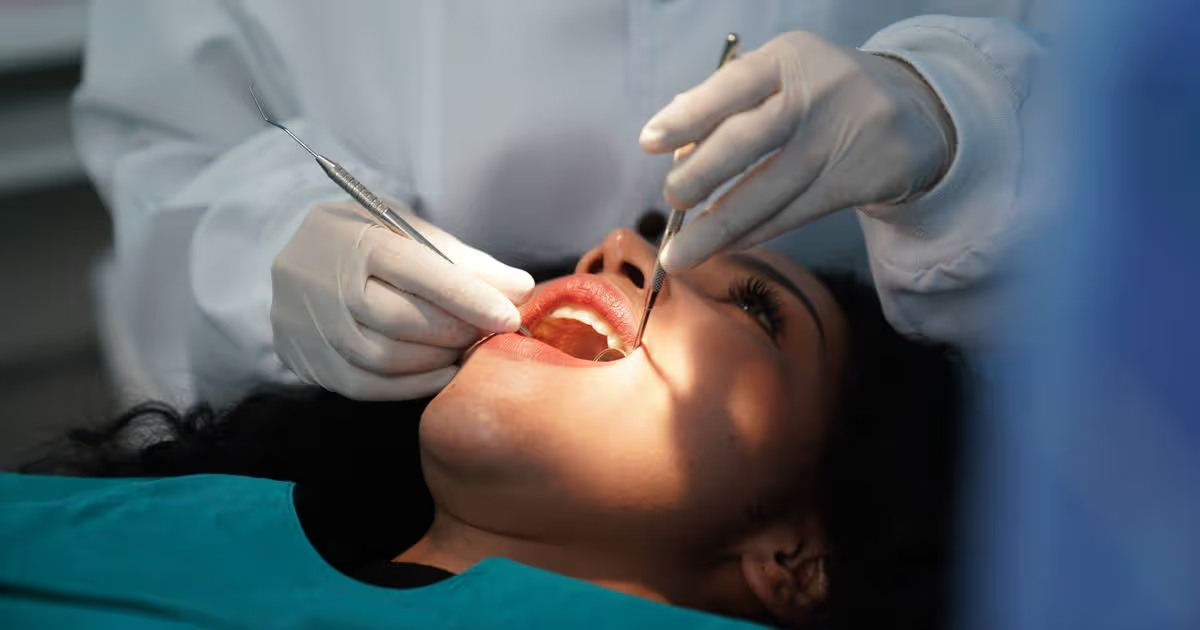
A visit to the dentist seldom features at the top of anyone’s list of preferred activities. And with routine check-ups generally setting you back £27.40, it’s hardly surprising that many individuals skip them altogether.
However, you may be interested to discover that certain individuals throughout England might be eligible for complimentary dental appointments and treatment via the NHS. This especially helps those within a particular age range and anyone in receipt of several key benefits administered by the Department for Work and Pensions (DWP).
Advertisement
We’ve looked into who is eligible for this and what steps you need to take. If you’ve previously paid for NHS dental treatment but subsequently discover you’re entitled to free care, you could also be due a refund, reports the Mirror.
Who’s entitled to free NHS dental appointments in England?
The NHS confirms there are five groups of individuals who automatically qualify for free NHS dental care. These specifically include the following:
You’ve had a stillbirth in the past 12 months
You’re getting treatment in an NHS hospital from a hospital dentist (but you may still need to pay for dentures or bridges)
You receive War Pension Scheme payments, or Armed Forces Compensation Scheme payments and the treatment is for your accepted disability
You’re aged under 18, or under 19 and in full-time education
You’re pregnant or have had a baby in the last 12 months
Additionally, you may be eligible if either you or your partner is in receipt of one of six specific benefits. Dependants under the age of 20 could also qualify, provided you’re claiming:
Pension Credit Guarantee Credit
Pension Credit Guarantee Credit with Savings Credit
Universal Credit – but only if your income is below a certain amount
Income Support
Income-based Jobseeker’s Allowance
Income-related Employment and Support Allowance
Keep in mind that these rules relate solely to NHS dental treatments. Should you choose private treatment, you’ll be responsible for the costs yourself.
Generally, you’ll also need to provide evidence of your eligibility for free NHS care, though this may differ depending on your exemption category.
Examples of documentation accepted by the NHS include: Nevertheless, official NHS guidance states: “If you receive War Pension Scheme or Armed Forces Compensation Scheme payments and get free dental treatment, you’ll usually need to pay for it yourself first and claim the money back from Veterans UK.”
Advertisement
How do I verify my eligibility?
If you believe you may be entitled to free NHS dental treatment, visit the NHS Business Services Authority (NHSBSA) website to find out. The platform offers a free eligibility checker, which typically takes approximately three minutes to complete.
Should you qualify, it will guide you through the next steps required to access support. Those who suspect they have been incorrectly charged for NHS dental appointments may be entitled to a refund.
What’s the NHS Low Income Scheme about?
Even if free dental care is unavailable to you, financial assistance may still be accessible through the NHS Low Income Scheme. This programme extends beyond dentistry, encompassing other essential costs such as prescriptions, eye examinations, wigs, and travel expenses relating to medical treatment.
The amount you are able to claim depends primarily upon your weekly income, savings, and essential outgoings at the time of your application. Online applications are limited to those with capital or savings under £6,000, and you must also satisfy at least one of the following criteria: The NHSBSA also offers the following guidance: “If the amount you have left is low, you may be able to get help through the NHS Low Income Scheme. Any help you’re entitled to is also available to your partner, if you have one.
Advertisement
“If you have already paid for treatment, you can apply for a refund at the same time as you apply for the scheme. We will normally assess your application within 18 working days from the date we get your form.”
For further details on the assistance on offer, visit the NHSBSA website.
City may not have the machine-like fluency and relentless winning style of the Guardiola teams that won four straight Premier League titles, but those memories can still kick in for plenty who will play their part in coming weeks.
One of the newer faces is giant Italian keeper Gianluigi Donnarumma, a Champions League winner with Paris St-Germain last season, who is now chasing new honours and horizons with Manchester City.
In some respects he is a flawed keeper, especially under crosses, but has that uncanny, priceless habit of making stunning match-winning saves that makes up for other failings.
He did it with an astonishing stoppage time save from Alexis Mac Allister in a City win at Liverpool that may yet be regarded as the pivotal moment in their season, and he did it again here.
Advertisement
As the final seconds ticked on with Newcastle pressing for a point, Donnarumma employed that giant wingspan to stretch away low to his right to turn away Harvey Barnes’ goal-bound shot.
Seconds later, the final whistle went and Etihad Stadium was awash with celebration.
Time will tell just how important those saves – those wins – will be, but City are now in a position from which they have flourished before.
Win all their games. Win the Premier League.
Advertisement
Now the scenery shifts to north London – along with the pressure – as Arsenal face that dangerous trip to Spurs.
Their first fight in Sheffield had Warrington comfortably in control until a decisive Wood punch in the seventh round ended the contest.
The rivalry had only deepened since, reflected in the charged atmosphere of the sell-out 8,000-capacity arena as the football-loving fighters entered to songs of their respective clubs.
Warrington walked out to the Leeds United anthem Marching On Together, which segued into his trademark Kaiser Chiefs’ I Predict a Riot, but the travelling noise was outdone by the home crowd when Wood – wearing sunglasses and soaking in the moment – emerged to Nottingham Forest’s Mull of Kintyre.
Wood edged a scrappy first round. Warrington responded with a sharp right hook and straight right in the second.
Advertisement
The home crowd sang “Leigh Wood is one of our own”, as their man settled into a southpaw rhythm, slowing the pace and picking shots from range.
He landed a crisp combination in the fifth before Warrington drew blood from Wood’s nose with a single right.
Both men had lost to Anthony Cacace since their first fight, raising the stakes for what felt like a last roll of the dice. Yet it was Warrington who looked the more faded former champion.
“Give them something to sing about,” urged his father and trainer Sean O’Hagan, predicting Wood would tire.
Advertisement
Instead, the bout drifted. Wood, hands low, invited pressure but Warrington could not capitalise. The lull in action seeped into the stands.
By the championship rounds, Warrington appeared to need a knockdown, but there was little sign of one coming.
By the final bell, the tension had evaporated and the outcome felt inevitable.
Manchester United will look to continue a rich vein of form as they travel to Everton in the Premier League on Monday night
Michael Carrick will aim to extend this unbeaten run in his second spell as Manchester United manager to six games when his team face Everton. The new boss’s side travel to Hill Dickinson Stadium on Monday.
Latest speculation maintains that Rashford could join Barcelona permanently come the summer but a new spanner may be thrown into the works. Mirror Football brings you the latest from Old Trafford.
MAKE THE MIRROR YOUR FIRST CHOICE! Click here to activate or add us as Preferred Source in your Google search settings
Advertisement
Marcus Rashford move ‘threatened’
Since making his loan switch to Barcelona in the summer, Rashford has been the subject of much transfer chatter. The £26million purchase option included in his arrangement could see him stay at the Camp Nou permanently.
Reports have been varied over the last month, suggesting that United boss Carrick wants Rashford back but also claiming the player wishes to stay in Spain. Recent speculation indicates that Barcelona will seek to reduce the purchase fee while still viewing Rashford as a key player.
Now, a new report from Spanish outlet Sport has thrown more doubt into the mix. They assert that another targeted winger could threaten Rashford’s transfer, Lyon’s Malick Fofana.
The report suggests that Fofana is valued at the same price as Rashford, £26m. He is returning from a long-term injury and if he impresses, the outlet declares he could maybe scupper Rashford’s move, despite the Englishman being first choice over the 20-year-old Belgian.
Mason Mount nearing return
Another English player has also had his future discussed, as Mason Mount is getting closer to making his return from injury. The 27-year-old picked up a knock in training earlier this month.
The United star has been sidelined since before the 3-2 victory over Fulham but ahead of the trip to Everton on Monday, Carrick has issued a positive update.
Advertisement
He said: “Mason’s getting closer. I think we’re going to be patient as well, and we have been patient with him, so we don’t want to push anything.
“He’s an important part of the group, Mason, and we want him back and fit and he’ll have a big impact for us. So, he’s getting closer, which is good for us.”
Join our new MAN UTD WhatsApp community and receive your daily dose of Manchester United content from Mirror Football. We also treat our community members to special offers, promotions, and adverts from us and our partners. If you don’t like our community, you can check out any time you like. If you’re curious, you can read our Privacy Notice.
WASHINGTON (AP) — President Donald Trump said Saturday that he wants a global tariff of 15%, up from 10% he had announced a day earlier after the U.S. Supreme Court struck down many of the far-reaching taxes on imports that he had imposed over the last year.
Trump’s announcement on social media was the latest sign that despite the court’s check on his powers, the Republican president still intends to ratchet up tariffs in an unpredictable way. Tariffs have been his favorite tool for rewriting the rules of global commerce and applying international pressure.
The court’s decision on Friday struck down tariffs that Trump had imposed on nearly every country using an emergency powers law. Trump now said he will use a different, albeit more limited, legal authority.
He’s already signed an executive order enabling him to bypass Congress and impose a 10% tax on imports from around the world, starting on Tuesday, the same day as his State of the Union speech. However, those tariffs are limited to 150 days unless they are extended legislatively.
Advertisement
The White House did not immediately respond to a message inquiring when the president would sign an updated order to peg the tariffs at 15%.
He wrote on social media that he was making the announcement “based on a thorough, detailed, and complete review of the ridiculous, poorly written, and extraordinarily anti-American decision on Tariffs issued yesterday.”
By a 6-3 vote, the justices ruled that it was unconstitutional for Trump to unilaterally set and change tariffs because the power to tax lies with Congress.
In addition to the temporary tariffs that Trump wants to set at 15%, the president said Friday that he was also pursuing tariffs through other sections of federal law which require an investigation by the Commerce Department.
Advertisement
He wrote on Saturday that “during the next short number of months, the Trump Administration will determine and issue the new and legally permissible Tariffs, which will continue our extraordinarily successful process of Making America Great Again.”
After the Supreme Court decision, Trump made an unusually personal attack on the justices who ruled against him in a 6-3 vote, including two of those he appointed during his first term, Justices Neil Gorsuch and Amy Coney Barrett. Trump, at a news conference on Friday, said that the situation is “an embarrassment to their families.”
He was still seething Friday night, posting on social media complaining about Gorsuch, Coney Barrett and Chief Justice John Roberts, who ruled with the majority and wrote the majority opinion. On Saturday morning, Trump issued another post declaring that his “new hero” was Justice Brett Kavanaugh, who wrote a 63-page dissent. He also praised Justices Clarence Thomas and Samuel Alito, who were in the minority, and said of the three dissenting justices: “There is no doubt in anyone’s mind that they want to, MAKE AMERICA GREAT AGAIN!”
Tariffs have been central to Trump’s economic policies, which he has said address a host of ills, from reviving trade imbalances and reviving U.S. manufacturing to forcing other nations to action, whether it be stepping up efforts to combat drug trafficking or ceasing hostilities with each other.
Advertisement
He also regularly claimed despite evidence to the contrary that foreign governments would pay the tariffs—not American consumers and businesses.
Federal data shows the Treasury had collected more than $133 billion from the import taxes the president has imposed under the emergency powers law as of December, and Trump has made many promises about what that money might go toward, such as paying down the national debt and sending dividend checks to taxpayers. The Supreme Court decision did not address what happens to the funds that have already been collected from tariffs.
Democrats spoke out quickly on Trump’s new tariff threat. Democrats on the House Ways and Means Committee accused Trump of “pickpocketing the American people” with his newly announced higher tariff.
“A little over 24 hours after his tariffs were ruled illegal, he’s doing anything he can to make sure he can still jack up your costs,” they wrote on social media.
Advertisement
California Democratic Gov. Gavin Newsom, a Trump nemesis, added that “he does not care about you.”
______
AP reporter Ali Swenson contributed to this story.
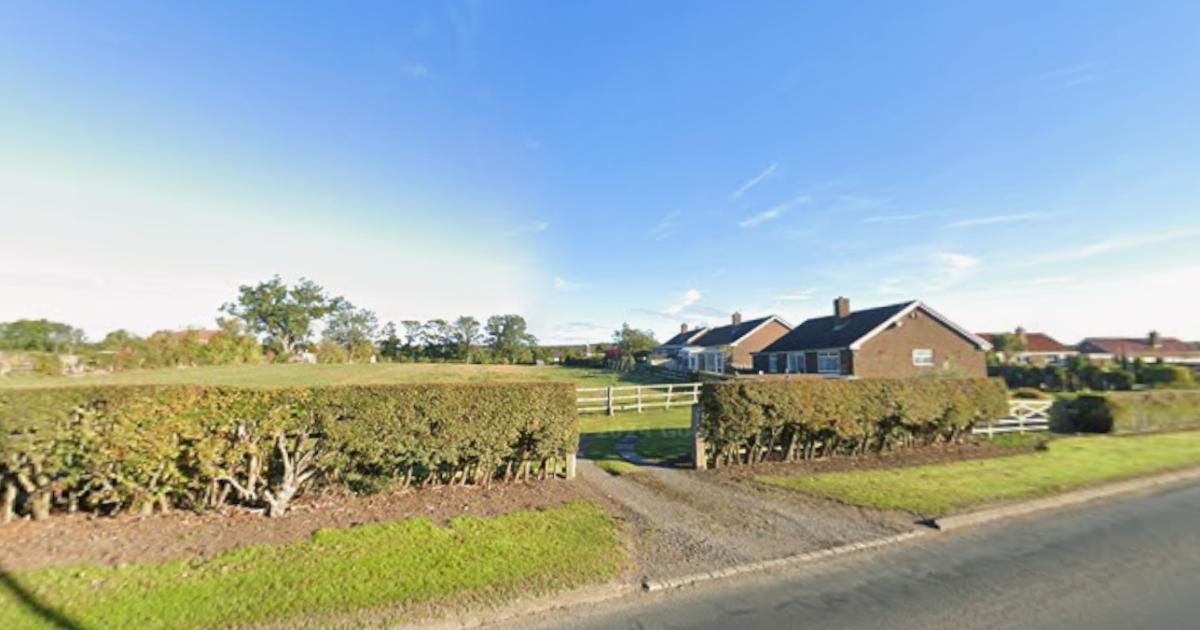
Durham County Council’s planning committee approved plans for five properties on land near St Gregory Close in Staindrop.
Matthew Houghton, the applicant, said the homes will be a mix of three and four-bedroom properties.
But Staindrop Parish Council joined nine others in objecting to the plans after raising concerns about the local landscape, impact on current residential amenity, flooding, and infrastructure capacity.
Advertisement
“There is already permission for a large number of new houses in Staindrop and the impact of two significant developments upon resources within the village is unknown,” parish councillors said.
An objection letter added: “The approval would represent another missed opportunity to provide affordable housing for local people. This is what the village needs, rather than ‘executive style’ housing.
“The house designs lack innovation and style and are inappropriate for Staindrop.”
Mr Houghton said he has worked closely with the council’s planning department to ensure the scheme is sensitive to the area and delivers high-quality housing.
Advertisement
He added: “We are mindful of recent large housing schemes in Staindrop and Barnard Castle that have upset local people, but what we offer is something different to that. The benefit of small, local builders and developments is that we can provide more bespoke and interesting houses with much less visual impact, using local materials and contractors.
“Not only are the houses an attractive and different product, but the construction phase delivers a serious benefit to the local economy.”
Despite the successes of Staindrop Primary School, Mr Houghton said it currently has to advertise further afield for pupils, and the new housing will boost local services in the village.
He added: “Supporting local small-scale builders in their endeavours will reduce reliance on volume housebuilders to deliver the much-needed housing to achieve the council’s targets, and in doing so will result in much greater benefits to the local economy.”
Advertisement
Members of Durham County Council’s planning committee unanimously supported the application.
Nathan Aspin, now aged 36, and Leah Evans, now aged 35, applied for the BBL on October 21, 2020, for the company ‘Faith Aspin Ltd’ – they were both directors of the company.
Documents on the Insolvency Service website state that the company applied for a loan of £50,000 from the Government, which was granted.
Companies were allowed to apply for a loan of between £2,000 and £50,000, subject to a maximum of 25 per cent of turnover.
Advertisement
Ms Evans declared the annual turnover of the company to be £600,000 when applying for the loan.
The turnover figures for companies either had to be for the calendar year 2019, or where a business was established after January 1, 2019, it would have been their estimated annual turnover from the date the business was started.
The latter case was true for Faith Aspin Ltd, which was incorporated on February 19, 2019.
The company filed dormant accounts for the year ending February 28, 2020, before its bank account was opened on or around May 20, 2020, with no transactions recorded prior to the receipt of the BBL on October 26, 2020.
Advertisement
The Insolvency Service says that the first trading income into the bank account appears to have been on July 5, 2021.
The service adds: “On September 23, 2024, Faith Aspin Ltd entered Creditors Voluntary Liquidation with known liabilities of £62,951, of which £50,801 is owed in respect of the BBL.”
Mr Aspin and Ms Evans, both of Newland Drive, Over Hulton, were disqualified from being a director of a company for 10 years.
The order for Mr Aspin started on Tuesday, February 17 this year, and Ms Evans’ order started on February 12.
Advertisement
BBL measures were introduced during 2020 to support businesses affected by Covid such as loans, grants and tax allowances.
The Bounce Back loan scheme helped small and medium-sized businesses to borrow between £2,000 and £50,000, at a low interest rate, guaranteed by the Government.
People have been encouraged to stay active even while it’s chilly
With the chilly conditions set to last a while longer, households may be looking to find ways to stay warm while indoors. Home specialists have offered suggestions on how to keep comfortable throughout the rest of the winter.
Advertisement
Eric Bramlett, broker and owner of estate agency Bramlett Partners, recommended considering “smart home efficiency” to maintain comfort. He explained: “At home, sealing small drafts around windows and doors can make a noticeable difference in comfort and heating costs. Using thermal curtains, area rugs, and proper insulation helps retain heat.
“When out and about, layering breathable fabrics and protecting extremities like hands, ears, and feet is key to maintaining body warmth.” He said the extended daylight hours also present a chance to preserve warmth.
State Pensioners to face major tax change
Mr Bramlett said: “As daylight hours increase, taking advantage of natural sunlight can help regulate your internal clock and support overall well-being. Opening blinds during peak sunlight hours naturally warms indoor spaces, reducing reliance on heating systems.
“Even short walks during midday allow you to absorb sunlight, stay active, and avoid the sluggishness that can linger during winter.” The periods when sunshine is most intense at this time of year are generally from noon through to mid-afternoon, until around 3pm.
Advertisement
Simon Browne, a product specialist at window coverings firm Luxaflex, has encouraged homeowners to consider their property’s energy efficiency. He explained: “At this time of year, people often underestimate how much of their home’s heat is lost through the windows – 20 percent.
“Even with good central heating, cold glass can pull warmth out of a room very quickly. That’s where choosing the right window coverings makes a huge difference.”
Mr Browne also recommended making the most of natural daylight, saying: “If you use it well, opening blinds fully during bright hours, then closing them again at dusk, you can capture warmth naturally and lock it in. That combination of natural heat gain and proper insulation reduces draughts, improves comfort and helps create a much more stable indoor temperature.”
For those feeling the effects of the cold weather, some gentle preparation before venturing outdoors might be a good idea. Mr Browne said: “When you’re stepping outside, the cold can create tension in your body because your muscles instinctively contract to protect you.
Advertisement
“So easing that tension with gentle warm-up movements indoors before heading out can help. But at home, managing the warmth through smart insulation, including energy-efficient blinds, prevents that deep chill that makes your body tighten in the first place.”
Ensure our latest headlines always appear at the top of your Google Search by making us a Preferred Source. Click here to activate or add us as your Preferred Source in your Google search settings.