Connect with us

Tech

Irish employers prioritising skill over scale, finds report

Published

on

Morgan McKinley’s report explores how the Irish talent market in 2025 might impact trends and patterns in 2026.

Irish-owned global professional services company Morgan McKinley has published the findings of the 2026 Morgan McKinley Irish Salary Guide, which it says is Ireland’s most comprehensive analysis of pay across a wide range of professional disciplines.

It found that while the labour market remains active, it is far more disciplined. Irish employers continue to hire but are doing so with tighter controls regarding headcount and are reserving salary premiums only for skills that are believed to be critical to delivery or risk management.

The report stated: “Hiring has become more selective. Employers are sharpening expectations around both technical capability and soft skills, and many have increased on-site requirements. This shift has particularly affected talent outside the Dublin commuter belt.”

Advertisement

Take, for example, hiring in the life sciences and engineering sectors, which the report found to be stable throughout 2025, despite some organisations adopting a cautious approach to permanent headcount due to internal restructures. Notably, activity remained strong, particularly in sectors where skills shortages were persistent. 

Candidates with biopharmaceutical experience were in short supply, resulting in intense competition for talent, lengthy recruitment processes and a high incidence of counter-offers. Research also found that as a result of extended hiring processes in this space, candidates often exited due to competing offers, thereby reinforcing the ongoing talent shortage.

The contract market in life sciences and engineering was found by Morgan McKinley to have remained robust, supported by large-scale capital investment projects across biopharma and medtech. The report explained that organisations rely heavily on contractors to deliver specialist, project-based expertise and maintain flexibility.

Similar to the more permanent positions in this space, contract roles have become more skills- and project-focused, also resulting in longer interview processes as employers take more time to ensure that the candidates meet the specific and technical criteria.

Advertisement

In the technology ecosystem, the most in-demand roles were found to be positions in data engineering, cybersecurity analytics and risk specialisation, machine learning engineering and data science, AI auditing and AI ethics, automation and dev-ops. 

Hiring continues to evolve rapidly and while the overall demand has stabilised following global restructuring conducted by several large tech firms, acute shortages persist in AI, machine learning, data engineering and cybersecurity. 

New roles for AI auditors and ethicists have emerged as a response to regulatory frameworks, while candidates increasingly value flexibility and autonomy over headline salary growth.

Commenting on the results of the report, Trayc Keevans, global FDI director at Morgan McKinley, said: “Employers are not in hiring retreat, but they are being far more intentional. Demand remains strong where skills directly enable transformation, regulatory compliance or operational continuity, but organisations are no longer responding by expanding teams or lifting salaries across the board. 

Advertisement

“Instead, we are seeing entirely new, more narrowly defined roles enter the market, including AI auditors, ESG data governance leads, cyber and operational resilience specialists, and regulatory transformation programme managers, as employers target very specific capability gaps that did not exist at scale even two years ago.”

Don’t miss out on the knowledge you need to succeed. Sign up for the Daily Brief, Silicon Republic’s digest of need-to-know sci-tech news.

Source link

Advertisement
Continue Reading
Click to comment

Leave a Reply

Your email address will not be published. Required fields are marked *

Tech

McCoy Tyner Quartet’s 1991 “New York Reunion” Album Reemerges on 2LP Pink One Step Pressed 180-gram Vinyl: Review

Published

on

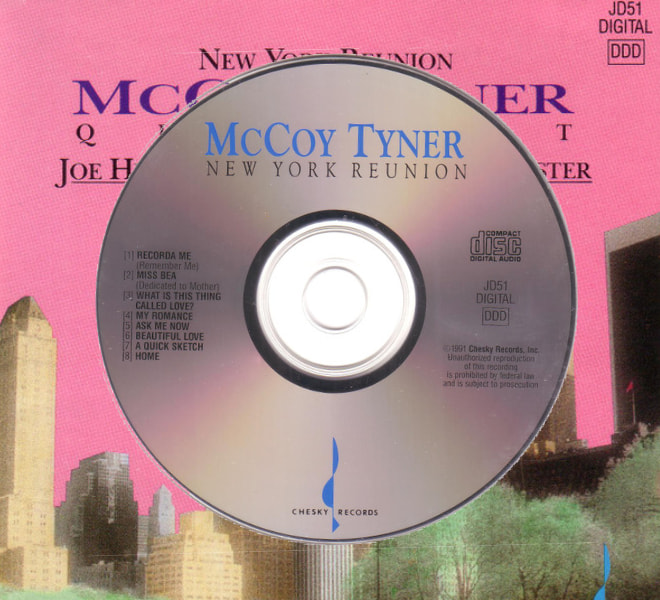
A 180-gram “one step” vinyl reissue of a 1991 release from noted audiophile label Chesky Records featuring jazz legends McCoy Tyner, Joe Henderson, Ron Carter and Al Foster is a good reason to celebrate music and life. It is a reminder of why great recordings and great players still matter.

The performances within New York Reunion are lush, relaxed and overall exemplary, capturing iconic seasoned musicians in an intimate studio setting with then state of the art recording technology. On the album cover, it states that the album was “recorded using a specially modified microphone with all tube Manley Reference electronics by David Manley from Vacuum Tube Logic Of America”  It goes on to say that it was “recorded with minimalist techniques and without overdubbing or artificial enhancement to ensure the purest and most natural sound possible.”

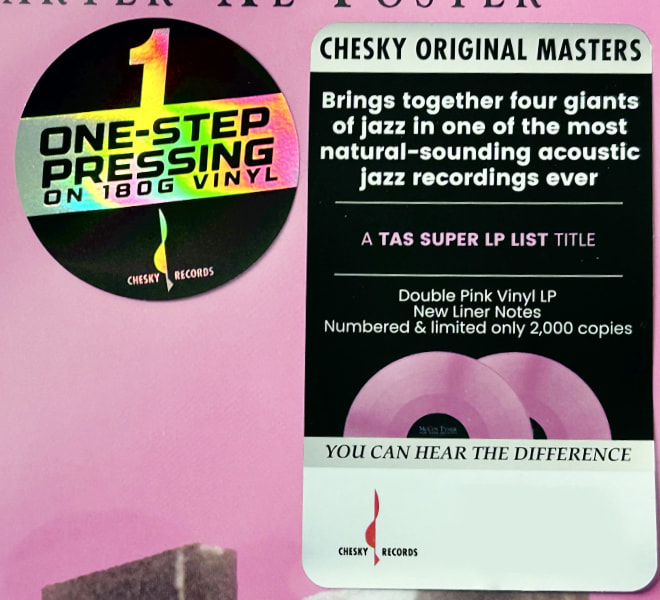
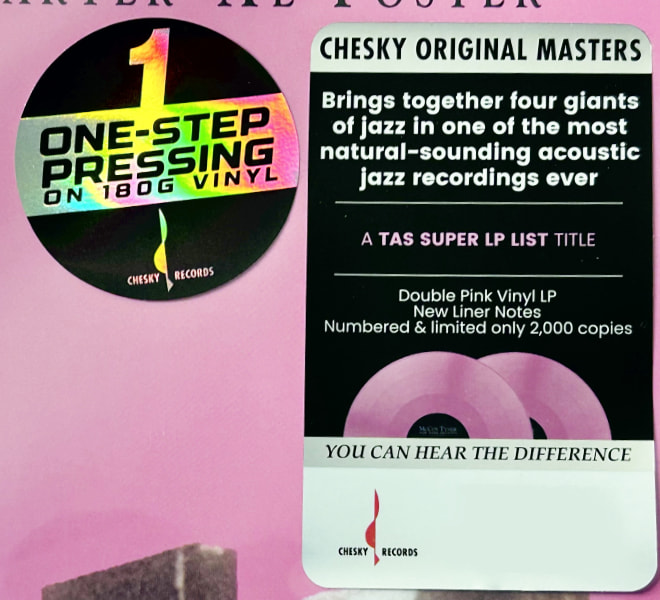
mccoy-tyner-new-york-reunion-hype-sticker

Crafted using the increasingly popular “one step” process, which reduces the number of plating stages required to press a record and can improve overall fidelity, this reissue comes with a strong technical pedigree. The opaque pink vinyl pressing is generally quiet, well centered, and free of obvious surface issues.

mccoy-tyner-new-york-reunion-liner-notes

This is a fine sounding all-digital recording of outstanding musicians playing together effortlessly. Perhaps too effortlessly at times. Feel wise, I’m reminded at points of those later period Oscar Peterson CDs on Telarc which at times sounded somehow too pristine and spotless for my tastes (and I say this as a pretty deep Peterson fan). Yet there are no doubt many lovely performances throughout New York Reunion such as Mr. Henderson’s extended solo sax intro (and outro) on Side 3’s “Ask Me Now” before Mr. Tyner comes in for an extended duet essentially.

mccoy-tyner-new-york-reunion-cd

Generally, I’ve enjoyed New York Reunion. My only question (not a complaint) is whether this pressing might have benefitted from some more empathetic mastering for vinyl? Don’t get me wrong, it sounds good: clean, crisp, and natural. I just wish it leaned a touch warmer. That said, considering the explicit commitment to avoiding “artificial enhancement” which would include equalization, this feels like one of those “it is what it is” scenarios.

Based on available online information, this new 2LP limited edition of 2,000 copies appears to mark the first time the complete New York Reunion album—all eight tracks originally issued on a single CD in 1992—has been released on vinyl. Earlier vinyl editions from 1992 and 2016 do exist, but those appear to have been single LP versions rather than the full 2LP presentation.

mccoy-tyner-new-york-reunion-prior-lps

At the time of this review The McCoy Tyner Quartet’s New York Reunion can be found easily on Amazon. I have not seen any indication of whether a standard (and perhaps less pricey) black vinyl edition will be available in the future.

Where to buy: $69.98 at Amazon

Advertisement

Mark Smotroff is a deep music enthusiast / collector who has also worked in entertainment oriented marketing communications for decades supporting the likes of DTS, Sega and many others. He reviews vinyl for Analog Planet and has written for Audiophile Review, Sound+Vision, Mix, EQ, etc.  You can learn more about him at LinkedIn.)

Advertisement. Scroll to continue reading.

Source link

Advertisement
Continue Reading

Tech

If you want a transparent iPhone Air with a SIM slot, it'll cost you

Published

on

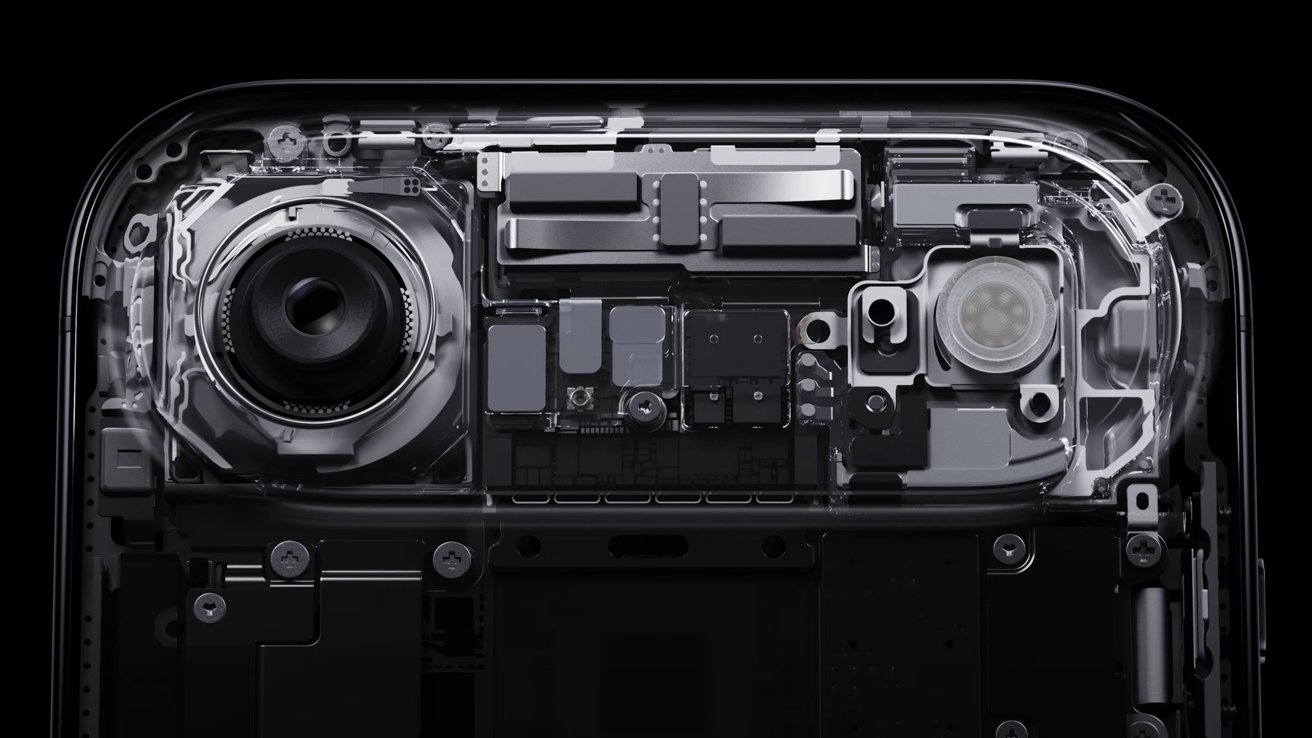
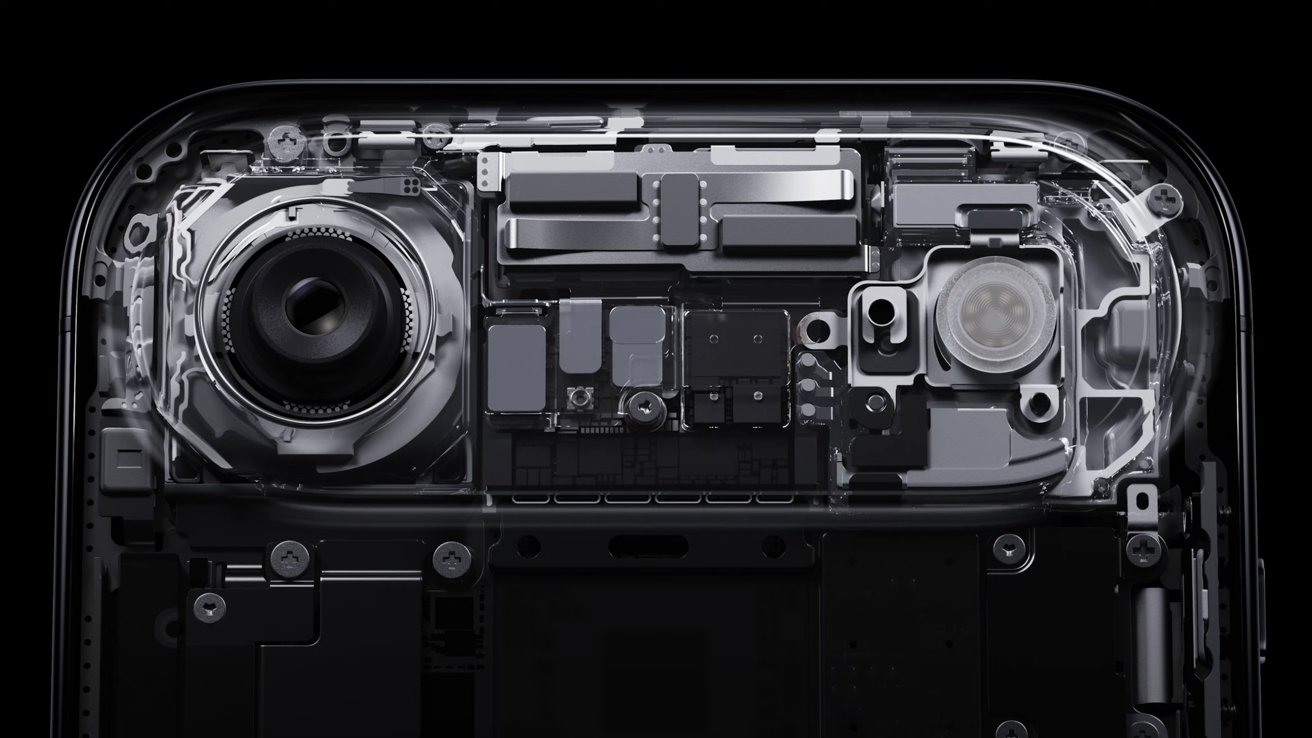
A transparent iPhone Air with a working SIM slot looked like a hardware hack for the ages, but it also showed exactly what got sacrificed when factory design margins disappeared.

Close-up transparent smartphone back showing internal components, including a large camera lens, flash module, circuit boards, screws, and metallic parts arranged symmetrically against a dark backgroundiPhone Air

In a new video, YouTuber Linzin took viewers on a 22-minute journey through Huaqiangbei, China’s famous electronics market. There, technicians worked their magic by laser-stripping the rear glass of an iPhone Air for a see-through effect.
They didn’t stop there and milled space for a SIM slot directly into the frame. They also handled delicate board-level microsoldering to make the eSIM-only iPhone Air work with a physical SIM card.
The modified phone powered on, connected to a carrier, and worked just fine. It did run hotter under load and lost its water resistance.
Continue Reading on AppleInsider | Discuss on our Forums

Source link

Continue Reading

Tech

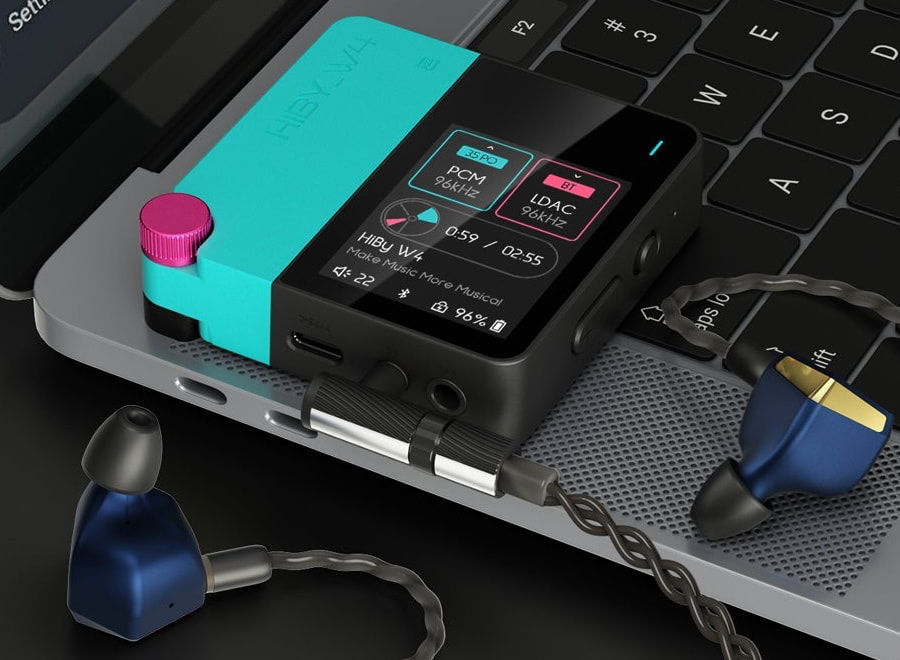
HiBy W4 is Portable Bluetooth DAC Amp for only $99

Published

on

HiBy might not have household recognition in the U.S., but the company isn’t exactly new to this game. With 15 years of experience building digital audio players and portable electronics, and a HiByMusic app ecosystem that spans 100 countries with more than 3 million users on iOS and Android, the brand has quietly built serious infrastructure behind the scenes. Now it’s aiming a little more directly at the portable DAC and headphone amplifier crowd with the release of the HiBy W4.

The W4 is a Bluetooth enabled portable DAC and headphone amplifier designed to handle both wired and wireless hi resolution playback in one compact chassis. That matters because the appetite for Bluetooth capable DAC and headphone amps that can properly decode hi res formats and deliver enough output for modern IEMs and reasonably efficient headphones continues to grow. We saw that firsthand with the iFi GO Blu Air, which impressed us with its balance of sound quality, usable power, and everyday practicality.

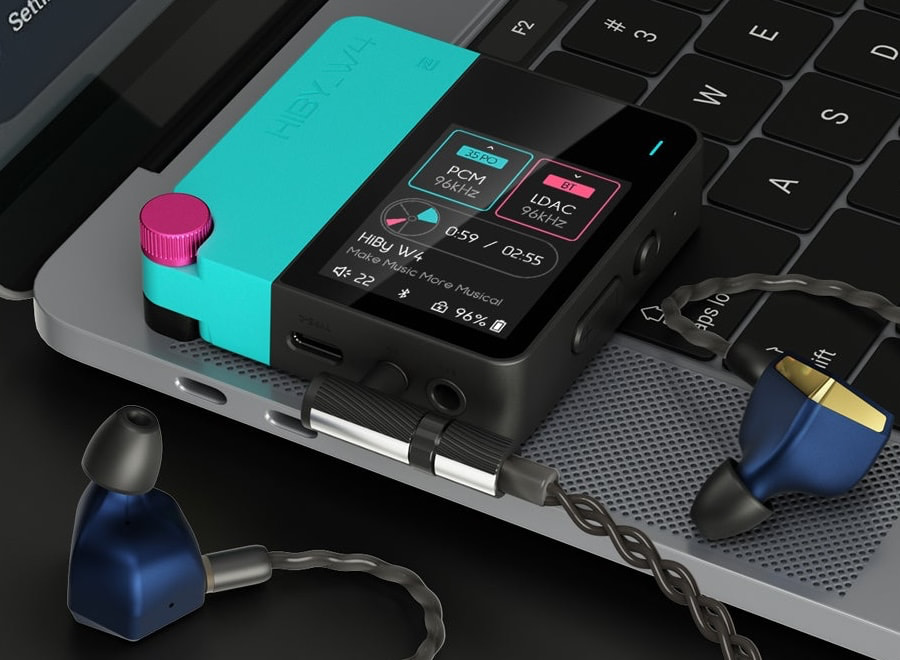
hiby-w4-portable-bluetooth-amp-iems

HiBy’s pitch with the W4 is similar in concept: fashionable industrial design, dual mode operation, and enough decoding and amplification muscle to make streaming from a smartphone feel less like a compromise and more like a system choice. Whether it can stand out in an increasingly competitive under $250 portable hi-fi segment is the real question.

The HiBy W4 features a flexible physical design that supports both clip on use and magnetic attachment for on the go listening. Its integrated magnetic system allows it to attach directly to compatible smartphones or MagSafe style phone cases, functioning much like a MagSafe accessory for a cleaner, cable managed setup.

Advertisement
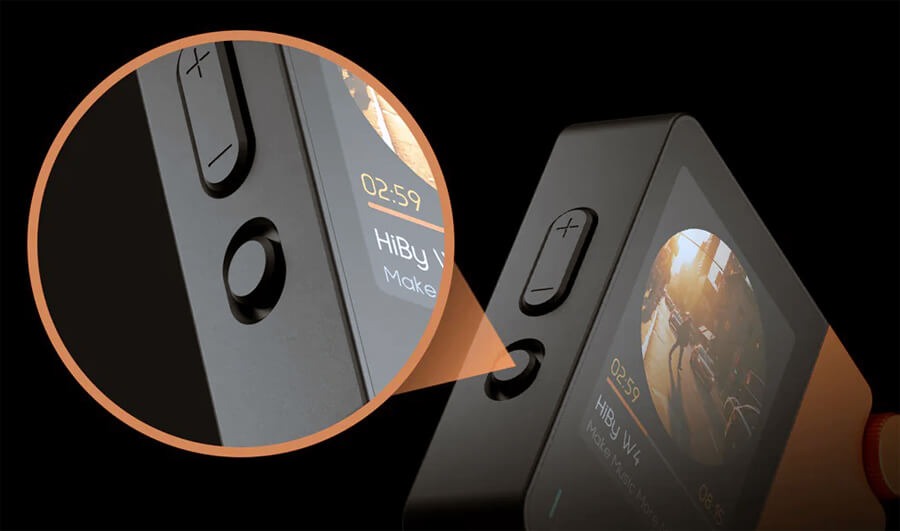
hib4-w4-uncharge-button
Uncharge Mode switch

The W4’s Uncharge Mode shifts the power source to USB operation, isolating the unit from the connected smartphone so it does not draw from the phone’s battery. In addition to preserving battery life, this separation can also help reduce electrical interference from the handset.

The W4 includes a built in 1500 mAh battery to support extended playback sessions, and Uncharge Mode is engaged using a dedicated button located on the left side of the chassis.

On the inside, the HiBy W4 has dual Cirrus Logic CS43198  DAC chips, paired with dual headphone amplifiers. The DACs support PCM up to 768kHz/32-bit and native DSD512. 

The HiBy W4 employs dual low phase noise active crystal oscillators operating at 45.1584 MHz and 49.152 MHz to support more accurate clocking and stable audio playback across common sampling rates.

Advertisement

Connectivity includes both 3.5 mm single ended and 4.4 mm balanced stereo outputs. In balanced mode, the W4 delivers up to 475 mW of output power, driven by dual SGM8262 amplifier chips. That is a substantial figure for a device in this category and nearly double the balanced 4.4 mm output we measured from the iFi GO Blu Air. It provides enough headroom for a wide range of in ear monitors and many relatively efficient over ear headphones, giving the W4 more flexibility than ultra sensitive IEM duty alone.

For wireless performance, the HiBy W4 incorporates a Qualcomm QCC5181 chipset, supporting Bluetooth 5.4, with codec support for Snapdragon Sound, aptX Adaptive, aptX Lossless, aptX HD, LDAC, AAC, and SBC.

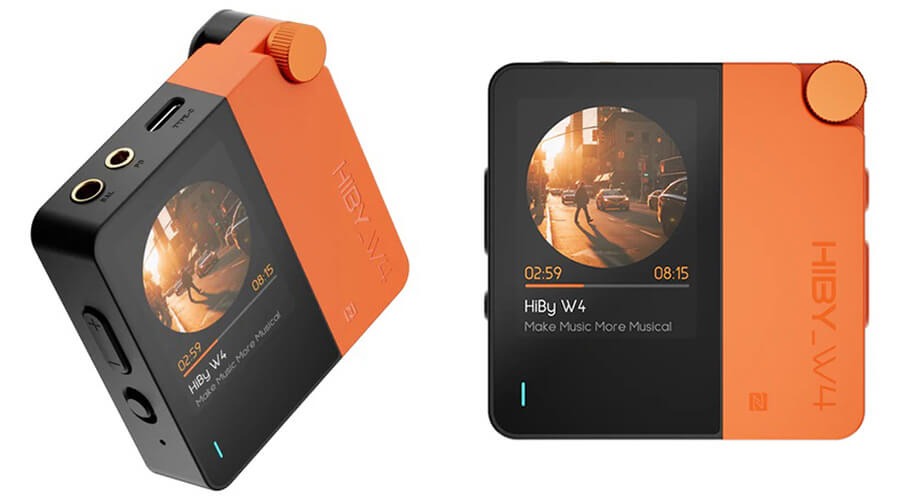
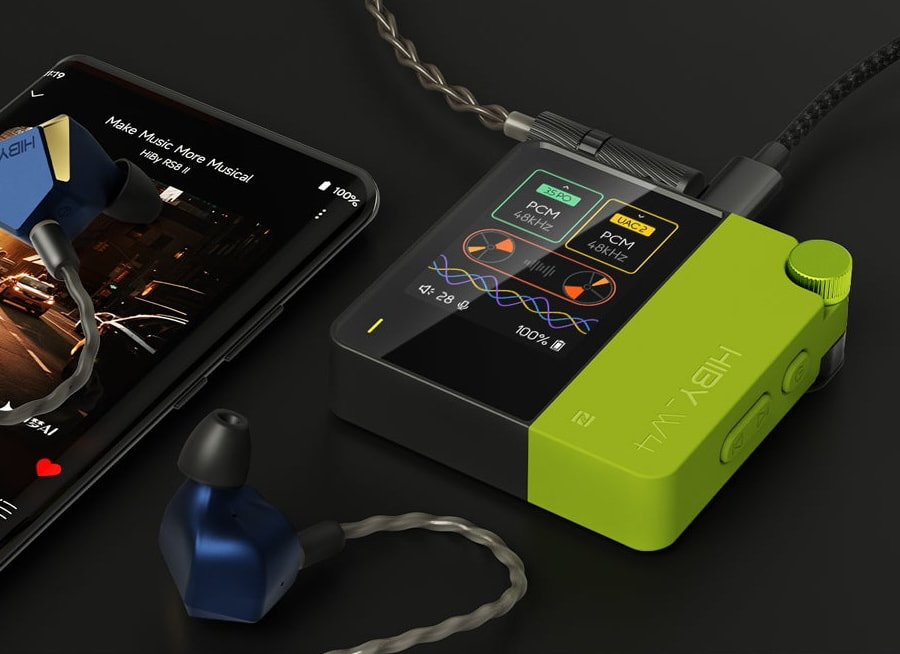
The HiBy W4 is positioned as a stylish everyday carry accessory, pairing a black front display with a contrasting, brightly colored rear module that makes it stand out at a glance.

Advertisement. Scroll to continue reading.

A 2-inch touch screen provides full device control and can display album artwork when operating in Bluetooth mode. Users can manage pairing, playback, and system settings directly from the W4 itself, reducing the need to constantly reach for a smartphone and creating a more self contained, user friendly experience.

Advertisement
hiby-w4-orange

HiBy W4 Specifications

HiBy Model  W4
Product Type Portable HiFi Bluetooth Headphone Amplifier
Price $99
Body Materials  Aluminum Alloy + ABS
Bluetooth Chip QCC5181
DAC Dual CS43198
Supported Audio Specifications DSD512, PCM 768kHz
Bluetooth Version 5.4
Bluetooth Codec Support aptX Adaptive,aptX lossless, aptX-HD, aptX, LDAC, AAC, SBC
Bluetooth Range 10 Meters
USB Input Yes
Control Methods Touch Screen, Physical Buttons, Voice Prompt
Headphone Jacks 3.5mm (CTIA Standard)

4.4mm Balanced Jack

Microphone  Supported via 3.5mm Headphone Jack
cVc Noise Reduction Supported via 3.5mm Headphone Jack
Remote Control Supported via 3.5mm Headphone Jack
NFC (Near Field Communication) Yes
Power Follow Mode Yes
Battery Capacity 1500 mAh
Battery Life 3.5mm: 6.3 hours

4.4mm: 5 hours

Advertisement

Continuous AAC Playback

Dimensions (excluding clip) 66.15 x 65.1 x 21.5 mm

2.06 x 2.56 x 0.85 inches

Weight  93.3 Grams / 3 ounces
Color Options White, Orange, Cyan, Black, Yellow, Green

Advertisement

The Bottom Line 

There is no shortage of portable Bluetooth-enabled DAC/AMPs, and the category now stretches from basic sub-$100 dongles to feature-heavy models approaching $1,000. At $99, the HiBy W4 lands at the aggressive low end of that spectrum but brings a feature set that is not typical at this price.

Support for aptX Lossless and LDAC gives it legitimate hi-res wireless credibility, while dual oscillators, balanced 4.4mm output rated at up to 475mW, and a built-in 1500mAh battery push it beyond entry-level expectations. The integrated 2-inch touch screen also sets it apart from competitors like the iFi GO Blu Air, which relies entirely on a smartphone for visual feedback and navigation. Some listeners may prefer controlling everything from their phone anyway, especially when switching between streaming platforms, but the W4 at least gives users the option of direct, on-device control without guesswork.

Add in the magnetic MagSafe-style attachment, clip-on portability, and a Car-Optimized Mode accessible through the HiByBlue app, and the W4 starts to look less like a budget experiment and more like a calculated move into the mainstream portable hi-fi space.

Who is this for? Smartphone listeners who want true hi-res Bluetooth support, enough power for serious IEMs and efficient headphones, and a self-contained interface without spending several hundred dollars. At $99, it is positioned squarely for commuters, students, travelers, and anyone building a compact everyday-carry audio setup without sacrificing codec support or balanced output. That is a hard combination to ignore at this price.

Advertisement
hiby-w4-portable-bluetooth-amp-green

Price & Availability

The HiBy W4 is available for $99 USD via HiBy’s official online store and Linsoul.

Source link

Advertisement
Continue Reading

Tech

Inexpensive MacBook is the perfect way to get users deeper into the Apple ecosystem

Published

on

Apple’s low-cost MacBook will fill a long-standing gap in its lineup — and bring a new wave of users into the ecosystem.

Seven colorful Apple laptops arranged in a circular fan, each partially open, showing different pastel colors including blue, green, yellow, pink, purple, and gold on a white background
An AppleInsider rendition of what a multi-colored MacBook ad spot could look like

March 4 marks Apple’s next big announcement day, which it plans to celebrate with three invite-only “experiences” in London, Shanghai, and New York City. If you follow the rumors and speculation, you’ll know that Apple’s allegedly getting ready to add a new, lower-priced MacBook back into its lineup.
I, personally, think this is a brilliant move. Apple could really expand its Mac audience, and here’s why.
Continue Reading on AppleInsider | Discuss on our Forums

Source link

Continue Reading

Tech

Today’s NYT Mini Crossword Answers for Feb. 22

Published

on

Looking for the most recent Mini Crossword answer? Click here for today’s Mini Crossword hints, as well as our daily answers and hints for The New York Times Wordle, Strands, Connections and Connections: Sports Edition puzzles.


Need some help with today’s Mini Crossword? For me, 4-Down was a puzzler, but the other answers filled it in. Read on for all the answers. And if you could use some hints and guidance for daily solving, check out our Mini Crossword tips.

If you’re looking for today’s Wordle, Connections, Connections: Sports Edition and Strands answers, you can visit CNET’s NYT puzzle hints page.

Advertisement

Read more: Tips and Tricks for Solving The New York Times Mini Crossword

Let’s get to those Mini Crossword clues and answers.

completed-nyt-mini-crossword-puzzle-for-feb-22-2026.png

The completed NYT Mini Crossword puzzle for Feb. 22, 2026.

Advertisement

NYT/Screenshot by CNET

Mini across clues and answers

1A clue: Soybeans or rice
Answer: CROP

5A clue: Bit of gossip
Answer: RUMOR

7A clue: South American flatbread made of ground maize
Answer: AREPA

Advertisement

8A clue: ___ 8 Ball
Answer: MAGIC

9A clue: Something a pirate might make you walk
Answer: PLANK

Mini down clues and answers

1D clue: Sudden muscle tightness
Answer: CRAMP

2D clue: Like the areas beyond suburbia
Answer: RURAL

Advertisement

3D clue: Luxury Swiss watch brand
Answer: OMEGA

4D clue: Stop by unannounced
Answer: POPIN

6D clue: Billiards triangle
Answer: RACK

Advertisement

Source link

Continue Reading

Tech

Meta inks deal to use millions of Nvidia chips for data centres

Published

on

Meta plans to spend up to $135bn this year to support its Meta Superintelligence Labs efforts as well as its core business.

Meta will reportedly spend billions of dollars on a multi-year partnership with Nvidia to use “millions” of its chips to support Meta’s data centre build-out, the two companies announced yesterday (17 February).

Commenting on the deal, Nvidia founder and CEO Jensen Huang said that no other company deploys AI at Meta’s scale.

The announcement comes as the social media giant gears up to spend as much as $135bn this year to support its Meta Superintelligence Labs efforts as well as its core business, while competing chipmakers attempt to challenge Nvidia’s global dominance in AI.

Advertisement

Even Nvidia’s Big Tech customers, including Meta and OpenAI, are building their own in-house hardware.

As per the mega deal, Meta will deploy millions of Nvidia Blackwell and new Rubin GPUs to build “hyperscale” data centres optimised for both AI training and inference.

The company will also integrate Nvidia’s recently-announced Spectrum-X ethernet switches for Meta’s Facebook open switching system platform, and expand its usage of Nvidia’s confidential computing services beyond WhatsApp and into other offerings.

The companies said they will continue their partnership to deploy Arm-based Nvidia Grace CPUs for Meta’s data centre production applications, representing the first large-scale Nvidia Grace-only deployment.

Advertisement

They are also collaborating to deploy Nvidia’s Vera CPUs, with the potential for large-scale deployment next year. Meta is also tapping Nvidia’s GB300-based systems to continue developing its data centres.

It was reported yesterday that Nvidia sold off the last of its stake in Arm – a company it once tried to acquire. Last September, Huang announced a “giant” $100bn deal with OpenAI that has apparently not yet transpired.

“No one deploys AI at Meta’s scale – integrating frontier research with industrial-scale infrastructure to power the world’s largest personalisation and recommendation systems for billions of users,” said Huang.

“Through deep co-design across CPUs, GPUs, networking and software, we are bringing the full Nvidia platform to Meta’s researchers and engineers as they build the foundation for the next AI frontier.”

Advertisement

Meta founder and CEO Mark Zuckerberg added: “We’re excited to expand our partnership with Nvidia to build leading-edge clusters using their Vera Rubin platform to deliver personal superintelligence to everyone in the world.”

Don’t miss out on the knowledge you need to succeed. Sign up for the Daily Brief, Silicon Republic’s digest of need-to-know sci-tech news.
Jensen Huang, World Economic Forum Annual Meeting, 2026. Image: World Economic Forum/Flickr (CC BY-NC-SA 4.0)

Advertisement

Source link

Continue Reading

Tech

NYT Strands hints and answers for Sunday, February 22 (game #721)

Published

on

Looking for a different day?

A new NYT Strands puzzle appears at midnight each day for your time zone – which means that some people are always playing ‘today’s game’ while others are playing ‘yesterday’s’. If you’re looking for Saturday’s puzzle instead then click here: NYT Strands hints and answers for Saturday, February 21 (game #719).

Strands is the NYT’s latest word game after the likes of Wordle, Spelling Bee and Connections – and it’s great fun. It can be difficult, though, so read on for my Strands hints.

Advertisement

Source link

Advertisement
Continue Reading

Tech

Sam Altman would like remind you that humans use a lot of energy, too

Published

on

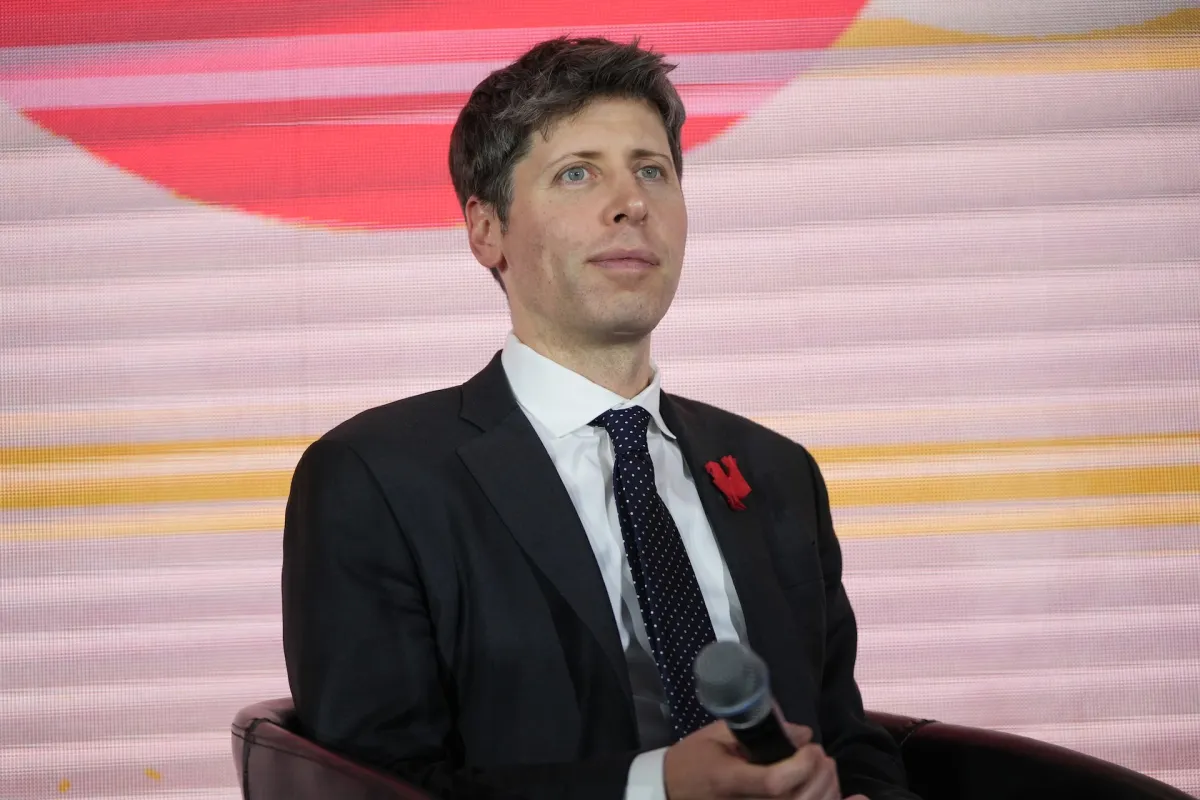
OpenAI CEO Sam Altman addressed concerns about AI’s environmental impact this week while speaking at an event hosted by The Indian Express.

For one thing, Altman — who was in India for a major AI summit — said concerns about AI’s water usage are “totally fake,” though he acknowledged it was a real issue when “we used to do evaporative cooling in data centers.”

“Now that we don’t do that, you see these things on the internet where, ‘Don’t use ChatGPT, it’s 17 gallons of water for each query’ or whatever,” Altman said. “This is completely untrue, totally insane, no connection to reality.”

He added that it’s “fair” to be concerned about “the energy consumption — not per query, but in total, because the world is now using so much AI.” In his view, this means the world needs to “move towards nuclear or wind and solar very quickly.”

Advertisement

There’s no legal requirement for tech companies to disclose how much energy and water they use, so scientists have been trying to study it independently. Data centers have also been connected to rising electricity prices.

Citing a previous conversation with Bill Gates, the interviewer asked whether it’s accurate to say a single ChatGPT query currently uses the equivalent of 1.5 iPhone battery charges, to which Altman replied, “There’s no way it’s anything close to that much.”

Altman also complained that many discussions about ChatGPT’s energy usage are “unfair,” especially when they focus on “how much energy it takes to train an AI model, relative to how much it costs a human to do one inference query.”

Techcrunch event

Advertisement

Boston, MA
|
June 9, 2026

“But it also takes a lot of energy to train a human,” Altman said. “It takes like 20 years of life and all of the food you eat during that time before you get smart. And not only that, it took the very widespread evolution of the 100 billion people that have ever lived and learned not to get eaten by predators and learned how to figure out science and whatever, to produce you.”

Advertisement

So in his view, the fair comparison is, “If you ask ChatGPT a question, how much energy does it take once its model is trained to answer that question versus a human? And probably, AI has already caught up on an energy efficiency basis, measured that way.”

You can watch the full interview below. The conversation about water and energy usage begins at around 26:35.

Source link

Advertisement
Continue Reading

Tech

Quieting Noisy Resistors | Hackaday

Published

on

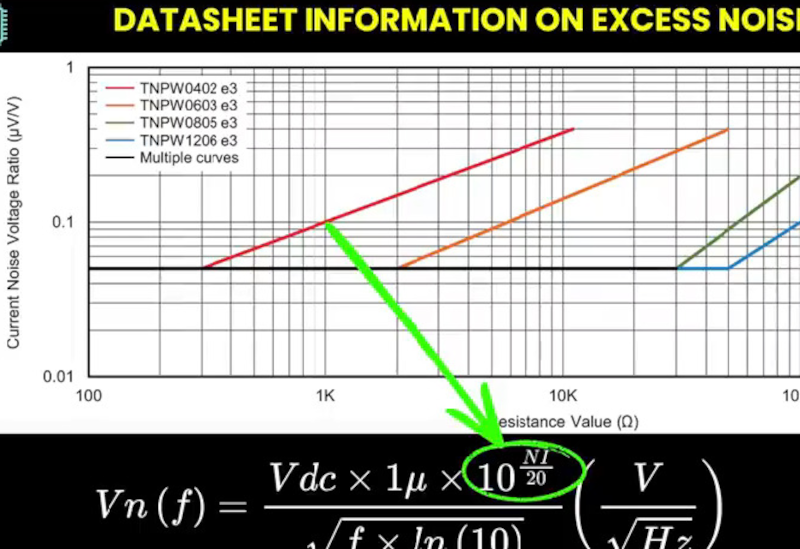
[Hans Rosenberg] has a new video talking about a nasty side effect of using resistors: noise. If you watch the video below, you’ll learn that there are two sources of resistor noise: Johnson noise, which doesn’t depend on the construction of the resistor, and 1/f noise, which does vary depending on the material and construction of the resistor.

In simple terms, some resistors use materials that cause electron flow to take different paths through the resistor. That means that different parts of the signal experience slightly different resistance values. In simple applications, it won’t matter much, but in places where noise is an important factor, the 1/f or excess noise contributes more  to errors than the Johnson noise at low frequencies.

[Hans] doesn’t just talk the math. He also built a simple test rig that lets him measure the 1/f noise with some limitations. While you might pretend that all resistors are the same, the test shows that thick film resistors produce much more noise than other types.

Advertisement

The video shows some rule-of-thumb lists indicating which resistors have better noise figures than others. Of course, resistors are only one source of noise in circuits. But they are so common that it is easy to forget they aren’t as perfect as we pretend in our schematics.

Want to learn more about noise? We can help. On the other hand, noise isn’t always a bad thing.

Advertisement

Source link

Continue Reading

Tech

Intel reportedly eyeing Nova Lake-S Ultra processors for next year

Published

on

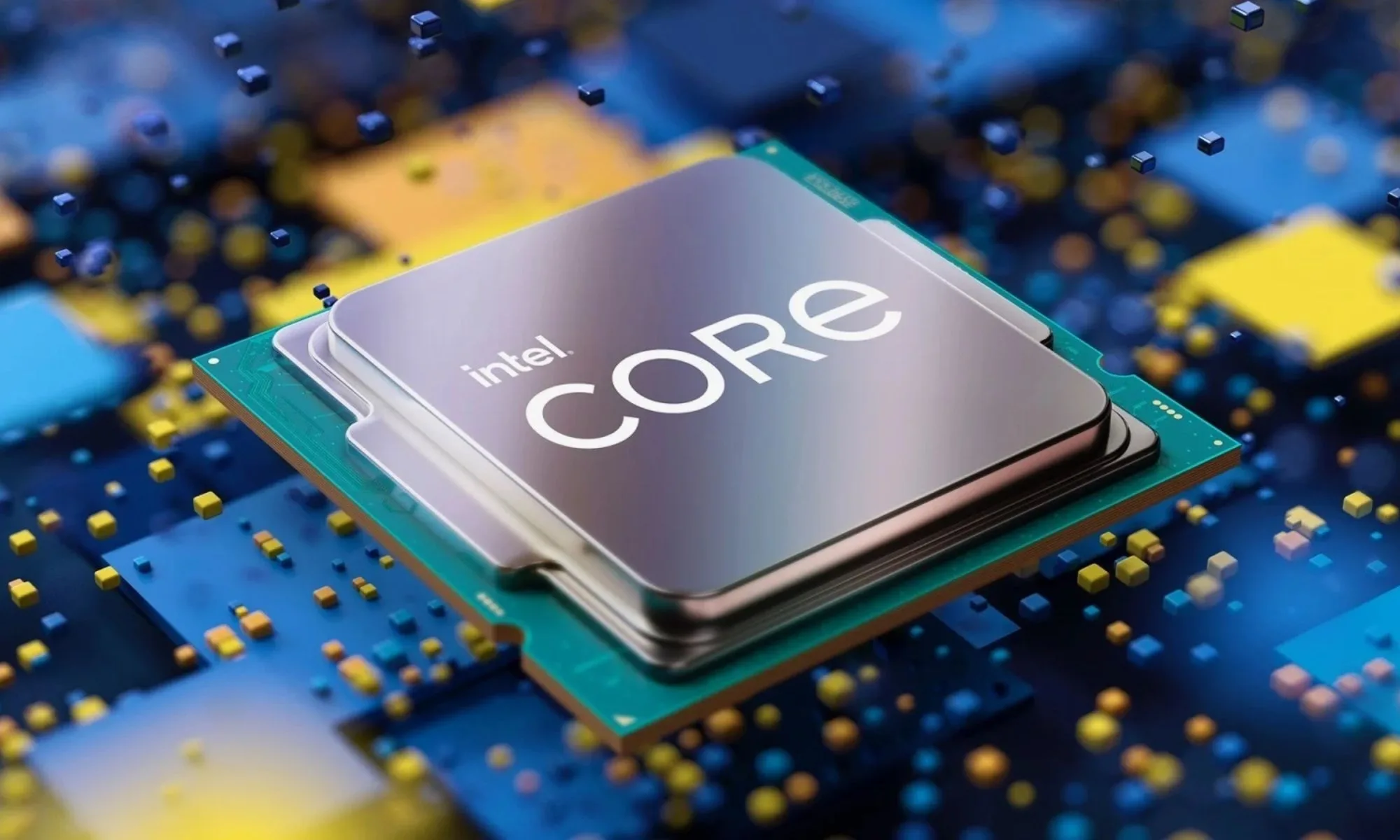
Intel’s long-term desktop roadmap may be moving faster than expected. New leaks suggest the company is already preparing its Nova Lake-S Core Ultra Series 4 processors, with a possible launch window shifting closer than earlier rumors indicated. According to reliable leaksters HXL and Golden Pig Upgrade, Intel’s next major desktop CPU family could arrive around CES 2027, potentially landing sooner than previous roadmaps suggested. That would position Nova Lake as Intel’s next big step after the current Arrow Lake and Panther Lake generations.

Nova Lake is expected to represent a significant architectural jump. The chips are rumored to use Intel’s next-generation CPU cores alongside new integrated graphics and stronger AI acceleration. The architecture is expected to combine Coyote Cove performance cores and Arctic Wolf efficiency cores, continuing Intel’s hybrid CPU design approach.

Additionally, the upcoming platform may also introduce a major hardware shift for desktop builders. Leaks point to a brand-new LGA 1954 socket and 900-series chipsets, meaning future CPUs will likely require new motherboards. This kind of platform reset usually signals a bigger generational change rather than a simple refresh.

A major platform shift could be coming

If these rumors prove accurate, Nova Lake could bring more than just faster CPUs. Reports suggest the platform may offer up to 48 PCIe lanes, improved cache design, and stronger integrated graphics powered by Intel’s next-gen Xe architecture. There are also expectations of a new NPU designed to push AI performance further, reflecting the industry’s growing focus on AI-accelerated workloads. This timeline also fits into the broader CPU race, as AMD is reportedly preparing its own next-generation desktop chips around the same period.

Advertisement

For PC enthusiasts, the takeaway is fairly simple. A major platform shift could be on the horizon, and the next wave of desktop CPUs may bring bigger changes than usual. If a long-term PC build is on the cards, keeping an eye on Intel’s roadmap over the next year might be a smart move. After all, component prices don’t look ready to calm down anytime soon, so waiting could mean better performance and more time to save up for it.

Source link

Continue Reading

Trending

Copyright © 2025