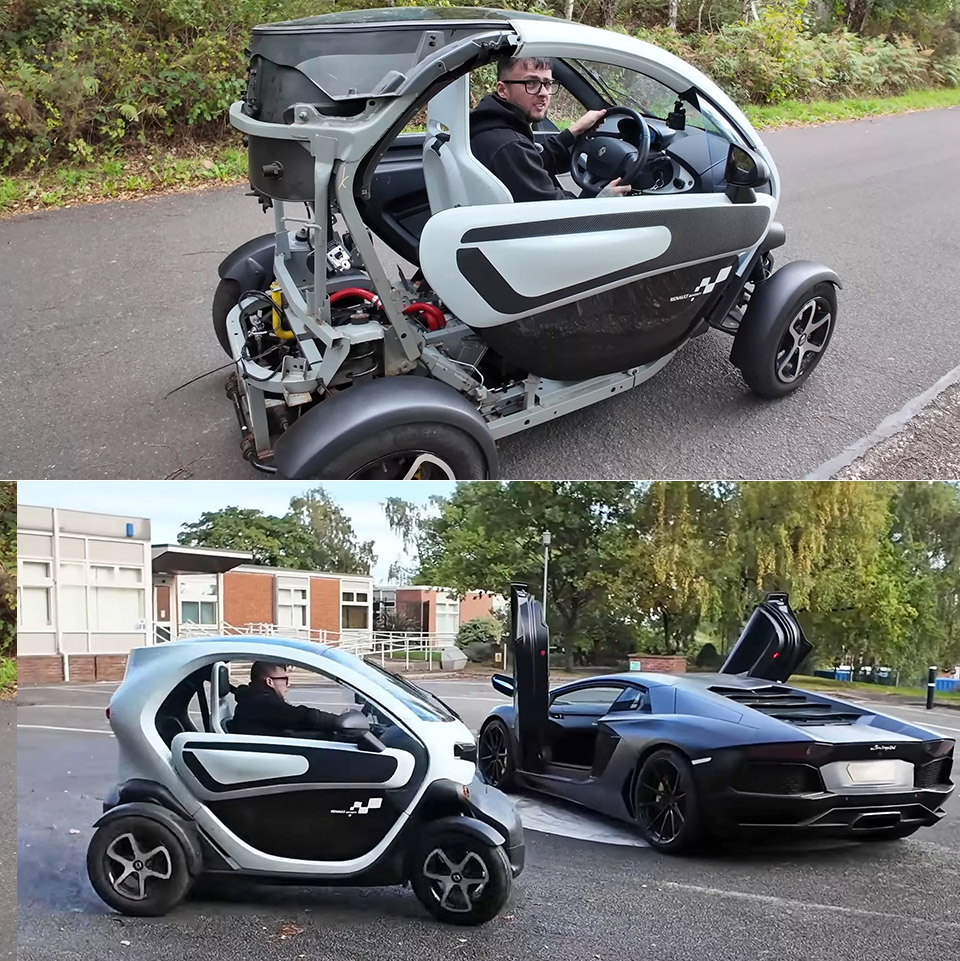
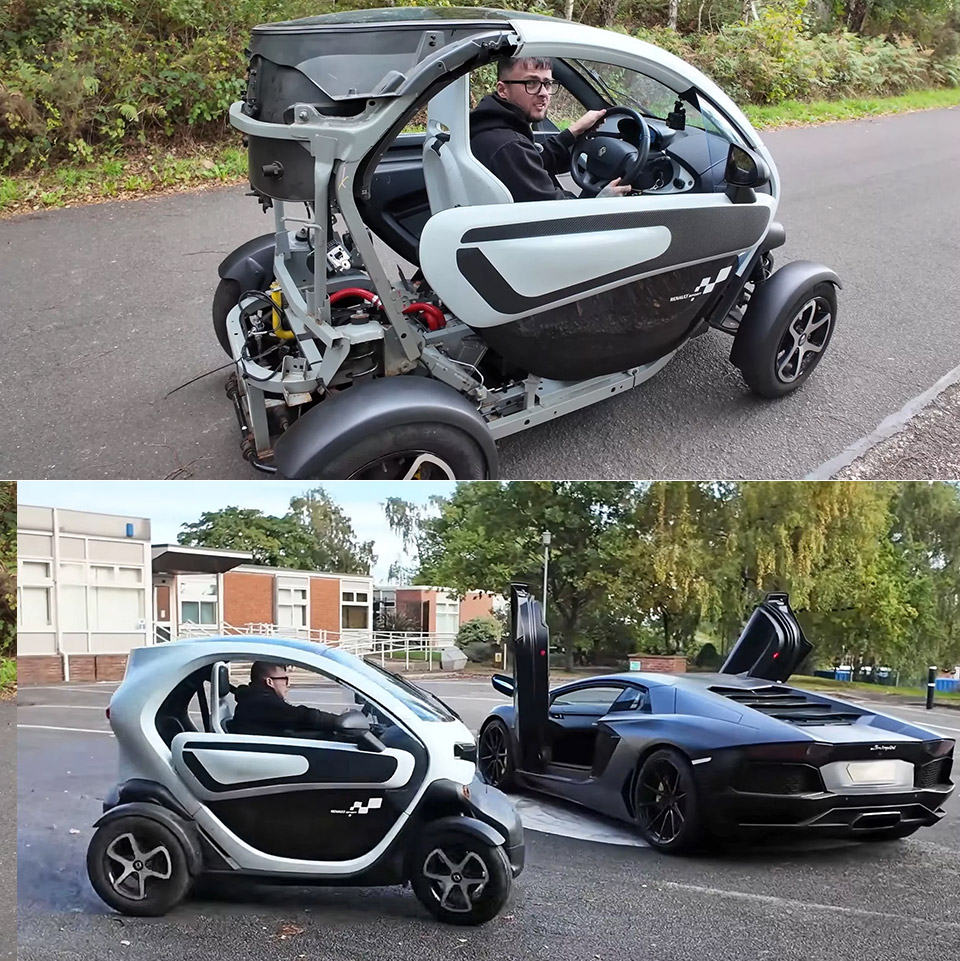
DM Performance took a close look at the Renault Twizy and simply had to get their hands on it. They thought the conventional 17 HP electric motor was severely inadequate. So they decided to replace it with the entire assembly from a Stark Varg electric motocross bike. This gives the little two-seater an impressive 80 horsepower and a whopping 692 pound-feet of torque, thanks to a unique chain drive system that replaces the usual setup.
The team at DM Performance realized that the previous differential wouldn’t cut it with all that extra torque, so they rebuilt it with a stainless steel casing and greased it with some high-pressure grease to help it withstand the twist without blowing apart. They also chopped away the rear section to fit in the new motor and chain drive, as well as some Maxpeedingrods coilovers to keep the Twizy on the road and prevent it from doing a funny flip while turning aggressively. Then there’s the battery swap; the one from the Stark Varg weighs only 70 pounds compared to the original 220 pounds, which is a significant weight savings, and it also packs a little more grunt.
🛴【Powerful Motor】This electric scooter is equipped with 500W brushless motors which can reach a max speeds of around 19 mph, it can climb up…
🛴【Smooth Ride】Electric scooter features 10inch on-road and offroad solid tires, double brakes, comfy handlebars, easy to set up, use and…
🛴【Long-lasting Battery】Travelling long distances you want reachs up to 23 miles on a single 4-5 hours fast charging. It can be ridden by adults…
The underlying performance metrics reveal the remainder of the story. This Twizy has beaten an Audi S1 Quattro to 100 mph, performed donuts and slides, and even circled a Lamborghini Aventador while burning the rear axle. Its rear-wheel drive architecture and fast electric power make it want to slide all over the place, which is ideal for the type of sideways activity this car was designed for. Not unexpectedly, the Twizy was originally intended to be a city crawler.
Sunday’s men’s ice hockey final live stream at the 2026 Winter Olympics sees the curtain brought down on this year’s games with one of its most-anticipated events – a rematch of the thrilling women’s final between USA vs Canada just a few days ago.
This year’s men’s tournament was already making headlines way before the athletes reached Italy, being the first time for over a decade that NHL players have been passed to compete. That has finally allowed players like Canada’s awesome Connor McDavid to light up the games (he’s leading the scoring with 2 goals and 11 assists), while Team USA’s veteran goaltender Connor Hellebuyck has demonstrated to the world how difficult he is to beat.
Now the pair go head-to-head in a final between two undefeated nations. Having notched up 36 goals between them in the group stage, they haven’t had the playoffs all their own way. It took Canada a third period onslaught and a last minute goal from Colorado Avalanche’s to Nathan MacKinnon down champions Finland in the semifinals. While USA were taken to overtime by Sweden in the quarters, before Minnesota Wild’s Quinn Hughes hit his match-winning shot.
Advertisement
Will Canada get the better of their southern neighbors this time? Here’s where to stream USA vs Canada live in the men’s ice hockey final and watch Winter Olympics 2026 online from anywhere and potentially for FREE.
Watch Winter Olympics men’s Ice Hockey final 2026 for FREE
The men’s ice hockey final at the Winter Olympics will be live streamed for FREE in multiple locations across the globe including Canada, the UK, Australia and Ireland.
How to watch Winter Olympics men’s Ice Hockey final live streams in New Zealand
In New Zealand, Sky Sport NZ is showing the men’s ice hockey final.
Advertisement
You can access Sky Sport through satellite TV or get a live stream with the Sky Sport Now subscription service, starting at $29.99 per day or $54.99 per month.
Missing the ice hockey due to commitments overseas?Norton VPN will give you access to your home streaming service.
Winter Olympics men’s Ice Hockey final FAQs
When does the men’s ice hockey final start at the Winter Olympics 2026?
The men’s ice hockey final between USA vs Canada at the 2026 Winter Olympics takes place on Sunday, February 22.
Advertisement
It’s set to start at 2.10pm local time at the Arena Milano in Italy. That’s 8.10am ET / 5.10am PT in the US and 1.10pm GMT in the UK on Sunday.
Can I watch Winter Olympics Ice Hockey on my mobile?
Of course, most broadcasters have streaming services that you can access through mobile apps or via your phone’s browser – for example, Peacock, BBC iPlayer and CBC Gem all have mobile apps.
You can also stay up-to-date with all things Autumn Nations on the official social media channels on X (@MilanoCortina2026), YouTube (@Olympics) and Instagram (@milanocortina2026).
We test and review VPN services in the context of legal recreational uses. For example: 1. Accessing a service from another country (subject to the terms and conditions of that service). 2. Protecting your online security and strengthening your online privacy when abroad. We do not support or condone the illegal or malicious use of VPN services. Consuming pirated content that is paid-for is neither endorsed nor approved by Future Publishing.
Theoretically a belt drive makes for a great upgrade to a bicycle, as it replaces the heavier, noisy and relatively maintenance-heavy roller chain with a zero-maintenance, whisper-quiet and extremely reliable belt that’s rated at an amazing 20-30,000 km before needing a replacement. Of course, that’s the glossy marketing brochure version of reality, which differed significantly from what [Tristan Ridley] experienced whilst cycling around the globe.
Although initially he was rather happy with his bike, its sealed car-like Pinion gearbox and Gates carbon belt drive system, while out in the wilds of Utah he had a breakdown when the belt snapped. When the spare belt that he had carried with him for the past months also snapped minutes later after fitting it on, it made him decide to switch back to the traditional bush roller chain.
Despite this type of chain drive tracing its roots all the way back to Leonardo da Vinci, they actually offer many advantages over the fancy carbon-fiber-reinforced polyurethane belt. Although with the Pinion gearbox the inability to use a derailleur gearing system is no big deal, [Tristan] found that the ‘zero maintenance’ part of the belt was not true for less hospitable roads
Anyone up for some tasty peanut butter? (Credit: Tristan Ridley, YouTube)
A big issue was that of abrasive dust, which created a very noisy coating on the belt that’d have to be regularly cleaned off with precious water, or by having silicone lubricant sprayed on the belt. Even with all that care he found that the belt would snap after about 8,000 km, well below the rated endurance.
When it came to super-sticky mud, called peanut butter mud for good reasons, he found that chains also cope much better with this, as the mud will just squeeze out of the chain and be forced off the sprocket, whereas the belt will happily keep compacting the mud onto the contact surfaces, increasing belt tension and requiring constant cleaning to not become hopelessly stuck.
Advertisement
The Utah breakdown also showed why these belts are actually very fragile: the replacement belt had been packed away folded-up for a few months at that point in the luggage, and during storage the carbon fibers had become compromised to the point where the belt just snapped after a few minutes of use. A metal chain will happily be stored away for as long as you can keep it away from corrosion, and fold up very compactly.
Another awesome feature of roller chains is that they’re super-modular, allowing you to carry spare links and such with you for in-the-field repairs, while even the most remote bicycle store in any country can help you out with maintenance and repairs, unlike the special and highly custom belts that need to be shipped in by courier.
Of all the bicycle technologies that [Tristan] has used, it seems that only this drive belt has been an outright disappointment. The sealed gearbox would seem to be a massive improvement over finicky derailleurs, and hydraulic brakes are reliable and common enough that they haven’t been an issue so far.
His conclusion is that bicycle drive belts are fine if you do city driving, where they probably will last the rated kilometers, but they rapidly fall apart in even slightly adverse conditions.
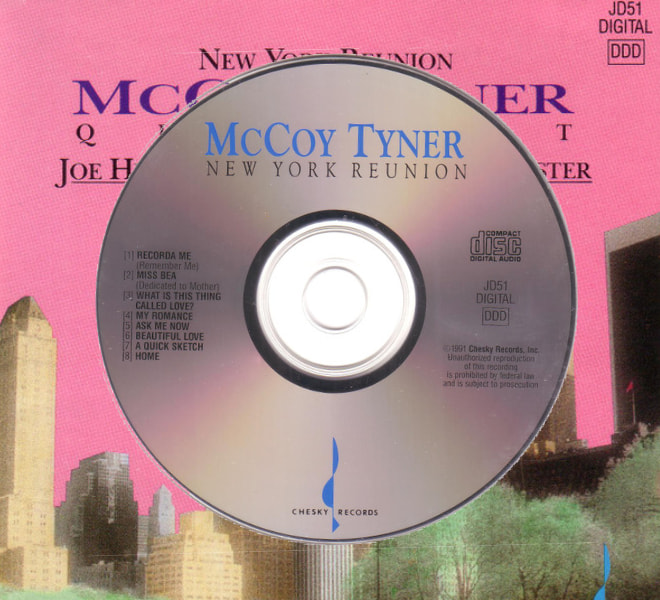
A 180-gram “one step” vinyl reissue of a 1991 release from noted audiophile label Chesky Records featuring jazz legends McCoy Tyner, Joe Henderson, Ron Carter and Al Foster is a good reason to celebrate music and life. It is a reminder of why great recordings and great players still matter.
The performances within New York Reunion are lush, relaxed and overall exemplary, capturing iconic seasoned musicians in an intimate studio setting with then state of the art recording technology. On the album cover, it states that the album was “recorded using a specially modified microphone with all tube Manley Reference electronics by David Manley from Vacuum Tube Logic Of America” It goes on to say that it was “recorded with minimalist techniques and without overdubbing or artificial enhancement to ensure the purest and most natural sound possible.”
Crafted using the increasingly popular “one step” process, which reduces the number of plating stages required to press a record and can improve overall fidelity, this reissue comes with a strong technical pedigree. The opaque pink vinyl pressing is generally quiet, well centered, and free of obvious surface issues.
This is a fine sounding all-digital recording of outstanding musicians playing together effortlessly. Perhaps too effortlessly at times. Feel wise, I’m reminded at points of those later period Oscar Peterson CDs on Telarc which at times sounded somehow too pristine and spotless for my tastes (and I say this as a pretty deep Peterson fan). Yet there are no doubt many lovely performances throughout New York Reunion such as Mr. Henderson’s extended solo sax intro (and outro) on Side 3’s “Ask Me Now” before Mr. Tyner comes in for an extended duet essentially.
Generally, I’ve enjoyed New York Reunion. My only question (not a complaint) is whether this pressing might have benefitted from some more empathetic mastering for vinyl? Don’t get me wrong, it sounds good: clean, crisp, and natural. I just wish it leaned a touch warmer. That said, considering the explicit commitment to avoiding “artificial enhancement” which would include equalization, this feels like one of those “it is what it is” scenarios.
Based on available online information, this new 2LP limited edition of 2,000 copies appears to mark the first time the complete New York Reunion album—all eight tracks originally issued on a single CD in 1992—has been released on vinyl. Earlier vinyl editions from 1992 and 2016 do exist, but those appear to have been single LP versions rather than the full 2LP presentation.
At the time of this review The McCoy Tyner Quartet’s New York Reunion can be found easily on Amazon. I have not seen any indication of whether a standard (and perhaps less pricey) black vinyl edition will be available in the future.
Mark Smotroff is a deep music enthusiast / collector who has also worked in entertainment oriented marketing communications for decades supporting the likes of DTS, Sega and many others. He reviews vinyl for Analog Planet and has written for Audiophile Review, Sound+Vision, Mix, EQ, etc. You can learn more about him at LinkedIn.)
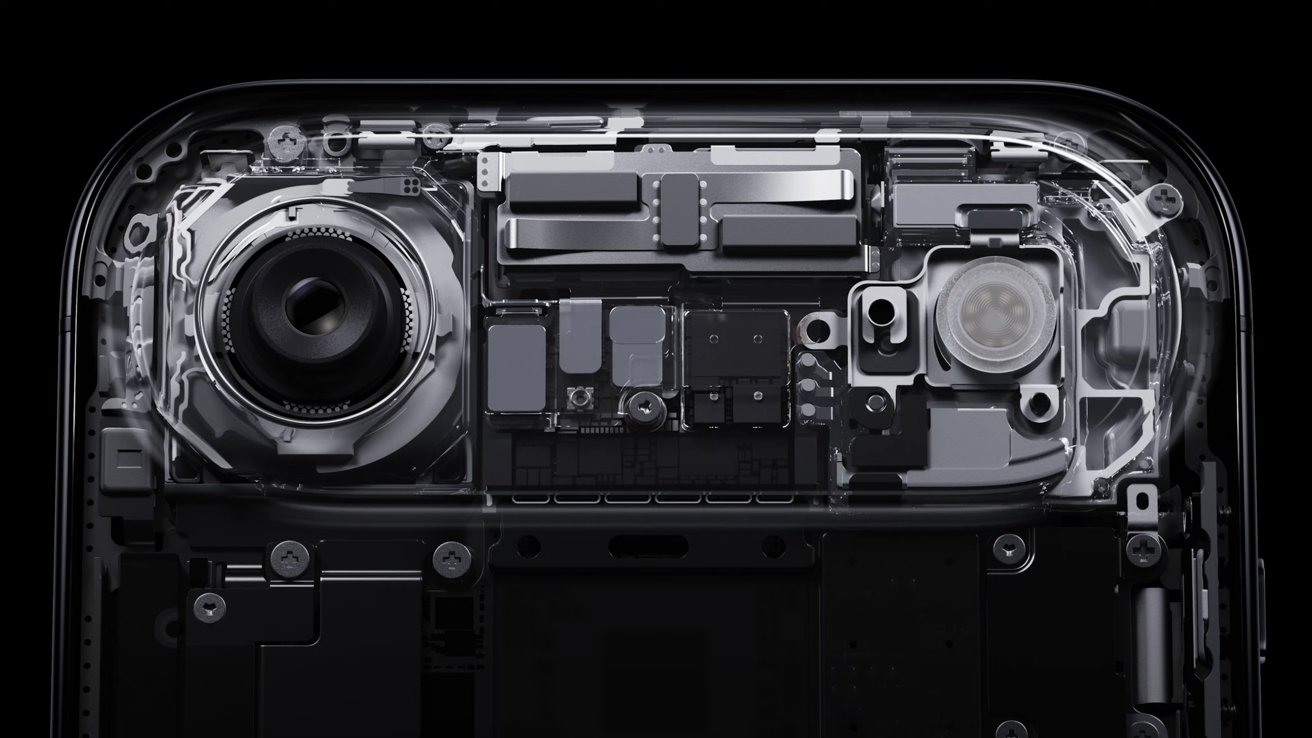
A transparent iPhone Air with a working SIM slot looked like a hardware hack for the ages, but it also showed exactly what got sacrificed when factory design margins disappeared.
iPhone Air
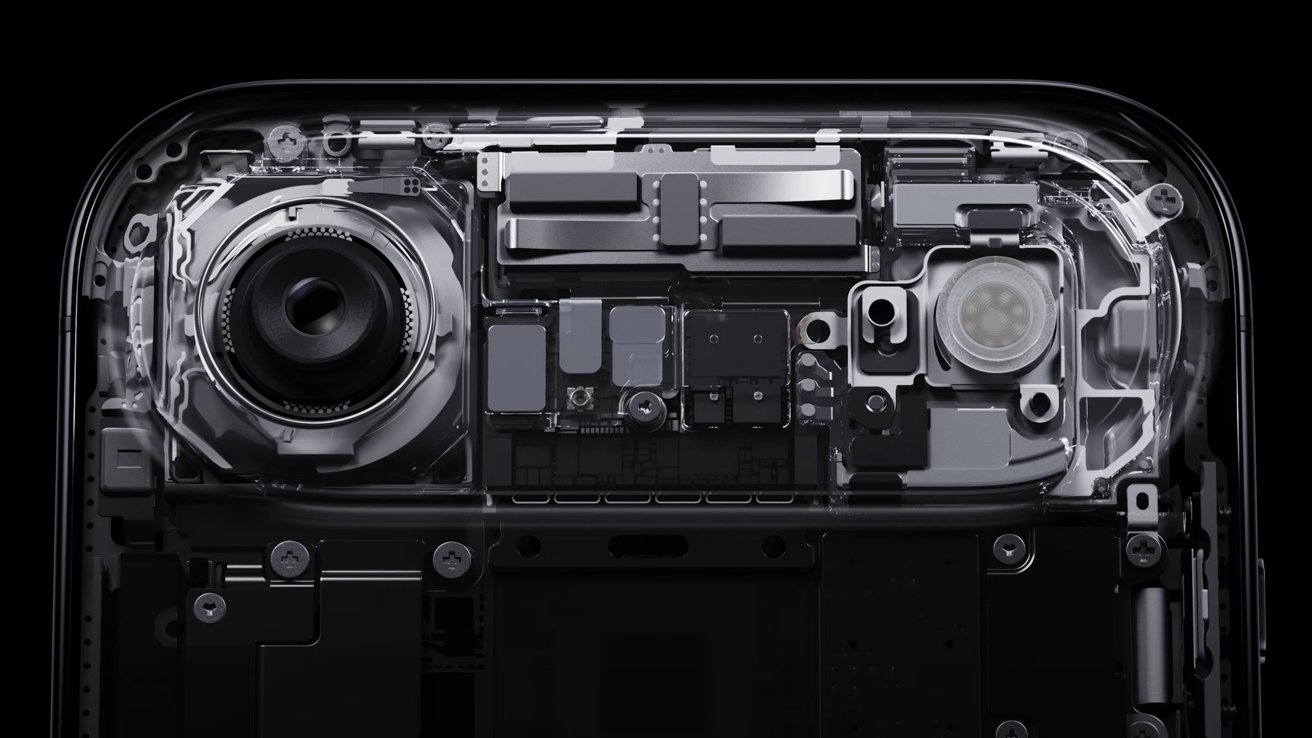
In a new video, YouTuber Linzin took viewers on a 22-minute journey through Huaqiangbei, China’s famous electronics market. There, technicians worked their magic by laser-stripping the rear glass of an iPhone Air for a see-through effect. They didn’t stop there and milled space for a SIM slot directly into the frame. They also handled delicate board-level microsoldering to make the eSIM-only iPhone Air work with a physical SIM card. The modified phone powered on, connected to a carrier, and worked just fine. It did run hotter under load and lost its water resistance. Continue Reading on AppleInsider | Discuss on our Forums
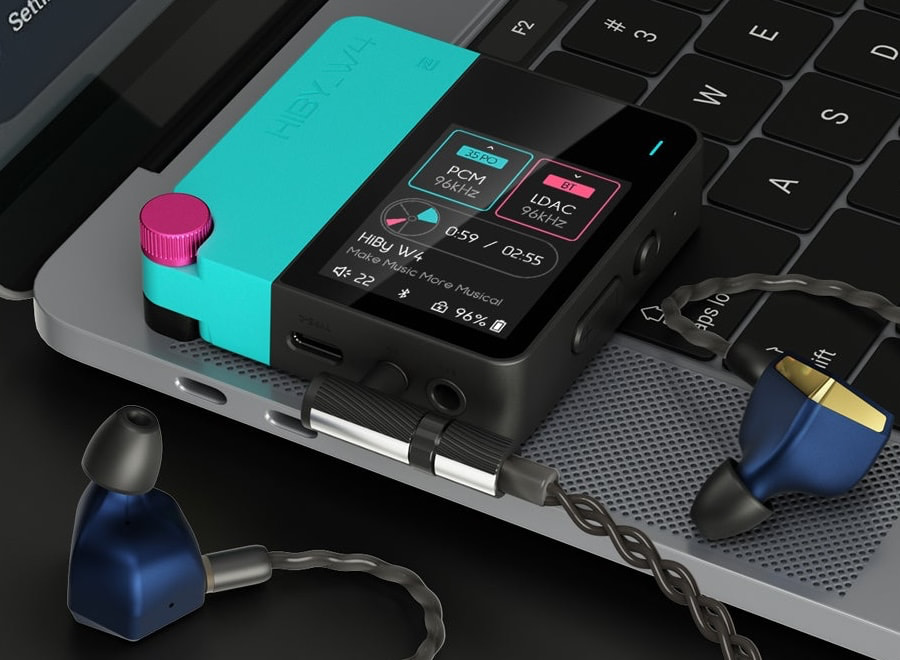
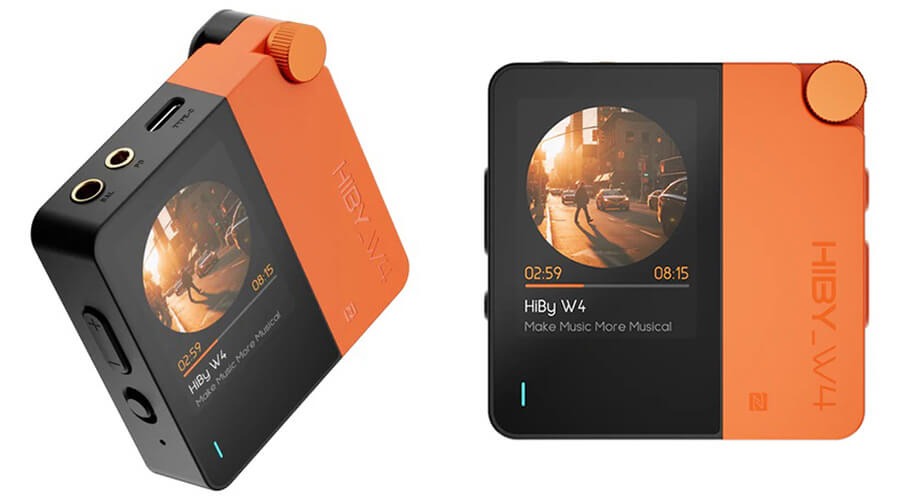
HiBy might not have household recognition in the U.S., but the company isn’t exactly new to this game. With 15 years of experience building digital audio players and portable electronics, and a HiByMusic app ecosystem that spans 100 countries with more than 3 million users on iOS and Android, the brand has quietly built serious infrastructure behind the scenes. Now it’s aiming a little more directly at the portable DAC and headphone amplifier crowd with the release of the HiBy W4.
The W4 is a Bluetooth enabled portable DAC and headphone amplifier designed to handle both wired and wireless hi resolution playback in one compact chassis. That matters because the appetite for Bluetooth capable DAC and headphone amps that can properly decode hi res formats and deliver enough output for modern IEMs and reasonably efficient headphones continues to grow. We saw that firsthand with the iFi GO Blu Air, which impressed us with its balance of sound quality, usable power, and everyday practicality.
HiBy’s pitch with the W4 is similar in concept: fashionable industrial design, dual mode operation, and enough decoding and amplification muscle to make streaming from a smartphone feel less like a compromise and more like a system choice. Whether it can stand out in an increasingly competitive under $250 portable hi-fi segment is the real question.
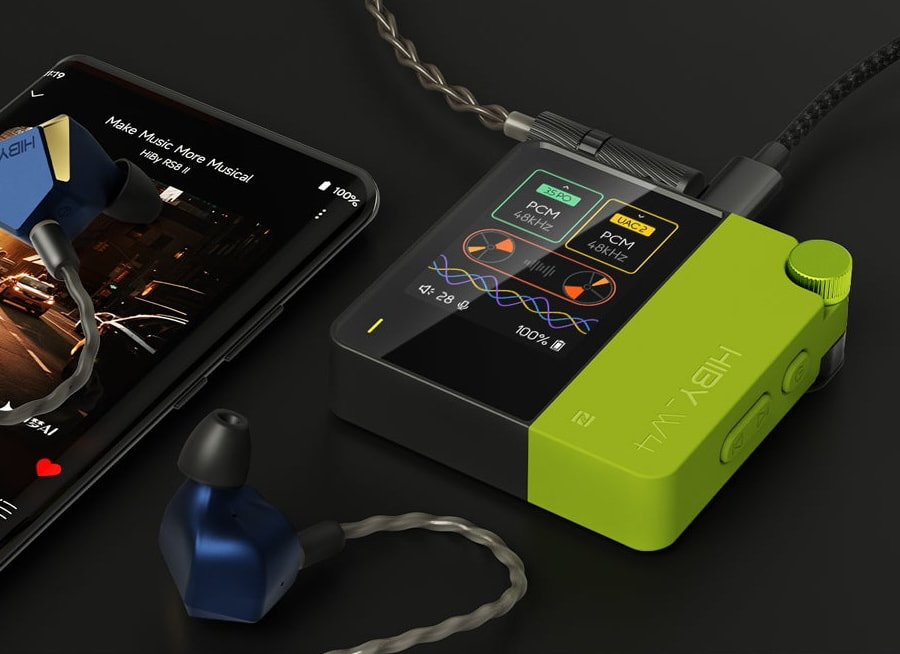
The HiBy W4 features a flexible physical design that supports both clip on use and magnetic attachment for on the go listening. Its integrated magnetic system allows it to attach directly to compatible smartphones or MagSafe style phone cases, functioning much like a MagSafe accessory for a cleaner, cable managed setup.
Advertisement
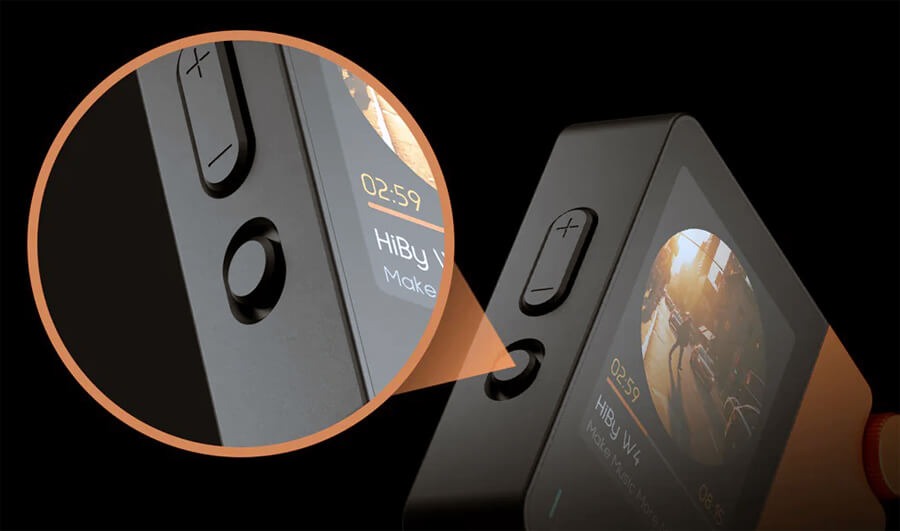
Uncharge Mode switch
The W4’s Uncharge Mode shifts the power source to USB operation, isolating the unit from the connected smartphone so it does not draw from the phone’s battery. In addition to preserving battery life, this separation can also help reduce electrical interference from the handset.
The W4 includes a built in 1500 mAh battery to support extended playback sessions, and Uncharge Mode is engaged using a dedicated button located on the left side of the chassis.
On the inside, the HiBy W4 has dual Cirrus Logic CS43198 DAC chips, paired with dual headphone amplifiers. The DACs support PCM up to 768kHz/32-bit and native DSD512.
The HiBy W4 employs dual low phase noise active crystal oscillators operating at 45.1584 MHz and 49.152 MHz to support more accurate clocking and stable audio playback across common sampling rates.
Advertisement
Connectivity includes both 3.5 mm single ended and 4.4 mm balanced stereo outputs. In balanced mode, the W4 delivers up to 475 mW of output power, driven by dual SGM8262 amplifier chips. That is a substantial figure for a device in this category and nearly double the balanced 4.4 mm output we measured from the iFi GO Blu Air. It provides enough headroom for a wide range of in ear monitors and many relatively efficient over ear headphones, giving the W4 more flexibility than ultra sensitive IEM duty alone.
The HiBy W4 is positioned as a stylish everyday carry accessory, pairing a black front display with a contrasting, brightly colored rear module that makes it stand out at a glance.
Advertisement. Scroll to continue reading.
A 2-inch touch screen provides full device control and can display album artwork when operating in Bluetooth mode. Users can manage pairing, playback, and system settings directly from the W4 itself, reducing the need to constantly reach for a smartphone and creating a more self contained, user friendly experience.
There is no shortage of portable Bluetooth-enabled DAC/AMPs, and the category now stretches from basic sub-$100 dongles to feature-heavy models approaching $1,000. At $99, the HiBy W4 lands at the aggressive low end of that spectrum but brings a feature set that is not typical at this price.
Support for aptX Lossless and LDAC gives it legitimate hi-res wireless credibility, while dual oscillators, balanced 4.4mm output rated at up to 475mW, and a built-in 1500mAh battery push it beyond entry-level expectations. The integrated 2-inch touch screen also sets it apart from competitors like the iFi GO Blu Air, which relies entirely on a smartphone for visual feedback and navigation. Some listeners may prefer controlling everything from their phone anyway, especially when switching between streaming platforms, but the W4 at least gives users the option of direct, on-device control without guesswork.
Add in the magnetic MagSafe-style attachment, clip-on portability, and a Car-Optimized Mode accessible through the HiByBlue app, and the W4 starts to look less like a budget experiment and more like a calculated move into the mainstream portable hi-fi space.
Who is this for? Smartphone listeners who want true hi-res Bluetooth support, enough power for serious IEMs and efficient headphones, and a self-contained interface without spending several hundred dollars. At $99, it is positioned squarely for commuters, students, travelers, and anyone building a compact everyday-carry audio setup without sacrificing codec support or balanced output. That is a hard combination to ignore at this price.
Apple’s low-cost MacBook will fill a long-standing gap in its lineup — and bring a new wave of users into the ecosystem.
An AppleInsider rendition of what a multi-colored MacBook ad spot could look like
March 4 marks Apple’s next big announcement day, which it plans to celebrate with three invite-only “experiences” in London, Shanghai, and New York City. If you follow the rumors and speculation, you’ll know that Apple’s allegedly getting ready to add a new, lower-priced MacBook back into its lineup. I, personally, think this is a brilliant move. Apple could really expand its Mac audience, and here’s why. Continue Reading on AppleInsider | Discuss on our Forums
Looking for the most recent Mini Crossword answer? Click here for today’s Mini Crossword hints, as well as our daily answers and hints for The New York Times Wordle, Strands, Connections and Connections: Sports Edition puzzles.
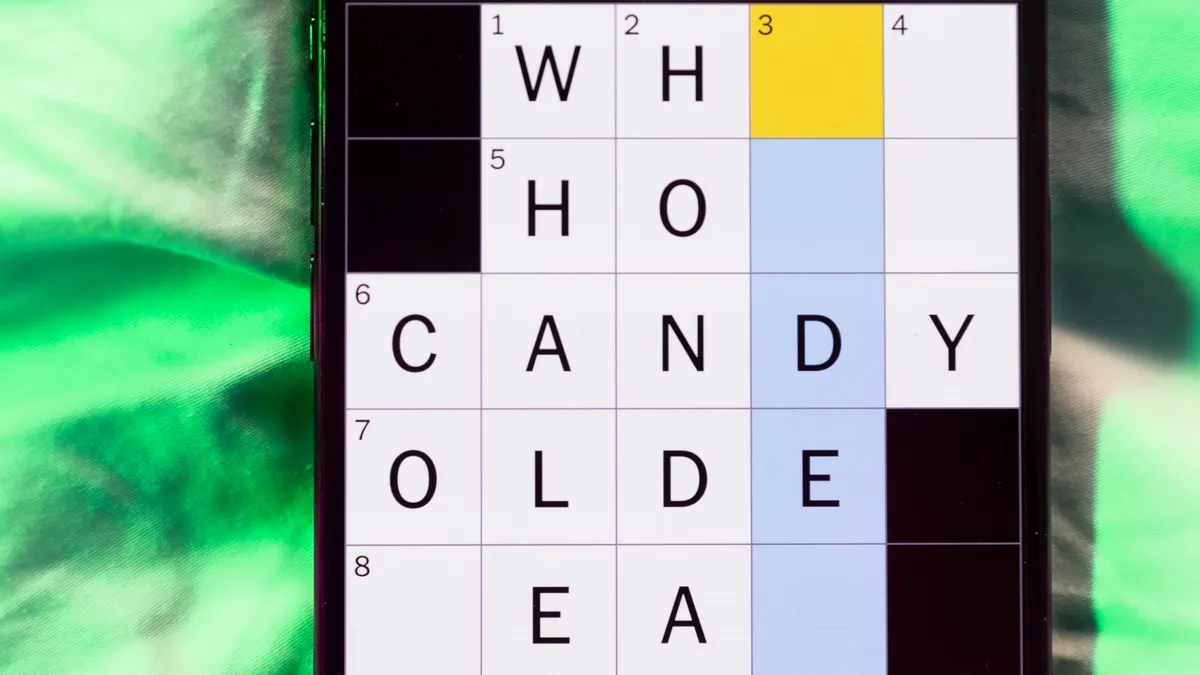
Need some help with today’s Mini Crossword? For me, 4-Down was a puzzler, but the other answers filled it in. Read on for all the answers. And if you could use some hints and guidance for daily solving, check out our Mini Crossword tips.
If you’re looking for today’s Wordle, Connections, Connections: Sports Edition and Strands answers, you can visit CNET’s NYT puzzle hints page.
Meta plans to spend up to $135bn this year to support its Meta Superintelligence Labs efforts as well as its core business.
Meta will reportedly spend billions of dollars on a multi-year partnership with Nvidia to use “millions” of its chips to support Meta’s data centre build-out, the two companies announced yesterday (17 February).
Commenting on the deal, Nvidia founder and CEO Jensen Huang said that no other company deploys AI at Meta’s scale.
Even Nvidia’s Big Tech customers, including Meta and OpenAI, are building their own in-house hardware.
As per the mega deal, Meta will deploy millions of Nvidia Blackwell and new Rubin GPUs to build “hyperscale” data centres optimised for both AI training and inference.
The company will also integrate Nvidia’s recently-announced Spectrum-X ethernet switches for Meta’s Facebook open switching system platform, and expand its usage of Nvidia’s confidential computing services beyond WhatsApp and into other offerings.
The companies said they will continue their partnership to deploy Arm-based Nvidia Grace CPUs for Meta’s data centre production applications, representing the first large-scale Nvidia Grace-only deployment.
Advertisement
They are also collaborating to deploy Nvidia’s Vera CPUs, with the potential for large-scale deployment next year. Meta is also tapping Nvidia’s GB300-based systems to continue developing its data centres.
It was reported yesterday that Nvidia sold off the last of its stake in Arm – a company it once tried to acquire. Last September, Huang announced a “giant” $100bn deal with OpenAI that has apparently not yet transpired.
“No one deploys AI at Meta’s scale – integrating frontier research with industrial-scale infrastructure to power the world’s largest personalisation and recommendation systems for billions of users,” said Huang.
“Through deep co-design across CPUs, GPUs, networking and software, we are bringing the full Nvidia platform to Meta’s researchers and engineers as they build the foundation for the next AI frontier.”
Advertisement
Meta founder and CEO Mark Zuckerberg added: “We’re excited to expand our partnership with Nvidia to build leading-edge clusters using their Vera Rubin platform to deliver personal superintelligence to everyone in the world.”
Don’t miss out on the knowledge you need to succeed. Sign up for the Daily Brief, Silicon Republic’s digest of need-to-know sci-tech news.
A new NYT Strands puzzle appears at midnight each day for your time zone – which means that some people are always playing ‘today’s game’ while others are playing ‘yesterday’s’. If you’re looking for Saturday’s puzzle instead then click here: NYT Strands hints and answers for Saturday, February 21 (game #719).
Strands is the NYT’s latest word game after the likes of Wordle, Spelling Bee and Connections – and it’s great fun. It can be difficult, though, so read on for my Strands hints.
Want more word-based fun? Then check out my NYT Connections today and Quordle today pages for hints and answers for those games, and Marc’s Wordle today page for the original viral word game.
Advertisement
SPOILER WARNING: Information about NYT Strands today is below, so don’t read on if you don’t want to know the answers.
NYT Strands today (game #720) – hint #1 – today’s theme
What is the theme of today’s NYT Strands?
• Today’s NYT Strands theme is… xxxxx
Advertisement
NYT Strands today (game #720) – hint #2 – clue words
Play any of these words to unlock the in-game hints system.
MATH
FLAP
DATA
FADE
SODA
CLOSED
NYT Strands today (game #720) – hint #3 – spangram letters
How many letters are in today’s spangram?
• Spangram has 15 letters
Advertisement
NYT Strands today (game #720) – hint #4 – spangram position
What are two sides of the board that today’s spangram touches?
First side: bottom, 3rd column
Last side: top, 5th column
Right, the answers are below, so DO NOT SCROLL ANY FURTHER IF YOU DON’T WANT TO SEE THEM.
Advertisement
NYT Strands today (game #720) – the answers
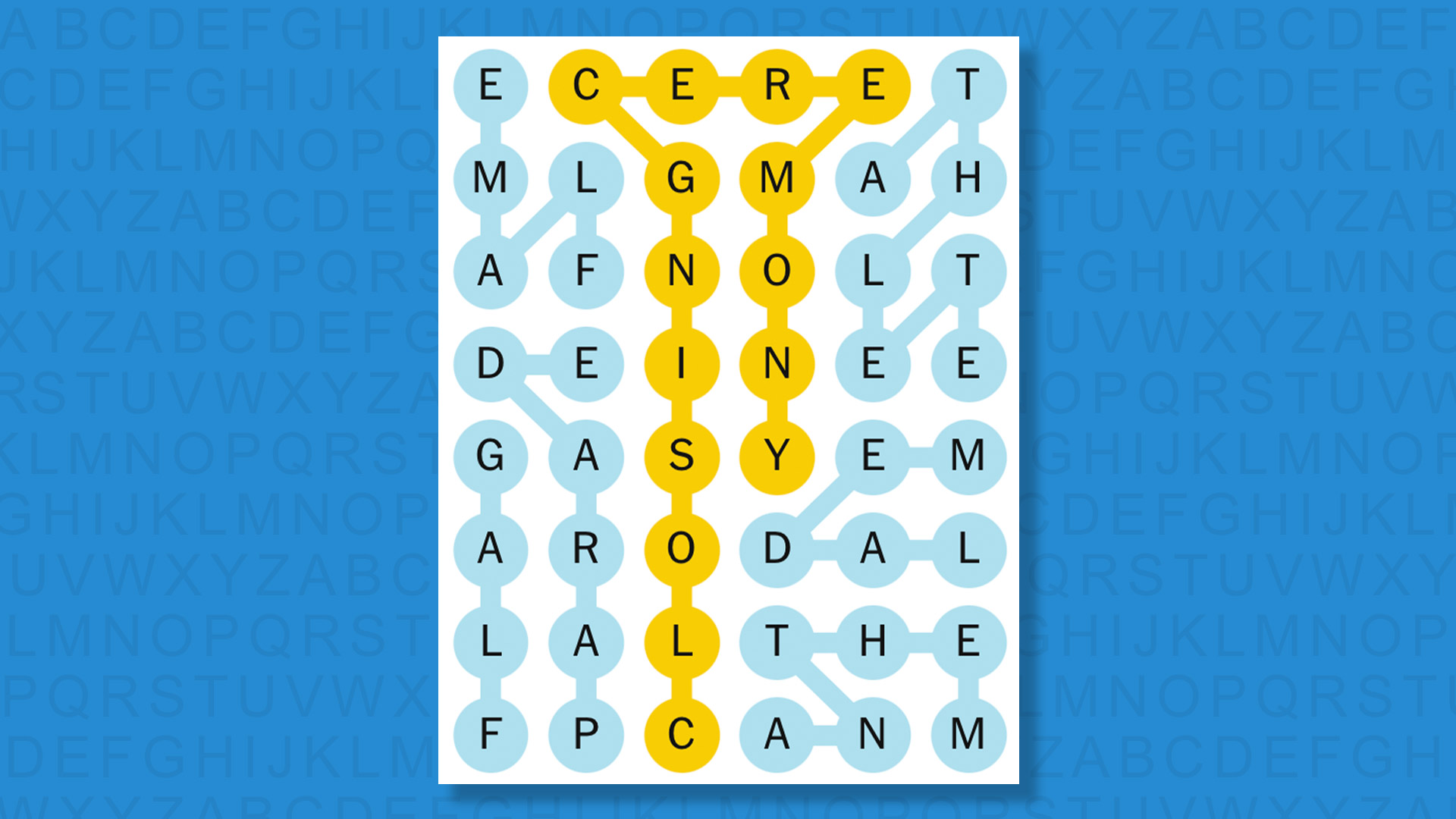
(Image credit: New York Times)
The answers to today’s Strands, game #720, are…
FLAME
PARADE
FLAG
ATHLETE
ANTHEM
MEDAL
SPANGRAM: CLOSINGCEREMONY
My rating: Easy
My score: Perfect
The Olympic Flame is extinguished today — before being lit again for the start of the Winter Paralympics in 12 days’ time.
Today’s spangram mimicked the shape of an Olympic torch (or possibly someone on a skeleton bob, it’s hard to tell) and included the many rituals that feature in a typical CLOSINGCEREMONY or MEDAL presentation.
Advertisement
One notable absentee from this search was speeches — something there’s a little too much of at Olympics ceremonies, which much like today’s spangram are needlessly long.
Advertisement
Yesterday’s NYT Strands answers (Saturday, February 21, game #719)
HOPS
BARLEY
WATER
MALT
FLAVOR
YEAST
SUGAR
WHEAT
SPANGRAM: HOMEBREW
What is NYT Strands?
Strands is the NYT’s not-so-new-any-more word game, following Wordle and Connections. It’s now a fully fledged member of the NYT’s games stable that has been running for a year and which can be played on the NYT Games site on desktop or mobile.
I’ve got a full guide to how to play NYT Strands, complete with tips for solving it, so check that out if you’re struggling to beat it each day.
Sign up for breaking news, reviews, opinion, top tech deals, and more.
For one thing, Altman — who was in India for a major AI summit — said concerns about AI’s water usage are “totally fake,” though he acknowledged it was a real issue when “we used to do evaporative cooling in data centers.”
“Now that we don’t do that, you see these things on the internet where, ‘Don’t use ChatGPT, it’s 17 gallons of water for each query’ or whatever,” Altman said. “This is completely untrue, totally insane, no connection to reality.”
He added that it’s “fair” to be concerned about “the energy consumption — not per query, but in total, because the world is now using so much AI.” In his view, this means the world needs to “move towards nuclear or wind and solar very quickly.”
Citing a previous conversation with Bill Gates, the interviewer asked whether it’s accurate to say a single ChatGPT query currently uses the equivalent of 1.5 iPhone battery charges, to which Altman replied, “There’s no way it’s anything close to that much.”
Altman also complained that many discussions about ChatGPT’s energy usage are “unfair,” especially when they focus on “how much energy it takes to train an AI model, relative to how much it costs a human to do one inference query.”
Techcrunch event
Advertisement
Boston, MA | June 9, 2026
“But it also takes a lot of energy to train a human,” Altman said. “It takes like 20 years of life and all of the food you eat during that time before you get smart. And not only that, it took the very widespread evolution of the 100 billion people that have ever lived and learned not to get eaten by predators and learned how to figure out science and whatever, to produce you.”
Advertisement
So in his view, the fair comparison is, “If you ask ChatGPT a question, how much energy does it take once its model is trained to answer that question versus a human? And probably, AI has already caught up on an energy efficiency basis, measured that way.”
You can watch the full interview below. The conversation about water and energy usage begins at around 26:35.