

Business
How does the US Supreme Court ruling impact Thai exporters?

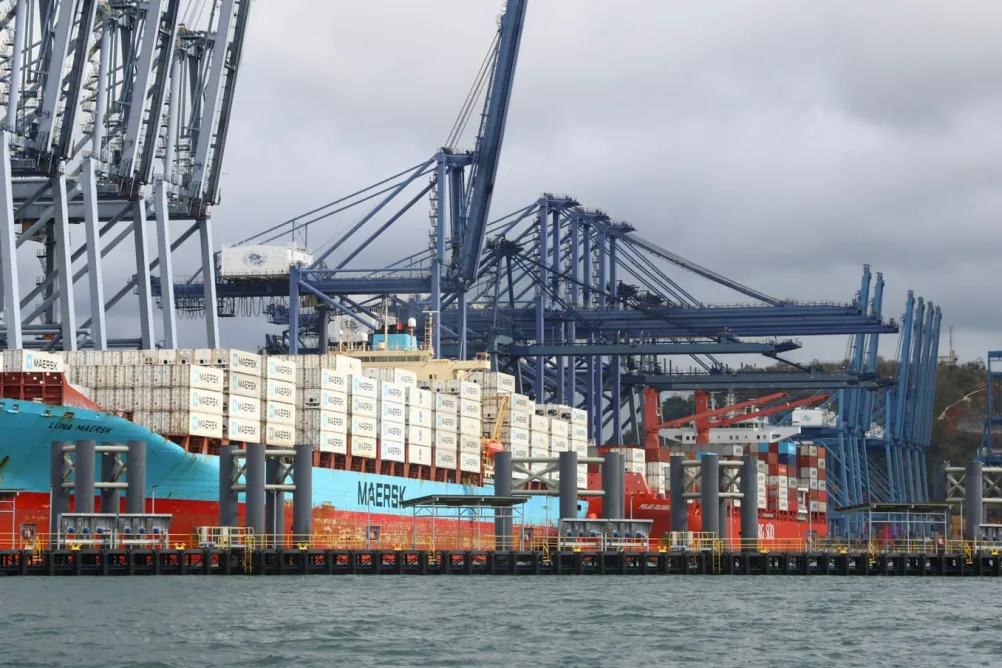
Although a recent US Supreme Court ruling declared President Donald Trump’s use of emergency powers to impose certain tariffs unconstitutional, Thai exporters are expected to see only a temporary reprieve from trade pressures.
In a landmark ruling on February 20, 2026, the U.S. Supreme Court struck a major blow to the executive branch’s trade powers, a decision with immediate and significant consequences for Thai exporters.
The court’s decision invalidated levies under the International Emergency Economic Powers Act (IEEPA), yet the US administration has swiftly countered with a new 10% global tariff under the Trade Act of 1974. Consequently, Thai industry leaders and government officials warn that trade policy remains highly volatile, urging businesses to diversify their export markets to mitigate the impact of “tariff stacking” and persistent American protectionism.
Key Points
- Supreme Court Ruling : In a 6–3 decision, the US Supreme Court ruled that the executive branch overstepped its authority by using the IEEPA to levy tariffs, a power constitutionally reserved for Congress.
- Limited Impact : The ruling only applies to tariffs imposed under the IEEPA, which represent approximately half of the tariff revenue collected since last year; other duties under Sections 301 and 232 remain in place.
- Immediate Countermeasures : Following the ruling, the White House announced a new 10% global tariff on all imported goods for a 150-day period, utilizing Section 122 of the Trade Act of 1974.
The implications of the US Supreme Court ruling for Thai exporters are significant and multifaceted
| Tariff Type | Legal Status | Impact on Thai Exporters |
| Reciprocal (IEEPA) | Struck Down | Immediate removal of the 19%–36% extra duties. |
| Section 122 | New/Active | New 10% baseline tariff likely to apply for 150 days. |
| Section 232 | Remains | Steel and aluminum exports remain subject to existing duties. |
| AD/CVD | Remains | Anti-dumping and countervailing duties are unaffected. |
1. Short-term Relief from IEEPA Tariffs
- The ruling declared that former President Trump’s use of the International Emergency Economic Powers Act (IEEPA) to impose tariffs was unconstitutional. This provides some immediate relief from tariffs that were imposed under this law, which accounted for a substantial portion of tariff revenue.
2. Legal Clarity and Reduced Uncertainty
- The decision enhances legal clarity regarding the authority to impose tariffs, which may reduce uncertainty for Thai exporters. This could lead to a more stable trading environment in the short term, making it easier for businesses to plan and operate.
3. Continued Trade Barriers
- Despite the ruling, the Trump administration has announced a new 10% global tariff on imports. This means that while some tariffs may be lifted, others could be introduced or maintained, continuing the pressure on Thai exporters.
4. Impact on Negotiations
- The ruling may influence ongoing negotiations between Thailand and the US regarding tariff reductions. Thailand is actively seeking to negotiate lower tariffs in exchange for purchasing US goods, which could be more favorable in light of the legal ruling.
While the Supreme Court ruling offers some relief and clarity for Thai exporters, the landscape remains complex and uncertain. Businesses must navigate ongoing trade barriers and adapt their strategies to mitigate risks associated with fluctuating US trade policies.
Potential for Tariff Refunds
One of the most complex implications for Thai businesses and their U.S. partners is the issue of restitution.
- Revenue at Stake: The U.S. government collected an estimated $264 billion in total tariff revenue in 2025.
- The Process: Because the Court ruled these tariffs were illegal from the start, Thai exporters (or the U.S. importers of record) may be entitled to refunds for duties already paid. However, the Court did not provide a specific mechanism for these payouts, and the U.S. administration has signaled that the refund process could take years.
The Pivot to “Section 122” and New Risks
While the IEEPA-based tariffs were struck down, the trade war has not ended; it has simply shifted legal grounds.
- New 10% Global Tariff: In response to the ruling, the administration immediately invoked Section 122 of the Trade Act of 1974. This allows for a 10% global tariff for a limited period (150 days) to address balance-of-payment deficits.
- National Security Tariffs: The ruling does not affect tariffs imposed under Section 232 (National Security), such as those on steel and aluminum. Thai exporters in these specific sectors will see no change in their current tariff rates.
The Supreme Court ruling provides some relief and clarity for Thai exporters, yet the landscape remains intricate and uncertain. Businesses must still tackle persistent trade barriers and adjust their strategies to manage risks tied to unpredictable US trade policies.
Other People are Reading


Japan braces for trade turbulence as LDP official slams ‘messy’ U.S. tariffs


Police officer killed, 24 people injured in bombs explosions in Ukraine’s Lviv

Quality Care India Ltd, one of India’s leading healthcare platforms, has received the letter of acceptance (LoA) for the development of a 350+ bed multi-speciality hospital in Nagpur, marking a significant milestone in strengthening healthcare infrastructure in Maharashtra and Central India, the healthcare firm said in a release.
The LoA was exchanged between Maha-Metro and Quality Care India in the presence of Chief Minister Devendra Fadnavis and Union Minister Nitin Gadkari during the Advantage Vidarbha event in Nagpur.
The proposed Care hospital will be developed on Maha-Metro land near Kasturchand Park Metro Station in Nagpur, a key urban and transit hub in the city, the release said.
As part of the project, Quality Care India Limited will invest approximately Rs 600 crore towards hospital development, creating a future-ready healthcare facility designed to serve both Nagpur and the surrounding regions, it added.

“This project reflects the growing importance of structured public-private partnerships in building healthcare systems that are accessible, integrated, and sustainable. By aligning healthcare infrastructure with urban development, we can create scalable models that deliver high-quality care beyond metros.
“For cities like Nagpur, such collaborations are critical to strengthening regional healthcare capacity and addressing the long-term needs of Tier 2 and Tier 3 markets,” Quality Care India Group Managing Director Varun Khanna said.The hospital is expected to become operational in a phased manner and is anticipated to create over 1,500 direct and indirect employment opportunities, while strengthening Vidarbha as a regional healthcare destination.
It will feature specialised centres of excellence across cardiac sciences, oncology, Gastroenterology, trauma care and neurosciences, bringing advanced medical care closer to patients in Central India.
Each year, Citizens Advice selects social policy areas for analysis based on its clients’ issues.

The Stock Market Now Drives the Economy. How Much Longer Can That Last?

The 30-share BSE Sensex rose 187.95 points, or 0.22 per cent, over the past week.
Larsen & Toubro, State Bank of India (SBI), HDFC Bank, Life Insurance Corporation of India (LIC), Bajaj Finance, and Reliance Industries were the gainers, while Bharti Airtel, ICICI Bank, Infosys, and Tata Consultancy Services saw their valuations erode.
The market valuation of Larsen & Toubro jumped by Rs 28,523.31 crore to Rs 6,02,552.24 crore. SBI added Rs 16,015.12 crore to Rs 11,22,581.56 crore.
The valuation of HDFC Bank climbed by Rs 9,617.56 crore to Rs 14,03,239.48 crore, and that of LIC edged higher by Rs 5,977.12 crore to Rs 5,52,203.92 crore.
The market capitalisation (mcap) of Bajaj Finance advanced Rs 3,142.36 crore to Rs 6,40,387 crore, and that of Reliance Industries went up Rs 202.99 crore to Rs 19,21,678.78 crore.
However, the mcap of Bharti Airtel tumbled Rs 15,338.66 crore to Rs 11,27,705.37 crore.The valuation of ICICI Bank eroded by Rs 14,632.10 crore to Rs 9,97,346.67 crore.
Infosys’ mcap declined by Rs 6,791.58 crore to Rs 5,48,496.14 crore and that of Tata Consultancy Services (TCS) dipped Rs 1,989.95 crore to Rs 9,72,053.48 crore.
Reliance Industries remained the most-valued firm, followed by HDFC Bank, Bharti Airtel, State Bank of India, ICICI Bank, Tata Consultancy Services, Bajaj Finance, Larsen & Toubro, Life Insurance Corporation of India, and Infosys.


I’m a full-time investor with a strong focus on the tech sector. I graduated with a Bachelor of Commerce Degree with Distinction, major in Finance. I’m also a proud lifetime member of the Beta Gamma Sigma International Business Honor Society. My core values are: Excellence, Integrity, Transparency, & Respect. I always, to the best of my ability, hold true to these values which I believe are key for long-term success. I would like to invite all of my readers to leave their constructive criticism and feedback in the comments section so that I can further enhance the quality of my work moving forward. Thank you and God Bless America!
Analyst’s Disclosure: I/we have no stock, option or similar derivative position in any of the companies mentioned, and no plans to initiate any such positions within the next 72 hours. I wrote this article myself, and it expresses my own opinions. I am not receiving compensation for it (other than from Seeking Alpha). I have no business relationship with any company whose stock is mentioned in this article.
Seeking Alpha’s Disclosure: Past performance is no guarantee of future results. No recommendation or advice is being given as to whether any investment is suitable for a particular investor. Any views or opinions expressed above may not reflect those of Seeking Alpha as a whole. Seeking Alpha is not a licensed securities dealer, broker or US investment adviser or investment bank. Our analysts are third party authors that include both professional investors and individual investors who may not be licensed or certified by any institute or regulatory body.
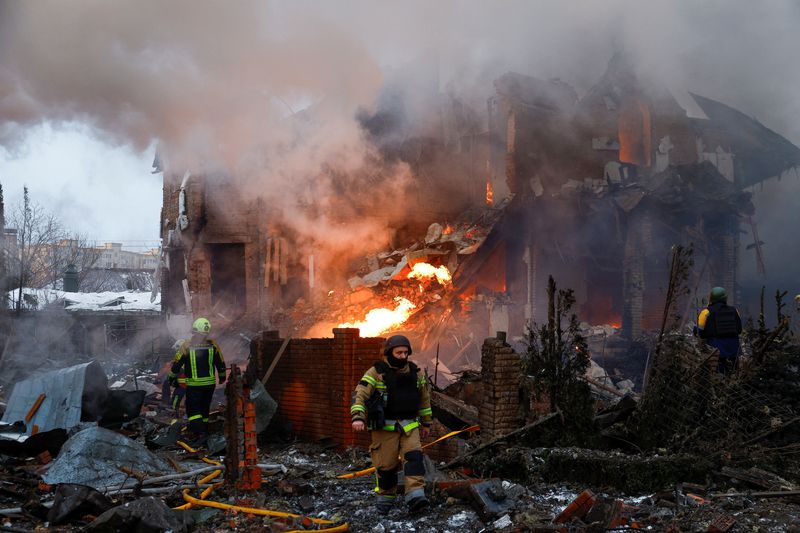

Russia hits Ukraine energy infrastructure with major missile, drone strikes, Kyiv says
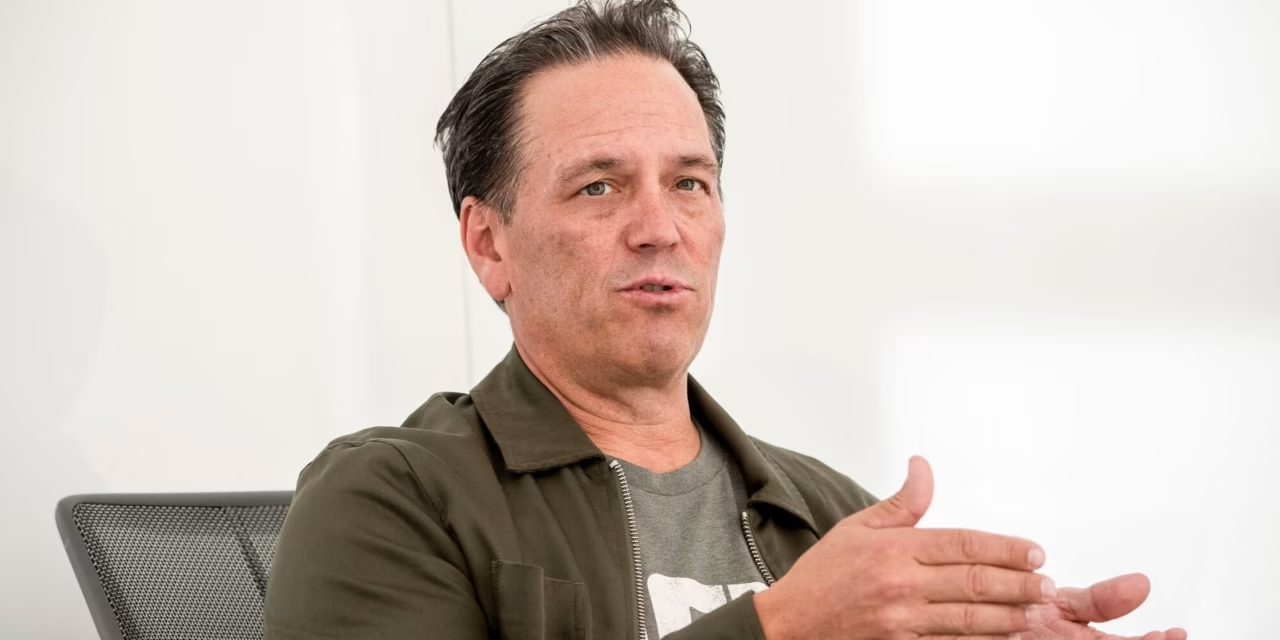
Phil Spencer, Microsoft’s MSFT -0.31%decrease; red down pointing triangle executive vice president and chief executive of gaming, is set to retire from the company after 38 years, a run during which he built the company up as a videogames powerhouse only to see it lose ground in recent years.
Microsoft has promoted Asha Sharma, president of its CoreAI Product unit, to succeed Spencer as head of Microsoft Gaming, effective immediately, according to the company.
Copyright ©2026 Dow Jones & Company, Inc. All Rights Reserved. 87990cbe856818d5eddac44c7b1cdeb8
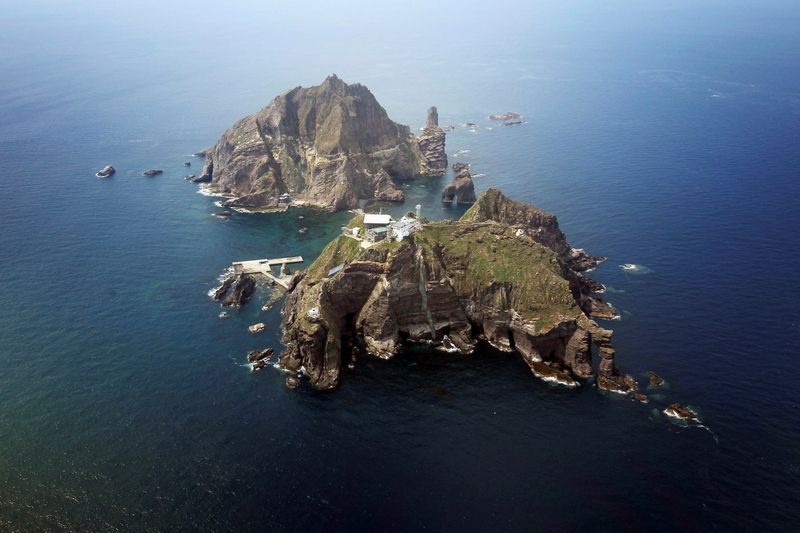

South Korea protests Japanese event over disputed islands
The RizGod says he was put on “Survivor 50” to be both loved and hated

Ryan Garcia beats Mario Barrios and becomes new WBC welterweight champion

Microsoft’s new RTO policy starts Feb. 23, bringing Seattle-area workers back 3 days a week


-

 Video6 days ago
Bitcoin: We’re Entering The Most Dangerous Phase
-

 Crypto World5 days ago
Can XRP Price Successfully Register a 33% Breakout Past $2?
-

 Fashion2 days ago
Weekend Open Thread: Boden – Corporette.com
-

 Sports5 days ago
GB's semi-final hopes hang by thread after loss to Switzerland
-

 Video2 days ago
XRP News: XRP Just Entered a New Phase (Almost Nobody Noticed)
-
 Tech5 days ago
The Music Industry Enters Its Less-Is-More Era
-

 Politics1 hour ago
Baftas 2026: Awards Nominations, Presenters And Performers
-

 Business4 days ago
Infosys Limited (INFY) Discusses Tech Transitions and the Unique Aspects of the AI Era Transcript
-

 Entertainment4 days ago
Kunal Nayyar’s Secret Acts Of Kindness Sparks Online Discussion
-

 Video5 days ago
Financial Statement Analysis | Complete Chapter Revision in 10 Minutes | Class 12 Board exam 2026
-

 Tech4 days ago
Retro Rover: LT6502 Laptop Packs 8-Bit Power On The Go
-
 Sports3 days ago
Clearing the boundary, crossing into history: J&K end 67-year wait, enter maiden Ranji Trophy final | Cricket News
-

 Entertainment3 days ago
Dolores Catania Blasts Rob Rausch For Turning On ‘Housewives’ On ‘Traitors’
-

 Business4 days ago
Tesla avoids California suspension after ending ‘autopilot’ marketing
-
 NewsBeat7 days ago
The strange Cambridgeshire cemetery that forbade church rectors from entering
-

 Politics5 days ago
Eurovision Announces UK Act For 2026 Song Contest
-

 Crypto World4 days ago
WLFI Crypto Surges Toward $0.12 as Whale Buys $2.75M Before Trump-Linked Forum
-
 NewsBeat7 days ago
Man dies after entering floodwater during police pursuit
-

 Crypto World2 days ago
83% of Altcoins Enter Bear Trend as Liquidity Crunch Tightens Grip on Crypto Market
-
 NewsBeat2 days ago
Andrew Mountbatten-Windsor latest: Police search of Royal Lodge enters second day after Andrew released from custody