

Connect with us

Tech

Google Pixel 10a dashed my hopes, but I can recommend these 6 phones instead

Published

on

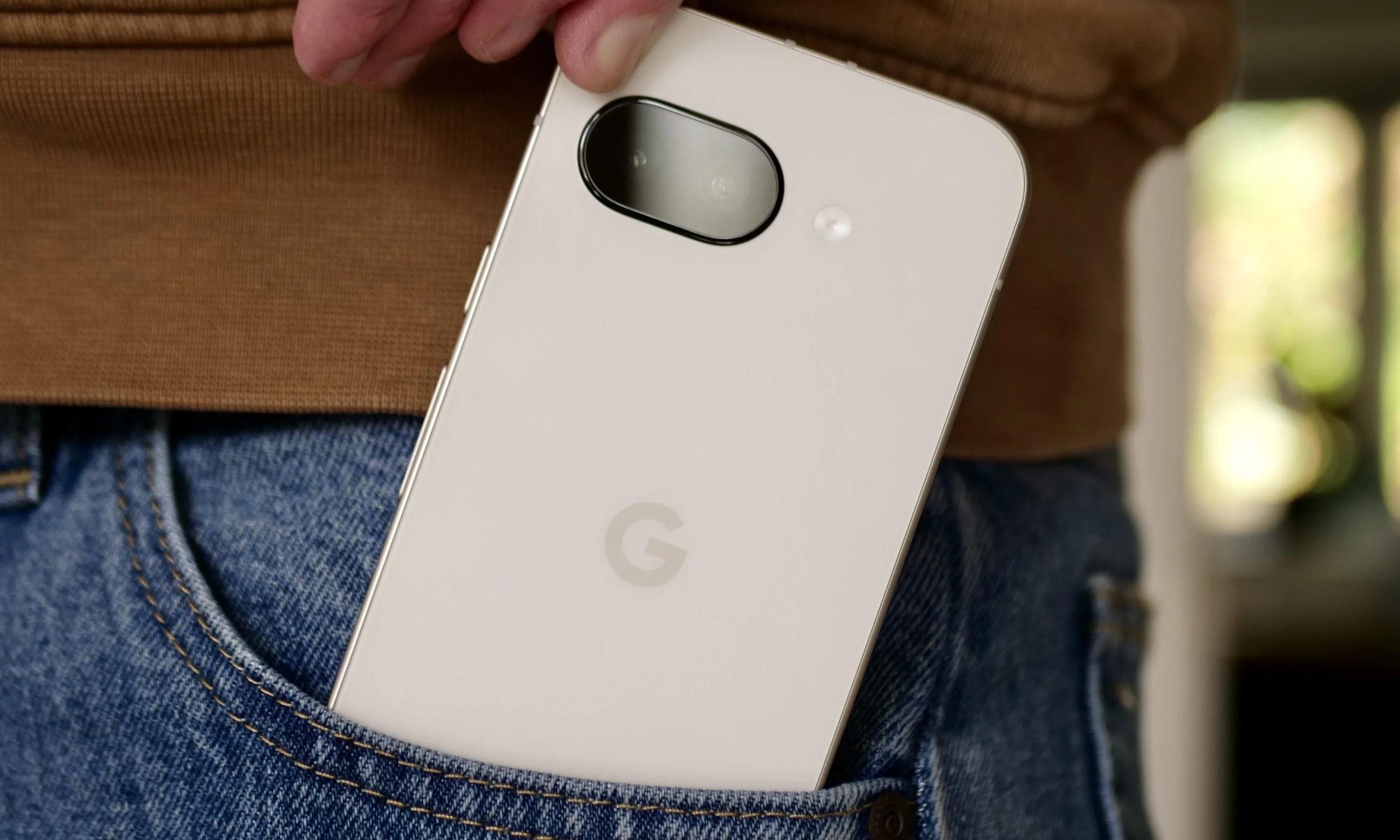
Google has officially unveiled the Pixel 10a, its newest entry in the A-series lineup. On the surface, it looks like another compelling budget-friendly Pixel: minimalist design, fresh colours, a large battery, and Google’s well-known AI features. But dig a little deeper, and the excitement quickly fades. For many buyers, the Pixel 10a may feel like a déjà vu moment – a phone that looks new but behaves very much like last year’s Pixel 9a. In fact, the similarities run so deep that a growing number of users and reviewers are asking the same question: Why upgrade at all?

Despite its refreshed exterior and a few modern touches, the Pixel 10a delivers nearly identical core specifications to its predecessor, and in some areas, actually feels like a step backward. For anyone shopping in the sub-$500 bracket, the Pixel 10a’s value proposition becomes questionable, especially when several alternatives – some from Google’s own lineup – offer far better hardware at equal or lower prices.

Below, we break down why the Pixel 10a underwhelms and explore five smartphones that might be smarter buys.

Pixel 10a vs Pixel 9a: A shockingly small upgrade

Put the Pixel 9a and Pixel 10a side by side, and the differences almost vanish. The display size, refresh rate, RAM, storage, charging speeds, and primary camera setup remain functionally the same. The most controversial change? Google swapped out its flagship-level Tensor G5 expected for A-series phones, instead opting for the older Tensor G4. This marks the first time an A-series Pixel has launched without the newest processor. For a brand that built the A-series on value-driven flagship trickle-down, the decision is puzzling.

Advertisement

One of the most frustrating omissions is the complete lack of Pixel Snap support. Pixel Snap – Google’s magnetic accessory ecosystem – has become a standout feature on the Pixel 10 lineup. Yet the Pixel 10a gets no magnetic capabilities at all. Even Google’s official Pixel 10a cases lack magnets. As a result, buyers who want magnetic accessories must rely on third-party cases, relinquishing Google’s usual first-party ecosystem experience.

There are upgrades, but they’re small: slightly brighter display, faster wired charging, improved Bluetooth, updated Gorilla Glass 7i front protection, and one extra year of software support. While welcome, these refinements hardly justify the price jump when the Pixel 9a still exists – and continues to offer identical real-world performance.

Yes, we are slightly upset too. But don’t worry, we gotchu. Here are five smartphones you can buy instead of the Pixel 10a.

If You Want to Save Money: Buy the Pixel 9a

If your priority is value, the older Pixel 9a remains the smarter purchase. With the Pixel 10a now official, Pixel 9a pricing is expected to drop significantly – often $100 or more below the 10a. Since the two phones share the same core experience, opting for the 9a means saving money without sacrificing features.

Advertisement

The Pixel 9a’s only real shortcomings compared to the 10a include the older Gorilla Glass 3 display, slightly slower charging, and one fewer year of OS updates. None of these are dealbreakers for most users – especially those planning to upgrade again within three to four years.

Put simply, the Pixel 10a doesn’t justify its premium when last year’s model delivers nearly identical performance at a much lower cost.

If you’re willing to spend more: Buy the Pixel 10

The Pixel 10 lists at $799, but its real street price tells a different story. Six months after launch, the Pixel 10 can regularly be found for $649 new – and refurbished units frequently dip to the Pixel 10a’s $499 asking price. Trade-in bonuses and carrier deals drive the price even lower, making the Pixel 10 a substantially better value.

For the same or slightly higher cost as a Pixel 10a, you get Google’s superior Tensor G5 chip, a proper ultrawide + telephoto rear camera setup, 12GB RAM, tougher display glass, an ultrasonic fingerprint reader, and full Pixel Snap compatibility. In every meaningful way – performance, photography, ecosystem, feel, longevity – the Pixel 10 outclasses the Pixel 10a.

The trade-offs? A slightly smaller battery, a slightly heavier chassis, and a marginally weaker selfie camera. None outweigh the significant advantages. If you’re shopping around the Pixel 10a’s price bracket, the Pixel 10 is simply a better phone.

If the Google Pixel is not your jam, here are four other smartphones you can opt for instead.

Advertisement

Samsung Galaxy A55

The Samsung Galaxy A55 stands out as a far stronger mid-range option than the Pixel 10a, especially for US users on T-Mobile, Mint Mobile, or MetroPCS. Powered by Samsung’s Exynos 1480 octa-core chipset, it delivers faster, more stable performance than the Pixel 10a’s downgraded Tensor G4. The phone features a vibrant 6.6-inch FHD+ Super AMOLED 120Hz display, offering noticeably better brightness, colour accuracy, and smoothness.

Its camera system is more versatile too, with a 50MP OIS main camera, 12MP ultrawide, 5MP macro, and a 32MP front camera with 4K video, giving it an edge in flexibility and detail. Durability is another win, thanks to Gorilla Glass Victus+, an aluminum frame, and IP67 water and dust resistance – all superior to the Pixel 10a’s simpler build.

You also get microSD expansion, dual SIM, newer Bluetooth 5.3, Wi-Fi 6, and a more premium overall experience. For most buyers, the A55 simply offers better long-term value than the Pixel 10a.

Motorola Moto G Stylus (2025)

Not every Pixel 10a alternative sits close in price. The Moto G Stylus starts at just $399, meaning you can save over $100 compared to Google’s new A-series device. It also comes with a built-in stylus, making it the only phone on this list with that capability. For note-takers, artists, or productivity-focused users, this may be a major selling point.

Despite its modest price, the Moto G Stylus impresses with 68W fast charging – the fastest among these alternatives – and expandable storage via microSD card. Those two features alone could sway many buyers.

Of course, its low price comes with sacrifices: outdated Gorilla Glass 3, slow UFS 2.2 storage, weak software support, and slower USB transfer speeds. This isn’t a phone for long-term users or performance-heavy workflows – but as a budget device, it offers tremendous value.

Advertisement

Nothing Phone 3a Pro

For buyers who want something visually distinctive and feature-rich, the Nothing Phone 3a Pro stands out. Surprisingly, it retails for $40 less than the Pixel 10a while offering twice the storage at 256GB. Hardware-wise, it’s stacked: a 50MP periscope telephoto lens, strong 50MP selfie camera, 50W wired charging, and a stunning display with symmetrical bezels and peak brightness matching the flagship Pixel 10.

Its weaknesses include no wireless charging, less powerful Snapdragon 7s Gen 3 chip, and only an IP64 rating. Connectivity issues may arise for Verizon customers. Still, for the price, it’s an exceptional device – especially for buyers who value aesthetic flair and display quality.

Samsung Galaxy S25 FE

Samsung’s Galaxy S25 FE serves as another compelling alternative. While its list price is higher than the Pixel 10a’s, real-world pricing – especially during sales – often brings it within striking distance. For users who value performance, the S25 FE easily outpaces the Tensor G4 in nearly every benchmark. The Exynos 2400 delivers superior CPU and GPU performance, which translates to faster daily operation and noticeably better gaming.

Camera hardware is also stronger on Samsung’s FE model, especially thanks to the inclusion of a telephoto lens – a feature missing from the Pixel 10a. You also get faster 45W wired charging and tougher display protection. On the flip side, Google’s computational photography still produces more consistent results, and the Pixel 10a has a larger battery and faster OS updates.

Still, for users already in Samsung’s ecosystem – or anyone prioritizing power – the Galaxy S25 FE deserves serious consideration.

Should anyone buy the Pixel 10a?

The Pixel 10a is not a bad phone. In isolation, it offers reliable performance, a clean design, Google’s trademark AI features, and a long update commitment. But it suffers from one major problem: the Pixel 9a exists, the Pixel 10 is discounted, and the competition in the sub-$500 market is fiercer than ever.

Advertisement

If your heart is set on the Pixel 10a, go for it – Google’s hardware and software consistency still make it a great everyday phone. But if you want the best possible value for your money, it’s hard to justify choosing the 10a over its alternatives. Whether it’s Google’s own Pixel 9a and Pixel 10 or competitive offerings from Samsung, Motorola, and Nothing, several devices offer more for your dollar.

In 2026, the Pixel 10a isn’t the obvious choice – it’s simply one option in a crowded field. And for many buyers, the alternatives may be a far better fit.

Source link

Advertisement
Continue Reading
Click to comment

Leave a Reply

Your email address will not be published. Required fields are marked *

Tech

How to watch BAFTAs 2026 for FREE

Published

on

The British Academy Film Awards are the British equivalent of the Oscars, and so Hollywood heavy-hitters Benicio Del Toro, Emma Stone, Ethan Hawke, Leonardo DiCaprio, Michael B. Jordan, Timothee Chalamet and Stellan Skarsgard have confirmed that they will be there in the flesh. It’s Hamnet‘s Irish duo of Jessie Buckley and Paul Mescal, however, who could end up stealing the show at London’s Royal Festival Hall this Sunday.

You can watch BAFTAs 2026 online from anywhere with a VPN and potentially for free.

Swipe to scroll horizontally

Source link

Continue Reading

Tech

Microsoft’s new RTO policy starts Feb. 23, bringing Seattle-area workers back 3 days a week

Published

on

A keychain in the Microsoft company store awaits one of the company’s returning commuters. (GeekWire Photo / Todd Bishop)

Remember that return-to-office mandate Microsoft announced last fall? It’s almost here.

Monday, Feb. 23 — yes, next week! — will mark the start of the company’s new policy requiring Puget Sound (a.k.a. Seattle-area) employees who live within 50 miles of a Microsoft office to show up at least three days a week, the company confirmed in response to GeekWire’s inquiry.

It’s a big shift for one of Big Tech’s last holdouts on flexible work. It’s also a potentially significant development for local traffic, given that there are more than 50,000 Microsoft employees in the Seattle region, at last count.

“Gird your loins and prepare for a potentially longer commute,” the Bellevue Chamber wrote in its newsletter, in an item titled, “Get Your Booty Back to Work: Microsoft’s Turn.”

The good news: Sound Transit’s Crosslake Connection is set to open March 28, finally linking Seattle and the Eastside by light rail across Lake Washington — connecting downtown Seattle to downtown Bellevue and the Redmond Technology station at Microsoft headquarters.

Advertisement

The Seattle-area rollout is the first phase, with other U.S. offices next and international locations later this year. The policy replaces Microsoft’s previous hybrid arrangement, which let most employees work remotely up to half the time without manager approval. 

The company isn’t dictating from above which three days people will need to be in the office. Specifics are left to individual teams and managers. Some groups may require more than three days, and certain customer-facing roles like field sales and consultants are exempt.

The mandate brings Microsoft in line with Google and Facebook parent Meta, which have similar three-day requirements. Amazon, the region’s other tech giant, went further last year, requiring employees to be back in the office five days a week.

In her memo to employees last September, Microsoft EVP and Chief People Officer Amy Coleman said the change isn’t about cutting headcount. “It’s about working together in a way that enables us to meet our customers’ needs,” she wrote. 

Advertisement

Still, the mandate could impact the workforce through attrition, consistent with what has happened at other companies that have implemented tighter RTO policies. The new policy comes after Microsoft cut more than 15,000 jobs globally last year.

Source link

Continue Reading

Tech

Ask Slashdot: What’s Your Boot Time?

Published

on

How much time does it take to even begin booting, asks long-time Slashdot reader BrendaEM. Say you want separate Windows and Linux boot processes, and “You have Windows on one SSD/NVMe, and Linux on another. How long do you have to wait for a chance to choose a boot drive?”

And more importantly, why is it all taking so long?
In a world of 4-5 GHz CPU’s that are thousands of times faster than they were, has hardware become thousands of times more complicated, to warrant the longer start time? Is this a symptom of a larger UEFI bloat problem? Now with memory characterization on some modern motherboards… how long do you have to wait to find out if your RAM is incompatible, or your system is dead on arrival?

Share your own experiences (and system specs) in the comments. How long is it taking you to choose a boot drive?

And what’s your boot time?

Source link

Advertisement
Continue Reading

Tech

Men’s Ice Hockey Final at Winter Olympics 2026 Free Streams: USA vs Canada

Published

on

Sunday’s men’s ice hockey final live stream at the 2026 Winter Olympics sees the curtain brought down on this year’s games with one of its most-anticipated events – a rematch of the thrilling women’s final between USA vs Canada just a few days ago.

Source link

Continue Reading

Tech

Why Chains Are Still Better For Bicycles Than Belts

Published

on

Theoretically a belt drive makes for a great upgrade to a bicycle, as it replaces the heavier, noisy and relatively maintenance-heavy roller chain with a zero-maintenance, whisper-quiet and extremely reliable belt that’s rated at an amazing 20-30,000 km before needing a replacement. Of course, that’s the glossy marketing brochure version of reality, which differed significantly from what [Tristan Ridley] experienced whilst cycling around the globe.

Although initially he was rather happy with his bike, its sealed car-like Pinion gearbox and Gates carbon belt drive system, while out in the wilds of Utah he had a breakdown when the belt snapped. When the spare belt that he had carried with him for the past months also snapped minutes later after fitting it on, it made him decide to switch back to the traditional bush roller chain.

Despite this type of chain drive tracing its roots all the way back to Leonardo da Vinci, they actually offer many advantages over the fancy carbon-fiber-reinforced polyurethane belt. Although with the Pinion gearbox the inability to use a derailleur gearing system is no big deal, [Tristan] found that the ‘zero maintenance’ part of the belt was not true for less hospitable roads

Anyone up for some tasty peanut butter? (Credit: Tristan Ridley, YouTube)

A big issue was that of abrasive dust, which created a very noisy coating on the belt that’d have to be regularly cleaned off with precious water, or by having silicone lubricant sprayed on the belt. Even with all that care he found that the belt would snap after about 8,000 km, well below the rated endurance.

When it came to super-sticky mud, called peanut butter mud for good reasons, he found that chains also cope much better with this, as the mud will just squeeze out of the chain and be forced off the sprocket, whereas the belt will happily keep compacting the mud onto the contact surfaces, increasing belt tension and requiring constant cleaning to not become hopelessly stuck.

Advertisement

The Utah breakdown also showed why these belts are actually very fragile: the replacement belt had been packed away folded-up for a few months at that point in the luggage, and during storage the carbon fibers had become compromised to the point where the belt just snapped after a few minutes of use. A metal chain will happily be stored away for as long as you can keep it away from corrosion, and fold up very compactly.

Another awesome feature of roller chains is that they’re super-modular, allowing you to carry spare links and such with you for in-the-field repairs, while even the most remote bicycle store in any country can help you out with maintenance and repairs, unlike the special and highly custom belts that need to be shipped in by courier.

Of all the bicycle technologies that [Tristan] has used, it seems that only this drive belt has been an outright disappointment. The sealed gearbox would seem to be a massive improvement over finicky derailleurs, and hydraulic brakes are reliable and common enough that they haven’t been an issue so far.

His conclusion is that bicycle drive belts are fine if you do city driving, where they probably will last the rated kilometers, but they rapidly fall apart in even slightly adverse conditions.

Advertisement

Source link

Advertisement
Continue Reading

Tech

McCoy Tyner Quartet’s 1991 “New York Reunion” Album Reemerges on 2LP Pink One Step Pressed 180-gram Vinyl: Review

Published

on

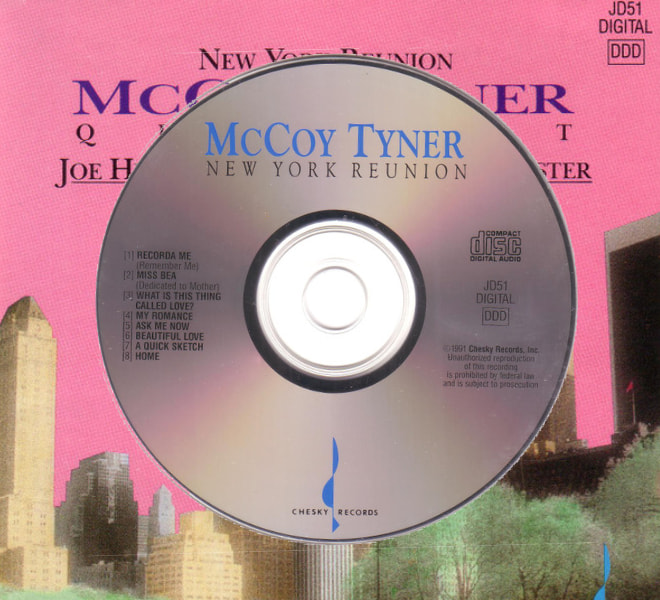
A 180-gram “one step” vinyl reissue of a 1991 release from noted audiophile label Chesky Records featuring jazz legends McCoy Tyner, Joe Henderson, Ron Carter and Al Foster is a good reason to celebrate music and life. It is a reminder of why great recordings and great players still matter.

The performances within New York Reunion are lush, relaxed and overall exemplary, capturing iconic seasoned musicians in an intimate studio setting with then state of the art recording technology. On the album cover, it states that the album was “recorded using a specially modified microphone with all tube Manley Reference electronics by David Manley from Vacuum Tube Logic Of America”  It goes on to say that it was “recorded with minimalist techniques and without overdubbing or artificial enhancement to ensure the purest and most natural sound possible.”

mccoy-tyner-new-york-reunion-hype-sticker

Crafted using the increasingly popular “one step” process, which reduces the number of plating stages required to press a record and can improve overall fidelity, this reissue comes with a strong technical pedigree. The opaque pink vinyl pressing is generally quiet, well centered, and free of obvious surface issues.

mccoy-tyner-new-york-reunion-liner-notes

This is a fine sounding all-digital recording of outstanding musicians playing together effortlessly. Perhaps too effortlessly at times. Feel wise, I’m reminded at points of those later period Oscar Peterson CDs on Telarc which at times sounded somehow too pristine and spotless for my tastes (and I say this as a pretty deep Peterson fan). Yet there are no doubt many lovely performances throughout New York Reunion such as Mr. Henderson’s extended solo sax intro (and outro) on Side 3’s “Ask Me Now” before Mr. Tyner comes in for an extended duet essentially.

mccoy-tyner-new-york-reunion-cd

Generally, I’ve enjoyed New York Reunion. My only question (not a complaint) is whether this pressing might have benefitted from some more empathetic mastering for vinyl? Don’t get me wrong, it sounds good: clean, crisp, and natural. I just wish it leaned a touch warmer. That said, considering the explicit commitment to avoiding “artificial enhancement” which would include equalization, this feels like one of those “it is what it is” scenarios.

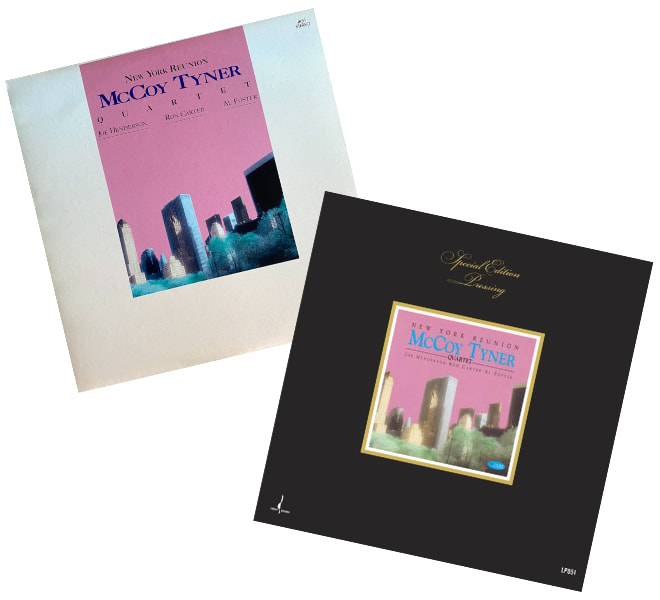
Based on available online information, this new 2LP limited edition of 2,000 copies appears to mark the first time the complete New York Reunion album—all eight tracks originally issued on a single CD in 1992—has been released on vinyl. Earlier vinyl editions from 1992 and 2016 do exist, but those appear to have been single LP versions rather than the full 2LP presentation.

mccoy-tyner-new-york-reunion-prior-lps

At the time of this review The McCoy Tyner Quartet’s New York Reunion can be found easily on Amazon. I have not seen any indication of whether a standard (and perhaps less pricey) black vinyl edition will be available in the future.

Where to buy: $69.98 at Amazon

Advertisement

Mark Smotroff is a deep music enthusiast / collector who has also worked in entertainment oriented marketing communications for decades supporting the likes of DTS, Sega and many others. He reviews vinyl for Analog Planet and has written for Audiophile Review, Sound+Vision, Mix, EQ, etc.  You can learn more about him at LinkedIn.)

Advertisement. Scroll to continue reading.

Source link

Advertisement
Continue Reading

Tech

If you want a transparent iPhone Air with a SIM slot, it'll cost you

Published

on

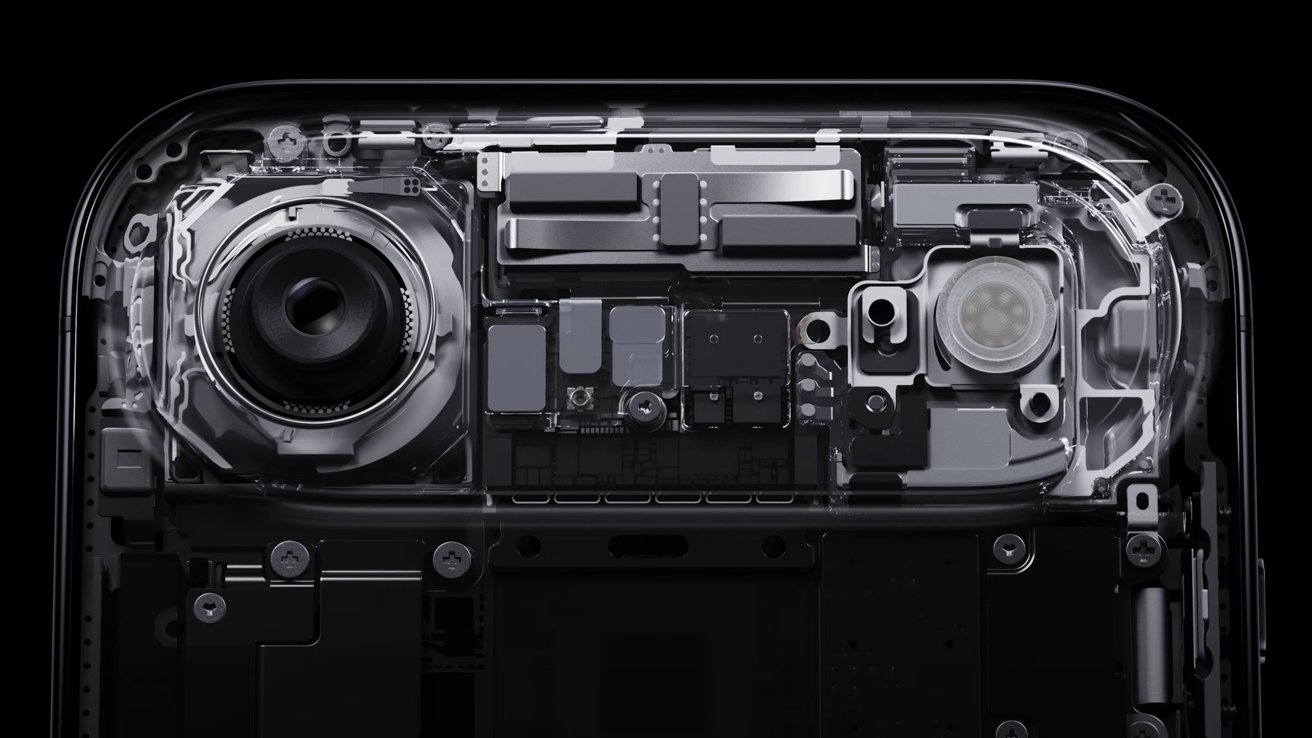
A transparent iPhone Air with a working SIM slot looked like a hardware hack for the ages, but it also showed exactly what got sacrificed when factory design margins disappeared.

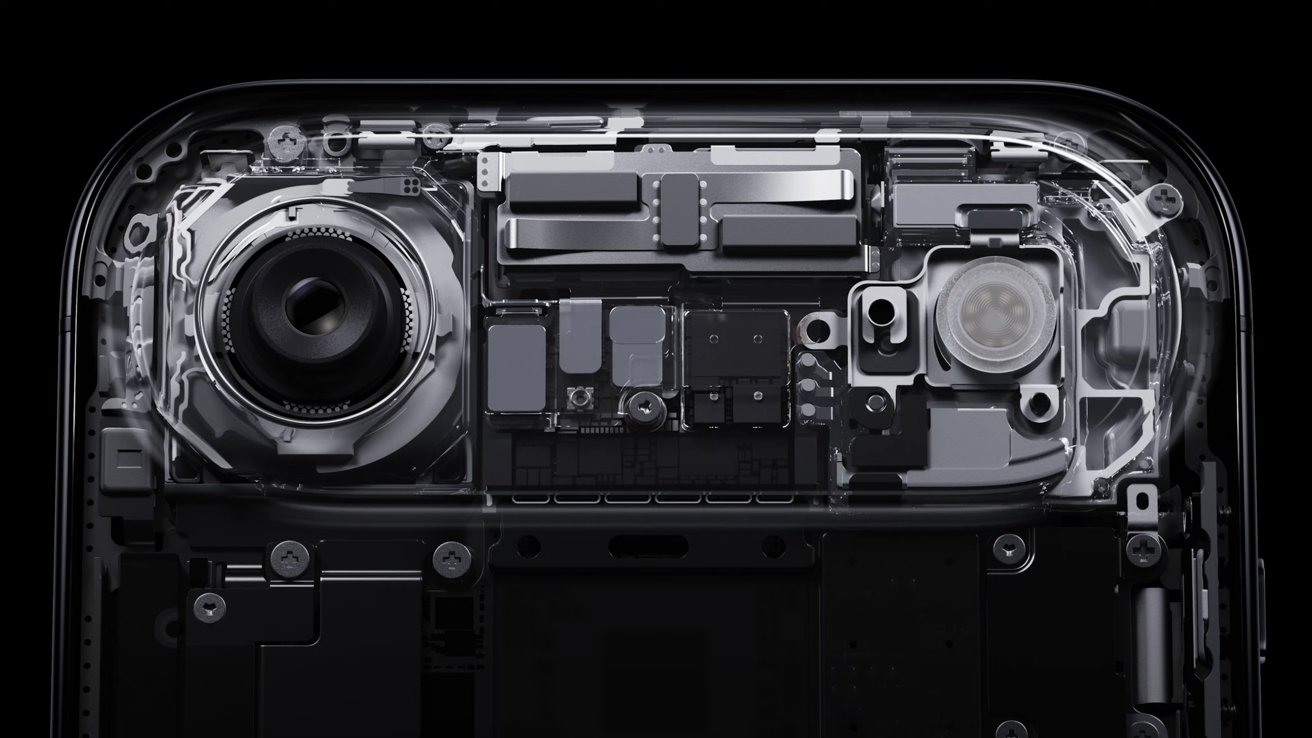
Close-up transparent smartphone back showing internal components, including a large camera lens, flash module, circuit boards, screws, and metallic parts arranged symmetrically against a dark backgroundiPhone Air

In a new video, YouTuber Linzin took viewers on a 22-minute journey through Huaqiangbei, China’s famous electronics market. There, technicians worked their magic by laser-stripping the rear glass of an iPhone Air for a see-through effect.
They didn’t stop there and milled space for a SIM slot directly into the frame. They also handled delicate board-level microsoldering to make the eSIM-only iPhone Air work with a physical SIM card.
The modified phone powered on, connected to a carrier, and worked just fine. It did run hotter under load and lost its water resistance.
Continue Reading on AppleInsider | Discuss on our Forums

Source link

Continue Reading

Tech

HiBy W4 is Portable Bluetooth DAC Amp for only $99

Published

on

HiBy might not have household recognition in the U.S., but the company isn’t exactly new to this game. With 15 years of experience building digital audio players and portable electronics, and a HiByMusic app ecosystem that spans 100 countries with more than 3 million users on iOS and Android, the brand has quietly built serious infrastructure behind the scenes. Now it’s aiming a little more directly at the portable DAC and headphone amplifier crowd with the release of the HiBy W4.

The W4 is a Bluetooth enabled portable DAC and headphone amplifier designed to handle both wired and wireless hi resolution playback in one compact chassis. That matters because the appetite for Bluetooth capable DAC and headphone amps that can properly decode hi res formats and deliver enough output for modern IEMs and reasonably efficient headphones continues to grow. We saw that firsthand with the iFi GO Blu Air, which impressed us with its balance of sound quality, usable power, and everyday practicality.

hiby-w4-portable-bluetooth-amp-iems

HiBy’s pitch with the W4 is similar in concept: fashionable industrial design, dual mode operation, and enough decoding and amplification muscle to make streaming from a smartphone feel less like a compromise and more like a system choice. Whether it can stand out in an increasingly competitive under $250 portable hi-fi segment is the real question.

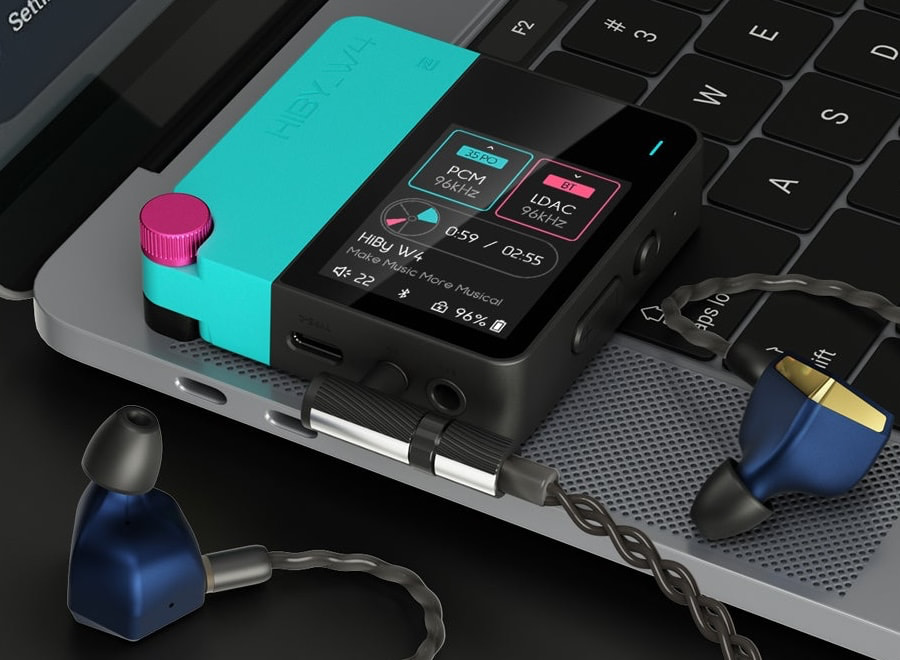
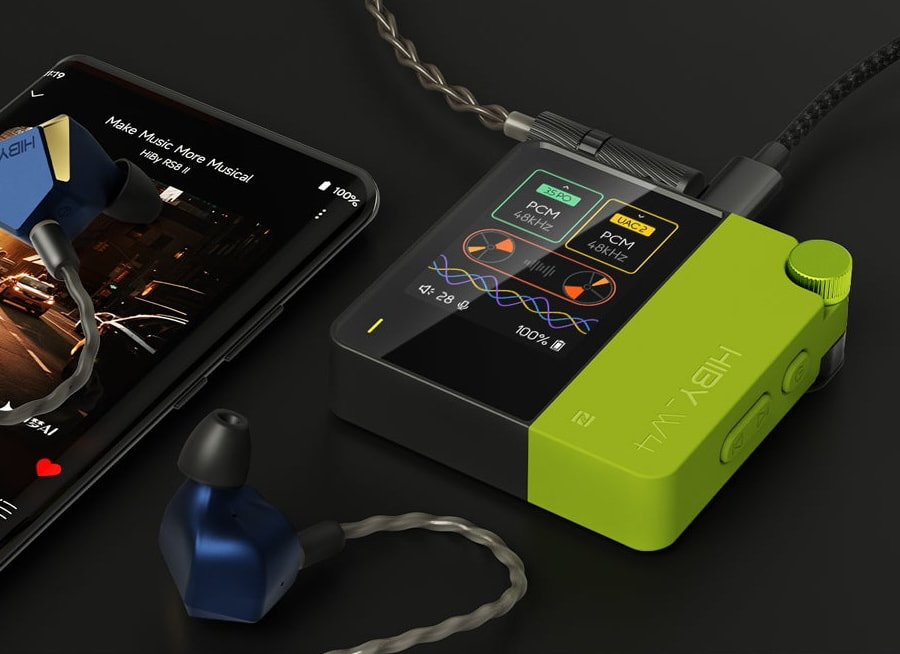
The HiBy W4 features a flexible physical design that supports both clip on use and magnetic attachment for on the go listening. Its integrated magnetic system allows it to attach directly to compatible smartphones or MagSafe style phone cases, functioning much like a MagSafe accessory for a cleaner, cable managed setup.

Advertisement
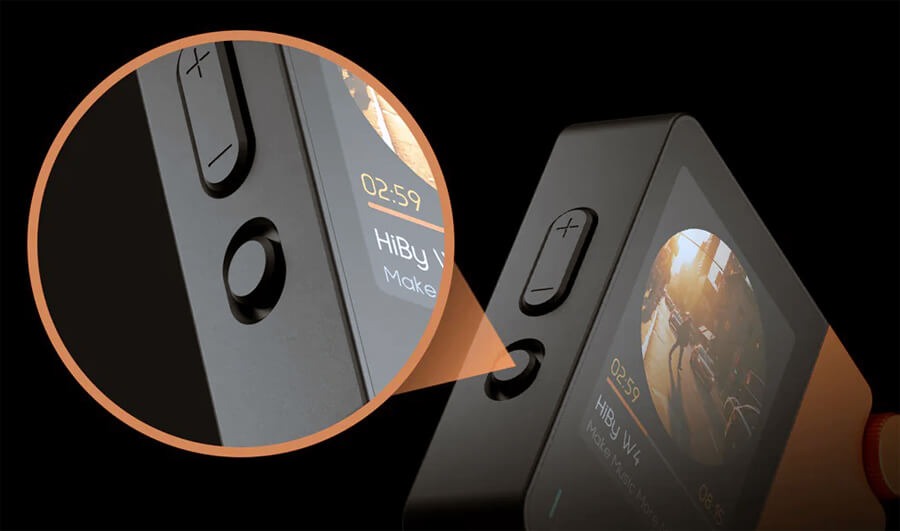
hib4-w4-uncharge-button
Uncharge Mode switch

The W4’s Uncharge Mode shifts the power source to USB operation, isolating the unit from the connected smartphone so it does not draw from the phone’s battery. In addition to preserving battery life, this separation can also help reduce electrical interference from the handset.

The W4 includes a built in 1500 mAh battery to support extended playback sessions, and Uncharge Mode is engaged using a dedicated button located on the left side of the chassis.

On the inside, the HiBy W4 has dual Cirrus Logic CS43198  DAC chips, paired with dual headphone amplifiers. The DACs support PCM up to 768kHz/32-bit and native DSD512. 

The HiBy W4 employs dual low phase noise active crystal oscillators operating at 45.1584 MHz and 49.152 MHz to support more accurate clocking and stable audio playback across common sampling rates.

Advertisement

Connectivity includes both 3.5 mm single ended and 4.4 mm balanced stereo outputs. In balanced mode, the W4 delivers up to 475 mW of output power, driven by dual SGM8262 amplifier chips. That is a substantial figure for a device in this category and nearly double the balanced 4.4 mm output we measured from the iFi GO Blu Air. It provides enough headroom for a wide range of in ear monitors and many relatively efficient over ear headphones, giving the W4 more flexibility than ultra sensitive IEM duty alone.

For wireless performance, the HiBy W4 incorporates a Qualcomm QCC5181 chipset, supporting Bluetooth 5.4, with codec support for Snapdragon Sound, aptX Adaptive, aptX Lossless, aptX HD, LDAC, AAC, and SBC.

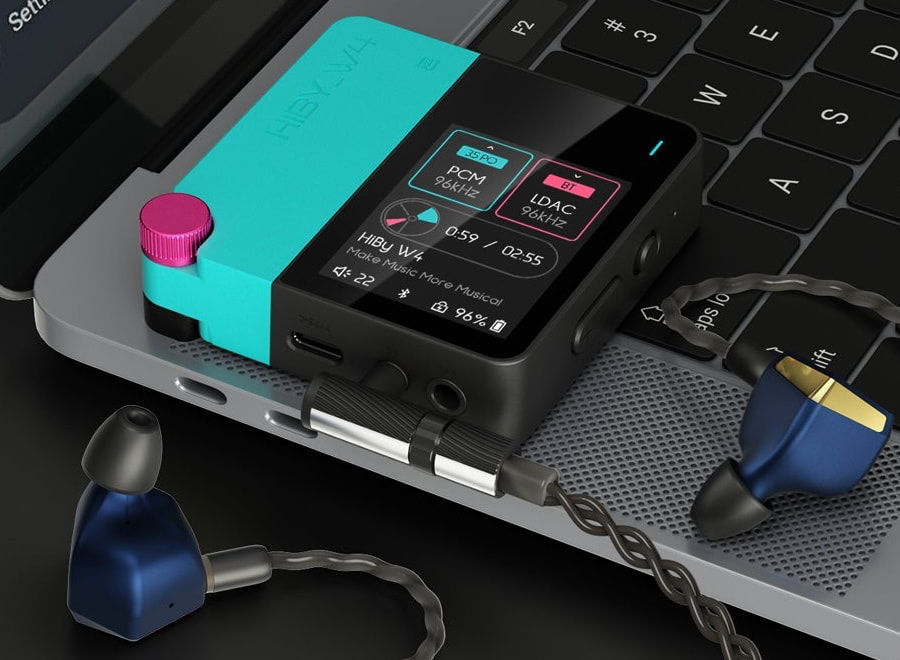
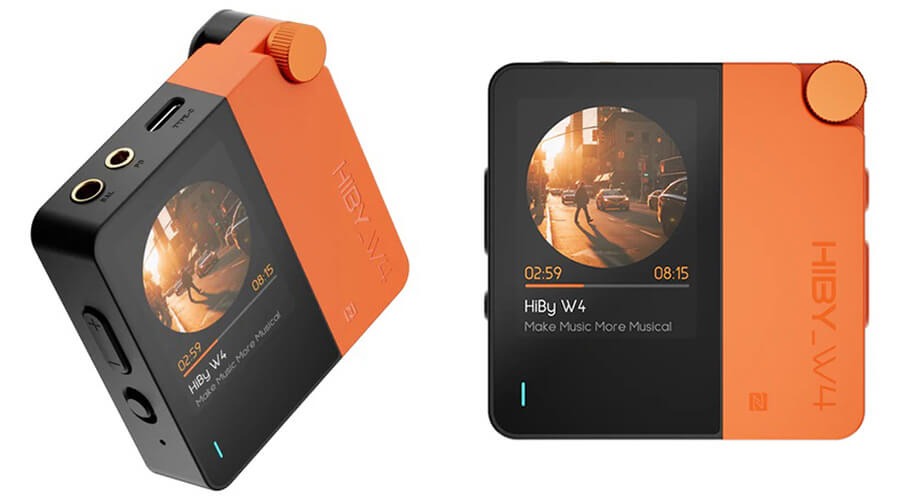
The HiBy W4 is positioned as a stylish everyday carry accessory, pairing a black front display with a contrasting, brightly colored rear module that makes it stand out at a glance.

Advertisement. Scroll to continue reading.

A 2-inch touch screen provides full device control and can display album artwork when operating in Bluetooth mode. Users can manage pairing, playback, and system settings directly from the W4 itself, reducing the need to constantly reach for a smartphone and creating a more self contained, user friendly experience.

Advertisement
hiby-w4-orange

HiBy W4 Specifications

HiBy Model  W4
Product Type Portable HiFi Bluetooth Headphone Amplifier
Price $99
Body Materials  Aluminum Alloy + ABS
Bluetooth Chip QCC5181
DAC Dual CS43198
Supported Audio Specifications DSD512, PCM 768kHz
Bluetooth Version 5.4
Bluetooth Codec Support aptX Adaptive,aptX lossless, aptX-HD, aptX, LDAC, AAC, SBC
Bluetooth Range 10 Meters
USB Input Yes
Control Methods Touch Screen, Physical Buttons, Voice Prompt
Headphone Jacks 3.5mm (CTIA Standard)

4.4mm Balanced Jack

Microphone  Supported via 3.5mm Headphone Jack
cVc Noise Reduction Supported via 3.5mm Headphone Jack
Remote Control Supported via 3.5mm Headphone Jack
NFC (Near Field Communication) Yes
Power Follow Mode Yes
Battery Capacity 1500 mAh
Battery Life 3.5mm: 6.3 hours

4.4mm: 5 hours

Advertisement

Continuous AAC Playback

Dimensions (excluding clip) 66.15 x 65.1 x 21.5 mm

2.06 x 2.56 x 0.85 inches

Weight  93.3 Grams / 3 ounces
Color Options White, Orange, Cyan, Black, Yellow, Green

Advertisement

The Bottom Line 

There is no shortage of portable Bluetooth-enabled DAC/AMPs, and the category now stretches from basic sub-$100 dongles to feature-heavy models approaching $1,000. At $99, the HiBy W4 lands at the aggressive low end of that spectrum but brings a feature set that is not typical at this price.

Support for aptX Lossless and LDAC gives it legitimate hi-res wireless credibility, while dual oscillators, balanced 4.4mm output rated at up to 475mW, and a built-in 1500mAh battery push it beyond entry-level expectations. The integrated 2-inch touch screen also sets it apart from competitors like the iFi GO Blu Air, which relies entirely on a smartphone for visual feedback and navigation. Some listeners may prefer controlling everything from their phone anyway, especially when switching between streaming platforms, but the W4 at least gives users the option of direct, on-device control without guesswork.

Add in the magnetic MagSafe-style attachment, clip-on portability, and a Car-Optimized Mode accessible through the HiByBlue app, and the W4 starts to look less like a budget experiment and more like a calculated move into the mainstream portable hi-fi space.

Who is this for? Smartphone listeners who want true hi-res Bluetooth support, enough power for serious IEMs and efficient headphones, and a self-contained interface without spending several hundred dollars. At $99, it is positioned squarely for commuters, students, travelers, and anyone building a compact everyday-carry audio setup without sacrificing codec support or balanced output. That is a hard combination to ignore at this price.

Advertisement
hiby-w4-portable-bluetooth-amp-green

Price & Availability

The HiBy W4 is available for $99 USD via HiBy’s official online store and Linsoul.

Source link

Advertisement
Continue Reading

Tech

Inexpensive MacBook is the perfect way to get users deeper into the Apple ecosystem

Published

on

Apple’s low-cost MacBook will fill a long-standing gap in its lineup — and bring a new wave of users into the ecosystem.

Seven colorful Apple laptops arranged in a circular fan, each partially open, showing different pastel colors including blue, green, yellow, pink, purple, and gold on a white background
An AppleInsider rendition of what a multi-colored MacBook ad spot could look like

March 4 marks Apple’s next big announcement day, which it plans to celebrate with three invite-only “experiences” in London, Shanghai, and New York City. If you follow the rumors and speculation, you’ll know that Apple’s allegedly getting ready to add a new, lower-priced MacBook back into its lineup.
I, personally, think this is a brilliant move. Apple could really expand its Mac audience, and here’s why.
Continue Reading on AppleInsider | Discuss on our Forums

Source link

Continue Reading

Tech

Today’s NYT Mini Crossword Answers for Feb. 22

Published

on

Looking for the most recent Mini Crossword answer? Click here for today’s Mini Crossword hints, as well as our daily answers and hints for The New York Times Wordle, Strands, Connections and Connections: Sports Edition puzzles.


Need some help with today’s Mini Crossword? For me, 4-Down was a puzzler, but the other answers filled it in. Read on for all the answers. And if you could use some hints and guidance for daily solving, check out our Mini Crossword tips.

If you’re looking for today’s Wordle, Connections, Connections: Sports Edition and Strands answers, you can visit CNET’s NYT puzzle hints page.

Advertisement

Read more: Tips and Tricks for Solving The New York Times Mini Crossword

Let’s get to those Mini Crossword clues and answers.

completed-nyt-mini-crossword-puzzle-for-feb-22-2026.png

The completed NYT Mini Crossword puzzle for Feb. 22, 2026.

Advertisement

NYT/Screenshot by CNET

Mini across clues and answers

1A clue: Soybeans or rice
Answer: CROP

5A clue: Bit of gossip
Answer: RUMOR

7A clue: South American flatbread made of ground maize
Answer: AREPA

Advertisement

8A clue: ___ 8 Ball
Answer: MAGIC

9A clue: Something a pirate might make you walk
Answer: PLANK

Mini down clues and answers

1D clue: Sudden muscle tightness
Answer: CRAMP

2D clue: Like the areas beyond suburbia
Answer: RURAL

Advertisement

3D clue: Luxury Swiss watch brand
Answer: OMEGA

4D clue: Stop by unannounced
Answer: POPIN

6D clue: Billiards triangle
Answer: RACK

Advertisement

Source link

Continue Reading

Trending

Copyright © 2025