HiBy might not have household recognition in the U.S., but the company isn’t exactly new to this game. With 15 years of experience building digital audio players and portable electronics, and a HiByMusic app ecosystem that spans 100 countries with more than 3 million users on iOS and Android, the brand has quietly built serious infrastructure behind the scenes. Now it’s aiming a little more directly at the portable DAC and headphone amplifier crowd with the release of the HiBy W4.
The W4 is a Bluetooth enabled portable DAC and headphone amplifier designed to handle both wired and wireless hi resolution playback in one compact chassis. That matters because the appetite for Bluetooth capable DAC and headphone amps that can properly decode hi res formats and deliver enough output for modern IEMs and reasonably efficient headphones continues to grow. We saw that firsthand with the iFi GO Blu Air, which impressed us with its balance of sound quality, usable power, and everyday practicality.
HiBy’s pitch with the W4 is similar in concept: fashionable industrial design, dual mode operation, and enough decoding and amplification muscle to make streaming from a smartphone feel less like a compromise and more like a system choice. Whether it can stand out in an increasingly competitive under $250 portable hi-fi segment is the real question.
The HiBy W4 features a flexible physical design that supports both clip on use and magnetic attachment for on the go listening. Its integrated magnetic system allows it to attach directly to compatible smartphones or MagSafe style phone cases, functioning much like a MagSafe accessory for a cleaner, cable managed setup.
Advertisement
Uncharge Mode switch
The W4’s Uncharge Mode shifts the power source to USB operation, isolating the unit from the connected smartphone so it does not draw from the phone’s battery. In addition to preserving battery life, this separation can also help reduce electrical interference from the handset.
The W4 includes a built in 1500 mAh battery to support extended playback sessions, and Uncharge Mode is engaged using a dedicated button located on the left side of the chassis.
On the inside, the HiBy W4 has dual Cirrus Logic CS43198 DAC chips, paired with dual headphone amplifiers. The DACs support PCM up to 768kHz/32-bit and native DSD512.
The HiBy W4 employs dual low phase noise active crystal oscillators operating at 45.1584 MHz and 49.152 MHz to support more accurate clocking and stable audio playback across common sampling rates.
Advertisement
Connectivity includes both 3.5 mm single ended and 4.4 mm balanced stereo outputs. In balanced mode, the W4 delivers up to 475 mW of output power, driven by dual SGM8262 amplifier chips. That is a substantial figure for a device in this category and nearly double the balanced 4.4 mm output we measured from the iFi GO Blu Air. It provides enough headroom for a wide range of in ear monitors and many relatively efficient over ear headphones, giving the W4 more flexibility than ultra sensitive IEM duty alone.
The HiBy W4 is positioned as a stylish everyday carry accessory, pairing a black front display with a contrasting, brightly colored rear module that makes it stand out at a glance.
Advertisement. Scroll to continue reading.
A 2-inch touch screen provides full device control and can display album artwork when operating in Bluetooth mode. Users can manage pairing, playback, and system settings directly from the W4 itself, reducing the need to constantly reach for a smartphone and creating a more self contained, user friendly experience.
There is no shortage of portable Bluetooth-enabled DAC/AMPs, and the category now stretches from basic sub-$100 dongles to feature-heavy models approaching $1,000. At $99, the HiBy W4 lands at the aggressive low end of that spectrum but brings a feature set that is not typical at this price.
Support for aptX Lossless and LDAC gives it legitimate hi-res wireless credibility, while dual oscillators, balanced 4.4mm output rated at up to 475mW, and a built-in 1500mAh battery push it beyond entry-level expectations. The integrated 2-inch touch screen also sets it apart from competitors like the iFi GO Blu Air, which relies entirely on a smartphone for visual feedback and navigation. Some listeners may prefer controlling everything from their phone anyway, especially when switching between streaming platforms, but the W4 at least gives users the option of direct, on-device control without guesswork.
Add in the magnetic MagSafe-style attachment, clip-on portability, and a Car-Optimized Mode accessible through the HiByBlue app, and the W4 starts to look less like a budget experiment and more like a calculated move into the mainstream portable hi-fi space.
Who is this for? Smartphone listeners who want true hi-res Bluetooth support, enough power for serious IEMs and efficient headphones, and a self-contained interface without spending several hundred dollars. At $99, it is positioned squarely for commuters, students, travelers, and anyone building a compact everyday-carry audio setup without sacrificing codec support or balanced output. That is a hard combination to ignore at this price.
The generative AI boom minted a startup a minute. But as the dust starts to settle, two once-hot business models are looking more like cautionary tales: LLM wrappers and AI aggregators.
Darren Mowry, who leads Google’s global startup organization across Cloud, DeepMind, and Alphabet, says startups with these hooks have their “check engine light” on.
LLM wrappers are essentially startups that wrap existing large language models, like Claude, GPT, or Gemini, with a product or UX layer to solve a specific problem. An example would be a startup that uses AI to help students study.
“If you’re really just counting on the back-end model to do all the work and you’re almost white-labeling that model, the industry doesn’t have a lot of patience for that anymore,” Mowry said on this week’s episode of Equity.
Advertisement
Wrapping “very thin intellectual property around Gemini or GPT-5” signals you’re not differentiating yourself, Mowry says.
“You’ve got to have deep, wide moats that are either horizontally differentiated or something really specific to a vertical market” for a startup to “progress and grow,” he said. Examples of the deep-moat LLM wrapper type include Cursor, a GPT-powered coding assistant, or Harvey AI, a legal AI assistant.
Techcrunch event
Boston, MA | June 9, 2026
Advertisement
In other words, startups can no longer expect to slap a UI on top of a GPT and get traction on their product like they could, perhaps, in mid-2024 when OpenAI launched its ChatGPT store. The challenge now is to build sustainable product value.
AI aggregators are a subset of wrappers — they’re startups that aggregate multiple LLMs into one interface or API layer to route queries across models and give users access to multiple models. These companies typically provide an orchestration layer that includes monitoring, governance, or eval tooling. Think: AI search startup Perplexity or developer platform OpenRouter, which provides access to multiple AI models via a single API.
Advertisement
While many of these platforms have gained ground, Mowry’s message is clear to incoming startups: “Stay out of the aggregator business.”
Generally speaking, aggregators aren’t seeing much growth or progression these days because, he says, users want “some intellectual property built in” to ensure they’re routed to the right model at the right time based on their needs — not because of behind-the-scenes compute or access constraints.
Mowry has been in the cloud game for decades, cutting his teeth at AWS and Microsoft before setting up shop at Google Cloud, and he’s seen how this plays out. He said the situation today mirrors the early days of cloud computing in the late 2000s/early 2010s as Amazon’s cloud business started taking off.
At that time, a crop of startups sprang up to resell AWS infrastructure, marketing themselves as easier entry points that provided tooling, billing consolidation, and support. But when Amazon built its own enterprise tools and customers learned to manage cloud services directly, most of those startups were squeezed out. The only survivors were the ones that added real services, like security, migration, or DevOps consulting.
Advertisement
AI aggregators today face similar margin pressure as model providers expand into enterprise features themselves, potentially sidelining middlemen.
For his part, Mowry is bullish on vibe coding and developer platforms, which had a record-breaking year in 2025 with startups like Replit, Lovable, and Cursor (all Google Cloud customers, per Mowry) attracting major investment and customer traction.
Mowry also expects strong growth in direct-to-consumer tech, in companies that put some of these powerful AI tools into the hands of customers. He pointed to the opportunity for film and TV students to use Google’s AI video generator Veo to bring stories to life.
Beyond AI, Mowry also thinks biotech and climate tech are having a moment — both in terms of venture investment going into the two industries and the “incredible amounts of data” startups can access to create real value “in ways we would never have been able to before.”
Arrow Video has unleashed Excalibur and Westworld in new Limited Edition 4K releases. Are these restorations worthy of Camelot and Delos, or are we about to discover that even legends and lifelike androids can misfire in Ultra HD?
Excalibur
A lifelong passion project for the filmmaker John Boorman, Excalibur favors the legend of King Arthur over historical fact, drawing as much from the distinguished filmmaker’s aborted adaptation of The Lord of the Rings as from Thomas Malory’s sweeping 15th-century Le Morte d’Arthur. The results remain unique to this day, a beautiful and often bizarre triumph of production design and notoriously complex costumes, filled with earnest thespians early in their careers, among them Helen Mirren, Patrick Stewart, Gabriel Byrne and Liam Neeson.
Taken as either fact or fantasy, it’s one hell of a story: The illegitimate child Arthur, raised humbly, reveals his true identity and divine right to rule by pulling the magical sword Excalibur from the stone. As king, he unites his people and defeats countless enemies, before treachery and betrayal brings his glorious monarchy to a bittersweet end.
A reasonable hit in theaters, the movie has only grown in popularity, largely for its sweeping adventure as captured in its hypnotic visuals. It’s long been a tough title to properly represent on video, with its heavy green mists and the specular highlights bouncing off hand-beaten suits of aluminum armor often reduced to a blocky mess. Arrow’s native 4K scan of the original camera negative is properly framed here at its proper 5:3 aspect ratio for the first time, bringing a newfound stability to the image while the Dolby Vision pass maintains the moody green and red filter effect that cinematographer Alex Thomson intended without blooming into the surrounding forest shadows. While the scenery might be bleak at times, the wide color gamut makes the most of what was shot, notably the lush greens.
Advertisement
The disc defaults to a lossless true mono audio track, and the best I can say here is that it gets the job done, conveying the necessary elements–dialogue, the clinking of swords, the gist of the music–but with no flex whatsoever. Significantly more engaging is the 5.1-channel remix, putting the action all around us without ever trying to sound like a Michael Bay joint. This option is also the best way to enjoy the needle drops by Carl Orff and Richard Wagner that gave the movie its distinctive, operatic feel. Either way, the dialogue is very obviously looped and the spotty lip-synch can be off-putting.
The movie is joined on Disc One by two new expert audio commentaries as well as an archival track by Boorman himself. Disc Two carries a menagerie of substantive new interviews with key talent; a new mini-documentary about Boorman; an archival making-of directed by “creative associate” Neil Jordan (The Crying Game), making its home video debut here; and quite a bit more.
As with some of Arrow’s most highly regarded limited editions, this release also includes an exclusive bonus disc that presents the film in an alternate form: a television cut. To be clear, this is not the fully reconstructed 1980s broadcast version that featured alternate takes, different camera angles, and occasional additional footage. Instead, it is a toned-down edit where sexual content and graphic violence have been adjusted to meet network broadcast standards of the era. With an SD tape from the Warner vault as a guide, this two-hour presentation was reconstructed from the new restoration, in 1080p at the theatrical aspect ratio. Welcome certainly, although not exactly the holy grail that fans have been seeking. (See what I did there?)
Excalibur – Movie Details
STUDIO: Arrow Video
FORMAT: Ultra HD 4K Blu-ray (February 24, 2026)
THEATRICAL RELEASE YEAR:: 1981
ASPECT RATIO: 1.66:1
HDR FORMATS: Dolby Vision, HDR10
AUDIO FORMAT: DTS-HD Master Audio 1.0, 5.1
LENGTH: 141 mins.
MPAA RATING: R
DIRECTOR: John Boorman
STARRING: Nigel Terry, Nicol Williamson, Helen Mirren, Nicholas Clay, Cherie Lunghi, Paul Geoffrey
On a fateful evening in June of 1993, as I sat in a darkened theater surrounded by enthralled fellow ticket-buyers, I was distracted from the events unfolding onscreen as one nagging thought persisted: “Damn, Jurassic Park sure feels a lot like Westworld.” Whereas Jurassic Park began life as a novel that triggered a high-profile bidding war among several A-list directors before landing at Steven Spielberg, Michael Crichton conceived Westworld very differently. Rather than adapting a book, Crichton wrote it directly as an original screenplay and went on to direct the film himself, marking his theatrical directorial debut in 1973.
Advertisement
For his first high-concept sci-fi theme park run amok, he envisioned the ultimate vacation destination for deep-pocketed guests, with three distinct environments populated by robots virtually indistinguishable from people. The cowboy-themed land has attracted a nice-guy lawyer/tourist (Richard Benjamin) and his cavalier buddy (James Brolin) for a week of gun-totin’ fun, but a series of minor malfunctions quickly gives way to deadly consequences, with no human likely to survive. Top-billed Yul Brynner has limited screentime yet steals his every scene as the menacing, black-clad Gunslinger, riffing slyly on his character from The Magnificent Seven.
Arrow’s new 4K/16-bit restoration serves up Westworld at a wide 2.39:1. Nighttime scenes and many of the interiors boast deep shadows that enhance the realism and the organic ‘70s vibe. There’s a lot of beige in the western locales but the trappings of neighboring Medieval World deliver more colorful pop. Grain varies quite a bit but it is definitely in evidence throughout. Director of photography Gene Polito didn’t employ a lot of sharp focus, but in closeups we can really see that crisp 4K sparkle.
The movie packs quite the array of audio options, starting with three original theatrical mixes. The disc defaults to the restored original 4.0 “stereo” (left/center/right/mono surround), along with 2.0 and 1.0, plus a more modern 5.1, all in DTS-HD Master Audio. The 4.0 is quite strong and surprisingly did not reveal much of a difference when we switched to 5.1, each offering an engaging if not jaw-dropping spread across the home theater. The major explosion during the jailbreak sequence lacks real impact across all included audio options, sounding more “.0” than “.1” in practice, with limited low-frequency weight. Meanwhile, Fred Karlin’s eclectic score does much of the heavy lifting, establishing the distinct atmosphere of each themed world before shifting into something far more ominous as the seemingly unkillable androids close in.
Westworld is a single-disc affair yet manages to round up some solid bonus goodies. Arrow corralled the two leads for new on-camera interviews, leading me to believe they probably could have gotten Yul too, if he was still with us. There’s also a producer interview, a middling audio commentary, an interesting “video appreciation,” and one of those terrific old behind-the-scenes featurettes created to promote upcoming films of the era. Well-intentioned but a tad incongruous is the pilot episode of the spurious, short-lived TV spinoff, Beyond Westworld.
Advertisement
As you can see from the photos, both titles arrive in premium packaging: A rigid box holding the plastic disc case with reversible sleeve artwork and a set of six photocards, a perfect-bound companion book and a two-sided poster, all surrounded by a cardboard slipcover. If you’re an Arrow fan, you already know how great these will look on your shelf, just like you know that either or both are destined to sell out.
Harley-Davidson first introduced the Electra Glide back in 1965, and with it came a newfangled invention: the traditional kick starter on Harley’s FL model was replaced by an electric starter. That’s where the “Electra” part of its name comes from, while “Glide” was carried over from earlier Harley models dating back to the late ’40s. Together, the Electra Glide name told Harley riders exactly what they were in for: an electrified version of the same smooth-riding motorcycles they loved from the manufacturer.
Prior to the Electra Glide, Harley’s lineup included two Sportster models and the Duo Glide. All were reliant on old-fashioned kick starters, but the market was changing quickly: industry-wide, people were looking for more power and more advancement out of their bikes. So, with the Electra Glide, Harley-Davidson de-prioritized the kick starter and positioned electric start as the new standard. With that, one of the best touring motorcycles in Harley history was born.
Advertisement
Other new developments that came with the Electra Glide
This new electric starter was major enough, but the full scope of the Electra Glide’s changes went beyond the press of a button. Adding an electric starter meant going from a 6-volt battery to a 12-volt battery, and that meant making modifications to the center section of the frame. Engineers had to upgrade the bike compared to earlier FL models to make room for the new starter and bigger battery.
The 1965 model also used the final iteration of the Panhead engine, only to drop it the following year. In 1966, Harley-Davidson placed a Shovelhead V-twin on the Electra Glide. The engine earned its nickname from rocker covers shaped like the upturned blade of a shovel. It stayed in production for nearly 20 years, remaining an important part of Harley’s hitting the road through 1984. The 1965 model’s unique combination of electric start and the last Panhead engine has since made it the most sought-after Harley among collectors.
As far as punctuation goes, the exclamation mark is perhaps the most eye-catching of the bunch. That’s why [Conrad Farnsworth] thought this form would be perfect for his Home Assistant notifier build.
The key to this build is the large bi-color printed housing in the shape of an exclamation mark. It makes for an attractive wall-hanging, but it also perfectly serves the purpose [Conrad] had in mind. Inside the enclosure is an ESP32, hooked up to a string of 16×8 LED matrixes which are commanded over I2C. These sit behind a white panel in the enclosure to nicely diffuse the light and make their output more readable. The ESP32 displays notifications on the LEDs that are fed from Home Assistant, such as when the mailbox sensor is triggered or if a vehicle is detected in the driveway. There’s also a bell on the unit to provide audible notifications, which us dinged with a solenoid fired via a 2N2222 transistor switching a 12-volt supply from a boost converter.
It’s a neat build that fits nicely into [Conrad]’s daily life and appears to have some genuine utility. If you’re looking for other ways to neatly display notifications where you can see them, you might consider whipping yourself up a smart mirror. Video after the break.
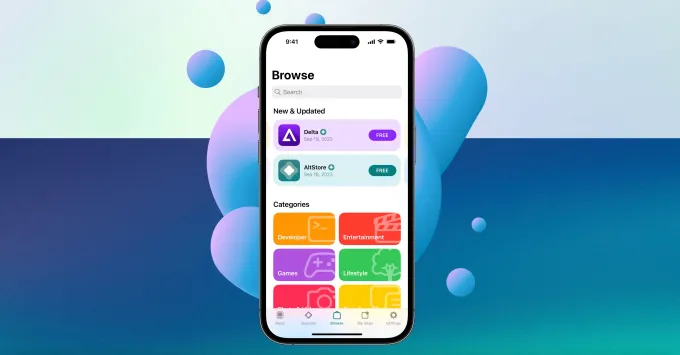
People in the European Union are now allowed to access alternative app stores thanks to the Digital Markets Act (DMA), a regulation designed to foster increased competition in the app ecosystem. Like Apple’s App Store, alternative app marketplaces on allow for easy access to a wider world of apps on Apple devices, but instead of the apps going through Apple’s App Review process, the apps on these third-party marketplaces have to go through a notarization process to ensure they meet some “baseline platform integrity standards,” Apple says — like being malware-free. However, each store can review and approve apps according to its own policies. The stores are also responsible for any matters relating to support and refunds, not Apple.
To run an alternative app marketplace, developers must accept Apple’s alternative business terms for DMA-compliant apps in the EU. This includes paying a new Core Technology Fee of €0.50 for each first annual install of their marketplace app, even before the threshold of 1 million installs is met, which is the bar for other EU apps distributed under Apple’s DMA business terms.
Despite the complicated new rules, a handful of developers have taken advantage of the opportunity to distribute their apps outside of Apple’s walls.
Beyond the EU, other markets are experimenting with alternative app stores, as well, like Japan. In December 2025, Apple announced its compliance with the Mobile Software Competition Act (MSCA), which gives developers new options to distribute apps and process payments outside of Apple’s App Store.
Advertisement
This option also requires developers to accept new business terms, like a reduced 10% to 21% App Store commission, a payment processing fee for Apple in-app purchases of 5%, a core technology fee of 5%, and a 15% store services commission on web sales made through a link in the app.
Below is a list of the alternative app stores iPhone users in these markets can try today.
AltStore PAL (EU)
Image Credits:AltStore
Co-created by developer Riley Testut, maker of the Nintendo game emulator app Delta, the AltStore PAL is an officially approved alternative app marketplace in the EU. The open source app store will allow independent developers to distribute their apps alongside the apps from AltStore’s makers, Delta, and a clipboard manager, called Clip.
Techcrunch event
Boston, MA | June 9, 2026
Advertisement
Unlike Apple’s App Store, AltStore apps are self-hosted by the developer. To work, developers download an alternative distribution packet (ADP) and upload it to their server, then create a “source” that users will add to the AltStore to access their apps. That means the only apps you’ll see in the AltStore are those you’ve added yourselves.
Some popular apps that users are adding include the virtual machine app UTM, which lets you run Windows and other software on iOS or iPad; OldOS, a re-creation of iOS 4 that’s built in SwiftUI; Kotoba, the iOS dictionary available as a stand-alone app; torrenting app iTorrent; qBittorrent remote client for iOS devices called qBitControl; and social discovery platform PeopleDrop.
Advertisement
Setapp Mobile (EU – closed Feb. 2026)
Image Credits:Setapp
MacPaw’s Setapp became one of the first companies to agree to Apple’s new DMA business terms to set up an alternative app store for EU users. Unfortunately, this app store didn’t last long — the company announced it would sunset the Setapp Mobile service on February 16, 2026. (Applications on Setapp Desktop weren’t affected.) The company cited Apple’s “still-evolving” and complex business terms as the reason for its decision.
The company had long offered a subscription-based service featuring a selection of curated apps for customers on iOS and Mac. Following the implementation of the DMA, it released the alternative app store for Setapp Mobile for iOS users only in the EU. Similar to its other subscription offerings, the now-shuttered app store had included dozens of apps under a single recurring subscription price, and the number of apps grew over time. The apps were free from in-app purchases or ads and are generally considered high quality. However, it didn’t include big-name apps like Facebook, Uber, Netflix, and others.
Epic Games Store (EU)
Fortnite maker Epic Games launched its alternative iOS app store in the EU in August 2024, allowing users to download games, including its own Fortnite and others like Rocket League Sideswipe and Fall Guys, with more to come. The company said it’s also bringing its games to other alternative app stores, including AltStore PAL, which it’s now supporting via a grant, as well as Aptoide’s iOS store in the EU and ONE Store on Android.
The move to launch Fortnite in alternative iOS marketplaces comes more than four years after Apple removed the game from its App Store over policy violations, ahead of Epic’s legal challenge to the alleged App Store monopoly. While U.S. courts decided that Apple was not engaged in antitrust behavior, the lawsuit did pave the way for developers to link to their own websites for a reduced commission.
Advertisement
Aptoide (EU)
Image Credits:Aptoide
An alternative game store for iPhone, Lisbon-based Aptoide is an open source solution for app distribution. The company, already known for its Google Play alternative, says it scans the apps to ensure they are safe to download and install.
The iOS version of the Aptoide store launched as an invite-only beta in June 2024 before becoming available to all across the EU. As a free-to-use store, Aptoide doesn’t charge its users to cover its Core Technology Fee paid to Apple, but takes a 10% to 20% commission on in-app purchases on iOS, depending on whether they were generated by the marketplace or not.
Across all platforms, including Android, web, car, and TV, Aptoide offers 1 million apps to its more than 430 million users.
Mobivention marketplace (EU)
Image Credits:Mobivention
A B2B-focused app store, the Mobivention marketplace allows EU companies to distribute their internal apps that are used by employees, but can’t — or shouldn’t — be published in Apple’s App Store. The company also offers the development of a customized app marketplace for companies that want to offer employees their own app store just for their corporate apps. Larger companies can even license Mobivention’s technology to more deeply customize the app marketplace to their own needs.
Skich (EU)
Image Credits:Skich
Last March, Skichannounced the launch of an alternative app store for EU users, which differentiates itself by offering a Tinder-like interface for app discovery. That is, users swipe right to “match” with apps they might enjoy. They can also create playlists and see what apps their friends are playing. The new store will replace Skich’s existing app and will see the company taking a 15% commission on all purchases. Instead of filling its app store with apps right away, the store marketed to developers at the Game Developers Conference (GDC).
Onside (EU and Japan)
Onside
Onside is an alternative iOS app store available in both the EU and, now, Japan, as of February 17, 2026, thanks to the new regulations. The company promises it will charge developers lower rates while still offering security, including keeping payment information private. The store currently supports bank card payments and Apple Pay and will later roll out support for other payment methods like iDeal, Klarna, and more.
For consumers, Onside touts a range of top apps and exclusives that can’t be found on other marketplaces within a familiar interface that includes traditional app store features, like editorial collections, ratings and reviews, and automatic updates.
OpenAI is reportedly hard at work developing a series of AI-powered devices, including smart glasses, a smart speaker and a smart lamp. According to reporting by , the AI company has a team of over 200 employees dedicated to the project.
The first product scheduled to be released is reported to be a smart speaker that would include a camera, allowing it to better absorb information about its users and surroundings. According to a person familiar with the project, this would extend to identifying objects on a nearby table, as well as conversations being held in the vicinity of the speaker. The camera will also support a facial recognition feature similar to Apple’s Face ID that would enable users to authenticate purchases.
The speaker is expected to retail for between $200 and $300 and ship in early 2027 at the earliest. Reporting indicates the company’s AI-powered smart glasses, a space currently dominated by , would not come until 2028. As for the smart lamp, while prototypes have been made, it’s unclear whether it will actually be brought to market.
Last year OpenAI ex-Apple designer Jony Ive’s startup io Products for $6.5 billion. Ive is considered largely responsible for Apple’s design aesthetic, having been involved in designing just about every major Apple device since joining the company in the ’90s before his departure in 2019. The acquisition of his sets the stage for Ive to lead hardware product development now for OpenAI.
Advertisement
Since the partnership was forged, there have already due to technical issues, privacy concerns and logistical issues surrounding the computing power necessary to run a mass-produced AI device. Regardless of the behemoths behind the project, the speaker and other future products may still face a consumer that is always listening to and watching its users.
Astronomers have just identified what appears to be a cosmic anomaly: a faint galaxy with so few visible stars that, according to calculations, as much as 99.9 percent of its mass is dark matter. The remaining 0.1 percent is conventional matter.
This galaxy, located about 300 million light-years away, is practically invisible. Only four globular clusters, small concentrations of stars that look like isolated neighborhoods in the middle of the void, stand out. For years, these star collections in the Perseus cluster were considered independent objects.
Candidate Dark Galaxy-2 is only visible through four globular clusters that contribute to 16 percent of its total brightness. Scientists believe 99.9 percent of this galaxy is dark matter.
NASA/ESA
Now, after an exhaustive analysis, a study published in The Astrophysical Journal Letters presents solid evidence that these globular clusters are part of the same galaxy dominated by dark matter. Tentatively named CDG-2 (Candidate Dark Galaxy-2), it is the first galaxy to be detected only by its brightest fragments.
Advertisement
The authors pooled data from the Hubble, Euclid, and Subaru telescopes, three of the most powerful observatories available. The combined readings reveal an extremely faint glow around the four globular clusters. This residual light is a clear sign of an underlying galaxy so dim that the three telescopes missed it on their own.
More Than Meets the Eye
Preliminary analysis indicates that CDG-2 has a total luminosity equivalent to about 6 million suns, with the four globular clusters contributing about 16 percent of that brightness, an unusually large share. This distribution suggests that, despite its low light, the galaxy is a gravitationally bound system, implying a particularly dense dark matter halo. Astronomers estimate that this invisible structure accounts for between 99.94 to 99.98 percent of CDG-2’s total mass.
According to current models, dark matter constitutes roughly 27 percent of the universe’s total energy density and about 85 percent of its matter. Although the exact nature of what makes up dark matter is still unclear, because it neither emits nor reflects light, scientists infer its existence from its gravitational effects on radiation, visible matter, and the large-scale structure of the cosmos.
Dark matter is so pervasive throughout galaxies that its presence explains the stability and motion of stars in systems such as the Milky Way. For example, current models indicate that our galaxy is embedded in a halo composed of about 90 percent dark matter.
Advertisement
However, the case of CDG-2 is extreme: a galaxy with almost no stars, surrounded almost entirely by an invisible halo. These types of systems, so-called “dark galaxies,” are beginning to appear in astronomical records. Beyond their rarity, scientists value them because they serve as natural laboratories for exploring the nature of dark matter and testing current models of galaxy formation.
This story originally appeared onWIRED en Españoland has been translated from Spanish.
The Mexican Navy announced on Thursday that it had seized a semi-submersible vessel carrying nearly four tons of cocaine. The seizure of 179 packages of the drug is the latest result in an effort to curb maritime trafficking of illicit substances across the Pacific Ocean—an issue also being addressed by the United States through a series of deadly attacks in the Caribbean against vessels suspected of carrying drugs.
Omar García Harfuch, Mexico’s secretary of security, reported in a post on X that the interception of the vessel—known as a “narco-submarine”—took place in Mexican waters near Manzanillo, in the state of Colima. Three people have been arrested over suspected ties to the shipment.
The Mexican navy (Semar) said that the operation involved an ocean patrol vessel, two fixed-wing aircraft, two rotary-wing aircraft, and two interceptor boats. It also received support from US Northern Command and the Joint Interagency Task Force, which provided intelligence to locate the target at sea.
Harfuch emphasized that this action adds to other seizures made during the past week, which have resulted in the confiscation of approximately 10 tons of cocaine. According to the secretary, “this represents a direct and multimillion-dollar blow to the financial structures of organized crime, preventing millions of doses from reaching the streets and protecting the safety of Mexican families.”
Advertisement
Since at least last year, Semar has been monitoring a transnational network that uses the routes known as La Gorgona and El Desierto to transport narcotics and other illicit goods from Ecuador and Colombia. The route includes strategic points such as the Galápagos Islands and Clipperton Island before reaching Mexican shores, including Punta Tejupán in Michoacán. According to an investigation published by N+ Focus, the final destination of these shipments is the US market.
Criminal organizations use speedboats, submarines, and semi-submersibles, often homemade from fiberglass, to evade radar and maritime surveillance systems. Between 2023 and early 2025, monitoring and enforcement operations conducted by Semar resulted in the seizure of more than 111 tons of cocaine, 223 illegal maritime vessels, and the arrest of 476 suspected traffickers of Ecuadorian, Mexican, Colombian, and Central American nationalities.
The US government has pressured Mexico to intensify its fight against drug trafficking. Last year, the trafficking of synthetic drugs like fentanyl was used by the Trump administration as justification for imposing tariffs on Mexican imports.
Since then, Mexican president Claudia Sheinbaum has announced a tougher strategy against the cartels, which includes increased surveillance on maritime routes and borders, as well as the extradition of dozens of those convicted of drug trafficking offenses to the United States.
Advertisement
For his part, US president Donald Trump launched a campaign of direct confrontation against organized crime, even in international waters. According to The New York Times, Trump instructed the Pentagon to use military assets against Latin American cartels designated as terrorist organizations, representing the most aggressive strategy of his administration in this area.
Trump’s decree aimed to establish a legal basis for conducting both maritime and land military operations in foreign territory, marking a significant shift in US security policy by assigning to the military functions traditionally reserved for law enforcement agencies.
This policy led to the first US attack on a vessel that, according to the Trump administration, was transporting drugs from Venezuela to the United States. That incident occurred on September 2 in international waters of the southern Caribbean Sea and left 11 people dead, allegedly linked to the Tren de Aragua gang. Since then, dozens of similar attacks have been recorded in the Caribbean and the Pacific, with an estimated death toll of approximately 145 people.
This story originally appeared in WIRED en Español and has been translated from Spanish.
And one Singaporean café has made the cut, ranking impressively high.
Apartment Coffee retains its sixth-place spot in the 2026 ranking, the only café from Singapore to feature on the list this year.
It holds the same position it earned in 2025, and has been crowned the best coffee shop in Asia for the second year in a row. So, who’s behind the café, and how did it manage to clinch such a prestigious award not once, but twice in a row?
Advertisement
Apartment Coffee was founded in 2018
Apartment Coffee was first established along Lavender Street eight years ago, by 2018 Singapore Brewers Cup Champion, Yeo Qing He, before it moved to its current premises in Selegie in 2022. It also recently expanded to Serangoon, with the opening of Apartment Roastery in Jun 2025.
(Left): Yeo and his fellow baristas when they achieved 6th place on the World’s 100 Best Coffee Shops list in 2025; (Right): Apartment Coffee’s interior./ Image Credit: Apartment Coffee, Brandon Wong via Google Reviews
The café is well-known for its minimalist, tranquil interior of white walls and natural accents, which offers an escape from the city’s constant buzz. It has a short, curated menu that highlights the craft behind each pour-over coffee cup, from careful bean selection to precise roasting and brewing.
In fact, their beans are carefully selected firsthand during the team’s travels to renowned coffee regions like Colombia, Costa Rica, Rwanda and Kenya.
Yeo said in an interview with The Straits Times that the “focus on experience” differentiates Apartment Coffee from other local coffee shops. “This is also why we don’t do takeaways at our coffee studio,” he added.
Over the years, the café has amassed numerous accolades, including second place in the Singapore Brewers Cup 2022 and first place at the Singapore Roaster Forum 2019. Its sixth-place finish in the 2026 World’s 100 Best Coffee Shops ranking is the latest addition to its growing list of achievements.
Advertisement
Other notable mentions
The World’s 100 Best Coffee Shops List is an annual event that ranks cafés around the globe across nine criteria, including the quality of coffee, the barista expertise, sustainability practices, consistency and innovation.
It has quickly earned a reputation as the coffee world’s equivalent of the Michelin Guide. The event’s credibility stems from a transparent voting system that combines expert opinions (70%) with public opinion (30%), alongside a nomination and final selection process.
Given how well-loved Apartment Coffee is, it wouldn’t be surprising if the café makes the list a third time in the coming year.
Apart from Apartment Coffee, there are other notable mentions, including 14 cafés from Asia that made the 2026 World’s 100 Best Coffee Shops list.
Advertisement
Among the highest-ranking Asian entries are Malaysia’s Story Of Ono in Petaling Jaya, which climbed one spot to eighth this year.
South Korea’s Momos Coffee Flagship Store ranks 22nd, while Japan’s Ult Coffee comes in at 24th. Last year’s honorees also return, including Japan’s Koffee Mameya Kakeru (28th), China’s Espresso Alchemy (31st), and the Philippines’ Yardstick (34th).
Taiwan maintains a strong presence with four newcomers: Coffee Sind (36th), Keep Coffee Roastery (46th), Tomorrow Coffee Roasters (57th), and Coffee Stopover Black (78th).
Other first-time entrants include South Korea’s Ruli Coffee (51st), Thailand’s Fika & Co. Cafe (61st), and Malaysia’s Coffee Stain in Kuala Lumpur (84th).
The British Academy Film Awards are the British equivalent of the Oscars, and so Hollywood heavy-hitters Benicio Del Toro, Emma Stone, Ethan Hawke, Leonardo DiCaprio, Michael B. Jordan, Timothee Chalamet and Stellan Skarsgard have confirmed that they will be there in the flesh. It’s Hamnet‘s Irish duo of Jessie Buckley and Paul Mescal, however, who could end up stealing the show at London’s Royal Festival Hall this Sunday.
Love it or loathe it, Paul Thomas Anderson’s subtle-as-a-brick action thriller One Battle After Another has top billing with nominations across 14 categories, including Best Fil, Best Director, Best Actor in a Leading Role (DiCaprio as Bob Ferguson) and Best Actress in a Leading Role (Chase Infiniti as Willa Ferguson).
Advertisement
Ryan Coogler’s allegorical supernatural horror Sinners is one down with 13 nods, while Shakespeare drama Hamnet and sports drama Marty Supreme are tied with 11 nominations apiece.
And with Alan Cumming hosting, Riz Ahmed, Sadie Sink, Cillian Murphy and Gillian Anderson amongst the presenters, and KPop Demon Hunters’ Ejae, Audrey Nuna and Rei Ami (the voices behind HUNTR/X members Rumi, Mira and Zoey) set to perform, the staging is set to rival the main event.
Read on as we explain how to watch BAFTAs from anywhere. Scroll down for the full list of nominees, voting instructions and more.
Advertisement
Watch BAFTAs 2026 for FREE
How to watch BAFTAs 2026 from anywhere
If you’re keen to watch the British Academy Film Awards but you’re away from home and access to the ceremony is geo-blocked, you can always use a VPN to access it (assuming you’re not breaching any broadcaster T&Cs, of course). You may be surprised by how simple it is to do.
A VPN is handy piece of software that can make your device appear as if it’s back in your home country, so you can unlock your usual service. The best VPN right now? We recommend NordVPN – it does everything and comes with a 74% discount and Amazon Gift Card thrown in on some plans.
Use one of the best VPNs to watch BAFTAs 2026 from anywhere:
Advertisement
How to watch BAFTAs 2026 in the US
In the US, the 2026 BAFTAs will air on E! on tape-delay, at 8pm ET/PT on Sunday evening.
With the ceremony actually taking place at 2pm ET / 11am PT, that means you’ll need to be on high alert for spoilers.
If you don’t have the channel on cable, E! is part of the Sling TV Blue plan, which starts at $45.99 per month, and also carries USA Network, FX and FS1, as well as ABC, FOX and NBC in select cities. New customers can get 50% off their first month.
The British Academy Film Awards don’t have a home in Canada.
If you’re a Brit across the pond, however, a VPN will help you tune in for free. NordVPN is our recommended provider, and you can find out why with our in-depth NordVPN review.
The two-hour ceremony airs at 7pm GMT on Sunday, February 22.
All you need is an account, a TV license and a UK postcode (e.g.HA9 0WS). Sign up here!
Advertisement
The Red Carpet Show, hosted by Clara Amfo and Ali Plumb, is being live streamed on the BAFTA YouTube channel from 2.30pm GMT.
Outside the UK?Use a VPN to gain access to all the content you’d normally stream at home.
How to watch BAFTAs 2026 in Australia
(Image credit: free)
In Australia, the 2026 BAFTAs are being shown on HBO Max.
Advertisement
The service is live streaming the ceremony from 6am AEDT on Monday morning, as well as the Red Carpet Show from 1.30am.
A subscription starts at AU$11.99 per month or $119.99 per year.
Outside Australia at the moment? Use NordVPN to access your usual coverage.
Advertisement
BAFTAs 2026 – Need to Know
Who are the BAFTAs 2026 Best Film nominees?
Hamnet – Liza Marshall, Pippa Harris, Nicolas Gonda, Steven Spielberg, Sam Mendes
Marty Supreme – Eli Bush, Ronald Bronstein, Josh Safdie, Anthony Katagas, Timothee Chalamet
One Battle After Another – Adam Somner (posthumous), Sara Murphy, Paul Thomas Anderson
Sentimental Value – Maria Ekerhovd, Andrea Berentsen Ottmar
Advertisement
Sinners – Zinzi Coogler, Sev Ohanian, Ryan Coogler
Who are the 2026 BAFTA Best Actor nominees?
Robert Aramayo – I Swear as John Davidson
Timothée Chalamet – Marty Supreme as Marty Mauser
Leonardo DiCaprio – One Battle After Another as Bob Ferguson
Advertisement
Ethan Hawke – Blue Moon as Lorenz Hart
Michael B. Jordan – Sinners as Elijah “Smoke” Moore / Elias “Stack” Moore
Jesse Plemons – Bugonia as Teddy Gatz
Who are the 2026 BAFTA Best Actress nominees?
Jessie Buckley – Hamnet as Agnes Shakespeare
Advertisement
Rose Byrne – If I Had Legs I’d Kick You as Linda
Kate Hudson – Song Sung Blue as Claire Sardina
Chase Infiniti – One Battle After Another as Willa Ferguson
Renate Reinsve – Sentimental Value as Nora Borg
Advertisement
Emma Stone – Bugonia as Michelle Fuller
Who are the 2026 BAFTA Best Supporting Actor nominees?
Benicio del Toro – One Battle After Another as Sensei Sergio St. Carlos
Jacob Elordi – Frankenstein as The Creature
Paul Mescal – Hamnet as William Shakespeare
Advertisement
Peter Mullan – I Swear as Tommy Trotter
Sean Penn – One Battle After Another as Col. Steven J. Lockjaw
Stellan Skarsgård – Sentimental Value as Gustav Borg
Who are the 2026 BAFTA Best Supporting Actress nominees?
Odessa A’zion – Marty Supreme as Rachel Mizler
Advertisement
Inga Ibsdotter Lilleaas – Sentimental Value as Agnes Borg Pettersen
Wunmi Mosaku – Sinners as Annie
Carey Mulligan – The Ballad of Wallis Island as Nell Mortimer
Teyana Taylor – One Battle After Another as Perfidia Beverly Hills
Advertisement
Emily Watson – Hamnet as Mary Shakespeare
How does 2026 BAFTAs voting work?
The 221 films that were submitted for consideration are being whittled down to nominees and winners by up to 8,300 BAFTA members worldwide.
Although they’re strongly encouraged to watch the entries in theaters, they’re all also available to stream on BAFTA View, the organization’s own restricted platform.
However, the Rising Star Award winner is decided by the public, who can cast their votes on the BAFTA website.
Advertisement
Who are the 2026 BAFTA Rising Star Award nominees?
Robert Aramayo
Miles Caton
Chase Infiniti
Archie Madekwe
Advertisement
Posy Sterling
We test and review VPN services in the context of legal recreational uses. For example: 1. Accessing a service from another country (subject to the terms and conditions of that service). 2. Protecting your online security and strengthening your online privacy when abroad. We do not support or condone the illegal or malicious use of VPN services. Consuming pirated content that is paid-for is neither endorsed nor approved by Future Publishing.