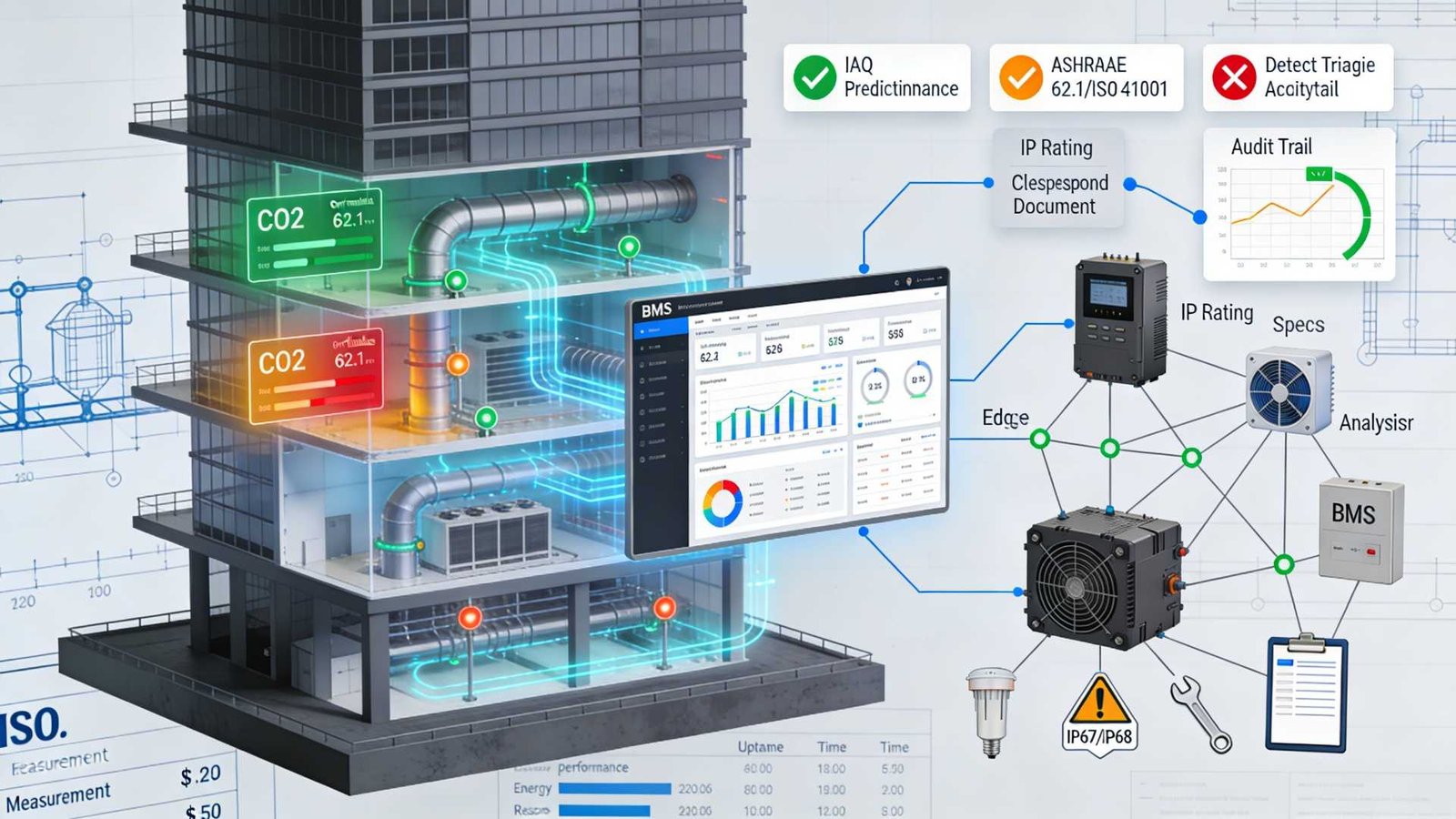
Advanced monitoring is becoming standard because modern facilities are judged on outcomes—air quality, uptime, safety, energy performance, and documented response—not on whether a checklist was completed last week. Ventilation and indoor air quality expectations are formalised through recognised standards, and newer editions increasingly emphasise controls, performance, and operations, which push organisations toward measurable, continuous data.
The changing risk profile (visibility is now a liability issue)
Facilities today are dense systems: people, HVAC, access control, OT/IoT, and vendors. The risk surface includes invisible variables (CO₂/ventilation adequacy, particulates, VOCs, temperature/humidity excursions) and failure modes that don’t announce themselves during routine walkthroughs.
ISO 41001 frames facilities management as a management system aimed at the effective and efficient delivery of FM, supporting organisational objectives and consistently meeting stakeholder and applicable requirements—language that aligns naturally with continuous measurement and documented processes.
Advertisement
Summary: Risk shifted from “obvious hazards” to “system behaviour,” and system behaviour requires instrumentation.
Real-time data is an operational requirement (not a dashboard hobby)
Real-time monitoring creates a new operating model: detect → triage → respond → document. That shift matters because it reduces the time between anomaly and action, and it creates auditable records of conditions and responses (useful for regulated sectors and insurer scrutiny).
Where standards are explicit about ventilation and IAQ, the operational burden increases. ASHRAE notes that 62.1/62.2 are recognised standards for ventilation and acceptable indoor air quality, and the 2025 edition highlights additional requirements and control sequences (e.g., demand-controlled ventilation control sequences, emergency control requirements, humidity control requirements).
Summary: Once you’re accountable for continuous conditions, periodic checks no longer scale.
Advertisement
Hardware built for harsh environments (define “rugged” with specs)
In industrial/institutional settings, monitoring often fails at the edges: vibration, dust, washdown, temperature swings, and physical impact. “Rugged computers” should mean measurable environmental tolerance—especially ingress protection.
IEC 60529 defines IP ratings with two digits: the first (0–6) indicates resistance to solid objects/dust, and the second (0–9) indicates resistance to liquids. In practice, this lets you specify hardware for the environment (e.g., dust-heavy warehouses vs washdown production areas) rather than buying consumer mini-PCs and hoping.
When NOT to ruggedise: If the device lives in a conditioned IT closet, you may be paying for durability you don’t need; invest instead in redundancy, power protection, and serviceability.
Summary: Reliability is a system property, and edge hardware specs are part of reliability engineering.
Advertisement
Environmental monitoring beyond compliance (IAQ as performance)
Facilities increasingly monitor more than temperature/humidity: CO₂ as a ventilation proxy, particulates, VOCs, and noise exposure. The point isn’t “more sensors”—it’s closed-loop improvement: correlate excursions with occupancy, HVAC modes, and outcomes (complaints, absenteeism, equipment faults), then adjust operations.
This aligns with how ASHRAE describes 62.1/62.2 as ventilation/IAQ standards and emphasizes updated requirements around filtration, controls, air cleaning, and operations/maintenance—areas where continuous sensing provides feedback rather than guesswork.
Summary: Environmental data is only valuable when it feeds decisions, not when it fills storage.
Integration with BMS (monitoring becomes control)
Monitoring is most valuable when integrated with building management systems (BMS) and incident response workflows. Without integration, you get alerts; with integration, you get controlled response: ventilation adjustments, escalations, and unified incident records.
Advertisement
A practical architecture pattern:
Sensors (IAQ/asset/environment) → edge gateway → secure message bus
Summary: Standalone monitoring is reporting; integrated monitoring is operations.
Behavioural monitoring and policy enforcement (high value, high governance)
Behavioural detection (e.g., vape detectors) can reduce blind spots in low-visibility areas, but it introduces governance requirements: clear purpose, minimisation, retention limits, access controls, and documented response rules.
If you deploy behavioural monitoring, treat it like a policy-controlled safety system—not a surveillance toy. The technical bar should include false-positive management, tamper detection, and a defensible incident workflow.
When NOT to deploy: If you can’t articulate “what action follows an alert” and who is authorised to act, you’ll create noise, distrust, and compliance risk.
Advertisement
Summary: Behavioural monitoring is powerful—but only when paired with governance.
Predictive maintenance is the economic engine behind monitoring adoption. If you can detect drift (fan performance, vibration anomalies, temperature rise, runtime patterns) you shift maintenance from “fixed schedule” to “based on condition,” reducing unnecessary work and preventing downtime.
Tie maintenance analytics to:
Asset criticality tiers (what must never fail)
SLAs (response time, uptime)
Parts lead time risk
Summary: Monitoring becomes standard when it pays for itself via avoided downtime and targeted labour.
Compliance, documentation, and liability reduction (the audit trail is the product)
Standards-driven environments reward documented control. ISO 41001 emphasises consistently meeting the needs of interested parties and applicable requirements, which is easier to demonstrate when you have objective records of conditions, alerts, and responses.
Advertisement
The defensible story looks like:
“Here were the thresholds.”
“Here were the readings.”
“Here were the alerts.”
“Here’s what we did, and when.”
Summary: In modern facilities, data isn’t just insight—it’s proof.
FAQ
What’s the difference between monitoring and a BMS?
Only where the environment requires it, IEC 60529 IP ratings define dust/water resistance with two digits, helping you specify equipment for harsh conditions.
What standards are pushing facilities toward continuous IAQ visibility?
ASHRAE 62.1/62.2 are recognised standards for ventilation and acceptable indoor air quality, and the 2025 edition highlights additional requirements around controls and operations that benefit from continuous data.
Advertisement
How does ISO 41001 relate to monitoring?
ISO 41001 defines requirements for an FM management system to deliver FM effectively/efficiently and consistently meet stakeholder/applicable requirements, which aligns with measurable monitoring and documented response.
Key takeaways
Advanced monitoring is becoming standard because compliance and accountability increasingly require measurable outcomes and documented control.
Rugged edge hardware should be specified according to environmental standards such as IEC 60529 IP ratings, not by vague marketing claims.
The real leap happens when monitoring integrates with operations (BMS + maintenance workflows) and produces audit-ready records.
Before heading on a trip to Tahoe last weekend, GM offered me the use of the company’s 9,000-pound monument to excess – the new 2026 electric Escalade IQL (starting at $130,405) – for a week to test-drive. Before you continue, note that I’m not a professional car reviewer. TechCrunch has excellent transportation writers; I am not one of them. I do, however, drive an electric car.
I was immediately game. I’d first glimpsed one last summer at a car show, where some regional car dealers had stationed themselves at the end of a long field dotted with exquisite vintage automobiles. My immediate reaction was “Jesus, that’s enormous,” followed by a surprising admiration for its design, which, despite its enormous scale, shows restraint. For lack of a better word, I’m going to say it’s “strapping.” Its proportions just work.
My excitement waned pretty quickly when the car was dropped off at my house a day before our departure time. This thing is a monstrosity — at 228.5 inches long and 94.1 inches wide, it made our own cars look like toys. My first apartment in San Francisco was smaller. Trying to drive it up my driveway was a little harrowing, too; it’s so big, and its hood is so high, that if you’re ascending a road at a certain slope – we live midway down a hill; our mailbox is at the top of it – you can’t see whatever is directly in front of the car.
I thought about just leaving it in the driveway for the duration of the trip. The other alternative was doing what I could to grow more comfortable with the prospect of driving it 200 miles to Tahoe City, so I tooled around in it that night and the next day, picking up dinner, heading to an exercise class — just basic stuff around town. When I ran into a friend on the street, I volunteered as quickly as possible that this was not my new car, that I was going to possibly review it, and wasn’t its size ridiculous? It felt like a tank. I thought: other than hotels that use SUVs like the Escalade to ferry guests around, what kind of monster chooses a car like this?
Advertisement
Five days later, it turns out that I am that kind of monster.
Image Credits:Connie Loizos
Look, I don’t know how or when I fell for this car. If I’d written this review after two days, it would read very differently. Even now, I’m not so blind that I don’t see its shortcomings.
It was the Escalade’s performance in a terrible snowstorm that really won my heart, but let me walk you through the steps between “Ugh, this car is a tank” and “Yes! This car is a tank.”
Techcrunch event
Boston, MA | June 9, 2026
Advertisement
Just getting into it requires a little more exertion than would seem to make sense. I’m fairly athletic and I still found myself wondering if this thing shouldn’t come with an automated step stool.
Inside is where digital maximalism does its work. The dashboard opens with a 55-inch curved LED screen with 8K resolution that reads less like a car display and more like a situation room. Front passengers get their own screens. Second-row passengers also get 12.6-inch personal screens along with stowable tray tables, dual wireless chargers, and — with the most lavish version of the car — massage seats that will make them forget they’re in a vehicle at all. Google Maps handles navigation. And the polarized screen technology deserves its own praise: while one of my kids binge-watched Hulu in the front seat, not a frame of it leaked into my sightline from behind the wheel.
Advertisement
The cabin itself is built around the premise that no one inside should feel crowded, and it delivers. Front legroom stretches to 45.2 inches; the second row offers 41.3; even the third row manages 32.3 inches. Seven adults could share this machine for a long while without fraying each other’s nerves. Heated and ventilated leather seats with 14-way power adjustment come standard in the first two rows, and the whole operation runs on 5G Wi-Fi.
The car also comes standard with Super Cruise, GM’s hands-free driving system, which I’m not sure I quite figured out. True car reviewers seem to love it; when I tried it, the car felt like it was drifting to an alarming degree between the outer boundaries of the highway lane, and when that happens, it unleashes an escalating sequence of warnings. First, a red steering wheel icon materializes on-screen. Then your seat pulses haptic warnings against your rump. Ignore those and a chime — both reminder and reproach — fills the cabin. GM calls this impolite series a “driver takeover request.”
Did I mention the 38-speaker AKG Studio sound system? So good.
As for the exterior — this is a handsome giant, but it takes some getting used to. At first, I found the grille, which is just for show, almost comically imposing. This is definitely a car for people who are the boss, or want to be the boss, or want to look like the boss while privately dealing with existential crises. Pulling up to a glass-lined restaurant one night, I’m pretty sure I blinded half the patrons as I swung into a parking spot perpendicular to the building, the Escalade’s headlights flooding through the windows.
Advertisement
Then there is the light show the car launches whenever it detects you approaching via the key or the MyCadillac app. It’s as if it’s saying, “Hey, chief, where we headed?” before you’ve so much as touched a door handle. (In the vernacular of Cadillac, this is thanks to its “advanced, all-LED exterior lighting system,” highlighted by a “crystal shield” illuminated grille and crest, along with vertical LED headlamps and “choreography-capable tail lamps.”)
It is, objectively, a bit much. I loved it immediately.
Image Credits:Connie Loizos
Despite its size, the Escalade IQL is unexpectedly nimble. Not “sports car darting through traffic” nimble, but “I can’t quite believe something this colossal doesn’t handle like a battleship” nimble.
Now we arrive at the frustrations. The front trunk — or “frunk” in the lexicon of EV devotees — operates in mysterious and frustrating ways. Opening requires holding the button until completion. Release prematurely and it halts mid-ascent, frozen in automotive purgatory, forcing you to restart the entire sequence. Closing demands the same sustained pressure. The rear trunk, conversely, requires two distinct taps followed by immediate button abandonment. Hold too long and nothing happens.
Relatedly, twice, the vehicle refused to power down after I’d finished driving. The car simply sat there, running, even when shifted to park and opened the door (which tells the car to turn off). One clunky solution: open the frunk, close the frunk, shift into drive, then park, then exit entirely.
Advertisement
As for the software, it’s absolutely fine unless you’ve owned a Tesla, in which case, prepare for disappointment. This seems to be true across the board — everyone I know who owns both a Tesla and another EV, no matter how high end, says the same thing. Once you’ve internalized how effortlessly Tesla’s software dissolves barriers between intention and execution, every other automaker’s software feels like a compromise.
Which brings us to the nadir of the trip: charging in Tahoe during winter. For all its virtues, the Escalade IQL is, by any measure, a thirsty machine. The battery is a 205 kWh pack — enormous, and it needs to be, because the car burns through roughly 45 kWh per 100 miles, which is considerably more than comparable electric SUVs. Cadillac estimates 460 miles of range on a full charge, and in ideal conditions that holds up. Tahoe in winter, however, is not ideal conditions. We’d also arrived with less charge than we should have. A series of side trips on the way up, including an emergency detour to find shirts for a family member who had packed none, had eaten into the battery more than expected. By the time we needed to charge, we genuinely needed to charge.
We approached a Tesla Supercharger in Tahoe City that appeared on the MyCadillac app, but when we plugged in to the designated stall, nothing happened. We searched for answers, discovering that even Tesla stations that accept non-Tesla vehicles throttle energy to 6 kilowatts per hour anyway, but it was a frustrating experience. A nearby EVGo had shuttered a month prior. ChargePoint’s two units at the Tahoe City Public Utility lot were, respectively, broken and willing to connect but not to actually charge anything. We briefly contemplated a 35-mile drive to Incline Village, did the math on what stranded would actually look like, and decided against it. Then I discovered an Electrify America station 12 miles away. We drove through gathering snow, arrived shortly before 11 p.m., and it worked. We sat there for an hour fighting exhaustion before driving home.
The following morning revealed another issue via an app alert: tire pressure had dropped to 53 and 56 PSI in the front (recommended: 61) and 62 PSI in the rear (recommended: 68). I have no idea whether the car had been delivered that way or whether something else was going on — either way, it meant someone standing at a gas station filling tires while being pelted directly in the face with ice. (That someone was my husband.) The tires held steady after that, even as the week kept doing its worst. For a family trip, it was going great.
Advertisement
At this point, in fact, I would have told you that the Escalade IQL is unquestionably luxurious and ideal for families of four or more who value space and technology. I would tell you it came burdened by real tradeoffs: forward visibility obstructed by its commanding hood, parking challenges inherent to its dimensions, limited charging infrastructure for a machine this ravenous, and tires tasked with supporting 9,000 pounds. It’s a beautiful car, I would have said, but it’s not for me.
But the snow that had started to fall kept falling. Within two days, eight feet had accumulated, making it impossible to ski — the entire point of the trip — and terrifying to drive. Except I found that I wasn’t terrified because we had the Escalade, which, because of its weight, felt like driving a tank through the snow. What could have been harrowing felt serene. It was quiet, it was strong, it was taking charge in a bad situation.
I also adjusted to the size. By the end of this past week I had stopped mouthing “I’m sorry” to whoever who was waiting for me to figure out where to park it. I had stopped caring what it said about me that I was driving a car whose entire design philosophy is: the owner of this vehicle is not waiting in line. Eight feet of snow had fallen, we needed groceries, and I was the one with the tank, suckers! I could sense my husband falling for the car, too.
Image Credits:Connie Loizos
Then, as tends to happen in Tahoe, the snow stopped all at once and the sun came out, and the Escalade was just a very dirty car sitting in the driveway (sorry, GM!). It was in this moment that I realized: I still like it, and it’s not because of the emergency alone. I love riding high, with the speaker system flooding the car with a favorite soundtrack. That light show still gets me. The car’s long, curved LED screen is a marvel, among other features.
The frunk is still unhinged. I won’t soon forget the panic of not being able to charge the car where I thought I could. Parking this thing is truly an exercise in patience. I have strong opinions about unnecessary consumption. None of that has changed.
Advertisement
I just also, somehow, want this car, so when the GM middleman comes to collect it, I may hide it under a tarp — a very large tarp — and tell him he has the wrong address.
Apple has usually played it safe with the color options on its flagship iPhones. Aside from the usual silver, white, gold, and black, the company barely ever goes bold. That changed with the iPhone 18 Pro, which landed in an eye-catching Cosmic Orange color, and it proved to be quite popular. Apple is looking to replicate that success with the iPhone 18 Pro later this year, according to Bloomberg, and its next bet could be a shade of red.
What’s the big shift?
“Given the success of orange, I wouldn’t be surprised if the company keeps that option around and just adds the red as an additional choice,” reports the outlet, adding that “as of now, red is the new flagship color in testing for the next iPhone Pros.” Now, deep red is just one of the colors that Apple is eyeing for the iPhone 18 Pro, and it’s plausible that the company might ultimately decide on other colors. It’s also worth noting that Apple experiments with multiple colors years in advance, so there’s a possibility that we might ultimately see a red iPhone in a few years from now.
It was recently reported that Apple tried bold color options for the M2 MacBook Air, but eventually ditched the idea. Those colors are finally rumored to appear on the low-cost MacBook that is set to arrive in March, packing an A-series smartphone chip and a display smaller than 13 inches. It would be interesting to see if Apple also tries something new with the surface finish on the deep red shade of iPhone 18 Pro. Multiple iPhone 17 Pro users have reported the orange paint easily getting scratched and discolored.
A return to Red
Apple is no stranger to red iPhones. In fact, the company has a long history of releasing iPhones in a bright red shade, which the company markets as (PRODUCT)RED iPhone. The company has released iPhones donning this signature red shade, which is a reflection of a partnership with Red to raise awareness about HIV and rally support for the cause. Apple has predominantly released (PRODUCT)RED variants of iPhones and iPods, and as per the company, the initiative has raised $250 million to support HIV/AIDS programs.
As for the iPhone 18 Pro, it’s unclear whether the deep red shade will be a continuation of the partnership, or if it’s just the signature color for the Fall 2026 slate of iPhones. Other rumors suggest that chocolate brown and purple are also under consideration at Apple. As far as upgrades go, the iPhone 18 Pro is expected to feature a slimmer Dynamic Island, a camera with variable aperture, a next-gen modem with enhanced satellite connectivity, and a faster chip.
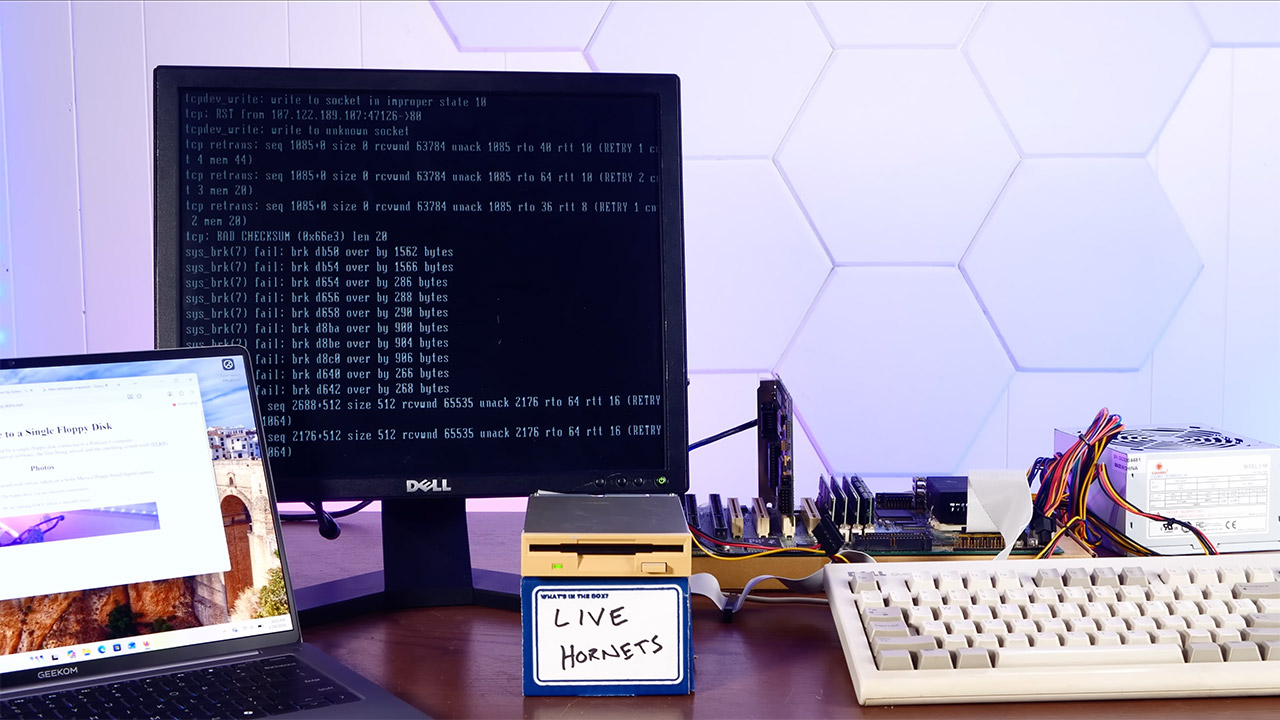
Today, a single 1.44MB floppy disk is sufficient to run an entire operating system and a functional web server. Despite the fact that hardware costs are soaring, this demonstrates that you don’t need the latest and greatest to support a server; just a little old-fashioned efficiency.
Action Retro, a retro computing enthusiast, accomplished this by booting ELKS (which stands for Embeddable Linux Kernel Subset) directly from a floppy disk. ELKS is a lightweight operating system that is only a quarter of the size of a standard operating system, yet it still has a full kernel, TCP/IP networking, device drivers, shell, and other features.
【AMD Ryzen 4300U Processor】KAMRUI Pinova P2 Mini PC is equipped with AMD Ryzen 4300U (4-core/4-thread, up to 3.7GHz), Based on the advanced Zen…
【Large Storage Capacity, Easy Expansion】KAMRUI Pinova P2 mini computers is equipped with 16GB DDR4 for faster multitasking and smooth application…
【4K Triple Display】KAMRUI Pinova P2 4300U mini desktop computers is equipped with HDMI2.0 ×1 +DP1.4 ×1+USB3.2 Gen2 Type-C ×1 interfaces for…
ELKS is a lightweight version of Linux that was originally designed to run on some very old 16-bit machines, so old that it only goes up to the 286 era, but it still has a lot of life in it, as it runs well on 256KB of RAM, and in some cases as little as 128KB, whereas regular images require about 512KB. Of course, the secret to ELKS’ small weight is that it is fully bloat-free, with no new and fancy software or features to get in the way, just a lean, mean, and efficient machine that gets the job done.
Advertisement
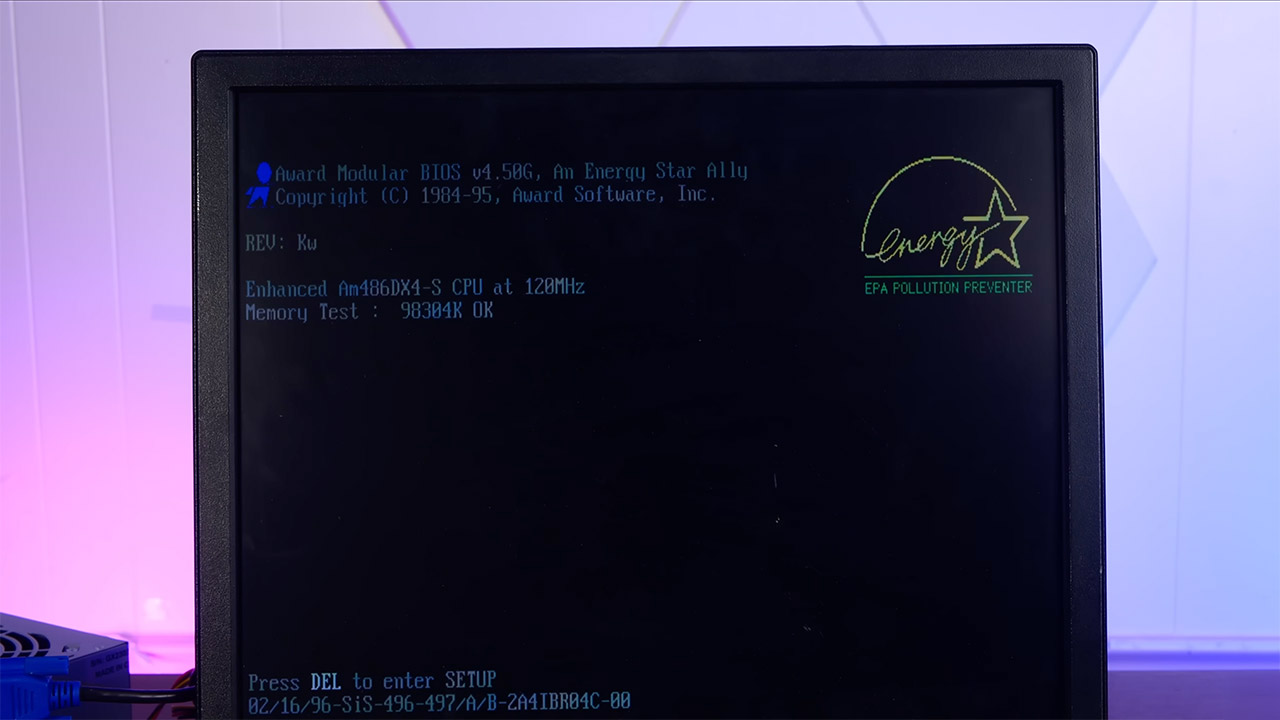
Action Retro made the disk by getting a bootable ELKS floppy image from the project’s GitHub source code repository. He then used his Mac’s dd tool to transfer the image on a regular 3.5-inch floppy disk. He chose a Socket 3 motherboard with a 120MHz AMD 486DX4 CPU to support the ELKS operating system, which he linked to a 3Com EtherLink III Ethernet adapter that happened to include ELKS drivers. The only accessories required are a keyboard, a visual card, and a floppy disk drive. A hard drive is not required because this is a simple system.
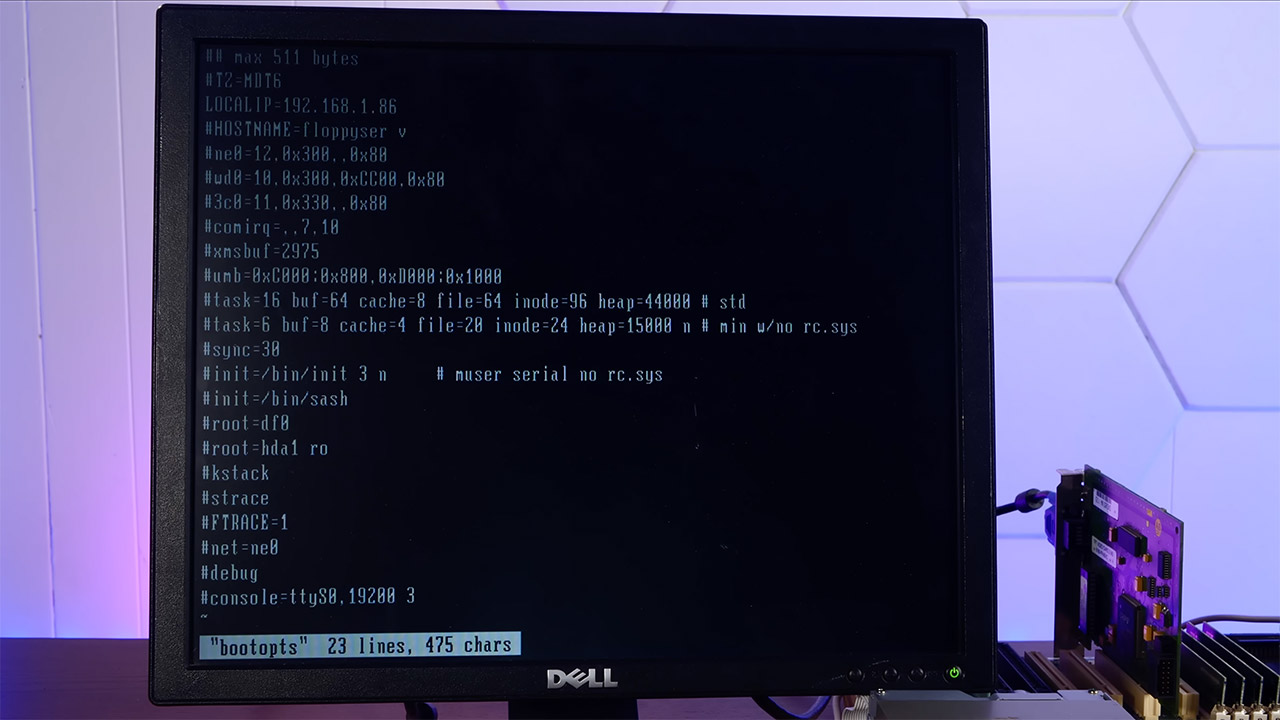
Booting is quick, as you are immediately sent to a command line. The network setup is a little more involved; you must manually update a few configuration files. In boot.opts, you specify a local IP address, hostname, and gateway. In net.config, you load the Ethernet driver and configure the netmask. At startup, the TCP/IP stack and its associated daemons are automatically launched.
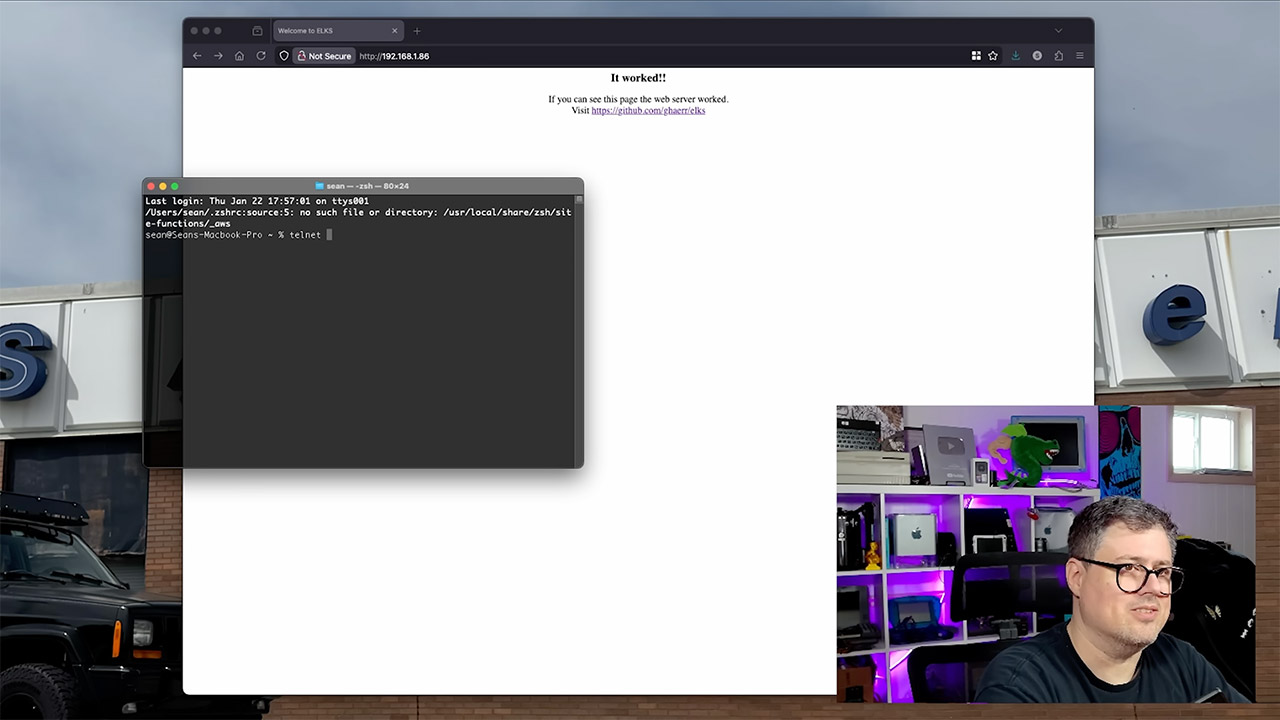
Once up and running, the HTTP server uses the floppy drive to offer rudimentary web pages. Action Retro even used FTP to upload a basic HTML file and a few JPEG photos from another PC. He used vi to edit the page on the ELKS system to ensure its perfection. Because this gadget is running on a floppy disk, the web pages are locally accessible; simply visit the associated IP address and you’ll be ready to go.
If you have an ancient PC, a working floppy drive, and the ELKS image, you can basically replicate this setup. Just go to the GitHub page, download the image, write it to a floppy drive, setup the networking, and boot; it’s truly that simple. The end product is a nice reminder that sometimes little is more; an outdated floppy disk can still produce a functional server with plenty of space to spare. [Source]
If you’re the kind of person who gets nervous or squeamish at the doctor’s office, you might find that collecting your own samples doesn’t freak you out as much as someone in a white coat doing it.
Depending on where you live and your transportation situation, at-home STD tests might be more accessible than visiting a clinic or making a doctor’s appointment. And you can pay for them out of pocket, which might be a better option based on your health insurance.
Finally, and unfortunately, sexually transmitted infections have a stigma attached to them. You shouldn’t feel ashamed of checking up on your sexual health—far from it, in fact—but at-home tests might be a better option if you’re concerned about what others may think.
The Cons of At-Home STI Tests
Advertisement
At-home STI tests are expensive. Depending on your specific health care situation, they might be more affordable, and many of them are FSA- and HSA-eligible or may be covered by insurance. But if you live in an area where there’s free testing through your city or state health departments, or a third-party clinic like Planned Parenthood, those options are likely going to be much cheaper than testing at home.
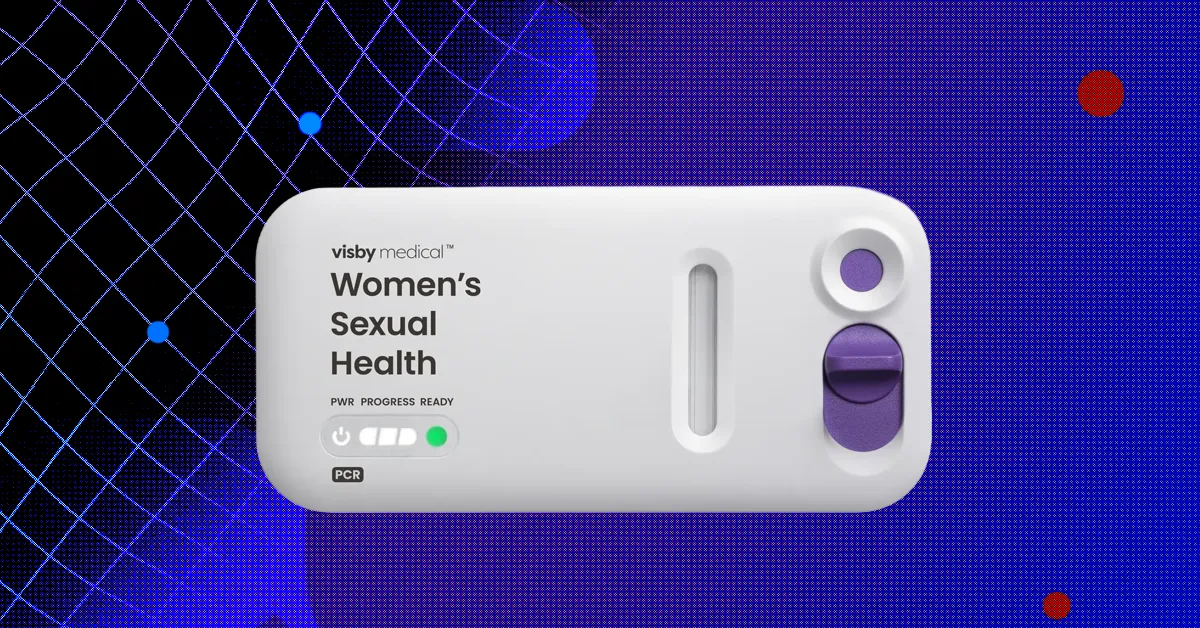
There’s also the risk of you collecting your samples incorrectly, which can lead to false negatives. Depending on the test you choose, if you do get positive results for a sexually transmitted infection, you might still end up having to go visit a doctor in person to get it treated. While many tests are reputable, it’s still important to ensure that the lab analyzing your results is well-regulated (and that the test itself comes from a reputable company). “It’s important to follow the kit instructions exactly and collect the sample properly while avoiding contamination. You should also follow the warnings and avoid factors that can interfere with results, including incorrect kit storage or use of certain products in the last 48 hours,” says Dr. Gary Schoolnik, Chief Medical Officer at Visby Medical.
Your individual health and timing can impact the accuracy of at-home tests, too. For example, if you’re on your period or have recently used antibiotics, those variables might affect the quality of the samples you can collect. A health care provider can take these things into account and adjust your testing protocol accordingly.
If the situation is urgent—for example, if you’re experiencing physical symptoms that raised concerns, or you’re immunocompromised, or you’re pregnant, or you know you were exposed to an STI—it’s important to actually visit a health care provider rather than trying to treat your condition at home. “I still recommend people who’re having symptoms or know they’ve been with someone that has an STI to seek professional sexual health care to be completely sure, as a false result from a do-it-at-home-kit can make you think you’re okay and therefore dismiss or overlook symptoms,” says Roos.
Advertisement
If privacy is a concern, it might actually be more beneficial for you to go to a routine doctor’s appointment rather than having the packaging for an STD test in the trash. And if you think you might test positive for something, it might be beneficial for you to hear that news from a health care provider rather than finding out while opening the mail in your kitchen. It’s something that’s important to think through before you decide to go with testing at home.
Blue Jay lasted less than six months despite rapid development speed
Prototype status was not clearly communicated during Blue Jay’s initial press announcements
Blue Jay employees are reassigned to programs leveraging core robotic innovations
Amazon has been steadily developing warehouse robotics since acquiring Kiva Systems in 2012, creating the foundation for automated fulfillment centers.
By July 2025, the company had deployed more than 1 million robots in its warehouses, showing a strong commitment to robotics while also highlighting the operational complexity involved.
Despite this scale, not every internal robotics initiative succeeds, and the company’s latest experiment, Blue Jay, illustrates the challenges of rapid innovation.
The rise and fall of Blue Jay
Unveiled in October 2025, Blue Jay was designed as a multi-armed robot capable of sorting and moving packages in same-day delivery facilities.
Testing began at a facility in South Carolina, with Amazon noting that the development cycle was unusually fast — approximately one year — compared with other warehouse robots, a speed attributed to advances in AI.
Despite its rapid development, the project lasted less than six months before being halted, showing that speed alone does not guarantee operational success.
Advertisement
Amazon confirmed that Blue Jay was introduced as a prototype, which it did not clearly state in earlier press announcements.
Sign up to the TechRadar Pro newsletter to get all the top news, opinion, features and guidance your business needs to succeed!
Employees who worked on the project are being reassigned to other robotics programs that use the core Blue Jay technology.
Terrence Clark, an Amazon spokesperson, said the company intends to accelerate the use of underlying Blue Jay innovations in future warehouse robotics, maintaining continuity while shifting focus to more sustainable applications.
Advertisement
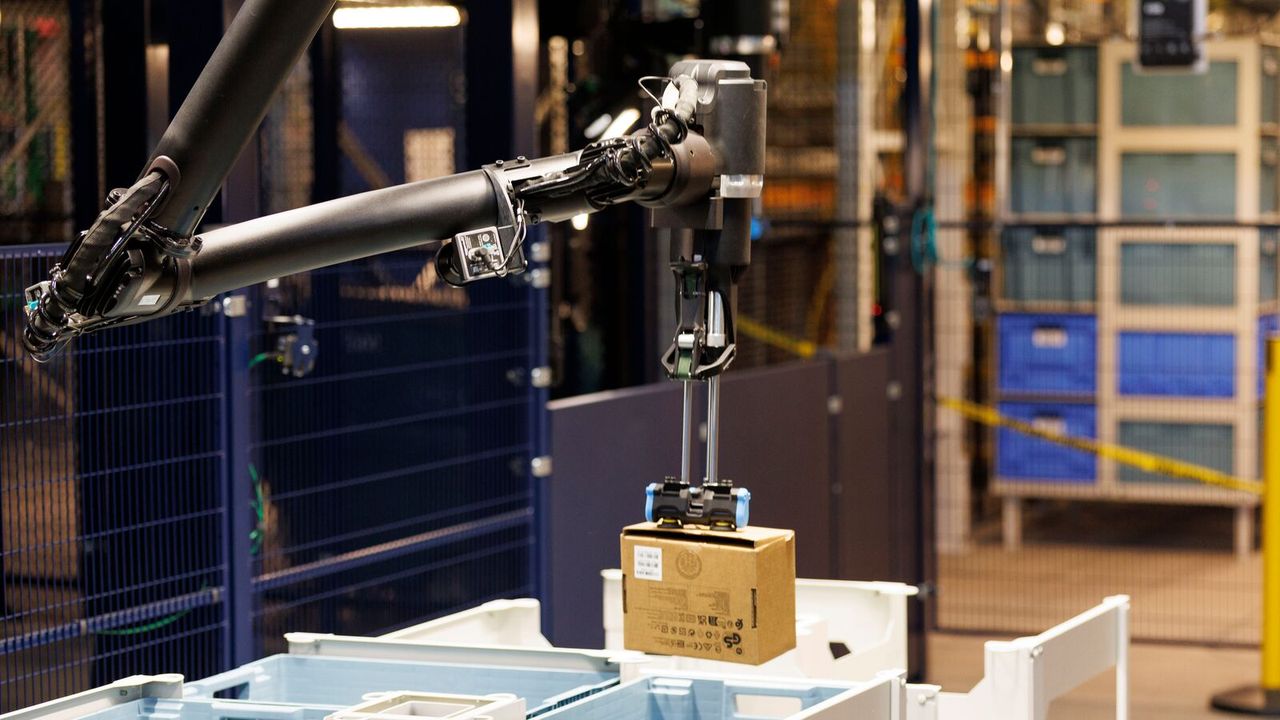
While Blue Jay is no longer active, Amazon continues to develop other warehouse robots, including Vulcan.
Vulcan features two robotic arms — one dedicated to rearranging and moving items within storage compartments, while the other uses a camera and suction cups to pick and place individual goods with precision.
Its sensors allow it to detect the weight, shape, and orientation of packages, enabling it to handle items without causing damage.
Advertisement
The robot’s software continuously adapts to variations in package size and density, allowing it to optimize picking sequences and reduce delays in order fulfillment.
Vulcan operates within Amazon’s same-day delivery and high-density fulfillment centers, where space constraints require precise navigation and coordination with existing conveyor systems.
The robot’s dual-arm configuration allows it to handle multiple items at the same time, increasing throughput in storage compartments without requiring human intervention for repetitive lifting tasks.
Its vision and tactile sensors feed continuous data to onboard processing units, enabling real-time adjustments to grip force and movement paths.
Advertisement
Integration with warehouse management software allows Vulcan to receive task priorities.
It dynamically plans routes and communicates with other robotic units to prevent collisions or bottlenecks, supporting a more efficient automated workflow.
Its final outlet at VivoCity will close down on Feb 22
Fashion retailer Pull&Bear is set to close down its last remaining outlet in Singapore at VivoCity on Sunday (Feb 22).
In a notice on their website, the brand said: “Our stores will close on Feb 22. Returns for purchases made both online and in stores can still be made at Zara VivoCity. If you have any questions, please contact our customer service team via contact.sg@pullandbear.com.”
Screen shot by Vulcan Post
Pull&Bear is a Spanish brand, part of the Inditex Group, which is widely regarded as the world’s largest fashion retailer. The group also owns brands such as Zara, Bershka, Massimo Dutti and Stradivarius.
According to its website, Pull&Bear first entered Singapore in 2006 as part of its broader expansion into Asia. The brand operated four stores here at its peak, including at Bugis+, ION Orchard, and Ngee Ann City.
Its former Bugis+ outlet has since been taken over by the first Singapore outlet of Chick-fil-A, which opened in Dec 2025.
Advertisement
Reasons for Pull&Bear’s closure in Singapore remain unknown. However, it comes amid global store closures by Inditex Group. According to a Dec 2025 report cited by CNA, the group has shuttered more than 100 stores year-to-date as part of efforts to strengthen its financial position.
Moreover, in 2020, amid the COVID-19 pandemic, Inditex Group announced that it would close as many as 1,200 stores to boost online sales.
Its brands have also scaled back in Singapore previously, including Bershka. The label once operated physical stores at Bugis+, ION Orchard and VivoCity; however, it no longer has any outlets in the country today, though shoppers can still purchase its products via its Singapore website.
Pull&Bear Singapore’s website is currently unavailable for online purchases. Whether the brand will maintain an e-commerce presence in Singapore remains unclear.
Advertisement
Vulcan Post has reached out to Pull&Bear and Inditex Group for comments.
Read other articles we’ve written on Singaporean businesses here.
It has already been a depressingly busy year for layoffs at Ubisoft, and the French publisher’s Toronto studio is the latest workforce to be hit. Around 40 jobs have been cut at the studio, which is one of Ubisoft’s largest and has previously worked on games including Watch Dogs: Legion and Far Cry 6.
“This decision was not taken lightly and does not in any way reflect the talent, dedication, or contributions of the individuals affected,” Ubisoft said in a statement to , which first reported the new layoffs. “Our priority now is to support them through this transition with comprehensive severance packages and robust career placement assistance.”
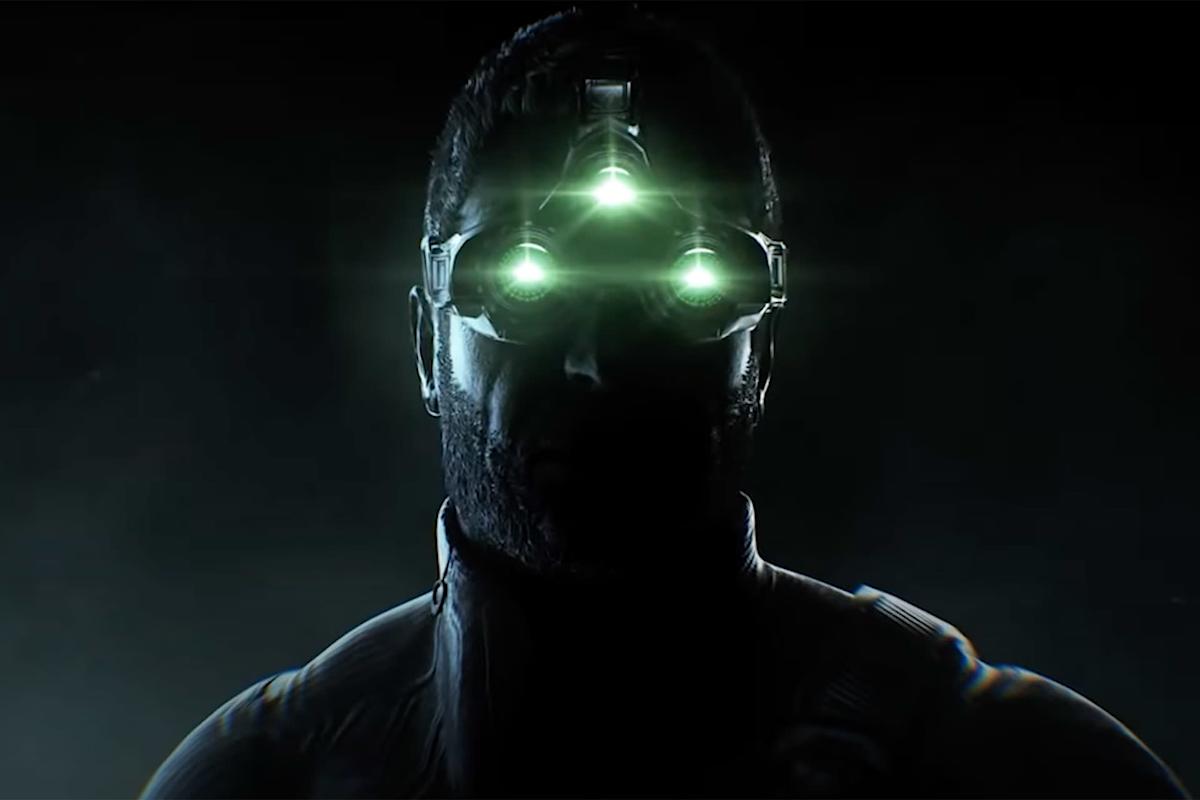
Ubisoft Toronto is currently working on the long-awaited Splinter Cell remake, which was first in 2021. The publisher says the game remains in development, and the Canadian studio will continue to assist with development on other games.
The Toronto layoffs come after similar staff cuts at its studios, while up to 200 people could reportedly be let go at its headquarters. The affected roles are casualties of a wider organizational restructuring at the troubled company, which recently canceled another high-profile in The Prince of Persia: The Sands of Time. Last week, 1,200 Ubisoft employees went on in reaction to the recent layoffs and sweeping cost-cutting measures.
KBIS 2026 was full of industry firsts. Much of the innovation on display at the sprawling home and kitchen showcase involved large appliances. Top brands, including Samsung, LG, GE and Sharp, were on hand to give a glimpse into the future of home tech.
We were there to see it all up close and speak with product managers, engineers and brand reps about all the new large-appliance features coming in 2026.
The latest fridges, ovens, dishwashers and laundry systems were well represented on the show floor, and the innovations on display weren’t just flashy — they were practical upgrades designed to make home life a little easier.
Advertisement
Here are 10 standouts from KBIS 2026.
1. Golden Heater, a new quick cooking technology
Sharp debuted its Celerity stove with industry-first cooking technology.
David Watsky/CNET
It’s not every year we get a new type of cooking technology. Sharp’s new Celerity oven features “Golden Heater” technology that fuses microwave, true convection and infrared heat to cook food three times faster than a standard oven. We tasted cookies baked in just 9 minutes — something that would normally take 15. The result? They were as good as Grandma’s.
Advertisement
2. Fridge barcode scanner for easy grocery list making
A handy built-in scanner helps keep track of grocery items as you run low.
GE Profile
This technology was first unveiled at CES but GE Profile was on hand at KBIS to showcase its proprietary grocery barcode-scanning fridge.
The smart fridge features a small scanner on the front door that lets you scan groceries as you run low. From there, you can add them to a list on your phone or buy directly through the brand’s Instacart integration.
Advertisement
3. Oven doneness detectors
Several ovens on display at KBIS feature doneness detectors that alert you when food is browning, so you don’t overcook.
David Watsky/CNET
Oven manufacturers have been ratcheting up the smarts, too. Ovens have had cameras for a while, but more innovative algorithms are learning to better use them. Doneness detectors, which monitor the food as it cooks for signs of browning and alert you when it’s getting close, are designed to prevent burning and overcooking.
KitchenAid, Sharp and LG are just a few of the kitchen brands that are integrating a doneness detector into their upcoming ovens.
Advertisement
4. Bottle and straw washers
Midea’s washing machine has dedicated reusable straw washers.
David Watsky/CNET
One of our favorite upgrades was Midea’s straw washing station in its new washing machines, set for release this year. Straws are notoriously tricky to clean, but this dedicated spot on the bottom rack shoots water directly into your reusable straws, ridding them of grime, mold and other buildup.
5. Built-in basket to save your sweaters
Advertisement
This simple addition to the washing machine drum protects your sweaters and delicates from abuse.
David Watsky/CNET
Whirlpool unveiled the industry-first built-in delicates basket. A simple design that allows you to wash delicate sweaters and shirts with a regular load.
The basket keeps those items free from the hard pummeling that happens in a standard wash. It’s also good for keeping socks together, so matching is easier when it’s time to fold.
6. Nugget ice maker for the fridge
Advertisement
Whirlpool’s new fridge makes nugget ice in the front and classic cubes in the freezer below.
David Watsky/CNET
With all the enthusiasm around nugget ice, it’s hard to believe we’re just now getting our first fridge with a built-in nugget ice maker. Whirlpool’s latest release pumps out crunchy, chewable ice from a front dispenser and standard cubed ice from the bottom freezer.
7. Washing machine UV cleaning
UV cleaning enables the machine to combat bacteria even during a cold-water wash.
Advertisement
David Watsky/CNET
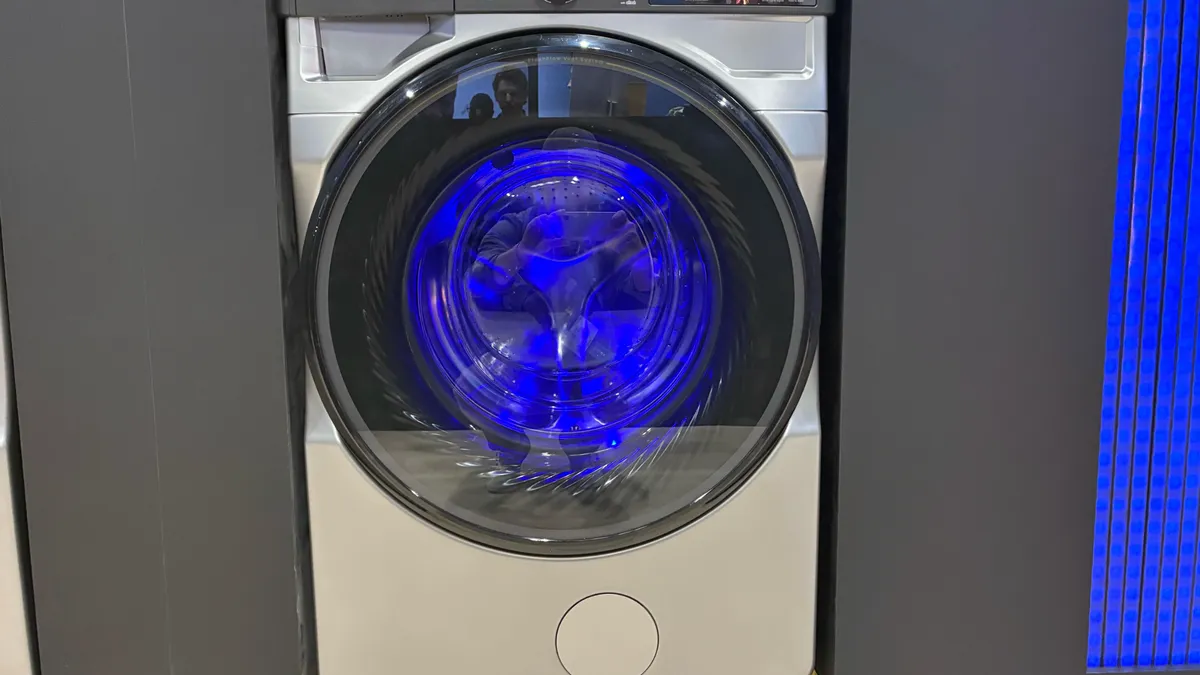
While this one struck me as a little gimmicky, Whirlpool has introduced the world’s first UV-cleaning washing machine, which blasts clothes during a standard wash to kill bacteria.
The point of UV cleaning is to combat bacteria without using scalding hot water, which can be harsh on fabrics over time.
8. A built-in sous vide tank
SKS’s feature-rich oven has a built-in sous vide tank.
Advertisement
David Watsky/CNET
Sous vide cooking has been adopted by home cooks and pro chefs alike. The low-and-slow water bath typically requires specialized equipment, but SKS’s new feature-rich stove has a sous vide tank built into the cooktop.
The catch? The stove, which has gas and induction burners and loads of other innovative features, costs a whopping $12,000.
9. Bottom dishwasher rack that flips up for easy loading
A dishwasher with a bottom rack that flips up for easy loading? Yes, please.
Advertisement
David Watsky/CNET
Kenmore’s soon-to-be-released dishwasher features a straightforward update that makes loading and unloading a breeze. The bottom rack slides out and flips up to the same height as the top rack. It’s sure to be a welcome innovation for those with back problems or mobility issues.
10. Smart AutoFill water dispensers
Intelligent autofill allows you to set a glass or bottle down and walk away while it fills.
KitchenAid
Fridges are getting smarter and that includes the water spouts. We saw multiple fridges, including those from GE and KitchenAid, with intelligent autofill technologies that use cameras or weight sensors to determine exactly how much water to fill in a bottle or glass. When it’s 90% full, the water stops, allowing you to walk away.
Do you remember where you were when Clavicular got brutally framemogged by an ASU fraternity leader?
Or maybe you saw the clips of the 20-year-old creator — alongside Andrew Tate and white nationalist Nick Fuentes — dancing to Kanye West’s “Heil Hitler” at a Miami nightclub.
Or maybe you have no idea what any of this means.
The internet subculture known as looksmaxxing, has recently jumped from obscure message boards into the mainstream — thanks in part to a 20-year-old creator who goes by Clavicular.
Advertisement
Clavicular’s real name is Braden Peters. And he’s not just posting about skincare routines or plastic surgery. Peters recently weighed in on the 2028 presidential election, arguing that if the race were between California Gov. Gavin Newsom and Vice President JD Vance, Newsom would win for one simple reason: He’s more attractive.
To understand how appearance, politics, and online extremism are brewing in this corner of the internet, Today, Explained co-host Noel King spoke with Atlantic staff writer and host of the podcast Galaxy Brain, Charlie Warzel.
Below is an excerpt of their conversation, edited for length and clarity. You can hear the full episode wherever you get podcasts — including Apple Podcasts, Pandora, and Spotify.
Clavicular is a young man — he’s in his 20s. He started posting on the internet as a teenager, around when he was about 15 years old, on these looksmaxxing forums, which are forums that are dedicated to making yourself as aesthetically perfect as humanly possible through body modification.
Advertisement
Clavicular basically toiled in obscurity for a really long time until he allegedly hit someone with his Cybertruck while he was live streaming on Christmas Eve of this past year.
Who are the looksmaxxers?
The looksmaxxers are complicated because they overlap with lots of other communities online. There’s the involuntarily celibate community, known as incels, that have links to violent extremism. But really there’s this core feeling in looksmaxxing that the only thing that matters in all of life is how good you look, that that is tied to your self-worth in every way, and that what you should be doing is trying by all means necessary — whether that is breaking bones in your body, whether that is chewing on a rubber ball for hours a day — to get your jawline to be straighter. To get a leg up, you need to do that because the best thing that you can do is go out in the world and look better than everyone else and document the heck out of it.
What do we know about what Clavicular has done to himself?
Advertisement
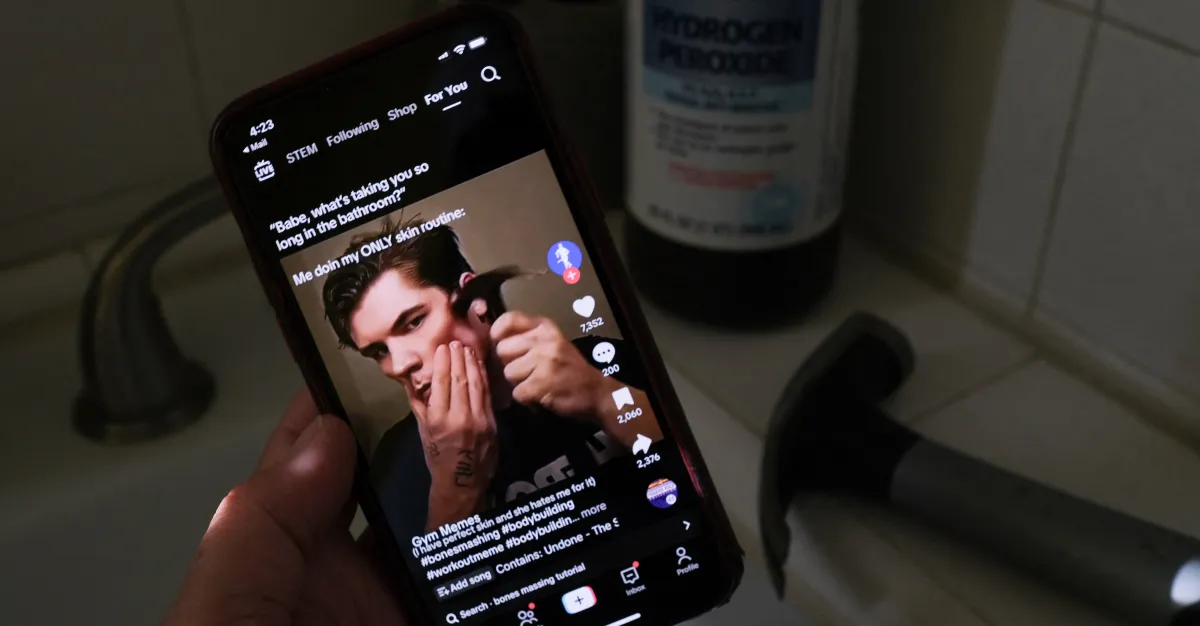
He has said on various podcasts, etc., that he has smashed his face with a hammer. The theory there is that when your bones break, they grow back stronger.
And so he has smashed his face, his jawline, in order to strengthen it to make it look better. He started, according to him, taking testosterone when he was around 14 or 15 years old in order to speed up his puberty and get his body looking like an adult. He’s said he’s taken methamphetamines in order to hollow out his cheeks.
The looksmaxxers have their own language, which I find very compelling. Can you define a couple of the terms?
“These guys are extremely effective attention hijackers, and that is important.”
Advertisement
Mogging is looking better than someone looking hot. And actually what I found is it’s a sort of an acronym, but it stands for alpha male of the group, [shortened to] male of the group — MOG.
There’s all kinds of words that they’re just making up on the spot too, like jestermaxxing, which is being jocular, jovial, having fun.
What is the objective of being hot? What is the purpose of all this?
It is social dominance really, or just dominance in general. This idea of mogging comes from this alpha male of group acronym: The “alpha” part of that, and the “male” part of that are both extremely important. And so going out in public as an extremely hot person is not just to show how beautiful you are, but it’s to be dominant over other people. You want to make other people look bad. You want them to feel bad about themselves based on how unbelievably attractive you are, and you also want to basically conquer women.
Advertisement
I’ve read your pieces and I listened to your podcast and there’s a thing that I think you both say directly and kind of dance around, which is…this seems stupid, but it isn’t actually stupid. Explain what you mean.
I think it’s stupid on the content level. It’s lacking in substance is how I would put it. There’s the clip of Clavicular, I believe he’s in Miami. He’s with this streamer, Sneako, who’s very popular, and Nick Fuentes, the white nationalist Groyper leader, also a streamer. And they are in a living room somewhere in an apartment and having a conversation that is incredibly stilted, just incredibly vapid. There’s just not a lot being exchanged there.
Clavicular seems to react like he is one of those wind-up dolls. You pull the string and there’s like five different reactions. So one of them’s like, “Hey dude, that’s so based, sick.” And so on the substance level, there’s that.
Then there’s the element of what he means, what that vapid content means, what the popularity of someone like Clavicular means. And I think that that is not stupid. The fact that I’m writing an article about him in The Atlantic because he’s hanging out with these people. The fact that he was able to leverage his popularity into this situation where he is meeting with Andrew Tate, the manosphere influencer. Fuentes, who is influential enough that he’s trying to force the MAGA coalition further towards white nationalism. That he’s able to go into a club with these guys and get them to play the Ye song, “Heil Hitler,” and turn that into this viral moment that then gets the mayor of Miami to have to react to it, to condemn it, to basically apologize on behalf of the city for letting this happen. These guys are extremely effective attention hijackers, and that is important.
Inspired by the super-popular anime and manga series Bleach, Type Soul is a Roblox game where players can roleplay as one of three main character races, each with unique abilities and progression systems. However, while the game offers an amazing experience, its complex game mechanics, races, and weapons can be overwhelming for new players. That’s where the Trello Board comes in.
What Is the Type Soul Trello Link?
The Type Soul official Trello board is your go-to destination for everything about the game. The developers update and revamp the game regularly to keep the experience fresh and fun for players. The Trello board is rich in detailed information, ranging from gameplay mechanics to guides and updates, to help players maximize their experience.
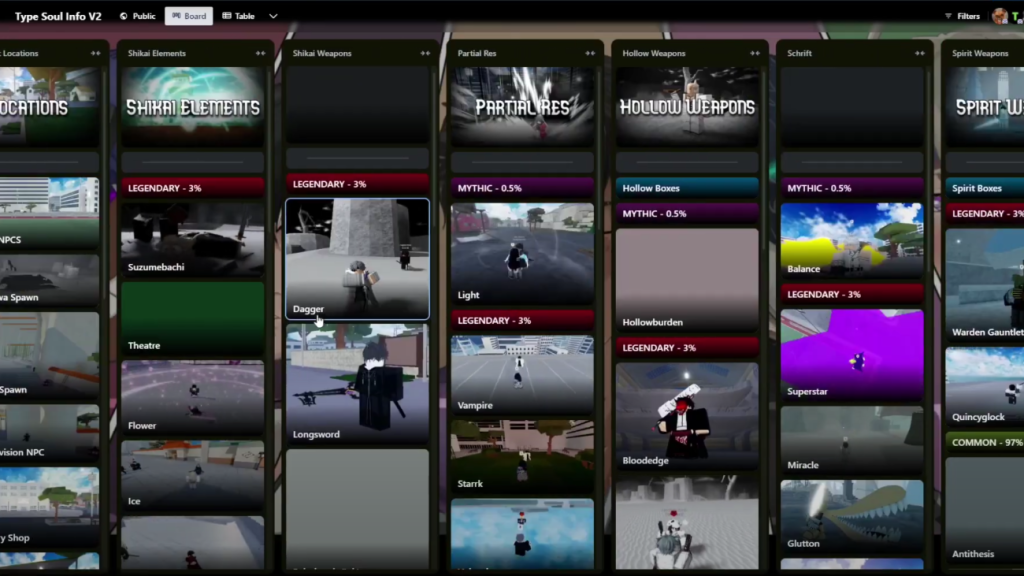
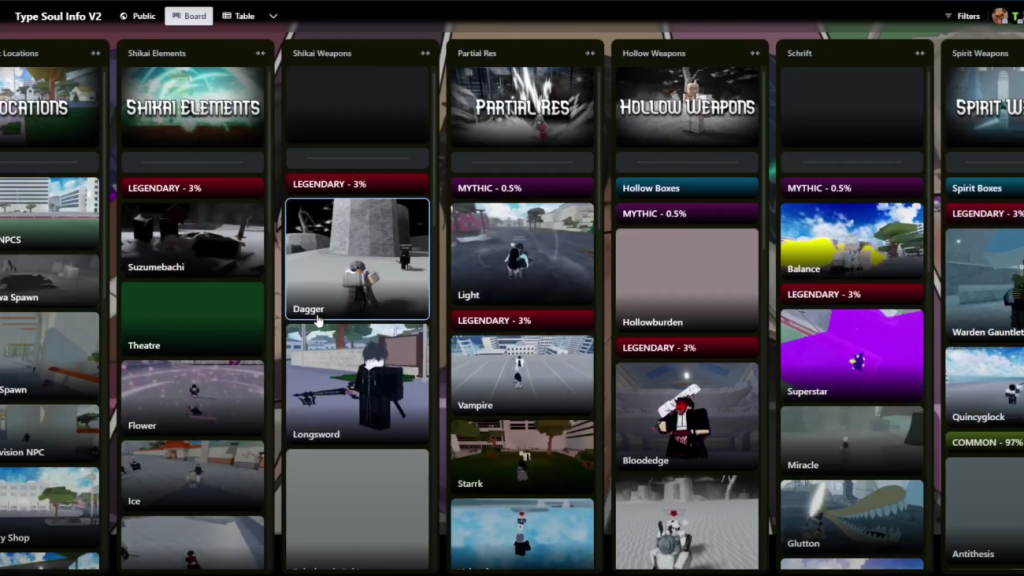
To remain up to date with these changes, the developers created a new Trello board, and it is named “Type Soul Info V2.” This one retains all the new mechanics, features, and strategies in an easily accessible manner to the community. The most amazing thing about this Trello board is that there is no complex verification process to see it.
Inside the Trello Board
The Type Soul Trello V2 board simplifies your gameplay. It provides step-by-step instructions for selecting your class: Soul Reaper, Hollow, or Quincy, and browsing the skill trees and the weapon systems. The board also contains more in-depth info on the game mechanics, which makes it easy for you to master raids, unlock strong Shikai, and get rare Essences.
One of the highlights is its item categorization, which organizes loot boxes and other items by rarity. In addition, the board links to useful game materials, and there is a Q&A section to answer all your questions about Type Souls. With its full-page size, this board is an essential guide for each player.
Advertisement
Also, make sure to redeem the latest Type Soul Codes to enhance your gameplay and gain valuable in-game items.
Type Soul Discord Link
The Type Soul Discord server is your gateway to the game world and its creators. It’s where you can chat with other players, exchange tips, and get the latest news and announcements. It’s also where you can ask questions, exchange tips, or find raid and event groups. Developers also post significant news and updates, so you never miss a step. Don’t miss this handy resource!