Programmer/entrepreneur Paul Ford is the co-founder of AI-driven business software platform Aboard. This week he wrote a guest essay for the New York Times titled “The AI Disruption Has Arrived, and It Sure Is Fun,” arguing that Anthropic’s Claude Code “was always a helpful coding assistant, but in November it suddenly got much better, and ever since I’ve been knocking off side projects that had sat in folders for a decade or longer… [W]hen the stars align and my prompts work out, I can do hundreds of thousands of dollars worth of work for fun (fun for me) over weekends and evenings, for the price of the Claude $200-a-month.”
I’m deeply convinced that it’s possible to accelerate software development with AI coding — not deprofessionalize it entirely, or simplify it so that everything is prompts, but make it into a more accessible craft. Things which not long ago cost hundreds of thousands of dollars to pull off might come for hundreds of dollars, and be doable by you, or your cousin. This is a remarkable accelerant, dumped into the public square at a bad moment, with no guidance or manual — and the reaction of many people who could gain the most power from these tools is rejection and anxiety. But as I wrote….
I believe there are millions, maybe billions, of software products that don’t exist but should: Dashboards, reports, apps, project trackers and countless others. People want these things to do their jobs, or to help others, but they can’t find the budget. They make do with spreadsheets and to-do lists.
Advertisement
I don’t expect to change any minds; that’s not how minds work. I just wanted to make sure that I used the platform offered by the Times to say, in as cheerful a way as possible: Hey, this new power is real, and it should be in as many hands as possible. I believe everyone should have good software, and that it’s more possible now than it was a few years ago. From his guest essay:
Is the software I’m making for myself on my phone as good as handcrafted, bespoke code? No. But it’s immediate and cheap. And the quantities, measured in lines of text, are large. It might fail a company’s quality test, but it would meet every deadline. That is what makes A.I. coding such a shock to the system… What if software suddenly wanted to ship? What if all of that immense bureaucracy, the endless processes, the mind-boggling range of costs that you need to make the computer compute, just goes?
That doesn’t mean that the software will be good. But most software today is not good. It simply means that products could go to market very quickly. And for lots of users, that’s going to be fine. People don’t judge A.I. code the same way they judge slop articles or glazed videos. They’re not looking for the human connection of art. They’re looking to achieve a goal. Code just has to work… In about six months you could do a lot of things that took me 20 years to learn. I’m writing all kinds of code I never could before — but you can, too. If we can’t stop the freight train, we can at least hop on for a ride.
The simple truth is that I am less valuable than I used to be. It stings to be made obsolete, but it’s fun to code on the train, too. And if this technology keeps improving, then all of the people who tell me how hard it is to make a report, place an order, upgrade an app or update a record — they could get the software they deserve, too. That might be a good trade, long term.
A transaction in October of 2024, between an American company and a Mexican one, resulted in a chain of U.S.-located gas station convenience stores being owned by the Mexican firm. The American company is Delek US Holdings, Inc., which sold its retail operations for $385 million. These retail operations consisted of 249 convenience stores that operated under the DK brand, located in New Mexico, Arkansas, and Texas. Delek is an energy company involved in petroleum and renewable fuels. As an oil products producer, it has a refining capacity of 302,000 barrels each day. It is also one of five owners of the 650-mile oil pipeline that goes from Wink to Webster in the Permian Basin in Texas, moving over one million barrels per day of crude oil and condensate to the Gulf Coast.
The Mexican company that bought the convenience stores at Delek’s gas stations is called FEMSA. It’s a huge conglomerate that includes the OXXO chain of 28,800 convenience stores located in Mexico, Chile, Peru, Brazil, and Colombia. FEMSA also owns the largest volume Coca-Cola products franchise bottler in the world. It has a total of over 392,000 employees located in 18 countries, including Europe, having purchased the food retail company Valora in 2022. FEMSA is also involved in many other business ventures, including retail drugstores and digital financial services.
Advertisement
How FEMSA’s acquisition affected DK convenience stores
JRomero04/Shutterstock
FEMSA has now rebranded many DK stores, which now operate as OXXO, a well-known brand near the Mexican border. By 2027, all of the stores in the El Paso area, which adjoins the border, will be rebranded as OXXO stores. Once the OXXO brand starts to expand beyond its initial footprint, it may build even larger stores, following the trend of U.S. gas stations turning into massive convenience stores.
As far as the supply of fuel products to the stores, FEMSA has continued to purchase them from Delek after the ownership change. Delek continues to operate hundreds of gas stations under both the DK and Alon brands, positioning itself as a locally sourced, high-quality fuel supplier with a lower carbon footprint. While this acquisition may have been FEMSA’s first attempt to plant its flag in the U.S., the company has said it has plans to become a major player in the U.S. market. FEMSA is not the only foreign operator to land here; the Speedway gas station chain is owned by a Japanese company.
Get caught up on the latest technology and startup news from the past week. Here are the most popular stories on GeekWire for the week of Feb. 15, 2026.
In addition to events such as demo nights, founder dinners, and hackathons, Bili House is looking into partnerships, perhaps with a venture capital firm that could help defer some costs for startup founders. … Read More
The idea for Legata grew out of frustration with Washington’s estate tax and how little many families understand about the risk to their assets if they don’t plan. … Read More
Paul Brainerd, who coined the term “desktop publishing” and built Aldus Corporation’s PageMaker into one of the defining programs of the personal computer era, died Sunday at his home on Bainbridge Island. … Read More
The ubiquitous tap-to-pay technology that has become commonplace in grocery stores and coffee shops is coming to Seattle-area buses and trains beginning Feb. … Read More
Cloud cost consultant Duckbill, known for co-founder Corey Quinn’s sharp takes on AWS, raises $7.75M and launches Skyway, a financial planning and forecasting platform for enterprise cloud spending. … Read More
The latest round, led by Andreessen Horowitz, doubles the company’s valuation from October and reflects surging demand for infrastructure that keeps AI running reliably in production as agentic systems move from pilot projects to mission-critical deployments. … Read More
If you’re wondering what happened to the Starship, then rest assured, SpaceX engineers are still working to get it airborne again soon.
In fact, in a post on X on Saturday, SpaceX chief Elon Musk confirmed an earlier stated target window for the 12th launch of the most powerful rocket: next month.
In that case, the Starship could be blasting off from SpaceX’s Starbase site in near Boca Chica, Texas, in a matter of weeks, treating onlookers and those watching online to a spectacular display of raw rocket power.
The 12th Starship flight is particularly special because it involves a new version — the third — of the first-stage Super Heavy booster, which lifts the upper-stage Ship to space.
Advertisement
Version 3 of the Starship rocket is 124.4 meters tall, making it just over a meter taller than its predecessor. Its engines have also been given a power upgrade, together with a number of design tweaks that will improve the rocket’s overall performance.
This year promises to be an exciting one for the Starship as SpaceX is heavily focused on getting it ready for a trip to the moon in the Artemis III mission.
First, it needs to achieve a number of important milestones, including getting the Ship to orbit, refueling the Ship in Earth orbit, and then landing it back at Boca Chica in a similar way to how it’s already landed the Super Heavy booster.
The Artemis III mission is currently set for 2027, though that date could slip due to technical challenges with the rocket. NASA wants to use a modified version of the Ship to land two astronauts on the lunar surface in what would be the first crewed moon landing since 1972.
Advertisement
The astronauts won’t travel to lunar orbit aboard the Ship, flying instead aboard an Orion spacecraft launched by NASA’s SLS (Space Launch System) rocket. Once in lunar orbit, they’ll transfer to SpaceX’s Ship and descend to the lunar surface.
The same Orion spacecraft is about to carry its first crew on a voyage around the moon in the Artemis II mission, which will pave the way for the Artemis III lunar landing in a few years’ time.
A political group funded by Anthropic is backing New York Assembly member Alex Bores in a high-profile House race that’s turned into a proxy fight over how AI should be regulated. (As of Feb 2026.)
Bloomberg reports Public First Action’s Democratic arm is spending $450,000 to boost Alex Bores in New York’s 12th congressional district.
Bloomberg also reports that Leading the Future, a rival super PAC, has already spent $1.1 million on TV ads and messages attacking Bores.
Leading the Future has been reported as backed by more than $100 million from prominent tech investors and executives, including Andreessen Horowitz and OpenAI President Greg Brockman.
The dispute is tied to an ongoing policy fight over AI rules, including New York’s RAISE Act, which (per New York State) requires large AI developers to publish safety protocol information and to report AI incidents to the state within 72 hours of determining an incident occurred.
What’s not confirmed
Whether Public First Action will expand spending beyond the reported $450,000 in NY-12, or move significant money into other specific races. (Watch for new filings, public statements, and follow-up reporting.)
Whether Leading the Future will increase, pause, or redirect ad spending in response, and what the next wave of ad creative will claim. (Verify via ad libraries where available and reputable reporting.)
How voters will respond, and whether this race becomes a durable template for AI-focused political spending in 2026. (This is outcome-dependent and can’t be stated as fact today.)
Timeline
Aug 2025: TechCrunch reports Leading the Future’s pro-AI PAC network had backing of “more than $100 million,” including Andreessen Horowitz and OpenAI President Greg Brockman.
Feb 19, 2026: Bloomberg reports Public First Action’s Democratic arm spending $450,000 for Bores and notes $1.1 million already spent attacking him by Leading the Future.
Impact and why it matters (analysis)
This isn’t just a normal “outside money” story—it’s a preview of how the AI policy debate may be fought in 2026: by funding competing political operations that reward different regulatory instincts (stronger public oversight vs. lighter-touch rules).
For readers tracking AI regulation, the practical signal is that state-level legislation like New York’s RAISE Act is becoming a political flashpoint, not just a policy document—so future changes may be driven as much by elections as by technical risk arguments.
Updates
Last updated: Feb 21, 2026.
Advertisement
How to verify future changes: Look for (1) follow-up reporting from outlets with campaign-finance reporters, (2) official statements from the groups involved, and (3) public campaign-finance filings that match the spending claims.
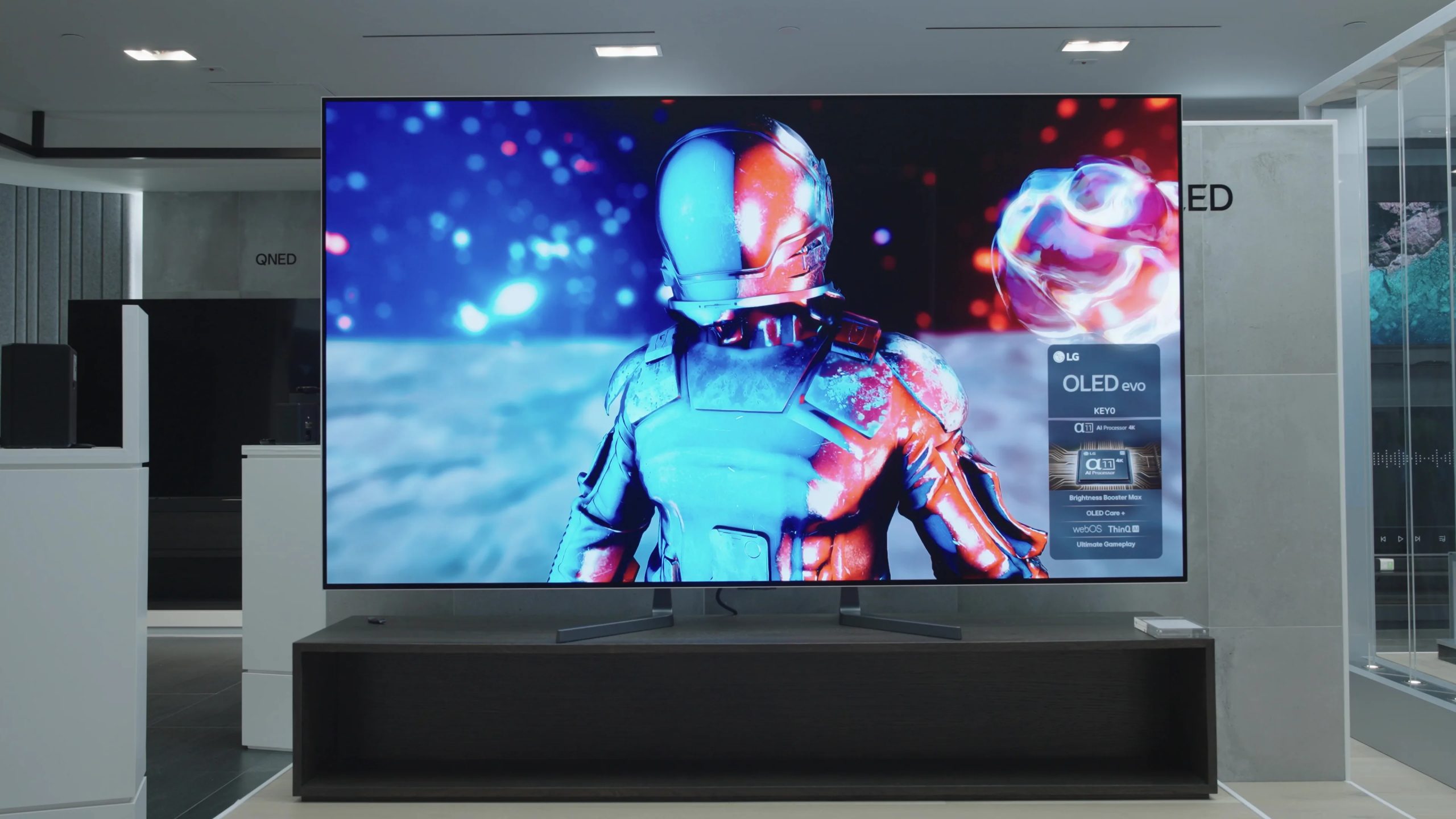
On today’s episode of You Asked, we cover what to do about an 83-inch TV that’s too bright, whether it’s time to upgrade a 10-year-old TV, and whether a calibration can extend the life of your OLED.
Is an 83-inch TV too bright?
Douglas Murray / Digital Trends
@msbgone asks: I went with an 83-inch TV, and it’s so bright that at times I have to close my eyes. I love the size, but man, being so bright is not always great, and I do not have it at max brightness. Also, when there are shows with flashing, wow, it can be a hard watch. So would I go smaller? Well, I’m not sure. Larger seems overall better in most cases.
Well, to answer your last question first: Yeah. Larger is usually better when you want to be fully immersed in what you’re watching. However, I would say there is such a thing as too large of a TV. Like, if you’re within 10–12 feet, 83 inches feels like a little bit of overkill.
At that distance, 65 inches should be fine. 77 inches is probably all you need. And both would save you a considerable amount of money versus an 83-inch TV. And I’m gonna assume you’re talking about an OLED TV in response to a recent episode of You Asked.
Anyway, I think if you’re finding the TV too bright and you aren’t at max brightness, there could be a few things at play.
Advertisement
One: Picture mode matters a lot. Especially in a Vivid or Dynamic mode, but even sometimes just in its Standard or Eco mode out of the box, you’re getting a cooler or more blue color temperature than you would in a Movie or Filmmaker mode. Those modes, movie and filmmaker, tend to give you a warmer color temperature that’s easier on the eyes regardless of where your brightness is set. So if you’re not in one of those modes, it’s worth making that change and getting rid of that harsh blue light that can cause a little more eye discomfort.
Another thing could be your Local Dimming setting. Set to High, it’s going to push the highlights a little harder and darken the shadows to create more contrast. If you were to lower that setting, while it would take away a bit from the higher contrast HDR experience, it would probably be another step toward lowering the brightness.
And the third thing: it could just be the size. If it’s too big, it’s too big and there’s just too much light coming at you at a close distance. So maybe going smaller would be the answer.
Should you upgrade a 10-year-old TV?
TCL Q671GTCL
@petekropf5335 asks: I need your help on if I would see a huge improvement buying a new low-cost TV versus my current 10-year-old TV. I currently have a 65-inch LG UH6150… that’s an LED TV if you didn’t know… Peter continues… It’s still working, but hard to see dark scenes in shows, and the ethernet / wireless have not worked in years. So I have not been able to update the TV. I was wondering if the picture quality would be worth it if I got a low-cost TV such as the TCL 75-inch Q671G or Hisense QD7N. When you have watched the same TV for a decade, it’s hard to know if the one I got has better picture quality than a cheaper new one. Any thoughts would be greatly appreciated. Thank you!
Hey Peter, before getting into the details, I would say straight up, yes, you’re due for a new TV. I know it’s a badge of honor for us to boast about how long we’ve had something and how well it’s aged, and how good of a value it is since you haven’t had to spend money on an upgrade in a decade. But at some point, if you do value picture quality and a lot of the quality of life improvements that have come in the last 10 years, it’s time to say a respectful farewell to the TV and upgrade. And this is coming from someone, me, who had the same LG LED TV in my living room from 2011 until 2023. I used a Roku streaming stick to keep up with the times and quickly access and update my favorite apps, but I was long overdue.
Advertisement
So, to you, I would say you can confidently upgrade and know that you’ll see a difference in picture quality and how quickly the TV operates and the smart TV interface.
In terms of the TVs you’re looking at upgrading to, I’m sure you’re well aware that as budget models, both have their compromises, but it really comes down to a few key differences, with a caveat I’ll mention at the end.
Hisense QD7NHisense
The TCL uses a VA panel, which will have better contrast, and that’s its biggest advantage.
The Hisense, on the other hand, is brighter and uses an IPS panel, which gives it a much wider viewing angle. But that comes at the cost of contrast.
So if you and your viewing party are primarily watching the TV from straight on and the room dimly lit, or better yet, just straight up dark, the TCL Q671G is probably the way to go. But if you’re in a brighter room or someone will be frequently watching TV from a side angle, I lean toward the Hisense.
Advertisement
The only potential flaw in this logic is this: in the United States, we have the TCL Q651G, which is what I’m basing my advice from. You’re talking about the Canadian Costco version, which is the Q671G. From what I can find, they’re pretty much the same, but just wanted to have that in there so you know in case you’re doing further research.
Can a calibration extend the life of your OLED?
Sony A8HDan Baker / Digital Trends
John Craig asks: I have a Sony A8G OLED that I bought after watching a Digital Trends review. It’s been great, and I still enjoy it even more than the newer Sony X90L, which was also a Digital Trends recommendation. Recently, the A8G seems to have lost some of its pop. I’ve tried adjusting some settings based on YouTube channel recommendations, but it still seems like it has lost some of its luster. My questions: Would getting a professional calibration be worthwhile at this point? Can the picture on an older TV be revitalized through those adjustments? Or is the OLED just fading with age?
Oh this is a good one John. First of all, I think that speaks volumes about OLED TVs and how even older models still turn out a superior image compared to newer LED TVs. Glad to hear you’re still enjoying your A8G.
As for your question though, if you’ve gone through the suggested advice, which is probably some of the same stuff I’d say, I’ll save you the time and say that a professional calibration is the next logical choice, but is it worth it?
If you can really tell that it’s lost some of its pop, and you would know better than anyone online because it’s YOUR EYES that have been on it for more than half a decade, then maybe it is too far gone.
Advertisement
Sony A8HDan Baker / Digital Trends
But a calibration from a professional can make a big difference. What a pro can do is adjust the TV to what best fits your room and viewing environment. Everything from color to black levels and brightness can be tuned to improve the image. And again, I think it would help.
But consider the price of the calibration and the age of the TV. That professional is probably gonna cost anywhere from 200 to 500 dollars… maybe more. It’s not cheap, but it is less expensive than a new Sony OLED. I’m just assuming you’re Team Sony since you have two of them and like the processing of the A8G.
Sony Bravia 8 OLEDZeke Jones / Digital Trends
At one point, I probably would’ve just recommended the Bravia 8 Mark 1 when it was on a bigger sale during the holidays, but a 65-inch model is nearly 2,000 dollars again, and that’s a lot more than it would cost you to get your current TV calibrated.
All that to say, I’d say go for the calibration if you want to see the improvement and put off buying a new OLED… OR… If you were to venture from Team Sony, check out the LG B5. At 65 inches, I’m seeing it for 1,000 dollars right now, and THAT might be worth it for a new OLED TV instead. I hope that helps.
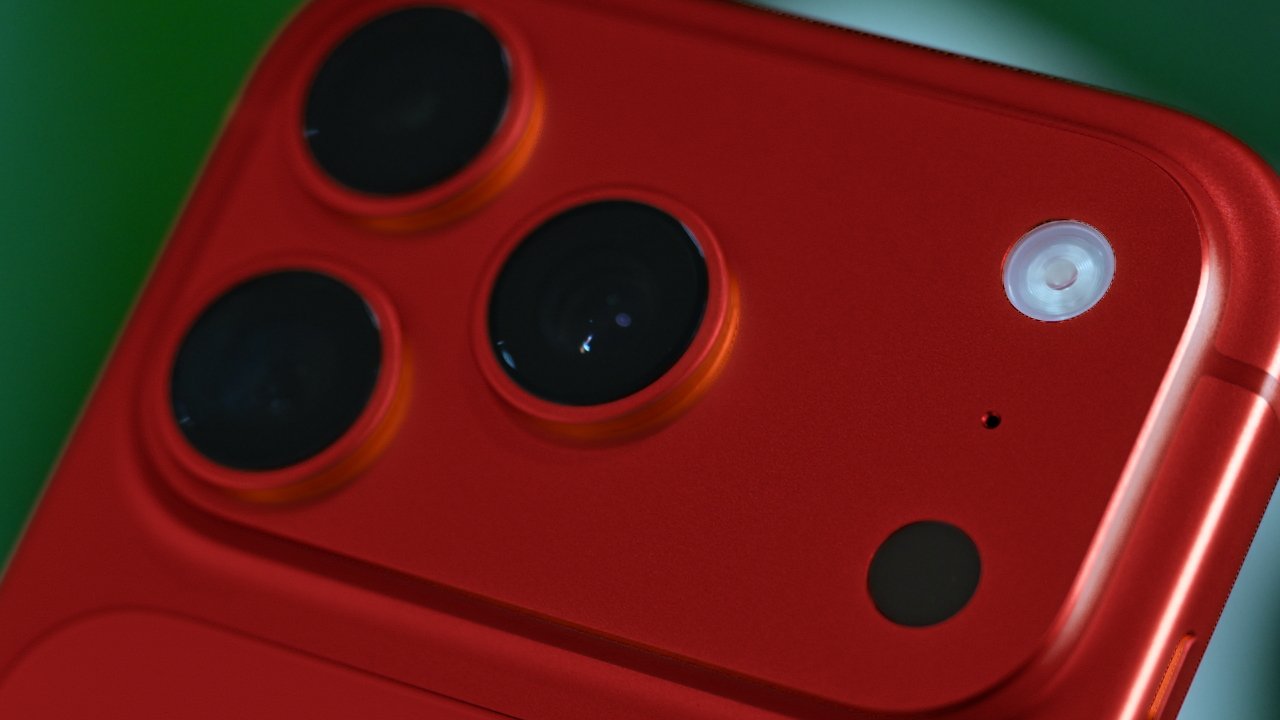
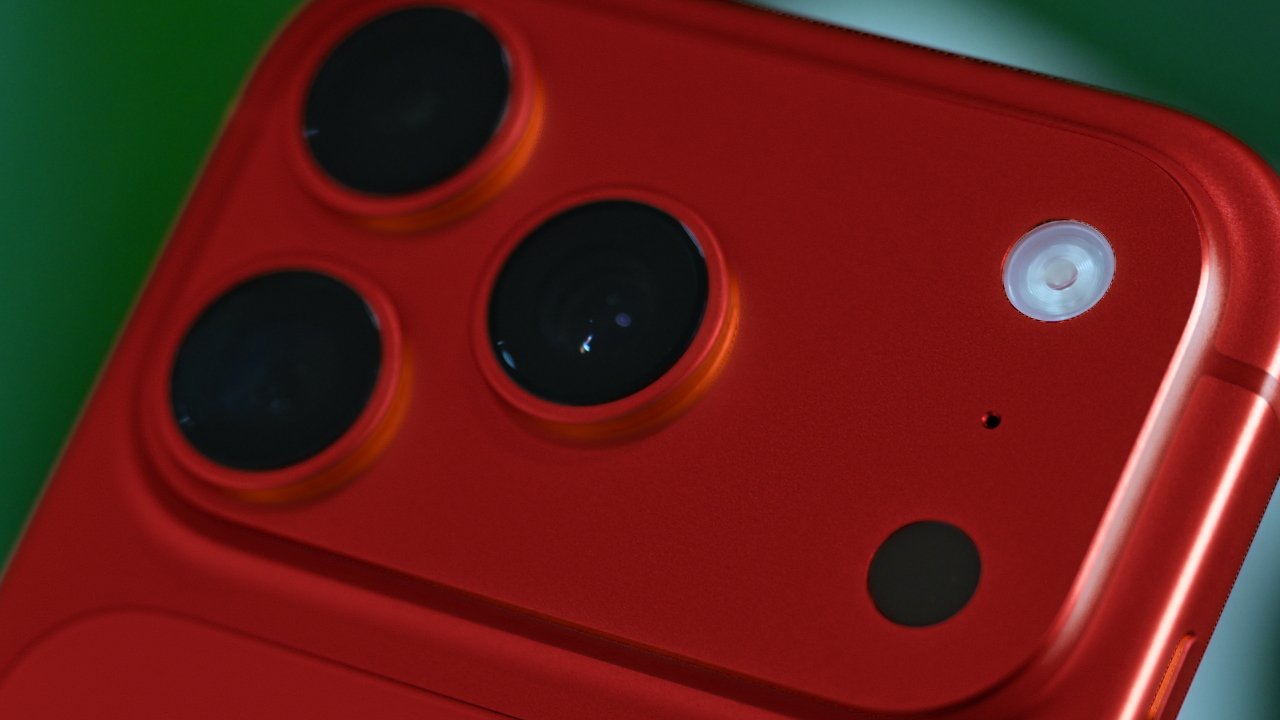
A new report claims that Apple will repeat the vibrant color of the iPhone 17 Pro Max and offer options including a return to a deep red for the iPhone 18 Pro Max, but not the iPhone Fold.
Mockup of a deep red iPhone 18 Pro Max
It has traditionally been that lower-end iPhones can get bright colors such as the purple iPhone 12, while with exceptions, the Pro models have more muted ones. Now according to Bloomberg, the iPhone 18 Pro line will also get stronger than usual colors. This is said to be specifically because the orange iPhone 17 Pro Max has allegedly been particularly popular in China. Consequently, the claim is that deep red is in consideration as the color of the two Pro models in the iPhone 18 range. Rumor Score: 🤔 Possible Continue Reading on AppleInsider | Discuss on our Forums
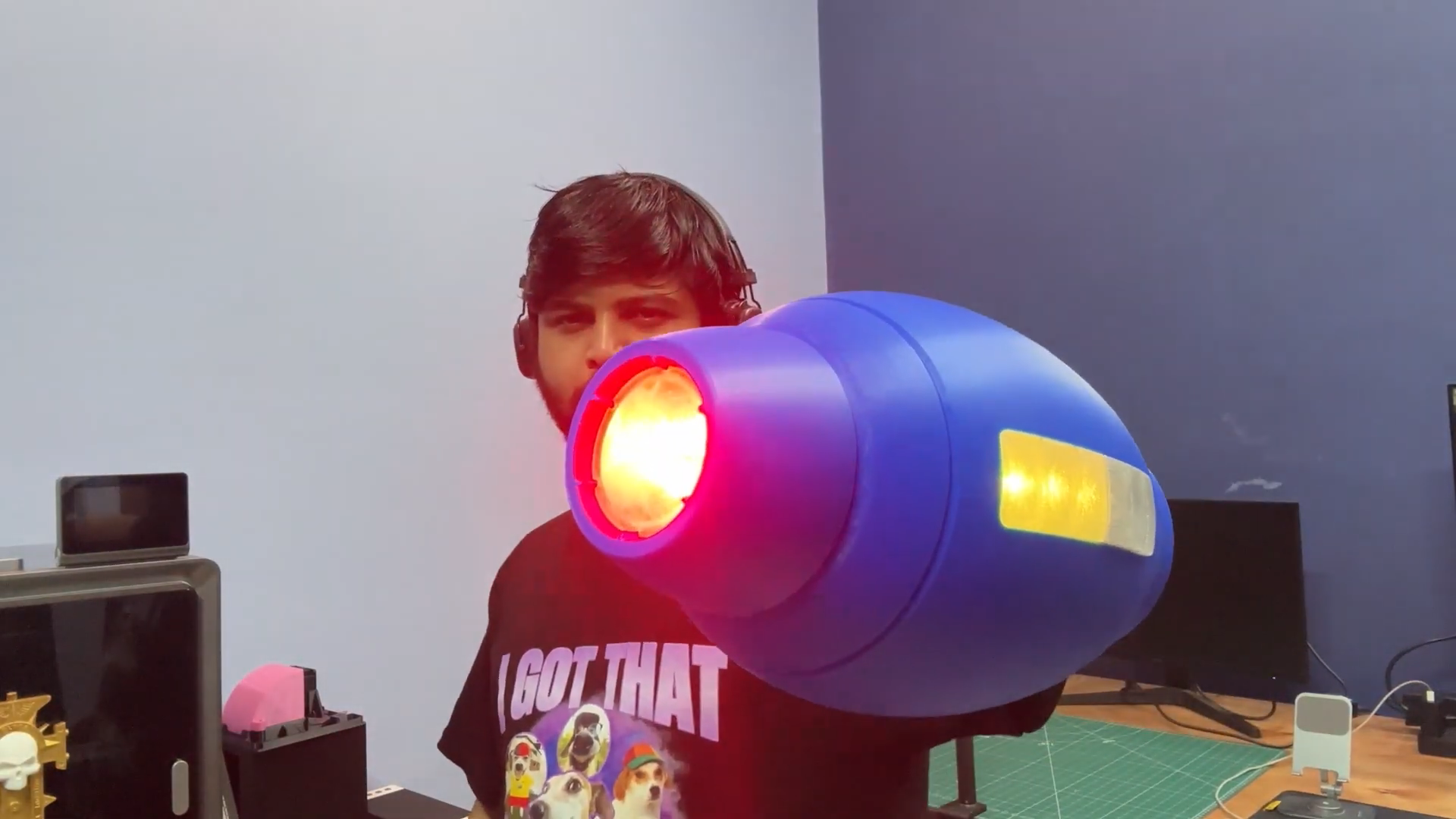
Mega Man is a popular video game character who is perhaps most notable for having a sort of lasery-type blaster for an arm. A real hand cannon, if you will. It’s officially called the Mega Buster, and [Arnov Sharma] recently recreated it for cosplay purposes.
Key to any good cosplay build is getting the visuals right, and [Arnov] achieved that well. The Mega Buster was first recreated in Fusion 360, scaled to an appropriate size to fit [Arnov]’s arm. It was 3D printed in several sections, with the body including a grab handle and fire button inside, and the side panel and blaster nozzle having provision for installing LEDs. The former is the blaster’s “power meter” which shows how many shots it has left until it runs out of energy, with the blaster able to fire six times before needing to cooldown. A Raspberry Pi Pico controls the LEDs and provides sound effects with the aid of a PAM8403 class D amplifier module and a small speaker.
The 3D files are available on Instructables for the curious. Perhaps by virtue of its arm-mounted nature, this build reminds us of the venerable Pip Boy from Fallout, of which we’ve seen many grand recreations before. Video after the break.
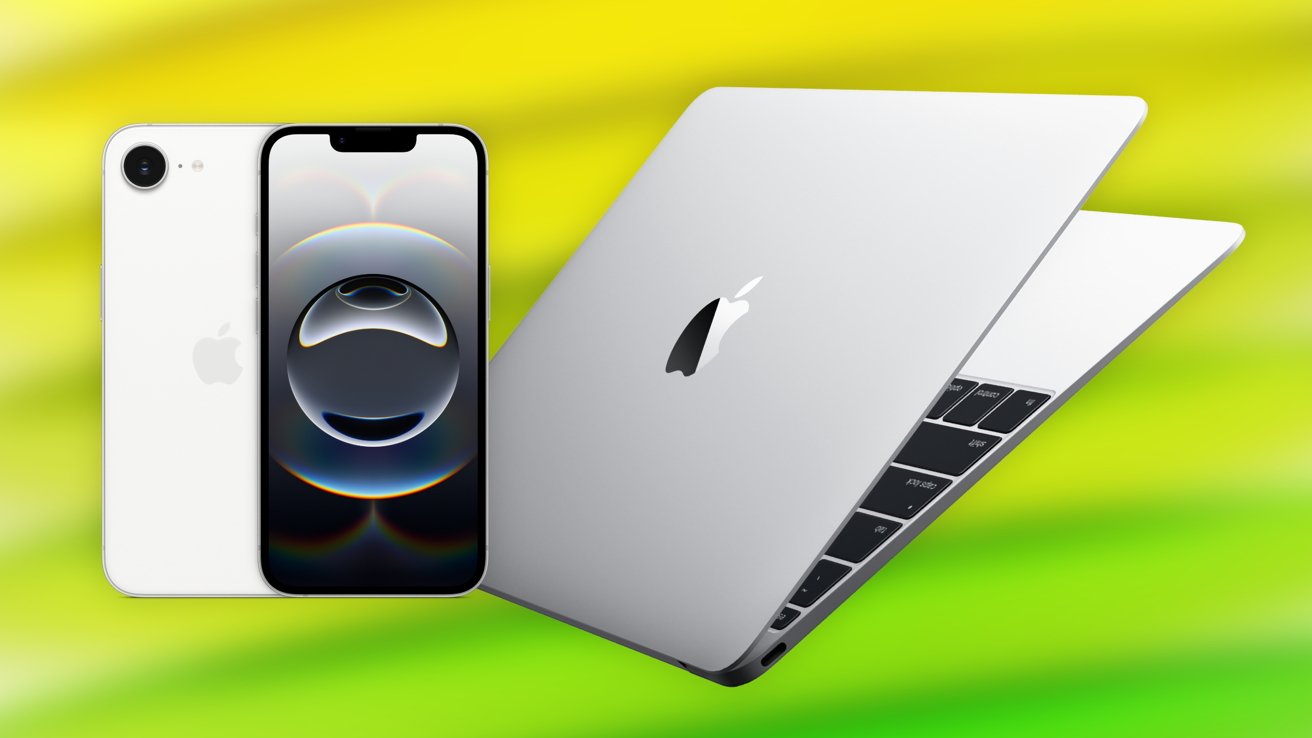
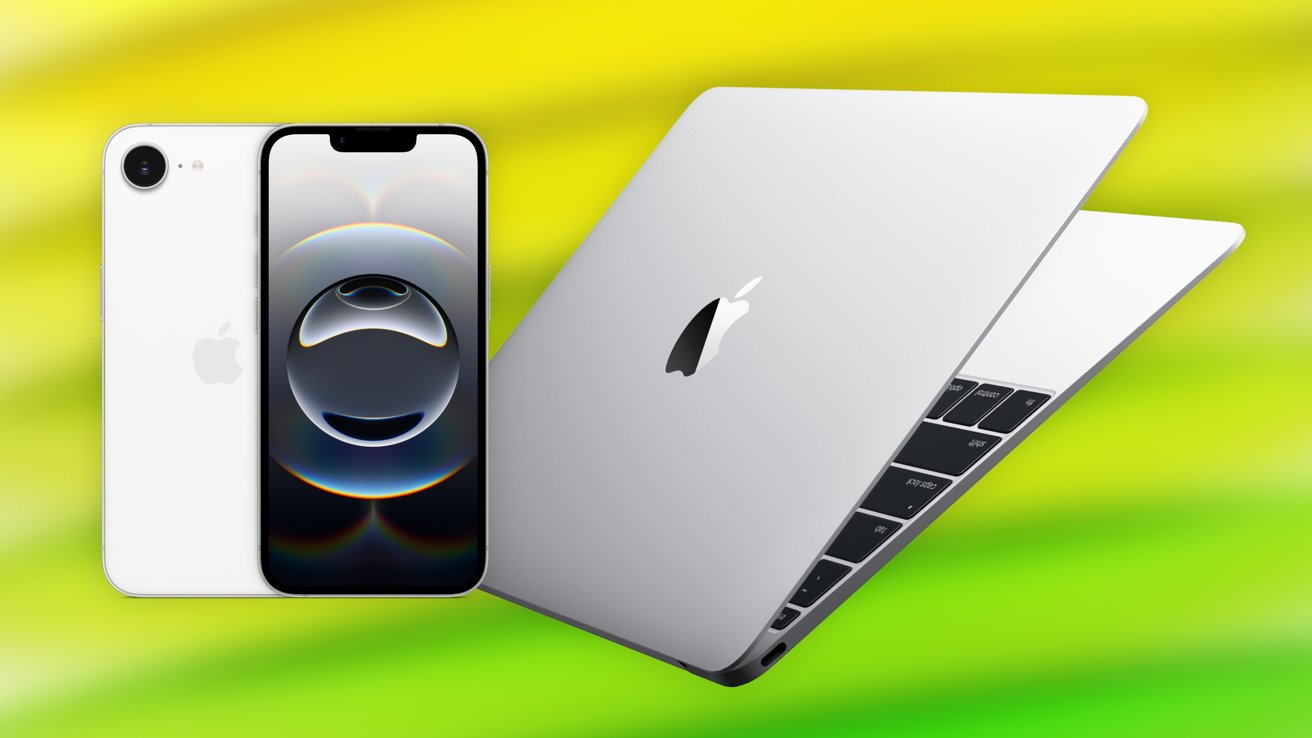
Apple’s early March string of announcements will include at least five product launches capped off by its triple-location event on March 4, with the budget MacBook and iPhone 17e tipped to appear.
iPhone 17e and new MacBooks are expected in March
An “Apple Experience” is being held on March 4, which is widely expected to include multiple product launches. While no-one knows definitively what will be promoted by the company, it will consist of quite a few product introductions. In Sunday’s “Power On” newsletter for Bloomberg, Mark Gurman writes that Apple is planning three days of announcements. They will take place on Monday, March 2, until Wednesday, March 4. Continue Reading on AppleInsider | Discuss on our Forums
Going online in 2026 means subjecting yourself to a relentless bombardment of generative AI tools. How about a few AI agents to get you started? Do you want to use this chatbot sidebar? Would you like every search query to be answered with an AI summary? While there’s no off switch to avoid this smorgasbord of AI tools entirely, there is one keyboard trick you can use to dodge Google’s AI Overviews for a brief respite.
If you don’t want to see an AI-generated summarization of webpage links when you use Google Search, you can type “–ai” at the end of your query. It’s an option WIRED readers highlighted under a recent article about scams found in Google’s AI Overviews. I’ve thoroughly enjoyed using this nifty addendum over the past week, and I wish Google offered a permanent toggle with similar zapping capabilities.
“People find Search more helpful with AI Overviews, and they’re coming back to search more as a result,” a Google spokesperson tells WIRED. “We offer a ‘web’ filter to see links only, but people only use it for a tiny fraction of searches.” The spokesperson compared AI Overviews to other features baked into the search results, like knowledge panels, that can’t be removed.
If you want to try this out, you can put any combination of letters or numbers attached to an en dash, like “–1” or “–z,” at the end of your Google search, and it works just the same, as reported by PCMag. It prevents AI Overviews from appearing completely. The en dash function in Google is designed to remove whatever topic you attach to it from the search results. The removal of AI Overviews seems incidental, and it’s unclear how long this trick will stick around. After typing in a result, you can also tap on the “Web” tab—sometimes hidden under “More”—right below the search bar to see site links.
Advertisement
In my tests, the –ai trick appears to be limited to search queries in computer browsers. When I tried it in the Safari and Chrome apps on iOS, Google’s AI-generated “web guide” still popped up prominently in the results. However, Google does offer a Classic Search button on the right side of these results. After clicking that button, the results will reload and show you a mix of website links and short-form videos. The exception seems to be on Android—at least on a Google Pixel phone we tested with, using “–ai” removed AI Overviews.
It’s a nice change from the current default when I’m using my laptop, and I’ll likely continue typing “–ai” at the end of every search until it becomes muscle memory, just like I add “Reddit” all the time to my queries. Even so, I feel nostalgic for the minimalist Google I grew up with and the utter simplicity of those top 10 blue links.
If you’re looking to switch search engines to a service without any generative AI, DuckDuckGo and Brave are two solid options worth considering. Both search engines allow users to toggle AI summaries on and off in the settings. You don’t need to change browsers to use a different search engine, as Google lets you swap the default search engine in Chrome’s settings menu.
When Google launched AI Overviews in 2024, it was a major turning point for the search engine. But AI Overviews was widely mocked on social media for incorrect answers, like an infamous result that suggested baking pizza with glue. It didn’t stop Google, though, as the company has continued to lean further into AI tools since the initial release of AI Overviews and has kept iterating on the user experience.
Advertisement
While Google claims the accuracy of these results has improved over time, generative AI tools still sometimes insert inaccuracies when summarizing information. So, it’s always worth clicking through and double-checking anything you read in an AI Overview. All the more reason, I think, to cut out the middlebot completely and visit those dang websites directly.
I’m still reeling from the surprise release of Xenoblade Chronicles X: Definitive Edition – Nintendo Switch 2 Edition. Not only because it’s quite possibly the worst title for a re-release I’ve ever seen, but also due to it literally coming out of nowhere with Nintendo posting the trailer and shadow dropping it on the eShop simultaneously.
Having played Xenoblade Chronicles X: Definitive Editionfor review last year, racking up more than 100 hours of gameplay and ticking off almost every activity the game had to offer, the Switch 2 upgrade admittedly doesn’t offer much for me. Like Tears of the Kingdomand Breath of the Wild, it is a basic upgrade that allows the game to hit a 4K resolution (depending on your console’s settings and TV’s capabilities) at up to 60fps.
That being said, I downloaded the upgrade to my Switch 2 almost immediately, deeply curious to see how the mind-boggling scale of Xenoblade Chronicles X would handle this performance touch-up. The results maybe aren’t quite as breathtaking as the aforementioned Zelda duology (the image quality certainly isn’t quite as crisp), but the higher frame rate makes a world of difference in busier environments and during combat.
Advertisement
I’m definitely happy Xenoblade Chronicles X: Definitive Edition is now, well, even more definitive on Switch 2 for those who chose to wait for an upgrade before diving in. However, I’m now even more interested in what the future holds for developer Monolith Soft, especially now that this version of the game has provided something of a benchmark for future games or even other Xenoblade Chronicles trilogy ports.
Mira image
(Image credit: Nintendo)
So as mentioned, the Switch 2 upgrade for Xenoblade Chronicles X: Definitive Edition allows for 60fps gameplay, and resolutions up to 4K. And that’s it, as far as I’m aware, and as far as Nintendo has divulged. There are seemingly no extra quests or any content hidden away for returning players to find.
Advertisement
But that’s okay. I already had a deeply rewarding open-world RPG experience with the Switch version last year, and Switch 2 owners who’re yet to land on Mira are in for a real treat. Not only does the game hold that 60fps target, even in areas dense with foliage or while facing off against towering endgame bosses, the frame rate simply did not budge.
There are some elements that unfortunately haven’t been touched up. Menus still display at 30fps, for example, and I have noticed some instances of dynamic resolution in play – especially when flying over big sweeping landscapes aboard your Skell. There is still a noticeable amount of pop-in, too, which was very easy to spot in the hub city of New LA, and amidst the dense jungles of the Noctilum biome.
Sign up for breaking news, reviews, opinion, top tech deals, and more.
To be fair, that’s all stuff that was likely baked into the original Wii U release, to a degree. Many of those same issues, while slightly improved, were also present in the Switch version of Definitive Edition. So, there’s probably only so much Monolith Soft could achieve without rebuilding wholecloth sections of the game from the ground up.
Advertisement
Let’s show ’em an edition or three
(Image credit: Nintendo)
The single best thing about this Switch 2 upgrade, at least in my view, is what it hints at for the future of the Xenoblade series or whatever big project Monolith Soft is cooking up next.
While it’s true that the developer has had a knack for punching well above its weight under Nintendo’s supervision (remember, a game as massive as Xenoblade Chronicles could run on both the Wii and New Nintendo 3DS), it’s still been held back by the company’s relatively limited hardware.
This largely ceases to be the case on Switch 2. The console’s specs are an impressive leap over the original Switch and as evidenced by the Switch 2 Edition of Xenoblade Chronicles X, Monolith Soft doesn’t seem to be constrained by underpowered hardware or custom mobile chipsets anymore.
I’m excited for whatever Monolith Soft has in store for its next big project, but I certainly would not say no to Switch 2 Editions of Xenoblade Chronicles 2 and Xenoblade Chronicles 3, especially.
These games have yet to receive the Definitive Edition treatment, and I think bundling them together with their expansions in an upscaled, performance-improved package would be a fantastic way to fill the void until the developer’s next big reveal.
Xenoblade Chronicles 2, especially, could use some work. This game has my favorite battle system in the series, but deeply frustrating aspects like field skills and the gacha-like method of unlocking characters meant I never had the patience for a full 100% completion rate.
Advertisement
Xenoblade Chronicles 3, meanwhile, improved greatly in terms of story (I’m still astounded by how crushingly bleak its world is), exploration, and side content, but its battle system felt like a step back overall. I wasn’t as keen on Ouroboros fusion or the Heroes system as much as I was with XC2’s elemental combos or ultra-satisfying chain attacks, for example.
Believe it or not, next year will be Xenoblade Chronicles 3’s fifth anniversary, so the time feels right for a brand new entry in the series. While I certainly won’t be upset if Monolith Soft chooses to focus on its new project over Switch 2 re-releases, I’ll nonetheless be there day one if it chooses to apply the Definitive Edition treatment across all remaining Xenoblade titles.
And of course, you can also follow TechRadar on YouTube and TikTok for news, reviews, unboxings in video form, and get regular updates from us on WhatsApp too.