
News Beat
This ‘Battle of the Sexes’ was completely unwatchable – we do not need it again

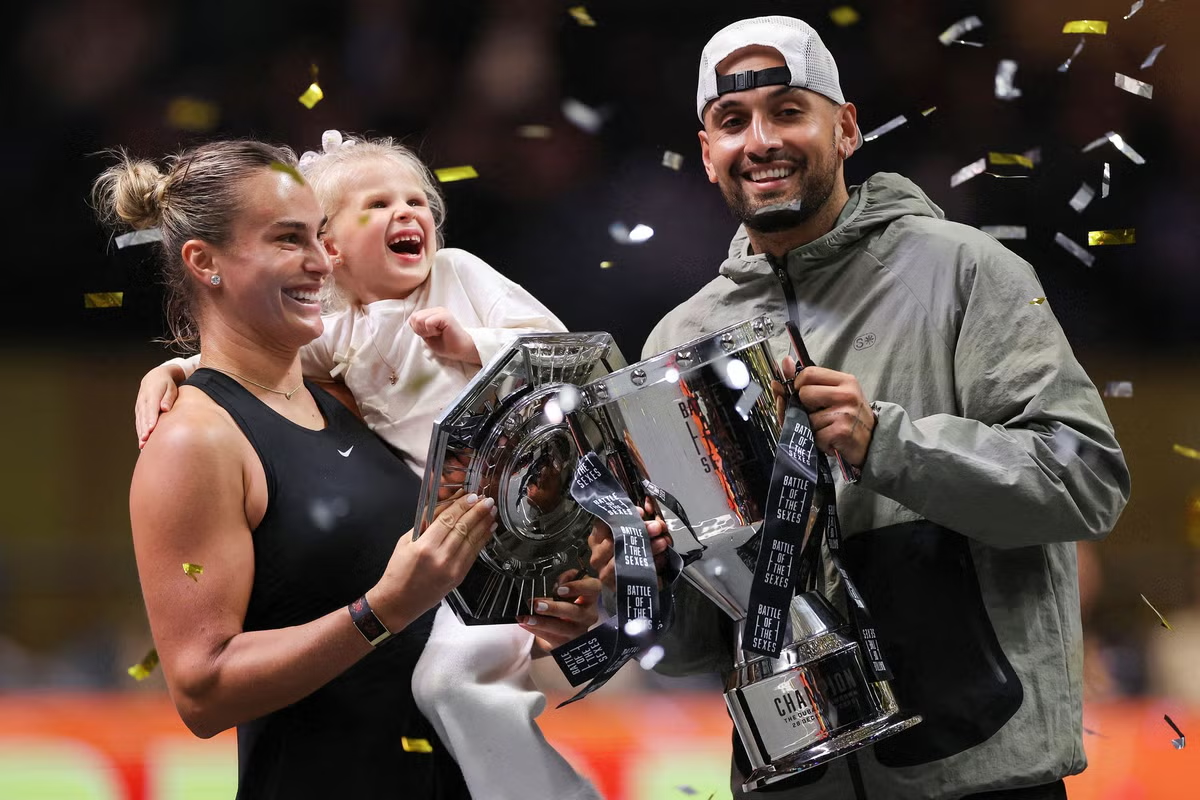
Let’s start with something positive. It is a somewhat of a testament to the strength of Aryna Sabalenka’s character, as a four-time grand slam champion and the dominant world No 1 in women’s tennis, that immediately after losing 6-3 6-3 to a shuffling, clearly unfit Nick Kyrgios she asked for the opportunity to try again. But no, please no. We do not need to see another rendition of this circus, promoted as a ‘Battle of the Sexes’.
Beyond the ugly court and the TV feed from Dubai that broke down and produced a garbled picture, the spectacle was unwatchable, too.
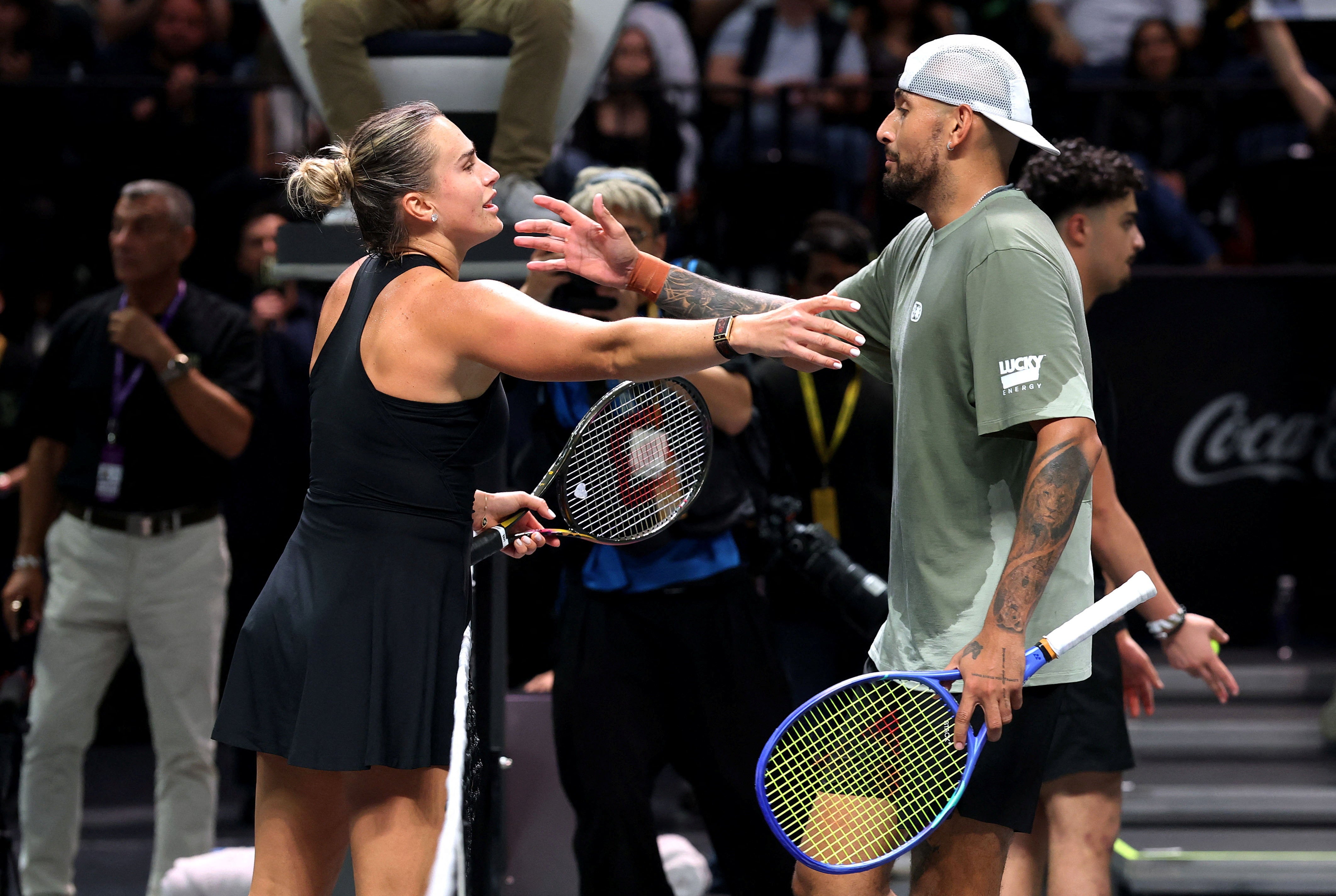
Sabalenka deserved better than Kyrgios, the former Wimbledon finalist who reached a career-high of No 13, gawping when she blasted a powerful winner down the line. She should have had nothing to prove after an excellent season where she made the finals of three of the four grand slams and won the US Open. But in accepting this match-up, organised by the Evolve agency that represents both players, she has opened the door for cynics to diminish the women’s game. Worryingly, she has perhaps set the stage for her fellow professionals to be dragged into future exhibitions of this nature in the name of ‘entertainment’.
That, after all, is what Sabalenka and Kyrgios said they were playing for. Billie Jean King risked the progress of not only women’s sports but the women’s rights movement in the United States when she accepted the challenge of the self-proclaimed male chauvinist Bobby Riggs in 1973. The only similarity here, King said 52 years on, was man versus woman.
Sabalenka played up to the entertainment element of it from the start, ring-walking onto the court in a glittering sequinned coat to the sound of ‘Eye of the Tiger’. She has a rapport with Kyrgios – they did rounds of interviews together to promote this contest – and the players laughed and joked throughout the opening set. Kyrgios, who has played just six official matches in the last three year due to injuries, embraced the character this pantomime demanded, dropping in under-arm serves. Midway through the second set, Sabalenka used a timeout called by Kyrgios to perform the dance to the ‘Macarena’.
It all felt unserious – while potentially being so damaging for the sport. A penny for the thoughts on Sabalenka’s rivals on the women’s tour, in the likes of Coco Gauff and Iga Swiatek, while she danced like a clown during a defeat that may give ammunition to those who decry equal pay at the grand slams and beyond. Then there was the modified court, which was nine per cent smaller on Sabalenka’s side, apparently, according to the organisers Evolve, because women move nine per cent slower than men.
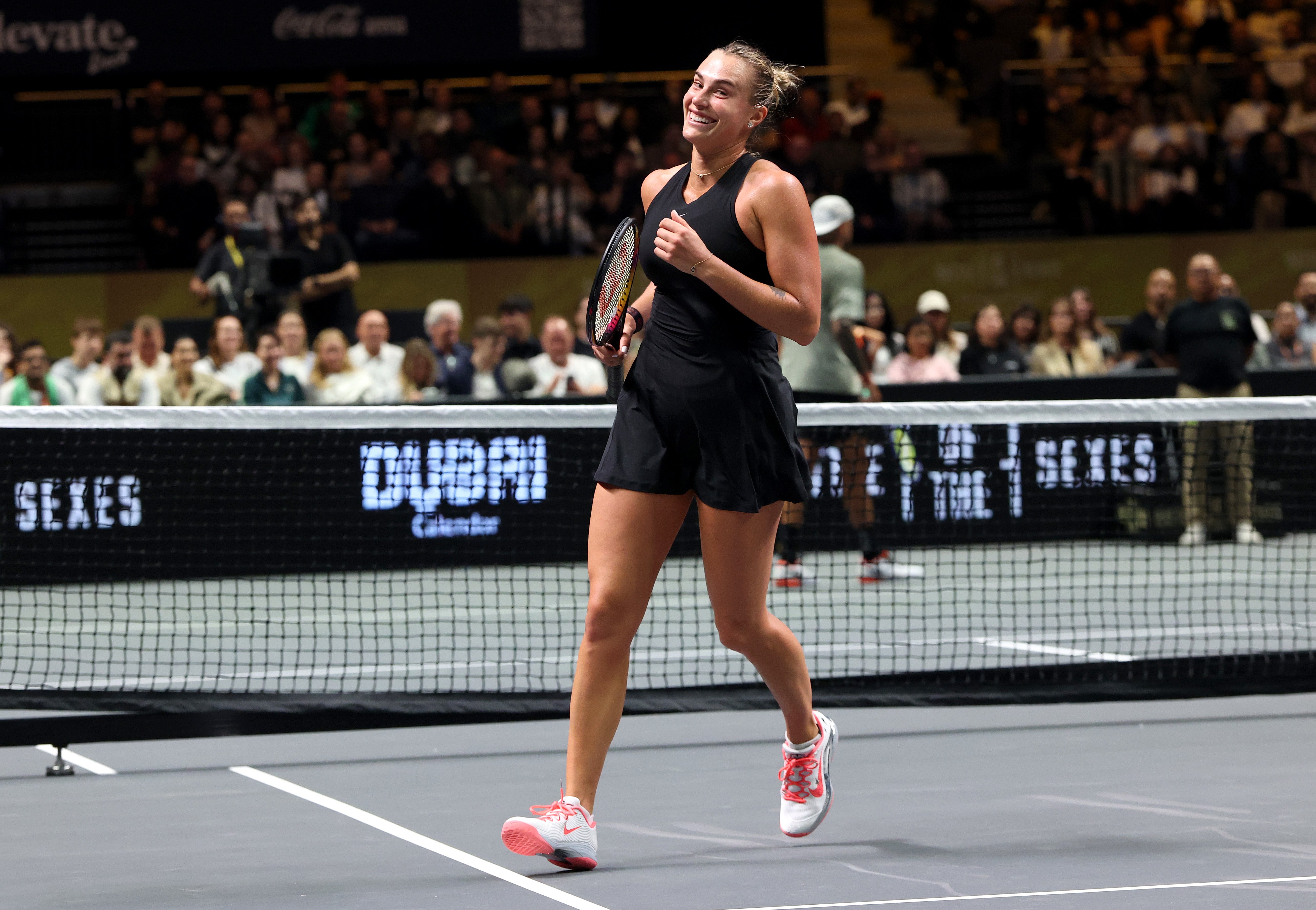
Before the match, the intrigue lay in whether Sabalenka could use her powerful groundstrokes to hit through Kyrgios. In the early stages, Sabalenka attacked the larger side of the court by opening up the angles to fire winners down the line, and found some joy. Sabalenka, though, struggled with the one-serve limit, the rule change Evolve said was introduced to neutralise Kyrgios’s natural power advantage. Initially, the one-serve limit was only meant to be for Kyrgios, but he successfully argued that it should apply to both players.
It meant the Australian still had an obvious advantage. The first set came down to a loose game from Sabalenka where she came under pressure and made two serving faults from 40-15. After that, while the picture from Dubai crackled and left BBC commentators Andrew Cotter and Annabel Croft listening out for the reactions of the crowd like the rest of us, the second set had the distinct feel of off-season exhibition fodder. Kyrgios recovered from a break down to win the set while the crowd sounded as if it had lost interest.
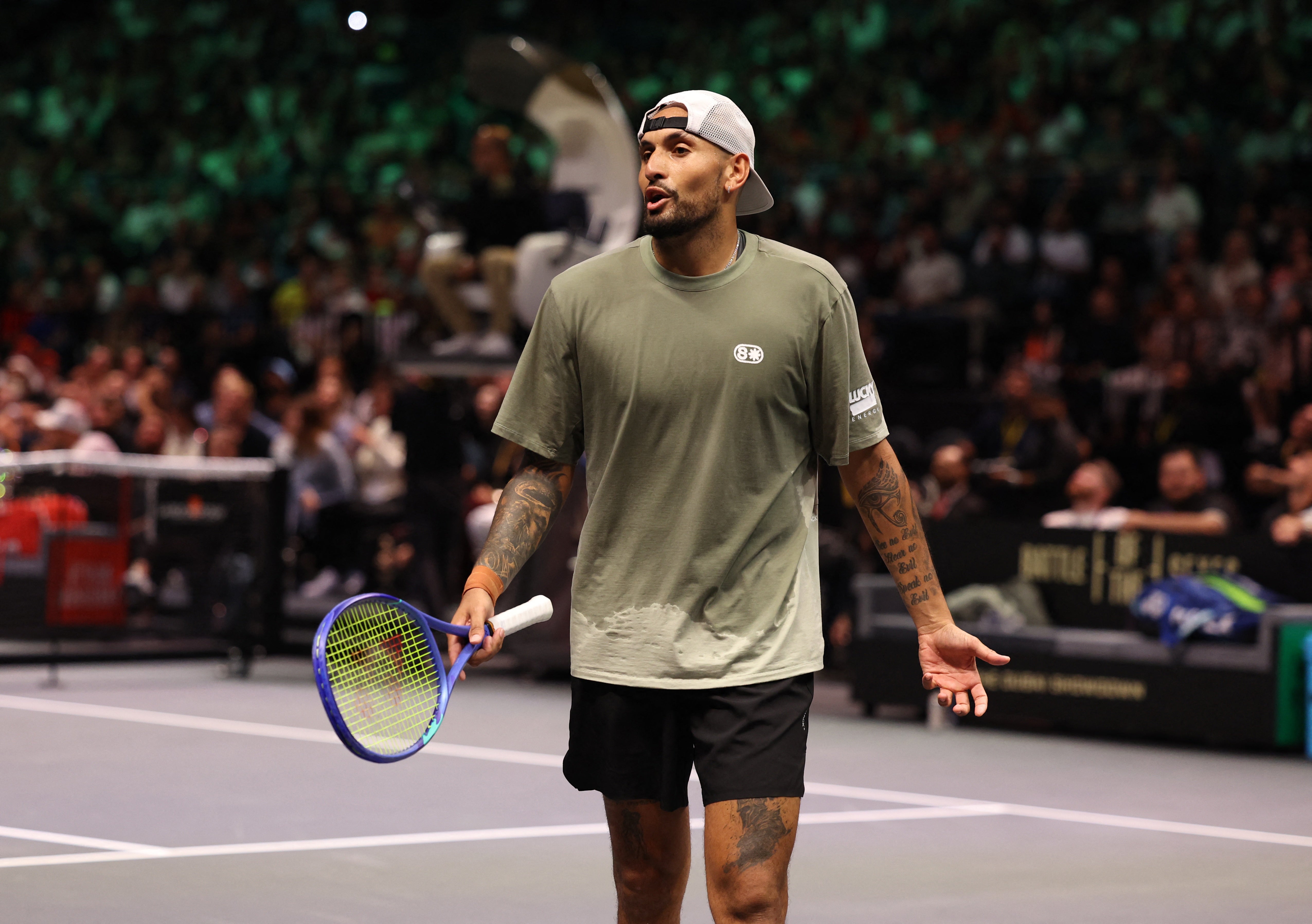
As expected, there was very little to learn. Sabalenka could out-hit Kyrgios in some points, when opening the court, but the spin and slice Kyrgios produced would regularly prove the difference in most rallies.
Kyrgios said some silly things afterwards, calling his match against Sabalenka a “stepping stone forward for the sport of tennis” and something “the world was talking about for the last six months”. No one was buying it. There was very little he gained from this, either, apart from working on his fitness as he builds towards a return to the men’s tour in January and, perhaps, some PR after he was last year forced to distance himself from Andrew Tate having liked a social media post from the openly misogynistic right-wing influencer.
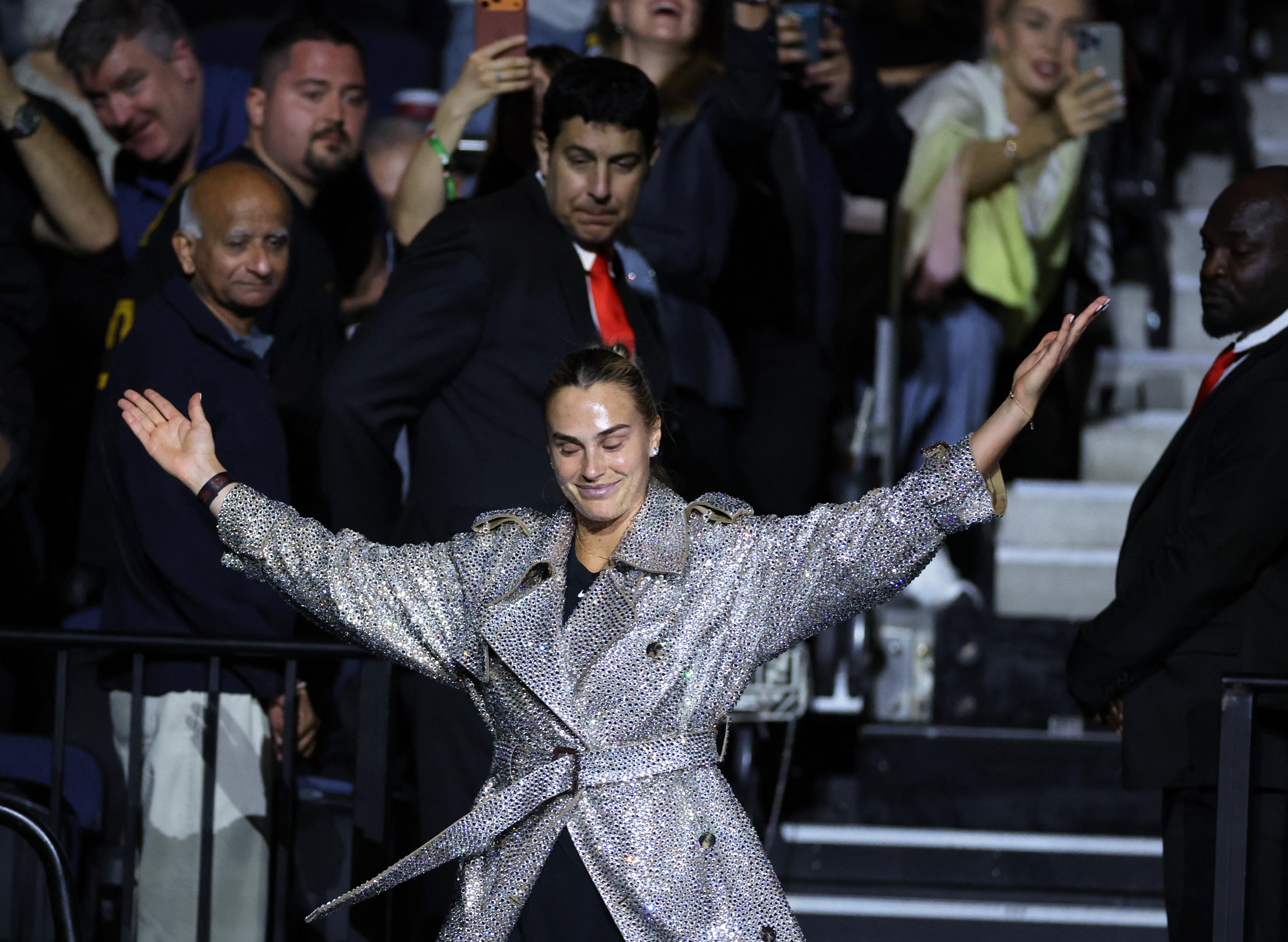
Sabalenka, meanwhile, sounded as if she thought she had let herself down. She also gave the impresssion that this reimagined ‘Battle of the Sexes’ brand will be going on tour beyond Dubai, in the shameless pursuit of more attention and eyeballs. “I feel like next time, when I play him, I already know the tactic, I know his strengths, his weaknesses and it’s going to be a better match for sure,” the Belarusian said. “So we could maybe do this one more time at some point. I love revenge. I love to challenge myself.”
It was sad to hear. Sabalenka should be judged on her performances against the best players on the WTA Tour alone. They provide more than enough compelling drama. Instead, after the women’s No 1 lost to a man described as a “largely irrelevant figure on the men’s tour” in the BBC’s pre-match broadcast, Sabalenka’s peers feel that the newfound desire to pitch the world’s best women against average male opposition has, worryingly, only just begun.



