
Business
Beyond Spectacle: ASEAN’s Pragmatic Diplomacy Amidst ‘America First’ Challenges

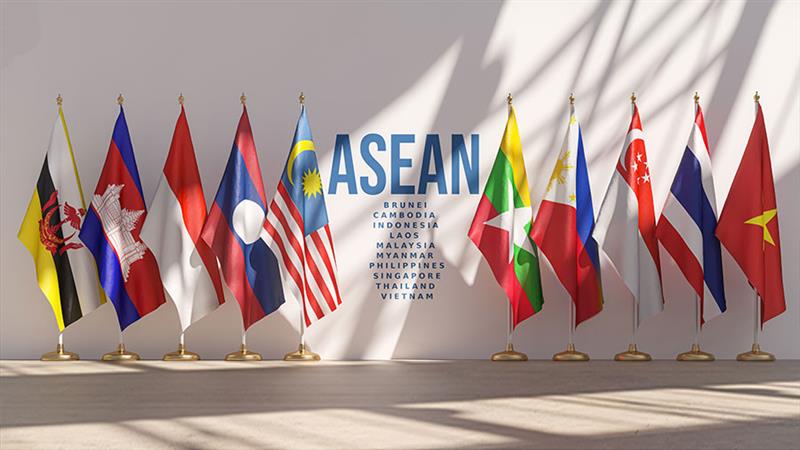
As U.S. President Donald Trump returned to the ASEAN stage after an eight-year absence, his whirlwind visit to Malaysia was anything but conventional. From dancing to the “Hawaii Five-O” theme upon arrival to presiding over a peace deal between Thailand and Cambodia, Trump’s presence at the 47th ASEAN Summit was a theatrical display of power diplomacy. Yet beneath the spectacle lies a deeper question: how enduring is the U.S.-ASEAN rapport?
During his first term, Trump withdrew from the Trans-Pacific Partnership (TPP) and showed little personal interest in ASEAN’s multilateral processes, notably skipping the East Asia Summit (EAS) in subsequent years. This lack of engagement forces ASEAN to look to other powers for regional leadership and economic cooperation, such as Japan and China. The fear remains that he may also abandon the Indo-Pacific Economic Framework (IPEF)
A Show of Strength or a Diplomatic Trade-Off?
Trump’s brief 24-hour engagement included a high-profile peace ceremony, which earned him a Nobel Peace Prize nomination from Cambodia’s Prime Minister. His declaration that the U.S. would remain a “strong partner and friend for many generations” was met with polite applause. But ASEAN’s leaders, well aware of Trump’s history of unilateralism—steep tariffs, slashed foreign aid, and coercive trade deals—were cautious. Their hospitality masked a strategic calculation: engage the U.S. without compromising ASEAN’s autonomy.
The “America First” agenda emphasizes correcting trade imbalances and demands allies share a bigger defense burden. ASEAN states, while open to bilateral deals, are wary of a coercive, unpredictable, and self-centered US approach that can undermine the rules-based trading system. Recent trade agreements inked with countries like Malaysia, Thailand, Cambodia, and Vietnam still contain clauses that critics view as largely one-sided.
Malaysia’s Masterstroke and ASEAN’s Quiet Concessions
Malaysian Prime Minister Anwar Ibrahim orchestrated Trump’s participation with deft diplomacy. By appealing to Trump’s ego and avoiding retaliation against U.S. tariffs, Anwar secured a symbolic victory. Yet this came at a cost. ASEAN’s traditional role as a regional convener was sidelined, with Trump cast as the central figure in conflict resolution. The “ASEAN Way” of consensus and collective action was visibly eroded.
This shift raised concerns among ASEAN members about the long-term implications for regional unity and autonomy. Critics argued that prioritizing bilateral ties with the U.S. risked undermining the bloc’s foundational principles. Meanwhile, supporters contended that Anwar’s strategy was a pragmatic response to the geopolitical realities of the time, ensuring Malaysia’s interests were safeguarded amidst growing tensions. The episode underscored the delicate balance ASEAN leaders must navigate between maintaining collective solidarity and addressing national priorities in an increasingly polarized global landscape.
Multipolar Momentum and ASEAN’s Strategic Hedging
ASEAN countries are determined to avoid choosing a side in the intensifying US-China strategic competition. Trump’s tough stance on China, particularly regarding the South China Sea, is viewed advantageously by some (like the Philippines and Vietnam) as it increases the US’s security engagement. However, the region as a whole values strategic ambiguity and needs US corporate investment while recognizing China’s substantial economic gravity. This desire for autonomy is reflected in the pursuit of partnerships with middle powers and the interest shown by some member states (like Indonesia and Thailand) in joining the BRICS grouping.
Beyond the Trump theatrics, the summit marked a turning point in ASEAN’s global posture. The participation of leaders from Brazil, South Africa, and China underscored the bloc’s pivot toward a multipolar world. The separate RCEP summit and ASEAN’s outreach to the Gulf Cooperation Council—now including China—signal a deliberate move away from dependency on any single power.
ASEAN’s embrace of multilateralism reflects a pragmatic strategy: maintain ties with the U.S. while deepening engagement with other global actors. Trump’s presence may have been a temporary alignment, but ASEAN’s long-term vision is clear—become a central pole in a diversified global order.



