As Indian IT stocks grapple with concerns that artificial intelligence could disrupt traditional services models, valuations have turned relatively attractive. But is that enough to protect investors? S Naren, ED and CIO at ICICI Prudential AMC, argues that low multiples alone offer limited comfort unless there is clarity on long-term growth and the true impact of AI on the sector.
Edited excerpts from a chat on market outlook, sectoral opportunities and whether smallcaps are attractive enough to buy now:
Given that big triggers of the US-India trade deal, Budget and Q3 earnings season is now behind us, how has your outlook towards the Indian equity market changed in the last 2-3 weeks? Over the last year, valuations across global markets have moved higher, and today there are virtually no cheap markets left. One potential trigger for India to outperform could be a correction in overvalued artificial intelligence related stocks globally. If the excesses in AI-led narratives unwind, Indian equities could relatively outperform. After the hyper growth seen post-Covid, we appear to be in a moderate to low return environment since the last 1.5 years. How long do you think this consolidation phase can last?
Live Events
Currently, it is difficult to predict how long a moderate-return phase may last. Such phases typically continue until markets move to either of two extremes, i.e. either become very expensive or become very cheap. At a different point, the market may move into a phase from where we may change our view to high returns or low returns. You had warned investors against the smallcap mania about a year ago. Those who followed your advice are now happy. There’s hardly any froth in smallcaps now but are the valuations attractive enough to be incrementally positive now? Small cap investing works in cycles. Currently, there are select small cap stocks that are reasonably valued. Hence, investors who want exposure to small caps can consider starting long term SIP in a small cap fund now, ideally with a five to ten-year horizon. Your call on multi-asset funds, silver and gold also played out extremely well. Do you think that silver has topped out and gold has more legs? Silver market is relatively small compared to gold, which makes it prone to speculative excesses. As a result, it is a risky asset class for anyone considering to trade this metal. Gold, on the other hand, has a role to play in asset allocation. But traditional valuation models do not apply to precious metals. Unconventional models like the Nifty-Gold ratio do not suggest a large long term allocation to gold at present. However, in the near term, gold may continue to benefit from momentum, but we do not have a clear view on the near term outlook for gold.
You have been a big advocate of asset allocation. Retail investors were earlier chasing smallcaps at any price and now it is about gold and silver. AMFI data on heavy inflows in gold and silver ETFs also shows this. For someone with a moderate risk appetite and a long-term horizon of at least 5 years, how much allocation would you recommend in gold, equity and debt? There are no one size fits all allocation. It depends on an investor’s age, goals, and risk tolerance. It is best to consult a financial advisor who can guide on the allocation proportion. From an asset class perspective, currently, no asset class appears to be cheap and that includes even international equities. Therefore, investors should broadly stick to their long-term asset allocation frameworks instead of considering any tactical shifts.
Advertisement
Any contra bet that you think can surprise on the upside in the next couple of years? If artificial intelligence does not impair the growth prospects of Indian IT services companies but instead enhances them, the sector could see a strong rally. However, at this stage, the long-term impact of AI on Indian IT services remains unclear.
Indian IT stocks have been under selling pressure as investors see AI as a threat rather than an opportunity. What are your thoughts on the IT pack and how are you dealing with the sell-off? The sector is in a flux along with heightened fear. If the growth risks do not materialise, there is scope for meaningful returns. However, clarity on long-term growth is essential before becoming decisively positive.
Do you think that relatively cheaper valuations and high dividend yield can protect the downside in IT stocks? In a sector which is facing disruption, cheap valuation alone will not suffice. What matters most is the confidence that disruption will not permanently impair industry growth. Without that clarity, cheap valuations may not mean much.
ICICI Prudential AMC has launched two SIFs – iSIF Equity Ex-Top 100 Long-Short Fund and iSIF Hybrid Long-Short Fund. How should an investor decide which one suits her requirements? Investors with a belief that long-term investment in a defensive manner in small and midcaps is an attractive investment proposition, can consider the Equity Ex-Top 100 Long-Short fund. Meanwhile, the Hybrid Long-Shot Fund is designed for investors seeking a more balanced approach. In both cases, investors should invest if they believe in our current view of a moderate-return environment in the near term.
Advertisement
Consumption was touted as a big theme after GST cuts were introduced before Diwali. Since then auto appears to be the biggest winner in the consumption cycle. Do you think durables and other consumption plays are up for an upcycle in FY27? Many non-auto consumption sectors have been underperforming for several years, which has created some margin of safety. However, despite this underperformance, valuations are not very cheap, even though they have come off their peaks.
Which other sectors are you bullish on for the next 2-3 years? There are no cheap sectors in the market today. Opportunities are more likely to arise from investor impatience i.e. when stocks are sold due to short-term disappointment. Such phases often create attractive entry points for long-term investors.
How should an investor go about with fresh equity investments? Our primary framework for investing is asset allocation based approach with a higher equity tilt than a year ago. Within equities, large caps appear to be relatively better placed on valuation basis. Investors can also consider equity strategies with flexibility to move across sectors and market capitalisations.
The team at Spectrum Technologies will watch the conclusion of the Artemis II mission this weekend knowing they played an important role
14:05, 10 Apr 2026Updated 14:06, 10 Apr 2026
Spectrum Technologies Chairman and CTO, Peter Dickinson, said the Bridgend-based laser company has played an important part in the Artemis II mission(Image: David Manton / Photodrome)
A laser company in South Wales played an important role in the Artemis II space mission after their advanced technology was used on the Orion spacecraft. Spectrum Technologies in Bridgend design and manufacture laser equipment which is used by teams in America to label the wiring on spacecrafts and aircrafts, including Orion.
There is 20 miles of wiring on Orion, made up of 2,600 individual pieces which have all been marked by Spectrum Technologies’ lasers.
Advertisement
“Each wire must be marked along its entire length at intervals of just a few inches with a unique alphanumeric code,” said Peter Dickinson, chairman and chief technology officer.. It’s extremely complex electrical wiring,” he said. “They all have to be identified with a unique code otherwise it is a gigantic mess”.
Mr Dickinson said this system is the “critical first step in producing the spacecraft’s wiring harness,” and that their company is “the number one global provider for this specialist equipment. The global standard.”
Lasers from Spectrum Technologies has been used in all of the Artemis programmes and Mr Dickinson has said they will be used in Artemis III when astronauts return to the surface of the moon for the first time since 1972.
Advertisement
Mr Dickinson and the team at Spectrum Technologies are all excited to watch the Artemis programme succeed and to know they made an impact.
“The whole company has been watching what has been going on and we are all excited to be part of this pivotal moment of space exploration,” said Mr Dickinson.
“I remember as a teenager watching Apollo 11 landing on the moon. It is thrilling to be involved in this latest programme to take humans back to the moon.”
Lasers from the Bridgend-based company have been used in probes that have gone to Mars and in one called Lucy which is on a 12-year mission to Jupiter with the aim of discovering more about how our solar system was created.
Financial influencer Taylor Price joins ‘Varney & Co.’ to break down how shifting your mindset can help Americans grow wealth and achieve the American Dream.
The climate of the U.S. housing market for buyers varies around the country, and a new report suggests there are currently only eight metro areas that are truly buyer’s markets.
The economist research team at Realtor.com released a diagnostic tool called the Market Clock that tracks the housing market at the national and metro level based on months of supply, time on market, price changes and list-to-sale ratio to reflect local conditions.
Advertisement
It tracks the 50 largest metros in the U.S. and found in its first quarterly report that about half, or 46%, of the top markets are in balance with neither buyers nor sellers having an edge; while 26% are seller’s markets and only 16% are buyer’s markets.
The eight buyer’s markets are mostly located in the South, though there is one outlier in the West. None of the buyer’s markets were located in the Northeast or Midwest, where strong demand and restricted supply have either kept the housing market in balance or given sellers the edge.
Eight of the top 50 metro areas in the U.S. were considered buyer’s markets in the Realtor.com report. (Loren Elliott/Bloomberg via Getty Images)
For all the eight buyer’s markets, the Market Clock is at 5 o’clock, which signals they have ample supply of homes for sale with a growing number of listings and sellers lowering prices.
Advertisement
Half of the buyer’s markets are located in Florida – Jacksonville, Miami, Orlando and Tampa. The others are Atlanta, Georgia; Austin, Texas; Nashville, Tennessee; and Riverside, California.
The buyer’s markets have more inventory of homes for sale and are growing the supply of housing with new construction. (Mark Felix/Bloomberg via Getty Images)
Realtor.com senior economist Jake Krimmel said that while active listings may not have risen year over year in each of the eight buyer’s markets,
“Riverside and Nashville, for instance, have seen active listings increase 222% and 330%, respectively, since high interest rates reset the market in 2022 – significantly greater than the national average of 172% since March 2022,” he said.
Miami and several other Florida cities were among the buyer’s markets in the report. (Joe Raedle/Getty Images)
The report noted that compared with June 2025, Atlanta, Austin, Nashville and Riverside all saw their position on the market clock loosen by one “hour” into an early buyer’s market from a late balanced market. Jacksonville followed a similar pattern, moving from being in balance to a buyer’s market.
By contrast, Miami, Orlando and Tampa were already early buyer’s markets in June and held steady at that level through the end of last year.
Krimmel said that prospective buyers in all the eight metros have both time and options on their side this spring, giving them the opportunity to exert leverage up to a point when negotiating prices and concessions with sellers.
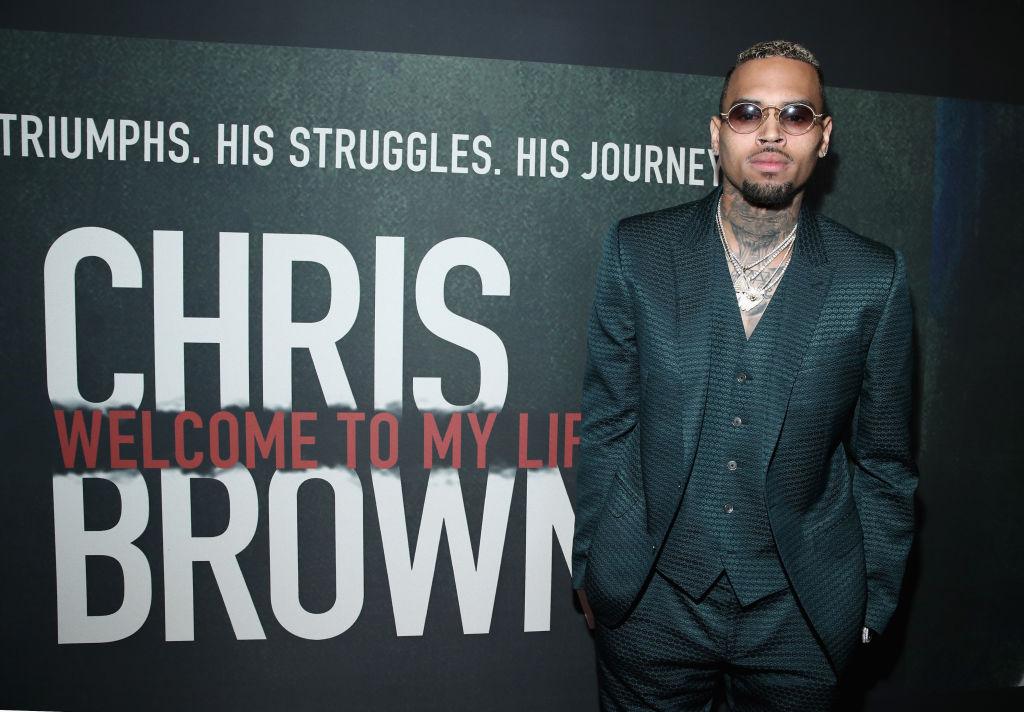
More than two decades into his career, Chris Brown remains one of R&B and pop’s most consistent hitmakers, with his catalog dominating streaming platforms in 2026. “Under The Influence” stands tall as his most-streamed track on Spotify with over 1.8 billion plays, while classics like “No Guidance” and early smashes continue to rack up millions of daily streams.
Chris Brown
Brown, affectionately known as Breezy, has released more than a dozen studio albums since bursting onto the scene in 2005. His blend of smooth vocals, sharp dance moves and genre-blending production has earned him multiple Grammy Awards and a dedicated global fan base. As of April 2026, his music continues to resonate across generations, with newer releases from the “11:11” era mixing seamlessly with decade-old favorites on playlists and radio.
Compilations of his greatest hits in 2026 frequently highlight the same core tracks, though rankings vary slightly depending on whether the metric is Billboard chart performance, Spotify streams or critical acclaim. Here is a consensus top 10 drawn from current streaming data, historical chart peaks and enduring popularity.
No. 10: “Forever” (2008, from “Exclusive”) Originally created for a Doublemint gum commercial, “Forever” became an anthem for celebrations and young love. The upbeat track peaked at No. 2 on the Billboard Hot 100 and has amassed over 800 million Spotify streams. Its infectious chorus and energetic production helped cement Brown as a pop crossover star. In 2026, it remains a staple at weddings and parties.
No. 9: “With You” (2007, from “Exclusive”) Brown delivered a more acoustic, heartfelt ballad with “With You,” which climbed to No. 2 on the Hot 100. The Stargate-produced song showcased his vulnerable side and strong vocal range. It has surpassed 690 million streams on Spotify and continues to appear on romantic playlists worldwide. Critics often cite it as one of his purest pop-R&B moments.
Advertisement
No. 8: “Loyal” (featuring Lil Wayne and Tyga, 2014, from “X”) A club and radio domination track, “Loyal” became a cultural catchphrase. It peaked at No. 9 on the Hot 100 but spent weeks atop urban charts. The song’s catchy hook and featured verses made it a party staple. In 2026 it still receives heavy airplay and features prominently in throwback sets.
No. 7: “Look At Me Now” (featuring Lil Wayne and Busta Rhymes, 2011, from “F.A.M.E.”) This high-energy hip-hop track highlighted Brown’s rapid-fire flow alongside two rap legends. It earned a Grammy nomination and became one of his most acclaimed rap-leaning releases. The song’s fast-paced delivery and infectious beat keep it popular among fans who appreciate his versatility.
No. 6: “Run It!” (2005, from “Chris Brown”) Brown’s debut single announced his arrival at age 16. The dance-heavy track topped the Hot 100 for five weeks and introduced the world to his smooth vocals and impressive choreography. It remains a foundational hit that defined early 2000s R&B-pop and still lights up dance floors in 2026.
No. 5: “Go Crazy” (with Young Thug, 2020, from “Slime & B”) Released during the pandemic, “Go Crazy” became a massive streaming success and cultural moment. The bouncy, feel-good track spent months on charts and inspired countless TikTok dances. It helped keep Brown relevant during a challenging period and continues to generate streams daily.
Advertisement
No. 4: “Fine China” (2013, from “X”) A bold artistic shift, “Fine China” paid homage to Michael Jackson and Stevie Wonder with its retro-soul groove. The single showcased Brown’s maturity as an artist and received praise for its sophisticated production. It stands as one of his most critically respected releases.
No. 3: “No Guidance” (featuring Drake, 2019, from “Indigo”) After years of speculation about their relationship, Brown and Drake delivered a smooth, sultry collaboration that exceeded expectations. “No Guidance” became a chart smash and has accumulated more than 1.29 billion Spotify streams. Its sensual vibe and polished production made it a late-2010s R&B highlight.
No. 2: “Kiss Kiss” (featuring T-Pain, 2007, from “Exclusive”) Featuring T-Pain’s signature auto-tune, “Kiss Kiss” topped the Hot 100 for three weeks. The playful, flirtatious track captured the fun side of Brown’s artistry and became a defining song of the mid-2000s. Its energy still resonates with fans two decades later.
No. 1: “Under The Influence” (2022, from “Indigo”) Currently Brown’s biggest streaming success with over 1.83 billion plays on Spotify as of April 2026, “Under The Influence” blends seductive R&B with modern production. The track’s moody atmosphere and catchy melody have made it a favorite for late-night listening and playlists. It exemplifies how Brown’s catalog continues to thrive years after release, often outperforming newer singles in daily streams.
Advertisement
Beyond these standouts, Brown’s recent work from the “11:11” album and its deluxe editions, including tracks like “Residuals,” has earned radio success and Grammy consideration. In 2026 he continues dropping new music and collaborations, keeping his output fresh while his classics maintain strong catalog performance.
Brown’s ability to evolve across pop, R&B and hip-hop has sustained his relevance. From teenage heartthrob to seasoned veteran, he has navigated personal challenges while consistently delivering hits. His dance skills, often showcased in elaborate music videos, add another layer to his artistry that fans still celebrate.
Streaming has reshaped how fans engage with his music. Playlists and algorithms keep older tracks alive, while viral moments on TikTok and social media introduce his catalog to new generations. In early 2026, Brown’s total streams across platforms continued to climb, with several songs crossing major milestones.
Advertisement
Critics and fans alike note his vocal talent and production instincts. Whether delivering heartfelt ballads or high-energy club tracks, Brown demonstrates range few artists match. Collaborations with stars like Usher, Future and Drake have expanded his reach without diluting his signature sound.
As Brown approaches his 37th birthday later in 2026, his music shows no signs of slowing. Tours, new releases and constant catalog rotation ensure he remains a fixture in contemporary R&B. Playlists titled “Chris Brown Greatest Hits 2026” and similar collections on YouTube and Spotify draw millions of views and plays, proving the staying power of his best work.
For new listeners or longtime fans revisiting his discography, these 10 songs offer an ideal entry point. They capture the evolution of an artist who helped define modern R&B while pushing boundaries in pop and dance music.
Brown’s influence extends beyond charts. His style, choreography and emotional delivery have inspired countless emerging artists. In an era where streaming metrics often define success, his ability to maintain high daily streams on decade-old tracks underscores genuine fan connection.
Advertisement
As the music industry continues shifting toward catalog consumption, Chris Brown’s top songs illustrate how quality songwriting and versatile performance create lasting value. Whether you’re discovering him in 2026 or have followed since “Run It!,” these tracks represent the best of Breezy — catchy, emotional and undeniably danceable.
The team at Cumbria Employment Solicitors will integrate into Sintons’ operations
Chris Welch is managing partner at Sintons LLP in Newcastle(Image: David Wood – for Sintons LLP)
Newcastle law firm Sintons has announced the acquisition of a Cumbrian solicitors firm.
Sintons said the deal for Cumbria Employment Solicitors would extend its reach across the North and represented both an extension of its geographical footprint and investment in what it called “heavyweight legal talent.”
Cumbria Employment Solicitors has been established for more than 15 years and its link-up with Sintons will allow it to add more legal services for its clients. Michael Bauer and his team will be fully integrated into the Sintons’ employment team.
Christopher Welch, managing partner at Sintons, said: “Sintons are in a period of sustained, strategic growth. We are delighted to bring Cumbria Employment Solicitors into the Sintons’ family.
Advertisement
Sintons office in Newcastle(Image: Newcastle Journal)
“However, this isn’t just a talent acquisition; this is part of our strategic drive to expand into different geographic regions by partnering with people who have a proven track record whilst sharing our values of client excellence. This latest move, when coupled with our continued growth in the Yorkshire region means that we are bigger, stronger, and more capable than ever.
“When I first started to speak to Michael, I was immediately struck not only by his talent as an employment lawyer but also by his passion for his clients and for the region in which he has lived and worked the majority of his career. I knew instantly that we had found people and a firm that we could work with for the benefit of all our clients.”
Michael Bauer, partner at Sintons, added: “Joining forces with Sintons was the natural next step for us. To continue to compete at the highest level, you need the resources and backing of a larger firm.
“By joining with Sintons, we are giving our existing client base access to the range of services and to the expertise in other areas of law that only a firm of this stature can provide. We now have the right platform to drive the growth of our combined business across Cumbria whilst still delivering the excellent, and personal, service for which we are known.”
Advertisement
Earlier this year Sintons toasted record revenues and the expansion of its workforce. The company, based at The Cube on Barrack Road, published accounts in which revenues rose 6.5% to £19.3m, while employee numbers rose to 180.
Britain’s high streets enjoyed a welcome lift last month as an early Easter drew shoppers back through the doors, but retailers are warning that the bounce may prove fleeting as a fresh wave of tax rises and wage costs bears down on the sector this month.
Total UK footfall climbed 2.4 per cent year-on-year in March, according to figures from the British Retail Consortium (BRC), reversing a grim start to the year that saw shopper numbers fall by 0.6 per cent in January and a chastening 4.5 per cent in February as persistent wet weather kept high streets quiet.
Yet behind the headline figure lies a more anxious story. The BRC cautioned that the Easter uplift, which arrived earlier than usual this year, fell short of what retailers had been banking on, leaving many in no mood to celebrate as April’s cost pressures begin to bite.
Shopping centres led the recovery with a 2.6 per cent rise, followed closely by retail parks at 2.5 per cent, while high streets themselves managed a more modest two per cent gain. Regionally, Manchester staged the strongest comeback, with total footfall surging by more than nine per cent, while London edged ahead of the national average at 3.3 per cent.
Helen Dickinson, chief executive of the BRC, struck a cautious note. With Easter and the school holidays falling earlier this year, she said, retailers had been expecting a stronger boost than March actually delivered. Warmer weather might help sustain momentum in the coming weeks, Dickinson added, but without a repeat lift in April the recovery was far from assured.
Advertisement
Andy Sumpter, retail consultant at Sensormatic, which compiles the BRC’s footfall data, was blunter still, suggesting that March would have recorded a decline altogether were it not for the Easter effect. He pointed to a worrying cocktail of falling consumer confidence, geopolitical uncertainty and rising living costs, not least at the petrol pump, as reasons shoppers are cutting back on discretionary trips. The real test, he argued, will be whether footfall can hold up once the Easter boost fades and tougher year-on-year comparisons return.
The mood among retail chiefs has been lifted, if only tentatively, by President Trump’s announcement of a two-week ceasefire, although that deal has since been cast into doubt. The BRC noted that a reopening of the Strait of Hormuz, should it materialise, could bring global energy prices back towards more manageable levels before the bulk of companies come to renew their supply contracts.
Even so, the warning lights on the retail dashboard remain firmly on. Trade bodies representing both retail and hospitality are sounding the alarm over mounting employment costs and April’s hike to business rates, which together threaten to swallow any windfall the Easter trade may have produced.
Dickinson urged ministers to do their bit by easing the burden of domestic policy costs, arguing that lower overheads would free operators to invest in value, experience and their in-store offer, the very things, she said, that help drive footfall and breathe life into local economies.
Advertisement
For Britain’s SMEs, which make up the bulk of independent high-street operators, the message from the data is unmistakable. Easter has provided a fleeting reprieve, but the structural pressures squeezing margins show little sign of easing. Whether March’s modest rebound proves to be the first swallow of summer or merely a brief interlude before tougher trading conditions return will, retailers fear, come down to decisions taken in Whitehall as much as on the shop floor.
Jamie Young
Jamie is Senior Reporter at Business Matters, bringing over a decade of experience in UK SME business reporting.
Jamie holds a degree in Business Administration and regularly participates in industry conferences and workshops.
When not reporting on the latest business developments, Jamie is passionate about mentoring up-and-coming journalists and entrepreneurs to inspire the next generation of business leaders.





























































You must be logged in to post a comment Login