
Business
Hichem Djouhri talks about how ETFs are redefining market access through cost efficiency, liquidity and innovation

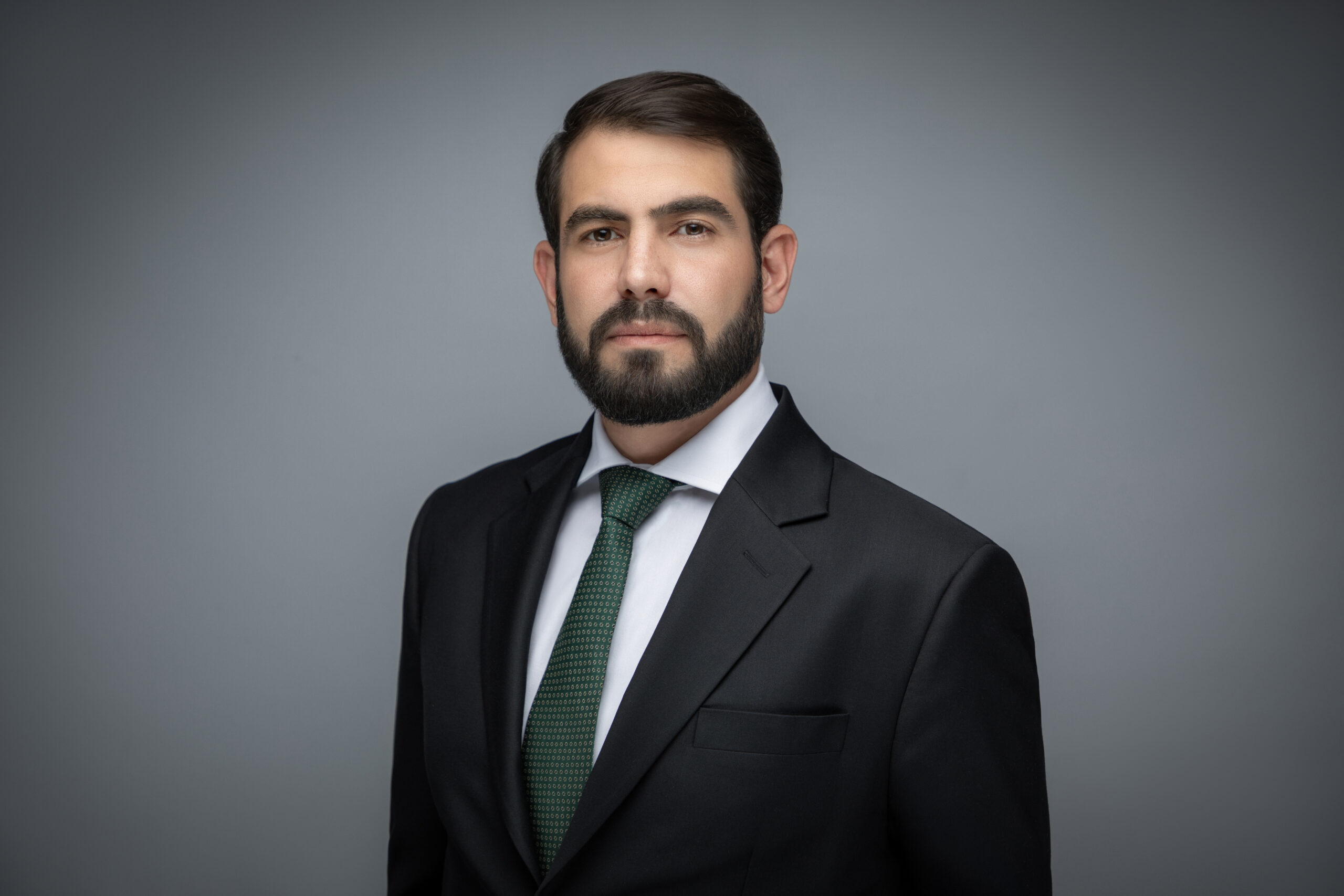
Exchange Traded Funds (ETFs) are no longer a niche product reserved for sophisticated investors. Globally and regionally, ETFs are one of the most powerful tools reshaping how individuals and institutions access markets, manage costs and diversify portfolios.
According to Hichem Djouhri, Senior Executive Officer of ASB Capital, the surge in ETF adoption is rooted in one simple idea: efficiency.
“What ETFs offer is efficient access to a wide range of asset classes, combining cost efficiency and execution speed to allow people to express their investment views on any underlying asset class,” he said in an interview with Arabian Business.
From active to passive
Globally, ETFs have gained momentum amid the long-standing debate around active versus passive investing. “Can you beat the market? That’s a question people ask all the time,” said Djouhri. “ETFs say you don’t need to beat the market – you just get the market performance without having to pay excessive fees.”
This scale of this shift has been significant. “There’s now more capital in ETFs than there is in actively managed funds, and I don’t think that’s a trend that’s going to reverse,” he added.
What makes today’s ETF landscape even more compelling is how far it has evolved from its early, purely passive roots. “You now have semi-active ETFs, smart beta ETFs, and even ETFs on private markets – which was unheard of a few years ago,” Djouhri said. “The demand is very much there, and the rollout of new innovative products continues.”
Demystifying ETFs for investors
Despite the rapid growth of ETFs, misconceptions remain – particularly among newer investors. “Sometimes we forget to ask the very basic question: what is an ETF?” Djouhri said.
At its core, he explained, an ETF is an exchange traded fund. “The key word is ‘Exchange traded’ – it’s listed on a stock market and buying it is exactly like buying a stock such as Microsoft or Apple. And ‘fund’ means a box containing a collection of securities that many investors can participate in.”
That structure unlocks flexibility. “With ETFs you can buy and sell throughout the day whenever the stock market is open,” said Djouhri, contrasting them with traditional funds that often limit entry and exit.
The rise of thematics and ethical investing
Thematic ETFs, spanning AI, renewables, healthcare and commodities – are proving especially attractive. And in the Middle East, another convergence is gaining momentum.
“There is strong demand for ethical investing, which has a lot of commonality with Shari’a-compliant principles, particularly on social and fundamental considerations,” said Djouhri. “Demand for ethical products is growing tremendously across virtually all asset classes.”
He pointed to innovations such as green Sukuk as an example of this demand, enabling investors across geographies to access similar exposures through language and structures that resonate locally.
One of ASB Capital’s most recent launches highlights how ETFs are lowering long-standing barriers. “Historically, Sukuk were reserved for institutions or high-net-worth individuals because buying a single Sukuk required a minimum of USD 200,000,” Djouhri said.
ASB Capital’s sukuk ETF, XASB, listed on the London Stock Exchange in November 2025, changes that equation completely. “Our ETF has 200 underlying Sukuk, and investors can buy it for around USD 27. You get all the economic benefits and exposure without the door being closed because of minimums.”
That accessibility, he added, makes ETFs suitable not just as investment vehicles but also as savings tools.
Bridging regional and global markets
On the equities side, ASB Capital is preparing to launch a new ETF product aimed at simplifying regional exposure. “As a Middle East-based investor, it’s not so straightforward to buy regional equities directly,” Djouhri said. “We’re going to change that with our next launch, coming very soon.”
This philosophy reflects the firm’s broader mission. “ASB Capital was built to make investments smarter, simpler and more accessible, to be a bridge between investors in different geographies and opportunities both regionally and globally,” he said.
Concerns that ETFs amplify market volatility surface regularly, but Djouhri is unconvinced by this argument. “ETFs don’t inherently create more volatility. They’re meant to give you the performance of the market – if there’s volatility in the market, you’ll see it in the ETF.”
Apart from isolated cases, he noted, ETFs have weathered multiple market cycles. “They’ve been around through the financial crisis and beyond and they’re a very effective tool.”
What to watch for
Private market ETFs stand out as a major growth area. “It’s even harder for the average investor to enter private markets than public ones where minimums are very high, lock-ins can be seven to ten years, and liquidity is limited,” said Djouhri. “ETFs are a great solution, and we’ll continue to see more innovation there.”
For investors considering ETFs, Djouhri offers three practical points. “Look closely at fees – many ETFs offer similar exposure but are priced differently,” he said. “Also look at liquidity as another key factor, and finally, compare the ETF’s performance to what it’s meant to replicate. It should be very close – if it’s not, you may want to consider an alternative.”
As ETFs continue to evolve, their appeal in the region is becoming increasingly clear, offering broader access, lower costs, and smarter ways to invest confidently across borders and asset classes.



