
Business
ClearBridge Global Value Improvers Strategy Q4 2025 Commentary


LumerB/iStock via Getty Images

By Grace Su & Jean Yu CFA, Ph.D.
Key Takeaways
- Global equity markets delivered solid fourth-quarter gains, with value stocks outperforming growth as market participation continued to broaden beyond mega cap technology.
- The Strategy outperformed its benchmark during the quarter, driven by strong stock selection in communication services, financials and industrials.
- With valuation dispersion elevated and fundamentals improving across a widening set of companies, we believe the opportunity set for global value improvers remains attractive heading into 2026.
Market Overview
Global equity markets generated positive returns in the fourth quarter, with value stocks outpacing growth for the quarter and only slightly trailing growth on a full-year basis. The MSCI World Index rose 3.1% in the quarter to finish up 21.1% for 2025, outperforming the S&P 500 Index’s gains of 2.7% for the quarter and 17.9% for the year. Value stocks also maintained leadership during the fourth quarter, with the MSCI World Value Index returning 3.3% compared to the MSCI World Growth Index’s 2.8%.
In the fourth quarter, market narratives remained heavily focused on artificial intelligence-related investment, reflected most visibly in the outsize performance of technology-heavy markets such as Taiwan and South Korea. However, the quarter also saw continued strength across emerging markets, commodities and select value-oriented sectors, underscoring a gradual broadening in market participation. A weaker U.S. dollar and expectations for easier monetary policy supported sentiment toward emerging markets and consumer-sensitive areas.
From a macroeconomic perspective, growth continued to slow in Europe, particularly across manufacturing-related industries, though services activity remained resilient and equity markets generally held up well. In China, signs of stabilization in manufacturing activity supported risk appetite, while the U.S. consumer remained comparatively resilient. Despite the “everything rally” that characterized much of 2025, the fourth quarter highlighted how expectations, positioning and valuation continue to play an outsize role in driving relative outcomes.
The fourth quarter highlighted how expectations, positioning and valuation continue to play an outsize role in driving relative outcomes.
Quarterly Performance
The ClearBridge Global Value Improvers Strategy outperformed its benchmark during the fourth quarter, supported by strong stock selection across communication services, financials and industrials, partially offset by weakness in information technology (‘IT’) and health care.
Despite being the worst-performing sector of the MSCI World Value benchmark, communication services represented a bright spot for the Strategy. Alphabet (GOOG) rose on strong revenue growth in its latest earnings, driven by accelerating ads, cloud revenue growth and, importantly, AI-driven ad optimization, benefiting from its depth of data and tech.
Financials were among the largest contributors to relative performance. Banco Bilbao Vizcaya Argentaria (BBVA) (‘BBVA’), a Spain-based global banking group with leading franchises in Mexico and Turkey, performed well as improving credit trends, disciplined cost control and a favorable capital return profile supported earnings. The bank also benefited from easing macro concerns in Europe and resilient loan growth in key international markets. Lloyds Banking (LYG), a U.K.-focused retail and commercial bank, also contributed as macroeconomic risks tied to the U.K. budget, including potential incremental taxes on banks, proved overdone and investor focus returned to the company’s strong earnings visibility and attractive capital return profile.
Industrials also contributed positively, led by several multi-quarter compounders. Siemens Energy (SMNEY), a German manufacturer of power generation and transmission equipment, continues to benefit from rising global investment in grid upgrades and power generation capacity, particularly as utilities expand infrastructure to meet data center electricity demand. Hitachi (HTHIY), a Japanese industrial and technology conglomerate, continued to simplify its portfolio and improve margins while benefiting from exposure to digital infrastructure and electrification themes.
On the down side, stock selection in IT detracted from relative performance. Microchip (MCHP), a U.S.-based semiconductor manufacturer, reduced forward guidance as tariff and demand uncertainty continued to delay the cyclical recovery of its business. Corcept Therapeutics (CORT), a U.S.-based biotechnology company focused on endocrinology and oncology indications, declined late in the quarter following a Food and Drug Administration Response Letter that cited the need for additional evidence to support approval of its relacorilant program. This introduced uncertainty around the timing and commercial potential of a key pipeline asset, and we ultimately elected to exit the position.
From a regional perspective, relative performance benefited from strong contributions in Europe ex U.K., led by financials and industrials holdings, as well as Japanese stock selection in industrial and technology-oriented sectors. Weakness in due to company-specific developments weighed on North American returns.
Portfolio Positioning
Rising electricity demand from AI, electrification and infrastructure investment favors companies involved in grid modernization, storage and efficiency solutions. A more constructive outlook toward renewables is also improving the opportunity set. A compelling example of this is new portfolio addition Brookfield Renewable (BEP), the renewable energy arm of Brookfield Asset Management (BAM), which benefits from its parent’s scale, development expertise and funding. AI-driven data center growth is supporting stronger contracting dynamics and longer-term visibility for Brookfield. Additionally, its stake in Westinghouse provides exposure to the global nuclear buildout, offering further potential upside.
We also established a position in Merck KGaA (MKKGY), a Germany-based science and technology company with businesses spanning life sciences, health care and electronics. While portions of its health care segment have faced near-term revenue pressure, recent acquisitions and a deep pipeline offer longer-term optionality, and we believe the market is underappreciating a cyclical recovery in its life sciences and electronics businesses as order trends stabilize. Merck’s business strongly aligns with SDG 3 (Good health and well-being) as it develops innovative therapies in oncology, neurology and immunology that address major non-communicable diseases and reduce disease burden and premature mortality to improve treatment outcomes for serious chronic conditions.
We exited PayPal (PYPL), a global digital payments platform, concluding that the core business has struggled to reaccelerate under new leadership amid exposure to structurally slower-growing areas of e-commerce. While operational improvements are ongoing, we believe the company’s scale and end market exposure make a meaningful rerating more challenging in the near-to-medium term. We also exited ICON (ICLR), a contract research organization, as evolving competitive dynamics and a less favorable growth outlook led us to reallocate capital toward opportunities with clearer earnings visibility.
Outlook
We enter 2026 with a more stable macro environment than this time last year. Inflation has moderated globally, giving central banks room to ease, while fiscal programs – from U.S. industrial and infrastructure spending to expanded European budgets and targeted Chinese stimulus – continue to support activity. With the effective U.S. tariff rate already having peaked, companies that absorbed tariff-related cost pressures in 2025 should lap those headwinds, creating modest tailwinds for growth.
Several themes are likely to shape markets in 2026:
Monetary easing should broaden growth: Lower rates should help support a recovery in manufacturing and small-business activity, while also benefiting rate-sensitive sectors such as housing, utilities and infrastructure. Europe and Japan remain well positioned given ongoing pro-growth policies.
Leadership expands beyond mega cap AI: While AI remains foundational, power, logistics and efficiency improvements are becoming equally important investment themes. Companies that enable the next phase of the AI cycle – rather than those solely capturing its front-end demand – are increasingly well-positioned.
Emerging markets retain meaningful value: Although outside our benchmark, EM remains one of the more attractively valued areas globally, trading at roughly 40% discount to the U.S. Disinflation offers monetary flexibility, countries like Brazil and Mexico are on firmer fiscal footing and easing dollar liquidity should support flows, creating a more fertile ground for potential alpha generation.
The U.K. looks increasingly compelling: Attractive valuations, improving inflation dynamics and falling gilt yields have created a supportive backdrop – particularly for its concentration of service-oriented industries that should benefit from AI and are spared from tariff headwinds and threats of excess capacity of Chinese exports.
M&A could provide an additional tailwind: Deregulation, strategic repositioning and the prospect of lower interest rates may support an uptick in M&A globally. Companies will likely act more decisively in an environment with reduced policy uncertainty.
With a more balanced macro backdrop, healthier geographic diversification and an expanding set of fundamental catalysts, 2026 presents a more attractive opportunity than the narrowly led markets of recent years. The companies best positioned from here are those driving meaningful internal financial, operational and sustainability-related improvements that can support long-duration value creation.
Portfolio Highlights
The ClearBridge Global Value Improvers Strategy outperformed its MSCI World Value Index benchmark during the fourth quarter. On an absolute basis, the Strategy had gains in eight of the 10 sectors in which it was invested (out of 11 total). The financials sector was the greatest contributor while the IT sector was the main detractor.
On a relative basis, overall stock selection contributed to performance. Stock selection in the communication services, financials, industrials, utilities and consumer staples sectors proved beneficial. Conversely, stock selection within the IT and health care sectors weighed on returns.
On a regional basis, stock selection in Japan, overweights to the U.K. and Europe Ex U.K and an underweight to North America proved beneficial. Conversely, stock selection in North America weighed on performance.
On an individual stock basis, BBVA, Alphabet AstraZeneca (AZN), Siemens Energy and Hitachi were the leading contributors to relative returns during the quarter. The largest detractors were Corcept Therapeutics, CNH Industrial (CNH), Compass Group (CMPGY), Micron Technology (MU) (not owned) and Paypal.
ESG Highlights: The Evolving Proxy Landscape
Of the tools public equity investors can use to advocate for sustainable business practices, proxy voting is one of the more visible and powerful. It was vigorously debated in 2025. Throughout the year the SEC tightened parameters for shareholder proposals, strengthening the grounds on which they can be excluded from annual meetings. 1 It announced it would no longer “respond to no-action requests for, and express no views on, companies’ intended reliance on any basis for exclusion of shareholder proposals under Rule 14a-8,” with minimal exceptions. 2 The likely result will be to enable companies to exclude proposals without having to seek SEC approval, leading to fewer shareholder proposals making it to a vote.
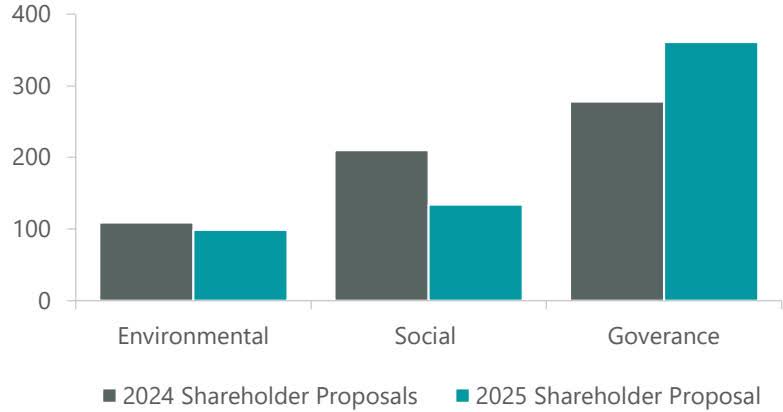
Against this backdrop, the broad trends of the 2025 proxy season were a decline in environmental and social proposals and heightened scrutiny on governance issues. Major topics of environmental proposals filed included emissions disclosures and climate risk and plastic pollution. Social proposals, which were reduced in number, showed continued concern with workforce-related risks like pay equity, workplace safety, and diversity and inclusion. Like environmental proposals, social proposals received less support in 2025 than in previous years, although many of these proposals filed were perhaps “overly prescriptive, duplicative of existing disclosures, or insufficiently tailored to company-specific issues,” 3 a reminder that such proposals need to be judged on a case-by-case basis.
Declines in environmental and social proposals and an increase in governance proposals (which received steady support, all told) were also reflected in ClearBridge’s voting activity in 2025 (Exhibit 1).
The continued – and apparent increase in – relevance for governance topics reflects our view that good governance is a catalyst for value creation: board and chair independence reduces insular oversight; separating CEO and board chair roles reduces the potential for conflicts of interest; diversity on the board leads to more varied views and strengthens governance; board tenure should balance experience with innovation; linking compensation with sustainability factors could improve environmental stewardship and ensure the social license to operate. We have seen incremental improvements across many of these goals in recent years, and they remain worthy of supportive company dialogue.
Exhibit 1: Shareholder Proposals Voted on by ClearBridge
As of December 2025. Source: ClearBridge Investments.
The continued – and apparent increase in – relevance for governance topics reflects our view that good governance is a catalyst for value creation: board and chair independence reduces insular oversight; separating CEO and board chair roles reduces the potential for conflicts of interest; diversity on the board leads to more varied views and strengthens governance; board tenure should balance experience with innovation; linking compensation with sustainability factors could improve environmental stewardship and ensure the social license to operate. We have seen incremental improvements across many of these goals in recent years, and they remain worthy of supportive company dialogue.
Voting on a Case-by-Case Basis
Per ClearBridge’s Proxy Voting Policy, we evaluate certain environmental and social proposals on a case-by-case basis. While we would generally be supportive of ESG proposals, we also consider whether the ask from the shareholder proposal has merit and whether the wording in the proposal diminishes or enhances shareholder value.
We also take note if a proposal does not seem to recognize substantial improvements by the issuer on the requests being addressed. This is an important element of ClearBridge’s approach to proxy voting and our partnership approach to active ownership: we engage with CEOs, CFOs and other company leaders regularly about all factors that could materially affect value creation. This provides a valuable information component for assessing the merits of shareholder proposals.
Here we offer highlights of some recent ClearBridge votes and our thinking behind them.
Companies Are Making Sustainability Improvements
Amazon.com (AMZN) is a good example of a company that has made substantial improvements in areas where it nevertheless continues to see proposals: in 2025, for example, we examined a shareholder proposal asking the company to report on efforts to reduce plastic packaging. The company has received similar proposals for the past five years but has been making significant progress, addressing the resolutions of the proposals with improvements each year.
We chose not to support this proposal this year on the grounds that the company has already been reporting its plastic packaging reduction efforts and has quantified and published the improvements to the public each year. Such improvements include transitioning away from plastic in its outbound packaging and working with its vendors to let them ship in their own brand packaging via their Ships in Product Packaging (‘SIPP’) program – reducing the use of an Amazon box on top of the product packaging. In addition, as of October 2024, Amazon has removed all plastic air pillows from delivery packaging used in its global fulfillment centers, which to date is the biggest decrease in plastic packaging in North America.
Moreover, through innovation and investment in technologies, processes and materials since 2015, Amazon has been able to reduce the weight of the packaging per shipment by 43% on average and avoided more than three million metric tons of packaging material. There are other achievements in packaging (both plastic and other materials) that the company has reported publicly.
Amazon is advancing partnerships and research to improve recycling infrastructure, engaging with organizations such as the Ellen MacArthur Foundation and The Recycling Partnership and demonstrating its efforts to align with industry peers, even if Amazon is not formally a signatory to the New Plastics Economy Global Commitment. We would still like to see Amazon publish an overall baseline of plastic used across its entire supply chain, to add to its robust reporting levels for outbound packaging practices.
Voting Requires Deep Knowledge of the Company
Our portfolio managers chose not to support a shareholder proposal asking Microsoft (MSFT) to report on the risks of its European Security Program (‘ESP’) being used for censorship of free speech. We thought this proposal appeared to conflate a cybersecurity initiative with speech regulation and could mislead investors on the nature of the ESP. The company launched the ESP in response to the sharp rise in ransomware and cyberattacks involving espionage, data theft and disruption of democratic institutions.
Microsoft’s ESP provides structured, limited-scope support to governments by sharing insights into these threats and aligns with Microsoft’s Information Integrity Principles, which emphasize trusted information and freedom of expression rather than content moderation, surveillance or speech regulation. The company also participates in the Global Network Initiative (‘GNI’), which independently evaluates its adherence to principles protecting privacy and free expression.
Executive Compensation Should Be Reasonable
We actively engaged UnitedHealth Group (UNH)’s Board of Directors over the course of 2025 about the appropriateness of the compensation for their executive team.
The company serially missed earnings expectations, resulting in underperformance relative to the S&P 500 Index by 20% in both 2023 and 2024. Further, UnitedHealth had a major cybersecurity incident that jeopardized payments throughout the U.S. health care system, and public sentiment toward the company was at historic lows. Despite poor results, United asked investors to support pay increases for the CEO and CFO, while withholding any bonus payment to the family of murdered executive Brian Thompson. We opposed the proposed pay scheme, as did 40% of voting investors, and we accordingly expressed our views to the board.
Following the proxy vote, UnitedHealth announced it would replace both the CEO and the CFO. UnitedHealth’s board failed to hold either outgoing executive accountable for poor performance, and it allowed both of them to keep very significant unvested compensation. We again expressed our dissatisfaction to the board about its compensation decision.
Seeking to Enhance Shareholder Value
In voting proxies, we are guided by general fiduciary principles. Our goal is to act prudently, solely in the best interest of the beneficial owners of the accounts we manage. We attempt to provide for the consideration of all factors that could affect the value of the investment and will vote proxies in the manner that we believe are consistent with efforts to maximize shareholder values.
Among these factors would also be issuance of preferred shares. For example, the ClearBridge Emerging Markets Strategy portfolio managers considered a proposal at Localiza (LZRFY), a Brazilian car rental company, which held an out-of-cycle extraordinary general meeting to approve the creation of preferred stock.
Although the issuance of preferred stock adds complexity to common shareholders, the background here was telling: Brazil was to initiate a new dividend tax in January 2026 and companies were advancing dividends and bonus share issues to use up distributable reserves before the year end.
We judged that shareholder voting rights were being maintained and the company was attempting to issue bonus shares before the year-end tax increase. Ultimately, we agreed with management that the share issue was in the interest of shareholders and voted in favor of the proposal.
Grace Su, Managing Director, Portfolio Manager
Jean Yu, CFA, PhD, Managing Director, Portfolio Manager
References
- Staff Legal Bulletin No. 14M.
- Statement Regarding the Division of Corporation Finance’s Role in the Exchange Act Rule 14a-8 Process for the Current Proxy Season, Nov. 17, 2025. U.S. Securities and Exchange Commission.
- “2025 Proxy Season Review: From Escalation to Recalibration,” Harvard Law School Forum on Corporate Governance. Sept. 15, 2025.
Editor’s Note: The summary bullets for this article were chosen by Seeking Alpha editors.


HAL Trust: Still Trading At A Discount

Earnings call transcript: Scott Technology’s H1 2026 shows steady growth

Google is putting its foot down on “back button hijacking,” an infamous deceptive practice where users are kept on a long loop of pressing the back button but are either not brought anywhere or redirected to other pages instead of the previous one.
While some may deduce that ads are preventing them from going back, the website itself that hosts the ads is the one locking them on that specific page and not allowing them to return.
Google Says No to Back Button Hijacking on Browsers
Google has explained in their latest blog post on the Google Search Central that they are now introducing a new spam policy on back button hijacking, which is now considered by the platform as a deceptive practice.
According to Google, back button hijacking is a practice where users click the “back” button, but instead of being brought to the previous page, they are directed to other pages, made to stay on the current one, or bombarded with unwanted ads.
Google expects that websites should make the back button work as intended, and when users click on it, they should be taken back to the previous page they saw.
With this, Google is now categorizing it as part of malicious practices under the spam policies of the platform, saying that websites that continue these practices in the future will violate its guidelines.
Google Will Punish Back-Button Hijackers, Websites
According to Google, pages that practice back button hijacking “may be subject to manual spam actions or automated demotions,” which will impact the site’s performance in Google Search results.
The company said that it is now giving site owners time to make the necessary changes as the new policy will take effect in two months, specifically on June 15, 2026.
Google said that sites that practice this should ensure that they are not “doing anything to interfere with a user’s ability to navigate their browser history” or else face the punishments that the company has laid out.
Should back button hijacking stem from the site’s included libraries or ad platform, Google still wants them to remove or disable any code to prevent the malicious practice.
The latest policy change came after Google allowed AI-generated headlines from Discover to Search.
Originally published on Tech Times

The Perth developer of a collagen nerve repair surgical wrap has inked a deal for access to over 200 US Department of Defence medical sites after validating its effectiveness on the battlefield of Ukraine.
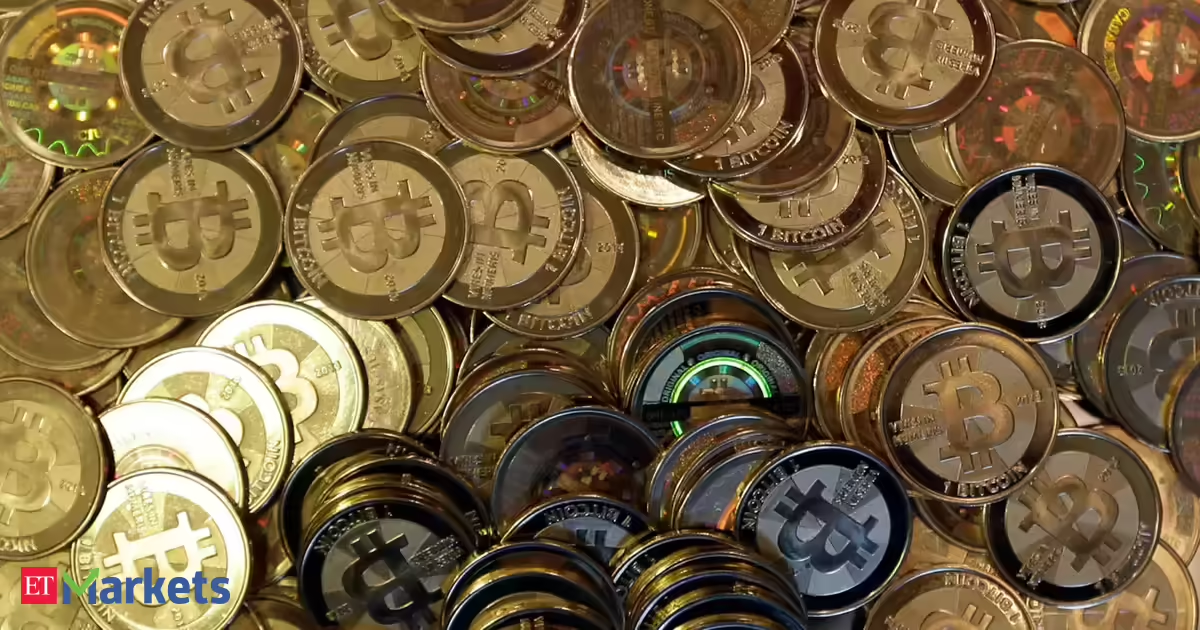
The largest cryptocurrency climbed as much as 2.4% to $74,945, its highest since March 17, before paring gains to trade around $74,400. Smaller tokens also advanced, with Ether up 5.5% to over $2,370.
The moves followed President Donald Trump’s claim that Iran had reached out to his administration for potential peace talks, even as the US began a naval blockade of the Strait of Hormuz.
Asian stocks also climbed on optimism that a deal would help ease oil prices and boost economic growth.
Since its crash from an all-time high of $126,000 in October, Bitcoin has been trading in a tight range for the past two months.

However, the token has fared better than many traditional assets since the US war with Iran started at the end of February. It is up more than 10% since Feb. 27, while gold has fallen nearly 10%. The S&P 500 index is roughly flat for the same period.
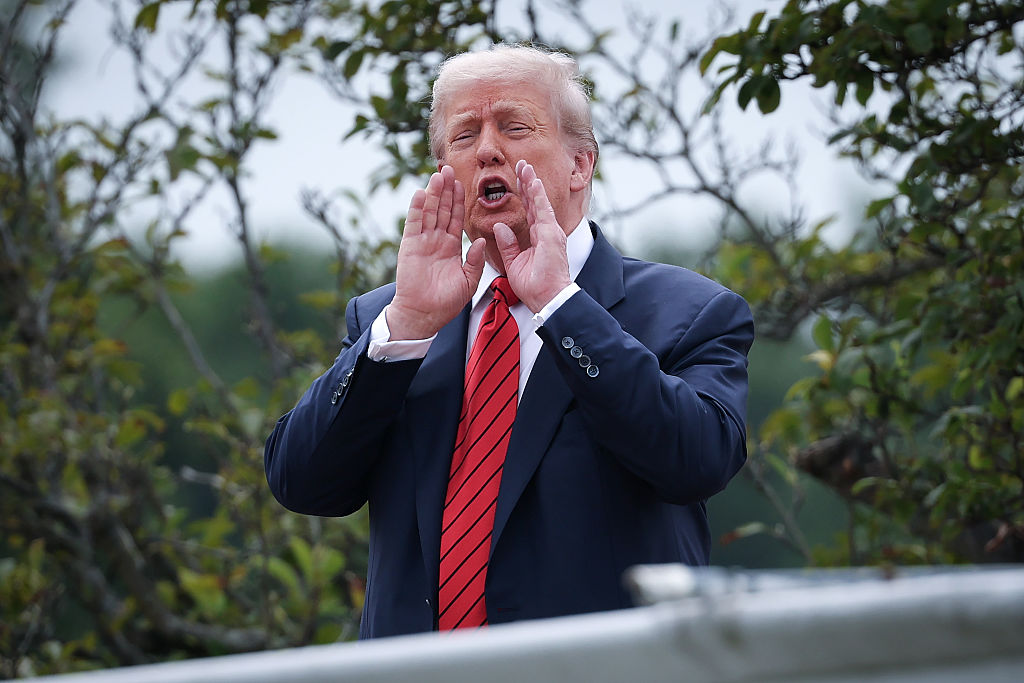

US President Donald Trump has claimed that talks between his country and Iran may resume in the coming days.
The revelation was made by a New York Post reporter, who said Trump had called her with the news.
US-Iran Talks May Resume
According to a report by The Guardian, the New York Post reporter said that Trump called to say that he had an update on the situation.
“You should stay there, really, because something could be happening over the next two days, and we’re more inclined to go there,” Trump said.
Trump also sang praises for Pakistan’s army chief, Field Marshal Asim Munir, who is arranging the talks, saying that Munir is doing a “great job.”
“He’s fantastic, and therefore it’s more likely that we go back there,” said the US President.
According to The Guardian, a Pakistani official said that talks may resume soon, but it may take longer than Trump expected.
US Continues Strait of Hormuz Blockade
The update comes as the United States continues its blockade of the Strait of Hormuz. According to the BBC, more than a dozen US warships are now implementing the blockade.
The blockade is believed to be targeting Iran’s oil revenue as well as the significant amount the Middle Eastern country is making from charging tolls.
However, the BBC notes in its report that at least four Iran-linked shipping vessels were able to cross despite the blockade.
China has spoken out against the blockade, calling it “dangerous and irresponsible.”
The country went on to say that the move would only “exacerbate tensions and undermine the already fragile ceasefire agreement.”

Binance founder Changpeng ‘CZ’ Zhao sheds light on his book, ‘Freedom of Money,’ as well as his interactions with Sam Bankman Fried and Gary Gensler during an interview with FOX Business’ Charlie Gasparino.
Changpeng Zhao, better known as CZ, is a survivor.
A childhood of poverty in China. Flipping hamburgers to pay his way through college before the self-described computer nerd entered the cutthroat world of high-frequency trading.
Soon came his nascent bet on something called bitcoin, the first and most popular decentralized digital asset, the creation of the world’s largest crypto exchange, Binance, navigating more than a few crypto winters, plus a stint in jail after being targeted during what many believe was the Biden administration’s over-zealous crackdown on all things crypto.
CRYPTO EXPERT EXPLAINS WHY BITCOIN MAKES ‘PERFECT RECORD’ FOR TRACKING DOWN CRIMINALS
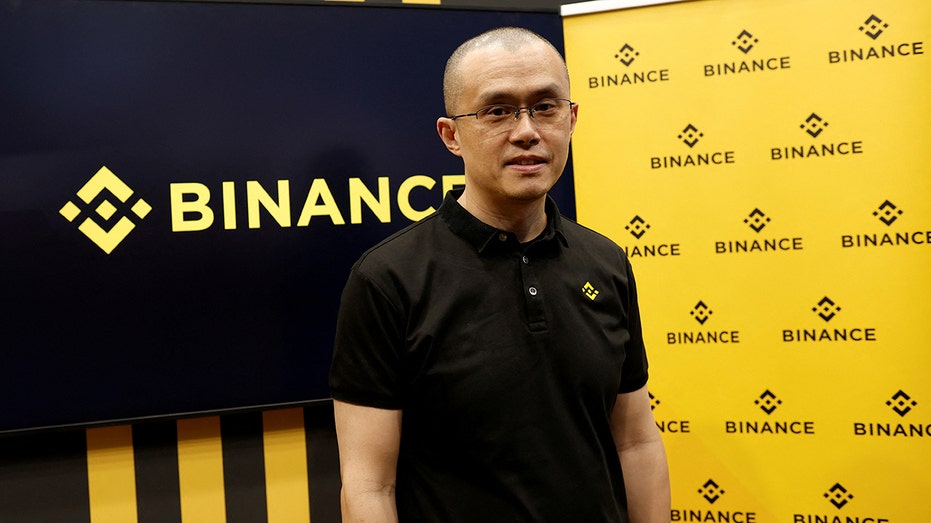
Changpeng Zhao, founder and chief executive officer of Binance, attends the Viva Technology conference dedicated to innovation and startups at Porte de Versailles exhibition center in Paris, France, on June 16, 2022. (Benoit Tessier/Reuters)
His new book, “Freedom of Money,” details his life journey, a survivor’s tale, he tells me in an exclusive interview for FOX Business. The book explains how he is still standing, quite nicely, I should add, following a pardon from President Donald Trump and with his enormous net worth estimated at more than $100 billion.
CZ is no longer with Binance, having left when the feds came calling back in 2023, though he remains its largest shareholder. Now a free man, he is looking to be a thought leader for the crypto business. “Freedom of Money,” will certainly help in that regard.
Binance founder Changpeng Zhao speaks to FOX Business’ Charlie Gasparino on politics and crypto, Larry Fink’s transformation regarding crypto, the adoption of the technology and more.
Those looking for stylistic prose in this 364-page tome will be disappointed. English isn’t CZ’s first language, of course, and he wrote this book in federal prison, he said, which is no easy task.
COINBASE CEO: BIG BANKS ARE TRYING TO ‘KILL THE COMPETITION’ THROUGH CRYPTO REGULATION
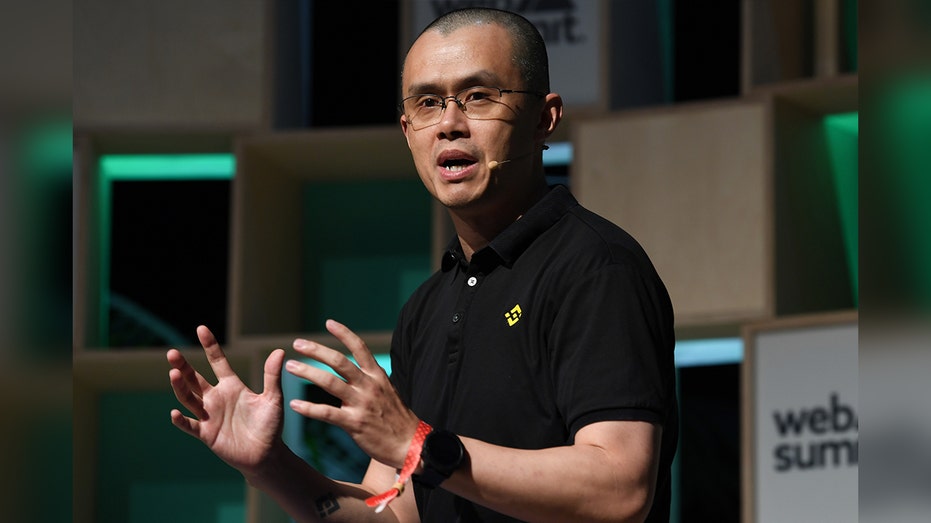
Binance founder Changpeng Zhao. (Zed Jameson/Bloomberg )
“There’s a terminal… You can get on there for 15 minutes. You can type, [but] there’s no cut and paste… if you cut one paragraph and want to move it to a different place… So, I just do a brain dump. Just type as fast as I can, and then I have to get off, and I wait for an hour to get back on the computer.”
That said, this is a book worth reading for the simple fact that CZ explains the rise of crypto (it’s now a $3 trillion business being embraced by the biggest banks and financial firms in the world) as well as his own journey in a clear, relatable narrative. He name-drops a ton, which is where this book shines, particularly his description of his last meeting with another famous crypto player known by his initials.
SEN RICHARD BLUMENTHAL: CRYPTO IS A GAMBLE OUR FINANCIAL SYSTEM DOESN’T NEED
That would be SBF, or Sam Bankman-Fried, the founder of the now-defunct FTX crypto exchange serving a 25-year sentence after being convicted of multiple fraud charges tied to the collapse of his company, when $8 billion in customer funds went missing. In CZ’s telling, as FTX was imploding, SBF came to him hat in hand for a loan in such a way that made him think something was up, and it wasn’t good.
Binance founder Changpeng ‘CZ’ Zhao discusses going to jail, his pardon by President Donald Trump, the Biden administration’s war on crypto and more during an exclusive interview with FOX Business’ Charlie Gasparino.
“He was just like he was just mumbling, like, can you give me a billion or whatever?” CZ tells me. “We’re talking about billions, right? I would expect him to say, look, I needed 4.387 billion, right?… He was like, it’s two, six is four. I was like, what’s going on? I think there was a lot of lying involved.”
CLICK HERE TO GET FOX BUSINESS ON THE GO
CZ decided against the loan, and not long after FTX went bust, as did SBF’s career.

Former FTX CEO Sam Bankman-Fried arrives for a bail hearing at Manhattan Federal Court on Aug. 11, 2023 in New York City. (Michael M. Santiago/Getty Images)
CZ would face his own issues. In my interview, he explains the charges against him, the Biden administration’s approach to regulation – why he thinks it went so hard against crypto and how former SEC Chairman Gary Gensler went from an industry supporter to what he believes is an adversary – and his controversial pardon by Trump.

Rival heirs are entitled to Gina Rinehart-led Hancock Prospecting’s iron ore royalties over some mining tenements in the Pilbara, the state’s highest court ruled.


Britain’s Prince Harry speaks of struggles of fatherhood on Australia tour


Incoming Bank of Korea chief signals potential for hawkish shift amid surging import costs

HAL Trust: Still Trading At A Discount

Goldman Sachs files for Bitcoin Premium Income ETF

Charlize Theron’s Raunchy, R-Rated Western Is The Closest Thing You’ll Get To Blazing Saddles

Why Israel is blocking foreign journalists from entering

Bitcoin: We’re Entering The Most Dangerous Phase

Alan Cumming Brands Baftas Ceremony A ‘Triggering S**tshow’

Will Bitcoin Skyrocket When Iran War Ends?

Financial crises agya h.kya apne Emergency fund bnaya h ya nahi? #Financetips #Emergencyfund #shorts

Would you be interested in working with the FBl’s Financial Crimes Unit? | #catchmeifyoucan
-

 Politics4 days ago
US brings back mandatory military draft registration
-
 Sports4 days ago
Man United discover Nico Schlotterbeck transfer fee as defender reaches Dortmund agreement
-

 Fashion4 days ago
Weekend Open Thread: Veronica Beard
-

 Politics5 days ago
Malcolm In The Middle OG Turned Down ‘Buckets Of Money’ To Appear In Reboot
-

 Politics3 days ago
World Cup exit makes Italy enter crisis mode
-

 Crypto World6 days ago
Canary Capital Files SEC Registration for PEPE ETF
-

 Business4 days ago
Tesla Model Y Tops China Auto Sales in March 2026 With 39,827 Registrations, Beating Cheaper EVs and Gas Cars
-

 Crypto World1 day ago
The SEC Conditionalises DeFi Platforms to Be Avoided for Broker Registration
-

 Crypto World1 day ago
SEC Signals Exemption for Crypto Interfaces From Broker Registration
-

 Crypto World7 days ago
Bitcoin recovers as US and Iran Agree a Ceasefire Deal
-
 NewsBeat2 days ago
Pep Guardiola and Gary Neville agree over Arsenal title problem that benefits Man City
-

 Business5 days ago
OpenAI Halts Stargate UK Data Centre Project Over Energy Costs and Copyright Row
-

 Business3 days ago
Ireland Fuel Protests Enter Day 5 as Blockades Spark Shortages and Government Prepares Support Package
-

 Politics5 days ago
LBC Presenter Mocks Trump Over Iran War Failures
-

 Crypto World4 days ago
Federal judge blocks Arizona from bringing criminal charges against Kalshi
-
 NewsBeat3 days ago
JD Vance announces ‘no agreement’ with Iran over nuclear weapons fear
-

 Tech5 days ago
A version of Windows 10 released a decade ago is now eligible for additional security patches
-

 Crypto World22 hours ago
SEC Proposes Certain Crypto Interfaces Don’t Need to Register as Brokers
-

 Business4 days ago
IMF retains floor for precautionary balances at SDR 20 billion
-

 NewsBeat18 hours ago
Trump and Pope Leo: Behind their disagreement over Iran war
You must be logged in to post a comment Login