

Politics
Martin Lewis Clashes With Kemi Badenoch Over Student Loans

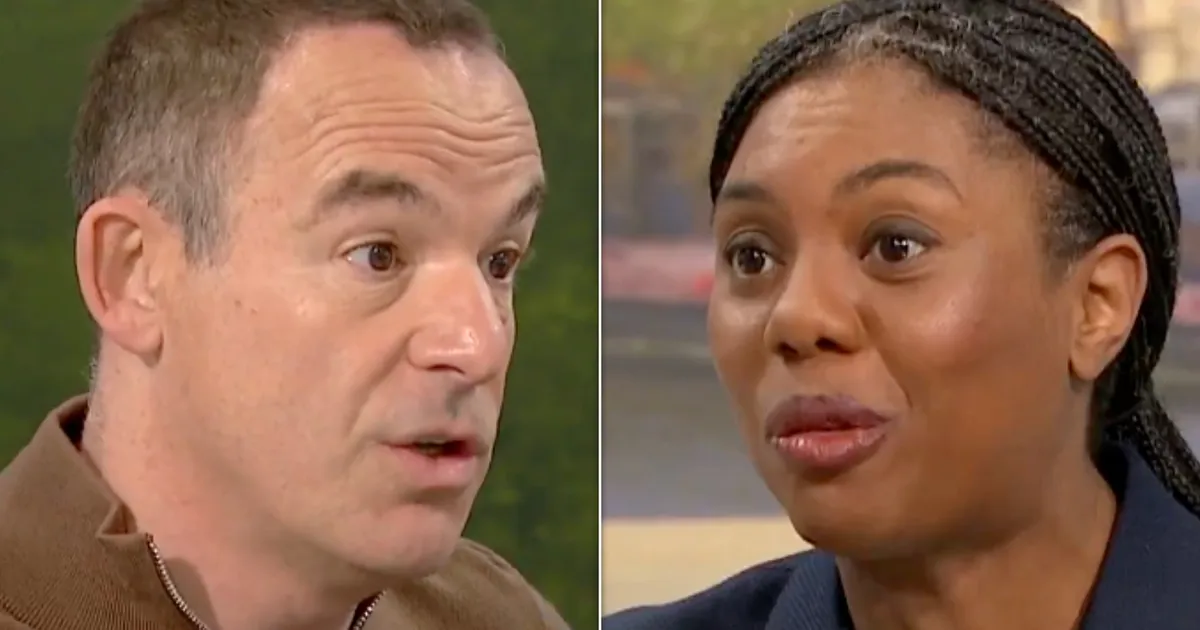
Martin Lewis clashed with Kemi Badenoch on live TV over her plan to help graduates struggling to pay back their student loans.
The Tory leader has said her party would freeze the interest rates currently being charged in an attempt to bring down repayments.
But appearing on ITV’s Good Morning Britain, Badenoch was challenged by Lewis, the programme’s resident financial expert.
As presenters Ed Balls and Susanna Reid looked on, Lewis walked onto the set to confront the Tory chief directly.
He told her: “If you want to help the middle-earning students, the most important thing is the repayment threshold should have been increased.”
That was a reference to chancellor Rachel Reeves’ controversial decision in last year’s Budget to freeze the threshold, thereby dragging more graduates into the punishing repayment scheme.
Badenoch hit back: “Martin, this is exactly why young people are suffering.
“We’ve got lots of people who have finished university, where they didn’t have to pay fees, didn’t have to take out loans, and now you’re all saying nothing can be done.
“I’m the first person who’s even tried to solve this problem.”
Lewis interrupted her to say: “Shall we have a chat about it because I think you’ve got the right idea, but this is not a solution that will help middle and lower earning students.”
As Ed Balls then asked whether a middle earning graduate would benefit from the Tory plan, Badenoch said: “You’re both talking over me – excuse me. Let me explain what my policy is.
“I want to make sure that those young people who are paying and paying and their debt is not going down get a relief. If you think there’s a better offer, let’s look at it.
“But what’s made the difference now is that in her Budget, Rachel Reeves increased the number of people getting in because the threshold has been frozen. I don’t think this is fair.
“The whole student loan system is not working properly, someone has to do something. And the thing that shocks me is the minute I say ‘let’s do something’, everyone says ‘oh no no no, this in not right’. We are going round in circles.”
But Lewis told her: “If you have a billion pounds to help students, the most direct thing that would help all students would be not freezing the repayment threshold, it would be increasing the repayment threshold.”
Later in the interview, the Tory leader said: “What is the problem now is that any time someone says ‘well let’s look at this, there’s always someone – sometimes it’s Martin – who says ‘oh that’s a terrible idea’ and then nothing happens.
“Nothing is happening. No one is helping these people and I’m coming out with some ideas and with some solutions.”

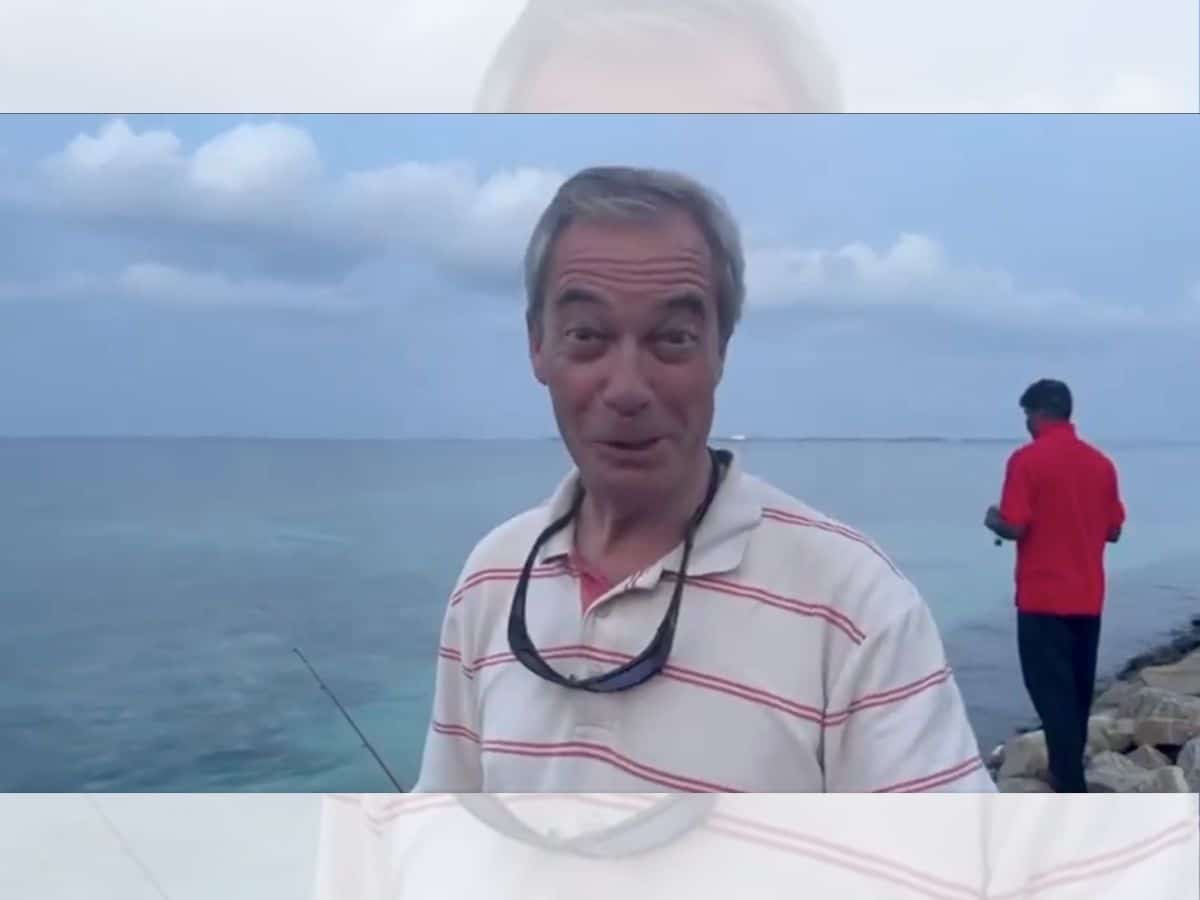
A confused Nigel Farage has kicked up a fuss because a UK military base isn’t letting in any old Tom, Dick, or Harry (with a big emphasis on ‘Dick’) wander about as they please:
Oh poppet, it’s a military base. Why did you think you could visit? It’s not a destination for your holibobs. https://t.co/J4hvYmQiM6
— Jess Brown-Fuller MP (@JessBrownFuller) February 21, 2026
Farage: grandad’s confused again
Do we think the UK should have military bases on the other side of the world?
No, of course not.
We’re not ‘Britain First’ types, but we do think our focus should be on improving our own isles and not worsening other people’s.
That said, here’s what a confused Farage said in the video above:
The British government are applying pressure on the president and the government of the Maldives to do everything within their power to stop me getting on that boat and going to the Chagos Islands.
Now if I was an ISIS fighter crossing the Channel to Dover, they wouldn’t give a damn. No, they put me in a hotel, they give me three meals a day. But here I am, a Member of Parliament, leader of a political party that’s topping the polls. The British government, the High Commissioner here, they’re doing everything they can. They’ve got search parties out trying to find me and they do not want me to leave this place. Quite why?
‘Do you know who I think I am?’ the man cries.
So this is how security clearance would work under Farage – bigshots like him would get to go wherever they like. We’re not sure you can run your military bases like that, but hey – it will be funny to see it in practice.
Farage also said:
If we do give away the Chagos Islands, already the Indians have cut a very substantial economic deal with Mauritius. We know that China is deep in Mauritius. There’s even a smart city there. Huawei do the communications. There will be a geopolitical battle for this part of the world, which has been settled ever since the end of World War II.
Again, we’re not ‘Britain First’, but why do we need to be thinking about this?
This is literally Asia’s business; we have our own problems to worry about.
When we cover global conflicts like Israel’s genocide, the reason we’re doing so is because our government is contributing to the misery, and we don’t want to see our taxes spent like that.
Farage should tell us what he’s going to do for the people of Clacton before he fucks off – yet again – on some globe trotting stunt.
People had some ideas about what Farage is up to anyway:
Let me get this straight: Farage traveled, likely sponsored by another dodgy oligarch, to Maldives claiming he could, from there, go to Chagos which is a restricted territory, therefore having to spend time in Maldives instead? Oh, what a shame. pic.twitter.com/iTDzeU5q0d
— The Finance Guy (@OneFinanceGuy) February 22, 2026
So disappointed that I haven’t been allowed to pretend I give a shit about Chagos islanders while scoring political points and stirring up morons who long for the days of Empire. pic.twitter.com/MyuUfh3xC9
— Parody Nigel Farage (@Parody_PM) February 21, 2026
Globe trotting
Would it really kill Farage to spend a week in Clacton – i.e. his parliamentary constituency?
His inability to be among the people who voted for him is becoming hard to ignore at this point.
Featured image via Nigel Farage

Generally known for being more subdued and uneventful than some of its awards show peers, this year’s Baftas proved to be the exception to the rule, serving up controversy, discourse and a few surprise twists on Sunday night.
Indeed, even an appearance from national treasure Paddington Bear garnered a much more mixed response than you might think.
Following the huge success of the Paddington film series, the iconic British character is currently starring in his own West End show.
And because he was only down the road, Paddington decided to put in an appearance at the Baftas.
Fittingly, Paddington presented the award for Best Children And Family Film, treating the audience to a quick comedy routine. before announcing the winner.
As you’d expect, the moment went down a storm with many viewers:
Others were simply raging at the subdued reaction Paddington’s comedy stylings got from the celebrities in the Baftas audience:
And then there were those who were… well… let’s just go with bemused by Paddington’s latest incarnation:
Paddington: The Musical was penned by Olivier-winning playwright Jessica Swale, with original songs by McFly star Tom Fletcher.
For his stage play, the Paddington character – played by Ben Whishaw in the hit movies – has been brought to life through a combination of puppetry, robotics and animatronics, with James Hameed providing his singing and speaking voice.
Towards the end of last year, the character made a surprise appearance on Strictly Come Dancing to promote his new stage venture:
Meanwhile, One Battle After Another was the big winner at the 2026 Baftas, picking up six awards out of 14 nominations.
Sinners and Frankenstein each picked up three awards – including an acting nod for the former’s Wunmi Mosaku – while Hamnet and I Swear scored two.
Jessie Buckley and Robert Aramayo were awarded Best Actress and Actor, respectively, while Sean Penn was the surprise recipient of Best Supporting Actor, a title which has previously gone to Jacob Elordi and Stellan Skarsgård earlier this awards season.
Politics
Max Thompson: Britain is on course for a blasphemy law by the back door, and a recent case might open it

Max Thompson is Campaigns Officer, for the The Free Speech Union.
If the Crown Prosecution Service gets their way, we could very well be living in a country with an Islamic blasphemy law.
Last February, Hamit Coskun burned a Quran outside the Turkish consulate in Knightsbridge in a one-man protest against what he perceives as the Islamification of his home country, Turkey. As he shouted, “Islam is the religion of terrorism”, a religious fanatic, Moussa Kadri, violently attacked him. He spat at him, kicked him and slashed at him with a blade.
Naturally, one would assume that of the two men, the individual wielding a knife on the streets of London would face the full force of the law. Instead, the attacker avoided jail time, while Hamit — a man who had fled persecution in Turkey — was convicted of a religiously aggravated public order offence. Little has been said about the Deliveroo rider who reportedly joined in the assault.
Burning a holy scripture — any holy scripture — is undoubtedly controversial. But it is not illegal.
Just because something offends polite society does not make it a crime. This case goes to the heart of freedom of expression and protest — and to the proper limits of the criminal law.
Parliament abolished blasphemy laws in England and Wales 18 years ago, under the last Labour government. Scotland followed suit in 2021 through the Hate Crime and Public Order (Scotland) Act. The last execution for blasphemy in Britain took place in 1697. We rightly regarded such laws as relics of a less tolerant age.
It is also worth remembering that Britain’s historic blasphemy laws protected Christianity alone. Yet we now stand on the cusp of something altogether different: a de facto Islamic blasphemy code that would silence criticism of Islam and its practices. And it is emerging not through Parliament, but through the combined and intentioned actions of the Labour government and the Crown Prosecution Service.
In October, it appeared that some rare common sense had prevailed. Mr Justice Bennathan overturned Hamit’s conviction, recognising that while his actions may have been deeply upsetting to Muslims, freedom of expression “must include the right to express views that offend, shock or disturb.”
The Crown Prosecution Service was not prepared to leave it there.
The CPS has sought to overturn that ruling on appeal. The stakes could not be higher. If the Crown succeeds, it will effectively revive Britain’s blasphemy laws. It will send a message that criticism of Islam, even in the context of political protest, may be treated as criminal if it causes offence. Most concerningly of all, it will signal to religious fanatics that should they wish to violently enforce the Islamic blasphemy code, they can do so with the nod of the CPS.
It is inconceivable that someone would be prosecuted in Starmer’s Britain for setting a copy of the Bible alight – a point that the then Shadow Justice Secretary Robert Jenrick articulated last year when he questioned whether the CPS would even bat an eyelid should someone have burnt a Torah scroll outside the Israeli embassy or a Bible outside the Apostolic Nunciature. The principle must be consistent. The law cannot operate on different standards depending on the religion concerned.
In what may be the most damning indictment of all, senior figures in the Trump administration have indicated they would consider granting Hamit Coskun political asylum should his conviction ultimately stand. The notion that Britain — the birthplace of free speech— could produce its first free speech refugee is a damning indictment of Keir Starmer’s government .
Hamit himself has said that if he loses, he will have no choice but to flee once again — this time across the Atlantic. If he wins, it will set an important precedent affirming that freedom of expression in this country still means something.
But even if the CPS loses, the broader direction of travel remains troubling.
A blasphemy law may yet arrive in another form — through the Government’s proposed official definition of “anti-Muslim hostility”, formerly branded as Islamophobia. This ever-expanding definition is expected to include concepts such as racialisation and prejudicial stereotyping. However well-intentioned, such elastic language risks having a chilling effect on free speech and silencing legitimate debate on issues ranging from Islamist extremism to the grooming gang scandal.
Perhaps most alarming of all is the composition of the working group tasked by Angela Rayner with drafting this definition. An investigative briefing by the Free Speech Union found that all five members appointed to the group have had connections to Islamist-linked organisations, including the Muslim Council of Britain (MCB) and Muslim Engagement and Development (MEND). That alone warrants serious scrutiny.
Britain abolished its blasphemy laws because they were incompatible with a free society. We understood that beliefs — religious or otherwise — are not entitled to protection from insult, however distasteful.
If the CPS appeal succeeds, we will have taken a decisive step backwards.
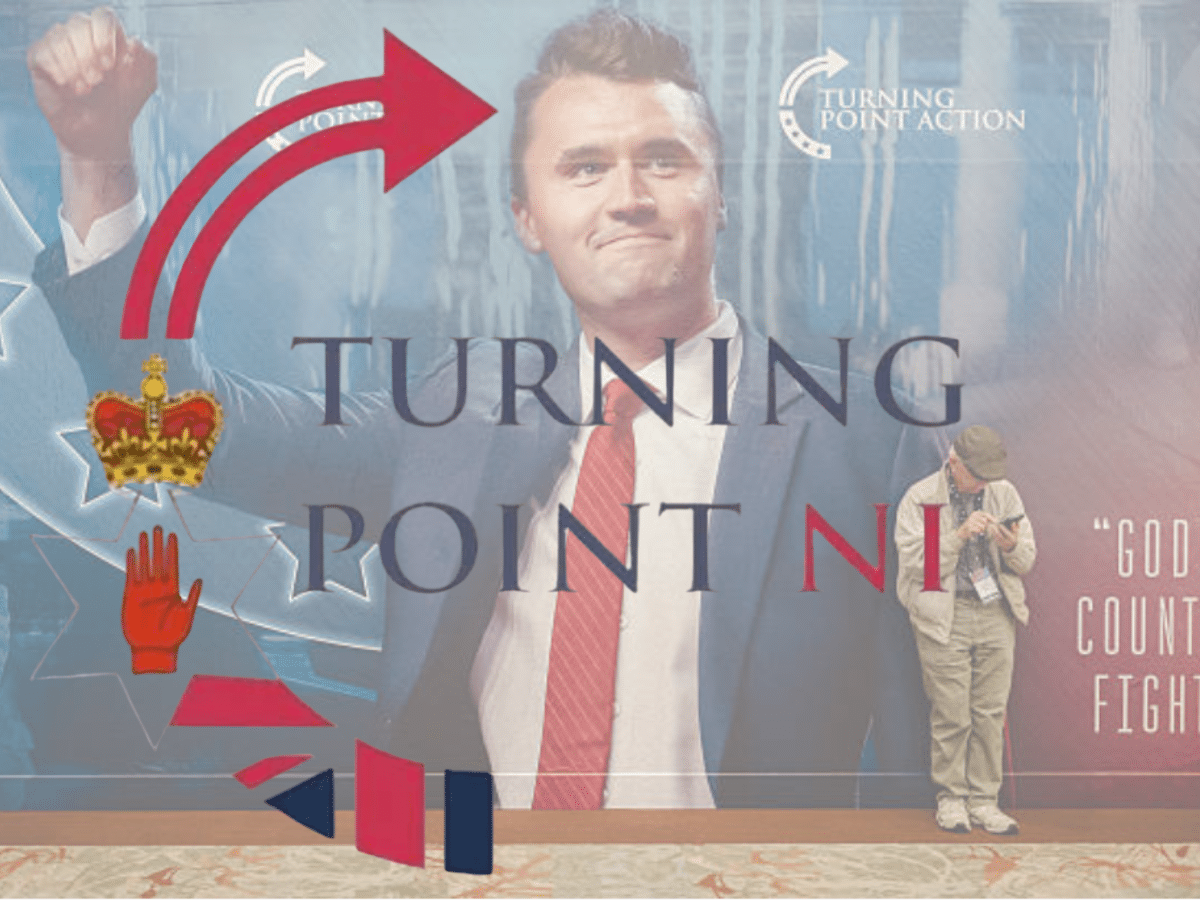
A spokesperson for Turning Point (TP), the right-wing US movement founded by the assassinated demagogue Charlie Kirk, has reiterated the organisation’s desire to bring its particular brand of bile to Ireland. The chief executive of Turning Point UK, Jack Ross, was speaking to the Sunday Times where he claimed that TP has “a lot of interest from Irish people“.
Ross tried to distance the organisation from the far-right by saying:
I know you’ve got some crazies down there — some sort of white-nationalist types — which we’re not interested in. But certainly Fine Gael: that’s what we’re looking for.
Despite this, he went on to advocate exactly the sort of views and tactics used by the worst reactionaries in Ireland:
There’s a real effort to bury the hatchet between the two communities and unite to respond to common grievances such as Islamist terror or, particularly in Ireland, mass migration.
US hate group hope to push far-right narrative
By “two communities”, he is referring to the Catholic, nationalist, republican (CNR), and Protestant, unionist, loyalist (PUL) groupings, mainly in the north. While the far-right has been primarily associated with loyalists, recently fascists have been seen turning up to rallies with tricolours to try and push exactly the narrative Ross describes.
Fine Gael don’t quite fit the bill for what he seems to be after there, but Turning Point organisers will no doubt approve of their lack of redistributive policies, landlord boosting, and slavishness before US big tech and militarism.
The Belfast Telegraph had previously reported Erika Kirk’s intention to visit the North of Ireland. She is the widow of Turning Point founder Charlie Kirk, who was murdered in September at a university in Utah while giving an outdoor talk.
The chances of the now CEO of the conservative grifters getting round the Six Counties uninterrupted seem pretty slim. Turning Point have typically focused on universities, and Queen’s University in Belfast has seen frequent protest of late. The socialist feminist group ROSA North have declared that Kirk’s visit “cannot go ahead without challenge“.
Her main backer thus far seems to be former Democratic Unionist Party (DUP) MP Ian Paisley Jr, who said:
…it would be most welcome [as it was] creating a space where difficult things can be said and debated.
Turning Point look to continue Charlie Kirk’s ugly legacy
Translation: I’d like someone to join me in saying toxic, hateful shit. Charlie Kirk was certainly a specialist there. Shortly after his death, the Guardian did a good job listing his odious views. These include the following quotes:
– If I see a Black pilot, I’m going to be like, boy, I hope he’s qualified.
– Happening all the time in urban America, prowling Blacks go around for fun to go target white people, that’s a fact. It’s happening more and more.
– Reject feminism. Submit to your husband, Taylor [Swift]. You’re not in charge.
– The great replacement strategy, which is well under way every single day in our southern border, is a strategy to replace white rural America with something different.
– We’ve been warning about the rise of Islam on the show, to great amount of backlash. We don’t care, that’s what we do here. And we said that Islam is not compatible with western civilisation.
The attempt to export the Turning Point model to Britain has largely been a flop. The fact its UK head Jack Ross seems pretty clueless about Irish politics bodes well for it making a balls of things on the other side of the Irish Sea too. The Sunday Times quizzed him, finding that when he was:
Asked about prospective candidates, Ross said his “knowledge of Irish politics isn’t the best”, so he would not be able to “name names”.
The malign influence of the US is already present to an excessive degree in Ireland, from toxic fast-food, to mind-numbing reality TV, through to tax dodging big tech, and neutrality wrecking militarism. We can do without the grifter Erika Kirk adding to that with the foul stench left from metaphorically dragging her husband’s corpse round this island.
Featured image via the Canary


Credit: Adobe
Counterfeit and unapproved medicines sold outside the regulated supply chain are a growing threat to public health. Lilly is working with authorities to tackle the illegal trade and support public education.
This article has been paid for and developed by Lilly UK.
The digital world offers convenience and connectivity, including access to healthcare. However, it has also enabled the rise of the illegal trade in medicines,1 which generates up to $200bn a year globally in illicit proceeds.2 Legitimate medicines are rigorously tested and evaluated before they are approved, and patients obtaining medicines through legitimate channels have assurances that they are receiving genuine medicines.3 Whereas medicines from unregulated sources like social media have no safety controls4 and may contain incorrect ingredients or doses or harmful contaminants.5
New Ipsos research commissioned by Lilly UK suggests that around one in ten UK adults* have considered purchasing prescription‑only medicines without a prescription.** The research suggested the main drivers for this are: convenience, lack of time to attend healthcare appointments, and discomfort when engaging with healthcare professionals.6
The need for concerted action is clear.
On 11th March, Lilly will host a parliamentary event, Safeguarding Health: Combatting Counterfeit Medicines in the UK, to discuss challenges and solutions to tackle trafficking in medicines. Interested parliamentarians can RSVP via [email protected].
We believe every patient deserves real, UK-approved medicine, not a dangerous imitation. To support the campaign and constituents:
- Attend the event to hear directly from key stakeholders and share constituency insights.
- Support the work of the MHRA’s enforcement capabilities and improved intelligence sharing by the pharmaceutical industry to take action against illicit online sellers.
- Raise public awareness of the risks associated with purchasing medicines from unregulated sources and encourage the safe purchase of medicines online.
Trafficked medicines are a growing threat to public health. We are ready to partner with stakeholders to take action.
CMAT-08170 February 2026
* This finding is based on 403 respondents to an online survey conducted in the UK with a sample of n=2,000 individuals aged 18-75 years old, plus an additional sample of n=2,000 individuals aged 18-60. Participants were recruited from access panels. Weighting has been applied to align the sample to ensure national representation with the known population profile. Fieldwork was conducted from 30th October – 17th November 2025
** Following an in-person or virtual healthcare professional consultation
References
- World Health Organisation. Substandard and falsified medical products. Available at: https://www.who.int/news-room/fact-sheets/detail/substandard-and-falsified-medical-products [Last accessed January 2026
- Ziavrou KS, Noguera S, Boumba VA. Trends in counterfeit drugs and pharmaceuticals before and during COVID-19 pandemic. Forensic Science International. 2022; 338, 111382.
- General Pharmaceutical Council. Buying medicines online – FAQ. Available at: https://www.pharmacyregulation.org/patients-and-public/standards-you-can-expect-using-pharmacy-services/buying-medicines-online-faq [Last accessed January 2026]
- MHRA. MHRA seizes 7.7 million doses of illegal medicines and removes hundreds of illegal online listings as part of Operation Pangea. Available at: https://www.gov.uk/government/news/mhra-seizes-77-million-doses-of-illegal-medicines-and-removes-hundreds-of-illegal-online-listings-as-part-of-operation-pangea [Last accessed January 2026]
- FDA, Counterfeit medicine. Available at: https://www.fda.gov/drugs/buying-using-medicine-safely/counterfeit-medicine [Last accessed January 2026]
- Eli Lilly and Company. Data on File: Ipsos UK Counterfeit Medicine Consumer Survey. 2026
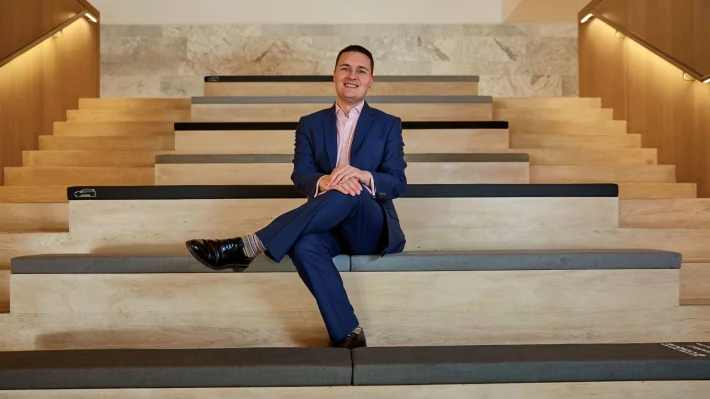
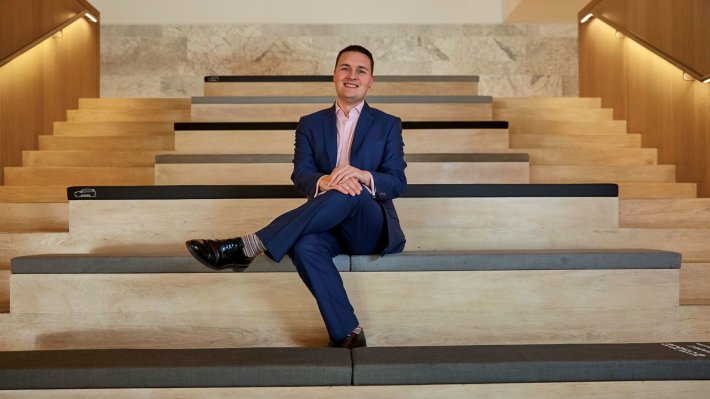
Wes Streeting (Photography by Baldo Sciacca)
17 min read
Is Wes Streeting a details man? What do his days look like? Who does he delegate to? Sienna Rodgers and Zoe Crowther explore how the Health Secretary runs his department
There’s more than one way to skin a cat, and there’s more than one way to run the Department of Health and Social Care.
Some secretaries of state for health have chosen to dive into the detail, immersing themselves in white papers and policy minutiae. Others have preferred to exert control through the press office, gripping the system via the grid.
The House has spoken to MPs, ministers, political advisers and civil servants, as well as health experts and officials, to get an understanding of how Wes Streeting runs his department.
The portrait that emerges is of an intensely political politician – the opposite of a micromanager or a technocrat lost in spreadsheets. Supporters say this has helped him in having a clear view of what needs to be done to transform the NHS. Critics argue he has been distracted by his own broader ambition.
Ready, set, go
Unlike many of his predecessors, Streeting knew he was going to be secretary of state for health for a good period – almost three years – before assuming the role. This gave him the chance, while still a shadow, to consult with previous secretaries of state and permanent secretaries.
“He used the access talks a lot,” says a source who works with Streeting, referring to meetings between the Civil Service and opposition party in the run-up to a general election.
“But when you go in the day after an election, it’s different. The thing he did to set his seal on day one was say: ‘The NHS is broken.’ That was a dramatic input, which nobody in the department expected to happen. And nobody had come in as secretary of state saying that before.”
Streeting was also confronted on his first day with a vastly different situation to that encountered by any previous Labour health secretary: the department he heads no longer runs the NHS – that is NHS England’s job. Those responsible for NHS waiting times, for example, are not found in the department.
“For every meeting he has with the department, he has to have another with NHSE – sometimes two separate meetings and sometimes he has to construct joint meetings. Over the first six months, he realised that was clearly not working,” recalls the same source.
So, with DHSC not able to pull levers in the way other departments of state can, unwinding the Lansley reforms became a priority for Streeting. This culminated in Keir Starmer’s March 2025 speech announcing that NHS England would be abolished and its responsibilities brought in-house over a two-year transition period.
Another well-placed source agrees that Streeting has found the “invisible barriers” to getting things done in government – the subject of complaints by former No 10 head of political strategy Paul Ovenden and other departing spads – “harder than most”.
“He has struggled to get his priorities through,” they say. “He’s a very sharp guy. But when he came in, after getting his own way on policy in opposition, he was shocked about needing Treasury sign-off… It was a rude awakening.”
Streeting had a difficult start in terms of Civil Service churn, the source points out, with long-serving permanent secretary Sir Chris Wormald being lost as he was chosen by Starmer to be cabinet secretary (before being forced out after just a year in post). Chris Whitty was an interim (“as brilliant a mind as that man has, he’s not a permanent secretary”), then Samantha Jones – formerly of Boris Johnson’s No 10 – became the permanent successor last year.
“It’s been a period of big and fast change. I don’t think he would see that as a bad thing but as necessary,” a source close to Streeting remarks.
Streeting welcomed a totally new leadership, including Alan Milburn as lead non-executive director of DHSC (referred to as “the brain of the department’s policy output” by one source), Sir Jim Mackey as chief executive of NHSE and Dr Penny Dash as chair of NHSE. “That has really helped turn things around – the right people in the right jobs.”
A day in the life
Every day in Streeting’s ministerial life is different, but it always begins bright and early. He gets the car in at 5.45am if he is going to the gym, or half past six if he is not. The red box is worked through in the back seat and again at his desk in Victoria Street.
Mondays are for planning the week ahead and delivery meetings. Performance data is reviewed with his private office, departmental officials and NHS leaders. Over the last few months, with pressures intensifying, there have been weekly winter sessions. If a target is off track, he wants to know why.
Tuesdays bring Cabinet and external meetings. Once a fortnight, Streeting blocks out time to meet what he calls “the victims of the NHS” – maternity campaigners, families caught up in care failures, relatives of patients who have died after systemic errors. A source close to Streeting says he was advised by the department not to meet with victims of the maternity scandal, nor to set up inquiries into such failings, on the basis that it would set an undesirable precedent, but he has gone ahead regardless.
Wednesdays are for the longer-term agenda, such as negotiations with the British Medical Association. On Thursdays, he tries to get out of Westminster, visiting hospitals, GP surgeries and dental practices. Fridays are for Ilford North – a constituency day, as is typical for all MPs at the end of the week. Weekends are often spent campaigning or attending regional party conferences.
The ‘vision thing’
Streeting’s allies say he is clear about what he sees as his job: set the vision and define broad outcomes, then ensure the system delivers it. He believes the department’s power lies in direction-setting and enforcement. His supporters also freely admit that he is intensely political, which shapes everything he does.
“He cares about the details, but he doesn’t let them get in the way of narrative, drive and direction,” says a staffer. “He paints a picture and then leaves it to the Civil Service to deliver – but that’s normal. That’s his job.”
“He is acutely aware of the political context that he operates in, which is really important for getting things through,” adds a different source.
Rarely, if ever, has the same been said about the Prime Minister, who is not deeply rooted in the Labour Party’s factional undergrowth, and is often criticised for his managerial instinct. This facet of Starmer’s style and background is blamed by many observers, near and far, for his problems in Downing Street today.

While Starmer seems irritated by Westminster, Streeting – who cut his teeth in student politics – is animated by it. “He’s political up to his eyeballs,” as one source puts it. This is not always taken as a positive.
Politics so shapes Streeting’s approach, one source tells The House, that he tends to hire politically sympathetic civil servants to his private office. This is disputed by a source close to him who points out that he has brought in people who have worked for Nick Clegg, Gordon Brown and David Cameron; plus Conservative MP Caroline Dinenage was appointed to lead a children’s cancer taskforce, and Tory peer Baroness Blackwood has been appointed to chair the Health Data Research Service.
Their framing is instead that he does not see the job as a technocratic exercise nor as a mathematical formula, but as a mission determined by his values. He has decided, for instance, that savings coming in from NHSE redundancies should be redistributed to health services in areas most in need – rather than to trusts who process patients quickly, which would cut waiting lists faster.
Some question whether Streeting lacks a ‘North Star’, while others say he has a (Michael) ‘Goveish’ focus on projects for short periods. Multiple sources who have worked with him and met him in his role as health secretary say he often does not give the impression he expects to stay in post for the long term.
One Labour source who used to work directly with Streeting when the party was in opposition says they are convinced that he never wanted the shadow health secretary role in the first place – likely preferring a job in which he could be more overtly political.
Labour MPs and health stakeholders describe the post as somewhat of a poisoned chalice. A senior health policy expert who has worked with Streeting and his team says it is “quite a hard bit of government to play politics in, because it’s really hard to secure quick wins”.
“It’s probably the hardest job of all secretary of state positions, because your level of control over things is very, very limited,” they add.
“He can be quite up and down with his satisfaction with how the department is performing, but I think that happens with any health secretary – the job is so stressful. I think it’s second only to chancellor in terms of cabinet positions, which are just the worst,” an insider agrees.
“You’re dealing with the largest employer in Europe, with a budget the size of a small country, and it feels like however much money you throw at it, there’s nothing you can do.”
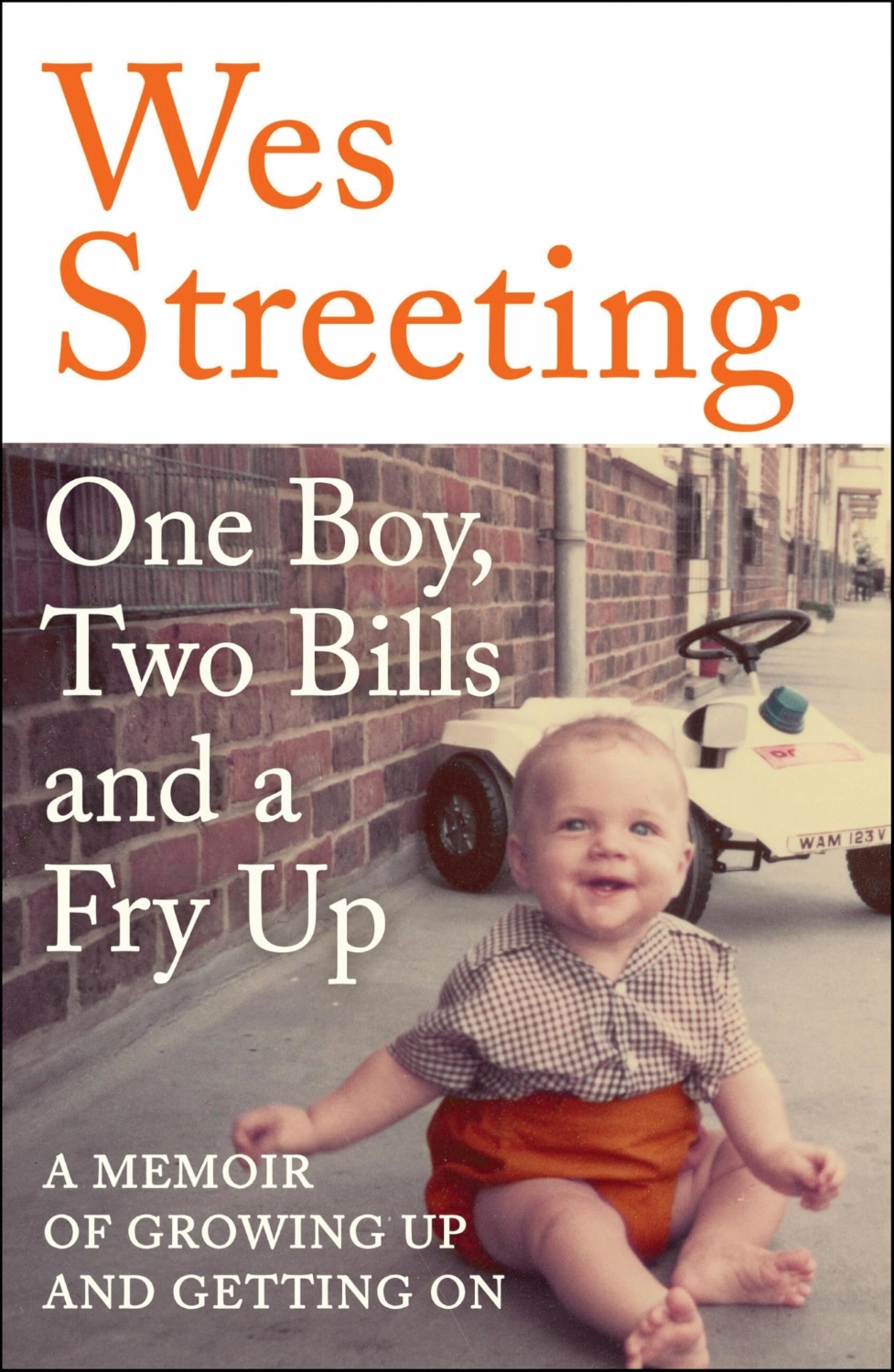 An ally of Streeting counters claims he lacks focus, saying: “Wes has got a North Star around inequalities and opportunities. His whole biography is about that.” (A longtime friend similarly mentions his East End memoir published in 2023, One Boy, Two Bills and a Fry Up, pointing to it as evidence that “his biography is not separate from his politics”.)
The ally draws a comparison between the Health Secretary and Milburn, with neither coming from a privileged background. “Both are driven to improve services for real reasons.”
NHS waiting times are seen as a bureaucratic problem – but Streeting, the source continues, understands that it means millions not knowing what is going to happen to them and when, because the NHS is currently such a “passive” experience. “Politics is about changing the nature of public experiences. Wes has a strong North Star that the NHS is not good enough.”
They add that Streeting being intensely political should be taken as a positive: “We do need politicians to be good at politics. If a perm sec were good at politics, that would be a problem – but for a secretary of state, that’s a good thing!”
Soft landings
The charge that Streeting is “driven by press” surfaces repeatedly. In meetings, say those who attend them, he often reframes technical advice in political terms. If Chris Whitty explains a public health risk in dense epidemiological language, Streeting’s reaction is to test how it would sound on ITV’s evening bulletin.
“You’re sitting around a table talking to him about a complex bit of policy – like the neighbourhood health service – and he’ll start to develop a narrative. ‘How am I going to explain this?’ becomes an important part of forming it. I’ve never seen a secretary of state do that before,” says a source.
Most meetings, reports another insider, eventually circle back to the question: “How will this land?” Some will see this as cynical politicking, but it is not always cited as a criticism. “He knew that communication was half the battle, so it is justifiable from a policy perspective,” the source notes.
Streeting believes a big part of his role is translating expert advice into something the public can understand. As often the only elected politician in the room, surrounded by people explaining why X and Y isn’t deliverable and why Z is at risk of judicial review, it is his responsibility to consider the public’s view of policy and delivery. Taxpayers spend £200bn a year on the NHS – they deserve to know where it’s going, says a source close to Streeting.
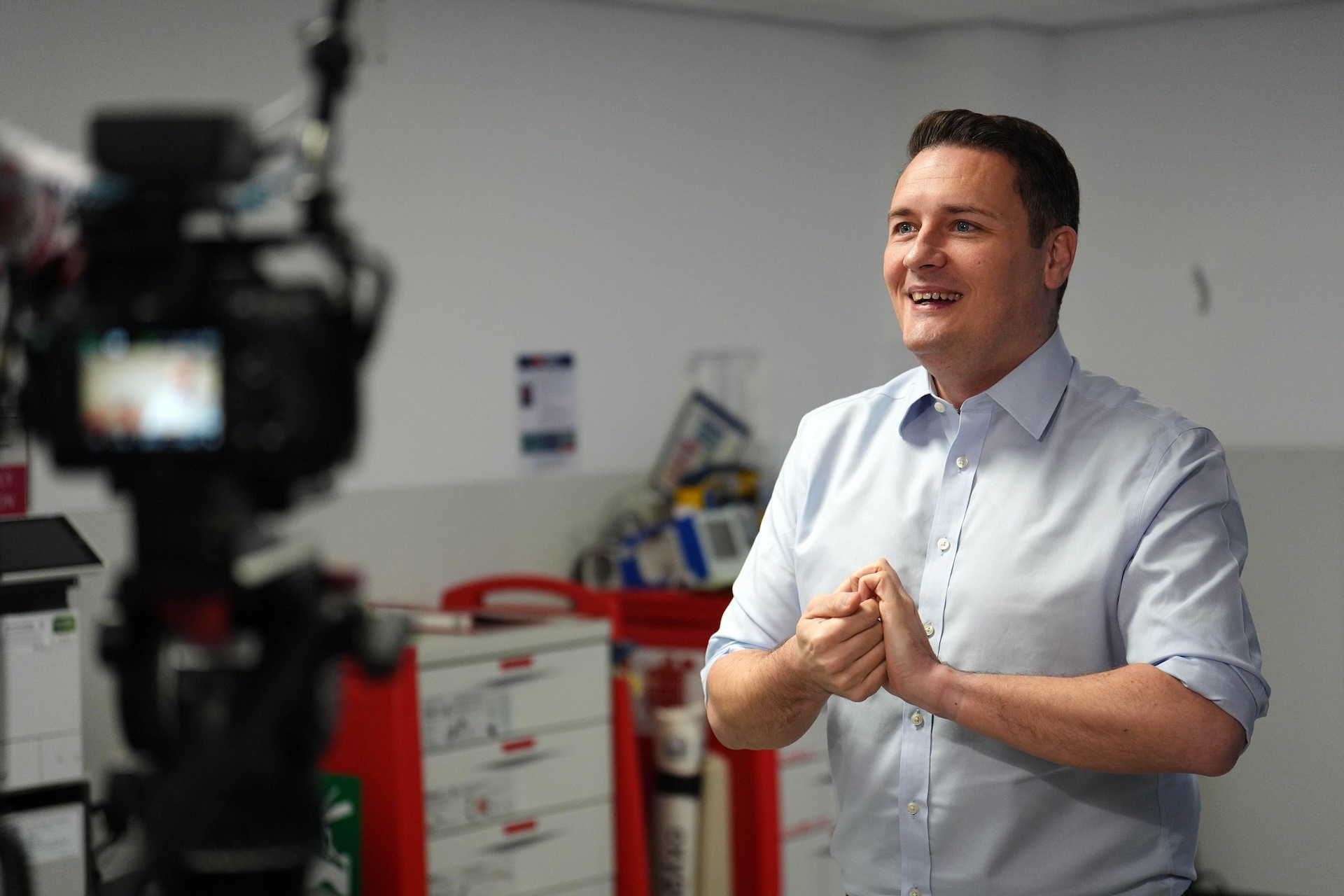
Sources say his interest in the media has produced tangible change, perhaps his most solid win so far: a transformed DHSC communications operation. It was “so inept, so stuck in the noughties”, says one, whereas it is now video-led, quicker off the mark and better at turning dense statistics into usable lines.
The Health Secretary has paired with celebrities, including Geordie Shore’s Vicky Pattison and Jade Thirlwall of Little Mix, wanting to raise the profile of certain health issues. “Getting the machine to put out stuff like that is a result of him and Will [Streeting’s spad] being relentless on comms. It’s made video a primary output, and the department is no longer doing government by press release – a real success,” the same source says.
A Labour MP’s staffer, who notes that Streeting has his own Health and Social Care WhatsApp group for MPs, praises the speed with which his spads reply and how health figures are made easy to translate for a wider audience.
There is a counter-argument, of course. In a department that is permanently firefighting, bandwidth is finite. Some question whether the relentless focus on presentation risks becoming a distraction.
Bonfire of the quango
Streeting’s vision is encapsulated in the 10-Year Health Plan, which is built around three shifts: hospital to community, analogue to digital, sickness to prevention. The Lord Darzi review formed the basis of this intellectual underpinning, particularly in its warning that the NHS lags badly behind the private sector in its use of tech, and it will take a decade for it to reach modern standards.
The Health Secretary wants the NHS app to become the front door of the service. He is hopeful that artificial intelligence tools will free up clinician time and the UK’s life sciences sector will be boosted when it can fully make use of the golden goose that is the UK’s universal health system of 60 million patients.
The biggest gamble of his tenure has been the decision to scrap NHS England and fold it back into the department.
Supporters say the old arrangement had become dysfunctional, with blurred accountability, blocking and leaking making ministers miserable. “Everybody hated it. Policy dreams went to die with NHS England,” says a source.
NHSE staff have been told they will need to apply for jobs in the merged workforce between January and March 2027. There is widespread scepticism about this timeline, however, with many believing it will be pushed back. Senior figures in NHSE are encouraging staff to refer to it as the “New Department for Health” in the meantime.
An NHSE source tells The House they believe energy that could be spent improving services risks being diverted into legislative wrangling and internal restructuring for the next two years.
Hugh Alderwick, director of policy and research at independent charity the Health Foundation, warns that large-scale reorganisations can distract local leaders from improving care.
He also says Streeting’s two major reforms – the NHSE restructure and the 10-Year Health Plan – could conflict with each other. The challenge is that the detail of what the plan means in practice and how it will be delivered is “still thin”, he adds, and “the resources to deliver those reforms are constrained”.
Alderwick believes pressure directly from Starmer to bring down waiting lists could push the Health Secretary towards focusing more on that than “bigger, more fundamental” reform of the health system.
Another looming question is what progress DHSC has made on social care. The government has set up an independent commission, led by Baroness Casey, to look at reform. According to Alderwick, although it could help to “set a vision”, there is a risk it is simply “another commission, which we’ve had a long line of before, that kicks questions of social care reform back into the long grass”.
On the view that Streeting has conflicting priorities, a source defending him responds: “Think tanks say the NHS can’t do two things at once. I find that a bit weird. If you change the machine, they think that’s getting in the way of making the machine work better.”
There are 7.3 million people on elective treatment waiting lists. If we want to reduce the flow in 2027-28, the source says, new tech will be helpful – 20 per cent of dermatological diagnostics can be done initially with a photograph rather than a face-to-face appointment, for example. “That’s a new model of care that can reduce waiting now, not in 10 years’ time.”
But so far, NHSE abolition has been little more than a job-cutting exercise, say critics. A source close to Streeting acknowledges the change has mostly been on headcount so far, but argues this is no bad thing given the level of duplication and how the two organisations were marking each other’s homework. “I’m sure there will be unhappiness. But was the relationship between the two working well beforehand?”
The risk for Streeting is that, by 2029, his major achievements could be seen to amount to having cut the waiting list to the trajectory that it was already being cut in the last months of 2023 under the Conservative government, and ditching a large administrative body whose role the public was unlikely to have recognised.
While the government has achieved a fall in NHS waits for elective care, experts warn that this could prove to be a complicated legacy for Streeting when waiting lists for other services remain high. There is little public understanding of the difference between different types of NHS waiting lists – for example, elective care, diagnosis, or specialist appointments.
What will Streeting’s legacy be? One health expert offers a damning verdict: “The picture will be a person who talked a big game about reform, and talked a big game about transforming the NHS, but didn’t really have the tenacity to see it through.”
A for ambition
Staff describe Streeting as an “empowering” boss. Those who work directly for him have “extreme loyalty” to him, says one: “People stay with him for years. He will always tap into them and work things through with them. That means everyone feels valued.”
They insist that the perception he is driven by ambition for his own career is not borne out by the facts: he has not run away from Ilford North, he has no plans to take out a sitting PM, and he has done the toughest press rounds when the government has been at its lowest.
But that in itself is seen by some as a negative for becoming a revolutionary health secretary.
“You can’t be the guy who shovels the shit for the government at the same time as being the person who is delivering a policy revolution in your department. One thing totally distracts the other,” says a source who knows Streeting well.
“Because he’s got political ambitions elsewhere, Wes has wanted to have views on everything from Palestine to social media bans. That implies to me that you’ve got a secretary of state who is much more interested in the wider political context the department operates in than the infinite number of problems at his doorstep. You only have so much bandwidth.
“I think he’d be the first to admit that he’s been too distracted by what’s going on elsewhere on Whitehall, and too eager to jump in and involve himself in the other stuff going on. But that’s because he’s ambitious – he’s got eyes on the prize.”
Additional reporting by Adam Payne

According to a 2023 study, a high consumption of sugar among older adults appears to be linked to an increased dementia risk.
More recent research published in the journal Neurology has found a link between the high consumption of some artificial sweeteners and dementia risk among under-60s, too.
In the paper, which followed 12,772 adults with an average age of 52 for a mean of eight years, some artificial sweeteners appeared to be linked to faster cognitive decline.
Among the highest consumers, that equalled “about 1.6 years of ageing”.
Which sweeteners were used in the study?
In this research, the scientists looked at the effects of:
- aspartame,
- saccharin,
- acesulfame-K,
- erythritol,
- xylitol,
- sorbitol, and
- tagatose
on participants’ brain health.
Only tagatose did not have a link to faster cognitive decline in this study.
What did the study show?
The researchers asked participants to fill in questionnaires about their diets at the start of the study. They were then split into three groups: low, medium, and high sweetener consumption.
The lower group consumed about 20 milligrams (mg) a day on average, and for the highest group, it was as high as 191mg a day.
They also took cognitive tests at the beginning, middle, and end of the study. These were designed to assess six cognitive factors including memory, word recall, and verbal fluency.
After adjusting for things like age, gender, and blood pressure, this research showed a link between a higher consumption of six low- and no-calorie sweeteners (LNCSs) and dementia risk, especially among under-60s.
Those in the higher-consumption group experienced cognitive decline 65% faster than those in the lowest-LNCS consuming group. The middle group experienced cognitive changes 35% more quickly compared to those who consumed the fewest LNCSs.
“Daily consumption of LNCs was associated with accelerated decline in memory, verbal fluency and global cognition,” the paper read.
This effect seemed to be stronger among those with diabetes.
Study author Professor Claudia Kimie Suemoto said, “While we found links to cognitive decline for middle-aged people both with and without diabetes, people with diabetes are more likely to use artificial sweeteners as sugar substitutes.
“More research is needed to confirm our findings and to investigate if other refined sugar alternatives, such as applesauce, honey, maple syrup or coconut sugar, may be effective alternatives.”
This study only shows a correlation
“Low and no-calorie sweeteners are often seen as a healthy alternative to sugar, however our findings suggest certain sweeteners may have negative effects on brain health over time,” Professor Suemoto shared.
But the researchers themselves said that more research is needed to work out exactly what this data, which only proves an association and not a cause, means.
The NHS said that “all sweeteners in Great Britain undergo a rigorous safety assessment before they can be used in food and drink. All approved sweeteners are considered a safe and acceptable alternative to using sugar”.
The International Sweeteners Association (ISA) shared in a statement that said, “This research is an observational study, which can only show a statistical association, not a direct cause-and-effect relationship.
“The reported link between sweetener consumption and cognitive decline does not prove that one causes the other.”

For years now, UK gardeners have been discouraged from using slug pellets, which can harm wildlife, in their gardens.
After all, only about nine of the 44 species in the UK actually eat your veggies. And their presence in your backyard is key to feeding our dwindling bird population, too.
Still, there’s no denying that the clash between gardeners and munching molluscs continues. Some green-fingered gurus have previously recommended using garlic or tinfoil to help you stand your (literal) ground in these backyard battles; even a melon could help.
And it turns out that when you water your garden matters, too.
Water your garden in the morning to stop slugs in their slimy tracks
According to Gardener’s World, watering your garden in the morning helps to block slugs’ path at night (when slugs tend to eat their dinner).
“This ensures that the soil has dried out by the evening, when slugs are most active. Wet soil at night can create a slug highway between plants,” the publication shared.
The Royal Horticultural Society (RHS) agrees.
“There has been a study that showed that switching from watering in the evening to watering in the morning can provide as much protection as slug pellets,” their site reads.
Indeed, research published in Agriculture, Ecosystems & Environment found that slug leaf consumption over the course of their study was 60% in untreated areas, and shrunk to 12% in both patches watered in the morning and those covered in metaldehyde pellets.
“Morning irrigation thus gave a level of protection against slug damage as good as metaldehyde pellets combined with evening irrigation,” the paper said.
Metaldehyde pellets have been banned in the UK since 2022 because of the threat they pose to wildlife. Most modern pellets rely on lower-toxicity ferric phosphate instead, which kills slugs through iron poisoning, but the RHS maintains that keeping slugs alive when you can is best for your garden overall.
The RHS said that this works because “if you water in the evening, when the majority of slugs are most active, you’ve created a nice wet film that they can happily travel over.”
Water applied in the morning, meanwhile, is mostly gone by nighttime.
How else can I get rid of slugs without killing them?
According to the RHS, encouraging biodiversity in your garden can aid natural slug control. You can also conduct torchlit searches at night to find and manually remove any offending critters.
Some woody, waxy, and generally tough-to-chew plants will repel them, too.
But while the jury’s out on eggshells, copper tape, and pine bark, there does seem to be some data backing a simple morning watering sesh.
If you tuned into the latest edition of The Graham Norton Show, you’ll have been treated to the musical stylings of Dave Grohl and his group, Foo Fighters.
But what you might not have realised at the time is that they were joined by some familiar faces.
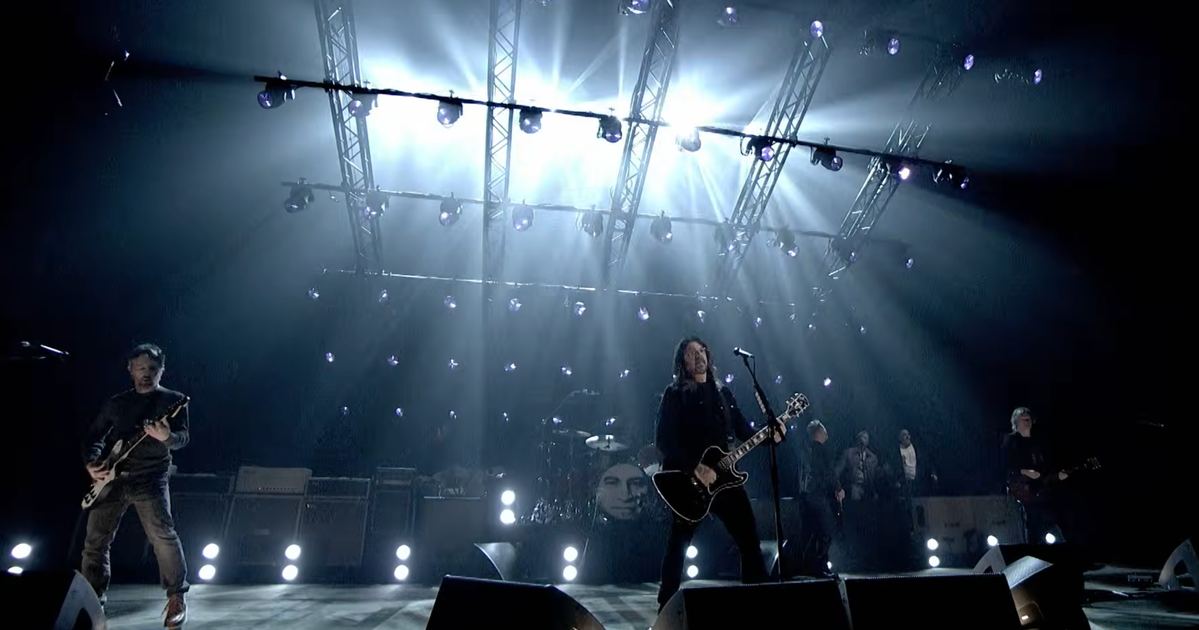
On Friday night, Foo Fighters performed the title song from their next album Your Favorite Toy on Graham’s BBC talk show, after which Dave joined fellow guests Benicio Del Toro, Jennifer Garner, Charli XCX and Gordon Ramsay for a quick chat on the iconic red sofa.
After the performance aired, Jake Shears confirmed that he and his Scissor Sisters bandmate Babydaddy had been drafted in by fellow 2000s music icon Dave to join them for the performance.
“Sometimes you just end up in the Foo Fighters for a night!!” Jake joked. “What is life?! Thank you Foos and Graham for having us. Will never forget it!!”
Meanwhile Babydaddy enthused: “Teenage me’s head just exploded. This guy has been a friend, ally and (insanely) fan for over 20 years now! Dreams come true!”
During his chat with Graham, Dave confirmed that the Your Favorite Toy album will be out in April, and that the UK should expect more Foo Fighters live shows to promote the release in the next 18 months.
Meanwhile, after their hugely successful arena tour in 2025, the reunited Scissor Sisters have more live shows coming up in the year ahead, with Jake telling HuffPost UK last year that he’s also open to releasing more music with the band in the future.
“The nice thing is, there is no record label, we’re able now to have the luxury of making whatever we want, and taking however long we want to do to make it,” he explained. “There’s no rush.”
Jake added: “To me, the most important thing is creating something that we’re super proud of, and that we love and can have fun doing.”
Politics
Calum Davies: Will the real Plaid Cymru please stand up – and not the glossed media makeover they get in Wales
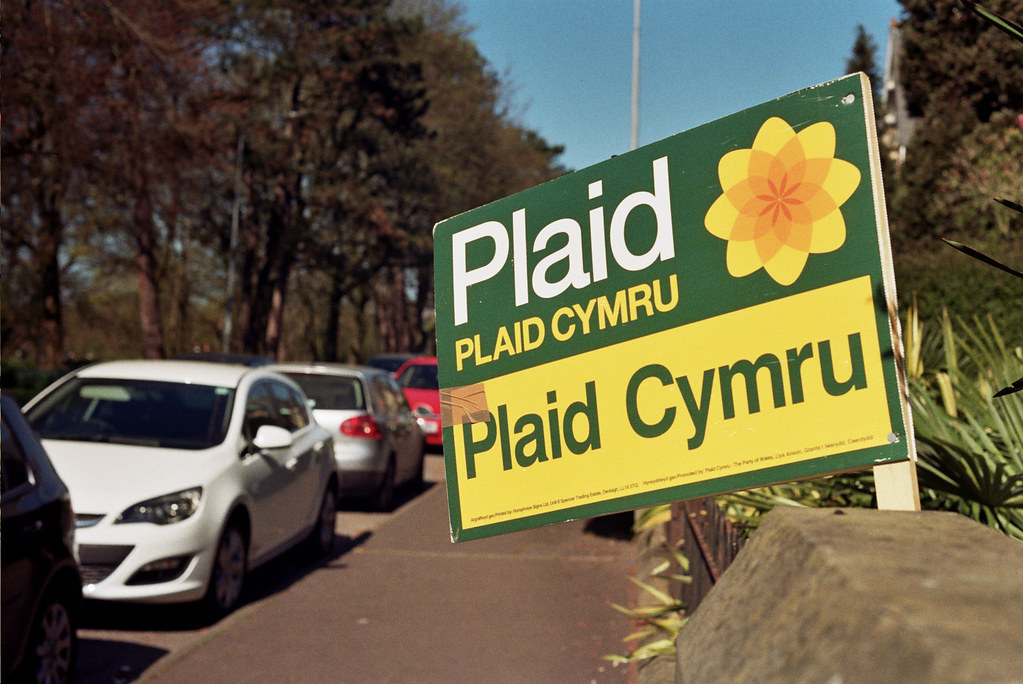
Calum Davies is a Conservative councillor in Cardiff and a candidate for the Senedd in May.
In my last column, I wrote about how Welsh Labour had sown the seeds of their own demise by feeding the separatist beast, part-explaining how Plaid Cymru are cannibalising many of their voters.
But who are Plaid Cymru really? Just how devastating will they be for the future of the country?
Given it has many supporters in a rump Welsh media, being both left-leaning and nationalistic, the public’s perceptions of the party are on the more positive side by virtue of rarely being subject to the scrutiny faced by the Conservatives, Labour, and Reform.
The so-called Party of Wales celebrated it centenary last year; its foundations rooted in the preservation of the Welsh language. Its “home rule” ambitions were more diluted than the full-on independence rhetoric of the modern day but quickly moved onto that turf.
Their heartland has always been in the Welsh-speaking west, known as “Y Fro Gymraeg”, ever since winning their first parliamentary seat in the 1966 Carmarthen by-election. They have had a decent number of councillors in the South Wales valleys but only rarely and briefly reaching positions of power on councils, whilst largely relying on help from others to do so.
When the Welsh Assembly was established in 1999, they had their best-ever result in a convincing second place but, since their 2007-11 coalition with Labour have come third, second, and third again, vying with the Conservatives to be Wales’ second most popular party.
Since that coalition, Plaid aimed to outflank Labour from the political left, first, under Leanne Wood and then, Adam Price, even if this was against the instincts of their rural, small-c conservative voter base. Ex-BBC journalist – who naturally has many friends in the media – Rhun ap Iorwerth was appointed leader uncontested in time to benefit from the Starmer disaster.
As a party that has always been hostile to Conservative England but aware of the unradical nature of their voting base – Welsh independence aside – Plaid has been careful to not pigeonhole itself for most of its history but has now committed itself to a hard-left agenda.
Its leader recently said, “there’s no such thing as illegal immigration”. Its former leader said women shouldn’t go to prison. They have very much sided with trans extremists even after last year’s Supreme Court ruling.
Recent manifestos included commitments to rent controls (which are proven to actually increase rents), reaching net zero by 2035 (bringing forward the already straining 2050 target), rejoining the Single Market and Customs Union (even though Wales voted to leave the EU), and increasing benefits (which is already slowly bankrupting our unproductive economy).
They criticise Labour for governing Wales poorly, despite doing so largely in accordance with their own separatist politics and whilst being directly complicit through formal coalitions and workaround deals that were coalitions in all but name.
Together, these parties delivered for Wales the worst NHS waiting times in Britain, the lowest school standards in the UK, and the least competitive region of the British economy. Water sewage spills were four times higher per head than in England and housebuilding last year was its second lowest during the devolutionary era (beating only the Covid year by 20 units).
Meanwhile, Plaid Cymru support their hated 20mph default speed limit. With Labour, they are happy to embezzle taxpayer money for non-devolved areas such as fake foreign embassies and the Nation of Sanctuary scheme that encourages illegal immigration. Alongside Labour, they gave free school meals to primary school aged children on millionaires and are committed to doing it now for teenagers from rich families.
They backed Labour blocking the much-needed M4 relief road even after £150m of public money was spent on an independent feasibility study that said it should be built. They are, of course, the main driver behind the Senedd expansion, costing £120m despite no public mandate for doing so. Both parties complain that Wales is underfunded but make no case or attempt to generate more wealth in Wales. They oppose a begging-bowl culture in words but battle tooth-and-nail to maintain in practice.
Plaid argued that pupils should skip school to go on climate protests and that we should import American-style anti-colonial, anti-white, race-baiting education, all while its Councils remove English language education rights when the law gives parity not precedence for Welsh.
Recently, they voted to block an inquiry into child sex abuse, they argue Labour’s anti-racist action plan does not go far enough, and they campaigned against proscribing Palestine Action even after they broke into an RAF base, damaged vital defence resources, and attacked a female police officer with a sledgehammer. They are now indistinguishable from a moronic Green Party.
As a councillor in Cardiff, they have used their precious annual motion not to talk about the one rural ward they represent. The people of Pentyrch, Creigiau, and St Fagans will feel shortchanged knowing that while I, as a councillor for a neighbouring ward, have doubled bus services – from which people in Pentyrch will also benefit – and fight inflation-busting tax rises, their local Plaid representatives prioritise Palestine and devolving the Crown Estate, neither of which are the province of the Council. This is how contemptuous of the public Plaid really are.
But the rot goes deeper. They boast of the “strong link” with Sinn Fein, the political wing of the IRA, and the Scottish National Party. Plaid sent a delegation to Gaddafi’s Libya to learn from them, the regime that armed the IRA to murder British citizens and troops. Their supporters deface English place names on public signage and have a record of burning holiday cottages. Anglophobic arson is just an occupational hazard in their quest to destroy the United Kingdom.
The point is, Plaid is not some mainstream, Welsh choice. They are a radical, leftist party whose core belief is that every input and every outcome must move Wales closer to independence. They do not share the public’s priorities. The commonweal comes second to their separatist goals. Plaid wants to facilitate a woke-on-steroids agenda that goes further than the damage already done by Labour using money Wales simply does not have. The compromised media will never give them the scrutiny the public demands, so it is up to us unionists do it ourselves.
A glimmer of hope: Plaid’s ex-leader Adam Price has the support of his colleagues to push through a Bill that would ban lying by politicians at election time. Should it ever become an Act, Plaid will never be able to say Welsh independence is viable future for our proudly British nation.

Could the experiences of twins help explain why we don’t trust politicians?

Oil hovers near six-month high with nuclear talks and US tariffs in focus

VERT Tokenizes Mottu and Banco Pine on XDC Network


-

 Video7 days ago
Bitcoin: We’re Entering The Most Dangerous Phase
-

 Crypto World6 days ago
Can XRP Price Successfully Register a 33% Breakout Past $2?
-

 Video3 days ago
XRP News: XRP Just Entered a New Phase (Almost Nobody Noticed)
-

 Fashion3 days ago
Weekend Open Thread: Boden – Corporette.com
-

 Sports6 days ago
GB's semi-final hopes hang by thread after loss to Switzerland
-

 Politics1 day ago
Baftas 2026: Awards Nominations, Presenters And Performers
-
 Tech6 days ago
The Music Industry Enters Its Less-Is-More Era
-

 Business6 days ago
Infosys Limited (INFY) Discusses Tech Transitions and the Unique Aspects of the AI Era Transcript
-

 Entertainment5 days ago
Kunal Nayyar’s Secret Acts Of Kindness Sparks Online Discussion
-

 Video6 days ago
Financial Statement Analysis | Complete Chapter Revision in 10 Minutes | Class 12 Board exam 2026
-

 Tech5 days ago
Retro Rover: LT6502 Laptop Packs 8-Bit Power On The Go
-
 Sports4 days ago
Clearing the boundary, crossing into history: J&K end 67-year wait, enter maiden Ranji Trophy final | Cricket News
-

 Business1 day ago
Mattel’s American Girl brand turns 40, dolls enter a new era
-

 Business20 hours ago
Law enforcement kills armed man seeking to enter Trump’s Mar-a-Lago resort, officials say
-

 Entertainment5 days ago
Dolores Catania Blasts Rob Rausch For Turning On ‘Housewives’ On ‘Traitors’
-

 Business5 days ago
Tesla avoids California suspension after ending ‘autopilot’ marketing
-
 NewsBeat3 hours ago
‘Hourly’ method from gastroenterologist ‘helps reduce air travel bloating’
-

 Politics6 days ago
Eurovision Announces UK Act For 2026 Song Contest
-

 Tech20 hours ago
Anthropic-Backed Group Enters NY-12 AI PAC Fight
-

 NewsBeat19 hours ago
Armed man killed after entering secure perimeter of Mar-a-Lago, Secret Service says