
Business
A decade on from when the Wylfa nulear turbines fell silent on Anglesey

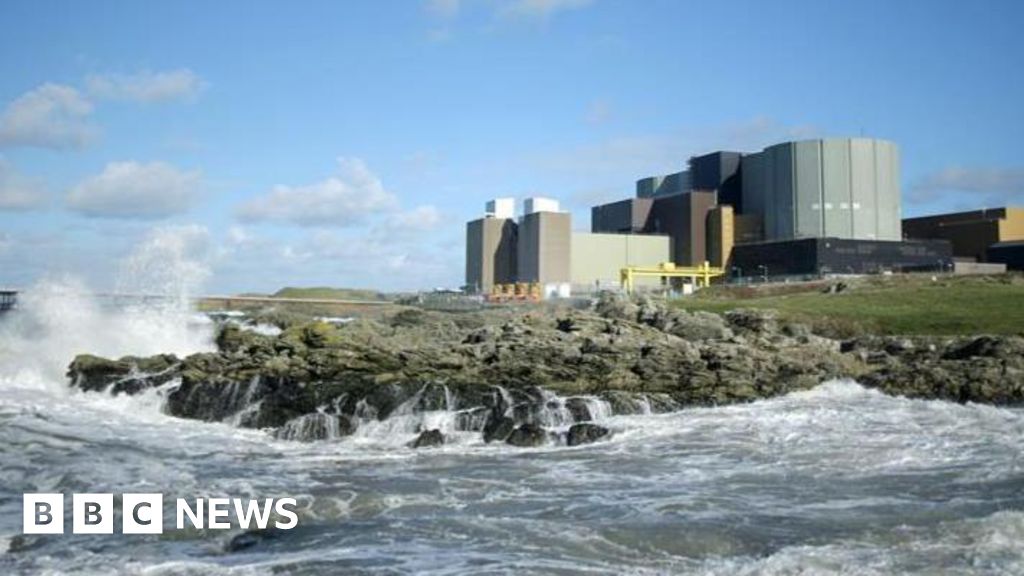
Gareth Wyn WilliamsBBC Wales

 Getty Images
When the turbines fell silent at Wylfa exactly ten years ago today, Wales lost its last source of nuclear energy.
But, for Anglesey, the decade since has been characterised by job losses, stagnant investment and an economy still trying to replace one of the island’s largest employers.
Opened in 1971, it was the second Magnox power station in Wales after Trawsfynydd came online six years earlier, with seawater an ideal coolant due to its location on Anglesey’s northern coast.
With the same period also marking the opening of Anglesey Aluminium in nearby Holyhead, it was a time of industrial upheaval which brought long-term, skilled employment to a Welsh-speaking island long dominated by agriculture.
But while the plant remained operational beyond its planned lifespan, by the early 2010s it was among the oldest operating reactors in the world and the decision was made to shut down the last of the two reactors on 30 December 2015.
Gron Williams, from Holyhead, spent his entire working life at Wylfa.
Now 76, he started his apprenticeship as a teenager in September 1965 – six years before Wylfa became fully operational.
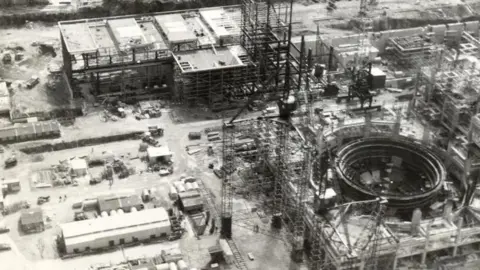
“You saw this big hole being dug, the big tunnels going out under the sea, you saw these big steel spheres being constructed by the welders at the time,” he said.
“They were actually putting the domes on and pouring the concrete around the vessels… that was very exciting.”
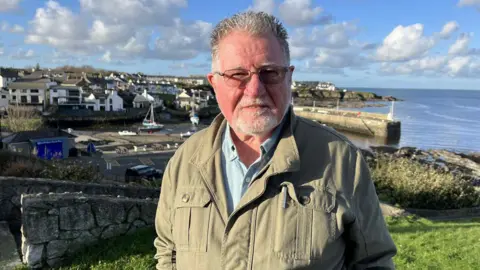
“There was change happening because you saw more wealth coming to the island,” Mr Williams added.
“You saw people being able to afford to buy their own homes, you saw people being able to start businesses.”
But, despite extensions to the plant’s life, the second reactor was shut down in 2012.
Then on 30 December 2015, Reactor 1 followed, ending 44 years of operation at the site.
Mr Williams, who by then had worked up to become shift charge engineer, was in the central control room when the off button was finally pressed.
 Nuclear Restoration Services (NRS)
Around 500 people were still working at the site at the time and Mr Williams described it as “the end of an era”, with jobs inevitably set to dwindle as the plant moved to the decommissioning phase.
He added Welsh was the language most commonly spoken at the site, but the failure to secure a replacement before the end of generation at Wylfa meant Anglesey “paid the price”.
“It’s lost the investment that should have been coming into the island to help with the infrastructure, with the requirements for people to be trained, for people to be able to live here and to continue to use their own language,” he said.
But the end of electricity generation did not mean the end of all work at the site.
After initially removing nuclear fuel from the reactors and transferring it to secure storage, it will move into its “care and maintenance” phase.
Eventually, several decades down the line, all remaining buildings will be removed.
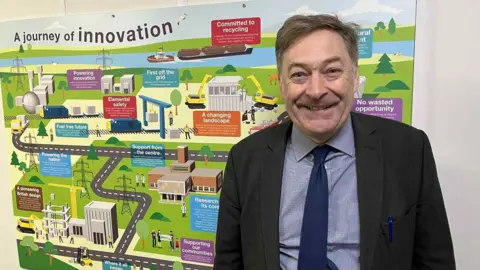
But while current job numbers remain far short of its operational heyday, Site Director Stuart Law expects the number of people working there to remain relatively stable for years to come, adding 99.9% of all of radiation had gone from the site.
“We’re getting onto the other hazards, so the removal of asbestos and buildings that we don’t need.
“There are 43 structures that we’ve actually been able to remove from the site.
“We employ nearly 200 people who work for Nuclear Restoration Services (NRS), and there’s another 60 people who are pretty well full-time on site with contracting organisations. [We’re] a major employer, and we take part in that community as well.”
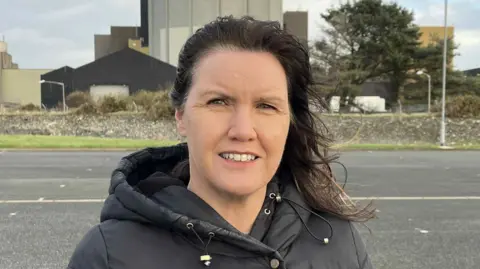
Ffion Morris, the site’s engineering and maintenance manager, also worked at the site when it was operational and continues to during its decommissioning.
“Every day is quite different,” she said.
“Those days when we were generating it was very much a steady state, the mission was obviously to get gigawatts down into the grid into people’s homes.
“Now it’s making sure that we can ethically and morally decommission this site to pass on to future generations.
“I was here when the reactor was switched off. There was that kind of quiet silence… knowing how many thousands of people have gone through that gate.
“It’s all about the relationships that have been created on this site.”
 Rolls-Royce
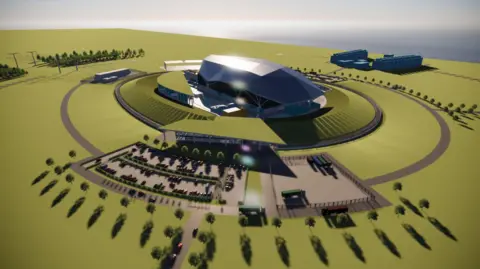
But while many now seek further detail on the proposals, scepticism towards nuclear remains among others on the island and beyond.
Linda Rogers, who lives in Llangoed, is a member of People Against Wylfa B (PAWB) and has spent decades campaigning against new nuclear developments at the site.
She is adamant the original Wylfa plant should represent the last nuclear generation in Wales.
“The 40 years that we had of Wylfa has left us as still one of the poorest areas in Wales.”
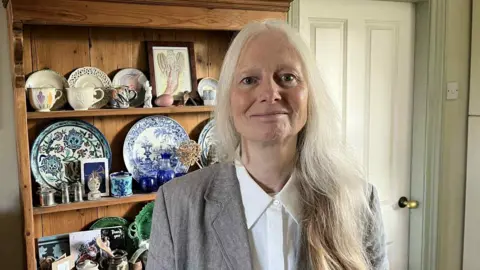
“We have seen two major developments in those 10 years – one is a massive roll-out of renewables, and then on the other side the absolute disaster which are the attempts to bring online nuclear at Hinckley and at Sizewell, massive overruns and massive cost.”
She feels investment should be concentrated on technologies such as tidal energy, as proposed by Morlais off the western coast of Anglesey.
“We should be putting our money and our skills into sustainable development.
“In 2024, 90% of new electricity was generated by renewables, so the potential is there and growing.”
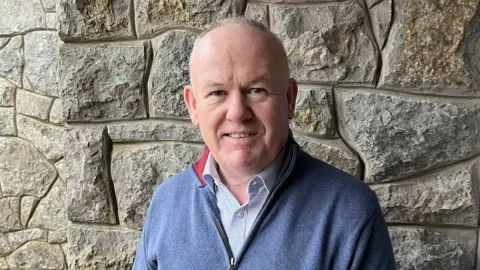
But local councillor Aled Morris Jones, who also chairs the Wylfa site stakeholder group, says the proposal to build SMR’s at Wylfa remains the best economic hope for the area.
A report by the council last year stated that north Anglesey “desperately needed investment”, with people of working age leaving in droves due to a lack of work, housing and opportunities.
With twice as many people over 50 as there are between the ages of 25 and 49, the local economy is “fragile”.
And with many youngsters deciding to leave, only four other areas in England and Wales have seen a bigger drop in birth rates than Anglesey.
“We can’t look back, all we can do is look to the future,” said Jones, adding the UK government’s investment brought “certainty, confidence and optimism”.
While any SMRs at the site are at least decade away, Jones said local people needed more detail on the timescales.
“I think the important thing is tangible milestones.
“By what period the development consent order [planning application] goes in, by what period the final investment decision goes in… the important thing is to keep the community here in north Anglesey informed at all times.”
As Wales marks ten years without nuclear power generation, Wylfa’s legacy remains contested.
But it is likely that whatever happens next on the site will help shape how that legacy is ultimately judged.



