

Politics
Liza Minnelli’s New Memoir Shades Lady Gaga Over Oscars Incident

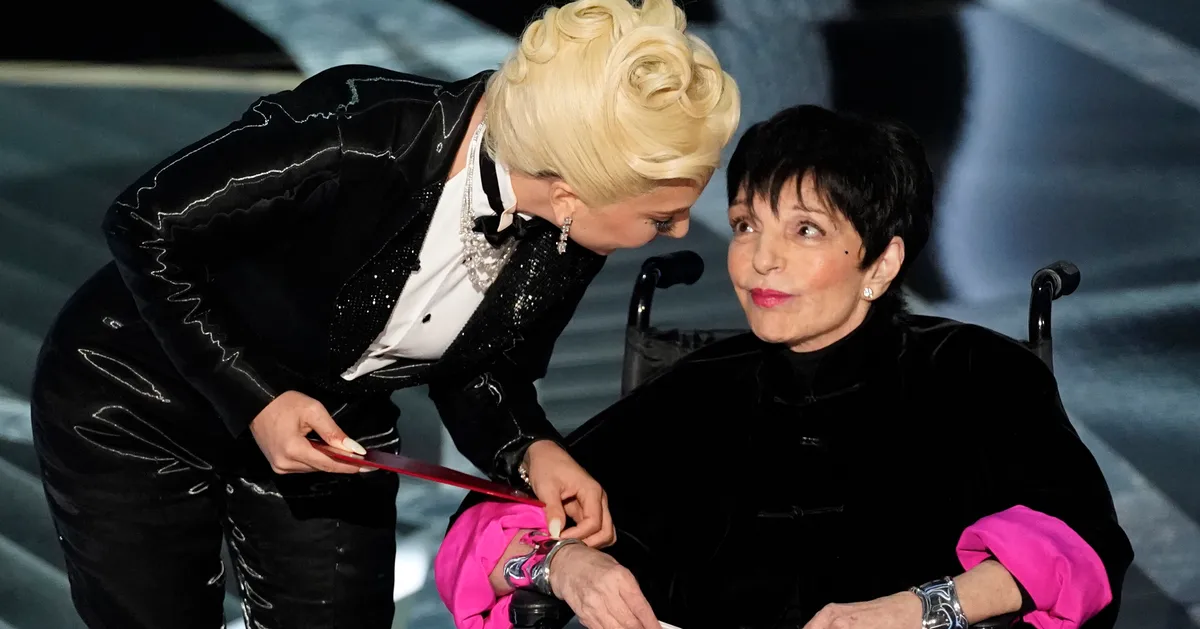
Liza Minnelli’s new memoir sheds some light on her appearance at the 2022 Oscars.
At the Academy Awards four years ago, Liza teamed up with Lady Gaga to announce the winner of that year’s Best Picture prize.
The Cabaret star appeared on stage in a wheelchair, and when she appeared to struggle with her portion of the presenting, Gaga stepped in to reassure her: “I got you.”
A newly-published excerpt of Liza’s book Kids, Wait Till You Hear This! in People magazine sees the EGOT recipient reflecting on this, confirming long-held rumours that she hadn’t wanted to appear in a wheelchair, having previously requested that she appear on a director’s chair.
The passage reads: “I was inexplicably ordered – not even asked – to sit in a wheelchair or not appear at all. I was told it was because of my age, and for safety reasons, because I might slip out of the director’s chair, which was bullshit.
“I will not be treated this way, I said. My co-presenter insisted she would not go on stage with me unless I was in a wheelchair. I was heartbroken.”
The excerpt continues: “I was much lower down than I would have been in the director’s chair. Now I couldn’t easily read the teleprompter above me. How would you feel if you were wheeled out, against your will, to perform in front of a live audience, and unable to see clearly?
“So when I stumbled over a few words, Gaga, who was at my side, didn’t miss a beat to play the kindhearted hero for all the world to see. ‘I got you,’ she said, leaning down over me.”
In apparent shade towards Gaga, Liza’s book claims the Poker Face singer later paid a visit to the screen legend’s dressing room to check on her.
The passage concludes: “I looked at her and said simply, ‘I’m a big fan’. I learned this lesson years ago from Mama and Papa. At a moment of high stress, you stay gracious.”
HuffPost UK has contacted Lady Gaga’s team for comment.
Kids, Wait Till You Hear This! was written in collaboration with Heidi Evans and Josh Getlin.
In a statement to People in 2024, Liza claimed she’d been inspired to tell her own story after “a sabotaged appearance at the Oscars”, “a film with twisted half-truths” and “a recent miniseries that just didn’t get it right” made by “people who didn’t know my family, and don’t really know me” left her feeling “mad as hell”.
Liza’s book will be published on 10 March.

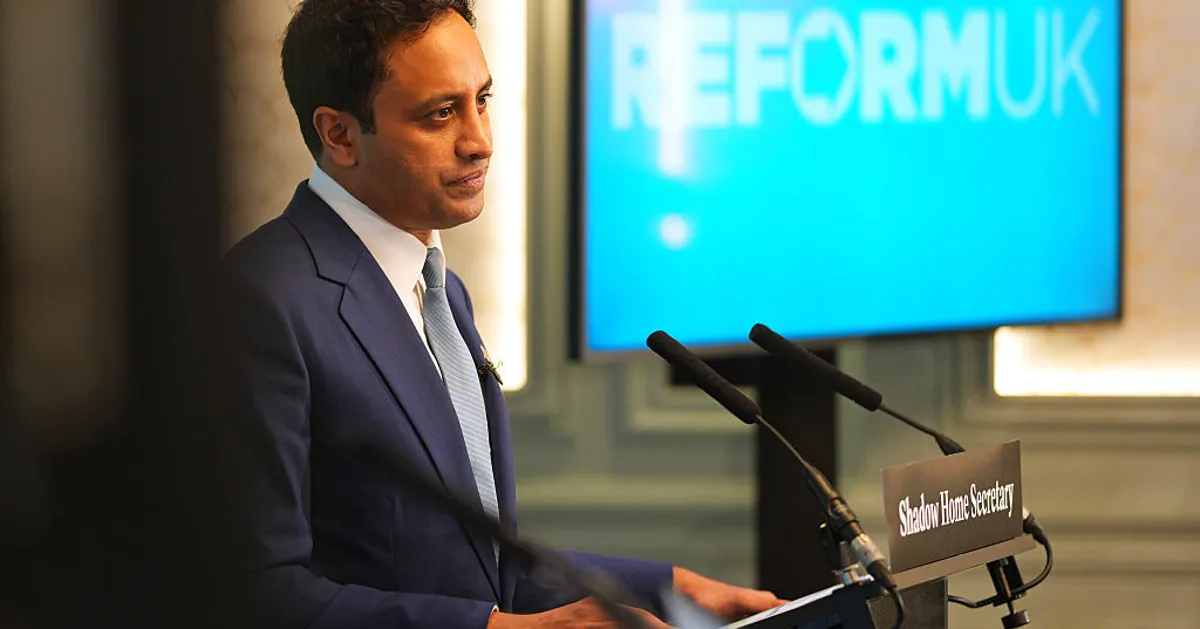
Reform UK have been condemned over plans to introduce an ICE-style body to detain and deport illegal immigrants.
Zia Yusuf, the party’s home affairs spokesman, said they would set up a new body called “UK deportation command” if they win the next general election.
He said it would “have just one mission – to track down and detain those in this country illegally”.
Yusuf said: “We will rapidly build detention capacity. No chance of bail, no chance of absconding. Detention will mean deportation.
“We will embark on the most audacious charter flight operation since World War 2, ramping up deportation flights to five departures every single day.”
A Nigel Farage-led government would also scrap indefinite leave to remain with a renewable five year work visa, Yusuf said.
Labour chair Anna Turley said: “Reform wants to divide our country, not deliver for the British people.
“Their plan to deport people who have followed the rules, worked hard and built their lives here – our friends, neighbours and colleagues – is a direct attack on settled families and fundamentally un-British.
“Britain is a proud, tolerant and diverse nation, which stands in opposition to the kind of divisive politics stoked by Reform.”
Social media users compared Reform’s “deportation command” plan to America’s controversial Immigration and Customs Enforcement (ICE) agency, whose officers have shot dead two protesters already this year.
Journalist Ian Dunt posted on Bluesky: “These people are poison. They will unleash racist thugs on the streets of this country and call it security. They will subjugate us to the US and call it patriotism. They must be stopped. There is no more important task in politics.”
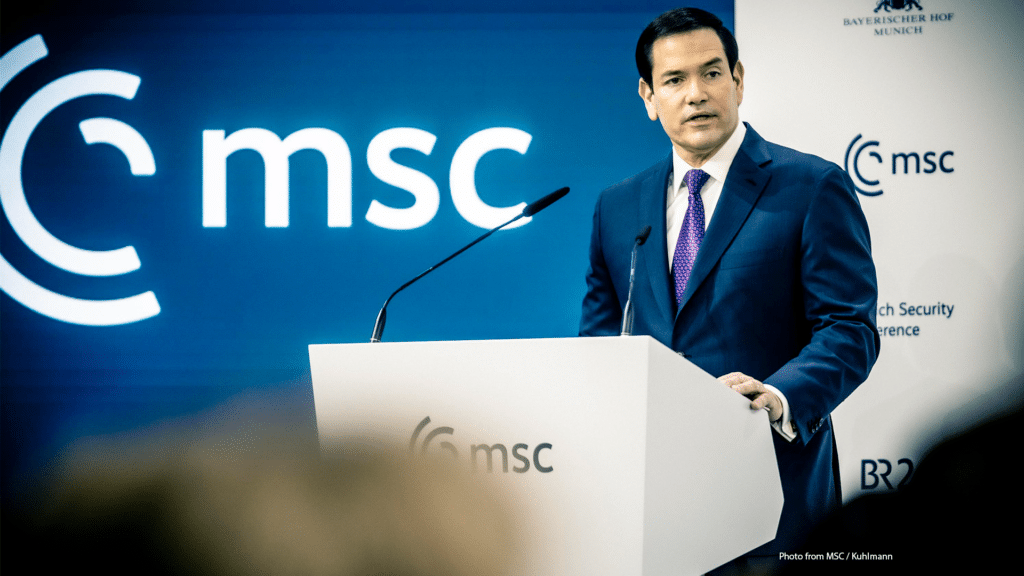
Ruth Deyermond looks at Marco Rubio’s speech at the Munich Security Conference and argues that the US is now an unreliable partner and that Europe must develop its own defence capabilities and architecture.
A seemingly unbridgeable gap now exists between the US and Europe on matters of security and politics; as a result, there is an urgent need to develop a European security architecture that does not depend on Washington. Ironically, what has made this gap impossible to ignore is US Secretary of State Marco Rubio’s attempt at the Munich Security Conference to repair some of the damage done a year ago.
Rubio’s remarks were notably different in tone from Vice President JD Vance’s hostile and inflammatory speech in 2025. This was greeted with relief by some; and many European diplomats claimed to be reassured by it. But while the tone was clearly intended to calm tensions, the content remained largely unchanged from Vance’s tirade.
The vision outlined in Rubio’s speech is one in which the US is not bound to NATO allies by shared liberal values like democracy and human rights or respect for the rule of law. Instead, what ties Europe and the US together is culture and heritage, Christianity, “ancestry”, and the superiority of what he calls Western civilisation, described by Rubio as “the greatest civilisation in human history”. These things, he claimed, are menaced by European weakness and by “the forces of civilisational erasure”.
European Commission Vice President Kaja Kallas was the clearest in pushing back against this vision, noting acerbically that “woke, decadent Europe is not facing civilisational erasure” and asserting that “European enlargement is vital for securing democracy and overcoming Europe’s own imperial history”.
Rubio’s speech confirmed the radical ideological gap that has now opened between the US and Europe. To a worrying extent, the US now represents precisely the things that post-1945 Europe organised to prevent: authoritarianism; aggression; might-makes-right; and the glorification of imperialism, driven by civilisational mythologising. It increasingly resembles not the ally that helped to foster liberal democracy in the aftermath of authoritarian destruction, but the dark Other of Europe’s past against which contemporary European identity has been built. In the medium- and long-term Europe – both the European Union as an institution and the democratic states inside and outside it – cannot maintain a close alliance with a state dominated by this ideology while preserving its identity and values.
The speech highlighted another point of rupture: the rejection of “the rules-based international order”. This seems to refer to what is often called “the International Liberal Order” that emerged in the moment of post-Cold War US dominance, and in which democracy, human rights, non-aggression, respect for international law, and economic liberalism were core principles (even if not always adhered to in practice). This is clearly an order that the Trump administration rejects – as does Russia.
But the term more properly describes another order, the one that is not shaped by shared values but by the rules: respect (in theory) for the primacy of state sovereignty; territorial integrity; and international law as embodied by the UN Security Council. These rules were an attempt to learn the lessons of World War Two, which made the consequences of rejecting these devastatingly clear.
Worryingly this order, too, is rejected by the Trump administration. Although Rubio advocated reform of the UN in his speech, he also criticised the “abstractions of international law” and praised lawless acts such as the targeted killings of alleged drug runners in the Caribbean. From the start, the current Trump administration has made it clear that it does not consider itself to be constrained by law or by the principles of state sovereignty and territorial integrity. These are the building blocks of a world without major war; if the world’s most powerful state knocks them down, it is creating a world in which disputes have to be resolved by force.
This rejection of the rules-based order is being directed, among many other targets, towards the US’s supposed allies in NATO, Denmark and Canada. A collective security alliance cannot survive as a meaningful organisation when the major threat to some of those inside it comes from its most powerful member.
Attempts to paper over Trump’s determination to seize Greenland were badly damaged by the insulting public comments of Senator Lindsay Graham, who asked the audience “who gives a s**t who owns Greenland?”, and his even more insulting comments in private to the Danish and Greenland prime ministers.
A third point of rupture is Ukraine and Russia. The Trump administration has split from its former allies in Europe in abandoning support for Ukraine and pressuring Kyiv to agree to a peace settlement that would mean capitulation. That, and the desire to develop economic ties with Russia and to rehabilitate it diplomatically – clear, for example, in the late 2025 US peace plan – stand in sharp contrast to European assessments of the growing threat from Russia and the importance of Ukraine to European security. Rubio made almost no mention of this in his speech but it was central to those of key European leaders.
The consequences of this split between Europe and the US are enormous, and will only grow. Behind the diplomatic affirmations of continued alliance, and despite their own deep reluctance, many Europeans are moving to greater security independence from the US. This will carry huge economic – and therefore probably, political – costs, but there is no realistic alternative.
The Trump administration, which seems to have assumed that Europe has no choice but to bend to Washington’s will, are angry to discover that disregard for international law and untrustworthiness as an alliance partner carries penalites. They were forced into a humiliating climbdown on Greenland by European pushback, and they have been unable to successfully pressure Ukraine in part because Europe has stepped up support. They are reportedly trying to stop the EU prioritising European arms manufacturers in defence procurement. And concerns about illegality appear to have led the UK government to block the use of UK air bases in an attack on Iran. The US is losing influence and money.
Marco Rubio’s Munich speech seemed designed to reassure while reasserting an ideology and a rejection of a rules-based order that leave the US and its former European allies further apart than at any point since the 1940s. It has not been enough to reverse the move towards some form of divorce, which is now necessary for European security and its political integrity. Both Europe and the US will be poorer and more insecure as a result.
By Dr. Ruth Deyermond, Senior Lecturer in Post-Soviet Security at King’s College London.
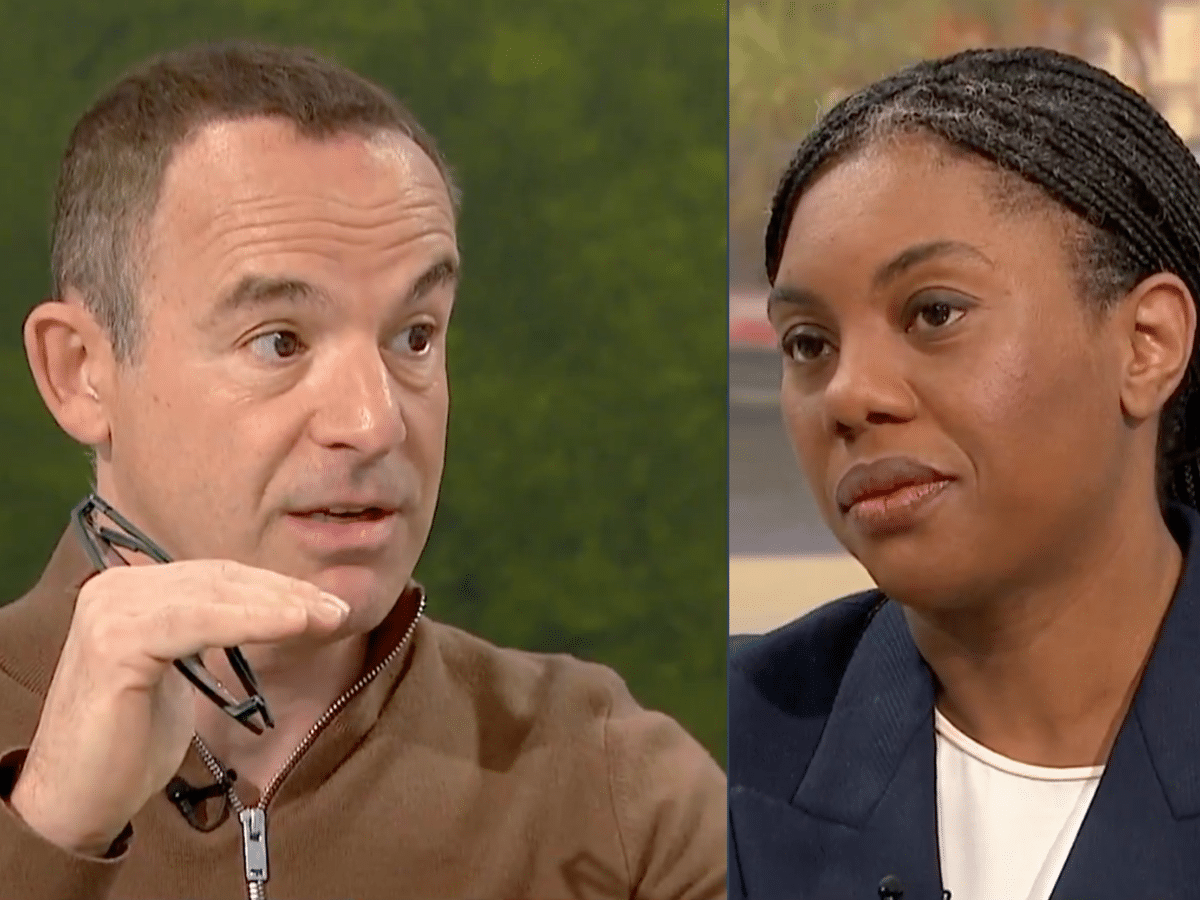
On Good Morning Britain, money saving expert Martin Lewis pushed back firmly against Kemi Badenoch. Pointing out her blatant oversight, Lewis confronted her misguided approach to the student loan crisis affecting workers across the country. In doing so, Lewis gave a master class in how politicians should be rigorously challenged on policies that impact working people’s everyday lives.
Rather than accepting the Tories headline-grabbing promises, he instead pressed for meaningful solutions. In fact, his challenge was so robust that he managed to get Kemi’s commitment to a direct discussion focused on reforms that would genuinely benefit students.
As opposed to attractive soundbites designed to win votes, as politicians often do.
🚨 WATCH: Kemi Badenoch clashes with Martin Lewis on her plans for student loanspic.twitter.com/pSNrUi8PkR
— Politics UK (@PolitlcsUK) February 23, 2026
Martin Lewis: “I’m not saying nothing can be done. I’m saying what you should do”
Martin Lewis: If you want to help the middle-earning students, the most important thing is the repayment threshold should have been increased. When the Tories brought this in, it was a graduate contribution system.
Kemi Badenoch: This is exactly why young people are suffering. You’ve got lots of people who finished university where they didn’t have to pay fees. You didn’t have to take out loans. And now you’re all saying, “oh, nothing can be done. Don’t do this.”
Lewis: I’m not saying nothing can be done. I’m saying what you should do.
Here Badenoch deploys some pretty effective rhetorical word play to distract from the actual value of the policy, because apparently that’s not the point
Badenoch: Well, I’m the first person who’s even trying to solve this problem.
Lewis: Wonderful. Shall we have a chat about it? Because I think you’ve got the right idea that this is not a solution that will help middle and young students.
Badenoch: Martin, if you want us to have a debate, I’m very happy for us to have a debate.
GMB: Does a middle student benefit from a cut in the interest rate?
Badenoch: I think people need to even know what it is I’m talking about. You’re both talking over me. Excuse me. Let me explain what my policy is. I want to make sure that those young people who are paying and paying and their debt is not going down get a relief.
If you think that there’s a better offer, let’s look at it. But what’s made the difference now is that in her budget, Rachel Reeves raised the threshold. So it’s dragging more people into it.
Lewis: Freezing the threshold.
Badenoch: Well, sorry, increase the number of people getting in because the threshold has been frozen. I don’t think this is fair.
Lewis: Agreed.
Badenoch: The whole student loan system is not working properly. Someone has to do something. And the thing that shocks me is that the minute I say, well, let’s do something, everyone says, “oh, no, no, no, no, no, this is not the right thing”. We’re going round in circles.
GMB: Cutting the interest rate doesn’t help them. That’s the trouble.
Badenoch: We should not be making money off graduate student loans. That is not right.
Lewis: I 100% agree with you in principle. And I’ve objected to it since when the Conservative government brought it in 2012. I said we shouldn’t have above inflation interest rates on plan two student loans.
i love the idea that if you’re being interviewed on the telly, there is a chance that you get Martin Lewis’d. lets have it happen a few times and then watch people start to limit their exaggerated claims in case he’s behind the sofa waiting to jump out https://t.co/nqjWombVwN
— Graham (@____Graham_) February 23, 2026
Lewis: ‘But the practical solution, it won’t actually help’
Appearing to take a shit on the Conservatives that came before her tenure, Badenoch insisting she represents a ‘new generation’ of Tories. You know, the Tories that made this issue exponentially worse:
Badenoch: I’m glad you agree. That was five years before I became an MP. A new generation of Conservatives.
Lewis: But where we are now, as the interest has already been added to so many students’ loans, lowering the interest rate now will only help those who can clear within the 30 years, which means lower and middle earning graduates won’t benefit from that change. If you have a billion pounds to help students, the most direct thing that would help all students would be not freezing the repayment threshold, it would be increasing the repayment threshold. While the interest rate is psychologically damaging, I absolutely… I absolutely agree with you. It is really damaging for many people watching.
Badenoch: I just don’t think this is fair on young people. I just don’t think this is fair.
Lewis: But the practical solution, it won’t actually help.
Badenoch: I strongly disagree.
Lewis: But it won’t help the pounding people’s pockets.
Badenoch: But the other thing that is a problem is that many of these young people have gone to university and taken out courses that were not worth the money. That’s why we’re also talking about apprenticeships. I also did an apprenticeship. I remember more about the apprenticeship than the two degrees. So I’m speaking from experience. I did an apprenticeship, I had two degrees, I paid off student loans, I know what it’s like. And I think that this is the best thing. We have got to start reforming the system and making it better. We can have an argument about the technical details, but this is about the principle. What is happening right now is wrong and someone needs to fix it. Conservatives are the only party who have an answer.
Lewis: Just to say, we’re now on plan five, We’re talking about Plan 2, which is always for past students. So I think we have to be very careful. The debate about going forward is Plan 5 student loans, which are even more expensive because the last Tory government put the cost up even more. But we’re talking about Plan 2 loans, the one with above inflation interest.
Badenoch: I believe that the Plan 2 is where the real problem is. Those people who started their degrees between 2012 and 2023.
Lewis: Plan 5’s worse
Badenoch: Let’s have a debate about Plan 5 then. But what is the problem now is that any time someone says, well, let’s look at this, there’s always someone sometimes, it’s Martin, oh, this is a terrible idea, and then nothing happens. Nothing is happening. No one is helping these people.
Lewis: Shall we have a chat?
Badenoch: Yes.
Lewis: Shall we have a chat about it? With some ideas and with some solutions.
I fucking love Martin Lewis. You can see the frustration in his eyes as politicians utilise policy buzzwords just to garner support rather than actually helping people…. https://t.co/GhJ4ctp0l6
— Aymen Retibi (@aymenretibi) February 23, 2026
People want substance and value, not style
Here, Badenoch pretty successfully leans on slick rhetorical wordplay. Nevertheless, Lewis refuses to allow her to shift attention away from the actual substance – and value – of the student loan policy championed by the Conservatives. Kemi’s focus instead becomes the framing, not the facts, with presentation takes priority over practical impact.
Despite her attempts to distance herself, this interview suggests Kemi is just like the Tories before her. All the while, hard-working people juggle rising costs and student loan repayments, feeling their finances tighten day by day.
Featured image via the Canary

Matt Goodwin is Reform UK’s candidate in the Gorton & Denton by-election. On 20 February, we reported that a GB News employee had accused him of sexual harassment. Now, it’s starting to look like Reform have backed away from their candidate.
Oh, and the sexual harassment story wasn’t the only big revelation about Goodwin last week:
Last week, LBC ran this headline after Matt Goodwin’s misogynistic ramblings with Jordan Peterson were disclosed.
Yesterday, Nigel Farage turned up in the middle of the Indian Ocean. 🤦♂️
I think it’s fair to say that he has cut Goodwin adrift for next week’s by-election. pic.twitter.com/vaKYheaRkL
— Don McGowan (@donmcgowan) February 22, 2026
It’s not going Goodwin
When Reform first announced him as their candidate, we reported that Matt Goodwin is an academic and a longtime establishment insider. Despite this, he’s tried to portray himself as an outsider who offers something different to the status quo.
To be fair, there is a notable difference between him and Green candidate Hannah Spencer. As far as we know, Spencer has never attracted allegations like the following:
Reform parachuted-in Gorton and Denton candidate Matthew Goodwin has been accused by a female GB News staffer of sexually harassing her. And Reform boss Nigel Farage is thought to have known about the allegation before he named Goodwin as the party’s candidate in the by-election.
Here’s what LBC reported following Goodwin’s ‘no-child tax’ scandal:
Nigel Farage has distanced himself from comments made by the Reform UK’s Gorton and Denton candidate after he suggested those without children should be taxed in a bid to tackle falling birth rates.
Here what our own Rachel Charlton-Dailey wrote about said scandal:
I can’t imagine the pain that this would cause to those who are struggling with fertility. On top of the emotional and physical toll this puts on you will be financial pressures. For those of us who are infertile, it sends one message. You are not good enough and deserve to be punished for failing as a woman.
I had an elective hysterectomy in 2017 after over a decade of pain. I chose my own health over a condition that was making me want to die, for the sake of one day having a baby. Many would call my decision selfish, but I frankly don’t give a fuck what people who would rather I were in pain think of me.
As much as I loathe a Handmaid’s Tale comparison, this is very apt here. In the novel, working-class women who are infertile are cast out of society. As they have no purpose in a society that values families over all else.
Obviously this is a very emotive issue for people, and you can see why Farage didn’t want to defend the idea of taxing people’s suffering.
Where on Earth is Nigel Farage?
People are talking about the Gorton & Denton race as a pivotal moment which could predict which party wins the 2029 national election. Given that, you’d think Farage would be at the heart and centre of it.
Instead, he’s literally on the other side of the planet:
Chagos is a restricted UK territory. Access is tightly controlled through permits because of the strategic military base on Diego Garcia. This isn’t a tourist island it’s a high-security defence asset.
So did Farage request a permit ?
Or is it another day another stunt https://t.co/ac0sWSJsGf
— Charlie (@CheckCharlieB) February 21, 2026
One person noted the following:
There’s something off about @Nigel_Farage‘s claim, as he watches the boat sail from Maldives to Chagos.
A round trip to Chagos takes between 6-7 days, covering around 600 miles. He would not have been able to do this trip and be back in UK for the #GortonandDenton by-election. pic.twitter.com/bXgeHlnhHV— The Crane Report (@TheCraneReport) February 22, 2026
So, did Farage simply fly to the Chagos Islands for a photo opportunity?
Or was he just looking for an excuse to get away from Goodwin?
We’ll let you decide that one.
Oh, and if Farage has abandoned Goodwin, he’s not the only Reform-linked person to do so:
Isabel Oakeshott is dating Richard Tice, a Reform MP.
Here she is roasting Matt Goodwin, a prospective Reform MP.
Is the end coming a little bit quicker than everyone imagined it would? pic.twitter.com/dW7icM8fbP
— Landeur 🏴 (@Landeur) February 22, 2026
Featured image via The Canary

One of the major culture-war faultlines of recent years has been the fact, increasingly obvious to a beleaguered and cynical public, that advertising has gone woke. As long-suffering spiked columnist Patrick West has been pointing out for nearly a decade, British ad execs’ ‘diversity’ obsession means that, by and large, straights and whites are out, while ethnic minorities and unconventional families are in. Meanwhile, when it comes to government information campaigns, if there is ever any unwanted or anti-social behaviour to be warned against, you can bet your bottom dollar it will be coming from whitey.
Think of the notoriously improbable British Army anti-sexual harassment poster in which a strapping black male soldier is being menacingly groped by a petite, blonde female colleague. Or the 2016 Transport for London (TfL) ‘Report It to Stop It’ campaign, where a married, middle-aged white man in a suit gropes a mixed-race woman on a crowded Tube train. Are the people behaving badly on the London Underground usually commuting office workers? One often gets the sense that such casting decisions are almost designed to be as statistically improbable and far removed from faithfully depicting everyday occurrences as possible.
So it came as little surprise last week when it emerged that a more recent TfL advert had been banned by the Advertising Standards Agency (ASA) on the grounds that it ‘had the effect of perpetuating a negative racial stereotype about black men’.
In the ad, which ran on Facebook, a black teenage boy harasses a frightened and uncomfortable white teenage girl on a bus. ‘Am I not good enough for you or something?’, he demands. ‘Why you not chatting to me?’ She looks away, but he persists indignantly. ‘Can you hear me? Look at me when I’m talking to you.’ The ad then cuts to a white teenage boy and text appears on screen, asking: ‘Would you know how to defuse incidents of hate crime, sexual offences and harassment?’ The ASA concluded that the ad ‘featured a harmful stereotype, was irresponsible and likely to cause serious offence’ and thus banned it.
The banned scenario was one of three TfL came up with as part of a campaign to encourage Londoners to ‘act like a friend’ and intervene if they witnessed sexual harassment while travelling. The two other adverts featured ‘a white male committing a hate crime against a black woman and a white male committing a hate crime against another white male’. But in accordance with all ‘representative’ multiculturalism, the campaign’s casting had taken steps ‘to reflect the diversity of London’s population’, hence why in the third of three, the perpetrator was a black kid.
It seems that in their naivety, TfL failed to realise that official guidelines about ‘diverse’ and ‘inclusive’ casting come with an unwritten rule attached: that protected groups must never be shown to be engaging in anti-social behaviour. While it was fine for white men to be the perpetrators in the other two ads, ‘The only aggressor in [the banned] ad was the black teenage boy’, the ASA noted, which is clearly verboten.
Elsewhere in the ASA’s guidance, it explains that the ‘inclusion of negative racial stereotypes is likely to cause serious or widespread offence’. But as noted in the Spectator, one problem with this is that ‘stereotypes’ can sometimes have some truth to them. Suspects for what look like grooming gangs in the capital ‘straddle the entire diverse range of London’s communities, as you would expect in a multinational city like London’, a Met official told the BBC last week. In less PC terms, there are in fact plenty of examples of non-white people in London committing sex crimes. And why wouldn’t there be?
These kinds of cultural double-standards and speech codes speak to a very serious problem that extends far beyond advertising. If it is deemed wrongthink to even consider the possibility that an ethnic-minority man might commit a sex crime against a white woman, then this will undoubtedly affect how society will react when it actually happens.
We saw this play out with the scourge of the grooming and rape gangs. For many years, the very suggestion that gangs of predominantly Pakistani-Muslim men were targeting vulnerable white girls was dismissed as racist. Many convinced themselves these horrors must have been a ‘far right’ myth. Moreover, as I have been reporting recently, prosecutors have been wilfully blind to the racial dynamics involved. Rape-gang victims have often been dehumanised as ‘white bitches’, ‘white slags’ or ‘fucking gori’ (Urdu for white). Had the races been reversed, these attacks would also have been treated as hate crimes, leading to longer sentences.
Cultural taboos against acknowledging such behaviour, whether in advertising or by the law, seriously impede justice for its victims. We need to be able to view the world as it is, not as those with woke cultural sensibilities would like it to be.
Laurie Wastell is an associate editor at the Daily Sceptic and host of the podcast, The Sceptic. Follow him on X: @l_wastell.
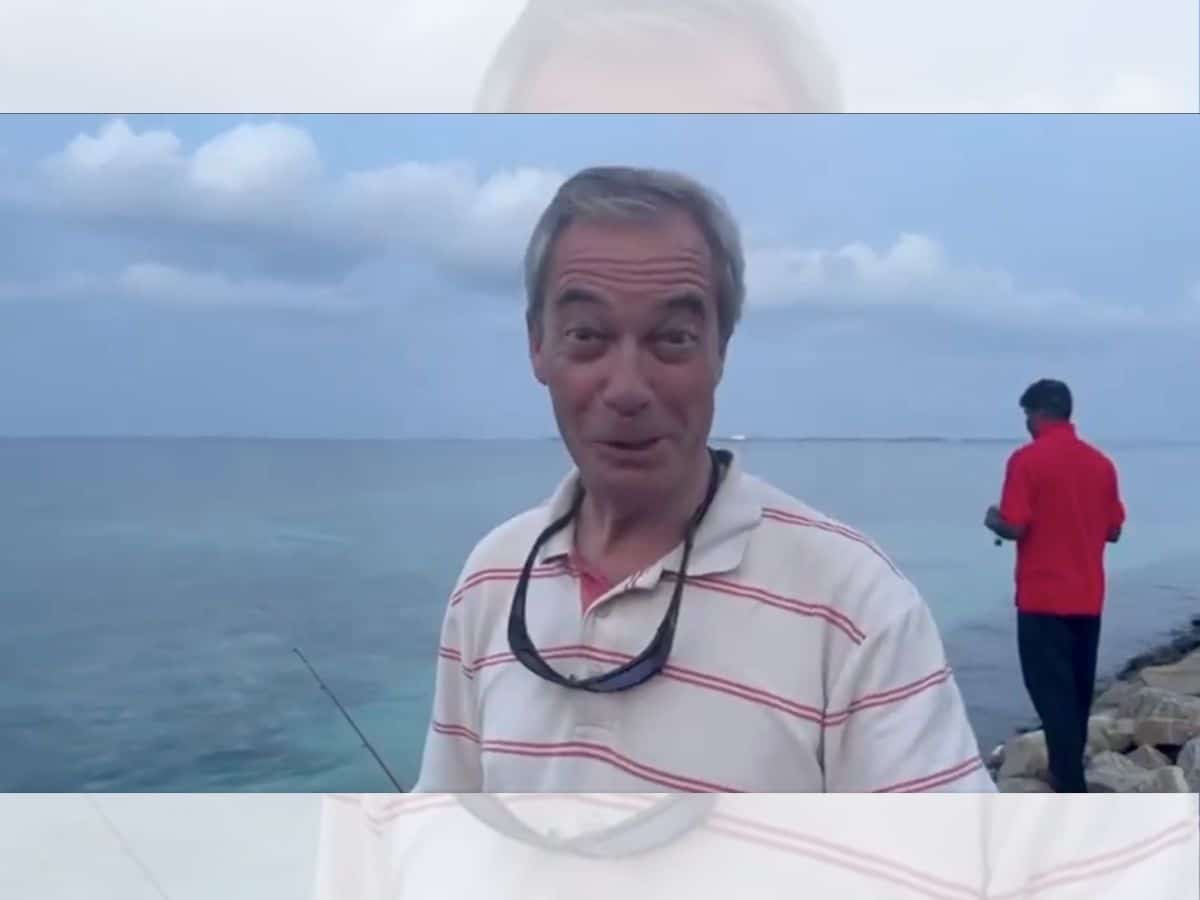
A confused Nigel Farage has kicked up a fuss because a UK military base isn’t letting in any old Tom, Dick, or Harry (with a big emphasis on ‘Dick’) wander about as they please:
Oh poppet, it’s a military base. Why did you think you could visit? It’s not a destination for your holibobs. https://t.co/J4hvYmQiM6
— Jess Brown-Fuller MP (@JessBrownFuller) February 21, 2026
Farage: grandad’s confused again
Do we think the UK should have military bases on the other side of the world?
No, of course not.
We’re not ‘Britain First’ types, but we do think our focus should be on improving our own isles and not worsening other people’s.
That said, here’s what a confused Farage said in the video above:
The British government are applying pressure on the president and the government of the Maldives to do everything within their power to stop me getting on that boat and going to the Chagos Islands.
Now if I was an ISIS fighter crossing the Channel to Dover, they wouldn’t give a damn. No, they put me in a hotel, they give me three meals a day. But here I am, a Member of Parliament, leader of a political party that’s topping the polls. The British government, the High Commissioner here, they’re doing everything they can. They’ve got search parties out trying to find me and they do not want me to leave this place. Quite why?
‘Do you know who I think I am?’ the man cries.
So this is how security clearance would work under Farage – bigshots like him would get to go wherever they like. We’re not sure you can run your military bases like that, but hey – it will be funny to see it in practice.
Farage also said:
If we do give away the Chagos Islands, already the Indians have cut a very substantial economic deal with Mauritius. We know that China is deep in Mauritius. There’s even a smart city there. Huawei do the communications. There will be a geopolitical battle for this part of the world, which has been settled ever since the end of World War II.
Again, we’re not ‘Britain First’, but why do we need to be thinking about this?
This is literally Asia’s business; we have our own problems to worry about.
When we cover global conflicts like Israel’s genocide, the reason we’re doing so is because our government is contributing to the misery, and we don’t want to see our taxes spent like that.
Farage should tell us what he’s going to do for the people of Clacton before he fucks off – yet again – on some globe trotting stunt.
People had some ideas about what Farage is up to anyway:
Let me get this straight: Farage traveled, likely sponsored by another dodgy oligarch, to Maldives claiming he could, from there, go to Chagos which is a restricted territory, therefore having to spend time in Maldives instead? Oh, what a shame. pic.twitter.com/iTDzeU5q0d
— The Finance Guy (@OneFinanceGuy) February 22, 2026
So disappointed that I haven’t been allowed to pretend I give a shit about Chagos islanders while scoring political points and stirring up morons who long for the days of Empire. pic.twitter.com/MyuUfh3xC9
— Parody Nigel Farage (@Parody_PM) February 21, 2026
Globe trotting
Would it really kill Farage to spend a week in Clacton – i.e. his parliamentary constituency?
His inability to be among the people who voted for him is becoming hard to ignore at this point.
Featured image via Nigel Farage

Generally known for being more subdued and uneventful than some of its awards show peers, this year’s Baftas proved to be the exception to the rule, serving up controversy, discourse and a few surprise twists on Sunday night.
Indeed, even an appearance from national treasure Paddington Bear garnered a much more mixed response than you might think.
Following the huge success of the Paddington film series, the iconic British character is currently starring in his own West End show.
And because he was only down the road, Paddington decided to put in an appearance at the Baftas.
Fittingly, Paddington presented the award for Best Children And Family Film, treating the audience to a quick comedy routine. before announcing the winner.
As you’d expect, the moment went down a storm with many viewers:
Others were simply raging at the subdued reaction Paddington’s comedy stylings got from the celebrities in the Baftas audience:
And then there were those who were… well… let’s just go with bemused by Paddington’s latest incarnation:
Paddington: The Musical was penned by Olivier-winning playwright Jessica Swale, with original songs by McFly star Tom Fletcher.
For his stage play, the Paddington character – played by Ben Whishaw in the hit movies – has been brought to life through a combination of puppetry, robotics and animatronics, with James Hameed providing his singing and speaking voice.
Towards the end of last year, the character made a surprise appearance on Strictly Come Dancing to promote his new stage venture:
Meanwhile, One Battle After Another was the big winner at the 2026 Baftas, picking up six awards out of 14 nominations.
Sinners and Frankenstein each picked up three awards – including an acting nod for the former’s Wunmi Mosaku – while Hamnet and I Swear scored two.
Jessie Buckley and Robert Aramayo were awarded Best Actress and Actor, respectively, while Sean Penn was the surprise recipient of Best Supporting Actor, a title which has previously gone to Jacob Elordi and Stellan Skarsgård earlier this awards season.
Politics
Max Thompson: Britain is on course for a blasphemy law by the back door, and a recent case might open it

Max Thompson is Campaigns Officer, for the The Free Speech Union.
If the Crown Prosecution Service gets their way, we could very well be living in a country with an Islamic blasphemy law.
Last February, Hamit Coskun burned a Quran outside the Turkish consulate in Knightsbridge in a one-man protest against what he perceives as the Islamification of his home country, Turkey. As he shouted, “Islam is the religion of terrorism”, a religious fanatic, Moussa Kadri, violently attacked him. He spat at him, kicked him and slashed at him with a blade.
Naturally, one would assume that of the two men, the individual wielding a knife on the streets of London would face the full force of the law. Instead, the attacker avoided jail time, while Hamit — a man who had fled persecution in Turkey — was convicted of a religiously aggravated public order offence. Little has been said about the Deliveroo rider who reportedly joined in the assault.
Burning a holy scripture — any holy scripture — is undoubtedly controversial. But it is not illegal.
Just because something offends polite society does not make it a crime. This case goes to the heart of freedom of expression and protest — and to the proper limits of the criminal law.
Parliament abolished blasphemy laws in England and Wales 18 years ago, under the last Labour government. Scotland followed suit in 2021 through the Hate Crime and Public Order (Scotland) Act. The last execution for blasphemy in Britain took place in 1697. We rightly regarded such laws as relics of a less tolerant age.
It is also worth remembering that Britain’s historic blasphemy laws protected Christianity alone. Yet we now stand on the cusp of something altogether different: a de facto Islamic blasphemy code that would silence criticism of Islam and its practices. And it is emerging not through Parliament, but through the combined and intentioned actions of the Labour government and the Crown Prosecution Service.
In October, it appeared that some rare common sense had prevailed. Mr Justice Bennathan overturned Hamit’s conviction, recognising that while his actions may have been deeply upsetting to Muslims, freedom of expression “must include the right to express views that offend, shock or disturb.”
The Crown Prosecution Service was not prepared to leave it there.
The CPS has sought to overturn that ruling on appeal. The stakes could not be higher. If the Crown succeeds, it will effectively revive Britain’s blasphemy laws. It will send a message that criticism of Islam, even in the context of political protest, may be treated as criminal if it causes offence. Most concerningly of all, it will signal to religious fanatics that should they wish to violently enforce the Islamic blasphemy code, they can do so with the nod of the CPS.
It is inconceivable that someone would be prosecuted in Starmer’s Britain for setting a copy of the Bible alight – a point that the then Shadow Justice Secretary Robert Jenrick articulated last year when he questioned whether the CPS would even bat an eyelid should someone have burnt a Torah scroll outside the Israeli embassy or a Bible outside the Apostolic Nunciature. The principle must be consistent. The law cannot operate on different standards depending on the religion concerned.
In what may be the most damning indictment of all, senior figures in the Trump administration have indicated they would consider granting Hamit Coskun political asylum should his conviction ultimately stand. The notion that Britain — the birthplace of free speech— could produce its first free speech refugee is a damning indictment of Keir Starmer’s government .
Hamit himself has said that if he loses, he will have no choice but to flee once again — this time across the Atlantic. If he wins, it will set an important precedent affirming that freedom of expression in this country still means something.
But even if the CPS loses, the broader direction of travel remains troubling.
A blasphemy law may yet arrive in another form — through the Government’s proposed official definition of “anti-Muslim hostility”, formerly branded as Islamophobia. This ever-expanding definition is expected to include concepts such as racialisation and prejudicial stereotyping. However well-intentioned, such elastic language risks having a chilling effect on free speech and silencing legitimate debate on issues ranging from Islamist extremism to the grooming gang scandal.
Perhaps most alarming of all is the composition of the working group tasked by Angela Rayner with drafting this definition. An investigative briefing by the Free Speech Union found that all five members appointed to the group have had connections to Islamist-linked organisations, including the Muslim Council of Britain (MCB) and Muslim Engagement and Development (MEND). That alone warrants serious scrutiny.
Britain abolished its blasphemy laws because they were incompatible with a free society. We understood that beliefs — religious or otherwise — are not entitled to protection from insult, however distasteful.
If the CPS appeal succeeds, we will have taken a decisive step backwards.
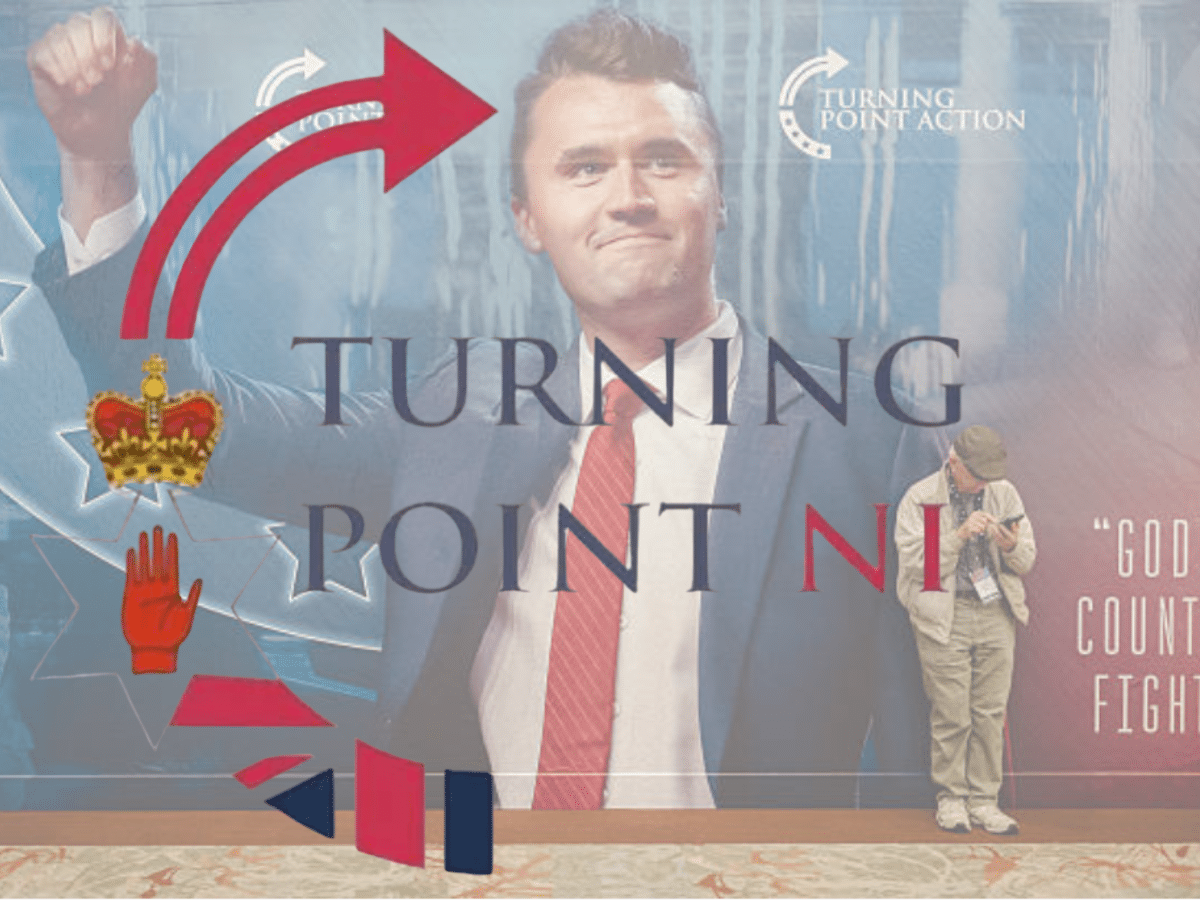
A spokesperson for Turning Point (TP), the right-wing US movement founded by the assassinated demagogue Charlie Kirk, has reiterated the organisation’s desire to bring its particular brand of bile to Ireland. The chief executive of Turning Point UK, Jack Ross, was speaking to the Sunday Times where he claimed that TP has “a lot of interest from Irish people“.
Ross tried to distance the organisation from the far-right by saying:
I know you’ve got some crazies down there — some sort of white-nationalist types — which we’re not interested in. But certainly Fine Gael: that’s what we’re looking for.
Despite this, he went on to advocate exactly the sort of views and tactics used by the worst reactionaries in Ireland:
There’s a real effort to bury the hatchet between the two communities and unite to respond to common grievances such as Islamist terror or, particularly in Ireland, mass migration.
US hate group hope to push far-right narrative
By “two communities”, he is referring to the Catholic, nationalist, republican (CNR), and Protestant, unionist, loyalist (PUL) groupings, mainly in the north. While the far-right has been primarily associated with loyalists, recently fascists have been seen turning up to rallies with tricolours to try and push exactly the narrative Ross describes.
Fine Gael don’t quite fit the bill for what he seems to be after there, but Turning Point organisers will no doubt approve of their lack of redistributive policies, landlord boosting, and slavishness before US big tech and militarism.
The Belfast Telegraph had previously reported Erika Kirk’s intention to visit the North of Ireland. She is the widow of Turning Point founder Charlie Kirk, who was murdered in September at a university in Utah while giving an outdoor talk.
The chances of the now CEO of the conservative grifters getting round the Six Counties uninterrupted seem pretty slim. Turning Point have typically focused on universities, and Queen’s University in Belfast has seen frequent protest of late. The socialist feminist group ROSA North have declared that Kirk’s visit “cannot go ahead without challenge“.
Her main backer thus far seems to be former Democratic Unionist Party (DUP) MP Ian Paisley Jr, who said:
…it would be most welcome [as it was] creating a space where difficult things can be said and debated.
Turning Point look to continue Charlie Kirk’s ugly legacy
Translation: I’d like someone to join me in saying toxic, hateful shit. Charlie Kirk was certainly a specialist there. Shortly after his death, the Guardian did a good job listing his odious views. These include the following quotes:
– If I see a Black pilot, I’m going to be like, boy, I hope he’s qualified.
– Happening all the time in urban America, prowling Blacks go around for fun to go target white people, that’s a fact. It’s happening more and more.
– Reject feminism. Submit to your husband, Taylor [Swift]. You’re not in charge.
– The great replacement strategy, which is well under way every single day in our southern border, is a strategy to replace white rural America with something different.
– We’ve been warning about the rise of Islam on the show, to great amount of backlash. We don’t care, that’s what we do here. And we said that Islam is not compatible with western civilisation.
The attempt to export the Turning Point model to Britain has largely been a flop. The fact its UK head Jack Ross seems pretty clueless about Irish politics bodes well for it making a balls of things on the other side of the Irish Sea too. The Sunday Times quizzed him, finding that when he was:
Asked about prospective candidates, Ross said his “knowledge of Irish politics isn’t the best”, so he would not be able to “name names”.
The malign influence of the US is already present to an excessive degree in Ireland, from toxic fast-food, to mind-numbing reality TV, through to tax dodging big tech, and neutrality wrecking militarism. We can do without the grifter Erika Kirk adding to that with the foul stench left from metaphorically dragging her husband’s corpse round this island.
Featured image via the Canary


Credit: Adobe
Counterfeit and unapproved medicines sold outside the regulated supply chain are a growing threat to public health. Lilly is working with authorities to tackle the illegal trade and support public education.
This article has been paid for and developed by Lilly UK.
The digital world offers convenience and connectivity, including access to healthcare. However, it has also enabled the rise of the illegal trade in medicines,1 which generates up to $200bn a year globally in illicit proceeds.2 Legitimate medicines are rigorously tested and evaluated before they are approved, and patients obtaining medicines through legitimate channels have assurances that they are receiving genuine medicines.3 Whereas medicines from unregulated sources like social media have no safety controls4 and may contain incorrect ingredients or doses or harmful contaminants.5
New Ipsos research commissioned by Lilly UK suggests that around one in ten UK adults* have considered purchasing prescription‑only medicines without a prescription.** The research suggested the main drivers for this are: convenience, lack of time to attend healthcare appointments, and discomfort when engaging with healthcare professionals.6
The need for concerted action is clear.
On 11th March, Lilly will host a parliamentary event, Safeguarding Health: Combatting Counterfeit Medicines in the UK, to discuss challenges and solutions to tackle trafficking in medicines. Interested parliamentarians can RSVP via [email protected].
We believe every patient deserves real, UK-approved medicine, not a dangerous imitation. To support the campaign and constituents:
- Attend the event to hear directly from key stakeholders and share constituency insights.
- Support the work of the MHRA’s enforcement capabilities and improved intelligence sharing by the pharmaceutical industry to take action against illicit online sellers.
- Raise public awareness of the risks associated with purchasing medicines from unregulated sources and encourage the safe purchase of medicines online.
Trafficked medicines are a growing threat to public health. We are ready to partner with stakeholders to take action.
CMAT-08170 February 2026
* This finding is based on 403 respondents to an online survey conducted in the UK with a sample of n=2,000 individuals aged 18-75 years old, plus an additional sample of n=2,000 individuals aged 18-60. Participants were recruited from access panels. Weighting has been applied to align the sample to ensure national representation with the known population profile. Fieldwork was conducted from 30th October – 17th November 2025
** Following an in-person or virtual healthcare professional consultation
References
- World Health Organisation. Substandard and falsified medical products. Available at: https://www.who.int/news-room/fact-sheets/detail/substandard-and-falsified-medical-products [Last accessed January 2026
- Ziavrou KS, Noguera S, Boumba VA. Trends in counterfeit drugs and pharmaceuticals before and during COVID-19 pandemic. Forensic Science International. 2022; 338, 111382.
- General Pharmaceutical Council. Buying medicines online – FAQ. Available at: https://www.pharmacyregulation.org/patients-and-public/standards-you-can-expect-using-pharmacy-services/buying-medicines-online-faq [Last accessed January 2026]
- MHRA. MHRA seizes 7.7 million doses of illegal medicines and removes hundreds of illegal online listings as part of Operation Pangea. Available at: https://www.gov.uk/government/news/mhra-seizes-77-million-doses-of-illegal-medicines-and-removes-hundreds-of-illegal-online-listings-as-part-of-operation-pangea [Last accessed January 2026]
- FDA, Counterfeit medicine. Available at: https://www.fda.gov/drugs/buying-using-medicine-safely/counterfeit-medicine [Last accessed January 2026]
- Eli Lilly and Company. Data on File: Ipsos UK Counterfeit Medicine Consumer Survey. 2026

Reform UK Criticised Over ICE Style Deportation Plan

Campaigners demand action after four Premier League players racially abused on ‘appalling weekend’

Best Puffer Jacket (2026): Patagonia, Arc’teryx, REI


-

 Video7 days ago
Bitcoin: We’re Entering The Most Dangerous Phase
-
 Crypto World6 days ago
Can XRP Price Successfully Register a 33% Breakout Past $2?
-

 Video4 days ago
XRP News: XRP Just Entered a New Phase (Almost Nobody Noticed)
-

 Fashion3 days ago
Weekend Open Thread: Boden – Corporette.com
-

 Sports6 days ago
GB's semi-final hopes hang by thread after loss to Switzerland
-

 Politics1 day ago
Baftas 2026: Awards Nominations, Presenters And Performers
-
 Tech6 days ago
The Music Industry Enters Its Less-Is-More Era
-

 Business6 days ago
Infosys Limited (INFY) Discusses Tech Transitions and the Unique Aspects of the AI Era Transcript
-

 Entertainment5 days ago
Kunal Nayyar’s Secret Acts Of Kindness Sparks Online Discussion
-

 Video6 days ago
Financial Statement Analysis | Complete Chapter Revision in 10 Minutes | Class 12 Board exam 2026
-

 Tech5 days ago
Retro Rover: LT6502 Laptop Packs 8-Bit Power On The Go
-
 Sports4 days ago
Clearing the boundary, crossing into history: J&K end 67-year wait, enter maiden Ranji Trophy final | Cricket News
-

 Business1 day ago
Mattel’s American Girl brand turns 40, dolls enter a new era
-

 Business22 hours ago
Law enforcement kills armed man seeking to enter Trump’s Mar-a-Lago resort, officials say
-

 Entertainment5 days ago
Dolores Catania Blasts Rob Rausch For Turning On ‘Housewives’ On ‘Traitors’
-

 Business5 days ago
Tesla avoids California suspension after ending ‘autopilot’ marketing
-
 NewsBeat5 hours ago
‘Hourly’ method from gastroenterologist ‘helps reduce air travel bloating’
-
 Politics6 days ago
Eurovision Announces UK Act For 2026 Song Contest
-

 Tech21 hours ago
Anthropic-Backed Group Enters NY-12 AI PAC Fight
-

 NewsBeat20 hours ago
Armed man killed after entering secure perimeter of Mar-a-Lago, Secret Service says