

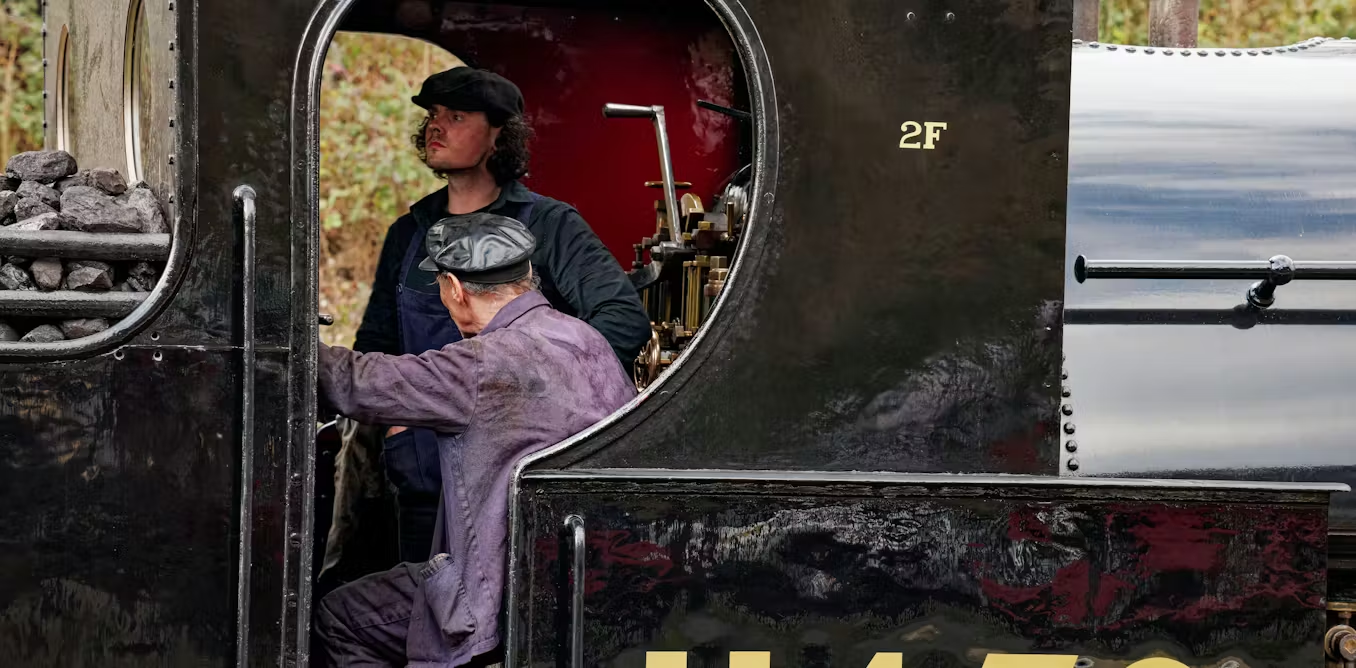
“Let’s face it, we’re just not that into emotions,” Brian tells me with a smile talking with other volunteers at a heritage steam railway in northern England. They are discussing a popular TV restoration show. Allan grimaces, parodying the presenter: “He’s always jumping around, shoving the microphone in their faces, like, ‘How do you feel?’ ‘Does this make you sad?’ You can almost see his glee when people actually cry!”
This parody of emotional disclosure captures something important about the values of a group of men I’ve spent years working alongside.
In public discourse and mental health campaigns, emotional expression is often viewed as essential to mental health. This weighs particularly heavily on discussions of older men. Research routinely links male emotional “repression” to “traditional” and even “toxic” forms of masculinity, connecting an inability to talk about feelings to social isolation and self-alienation.
My research suggests that this narrative misses something crucial about how connection actually works. To research this subject, I spent over four years working closely with volunteers at a heritage railway, observing their everyday interactions, and talking to them about their friendships.
The volunteers – mostly retired men from former industrial towns in north-east England – explicitly reject the modern emphasis on emotional disclosure. Through the work of restoring railways, they are preserving a form of friendship which is elsewhere increasingly rare – one characterised by the more “old-fashioned” value of taciturnity, where the discussion of emotions is not expected or required.
Rather than dismiss their approach as “repression”, I argue in a forthcoming paper that we need to appreciate how people can develop intimate and caring relationships, without naming emotions.
Feeling without emotion
Among the men I came to know, I was initially struck by the lack of talk about their personal lives. Even when facing difficult circumstances including health problems and bereavement, they rarely spoke about their feelings. Instead, they talked about shared interests in railways, and the work that they engaged in. It took me a long time to realise that this did not reflect a lack of care.
Working together on restoration projects creates what they call “camaraderie”, a form of friendship that is grounded in doing things together, rather than in the reflection on interior feelings that has become an increasing expectation of modern intimacy.
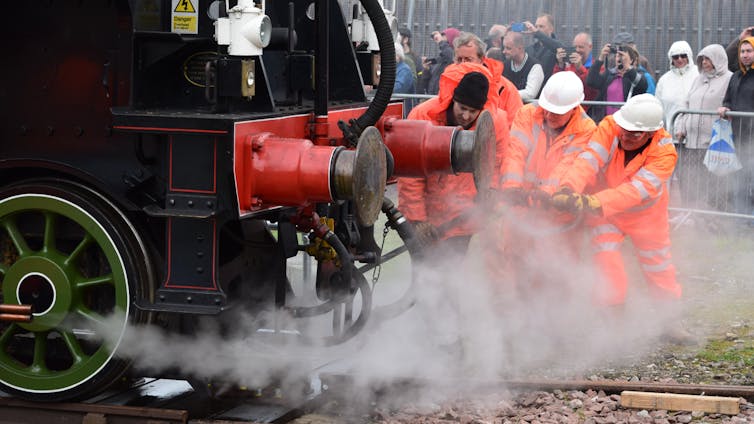
Restoring and repairing railway infrastructure involves physically demanding manual labour. They work alongside one another in close proximity for long periods of time.
Andrew Innes/Alamy
As we struggled with a particularly stubborn toilet seat installation in a cramped coach cubicle, one volunteer wryly observed in a bantering tone that is common: “There’s more than one way of killing a pig and stuffing its arse with butter!” He later explained: “If the job’s too hard, there’s a simpler way of doing it.” Friendships are forged through the process of facing and overcoming these practical problems. Shared tasks create a sense of shared purpose.
Over the decades, this creates a distinctive form of intimacy. Closeness is brought about through shared activities and interests, not personal revelation.
Paradoxically, the more intimate these relationships are, the harsher the “banter” can be. And the closer their friendships, the more they feel comfortable in sharing silence. It may seem that this is uncaring, but in fact the reverse is true.
Connecting through silence
Ron was a taciturn former merchant navy worker in his 70s. As a regular volunteer for over a decade, concern quickly grew among the group when he stopped appearing. When he finally returned several weeks later, he was visibly breathless and struggled to walk. Nobody asked directly what was wrong. Instead, they offered tea and made jokes.
After he left, discussion made it clear that this was deliberate. His friends had observed him carefully and were worried. Their silence was a thoughtful response to his own: a way of giving him the “normality” that he seemed to want.
I observed these patterns of interaction in many other situations. What might look like emotional inarticulacy is actually a deliberate ethic of care. These men aren’t unable to discuss feelings. But often they choose not to, viewing these silences as a way to respect the autonomy and privacy of others. In this respect, my research builds on ethnographic accounts, for example of firefighters and male hospital porters that draw attention to forms of intimacy and connection that do not depend on the discussion of personal feelings and emotions.
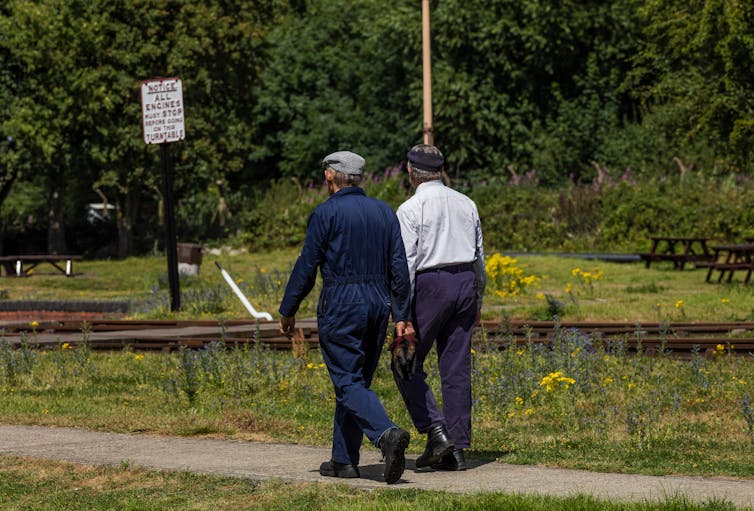
Though men at the railway rarely discuss feelings, these are understood by other means. The way someone looks, or the manner in which they work can be telling. In response, they show care through deeds: checking in via phone calls, offering practical help, creating space for silent companionship without pressure to explain or disclose – “just being there”, as they sometimes say.
Philip Pound/Alamy
Mental health services and support initiatives increasingly target men with messages about “opening up”. Indeed, my research doesn’t suggest emotional expression is wrong or unhelpful. However, either/or framings, which view connection in opposition to repression miss important aspects of the many ways people sustain intimacy and support.
My work with railway enthusiasts shows how it is possible to create meaningful support networks that offer genuine intimacy and connection, without explicit discussion of emotions. Connection and care take multiple forms. For some, silence shared between friends isn’t an absence of feeling, just a different way of sharing it.



