

Crypto World
Is Trump Turning Gaza Into a Crypto Stablecoin Experiment?

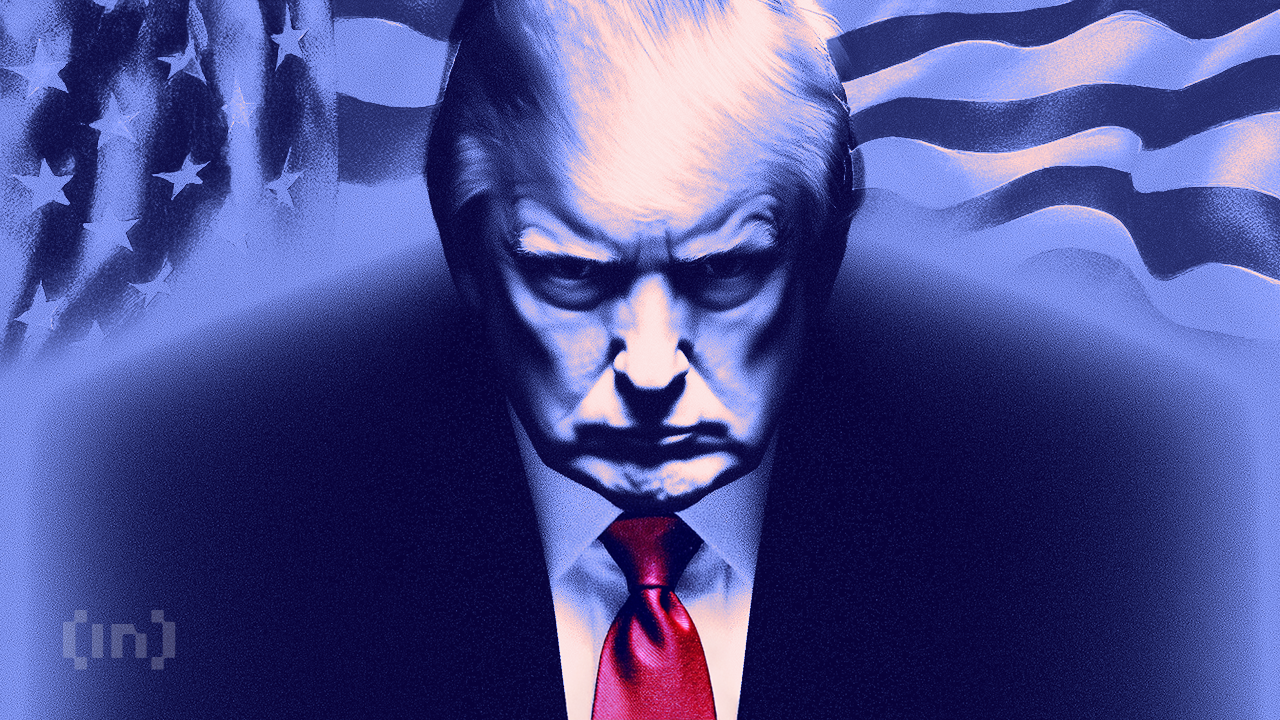
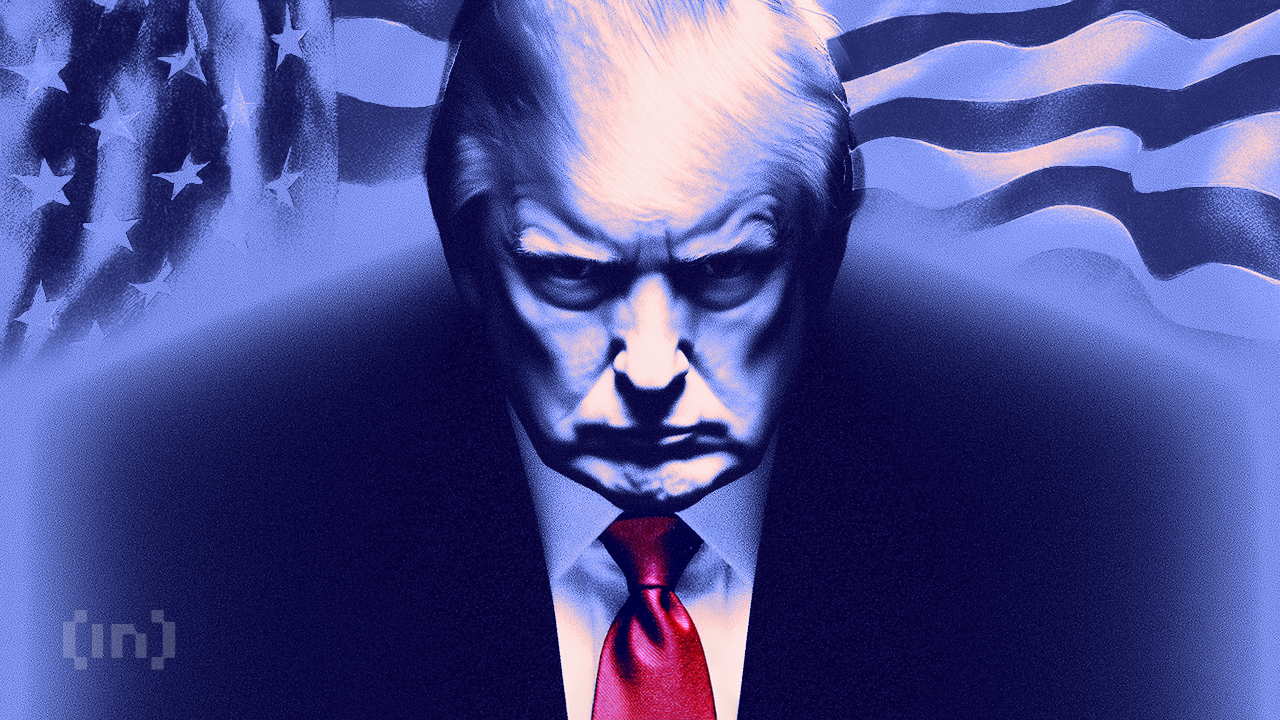
Officials advising Donald Trump’s “Board of Peace” are exploring a US dollar-backed stablecoin for Gaza, according to reports from the Financial Times. The proposal remains in early stages.
However, it signals a potential shift toward using crypto as core infrastructure in Gaza’s post-war economic reconstruction.
Turning Gaza Into a Crypto Project?
According to the Financial Times, the stablecoin would be pegged to the US dollar and used to facilitate digital payments, not replace Gaza with a sovereign currency.
Governance would involve the Board of Peace and Gaza’s interim technocratic administration.
The discussions come as Gaza’s banking system remains severely impaired. Cash access has been restricted since 2023 due to ATM destruction and limits on physical currency deliveries.
As a result, digital payments have become more common, though connectivity and financial infrastructure remain fragile.
Board of Peace Takes Central Role in Gaza Transition
The Board of Peace sits at the center of Trump’s broader 20-point plan for Gaza. Trump chairs the body. Its members include senior US officials such as Secretary of State Marco Rubio and envoy Steve Witkoff, alongside international figures like former UK Prime Minister Tony Blair and World Bank President Ajay Banga.
The board oversees Gaza’s transitional governance, reconstruction planning, and economic recovery. It also coordinates with a Palestinian technocratic committee tasked with restoring services and managing daily administration.
Meanwhile, an international stabilization force is expected to handle security and policing during the transition period.
Within this framework, the stablecoin proposal reflects a broader effort to rebuild Gaza’s financial system without relying on traditional banking infrastructure.
Promise of Financial Access, But Ethical Risks of Control
In theory, a stablecoin could help restore economic activity. Digital dollars could enable aid delivery, salaries, and daily transactions even without functioning banks. This could potentially improve transparency and reduce corruption in aid distribution.
However, the plan raises serious ethical and political concerns. A digitally controlled currency governed by an international body could give external actors unprecedented influence over Gaza’s financial system. Every transaction could be tracked.
Access could potentially be restricted or revoked.
Moreover, introducing a separate payment system risks further separating Gaza economically from the West Bank. Infrastructure limits, including Gaza’s reliance on slow 2G networks, could also hinder adoption.
For now, the stablecoin remains only a proposal.
However, if implemented, it would represent one of the first attempts to rebuild a post-conflict economy using digital dollar infrastructure — a move that could reshape both Gaza’s future and the global role of stablecoins.

Crypto World
Kraken’s Sponsorship of ‘Trump Accounts’ Highlights Crypto’s Growing Political Footprint


The initiative showcases Kraken’s Wyoming roots and the increasing ties between crypto firms and policymakers.
Kraken’s decision to fund savings accounts for every child born in Wyoming this year is being viewed as the latest move aligning the exchange with the crypto-friendly Trump administration.
The cryptocurrency exchange currently ranks as the sixth largest globally by 24-hour trading volume, with about $1 billion traded over the past day – behind Binance, Bybit, OKX, Coinbase, and Bitget, according to CoinGecko.
Last week, Kraken said it would sponsor “Trump Accounts” for every child born in Wyoming in 2026, essentially pledging a financial contribution to each account as part of a savings program introduced by President Donald Trump.
While the exchange framed the plan as a way to grow financial opportunity for families, experts say it also underscores its close relationship with Wyoming (where it is headquartered), as well as the Trump administration.
Trump Ties
Jamie Green, COO at Superset, told The Defiant that funding the accounts is about “maintaining goodwill in the jurisdiction” that afforded Kraken its most significant banking license. In 2020, Wyoming approved Kraken’s plan to launch Kraken Bank, making it the first crypto company in the U.S. to receive an SPDI charter – a state banking license that lets it hold and safeguard digital assets.
However, Green said the move could invite political backlash, as opposed to regulatory scrutiny. “The greater risk is political. Democrats and progressive critics will cite this as further evidence of a cozy relationship between crypto firms and the White House,” he added.
Jesse Powell, Kraken’s co-founder, publicly backed Trump during the 2024 campaign, announcing in June of that year that he had personally donated $1 million to the president’s re-election bid, according to a congressional staff report.
Reuters also reported last year that Payward Inc., Kraken’s parent company, hired the Trump-aligned lobbying firm Ballard Partners in late 2024, joining several crypto companies that hoped to shape policy under the new administration.
“Being visibly Trump-aligned is an asset today – and a liability when political winds change,” Green said.
Wyoming’s Crypto Influence
Daniel Bara, director of the Olympus Association, told The Defiant that the move reflects Kraken’s long-standing relationship with Wyoming – a state that has often served as a testing ground for crypto policy and where initiatives launched are closely watched by other states.
“Wyoming built one of the first regulatory frameworks in the country that treated digital assets as a legitimate financial category,” Bara said. Earlier this year, the state also launched FRNT, the first U.S. state-issued dollar-backed stablecoin, managed by Franklin Templeton and available through partners including Kraken.
And in March 2025, Wyoming Senator Cynthia Lummis and Congressman Nick Begich introduced the BITCOIN Act – legislation that would establish a U.S. Strategic Bitcoin Reserve and codify a national digital asset policy.
“Committing $1.2 million to fund Trump Accounts for every child born in the state this year reflects the depth of that relationship,” Bara said. “And for a company preparing for a public offering, that kind of visible community investment likely carries weight.”
A Growing Convergence
From a broader standpoint, experts said that Kraken’s move aligns with a larger shift of crypto firms deepening ties with policymakers.
“We have a sitting president who has launched a meme coin, a DeFi platform, and has interests in Bitcoin mining,” Christopher Perceptions, lead at Jubilee Labs and a strategic advisor to Wisconsin State Senator Dora Drake, said. “The convergence is here, and the tidal wave is still gathering momentum.”
Bara added that just a few years ago, crypto companies largely operated outside the political system or rebelled against it. “Now you have hundreds of millions flowing into super PACs, companies relocating to regulatory-friendly states, and corporate sponsorships tied to federal initiatives,” he said.


A top economist has sounded a major warning on key assets like stocks, gold, silver, and the crypto market.
Summary
- Stocks and crypto prices could be at risk of a bigger dive in the near term.
- Mark Zandi, a top economist, highlighted some major risks facing the market.
- He pointed to the slowing economy, valuation, and concerns in the Treasury market.
The stark warning as these assets have become highly volatile in the past few weeks or months. Crypto prices have sunk, with Bitcoin (BTC) and most altcoins being in a technical bear market.
American stocks have also wavered, with the S&P 500 Index remaining below its all-time high. It has barely moved this year. Similarly, the Dow Jones and Nasdaq 100 indices have remained in a tight range lately. Gold and silver prices have also pulled back from their all-time highs.
Mark Zandi warns on stocks, gold, silver, and crypto prices
In a statement on Sunday, Mark Zandi, the top economist at Moody’s, warned that the financial market was fraught and that it may experience a sharp pullback soon.
He pointed to the ongoing complacency among investors, who are using dips as buyiyyng opportunity. Also, he pointed to the increasing speculation, where investors believe that prices will rally in the future because they did so in the past.
Zandi has identified more risks in the market. For example, he observed that the US economy was growing below its potential, with the real GDP growing by slightly above 2%. The estimated potential is about 2.5%.
At the same time, the labor market has flatlined, with the unemployment rate remaining above 2%. The economy added less than 200,000 jobs last year, the smallest increase in years.
Zandi also pointed to the ongoing woes in the Treasury market, where long-term bond yields have continued rising in the past few months. Hedge funds have increased their leverage in the market, leading to more risk as the US public debt continues rising.
Zandi also believes that the stock market has become highly overvalued and disconnected from the economy.
Two major risks persist
Stock and crypto prices are vulnerable amid major risks in the market. The first major risk is that Donald Trump may launch an attack against Iran anytime soon.
In a statement last week, Trump noted that he was considering a limited strike to push the Iranians to the negotiating table. Iran, on the other hand, has warned that any attack will lead to a wider war that may lead to a wider war in the region.
A war would lead to more volatility in the stock and crypto markets by stimulating inflation in the US. A high inflation rate, on the other hand, would make it hard for the Federal Reserve to cut interest rates.
There are also trade risks as Donald Trump considers responding to his Supreme Court loss last Friday. He announced a global tariff of 15% using another rule that allows the president to levy tariffs for 150 days.

TLDR
- ProShares recorded $17 billion in first-day trading volume for its new GENIUS money market ETF.
- The firm confirmed that internal fund allocations contributed to the early surge in activity.
- The GENIUS ETF follows federal rules for stablecoin reserve standards under the GENIUS Act.
- Analysts observed that the debut outpaced previous high-profile ETF launches across the market.
- Tokenized money market funds continued to gain traction as institutions explored blockchain settlement.
ProShares opened its GENIUS-branded money market ETF with heavy trading and strong early flows as firms continued exploring tokenized fund structures, and the launch drew wide market attention as cash-management demand persisted and blockchain rails expanded. The surge placed new focus on how issuers used internal allocations while investors assessed broader shifts. The event also advanced discussion around how digital cash products could interact with regulated funds.
GENIUS ETFs and Early Market Activity
ProShares reported $17 billion in first-day volume for its Genius Money Market ETF, and the firm confirmed internal transfers fueled much of the total. The company used cash from existing funds to support treasury operations, and this move highlighted how issuers managed liquidity across products.
Bloomberg tracked the debut and compared it with other launches, and analysts noted the sharp difference in volume. The debut exceeded the first-day totals of new crypto and ESG ETFs, and it shifted attention to cash strategies.
The GENIUS structure aligned with federal requirements for payment-stable assets, and the fund held short-duration government securities. The law set clear reserve and disclosure standards, and issuers applied these rules to maintain consistent oversight. Market observers watched activity closely, and early trading showed strong operational utility. The ETF advanced its role as a treasury tool, and issuers framed the approach as a way to streamline internal flows.
Tokenized Funds Enter Broader Use Cases
Tokenized money market funds gained traction as firms tested blockchain settlement, and the products offered yield while operating within compliance frameworks. Issuers presented them as interest-bearing complements to digital dollars, and adoption increased across institutional channels.
JPMorgan Chase strategists noted that tokenized fund shares could work as collateral, and they suggested the model preserved yield during transfers. One strategist said, “You can post money-market shares and not lose interest,” and firms continued building pilots.
The growth of tokenized vehicles aligned with rising stablecoin usage, and institutions explored both products for payments and custody. Funds positioned themselves as regulated alternatives, and issuers stressed transparency requirements. The Bank for International Settlements described tokenized money funds as fast-growing instruments, and the bulletin referenced their use in settlement trials. The report added context as markets evaluated new rails.
Regulatory Alignment and Current Developments
The GENIUS Act shaped how issuers structured reserves, and fund operators adopted those guidelines for liquidity portfolios. The law reinforced the role of high-quality assets, and managers applied these standards across new launches.
Firms also expanded product research, and issuers examined how tokenized versions might fit into custody systems. The approach strengthened administration flows, and providers continued monitoring regulatory updates.
ProShares used the GENIUS branding to reflect compliance, and the ETF’s early volume elevated attention on regulated cash tools. The debut arrived as digital asset firms explored new pathways, and issuers weighed operational benefits.
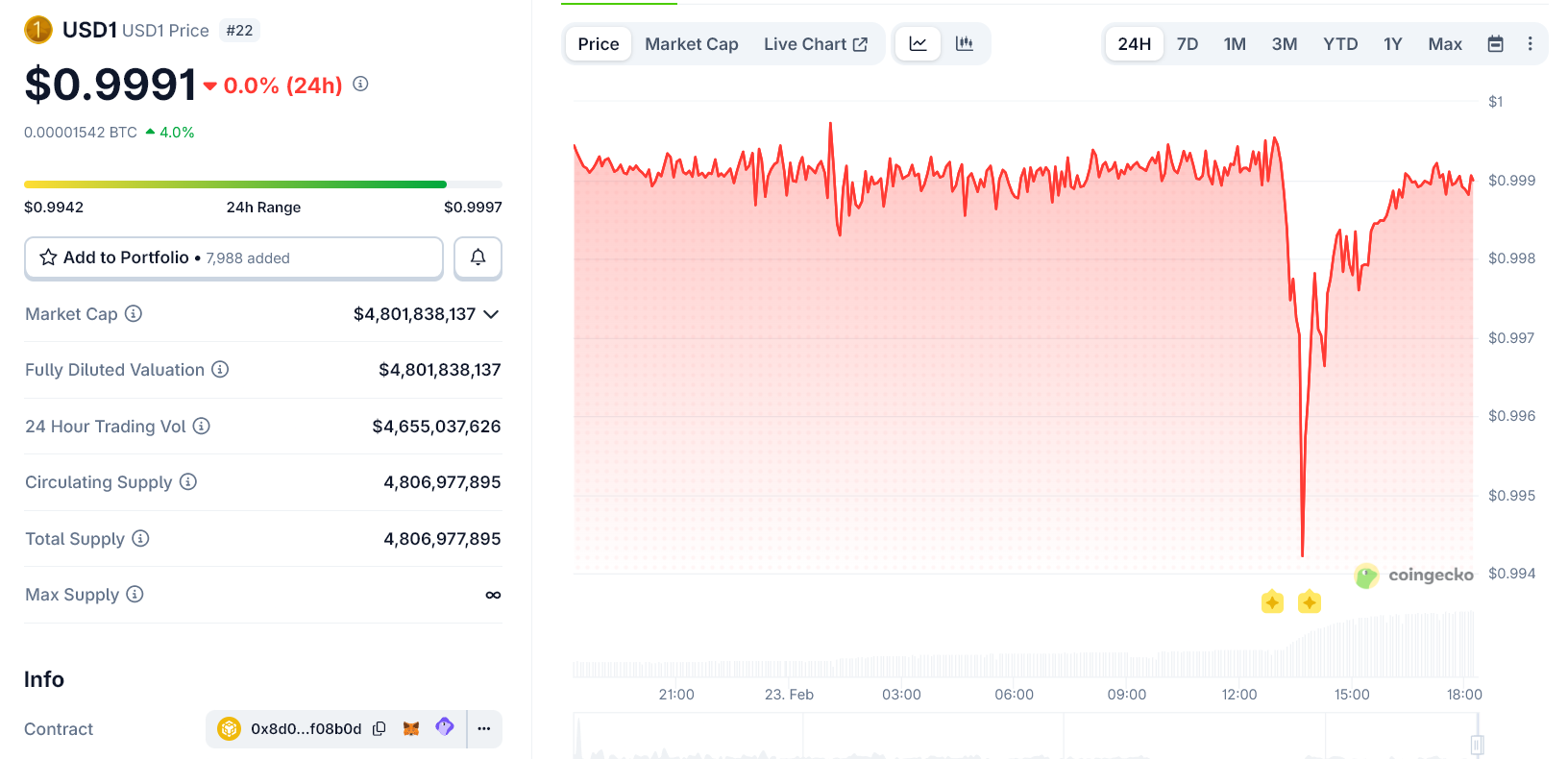
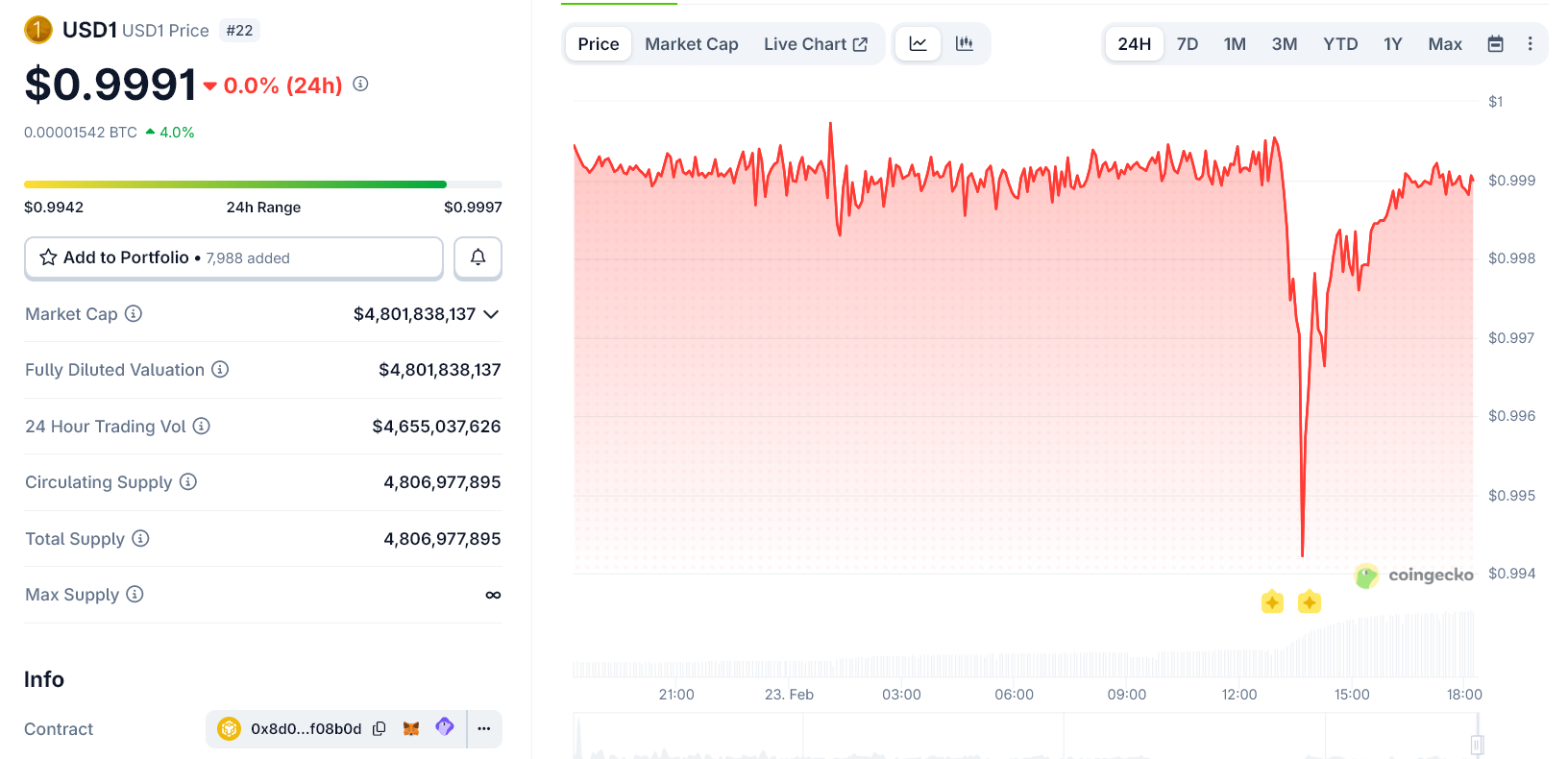
The USD1 stablecoin briefly lost its dollar peg on February 23, falling to around $0.994 before quickly recovering. The token now trades close to parity, suggesting the disruption lasted only minutes.
USD1 is issued by World Liberty Financial (WLFI), a DeFi project linked to business entities associated with Donald Trump and his family. The stablecoin currently has a market capitalization near $4.8 billion.
World Liberty Financial’s Stablecoin Depeg Triggers Speculation
WLFI responded within hours. The company said attackers compromised several cofounder accounts, spread false information, and opened short positions to profit from panic selling.
Despite the rapid recovery, the incident triggered widespread concern across the crypto community.
Some users compared the sudden depeg to early warning signs seen before the collapse of algorithmic stablecoins such as TerraUSD in 2022.
However, USD1 differs structurally. WLFI says it maintains full 1:1 reserves, unlike TerraUSD’s algorithmic design, which relied on arbitrage mechanisms rather than direct asset backing.
Meanwhile, unverified reports circulated on social media claiming that Eric Trump deleted older promotional posts related to USD1 during the volatility.
Screenshots have circulated online, but no independent confirmation has verified these claims.
Separately, blockchain investigator ZachXBT said he plans to release findings later this week on alleged insider trading involving a major crypto company.
He did not name the firm. Still, some social media users speculated that WLFI could be involved. There is no evidence supporting this claim at the time of writing.
Stablecoins rely heavily on confidence. Even brief depegs can trigger rapid selling if users fear insolvency or reserve weakness.
USD1’s quick recovery suggests that redemptions and liquidity mechanisms functioned as designed. Nevertheless, the incident reflects how quickly market sentiment can shift, especially for newer stablecoins tied to high-profile figures.
The company has not disclosed technical details of the alleged attack.
The coming days, including any investigation disclosures, will likely determine whether the event remains a short-lived market shock or develops into a broader credibility test for USD1.

Editor’s note: In the ongoing battle against malware, RenEngine’s reach underscores how attackers exploit trusted software channels to broaden their victim base. Today’s briefing from Kaspersky Threat Research highlights a multi-stage infection that pivots beyond gaming into widely used cracked productivity tools. The findings emphasize the importance of verifying software sources and maintaining updated defenses across personal and corporate environments. As cyber threats increasingly blend with legitimate workflows, readers should review security practices, stay vigilant about unofficial installers, and consider how threat actors opportunistically adapt to new distribution methods. This update offers context for executives, IT teams, and security professionals navigating a rapidly evolving threat landscape.
Key points
- RenEngine loader is distributed via dozens of pirated software sites, not just cracked games.
- Final payloads include Lumma, ACR Stealer, and Vidar in various infection chains.
- The distribution pattern is opportunistic and regional rather than targeted.
- The campaign uses Ren’Py-based game installers with fake loading screens to deploy malware
Why this matters
The expansion from gaming to cracked productivity software widens the potential victim pool and raises risk for individuals and organizations. Attackers use multi-stage delivery, anti-analysis checks, and broad distribution to bypass defenses. Organizations should reinforce software provenance checks, user education, and behavior-based detection to identify malicious activity masquerading as legitimate software.
What to watch next
- Watch for new distribution sites or bundles carrying RenEngine via cracked software.
- Monitor for updates from security vendors on HijackLoader-based campaigns across multiple payloads.
- Track any new payload families linked to RenEngine or related loaders.
Disclosure: The content below is a press release provided by the company/PR representative. It is published for informational purposes.
Kaspersky identifies RenEngine loader distributed through pirated games and software
Kaspersky identifies RenEngine loader distributed through pirated games and software
February 23, 2026
Kaspersky Threat Research has revealed its analysis of RenEngine, a malware loader that has recently gained public attention. Kaspersky identified RenEngine samples as early as March 2025, with its solutions already protecting users from the threat at that time.
Beyond the cracked games highlighted in recent reports, Kaspersky researchers discovered that attackers created dozens of websites distributing RenEngine through pirated software, including graphics editors like CorelDRAW. This expands the known attack surface beyond the gaming community to anyone seeking unlicensed software.
Kaspersky has recorded incidents in Russia, Brazil, Turkey, Spain and Germany, among other countries. The distribution pattern indicates opportunistic attacks rather than targeted operations.
When Kaspersky first identified RenEngine, the loader was delivering the Lumma stealer. Current attacks distribute ACR Stealer as the final payload, and Vidar stealer has also been observed in some infection chains.
The campaign exploits modified versions of games built on the Ren’Py visual novel engine. When users launch infected installers, a fake loading screen appears while malicious scripts execute in the background. The scripts include sandbox detection capabilities and decrypt a payload that initiates a multi-stage infection chain using HijackLoader, a modular malware delivery tool.
“This threat extends beyond pirated games — attackers are using the same technique to distribute malware through cracked productivity software, which broadens the potential victim pool significantly.”
— Pavel Sinenko, lead malware analyst at Kaspersky Threat Research
“Game archive formats vary by engine and title. If an engine doesn’t check the integrity of its resources, attackers can embed malware that executes the moment you click play.”
Kaspersky solutions detect RenEngine as Trojan.Python.Agent.nb and HEUR:Trojan.Python.Agent.gen. HijackLoader is detected as Trojan.Win32.Penguish and Trojan.Win32.DllHijacker.
To stay protected, Kaspersky recommends:
- Download games and software only from official sources. Pirated content remains one of the most common malware delivery methods.
- Use a reliable security solution. Kaspersky Premium protects against threats like RenEngine through its Behavior Detection component, which identifies malicious activity even when malware is disguised as legitimate software.
- Keep your operating system and applications updated to ensure known vulnerabilities are patched.
- Be skeptical of “free” offers. If a paid game or software is available for free download on an unofficial site, the cost is likely your security.
About Kaspersky
Kaspersky is a global cybersecurity and digital privacy company founded in 1997. With over a billion devices protected to date from emerging cyberthreats and targeted attacks, Kaspersky’s deep threat intelligence and security expertise is constantly transforming into innovative solutions and services to protect individuals, businesses, critical infrastructure, and governments around the globe. The company’s comprehensive security portfolio includes leading digital life protection for personal devices, specialized security products and services for companies, as well as Cyber Immune solutions to fight sophisticated and evolving digital threats. We help millions of individuals and nearly 200,000 corporate clients protect what matters most to them. Learn more at www.kaspersky.com.
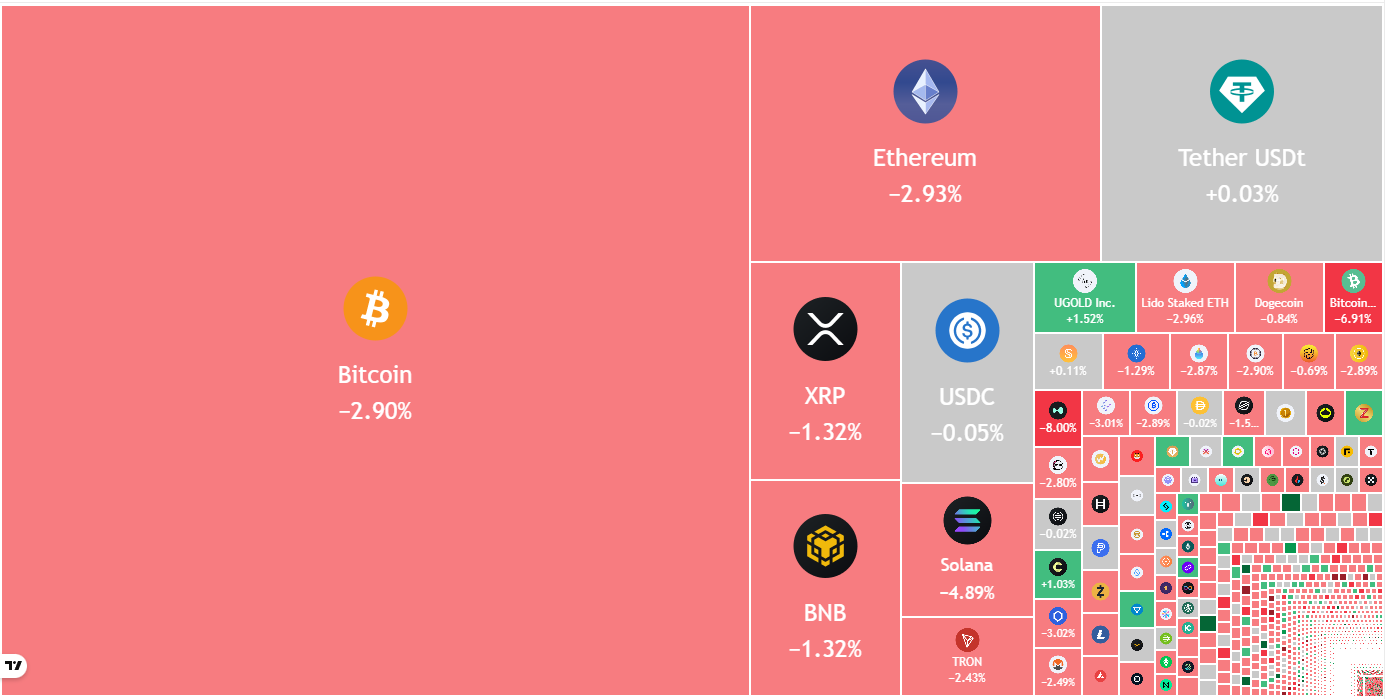
Bitcoin’s (BTC) weakness extended into the weekly open as major stocks sold off in response to US President Donald Trump’s threat to enforce a 15% global tariff after the Supreme Court ruled that his IEEPA tariffs were illegal.
Market sentiment remains fragile, as the Crypto Fear & Greed Index at 5 out of 100 remains in the “extreme fear” zone. Pseudonymous trader and investor BitcoinHyper said in a post on X that the index has been in the extreme fear zone for nearly three weeks, the longest since 2022.
Traders on the prediction market Polymarket have increased the odds of BTC falling below $55,000 to 72%. The prediction market expectations matches several analysts and financial institutions who expect a fall near or below $55,000.

While a bottom may not have formed, expectations are that BTC will eventually recover and move higher. Economist Timothy Peterson said in a post on X that BTC has been positive 50% of the time in the past 24 months. Using a statistical model, Peterson estimated that there is an 88% chance that BTC “will be higher 10 months from now.”
Could buyers defend the support levels in BTC and the major altcoins? Let’s analyze the charts of the top 10 cryptocurrencies to find out.
S&P 500 Index price prediction
The S&P 500 Index (SPX) has been trading between 6,775 and 7,002 for several days, indicating a balance between supply and demand.

The flat moving averages and the relative strength index (RSI) near the midpoint do not give a clear advantage either to the bulls or the bears. Buyers will have to achieve a close above the 7,002 resistance to signal the resumption of the uptrend. The index may then ascend to the 7,290 level.
This bullish view will be invalidated in the near term if the price turns down and breaks below the 6,775 level. The index may then tumble to the solid support at the 6,550 level.
US Dollar Index price prediction
The US Dollar Index (DXY) turned down from the 50-day simple moving average (97.95) on Friday, indicating that the bears are aggressively defending the level.

Sellers are attempting to sink and maintain the index below the 20-day exponential moving average (97.48). If they manage to do that, the index might slide to the 96.21 to 95.55 support zone.
Buyers are likely to have other plans. They will attempt to halt the pullback and push the price above the 50-day SMA. If they can pull it off, the index may jump toward the 99.50 level and subsequently to the 100.54 resistance.
Bitcoin price prediction
BTC fell below the $65,118 support on Monday, but the bulls are attempting to defend the level on a closing basis.

Any relief rally is expected to face selling at the 20-day EMA ($70,185). If the Bitcoin price turns down sharply from the 20-day EMA, it increases the likelihood of a drop to the vital $60,000 support. Buyers will have to defend the $60,000 level with all their might, as a break below it may sink the BTC/USDT pair to $52,500.
Buyers will have to propel the price above the 20-day EMA to signal demand at lower levels. The pair may then march to the $74,508 level, where the bears are again likely to pose a strong challenge.
Ether price prediction
Ether (ETH) fell below the nearby support at $1,897 on Monday, opening the doors for a retest of the $1,750 level.

The downsloping moving averages and the RSI near the oversold territory heighten the risk of a breakdown. If the $1,750 level is taken out, the ETH/USDT pair may resume the downtrend toward the next support at $1,537.
Contrarily, if the Ether price turns up sharply from $1,750, it suggests demand at lower levels. That may keep the pair inside the $1,750 to $2,111 range for a while longer. A close above $2,111 will be the first sign of strength, clearing the path for a rally to the 50-day SMA ($2,593).
XRP price prediction
XRP (XRP) has been trading between the support line of the descending channel pattern and the 20-day EMA ($1.47) for the past few days.

The downsloping 20-day EMA and the RSI in the negative territory indicate that the bears remain in control. If the support line cracks, the XRP/USDT pair may retest the Feb. 6 low of $1.11. A break and close below the $1.11 level may extend the decline to psychological support at $1.
Buyers have an uphill task ahead of them. They will have to swiftly propel the XRP price above the downtrend line to signal a potential trend change.
BNB price prediction
BNB (BNB) fell below the immediate support at $587 on Monday, but the long tail on the candlestick shows buying at lower levels.

The bulls will attempt to start a recovery, which is expected to face selling at the 20-day EMA ($651). If the price turns down from the 20-day EMA, the bears will again strive to pull the BNB/USDT pair below the $570 level. If they manage to do that, the BNB price may start the next leg of the downtrend to psychological support at $500.
Contrary to this assumption, if buyers pierce the 20-day EMA, the pair may rally to the breakdown level of $730.
Solana price prediction
The failure of the bulls to push Solana (SOL) to the breakdown level of $95 signals that the bears are active at higher levels.

Sellers will attempt to strengthen their position by pulling the Solana price below the $76 level. If they succeed, the SOL/USDT pair may fall to the Feb. 6 low of $67, which is a critical support to watch out for. If the level gives way, the pair may slump to $60.
Any relief rally is expected to face resistance at the 20-day EMA and then at the $95 level. A close above the $95 level suggests that the sellers are losing their grip. The pair may then surge to $117.
Related: Bitcoin traders diverge over BTC price strength with $60K in sight
Dogecoin price prediction
Dogecoin (DOGE) turned down from the 20-day EMA ($0.10) on Saturday and is likely to drop to the Feb. 6 low of $0.08.

The bulls are expected to fiercely defend the $0.08 level, as the failure to do so may start the next leg of the downward spiral toward $0.06.
The 20-day EMA remains the immediate near-term resistance to watch out for. A close above the 20-day EMA will be the first sign that the selling pressure is reducing. The DOGE/USDT pair may then ascend to the breakdown level of $0.12, where the bears are expected to mount a strong defense.
Bitcoin Cash price prediction
Buyers pushed Bitcoin Cash (BCH) above the 50-day SMA ($571) on Sunday but could not sustain the higher levels.

The bears sold aggressively and have pulled the Bitcoin Cash price below the 20-day EMA ($551). If the price maintains below $538, the BCH/USDT pair might plummet to the strong support at $500. Buyers are expected to aggressively defend the $500 level, as a close below it may sink the pair to $443.
Buyers will have to drive and maintain the price above the 50-day SMA to signal strength. The pair may then climb to $600.
Cardano price prediction
Despite repeated attempts, buyers failed to push and maintain Cardano (ADA) above the 20-day EMA ($0.28) in the past few days.

That increases the likelihood of a drop to the support line of the descending channel pattern. If the price rebounds off the support line and breaks above the 20-day EMA, it suggests that the ADA/USDT pair may remain inside the channel for some more time.
Instead, if the Cardano price continues lower and breaks below the support line, it indicates the resumption of the downtrend. The pair may then plunge toward $0.15. A short-term trend change will be signaled after buyers clear the overhead hurdle at the downtrend line.
This article does not contain investment advice or recommendations. Every investment and trading move involves risk, and readers should conduct their own research when making a decision. While we strive to provide accurate and timely information, Cointelegraph does not guarantee the accuracy, completeness, or reliability of any information in this article. This article may contain forward-looking statements that are subject to risks and uncertainties. Cointelegraph will not be liable for any loss or damage arising from your reliance on this information.


Crypto.com has received conditional approval from the U.S. Office of the Comptroller of the Currency (OCC) to charter Foris Dax National Trust Bank, taking a significant step toward becoming a federally regulated qualified custodian.
Centralized cryptocurrency platform Crypto.com has received a conditional approval from the U.S. Office of the Comptroller of the Currency (OCC) to establish Foris Dax National Trust Bank, d.b.a. Crypto.com National Trust Bank.
This development advances the firm’s ambition to become a federally regulated qualified custodian, according to an official announcement. Once fully approved, Foris Dax National Trust Bank will provide custody, staking, and trade settlement services under the stringent oversight of the OCC.
Crypto.com’s move aligns with a broader industry trend where crypto firms are pursuing regulatory approvals to enhance their credibility and expand service offerings.
For instance, Anchorage Digital recently launched regulated ‘Stablecoin Solutions’ to cater to institutional needs, while CME Group is set to offer 24/7 crypto futures trading, showcasing the industry’s shift towards regulated offerings.
The move also comes as the global crypto custody market is projected to reach over $4 trillion by 2033, growing at a CAGR of 23.6% from 2025 to 2033, according to Grand View Research.
Kris Marszalek, CEO of Crypto.com, emphasized the significance of this regulatory milestone in a statement.
“This conditional approval is the latest testament to both our commitment to compliance and to providing customers trusted and secure services they expect from Crypto.com,” said Marszalek. “This milestone brings us a major step closer to meeting leading institutions’ needs for a one-stop-shop qualified custodian under a gold standard of federal oversight.”
Headquartered in Singapore, Crypto.com offers a wide selection of crypto services, including trading, payments, and financial products. The platform has amassed over 150 million users worldwide, according to the platform’s website.
The OCC, a U.S. federal agency responsible for regulating and supervising national banks, has been actively involved in providing regulatory clarity for crypto-related financial services.
This article was generated with the assistance of AI workflows.
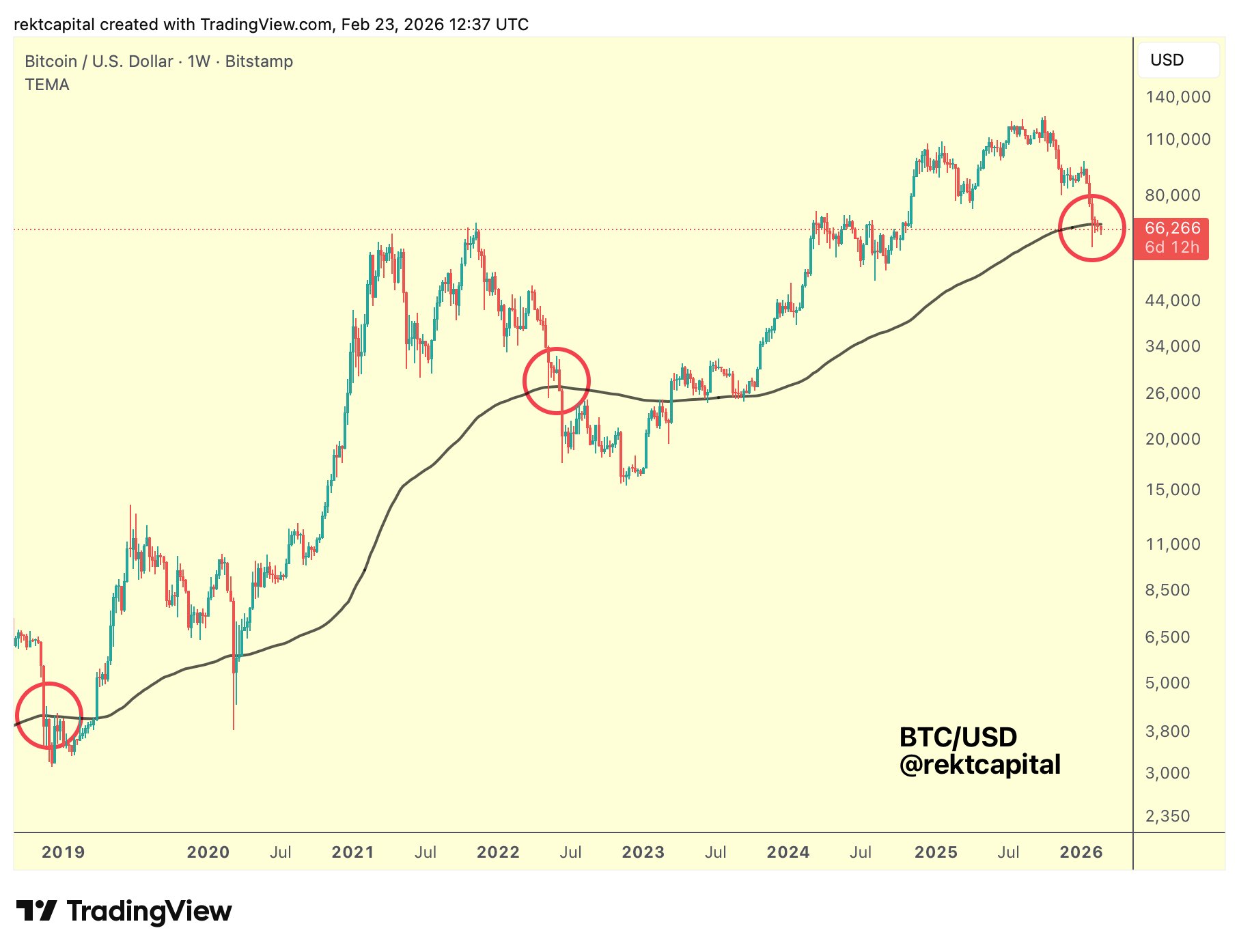
Bitcoin (BTC) closed a weekly candle below its 200-period exponential moving average (EMA) for the first time since October 2023. The weekly close ended a technical uptrend that lasted for 882 days.
The shift in trend renews focus on BTC’s onchain cost-basis levels and its historical interaction with the key moving average across previous cycles, framing a broader recovery timeline based on past market behavior.
The weekly trend may flip to resistance for Bitcoin
The 200-week EMA tracks Bitcoin’s long-term trend and has historically separated expansion phases from the deeper corrective periods. On the weekly chart, BTC closed below the average near $67,628, ending a support streak that began in late 2023.
Crypto analyst Rekt Capital noted the development, stating,
“This technically means that the EMA has been lost as support and that price could turn it into resistance on any upcoming recovery.”

Previous cycles show that reclaiming the 200-weekly EMA has required time. In 2018, Bitcoin traded below the level for roughly 14 weeks before regaining it.
During the Covid-led March 2020 liquidity shock, the recovery took about eight weeks. In 2022, BTC remained under the average for nearly 30 weeks. Across these instances, the average duration below the 200-weekly EMA was approximately 17 to 18 weeks.
Momentum indicators also reflect the cooling of longer-term investor participation. Last week, Bitcoin researcher Axel Adler Jr. noted that entity-adjusted liveliness peaked in December 2025 after BTC reached an all-time high near $126,000 in October.
Liveliness measures the ratio of coin days destroyed to coin days created, adjusted for the internal transfers. The metric has since declined below its 30-day and 90-day moving averages, while the 90-day remains above the 365-day at 0.02622. Similar rollovers in 2020 and 2022 preceded extended accumulation phases lasting one to two years.

A sustained decline in the liveliness metric typically signals reduced spending activity and slower capital rotation, conditions that may lengthen the time required for BTC to rebuild a position and reclaim the 200-weekly EMA.
Related: Tether flashes Bitcoin bottom signal: Can BTC stage another 100% rally?
BTC realized price bands outline the demand zone
Bitcoin’s realized price, near $55,000, reflects the average onchain cost basis of all coins. The shifted realized price, near $42,000, projects this metric forward and historically highlights the deeper value areas during drawdowns.

With BTC trading between the 200-weekly EMA and the realized price band cluster, the region has historically acted as a long-term accumulation zone since 2015. Prior cycles show consolidation periods of six to eight months around these levels before broader upside continuation.
A reclaim of the 200-weekly EMA restores the price above a key long-term trend threshold. Failure to do so maintains focus on the $55,000 realized price and the lower shifted band near $42,000 as potential areas of liquidity concentration.
Related: Bitcoin traders diverge over BTC price strength with $60K in sight
This article does not contain investment advice or recommendations. Every investment and trading move involves risk, and readers should conduct their own research when making a decision. While we strive to provide accurate and timely information, Cointelegraph does not guarantee the accuracy, completeness, or reliability of any information in this article. This article may contain forward-looking statements that are subject to risks and uncertainties. Cointelegraph will not be liable for any loss or damage arising from your reliance on this information.
The crypto market will welcome tokens worth more than $317 million in the final week of February 2026. Three major projects, Jupiter (JUP), Humanity (H), and Grass (GRASS), will release previously restricted tokens into circulation.
Token unlocks are crucial events in the crypto market, influencing liquidity, price volatility, and overall investor sentiment. So, here’s a breakdown of what to watch.
1. Jupiter (JUP)
- Unlock Date: February 28
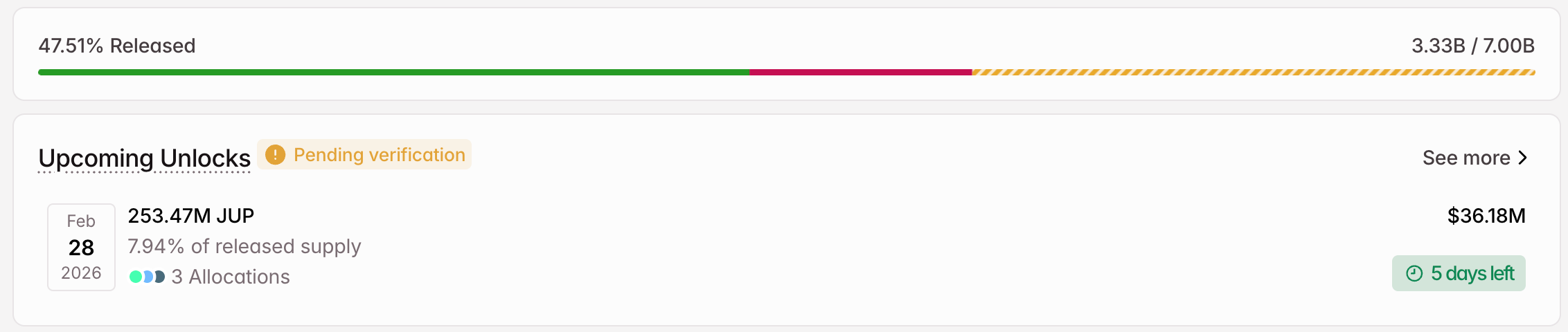
- Number of Tokens to be Unlocked: 253.47 million JUP
- Released Supply: 3.33 billion JUP
- Total supply: 7 billion JUP
Jupiter is a decentralized liquidity aggregator on the Solana blockchain. It optimizes trade routes across multiple decentralized exchanges (DEXs) to provide users with the best prices for token swaps with minimal slippage.
On February 28, Jupiter will unlock 253.47 million JUP, valued at approximately $36.18 million. The altcoins represent 7.94% of its released supply. This marks a substantial increase from Jupiter’s usual monthly unlock of 53.47 million tokens.
Jupiter will direct 38.89 million JUP to the team. Furthermore, mercurial stakeholders will get 14.58 million JUP altcoins.
Notably, the team has reserved the largest portion, 200 million JUP, for Jupuary. It is Jupiter’s yearly airdrop initiative aimed at rewarding users and long-term community supporters.
2. Humanity (H)
- Unlock Date: February 25
- Number of Tokens to be Unlocked: 105.36 million H
- Released Supply: 2.41 billion H
- Total supply: 10 billion H
Humanity (H) is a decentralized identity protocol that utilizes biometric palm recognition, zero-knowledge proofs, and blockchain to verify the authenticity of real human users without exposing their personal data. It features a native Proof of Humanity (PoH) consensus mechanism.
On February 25, the protocol will unlock 105.36 million tokens. The tokens are worth $16.74 million and account for 4.37% of the released supply.
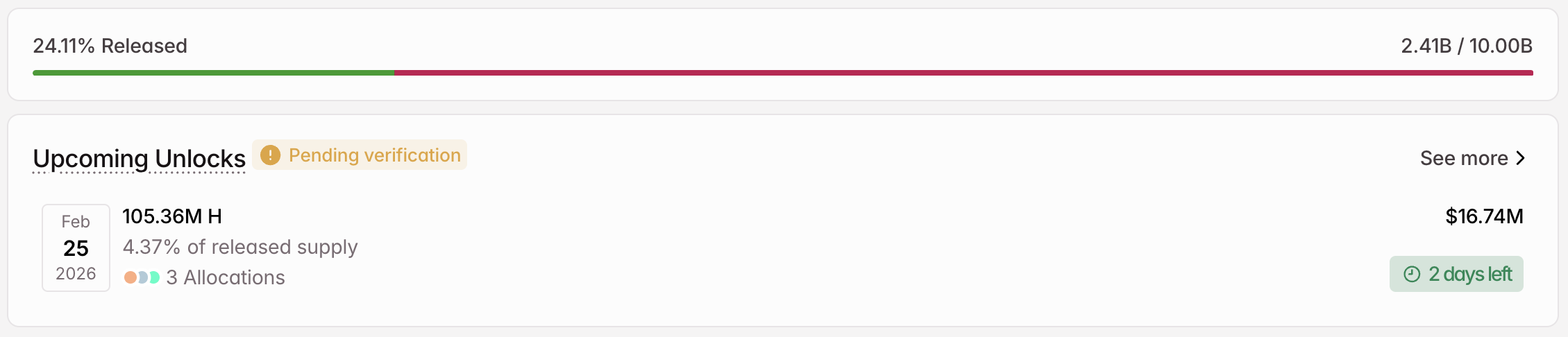
The team will split the released supply three ways. The ecosystem fund will receive 50 million H. Furthermore, Humanity will allocate 42.86 million altcoins to identity verification rewards and 12.50 million to the foundation operations treasury.
3. Grass (GRASS)
- Unlock Date: February 28
- Number of Tokens to be Unlocked: 55 million GRASS
- Released Supply: 416.54 million GRASS
- Total supply: 1 billion GRASS
Grass enables users to monetize unused internet bandwidth. It leverages blockchain to reward participants in a privacy-preserving manner, fostering a global network for accessible data sourcing.
The project will release 55 million tokens on February 28. The supply is worth approximately $9.33 million. It represents 13.15% of the released supply.
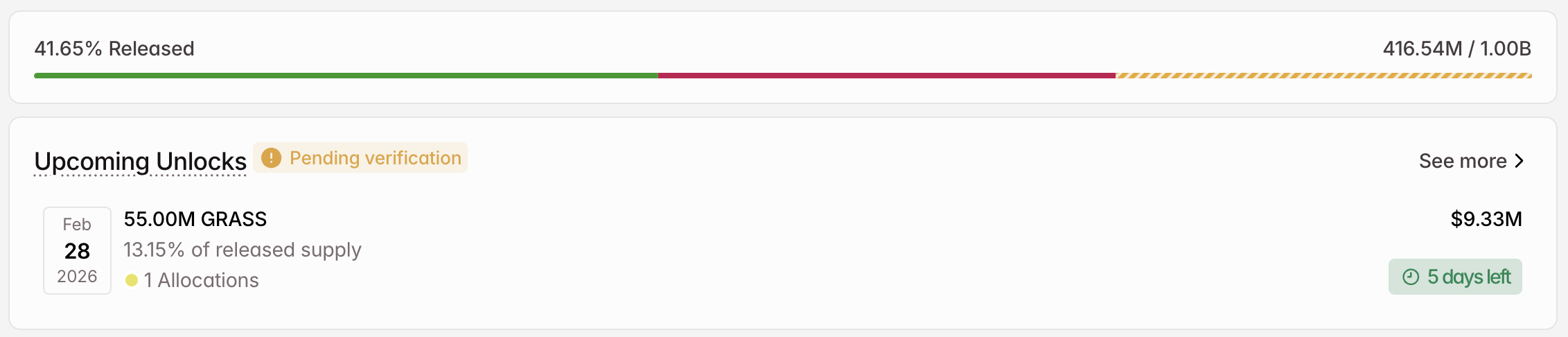
The contributors will receive the entire unlocked supply. In addition to these, other prominent unlocks that investors can look out for in the final week of February include Plasma (XPL), Kamino (KMNO), EigenCloud (EIGEN), and more.
Meme coin volatility is back in focus as the third week of February 2026 delivers explosive short-term rallies. While large-cap assets struggle to establish a clear direction, select low-cap tokens are posting double- and even triple-digit gains.
However, with rapid price expansions comes heightened correction risk. Thus, BeInCrypto has analysed three such meme coins that are pivotal to watch in the final week of February.
Siren (SIREN)
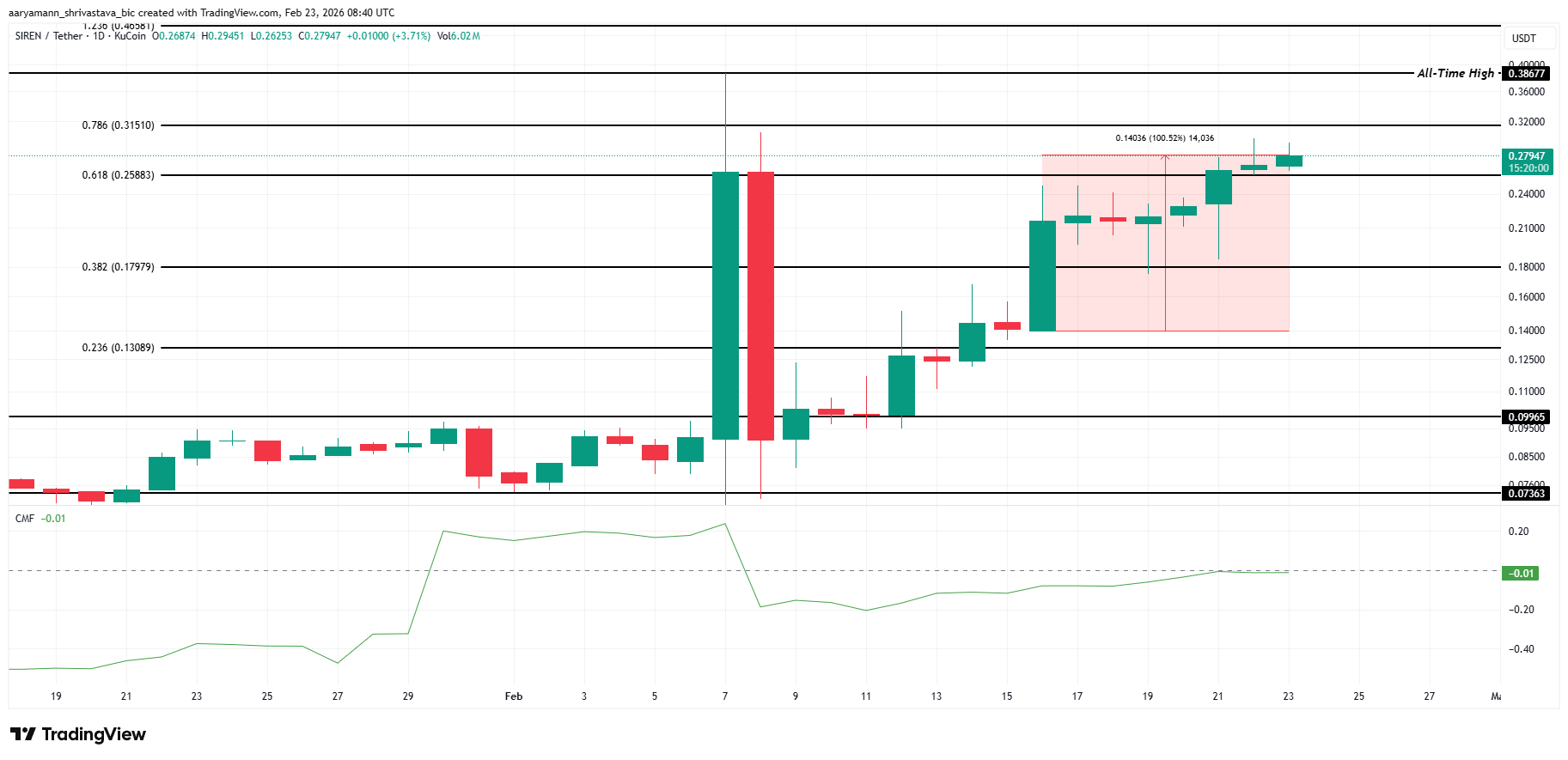
SIREN price has surged 100.5% over the past week, trading at $0.279 at the time of writing. The meme coin is benefiting from renewed investor optimism. Declining exchange outflows indicate holders are retaining tokens, a signal often associated with strengthening short-term bullish momentum in crypto markets.
The Chaikin Money Flow indicator has climbed above the zero line, reflecting rising capital inflows. Sustained buying pressure could support further upside. If momentum continues, SIREN price may retest its all-time high of $0.386. A breakout above that level could open the path toward $0.465.
Want more token insights like this? Sign up for Editor Harsh Notariya’s Daily Crypto Newsletter here.
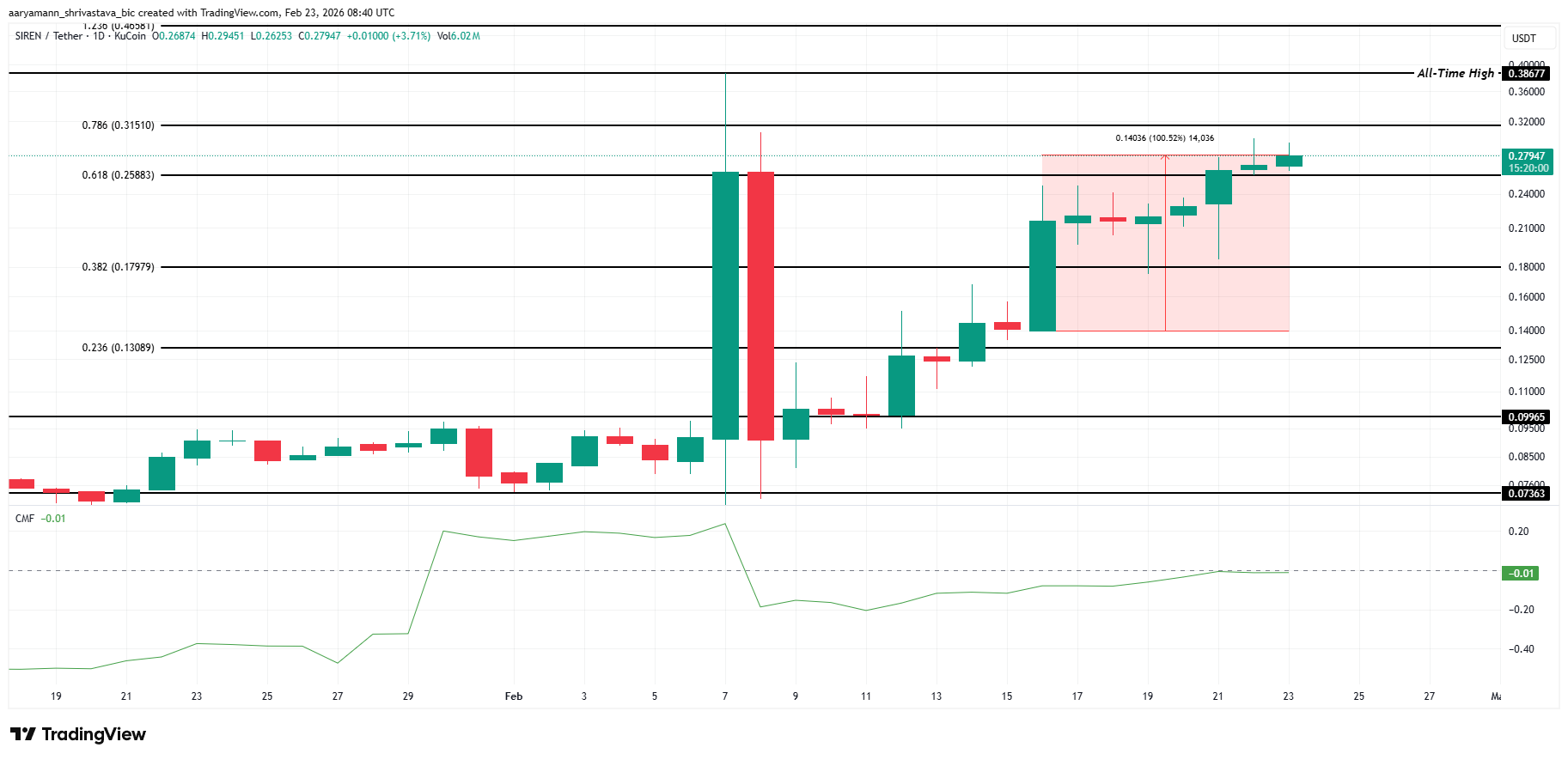
However, rapid gains increase the likelihood of profit taking. A shift in sentiment could push SIREN below the $0.258 support level. Losing this threshold would weaken the bullish structure. In that scenario, the meme coin could decline toward $0.179, delaying any attempt to reach new highs.
Not in Employment, Education, or Training (NEET)
NEET price surged 75% in the past 24 hours, trading at $0.0249 at the time of writing. The sharp rally caught the broader crypto market off guard. Elevated trading volume and social media traction have fueled momentum, positioning the altcoin for potential continuation if demand remains steady.
Sustained buying pressure has strengthened NEET’s short-term structure. A confirmed move above $0.0258 could support further upside toward $0.0329 in the coming days. The meme coin’s base of 14,100 holders relative to its $24 million market cap signals active community participation, often a catalyst for volatility.
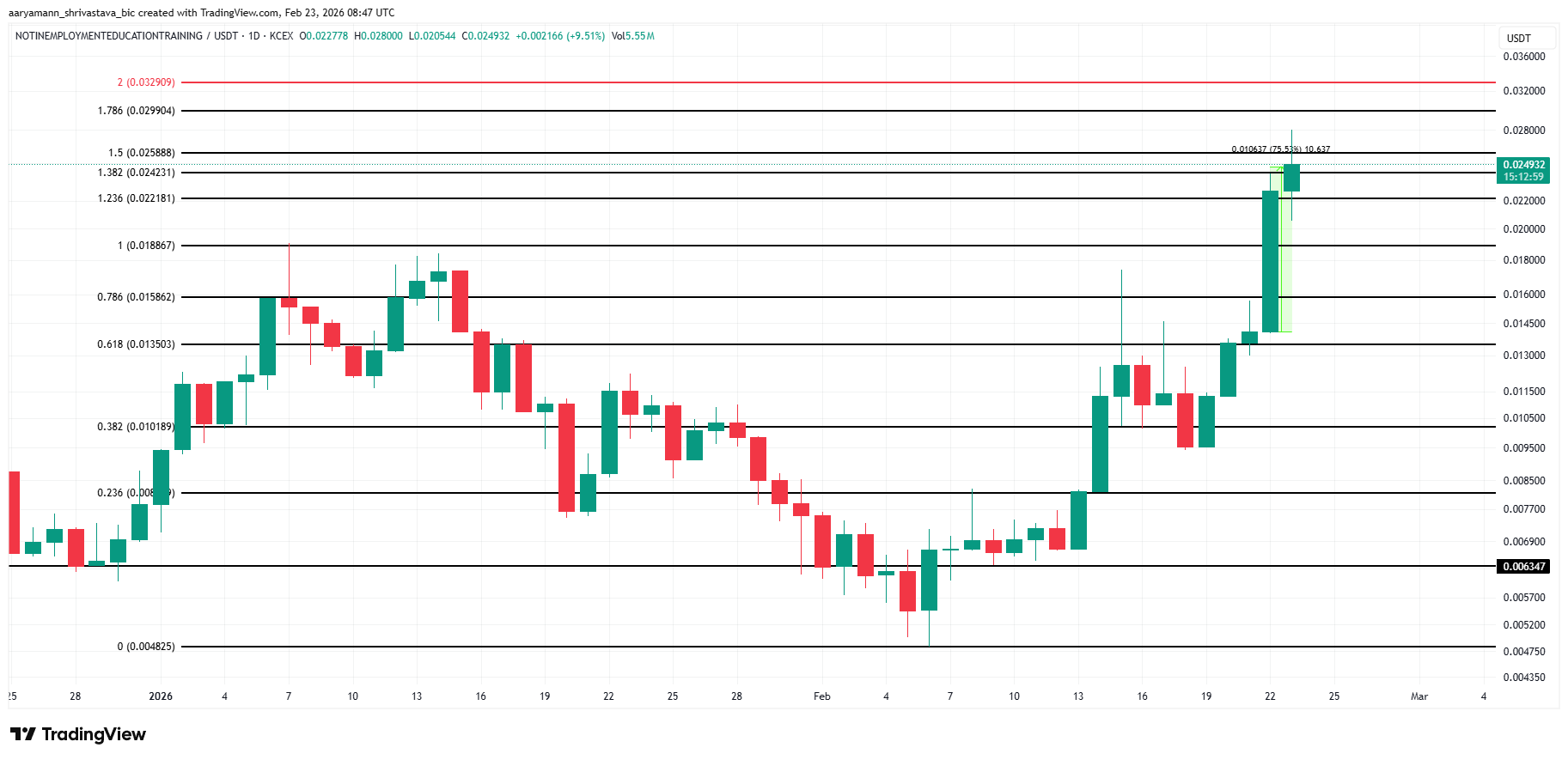
However, rapid price expansion increases correction risk. If buying pressure fades, profit booking may trigger a pullback. Holding $0.0188 support would preserve recovery prospects. A breakdown below that level could drive NEET toward $0.0158, invalidating the bullish outlook and signaling broader weakness.
BAN emerged as one of the stronger-performing meme coins this week, rising 34% despite broader crypto market weakness. This divergence from overall market losses highlights relative strength. Sustained decoupling from bearish sentiment could attract short-term traders seeking alternative upside opportunities in volatile digital assets.
BAN’s correlation with Bitcoin stands at -0.34, indicating it often moves opposite the leading cryptocurrency. This inverse relationship can benefit BAN during Bitcoin pullbacks. Continued negative correlation may support the ongoing uptrend, potentially driving BAN price toward $0.1617 and extending gains to $0.1835.
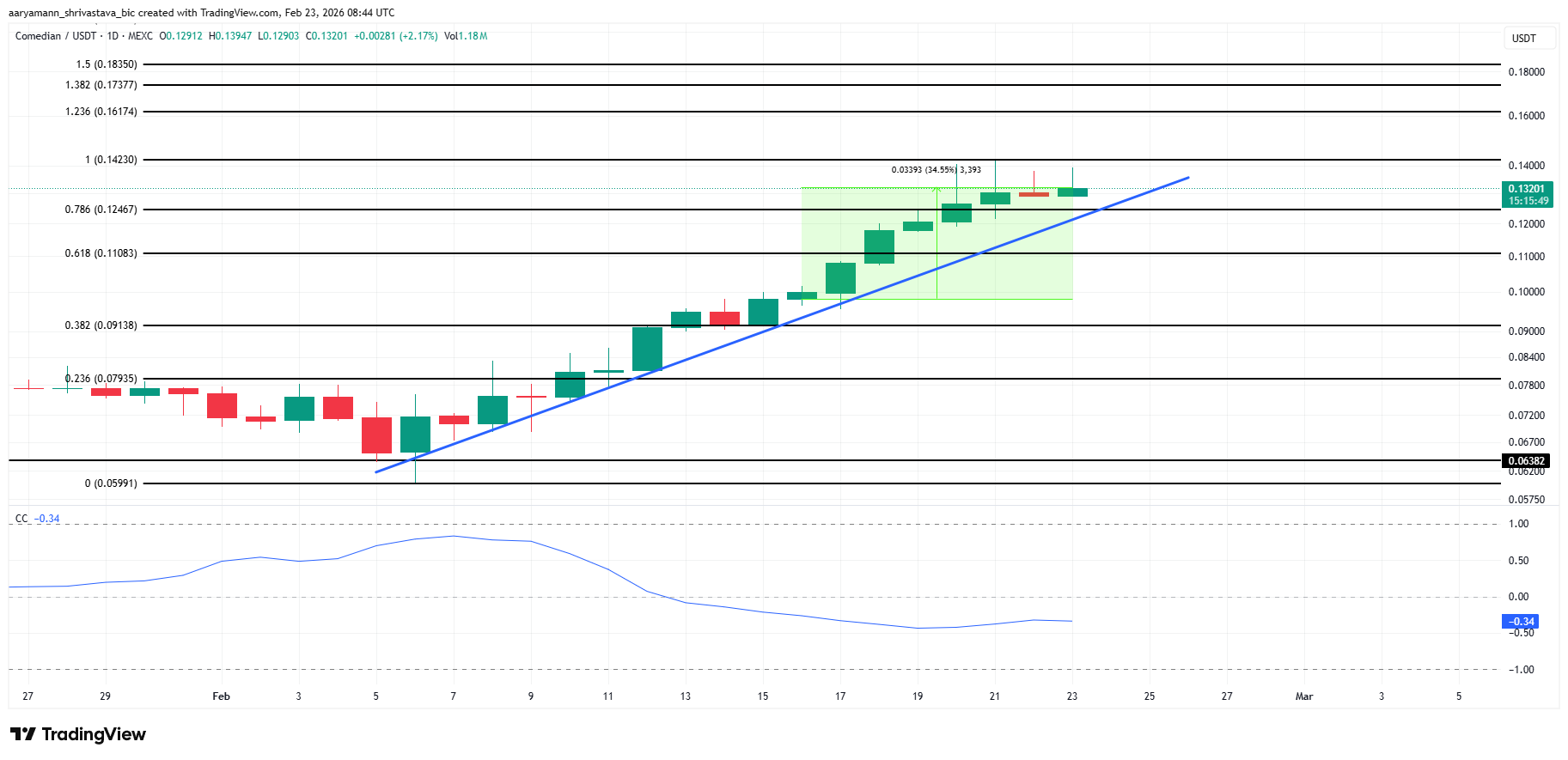
However, improving Bitcoin price momentum could alter this dynamic. If broader crypto sentiment strengthens, BAN’s inverse correlation may limit upside. A decline below $0.1108 would weaken the bullish structure. Sustained selling pressure could push the meme coin toward $0.0913, invalidating the current recovery outlook.

The Bridgerton actress with links to Barnard Castle and Darlington
Form 144 Enpro Inc. For: 23 February

Kraken’s Sponsorship of ‘Trump Accounts’ Highlights Crypto’s Growing Political Footprint


-

 Crypto World6 days ago
Can XRP Price Successfully Register a 33% Breakout Past $2?
-

 Video4 days ago
XRP News: XRP Just Entered a New Phase (Almost Nobody Noticed)
-

 Fashion3 days ago
Weekend Open Thread: Boden – Corporette.com
-

 Sports7 days ago
GB's semi-final hopes hang by thread after loss to Switzerland
-

 Politics2 days ago
Baftas 2026: Awards Nominations, Presenters And Performers
-
 Tech7 days ago
The Music Industry Enters Its Less-Is-More Era
-

 Business6 days ago
Infosys Limited (INFY) Discusses Tech Transitions and the Unique Aspects of the AI Era Transcript
-

 Politics3 hours ago
Nick Reiner Enters Plea In Deaths Of Parents Rob And Michele
-

 Entertainment5 days ago
Kunal Nayyar’s Secret Acts Of Kindness Sparks Online Discussion
-

 Video6 days ago
Financial Statement Analysis | Complete Chapter Revision in 10 Minutes | Class 12 Board exam 2026
-

 Tech5 days ago
Retro Rover: LT6502 Laptop Packs 8-Bit Power On The Go
-
 Sports5 days ago
Clearing the boundary, crossing into history: J&K end 67-year wait, enter maiden Ranji Trophy final | Cricket News
-

 Sports2 hours ago
Women’s college basketball rankings: Iowa reenters top 10, Auriemma makes history
-

 Business1 day ago
Mattel’s American Girl brand turns 40, dolls enter a new era
-

 Business1 day ago
Law enforcement kills armed man seeking to enter Trump’s Mar-a-Lago resort, officials say
-

 Entertainment5 days ago
Dolores Catania Blasts Rob Rausch For Turning On ‘Housewives’ On ‘Traitors’
-

 Business6 days ago
Tesla avoids California suspension after ending ‘autopilot’ marketing
-
 NewsBeat10 hours ago
‘Hourly’ method from gastroenterologist ‘helps reduce air travel bloating’
-

 Politics7 days ago
Eurovision Announces UK Act For 2026 Song Contest
-

 Tech1 day ago
Anthropic-Backed Group Enters NY-12 AI PAC Fight