

Crypto World
NEAR Launches Near.com super app, touting AI capabilities and confidential transactions

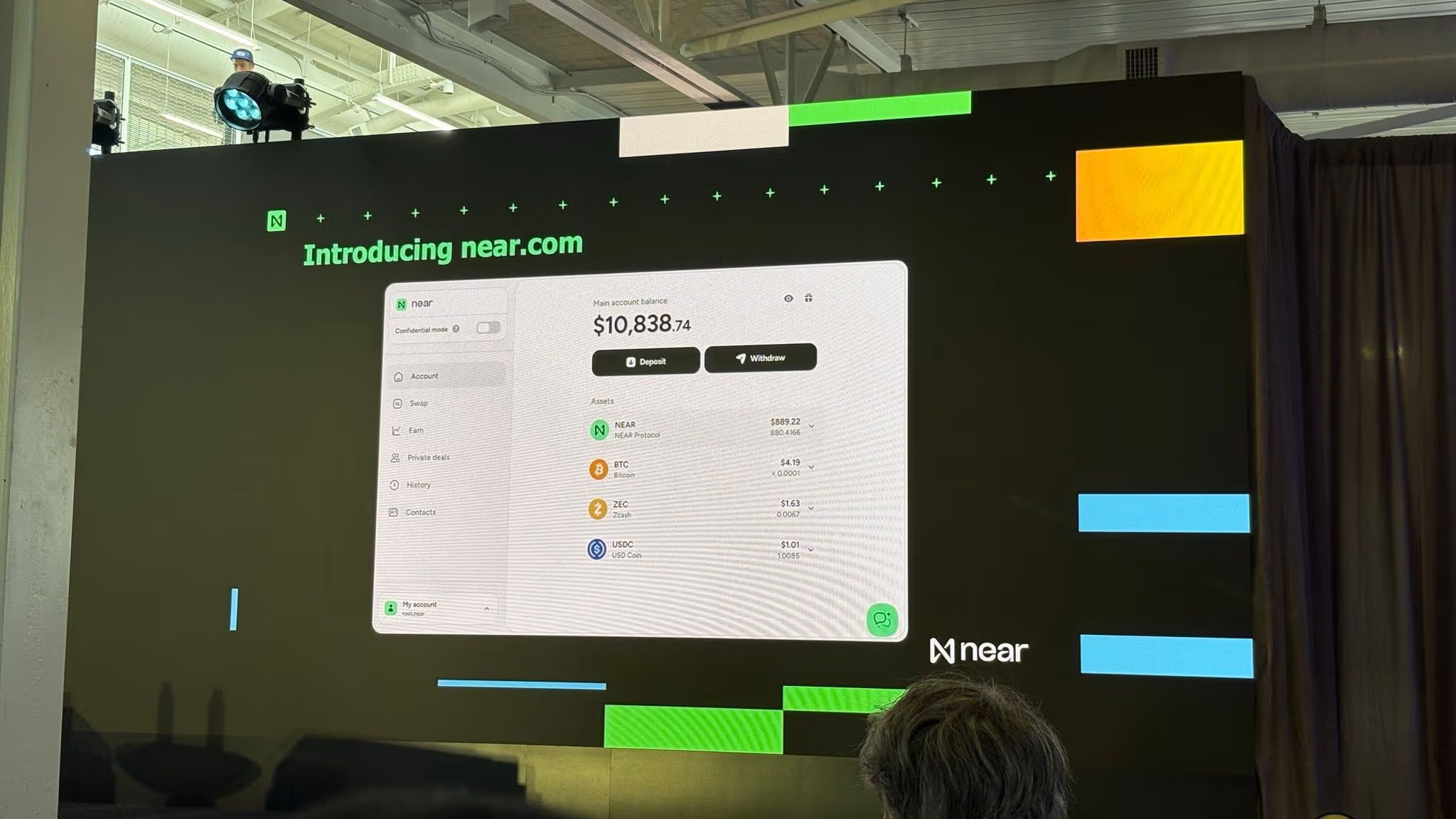
San Francisco, CA – NEAR is launching Near.com, a new crypto wallet and consumer app that aims to make blockchain technology feel as simple as using a traditional finance app, while positioning itself at the intersection of crypto and artificial intelligence (AI).
Polosukhin previously co-authored the paper that introduced the transformer model, the architecture underpinning modern AI systems like ChatGPT and many other large language models, and has increasingly focused on how blockchain infrastructure can support the next wave of AI-driven applications.
“We are entering the world where AI is becoming our interface to compute,” Polosukhin said during the presentation.
NEAR token is down nearly 3% over the last 24 hours.
At its core, Near.com is designed to remove much of the friction that has long made crypto confusing for everyday users. Instead of worrying about gas fees, private keys or switching between different blockchains, users can manage their assets in one place.
“You don’t need to think about blockchains. You don’t need to think about gas, keys,” Polosukhin said. “You just use it as your main wallet.”
Near.com supports a range of digital assets, including bitcoin, stablecoins, NFTs and other tokens. The idea is to bring together activity that is typically spread across multiple wallets and networks into a single, streamlined interface.

But NEAR’s ambitions extend beyond building just another wallet. The company is betting that the next big wave in crypto will come from its convergence with AI.
As AI agents become more capable, like booking travel, managing emails or handling online purchases, they will increasingly need the ability to transact. That’s where crypto infrastructure comes in. Blockchains can provide programmable payments, global transfers and automated settlement without relying on traditional intermediaries.
Polosukhin argued that as AI systems begin interacting with each other, they effectively become “economic actors,” software programs that negotiate, pay and coordinate tasks. In that world, crypto becomes the financial layer that allows these agents to operate.
Near.com is designed to serve as that layer, acting as both a user-friendly wallet for people and an economic backend for AI-driven activity.
A key part of the announcement is privacy. One of blockchain’s longstanding tradeoffs is transparency: transactions are typically visible to anyone. While that openness can build trust, it can also expose sensitive financial information.
“Everything you do onchain is transparent,” Polosukhin said. “That’s not realistic for usual use cases, for day-to-day usage.”
To address this, NEAR introduced a “confidential mode” within Near.com. The feature allows balances, transfers and trading activity to remain private within the network’s security framework. The company says this makes the wallet more practical not only for individuals and businesses, but also for AI agents that may need to transact without revealing strategy or sensitive data.
The launch signals a broader shift for NEAR.
“We have the stack. We have all the components. We have the product,” Polosukhin said. “Now we’re switching … to how we actually scale adoption — how we bring this to billions of people around the world.”
Read more: Most Influential: Sam Altman


TLDR:
- The SEC issued an exemptive order on Feb. 23, 2026, allowing WisdomTree’s digital MMF to trade at $1 intraday.
- The order grants relief from Section 22(d) and Rule 22c-1, bypassing the standard next-calculated NAV pricing requirement.
- Registered broker-dealers with dealer agreements can now sell Covered Fund shares at a stable $1.00 on a principal basis.
- Rule 17d-1 Relief also permits WisdomTree’s affiliated dealer to transact with the fund under terms consistent with the Act.
WisdomTree Government Money Market Digital Fund has received a landmark exemptive order from the U.S. Securities and Exchange Commission.
The order allows investors to trade the fund’s shares at a fixed $1.00 price with a dealer on an intraday basis.
This approval marks a notable shift in how digital money market fund shares can be bought and sold, regardless of the fund’s end-of-day net asset value (NAV).
SEC Grants Pricing Relief for Intraday Transactions
The Division of Investment Management issued the order on February 23, 2026. It covers WisdomTree Digital Trust, WisdomTree Securities Inc., WisdomTree Digital Management Inc., and WisdomTree Transfers Inc.
Together, these entities filed the original application on May 8, 2025. An amendment followed on January 16, 2026.
The exemptive order grants relief from Section 22(d) of the Investment Company Act of 1940 and Rule 22c-1 under the Act. Under normal rules, fund shares must be sold at the next-calculated NAV. This order creates an exception specifically for digital money market fund shares.
Under the new structure, registered broker-dealers who enter a dealer agreement with a Covered Fund can trade shares at $1.00 on a principal basis.
This means individual and institutional investors alike can transact at a stable price throughout the trading day. The fixed price applies regardless of what the NAV calculates to at day’s end.
The SEC posted the development publicly, noting the order permits investors to trade shares at $1 with a dealer on an intraday basis.
Rule 17d-1 Relief Permits Affiliated Dealer Participation
Beyond the pricing relief, the SEC also granted Rule 17d-1 Relief under Section 17(d) of the Act. This portion of the order addresses transactions between the fund and its affiliated dealer, WisdomTree Securities Inc. Without this relief, such arrangements would be prohibited under the Act.
The Commission found that the affiliated dealer’s participation in these transactions is consistent with the Act’s provisions, policies, and purposes.
It also determined the arrangement is no less advantageous than participation by other parties. Both orders took effect immediately upon issuance.
A public notice of the application was issued on January 26, 2026. Interested parties had an opportunity to request a hearing, but no such request was filed. The Commission then moved forward without ordering a hearing.
The relief also extends beyond the Applicant Fund. It applies to any series of the Applicant Trust or other registered open-end management investment companies meeting specific criteria.
This broader scope means other digital money market funds could potentially benefit from the same pricing structure in the future.
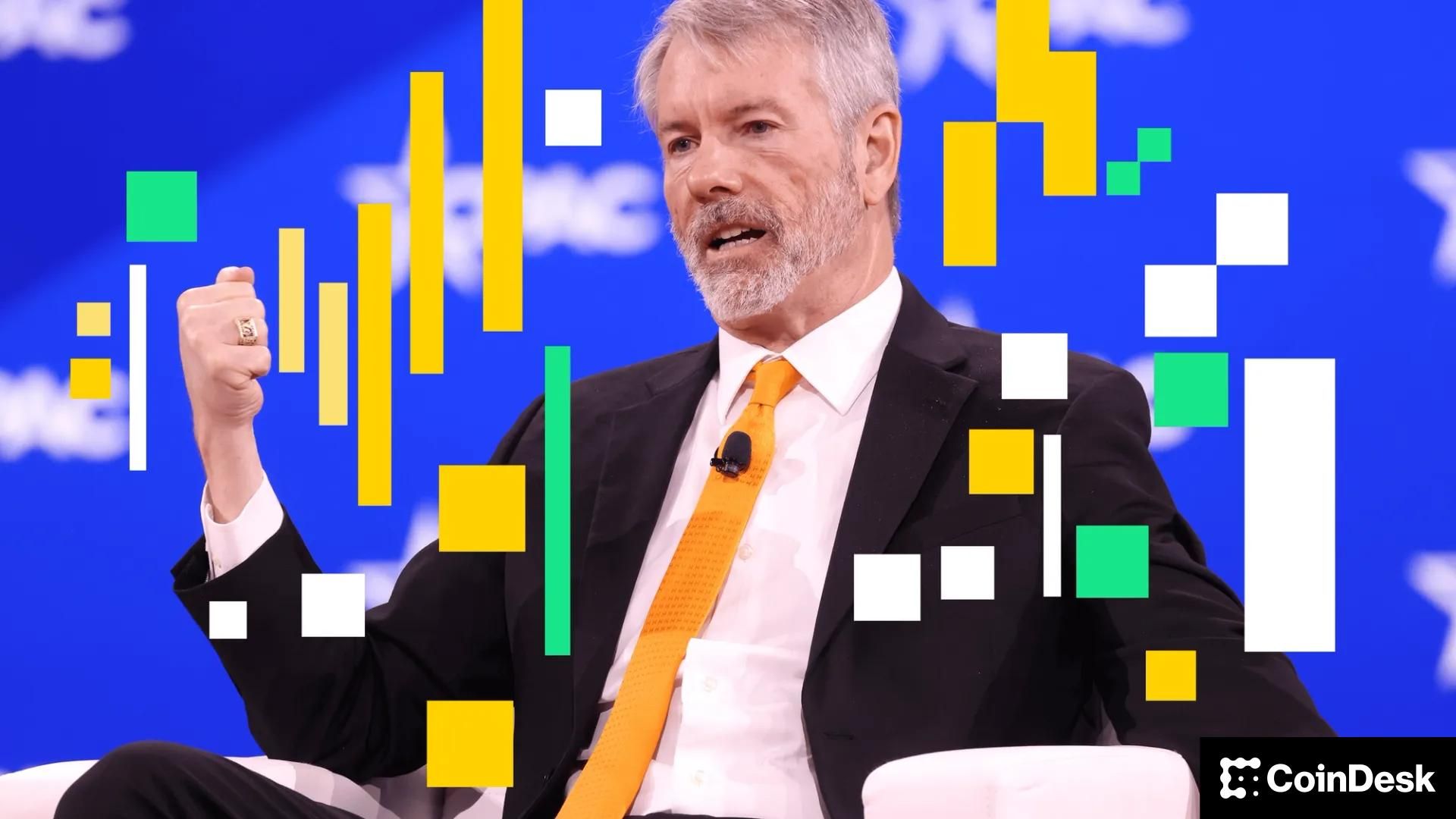
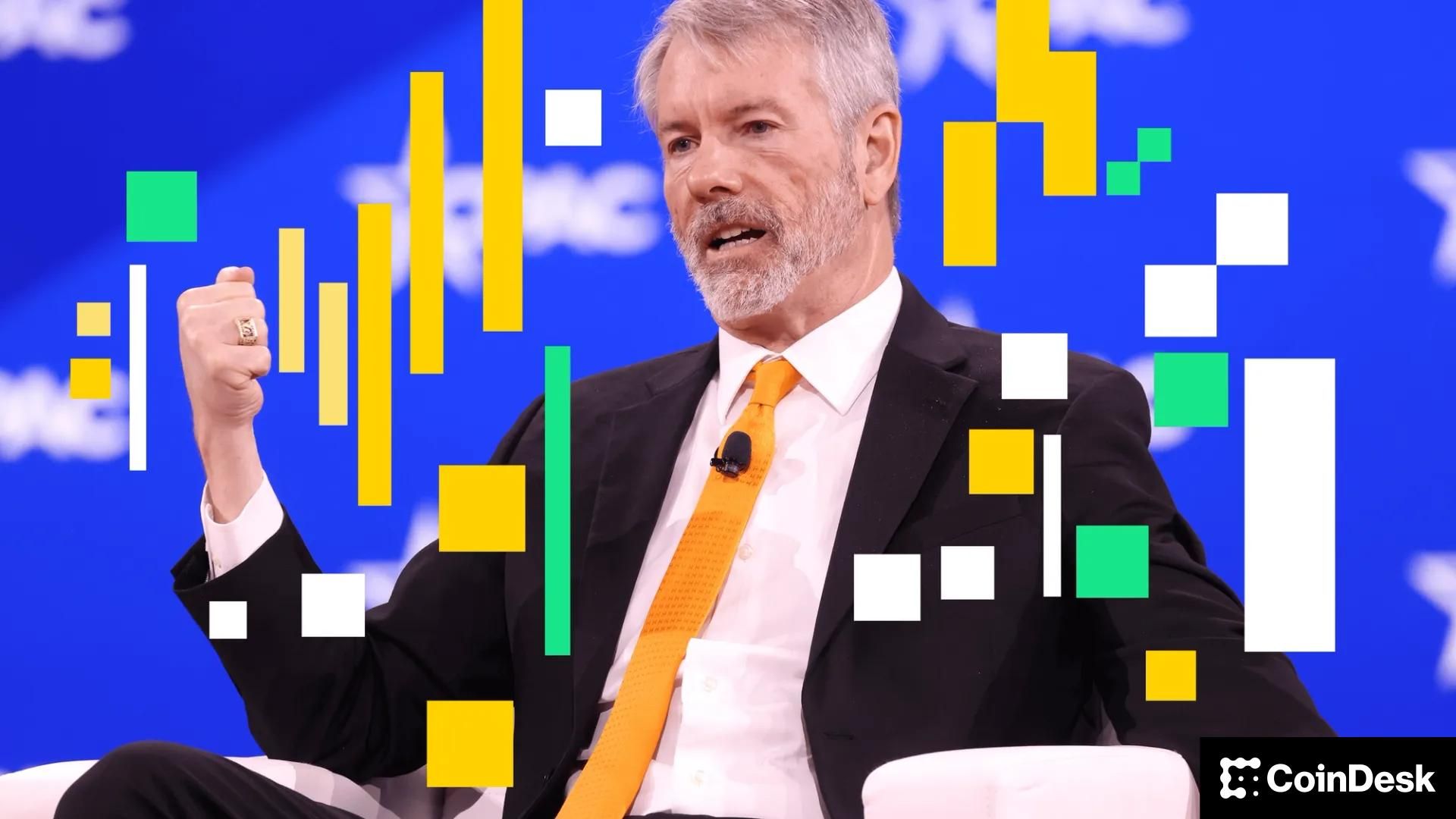
Strategy (MSTR), the world’s largest publicly traded company holding bitcoin, made a small BTC acquisition last week, adding 592 coins for $39.8 million.
That’s an average purchase price of $67,286 per bitcoin, with the buys completely funded via sales of common stock, according to an SEC filing.
The company now holds 717,722 bitcoin acquired for $54.56 billion, or an average price of $76,020 per coin. With bitcoin currently trading just above $66,000, the position represents an unrealized loss of roughly $10,000 per coin, or about $7 billion in total.
This morning’s news is a milestone of sorts. According to a cheeky X post by Executive Chairman Michael Saylor, it was Strategy’s 100th announcement of a bitcoin purchase since the company (then named MicroStrategy) began acquiring BTC in August 2020.
MSTR shares are down 2.5% in pre-market action and more than 50% year-over-year.


Mexican billionaire Ricardo Salinas, one of that country’s richest individuals, hasn’t been shaken by the recent crash in the price of bitcoin.
“Take advantage and buy now while it’s down,” said Salinas in a Sunday X post. “Investing in Bitcoin is protecting your money against inflation and keeping it out of the hands of those who want to steal it from you.”
The comment from the longtime bull came following bitcoin’s plunge in recent months to its current level of $66,000. Salinas shared the message alongside an older clip of him defending bitcoin’s ability to support freedom, doubling down on a stance he’s held for years.
Salinas, whose estimated net worth is around $4.9 billion, has been one of Latin America’s most vocal bitcoin advocates. In past interviews, he’s described fiat currency as a “fraud” and called bitcoin “the only way out” for preserving purchasing power.
In an interview last year, he said 70% of his liquid assets were linked to bitcoin. The remaining 30% was in gold and shares of gold mining firms.
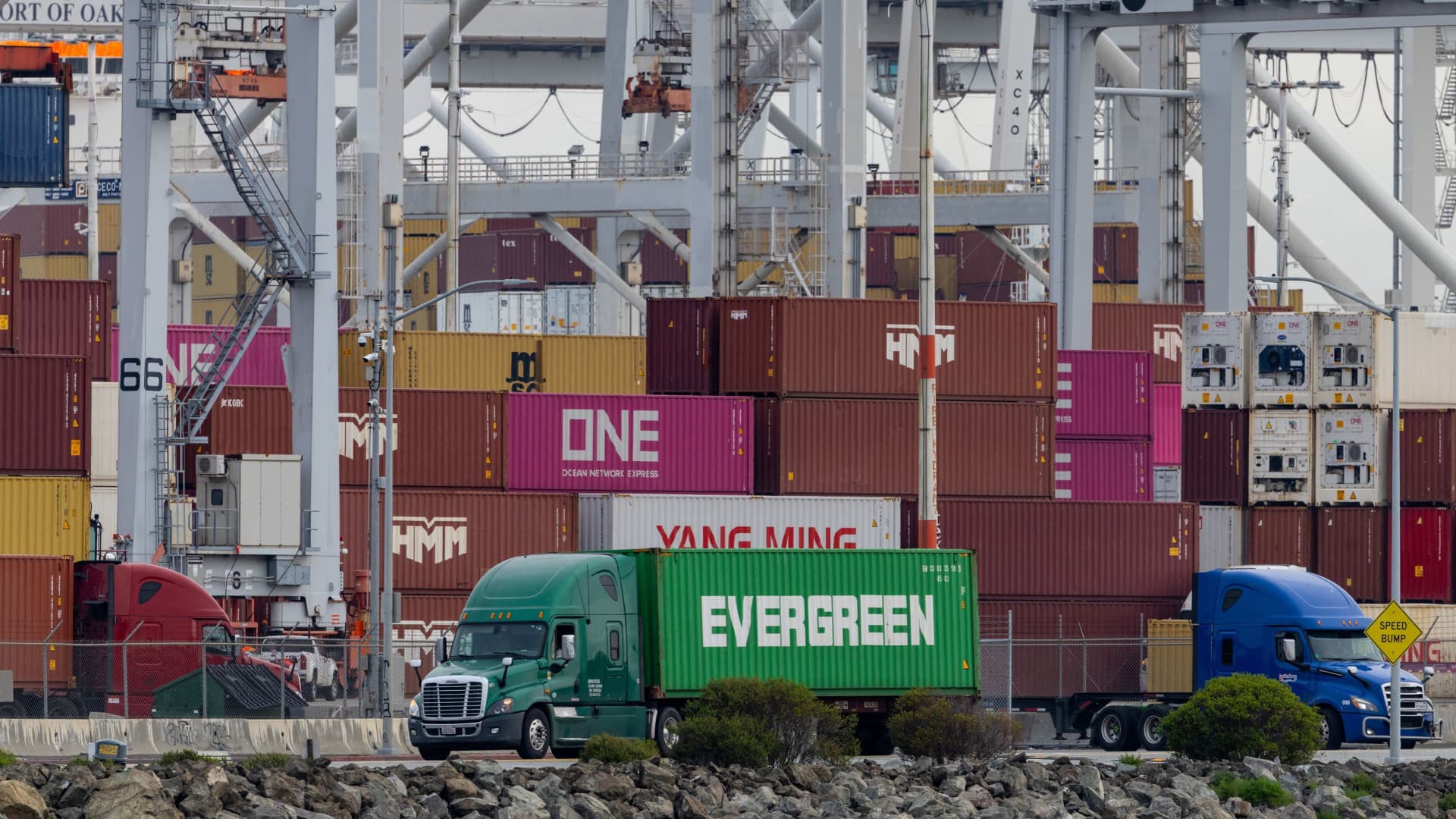
The Supreme Court struck down President Donald Trump’s tariffs on Friday, but the trade tax turmoil is far from over. Fallout over the ruling is already threatening to further strain global trade relations, and the U.S. economy is likely to suffer, economists told CNBC.
In 6-3 decision, the high court ruled that President Trump did not have the legal authority to implement his sweeping tariffs imposed last April under the International Emergency Economic Powers Act, or IEEPA.
Trump later leveled new tariffs up to 15% effective immediately on an array of U.S. trading partners, further escalating global trade tensions. European Union leaders expressed dismay over the new tariffs, arguing that the U.S. policy shift would upend trade deals already reached with the EU as well as the U.K. last year. On Monday, the EU again postponed a key vote on its deal with the U.S.
The pushback against the latest U.S. tariff threat underscores deep frustration over the president’s erratic trade policies, and could push foreign governments to scale back U.S. trade and lead businesses to curb expansion, investment and hiring.
The result might hobble the U.S. economy. “It shifts how trade is done with the largest economy in the world, and that has economic consequences,” Mike Reid, head of U.S. economics at Royal Bank of Canada told CNBC, referring to the Supreme Court ruling and new tariff push.
Downside
The trade war drama is likely to contribute to a climate of caution among businesses and foreign governments alike, said Mark Zandi, chief economist at Moody’s Analytics, leading to “nothing but downside,” for the U.S. economy.
“Businesses don’t know” what’s going to happen next, Zandi told CNBC. “They’re going to invest less, they’re going to hire less, they’re going to be less aggressive in their expansions,” limiting U.S. growth.
Foreign governments could react similarly amid rising uncertainty, leading them to “continue to pull away from the U.S,” according to the economist.
“They’ve got to be pulling their hair out over all of this,” Zandi said. “Perceptions of the U.S. are increasingly that we’re a poorly managed economy, and objectively speaking, they’re right. It’s a bit of a mess that feels like it’s getting messier.”
That perception could lead to efforts to divert trade away from the U.S. to a variety of other trading partners, including China.
China’s exports grew 6.6% in U.S. dollar terms last December compared to the same month a year earlier, topping analyst expectations and sending the nation’s annual trade surplus to a record, according to Chinese customs data. Imports increased at their fastest pace in three months, the same data showed.
Trump trade taxes
The Trump administration will continue implementing its trade policy, and now plans to use a variety of sections in the Tariff Act of 1974, according to U.S. Trade Representative Jamieson Greer.
President Trump is pointing to section 122 of the Tariff Act to justify his new tariffs enacted this weekend, although that section limits their effectiveness to 150 days, until mid July, after which they would have to be approved by Congress.
But the administration is likely to use sections 232 and 301 of the Tariff Act to supplement its new section 122 tariffs, meaning the U.S. could continue to impose tariffs against its foreign trading partners over the next few years, at least.
Others say neither investors nor economists shouldn’t sound the alarm just yet.
The implementation of the new trade taxes “implies little change in the effective tariff rate or our inflation forecasts in the near term,” Citigroup economist Veronica Clark said in a note to clients.
“Eventual Section 301/232 tariffs could have an impact on certain goods prices in the future, but details are still highly uncertain,” Clark wrote. “While a 10% Section 122 tariff would likely have lowered the effective tariff rate by 3-4 [percentage points], a 15% tariff should keep the effective tariff rate essentially unchanged (if anything, lower by ~1pp or so).
While the total impact of the new tariffs remains uncertain, a few things are clear, Zandi said.
“The U.S. is pulling away from the world, and the rest of the world is now pulling away from the U.S.,” the economist said. “Deglobalization is a weight on the economy, and ultimately, the end state is a weakened economy.”
— With additional reporting provided by CNBC’s Alex Harring


Based, a Web3 consumer app for trading and spending crypto, has raised $11.5 million in a Series A round led by Pantera, with participation from Coinbase Ventures, Wintermute Ventures and Karatage.
The company said the fresh capital will be used to expand into new markets and build out its onchain financial infrastructure.
Launched eight months ago, Based combines perpetuals trading, prediction markets and real-world crypto spending into a single interface. Built natively on Hyperliquid’s execution environment, the platform seeks to pair institutional-grade speed and liquidity with a consumer-focused experience.
Beyond its app, Based is also extending its technology stack to power third-party venues such as HyENA, a Hyperliquid-native perpetuals platform.
“Most crypto products today are built for traders or builders, not for everyday people who want a complete financial life onchain,” said co-founder and CEO who goes by Edison, in a press release shared with CoinDesk. “We’re building Based so anyone, anywhere can access global markets and also use those funds to purchase things they actually need without jumping through hoops.”
Read more: Bitcoin will ‘massively’ outperform gold over 10 years, says Pantera’s Dan Morehead
Crypto World
U.S. Treasury may boost T-Bill issuance as stablecoins eye $2 trillion market cap: StanChart
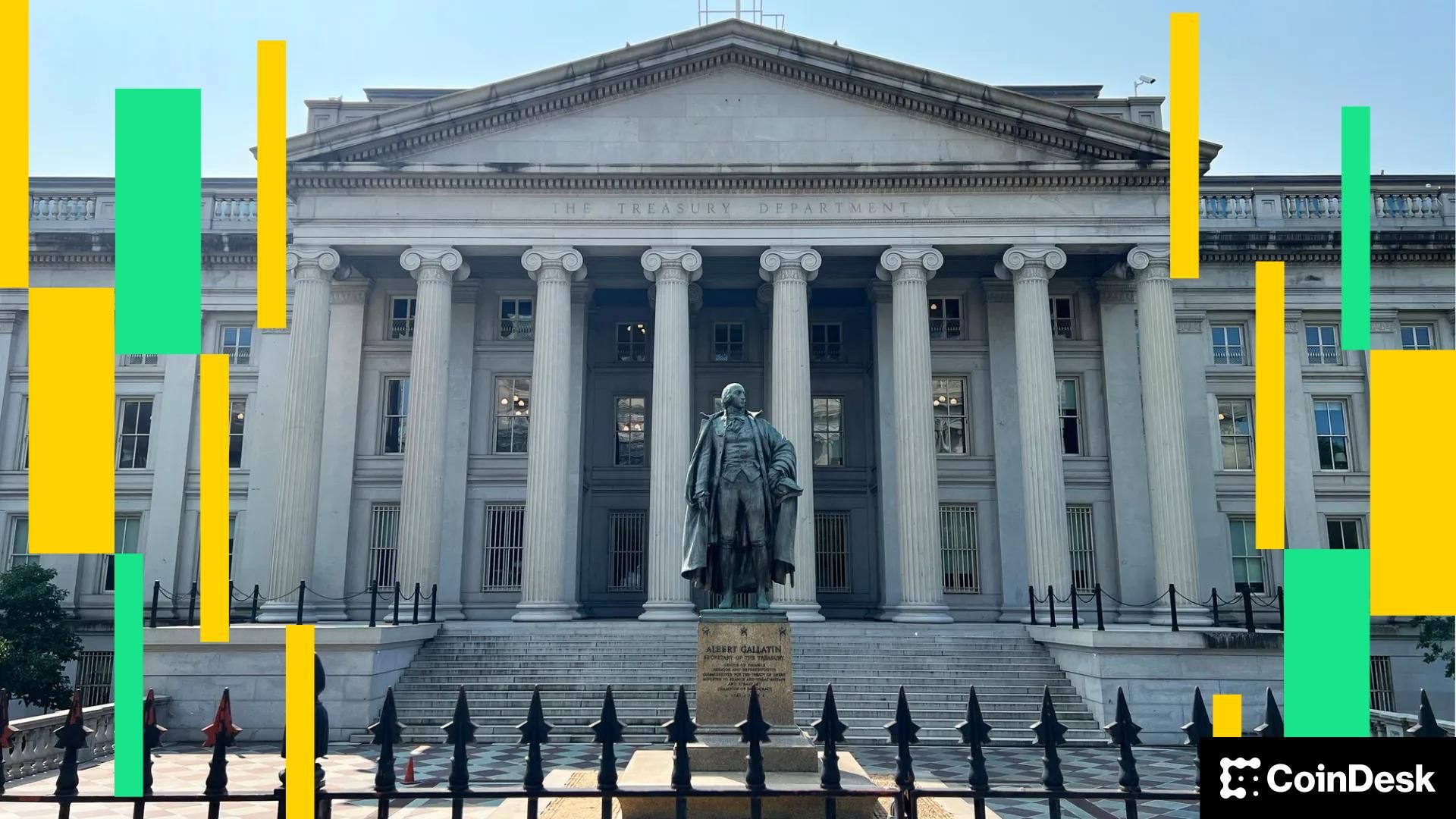
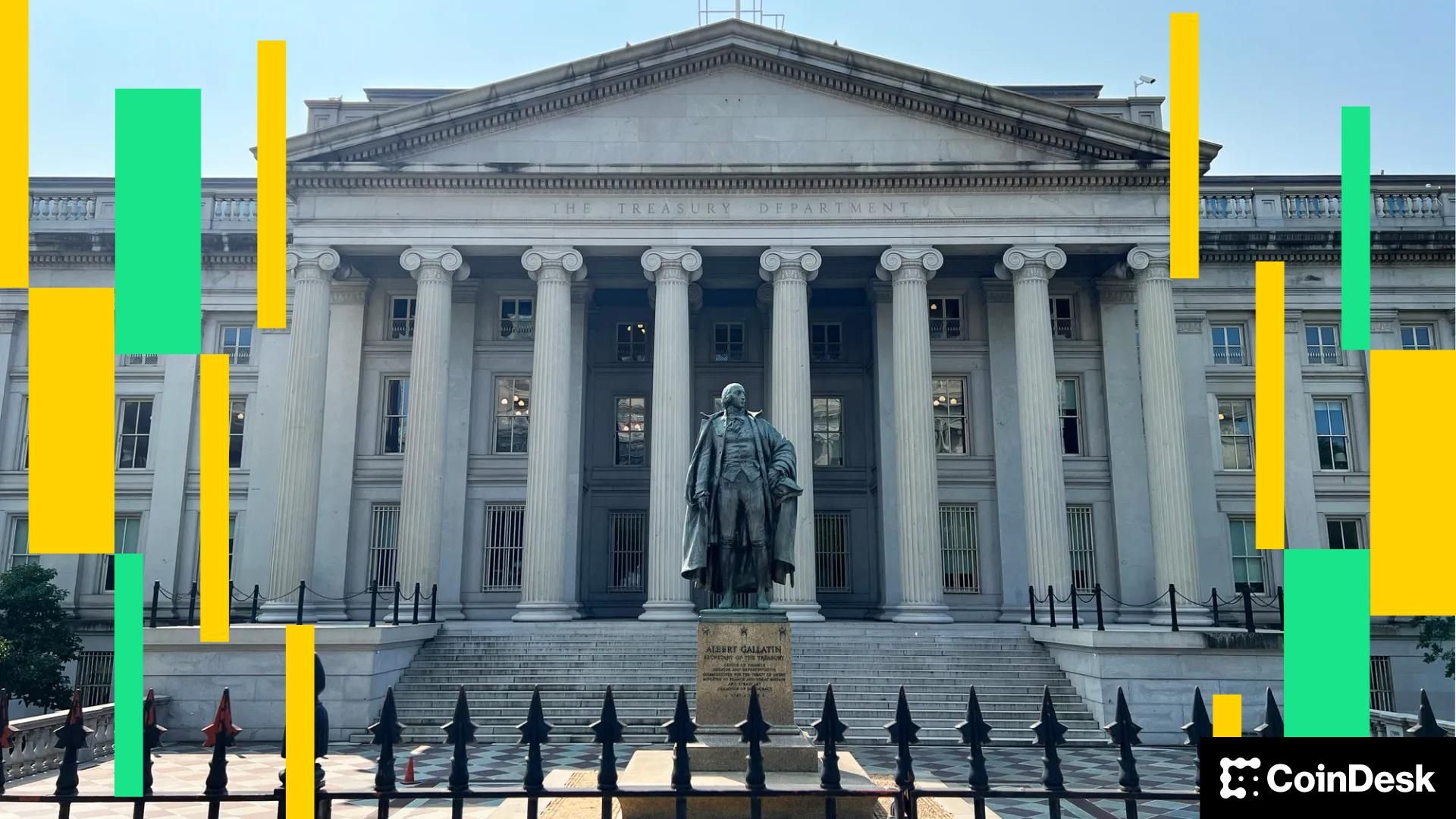
Standard Chartered still expects the stablecoin market to reach $2 trillion by the end of 2028, which should translate into around $1 trillion in new Treasury bill demand, the bank said in a Monday report.
As of early 2026, the total stablecoin market capitalization is roughly $300-$320 billion.
“This will result in c. $0.8-$1.0 trillion of fresh demand for T-bills (for use as reserves) from stablecoin issuers over that period,” wrote Geoff Kendrick, head of digital asset research, and U.S. rates strategist John Davies.
Combined with $1-$1.2 trillion in projected Federal Reserve buying, total new T-bill demand could hit about $2.2 trillion through 2028, the report said. That compares with roughly $1.3 trillion in net new supply if bills’ share of total debt remains unchanged, implying a potential shortfall of $0.9 trillion.
Stablecoin issuers such as Tether and Circle (CRCL) have become major buyers of short-term U.S. government debt, holding tens of billions of dollars in Treasury bills as reserves backing tokens such as USDT and USDC.
Tether alone has disclosed T-bill holdings that rival those of mid-sized sovereign investors, while Circle also keeps a significant share of its reserves in short-dated Treasuries via money market funds.
As the stablecoin market grows, issuers typically park new inflows into T-bills to earn yield while maintaining liquidity, effectively channeling crypto-driven capital into U.S. government financing and reinforcing demand at the front end of the yield curve.
The Treasury said in its February 4 Quarterly Refunding Announcement (QRA) that it “is monitoring SOMA purchases of Treasury bills and growing demand for Treasury bills from the private sector,” a trend Standard Chartered expects to intensify.
The analysts said the projected excess demand gives Treasury Secretary Scott Bessent scope to lift T-bills’ share of issuance. Raising that share by 2.5 percentage points over three years would create about $0.9 trillion in additional bill supply, offsetting the gap.
Reallocating that amount from longer-dated bonds could effectively suspend 30-year auctions for three years and ease upward pressure on long-term yields, according to the report.
While not its base case, the bank expects the 10-year yield to reach 4.6% by end-2026, as the analysts warned of rising risks of front-end scarcity.
Stablecoin growth has recently stalled just above $300 billion, up from $238 billion in April 2025, as crypto prices weakened and post-GENIUS Act issuance slowed. Bitcoin has fallen more than 50% from its $126,000 October 2025 peak, dampening trading-driven demand. Standard Chartered views these headwinds as cyclical and maintains that stablecoins could add nearly $1 trillion in incremental T-bill demand by 2028, reshaping U.S. rate markets.
Read more: Standard Chartered sees bitcoin sliding to $50,000, ether to $1,400 before recovery


ProCap Financial, (BRR), which calls itself the first publicly traded agentic finance firm, has begun its share repurchase program aimed at closing the discount between its stock price and net asset value (NAV).
The company said it bought 148,241 BRR shares in the open market on Feb. 20. That implies a purchase price in the area of $2.30 per share, for a total amount of roughly $341,000. It’s not exactly a mammoth purchase, given the company has raised more than $750 million from investors and currently holds more than 5,000 bitcoin worth about $335 million on its balance sheet.
The company further said the shares were purchased at roughly a 35% discount to the net asset value of the bitcoin it holds.
“We were able to buy $1.00 of our stock for approximately $0.65 last week,” said
Chairman and CEO Anthony Pompliano. “We plan to aggressively buy as much of our stock as we can as long as the market will sell us shares at a substantial discount to NAV.”
BRR shares are modestly outperforming other bitcoin treasury companies in U.S. Monday morning trade, rising 3% to $2.42.
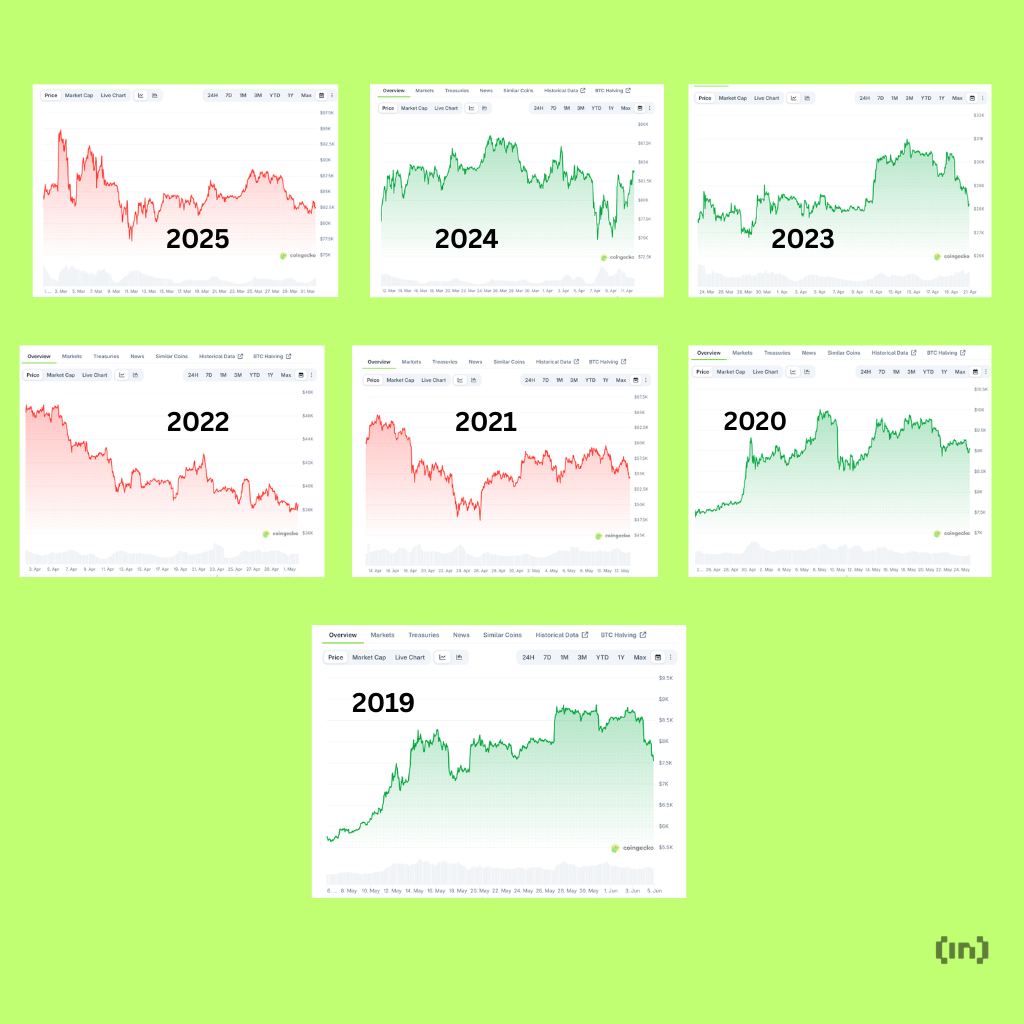
Bitcoin’s often-cited “Ramadan rally” setup may be fading in 2026. However, the volatility pattern many traders have watched in recent years still appears to be present.
To be clear, the holiest month in Islam has nothing to do with digital assets. Crypto trades on global liquidity, macro news, positioning, and sentiment.
Still, when looking at the last seven Ramadan periods (2019–2025), Bitcoin showed a surprisingly consistent shape in six of seven cases: an early sharp move, then choppy trading, then a later pullback or fade. The main exception was 2020, when a stronger macro recovery trend dominated.
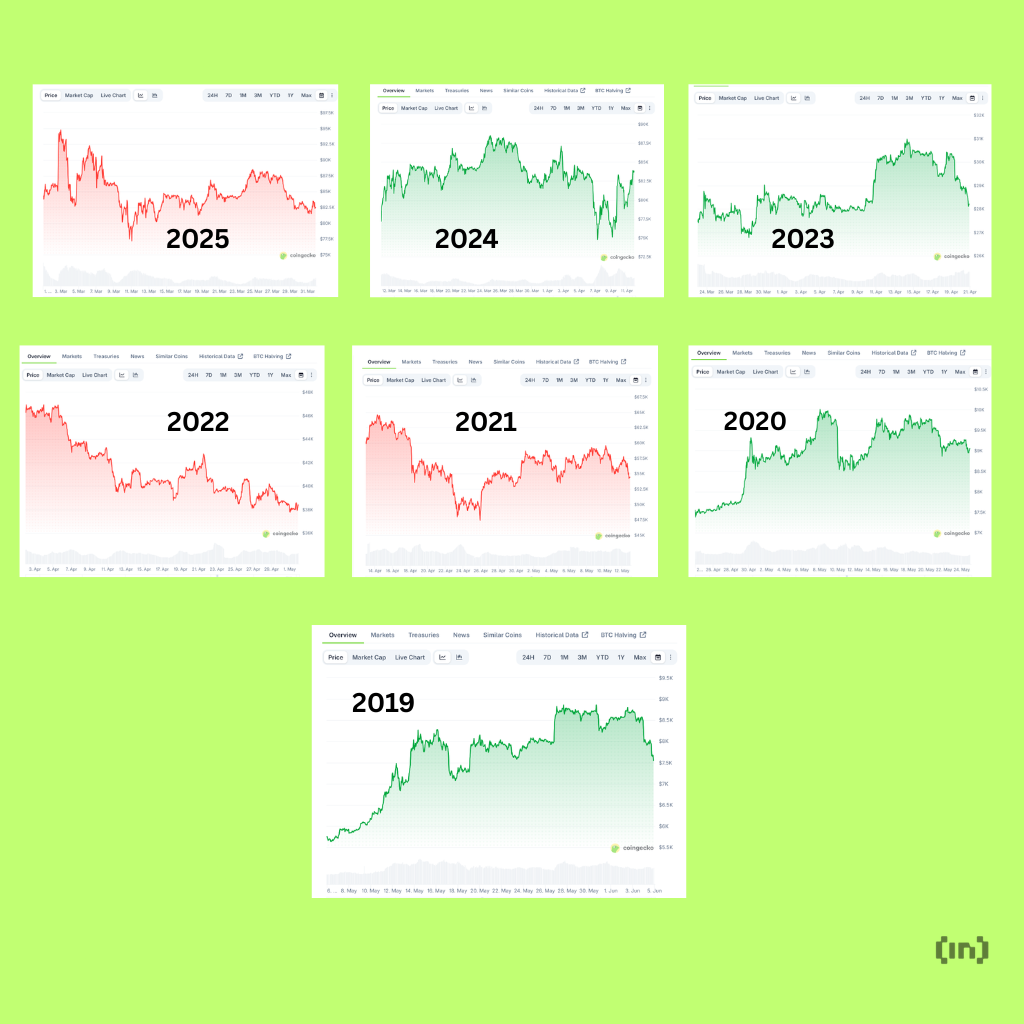
What the Last Seven Ramadans Showed
The pattern was not “Bitcoin always goes up in Ramadan.” That is not true.
Instead, the recurring pattern was more specific: Bitcoin often saw front-loaded volatility, usually with a strong early move, followed by mid-period exhaustion and a weaker finish. In some years, Bitcoin still ended Ramadan higher overall. But even then, price often pulled back after a mid-Ramadan peak.
That makes this less of a directional pattern and more of a timing-and-structure pattern.
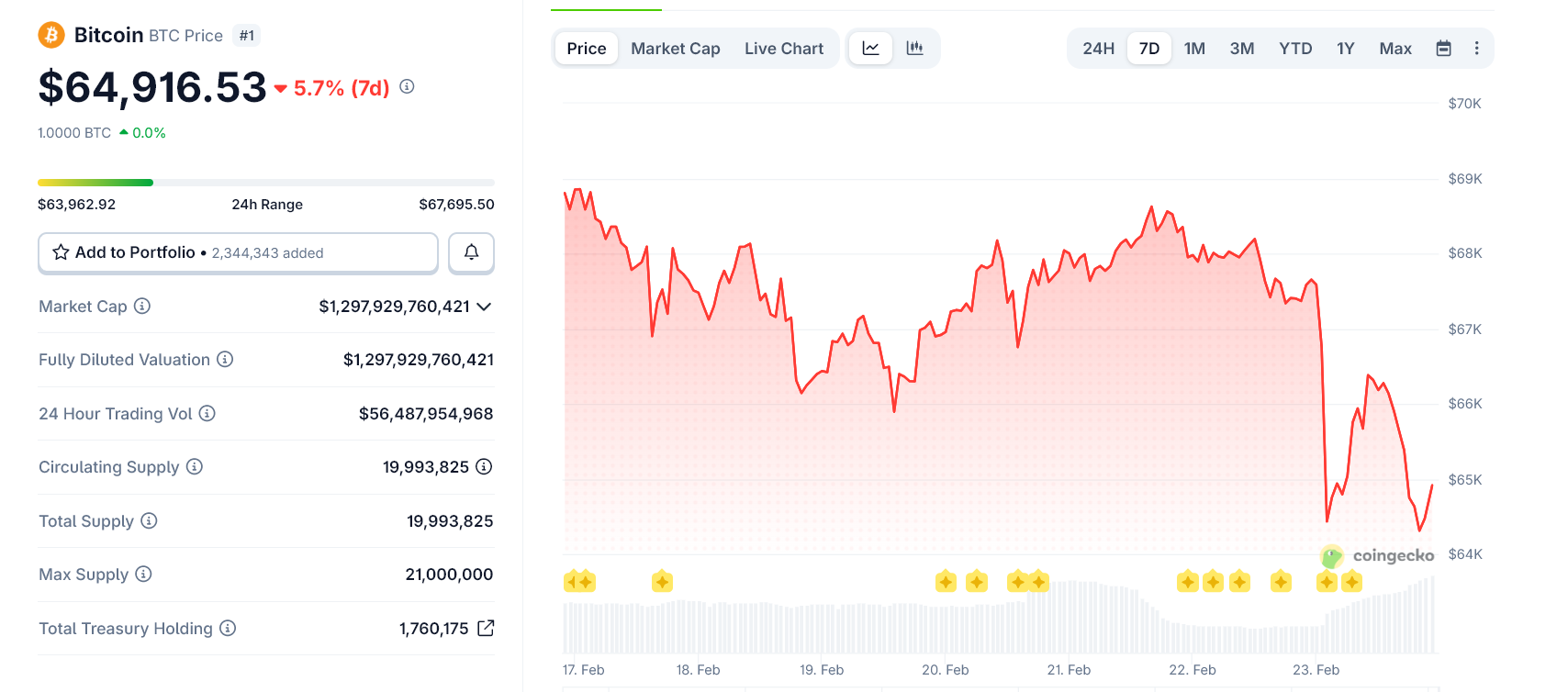
What Looks Different in 2026
This year’s first week looks different in one important way. Bitcoin did not open with a clean rally. It opened with chop, then a sharp flush, and only after that started a bounce attempt.
That means the pattern is still familiar in shape — fast move, emotional swing, unstable recovery — but the sequence has changed. The market looks weaker than the stronger Ramadan years, at least so far.
On-Chain Data Shows Why Bitcoin Remains Weak in Q1
The on-chain picture is mixed.
First, the Binance Buying Power Index has dropped to a level that previously appeared near compressed, exhausted conditions.
That is a contrarian positive. It suggests a relief bounce can happen if selling pressure fades.
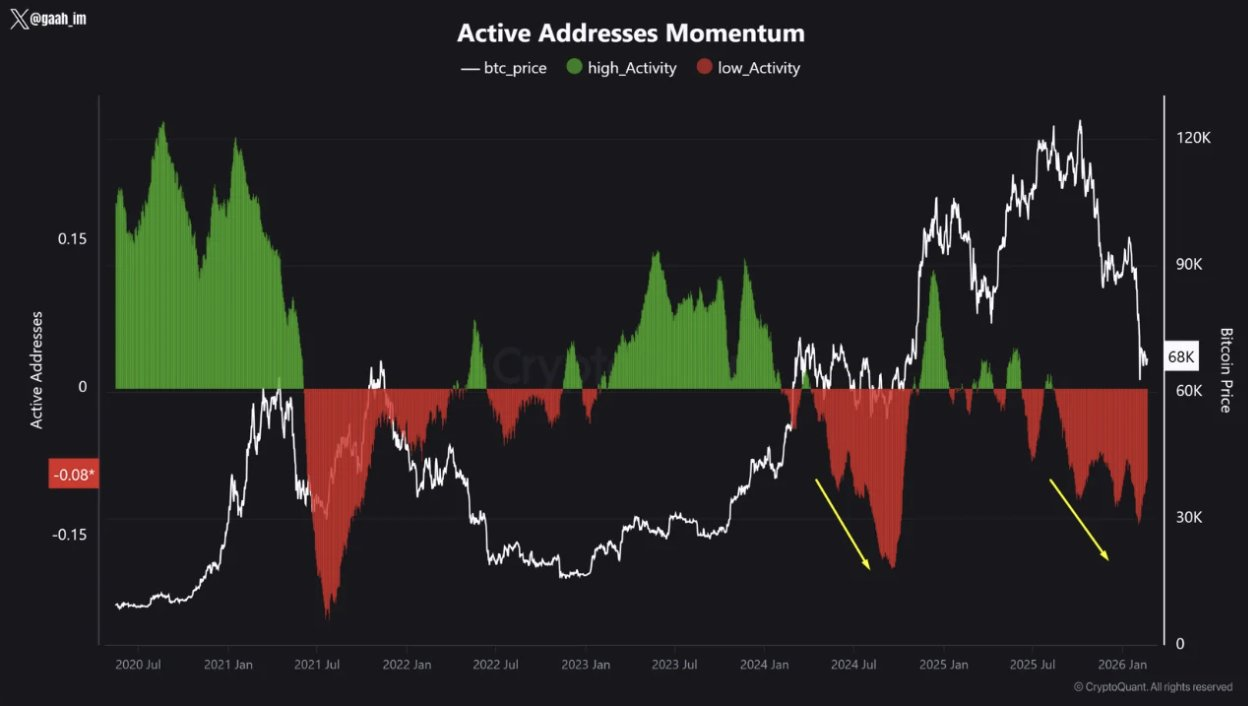
Also, network activity has stayed weak for six straight months. That is a structural warning. It suggests demand and participation remain soft, which can make rallies fragile.
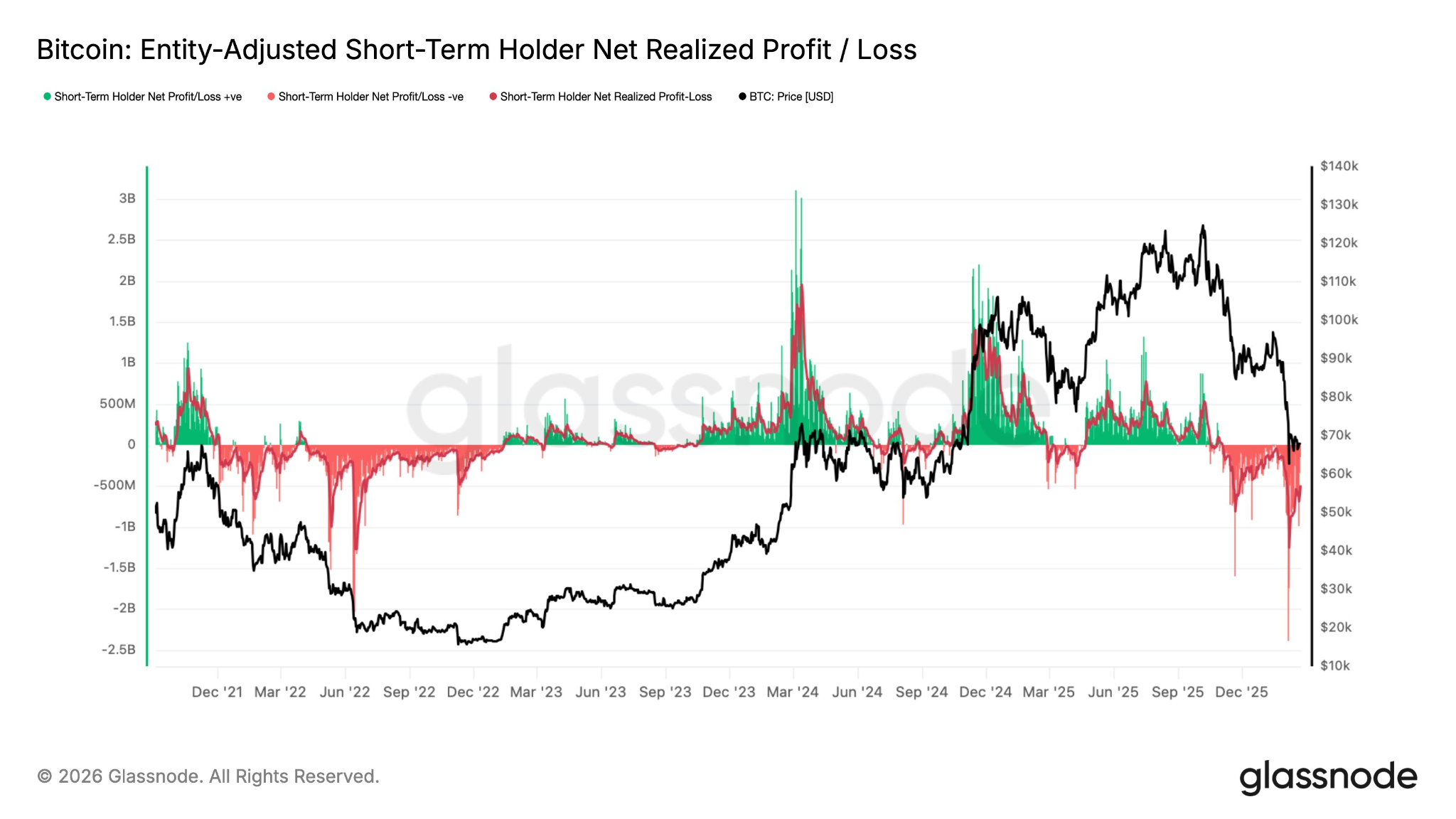
Third, short-term holder realized losses remain negative, even after the worst capitulation cooled.
In simple terms, panic selling has slowed, but many recent buyers are still exiting at a loss. That usually points to base formation, not a confirmed uptrend.
Overall, a relief bounce or choppy recovery attempt is plausible for Bitcoin in the coming weeks, especially if the Binance buying power signal plays out.
But the on-chain demand + STH P/L backdrop suggests that upside may initially be fragile and resistance-heavy.
In short, the old Ramadan “rally” narrative looks weaker in 2026. Yet the broader pattern of early volatility, sharp swings, and uncertain follow-through remains visible.


Analysis shows sanction-linked wallets amassed major stablecoin balances, underscoring compliance challenges industrywide.
Binance has reported a reduction in its exposure to sanctioned entities, citing a 97% decline since January 2024.
The announcement follows accusations of sanctions violations and claims that investigators were dismissed for raising compliance concerns.
Binance Outperforms Global Peers
Recent reports from Fortune claimed that several investigators were terminated after flagging over $1 billion in transactions linked to Iranian counterparties, primarily involving Tether’s USDT on the Tron blockchain over 18 months.
In addition to the investigators’ terminations, the report indicated that during the last three months, at least four senior compliance employees have been let go or pushed out.
Separately, blockchain analytics platform Elliptic noted in January that wallets tied to the Central Bank of Iran had accumulated more than $500 million in USDT, indicating a growing reliance on stablecoins to bypass banking restrictions.
In response, Binance outlined its compliance measures in a blog post, describing its program as the “best-in-class” and continuously strengthening. Data shared by the exchange shows that sanctions-related exposure as a percentage of total exchange volume fell from 0.284% in January 2024 to 0.009% by July 2025, representing a 96.8% decline.
Direct connection to the four largest Iranian cryptocurrency exchanges also dropped by 97.3% over the period, from $4.19 million to approximately $0.11 million, surpassing ten major global exchange peers in risk reduction. In 2025 alone, the firm says it processed over 71,000 requests from authorities and supported more than $131 million in confiscations.
You may also like:
These developments come as Binance continues to operate under compliance reforms agreed to during its settlement with U.S. authorities, after the exchange pleaded guilty to anti-money laundering and sanctions violations, paying $4.3 billion in penalties.
Binance Denies Allegations
According to Binance, the recent reporting on its sanctions compliance status is based on incomplete and mischaracterized information that does not reflect the full record.
The company shared that the two entities referenced in the reports underwent structured internal reviews, which confirmed they were not on any sanctions lists while using the platform and that their transactions did not trigger alerts from industry-standard monitoring tools.
Binance added that as soon as new information was discovered, it went on to activate its compliance protocols and took appropriate action.
The exchange also denied accusations that it had dismissed investigation staff for working on these cases, clarifying that some relevant employees departed after an internal review found breaches of company data protection and confidentiality guidelines.
Former Binance CEO Changpeng Zhao also dismissed the claims on social media, stating,
“You can put a negative narrative on anything by talking to an ‘anonymous source’ who is ‘unhappy’ or paid to FUD.”
Binance Free $600 (CryptoPotato Exclusive): Use this link to register a new account and receive $600 exclusive welcome offer on Binance (full details).
LIMITED OFFER for CryptoPotato readers at Bybit: Use this link to register and open a $500 FREE position on any coin!

Bitcoin has faced a tougher trading stretch, dipping under 75,000 for 18 sessions and testing the market’s nerve as policy and macro signals diverge. The asset briefly retraced to around 64,200 after a broad stock retreat, while a decision by the Trump administration to raise baseline import tariffs to 15% added fresh uncertainty. Yet history cautions against assuming a permanent top when liquidity is in flux: Bitcoin has repeatedly outperformed other risk assets during stressed macro cycles, aided by persistent mining activity and a growing cohort of professional traders using volatility to adjust exposure. In this environment, Bitcoin remains a focal point for liquidity dynamics and institutional positioning, with fundamentals showing resilience even as headlines churn.
Key takeaways
- Historical data suggests Bitcoin often outperforms during trade wars and liquidity injections, even when macro fears are elevated.
- Mining activity has proven resilient, and a shift to net long positions on CME futures signals professional traders are adding exposure on dips.
- Policy shocks, such as tariffs implemented in early April 2025, coincide with sharp price moves—Bitcoin hit a five-month low near 74,600 before staging a subsequent rally.
- The U.S. Federal Reserve’s liquidity facilities have historically been a source of indirect support, with peak repo-like operations sometimes foreshadowing price rebounds in BTC.
- Hashrate recovery and profitable mining hardware at modest electricity costs have reduced tail risks from miner capitulations, helping sustain network fundamentals.
- Market positioning by large speculators flipped from net short to net long on BTC futures, a signal that has sometimes preceded major price bottoms.
Tickers mentioned: $BTC, $NVDA, $ORCL, $MARA, $CRWV
Sentiment: Bullish
Price impact: Positive. Dip-buying by institutions and improving mining fundamentals could support a move back toward key benchmarks.
Trading idea (Not Financial Advice): Hold. Given mixed macro cues, a cautious stance is warranted until price action and policy signals provide clearer direction.
Market context: Liquidity conditions and regulatory developments are shaping near-term outcomes, with network health and futures positioning acting as important indicators for BTC’s trajectory.
Why it matters
Bitcoin’s resilience amid policy jitters matters because it tests the narrative of crypto as a hedge in times of macro stress. When governments signal tighter control or aggressive tariff actions, liquidity dynamics often determine whether risk assets liquidate or rotate into alternatives with unique inflation-hedging characteristics. The fact that miners’ revenue streams have remained resilient, and that professional traders have shifted toward net long exposure on futures, adds a layer of credibility to the idea that BTC can stabilize and recover rather than cascade lower during periods of uncertainty.
Another dimension is the health of the mining sector. With 2024 and 2025 ASICs continuing to operate profitably at practical energy costs around $0.07 per kilowatt-hour, miners have less incentive to withdraw from the network even as AI-fueled tech equities face tighter funding. This reduces systemic risk linked to hash rate collapse and supports on-chain activity. The interplay between policy developments and the macro funding environment remains a central driver for BTC, and current data points suggest a favorable tilt for a potential retest of higher levels in the near term. For readers tracking the broader ecosystem, recent company dynamics—such as MARA’s stake in Exaion—underscore how mining-related investments are increasingly intertwining with data-center and AI-capital narratives.
In parallel, a shift in trader positioning has emerged as a recurring theme. A CFTC report published last week highlighted that large speculators on CME Bitcoin futures moved from a net short to a net long posture, a pattern that has, in past cycles, preceded sizeable price bottoms. While no single indicator confirms a bottom, the combination of improving miner fundamentals, a potential stabilization of liquidity metrics, and a cautious, yet constructive, positioning backdrop can augur a more constructive tone for the BTC market in the weeks ahead. The price action already reflected a bounce from the mid-60ks toward the 75k area in the near term, and market participants will be watching how this dynamic interacts with ongoing macro developments and policy updates.
What to watch next
- The latest CME Bitcoin futures positioning data from the CFTC showing net long shifts among large speculators.
- Hashrate and miner profitability trends, especially at around $0.07/kWh energy costs.
- Policy developments—new tariffs or liquidity actions—that could impact risk sentiment.
- Upcoming earnings or funding moves in the AI hardware and data-center space, including Nvidia results.
- Price action around the $75,000 level and whether BTC tests this midpoint in the coming weeks.
Sources & verification
- Executive orders on reciprocal tariffs issued in early April 2025 and subsequent tariff actions affecting major trading partners.
- CFTC report detailing the shift from net short to net long on CME Bitcoin futures.
- HashRateIndex data on miner gross profits at a power cost of $0.07/kWh.
- Bitcoin’s price responses during the 2020 COVID-19 crash and subsequent multi-month rally to the $42,000 level.
- Industry reference to MARA’s stake in Exaion and the broader mining sector’s status.
Bitcoin resilience amid policy jitters and miners’ rebound
Bitcoin (CRYPTO: BTC) has weathered a fresh bout of volatility as traders reassess risk in a climate of heightened policy scrutiny. After drifting below the psychological 75,000 mark for 18 sessions, the digital asset touched a low near 64,200 as global equities pulled back. The catalyst was a wave of tariff actions announced in early April 2025, including reciprocal duties across many trading partners and a 34% levy targeting China by April 9. The immediate backdrop was, in many ways, a reminder of how macro policy can ripple through risk assets even asBitcoin continues to attract a dedicated pool of long-term holders and enthusiasts. Yet the price reaction also underscored a familiar pattern: when liquidity conditions tighten, BTC often behaves unlike traditional equities, with the potential for outsized rebounds when sentiment stabilizes.
From a structural perspective, Bitcoin’s network has shown considerable resilience. The mining sector—with ASICs deployed in 2024 and 2025—has remained profitable at modest energy costs, reducing the risk of mass capitulations that could threaten hash rate. The observable improvement in the hashrate relative to earlier delays helped counter fears of a miner “death spiral” and supported on-chain activity. This improvement matters more than flat price moves because a robust hash rate underpins transaction throughput and security, which in turn sustains confidence among holders and developers alike. For investors following the mining landscape, the narrative has shifted from existential risk to a more nuanced assessment of profitability and supply dynamics, with miners continuing to contribute to BTC’s forward resilience.
The macro narrative around policy and liquidity remains a central force. The U.S. Federal Reserve’s liquidity facilities—lending against Treasuries to smooth funding markets—have historically influenced risk appetite, even if not always framed as direct injections. In past episodes, peaks in such operations have often coincided with safer moments for risk assets, including BTC, as market participants anticipate a policy environment that will eventually stabilize. In the current cycle, traders are poring over data on repo-like operations and balance-sheet conditions to gauge whether a more accommodative liquidity backdrop could re-emerge, providing a tailwind for BTC in the weeks ahead. The discussion around liquidity is complemented by linked policy moves, such as the tariff actions described above, which can amplify risk-off or risk-on impulses depending on how the broader economy absorbs the shocks and whether policymakers offer mitigants or liquidity backstops.
Adding another layer to the story, institutional players have started to reallocate exposure during pullbacks. A recent analysis noted that professional traders used the dip to add Bitcoin exposure, with long positions on CME futures expanding at a pace that historically signals a renewed appetite for BTC among sophisticated funds. That shift aligns with the broader narrative of a maturing market where liquidity, hedging demand, and macro risk sentiment converge to form potential baselines for a recovery. In parallel, the data points cited in industry commentary—such as MARA’s stake in Exaion—highlight how capital moves within the mining and AI infrastructure ecosystem can influence both sentiment and the capital flows into related hardware and data-center ventures. For traders and observers, this confluence of mining fundamentals, futures positioning, and policy dynamics provides a clearer, albeit still uncertain, path toward higher levels if the catalysts align.
Looking ahead, the near-term trajectory will likely hinge on how quickly the macro environment absorbs tariff signals, how the liquidity backdrop evolves, and whether Bitcoin can sustain a momentum lead beyond the 75,000 threshold. The market has shown a capacity to rally after drawdowns tied to policy shocks, as evidenced by the 38% rebound observed in the month following the initial low. If this dynamic persists, BTC could carve a path back toward the mid- to upper-70s in the coming weeks, aided by a combination of supportive hashrate trends, a possible shift in futures positioning, and any signs that macro liquidity will re-enter the system with a clear framework. In the meantime, investors will be watching for more granular signals—from CME futures data to mining profitability metrics—that can help distinguish a temporary bounce from the beginning of a sustained upcycle.
Peter Attia exits CBS News role after appearing in Epstein files

PARKOUR VS MONEY HEIST! 20

Low Tide Coffee House in Seaham to open this weekend


-

 Crypto World7 days ago
Can XRP Price Successfully Register a 33% Breakout Past $2?
-

 Video4 days ago
XRP News: XRP Just Entered a New Phase (Almost Nobody Noticed)
-

 Fashion3 days ago
Weekend Open Thread: Boden – Corporette.com
-

 Sports7 days ago
GB's semi-final hopes hang by thread after loss to Switzerland
-

 Politics2 days ago
Baftas 2026: Awards Nominations, Presenters And Performers
-
 Tech7 days ago
The Music Industry Enters Its Less-Is-More Era
-

 Sports5 hours ago
Women’s college basketball rankings: Iowa reenters top 10, Auriemma makes history
-

 Politics6 hours ago
Nick Reiner Enters Plea In Deaths Of Parents Rob And Michele
-

 Business6 days ago
Infosys Limited (INFY) Discusses Tech Transitions and the Unique Aspects of the AI Era Transcript
-

 Entertainment5 days ago
Kunal Nayyar’s Secret Acts Of Kindness Sparks Online Discussion
-

 Video7 days ago
Financial Statement Analysis | Complete Chapter Revision in 10 Minutes | Class 12 Board exam 2026
-

 Tech6 days ago
Retro Rover: LT6502 Laptop Packs 8-Bit Power On The Go
-
 Sports5 days ago
Clearing the boundary, crossing into history: J&K end 67-year wait, enter maiden Ranji Trophy final | Cricket News
-

 Business1 day ago
Mattel’s American Girl brand turns 40, dolls enter a new era
-

 Business1 day ago
Law enforcement kills armed man seeking to enter Trump’s Mar-a-Lago resort, officials say
-

 Entertainment5 days ago
Dolores Catania Blasts Rob Rausch For Turning On ‘Housewives’ On ‘Traitors’
-

 Business6 days ago
Tesla avoids California suspension after ending ‘autopilot’ marketing
-
 NewsBeat14 hours ago
‘Hourly’ method from gastroenterologist ‘helps reduce air travel bloating’
-

 Politics7 days ago
Eurovision Announces UK Act For 2026 Song Contest
-

 Tech1 day ago
Anthropic-Backed Group Enters NY-12 AI PAC Fight