Learning Resources CEO Rick Woldenberg and MGA Entertainment CEO Isaac Larian discuss President Donald Trump’s global tariff strategy and the Supreme Court’s ruling on ‘The Claman Countdown.’
One of the plaintiffs in the Supreme Court case that challenged President Donald Trump’s tariff authority says Friday’s ruling against the president’s authority is “not enough.”
On Friday, the Supreme Court ruled 6-3 against Trump’s tariffs. Later that day, however, Trump announced a 10% global tariff, which he later raised to 15% on Saturday.
Advertisement
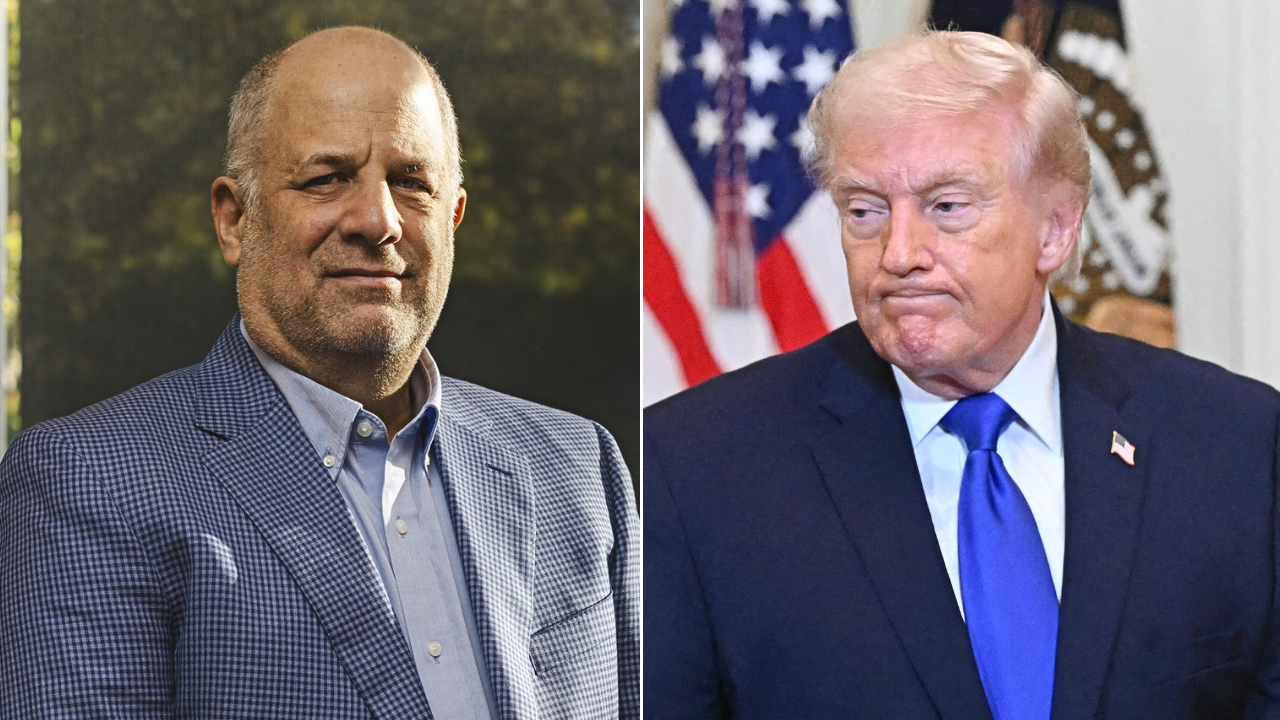
One plaintiff, Illinois toymaker Rick Woldenberg, CEO of Learning Resources, called the ruling a “small improvement.” He joined the case against Trump’s tariffs after his toymaking company was adversely affected, as many of his toys are imported from China.
Woldenberg’s companies, Learning Resources Inc. and hand2mind Inc., sued in April to invalidate the tariffs as exceeding Trump’s authority. (Taylor Glascock/Bloomberg via Getty Images / Getty Images)
“An asphyxiating tax is an economic depressant,” he told “The Claman Countdown” on Monday. “Federal plus state plus IEPA tariffs on our company last year exceeded our earnings. So, make a dollar pay, more than a dollar in taxes.”
Woldenberg argued that Trump’s tariff policy over the last year has hurt consumers and caused significant turmoil for his business.
Advertisement
He said his business faced a hard choice when dealing with the economic impacts of Trump’s tariffs.
“Either we’re gonna liquidate our business into the pockets of the federal government or we have to pass the costs on,” Woldenberg explained. “So, the tariff which falls on us becomes a regressive tax falling on the folks on the lower end of the economic spectrum.”
“I’m very uncomfortable with that. I think regressive tax is immoral,” he added.
Advertisement
The toymaker clarified that his case against Trump was not personal but rather a call for law and order.
President Trump’s emergency use of tariffs was ruled to be against his presidential authority in a 6-3 ruling on Friday. (Getty Images / Getty Images)
“We’re not for Mr. Trump or against Mr. Trump, we’re against the misapplication of law,” he told FOX Business.
Woldenberg will attend Trump’s State of the Union on Tuesday.
Advertisement
FOX Business host Liz Claman asked Woldenberg whether he thinks it will be awkward to see Trump in person after he called him and his fellow plaintiffs “sleazebags.”
“I’m not embarrassed to be there – obviously don’t appreciate being called names,” he said.
MGA Entertainment CEO Isaac Larian also joined “The Claman Countdown” and said Trump’s push to bring back U.S. manufacturing through tariffs was “impractical.”
Advertisement
Larian, whose company manufactures Bratz dolls, said shifting production to the United States would make it impossible to maintain current price points for American consumers.
An employee works at a toy factory specializing in solar-powered plastic gadgets in Yiwu, China’s eastern Zhejiang province on April 11, 2025. (ADEK BERRY/AFP / Getty Images)
“This Bratz is right now a number one selling toy…” Larian said. “They are made in China right now, and they sell for $25. There is no way to make that in America and if it was, it would be $50 instead of $25.”
Larian also said Americans deserve to know whether they will get rebates tied to the tariff policy over the last year.
Advertisement
“The Supreme Court says these tariffs were illegal. If they’re illegal, they’re an illegal tax on Americans. And Americans deserve clarity on the refunds,” he said.
Weardale Lithium is hoping to extract the key material from brines under the North Pennines
Weardale Lithium has secured planning permission to build its lithium extraction facility at the former Eastgate cement works.(Image: Weardale Lithium)
A bid to extract the key material of lithium from the ground beneath the North East has received a boost from the Government.
Weardale Lithium has secured grant funding through the Government’s DRIVE35 Scale-Up: Feasibility Studies competition, supporting the next phase of development at its geothermal lithium project in County Durham. The project aims to produce battery-grade lithium carbonate – a key material for the UK’s net zero ambitions – from geothermal groundwaters under the North Pennines, and could create between 20 and 50 jobs.
The grant funding will enable Weardale Lithium to undertake a £700,000 feasibility study to map its geothermal lithium-bearing brinefield within the North Pennine Orefield. The feasibility study represents an important step towards establishing a domestic source of battery-grade lithium carbonate, reducing reliance on imported raw materials and strengthening the resilience of the UK’s EV manufacturing base.
Stewart Dickson, CEO of Weardale Lithium, said: “Securing support through the DRIVE35 Scale-Up programme is an important milestone for Weardale Lithium and for the development of a secure, domestic lithium supply in the UK. This funding enables us to undertake critical subsurface mapping and technical analysis of our geothermal brine resource in County Durham, providing the data needed to inform commercial scale-up and future investment decisions.
Advertisement
Stewart Dickson, CEO of Weardale Lithium(Image: Weardale Lithium)
“Our project aligns directly with the UK Critical Minerals Strategy and wider UK Battery Strategy. By developing low-carbon Direct Lithium Extraction integrated with on-site conversion to battery-grade lithium carbonate, we are positioning the North East at the forefront of the UK’s emerging
battery materials supply chain while creating high-value jobs and long-term economic benefits for the region.”
The grant to Weardale Lithium – which has planning permission for an extraction facility at Eastgate – is part of a wider investment package into the UK automotive industry.
Ian Constance, CEO of Advanced Propulsion Centre UK, said: “The projects announced today demonstrate the UK’s determination to lead the shift to zero-emission mobility. By facilitating the UK Government’s DRIVE35 grants, we are turning world-class innovation into industrial capability. With our partners in DBT and Innovate UK, we are backing manufacturers, empowering SMEs, and strengthening the UK’s sovereign supply chain.
Advertisement
“This multi-million pound support package is more than an investment in technology; it is an investment in the people, skills, and companies that will define the future of clean transport. Together, we are building the foundations of a competitive, resilient, and sustainable automotive industry.”
Fox News chief national security correspondent Jennifer Griffin reports on the state of Strait of Hormuz traffic, Irans demand for a toll on passing ships and ceasefire negotiations on Varney & Co.
This story on the March 2026 CPI inflation report is developing and will be updated with further details.
Inflation surged in March as consumer prices jumped amid the economic disruptions caused by the Iran war’s impact on the energy market.
Advertisement
The Bureau of Labor Statistics on Friday said that the consumer price index (CPI) – a broad measure of how much everyday goods like gasoline, groceries and rent cost – rose 0.9% from a month ago and is 3.3% higher than last year. The annual figure jumped from last month’s 2.4% reading, while the monthly increase also rose markedly from last month’s 0.3% reading.
Expectations vs. reality
Both the 0.9% monthly increase and 3.3% annual rise were in line with the expectations of economists polled by LSEG.
So-called core prices, which exclude volatile measurements of gasoline and food to better assess price growth trends, were up 0.2% on a monthly basis and 2.6% from a year ago. Both of those figures were slightly cooler than economists’ predictions of 0.3% and 2.7%, respectively.
The core CPI figures were slightly hotter than February’s readings, which showed prices rose 0.2% on a monthly basis and 2.5% from the prior year.
Advertisement
Economists have noted that inflation data from December 2025 through April 2026 will be affected due to data collection interruptions resulting from last fall’s 43-day government shutdown.
During the shutdown, the BLS wasn’t able to gather data and used a carry-forward methodology to make up for the lack of an October CPI report and missing data in November’s report. Economists say this is likely to impart a downward bias on inflation data until this spring, when fresh data will negate the discrepancy.
The cost of living breakdown
High inflation has created severe financial pressures in recent years for most U.S. households, which are forced to pay more for everyday necessities like food and rent. Price hikes are particularly difficult for lower-income Americans, because they tend to spend more of their already-stretched paychecks on necessities and have less flexibility to save.
Food prices were flat on a monthly basis in March, and were up 2.7% from a year ago. The food at home index declined 0.2% for the month and is up 1.9% over the last year, while the food away from home index is 3.8% higher than a year ago after a 0.2% increase on a monthly basis.
Advertisement
Meats, poultry and fish prices were down 0.5% for the month but remain 5.6% higher than a year ago. Beef and veal prices fell 0.6% in March and are 12.1% higher than last year. Egg prices continued to decline following an avian flu outbreak that impacted supply, with prices down 3.4% for the month and 44.7% from a year ago. The fruits and vegetables index rose 1% in March and is up 4% on an annual basis.
Thousands of small investors who piled into one of London’s best-known green investment vehicles are staring down the barrel of losses running well beyond 50 per cent, after the board of SDCL Efficiency Income Trust (SEIT) bowed to pressure from a New York activist and abandoned its rescue plan in favour of a managed wind-down.
The FTSE 250 trust, which has raised more than £1.1 billion from retail backers since its 2018 launch, confirmed today that it has shelved plans to convert itself into a conventional operating company and will instead begin selling off its portfolio of energy-efficiency assets.
SEIT becomes the latest London-listed trust to change course under the gaze of Saba Capital, the aggressive New York hedge fund run by Boaz Weinstein, which is understood to hold a stake of more than 10 per cent. Saba has built positions in dozens of British investment trusts over the past eighteen months, agitating for boards to be replaced and cash to be returned to shareholders.
For the army of private investors who subscribed to SEIT’s nine capital raisings between 2018 and 2022, the decision marks the bitter end of a story that once looked like a copper-bottomed route into the green transition. They were lured by an anticipated yield of 5 per cent or more at a time when base rates were on the floor, and placings were frequently several times oversubscribed. Their money went into projects ranging from rooftop solar arrays at Tesco supermarkets to electric-vehicle charging infrastructure and district heating schemes.
The trust’s fortunes reversed sharply once interest rates began their steep climb, and the market has grown increasingly sceptical about the values SEIT has placed on its unquoted holdings. The shares, which were issued at £1 or more, closed at 45p yesterday, a punishing 49 per cent discount to stated net asset value. If the portfolio is eventually liquidated anywhere close to recent market prices, the collective hit to shareholders could exceed £500 million.
Advertisement
Tony Roper, SEIT’s chairman, said the board had held intensive talks with wealth managers, retail platforms and other large holders, and that the feedback had been clear. Many had expressed what he described as “a clear preference for liquidity” over the proposed run-on plan. Saba is believed to have been among those consulted.
The directors, he said, had “unanimously concluded” that a managed wind-down of the portfolio was now in the best interests of shareholders taken as a whole. Roper acknowledged the pain felt by loyal backers, saying the board was “acutely aware of the reduction in share price in recent years” and recognised the frustration and uncertainty that had caused.
The alternative on the table had been to delist the investment trust wrapper, retain the stock market listing as an ordinary trading company and carry on running the assets. Roper conceded that, in theory, such a route “could have created value significantly in excess of the current share price”, but said it carried meaningful execution risk that shareholders were unwilling to stomach.
SDCL, the manager founded and led by energy-efficiency evangelist Jonathan Maxwell, has agreed to what the trust described as minimised termination fees, a nod to the sensitivity around what retail backers might otherwise regard as rewards for failure.
Advertisement
Analysts at Barclays said the activist presence on the shareholder register had made an orderly wind-down the more probable outcome all along. In their view, the shift “provides clearer line of sight to value realisation”, though they warned that the process would stretch out over an extended period and that disposal pricing remained a live risk.
There is already a cautionary data point. SEIT recently offloaded a batch of assets for £105 million, a 9 per cent discount to the value at which they had been carried in the books, a reminder that the private market for infrastructure assets remains sticky and that further haircuts are likely as the wind-down gathers pace.
The SEIT decision lands squarely within a broader assault by Saba on the £270 billion investment trust sector. Edinburgh Worldwide Investment Trust and Impax Environmental Markets are both midway through exit tender offers that their boards have argued are necessary to prevent ordinary shareholders being trapped in vehicles increasingly controlled by the American fund. Several other trusts have pre-emptively announced buybacks, continuation votes or strategic reviews in an attempt to keep Saba at bay.
For SME owners and retail savers who were encouraged to view specialist investment trusts as a low-drama way of backing the energy transition, the unravelling of SEIT is a sobering lesson. A yield that looks generous in a zero-rate world can evaporate quickly when gilts start paying 4 per cent, and unlisted infrastructure values that held up well on paper do not always survive contact with a real buyer. With Saba now a fixture on share registers from Leith Walk to Bishopsgate, more boards are likely to find themselves weighing whether to fight, fold or hand the cheque book back to investors.
Advertisement
Amy Ingham
Amy is a newly qualified journalist specialising in business journalism at Business Matters with responsibility for news content for what is now the UK’s largest print and online source of current business news.
WASHINGTON — President Donald Trump, seething over what he calls NATO allies’ failure to support U.S. efforts in the Iran conflict and stalled plans for Greenland, has discussed with advisers the possibility of withdrawing some American troops from Europe, a senior White House official said Thursday.
AFP
The deliberations, reported first by Reuters, mark the latest escalation in trans-Atlantic tensions that have pushed the 77-year-old military alliance into one of its rockiest periods. No final decision has been made, and the Pentagon has not been tasked with concrete planning, but the mere discussion signals Trump’s deepening frustration with European partners he accuses of freeloading on American security guarantees while offering little in return during critical moments.
Trump’s anger boiled over after a tense White House meeting Wednesday with NATO Secretary General Mark Rutte. In an all-caps Truth Social post afterward, the president declared: “NATO WASN’T THERE WHEN WE NEEDED THEM, AND THEY WON’T BE THERE IF WE NEED THEM AGAIN. REMEMBER GREENLAND, THAT BIG, POORLY RUN, PIECE OF ICE!!!” He followed up Thursday by calling the alliance “very disappointing” and saying its members only respond to pressure.
The troop withdrawal idea would serve as a targeted punishment short of the full U.S. exit from NATO that Trump has repeatedly floated — a move that would require congressional approval and faces legal hurdles. Instead, officials are eyeing a realignment: pulling forces from countries viewed as “unhelpful,” such as Germany and Spain, and shifting them toward more supportive eastern flank nations like Poland, Romania, Lithuania and Greece, according to reports citing administration sources.
The United States currently stations roughly 84,000 troops across Europe, with major bases in Germany playing a central logistical role for operations from the Middle East to Africa. Any significant drawdown would reshape America’s forward military posture on the continent and send shockwaves through European capitals already grappling with Russia’s ongoing threat and energy security concerns.
Advertisement
Roots of Trump’s Fury: Iran War and Hormuz
Trump’s latest grievances trace directly to the U.S.-Israeli military campaign against Iran that began in late February 2026. The conflict disrupted shipping through the Strait of Hormuz, a vital chokepoint for global oil and gas flows, sending energy prices soaring. European allies largely declined to commit naval forces to help reopen the waterway, a decision Trump branded as abandonment.
“They turned their backs on the American people,” White House press secretary Karoline Leavitt said ahead of the Rutte meeting. Trump has repeatedly labeled NATO a “paper tiger” and suggested in interviews that he is “absolutely” considering pulling the U.S. out of the alliance once the Iran situation stabilizes.
The Greenland issue adds another layer. Trump has long expressed interest in acquiring the Danish territory for strategic reasons, but progress has been nonexistent, further fueling his irritation with European partners.
A Strategy of Punishment Without Full Withdrawal
The troop repositioning plan, first detailed by The Wall Street Journal, stops short of a complete NATO exit but would still dramatically reduce Washington’s security commitments in western and central Europe. Countries with higher defense spending and quicker support during the Hormuz crisis could see increased U.S. presence, while others face base closures or force reductions.
Advertisement
Defense analysts note that such a move would test NATO’s Article 5 collective defense pledge in practice, even if not formally abandoned. Eastern European nations, already wary of Russian aggression, have generally met or exceeded the 2% of GDP defense spending target that Trump has long demanded. Western European powers like Germany have increased spending in recent years but remain below what the president considers adequate.
NATO officials and European leaders responded with a mix of calm and concern. Rutte described his meeting with Trump as “very frank” and “very open,” acknowledging disagreements without elaborating. Poland and other frontline states urged unity, while Germany reaffirmed its commitment to the alliance. British Prime Minister Keir Starmer suggested Europe may need to strengthen intra-continental defense ties.
Congressional barriers could complicate any large-scale withdrawal. The National Defense Authorization Act includes provisions aimed at preventing sharp reductions in U.S. forces in Europe below certain thresholds, reflecting bipartisan support for maintaining the trans-Atlantic link.
Historical Echoes and Strategic Stakes
Trump’s threats echo his first term, when he repeatedly criticized NATO spending and briefly considered troop cuts from Germany. This time, the context is more volatile: a recent U.S.-Iran conflict, disrupted global energy markets and a NATO already strained by Russia’s war in Ukraine.
Advertisement
European officials worry that any U.S. drawdown could embolden adversaries and force rapid, costly increases in their own defense budgets. Some have quietly begun contingency planning for greater European strategic autonomy, including joint procurement and enhanced EU defense initiatives.
For the Pentagon, repositioning tens of thousands of troops would involve enormous logistical challenges, base negotiations and potential strains on readiness. Supporters of Trump’s approach argue it finally forces Europe to shoulder more of the burden after decades of underinvestment.
Critics, including former national security officials, warn that signaling wavering U.S. commitment could weaken deterrence against Russia and China while damaging America’s global credibility.
What Comes Next
As of Friday, April 10, no orders for troop movements have been issued. White House officials emphasize that discussions remain internal and that Trump continues to use leverage to extract concessions on spending and burden-sharing.
Advertisement
Trump is expected to keep pressure on allies in coming weeks, potentially tying future U.S. support to concrete actions on defense budgets and Hormuz-related cooperation.
The episode underscores the fragile state of trans-Atlantic relations in 2026. While NATO has survived previous Trump-era turbulence, the combination of the Iran conflict fallout and longstanding spending disputes has exposed deep fault lines.
For now, the president’s anger serves as both venting and negotiating tactic. Whether it leads to actual force reductions — or simply compels European capitals to boost contributions — will shape the alliance’s future for years to come.
European leaders face a delicate balancing act: responding to Trump’s demands without appearing to capitulate, while preparing for a security landscape with potentially less reliable American backing.
Advertisement
As one senior European diplomat put it privately, “Pressure works with Trump, but permanent damage to trust could outlast any single administration.”
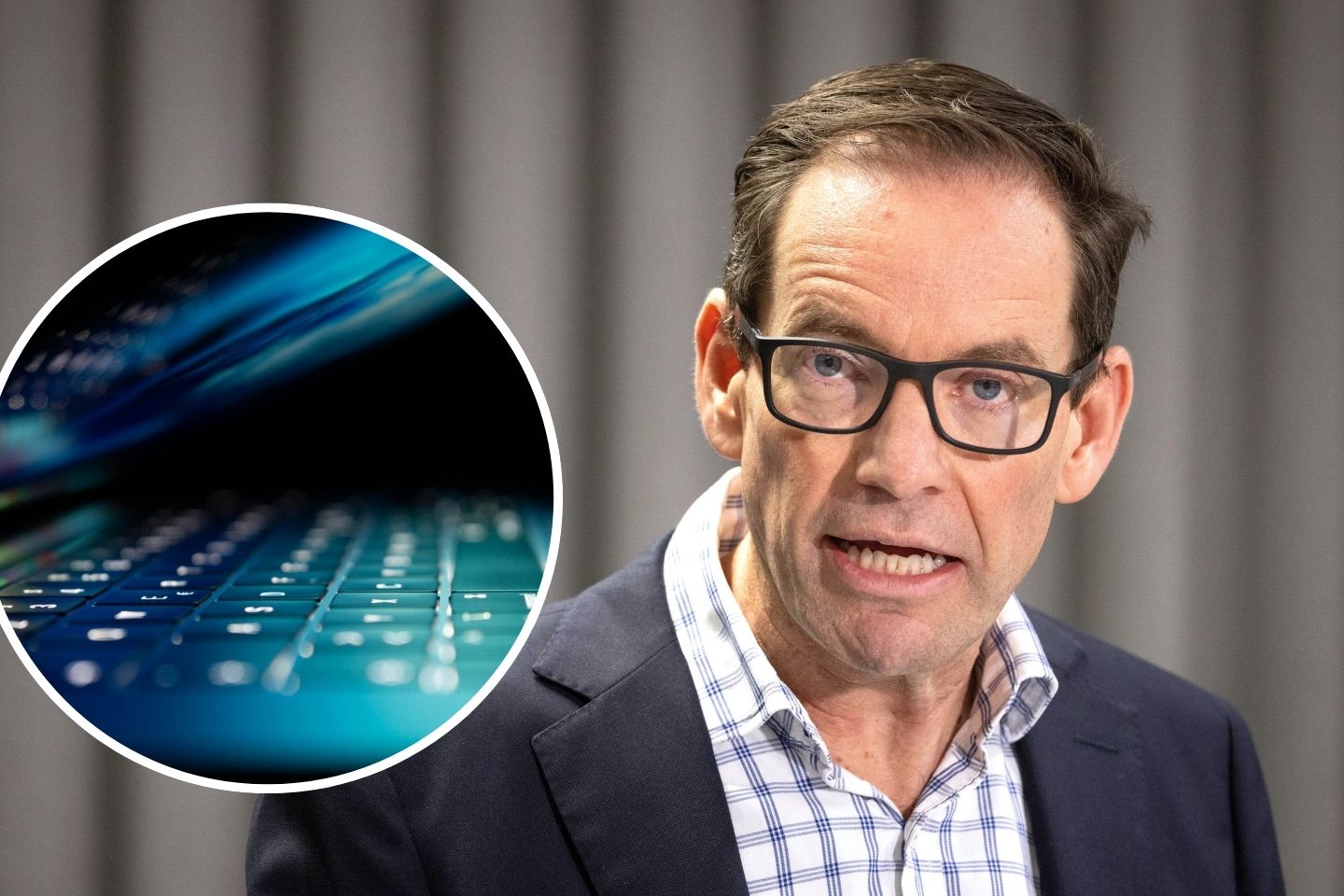
State-owned energy provider Synergy has launched an investigation into claims of a massive data breach allegedly involving over 900,000 sensitive document, including the personal records of customers.





























































You must be logged in to post a comment Login