



Connect with us

Business

Clouded outlook suggests waiting on IDFC First Bank despite sharp correction

Published

on

Clouded outlook suggests waiting on IDFC First Bank despite sharp correction
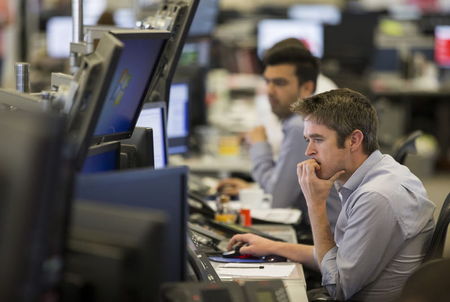
ET Intelligence Group: A sharp fall in IDFC First Bank‘s stock price on Monday, following the discovery of a fraud at one of its branches, has significantly dented its valuation multiple. While the correction may tempt value-seeking investors, caution must be observed not to fall in a valuation trap. Past examples such as RBL Bank and IndusInd Bank where a financial institution faced similar situations show that the affected lenders struggled to claw back the lost ground and regain higher valuation multiples. In addition, such instances may also affect reputation and depositors’ trust.

In the case of IDFC First Bank, the price-book (P/B) multiple inched up gradually to nearly two over the past three years from around one, aided by improving asset quality. In addition, the mid-tier bank also took efforts to revive its net interest margin to around 6% from under 2% seven years ago by shifting its focus on consumer lending and reducing corporate exposure. This makeover has attracted value investors over the past few years, supporting the stock price. The stock hit a 52-week high of 87 in the first week of January and continued to trade closer to this level in subsequent weeks.

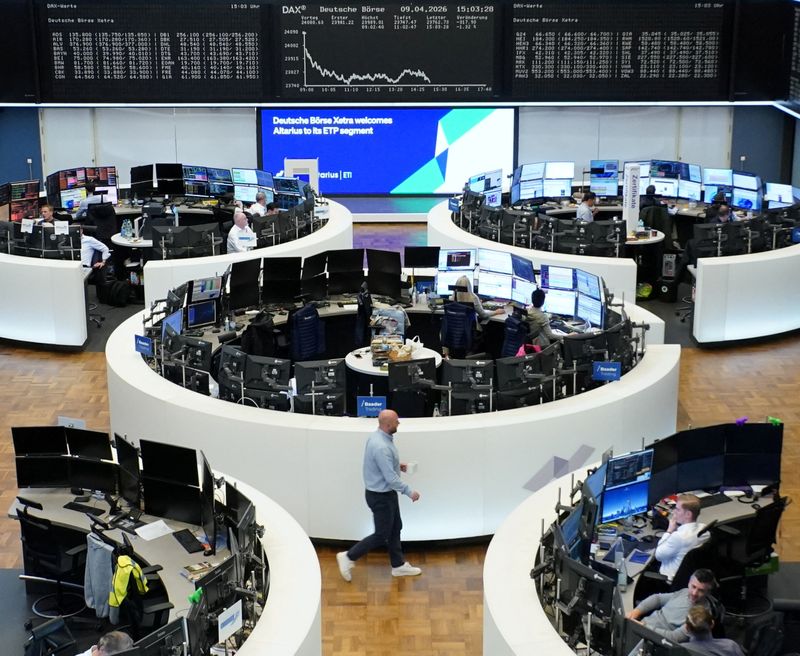
This however changed on Monday when the stock crashed by 16% to ’70 from the previous session’s close. Monday’s closing price was nearly 20% lower than the 52-week high level. The bank’s P/B has shrunk to 1.3, the lowest in over three years. However, investors need to wait before making fresh purchases as the stock is likely to remain under pressure given the possible impact of the latest fraud.

Don’t Rush to Buy, Pressure on Stock may Stay for Some TimeAgencies

Sharp fall IDFC First declined 16% in Monday’s trading. The bank is now trading 20% below the 52-week high it had hit in January

IDFC Bank informed stock exchanges on Saturday about fraudulent activities in accounts linked to the state government at its Chandigarh branch, amounting to ‘590 crore. The Haryana government has de-empanelled IDFC First Bank and AU Small Finance Bank from parking of bank deposits. Outflow of government funds may put pressure on current account- savings account (CASA) of banks at a time when they are still facing slower growth in deposits. Sector experts say, a part of government deposits may move to public sector undertaking banks over the medium term. BSE PSU Bank index rose 1.4% outperforming Sensex’s 0.6% rise on Monday.
“This episode could prompt other states to reassess their comfort with smaller banks,” a banking analyst told ET. “For mid-sized and smaller lenders, the risk of losing state government business has clearly risen after this incident.”

Advertisement


IDFC First Bank has said that recoveries will help cushion the financial impact of the fraud. Analysts, however, caution that recoveries in such cases are typically slow. “If any third party chooses to pursue litigation, the recovery process could be significantly delayed,” the analyst said.
As per the Reserve Bank of India’s circular ‘Provisioning pertaining to Fraud Accounts’, banks are required to provide for the entire amount involved in the fraud. This provisioning can be done immediately upon classification or spread over a period of upto four quarters. For IDFC Bank, if the entire amount is provided in a single quarter, the bank may be forced to report a net loss given that it reported a profit of ‘503 crore in the December quarter.

Continue Reading
Click to comment

Leave a Reply

Your email address will not be published. Required fields are marked *

Business

What’s Next for Thailand as Trump Ups Global Tariff to 15%

Published

on

What's Next for Thailand as Trump Ups Global Tariff to 15%

The new US 15% global tariff—imposed under Section 122 of the Trade Act of 1974, effective February 24, 2026, for up to 150 days—replaces the higher “reciprocal” tariffs struck down by the US Supreme Court on February 20. For Thailand, this is largely a net positive in the near term.

Short-Term Impacts (Next 3–6 Months)

  • Tariff relief and competitiveness boost: Thailand previously faced an average ~19% rate on many goods (higher on some products), while competitors like Singapore, the UK, and others enjoyed 10%. The uniform 15% levels the playing field and, on certain Thai products, could drop effective rates below 10% after exemptions or calculations. Finance Minister Ekniti Nitithanprapas called it a “more level playing field” that strengthens Thailand’s appeal as a manufacturing and investment hub.
  • Export front-loading: Exporters are expected to rush shipments to the US in Q1–Q2 2026 to capitalize on the lower rate before any potential changes when the 150-day window expires. This could temporarily lift Thai exports (especially electronics, electrical appliances, food like chicken/seafood/canned fruits, and autos/parts) and support GDP growth momentum. Thailand already runs a trade surplus with the US.
  • Investment and stock market lift: The reset is already boosting confidence (e.g., Stock Exchange of Thailand reaction) and could accelerate FDI and production relocation, building on a 68% rise in investment incentive applications last year.

Longer-Term Outlook and Risks

  • After 150 days (around July 2026): The tariff expires unless Congress extends it. Uncertainty looms—will the US negotiate bilateral deals (as it has with the UK, EU, Japan, etc.), extend the baseline, or impose new measures tied to the US trade deficit with Thailand? Talks on a fuller US-Thai deal have been delayed by domestic politics (border issues, elections, coalition formation), with a new government possibly not in place until mid-2026.
  • Challenges: A stronger baht (if the dollar weakens) could hurt competitiveness. All countries now face the same 15%, so Thailand loses some prior diversification edge from China+1 shifts. Certain SME export groups may still feel pressure.
  • Opportunities: If Thailand delivers on negotiations and investment reforms, it can attract more manufacturing/FDI and reduce over-reliance on the US market. Officials like Ekniti are confident in pushing 2026 GDP growth toward 3% via public/private investment and FDI, even if external headwinds make 2%+ more realistic.

The announcement of a 15% global tariff by former President Donald Trump signifies a significant shift in international trade policy. Such an increase suggests a move towards more protectionist measures, aiming to bolster domestic industries while potentially raising costs for consumers and businesses worldwide. This tariff hike could disrupt the delicate balance of global supply chains, prompting companies to reassess sourcing strategies and production locations.

In response, trading partners may retaliate with their own tariffs, escalating trade tensions and risking a trade war. These developments could slow global economic growth and increase market volatility, negatively impacting investor confidence. Governments and businesses will need to navigate these new trade dynamics carefully, seeking ways to mitigate adverse effects while safeguarding economic stability.

Looking ahead, trade negotiations will likely become more complex as countries adjust to the new tariff landscape. Diplomatic efforts may intensify to negotiate exemptions or lower tariffs, aiming to avoid broader economic disruptions. Ultimately, the global trade environment post-15% tariff hike will hinge on diplomatic resolutions and the resilience of international markets.

Advertisement

source

Continue Reading

Business

Arieli, Ceva CFO, buys $48k of CEVA stock

Published

on


Arieli, Ceva CFO, buys $48k of CEVA stock

Continue Reading

Business

Trump Organization unveils plans for ‘Australia’s tallest skyscraper’

Published

on

Trump Organization unveils plans for 'Australia's tallest skyscraper'

What to watch for during Trump’s State of the Union address

BBC Washington correspondent Daniel Bush on who may skip the speech, why the president is fuming at the Supreme Court, and what policies could, or couldn’t, be in for a shake‑up.

8 hrs ago

Continue Reading

Business

Premier backs booting former prince Andrew after legal process

Published

on

Premier backs booting former prince Andrew after legal process

Premier Roger Cook would support removal of Andrew Mountbatten-Windsor from line of succession.

Continue Reading

Business

Waaree Energies shares rise 2% on 500MW solar module supply order. Check details

Published

on

Waaree Energies shares rise 2% on 500MW solar module supply order. Check details
Waaree Energies shares rose nearly 2% on Tuesday after the company said it has received an order to supply 500 MW of solar modules from a domestic solar power developer and independent power producer (IPP).

The shares of the company rose to Rs 2,965.60 apiece in the morning trading hours, extending gains for the third consecutive session.

“This is to inform you that Waaree Energies Limited (‘the Company’) has received an order on February 23, 2026, for the supply of 500 MW solar modules from a renowned customer who is a solar power developer and engaged in the business of an Independent Power Producer,” the company said in a stock exchange filing on Monday.

The order is a one-time contract for the financial year 2026–27, under which the company will supply the entire 500 MW of solar modules within the timeline specified in the agreement. The contract has been awarded by a domestic entity.

Advertisement

In a separate development last week, the company said it is in talks with the government of Andhra Pradesh and certain other state governments to set up the proposed greenfield manufacturing facility of Lithium-Ion Advanced Chemistry Storage Cells and Battery Energy Storage Systems (BESS).


The move is part of the company’s plans to increase capacity from the existing 3.5 GWh to 20 GWh, with an additional capital expenditure of approximately Rs 8,000 crore in its wholly owned subsidiary, Waaree Energy Storage Solutions Private Limited (WESSPL). Its board had approved the plans on October 1, 2025.
Also Read | Investing Rs 95,000 a month through mutual fund SIPs – Can it build a Rs 5 crore corpus in 15 years?

Waaree Energies Q3 snapshot

Waaree Energies reported a 26% quarter-on-quarter rise in net profit to Rs 1,062 crore, compared with Rs 842 crore in Q2. Revenue for the quarter increased 24.7% sequentially to Rs 7,656 crore from Rs 6,065 crore.

EBITDA in Q3 rose 37.2% quarter-on-quarter to Rs 1,928 crore from Rs 1,405 crore in the previous quarter. EBITDA margin improved to 25.5% from 23.2%, indicating higher operating leverage.

Waaree Energies share price has risen over 8% in the last 1 month.

Advertisement

Sensex, Nifty today: Catch all the LIVE stock market action here

(Disclaimer: Recommendations, suggestions, views and opinions given by experts are their own. These do not represent the views of The Economic Times.)

Continue Reading

Business

Boxing Legends Set to Clash in Historic Rematch at Las Vegas’ $2.3B Sphere

Published

on

Manny Pacquiao Calls Out Floyd Mayweather for Rematch

Over a decade after their first monumental showdown, Floyd Mayweather Jr. and Manny Pacquiao are preparing to face off again in a highly anticipated professional boxing rematch.

Their 2015 bout shattered records, drawing 4.6 million U.S. pay-per-view buys and generating more than $410 million in revenue, while ticket sales hit $72.2 million, cementing their rivalry as one of the sport’s most iconic.

Legacy and Redemption

Manny Pacquiao Calls Out Floyd Mayweather for Rematch

Mayweather, boasting an undefeated professional record of 50-0 with 27 knockouts, returns to reaffirm his dominance. Pacquiao, with a record of 62-8-3 and 39 KOs and the only boxer to capture titles in eight weight classes, seeks redemption and aims to become the first fighter to hand Mayweather a professional loss.

Now in their late 40s, Mayweather at 48, Pacquiao at 47, both men bring decades of experience and strategic mastery.

Fans have been requesting this one last epic fight before they retire. Now, the legends listened to their request to make this a promising clash for all viewers.

Advertisement

Mayweather vs Pacquiao 2 Venue and Time

According to Athlon Sports, the rematch is scheduled for September 19, 2026, at The Sphere, a $2.3 billion arena hosting its first-ever boxing event. The first encounter at MGM Grand Garden Arena ended with a unanimous decision for Mayweather, with judges scoring 118-110, 116-112, and 116-112.

While Mayweather remains confident in a repeat victory, Pacquiao is determined to rewrite history and leave an indelible mark on boxing lore.

Advertisement

We could remember that in December 2024, the People’s Champ said that he was open for second Mayweather fight, but on one condition: it shouldn’t be under ordinary pro boxing rules.

Netflix Streaming Without Pay-Per-View

For the first time, the fight will stream worldwide on Netflix, providing over 325 million subscribers with direct access without traditional pay-per-view. Though official purses remain undisclosed, analysts predict this bout will rank among the most lucrative in history.

Mayweather vs. Pacquiao 2 promises more than just a fight, and for fans who are longing to see the two legends clash in the ring for one final shot, this would be an unforgettable fight for ages.

Originally published on sportsworldnews.com

Advertisement

Continue Reading

Business

Bridgetown community newspaper returns via printing deal with the Post

Published

on

Bridgetown community newspaper returns via printing deal with the Post

Bridgetown’s community newspaper will hit the streets for the first time in nearly two years through a printing deal with Post Newspapers.

Continue Reading

Business

Newsome, Cummins VP, sells $758k in CMI stock

Published

on


Newsome, Cummins VP, sells $758k in CMI stock

Continue Reading

Business

FedEx sues US government for refund of President Donald Trump tariffs

Published

on

FedEx sues US government for refund of President Donald Trump tariffs

FedEx sued the U.S. government Monday, seeking a full refund of tariffs assessed under President Donald Trump’s order targeting imports.

The lawsuit is one of the highest-profile moves by a major American company following the Supreme Court’s 6-3 ruling Friday, which determined that the president did not have the authority under the International Emergency Economic Powers Act (IEEPA) to impose such tariffs.

Advertisement

The complaint, filed against the government and U.S. Customs and Border Protection (CBP) in the Court of International Trade, alleges FedEx incurred costs to expedite shipments through customs and is entitled to a refund of duties with interest, as well as compensation for the financial harm it suffered.

“Plaintiffs seek for themselves a full refund from Defendants of all IEEPA duties Plaintiffs have paid to the United States,” FedEx said in the lawsuit.

SUPREME COURT DEALS BLOW TO TRUMP’S TRADE AGENDA IN LANDMARK TARIFF CASE

FedEx truck with panda

The lawsuit does not disclose how much FedEx has paid in tariffs.  (FedEx)

“Supporting our customers as they navigate regulatory changes remains our priority,” the company told FOX Business. 

Advertisement

“FedEx has taken necessary action to protect the company’s rights as an importer of record to seek duty refunds from U.S. Customs and Border Protection following the U.S. Supreme Court’s ruling that the tariffs issued under the International Emergency Economic Powers Act (IEEPA) are unlawful.”

The lawsuit does not disclose how much FedEx has paid in tariffs. However, in September, the shipping giant said it expected a $1 billion hit to fiscal-year earnings from U.S. trade policies, only part of which involved IEEPA duties. 

US TARIFF REVENUE UP 300% UNDER TRUMP AS SUPREME COURT BATTLE LOOMS

President Donald Trump at the White House.

FedEx sued the U.S. government, seeking a full refund of tariffs assessed under President Donald Trump’s emergency order targeting imports. (Anna Moneymaker/Getty Images / Getty Images)

“While the Supreme Court did not address the issue of refunds, FedEx has taken necessary action to protect the company’s rights as an importer of record to seek duty refunds from U.S. Customs and Border Protection,” the company said on its website. 

Advertisement

“At this time, however, no refund process has been established by regulators or the courts,” it added. “We will communicate any relevant information and updates in a timely manner, and we appreciate your patience as we wait for additional guidance and clarity from the U.S. government and the courts.”

The suit names CBP Commissioner Rodney S. Scott and the U.S. as defendants.

FedEx is represented by Washington, D.C.–based Crowell & Moring, which also represents Costco and Revlon in IEEPA tariff refund cases filed before the Supreme Court’s ruling Friday.

WILL REFUNDS BE ISSUED AFTER SUPREME COURT RULING ON TRUMP TARIFFS?

Advertisement
Ticker Security Last Change Change %
FDX FEDEX CORP. 383.71 -4.77 -1.23%

In February 2025, Donald Trump invoked the IEEPA to impose duties on imports from China, Canada and Mexico, citing national security concerns and unfair trade practices. Then in April, he expanded the measures into reciprocal tariffs targeting 57 countries.

In effect, U.S. businesses and consumers paid more than $175 billion in duties. 

On Friday, the Supreme Court ruled in Learning Resources, Inc. v. Trump that IEEPA does not authorize Trump to impose tariffs, confirming that the Court of International Trade has exclusive jurisdiction over the IEEPA tariffs.

FedEx

FedEx alleges it incurred costs to expedite shipments through customs and is entitled to a refund of duties with interest. (Steve Russell/Toronto Star via Getty Images / Getty Images)

GET FOX BUSINESS ON THE GO BY CLICKING HERE

Advertisement

While CBP continued collecting the duties during the pending litigation, it announced that IEEPA duty collection would cease Tuesday.

The White House and CBP did not immediately respond to FOX Business’ request for comment.

Continue Reading

Business

Nifty correction over? Alchemy Capital’s Alok Agarwal sees metals, PSU banks leading rally

Published

on

Nifty correction over? Alchemy Capital’s Alok Agarwal sees metals, PSU banks leading rally
After a bruising 1.5-year consolidation that saw the Nifty 500 drop 15% and market breadth weaken sharply, signs of a reset are emerging. Alok Agarwal, Head – Quant & Fund Manager at Alchemy Capital Management believes the bulk of the correction is over, citing compressed valuations, policy support and improving earnings breadth, while flagging metals, capital market plays, PSU and regional private banks as potential leaders.

Edited excerpts from a chat:

How are you reading the current equity market construct following the 1.5 year-long consolidation phase? Is the time correction done or do you see risks of a deeper time correction given valuations and liquidity dynamics?
The Indian equity market has navigated a 1.5-year consolidation since late 2024, with the Nifty 500 correcting 15% from its September 2024 peak to its March 2025 trough, addressing sluggish earnings and global uncertainties like anticipated tariffs from the US. The breadth of the market was quite weak. While the index fell 15% during this period, more than one-third of the stocks fell by over 25%. India’s economic deceleration is impossible to ignore. GST collections have grown in single digits year-on-year for eight consecutive months, while nominal GDP and Nifty 50 earnings have similarly languished in single-digit territory—the latter for seven straight quarters. These aren’t fleeting data blips; they represent a genuine cyclical slowdown that has rattled investor confidence.

Both the government and the RBI have responded with unprecedented vigour. Direct tax cuts and targeted GST reductions are putting money back into consumer pockets, while fiscal discipline ensures macro stability.
Simultaneously, the RBI has delivered record-low policy rates and reduced the CRR (Cash Reserve Ratio), flooding the system with liquidity while keeping inflation firmly in check. This coordinated fiscal-monetary push creates powerful conditions for recovery, with typical policy lags suggesting the impact should materialise in the coming quarters.
More compelling is the valuation reset. Indian equities have underperformed emerging markets and global indices by over 2,000 basis points in the past 12-15 months—a staggering divergence that is virtually unprecedented. This correction has eliminated the valuation excess that built up during the bull run, creating asymmetric risk-reward dynamics.
When policy support aligns with compressed valuations and extreme underperformance, mean reversion becomes highly probable. India’s structural growth drivers—favourable demographics, ongoing urbanisation, and digital penetration—remain intact, in our view. The slowdown is real, but likely temporary.

We believe the bulk of price and time correction is over. Markets may begin to perform better as growth picks up.

Advertisement

From a sectoral standpoint, which themes are demonstrating durable earnings momentum, and where do you see the next leg of leadership emerging?
While the broader market may digest the growth slowdown, pockets of genuine earnings momentum are emerging—and they’re likely to define the next phase of market leadership.

Precious and Non-Ferrous Metals stand out as structural beneficiaries of two powerful tailwinds, in our view. The de-dollarisation trend, accelerated by geopolitical fragmentation, is driving central banks globally to accumulate gold and diversify reserves – The Central Banks’ holdings of gold in their forex reserves have surpassed those of US Treasuries for the first time in nearly 30 years. Simultaneously, the AI infrastructure boom requires enormous quantities of silver (this is expected to be the sixth straight year of deficit), copper (current and expected new capacities are unlikely to meet more than 70% of demand over the next 10 years), aluminium, and specialised metals for data centres, semiconductors, and power generation systems. We believe metals are benefiting from a multi-year capex and electrification cycle, rather than a purely cyclical rebound.

Capital Market Plays—exchanges, brokers, wealth managers, and asset managers—represent one of the clearer secular growth trends in India. Retail investor participation continues to deepen, with mutual fund SIPs hitting record levels month after month, as Indian household savings shift from physical assets to financial instruments.

The earnings visibility for quality franchises in this space remains favourable, with operating leverage intact and regulatory tailwinds supporting growth.

Advertisement

PSU and Regional Private Banks offer compelling value as a turnaround story reaches maturity. PSU bank net NPAs (Non-Performing Assets) have improved dramatically, with significant improvement in asset quality, narrowing the gap with private peers, a transformation few anticipated a couple of years ago. Yet valuations remain at significant discounts, creating unusual risk-reward dynamics. Regional private banks, meanwhile, are gaining share in underbanked markets with intact NIMs (Net Interest Margins) and disciplined credit growth.

Do you think gold has topped out in the near term and that silver is best avoided at this point?
Gold is a precious metal that has long served as a store of value. In a highly leveraged world, where even government balance sheets are significantly levered, confidence in fiat currencies is taking a knock. Over the last 25 years, while US GDP has become 3x, its debt has grown over 6x – hence, the incremental Debt/GDP in the last 25 years has been over 200%.

In the last two centuries, whenever a country’s Debt/GDP crossed 120%, it had a high probability of defaulting over the next few years. The US is at 125% now.

As a result, the central bankers of the world are slowly, but more importantly, steadily, increasing their exposure to gold. Now, their holdings of gold have surpassed those of US Treasuries for the first time in nearly 30 years – this speaks volumes.

Advertisement

India’s holdings of long-term US Treasuries have dropped to $174 billion (as of Dec 2025), down 26% from a 2023 peak, and now account for one-third of the nation’s foreign exchange assets. Gold in India’s forex reserves now stands at $107 billion. US Treasuries holdings to gold holdings ratio was 5.2x in May 2023, now it is 1.6x – a clear diversification.

With regard to silver, it has a dual role – both as a monetary asset and for industrial usage. As a monetary asset, its value is pegged to gold. Silver’s unique property is that it is the best conductor of electricity. The world’s demand for electricity is rising, driven by AI, data centres, renewable energy, grid modernisation, EVs etc. Silver has been in deficit for the last five years and the demand is only rising at a rapid pace. Moreover, the inventories are at record lows.

We are bullish on both gold and silver.

What should investors think about asset allocation at this juncture? Does the risk-reward favour incremental equity exposure, or a more diversified stance across asset classes?
The question of asset allocation has never been more critical—or more complex. We’re operating in a fundamentally unique regime compared to the one that prevailed over the past decade.

Advertisement

We remain constructive on equities and precious metals. Specific equity sectors may offer durable earnings momentum, while precious metals may benefit structurally from de-dollarisation and AI-driven demand. The valuation reset in Indian equities, combined with policy support, may create an attractive risk-reward for patient capital.

However—and this is crucial—we’re navigating a world grappling with an emerging new order, elevated debt burdens across developed economies, subdued growth, and persistent geopolitical tensions. Volatility is likely to remain structurally higher, with sharper drawdowns and more frequent dislocations, and this reality demands a more diversified stance. Precious metals aren’t just a tactical play; they offer a degree of resilience amid concerns around currency stability and geopolitical risk.

The opportunity in equities is real, but so is the volatility ahead.

It is advisable to work with a qualified investment advisor or financial planner who can calibrate exposure to your specific circumstances—your time horizon, risk tolerance, liquidity needs, and tax situation all matter significantly.

Advertisement

The pain in IT stocks isn’t ending amid all the negative newsflow around the potential impact of AI. How serious is the threat for a long-term investor who comes with a 4-5 year horizon?
The Nifty IT Index trades at an eight-year low relative to the Nifty 500—a valuation discount that’s drawing attention from contrarian investors. But before rushing into what appears less expensive, long-term investors may have to confront uncomfortable realities about this sector’s trajectory.

The weakness predates AI anxiety. Over the last 3, 5, and 10 years, the IT sector’s earnings growth has remained in single digits or barely scraped into double-digits. This isn’t a temporary disruption, in our view; it’s sustained underperformance reflecting genuine business model pressures—commoditisation of services, pricing pressure, and sluggish demand from key Western markets.

Now layer on AI disruption, which is very real. Generative AI isn’t just another technology shift; it threatens to fundamentally alter how code is written, tested, and maintained. The labour arbitrage model that powered Indian IT’s rise faces structural obsolescence as AI tools enable clients to accomplish more with fewer engineers.

This combination—already anaemic growth now facing additional headwinds—suggests that the earnings trajectory could deteriorate further rather than stabilise. While they may offer high dividend yields, attractive free cash flow yields, and elevated payout ratios, these metrics are backward-looking. If growth erodes further, cash generation suffers, and those compelling yields may become unsustainable.

Advertisement

The valuation discount exists for a reason. Until Indian IT companies demonstrate concrete strategies to reinvent themselves—pivoting to AI enablement rather than displacement, moving up the value chain, or achieving genuine cost transformation, the risk-reward may remain unfavourable even on a 4-5-year horizon, in our view.

How do you assess Q3 earnings trends so far, and what would you need to see in Q4 numbers to sustain market momentum?
The Q3FY26 earnings season delivered a tale of two markets—one that’s encouraging beneath the surface, and another that continues to be weak at the index level.

Corporate India delivered its fourth consecutive quarter of double-digit earnings growth, with impressive participation: 19 of the 27 sectors in the Nifty 500 posted double-digit growth. This breadth matters enormously—it signals the earnings recovery isn’t confined to a handful of winners but is spreading across the economy.

Metals led the charge, with profits surging 33% year-on-year, benefiting from improved realisations and operational leverage. Oil & Gas, particularly OMCs (oil marketing companies), saw profits jump 2.4x as refining margins normalised and inventory gains materialised.

Advertisement

On the other hand, the Nifty 50 delivered just 7% PAT growth—its seventh consecutive quarter of single-digit earnings expansion. This disconnect between broad market strength and benchmark weakness reflects composition effects. The Nifty 50’s heavy weightings in IT, certain consumer segments, and select financial names that are struggling have masked the improving momentum elsewhere.

For markets to sustain momentum in Q4FY26, two factors would be crucial, according to us. First, sectoral breadth must hold—confirmation that 15-20 sectors can sustain double-digit growth may support the durability of the recovery. Second, stability in Nifty 50 heavyweights would be constructive.

Are we finally going to see smallcaps rallying once again in FY27?
The Nifty Smallcap 250 Index has been underperforming since September 2024. While the main indices like Nifty 50 & BSE 500 have traded largely flat, the Nifty Smallcap 250 Index is down 8%.

This correction has done important work in purging valuation excess. The high multiples that characterised pockets of the smallcap universe through mid-2024 have compressed. However, excesses still persist in certain corners—particularly in momentum names where narratives have outpaced fundamentals.

Advertisement

The path to sustained smallcap participation in FY27 runs through macro recovery. As overall earnings growth accelerates, smallcaps typically exhibit higher beta to the cycle. Their operating leverage, when growth returns, may drive disproportionate earnings surprises that may rerate valuations quickly.

Continue Reading

Trending

Copyright © 2025