

Politics
Israel bobsled team lied to the Olympics, and got found out


In news that appears to have been entirely ignored by corporate British media, Israel’s four-man bobsled team has been disqualified from the Winter Olympics – for lying.
The four men were lying near the bottom of the rankings after their first two runs and wanted to bring in the team’s substitute, Druze Ward Fawarseh. But the rules only allow for an alternate to step in if one of the starting team is injured or sick. So the Israelis claimed that Uri Zisman was sick – but got found out and disqualified.
Who called it first?
While UK mainstream media have ignored it completely, their Israeli counterparts are trying to portray it as Israeli fair play. Supposedly, team bosses heard about the cheating and withdrew their own team. But an official disqualification can only be imposed by official Olympic judges.
If this pattern has a familiar feel, that’s because it is familiar. All too familiar. Israel slaughtered hundreds of its own people on 7 October 2023 under the so-called ‘Hannibal directive‘. To (unsuccessfully) cover its tracks, the occupation regime and its mouthpieces made up atrocity propaganda about rapes, and about beheaded or cooked babies.
Deja vu
None of it – literally not a word of it – was true. There were no beheaded babies. None were put in ovens. There were no rapes. But that, the UK and other western media were all too happy to amplify.
They still do, even though the claims have been completely debunked. Even Israeli government and military figures have admitted the Israeli military killed most Israelis who died that day. No wonder they are ignoring this latest admission of lying.
Featured image via the Canary


As much as being an only child can present with its own list of issues in adulthood, growing up in a big family isn’t always the rosy picture it is sometimes made out to be.
Whether you had lots of siblings or step-siblings, or even cousins or grandparents, living with you, it makes sense: when you’re dealing with lots of different people, things can get complicated.
Either there are tons of different personalities that can clash and overshadow one another, or there’s a really strong family culture that makes it hard to embrace your individuality.
A vast majority of us can benefit from therapy, but when it comes to people who grew up in big families, there’s a specific set of issues that therapists see them bring up in sessions again and again.
We spoke to two psychology experts to find out what these are, how they play out, and how people from big families can work through them.

xavierarnau via Getty Images
1. They may struggle with complex family dynamics
Show us one family that doesn’t have at least some tension come up during big gatherings, please.
“In larger families, you’re dealing with multiple relationships, shifting alliances, and sometimes strained connections between different members,” Saba Harouni Lurie, marriage and family therapist and founder of Take Root Therapy, tells HuffPost. “As adults, this complexity can make family gatherings feel overwhelming or create guilt about being closer to some siblings than others.”
When adults who grew up in large families begin to do self-reflection work, they may find they have some big decisions to make about how to deal with family – and even whether they may need to cut ties with certain (or all) members.
“Part of the work in therapy is learning to accept that you don’t need equal closeness with everyone,” Harouni Lurie said. “We also look at setting boundaries around which events feel manageable and sometimes having direct conversations with family members about what actually works for you.”
2. They may deal with family ‘hierarchies’
Closely related to issues of family dynamics is the issue of “hierarchies” within families, where some people are the loudest and have the most influence over other family members, while others fade into the background.
“For those at the ‘top’ of the hierarchy, this power may be difficult to see, or they may view themselves as a well-meaning or deserved leader,” Candice O’Neil, a counselling psychologist in the U.K. and founder of Ontic Psychology, told HuffPost.
“For those nearer the bottom, it may be experienced as feeling dismissed or diminished; it may lead to their achievements or opinions being seen as less valid or notable than those of individuals nearer the top of the hierarchy.”
The way forward, according to O’Neil, is for each family member, regardless of their position in the food chain, to expand their horizons outside the family unit with friends, peer groups, co-workers, etc.
“This may be uncomfortable for family members near the top of the hierarchy, who may be used to their voice carrying a lot of weight, while for those nearer the bottom it can lead to increased recognition and help them see other ways of being,” O’Neil said.
“In both situations, expanding the family members’ horizons with interactions outside the family unit can help them either listen to less favoured family members more, or help them find ways to convey their opinions to family members further up the hierarchy.”
3. They may crave the attention they didn’t get growing up
It’s only human – the more children parents have, the thinner their attention is spread. It’s not the parents’ fault and it can lead to adult children experiencing difficulties related to not having received the amount of attention they needed as kids.
“When there are many kids competing for limited parental attention, children may develop strategies to stand out,” Harouni Lurie said. “Sometimes it’s through achievement and perfectionism, other times through acting out or risky behaviours. What brings people to therapy isn’t always this core issue, but as we work together, they often realise they’re still operating from that childhood place of trying to be noticed.”
Unfortunately, over time these coping strategies can lead to burnout, a lack of self-esteem, and difficulties in relationships.
“The healing process looks different for everyone, but it usually starts with recognising these patterns and understanding where they came from,” Harouni Lurie said. “Then we work on separating your worth from the need to stand out or perform.”

Holger Leue via Getty Images
4, They may struggle to set boundaries
In large families, it’s not uncommon for boundaries to be incredibly porous. “Everyone’s in everyone else’s business, which creates a strong safety net but can make it really hard to develop your own identity or make choices that differ from family expectations,” Harouni Lurie said.
“There’s often this deep sense of duty and obligation that makes it difficult to prioritise your own needs. Adults from these families may struggle with guilt when making independent decisions or feel suffocated by family expectations.”
In these cases, therapy work will consist in practicing setting gentle boundaries that honour who you are as an individual without feeling super guilty for it.
5. Or they may crave more connection
You know how sometimes it’s loneliest in a crowd? Ditto with large families. “You’d think a big family means automatic connection, but some people grow up feeling isolated within the crowd,” Harouni Lurie said.
Here, “the therapeutic work involves identifying what healthy boundaries look like for you specifically” and it may mean asking for more connection from family members and finding out whether they are willing to meet you there.
“Sometimes people also need space to grieve the family dynamic they wished they had while building the one that’s actually sustainable,” adds Harouni Lurie.
6. They may struggle to form an individual identity
In families that have a strong collective identity and preferred way of doing things, it can be really difficult for individuals to distinguish themselves and find out who they really are – because it could cost them connection.
“It is important for an individual to be clear on what family means to them and to consider how much they want to integrate within the family dynamic,” O’Neil said.
“They may consider if differences can be acknowledged and embraced in a way that feels manageable. Can the family learn to be more accepting of individual differences in the wider social realm due to their own experiences?”
The expert advises individual family members focus on their own interests and relationships outside of the family unit to get a stronger sense of who they are.
Progress within a big family may also mean “being curious about who each family member is as an individual and what makes them unique,” O’Neil continued. “It can help to facilitate discussions where this can be explored, but someone can also share who they are and put boundaries in place and acknowledge their limitations. Constructive communication is key.”

middelveld via Getty Images
7. They may present with generational trauma
When there’s been a lot of hurt in previous generations and an unwillingness to go to therapy or do any kind of self-work due to stigma and other factors, this leads to passed-down trauma that accentuates with each new generation.
Generational trauma “is felt deeply by the individual and can manifest in serious emotional and physical consequences that can persist into later life,” O’Neil said.
When multiple family members are affected, they can also trigger one another easily when they interact, deepening the hurt.
“It is important to have compassion, empathy and understanding for each other as individuals, but it is key to gently initiate conversations where boundaries are initiated for future interactions that respect lived experiences and selfhood,” O’Neil said.
“I advocate for individuals to seek professional therapy and practice self-compassion around those painful lived experiences. Journaling is also a great way to express feelings without being inhibited by how something lands with another person involved.”
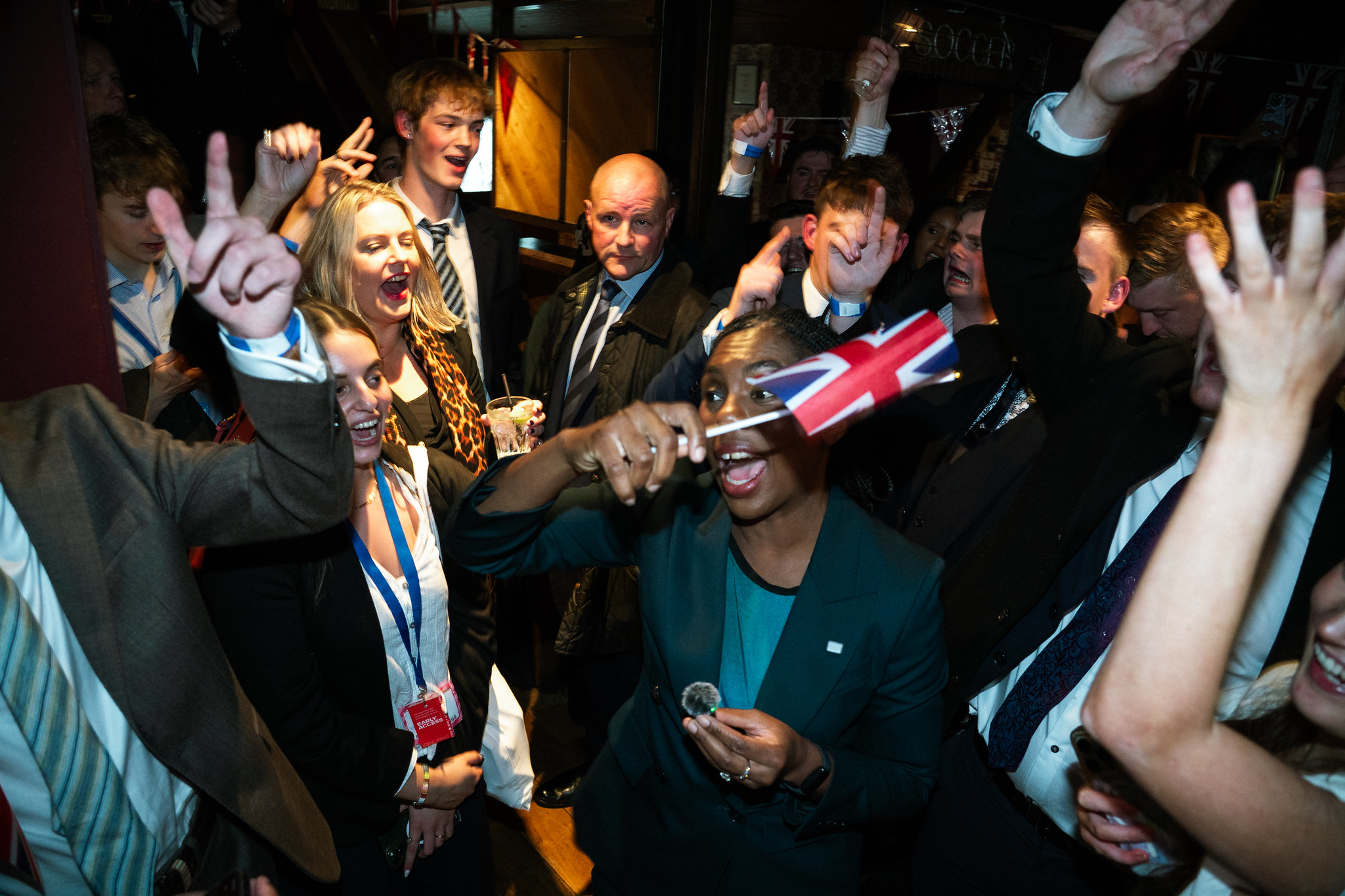
It was at 25-years-old that Kemi Badenoch joined the Conservative Party – for the partying. “Socialising, drinks, hanging out with other young people,” she recalls, and it was how she eventually met her husband, Hamish, at the Dulwich and West Norwood Conservative Club.
Two decades on, she is drafting policy for that same cohort and attempting to make the party’s youth wing – the Young Conservatives – fun again. The sort of thing a 25-year-old Kemi might actually have turned up to.
Over the weekend the party unveiled its New Deal for Young people, with Badenoch vowing to cut student loan interest and boost apprenticeships. The thinking, one Tory source insists, is not “cynical politics” but to “do what is right for the country”.
“Yes, young people are not our traditional voters but we have got to move away from thinking about whether this hits the core voter demographic with policy and instead focus on whether it deals with systemic issues.”
It builds on the back of other policies like scrapping stamp duty – and, I’m told, “you can expect more… our direction of travel speaks for itself”, with this referred to as only Step 1.
“We knew we were dealing with a tricky one given when Plan 2 came in but it demonstrates we are not going to shy away from dealing with issues people are facing just because it happened under the old Tory Party. We are going to right some wrongs.”
Policy chief Neil O’Brien, who has had a big hand in the new approach, made as much clear when pressed by Sophy Ridge on Sky. Asked whether the original policy had been a mistake, he said yes – and that he would apologise to students burdened with loan debts.
A member of CCHQ source frames it more broadly: “It comes down to what the core values are that we hold true: aspiration, being a contributing member of society, having barriers to growth and opportunity removed – anything we see that get in the way of that, we’re going to go after.”
A forthcoming report from Next Gen Tories leans heavily on the same themes: aspiration, wealth creation – particularly housing and infrastructure – and community. The argument is that the party must offer more than a narrow economic pitch; it must articulate a case for civic life too.
Next Gen Tories’ James Cowling, tells me: “We’re massively heading in the right direction. Kemi’s recognised that we need to restore the link between hard work and rewards. The next big step is a serious plan for housing and infrastructure, which will make us the only serious party in UK politics.”
There has been increased engagement from CCHQ with the group around policy announcements like cutting student loan interest, and a sense that the party has understood the intellectual arguments for change.
As another Tory source tells me, there is a political incentive as “more in detail polling shows that high earners in their 30s and 40s are low hanging fruit” for the party to go after.
It is alongside this policy push that an effort has been made to reenergise the Young Conservatives, the party’s official youth section – 120 years since the party’s first youth wing was launched. One CCHQ staffer admits the organisation had “rather been abandoned”. When Fred Lynam – who works between CCHQ and Badenoch’s parliamentary office, and has been spearheading the latest efforts – checked the website earlier last year, it still featured photographs of former leader Rishi Sunak.
There are now signs of life: a newly formed national management executive held its first meeting earlier this month. Some branches – in Camden and Barnet, at UEA and in Norfolk – were already active, but there was little structure. Badenoch has made a point of engaging, attending London drinks and a pub event at conference. I’m told she “wants it to be fun”.
The age cap has been lifted from 25 to 30 to widen the pool. More resources and professional support are being channelled in from HQ. There is talk of changing the image to show that the YCs are populated by “normal people”.
A new committee has been formed, with Kevin Ghateh elected as the interim-chair. He tells me that “if it’s an environment full of young people, we want it to be that way – not pretend to be anything else,” hence throwing parties like their one at Christmas with DJs and karaoke, and an event this weekend where they have booked out a nightclub in Birmingham til 2am.
Hugo Rasenberg, the group’s comms and social media member, adds: “We want a cultural change within the organisation to make it open and accessible, not people turning up in a three-piece suit.”
He sees a chance to “seize the obvious gap in the market” politically. “Young people are more aspirational than ever,” Rasenberg says, “it has taken until the past 12 months for the party to wake up to that”.
Ghateh thinks there has been a “key difference in before and after” Badenoch took the reigns “when it comes to engagement with the YCs”.
“It’s definitely a good start. It has been quite rare for the party to actually be developing policy for young people. I just hope there’s more.”

Festus Akinbusoye was the Conservative Bedfordshire Police and Crime Commissioner from 2021 to 2024.
The architectural serenity of Westminster offers a rare vantage point from which to observe the escalating friction defining modern London. While this borough where I live has maintained a commitment to fluid movement, our neighbours have succumbed to an orthodoxy that treats the city as a static laboratory rather than a vibrant economy.
The proliferation of Low Traffic Neighbourhoods (LTNs) – especially in our poorest boroughs, has evolved from a well-intentioned environmental trial, into a religion of automated enforcement that disproportionately penalises those who can least afford the price of admission to our roads.
The human cost of this experiment is most visible in the levels of unpaid fines. Recent data published in the Telegraph reveals a deepening crisis of legitimacy in the capital, with barely 60 per cent of the Penalty Charge Notices (PCNs) issued for LTN infractions over the last five years being settled by motorists. This widespread non-compliance suggests that we are not witnessing a wave of casual lawbreaking, but rather a profound grassroots rejection and anger toward a policy that feels predatory rather than protective. For a delivery driver in a place like Newham where I grew up, or a tradesman in Tower Hamlets where I went to school – boroughs consistently ranked within the most deprived 10 per cent of local authorities in England; a single camera-generated fine could represent a significant portion of their daily take-home pay.
There is however an uncomfortable paradox at the heart of the “quiet streets” movement: the displacement of congestion from affluent residential enclaves onto the arterial boundary roads where the working poor reside and take buses.
Rosamund Kissi-Debrah, whose advocacy following the tragic death of her daughter Ella, has become a cornerstone of the clean air debate. She has rightly raised concerns, and warned that current LTN strategies risk becoming a whitewash if they merely move the problem around the corner, which they do. When traffic is funnelled onto main roads, it is the residents of social housing blocks and the commuters waiting at bus stops who inhale the concentrated fumes of idling vehicles.
The economic paralysis resulting from these barriers is quantifiable. The Tom Tom Traffic Index has consistently crowned London the slowest capital city in the world, with drivers losing up to 141 hours to congestion annually. It now takes an average of 3 minutes and 38 seconds to travel just 1km (0.6 miles) in central London. The worst period in 2025 was during the train strikes.
There is data also directly linking the slowdown in traffic in London to increasing installation of LTNs. It is however surprising to note efforts made by the Mayor’s office to suppress evidence which showed that LTNs did not reduce car use as was initially promised. I wonder why. Cars do not simply vanish from existence because of flower boxes installed on roads.
These disruptive schemes have devastating effects on the public transport network that the Mayor claims to champion. Data highlighted by the London Assembly Conservative Group shows that bus speeds have plummeted in areas where LTNs have been implemented without adequate mitigation; turning a simple cross-town journey into a gruelling endurance test for those with the patience of a biblical Job.
There is also a direct cost to the public purse for this. As bus journeys take longer due to congestion, passenger numbers are falling too. Why take a bus when you can get to your destination faster through other modes of travel? The Mayor is now subsiding London’s buses to the tune of £1.2 billion a year.
This is more than a transportation and ideological issue, it is also an assault on the social mobility of the capital. The “laptop class” may enjoy the newfound silence of their ‘walled’ cul-de-sacs, but the electrician navigating a labyrinth of bollards to reach a job site, or the night-shift nurse whose commute has doubled in distance is paying a hidden tax on their time and productivity.
Small businesses, already reeling from inflationary pressures, find their supply chains strangled and their customer footfall eroded by a design that treats the economy as an afterthought. Rather than pursuing a policy of managed immobility, we should be investing in the technological and natural solutions that provide clean air without social exclusion.
We must pivot from restrictive, punitive measures that disproportionately squeeze lower-income households toward a strategy built on common-sense and innovation. Instead of “barricaded zones” and daily fines, a truly progressive vision prioritises the rapid expansion of green canopies to act as natural carbon sinks and the roll-out of AI-driven traffic management to dissolve congestion without blocking trade. Investment in infrastructure for electric commercial fleets and making public transport much more reliable, safe, and efficient should be key areas of focus – not more LTNs.
The burgeoning rebellion on our streets from Hackney to Lambeth; Tower Hamlets to Ealing, and the mounting legal challenges against these schemes should serve as a warning to policymakers. People are fed up with all these punishing restrictions and punitive measures.
Enough is enough.

Lord Peter Mandelson has been released on bail following his arrest on suspicion of misconduct in public office.
The former Labour minister and US ambassador was taken into custody by detectives on Monday evening.
He has been accused of passing on market sensitive information to paedophile financier Jeffrey Epstein when he was business secretary in the wake of the global financial crash.
Two of his properties have been searched by police. Mandelson denies any wrongdoing.
In a statement issued just after 2am on Tuesday, a spokesperson for the Metropolitan Police said: “A 72-year-old man arrested on suspicion of misconduct in public office has been released on bail pending further investigation.
“He was arrested at an address in Camden on Monday, 23 February and was taken to a London police station for interview.
“This follows search warrants at two addresses in the Wiltshire and Camden areas.
“We are not able to provide further information at this stage to prevent prejudicing the integrity of the investigation.”
Television footage on Monday showed a plain clothed police officer leading Lord Mandelson out of his house.
He then got into the left rear seat of a waiting unmarked Ford Focus police car.
Mandelson was sacked as the UK’s ambassador to Washington last September, just seven months after being appointed by Keir Starmer, after more details emerged about his links to Epstein.
The fresh allegations about his conduct followed the release of millions of documents about Epstein by the US Department of Justice last month.
Earlier this month, the scandal led to the resignation of No.10 chief of staff Morgan McSweeney, who said he was taking responsibility for advising the PM to give Mandelson the plum diplomatic role.
Mandelson also resigned his seat in the House of Lords, although he still retains his title.
His arrest comes just days after Andrew Mountbatten-Windsor, another former associate of Epstein, was also arrested over allegations he committed misconduct in a public office when he was a UK trade envoy.
Politics
Bradley Fage: Teachers are voting overwhelmingly on the left, but that could, and should, change

Bradley Fage is a Senior Researcher at City Hall Conservatives and a current School Governor.
New polling released last month reveals a striking and largely overlooked reality – the Conservative Party is now only the fifth most popular party among teachers. It is one of the most alarming political findings I have seen in years. The data suggests that a historic eight in ten teachers would vote for parties on the left of British politics, even Reform now poll ahead of the Conservatives.
For anyone who cares about the future of our education system, this should serve as a wake-up call.
For decades, teachers have overwhelmingly backed Labour and other left-wing parties. But this has not always been a simple left versus right narrative. In the late 1970s, around 60 per cent of primary teachers and 45 per cent of secondary teachers planned to vote for Margaret Thatcher’s Conservatives. The profession was once far more politically competitive. These voters can be won back with the right policies for schools – and Labour’s offer has not kept pace.
Schools are facing their biggest challenges in a generation. There are more than 400 fewer full-time equivalent teachers than in 2023, over 100 private schools have closed since Labour’s “schools tax”, and recruitment and retention continue to deteriorate. At the same time, smartphones, social media, and online culture are reshaping classroom life at extraordinary speed. Behavioural standards are harder to maintain. Authority is more fragile. The demands on teachers grow year by year.
As a school governor and former chair, I have seen these pressures first hand. Conversations in governing body meetings are no longer just about improvement and aspiration, but about staffing gaps, budget strain and how to manage the growing complexity of pupil behaviour in a digital age.
And yet the political conversation feels strangely muted, with little in the way of decisive, practical solutions.
Teachers are not searching for ideology. They are searching for certainty, protection and policies that allow them to do their jobs well. That is where the Conservatives are beginning to make a serious case.
First, smartphones in schools. Constant access to devices undermines attention, disrupts lessons, and fuels behavioural problems. Years of non-binding Department for Education guidance have failed to shift the dial. Under the leadership of Shadow Education Secretary Laura Trott, the Conservatives have backed a clear, enforceable smartphone ban – giving schools legislative backing rather than leaving heads and teachers to fight this battle alone. This is not about control for its own sake; it is about restoring calm, focus and authority in classrooms. Labour, by contrast, has largely sidestepped the issue, offering little beyond warm words for guidance that many teachers regard as ineffective.
Second, school autonomy. Labour’s proposed Schools Bill risks capping the size of successful schools, preventing popular and high-performing institutions from expanding while effectively steering pupils towards weaker alternatives. At a time when pupil numbers are falling and schools should be adapting flexibly to demand, this approach appears counterproductive. Conservatives have pushed back against such restrictions, defending the principle that good schools should be allowed to grow. Teachers want the freedom to lead thriving institutions without being suffocated by bureaucracy – and that freedom matters.
Finally, Labour’s decision to impose VAT on private schools – often described as the “schools tax” – risks destabilising the wider education system. Many teachers rely on private schools for additional employment, specialist training or professional collaboration. Early indications point to school closures and pupil displacement, placing additional strain on an already stretched state sector. A policy designed to draw political dividing lines does little to improve classroom conditions. Conservatives, by contrast, argue for strengthening the system without creating new pressures elsewhere.
The lesson is clear.
Teachers are not voting Conservative – not yet. But the argument for doing so is stronger now than at any point in a generation. While Labour and the Greens rely on historic loyalties and rhetorical positioning, Conservatives are advancing concrete proposals: enforceable rules on smartphones, protection for school autonomy, and maintaining private provision as a choice for parents and pupils.
For teachers, the choice is becoming less ideological and more practical. Which policies will make classrooms safer, schools stronger and the profession sustainable?
If you care about certainty in your classroom, freedom for your school and serious answers to the challenges education now faces, it may be time to reconsider old assumptions. The Conservative Party is no longer simply an alternative – it is positioning itself as the only party offering the clearest response to the problems teachers confront every day.
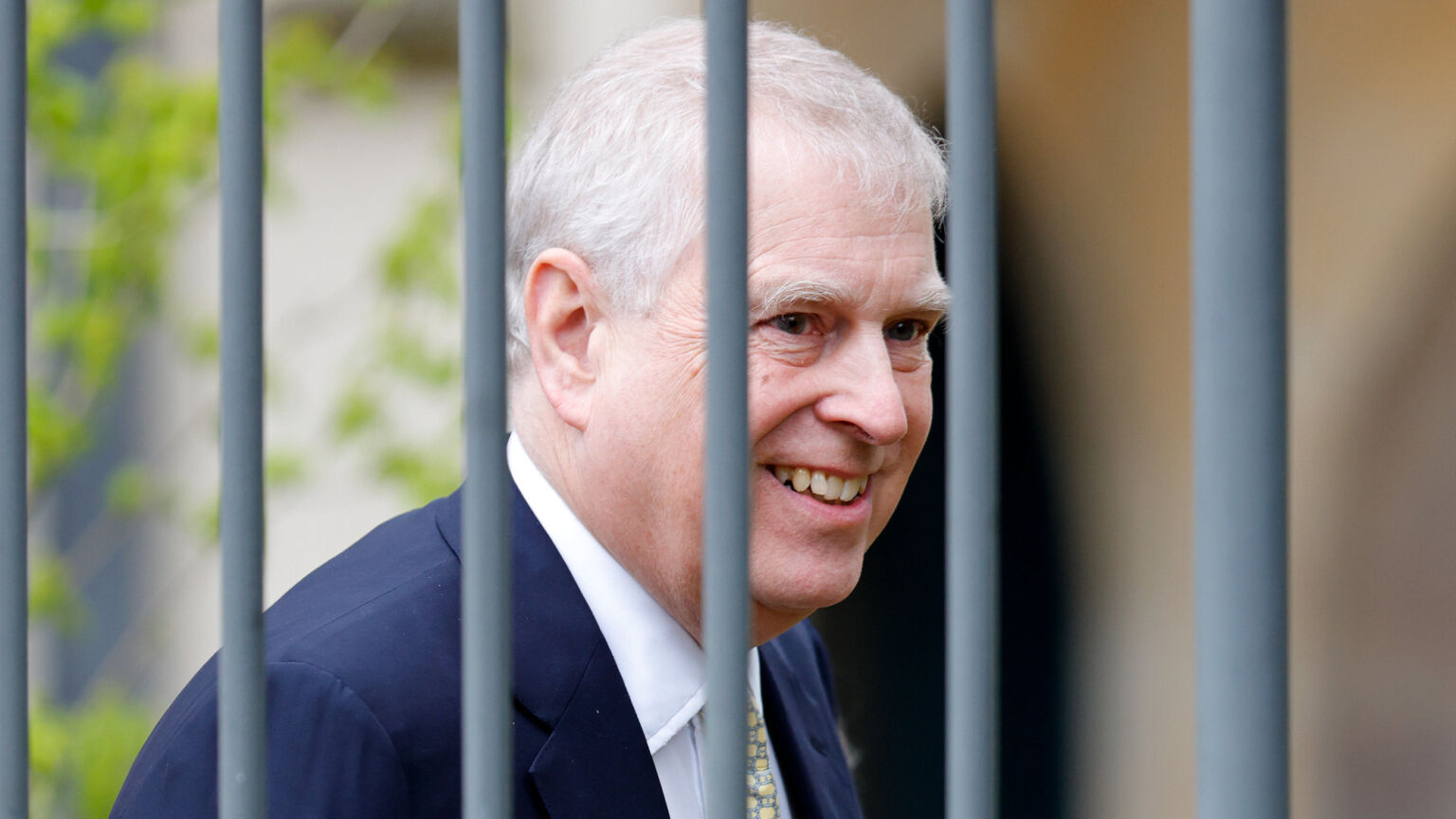
Last week’s arrest of the former prince, Andrew Mountbatten-Windsor, is not without precedent, despite what many in the media are claiming. Princess Anne was convicted in 2002 under the Dangerous Dogs Act, after one of her bull terriers attacked two children.
But as the weeks wear on, the treatment of Andrew really is starting to look unprecedented. Indeed, such has been the media-fuelled desire to punish and humiliate him, long-standing principles of justice are being thrown out of the window.
There are new stories every day about the former prince. New allegations, new calls for action, new sordid details. The latest revelations involve senior civil servants claiming Andrew used taxpayers’ money to buy ‘massage services’ while he was a trade envoy for the New Labour government in the early 2000s. Former UK prime minister Gordon Brown has apparently written letters to six police forces (seriously Gordon, get a new hobby) calling for an investigation into Andrew’s time as trade envoy. Brown is especially fixated on the question of whether Andrew used RAF bases to meet Jeffrey Epstein.
The punishments keep coming, too. Having already removed Andrew’s titles, the royal family is now reportedly considering removing him from the line of succession. This is almost certainly academic – the monarchy would probably be overthrown before the British public allowed Andrew to be king.
The climate around Andrew has become feverish. You don’t have to believe that he is morally spotless to see that something bad is happening here. He has been arrested for misconduct in a public office, a sprawling offence that could cover any number of different allegations. Currently, it looks like the investigation is focussed on Andrew’s apparent sharing of confidential information with Epstein while trade envoy. Should he be prosecuted, a court will have to consider, among other things, whether a trade envoy is legally a ‘public officer’ and whether Andrew was acting in this capacity when he did anything wrong. On the available evidence, these will be difficult questions to resolve.
Either way, the relentless stream of supposedly revelatory photos, of contextless emails and general speculation is bad for justice. We have no idea how these constant public announcements might impact on the fairness of any trial that Andrew might face.
These endless ‘revelations’ are not just terrible from a legal perspective – they are also dehumanising. Andrew has been reduced to an object of interminable public pillory. Many seem to be revelling in his public downfall. He has been stripped of all military titles and publicly disowned by the king. And the commentariat have cheered on his humiliation at every stage. The glee from quarters as Andrew is dragged lower and lower in public life, the turning of his collapse in status into a public spectacle, is close to medieval. Perhaps they should just put him in the stocks and have done with it.
Amid all this, it’s easy to forget something incredibly important: Andrew is entitled to be presumed innocent until proven guilty beyond reasonable doubt. You may have your view about what Andrew has or hasn’t done. People are free to believe the complaints against him from the late Virginia Giuffre and others. But we cannot conduct public life on the basis that someone is guilty of something for which there is not, as yet, strong evidence. Andrew appears to have been tried and convicted in the court of public opinion without facing a single day before a court of law. This is an affront to justice.
Andrew does need to explain himself, though. After his pompous, contemptuous performance during that infamous BBC Newsnight interview with Emily Maitlis, he deserved the criticism that has since come his way. He clearly thought he could talk any old rubbish and people would buy it. Those who have made allegations against him deserve their day in court. Few would suggest that he should continue as normal when under active police investigation.
But in order for a legal process to mean anything, we have to reserve judgement. We need to keep in mind the possibility that Andrew is innocent of any crimes he’s accused of. Most importantly, we have to stop the inhumane clamouring for his blood.
It’s time to take a breath and treat him like any other person accused of a crime. And that means he is entitled to the presumption of innocence. The current virtue-signaling circus around his arrest is a disgrace – and a menace to justice.
Luke Gittos is a spiked columnist and author. His most recent book is Human Rights – Illusory Freedom: Why We Should Repeal the Human Rights Act, which is published by Zero Books. Order it here.
The Metro newspaper is owned by DMG Media, which is the same company that owns the Daily Mail. Unlike with the Daily Mail, DMG seems to have no confidence in the Metro’s ability to sustain an audience, which is why they give it out for free on public transport (making money via adverts).
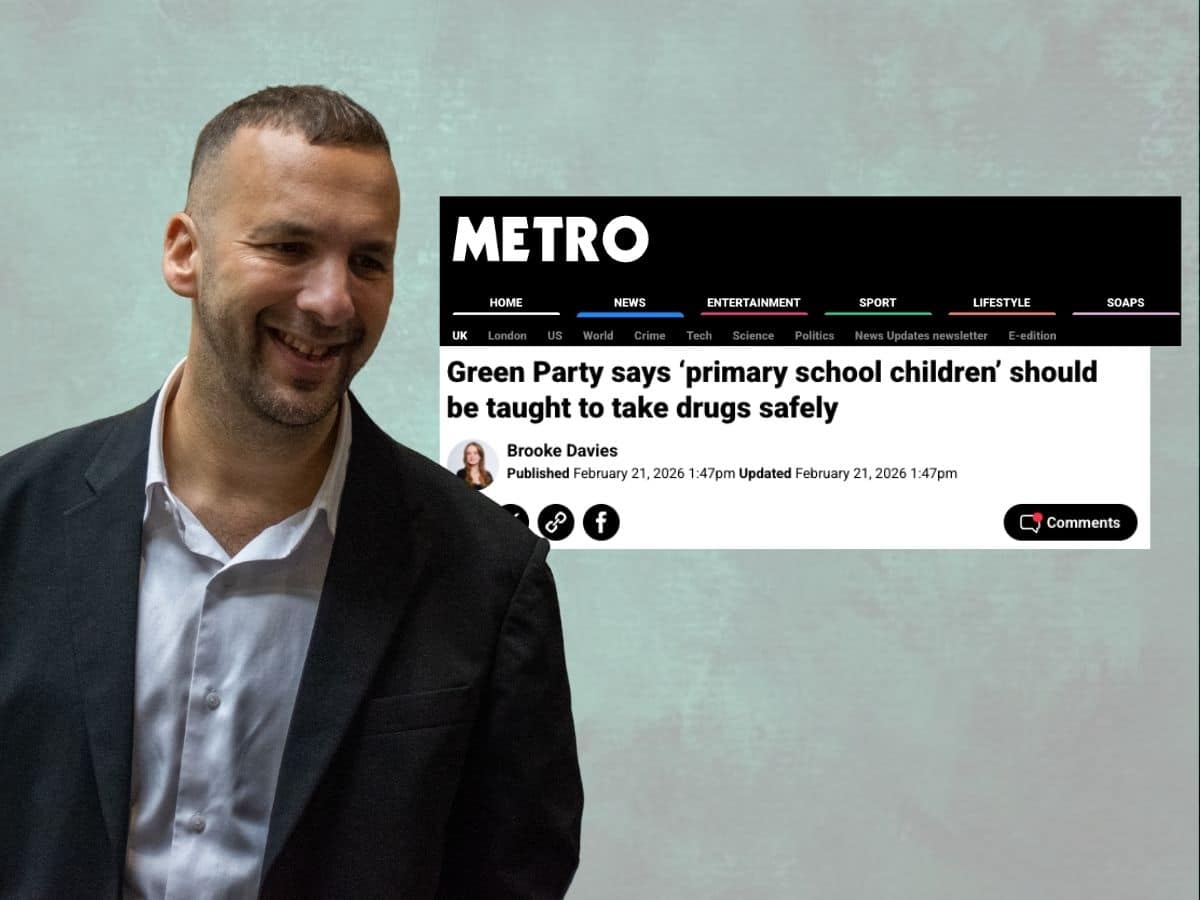
Anyway, would you be surprised to learn that Metro put out a highly dubious story about the Green Party on 21 February?
I’m trying to locate a source for your claims about the Green Party advocating for primary school children to be taught to use drugs.
Ditto, the comment about linking up with cartels.
The best I can find is some unreferenced gossip from the Telegraph and an… https://t.co/EHGwg4FfuO
— Don McGowan (@donmcgowan) February 22, 2026
Green party smears: are these journalists on drugs?
The reporter Brooke Davies describes herself as follows on the Metro site:
News reporter specialising in London-based stories, with a particular emphasis on crime, policing, prisons and justice.
According to her Twitter bio, Davies is also a stalwart of the sewer that is Mail Online.
In the opening section to the Metro article, reporter Davies writes:
The Green Party has called for primary school children to be taught how to safely consume drugs.
In their newly revealed policy proposals, the party, led by Zack Polanski, wants to legalise crack cocaine, heroin and date-rape drug GHB for recreational use.
They also want to create a ‘direct partnership’ between South American cartels to introduce a sustainable supply in the UK.
The policy also adds children ‘starting in primary school’ should be taught how to take drugs in Personal, Social and Health Education lessons, the Daily Mail reports.
The way the second paragraph is introduced suggests that teaching kids how to smoke rock is part of the “newly revealed policy proposals”. If that’s the case, they must have written this new policy using some sort of invisible ink.
Oh, and there’s something else too. The third line suggests the Green Party would seek to work with South American drug cartels. This obviously couldn’t happen, because these cartels are considered criminal enterprises in their home countries – i.e. any attempt to work with them would incite an international incident.
As you can see above, political commentator Don McGowan took issue with all this, writing:
I’m trying to locate a source for your claims about the Green Party advocating for primary school children to be taught to use drugs.
Ditto, the comment about linking up with cartels.
The best I can find is some unreferenced gossip from the Telegraph and an unnamed ‘Labour source’.
Please, could you let me know where this information came from? Genuine request.
Thank you.
He’s since followed up with this:
I asked for a source from Brookes Davies, but none was forthcoming, so I found it myself.
The quotes that she used in her piece about the [Green Party] drugs policy were from a local website belonging to the South Tyneside Greens in 2019.
Whether you are a Green voter or not, this type of underhand, dirty tricks journalism should have no place in politics.
Taking clearly out of date lines from a regional party website and passing them off as current is really manipulative.
Sitting alongside the Metro’s sister paper, the Daily Mail, their smear campaign yesterday announced that Hannah Spencer had a ‘£1.2 million property empire’.
This distraction and unproven headline is trying to push focus to Matt Goodwin.
Goodwin has been under huge pressure recently, with accusations of Russian money links and misogynistic and borderline fanatical ideas about women and their abilities to have children.
I digress, but it’s really important to know that these two mainstream media outlets are misleading the public.
I’m currently finishing an article about political influence in the media, and it couldn’t be more timely — the week of one of the most highly publicised by-elections in history.
Keep an eye out for that, but this is Brookes Davies’ source.
Unreliable? Yes.
Downright devious? Also, yes.
Drug deaths have risen every year for 13 years.
That’s 13 years of a failed “war on drugs”.
Labour should be looking at legalisation, control and regulation – not playing politics with people’s lives.
This is a public health crisis. Treat it like one. Not a game. pic.twitter.com/5jwmPgkY80
— Zack Polanski (@ZackPolanski) February 21, 2026
Drug wars
As we reported yesterday, it’s not just the media smearing the Greens on the issue of drugs; it’s also Reform and Labour:
Labour is asking you to imagine what it must be like to live in a country where drugs are plentiful and easy to get hold of. The problem is we already live in a country where drugs are plentiful and easy to get hold of.
Also:
There’s an obvious parallel to all this, and it’s the Prohibition Era in the United States. During that time, they made it illegal for citizens to drink alcohol. Did that stop people drinking?
No, of course not.
But it did give organised crime access to fast, easy cash, and this is precisely what’s happened here with drugs.
Drug laws have never stopped people from using drugs.
They’ve stopped people from using drugs safely.
It’s time to legalise *and* regulate. https://t.co/5gQgR1yf5l
— Zack Polanski (@ZackPolanski) February 2, 2026
And we added:
To be clear, the Greens aren’t saying you should be able to buy smack from a vending machine. They’re proposing a system in which drugs are treated seriously, but are available for people to partake of in a controlled fashion. Under Keir Starmer, you can buy crack from a guy called ‘Spez’ and OD under a motorway bridge.
Which sounds more grown up to you?
Unfortunately, the British establishment is allergic to acknowledging the decades-long failures they oversaw. And because they know their arguments don’t hold up, they smear, and smear, and smear.
Featured image via Barold
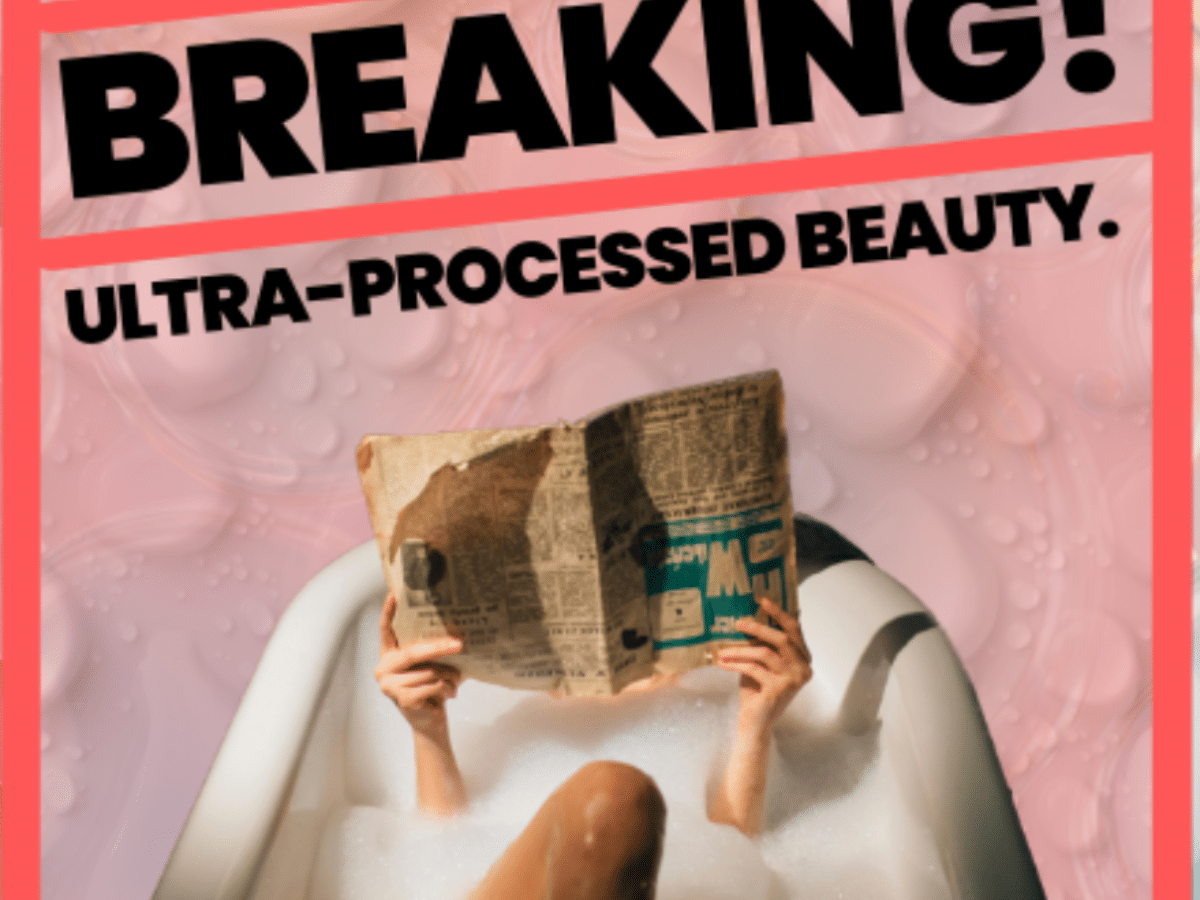
A coalition of independent beauty brands is uniting against corporate giants whose profit-first mentality is hurting consumers. They’ve called out these behemoths for pedalling “ultra-processed” beauty products, viewing this as analogous to highly processed fast food. They insist consumers deserve better.
Independent beauty brands Neve’s Bees, Lyonsleaf, Husk & Seed, Shade All-Natural Sunscreen, have teamed up with the sustainability-focused media platform Live Frankly to spotlight toxic products under the ‘clean girl’ aesthetic. They are doing this as part of their new campaign, launched today.
The independents skin care providers aren’t alone in this mission. We wrote about Lush’s products and their diligent use of natural ingredients and zero-tolerance policy toward chemicals. Others are likely to follow suit.
‘Clean beauty’
Live Frankly aim to expose the cocktail of chemicals hidden in skin care regimes, arguing the the world is abandoning ‘clean beauty’ for a ‘scientifically-minded’ approach. While ingredients like peptides, retinol, and hyaluronic acid are touted for their benefits, Live Frankly points out that “science” has been reduced to a marketing tool with benefits falsely exaggerated.
In an open letter to the industry as part of their campaign, which launches today, they wrote:
These ingredients are not just being marketed as effective, but as essential for anti-aging. Anti-aging being the indisputable goal since before the dawn of early commercial beauty brands, when both Elizabeth Arden and her rival Helena Rubinstein preyed on women’s fear of aging, with Rubinstein reportedly telling the press in 1930: “Women have a duty to keep young.”
Women have faced relentless pressure to look a certain way and never age. Often, they feel anxious and confused about where to start. This campaign reminds us that health comes before beauty – and that health itself is beautiful.
Live Frankly spoke with Emma Dawes of the Soil Association for her perspective:
I disagree with that word anti-aging, everybody ages and it shouldn’t be looked upon negatively.
So, my personal view might be different to what the cosmetic industry or the Soil Association view could be, but I would say these ingredients have some functions, but maybe not as much as brands make out.
They state that one brand particularly notorious for this is the Ordinary, whose ‘ethos’ tagline is “Grounded in science. Driven by purpose.”
Their bestselling serum, Hyaluronic Acid 2% + B5 (with Ceramides), for example, is proven to target signs of aging and claims to deliver instant and
long-lasting hydration. Their testing shows results over four weeks – on 32 people.
Referring to the Ordinary’s well received ‘Periodic Fable’ – a parody of the scientific table that claims ‘dispel common beauty myths’ – chemist Julie Macken of Neve’s Bees describes it as a crafty market ploy.
A scientific table with zero science’, as it says in its heading, is exactly what it is. It’s very clever marketing but it’s also
faux-transparency and a smokescreen for all the ingredients they’re not talking explicitly about. I feel like
that little boy shouting ‘But, the emperor’s got no clothes on!’ Why can’t anyone else see this?’.
Choose water-free skincare
To combat false advertising, the Live Frankly-backed campaign educates consumers on what their true skin needs, as protection against the allure of glitzy marketing campaigns. They draw attention to underhanded practices such as the bacteria-promoting preservatives, emulsifiers, and stabilisers big beauty brands use in their products – effectively diluting them to maximise profits.
In their letter, Live Frankly write:
The impacts of preservatives are still being discovered, but so far Parabens have been linked to hormone malfunction, obesity, and possibly increased risk of breast cancer.
Plus, when applied to skin, preservatives don’t differentiate between ‘good’ and ‘bad’ bacteria, so they are likely to compromise the skin’s microbiome. Just like a healthy gut, a healthy skin microbiome is said to help your immune system and defend against inflammation, irritation, and conditions like eczema.The microbiome is also impacted by the emulsifiers that are required to blend oil and water and thickeners to create desirable textures. Other additives include fragrance stabilisers such as phthalates, which mimic human hormones and are linked to fertility issues, early puberty, and some cancers.
These “can and are likely to be derived from petrochemicals,” explains Dawes. They can interfere with natural oils and disrupt the barrier, leaving skin prone to dehydration and environmental stressors.
To combat this in a much simpler way for consumers, this group of forward-thinking beauty brands recommend one thing. Specifically, they advise consumers to avoid those with water in the ingredients:
If your skin constantly dries out, no matter how religiously you moisturise, then the problem could be your ultra-processed skincare products. Not you or your skin.
At this point, we could list ingredients to avoid but we’ve done that before. Let’s be honest, it’s a long list and deciphering ingredients listed on creams pretty much requires a chemistry degree.
So what if, instead of reading labels, there was a simpler option? One approach is to look for water-free skincare products. When brands don’t add water, they don’t need preservatives, emulsifiers or stabilisers. When it comes to moisturisers and sunscreen, this usually means choosing a balm, salve or oil rather
than a cream or lotion.
As women, we’re tired of walking down the beauty aisle feeling confused, overwhelmed, and unsure of what’s worth our money.
In the middle of a cost-of-greed crisis, every purchase counts. We work hard for our money and deserve real value — not clever marketing and over processed formulas. We’ve learned to be mindful about the food we put in our bodies, so it’s time we extended the same care to what we put on our skin.
Featured image via the Canary
Keir Starmer’s Labour Party have been accused of anti-semitism as a result of their latest Green Party smear:
official Labour account now caricaturing a Jewish rival as a sinister svengali type. https://t.co/ysOf5SKGhd pic.twitter.com/5GX6ynNzYw
— bat020 (@bat020) February 22, 2026
There are some complexities to this, but one thing is clear: if Labour had portrayed a Jewish politician like this under Jeremy Corbyn, the British media would have covered it 24 hours a day for a year.
Svengali
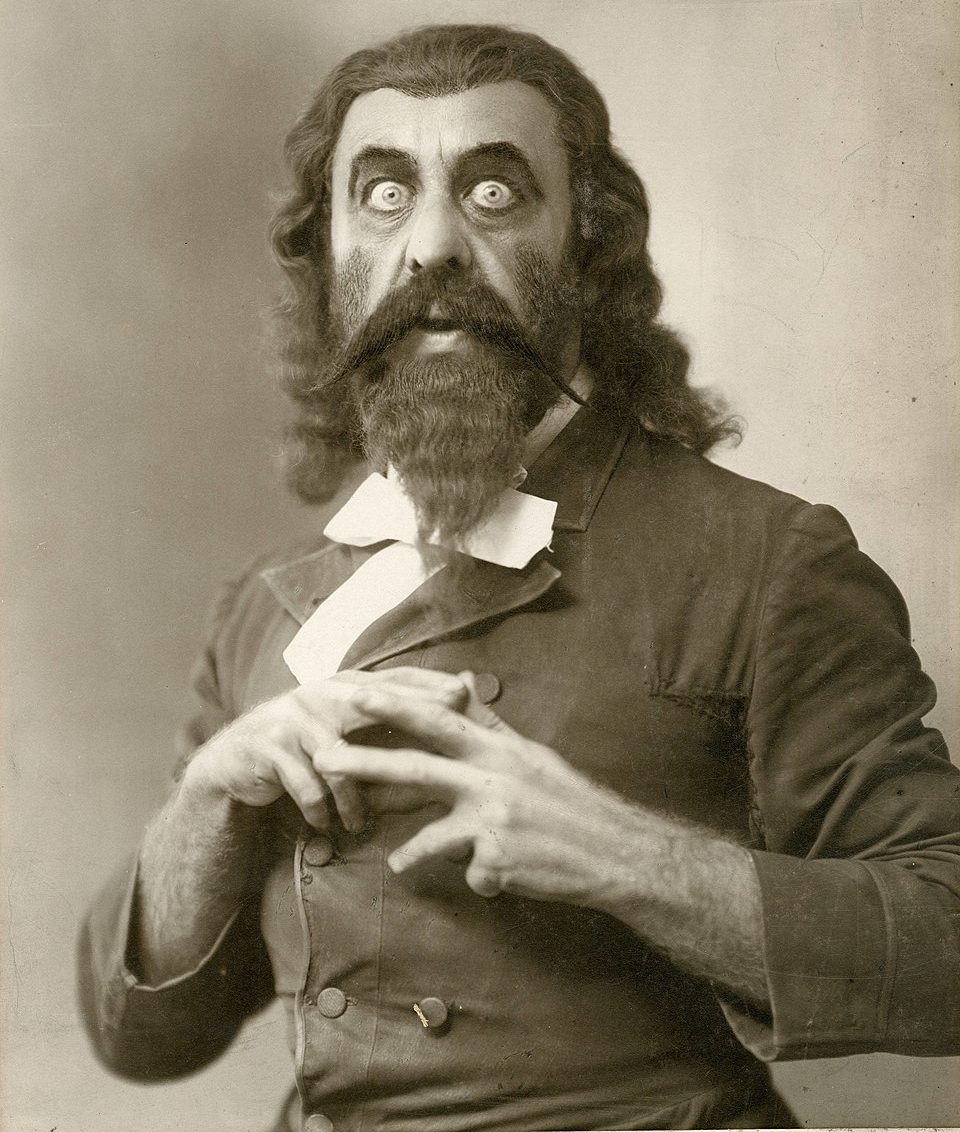
The commenter above points to the Wikipedia Svengali article, which carries the following image of an actor playing the character:

Svengali was an evil Jewish hypnotist, with the highlighted Wikipedia article noting:
Svengali is a character in the novel Trilby which was first published in 1894 by George du Maurier. Svengali is a Jewish man who seduces, dominates and exploits Trilby, a young orphan girl working in Paris, and makes her into a famous singer.
Additionally:
In the novel, Svengali transforms Trilby into a great singer by using hypnosis. Unable to perform without Svengali’s help, Trilby becomes entranced.
This is how History Today describe the character:
Svengali is one of those rare literary creations that becomes shorthand for a kind of behaviour: in this case, mesmeric control over another.
So here’s the thing; Zack Polanski was actually a hypnotist. As such, there’s an argument to be made that people should be able to portray him as a stereotypical hypnotist, even if it does resemble an anti-semitic caricature.
Here’s the other thing; between 2015 and 2019, the British establishment decided anything which even remotely looked like anti-semitism should be treated as the gravest hate crime of the century.
Now, the media is churning out stuff like this:
This caricature of Zack Polanski in the daily mail is pretty fucking dodgy isn’t it? pic.twitter.com/cVbzkWWwAO
— Godspeed You Black Tamperer (ft Maya) (@twlldun) December 29, 2025
And Reform are knocking out images like this:
#Reform in #Brighton have posted, reposted and spread this #Antisemitic meme, in reference to @ZackPolanski, a Jewish man, which is clearly directly based on a #Nazi poster from 1937.
Comments welcome from anyone wanting to defend #Reform using actual #Nazi propaganda. pic.twitter.com/nxfzIc5sv3
— John O’Connell (@jdpoc) November 3, 2025
Shameful
We said in the Corbyn years that the media and Labour right were using concocted anti-semitism smears to attack the anti-Zionist movement.
Now, the people we warned you about have made it crystal clear; they never cared about anti-semitism beyond their ability to use it as a cudgel.
Featured image via X

Content warning – this article discusses domestic and sexual violence. Reader discretion is advised.
Dean Lewis has blocked journalists across his social media accounts for covering the growing number of abuse allegations against him. Meanwhile, he is refusing to refund fans who, understandably, no longer wish to attend his shows.
Island Records Australia dropped Lewis from their roster, meaning he is now an independent artist.
But despite this, the US leg of his tour resumed on January 5 in Salt Lake City, Utah. This is after he postponed it last year due to illness.
Since then, hundreds more women and girls have come forward on social media with a wide range of abuse allegations. From domestic abuse and sexual assault to messaging underage girls with extreme content – it has become clear that Lewis has an ever-growing raft of allegations against him.
Previously, an insider who worked closely with Dean Lewis told the Canary that Island Records Australia covered up accusations about him grooming young fans. The people closest to Lewis then attempted to silence the women with cease-and-desist letters.
Dean Lewis avoiding fans
Now, his team are denying hundreds of fans refunds.
He also turned off the resale option on Ticketmaster. This allows fans to resell tickets if they can no longer attend a gig, and is used by most artists.
@nathalie.maaria he’s not sorry it happened, he’s sorry the public found out‼️ #canceled #deanlewis #statement #foryou #viral ♬ original sound – Aster
According to the BBC:
In cases where allegations have been made against an artist, consumers are not legally entitled to their money back. Ticket holders would only be entitled to a refund if the organiser cancels, moves or reschedules the event.
However, in similar cases in the past when there have been allegations of abuse or misconduct, artists have postponed or even cancelled their tours.
TikTok videos show that Ticketmaster have now partially refunded some fans’ meet-and-greet experiences with Lewis. This is because the VIP package changed. This means it no longer includes the intimate pre-show performance, Q&A session, and the group photo with Dean.
Essentially, Dean appears to be avoiding one-on-one or small-group interactions with fans. I wonder why that might be, Dean?
@strangercakes It’s the fall of an empire… #deanlewisdrama #deanlewistour #deanlewis #refund @evie rose @Truthtok ♬ original sound – N3RO
One fan told the Canary that after publicly showing support for Dean’s victims, he blocked her, and then she quickly received an email telling her that her tickets for his upcoming show had been cancelled.

She told the Canary:
Fans of Dean Lewis have been blocked and received messages saying our tickets are no longer valid.
It made me feel very very sad.
I truly barely said anything on the situation other than being sad and for people to stop bashing the girls so I don’t know why I got removed.
Another fan, who received two similar emails, told the Canary:
We thought we got refunded for the shows. AXS still aren’t doing refunds, but I think we got blacklisted from the shows. Me, [name redacted] and [name redacted] all got refunds last night. We had previously requested refunds, but they told us no. So we didn’t request them again.
I had a ticket for Denver, and two days ago I got this email and it said my order has been cancelled , sorry for any inconvenience. Which means they’ve realised I bought a ticket.
I think they thought I was gonna show up and blacklisted me. One of the girls has never even posted anything about the situation, but he knows shes friends with us.
She had her tickets cancelled for both Los Angeles and Denver.
Proving his guilt
Whilst covering this story, I realised that Dean Lewis had blocked me on both TikTok and Instagram. This is after I previously covered the allegations against him:

But it’s not just me – Dean (or his team!) is blocking hundreds of former fans for speaking out, questioning his behaviour, and even just showing support for his victims.
@tpwk_mikaela Let’s see how many people he will block today #deanlewis #canceled #blocked #fyp #fypシ ♬ Piano famous song Chopin Deep deep clear beauty – RYOpianoforte
It seems that Lewis is afraid that he can no longer control the narrative, after his pathetic excuse of a statement in November.
@truthfulparody Blocking fans, ticket holders and journalists?🤪 Unfortunately for Dean Lewis he can’t control the narrative and delete or block the “comment section” in person at his upcoming shows which are starting tomorrow 🤯 #foryou #trendingnow #deanlewis #viral #tour ♬ original sound – Wildlinglady
Incriminating himself
The Canary put these allegations to Dean Lewis and his team, and the response we received was nothing short of damning.
They specifically requested that we publish the whole email response. However, in order to do that, we would be breaking several UK defamation laws.
The response starts by questioning my own journalistic credentials:
While you are not known to us professionally, we are fully aware of you personally, including your former status as an enthusiastic fan of Dean Lewis and your close association with [name redacted] and others now acting in concert with her.
Any suggestion that your approach to Mr Lewis is neutral or journalistic is noted and firmly rejected.
I am a gold-standard NCTJ-qualified journalist with a Masters (distinction) in journalism. It included several media law exams – which means Dean Lewis, you (and your money) do not scare me.
The Canary is not a ‘neutral’ news organisation – it never has been. We stand in solidarity with victims, survivors, and all those who have experienced injustice. We do not bow down to the rich, powerful, or self-righteous people who think they can throw their money and weight around to silence victims.
The response then goes on to say:
You will not be surprised to learn that we have been monitoring [name redacted] activities for some time. Her recent conduct — facilitated and amplified by your correspondence — constitutes a coordinated campaign of harassment, defamation, and tortious interference, among others. The conduct also appears to breach multiple platform policies and applicable laws across several jurisdictions. As such, we have retained an international legal team and are actively preserving evidence.
But here’s the thing – it’s only harassment and defamation when it’s not true. And the Canary has seen the evidence – the screenshots, the texts, the photos of injuries, the obsession with having young girls call him ‘daddy’. We don’t publish hearsay; we publish facts which we can back up.
If your response when young women accuse you of violence is to go on the attack and cry harassment – I think I can see where the problem is.
It continues:
In recent months, [name redacted] has cultivated a substantial social-media following [social media handle redacted] by publishing salacious and unverified allegations concerning Mr Lewis and profited from it, before subsequently removing and republishing materially similar content via alternate burner accounts. This blatant bait-and-switch strategy is designed to aggregate followers, propagate false narratives, evade platform enforcement, and profit from calculated reputational harm. Your participation in this ecosystem is noted.
The reality is that the aforementioned social media users (and several others) published voice recordings, texts, and photos from Lewis. They then received cease-and-desist letters, which the Canary has seen. The social media users in question then temporarily removed or hid social media posts until they had taken legal advice.
We have removed the next paragraph of their response because it contains unverified claims and is potentially defamatory.
Threatening the Canary
The response ends:
In response to your questions: you are free to publish as you see fit, entirely at your own risk and that of your publication. Relevant individuals at The Canary have been copied for their awareness.
We formally request that this letter be published in full alongside any article. In any event, we expressly reserve all rights, including the right to publish this correspondence independently ourselves and to rely upon it in any legal or regulatory proceedings without further notice.
Sincerely,
Dean Lewis Management Team
I think that was a threat to both the Canary and me.
Any defamation trial would involve us providing the evidence that our claims are “substantially true” – so try your luck. At least you can’t lose your AirPods in a prison cell.
Feature image via Cera/Unsplash

Labour Minister Unintentionally Discloses Sleaze Probe

Earnings revival set to lift Indian markets in FY27: Manish Gunwani

Bitcoin’s price discovery is moving to Chicago


-

 Crypto World7 days ago
Can XRP Price Successfully Register a 33% Breakout Past $2?
-

 Video4 days ago
XRP News: XRP Just Entered a New Phase (Almost Nobody Noticed)
-

 Fashion4 days ago
Weekend Open Thread: Boden – Corporette.com
-

 Politics2 days ago
Baftas 2026: Awards Nominations, Presenters And Performers
-

 Sports12 hours ago
Women’s college basketball rankings: Iowa reenters top 10, Auriemma makes history
-

 Politics13 hours ago
Nick Reiner Enters Plea In Deaths Of Parents Rob And Michele
-

 Business6 days ago
Infosys Limited (INFY) Discusses Tech Transitions and the Unique Aspects of the AI Era Transcript
-

 Entertainment6 days ago
Kunal Nayyar’s Secret Acts Of Kindness Sparks Online Discussion
-

 Video7 days ago
Financial Statement Analysis | Complete Chapter Revision in 10 Minutes | Class 12 Board exam 2026
-

 Tech6 days ago
Retro Rover: LT6502 Laptop Packs 8-Bit Power On The Go
-
 Sports5 days ago
Clearing the boundary, crossing into history: J&K end 67-year wait, enter maiden Ranji Trophy final | Cricket News
-

 Business2 days ago
Mattel’s American Girl brand turns 40, dolls enter a new era
-

 Business2 days ago
Law enforcement kills armed man seeking to enter Trump’s Mar-a-Lago resort, officials say
-

 Entertainment5 days ago
Dolores Catania Blasts Rob Rausch For Turning On ‘Housewives’ On ‘Traitors’
-
 NewsBeat21 hours ago
‘Hourly’ method from gastroenterologist ‘helps reduce air travel bloating’
-

 Business6 days ago
Tesla avoids California suspension after ending ‘autopilot’ marketing
-

 Politics7 days ago
Eurovision Announces UK Act For 2026 Song Contest
-

 Tech2 days ago
Anthropic-Backed Group Enters NY-12 AI PAC Fight
-

 NewsBeat2 days ago
Armed man killed after entering secure perimeter of Mar-a-Lago, Secret Service says
-

 Politics2 days ago
Maine has a long track record of electing moderates. Enter Graham Platner.