

The Celtic languages spoken today – namely Irish, Scottish Gaelic, Manx, Welsh, Cornish and Breton – all descend from Celtic languages once spoken across Britain and Ireland in antiquity. While the modern languages are well documented from the early middle ages onwards, what came before is far more mysterious.
Only fragments of earlier evidence survive, leaving major questions about where these ancient Celtic languages came from and how they connect not only to each other, but also to related languages once spoken on the European mainland, such as Gaulish.
Much of this early linguistic story unfolded before widespread writing reached the islands. Before the Romans arrived, Britain was barely known to the literate cultures of the ancient Mediterranean. Only a handful of early travellers recorded anything about the languages spoken there.
So, we have only sparse clues as to the languages spoken in Britain, notably a handful of plausibly Celtic place names recorded by Greek voyagers such as Pytheas of Marseilles, who visited Britain around 325BC.
Once Britain became part of the Roman empire, everything changed. We have plenty of written material from and about Roman Britain. It is almost all in Latin, the official language of the empire. But scattered within it are Celtic place names and ethnic names, along with a small number of inscriptions in Celtic itself.
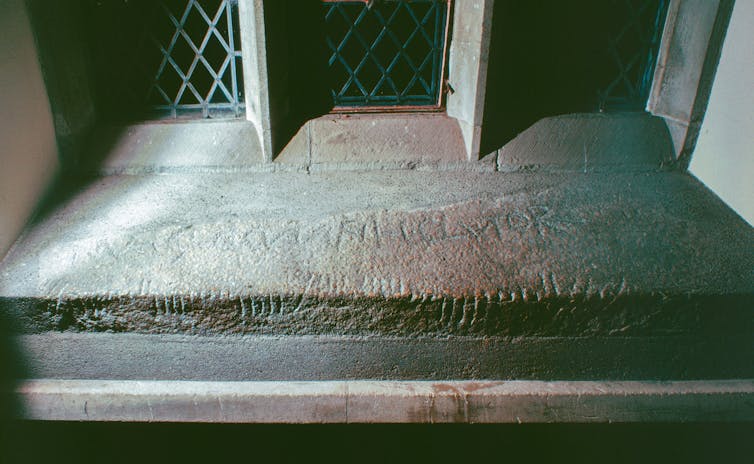
Of huge interest to scholars are the handful of inscriptions in Celtic from Bath and Uley in Gloucestershire. These small traces may offer rare glimpses of the languages spoken by local people at the time.
Ireland and its settlers
Ireland presents a different picture. As it was never incorporated into the Roman empire, written evidence appears later. Not until the middle of the second century AD do we get a substantial amount of data in the form of the place and ethnic names recorded by the Greek geographer Ptolemy.
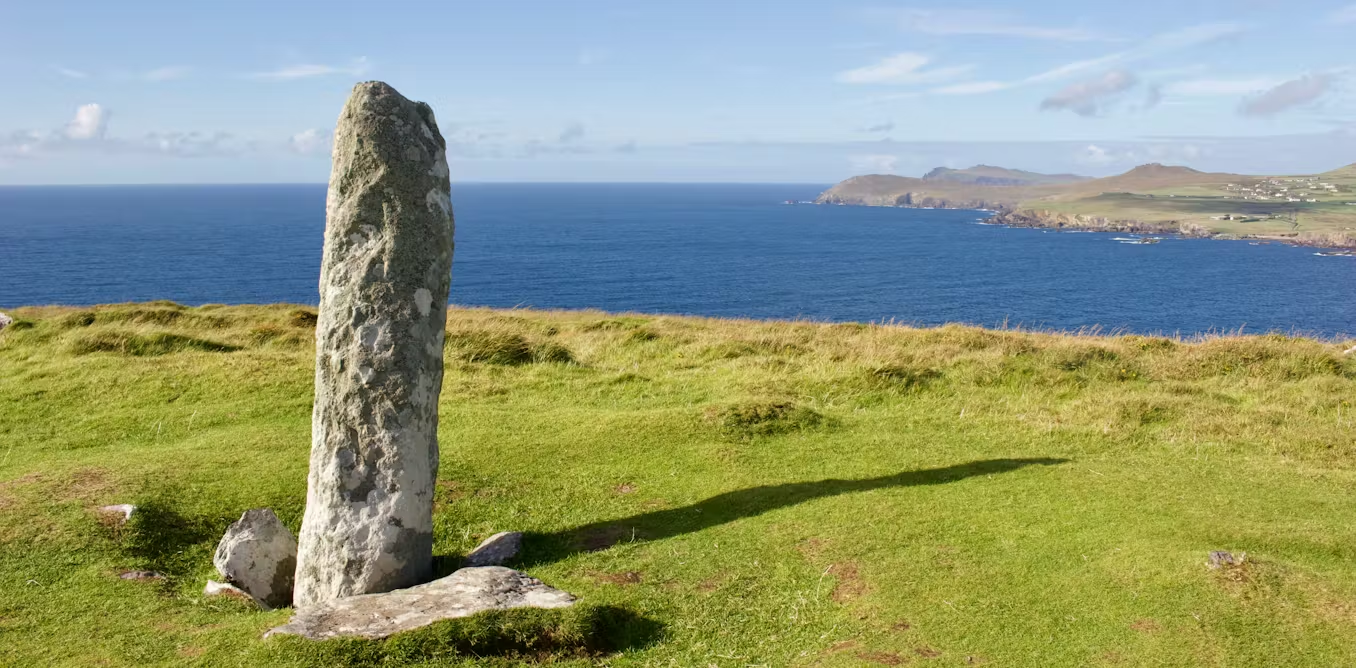
Literacy, like Christianity, arrived late in Ireland through contact with Roman or sub-Roman Britain. The earliest written material from Ireland dates from the early fifth century, or perhaps a bit earlier. It mostly consists of inscriptions on stone in the Ogham alphabet which, despite its exotic appearance, seems to have developed from a cipher based on the Roman alphabet.
Irish settlers later took Ogham to parts of western Wales and Cornwall. Though short and simple, these inscriptions are vital because they capture an early stage of Irish at the edge of the historical record.
Pawel Kowalczyk/Alamy
Together, these fragments form the puzzle pieces through which we try to understand how Celtic languages spread across Britain and Ireland. But the Celticity of Britain and Ireland has been questioned in recent decades.
Some archaeologists have argued that the people of Britain and Ireland may never have been “Celtic” in the same sense as communities on the continent. They have pointed to differences in material culture and a lack of clear evidence for major prehistoric migrations.
They also noted that classical authors from the Greek geographer and historian Strabo (born around 64BC) onwards contrasted Britain and Celtica on the continent. This led a rejection of the mid-20th century orthodoxy of hordes of warlike Celts from central Europe pouring in to these islands during the iron age.
It has been supposed that Indo-European may have arrived early in the islands and developed there into Celtic, or that Celtic languages may have spread from the continent without much movement of people. The argument even spilled into popular commentary, most recently in a polemical and misleading book by journalist Simon Jenkins in 2022, who, contrary to all evidence, cast doubt on whether the Celts, as a people, even existed at all.
Reshaping the debate
But recent research is challenging those assumptions. Recent studies of ancient DNA have revealed waves of migration into Britain from regions that are now in France during the late bronze age and to a lesser extent, the iron age. These movements of people were not visible to archaeologists.
Of course, you cannot guess someone’s language from their genes. But these migrations provide a plausible vehicle by which Celtic speech may have arrived in Britain. And a recent study has shown that Pytheas, in the fourth century BC, placed Celts in Britain.
À lire aussi :
Ireland, Wales and the scholar who helped unravel their Celtic connections
When taken together, these findings may support the old idea that Celtic languages were brought to the islands by migrating Celts after all. It’s certainly an exciting time to be studying ancient Celtic in Britain and Ireland.
This is the backdrop to new research underway by myself and colleagues at Aberystwyth University. We are gathering every surviving piece of evidence for early Celtic languages in Britain and Ireland before around 500AD. We shall compile the first comprehensive dictionary of the ancient Celtic languages of these islands.
Bringing all of this material together will help answer longstanding questions about how the Celtic languages are related and how they fit into the wider Celtic world of ancient Europe.
We will never recover the full picture of the Celtic languages spoken in Britain and Ireland more than 2000 years ago. But by piecing together the clues left behind, we can begin to understand the linguistic landscape that shaped the Celtic languages still spoken today.
This article features references to books that have been included for editorial reasons, and may contain links to bookshop.org; if you click on one of the links and go on to buy something, The Conversation UK may earn a commission.



