

Crypto World
Crypto.com Secures Conditional OCC Trust Bank Approval



Crypto.com has secured conditional approval from the Office of the Comptroller of the Currency (OCC) to charter a national trust bank.
With this move, the cryptocurrency exchange and financial services platform joins a growing list of digital asset firms that received similar approvals last year.
As previously reported by BeInCrypto, Crypto.com applied for a national trust bank charter in October 2025. The OCC granted conditional approval in February 2026, marking a significant milestone for the company.
It’s worth noting that conditional approval represents a preliminary stage in the chartering process. The applicant must satisfy the OCC’s regulatory and operational requirements before obtaining full approval.
“Crypto.com today announced that it has received conditional approval from the Office of the Comptroller of the Currency (OCC) to charter Foris Dax National Trust Bank, d.b.a. Crypto.com National Trust Bank,” the announcement read.
Crypto.com emphasized that the approval does not affect the ongoing operations of Crypto.com Custody Trust Company. That entity will continue to operate as a qualified custodian regulated by the New Hampshire Banking Department as a non-depository trust company.
“This conditional approval is the latest testament to both our commitment to compliance and to providing customers trusted and secure services they expect from Crypto.com. This milestone brings us a major step closer to meeting leading institutions’ needs for a one-stop-shop qualified custodian under a gold standard of federal oversight,” said Kris Marszalek, Co-Founder and CEO of Crypto.com.
Firms such as Ripple, Circle, Paxos, and Fidelity Investments also received conditional approval for their national trust bank charter applications in December 2025. Meanwhile, BitGo went a step further, securing full approval from the OCC late last year to convert its state trust company into a national trust bank.
In addition, Trump-backed DeFi project World Liberty Financial’s subsidiary submitted its application to the OCC in January to establish World Liberty Trust Company, National Association (WLTC). The proposed institution would function as a national trust bank structured to facilitate stablecoin-focused activities.
The move by cryptocurrency firms into federally chartered banking structures reflects deeper integration of digital asset companies into the US financial regulatory framework. A national trust charter provides federal legal status, enhances custody capabilities, and may strengthen institutional credibility. Operating under OCC supervision centralizes oversight at the federal level.
However, this trend has also raised concerns. The American Bankers Association (ABA) and the Independent Community Bankers of America (ICBA) have pushed back against the OCC granting conditional approvals. They warn that broadening crypto charters may blur the boundaries of US banking and create new challenges.


Raising capital in Web3 is no longer about choosing the loudest marketing channel or the fastest investor. In 2026, successful token launches are built on strategic capital design, investor quality, regulatory readiness, and long-term ecosystem growth.
Founders planning serious fundraising rounds are facing a critical decision. Should they rely on influencer-led community growth or pursue traditional venture capital backing? For growth-stage Web3 startups, this decision directly affects valuation, governance control, token stability, and market credibility. This guide explains both models in depth, compares their real-world impact, and shows why structured ICO development services are essential for designing scalable, compliant, and investor-ready fundraising systems in 2026.
Why Fundraising Strategy Matters More Than Ever in 2026
The Web3 funding landscape has matured. Investors are more selective. Regulators are more active. Communities are more skeptical. Token buyers expect transparency, utility, and governance frameworks. In earlier cycles, hype alone could drive millions in funding. That era is over. Today’s high-performing projects focus on:
- Sustainable capital inflows
- Institutional credibility
- Community retention
- Regulatory compliance
- Long-term token economics
A poorly designed fundraising approach now leads to weak liquidity, investor exits, governance disputes, and brand erosion. For founders targeting multi-million-dollar raises, the funding strategy is no longer a marketing decision. It is a business architecture decision.
Get your personalized ICO fundraising strategy.
Understanding Influencer-Led ICO Outreach
Influencer marketing in Web3 has evolved from casual promotions to structured community acquisition systems. Leading projects now collaborate with ecosystem leaders, analysts, educators, and regional community builders to build credibility, technical awareness, and long-term engagement. When aligned with professional ICO development services, influencer campaigns become scalable growth channels rather than short-term promotional tactics.
How Do Influencer Campaigns Work Today?
Modern influencer-driven ICO campaigns include
- Multi-platform educational content
- Private investor communities
- Regional ambassador programs
- Technical walkthrough sessions
- Live governance discussions
This approach focuses on building distributed awareness, informed participation, and early adoption across multiple market segments.
Advantages of Influencer-Led Fundraising
- Faster Market Entry: Campaigns can be launched within weeks, not months.
- Organic Community Formation: High-quality influencers bring engaged users rather than passive followers.
- Global Reach: Projects can penetrate multiple regions simultaneously.
- Early Liquidity Support: Strong communities support post-launch trading activity.
Limitations and Risks
However, influencer-led models carry risks:
- Inconsistent investor quality
- Short-term speculation
- Brand dependency on personalities
- Reputation exposure
- Compliance uncertainties
Without strong governance and token design, influencer-driven raises often suffer from volatility, reduced investor confidence, and long-term retention problems.
Understanding Venture Capital Funding for ICOs
Venture capital remains a dominant force in institutional crypto investment. Top-tier funds bring capital and strategic networks, governance expertise, regulatory guidance, and long-term market credibility. For many projects, VC backing also signals operational maturity, technical readiness, and serious commitment to sustainable growth, especially when supported by structured ICO development frameworks.
How Does VC-Led ICO Funding Work?
VC-backed projects usually follow this sequence:
- Private seed round
- Strategic investment round
- Advisory onboarding
- Token allocation agreements
- Gradual public exposure
This model prioritizes long-term institutional alignment, disciplined capital deployment, and controlled market entry, helping projects avoid premature volatility and reputational risks.
Advantages of VC Funding
- High Credibility: Institutional backing improves investor trust.
- Strategic Guidance: VCs provide operational and regulatory support.
- Network Access: Portfolio synergies accelerate partnerships.
- Stable Capital Base: Funds usually commit long-term capital.
Limitations and Trade-Offs
VC funding also introduces challenges:
- Dilution of founder control
- Extended negotiation timelines
- Token discount pressure
- Governance constraints
- Exit-driven decision-making
For many founders, the biggest concern is losing strategic autonomy, creative flexibility, and long-term influence over product direction and community governance.
Influencer vs VC: A Strategic Comparison
| Factor | Influencer Model | VC Model |
|---|---|---|
| Speed | High | Moderate |
| Capital Stability | Medium | High |
| Community Depth | High | Medium |
| Governance Control | High | Low |
| Brand Risk | Medium | Low |
| Brand Risk | Medium | Low |
| Valuation Impact | Variable | Predictable |
| Compliance Support | Low | High |
This comparison highlights that neither model is universally superior. The optimal choice depends on project maturity, market positioning, and long-term objectives, which is why many founders rely on professional ICO development services to design scalable and investor-ready fundraising frameworks.
Get expert guidance to structure, launch, and scale your ICO
The Real Problem: Why Most Projects Fail at Fundraising
Across hundreds of token launches, recurring failure patterns emerge. These mistakes are rarely caused by technology alone. Instead, they stem from poor strategic planning, misaligned fundraising priorities, weak execution frameworks, and the absence of experienced guidance during critical growth stages.
- Fragmented Capital Strategy: Projects pursue influencers and VCs independently, without alignment. This results in conflicting narratives, inconsistent investor expectations, and diluted market positioning.
- Weak Tokenomics Architecture: Poor supply design, vesting schedules, and incentive models undermine investor confidence and long-term ecosystem stability.
- No Institutional Readiness: Lack of documentation, compliance planning, and governance frameworks discourages serious capital and limits institutional participation.
- Marketing Without Infrastructure: Promotion is launched before the technical and operational foundations are complete, leading to erosion of trust and reduced conversion.
- Absence of Long-Term Liquidity Planning: Projects focus on the raise, not on post-launch market health, price stability, or investor retention.
This is where professional ICO development becomes essential.
Why High-Growth Projects Choose Hybrid Fundraising Models
In 2026, the most successful token launches use hybrid frameworks that integrate influencer reach with institutional capital.
What Do Hybrid Models Look Like?
A structured hybrid approach includes:
- Early institutional validation
- Controlled influencer onboarding
- Phased community expansion
- Strategic private rounds
- Governance-ready token design
This model delivers both speed and stability.
Benefits of Hybrid Fundraising
- Balanced investor portfolio
- Reduced volatility
- Stronger valuation defense
- Regulatory resilience
- Scalable governance
Hybrid systems are increasingly built through end-to-end ICO development frameworks rather than isolated marketing efforts.
How to Choose the Right Fundraising Strategy for Your Project
Founders should evaluate five core dimensions before selecting a fundraising model. A clear assessment across these areas helps determine whether influencer, VC, or hybrid approaches can be effectively supported through professional ICO development services.
Product Readiness: Is your protocol fully audited, thoroughly documented, security-tested, and scalable for long-term adoption?
- Market Timing: Does your solution align with current demand cycles, investor sentiment, and emerging industry trends?
- Capital Requirements: Are you raising primarily for product development, ecosystem expansion, strategic partnerships, or long-term liquidity?
- Governance Vision: Do you plan decentralized community control, structured DAO governance, or centralized leadership during early growth?
- Regulatory Exposure: Which jurisdictions will you operate in, and how will compliance requirements impact token distribution and investor participation?
Your answers determine whether influencer, VC, or hybrid models are optimal and how effectively they can be executed through a structured ICO development framework.
Final Verdict: Which Strategy Wins in 2026?
The evidence is clear.
- Influencer-led models deliver speed and community.
- VC-backed models deliver stability and credibility.
- Hybrid systems deliver scalable dominance.
Projects that succeed in 2026 do not choose between marketing and capital. They design unified fundraising ecosystems supported by professional infrastructure and end-to-end ICO development services that align growth, governance, and compliance from day one. This is where experienced partners like Antier play a critical role. We help founders build investor-ready frameworks that scale beyond the raise and sustain long-term ecosystem value by treating fundraising as a strategic asset rather than a short-term campaign. Start building your investor-ready ICO strategy today. Book a consultation and turn your fundraising vision into scalable success.
Frequently Asked Questions
01. What factors are crucial for successful token launches in 2026?
Successful token launches in 2026 rely on strategic capital design, investor quality, regulatory readiness, and long-term ecosystem growth.
02. How has the Web3 funding landscape changed for founders?
The Web3 funding landscape has matured, with investors becoming more selective, regulators more active, and communities more skeptical, making fundraising strategies critical for business architecture rather than just marketing.
03. What role do influencer-led campaigns play in modern ICO fundraising?
Influencer-led campaigns in modern ICO fundraising focus on structured community acquisition through educational content, private investor communities, and regional ambassador programs, enhancing credibility and long-term engagement.
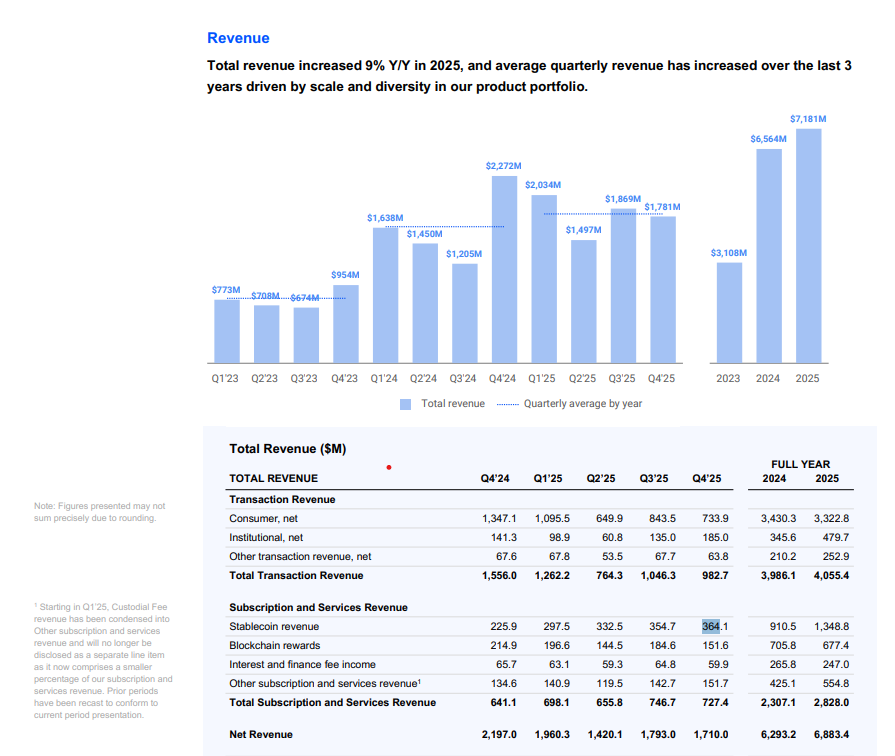
Bloomberg Intelligence estimates that Coinbase’s stablecoin revenue, which is largely tied to its USDC revenue share with Circle and already about 19% of total revenue in 2025, could grow by two to seven times if USDC adoption in payments accelerates.
Despite reporting a net loss of $667 million in the fourth quarter of 2025, according to Coinbase’s Q4 2025 shareholder letter, the company netted around $1.35 billion in stablecoin revenue last year.
That figure was up from $911 million in 2024, with $364 million in stablecoin revenue in Q4 2025 alone, as interest income on USDC (USDC) balances became a high-margin line for the exchange compared to volatile trading fees.
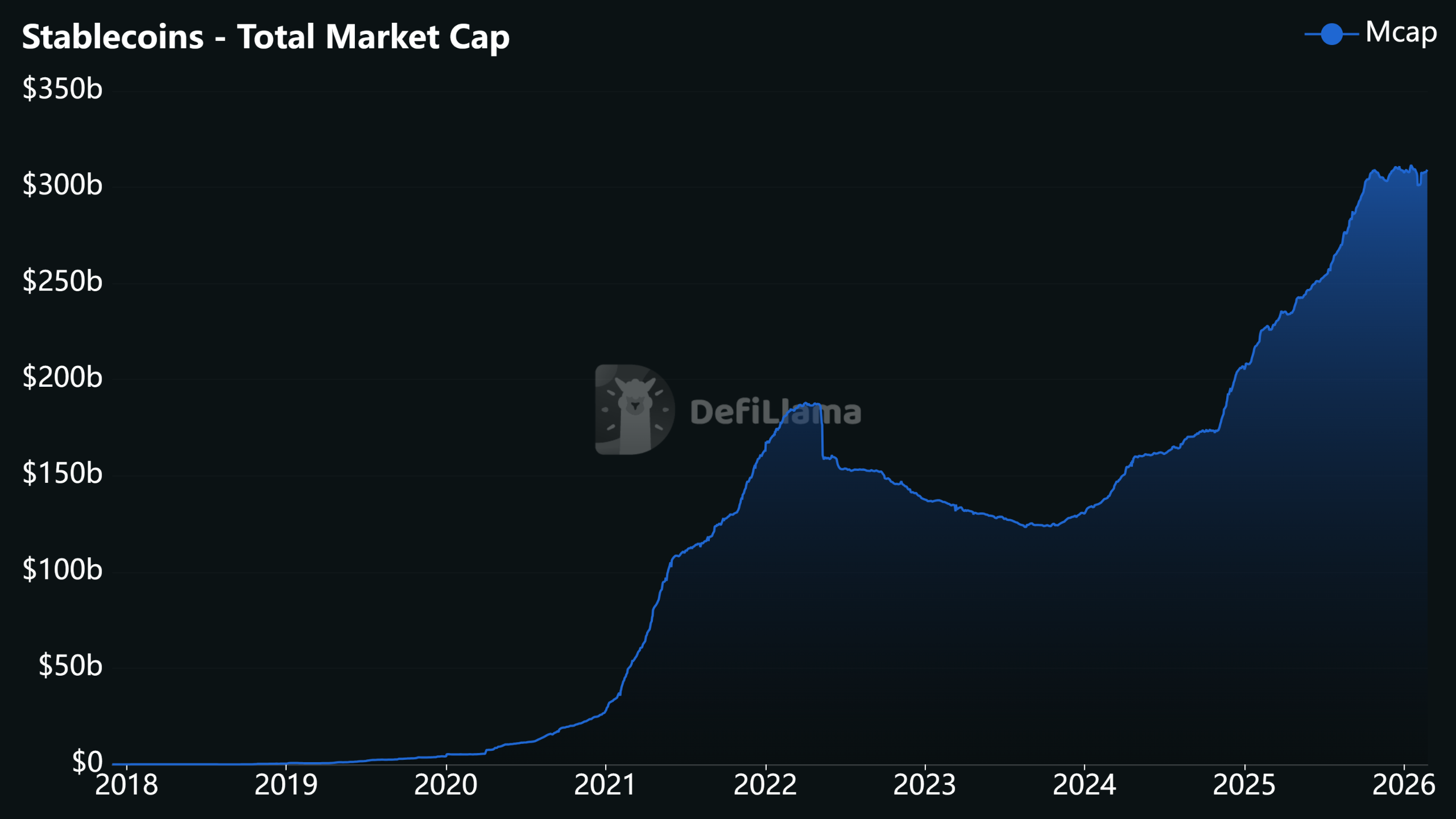
Stablecoins themselves have gone mainstream in usage terms. The total stablecoin transaction volume hit a record $33 trillion in 2025, with USDC accounting for about $18.3 trillion of that, ahead of Tether’s USDt (USDT) by transaction value, even though Tether still leads on market cap.

Politics of stablecoin yield
That growth is exactly why the politics around stablecoin yield have become so fraught. The Guiding and Establishing National Innovation for US Stablecoins (GENIUS) Act, signed by US President Donald Trump in July 2025, created a federal regime for payment stablecoins and explicitly bars issuers from paying interest or yield to holders.
Related: Who gets the yield? CLARITY Act becomes fight over onchain dollars
That provision is backed by the banking lobby because yield‑bearing stablecoins could siphon deposits from the traditional system.
Banks and their allies now want to go further in the Senate’s Digital Asset Market Clarity (CLARITY) Act of 2025 negotiations by closing what they see as a loophole that still allows non‑issuer affiliates, such as exchanges like Coinbase, to pass some of the interest on reserves back to customers as “rewards.”
Draft Senate language of the market structure bill could extend the yield ban and prevent Coinbase from offering any rewards tied to stablecoin balances.
In January, Coinbase withdrew support for the bill after objecting to provisions that would restrict its ability to offer stablecoin rewards to customers.
Coinbase earns a share of interest income from USDC reserves through its partnership with Circle, and the companies split that revenue based on USDC distribution.
Ironically, Armstrong told investors that if Congress bans rewards, the company would simply keep more of the Circle revenue share, making the stablecoin line more profitable, despite users losing out on yield.
Cointelegraph reached out to Coinbase but had not received a response by publication time.
What’s next for CLARITY?
The CLARITY Act, which bundles a Commodity Futures Trading Commission (CFTC) and Securities and Exchange Commission (SEC) split with tougher language on third‑party stablecoin yield, is currently working its way through the Senate.
Senator Bernie Moreno has said he expected the CLARITY Act to clear Congress as soon as April.
With stablecoins already accounting for nearly a fifth of Coinbase’s revenue and onchain dollar volumes hitting record highs, the eventual shape of those yield rules may matter more for Coinbase’s business model than the next crypto price cycle.
Magazine: Bitcoin may take 7 years to upgrade to post-quantum — BIP-360 co-author
Bitcoin mining hardware maker Canaan has purchased Cipher Mining’s 49% interest in a trio of Texas mining projects for $39.75 million, expanding its mining interests.
The transaction covers joint venture entities Alborz LLC, Bear LLC and Chief Mountain LLC, together known as the “ABC Projects,” according to a Monday announcement. After the deal, Canaan holds a 49% stake while partner WindHQ, a renewable energy infrastructure company, retains 51%.
“By increasing our exposure to high-quality, low-cost operational power assets in Texas, we are aligning our proprietary technology with critical infrastructure to drive long-term efficiency and scale,” said Nangeng Zhang, chairman and chief executive officer of Canaan.
The three facilities are already operational, with a combined 120 megawatts of power capacity and about 4.4 exahashes per second (EH/s) of hashrate. Canaan also acquired 6,840 Avalon A15Pro mining rigs from Cipher. Those machines were previously deployed at Cipher’s Black Pearl location, which is being converted into an artificial intelligence and high-performance computing (AI-HPC) data center.
Related: Bitcoin mining difficulty rebounds 15% as US miners recover from winter outages
Canaan funds deal with $40 million share issuance
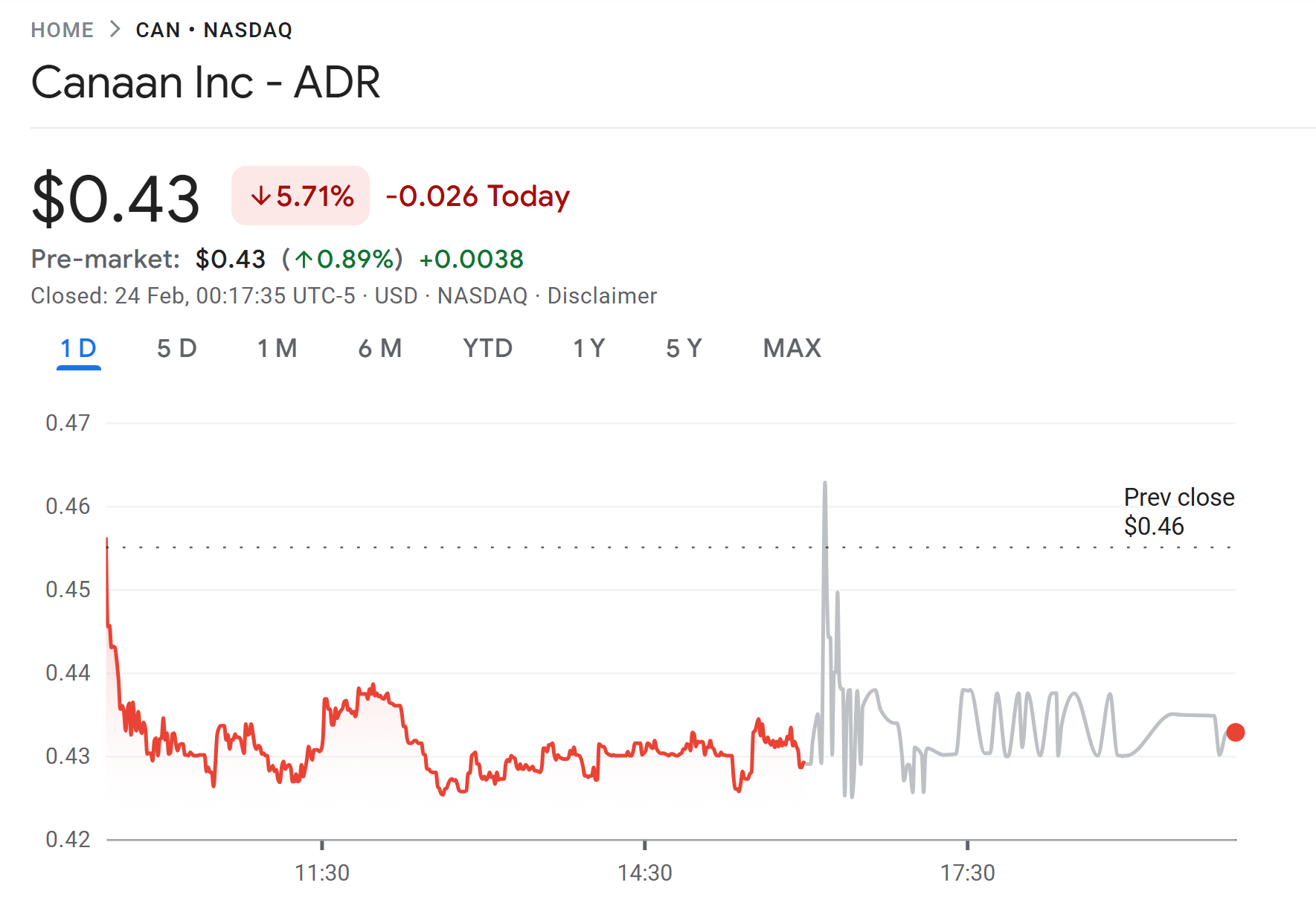
The purchase was financed through shares. Canaan issued 806,439,900 Class A shares, equal to 53,762,660 American Depositary Shares (ADS), priced at $0.7394 per ADS and subject to a six-month lockup.
According to the announcement, the Texas sites benefit from electricity costs below $0.03 per kilowatt-hour and include wind-powered generation and grid demand-response capabilities within the ERCOT power market. “ABC Projects feature industry-leading power pricing and offer a strong foundation for growth,” Zhang added.

Canaan reported a strong fourth quarter of 2025, with revenue rising 121.1% year-on-year to $196.3 million, as hardware shipments and mining output improved. Bitcoin (BTC) mining revenue climbed 98.5% to $30.4 million, increasing its treasury to 1,750 BTC. It shipped a record 14.6 EH/s of computing power and expanded installed hashrate to 9.91 EH/s, supported by a large institutional order in the United States.
Related: Bitcoin miners chase 30 GW AI capacity to offset hashprice pressure
Bitcoin miners turn to AI as margins tighten
Bitcoin mining companies are increasingly branching into AI and cloud computing as profitability pressures mount. Last week, MARA Holdings acquired a 64% stake in French infrastructure company Exaion, giving the company a foothold in AI services.
The move came amid a broader industry trend. Companies including Hive, Hut 8, TeraWulf and Iren are converting mining facilities and power capacity into data-center operations, and some players such as CoreWeave have already transitioned fully into AI infrastructure.
Canaan also said the new acquisitions align with its initiative to stabilize power grids amid rising data center demand.
Magazine: Bitcoin may take 7 years to upgrade to post-quantum — BIP-360 co-author
Crypto World
RedotPay stablecoin payments firm said to consider $1 billion IPO in New York: Bloomberg


RedotPay, a Hong Kong-based stablecoin payments upstart, plans to raise more than $1 billion in a U.S. initial public offering (IPO) that could value it at over $4 billion.
Sources close to the matter told Bloomberg that the company, which achieved unicorn status in September last year, has tapped banking heavyweights such as JPMorgan, Goldman Sachs and Jefferies for a potential New York listing as early as this year.
Details of the IPO, such as the exact size and timeline, are still fluid, and more banks could jump in.
RedotPay raised $194 million in 2025, capped by a Series B in December, and now claims more than 6 million registered users. Backers read like a Who’s Who of crypto venture capital: Accel, Pantera Capital and Blockchain Capital among others.
If it pulls off the IPO, it’d be one of the biggest from Asia’s stablecoin scene.
Stablecoins are digital tokens with values pegged to an external reference such as the U.S. dollar. These tokens are widely used in trading cryptocurrencies and to move capital across borders.
Hong Kong, like other advanced nations, has warmed up to these tokenized versions of fiat currencies and is ready to license its first stablecoin issuers next month.


Doctor Profit compared Saylor’s approach to the 2000 dot-com bubble, and added that buying blindly without strategic selling is a “reckless” trading approach.
Strategy has spent years aggressively buying Bitcoin, pitching the move as a long-term, high-conviction bet, but critics say that the approach has crossed from bold into reckless.
Popular analyst Doctor Profit, for one, drew parallels to the dot-com bubble, while warning that the firm risks repeating history amid today’s AI-fueled frenzy.
Blind Faith vs Market Timing
In a recent post on X, Doctor Profit stated that he repeatedly expressed his concerns with Strategy’s co-founder, Michael Saylor, that nonstop Bitcoin accumulation, financed and backed by issuing company shares, was “playing with fire.” According to the analyst, those warnings were dismissed and even mocked.
He pointed out that since then, Strategy’s share price has fallen by roughly 75% from its highs, while Bitcoin itself is down 50% from its peak. With Saylor’s reported average BTC entry around $76,000 and the asset trading near $63,000, the position sits roughly 17% below cost.
Doctor Profit also argued that, despite accumulating since 2020, the company has never realized meaningful profits or executed serious strategic selling. Meanwhile, its stock has suffered a substantial drawdown, exposing shareholders to extreme volatility with little relief.
Looking back at past cycles, Doctor Profit said Saylor’s experience during the 2000 dot-com collapse offers a warning. He explained that intense excitement surrounding AI today may be creating a similar late-cycle setup, increasing the chance of history repeating itself by 2026.
Rather than de-risking as these signals emerged, Doctor Profit claimed that the executive chairman doubled down, increasing exposure while ignoring red flags.
You may also like:
“I truly wish MSTR and Saylor the best, but I cannot understand how reckless this trading approach is in such a late-cycle environment. Markets reward discipline, not blind belief in Bitcoin. There is always time to buy and time to sell. I hope he will listen next time instead of mocking my warnings.”
The fresh concerns come against the backdrop of Strategy’s latest Bitcoin purchase, which is smaller than its past billion-dollar buys but consistent with its long-standing accumulation plan. The firm spent just under $40 million to acquire 592 BTC at an average price of $67,286, which pushed its total holdings to 717,722 BTC.
The purchase was funded through equity sales. Nearly 298,000 Class A shares were sold via the firm’s at-the-market program over the past week, according to an update cited by Walter Bloomberg. Strategy still has substantial capacity to raise more capital through future ATM sales, as $37.4 billion in securities remain available, including MSTR and STRK stock.
Billions at Risk
As Bitcoin’s price decline deepened, earlier warnings from Michael Burry and Zac Prince drew fresh attention to the fragility of BTC treasury business models. For instance, Burry recently said BTC’s drop increases the risk of broader stress across crypto and related financial markets. “The Big Short” investor had said that further downside could severely impact companies that accumulated Bitcoin at higher prices, potentially leaving firms like Strategy billions underwater and cut off from capital markets.
Former BlockFi CEO, Prince, also questioned the sustainability of BTC treasury models, saying they rely on financial engineering rather than core business fundamentals and may struggle to justify valuations without real operating revenue.
Binance Free $600 (CryptoPotato Exclusive): Use this link to register a new account and receive $600 exclusive welcome offer on Binance (full details).
LIMITED OFFER for CryptoPotato readers at Bybit: Use this link to register and open a $500 FREE position on any coin!
Hong Kong-based stablecoin payments company RedotPay is reportedly weighing a US initial public offering (IPO) that could raise more than $1 billion and value the company at over $4 billion.
The company is working with JPMorgan Chase, Goldman Sachs and Jefferies on a potential New York listing that may occur as early as this year, Bloomberg reported on Tuesday, citing people familiar with the matter. Terms remain under review and could change, while additional banks may join the underwriting group, per the report.
Founded in April 2023, RedotPay provides stablecoin-linked payment cards, multicurrency wallets and international payout services. According to its website, the company has 6 million users and handles about $10 billion in annualized payment volume.
RedotPay declined to comment on the matter.
Related: Binance stablecoin reserves have sunk 19% since November
RedotPay raised $194 million in 2025
The US IPO plans follow a year of fundraising for RedotPay, which raised a total of $194 million in 2025 across three rounds. In March, it closed a $40 million Series A funding round led by Lightspeed, with participation from HSG and Galaxy Ventures.
In September, the stablecoin payment company said it became a fintech unicorn after closing a $47 million strategic round that saw investment from Coinbase Ventures, alongside continued backing from Galaxy Ventures and Vertex Ventures and participation from an undisclosed global technology entrepreneur.
It later closed a $107 million Series B in December. The round was led by Goodwater Capital, with participation from Pantera Capital, Blockchain Capital and Circle Ventures, as well as continued support from HSG.
Related: Standard Chartered sticks to $2T stablecoin call but trims T-bill impact
Stablecoin sector attracts significant funding
Stablecoin-focused companies drew significant investment in 2025 as venture capital continued flowing into payment and infrastructure providers. In August, investors committed almost $100 million to the sector, including a $40 million Series B for Switzerland-based M0 led by Polychain Capital and Ribbit Capital, and a $58 million raise by US startup Rain to build tools enabling banks to issue regulated stablecoins.

Funding activity continued through the year. In October, Chicago-based Coinflow secured $25 million in a Series A led by Pantera Capital to expand cross-border settlement services, while CMT Digital later launched a $136 million fund with allocations for stablecoin startups, including Coinflow and Codex.
Big Questions: Is China hoarding gold so yuan becomes global reserve instead of USD?
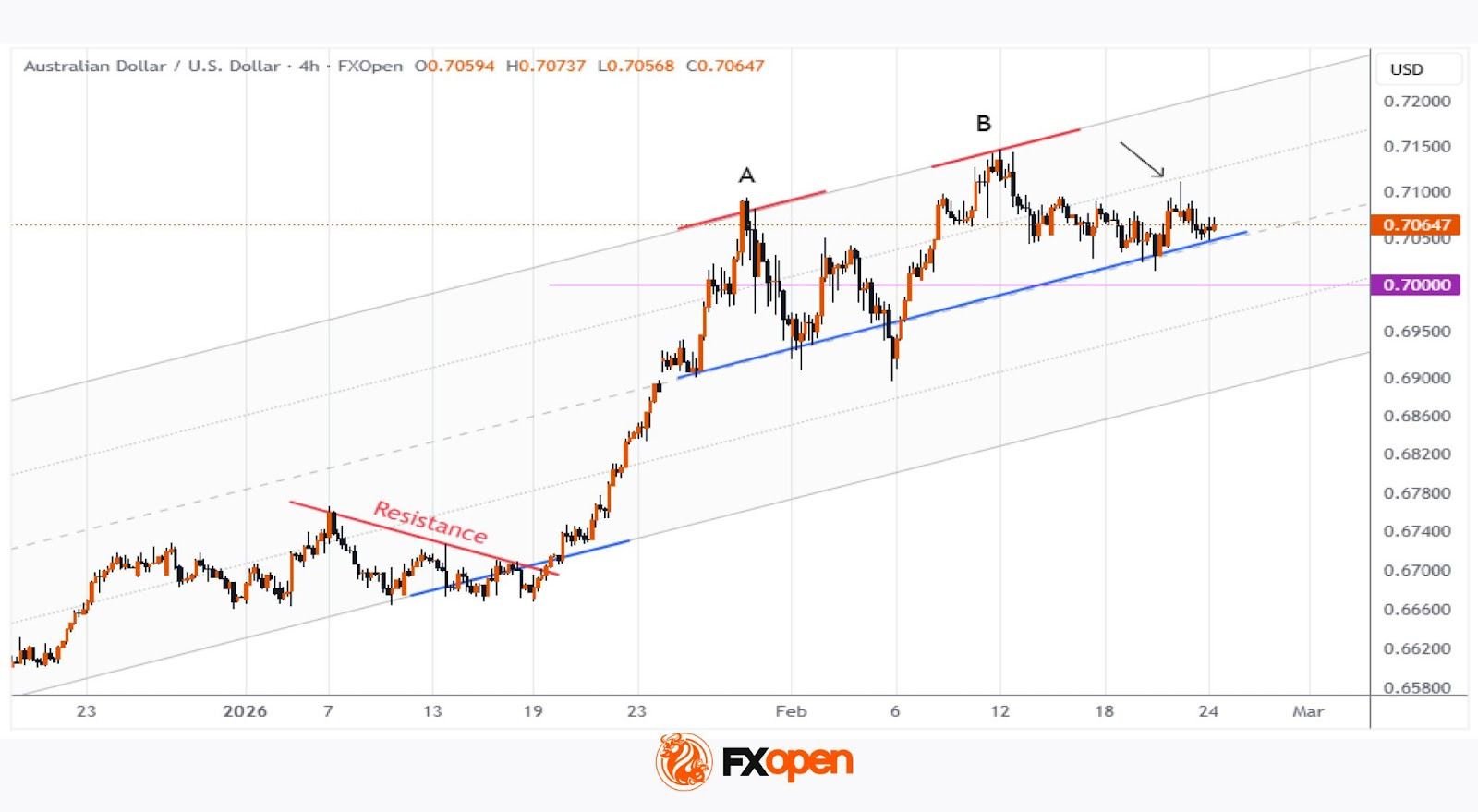
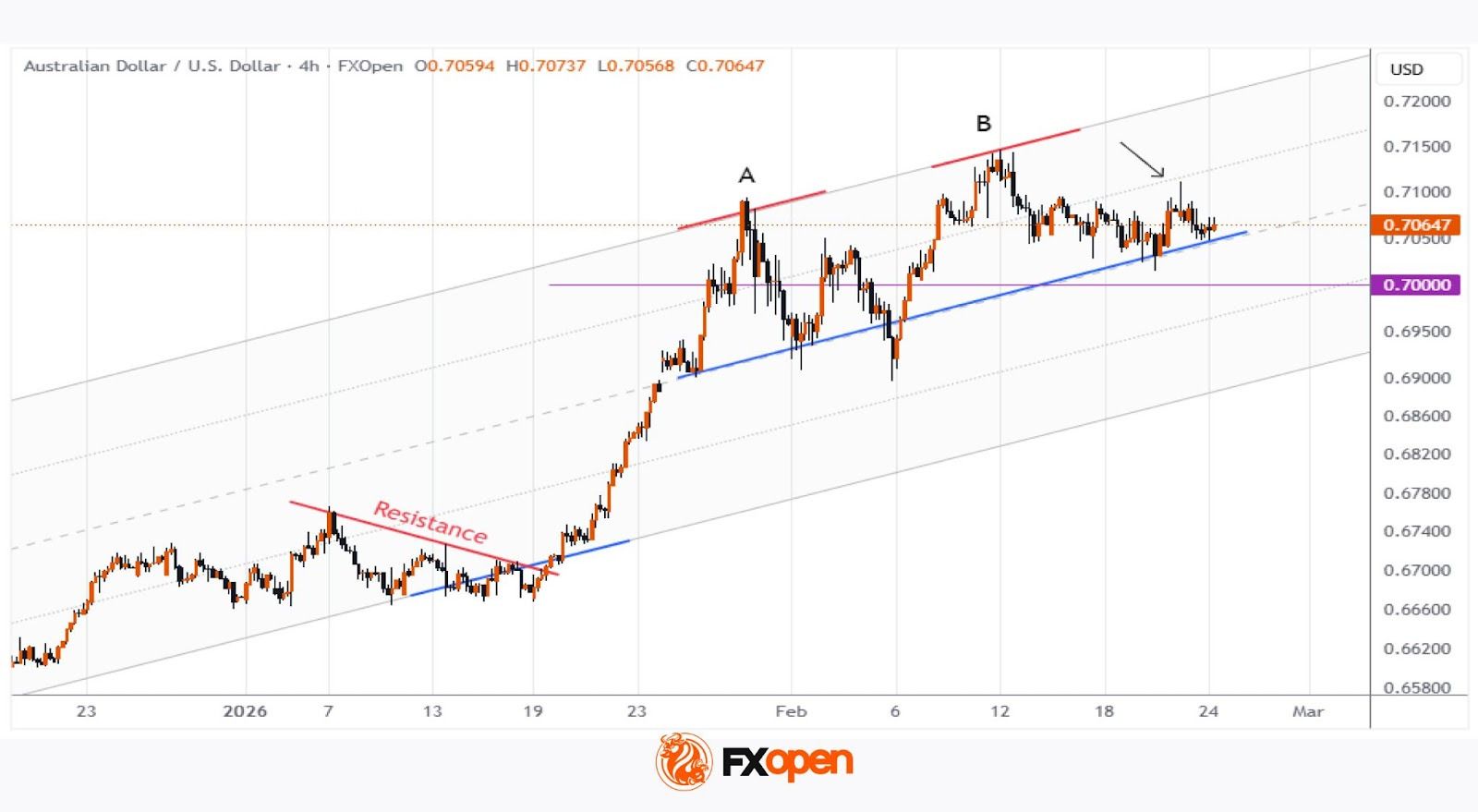
As the AUD/USD chart shows, the Australian dollar posted strong performance in January and February. Since the start of the year, the “Aussie” has gained nearly 6% against the US dollar.
Among the bullish drivers:
→ The policy stance of the Reserve Bank of Australia (RBA), which raised its cash rate to 3.85% in February 2026, while many other central banks are considering rate cuts.
→ A resilient labour market. Australia’s unemployment rate remains at 4.1%, giving the RBA room to keep interest rates elevated.
→ Commodity markets. High prices for gold, iron ore and energy exports continue to support Australia’s trade balance.
However, an important CPI report is due tomorrow. Inflation data could inject additional volatility into the market and test the strength of the Australian dollar.
Technical Analysis of the AUD/USD Chart
In early January, we identified an ascending channel that remained valid through February 2026, as bulls managed to break above resistance line R. Note that:
→ The upper boundary of the channel acted as resistance (resulting in the formation of peaks A–B).
→ The median line served as support.
An important observation is that after forming peak B, the market quickly fell back below the level of peak A. This suggests insufficient buying pressure to sustain the advance.
At the same time, the recent candlestick with a long upper wick — a potential bull trap and a bearish signal — may indicate that the AUD/USD reaction to the CPI report could be negative.
In that case, a break below the channel’s median line cannot be ruled out, opening the way for a test of the psychological 0.7000 level.
Trade over 50 forex markets 24 hours a day with FXOpen. Take advantage of low commissions, deep liquidity, and spreads from 0.0 pips (additional fees may apply). Open your FXOpen account now or learn more about trading forex with FXOpen.
This article represents the opinion of the Companies operating under the FXOpen brand only. It is not to be construed as an offer, solicitation, or recommendation with respect to products and services provided by the Companies operating under the FXOpen brand, nor is it to be considered financial advice.

Canaan (EXCHANGE: CAN) has expanded its Texas footprint by snapping up Cipher Mining’s 49% stake in three existing mining operations, broadening its exposure to low-cost, scalable power assets and reinforcing its strategic tilt toward utility-scale mining. The deal covers Alborz LLC, Bear LLC, and Chief Mountain LLC—collectively known as the ABC Projects—and elevates Canaan’s stake to 49% while WindHQ maintains a 51% majority. The trio of facilities already operates with about 120 megawatts of grid-supplied power and delivers roughly 4.4 exahashes per second (EH/s) of Bitcoin (CRYPTO: BTC) mining capacity. In addition to the equity transfer, Canaan acquired 6,840 Avalon A15Pro mining rigs from Cipher, which had been deployed at Cipher’s Black Pearl site, earmarked for conversion into an AI-HPC data center. This move aligns with a broader industry trend of miners diversifying into AI and cloud-based services as margins tighten.
The deal was financed through a significant equity issuance. Canaan issued 806,439,900 Class A shares, equivalent to 53,762,660 American Depositary Shares (ADS), priced at $0.7394 per ADS, with a six-month lockup period. The consideration signals a deliberate capital-structure adjustment to support the expansion of the Texas sites and the ongoing transition of Cipher’s Black Pearl asset. According to the filing, the Texas facilities benefit from electricity costs below 3 cents per kilowatt-hour and include wind-powered generation plus grid-demand response within the ERCOT market. The price tag attached to the acquisition reflects both the tangible hardware upgrade and the strategic value of anchoring a low-cost power profile in a state known for competitive energy economics.
Executive Chairman and CEO Nangeng Zhang framed the move as a step to “align proprietary technology with critical infrastructure to drive long-term efficiency and scale.” The strategic emphasis is clear: gain control of high-quality, affordable power assets that can sustain increased mining activity while positioning the business to capitalize on future opportunities in AI-enabled data center services. The ABC Projects bring with them a proven operational footprint in Texas, a state that remains central to miners’ growth plans given its energy mix, regulatory environment, and capacity constraints elsewhere. While Cipher’s stake transfers to Canaan, WindHQ’s stake remains, ensuring continued governance in the ventures’ direction.
Beyond the specific transaction, Canaan’s financials for the fourth quarter of 2025 augmented the narrative of a company navigating a higher-capacity, higher-visibility mining cycle. The firm reported a 121.1% year-over-year rise in revenue to $196.3 million as hardware shipments and mining activity improved. Bitcoin (BTC) mining revenue reached $30.4 million, contributing to a treasury that expanded to 1,750 BTC. The company shipped a record 14.6 EH/s of computing power during the quarter, lifting installed hashrate to 9.91 EH/s—an uptick buoyed by a large institutional order in the United States. The results underscore a sector that remains sensitive to hashprice dynamics but is able to leverage scale, efficiency improvements, and strategic site selection to sustain growth during a period of consolidation.
Canaan’s foray into AI and broader industry dynamics
As margins compress, several Bitcoin mining firms have started to pivot toward AI, cloud services, and data-center operations. The market has seen a wave of moves where traditional mining capacity is repurposed or expanded to serve AI workloads and HPC tasks. For instance, the company MARA Holdings recently took a 64% stake in Exaion, a move that signaled a broader appetite for AI-enabled infrastructure within the ecosystem. Other players, including Hive, Hut 8, TeraWulf, and Iren, have similarly explored converting mining power into AI-ready capacity, with CoreWeave having already transitioned to a broader AI-infrastructure model. These shifts reflect a strategic emphasis on building diversified, resilient revenue streams alongside traditional block rewards.
In this environment, Canaan’s acquisition strategy and the associated asset mix—low-cost Texas power, wind generation, and ERCOT grid-demand responsiveness—position the company to weather price volatility while scaling operations. The combination of tangible capacity (120 MW, 4.4 EH/s) and tangible assets (6,840 Avalon A15Pro rigs) provides a foundation for longer-term efficiency gains as the AI-HPC data-center conversion progresses at the Black Pearl site and potentially beyond. The emphasis on stabilizing power grids amid rising data-center demand also speaks to a broader industry concern: how miners can contribute to, and benefit from, grid reliability and demand-response programs while maintaining competitive economics.
As the sector evolves, investors are watching how these capital-intensive expansions translate into sustainable cash flow, given the cyclical nature of crypto markets and the sensitivity of mining economics to electricity prices, hardware costs, and BTC price movements. The Texas projects’ economics—anchored by sub-3-cent per kWh power and wind-assisted generation—could provide a durable edge if energy costs remain favorable and the broader demand for AI infrastructure accelerates. In this context, Canaan’s blend of mining capacity with AI-ready hardware represents a notable example of how traditional crypto mining players are recalibrating to operate as diversified data-center operators.
What to watch next
- Close of the Cipher Mining stake transfer and the resulting governance arrangements within the ABC Projects.
- Deployment and operational ramp of the 6,840 Avalon A15Pro rigs within the ABC Projects and the Black Pearl AI-HPC conversion timeline.
- Updates on electricity pricing, ERCOT capacity commitments, and any new wind- or grid-support arrangements affecting Texas operations.
- Canaan’s ongoing quarterly results and how the ABC Projects contribute to revenue, hash rate, and treasury growth going into 2026.
Sources & verification
- Press release: Canaan Inc. acquires Cipher Mining’s interest in multiple operational mining projects totaling 4.4 EH/s in West Texas (PR Newswire).
- Financial performance notes referencing Q4 2025 results, including revenue, BTC mining revenue, and hash rate milestones (as reported and summarized by industry coverage).
- Details of the ABC Projects’ capacity (120 MW) and hash rate (4.4 EH/s) as described in the acquisition announcement.
- Notes on the financing structure, including the share issuance and lockup terms described in the press materials.
Strategic expansion in Texas: Canaan’s ABC projects and AI ambitions
The acquisition of Cipher Mining’s minority stake in the ABC Projects marks a deliberate push by Canaan to anchor its growth in a high-visibility, cost-efficient energy corridor. By taking 49% of the three facilities and leaving WindHQ with 51%, the company gains operational influence while preserving a clear minority stakeholder structure that can support scale without over-leveraging the venture. The combined 120 MW of capacity and 4.4 EH/s of hashrate position the ABC Projects as a meaningful contributor to Canaan’s overall production capacity, particularly as the firm expands use cases for its hardware in AI and HPC environments.
The 6,840 Avalon A15Pro rigs acquired from Cipher bring additional compute power into the fold, with deployment tied to Cipher’s Black Pearl site’s AI-HPC conversion. This move exemplifies a broader miner-led shift from pure crypto mining toward diversified data-center capabilities that can power AI workloads, cloud services, and other compute-intensive tasks. The rationale is grounded in the long-run economics of power efficiency and load diversification, where operators can monetize flexible power usage through grid-demand-response programs while maintaining a robust hardware base to support both mining and AI tasks.
From a market perspective, the deal underscores how miners are reinterpreting their assets in a world where energy costs and hashprice fluctuations can materially affect profitability. Texas remains an attractive destination not only for its competitive electricity rates but also for the regulatory and market infrastructure that supports demand-response programs. The ABC Projects’ wind-powered generation and grid integration through ERCOT are notable features that can help stabilize operating costs even as the broader crypto ecosystem faces cyclical pressures. For investors and builders, the move signals a continued emphasis on scalable, asset-light expansions that couple hardware with strategic power arrangements and diversified data-center economics.


Terraform Labs’ court-appointed bankruptcy administrator has filed a lawsuit against market maker Jane Street for allegedly using non-public information to profit from the 2022 collapse of the Terra ecosystem.
Summary
- Terraform’s bankruptcy administrator has sued Jane Street, alleging the trading firm used material non-public information to front-run trades during the May 2022 collapse.
- The complaint names co-founder Robert Granieri and traders Bryce Pratt and Michael Huang.
- A Jane Street spokesperson has denied all allegations.
The lawsuit was filed on Monday and accused Jane Street insiders, including its co-founder Robert Granieri, and employees Bryce Pratt and Michael Huang of “misappropriating confidential information and manipulating market prices.”
According to the heavily redacted complaint, Jane Street front ran Terraform’s liquidity moves around the Curve 3pool withdrawal and used the information it acquired to unwind hundreds of millions of dollars in UST exposure “that hastened the collapse of Terraform.”
The suit claims that Jane Street and Terraform first connected for over-the-counter trading in 2018, but that trading “did not take off until February 2022” when Jane Street deployed Bryce Pratt, a former Terraform intern, to establish lines of communication with his former colleagues at Terraform.
Pratt allegedly helped set up those channels due to his history as a former Terraform intern, which allowed him to “seamlessly pass information from Terraform to Jane Street.”
“Given Jane Street’s interest in cryptocurrency, Pratt leveraged the relationships he had developed at Terraform to feed material non-public information to Jane Street’s crypto desk,” the complaint said.
“Jane Street abused market relationships to rig the market in its favor during one of the most consequential events in crypto history,” Terraform’s court-appointed administrator, Todd Snyder, said in a statement to the Wall Street Journal.
The lawsuit seeks damages and an order requiring Jane Street to disgorge the profits it allegedly made through insider trading and market manipulation, along with interest, and calls for a jury trial.
In response, a Jane Street spokesperson has denied all allegations and told WSJ that the suit was a “desperate” attempt to “extract money,” and the firm will defend against these “baseless, opportunistic claims.”
“[..] It is well-established that the losses suffered by Terra and Luna holders were the result of a multibillion-dollar fraud perpetrated by the management of Terraform Labs,” the spokesperson said.
Terraform collapsed in May 2022 after its algorithmic stablecoin TerraUSD lost its dollar peg, which resulted in one of the crypto industry’s largest meltdowns as roughly $40 billion vanished from the market. Subsequently, Terraform filed for bankruptcy in 2024, while co-founder Do Kwon pleaded guilty to fraud charges and was sentenced to 15 years in prison.
The bankruptcy administrator also launched a lawsuit against Jump Trading in December and claims the firm entered into secret agreements with Kwon.
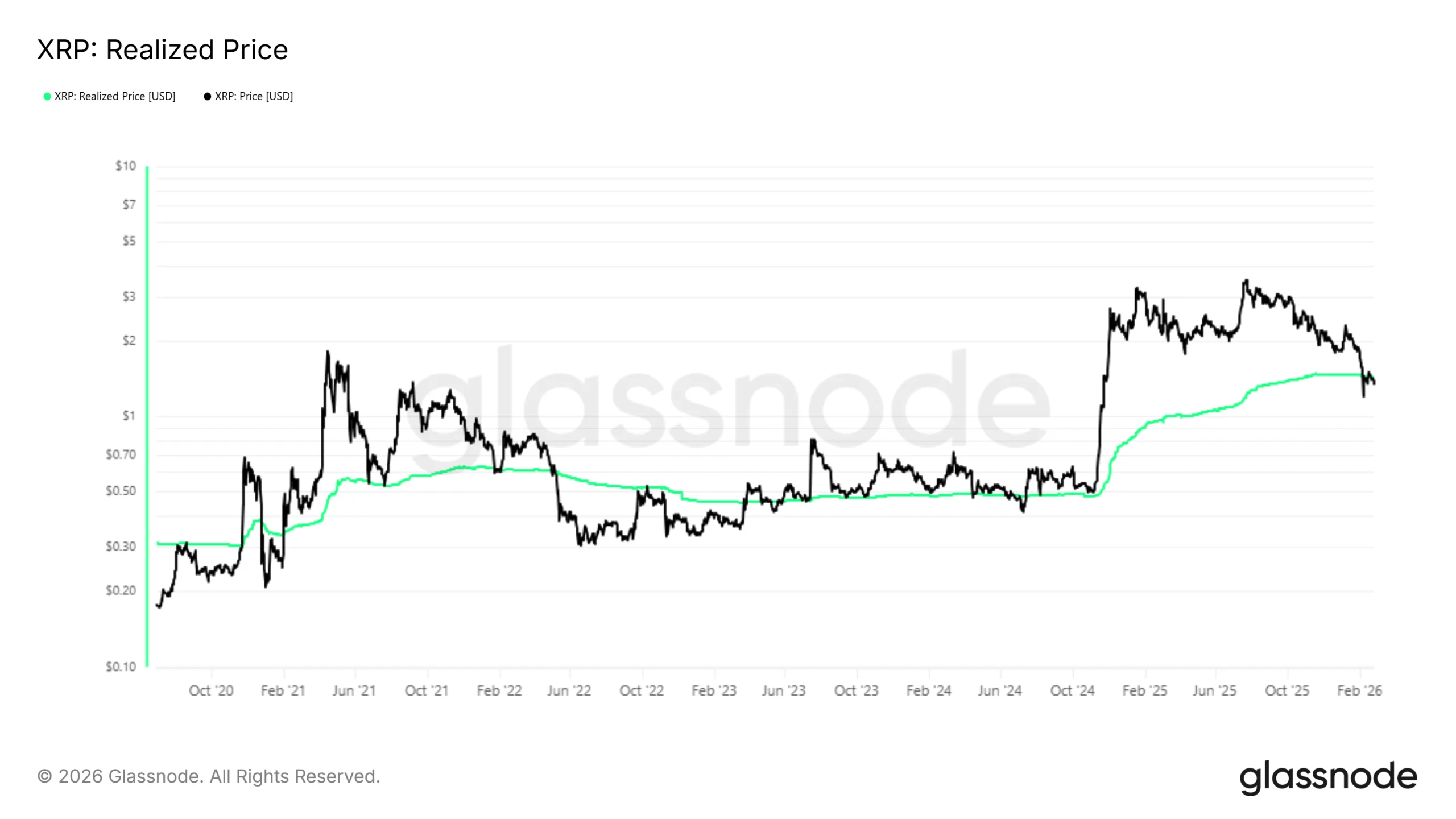
XRP price continues to trade under pressure as a persistent downtrend shapes short-term momentum. The token has struggled to break above descending resistance since the beginning of the month. This prolonged weakness has created uncertainty across the broader crypto market.
Despite the downturn, some investors view current levels as strategic entry points, forming the base for a potential recovery.
XRP Bottom In Sight
On-chain data shows XRP’s realized price now sits above the current market price. This metric indicates that the average holder is at a loss. When the market price falls below the realized price, assets are often considered undervalued from a historical perspective, marking a potential bottom.
Past cycles reveal that XRP rarely remains in this zone for extended periods. Similar conditions have preceded swift price rebounds. While no outcome is guaranteed, historical patterns suggest that undervaluation phases often attract accumulation and renewed buying interest.
Want more token insights like this? Sign up for Editor Harsh Notariya’s Daily Crypto Newsletter here.
How Are XRP Investors Acting?
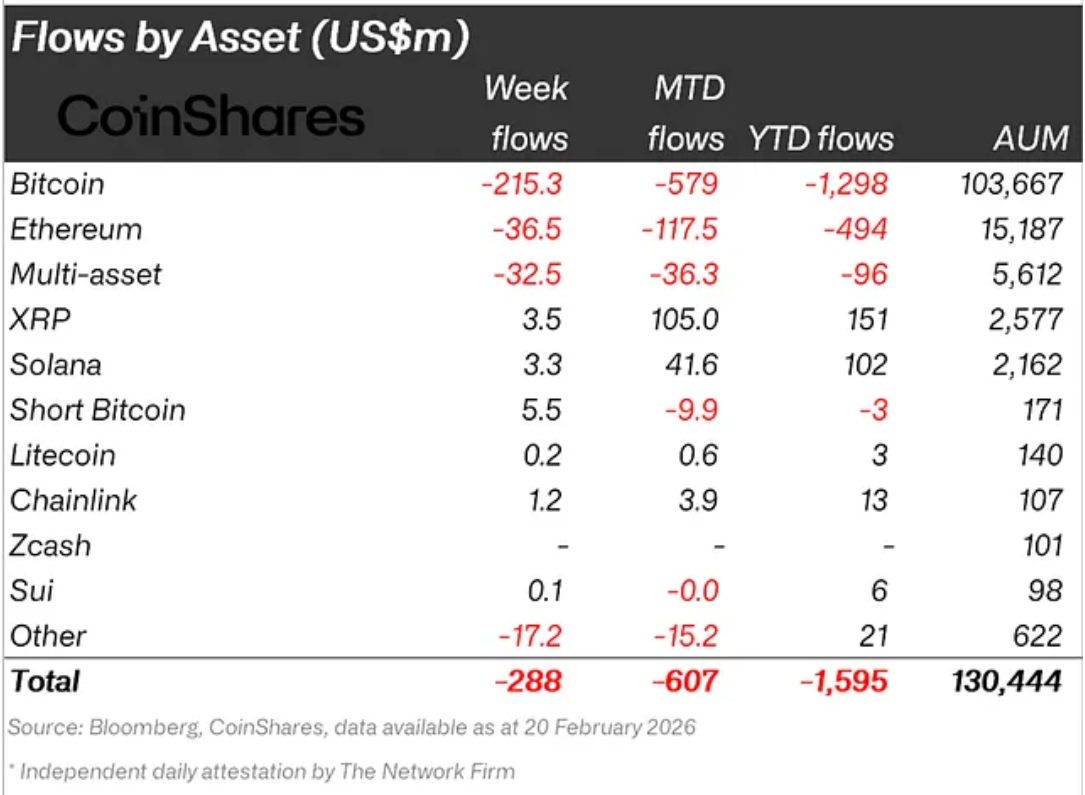
Institutional investors remain notably active despite broader market caution. For the week ending February 20, institutions added $3.5 million worth of XRP exposure. This brought month-to-date inflows to $105 million, a figure unmatched by Bitcoin or Ethereum, which both recorded net outflows.
Sustained institutional demand reflects strategic positioning rather than speculative trading. Professional investors often deploy capital during periods of weakness. Continued inflows may provide liquidity support and strengthen the structural foundation for XRP price stabilization.
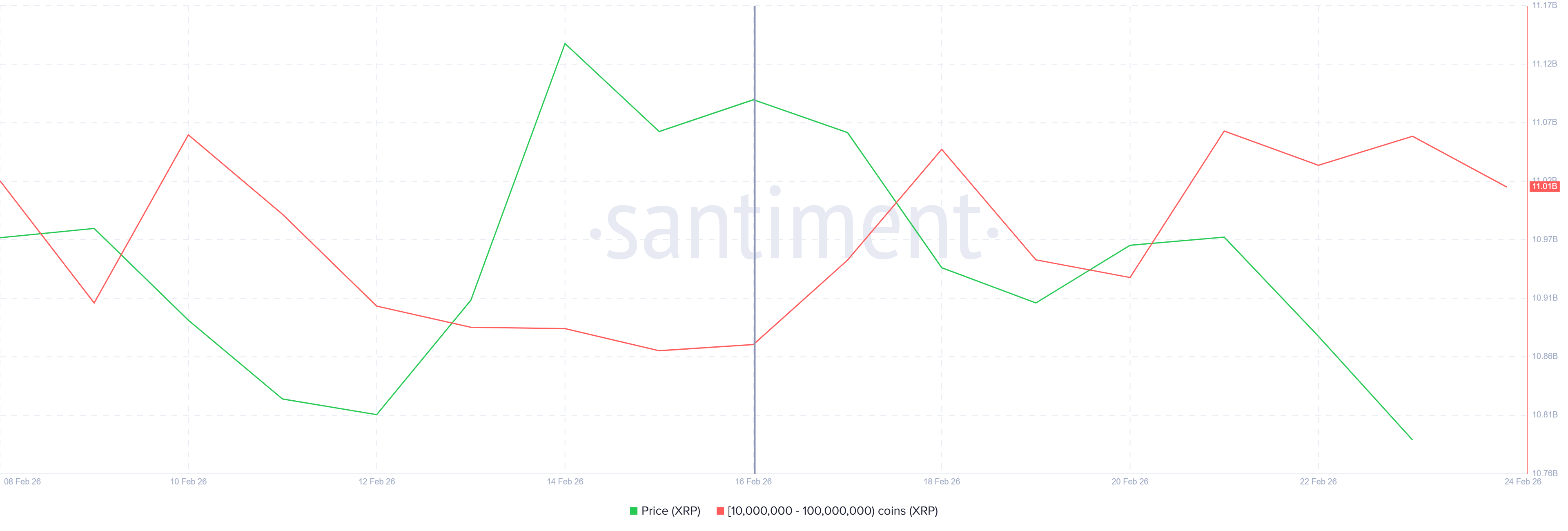
Large XRP holders also appear confident in the asset’s long-term outlook. Addresses holding between 10 million and 100 million XRP accumulated more than 170 million tokens over the past week. This buying activity occurred during a 9% price decline.
Accumulation during falling prices signals conviction among influential wallet holders. While the increase is not historically extreme, timing remains significant. Coordinated accumulation from whales and institutions may reduce circulating supply pressure and contribute to eventual upward momentum.
XRP Price Levels To Watch
XRP price is trading at $1.32 at the time of writing, remaining below a descending trendline established earlier this month. The asset continues to face technical resistance along this barrier. Without a clear improvement in broader market sentiment, XRP may struggle to break higher in the near term.
After losing support at $1.36, XRP now looks toward $1.28 as the next key level. Macro conditions worsened following US President Donald Trump’s 15% global tariff hike. Risk-off sentiment may weigh on digital assets. Continued pressure could push XRP toward $1.28 or even $1.21.
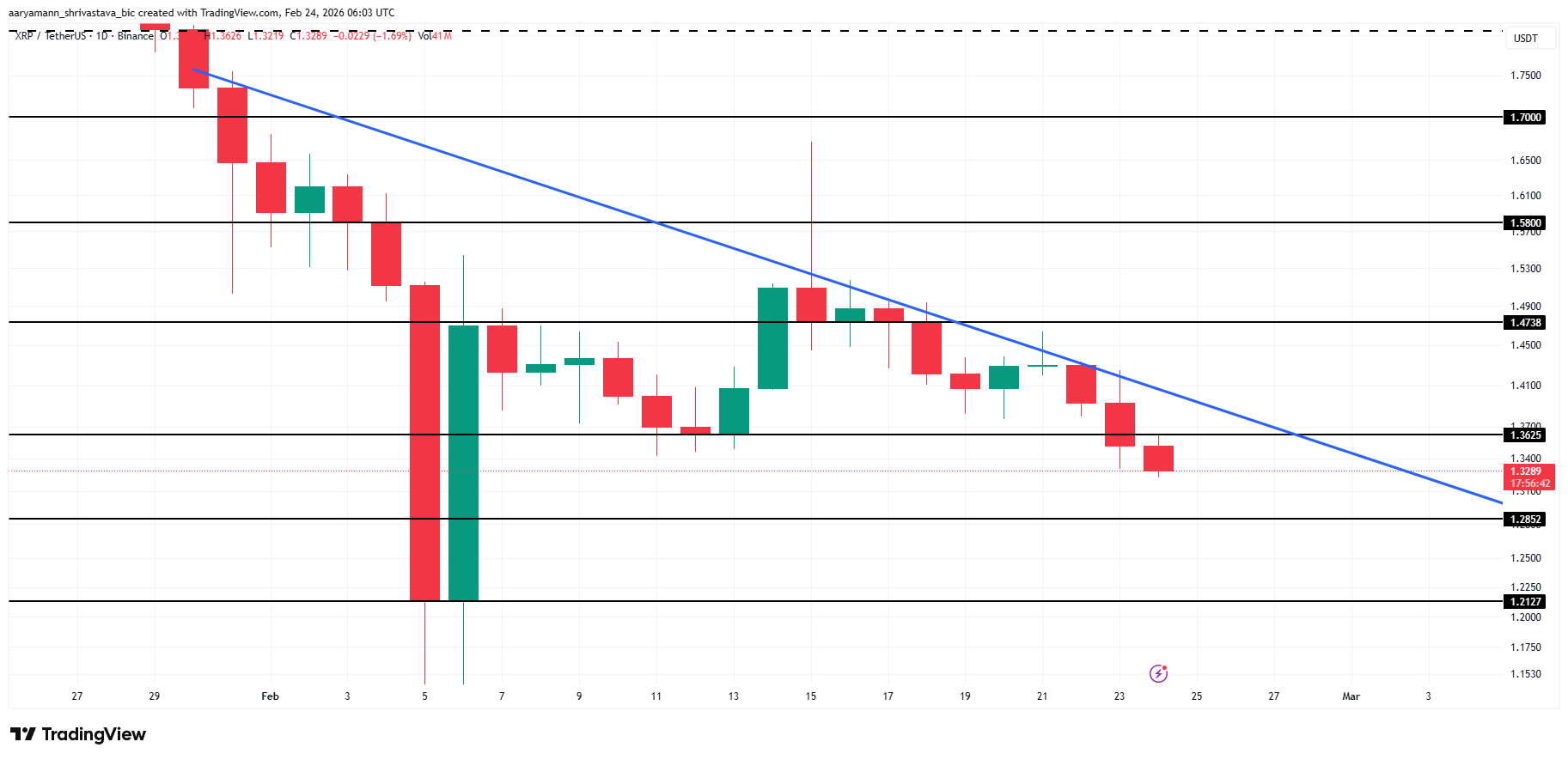
However, stabilization in global markets could shift momentum. Ongoing whale accumulation and institutional inflows may support recovery attempts. A breakout above the descending trendline would signal structural improvement. If XRP clears $1.47 resistance, the bearish thesis would be invalidated, and bullish momentum could reemerge.

Best ICO Development Strategy for 2026

The Unexpected Bob Dylan Song the BBC Banned Over a Single “Blasphemous” Line

Russia Executing Soldiers Over Refusal To Obey Orders, Troops Say


-

 Crypto World7 days ago
Can XRP Price Successfully Register a 33% Breakout Past $2?
-

 Video4 days ago
XRP News: XRP Just Entered a New Phase (Almost Nobody Noticed)
-

 Fashion4 days ago
Weekend Open Thread: Boden – Corporette.com
-

 Politics2 days ago
Baftas 2026: Awards Nominations, Presenters And Performers
-

 Sports15 hours ago
Women’s college basketball rankings: Iowa reenters top 10, Auriemma makes history
-

 Politics16 hours ago
Nick Reiner Enters Plea In Deaths Of Parents Rob And Michele
-

 Business6 days ago
Infosys Limited (INFY) Discusses Tech Transitions and the Unique Aspects of the AI Era Transcript
-

 Entertainment6 days ago
Kunal Nayyar’s Secret Acts Of Kindness Sparks Online Discussion
-

 Tech6 days ago
Retro Rover: LT6502 Laptop Packs 8-Bit Power On The Go
-
 Sports5 days ago
Clearing the boundary, crossing into history: J&K end 67-year wait, enter maiden Ranji Trophy final | Cricket News
-

 Business2 days ago
Mattel’s American Girl brand turns 40, dolls enter a new era
-

 Business2 days ago
Law enforcement kills armed man seeking to enter Trump’s Mar-a-Lago resort, officials say
-

 Crypto World2 hours ago
XRP price enters “dead zone” as Binance leverage hits lows
-

 Entertainment5 days ago
Dolores Catania Blasts Rob Rausch For Turning On ‘Housewives’ On ‘Traitors’
-
 NewsBeat23 hours ago
‘Hourly’ method from gastroenterologist ‘helps reduce air travel bloating’
-

 Business6 days ago
Tesla avoids California suspension after ending ‘autopilot’ marketing
-

 Tech2 days ago
Anthropic-Backed Group Enters NY-12 AI PAC Fight
-

 NewsBeat2 days ago
Armed man killed after entering secure perimeter of Mar-a-Lago, Secret Service says
-

 Politics2 days ago
Maine has a long track record of electing moderates. Enter Graham Platner.
-

 Crypto World6 days ago
WLFI Crypto Surges Toward $0.12 as Whale Buys $2.75M Before Trump-Linked Forum