

Crypto World
XRP price enters “dead zone” as Binance leverage hits lows

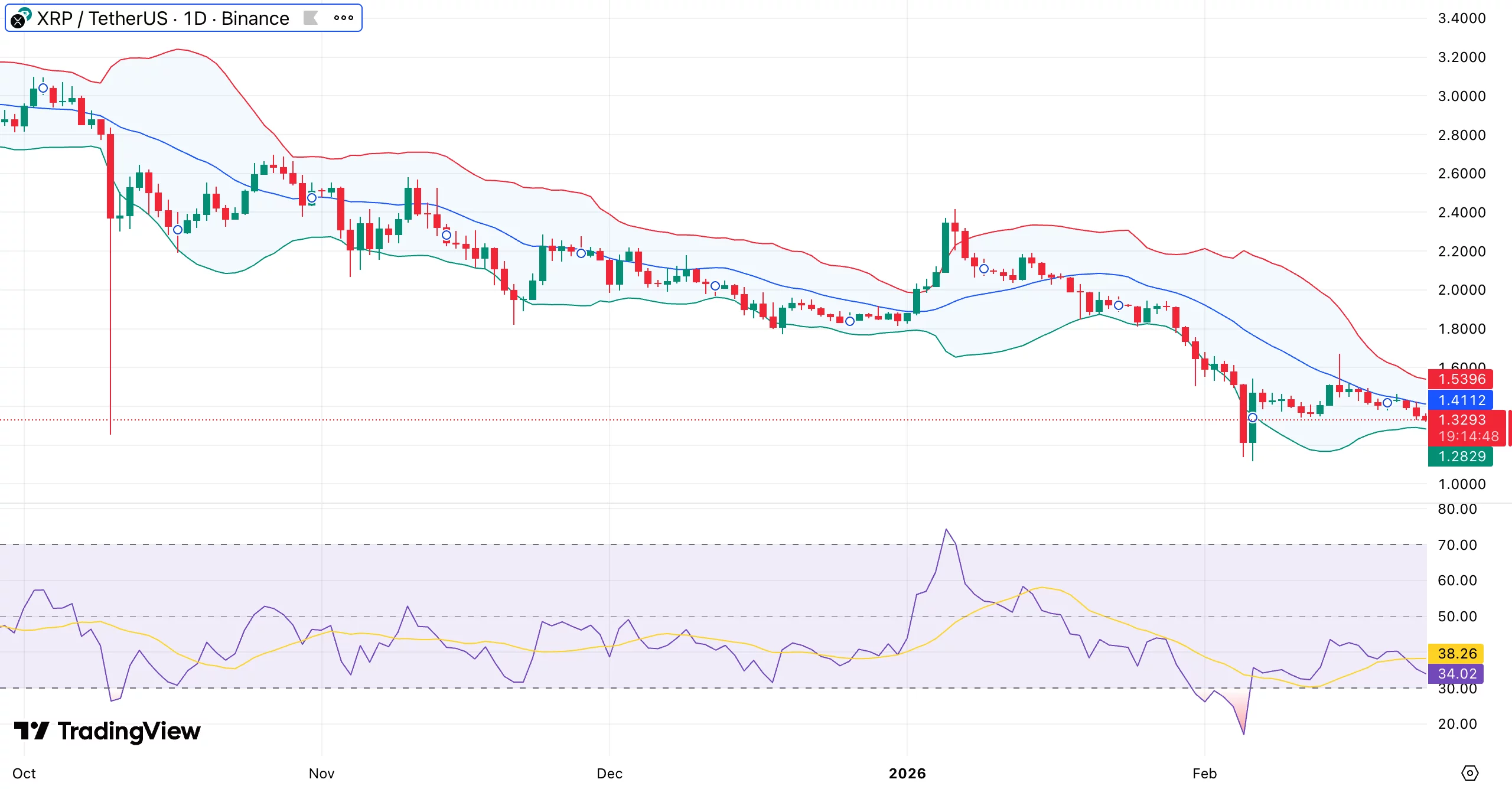
XRP price is hovering near $1.30 as leverage on Binance hits cycle lows, putting focus on a potential breakout.
Summary
- XRP is trading near the lower end of its recent range with leverage at cycle lows.
- Derivatives positioning has cooled, reducing liquidation risk.
- A breakout above $1.50 or breakdown below $1.30 could decide the next move.
XRP was trading at $1.33 at press time, down 1.2% over the past 24 hours. The token is hovering at the bottom of its 7-day range between $1.33 and $1.49.
XRP is in the red across all major timeframes, down 10% over the past week, 30% in the last month, and nearly 50% over the past year. It has now retraced about 63% from its July 2025 all-time high of $3.65.
Spot activity has picked up despite the weak price action. XRP (XRP) recorded $3.13 billion in 24-hour trading volume, up 40.4% from the previous day.
Derivatives data from CoinGlass shows futures volume up 38.3% to $5.37 billion, while open interest slipped 3.7% to $2.29 billion, suggesting leverage is being reduced even as trading activity rises.
Binance leverage resets as speculative excess fades
A Feb. 23 report by CryptoQuant contributor PelinayPA shows XRP’s Estimated Leverage Ratio has dropped sharply to about 0.16, with both the 30-day and 50-day moving averages trending down.
This decline means that speculative positioning has cooled off. Forced liquidations have largely run their course, and neither longs nor shorts appear crowded. The derivatives market looks balanced rather than stretched.
The focus on Binance is significant. Binance is the main hub for XRP derivatives. Leverage shifts there often reflect global risk appetite. A sharp drop usually means risky positions have been cleared across the market.
Interestingly, price has continued drifting lower while leverage falls. That combination can be constructive. High leverage increases the risk of cascading liquidations. A low-leverage environment, by contrast, reduces forced selling pressure and creates cleaner conditions for larger players to build positions.
For now, XRP appears stuck in what is commonly called a “dead zone,” a phase marked by sideways-to-down movement, contracting volatility, and fading leverage.
XRP price technical analysis
On the daily chart, XRP is forming lower highs and lower lows, but downward momentum has eased. Immediate support is around $1.30, a level that has held several times.
On the upside, $1.41 acts as the first resistance. A more critical barrier lies between $1.50 and $1.53, where the 30-day and 50-day moving averages cluster. Trading below both, which are sloping down, keeps the medium-term bias bearish.
The relative strength index is near oversold, hovering around 35, and the MACD is still bearish, despite the shrinking histogram suggesting that selling pressure is cooling. Low volatility is indicated by tightening Bollinger bands, a condition which often precedes sharp moves.
A move above $1.50–$1.53 with rising volume could shift momentum and open the door toward $1.60, potentially triggering a fresh build-up in leverage. Failure to reclaim resistance, followed by a daily close below $1.30, may lead to a slide toward $1.20.

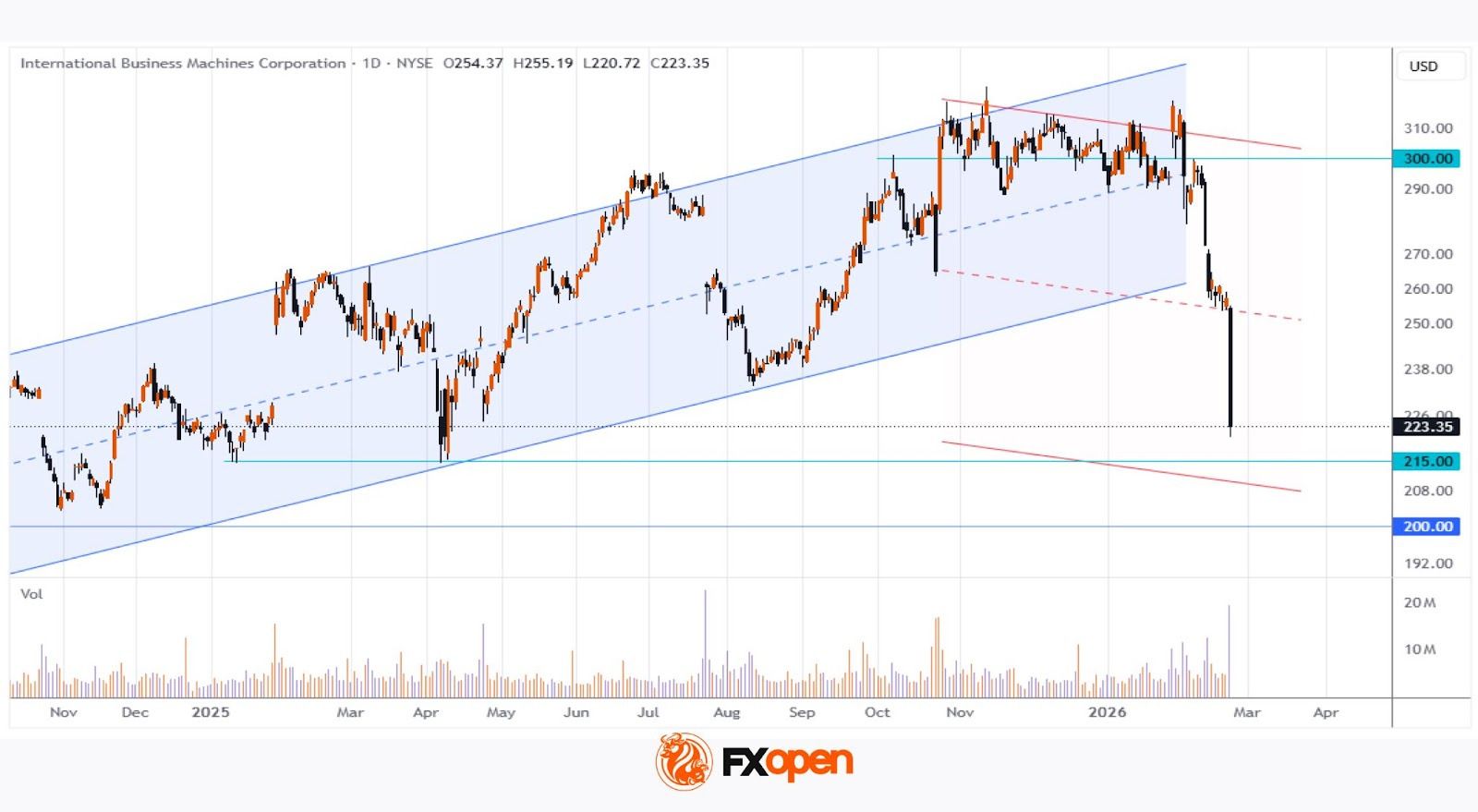
Yesterday, shares in IBM Corporation opened above $254 but closed below $224. By some estimates, this marked the company’s largest single-day decline in the past 25 years. Since the start of February, the stock has fallen by roughly 27%, its worst monthly performance since 1968.
Why Did IBM’s Share Price Drop?
The main trigger was an announcement by Anthropic about the launch of a new AI tool, Claude Code, designed to modernise legacy COBOL code.
This is particularly significant for IBM, as much of “Big Blue’s” business is tied to mainframes processing transactions for banks and government institutions in COBOL. Traditionally, upgrading such systems required “armies of consultants” and multi-billion-dollar budgets.
The new AI solution promises to automate this process, making it faster and more cost-effective. This not only poses a direct threat to IBM’s services and support revenues, but also reignites concerns that AI could reshape the entire technology sector, rendering established business models less sustainable.
Technical Analysis of IBM Shares
Throughout 2025, IBM stock traded within an ascending channel, but the psychological $300 level proved to be strong resistance. The price attempted to secure a foothold above it for several months, without success. The earnings release on 28 January turned into a bull trap and marked the beginning of an extraordinary sell-off, accompanied by rising volume on bearish candles — a sign of market weakness.
At the same time, several major analysts (including those at Goldman Sachs and Jefferies) have maintained or reiterated their “Buy” ratings. Their optimism is based on the view that panic surrounding Anthropic’s tool may be overstated, while IBM’s financial fundamentals remain solid.
Although the sharp downward momentum may continue in the near term, a support zone could emerge where several technical levels converge:
→ the psychological $200 mark;
→ the 2025 low around $215;
→ the lower boundary of an increasingly clear channel (shown in red).
Buy and sell stocks of the world’s biggest publicly-listed companies with CFDs on FXOpen’s trading platform. Open your FXOpen account now or learn more about trading share CFDs with FXOpen.
This article represents the opinion of the Companies operating under the FXOpen brand only. It is not to be construed as an offer, solicitation, or recommendation with respect to products and services provided by the Companies operating under the FXOpen brand, nor is it to be considered financial advice.


Decentralized finance (DeFi) portfolio tracker Step Finance said it will wind down operations effective immediately.
The Solana-based platform was subject to a hack at the end of January, which saw 261,854 SOL, worth roughly $27 million at the time, stolen.
Step said it was unable to secure a viable outcome following the hack after it “explored every possible path forward, including financing and acquisition opportunities,” in a post on X on Monday.
The project is working on a buyback for holders of native token STEP based on a snpashot of holdings and value prior to the incident.
STEP lost nearly 96% of its value following the incident, and is a further 36% lower in the last 24 hours after the closure announcement.
Step Finance was founded in 2021 and offered an aggregation of yield farms, liquidity provider (LP) tokens and other DeFi positions from a single platform.
Affiliate projects SolanaFloor, a Solana-focused media outlet, and tokenization platform Remora Markets, will also close.

TLDR:
- Ethereum Foundation stakes 70,000 ETH to generate yield for ecosystem operations.
- Validators use Dirk and Vouch for distributed signing and client diversity risk mitigation.
- Type 2 withdrawal credentials allow flexible balance management across validator accounts.
- EF launches a dedicated DeFi team to expand ecosystem projects and protocol research.
Ethereum Foundation Treasury Staking Initiative marks a new phase in the organization’s capital management strategy.
The Ethereum Foundation has started staking part of its treasury in line with its previously announced Treasury Policy.
On February 24, 2026, the Foundation confirmed a 2,016 ETH deposit. It also stated that about 70,000 ETH will be staked, with rewards directed back into the treasury to support ongoing operations.
Treasury Deployment and Validator Configuration
Through a post shared by the Ethereum Foundation’s official account, the organization confirmed the rollout of its Treasury Staking Initiative.
The update stated that approximately 70,000 ETH will be committed to staking. Rewards generated from validators will return to the Ethereum Foundation treasury.
The Ethereum Foundation selected open-source tools developed by Attestant. Dirk will function as a distributed signer across several geographic regions. This structure reduces single points of failure and supports validator continuity during localized disruptions.
Vouch will coordinate multiple Beacon and Execution client pairings. Its configuration strategies are designed to reduce client diversity risk. The Ethereum Foundation confirmed the use of minority clients to strengthen network resilience.
Infrastructure will combine hosted services with self-managed hardware across multiple jurisdictions. This approach distributes operational responsibility.
It also aligns with the Foundation’s stated objective of maintaining geographic and technical diversity within its validator set.
Validator Credentials and Operational Structure
The Ethereum Foundation confirmed that validators use Type 2 (0x02) withdrawal credentials. These credentials allow validator balances to move between accounts through consolidations. As a result, signing-key custody can be adjusted more efficiently.
Each validator can hold a maximum effective balance of 2,048 ETH. This configuration lowers the total number of required signing keys to about 35. Reduced key management simplifies operational oversight without changing staking exposure.
Like 0x01 credentials, exits can be triggered by the withdrawal address even if validators are offline. This setup provides additional operational flexibility. It ensures withdrawal authority remains independent from validator uptime.
The Ethereum Foundation also stated it will build blocks locally instead of using proposer-builder separation sidecars.
By participating directly in consensus through solo staking, the Ethereum Foundation earns ETH-denominated yield.
The organization confirmed that staking rewards will help fund protocol research, ecosystem development, and community grants while operating within Ethereum’s native economic framework.


Software stocks have faced notable market headwinds amid growing investor fears regarding artificial intelligence disruption.
The broader equity pullback is also raising concerns for Bitcoin (BTC), which has closely tracked software stocks.
Why Are Software Stocks Down?
According to the Global Markets Investor, the iShares Expanded Tech-Software Sector ETF (IGV) has fallen 15% in February alone, putting it on pace for its worst monthly performance since 2008. The ETF is now testing its April 2025 lows and sits roughly 35% below its peak.
“Software stocks are having their WORST month since the Great Financial Crisis,” the post read.
Artificial intelligence sits at the center of the recent drawdown, with investors selling shares of companies perceived as vulnerable to disruption by advancing AI tools. Two major developments in recent days have accelerated the downturn.
On February 20, Anthropic introduced “Claude Code Security,” a new capability embedded within Claude Code. The tool scans codebases for security vulnerabilities and recommends targeted patches for human review, aiming to detect and fix issues that traditional security tools may overlook.
The announcement triggered an immediate reaction across cybersecurity stocks. According to The Kobeissi Letter, CrowdStrike erased $20 billion in market value within two trading sessions. Furthermore, IBM shares fell more than 10%.
“The software selloff continues, w/cybersecurity stocks particularly hard hit following the release of Anthropic’s Claude Code Security due to fears that this code-focused tool will change the industry. This indicates that there is nowhere to hide when it comes to software stocks. Even the Goldman Sachs basket of supposedly AI-immune software stocks has come under heavy pressure recently,” said Holger Zschaepitz, Senior Editor at the Economic and Financial desk of the German daily Die Welt and its Sunday edition Welt am Sonntag.
Pressure intensified again on Monday after Citrini Research published a report. The report presents a hypothetical scenario set in June 2028 in which AI automation drives higher corporate profits.
At the same time, it models significant disruption to white-collar employment, weaker consumer demand, rising credit stress, and structural economic challenges.
“What follows is a scenario, not a prediction. The sole intent of this piece is modeling a scenario that’s been relatively underexplored. Hopefully, reading this leaves you more prepared for potential left tail risks as AI makes the economy increasingly weird,” the report read.
Following the report’s release, shares of delivery, payments, and software companies moved lower.
Rising Tech Volatility Tightens Grip on Bitcoin
The impact is not confined to traditional equity markets. Grayscale observed that Bitcoin’s price action closely mirrored US software stocks during the latest wave of selling.
Several market participants have highlighted the correlation between US software stocks and Bitcoin. This suggests that, rather than behaving as a hedge, Bitcoin has at times traded like a high-beta extension of the tech sector.
Thus, if software stocks continue to weaken, Bitcoin may also remain under pressure. Prolonged weakness in high-growth equities can contribute to tighter financial conditions through wealth effects, higher equity risk premia, increased volatility, and systematic deleveraging across high-beta assets, including cryptocurrencies.
However, a divergence remains possible. If investors begin to view Bitcoin as a monetary hedge against structural AI-driven labor disruption, currency debasement, or policy responses such as aggressive stimulus, its correlation with software equities could weaken.


Canaan Inc. (CAN), a manufacturer of bitcoin mining hardware and an operator of crypto mining infrastructure, said it bought a 49% equity interest in a joint venture tied to several mining projects in West Texas from Cipher Mining (CIFR) for $39.75 million in stock.
The transaction covers Cipher’s stake in the ABC Projects, which include Alborz LLC, Bear LLC and Chief Mountain LLC. The rest of the venture is owned by WindHQ, according to a Monday statement.
The purchase was funded through the issuance of 806.4 million Class A ordinary shares, equivalent to 53.8 million American depositary shares, and makes Cipher, a U.S.-based bitcoin mining company that develops and operates large-scale data centers, a major shareholder in Singapore-based Canaan. The shares are subject to a six-month lock-up.
Canaan shares fell 6% on Monday, while Cipher shares rose 4%. Cipher is scheduled to report fourth-quarter earnings before the market opens on Feb. 24.
The sites collectively operate 120 megawatts of energized power capacity and support approximately 4.4 exahashes per second (EH/s) of hashrate. Fleet efficiency stands at roughly 25.7 joules per terahash (J/TH).
As part of the agreement, Canaan also purchased 6,840 Avalon A15Pro mining rigs that were previously deployed at Cipher’s Black Pearl facility, which is being converted into an AI and high-performance computing data center.
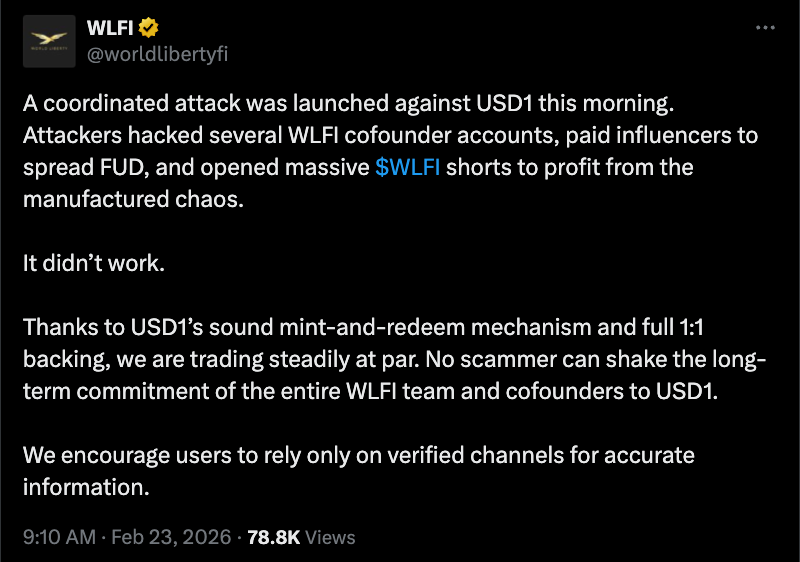
World Liberty Financial, the crypto company backed by US President Donald Trump and his sons, reported being targeted by hackers, “paid influencers” and short sellers in an effort to “manufacture chaos” against the USD1 stablecoin.
In a Monday X post, World Liberty said the attack, which happened earlier in the day, failed after hackers targeted “several WLFI cofounder accounts,” opened “massive shorts” against the company’s WLFI token, and “paid influencers to spread FUD [fear, uncertainty, and doubt].”
The price of WLFI dipped by about 7% amid the “manufactured chaos,” according to the company, but was trading at $0.1128 at the time of publication. USD1 similarly dropped to about $0.994, briefly losing its peg to the US dollar, before returning to more than $0.999.
“Thanks to USD1’s sound mint-and-redeem mechanism and full 1:1 backing, we are trading steadily at par,” said World Liberty. No scammer can shake the long-term commitment of the entire WLFI team and cofounders to USD1.”

The attack came just days after a World Liberty-organized crypto forum at Trump’s private Mar-a-Lago resort in Florida, which included speakers from the US government, crypto and banking industries, and former Binance CEO Changpeng Zhao, whom the president pardoned in October 2025. Forbes reported on Feb. 9 that Binance holds about 87% of the USD1 in circulation, worth about $4.7 billion at the time.
Related: OCC Comptroller says WLFI charter review will remain apolitical
Ties between WLFI and Binance are still under scrutiny
Some US lawmakers are questioning potential connections between World Liberty and Binance entities after Trump’s pardon of Zhao.
The former CEO had been barred from a leadership role at Binance as a result of a 2023 deal with US authorities in which he later served four months in prison, but the presidential pardon would effectively allow him to legally return. Zhao said in January that there were “no business relationships whatsoever” between himself and the Trump family, and he did not intend to return to lead Binance.
Both Bloomberg and The Wall Street Journal have reported that Binance helped create USD1. The stablecoin was also used to settle a $2 billion investment by UAE-based company MGX into Binance in March 2025, leading to conflict of interest accusations due to WLFI’s ties to the president’s family.
Magazine: Bitcoin’s ‘biggest bull catalyst’ would be Saylor’s liquidation: Santiment founder


France saw 40+ crypto kidnappings since 2023 amid a 75% wrench‑attack surge, driven by overseas‑coordinated gangs targeting visible wealth.
Summary
- French police memo links 40+ kidnappings between Jul 2023–Dec 2025 to crypto motives, with organizers operating from abroad via local recruiters.
- Victims are mostly 20–35‑year‑old male investors, entrepreneurs, or influencers monitored through social media before kidnappings or home invasions.
- CertiK reports 72 wrench attacks in 2025, up 75% YoY, with losses above $40.9m and physical assaults jumping 250%.
More than 40 cryptocurrency-related kidnappings occurred in France between July 2023 and the end of 2025, with evidence pointing to overseas organizers coordinating the crimes, according to French law enforcement authorities.
A confidential report from the Organized Crime Information, Intelligence and Strategic Analysis Service of the Judicial Police (SIRASCO) revealed the findings, French news outlet Franceinfo reported.
The kidnappings are typically orchestrated by organizers based abroad who coordinate with recruiters in France, according to the report. The recruiters connect the organizers with young individuals who have criminal records and carry out online intimidation and physical attacks.
Victims are typically men between the ages of 20 and 35 who are involved with digital assets as investors, entrepreneurs or influencers, the report stated. Many victims display their wealth on social media platforms, enabling kidnappers to monitor their daily routines and those of their family members, who are also targeted.
Physical attacks against cryptocurrency holders now constitute a “structural threat” to digital asset ownership, according to blockchain security firm CertiK. The firm reported earlier this month that “wrench attacks” — incidents in which criminals use violence, intimidation or confinement to force cryptocurrency holders to reveal private keys or passwords — increased by 75% last year.
CertiK documented 71 incidents in 2025 that resulted in significant losses, representing a 44% year-on-year increase, the firm stated.
Kidnapping represents the most common form of wrench attack, according to CertiK. The blockchain security firm also reported that physical assaults rose by 250% last year, indicating what it described as “a clear escalation in brutality.”

Raising capital in Web3 is no longer about choosing the loudest marketing channel or the fastest investor. In 2026, successful token launches are built on strategic capital design, investor quality, regulatory readiness, and long-term ecosystem growth.
Founders planning serious fundraising rounds are facing a critical decision. Should they rely on influencer-led community growth or pursue traditional venture capital backing? For growth-stage Web3 startups, this decision directly affects valuation, governance control, token stability, and market credibility. This guide explains both models in depth, compares their real-world impact, and shows why structured ICO development services are essential for designing scalable, compliant, and investor-ready fundraising systems in 2026.
Why Fundraising Strategy Matters More Than Ever in 2026
The Web3 funding landscape has matured. Investors are more selective. Regulators are more active. Communities are more skeptical. Token buyers expect transparency, utility, and governance frameworks. In earlier cycles, hype alone could drive millions in funding. That era is over. Today’s high-performing projects focus on:
- Sustainable capital inflows
- Institutional credibility
- Community retention
- Regulatory compliance
- Long-term token economics
A poorly designed fundraising approach now leads to weak liquidity, investor exits, governance disputes, and brand erosion. For founders targeting multi-million-dollar raises, the funding strategy is no longer a marketing decision. It is a business architecture decision.
Get your personalized ICO fundraising strategy.
Understanding Influencer-Led ICO Outreach
Influencer marketing in Web3 has evolved from casual promotions to structured community acquisition systems. Leading projects now collaborate with ecosystem leaders, analysts, educators, and regional community builders to build credibility, technical awareness, and long-term engagement. When aligned with professional ICO development services, influencer campaigns become scalable growth channels rather than short-term promotional tactics.
How Do Influencer Campaigns Work Today?
Modern influencer-driven ICO campaigns include
- Multi-platform educational content
- Private investor communities
- Regional ambassador programs
- Technical walkthrough sessions
- Live governance discussions
This approach focuses on building distributed awareness, informed participation, and early adoption across multiple market segments.
Advantages of Influencer-Led Fundraising
- Faster Market Entry: Campaigns can be launched within weeks, not months.
- Organic Community Formation: High-quality influencers bring engaged users rather than passive followers.
- Global Reach: Projects can penetrate multiple regions simultaneously.
- Early Liquidity Support: Strong communities support post-launch trading activity.
Limitations and Risks
However, influencer-led models carry risks:
- Inconsistent investor quality
- Short-term speculation
- Brand dependency on personalities
- Reputation exposure
- Compliance uncertainties
Without strong governance and token design, influencer-driven raises often suffer from volatility, reduced investor confidence, and long-term retention problems.
Understanding Venture Capital Funding for ICOs
Venture capital remains a dominant force in institutional crypto investment. Top-tier funds bring capital and strategic networks, governance expertise, regulatory guidance, and long-term market credibility. For many projects, VC backing also signals operational maturity, technical readiness, and serious commitment to sustainable growth, especially when supported by structured ICO development frameworks.
How Does VC-Led ICO Funding Work?
VC-backed projects usually follow this sequence:
- Private seed round
- Strategic investment round
- Advisory onboarding
- Token allocation agreements
- Gradual public exposure
This model prioritizes long-term institutional alignment, disciplined capital deployment, and controlled market entry, helping projects avoid premature volatility and reputational risks.
Advantages of VC Funding
- High Credibility: Institutional backing improves investor trust.
- Strategic Guidance: VCs provide operational and regulatory support.
- Network Access: Portfolio synergies accelerate partnerships.
- Stable Capital Base: Funds usually commit long-term capital.
Limitations and Trade-Offs
VC funding also introduces challenges:
- Dilution of founder control
- Extended negotiation timelines
- Token discount pressure
- Governance constraints
- Exit-driven decision-making
For many founders, the biggest concern is losing strategic autonomy, creative flexibility, and long-term influence over product direction and community governance.
Influencer vs VC: A Strategic Comparison
| Factor | Influencer Model | VC Model |
|---|---|---|
| Speed | High | Moderate |
| Capital Stability | Medium | High |
| Community Depth | High | Medium |
| Governance Control | High | Low |
| Brand Risk | Medium | Low |
| Brand Risk | Medium | Low |
| Valuation Impact | Variable | Predictable |
| Compliance Support | Low | High |
This comparison highlights that neither model is universally superior. The optimal choice depends on project maturity, market positioning, and long-term objectives, which is why many founders rely on professional ICO development services to design scalable and investor-ready fundraising frameworks.
Get expert guidance to structure, launch, and scale your ICO
The Real Problem: Why Most Projects Fail at Fundraising
Across hundreds of token launches, recurring failure patterns emerge. These mistakes are rarely caused by technology alone. Instead, they stem from poor strategic planning, misaligned fundraising priorities, weak execution frameworks, and the absence of experienced guidance during critical growth stages.
- Fragmented Capital Strategy: Projects pursue influencers and VCs independently, without alignment. This results in conflicting narratives, inconsistent investor expectations, and diluted market positioning.
- Weak Tokenomics Architecture: Poor supply design, vesting schedules, and incentive models undermine investor confidence and long-term ecosystem stability.
- No Institutional Readiness: Lack of documentation, compliance planning, and governance frameworks discourages serious capital and limits institutional participation.
- Marketing Without Infrastructure: Promotion is launched before the technical and operational foundations are complete, leading to erosion of trust and reduced conversion.
- Absence of Long-Term Liquidity Planning: Projects focus on the raise, not on post-launch market health, price stability, or investor retention.
This is where professional ICO development becomes essential.
Why High-Growth Projects Choose Hybrid Fundraising Models
In 2026, the most successful token launches use hybrid frameworks that integrate influencer reach with institutional capital.
What Do Hybrid Models Look Like?
A structured hybrid approach includes:
- Early institutional validation
- Controlled influencer onboarding
- Phased community expansion
- Strategic private rounds
- Governance-ready token design
This model delivers both speed and stability.
Benefits of Hybrid Fundraising
- Balanced investor portfolio
- Reduced volatility
- Stronger valuation defense
- Regulatory resilience
- Scalable governance
Hybrid systems are increasingly built through end-to-end ICO development frameworks rather than isolated marketing efforts.
How to Choose the Right Fundraising Strategy for Your Project
Founders should evaluate five core dimensions before selecting a fundraising model. A clear assessment across these areas helps determine whether influencer, VC, or hybrid approaches can be effectively supported through professional ICO development services.
Product Readiness: Is your protocol fully audited, thoroughly documented, security-tested, and scalable for long-term adoption?
- Market Timing: Does your solution align with current demand cycles, investor sentiment, and emerging industry trends?
- Capital Requirements: Are you raising primarily for product development, ecosystem expansion, strategic partnerships, or long-term liquidity?
- Governance Vision: Do you plan decentralized community control, structured DAO governance, or centralized leadership during early growth?
- Regulatory Exposure: Which jurisdictions will you operate in, and how will compliance requirements impact token distribution and investor participation?
Your answers determine whether influencer, VC, or hybrid models are optimal and how effectively they can be executed through a structured ICO development framework.
Final Verdict: Which Strategy Wins in 2026?
The evidence is clear.
- Influencer-led models deliver speed and community.
- VC-backed models deliver stability and credibility.
- Hybrid systems deliver scalable dominance.
Projects that succeed in 2026 do not choose between marketing and capital. They design unified fundraising ecosystems supported by professional infrastructure and end-to-end ICO development services that align growth, governance, and compliance from day one. This is where experienced partners like Antier play a critical role. We help founders build investor-ready frameworks that scale beyond the raise and sustain long-term ecosystem value by treating fundraising as a strategic asset rather than a short-term campaign. Start building your investor-ready ICO strategy today. Book a consultation and turn your fundraising vision into scalable success.
Frequently Asked Questions
01. What factors are crucial for successful token launches in 2026?
Successful token launches in 2026 rely on strategic capital design, investor quality, regulatory readiness, and long-term ecosystem growth.
02. How has the Web3 funding landscape changed for founders?
The Web3 funding landscape has matured, with investors becoming more selective, regulators more active, and communities more skeptical, making fundraising strategies critical for business architecture rather than just marketing.
03. What role do influencer-led campaigns play in modern ICO fundraising?
Influencer-led campaigns in modern ICO fundraising focus on structured community acquisition through educational content, private investor communities, and regional ambassador programs, enhancing credibility and long-term engagement.
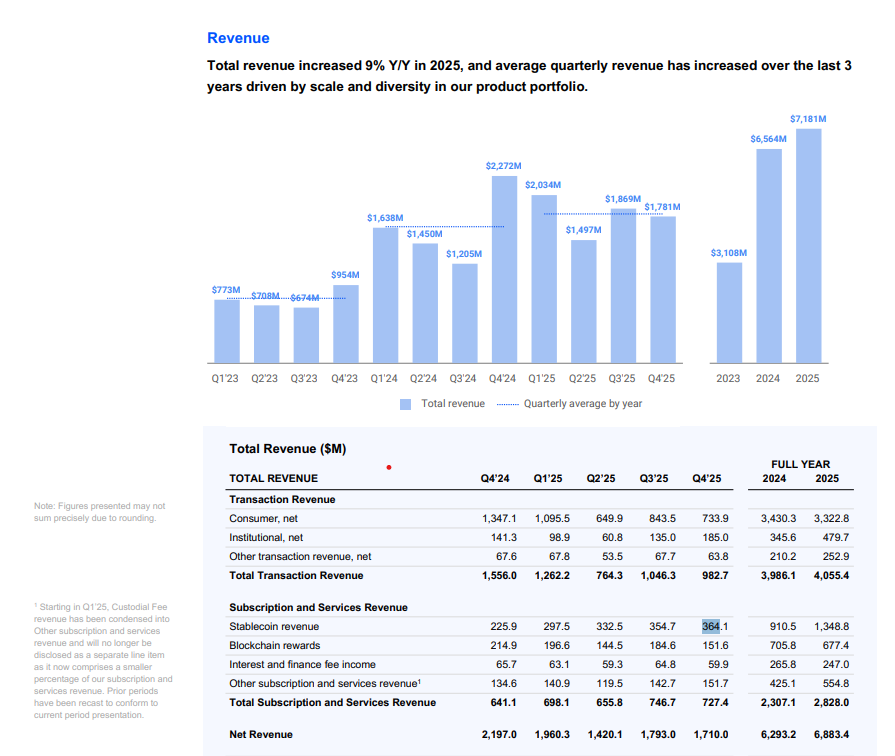
Bloomberg Intelligence estimates that Coinbase’s stablecoin revenue, which is largely tied to its USDC revenue share with Circle and already about 19% of total revenue in 2025, could grow by two to seven times if USDC adoption in payments accelerates.
Despite reporting a net loss of $667 million in the fourth quarter of 2025, according to Coinbase’s Q4 2025 shareholder letter, the company netted around $1.35 billion in stablecoin revenue last year.
That figure was up from $911 million in 2024, with $364 million in stablecoin revenue in Q4 2025 alone, as interest income on USDC (USDC) balances became a high-margin line for the exchange compared to volatile trading fees.
Stablecoins themselves have gone mainstream in usage terms. The total stablecoin transaction volume hit a record $33 trillion in 2025, with USDC accounting for about $18.3 trillion of that, ahead of Tether’s USDt (USDT) by transaction value, even though Tether still leads on market cap.

Politics of stablecoin yield
That growth is exactly why the politics around stablecoin yield have become so fraught. The Guiding and Establishing National Innovation for US Stablecoins (GENIUS) Act, signed by US President Donald Trump in July 2025, created a federal regime for payment stablecoins and explicitly bars issuers from paying interest or yield to holders.
Related: Who gets the yield? CLARITY Act becomes fight over onchain dollars
That provision is backed by the banking lobby because yield‑bearing stablecoins could siphon deposits from the traditional system.
Banks and their allies now want to go further in the Senate’s Digital Asset Market Clarity (CLARITY) Act of 2025 negotiations by closing what they see as a loophole that still allows non‑issuer affiliates, such as exchanges like Coinbase, to pass some of the interest on reserves back to customers as “rewards.”
Draft Senate language of the market structure bill could extend the yield ban and prevent Coinbase from offering any rewards tied to stablecoin balances.
In January, Coinbase withdrew support for the bill after objecting to provisions that would restrict its ability to offer stablecoin rewards to customers.
Coinbase earns a share of interest income from USDC reserves through its partnership with Circle, and the companies split that revenue based on USDC distribution.
Ironically, Armstrong told investors that if Congress bans rewards, the company would simply keep more of the Circle revenue share, making the stablecoin line more profitable, despite users losing out on yield.
Cointelegraph reached out to Coinbase but had not received a response by publication time.
What’s next for CLARITY?
The CLARITY Act, which bundles a Commodity Futures Trading Commission (CFTC) and Securities and Exchange Commission (SEC) split with tougher language on third‑party stablecoin yield, is currently working its way through the Senate.
Senator Bernie Moreno has said he expected the CLARITY Act to clear Congress as soon as April.
With stablecoins already accounting for nearly a fifth of Coinbase’s revenue and onchain dollar volumes hitting record highs, the eventual shape of those yield rules may matter more for Coinbase’s business model than the next crypto price cycle.
Magazine: Bitcoin may take 7 years to upgrade to post-quantum — BIP-360 co-author
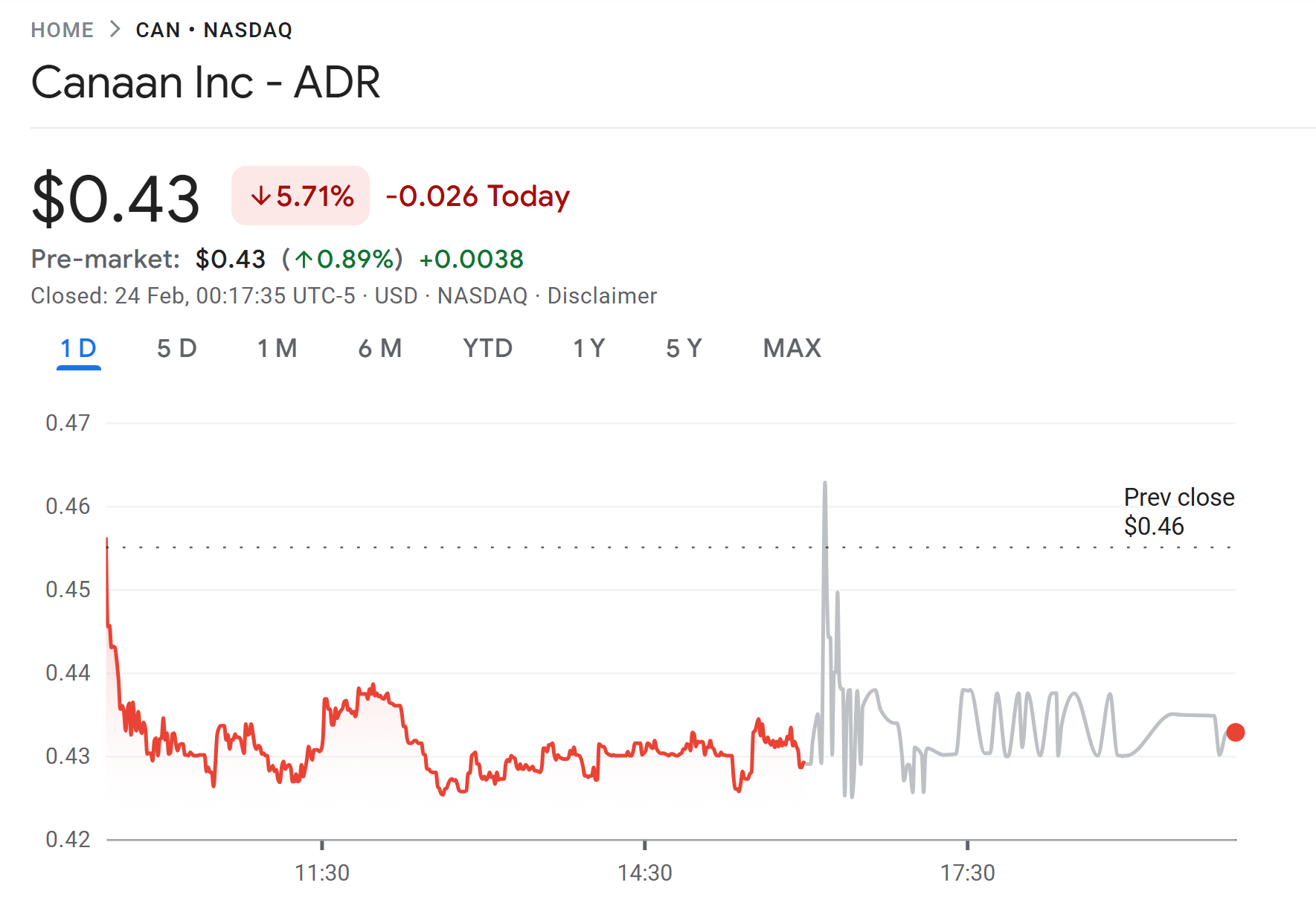
Bitcoin mining hardware maker Canaan has purchased Cipher Mining’s 49% interest in a trio of Texas mining projects for $39.75 million, expanding its mining interests.
The transaction covers joint venture entities Alborz LLC, Bear LLC and Chief Mountain LLC, together known as the “ABC Projects,” according to a Monday announcement. After the deal, Canaan holds a 49% stake while partner WindHQ, a renewable energy infrastructure company, retains 51%.
“By increasing our exposure to high-quality, low-cost operational power assets in Texas, we are aligning our proprietary technology with critical infrastructure to drive long-term efficiency and scale,” said Nangeng Zhang, chairman and chief executive officer of Canaan.
The three facilities are already operational, with a combined 120 megawatts of power capacity and about 4.4 exahashes per second (EH/s) of hashrate. Canaan also acquired 6,840 Avalon A15Pro mining rigs from Cipher. Those machines were previously deployed at Cipher’s Black Pearl location, which is being converted into an artificial intelligence and high-performance computing (AI-HPC) data center.
Related: Bitcoin mining difficulty rebounds 15% as US miners recover from winter outages
Canaan funds deal with $40 million share issuance
The purchase was financed through shares. Canaan issued 806,439,900 Class A shares, equal to 53,762,660 American Depositary Shares (ADS), priced at $0.7394 per ADS and subject to a six-month lockup.
According to the announcement, the Texas sites benefit from electricity costs below $0.03 per kilowatt-hour and include wind-powered generation and grid demand-response capabilities within the ERCOT power market. “ABC Projects feature industry-leading power pricing and offer a strong foundation for growth,” Zhang added.

Canaan reported a strong fourth quarter of 2025, with revenue rising 121.1% year-on-year to $196.3 million, as hardware shipments and mining output improved. Bitcoin (BTC) mining revenue climbed 98.5% to $30.4 million, increasing its treasury to 1,750 BTC. It shipped a record 14.6 EH/s of computing power and expanded installed hashrate to 9.91 EH/s, supported by a large institutional order in the United States.
Related: Bitcoin miners chase 30 GW AI capacity to offset hashprice pressure
Bitcoin miners turn to AI as margins tighten
Bitcoin mining companies are increasingly branching into AI and cloud computing as profitability pressures mount. Last week, MARA Holdings acquired a 64% stake in French infrastructure company Exaion, giving the company a foothold in AI services.
The move came amid a broader industry trend. Companies including Hive, Hut 8, TeraWulf and Iren are converting mining facilities and power capacity into data-center operations, and some players such as CoreWeave have already transitioned fully into AI infrastructure.
Canaan also said the new acquisitions align with its initiative to stabilize power grids amid rising data center demand.
Magazine: Bitcoin may take 7 years to upgrade to post-quantum — BIP-360 co-author

The House Article | Wales must not be railroaded into accepting the assisted dying bill
Vikings Defender Hires “The Shark” for Free Agency

The US military will reportedly use Elon Musk’s Grok AI in its classified systems


-

 Video4 days ago
XRP News: XRP Just Entered a New Phase (Almost Nobody Noticed)
-

 Fashion4 days ago
Weekend Open Thread: Boden – Corporette.com
-

 Politics2 days ago
Baftas 2026: Awards Nominations, Presenters And Performers
-

 Sports16 hours ago
Women’s college basketball rankings: Iowa reenters top 10, Auriemma makes history
-

 Politics17 hours ago
Nick Reiner Enters Plea In Deaths Of Parents Rob And Michele
-

 Business6 days ago
Infosys Limited (INFY) Discusses Tech Transitions and the Unique Aspects of the AI Era Transcript
-

 Entertainment6 days ago
Kunal Nayyar’s Secret Acts Of Kindness Sparks Online Discussion
-

 Tech6 days ago
Retro Rover: LT6502 Laptop Packs 8-Bit Power On The Go
-
 Sports5 days ago
Clearing the boundary, crossing into history: J&K end 67-year wait, enter maiden Ranji Trophy final | Cricket News
-

 Business2 days ago
Mattel’s American Girl brand turns 40, dolls enter a new era
-

 Business2 days ago
Law enforcement kills armed man seeking to enter Trump’s Mar-a-Lago resort, officials say
-

 Entertainment6 days ago
Dolores Catania Blasts Rob Rausch For Turning On ‘Housewives’ On ‘Traitors’
-
 NewsBeat1 day ago
‘Hourly’ method from gastroenterologist ‘helps reduce air travel bloating’
-

 Business6 days ago
Tesla avoids California suspension after ending ‘autopilot’ marketing
-

 Tech2 days ago
Anthropic-Backed Group Enters NY-12 AI PAC Fight
-

 NewsBeat2 days ago
Armed man killed after entering secure perimeter of Mar-a-Lago, Secret Service says
-

 Politics2 days ago
Maine has a long track record of electing moderates. Enter Graham Platner.
-

 Crypto World6 days ago
WLFI Crypto Surges Toward $0.12 as Whale Buys $2.75M Before Trump-Linked Forum
-

 Crypto World5 days ago
83% of Altcoins Enter Bear Trend as Liquidity Crunch Tightens Grip on Crypto Market
-
 Sports24 hours ago
2026 NFL mock draft: WRs fly off the board in first round entering combine week