

Crypto World
XRP bucks trend with $3.5m inflows as crypto funds bleed

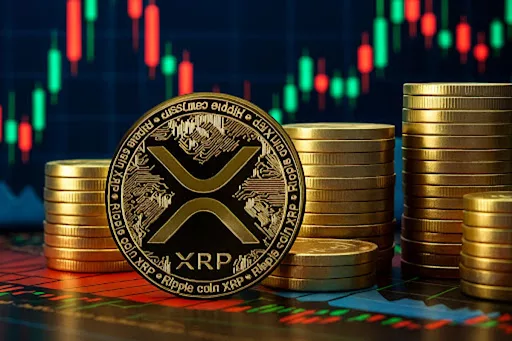
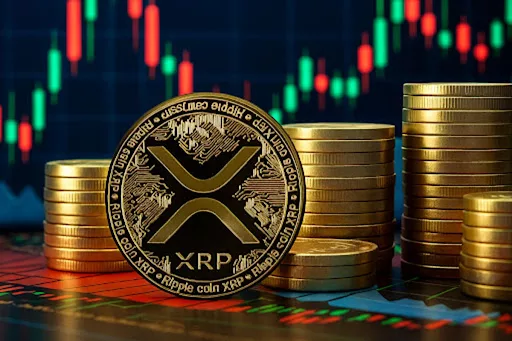
XRP products gained ~$3.5m last week while crypto funds lost ~$288m.
Summary
- Crypto investment products saw ~$288m in weekly outflows, extending a five-week streak that has pulled about $4b from digital asset funds amid the lowest trading volumes since mid‑2025.
- BTC products lost ~$215m last week, taking YTD outflows to ~$1.3b, while ETH, TRX and multi‑asset products saw ~$36.5m, ~$18.9m and ~$32.5m exit respectively; short‑BTC vehicles drew ~$5.5m in fresh capital.
- XRP drew ~$3.5m of inflows on the week and ~$33.4m the week before, lifting month‑to‑date and YTD inflows to about $105m and $151m; SOL added ~$3.3m and LINK ~$1.2m over the same period.
XRP (XRP)-linked investment products attracted approximately $3.5 million in net capital inflows last week, even as broader cryptocurrency products experienced outflows totaling $288 million, according to the latest CoinShares weekly flow report.
The data marks the fifth consecutive week of net withdrawals from crypto investment vehicles, pushing cumulative outflows to approximately $4 billion over this period, the report stated. Trading volumes have declined to their lowest levels since July 2025.
The United States represented the largest source of global outflows, with investors withdrawing $347 million in a single week, according to the report. In contrast, Switzerland recorded $19.5 million in inflows, Canada added $16.8 million, and Germany attracted $16.2 million, totaling approximately $59 million in combined inflows.
Bitcoin-linked investment products recorded $215 million in outflows during the week, pushing year-to-date withdrawals to around $1.3 billion, the data showed. Ethereum-related products experienced $36.5 million in weekly outflows, while Tron-related products recorded $18.9 million in outflows and multi-asset products saw $32.5 million exit. Short-Bitcoin products attracted $5.5 million in inflows, according to CoinShares.
XRP remained among the few cryptocurrencies to attract new capital during the market pullback, drawing $3.5 million in fresh inflows last week and $33.4 million the week prior, the report stated. The token’s month-to-date inflows reached $105 million, with year-to-date inflows totaling $151 million.
Solana-linked products recorded inflows of $3.3 million last week, bringing its month-to-date total to approximately $41.6 million and its year-to-date figure to about $102.5 million, according to the data. Chainlink products attracted $1.2 million in inflows.
The divergence in flows suggests investors are reallocating capital within the cryptocurrency sector rather than exiting entirely, according to market analysts. XRP trades at a lower price point than Bitcoin, potentially lowering barriers to entry for some investors. The token has also benefited from regulatory clarity following legal proceedings, analysts noted.
Total crypto trading volume fell to its lowest level since mid-2025, reflecting reduced market participation, the CoinShares report indicated.



- Crypto.com gains credibility after conditional approval from the OCC.
- Cronos (CRO) remains far below its peak, but fundamentals are stabilising.
- The regulatory approval strengthens Cronos’ long-term investment case.
Cronos (CRO) is once again in focus as regulatory progress at Crypto.com reshapes the long-term narrative around the ecosystem.
The token has spent much of the past year trading under pressure, mirroring broader market uncertainty and fading risk appetite.
Recent developments in the United States, however, have injected a new layer of strategic significance into CRO’s outlook.
Crypto.com has secured conditional approval from the Office of the Comptroller of the Currency (OCC) to establish a nationally regulated trust bank.
This approval does not mean full operational status yet. It does, however, signal regulatory acceptance at the highest federal level.
That signal alone carries weight in a market where regulatory clarity often defines winners and losers.
Crypto.com’s regulatory progress in the US
The planned Crypto.com national trust bank will not operate like a traditional retail bank.
It will, for instance, not accept deposits or issue loans.
Its role is focused on digital asset custody, settlement, and staking services under federal oversight.
This positioning places Crypto.com closer to the infrastructure layer of institutional finance rather than consumer banking.
For the broader crypto market, the conditional approval suggests Crypto.com is on track to become a federally regulated custodian before committing serious capital.
It also reduces reliance on fragmented state-by-state licensing. From a credibility standpoint, this is a meaningful step forward.
For Cronos, the implications are indirect but important.
Cronos exists as part of the Crypto.com ecosystem. Any expansion in regulated services strengthens the ecosystem’s long-term utility.
That utility underpins demand, even if price reactions are not immediate.
CRO price analysis
Cronos (CRO) is currently trading far below its all-time high.
The token peaked near $0.97 during the 2021 bull market, but today it trades closer to the $0.07 range. That decline reflects both market cycles and shifting sentiment around exchange tokens.
Despite the drawdown, however, Cronos maintains a multi-billion-dollar market capitalisation.
Liquidity remains steady, though daily trading volumes are modest compared to previous cycles. While short-term momentum remains weak, long-term positioning is beginning to look more nuanced.
How the OCC approval feeds into Cronos’ price outlook
The conditional OCC approval does not directly change CRO’s tokenomics, nor does it alter supply or introduce immediate new use cases.
What it does is reinforce the ecosystem’s regulatory durability, which matters as capital becomes more selective.
Following the approval, institutional staking, custody, and settlement services could eventually intersect with Cronos-based activity.
Even if adoption grows slowly, the direction is clear.
For long-term holders, the narrative around Cronos is shifting from speculative growth to regulated infrastructure alignment.
As Crypto.com moves closer to full approval, attention on Cronos is likely to increase.
The price recovery will, however, still depend on broader market cycles, although the path forward now looks more credible than it did a year ago.
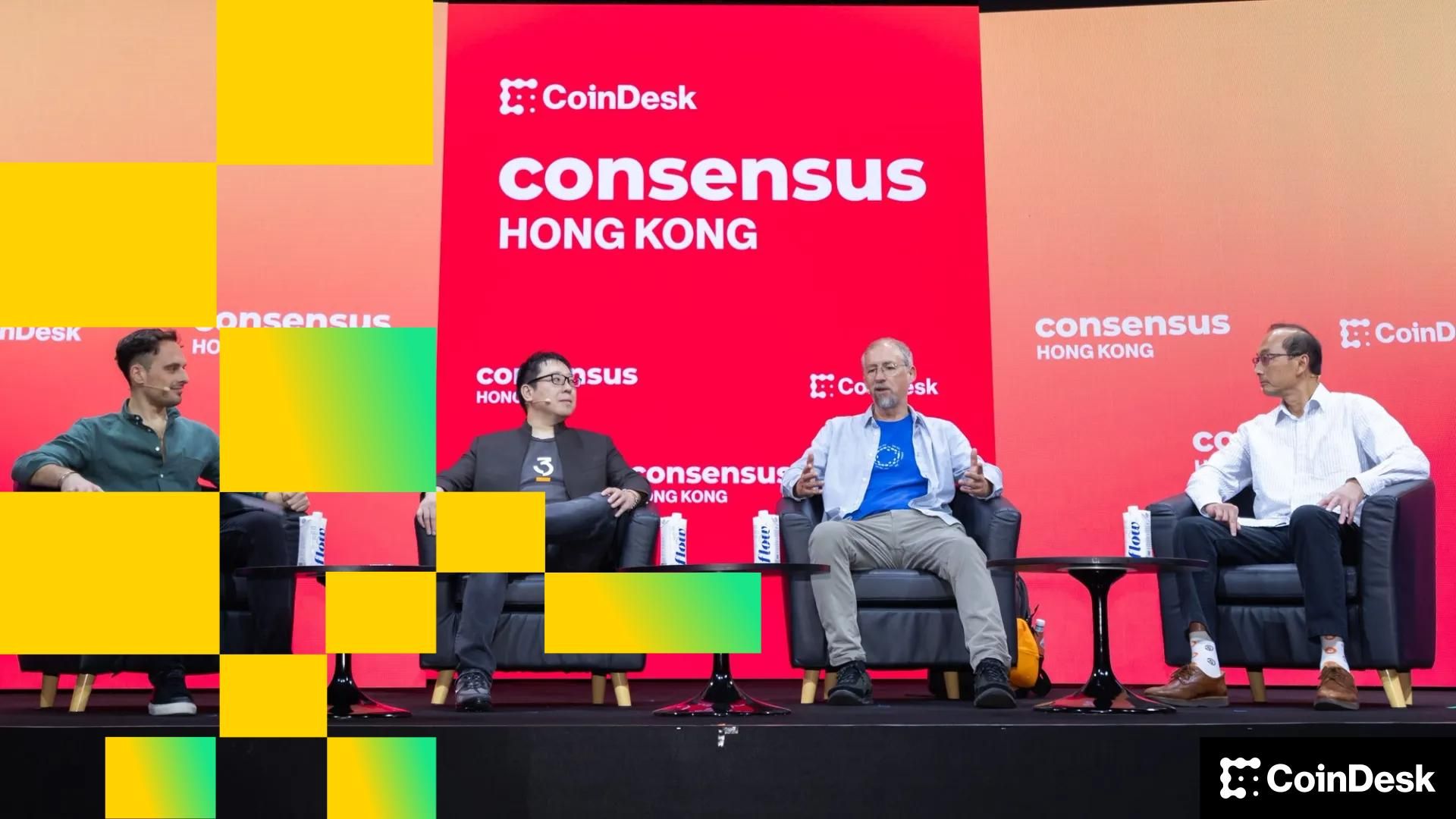
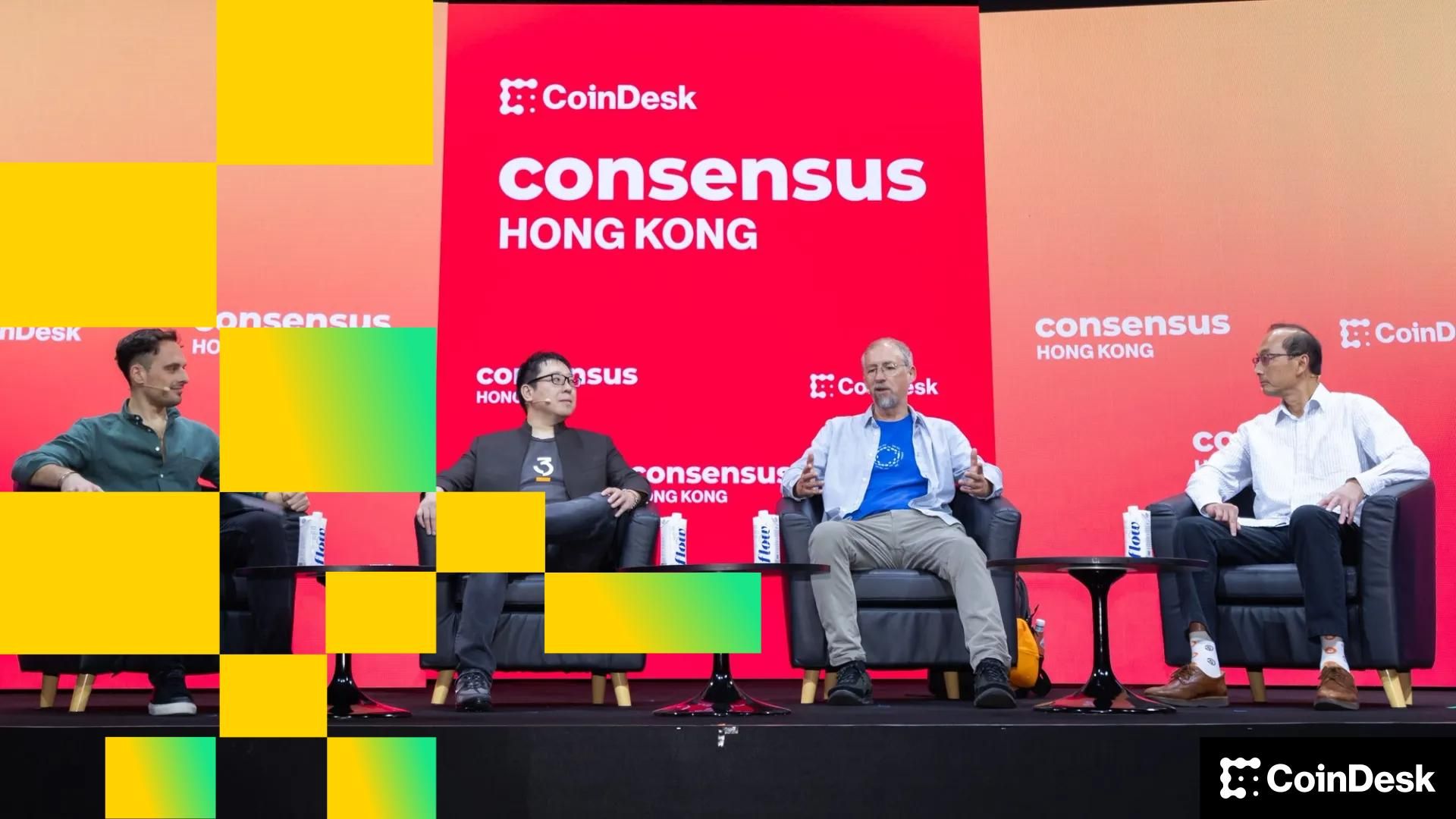
Undaunted by the plunge in bitcoin and the even worse price action for bitcoin treasury companies, Adam Back, the CEO of Bitcoin Standard Treasury Company (BSTR), says shareholder approval for a public listing could come as soon as April.
The public listing would come via a SPAC merger with Brandon Lutnick’s Cantor Equity Partners I (CEPO).
BSTR intends to debut with 30,000 bitcoin on its balance sheet. Of that total, 25,000 coins will be contributed by Back and other founding shareholders. A further 5,000 BTC will be contributed in-kind by early investors.
The merger plans were announced in the summer of 2025 amid a frenzy of hastily formed crypto treasury companies that hoped to mimic the success of Michael Saylor’s Strategy.
Since, though, the price of bitcoin has crashed to $63,000, and the performance of crypto treasury companies has been far worse, with many prominent ones vaporizing 90% or more of investor capital.
Speaking with CNBC on Monday, Back said a weaker bitcoin price could benefit BSTR ahead of its listing. Launching at a lower reference price would enable the company to accumulate more bitcoin at discounted levels, potentially strengthening its balance sheet and increasing long-term upside if market conditions improve.
Addressing bitcoin’s recent decline, Back noted that it occurred despite what he characterized as a favorable regulatory backdrop in the United States. He attributed the pullback to broader macroeconomic factors, including geopolitical tensions and tariff-related uncertainty, which have weighed on risk assets more broadly.
Back added that bitcoin treasury companies play a supportive role in the market. Their core strategy centers on acquiring and holding bitcoin, though he acknowledged that the pace of accumulation typically slows during bear markets. Ultimately, he said, bitcoin treasury companies are taking bitcoin off the market, which is a long-term bullish catalyst.
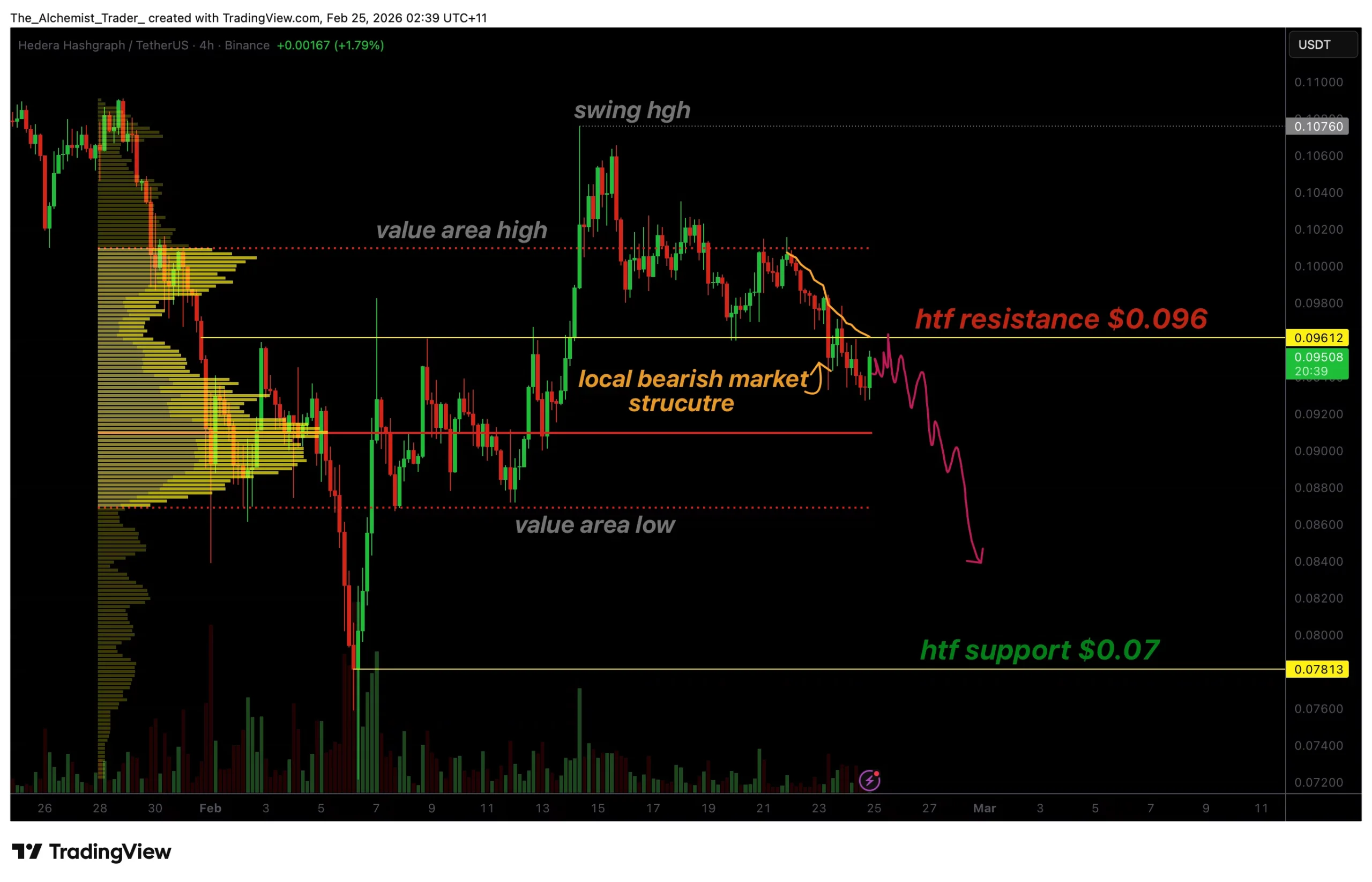
HBAR price faces downside risk after losing key support at $0.09, with bearish intraday structure increasing the probability of a corrective move toward $0.07.
Summary
- $0.09 support flipped into resistance confirms bearish structure
- Loss of point of control could accelerate downside momentum
- $0.07 high-timeframe support becomes next downside target
Hedera (HBAR) price action is showing early signs of structural weakness following a decisive loss of high-timeframe support near the $0.09 level. What previously acted as a strong demand zone has now transitioned into resistance, marking an important shift in market structure.
This transition is technically significant. When former support flips into resistance, it often signals a change in market control from buyers to sellers. Recent price movements suggest that HBAR is now undergoing a bearish retest of this level, a common market behavior that frequently precedes continuation to the downside.
As long as HBAR trades below $0.09, the broader technical outlook favors further corrective movement, with the next major support region located near $0.07 coming into focus.
HBAR price key technical points
- $0.09 support flipped into resistance: Structural breakdown confirms bearish shift
- Point of control under threat: Loss of key volume support could accelerate downside momentum
- $0.07 high-timeframe support targeted: Next major demand zone within current range
HBAR’s recent price action has been technically constructive in defining market direction. The confirmed loss of the $0.09 level represents a major structural development. Markets often respect these transitions strongly, as participants who previously bought at support may begin selling when price retests the level from below.
The current bounce toward resistance appears corrective rather than impulsive. Instead of establishing higher highs, price is forming a potential lower high within the intraday structure. This behavior aligns with a bearish retest scenario, where temporary upward movement allows sellers to re-enter positions before continuation lower.
From a market structure perspective, maintaining acceptance below $0.09 keeps sellers firmly in control. Until this level is reclaimed, bullish continuation remains unlikely in the short term.
Point of control becomes critical volume support
Another important level to monitor is the point of control (POC), which represents the area of highest traded volume within the broader range. The POC often acts as a final area of equilibrium before price transitions into expansion.
If HBAR loses acceptance around this level, it would signal that the market has abandoned its last major volume-based support. This development could significantly increase downside momentum.Below the POC lies a region of relatively thin volume, meaning fewer historical transactions exist to slow price movement. When markets enter low-volume zones, price tends to move quickly as liquidity gaps allow accelerated rotations toward lower value areas.
This technical dynamic strengthens the probability of a move toward the value area low and ultimately the $0.07 high-timeframe support.
Bearish retest suggests lower high formation
From a price action standpoint, the current local bounce appears to be a bearish retest rather than a trend reversal. Intraday structure continues to favor lower highs and weakening momentum, suggesting that the market is preparing for another rotational move downward.
Bearish retests typically occur after structural breakdowns, allowing price to revisit former support levels before sellers resume control. HBAR’s inability to reclaim resistance supports this interpretation.
If price forms a confirmed lower high beneath $0.09, it would further validate the bearish continuation thesis. This setup increases the likelihood that HBAR rotates toward deeper support levels as part of a broader corrective phase.
What to expect in the coming price action
From a technical, price action, and market structure perspective, HBAR remains vulnerable while trading below the $0.09 resistance. The current rebound appears corrective within a bearish intraday trend. A loss of the point of control could trigger accelerated downside movement toward the $0.07 high-timeframe support.
Unless buyers reclaim higher value and invalidate the lower-high structure, the probability favors continued downside rotation in the near term.
XRP Ledger recorded multiple breakthrough metrics in February. These figures reflect Ripple’s effectiveness in attracting attention and accelerating adoption on its underlying blockchain.
However, XRP’s price remained stuck below $1.4 during the final week of February, despite several positive signals that predicted an upcoming recovery.
Activity on XRP Ledger Increased in February After Upgrades
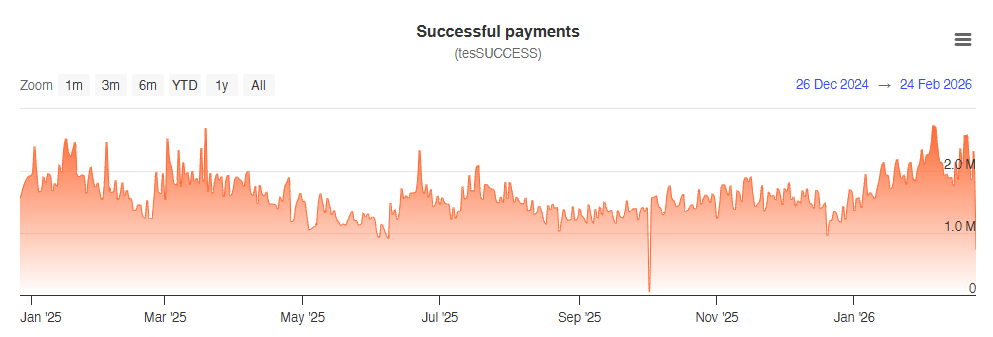
Data from XRPscan shows that the number of successful payments on the XRP Ledger has continuously increased over the past month. The figure rose from a low of 1 million payments at the end of December last year to more than 2.7 million in February. This marks the highest level in 12 months.
On the XRP Ledger, a successful payment is a transaction that validators have confirmed and recorded on the distributed ledger.
Therefore, this increase reflects the growing vibrancy of the XRP Ledger. A higher number of successful transactions proves that users genuinely use the network for payments, transfers, DeFi, or other applications.
“XRP network activity stays strong. Around 2M transactions per day and roughly 40K active addresses. That is real usage. While most chains chase narratives, XRPL keeps moving value. Payments. Settlements. This kind of consistency is what institutions look for,” crypto investor CryptoSensei said.
In addition, the Automated Market Maker (AMM) on the XRPL DEX showed signs of a breakout, with more than 14,000 deposits. This development provides XRPL with additional decentralized liquidity and reduces trading slippage.
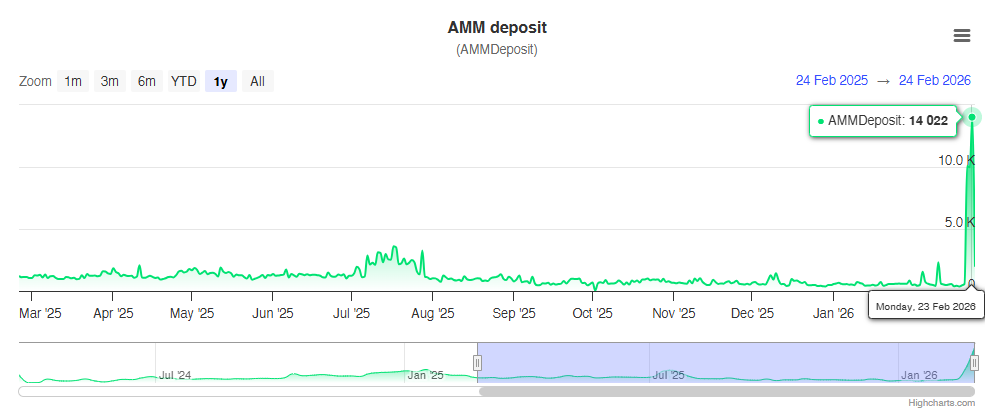
Notably, AMM activity has never been this before. This breakout occurred after the Permissioned Domains upgrade was activated in early February. The network enabled the Permissioned DEX two weeks later.
Investors expect the Permissioned DEX to pave the way for banks, payment providers, and financial institutions to trade within a controlled liquidity environment on XRP Ledger.
Despite these positive signs, XRP’s price continued into its fifth consecutive month of decline, and the final week of February closed in the red. At the time of writing, XRP is trading at $1.33, down 45% from its early-year high.
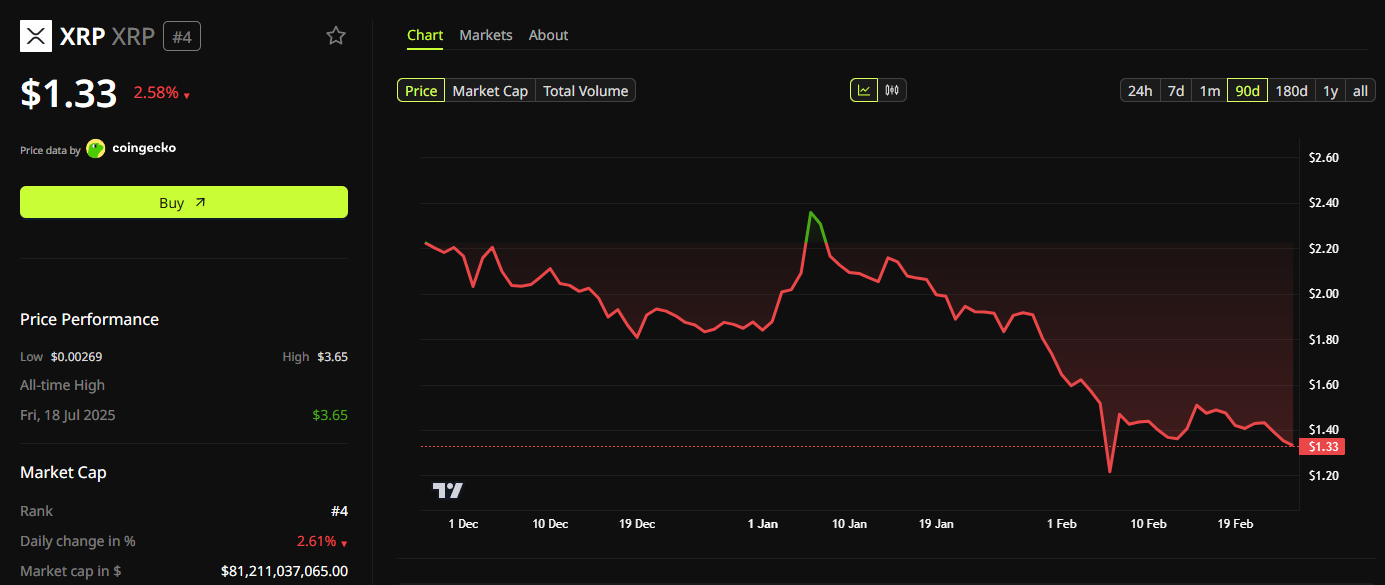
A recent report from BeInCrypto shows that rising whale inflows to exchanges continue to create selling pressure. Realized losses have reached their highest level since 2022.
However, historical signals also suggest that such extreme negativity often precedes a price bottom and a strong recovery. The latest analysis from BeInCrypto clarifies that XRP now needs confirmation through a breakout above the $1.47 resistance level.
Blockchain analytics company Nansen will establish a local entity and build a Bhutan-based team in Gelephu Mindfulness City (GMC), expanding into the kingdom as its Special Administrative Region advances its digital asset strategy.
According to a joint announcement shared with Cointelegraph, Nansen plans to incorporate within GMC and develop on-the-ground analytics capabilities to provide blockchain data and market intelligence to industry participants operating in the region.
GMC is a purpose-built Special Administrative Region in southern Bhutan focused on long-term economic development. The region has previously announced digital asset initiatives spanning custody infrastructure, tokenization, institutional liquidity and regulatory frameworks.
The move does not replace Nansen’s existing operations in Singapore, CEO Alex Svanevik told Cointelegraph, but adds an additional entity within GMC, saying that the company “chose GMC because of the vision behind it.”
Svanevik added that Bhutan stood out because digital assets are being integrated into the region’s economic framework from the outset. He said:
Most crypto-friendly jurisdictions are optimizing for what exists today. Bhutan is building something fundamentally different — a values-driven economic zone with digital assets baked into the foundation, not bolted on as an afterthought. GMC has crypto in its strategic reserves, a progressive regulatory framework, and genuine sovereign conviction behind it. That’s rare. We want to be pioneers in that ecosystem.
Nansen plans to hire locally as part of the expansion. While the company did not disclose specific staffing targets, Svanevik said the intention is to build a “meaningful local team,” with details on roles and office setup expected in the coming months.
Nansen describes itself as an AI-native onchain analytics platform tracking more than 500 million labeled blockchain addresses and providing real-time data tools across major blockchain networks.
Related: Bhutan migrates its national ID system to Ethereum
Bhutan positions Gelephu Mindfulness City at the center of its digital asset strategy
Announced in 2023, Gelephu Mindfulness City is a special administrative region designed as a new economic hub to create high-value local jobs and attract businesses across sectors including finance, green energy, technology, healthcare and agriculture, while offering regulatory flexibility for crypto and fintech companies.
In December, the government said it would allocate up to 10,000 Bitcoin (BTC) from its national holdings to support the city’s development. Officials said they were evaluating treasury and risk-managed yield strategies for the Bitcoin holdings, alongside long-term plans aimed at preserving value while supporting stable and sustainable growth.
Nansen is not the first digital asset company to enter the region. Also in December, Crypto market maker Cumberland DRW signed a multi-year memorandum of understanding to help develop digital asset infrastructure in GMC, including financial frameworks, sustainable mining and AI compute, yield strategies and stablecoin infrastructure.
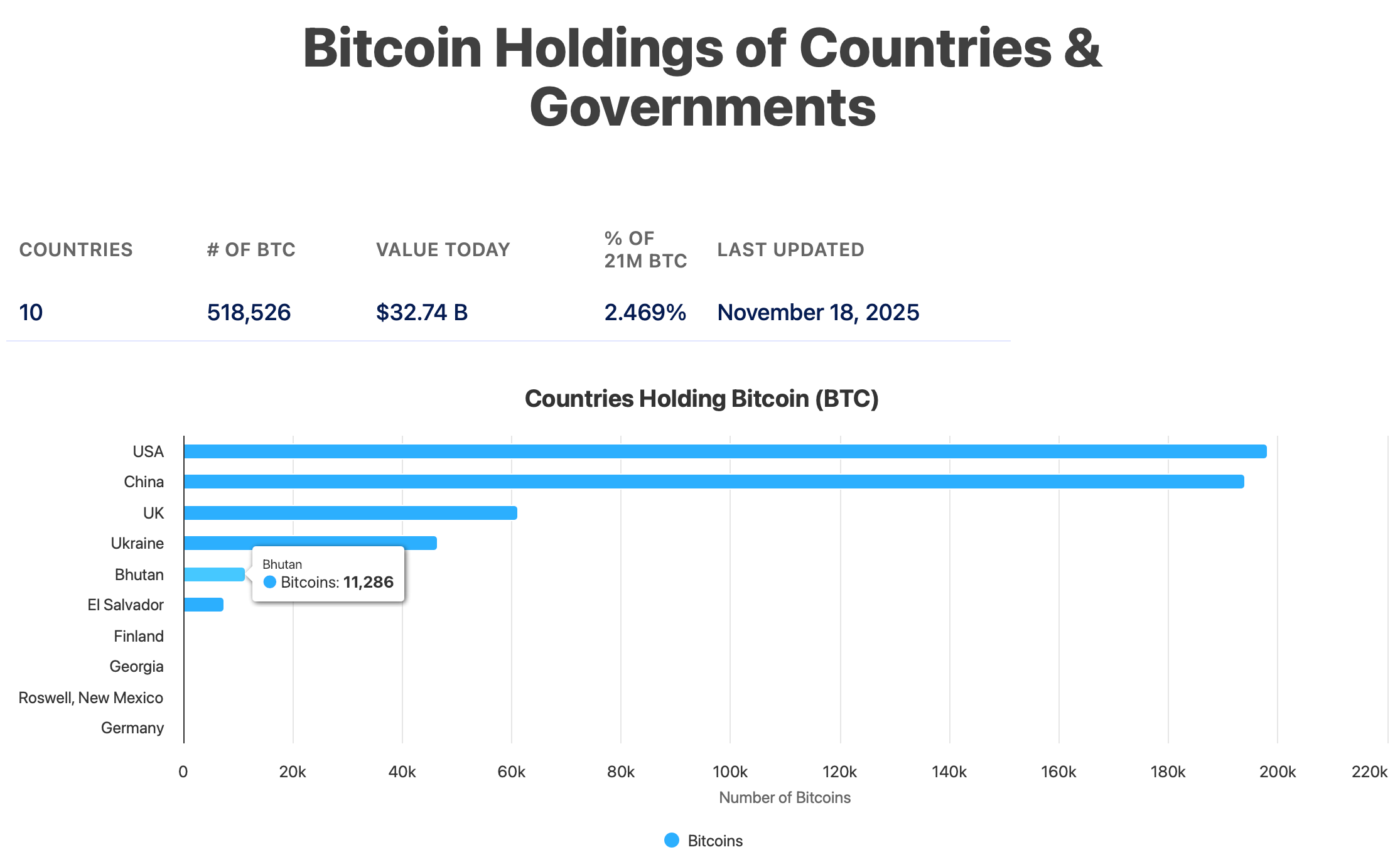
Bhutan holds the world’s fifth-largest national Bitcoin reserve, with Bitbo estimating its holdings at 11,286 BTC, as of Nov. 18.

The country’s crypto strategy is spearheaded by Druk Holding and Investments (DHI), the commercial arm of the royal government.
In an April 2025 interview with Reuters, DHI CEO Ujjwal Deep Dahal said the fund began accumulating cryptocurrencies in 2019 to convert surplus hydropower into foreign-currency liquidity, and senior officials in the capital of Thimphu have said some profits have helped support government salary payments over the past two years.
Magazine: Is China hoarding gold so yuan becomes global reserve instead of USD?
A major shake up could be coming as on chain investigator ZachXBT says he will publish a full insider trading exposé on February 26, targeting what he calls a major industry player tied to systemic market abuse.
Traders are not waiting. Prediction market volume around the target’s identity has surged toward $3M as participants hedge for potential fallout.
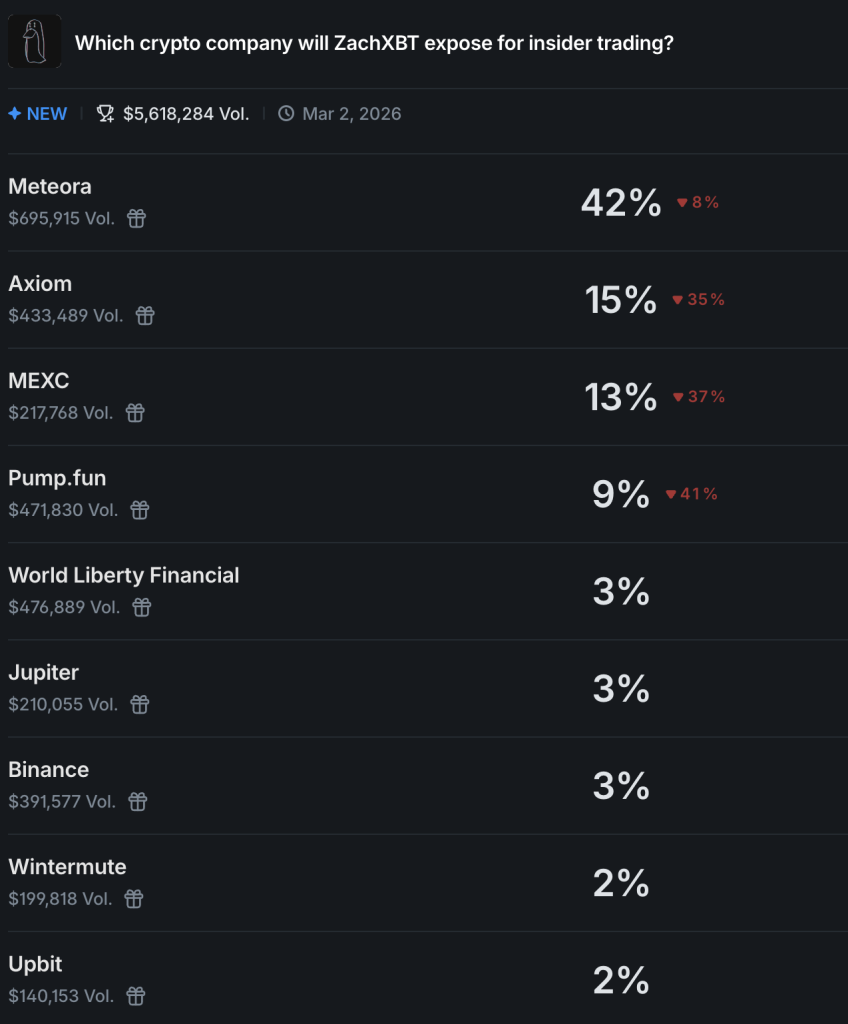
Right now, odds point toward names like Solana based liquidity protocol Meteora and the Trump backed World Liberty Financial as leading suspects.
Key Takeaways
- $6 Million Prediction Market Volume: Trading activity on the ZachXBT investigation market has surpassed $5.6 million as speculators attempt to price in the target’s identity.
- Meteora at 43% Odds: The Solana-based liquidity layer is currently the betting favorite to be named in the report, followed by infrastructure provider Axiom.
- Systemic MNPI Abuse: The investigation alleges that multiple employees exploited Material Non-Public Information to execute profitable trades over a prolonged period.
What Is the ZachXBT MNPI Investigation?
ZachXBT, known for tracing illicit crypto flows, says a major report is coming on February 26. The target is described as one of the industry’s most profitable firms, with allegations that insiders traded on material non public information to front run announcements.
The case reportedly began with a January Telegram exchange where wallet addresses tied to a firm’s treasury were shared, showing accumulation before public news. That kind of on chain trail can be hard to dismiss and often draws regulatory attention.
ZachXBT’s track record adds weight. Past investigations have led to frozen funds and law enforcement action. That is why traders see February 26 as a binary event. Either the evidence is strong enough to trigger serious fallout, or the accused project walks away under heavy scrutiny.
Prediction Markets Hit $3M as ZachXBT Odds Shift to Meteora
Speculators are already trading on the rumor. On Polymarket, volume on the “Which crypto company will ZachXBT expose?” contract is nearing $6M. Meteora leads with around 42% odds, followed by Axiom at 15% and Pump.fun near 9%.
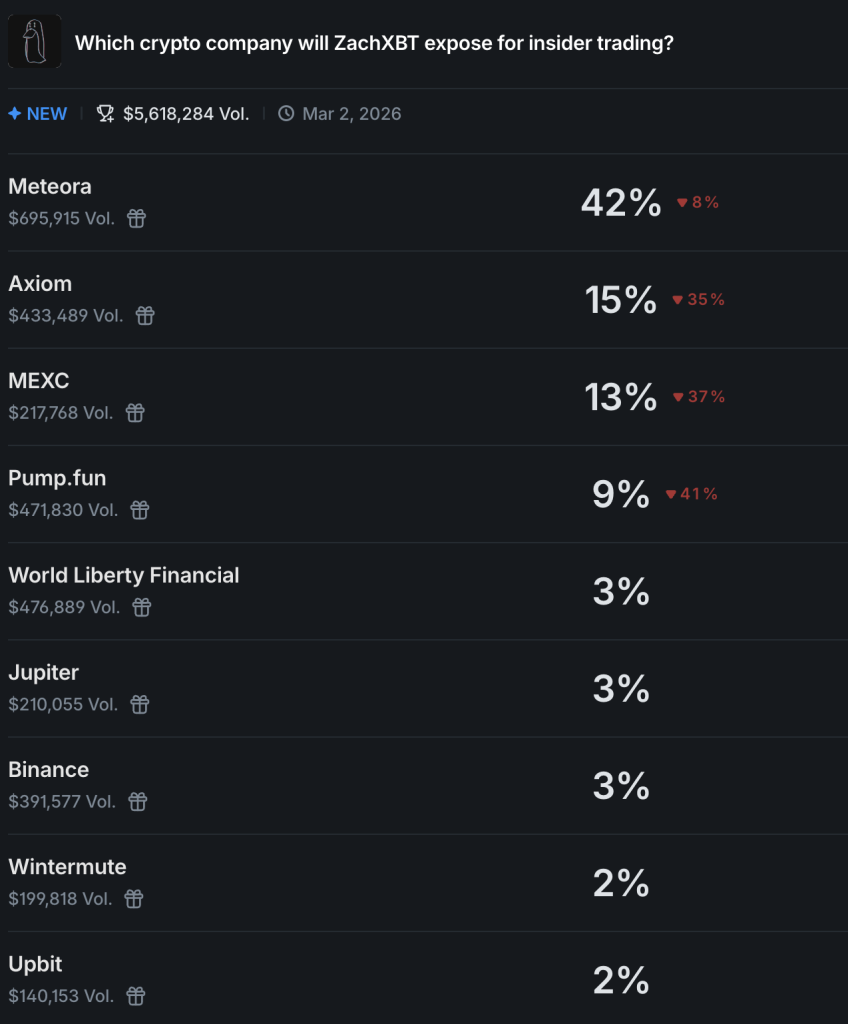
The sharp jump in Meteora’s probability, while others like Jupiter and MEXC lag in single digits, shows concentrated conviction. Big names like Tether, Binance, and Coinbase are listed, but with low odds.
Still, prediction markets price belief, not proof. They reflect positioning and sentiment ahead of confirmation.
Why Meteora Is the Leading Suspect in the MNPI Probe
Meteora has emerged as the top suspect because it fits the profile of a highly profitable Solana based liquidity protocol with access to sensitive incentive data.
Onchain analysts have flagged wallet clusters interacting with its pools that appear to position ahead of yield adjustments, fueling speculation of potential MNPI abuse.
If confirmed, the fallout could ripple across the Solana ecosystem, especially if aggregators and routing platforms distance themselves quickly.
WLFI remains a lower probability but higher impact scenario. Its political ties raise the stakes, and any confirmed insider trading linked to a Trump affiliated project would likely draw immediate regulatory scrutiny. While markets see Meteora as the base case, WLFI represents a volatile tail risk.
If ZachXBT’s report delivers clear wallet attribution, the targeted token could see a sharp downside within minutes. Until then, prediction market volume reflects positioning, not proof.
Discover: Here are the crypto likely to explode!
The post ZachXBT Insider Trading Report Targets Major Crypto Firm in 2 Days appeared first on Cryptonews.
Crypto World
Fed’s Goolsbee calls for a hold on cuts as current rate of inflation is ‘not good enough’
Austan Goolsbee, president and chief executive officer of the Federal Reserve Bank of Chicago, speaks during the National Association of Business Economics (NABE) economic policy conference in Washington, DC, US, on Tuesday, Feb. 24, 2026.
Graeme Sloane | Bloomberg | Getty Images
Chicago Federal Reserve President Austan Goolsbee said Tuesday that interest rate cuts aren’t appropriate until there’s more evidence that inflation is on its way down.
With recent indicators showing that inflation well off its highs but still above the Fed’s 2% target, Goolsbee noted that policymakers “have been burned by assuming transitory inflation” in the past and shouldn’t make the same mistake again.
“I feel that front-loading too many rate cuts is not prudent in that circumstance,” he said in remarks before the National Association for Business Economics at its annual gathering in Washington, D.C. “People express that prices are one of their most pressing concerns. Let’s pay attention. Before we cut rates more to stimulate the economy, let’s be sure inflation is heading back to 2%.”
The most recent inflation data, for December, showed core inflation, which excludes volatile food and energy prices, running at 3%, as measured by the consumption expenditures price index, the Fed’s primary forecasting gauge. That was up 0.2 percentage point from November and came somewhat due to tariffs, which are viewed as temporary, but also from underlying pressures in the service sector and areas not directly impacted by the duties.
Specifically, Goolsbee said stubbornly high housing inflation isn’t tariff driven, emphasizing the need for the Fed to be “vigilant.”
Goolsbee noted that a 3% inflation rate “is not good enough — and it’s not what we promised when the Federal Reserve committed to the 2% target. Stalling out at 3% is not a safe place to be for a myriad of reasons we know all too well.” He has said previously that he thinks the Fed will be able to cut later in the year.
The remarks come with markets expecting the Federal Open Market Committee, of which Goolsbee is a voter this year, to stay on hold until at least June and probably July. Futures traders are placing about a 50-50 chance of a cut in June and about a 71% probability of a July cut, according to the CME Group’s FedWatch gauge. The Fed enacted three quarter-percentage-point cuts in the latter part of 2025.
Fed Governor Christopher Waller, who has been an advocate for lower rates, took a more measured approach Monday while also speaking to the NABE conference.
Though Waller said he thinks policymakers should “look through” tariff impacts, he said recent data show the labor market may be in better shape than previously indicated, mitigating the need for further cuts. If the jobs picture continues to improve, that would further lessen the case for cuts, though he said he isn’t convinced that the January nonfarm payrolls data wasn’t “more noise than signal.”
Tuesday will be an active day Fed speakers, with Governor Lisa Cook also due to present to the NABE later in the morning.

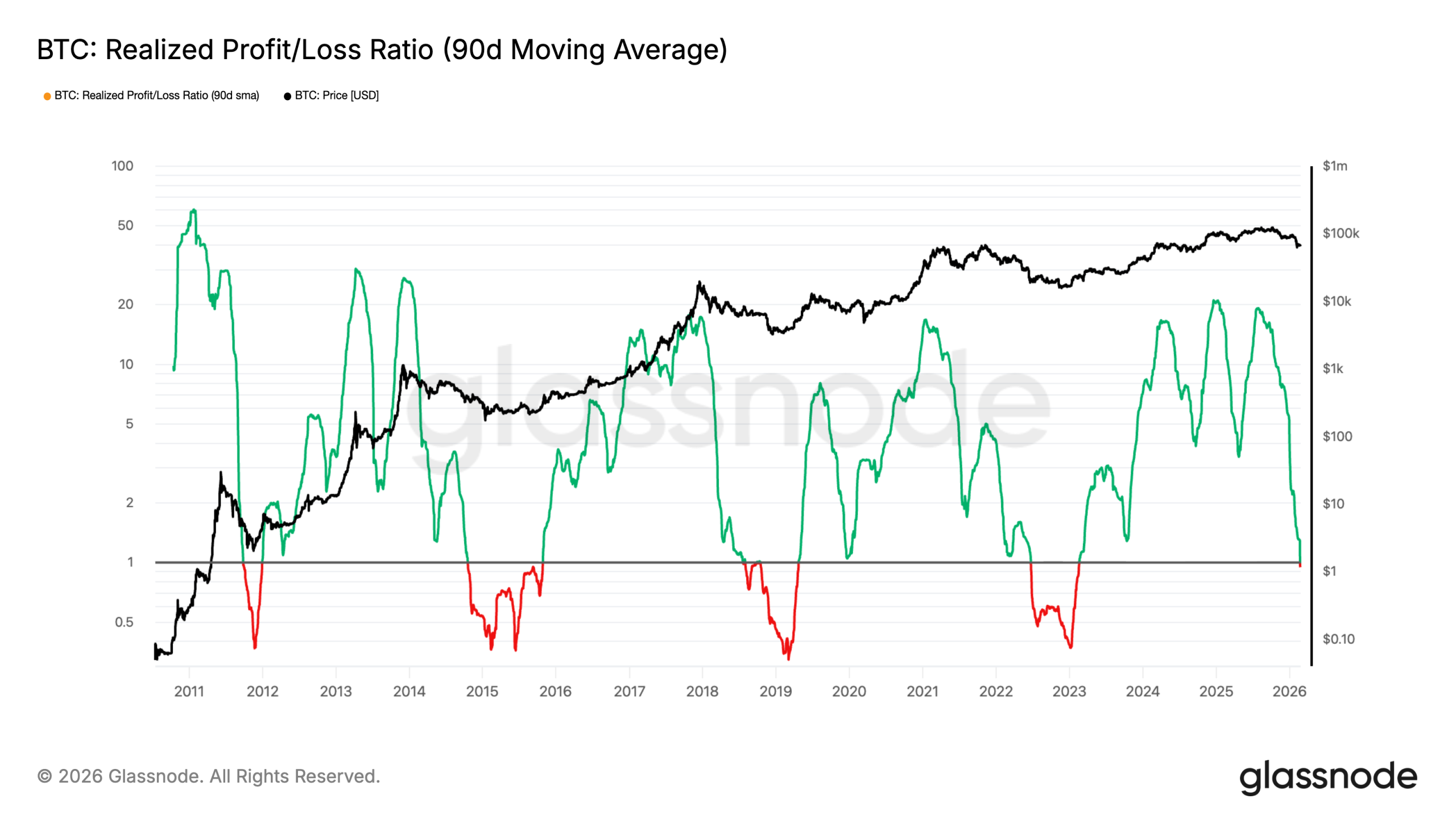
Bitcoin price dropped 25% in 2022 and 50% in 2018 after similar on-chain loss signals, a warning sign for BTC’s next move.
Bitcoin (BTC) traders are selling at a loss for the first time since 2022, raising odds that the biggest cryptocurrency’s ongoing price correction may deepen in the coming weeks.
Key takeaways:
-
Bitcoin is witnessing loss-driven selling that has historically lasted six months or more.
-
These signals surfaced during previous bear markets, preceding sharp downtrends each time.
BTC capitulation may last for another six months
On Monday, Bitcoin’s realized profit/loss ratio (90-day moving average) slipped below 1.
The drop indicated that traders were dumping their BTC holdings at a loss, which is often linked to panic selling, margin pressure, or broader risk-off conditions.

Historically, breaks below 1 preceded at least six months of loss realization, according to on-chain data resource Glassnode. Meanwhile, a move back above 1 usually suggests that selling pressure is easing.
Traders often sell at a loss when they expect the downtrend to continue. In prior bear markets, loss-taking typically accelerated midway through the cycle, followed by more downside in Bitcoin’s price.
During the 2022 bear market, for instance, BTC declined 25% six months after its realized profit/loss ratio dropped below 1. In 2018, it plunged by over 50% in five months under similar conditions, as shown below.

The BTC price may continue its downtrend for another five months or more if history repeats. That will confirm “a full transition into an excess loss-realization regime,” Glassnode wrote.
Bitcoin price may bottom around $44,000
Bitcoin’s rising loss-realization may, therefore, drag the BTC price into its “extreme low” valuation zones.
These lows exist within the MVRV Pricing Bands metric, which maps where Bitcoin reaches extreme unrealized profit or loss zones. Historically, its lowest band (the blue line) has coincided with Bitcoin bear market bottoms.

As of February, the extreme low was around $43,760, a potential downside target by August if BTC’s price decline continue further.
Related: Bitcoin’s Mayer Multiple hits 2022 levels: Where is BTC price bottom?
The level also sits within the broader $40,000–$50,000 bottom range flagged by multiple analysts as a potential late-2026 target.
This article does not contain investment advice or recommendations. Every investment and trading move involves risk, and readers should conduct their own research when making a decision. While we strive to provide accurate and timely information, Cointelegraph does not guarantee the accuracy, completeness, or reliability of any information in this article. This article may contain forward-looking statements that are subject to risks and uncertainties. Cointelegraph will not be liable for any loss or damage arising from your reliance on this information.
Crypto exchange Kraken is launching what it calls the first regulated perpetual futures contracts based on tokenized stocks, the firm told CoinDesk.
The products, available to eligible non-U.S. users in more than 110 countries, track digital versions of major U.S. stocks, indices and a gold ETF, building on the tokenized equities offering of xStocks that Kraken acquired in December.
Initial listings include tokenized versions of the S&P 500, the Nasdaq 100, Apple, Nvidia, Tesla and SPDR’s gold ETF (GLD), the firm said.
Kraken’s launch matters because perpetuals trading has enjoyed a rapid growth, dominating crypto derivatives trading. Blockchain-based decentralized exchanges processed over $600 billion in perps trading volume in January, with Hyperliquid claiming the biggest market share with $200 billion monthly volume, data by The Block shows.
Unlike traditional futures contracts, perps do not expire and trade 24/7 and allow users to trade with high leverage. Investors favor them for continuous access, capital efficiency and the ability to take long or short positions at any time.
With Kraken’s move, that structure now is expanded to other asset classes like equities. The underlying xStocks tokens are fully collateralized and backed 1:1 by the referenced assets, according to the company. That provides a pricing anchor even when U.S. exchanges are closed. The tokenized stocks trade around the clock and support leverage of up to 20x.
“This is what it looks like when traditional markets are rebuilt for a crypto-native, always-on world, not a moment too soon given the volatility that all markets are exhibiting,” Mark Greenberg, Kraken’s global head of consumer, said in a statement.
“Regulated tokenized equities as perpetual futures represent a new chapter for global capital markets, one where equities, indices, and commodities trade with the same speed, accessibility, and flexibility as crypto via tokenization, delivering a more robust risk management experience,” he added.
Kraken said it plans to expand the lineup with more tokenized stocks and ETFs in the coming months.
Rival tokenization firm Ondo Finance earlier this month also announced plans to launch perps trading with its tokenized stocks.
Read more: Kraken’s co-CEO could trust AI with 100% of his crypto — Dragonfly’s Haseeb Qureshi isn’t convinced


Crypto payment provider Oobit has launched crypto-to-bank transfers that settle into bank accounts via local payment rails, expanding its app beyond in-store spending and peer-to-peer (P2P) transfers.
In an announcement shared with Cointelegraph, Oobit said users could send supported digital assets from self-custody wallets and have funds deposited into bank accounts through networks including the Single Euro Payments Area (SEPA) in Europe, the Automated Clearing House (ACH) in the United States and Mexico’s Sistema de Pagos Electrónicos Interbancarios (SPEI).
Settlement currencies include US dollars, euros, Mexican pesos and Philippine pesos, while supported assets include Bitcoin (BTC), Ether (ETH) and a range of stablecoins such as Tether (USDT), USDC (USDC), EURC and EURR, along with other tokens including XRP (XRP), BNB (BNB), Solana (SOL), Cardano (ADA) and Dogecoin (DOGE).
Related: VCI Global unveils crypto treasury plan, backs Tether’s payments arm OOBIT
Oobit said that users could see the crypto amount leaving their wallet and the fiat equivalent arriving in the recipient’s account before confirming the transactions.
It described the system as routing transactions through local payment rails instead of traditional correspondent banking channels.
Unlike checkout-based providers that redirect users to third-party interfaces, Oobit said the transfer flow is embedded natively inside its app, without redirecting users to an external off-ramp provider.
Crypto off-ramps heating up
The rollout highlights growing competition in crypto off-ramping, where exchanges and fintech companies allow users to convert digital assets into fiat deposits.
Oobit’s stated differentiator is its focus on self-custody wallets, positioning the app as a payments layer that connects onchain assets to bank accounts without requiring users to hold funds on a centralized exchange.
DTR tie-up and Bakkt acquisition
Oobit says that the feature is powered by infrastructure from Distributed Technologies Research (DTR), which connects Oobit’s wallet interface to domestic payment networks.
DTR recently entered into an agreement to be acquired by Bakkt, a US-listed digital asset platform launched by the Intercontinental Exchange (ICE) in 2018.
Akshay Naheta, DTR founder and CEO of Bakkt, said in the release that infrastructure connecting digital asset platforms with traditional financial systems was “foundational to broader adoption.”
Amram Adar, co-founder and CEO of Oobit, told Cointelegraph the company’s model differs from traditional off-ramp providers in both custody structure and user flow. “The end-user relationship, wallet custody and transaction experience remain entirely within Oobit,” Adar said.
According to Adar, user funds are initially held within Oobit’s wallet infrastructure. When a bank transfer is initiated, funds are debited and transferred to DTR strictly for payout execution. DTR forwards the funds to the recipient bank account and does not hold funds for investment or discretionary purposes.
Oobit performs the initial crypto-to-USD conversion, after which the USD-equivalent value is transferred in USDT to DTR. DTR then executes the foreign exchange conversion into local fiat currency before settlement into the designated bank account, Adar said.
Oobit has previously disclosed backing from Tether, the issuer of USDT, linking the app to the largest stablecoin operator by market capitalization.
Related: Bybit to launch retail bank accounts with personal IBANs in February
Fees, limits and expanding infrastructure
Adar said the service is fully live across all countries supported by DTR, with no pilot corridors currently in place. US dollar transfers are limited to domestic US flows.
Minimum transfers range from a roughly 10 euro ($11.70) to $100 equivalent, depending on the corridor, while maximum limits can reach about a $50,000 equivalent.
Total fees consist of components charged by both Oobit and DTR. Oobit applies the greater of a fixed fee, currently contemplated at $1, or a 1% transaction fee, along with an estimated 0.5% spread on crypto-to-USD conversions.
DTR applies either a fixed fee, generally between about 0.65 cents and 2 euro depending on the currency, or a percentage-based fee ranging from about 0.65% to 1%, according to the company.
The integration comes as banks and fintech firms deepen efforts to embed blockchain-based assets into regulated payment systems.
Major payment players like Visa have rolled out USDC-based settlement and stablecoin payouts for financial institutions, and Crypto.com has used Circle’s application programming interfaces (APIs) to support dollar bank transfers to and from USDC wallets.
On Monday, digital asset infrastructure company Stablecore joined the Jack Henry Fintech Integration Network, enabling more than 1,600 US banks and credit unions to add stablecoin services through existing core banking platforms.
On the same day, TRM Labs announced a partnership with Finray Technologies to unify crypto and fiat transaction monitoring for institutions operating under Europe’s Markets in Crypto-Assets (MiCA) regulation.
Magazine: Hong Kong stablecoins in Q1, BitConnect kidnapping arrests: Asia Express

Hunter College Professor Allyson Friedman causes outrage by using ‘racist trope’ during virtual meeting

High fiber can boost baked foods’ appeal to GLP-1 users

Cronos (CRO) price outlook as Crypto.com secures conditional OCC approval in the US


-

 Video5 days ago
XRP News: XRP Just Entered a New Phase (Almost Nobody Noticed)
-

 Fashion4 days ago
Weekend Open Thread: Boden – Corporette.com
-

 Politics2 days ago
Baftas 2026: Awards Nominations, Presenters And Performers
-

 Sports21 hours ago
Women’s college basketball rankings: Iowa reenters top 10, Auriemma makes history
-

 Business7 days ago
Infosys Limited (INFY) Discusses Tech Transitions and the Unique Aspects of the AI Era Transcript
-

 Entertainment6 days ago
Kunal Nayyar’s Secret Acts Of Kindness Sparks Online Discussion
-

 Politics22 hours ago
Nick Reiner Enters Plea In Deaths Of Parents Rob And Michele
-

 Tech6 days ago
Retro Rover: LT6502 Laptop Packs 8-Bit Power On The Go
-
 Sports5 days ago
Clearing the boundary, crossing into history: J&K end 67-year wait, enter maiden Ranji Trophy final | Cricket News
-

 Business2 days ago
Mattel’s American Girl brand turns 40, dolls enter a new era
-

 Crypto World8 hours ago
XRP price enters “dead zone” as Binance leverage hits lows
-

 Business2 days ago
Law enforcement kills armed man seeking to enter Trump’s Mar-a-Lago resort, officials say
-

 Entertainment6 days ago
Dolores Catania Blasts Rob Rausch For Turning On ‘Housewives’ On ‘Traitors’
-

 Business6 days ago
Tesla avoids California suspension after ending ‘autopilot’ marketing
-
 NewsBeat1 day ago
‘Hourly’ method from gastroenterologist ‘helps reduce air travel bloating’
-

 Tech2 days ago
Anthropic-Backed Group Enters NY-12 AI PAC Fight
-

 NewsBeat2 days ago
Armed man killed after entering secure perimeter of Mar-a-Lago, Secret Service says
-

 Politics2 days ago
Maine has a long track record of electing moderates. Enter Graham Platner.
-

 Crypto World6 days ago
WLFI Crypto Surges Toward $0.12 as Whale Buys $2.75M Before Trump-Linked Forum
-

 Crypto World5 days ago
83% of Altcoins Enter Bear Trend as Liquidity Crunch Tightens Grip on Crypto Market