



Connect with us

NewsBeat

Little Lotus confirms opening date of Ingleby Barwick venue

Published

on

Little Lotus confirms opening date of Ingleby Barwick venue

Little Lotus, at Sunningdale shops in Eaglescliffe, is preparing to serve up a taste of Asia from its second location at Lowfields shops in Ingleby Barwick. 

The new venture, which will take over the former Tomahawk takeaway, will be home to a grab-and-go counter, hot and cold sandwiches, and daily homemade soup, alongside its signature restaurant menu. 

Now, owners Charlie and Sadie Eggleston have confirmed that the new takeaway will be opening to customers on Wednesday, March 4. 

Little Lotus in Ingleby Barwick (Image: THE NORTHERN ECHO)

The takeaway said online: “Little Lotus is officially opening our brand-new venue in Ingleby Barwick in March, and we’re so excited to welcome you in. 

Advertisement

“Expect a fresh grab‑and‑go cold counter, hot and cold sandwiches, homemade soup made daily, plus our signature pan‑Asian menu you already love across Teesside.

“Everything is coming together, and the countdown is officially on. Make sure you join us for opening day and experience Little Lotus in Ingleby Barwick.”

Since opening in October 2024, Little Lotus has been highly-rated online for its food, serving up everything from Pad Thai and gyozas to loaded fries and curries. 

It was also highly praised when The Northern Echo tucked into a range of delicious dishes on an eating out review there last year.

Advertisement

Signs first went up for the new takeaway earlier this year, with the owners confirming the move to Ingleby to the Echo last year.

Source link

Advertisement
Continue Reading
Click to comment

Leave a Reply

Your email address will not be published. Required fields are marked *

NewsBeat

Harry Brook century drives England to nervy victory against Pakistan

Published

on

Good afternoon and welcome to live coverage of the 2026 T20 World Cup Super Eights Group Two match between England and Pakistan in Pallekele. Kandy must be among England’s favourite homes from home, not just for its beauty – they have won four games on the bounce there this year in bilaterals against the hosts and then again versus Sri Lanka in their first match at this stage on Sunday. At times during that victory, in comments sections, social media, on TMS and on the ICC’s world feed used by Sky, there was something more than disquiet about England’s performance with the bat. Rage at slipshod batting during the Ashes and a general impatience with Brendon McCullum has not been diluted by the switch in formats. If anything it seems to have redoubled.

And yet England won comfortably, once again proving Sir Geoffrey Boycott’s old adage about it being foolish to judge a pitch until you have seen both sides batting on it to be as perceptive as ever. England have triumphed in a couple of nippers against Nepal and Scotland and were beaten by West Indies who have been magnificent so far and are, with South Africa, streets ahead of everyone else, including the hosts India. Given that Pakistan vs New Zealand was a washout, though, victory for England today would all but guarantee a semi-final place with a game to spare. How they then overcome one of the titans from Group One can be left for another day.

Victory over Pakistan, a team they have beaten in all three previous meetings at the T20 World Cup and in the past five bilaterals in succession, is not a given even if they will be playing on a fresh pitch today rather than Sunday’s tacky strip. The opener Sahbizada Farhan is the tournament’s leading runscorer with 220, including an unbeaten hundred in his last innings plus a 47 and 73 before that. Beneath him, however, no other batsman has accumulated a hundred runs across their four completed matches while England’s Jacob Bethell, Will Jacks, Phil Salt, Sam Curran and Harry Brook have all managed that, albeit in five. England have not been able to collar finger-spinners in the tournament so far and in Usman Tariq (see below), Mohammad Nawaz, the Bertie Bassett Saim Ayub, plus the leggies Abrah Ahmed and Shadab Kahn, they have quite the battery.

The big worry remains England’s greatest white-ball batsman, Jos Buttler, who has scores of 26, 21, three, three and seven so far. Having said that, in Pallekele last month he made a swashbuckling 17, then 39 and 25 in England’s three victories and the left shoulder wiggle that tells us all about his intent and confidence was present on Sunday. He may not regain his swagger today and score heavily but it is far too soon to write him off. England were given the day off on Monday after their exertions in sweltering humidity the night before. But Buttler insisted on having a net and, encouragingly, found the middle of his bat. 

Advertisement

Source link

Continue Reading

NewsBeat

Bake Off winner Nadiya Hussain steps back from new career path in emotional health update

Published

on

Bake Off winner Nadiya Hussain steps back from new career path in emotional health update

Calling it “one of the toughest decisions” she has ever had to make, she said stepping away from the role was necessary to protect her health. “Sometimes it’s OK to put yourself first,” she added. “In this situation, I had to put my health first. I’m better for it, but I’m sad — really sad.”

Source link

Continue Reading

NewsBeat

T20 Cricket World Cup: England’s Harry Brook hits stunning first T20 international century v Pakistan

Published

on

Harry Brook

England captain Harry Brook reaches his first century in T20 internationals off 50 balls and becomes the second England player to score a hundred in a T20 World Cup chase, following Alex Hales’ 116 v Sri Lanka in 2014.

MATCH REPORT: Stunning Brook century leads England into semis

Available to UK users only.

Source link

Advertisement
Continue Reading

NewsBeat

The Supreme Court’s ruling leaves Trumponomics facing major challenges

Published

on

The Supreme Court’s ruling leaves Trumponomics facing major challenges

The decision by the US Supreme Court to rule most of Donald Trump’s “liberation day” tariffs illegal will have far-ranging consequences for the president’s economic agenda. Although the administration will find other ways to increase tariffs, their usefulness as a weapon of economic warfare will be diminished. And the issue – among the most unpopular of the president’s economic policies – will cause him serious political damage.

Trump’s first move following the ruling has been to impose a 15% tariff on all imports. Imposed under a little-used law, the tariff rate is fixed and time-limited to 150 days before needing congressional approval. It would take only a few Republicans to block its extension. And the midterm elections are looming.

Using a flat-rate tariff means that some countries that settled earlier and got a better deal – including the UK – are now worse off, while others that had a higher tariff rate imposed on them have, at least for now, benefited. It also could mean that those that pledged to invest hundreds of billions in the US economy – including Japan and the EU – may now question whether their commitment still stands.

Trump’s ability to threaten instant retaliation to any country that crosses him will also be constrained by the other two legal routes he can use to raise tariffs. Both provisions would require time-consuming, detailed investigations into specific industries or countries, and rates once fixed cannot as easily be changed.

Advertisement

The domestic political fallout from the Supreme Court decision is also substantial. Two thirds of the US public disapprove of Trump’s tariff policy, with large sections believing that his tariffs are inflationary.

Democrats are already calling for the money raised to be returned to consumers. And businesses, including small firms hit hard by the tariffs, are suing the government. If the US government can no longer rely on the income from tariffs – which rocketed to US$287 billion (£211 billion) this year – it would put further pressure on the fast-growing federal budget deficit. This is already US$2 trillion and projected to rise to US$3 trillion by the 2030s, as a result of Trump’s large tax cuts.

Nor have Trump’s tariffs achieved their objectives. The trade deficit was slightly larger in 2025 than the year before, with US$1 trillion more goods being imported than exported. Tariffs have not boosted jobs: manufacturing employment fell by 80,000 and unemployment is up to 4.3% compared to 4% in January 2025.

The bigger problem for the president is the overall performance of the economy. The Republicans have only a narrow majority in the House of Representatives, and most observers are predicting that the Democrats will gain control in November. Trump’s ratings on his performance on the economy have been slipping, with 55% now disapproving. And 65% disapprove of his handling of inflation.

Advertisement

He now faces an uphill struggle in the State of the Union address to convince the public that the economy is back on track under his leadership.

Weak growth and high inflation

There is still debate over how much the tariffs have contributed to inflation, but the US economy is only growing at 2.2% a year, its slowest rate since 2020.

Inflation is the main concern of US voters, with figures putting the rate at 2.9% – well above the Federal Reserve target of 2%. Estimates by economists suggest that companies are increasingly passing on the cost of tariffs to consumers, which may well be driving inflation. Recent job figures may have provided some more positive news, but voter worries about high prices may be hard to shift.

Advertisement

Inflation is the number one issue worrying US voters.
WKanadpon/Shutterstock

Trump’s next battle is for control of the US Federal Reserve. This independent agency sets short-term interest rates and manages the US currency – Trump wants it to sharply cut interest rates to boost the economy. But Fed chair Jerome Powell is reluctant to cut rates too quickly when inflation is not yet contained.

Powell’s term is due to end in May, and the president has nominated a new chair, Kevin Walsh, who backs his policy of more interest rate cuts. But he will need to convince a majority of the other 11 members of the Fed’s Open Market Committee to go along with these.

Trump, as well as being openly critical of Powell, also fired (in an unprecedented act) Fed governor Lisa Cook, a supporter of Powell who was appointed by President Joe Biden. This decision is being challenged in the Supreme Court, and in a preliminary hearing several judges appeared to be sceptical of its legality – including Brett Kavanaugh, a conservative who voted in favour of Trump in the tariff case.

Financial markets could wobble if Trump succeeds in taking political control of the Fed. Its independence is seen as vital for ensuring non-partisan and credible management of interest rates and inflation. But if Trump does force the Fed to cut rates further, this could add to the inflationary pressures and damage the Republicans’ path to retaining power in the midterms.

Advertisement

After one year back in power, Trump’s failure to deliver his promised transformation of the US economy (and especially to tackle inflation) is having serious political consequences that could damage his freedom of action. The Supreme Court’s ruling has thrown US tariff policy into turmoil and weakened the president’s ability to dictate to other countries on both economic and political issues.

If the Supreme Court also backs the independence of the Federal Reserve, Trump’s bid for complete control of US economic policy will face another major setback. But the most important limit on the president’s powers would be a defeat for the Republicans in the midterm congressional elections in the House of Representatives, leading to a divided Congress that will no longer rubber-stamp Trump’s policies.


Source link

Advertisement
Continue Reading

NewsBeat

The ‘Salmond files’ lay bare the most toxic feud in Scottish political history

Published

on

Daily Record

Daily Record Political Editor Paul Hutcheon says the publication of thousands of pages underlines the need for the SNP to move on from the Sturgeon-Salmond wars.

Advertisement

The ghost of Alex Salmond continues to haunt the independence movement.

Salmond died in 2024, but the SNP Government’s botched handling sexual misconduct claims against him by female civil servants is a scandal that keeps rearing its head.

The so-called “Salmond files” – relating to whether Nicola Sturgeon breached ethics rules in how she responded to the explosive claims in 2018 – run to thousands of pages.

Investigator James Hamilton ruled in Sturgeon’s favour, but the interviews with the key players reveal the bitterness at the core of Scottish politics’ most compelling psychodrama.

Advertisement

Salmond wanted Sturgeon to intervene and essentially kill the SNP Government probe into him.

She refused and incurred the wrath of Salmond and his supporters, who believe she helped drag his reputation through the mud.

He believes her allies later tried to frame him for sexual assault allegations he beat in court.

READ MORE: Nicola Sturgeon says Alex Salmond warned of ‘floodgates’ opening after claims of misconduct against womenREAD MORE: Lord Advocate to release more details of contact with SNP Government on Peter Murrell case

Advertisement

She sympathised with the women who alleged misconduct and insisted he was on a “revenge mission” to destroy her.

Salmond and Sturgeon were the two most important figures in the SNP’s transformation of Scottish politics.

They were the closest of political allies – she was his loyal deputy first minister – and the pair were laser-focused on the strategy for independence.

Tony Blair and Gordon Brown have been described as Labour’s “Lennon and McCartney” and the same can be said of these two Nationalists.

Advertisement

The unlawful SNP Government probe into Salmond shattered their relationship and divided a movement that had been relatively united.

The Salmond files do not contain much that is new, but nonetheless they underline the toxicity of the breakdown.

Publication also raises questions about the SNP Government’s attitude to freedom of information, a law that led to the release of the documents.

The files were finally handed over after a long running legal battle involving the Scottish Information Commissioner.

Advertisement

The Government will say they had to protect the identities of the complainers against Salmond, but the episode is further proof of Ministerial ambivalence towards the right-to-know law.

There are now signs that the independence movement is moving past the Sturgeon and Salmond wars.

Salmond is dead and the party he set up in the wake of the split, Alba, is on life support.

Sturgeon is leaving front line politics in May and the SNP, previously dogged by internal divisions, is more united than they have been for years.

Advertisement

A new generation of SNP MSPs will be elected soon and they will be keen to close the door on the ugliest chapter in their party’s history.

Source link

Continue Reading

NewsBeat

Supreme Court ruling against Trump’s tariffs is unlikely to mean an end to trade policy chaos

Published

on

Supreme Court ruling against Trump's tariffs is unlikely to mean an end to trade policy chaos

WASHINGTON (AP) — The Supreme Court’s stunning rebuke of President Donald Trump’s most sweeping tariffs means he can’t conjure up new import taxes on a whim anymore.

But the justices’ ruling on Friday is nonetheless unlikely to ease the uncertainty over Trump’s trade policy that has paralyzed businesses over the past year. “It’s only gotten more complicated for everybody,’’ said trade lawyer Ryan Majerus, partner at King & Spalding and a former U.S. trade official.

Vexing questions remain: How will the president use other laws to reconstruct the tariffs the Supreme Court knocked down, and will those attempts withstand legal challenges? What does the decision mean for the trade deals Trump strong-armed other countries into accepting, using his now-defunct tariffs as leverage? Can importers collect refunds for the tariffs they paid last year, and if so, how?

Then there’s Trump’s own unpredictability. Even though he had weeks to prepare for an unfavorable Supreme Court ruling, his response was still chaotic: On Friday, he said he’d use other legal authority to impose 10% levies on imports from other countries. Saturday, he ratcheted it up to 15%.

Advertisement

Normally, lower tariffs arising from the Supreme Court’s decision might be expected to give the economy a little lift. But “any benefit you would get from that is more than offset to a modest negative from the uncertainty front,” said Mike Skordeles, head of U.S. economics at Truist, a bank.

Trump looks for new import taxes

Gone for good are the sweeping tariffs Trump justified under the 1977 International Emergency Economic Powers Act (IEEPA), mainly to combat America’s persistent trade deficits. But that doesn’t mean the president can’t invoke other laws to rebuild much of his tariff wall around the U.S. economy.

“Tariff revenues will be unchanged this year and will be unchanged in the future,” Treasury Secretary Scott Bessent said in a Fox News interview Sunday.

Trump reached for a stop-gap option immediately after his defeat Friday at the Supreme Court: Section 122 of the Trade Act of 1974 allows the president to impose tariffs of up to 15% for up to 150 days. But any extension beyond 150 days must be approved by a Congress likely to balk at passing a tax increase as November’s midterm elections loom.

Advertisement

Section 122 has never been invoked before, and some critics say the president can’t use it as a stand-in for the IEEPA tariffs to combat the trade deficit.

Bryan Riley of National Taxpayers Union, for example, argues that Section 122 is meant to give the president a tool to fight what it calls “fundamental international payments problems,’’ not the trade deficit.

The provision arose from the financial crises that emerged in the 1960s and 1970s when the U.S. dollar was tied to gold. Other countries were dumping dollars in exchange for gold at a set rate, putting alarming downward pressure on the dollar. But the U.S. currency is no longer linked to gold, so Section 122 has been “effectively rendered obsolete,’’ Riley wrote in a commentary.

“Given the amount of money at issue for U.S. businesses, it is not hard to imagine a new wave of litigation attacking Section 122, and again seeking refunds of Section 122 duties collected,” said trade lawyer Dave Townsend, a partner at Dorsey & Whitney.

Advertisement

A sturdier alternative is Section 301 of the same 1974 trade act, which gives the United States a handy cudgel with which to smack countries it accuses of engaging in “unjustifiable,” “unreasonable” or “discriminatory” trade practices. In a statement Friday, in fact, U.S. Trade Representative Jamieson Greer said the administration was launching a series of 301 investigations after the loss at the Supreme Court.

Trump invoked Section 301 in his first term to impose sweeping tariffs on Chinese imports in a dispute over the sharp-elbowed tactics that Beijing was using to challenge America’s technological dominance. Those tariffs were upheld in court and kept by the Biden administration.

“We’re eight years in, and those China tariffs are still here,” King & Spalding’s Majerus said. “They’re sticky tariffs.’’

Confusion surrounds Trump’s trade deals

The Supreme Court’s decision also raises questions about the lopsided trade agreements Trump negotiated last year, using the threat of potentially unlimited IEEPA tariffs to squeeze concessions out of U.S. trading partners from the European Union to Japan.

Advertisement

Will countries try to back out of their commitments, now that the IEEPA tariff threat is gone?

The European Union’s trade deal with Trump is already on hold amid confusion following the Supreme Court’s ruling — and Trump’s decision to respond to it with the 15% Section 122 global tariff.

European lawmakers on Monday delayed a vote on ratifying the pact to seek clarification. They are worried that Trump’s new import tax will stack on top of the “most favored nation’’ tariffs the United States charges under pre-existing World Trade Organization rules — and lift U.S. tariffs on EU imports above the 15% the Europeans had agreed to last year.

“A deal is a deal,” said commission spokesman Olof Gill. “So now we are simply saying to the US, it is up to you to clearly show to us what path you are taking to honor the agreement.”

Advertisement

Then there’s the United Kingdom, which had reached a deal with Trump last year for 10% tariffs on its exports to the United States. Will they really go to 15%?

Still, trade analysts largely expect U.S. trade partners to stick by the deals they reached with Trump last year. For one thing, the United States could wallop them with hefty Section 301 tariffs, which are potentially unlimited, for violating trade agreements.

“They’re going to pretty leery of rocking the boat on their deals,” Majerus said. “Violations of trade agreements can be a basis for taking 301 action. So you could see Section 301 become an enforcement mechanism’’ for the United States.

“We are confident that all trade agreements negotiated by President Trump will remain in effect,’’ U.S. Trade Representative Greer said in his statement.

Advertisement

A messy refund process

In its ruling, the Supreme Court didn’t bother to say what would happen to all the money collected from the IEEPA tariffs, $133 billion as of mid-December. It left the messy issue of refunds to importers — but likely not to consumers — to lower courts and the Customs and Border Protection agency, which collects import taxes. But they’re likely to be overwhelmed — hundreds of companies are already lined up to get their money back — and the refunds could take months or years to be paid.

“The whole thing’s going to be a mess,’’ Majerus said.

It’s possible that Congress will order Customs to take an “easy ‘one-click’ approach to refunds,’’ wrote strategists Thierry Wizman and Gareth Berry at the investment bank Macquarie. Otherwise, they warned, the Trump administration could “make the refund process as burdensome as possible, requiring every importer to file stacks of paperwork, if not file a lawsuit, to get its money back. That would be costly for businesses.’’

___

Advertisement

AP Economics Writers Christopher Rugaber in Washington and David McHugh in Frankfurt, Germany, contributed to this report.

Source link

Advertisement
Continue Reading

NewsBeat

Is it the best games console you can buy in 2026

Published

on

Is it the best games console you can buy in 2026

What is the PlayStation 5 Slim?

The PS5 celebrated its fifth anniversary at the end of 2025, which makes now the perfect time to reflect on the console generation to date, and whether it’s still worth buying a PS5 in 2026.

The original interaction was redesigned as the PS5 Slim in 2023. Functionally the two consoles are largely identical, but the latter (now the default PS5) isn’t quite as big as its predecessor.

There are a few niggling issues that I’ll get into in this review, but the PS5 is a fantastic console. It’s capable of pumping out stunning 4K HDR visuals and silky smooth frame rates, and has a controller that immerses you in your games. The PS5 is also easy to use, putting games at the forefront of its elegantly designed user interface.

Advertisement

JUMP TO:


I have been reviewing gaming hardware for many years and have been using the PS5 since the day it launched in 2020. I have also recently reviewed the newer PlayStation 5 Pro, so I know all about the key differences between the two Sony consoles and who each one is aimed at.

When reviewing games consoles for The Telegraph, I concentrate on five key metrics that ensure you get the fullest picture of the experience before you buy. These are design and features, setup, controller, games and software, and performance and graphics.

As well as comparing the PS5 to the PS5 Slim, it also makes sense to weigh it up against the Xbox Series X, which is the console’s closest rival. I have also owned Microsoft’s flagship console for as long as the PS5, and I think there are clear advantages and disadvantages to each machine, which I’ll get into below.

I test all games consoles using a 55-inch Panasonic 4K OLED TV, and if you’re in the market for a PS5, you’ll definitel benefit from a modern TV that makes the most of its best features, such as HDMI 2.1 connectivity for 120fps gameplay and VRR support.

Advertisement

Score: 4.5/5

The original PS5 was notable not only for its eye-catching white-and-black colour scheme, but also its hulking size. A revised Slim model arrived in 2023, which is both lighter and more than 30 per cent smaller than the launch model. Once it’s under your TV you’ll likely never think about it again, but if you need to move the console for any reason, you’ll be grateful for the more slender model.

As with the original PS5, you can buy the PS5 Slim with a built-in disc drive or save yourself some money with the Digital Edition. You can also remove the faceplates to upgrade your storage, a fiddly but fairly straightforward process.

The PS5 Slim has four USB ports: two on the front are USB-C, while the two on the back of the console are USB-A. You also have an HDMI 2.1 port, an Ethernet port and a power port, all three of which can also be found on the rear of the console.

Advertisement

Setup

Score: 4.5/5

Setting up the PS5 is a simple process. Once you’ve plugged in the power cord and connected the HDMI cable to your TV, it’s just a case of turning the console on and following the on-screen instructions.

These include connecting your DualSense controller via USB to pair it, setting up your internet connection, and either signing into your PlayStation account if you already have one, or setting one up. You’ll also need to update your PS5 to the latest version of the system software.

If you’re coming from a PS4, there is an option to transfer data to the PS5 during setup, but you can also download save data for your PS4 games using PlayStation Plus’ cloud storage feature.

Advertisement

If you’re setting up a PS5 for a child, you can access parental controls in the system settings. As well as managing what games your child can play, you can also set limits for both playtime and spending.


Controller

Score: 4.5/5

Source link

Advertisement
Continue Reading

NewsBeat

Why labour decision-making shouldn’t start in the delivery room

Published

on

Why labour decision-making shouldn’t start in the delivery room

In the UK, women have more choices about how to give birth than ever before, from a water birth at home to a caesarean delivery in hospital. But choice does not always mean labour unfolds as initially planned.

First-time mothers are more likely to experience medical interventions during labour. The most common include episiotomies, a cut made at the vaginal opening to widen the passage, and assisted vaginal births using forceps or a ventouse, also known as a vacuum device.

While some procedures, such as caesarean deliveries, are widely understood, others are less familiar. In the UK, doctors must obtain a woman’s consent before carrying out any medical intervention during labour. This involves explaining the risks, benefits and alternatives.

But being asked to absorb new information and make decisions during labour, without prior knowledge of these procedures, can make this process very difficult.

Advertisement

Birth trauma

Experiences such as these can leave women with lasting and complicated feelings about childbirth. Even when mother and baby leave hospital without long-term physical injuries, the psychological impacts can be significant – affecting the mother, her attachment with her baby, and also relationships with loved ones.

To explore this further, our team carried out a retrospective service evaluation at a maternity unit in south-east England. We asked women to look back on their experiences of assisted vaginal births.

Many said the intensity of labour and the need to process unfamiliar information meant the time available to make decisions felt too short. Two-thirds reported feeling under-informed about assisted vaginal delivery, and 11.6% said they consented to interventions they did not fully understand.

One way to better support decision-making during labour may be to provide clearer and more consistent information during pregnancy. Research suggests access to this information can be a lottery. Some people receive detailed explanations from midwives or antenatal classes while others do not, even if they would like that support.

Advertisement

Social media is often used to fill this gap, but it can be difficult to separate reliable advice from misinformation. Birth influencers have gained large followings, despite some sharing inaccurate or potentially harmful claims.

Algorithms may also create the impression that only one type of birth is acceptable or “normal”. In reality, one in five first-time mothers have an assisted vaginal birth. Knowing this might help reduce the feelings of failure that some women report after having an intervention.

Access to reliable, evidence-based information is an important step in reducing the likelihood of women feeling “out of control” during birth, which is a risk factor for birth trauma.

Access to information

Access to information should be a right, not an obligation. Some participants in our evaluation said they would not find additional detail helpful. They felt that in-depth discussions about risks and benefits before labour might feel overwhelming unless the intervention became necessary. Women and birthing people who feel this way should be able to decline that information.

Advertisement

What matters most is the ability to access information for those who want it. Our findings suggest that familiarity with the basics of labour interventions before birth could improve decision-making. If consent discussions arise during labour, there is then more time to focus on the individual’s particular situation.

Participants suggested standardising antenatal education, possibly with input from both midwives and obstetricians, or including clearer discussion of labour interventions during routine antenatal appointments.

However, many maternity units are working with limited staff and heavy workloads, and antenatal appointments are often brief. Any additional discussions about labour interventions would need to be realistic about clinicians’ time and capacity. Alongside our audit with women, we also asked clinicians at the same hospital for their views on improving consent for assisted vaginal birth. This work is now being analysed.

Access to antenatal education plays an important role in helping women prepare for childbirth. Our findings suggest that information about assisted vaginal birth is not equally available to everyone.

Advertisement

Women should be able to learn about these procedures at a time and in a way that suits them. This could support more informed consent conversations during labour, and improve experiences of care overall.

Source link

Advertisement
Continue Reading

NewsBeat

What Nintendo’s most important developer is doing next is vital for the Switch 2

Published

on

What Nintendo's most important developer is doing next is vital for the Switch 2
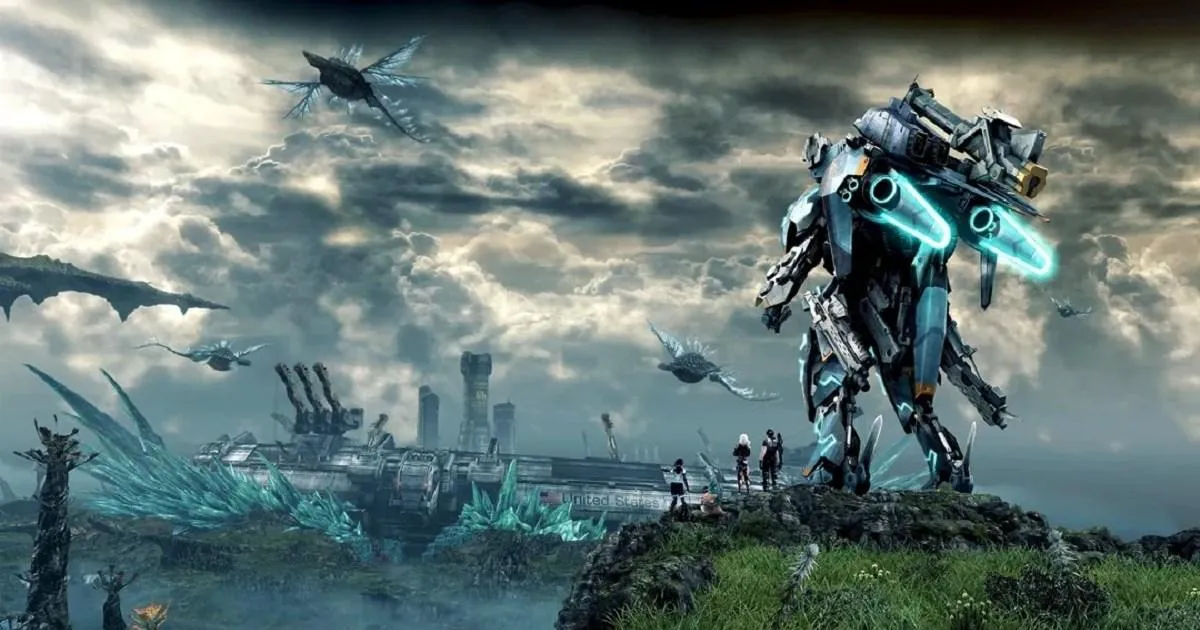
Xenoblade Chronicles X runs at a smooth 60fps on Switch 2, which bodes well for the next Xenoblade game (Nintendo)

For as powerful as the Switch 2 is, none of Nintendo’s new games seem to do much with it, but that should change with Monolith Soft’s next game.

Last week, completely out of the blue, Nintendo shadow-dropped a Switch 2 edition for Xenoblade Chronicles X: Definitive Edition; one that costs £4.19 and bumps the frame rate up to 60fps and supports enhanced resolutions upwards of 4K.

We will not be reviewing it in the normal fashion, as in terms of content it’s exactly the same game as the Switch 1 version, with only the technical improvements to distinguish it. Apart from anything, the game is over 60 hours long, so it’s not something that can be done quickly.

Having still spent a number of hours with it, though, what we can say is that it’s further proof that Monolith Soft is one of Nintendo’s most important developers – perhaps *the* most important one outside of Nintendo EPD – and we really want to know what they’re working on next.

Advertisement

Is Xenoblade Chronicles X worth it on Switch 2?

You may have heard that Xenoblade Chronicles X’s Switch 2 version has had complaints over its poor draw distance and flawed upscaling, that makes textures look smeared and not as good as the original.

Expert, exclusive gaming analysis

Sign up to the GameCentral newsletter for a unique take on the week in gaming, alongside the latest reviews and more. Delivered to your inbox every Saturday morning.

Advertisement

Some fans claim to have received refunds over this (which suggests Nintendo will issue an update to address the complaints) and Digital Foundry has gone so far as to say this is the worst Switch 2 edition so far.

Frankly, we never noticed these issues during our time with the game and were plenty enamoured with the frame rate boost. Plus, this doesn’t change the fact that, on a technical level, Xenoblade Chronicles X remains a very impressive game.

This was the case for even its original Wii U version, where you could feasibly walk or fly from one end of its ginormous map to the other without encountering a single loading screen. And now it all runs at 60fps – the first in the Xenoblade series to do so – which hopefully means the rest of the series will follow suit.

Advertisement

What is Monolith Soft?

Monolith Soft has always been a technically accomplished studio. Even as far back as the first Xenoblade Chronicles on the Wii, the studio demonstrated it could make massive, yet densely detailed, open worlds without the need for top-of-the-line hardware.

Monolith Soft used to be part of Bandai Namco but was acquired by Nintendo in 2007 and it’s safe to say that was money well spent. Although Monolith Soft does make its own games – primarily the Xenoblade series at the moment – Nintendo quickly put them to work as a support studio for other games.

This has included groundbreaking work on The Legend Of Zelda: Breath Of The Wild and its sequel, as well as Switch 2 launch title Mario Kart World. It also routinely assists with other key Nintendo franchises, particuarly Animal Crossing and Splatoon.

Just last month, Zelda series general manager Daiki Iwamoto described the studio as a ‘strong partner’ and expressed a desire for Monolith Soft to remain involved with the series going forward, possibly even hinting at the studio helming its own Zelda game.

Advertisement

It’s just a shame they don’t also help out with Pokémon as well, as the stark difference in technical quality between the games Monolith Soft work on and something like Pokémon Scarlet & Violet almost makes them seem like they’re running on different hardware.

Is Nintendo underselling the Switch 2’s power?

Given how many people have complained that the Switch 2 is too similar to the original console it’s strange that Nintendo has done almost nothing to talk up the new console’s power. There’s not been so much as a tech demo and all the most technically impressive titles are by third parties.

You can point to Mario Kart World and Donkey Bananza as demonstrations of the hardware, but while certainly very pretty games, they were both originally made with the Switch 1 in mind, and you can tell. Even the more showy technical achievements, like Bananza’s destruction effects, are difficult to appreciate without actually playing the game.

Advertisement

Don’t miss Gaming news! Add us as a Preferred Source

As a loyal GameCentral reader, we want to make sure you never miss our articles when searching for gaming stories. We have all the latest video games news, reviews, previews, and interviews, with a vibrant community of highly engaged readers.

Click here and tick Metro.co.uk to ensure you see stories from us first in Google Search.

GameCentral collage of Mario Kart, Ghost of Yotei, and Halo
GameCentral has been delivering unique games news and reviews for over a decade

Instead, it’s fallen to third party developers to highlight how powerful the Switch 2 can be and not even with wholly new games but with ports. Cyberpunk 2077 was a very impressive Switch 2 port at launch and since then, the likes of Star Wars Outlaws and Final Fantasy 7 Remake have consistently been praised for how they look and run, even if they can’t quite manage a smooth 60fps.

Advertisement

We’ve recently been playing Resident Evil Requiem on Switch 2 and while it too is capped at 30fps, it looks amazing on Nintendo’s console, which is extra impressive when it was made with the PlayStation 5 in mind.

‘The Nintendo Switch 2 system has improved graphical specs, so we wondered if Requiem could run on it – and it did, with ease. When we, the development team, first saw it in our hands, we were sceptical too, so we had to do a triple take. … It all worked so smoothly that we decided to just go ahead with the game as-is and make it for the system. With specs like these in handheld mode, it looks great,’ Requiem said director Koshi Nakanishi.

Nintendo making strange decisions comes with the territory but they’ve never been quite this backwards in coming forward about a console’s capabilities and nor have they have ever been quite this secretive about their upcoming slate, especially at a time when they seem to have little reason to be coy.

One of the few games we do know about is Fire Emblem: Fortune’s Weave and you can guarantee that’s not going to be a graphical powerhouse. It’s also unlikely to be something Monolith Soft is helping out with, although they be involved in Splatoon Raiders – whatever that actually turns out to be.

Advertisement

Looking at its release history, Monolith Soft tends to have a game out every two or three years. So, with Xenoblade Chronicles X: Definitive Edition dropping last year, we could potentially see Monolith Soft’s next game as early as 2027.

What that may be is impossible to guess at but they’re almost certainly involved with the new Zelda and probably the new Animal Crossing too. They’ve never previously worked on a 3D Mario game, but with that team only just having finished Bananza, this could be the time to change that.

Whatever their next big project is though that’s the one to watch, not only because they tend to be put on the most important games but also the most technically advanced. If Nintendo has seemed slow to take advantage of the Switch 2’s power that should finally change with Monolith Soft’s next game.

Xenoblade Chronicles X gameplay of four giant mechs flying in the air above grasslands at sunset
What advancements do you want to see from Monolith Soft’s first Switch 2 exclusive? (Nintendo)

Email gamecentral@metro.co.uk, leave a comment below, follow us on Twitter.

To submit Inbox letters and Reader’s Features more easily, without the need to send an email, just use our Submit Stuff page here.

Advertisement

For more stories like this, check our Gaming page.

Source link

Advertisement
Continue Reading

NewsBeat

Hegseth and Anthropic CEO to meet over military AI use

Published

on

Hegseth and Anthropic CEO to meet over military AI use

WASHINGTON (AP) — Defense Secretary Pete Hegseth plans to meet Tuesday with the CEO of Anthropic, with the artificial intelligence company the only one of its peers to not supply its technology to a new U.S. military internal network.

Anthropic, maker of the chatbot Claude, declined to comment on the meeting but CEO Dario Amodei has made clear his ethical concerns about unchecked government use of AI, including the dangers of fully autonomous armed drones and of AI-assisted mass surveillance that could track dissent.

The meeting between Hegseth and Amodei was confirmed by a defense official who was not authorized to comment publicly and spoke on condition of anonymity.

It underscores the debate over AI’s role in national security and concerns about how the technology could be used in high-stakes situations involving lethal force, sensitive information or government surveillance. It also comes as Hegseth has vowed to root out what he calls a “woke culture” in the armed forces.

Advertisement

“A powerful AI looking across billions of conversations from millions of people could gauge public sentiment, detect pockets of disloyalty forming, and stamp them out before they grow,” Amodei wrote in an essay last month.

Anthropic is the only AI company approved for classified military networks

The Pentagon announced last summer that it was awarding defense contracts to four AI companies — Anthropic, Google, OpenAI and Elon Musk’s xAI. Each contract is worth up to $200 million.

Anthropic was the first AI company to get approved for classified military networks, where it works with partners like Palantir. The other three companies, for now, are only operating in unclassified environments.

By early this year, Hegseth was highlighting only two of them: xAI and Google.

Advertisement

The defense secretary said in a January speech at Musk’s space flight company, SpaceX, in South Texas that he was shrugging off any AI models “that won’t allow you to fight wars.”

Hegseth said his vision for military AI systems means that they operate “without ideological constraints that limit lawful military applications,” before adding that the Pentagon’s “AI will not be woke.”

In January, Hegseth said Musk’s artificial intelligence chatbot Grok would join the Pentagon network, called GenAI.mil. The announcement came days after Grok — which is embedded into X, the social media network owned by Musk — drew global scrutiny for generating highly sexualized deepfake images of people without their consent.

OpenAI announced in early February that it, too, would join the military’s secure AI platform, enabling service members to use a custom version of ChatGPT for unclassified tasks.

Advertisement

Anthropic calls itself more safety-minded

Anthropic has long pitched itself as the more responsible and safety-minded of the leading AI companies, ever since its founders quit OpenAI to form the startup in 2021.

The uncertainty with the Pentagon is putting those intentions to the test, according to Owen Daniels, associate director of analysis and fellow at Georgetown University’s Center for Security and Emerging Technology.

“Anthropic’s peers, including Meta, Google and xAI, have been willing to comply with the department’s policy on using models for all lawful applications,” Owens said. “So the company’s bargaining power here is limited, and it risks losing influence in the department’s push to adopt AI.”

In the AI craze that followed the release of ChatGPT, Anthropic closely aligned with President Joe Biden’s administration in volunteering to subject its AI systems to third-party scrutiny to guard against national security risks.

Advertisement

Amodei, the CEO, has warned of AI’s potentially catastrophic dangers while rejecting the label that he’s an AI “doomer.” He argued in the January essay that “we are considerably closer to real danger in 2026 than we were in 2023″ but that those risks should be managed in a “realistic, pragmatic manner.”

Anthropic has been at odds with the Trump administration

This would not be the first time Anthropic’s advocacy for stricter AI safeguards has put it at odds with the Trump administration. Anthropic needled chipmaker Nvidia publicly, criticizing Trump’s proposals to loosen export controls to enable some AI computer chips to be sold in China. The AI company, however, remains a close partner with Nvidia.

The Trump administration and Anthropic also have been on opposite sides of a lobbying push to regulate AI in U.S. states.

Trump’s top AI adviser, David Sacks, accused Anthropic in October of “running a sophisticated regulatory capture strategy based on fear-mongering.”

Advertisement

Sacks made the remarks on X in response to an Anthropic co-founder, Jack Clark, writing about his attempt to balance technological optimism with “appropriate fear” about the steady march toward more capable AI systems.

Anthropic hired a number of ex-Biden officials soon after Trump’s return to the White House, but it’s also tried to signal a bipartisan approach. The company recently added Chris Liddell, a former White House official from Trump’s first term, to its board of directors.

The Pentagon-Anthropic debate is reminiscent of an uproar several years ago when some tech workers objected to their companies’ participation in Project Maven, a Pentagon drone surveillance program. While some workers quit over the project and Google itself dropped out, the Pentagon’s reliance on drone surveillance has only increased.

Similarly, “the use of AI in military contexts is already a reality and it is not going away,” Owens said.

Advertisement

“Some contexts are lower stakes, including for back-office work, but battlefield deployments of AI entail different, higher-stakes risks,” he said, referring to the use of lethal force or weapons like nuclear arms. “Military users are aware of these risks and have been thinking about mitigation for almost a decade.”

___

O’Brien reported from Providence, Rhode Island.

Advertisement

Source link

Continue Reading

Trending

Copyright © 2025